Vegan Kimchi Jjigae (비건김치찌개 — Fully Plant-Based Version)
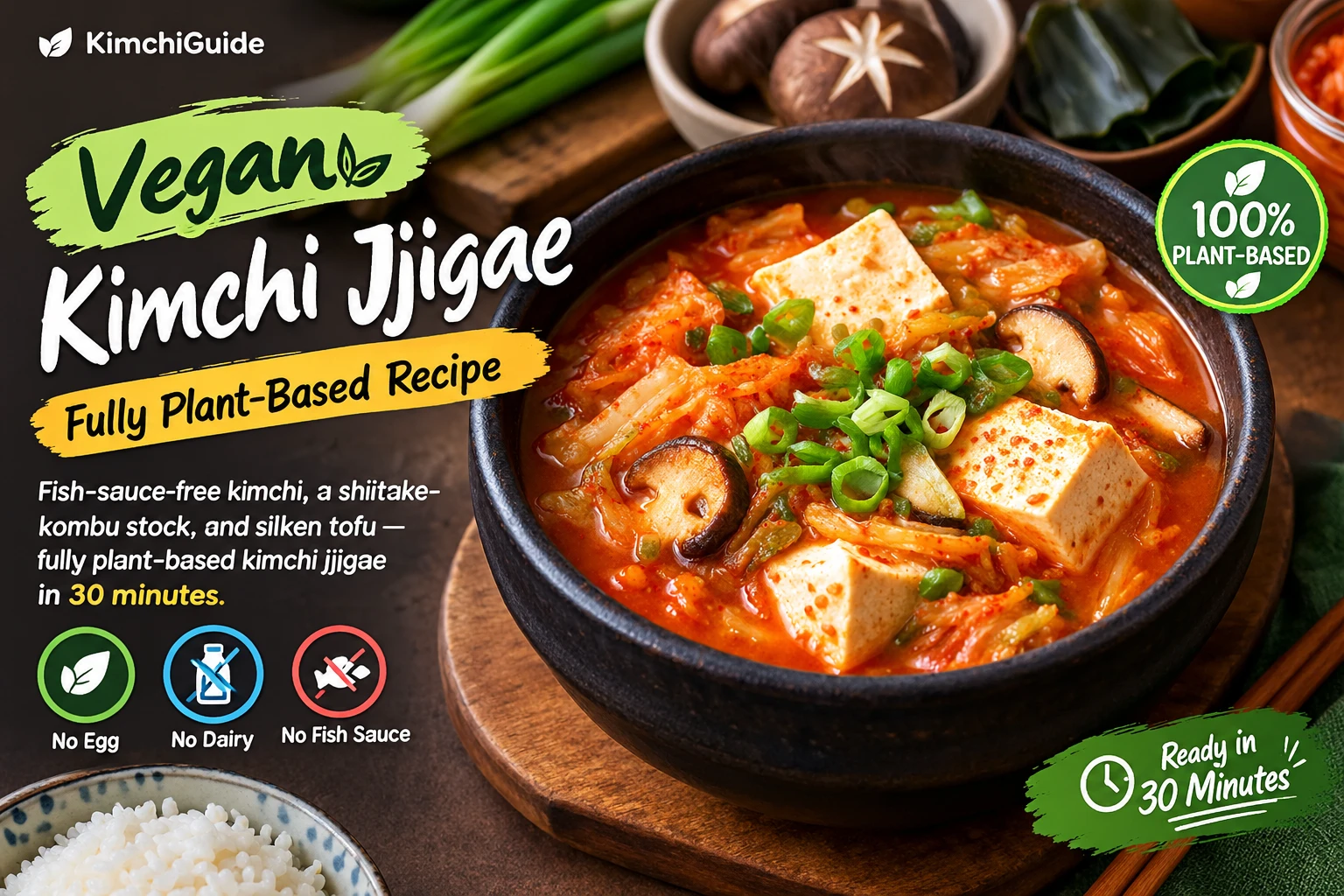
Verified fish-sauce-free kimchi, a shiitake-kombu stock in place of the usual anchovy base, and silken tofu, simmered into a rich, savory broth in 30 minutes. No egg, no dairy, no fish sauce, no shrimp paste — genuinely, fully plant-based, not just meatless.


What Is Vegan Kimchi Jjigae?
Vegan kimchi jjigae is the fully plant-based version of this stew — not just meatless, but genuinely free of every animal product hiding in a typical recipe. That means verified fish-sauce-free kimchi (most jarred kimchi contains fish sauce or salted shrimp), a shiitake-kombu stock in place of the usual anchovy-kelp base, and no egg or dairy anywhere in the dish. It is distinct from our Vegetarian Kimchi Jjigae, which allows egg and dairy and does not require checking the kimchi itself. Silken tofu, mushrooms, a soup-soy-sauce-based seasoning, and a touch of sweetness to round out the kimchi’s acidity carry the umami here instead of meat or fish. Serves 4 in 30 minutes at approximately 200 calories and 12g protein per serving — one of the lightest, lowest-saturated-fat recipes in the whole family.
Why This Recipe Works — Fully Plant-Based, Explained
Two ingredients quietly carry every non-vegan version of this dish. Replace both correctly, add a touch of balance, and the broth still tastes genuinely deep, not like a compromise.
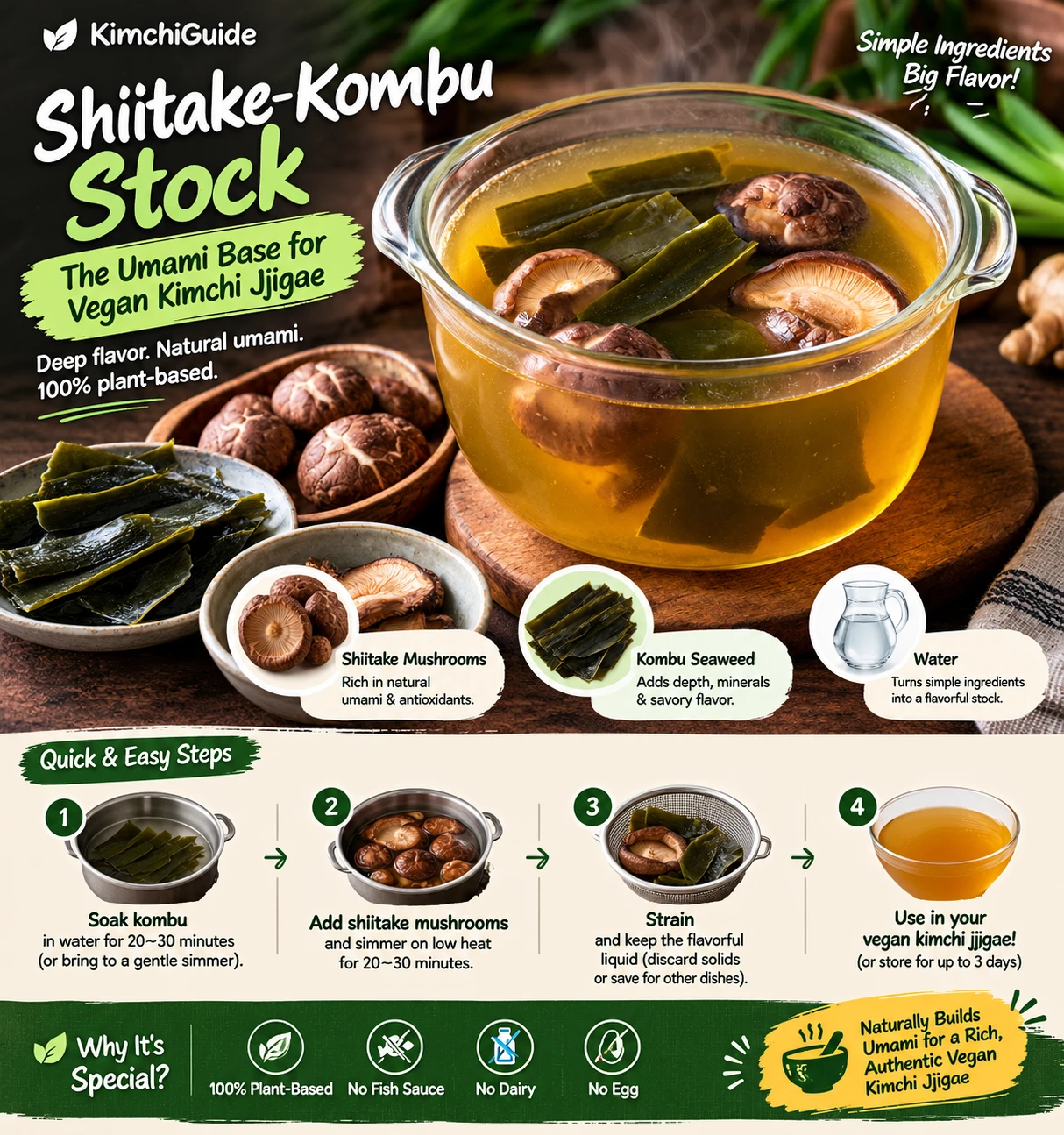
Kombu supplies free glutamates and dried shiitake supplies guanylates — the same synergistic umami pairing behind Japanese dashi. Together they replace the savory backbone that anchovy-kelp stock provides everywhere else in this family.
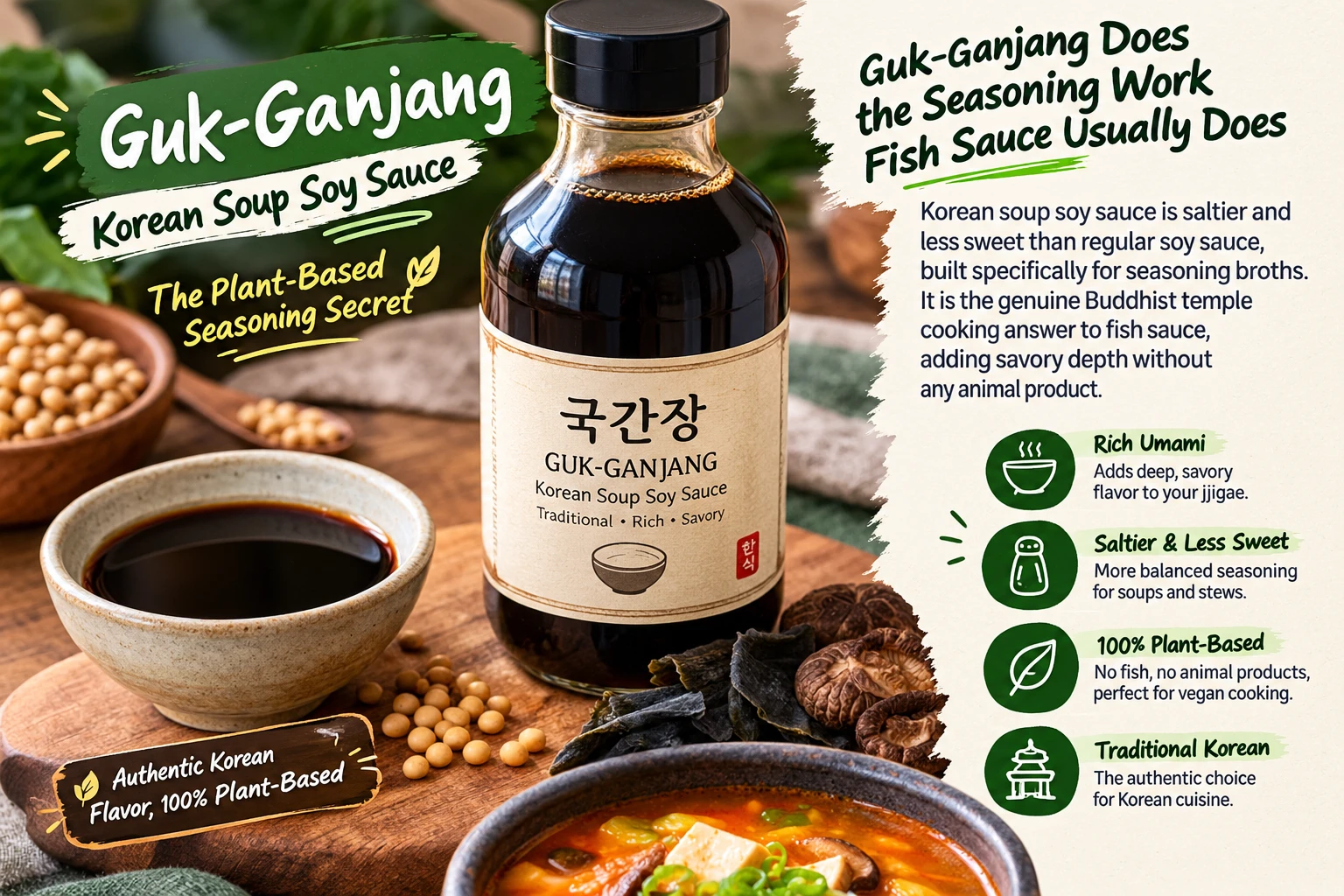
Korean soup soy sauce is saltier and less sweet than regular soy sauce, built specifically for seasoning broths. It is the genuine Buddhist temple cooking answer to fish sauce, adding savory depth without any animal product.
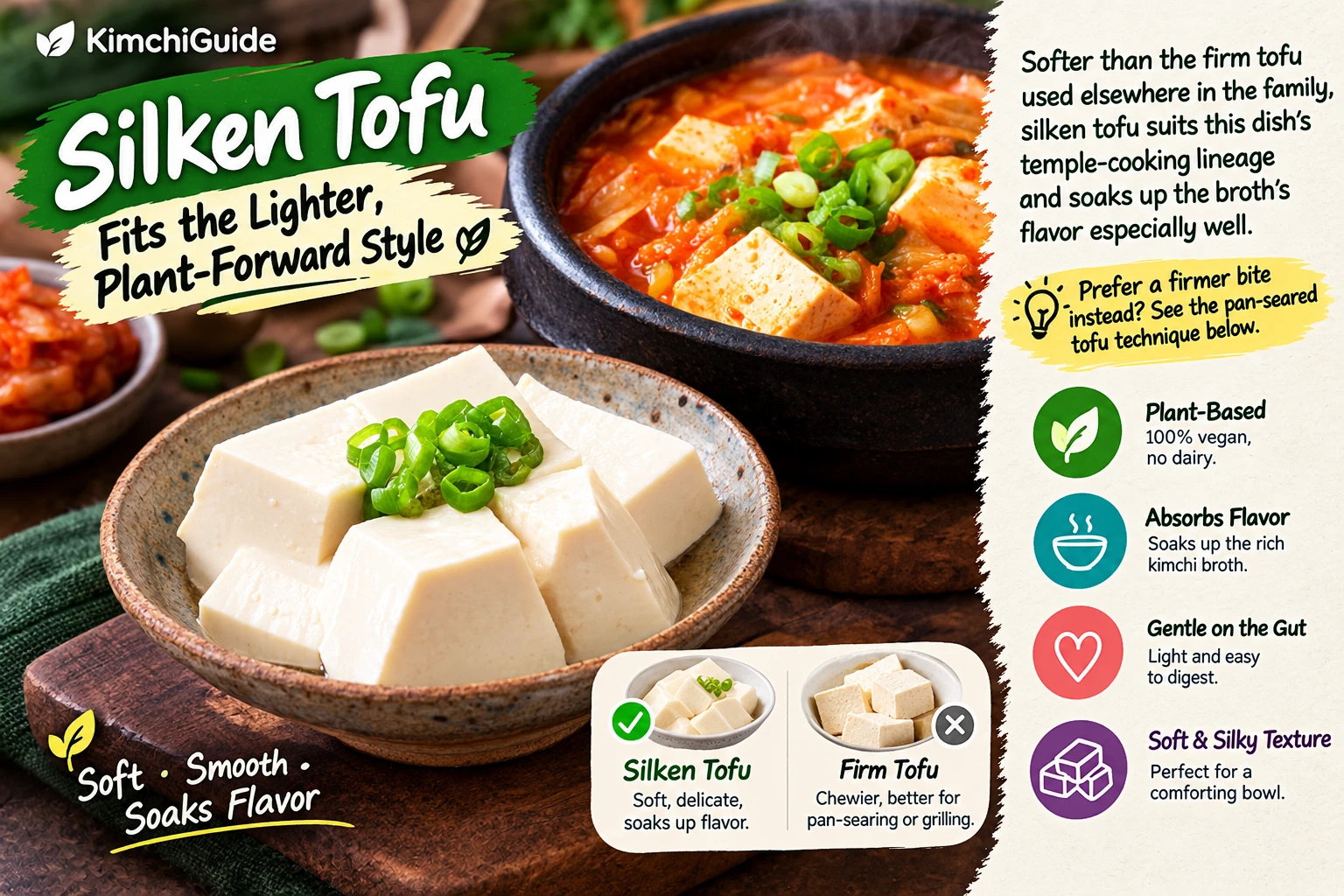
Softer than the firm tofu used elsewhere in the family, silken tofu suits this dish’s temple-cooking lineage and soaks up the broth’s flavor especially well. Prefer a firmer bite instead? See the pan-seared tofu technique below.
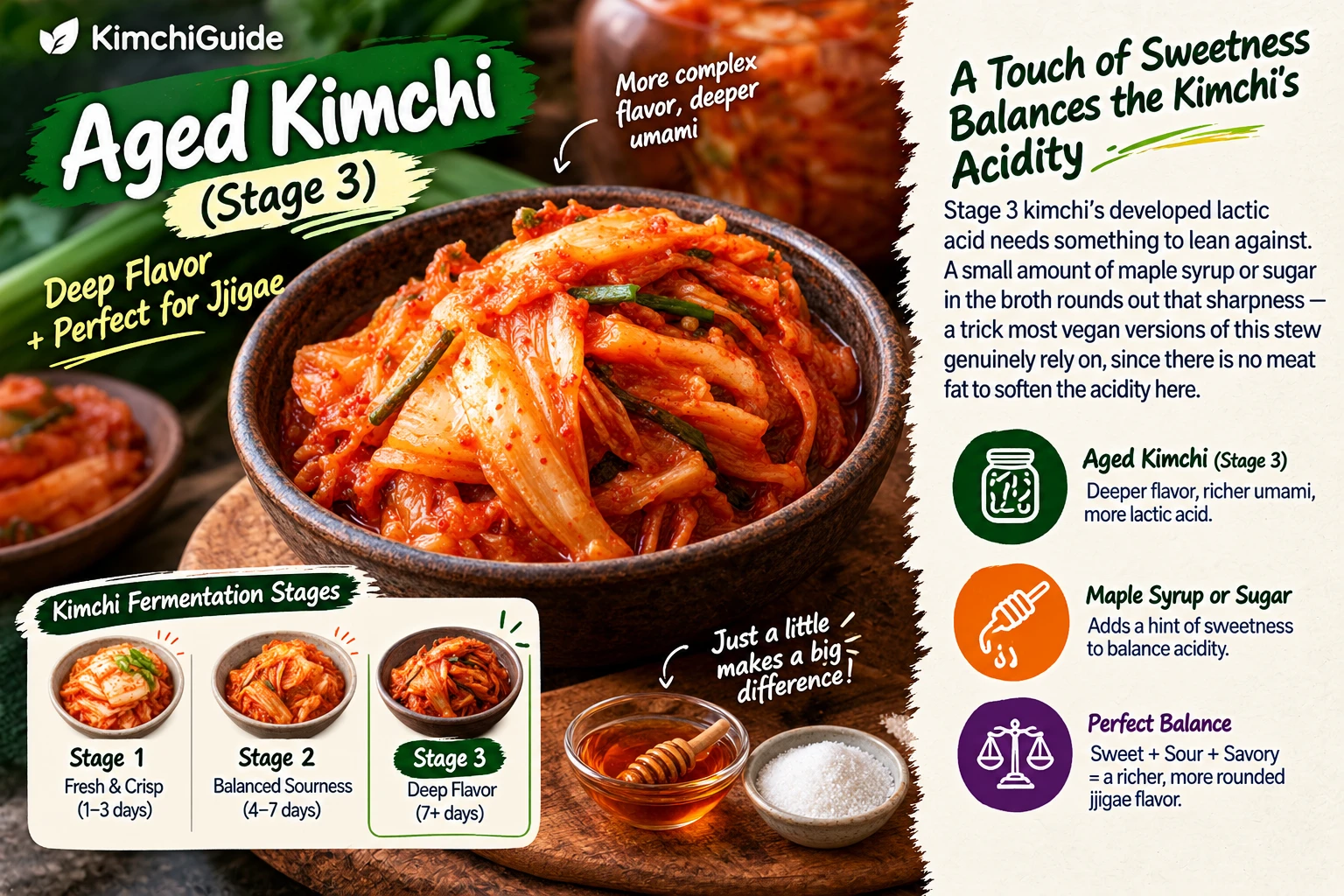
Stage 3 kimchi’s developed lactic acid needs something to lean against. A small amount of maple syrup or sugar in the broth rounds out that sharpness — a trick most vegan versions of this stew genuinely rely on, since there is no meat fat to soften the acidity here.
The Origin of Vegan Cooking in Korean Tradition
Kimchi-jjigae itself is centuries old; fully plant-based Korean cooking has its own, much older lineage worth understanding.
Korean Buddhist temple cuisine, developed over centuries by monastic communities, has always avoided meat, fish, and strong alliums, relying instead on fermented pastes, mushrooms, and plant-based stocks for depth. That tradition is the real ancestor of a genuinely vegan kimchi jjigae — the shiitake-kombu stock and guk-ganjang seasoning used in this recipe both trace directly back to temple cooking technique, not to a modern substitution invented for dietary convenience. See the full origin and etymology breakdown on the Classic recipe page for the dish’s broader history.
Kimchi itself, meanwhile, has not always been fish-sauce-free by default — many regional and historical kimchi traditions do use salted seafood as a fermentation aid. A fully vegan kimchi jjigae is therefore not a return to some single historical original, but a deliberate combination of temple-cooking technique with a specifically sourced or made fish-sauce-free kimchi.
Is Your Kimchi Actually Vegan?
This is the single most overlooked detail in nearly every “vegan kimchi jjigae” recipe online — most just say “use vegan kimchi” without explaining that most kimchi is not vegan at all.
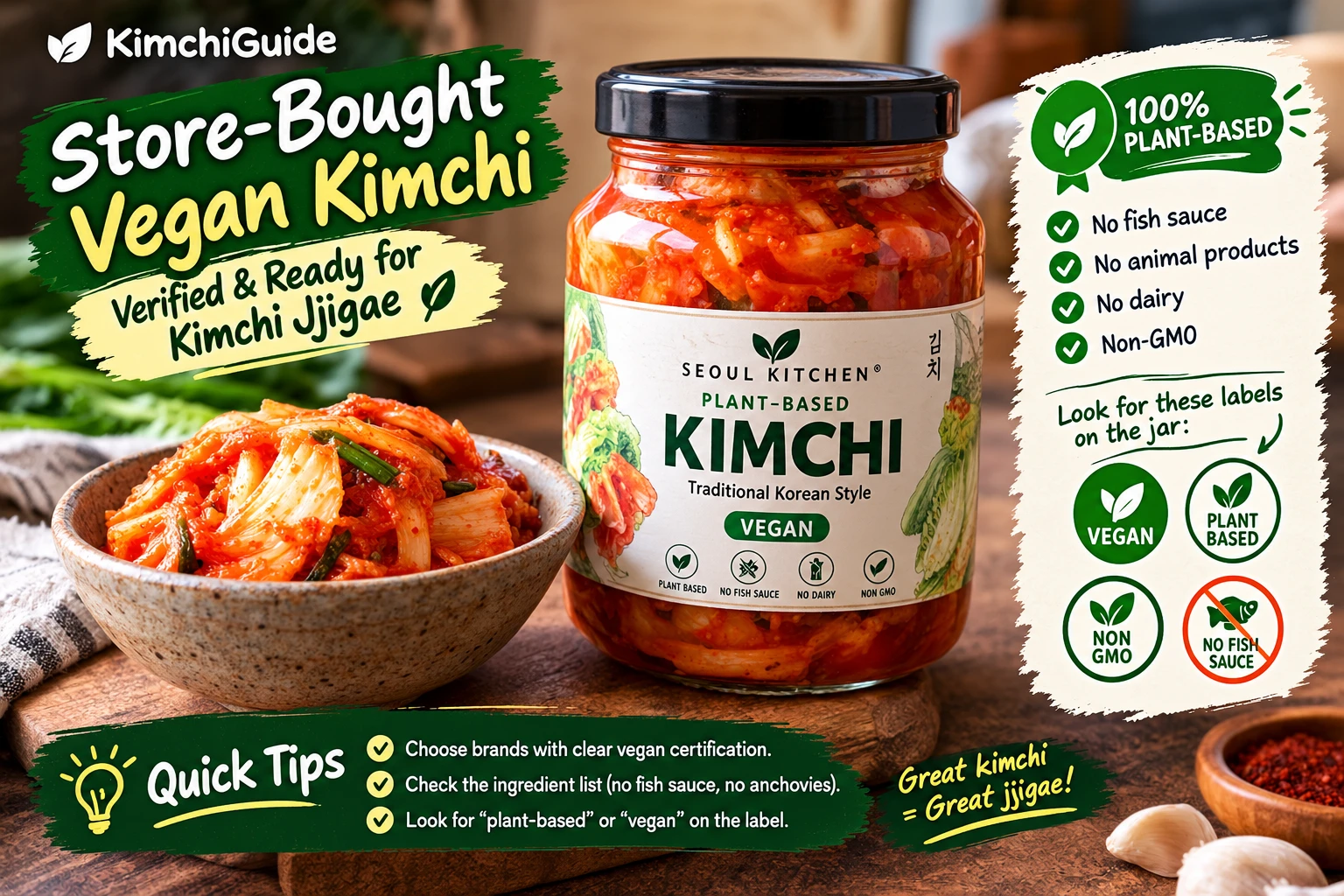
- Look for kimchi labeled vegan specifically, not just “kimchi”
- Several brands make a dedicated vegan line — Mother-in-Law’s, Sunja’s, Choi’s Kimchi Company, and certain Pulmuone products are all widely stocked at H-Mart, Whole Foods, and similar grocery chains
- Always check the ingredient list for fish sauce, anchovy, or shrimp regardless of the label
Result: Fast and reliable once you know which brands and labels to look for.

- Replace fish sauce with a pureed pear-and-apple stock for natural sweetness and body
- Season with guk-ganjang instead of salted shrimp
- Follows the same Buddhist temple cooking approach described in the Origin section above
Result: More effort, but genuine control over every ingredient and how fermented it gets.
What to Look For on a Label
| Ingredient | Vegan Status | What to Do |
|---|---|---|
| Fish sauce (액젓) | Not vegan | Avoid — the most common non-vegan ingredient in kimchi |
| Salted shrimp / saeujeot (새우젓) | Not vegan | Avoid — a common fermentation booster in traditional recipes |
| Labeled “vegan kimchi” ⭐ | Vegan | Safe to use directly — still worth a quick label check |
| Gochugaru, garlic, ginger, radish | Vegan | Standard, plant-based kimchi ingredients — no concern |
Key Terms — Language & Food Science Entities
The core terms used throughout this recipe and the wider family it belongs to.
The Whole Family — How 13 Versions Differ
Every recipe below starts from the same base technique on the Classic (Pork) page. This Vegan version changes the most of any recipe in the family — protein, stock, and kimchi itself all have to be reconsidered together.
| Version | What Changes | Simmer Time | Best For |
|---|---|---|---|
| Classic (Pork) | The original base technique | 15-20 min | Everyone — the reference point for the whole family |
| Chicken | Chicken thigh, browned skin-first | 18-20 min | Leaner, highest protein of the meat versions |
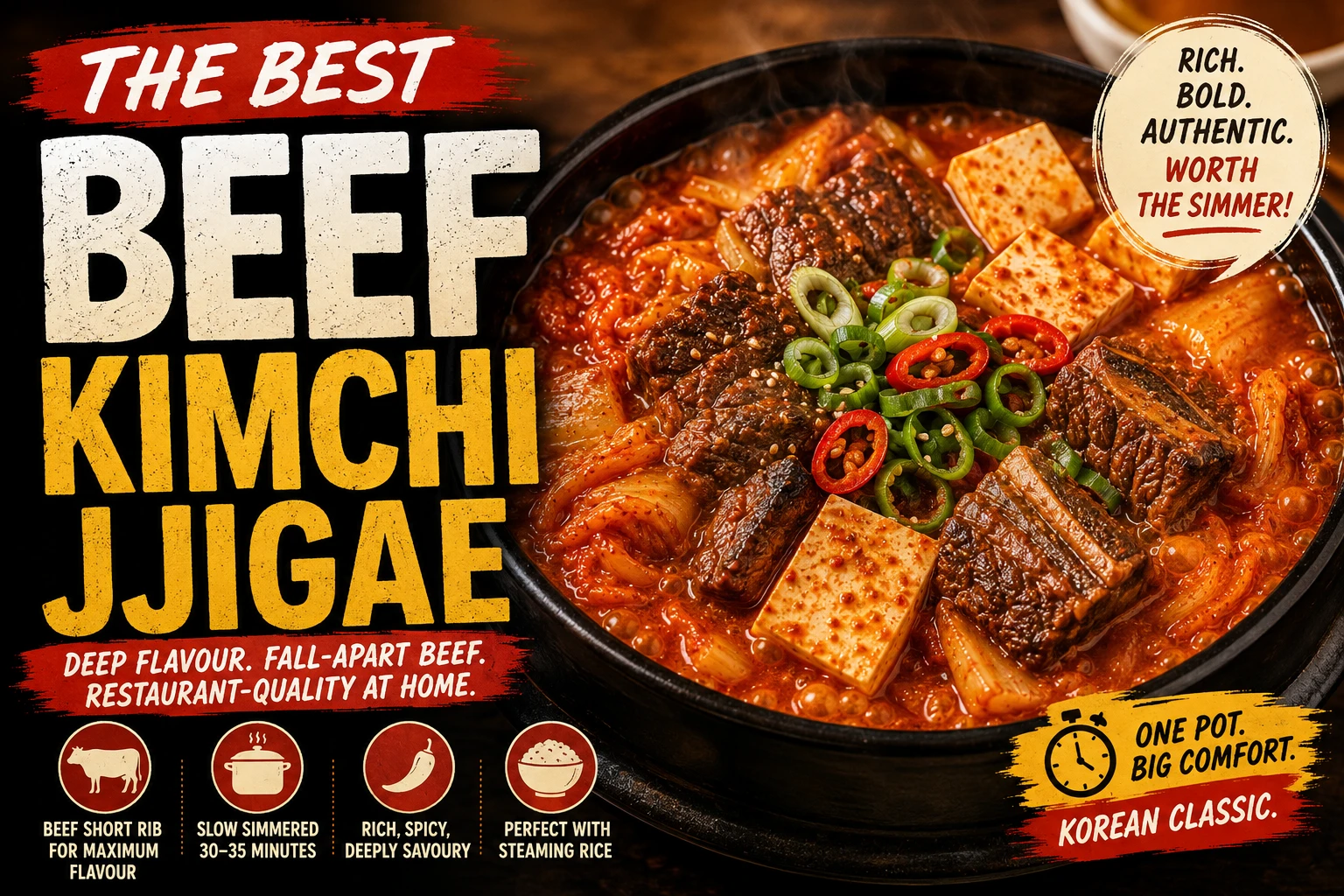
| Beef | Short rib or chuck, longer braise | 30-35 min | Richest, most indulgent broth |
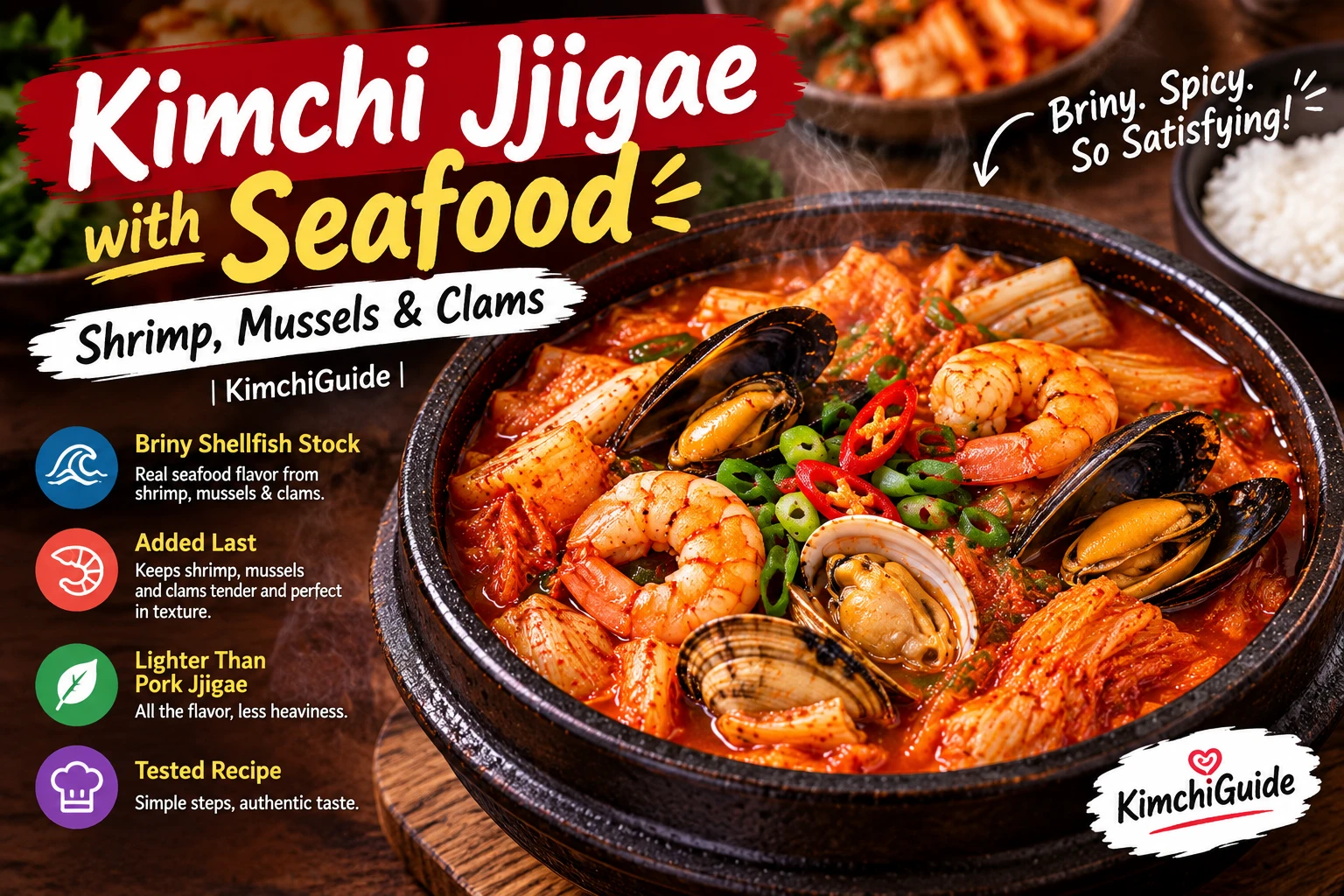
| Seafood | Shrimp, mussels, clams added last | 5-8 min (seafood only) | Leanest jjigae-format option in the family |
| Soondubu | Silken tofu replaces firm, no draining | 10-12 min | Soft, custardy texture, highest search demand |
| Vegetarian | Mushroom + tofu + egg replace meat, regular kimchi allowed | 12-15 min | Meatless, egg and dairy still allowed |
| Vegan ← This Page | Verified fish-sauce-free kimchi, shiitake-kombu stock, no egg or dairy anywhere | 12-15 min | Fully plant-based, the lightest recipe on saturated fat |
| Tuna (Chamchi) | Canned tuna, added in the final 2-3 minutes only | 15-20 min broth + 2-3 min tuna | The fastest, leanest animal-protein recipe |
| Spam | Seared Spam cubes replace pork | 12-15 min | Simple comfort food, distinct from Budae |
| Budae Jjigae | Spam, sausages, baked beans, instant noodles, cheese | 15 min | Korean War-era army-base combo stew |
| Mackerel (Godeungeo) | Oily canned fish replaces pork | 10-12 min | Niche but authentic canned-fish alternative |
| Kimchi Guk | Thinner broth, less salt, soup format | 12-15 min | Lighter everyday side, not a main-dish jjigae |
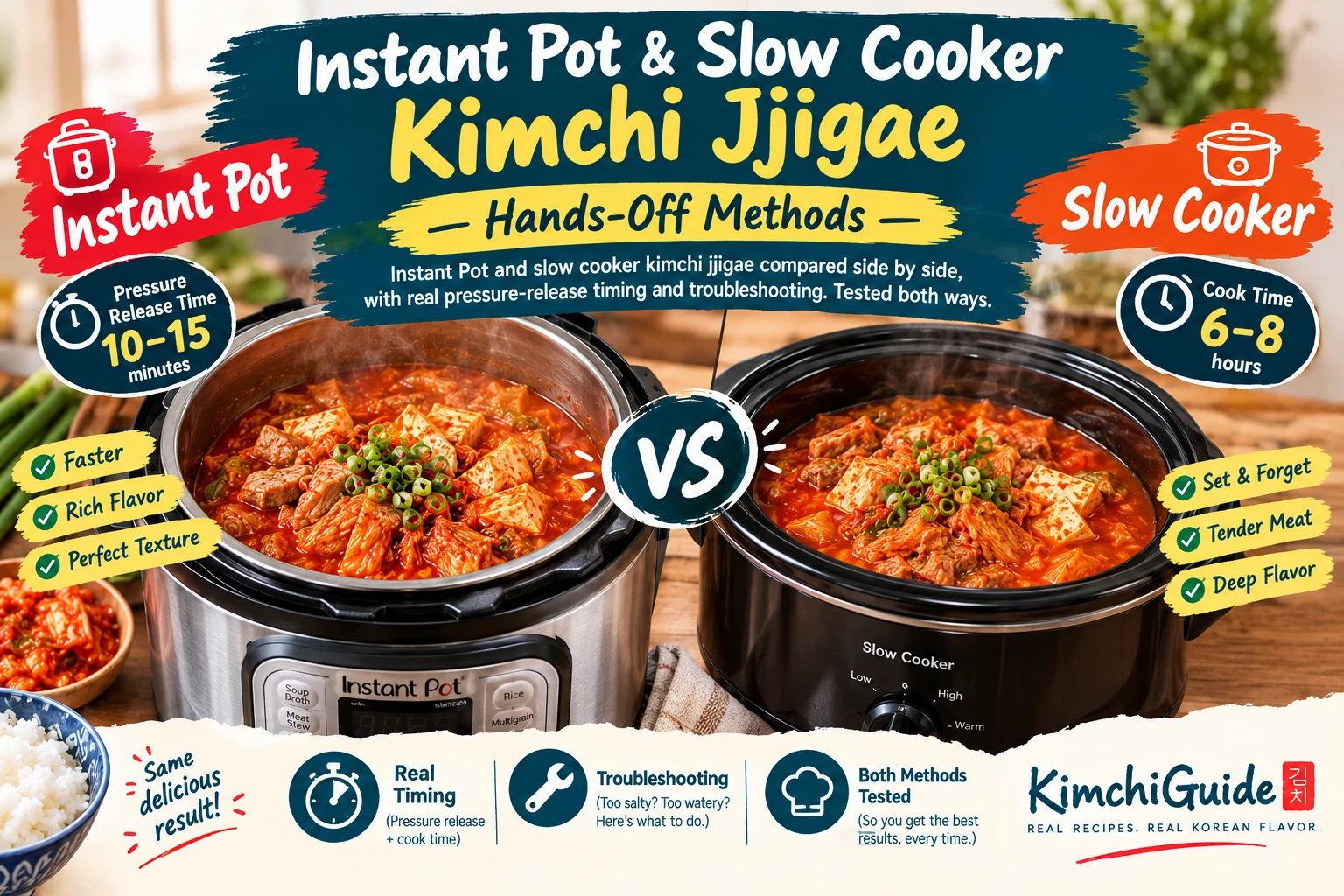
| Instant Pot & Slow Cooker | Classic pork-belly recipe, hands-off appliance methods | Varies by method | Weeknight convenience, minimal supervision |
Household Techniques — Building Umami Without Fish
With no meat or fish stock to fall back on, how a household builds umami is the real source of variation in vegan Korean cooking — here are the documented approaches.
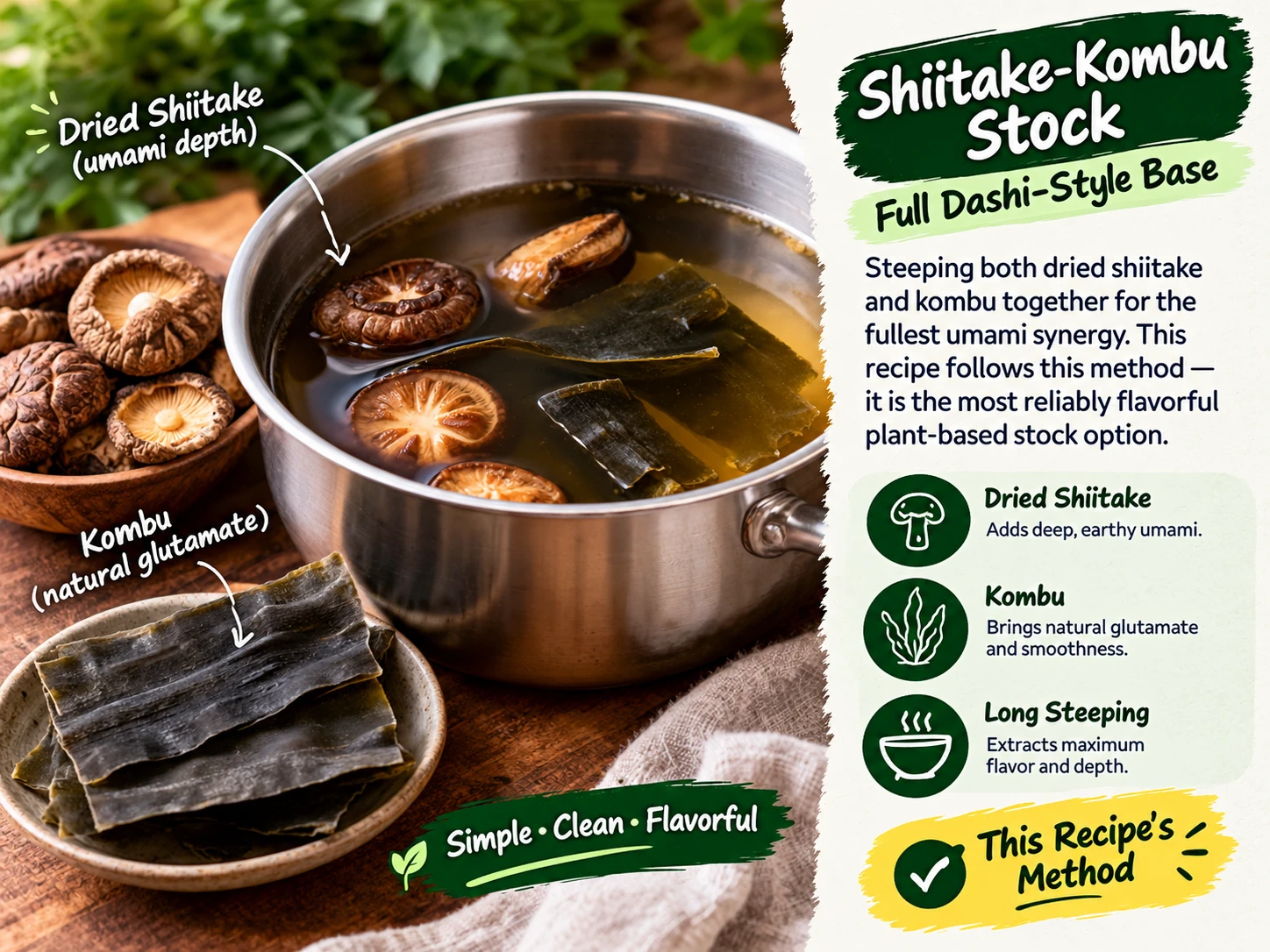
Steeping both dried shiitake and kombu together for the fullest umami synergy. This recipe follows this method — it is the most reliably flavorful plant-based stock option.
This Recipe’s Method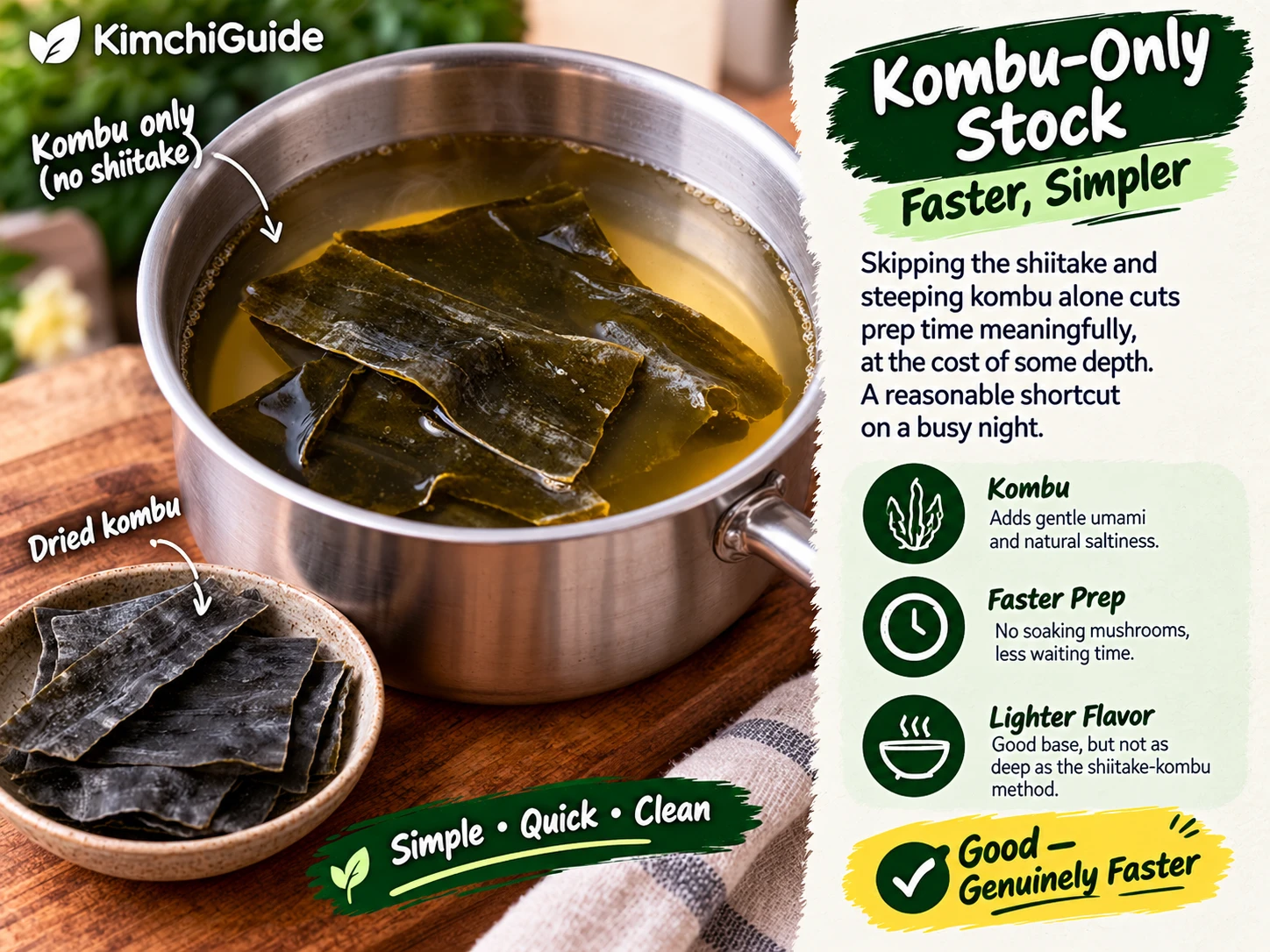
Skipping the shiitake and steeping kombu alone cuts prep time meaningfully, at the cost of some depth. A reasonable shortcut on a busy night.
Good — Genuinely Faster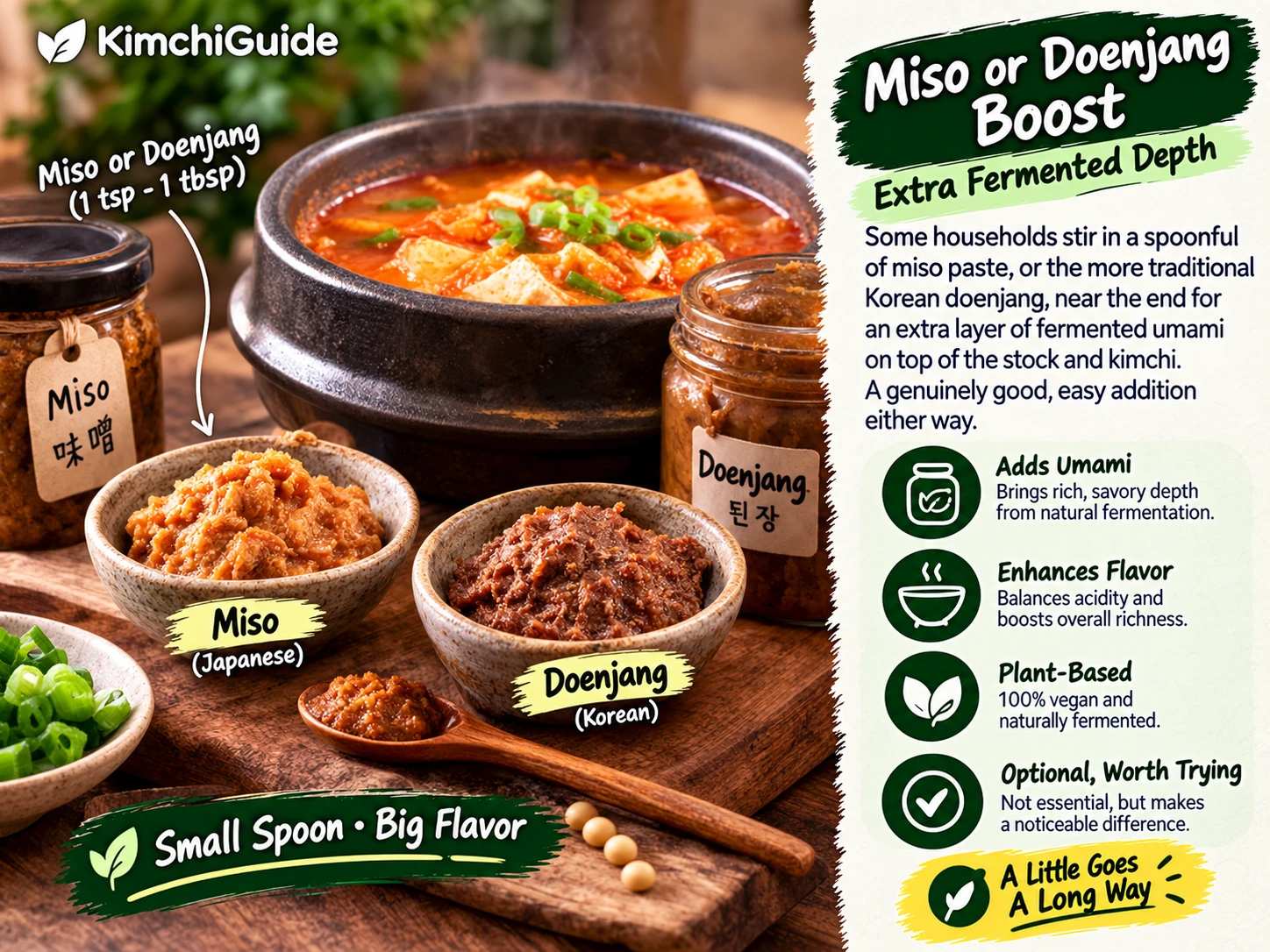
Some households stir in a spoonful of miso paste, or the more traditional Korean doenjang, near the end for an extra layer of fermented umami on top of the stock and kimchi. A genuinely good, easy addition either way.
Optional, Worth Trying
Some households add a vegan beef-style or vegetable bouillon cube or paste on top of a quick shiitake soak, rather than a full steep. Genuinely convenient, and layering it with even a short mushroom soak keeps it from tasting one-note.
Good — Convenient Layer-In
Swapping in a quality store-bought vegetable broth skips the steeping step entirely. Flatter than a homemade shiitake-kombu stock, but genuinely fine on a rushed night.
Simplest — a Fair Trade-Off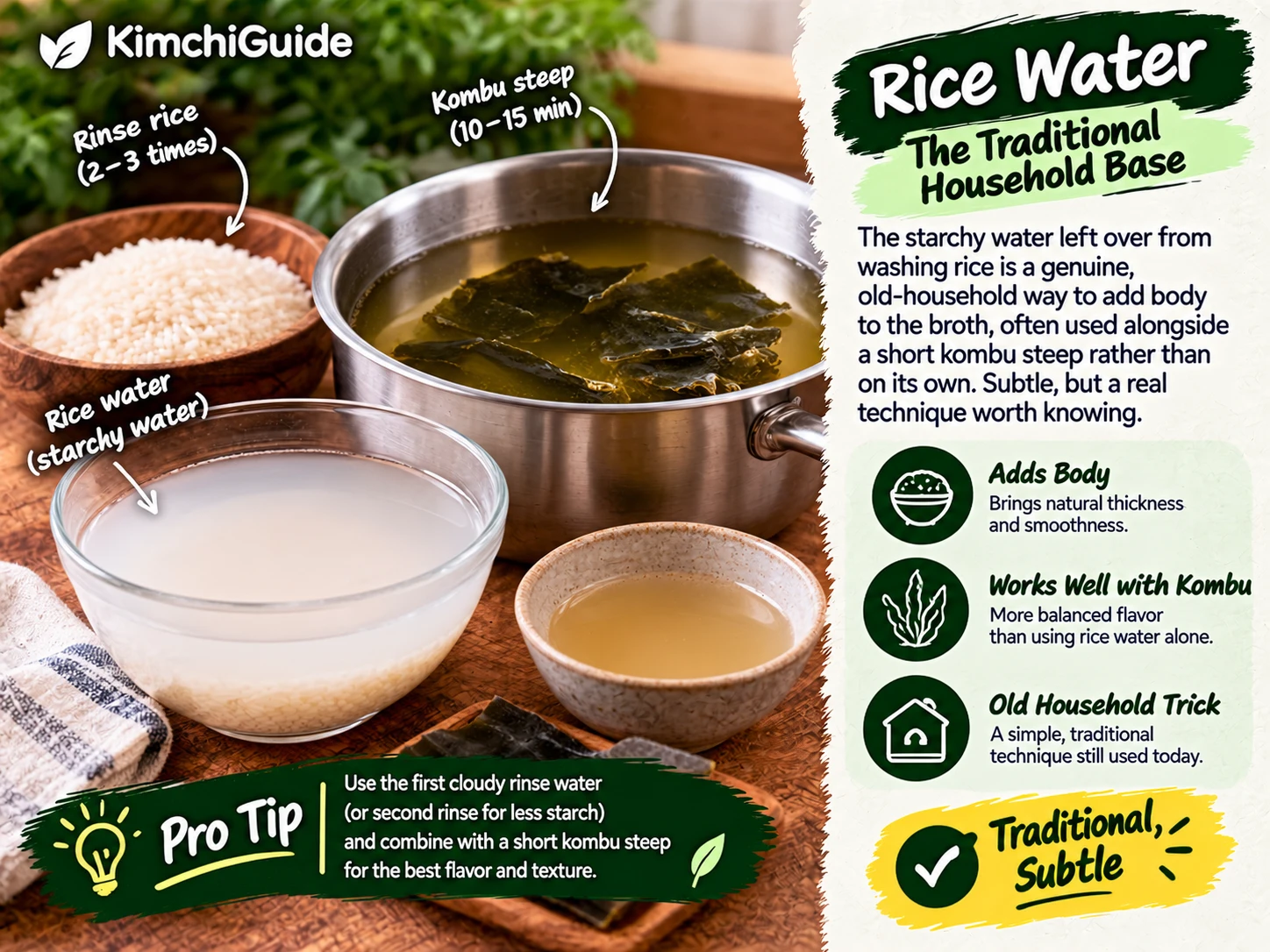
The starchy water left over from washing rice is a genuine, old-household way to add body to the broth, often used alongside a short kombu steep rather than on its own. Subtle, but a real technique worth knowing.
Traditional, SubtleInstead of simmering silken tofu directly in the broth, some households pan-sear cubed firm tofu separately until browned, then add it at the very end. A genuinely different, sturdier texture than the traditional silken style.
Good — Different TextureLetting the broth base simmer well beyond the standard 12-15 minutes, up to an hour on low heat, genuinely deepens the flavor further before the tofu goes in. Worth it on a lazy weekend, not necessary on a weeknight.
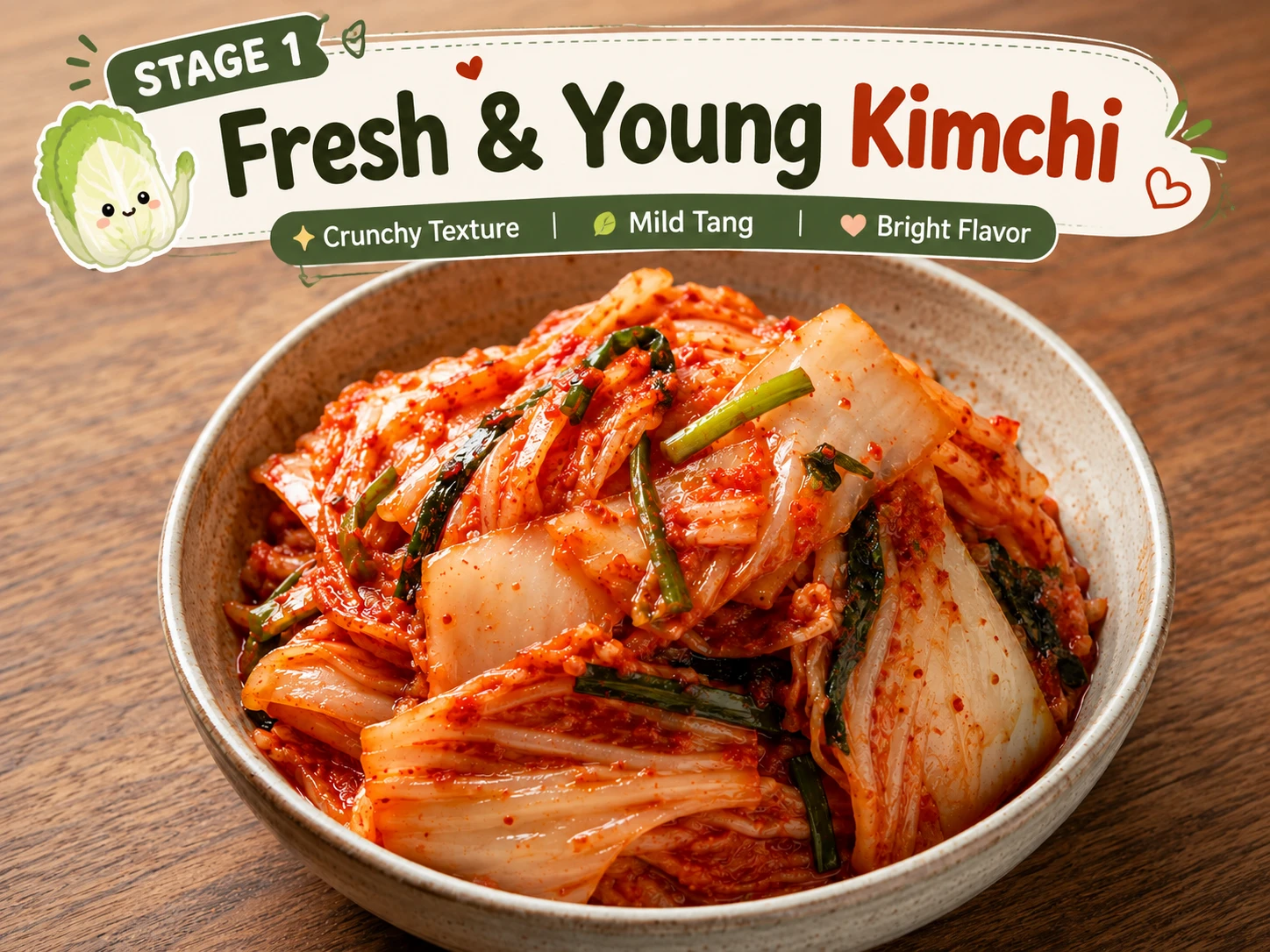
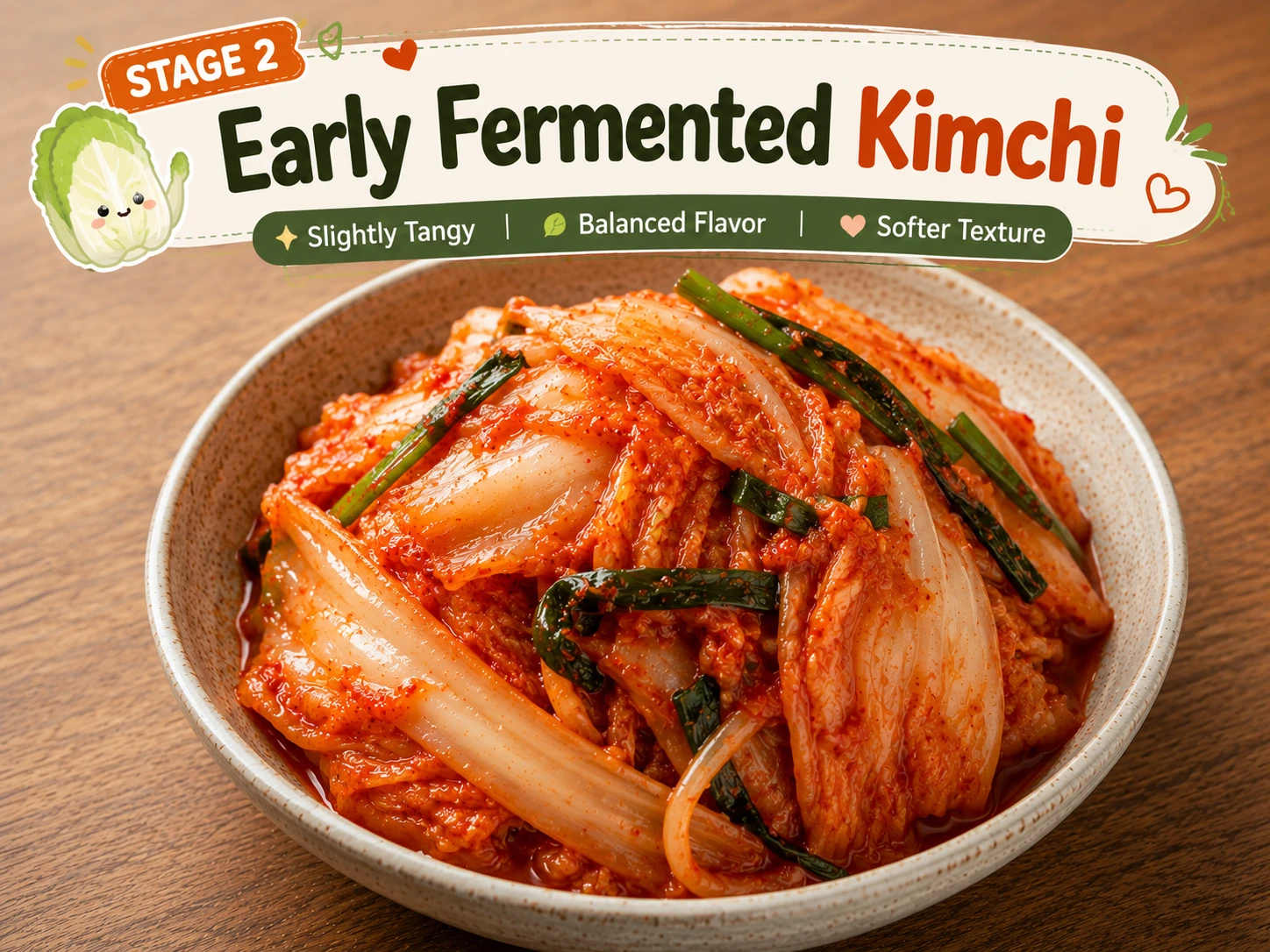
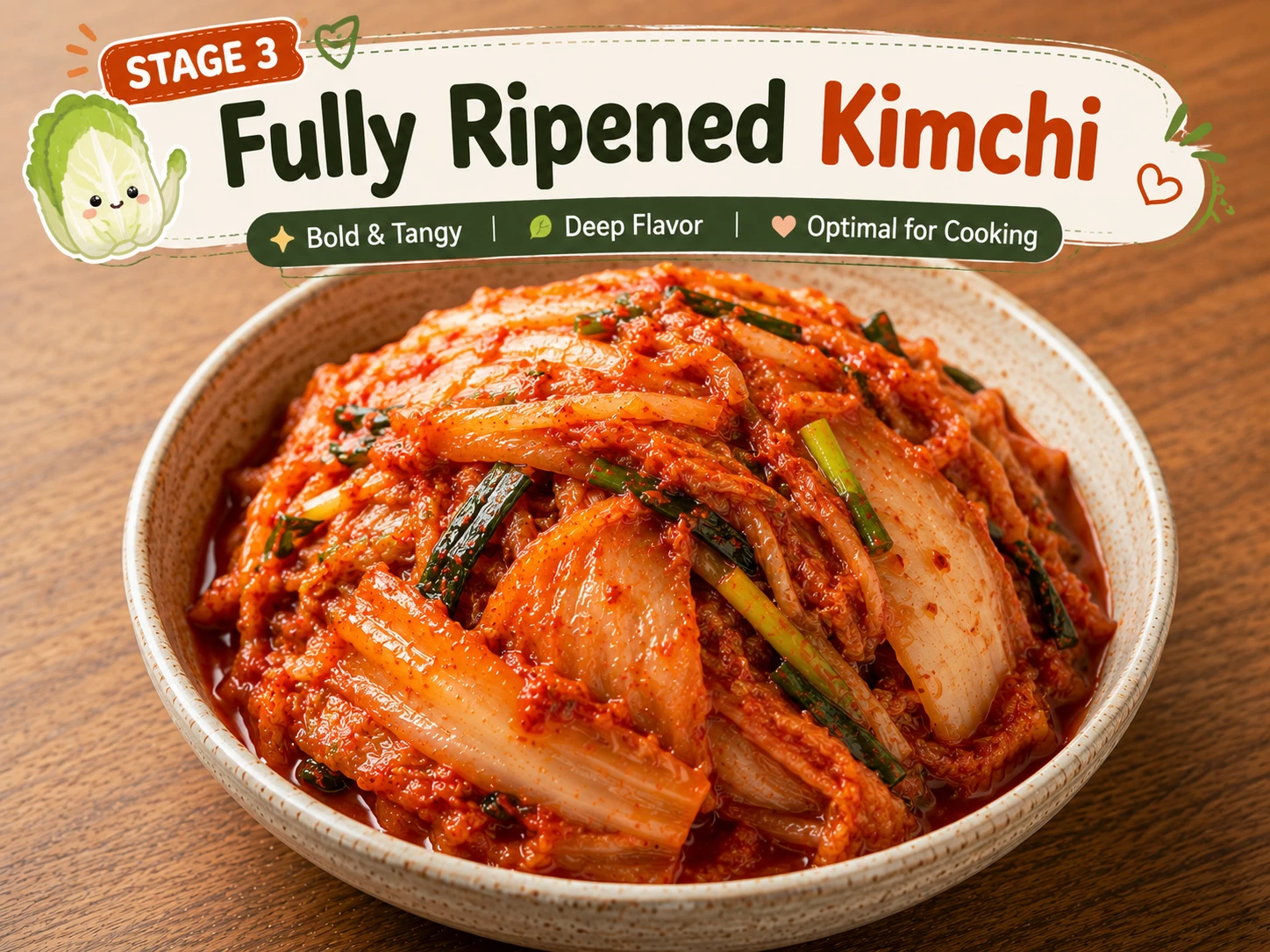
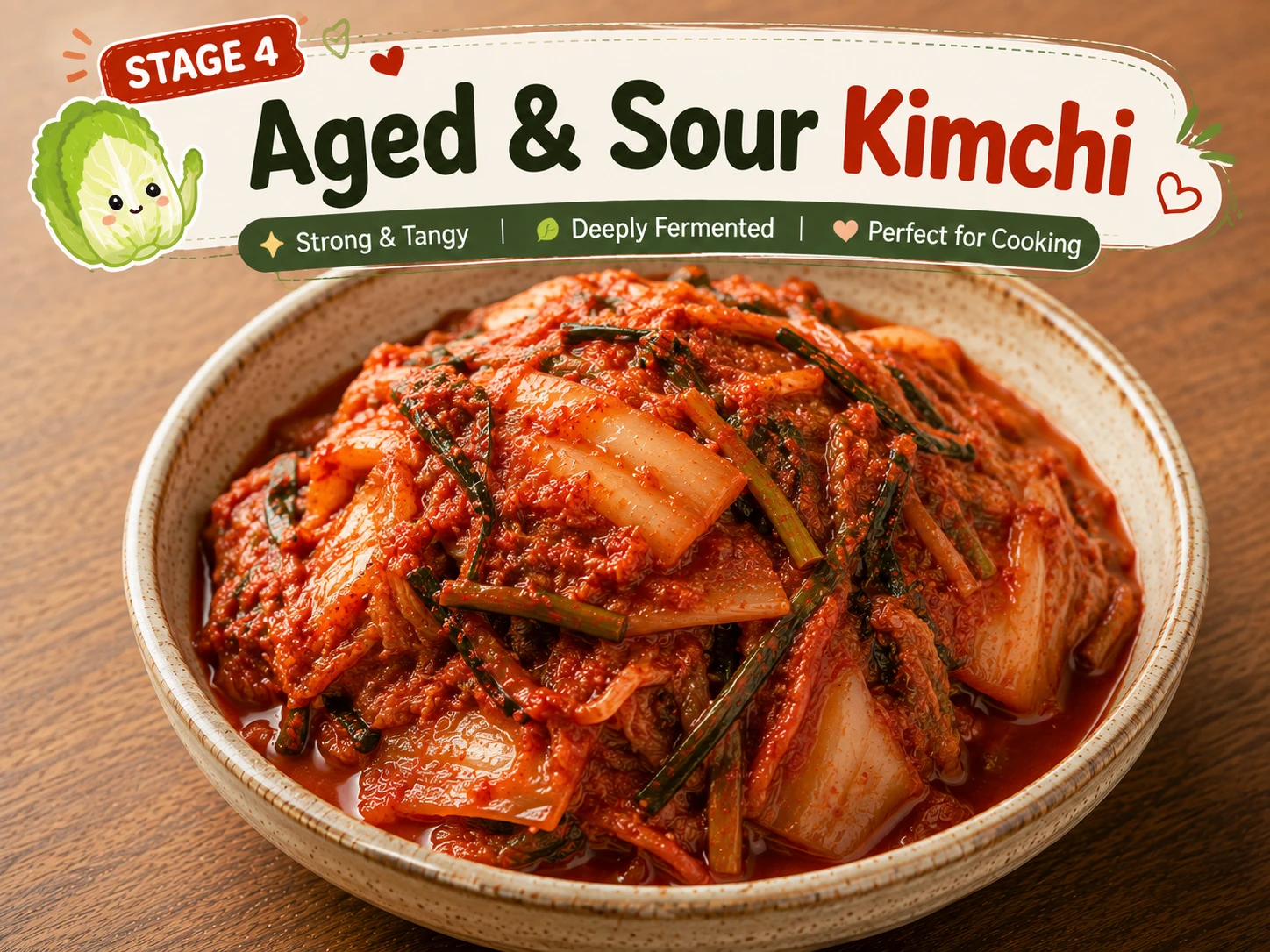
Optional, Weekend ProjectKimchi Fermentation — The Complete 4-Stage Guide
Every variation page on this site links back to this exact section for the full picture — here it is in full, not the shortened quick-reference version used elsewhere in the family.
Speeding Up or Slowing Down Fermentation at Home
Room temperature accelerates fermentation significantly — kimchi left on the counter can move through these stages in days rather than weeks, while refrigeration slows the process to a near-crawl, which is why store-bought refrigerated kimchi can sit at a similar stage for a long time. If your kimchi is fermenting faster than you’d like, refrigerate it sooner; if you need Stage 3 kimchi in a hurry, a day or two at room temperature can meaningfully speed things along.
Seasonal Adjustments — Summer vs Winter
As one of the lighter recipes in the family, this version works well year-round, with only minor seasonal notes.
- Kimchi ferments noticeably faster in summer heat — check it 3-5 days earlier than the timeline above suggests
- No meat or added fat means this stays one of the lighter jjigae options for hot weather
- Silken tofu keeps the texture cool and soft against the warm broth
Result: One of the better warm-weather choices in the whole family.
- Kimchi ferments more slowly in cold storage — Stage 3 (3-6 weeks) is a reliable timeline in winter
- Add extra mushrooms, Korean radish, potato, or a sweet winter squash for a heartier, more filling version on a cold night
- The miso or doenjang boost technique above adds welcome extra depth in winter
Result: Genuinely comforting, especially bulked up with extra vegetables.
How Difficult Is This Recipe?
A genuinely easy recipe once the stock is steeping — the extra step of building a plant-based stock is the only real difference from the simplest recipes in the family.
Equipment — What You Actually Need
A low equipment bar, plus a fine-mesh strainer for straining the stock. See the full Ttukbaegi Buying Guide if you are considering a traditional stone pot for the presentation.
| Item | Why You Need It | Substitute |
|---|---|---|
| Any Pot or Ttukbaegi | Steeping the stock and simmering the broth | Any pot with a lid works — a ttukbaegi (뚝배기) just keeps it bubbling longer at the table |
| Fine-Mesh Strainer | Straining the shiitake-kombu stock, if desired | Optional — the shiitake and kombu can simply stay in the pot |
| Small Skillet (Optional) | Pan-searing tofu, if using the crispy-tofu variation | Skip entirely and add silken tofu straight into the simmering broth instead |
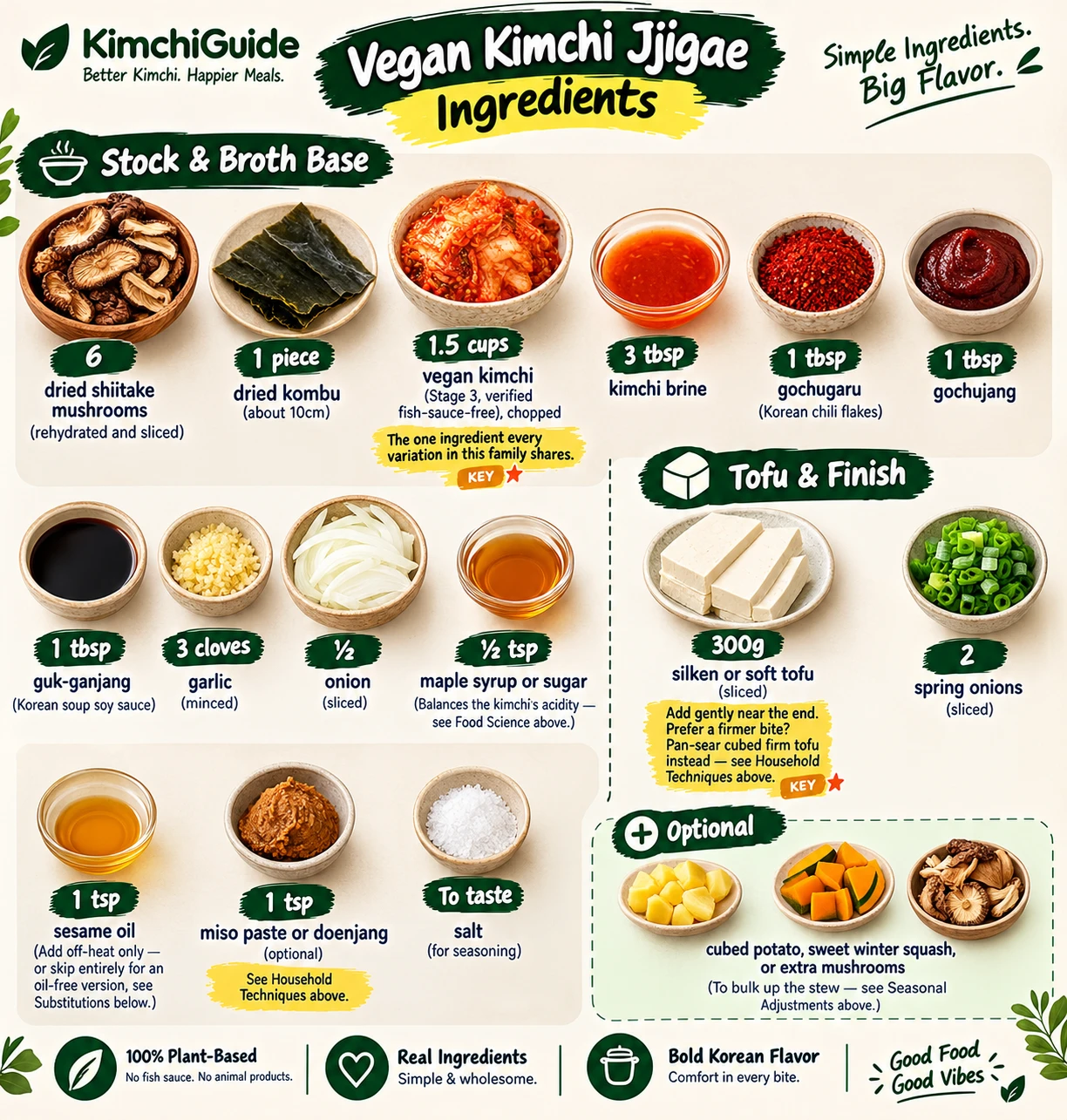
Ingredients + Scaler
Verified vegan kimchi and the shiitake-kombu stock are the two non-negotiables — everything else is standard pantry stock.
Substitutions & Allergen Notes
A few genuine swaps work directly in this recipe; bigger dietary needs are better served by a dedicated page.
Sourcing Guide — Finding Ingredients Outside Korea
The one ingredient that takes real effort to source correctly is the kimchi itself — everything else is a standard pantry stock.
How to Make Vegan Kimchi Jjigae — 5 Steps
Five steps, thirty minutes, most of it hands-off while the stock steeps.
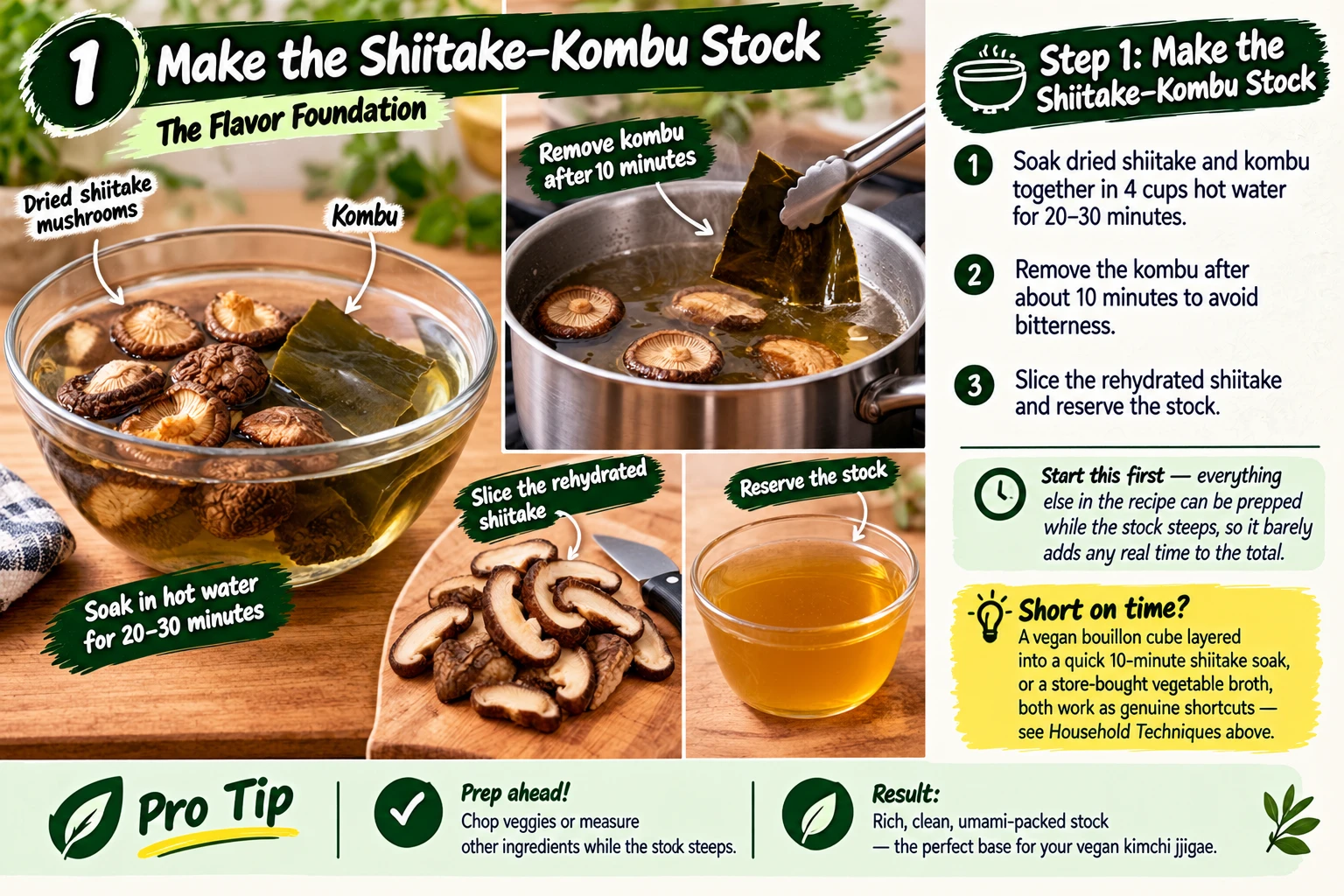
Soak dried shiitake and kombu together in 4 cups hot water for 20-30 minutes. Remove the kombu after about 10 minutes to avoid bitterness. Slice the rehydrated shiitake and reserve the stock.
Start this first — everything else in the recipe can be prepped while the stock steeps, so it barely adds any real time to the total. Short on time? A vegan bouillon cube layered into a quick 10-minute shiitake soak, or a store-bought vegetable broth, both work as genuine shortcuts — see Household Techniques above.
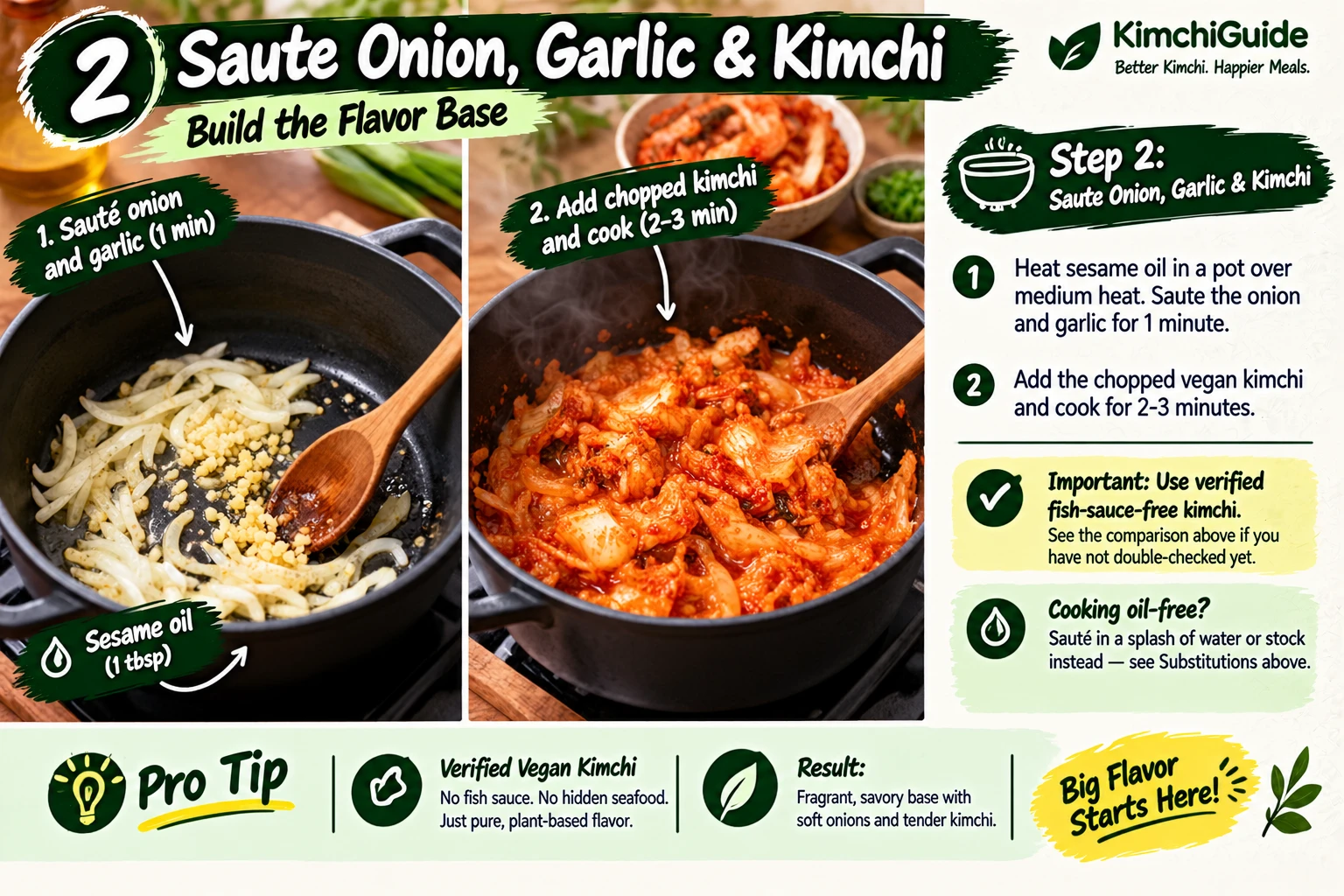
Heat sesame oil in a pot over medium heat. Saute the onion and garlic for 1 minute, then add the chopped vegan kimchi and cook 2-3 minutes.
Make sure this is verified fish-sauce-free kimchi — see the comparison above if you have not double-checked yet. Cooking oil-free? Sauté in a splash of water or stock instead — see Substitutions above.

Add the shiitake-kombu stock, sliced shiitake, kimchi brine, gochugaru, gochujang, guk-ganjang, and the maple syrup or sugar. Cover and simmer 12-15 minutes.
The guk-ganjang is doing real seasoning work here — do not skip it, since there is no meat or fish stock to fall back on for depth. The small amount of sweetener rounds out the kimchi’s acidity rather than making the broth taste sweet. If you have time, an extended simmer of up to an hour deepens the flavor further — see Household Techniques above.
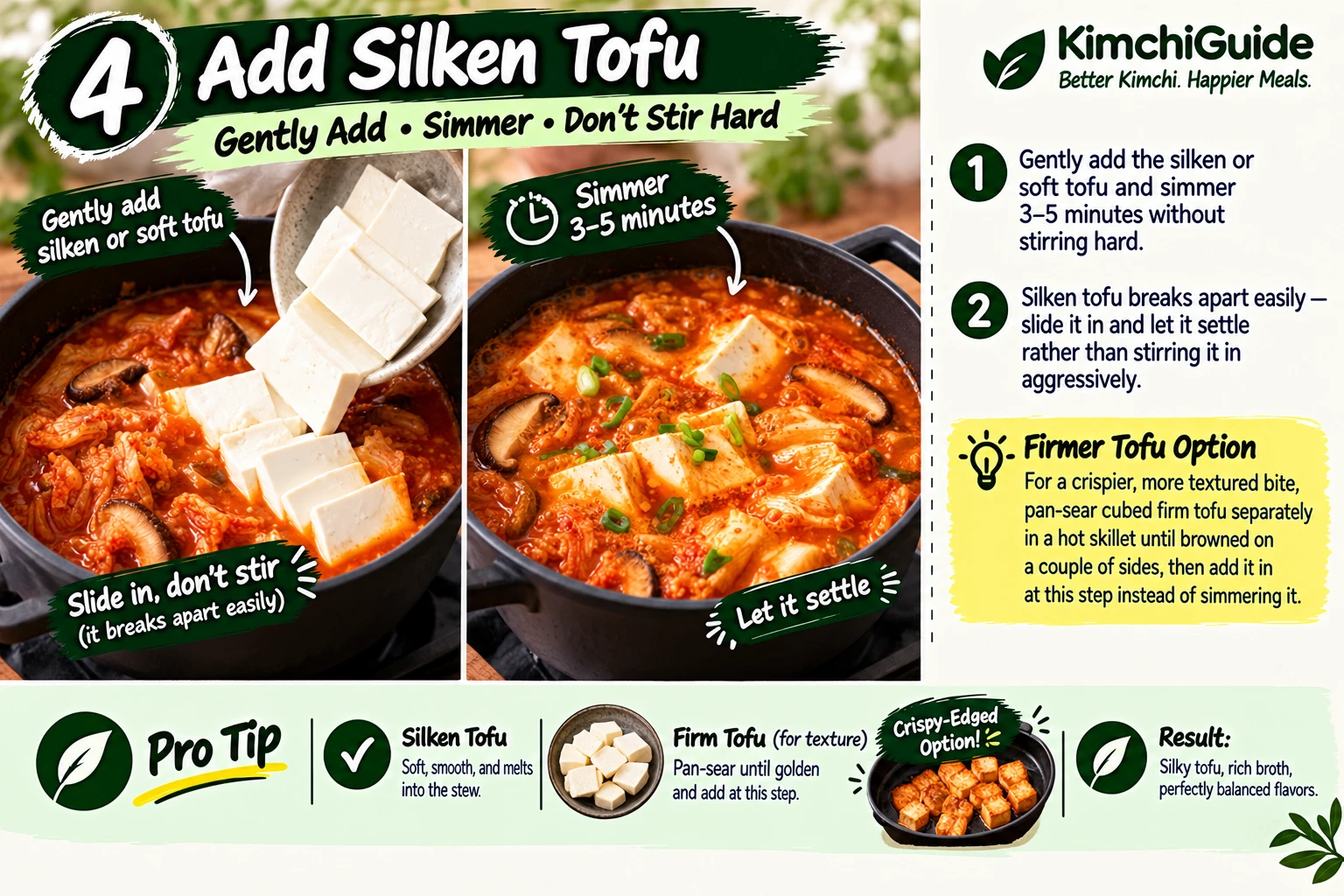
Gently add the silken or soft tofu and simmer 3-5 minutes without stirring hard.
Silken tofu breaks apart easily — slide it in and let it settle rather than stirring it in aggressively. For a firmer, crispy-edged bite instead, pan-sear cubed firm tofu separately in a hot skillet until browned on a couple of sides, then add it in at this step instead of simmering it.
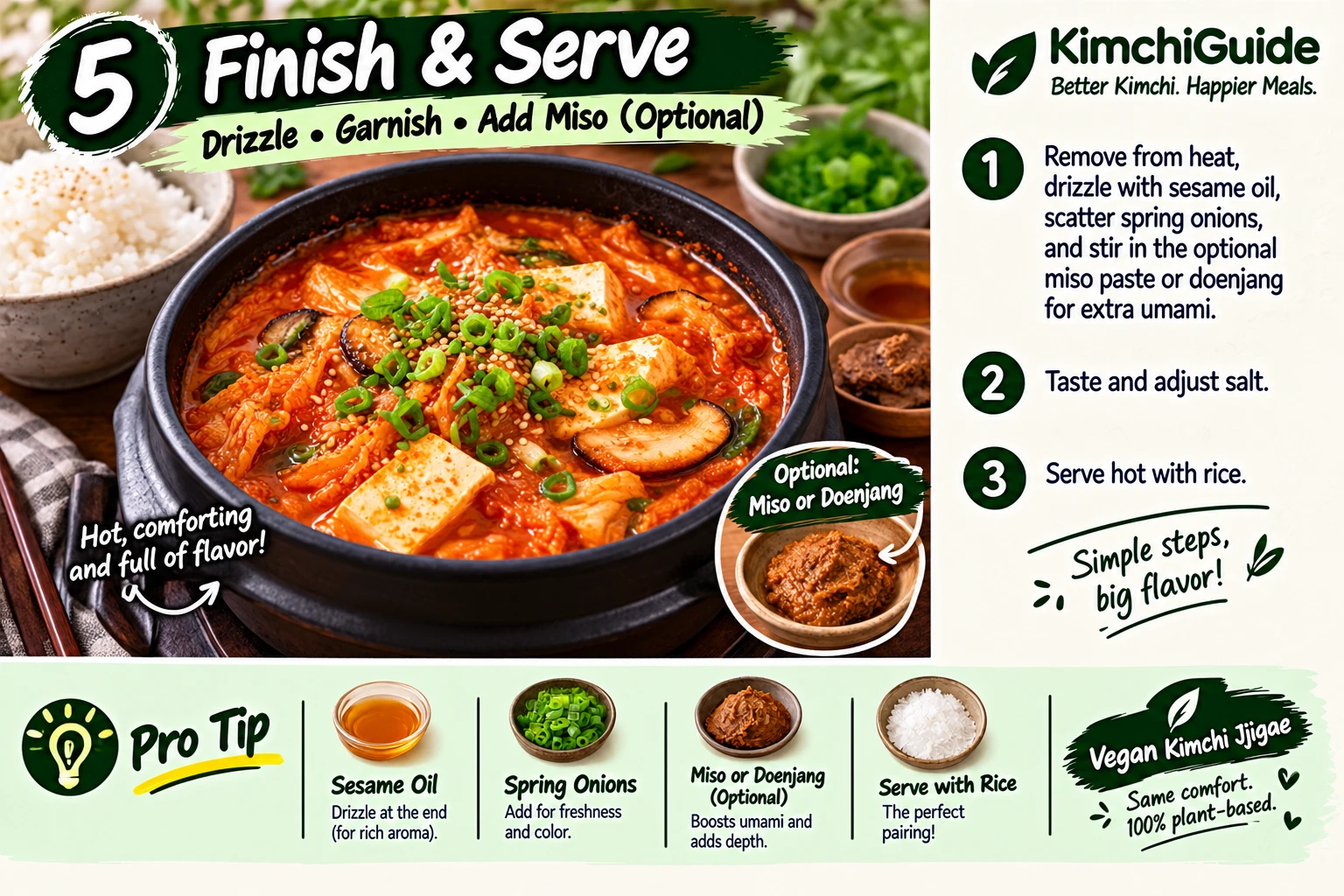
Remove from heat, drizzle with sesame oil, scatter spring onions, and stir in the optional miso paste or doenjang for extra umami. Taste and adjust salt.
Serve hot with rice.
The Science of Vegan Kimchi Jjigae
Two mechanisms explain how this recipe reaches real savory depth with no meat or fish anywhere in the pot.
Umami Synergy Without Animal Protein
Kombu is naturally high in free glutamates, and dried shiitake is naturally high in guanylates. Food-science research on umami consistently shows these two compounds combine synergistically rather than just additively, producing a savory effect noticeably stronger than either ingredient alone — the exact principle behind Japanese dashi. That synergy is doing the same job here that meat or fish stock does everywhere else in this family, which is why the stock genuinely needs both ingredients, not just one.
Fermented Soy as a Fish Sauce Substitute
Fish sauce delivers savoriness largely through free amino acids and glutamates produced during fermentation. Guk-ganjang, itself a fermented soy product, supplies a comparable amino-acid profile through an entirely different, plant-based fermentation process. Doenjang and miso work on the same underlying principle. That overlap in fermentation chemistry, more than any deliberate flavor-matching, is why these fermented soy products genuinely work as savory substitutes rather than just an approximation.
Why a Small Amount of Sweetness Helps
Aged kimchi’s lactic acid is sharp on its own, and in most versions of this dish, rendered meat fat quietly softens that sharpness. With no fat like that here, a small amount of maple syrup or sugar does a similar rounding job on the palate — not making the broth taste sweet, but keeping the acidity from dominating the finish.
What We Tested for the Vegan Version
Three variables genuinely mattered; here is what we found testing each of them side by side.
In every other recipe in this family, the protein does a lot of the flavor-building work. Here, with no meat or fish protein at all, the shiitake-kombu stock, the guk-ganjang, and a small amount of sweetness to balance the acidity carry disproportionately more of the final flavor — cutting corners on any of them showed up far more clearly in testing than a similar shortcut did in the meat-based versions.
Troubleshooting — Common Mistakes & How to Fix Them
Most problems with this recipe trace back to one of five issues below.
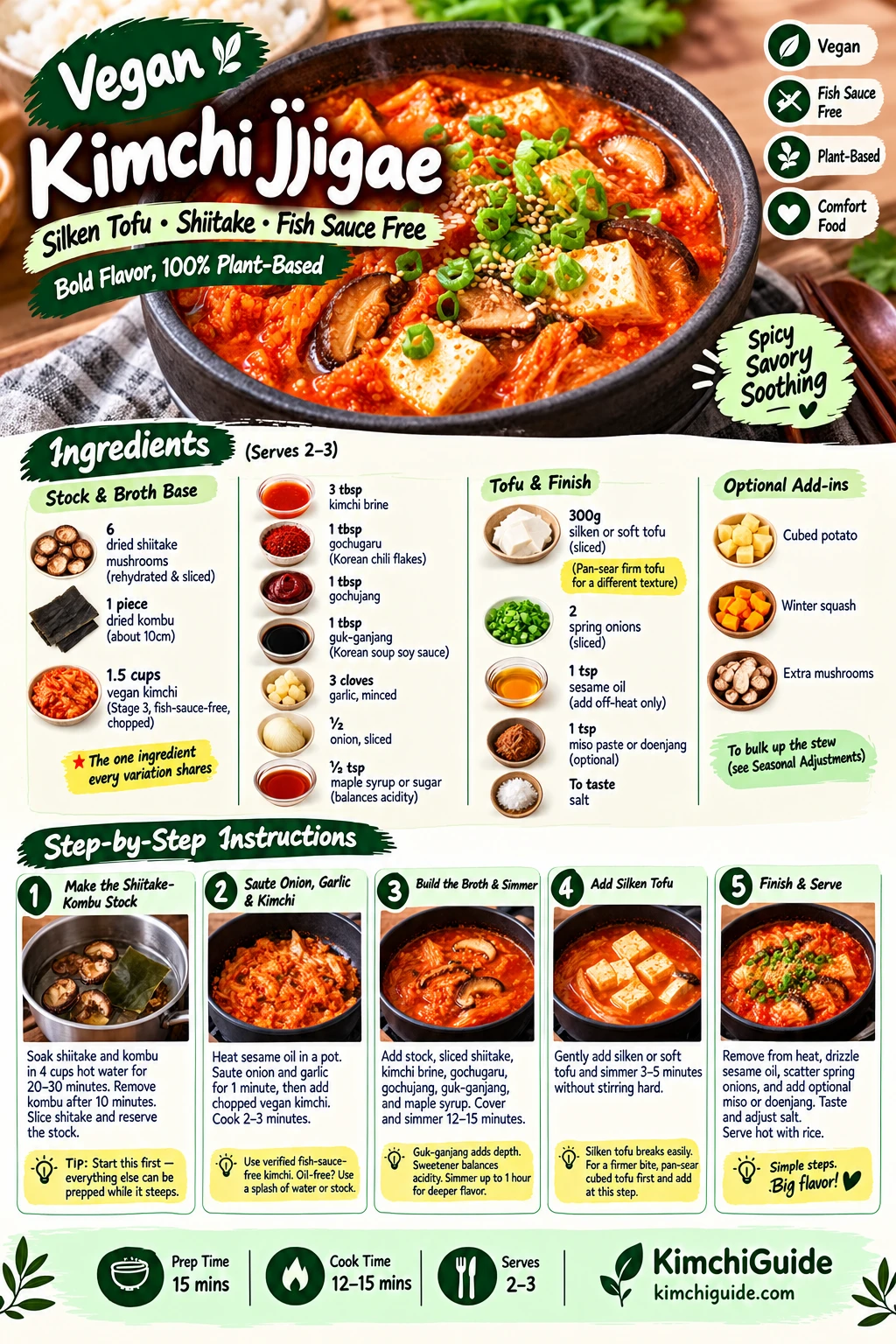
Vegan Kimchi Jjigae
Verified fish-sauce-free kimchi, a shiitake-kombu stock, and silken tofu, simmered into a rich, fully plant-based broth. No egg, no dairy, no fish sauce.
Ingredients
- 6 dried shiitake mushrooms, rehydrated and sliced
- 1 piece (10cm) dried kombu
- 1.5 cups vegan kimchi (Stage 3, verified fish-sauce-free), chopped
- 3 tbsp kimchi brine
- 1 tbsp gochugaru
- 1 tbsp gochujang
- 1 tbsp guk-ganjang (Korean soup soy sauce)
- 3 cloves garlic, minced
- ½ onion, sliced
- ½ tsp maple syrup or sugar
- 300g silken or soft tofu, sliced (or pan-seared firm tofu, see notes)
- 2 spring onions, sliced
- 1 tsp sesame oil
- 1 tsp miso paste or doenjang, optional
- Salt, to taste
Instructions
- Soak shiitake and kombu in 4 cups hot water 20-30 min. Remove kombu after 10 min. Slice shiitake, reserve stock.
- Saute onion and garlic in sesame oil 1 min, add kimchi, cook 2-3 min.
- Add stock, sliced shiitake, brine, gochugaru, gochujang, guk-ganjang, and maple syrup or sugar. Cover, simmer 12-15 min.
- Gently add tofu, simmer 3-5 min without stirring hard. (Or add pre-seared firm tofu here instead.)
- Remove from heat, add sesame oil, spring onions, optional miso or doenjang. Taste and adjust salt. Serve hot with rice.
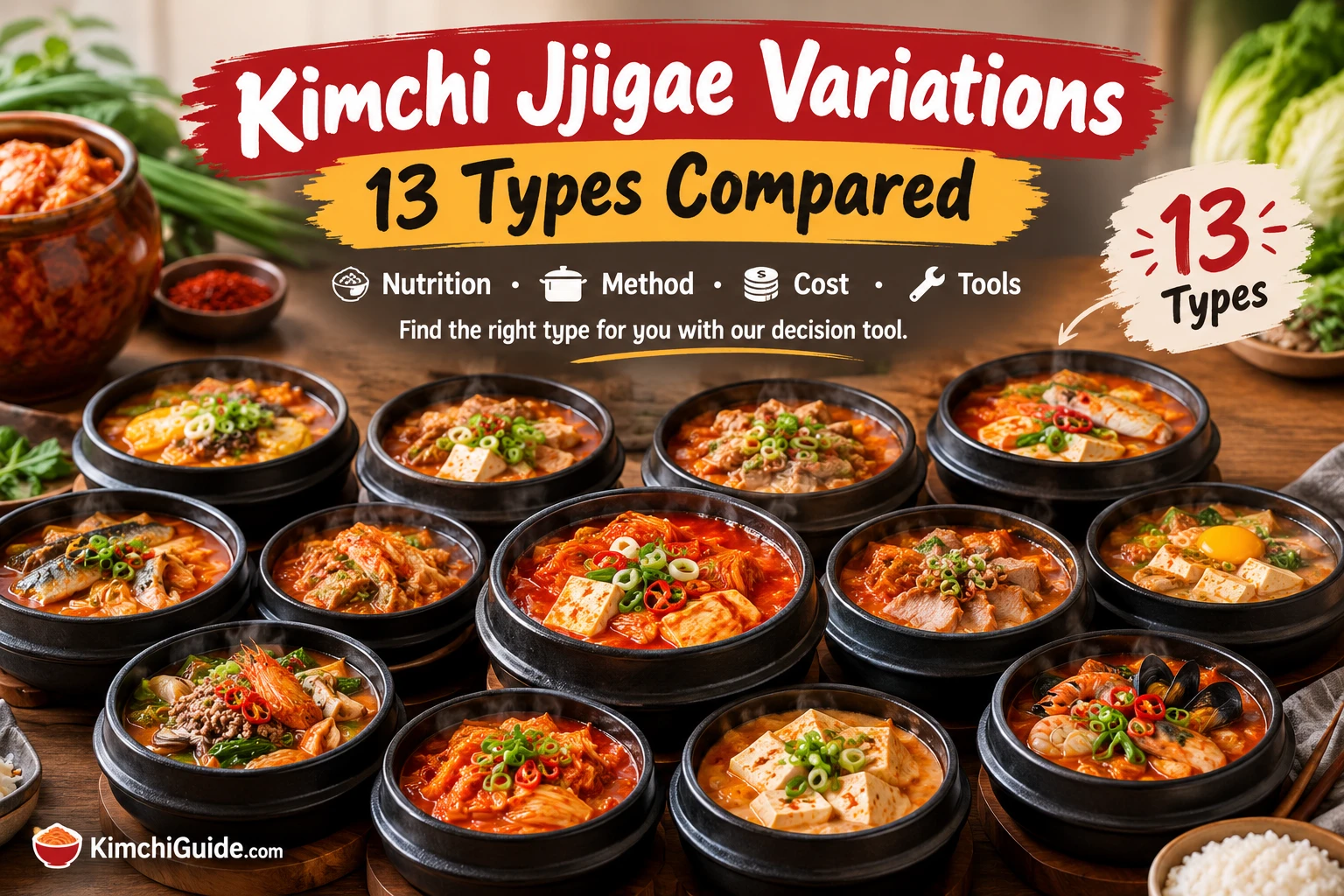
The Kimchi Jjigae Family — 13 Variations
Every recipe below branches from the same base technique on the Classic (Pork) pillar page. Egg and dairy OK for you? See Vegetarian → instead. The Kimchi Jjigae Ultimate Guide → compares every variation as it publishes.








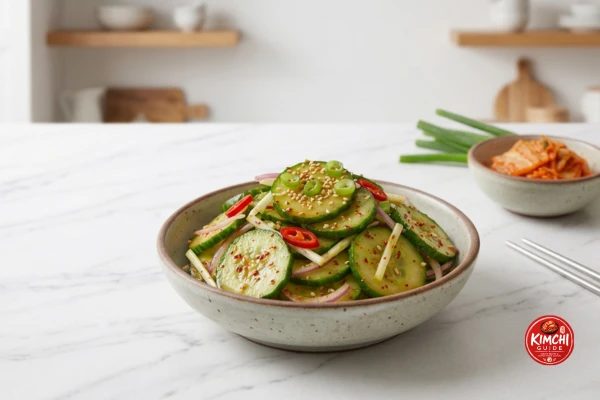
Pairing Guide — Vegan Version
All standard banchan pairings work here — just double-check that any side dishes are also genuinely plant-based if you are serving this to a strictly vegan guest.
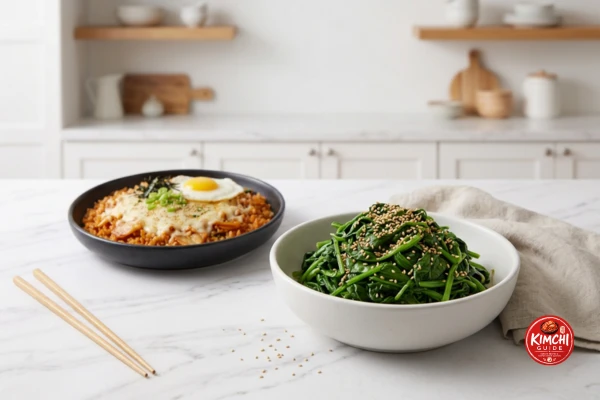
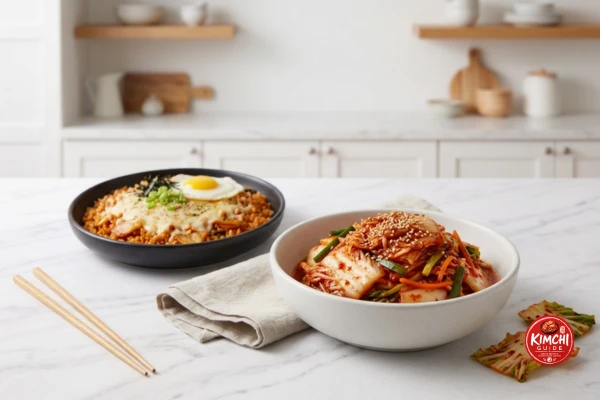

Restaurant vs Homemade Vegan Kimchi Jjigae
A genuinely vegan kimchi jjigae is rare on restaurant menus, since most kitchens use standard anchovy-based stock and regular kimchi by default.
| Factor | Restaurant Version (Rare) | This Homemade Recipe |
|---|---|---|
| Availability | Rare — most restaurant kimchi jjigae uses anchovy stock and regular kimchi by default | Always available once you have verified vegan kimchi on hand |
| Kimchi Verification | Almost never confirmed unless explicitly marketed as vegan | You control it entirely — see the comparison above |
| Stock Base | Typically anchovy-kelp by default, even at restaurants marketing meatless options | Genuine shiitake-kombu stock, built specifically to be plant-based |
| Cross-Contamination Risk | Shared kitchen equipment and stock pots are a real concern for strict vegans | None — you control every ingredient and every pot |
| Cost per Serving | N/A — rarely offered as a genuine vegan option | Roughly $3-4 per serving, mostly driven by dried shiitake and kombu |
Storage & Reheating — Vegan Version
Like most kimchi jjigae variations, the broth genuinely improves after a day in the fridge.
Meal Prep — Batch-Cooking This Recipe for the Week
The stock and broth base batch well, making this a genuinely good option for weekly plant-based meal prep.
Detailed Nutrition Comparison — All 13 Published Versions
A complete per-serving breakdown, reviewed by Dr. Sarah Mitchell RD, PhD, alongside how this Vegan recipe compares to every other version currently published in the family — it is the lightest on saturated fat of them all.
Nutrition Facts
Per serving — recipe makes 4 servings
How the Vegan Version Compares to the Rest of the Family
| Variation | Calories | Protein | Sat. Fat | Sodium | Best For |
|---|---|---|---|---|---|
| Kimchi Guk | 130 | 9g | 1g | 620mg | Lightest overall calorie count in the family |
| Vegan ← This page | 200 | 12g | 1.5g | 650mg | Lowest saturated fat, fully plant-based |
| Seafood Jjigae | 210 | 20g | 1.5g | 780mg | Lean, low-sodium seafood option |
| Vegetarian | 220 | 13g | 2.5g | 710mg | Meatless, egg and dairy allowed |
| Tuna (Chamchi) | 260 | 24g | 3g | 780mg | Highest protein-to-calorie ratio in the family |
| Chicken | 280 | 25g | 3g | 820mg | Lean, high-protein |
| Instant Pot & Slow Cooker | 310 | 19g | 6g | 940mg | Same as Classic — hands-off convenience |
| Classic (Pork) | 320 | 18g | 7g | 980mg | The reference point — moderate on every measure |
| Beef | 340 | 24g | 8g | 1010mg | Richest meat-based option |
| Spam | 380 | 16g | 11g | 1420mg | Richest, saltiest — an occasional indulgence |
Sources & Further Reading
The history, food-science, and nutrition claims on this page are cross-checked against the following references.
Vegan Kimchi Jjigae FAQ — 18 Questions
Vegan kimchi jjigae is a fully plant-based version of the Korean stew, built from verified fish-sauce-free kimchi, a shiitake-kombu stock in place of the usual anchovy-kelp stock, and tofu. No egg, no dairy, no fish sauce, and no salted shrimp anywhere in the recipe.
Usually not. Most traditional and store-bought kimchi contains fish sauce or salted shrimp as a fermentation and flavor booster. Genuinely vegan kimchi is made without either, using alternative umami sources instead. Check the label, or see the sourcing guidance above.
The Vegetarian Kimchi Jjigae recipe on this site allows egg and dairy and does not require verifying the kimchi itself. This Vegan recipe requires both a confirmed fish-sauce-free kimchi and a plant-based stock, with no egg or dairy anywhere in the dish.
A stock made from dried shiitake mushrooms and kombu, steeped together in hot water. It delivers a similar depth of umami through glutamates from the kombu and guanylates from the shiitake, the same synergy that makes Japanese dashi work.
Guk-ganjang, or Korean soup soy sauce, is a lighter, saltier soy sauce made specifically for seasoning soups and stews rather than for dipping. It is a staple of Buddhist temple cooking and adds savory depth without any animal-derived ingredients.
Look for kimchi labeled vegan specifically, such as Mother-in-Law’s, Sunja’s, Choi’s Kimchi Company, or certain Pulmuone products, widely available at Korean grocery stores like H-Mart or at Whole Foods. Always check the ingredient list for fish sauce or shrimp regardless of the label. See the Sourcing Guide above for the full breakdown.
Yes. Homemade vegan kimchi typically replaces fish sauce with a fruit-and-vegetable stock, such as pear and apple, plus guk-ganjang for savory depth, following a Buddhist temple cooking approach to fermentation without animal products.
Silken or soft tofu is more traditional for this lighter, plant-forward style, though firm tofu also works well if you prefer more structure. For a firmer, crispy-edged bite, pan-sear cubed firm tofu separately and add it at the end instead of simmering it in.
About 30 minutes total, including the shiitake-kombu stock, which steeps for 20-30 minutes and can be started first while you prep everything else. For deeper flavor, the broth base can also be simmered longer, up to an hour, before the tofu goes in.
Yes, it is one of the lighter versions in the family, lower in saturated fat than any meat-based or egg-containing variation, with fiber and plant protein from the tofu and mushrooms. See the full nutrition comparison above.
Yes, a small amount of miso paste or doenjang (Korean fermented soybean paste) stirred in near the end adds extra umami depth and is a genuinely good optional booster, though the recipe works well without it too.
Check your guk-ganjang and gochujang brands specifically, since some contain wheat. Tamari can replace guk-ganjang for a gluten-free version, though the flavor will be slightly different.
The stock and broth base can be made ahead and refrigerated. Add the tofu fresh when reheating for the best texture, since silken tofu especially can break down if reheated repeatedly.
Freeze the broth base for up to 2 months, but add fresh tofu when reheating rather than freezing it in, since tofu texture changes noticeably after a freeze-thaw cycle.
Almost always means the stock was under-steeped, the guk-ganjang was skipped, or the kimchi was under-fermented. A small pinch of sugar or maple syrup can also help round out a broth that tastes sharp or one-note. All of these genuinely contribute meaningful balance in a recipe with no meat or fish stock to fall back on.
Zucchini, mushrooms such as king oyster or enoki, Korean radish, potato, or a sweet winter squash like Crown Prince pumpkin all work well added alongside the tofu, following the same technique as the base recipe.
Yes. Beyond extra tofu, cubed tempeh or sliced seitan both work well added alongside the mushrooms for a heartier, higher-protein version.
Yes. Saute the onion, garlic, and kimchi in a splash of the shiitake-kombu stock or water instead of sesame oil, and add the sesame oil, if using, only as a finishing drizzle off-heat.
Questions & Comments
Found a good vegan kimchi brand near you? Leave a question or tip below — Ji-Young reads and responds to every comment.
Your email will not be published. All comments are reviewed before appearing.