KimchiGuide Kimchi Recipes Kimchi Fried Rice Cauliflower Version
🥦 6 Batches Tested · Dry-Fry Moisture Method · ~180 Calories

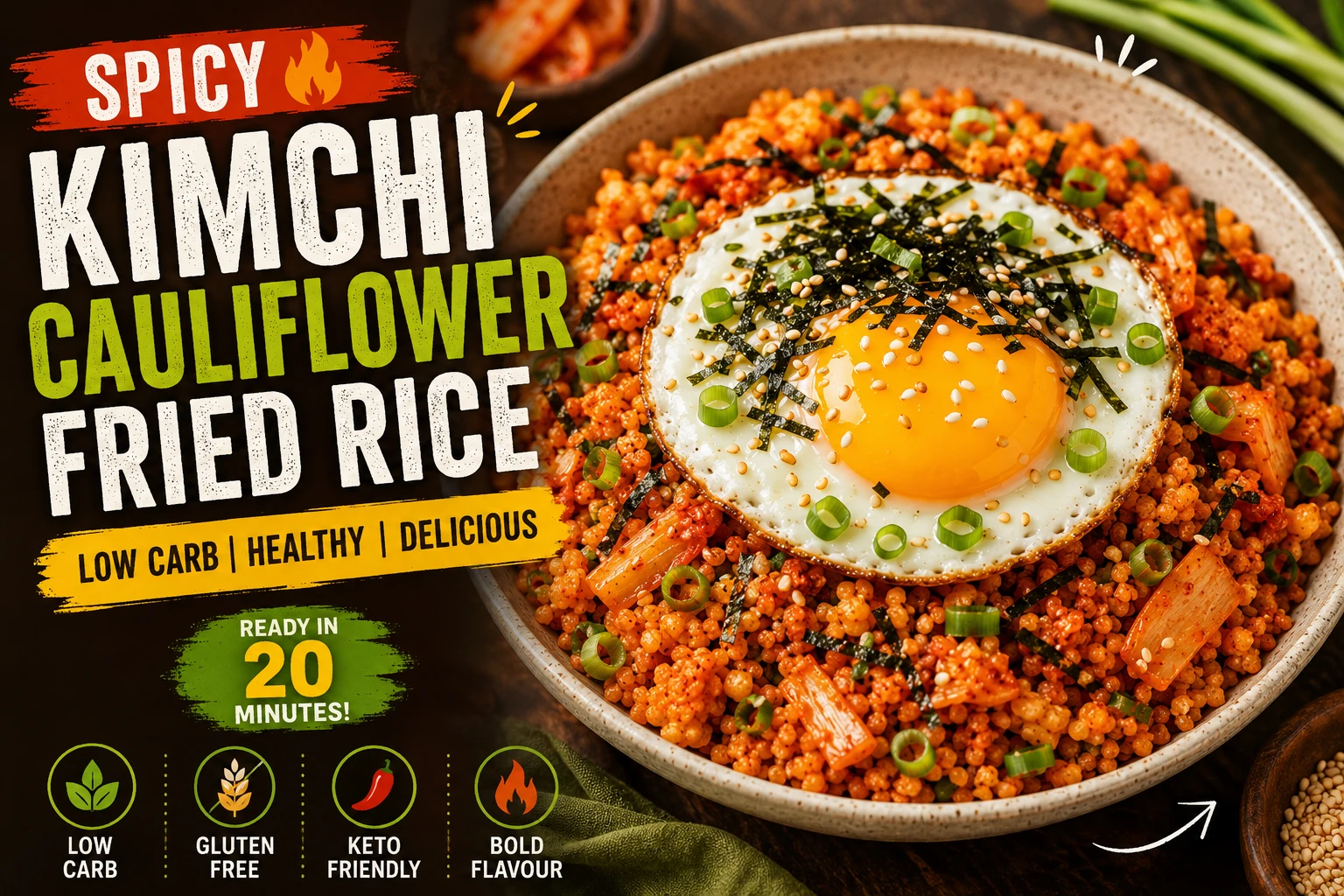
Kimchi Cauliflower Fried Rice (콜리플라워 김치볶음밥 — Low-Carb Kimchi Bokkeumbap)

All the flavour of kimchi fried rice, 60% fewer calories. This riced cauliflower kimchi bokkeumbap uses the dry-fry moisture method — the difference between mushy cauliflower rice and a genuinely fried, lightly charred result. Six riced cauliflower options ranked. Keto and low-carb friendly at roughly 180 calories and 10g net carbs.

25m
Total
Easy
Level
10g
Net Carbs
180
Calories
2
Serves
📅 Published: · 🔄 Updated: · ✅ Reviewed: Dr. Sarah Mitchell RD, PhD
📖
This is a variation page — Cauliflower (Low-Carb) Version Full guide with all 9 variations: KFR Ultimate Guide →  ·  Without Egg →  ·  Classic →  ·  Vegan →  ·  All Kimchi Recipes →
⚡ Quick Answer

What Is Kimchi Cauliflower Fried Rice?

Kimchi cauliflower fried rice — 콜리플라워 김치볶음밥 — replaces grain rice with riced cauliflower to cut calories and carbohydrates by roughly 60% while keeping the same kimchi and gochujang flavour base. The technique hinges on one variable: moisture. Riced cauliflower releases significant water as it cooks, so it must be dry-fried separately in a hot, dry pan first to drive off that moisture and develop light char before it ever touches kimchi juice or seasoning. Skip this step and the dish turns to mush. Get it right and this low-carb kimchi rice takes on a genuinely fried, lightly nutty texture. Serves 2 in 25 minutes at approximately 180 calories and 10g net carbs per serving — the lowest-calorie KFR variation by a wide margin.

Quick Steps

How to Make Kimchi Cauliflower Fried Rice

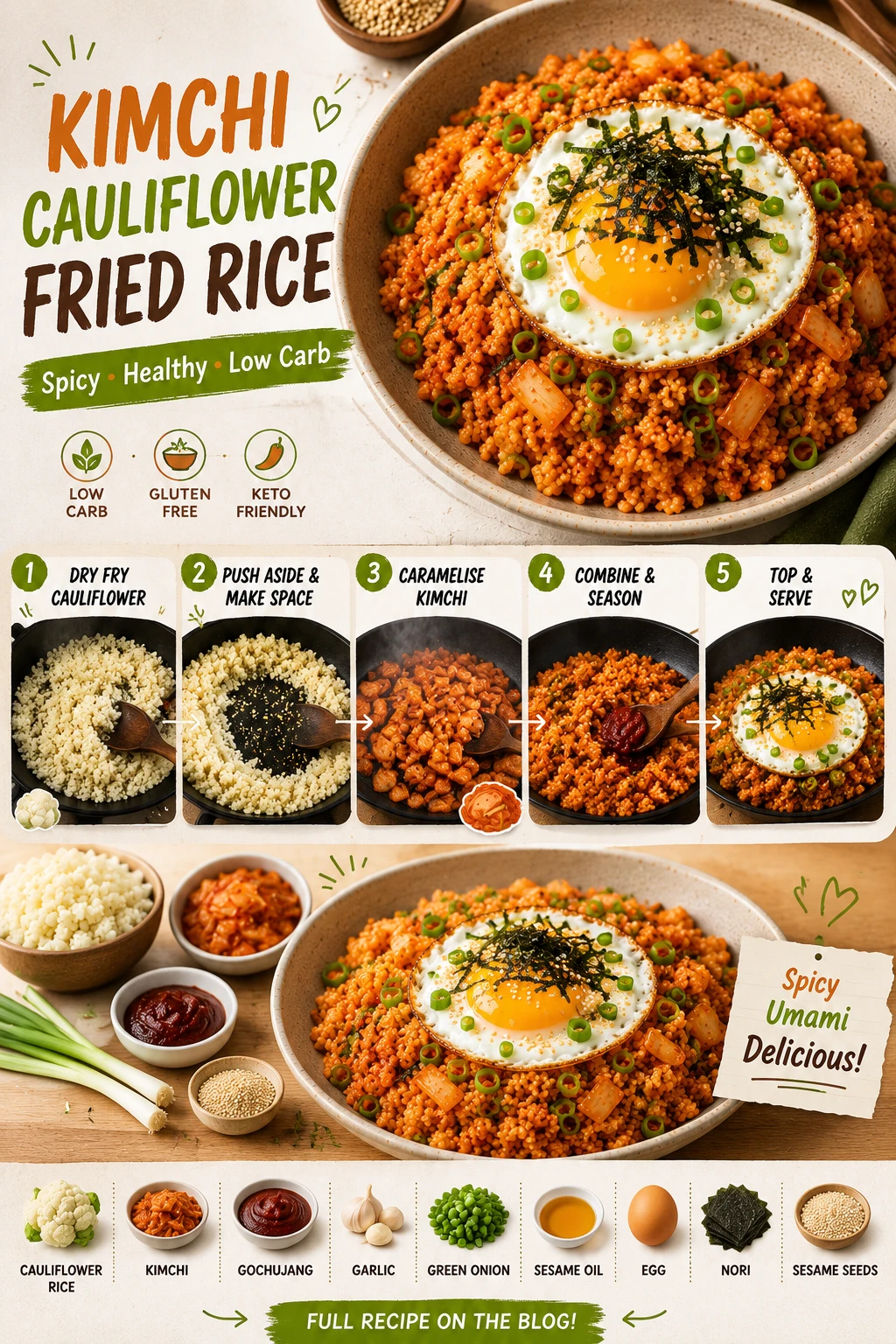
This keto kimchi fried rice takes 25 minutes: rice and dry the cauliflower, dry-fry it alone until golden and moisture-free, caramelise Stage 3 kimchi in the same pan, combine with a short 90-second toss, and top with a baste-fried egg — at roughly 180 calories and 10g net carbs per serving.

  1. Prep: rice the cauliflower and pat it as dry as possible.
  2. Dry-fry: fry the cauliflower alone in a hot, dry pan, 5–6 minutes, until visibly drier and lightly golden.
  3. Caramelise: fry squeezed Stage 3 kimchi in the same pan, 3 minutes.
  4. Combine: toast gochujang, return the cauliflower rice, toss with reduced kimchi juice for 90 seconds only.
  5. Finish: off heat, stir in sesame oil, top with a baste-fried egg and serve immediately.
Kimchi Cauliflower Fried Rice — Key Facts & Reference Data
Verified by Ji-Young Park · Reviewed by Dr. Sarah Mitchell RD, PhD
Why moisture is the make-or-break variable
Cauliflower is roughly 92% water by weight. Grain rice already has most of its water cooked out before it hits the pan, but riced cauliflower goes in nearly raw and wet. Without a dedicated dry-fry step to evaporate that water first, the dish steams rather than fries.
Net carbs — the keto-relevant number
Total carbohydrate is approximately 14g per serving, of which about 4g is fibre, giving net carbs of roughly 10g — the figure that matters for keto and low-carb tracking. This compares to 56g total carbohydrate in the classic grain-rice version.
Fresh vs frozen riced cauliflower
Fresh riced cauliflower needs a shorter dry-fry (5-6 minutes) and holds slightly better texture. Frozen carries more water from the freeze-thaw process and must be fully thawed and squeezed dry before it reaches the pan.
Which kimchi stage to use
Stage 3 aged kimchi (2-4 weeks, pH ≈ 4.2) is optimal — its developed glutamates and acidity carry flavour through cauliflower’s milder, slightly sweet base far better than fresh kimchi does.
Why the final toss stays short
Once cauliflower rice has been dry-fried, it is nearly cooked through. The final combine-and-season step is intentionally brief — around 90 seconds — since continued cooking with liquid breaks down cell walls further.
Nutrition per serving with egg
Per serving (approx. 320g, with 1 baste-fried egg): 180 calories · 10g protein · 14g total carbohydrate (4g fibre, ~10g net) · 11g fat (3g saturated) · 780mg sodium. A roughly 60% calorie reduction versus the classic recipe’s 420 calories. Reviewed by Dr. Sarah Mitchell RD, PhD.
Citation: Ji-Young Park, KimchiGuide.com — “Kimchi Cauliflower Fried Rice (콜리플라워 김치볶음밥) — Low-Carb Complete Guide.” Published July 3, 2026. Updated July 9, 2026. Reviewed by Dr. Sarah Mitchell RD, PhD. URL: https://kimchiguide.com/kimchi-cauliflower-fried-rice/
25m
Total time to plate
2
Moisture methods compared
6
Riced cauliflower options ranked
180
Calories — lowest KFR
10g
Net carbs per serving
Food Science

Why Cauliflower Works as a Kimchi Fried Rice Base

Cauliflower is not a compromise substitute — it has genuine structural and nutritional reasons for working well against kimchi’s bold fermented flavour, alongside real technique challenges worth understanding. This is the same low-carb Korean rice logic behind most riced-cauliflower kimchi bokkeumbap recipes.
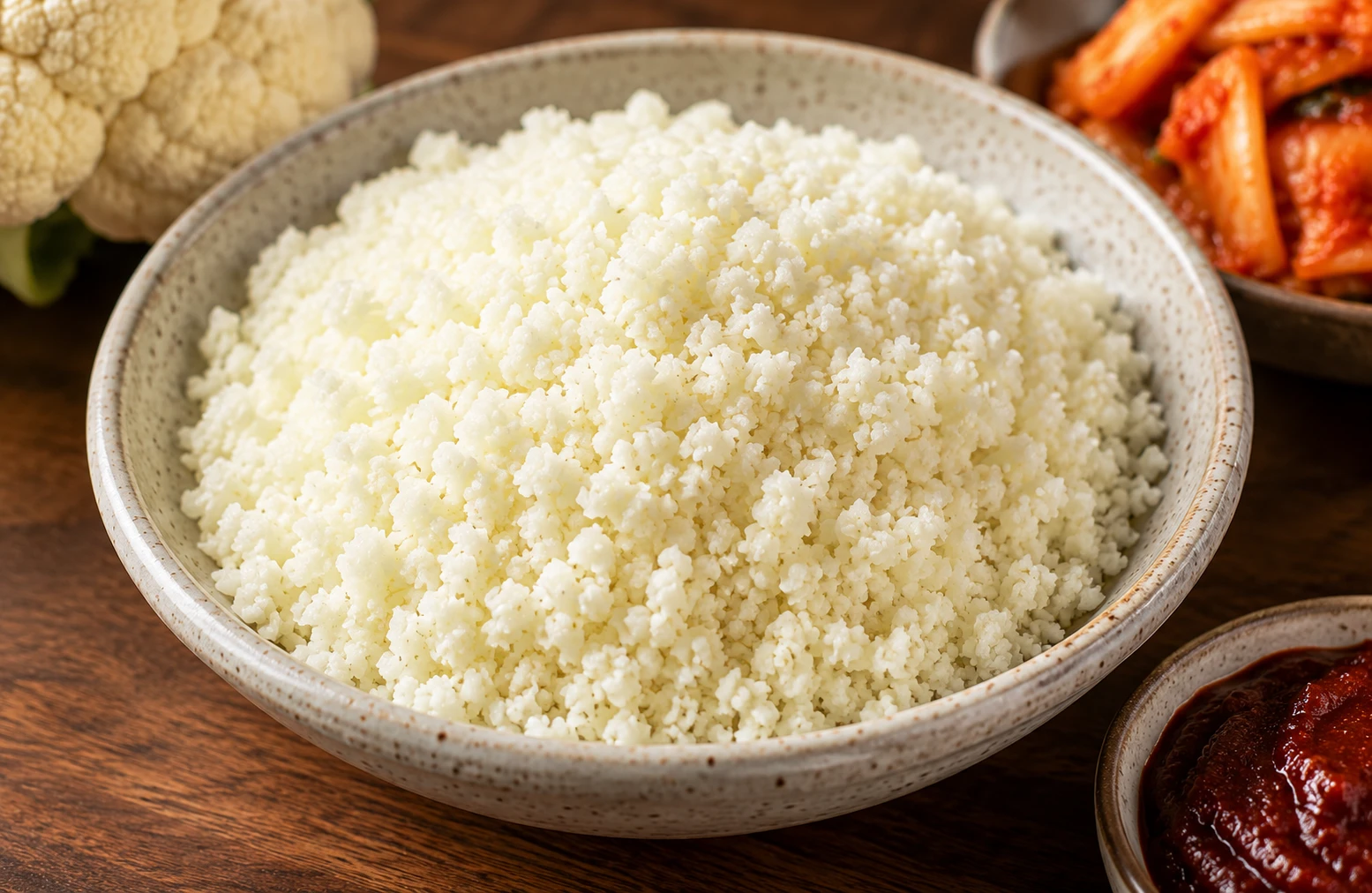
Riced cauliflower neutral flavour canvas absorbing kimchi gochujang seasoning
A Neutral Canvas for Bold Flavour

Cauliflower’s mild, slightly sweet flavour does not compete with kimchi’s acidity and gochujang’s depth the way a starchier vegetable might, making it an unusually good match for a strongly seasoned dish.
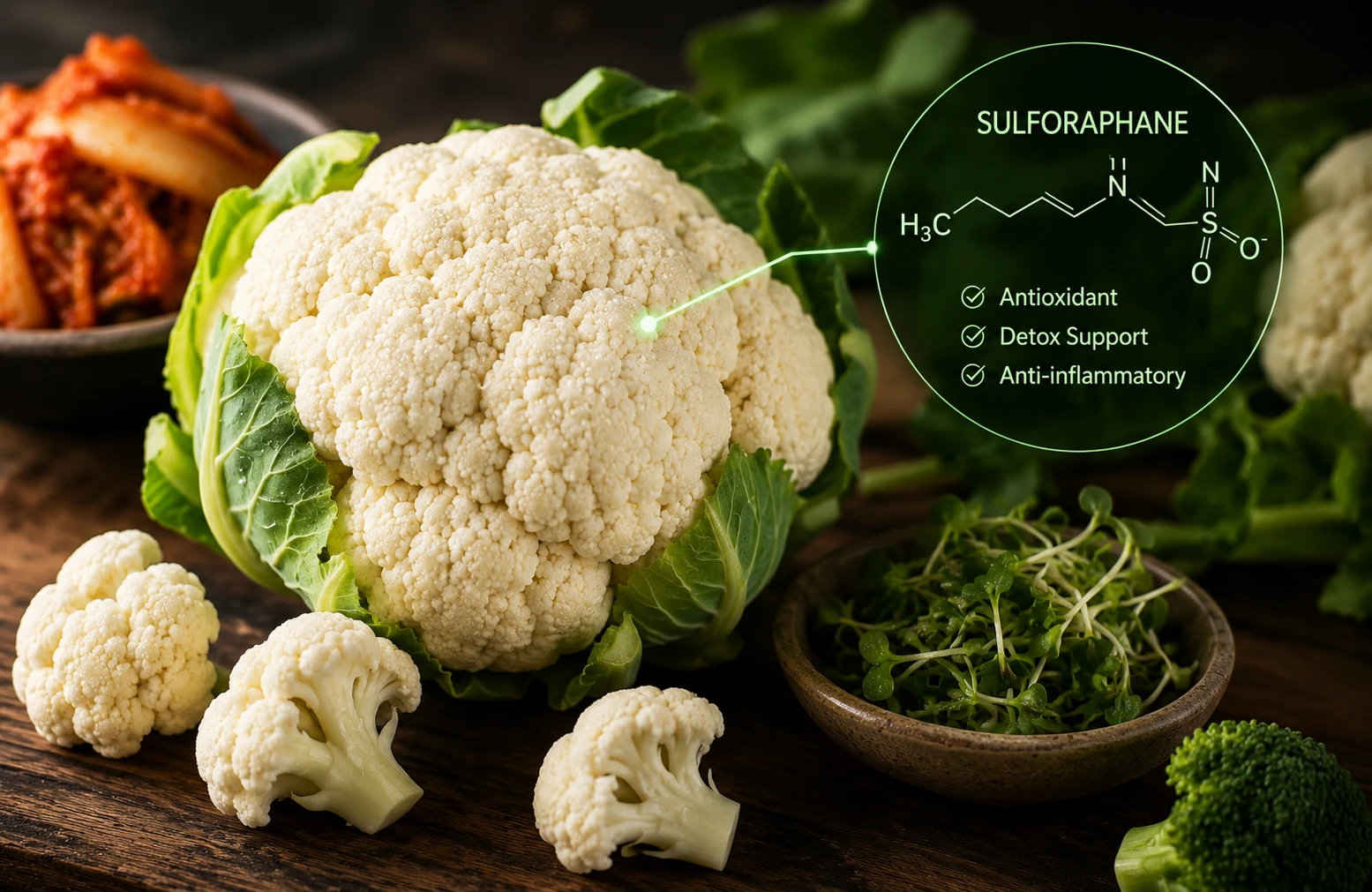
Cruciferous cauliflower sulforaphane compounds nutritional benefit kimchi fried rice
Cruciferous Compounds — A Different Nutritional Profile

Cauliflower belongs to the same brassica family as broccoli and cabbage, contributing glucosinolates that break down into sulforaphane. Grain rice contributes resistant starch instead — genuinely complementary benefits, not one simply being lesser.
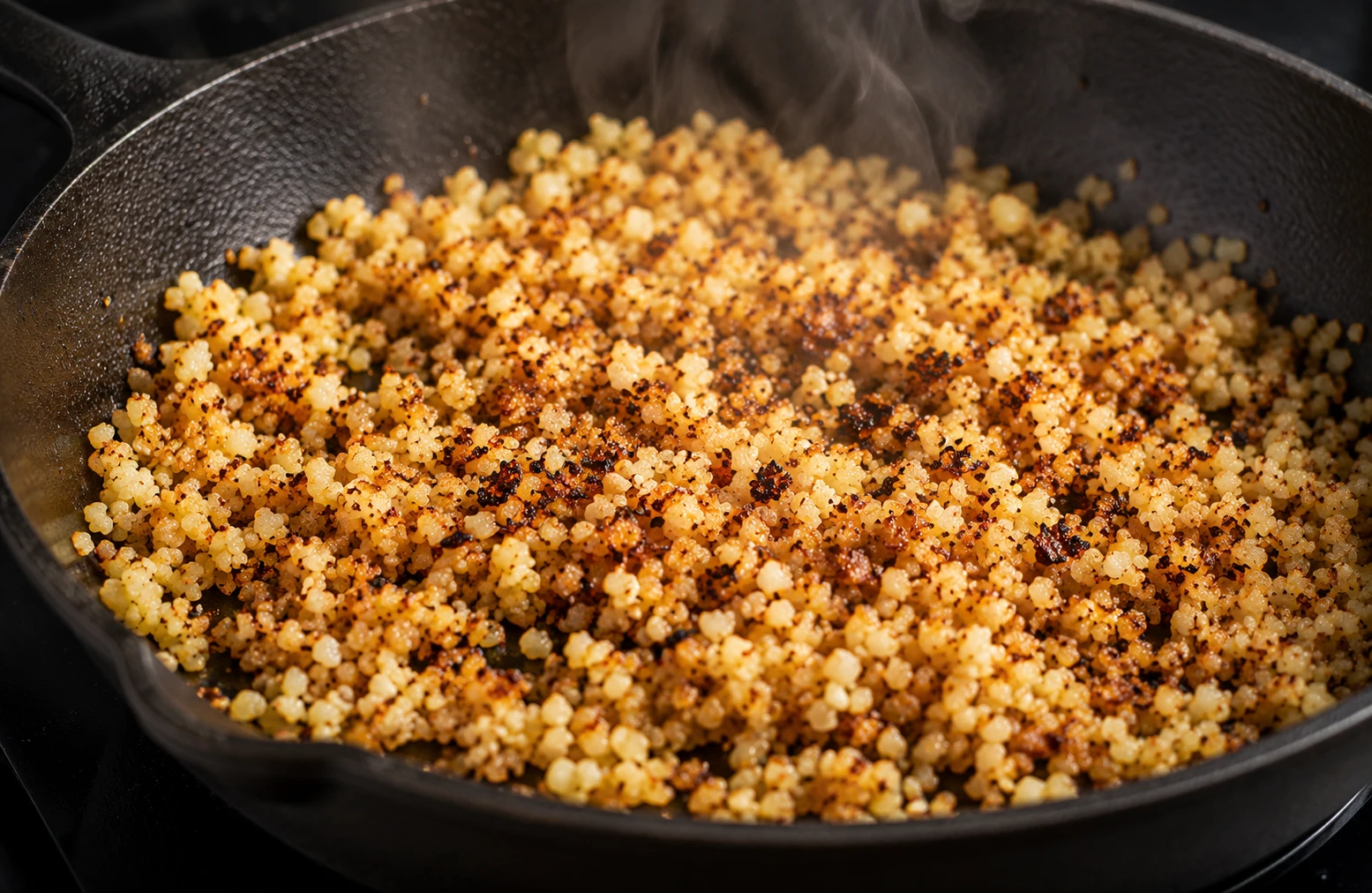
Dry fry Maillard reaction golden char developing on riced cauliflower in cast iron pan
Char Develops Real Fried-Rice Flavour

Steamed or boiled cauliflower rice tastes flat because it never undergoes the Maillard reaction. Dry-frying develops the same roasted, nutty depth that makes grain fried rice taste like fried rice.
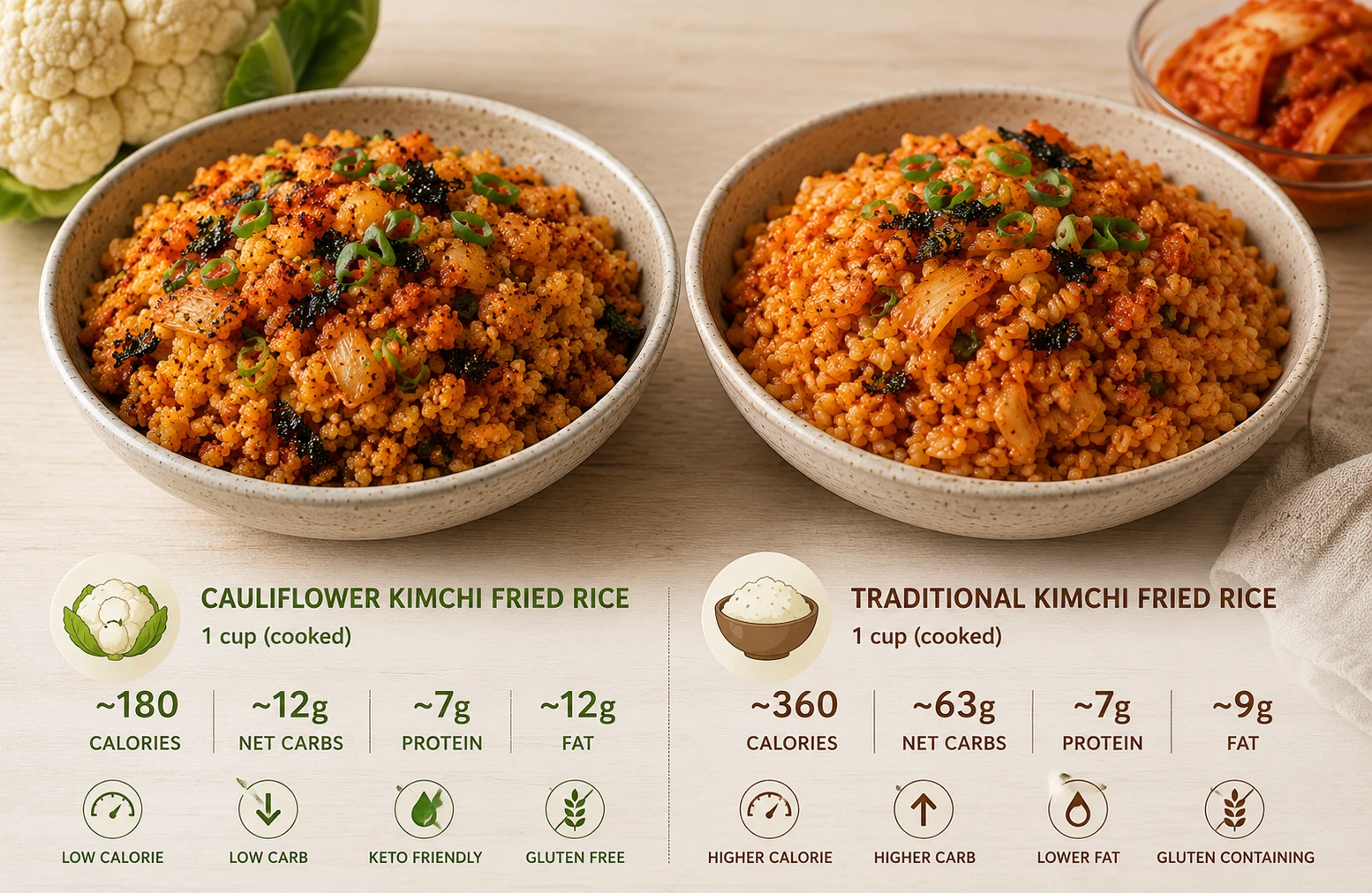
Low carb calorie comparison cauliflower versus grain rice kimchi fried rice nutrition
The Calorie Math — Why the Drop Is So Large

Two cups of cooked grain rice carries roughly 240 calories and 52g of carbohydrate. The equivalent volume of riced cauliflower carries closer to 50 calories and 10g — the base swap alone accounts for nearly the entire reduction.

The Core Technique Decision

Moisture Is the Enemy — Dry-Fry vs Steam-Then-Drain

Every failed cauliflower fried rice recipe online skips this comparison. We tested both across 6 batches. The difference determines whether the dish tastes fried or boiled.
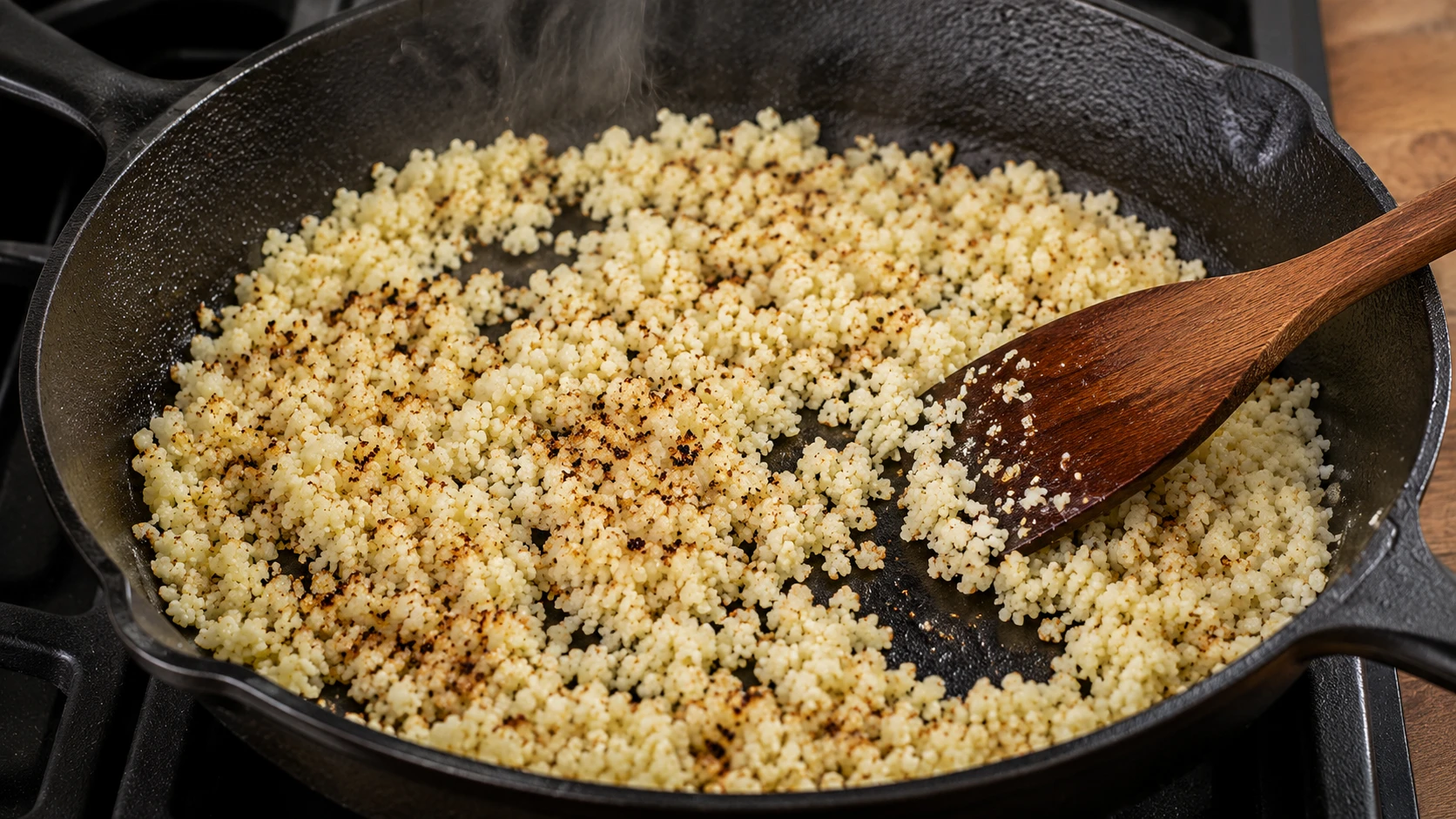
Dry fry method riced cauliflower thin layer cast iron pan moisture evaporating golden char
⭐ Recommended — Always Use This
Dry-Fry Method
  • Rice the cauliflower, pat as dry as possible
  • Spread in a thin, even layer in a hot dry pan
  • Leave undisturbed 3 minutes so steam escapes upward
  • Toss and repeat 5-6 minutes total until visibly drier
  • Remove and reserve before saucing separately

Result: Water evaporates off before any sauce is added. Distinct grains with lightly charred edges. The correct technique in every batch test.
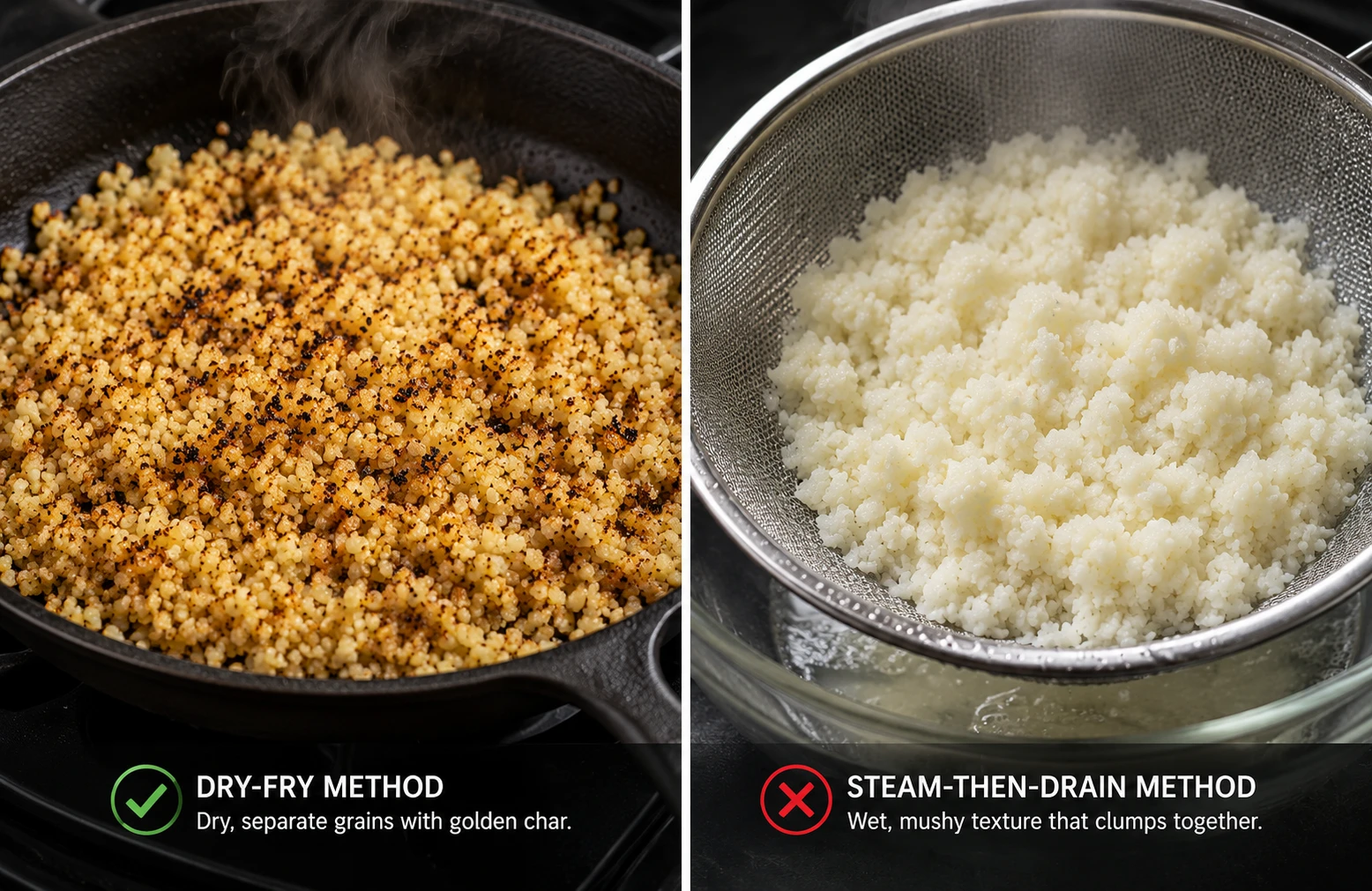
Steam then drain method riced cauliflower comparison mushy texture result
✗ Not Recommended
Steam-Then-Drain Method
  • Steam or microwave riced cauliflower until tender
  • Drain in a colander, pressing to remove liquid
  • Add directly to the pan with kimchi and seasoning
  • Water continues to release during the final toss

Result: Softer, wetter, closer to porridge than fried rice. Clearly inferior across every test batch.

Method Comparison at a Glance

MethodMoisture RemovedTimeFinal TextureVerdict
Dry-Fry ⭐Maximum5-6 minDistinct grains, light charAlways use this
Steam-Then-DrainMinimal4-5 minSoft, wet, porridge-likeAvoid — do not steam first
Key Terms Explained

Key Terms — Language & Food Science Entities

These terms define exactly what this dish is, why the dry-fry step matters, and what the nutrition numbers behind the low-carb positioning actually mean.

Essential Terminology — 콜리플라워 김치볶음밥
콜리플라워 / Cauliflower
The Korean loanword transliteration of “cauliflower.” Riced cauliflower as a rice substitute was adopted primarily through international low-carb and keto diet trends rather than traditional cuisine.
순 탄수화물 / Net Carbs
Total carbohydrate minus fibre — the figure most commonly tracked on low-carb and ketogenic diets. This recipe’s roughly 10g net carbs per serving is the number that matters for that kind of tracking.
Maillard Reaction on Vegetables
The same browning reaction responsible for seared meat occurs on vegetables at sufficiently high, dry heat. Riced cauliflower only develops this flavour if excess surface moisture is removed first.
글루코시놀레이트 / Glucosinolates
Sulfur-containing compounds found in cruciferous vegetables including cauliflower, broccoli, and cabbage. Convert into sulforaphane and related isothiocyanates when chopped or chewed.
저항성 전분 / Resistant Starch
A type of starch in grain rice — especially cooled, day-old rice — that resists digestion and feeds gut bacteria. Cauliflower rice does not provide this benefit, a genuine nutritional trade-off.
라이스드 콜리플라워 / Riced Cauliflower
Cauliflower processed into rice-grain-sized pieces, typically 2-4mm, via food processor pulsing, box grating, or commercial ricing equipment.
누룽지 스타일 차링 / Nurungji-Style Char
While cauliflower lacks the starch to form a true crispy rice crust, the dry-fry step produces lightly charred, caramelised edges on individual florets — the closest cauliflower rice gets to nurungji.
저탄수화물 다이어트 / Low-Carbohydrate Diet
A broad dietary approach restricting carbohydrate intake, with ketogenic diets representing its most restrictive form. Cauliflower rice is one of the most common grain-rice substitutes used across both.
Before You Start

Which Riced Cauliflower to Use — Six Options Ranked

Not all riced cauliflower behaves the same in the pan — starting moisture content is the deciding factor.

Fresh, Home-Riced (Food Processor)

Pulse florets in short bursts until rice-sized. Lowest starting moisture and the most control over texture — the gold standard.

⭐ Best Choice
Fresh, Pre-Bagged (Supermarket)

Convenient and consistent. Slightly wetter than home-riced, but a shorter dry-fry closes most of the gap.

✅ Highly Recommended
Frozen Riced Cauliflower

Widely available and budget-friendly. Must be fully thawed and squeezed dry in a clean tea towel before it reaches the pan.

Good Option — Requires Extra Step
Whole Head, Box-Grated

Slightly coarser and more irregular, but a reliable low-tech option for smaller batches without special equipment.

Acceptable
Cauliflower Rice Blends (with Added Vegetables)

Pre-mixed blends introduce extra, uncontrolled moisture and inconsistent texture — harder to dry-fry evenly.

❌ Avoid for This Recipe
Pre-Sauced or Pre-Seasoned Cauliflower Rice

Often packed with added sauce or oil that interferes with the dry-fry step and adds unpredictable sodium/carb content.

❌ Avoid
Quantity tip: One medium head of cauliflower yields roughly 500g riced — close to 4 cups — the exact quantity this recipe is built around for 2 servings.
Critical Variable

Which Kimchi Stage to Use — Cauliflower Version Guide

Cauliflower’s mild flavour means the kimchi has to do almost all of the flavour work here. Stage 3 remains the correct default.
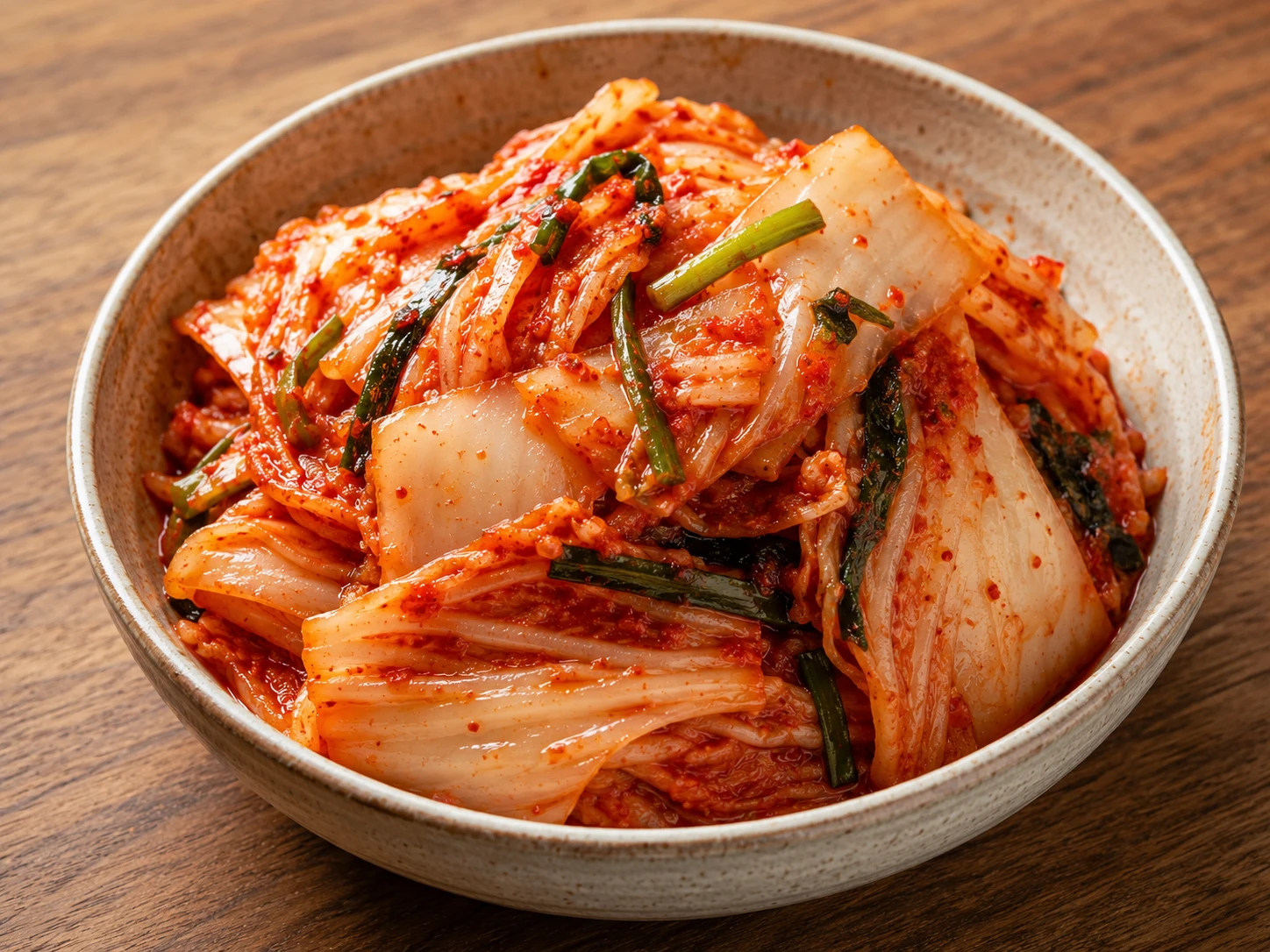
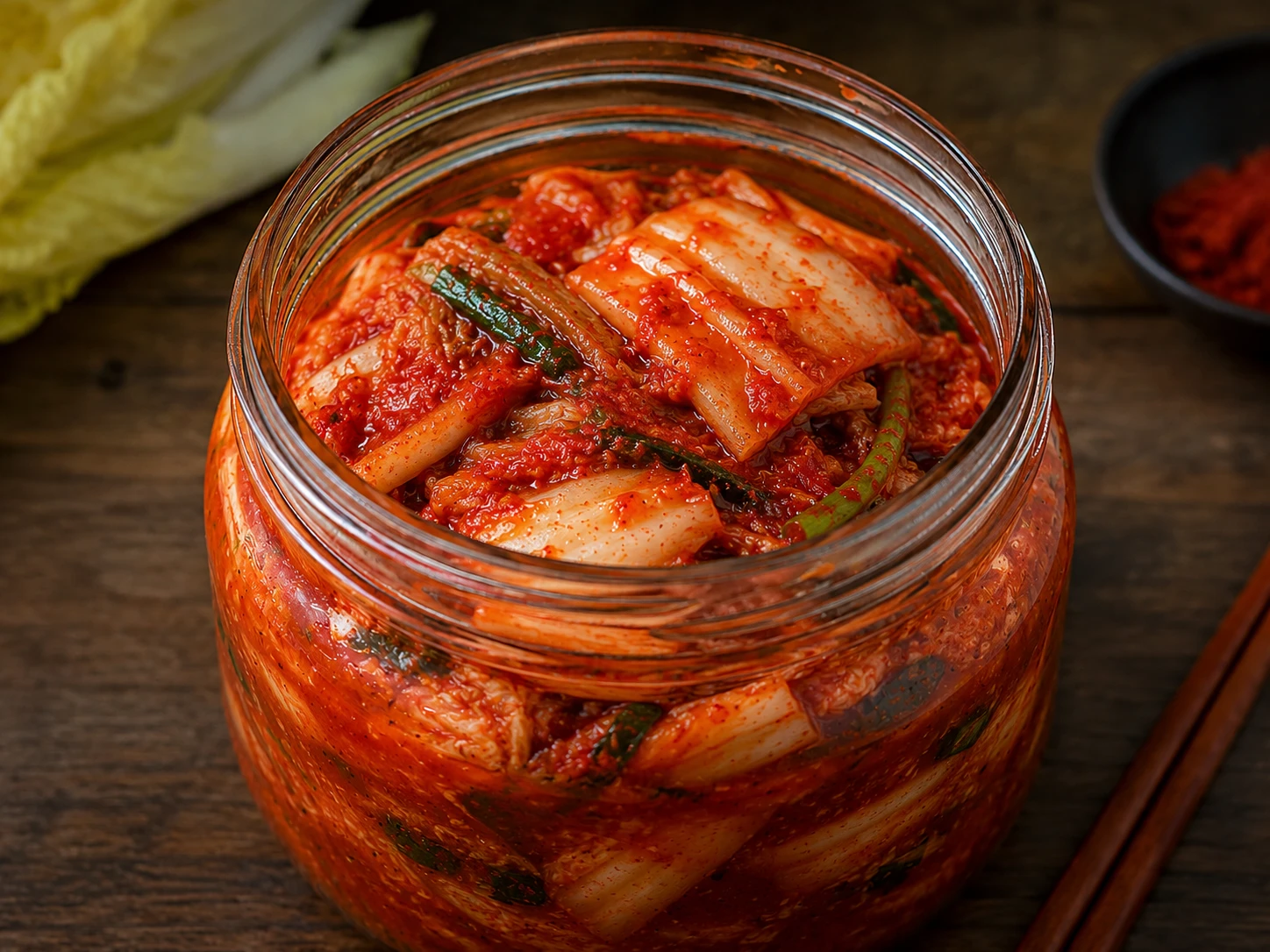
Stage 1 fresh kimchi 0-3 days avoid for kimchi cauliflower fried rice
Stage 1 — Fresh (0–3 days)
Fresh Kimchi
pH ≈ 5.5 · Glutamates minimal
Fresh kimchi’s underdeveloped depth is more noticeable against cauliflower’s mild flavour than against grain rice. Avoid.
✗ Too early — avoid
Stage 2 young kimchi 1-2 weeks acceptable with adjustment cauliflower version
Stage 2 — Young (1–2 weeks)
Young Kimchi
pH ≈ 4.8 · Light tang
Workable if Stage 3 is unavailable. Add ½ teaspoon extra gochujang to compensate for lower developed umami.
△ Acceptable with adjustment
✓ Use This
Stage 3 ripe kimchi 2-4 weeks optimal for kimchi cauliflower fried rice peak glutamates
Stage 3 — Ripe (2–4 weeks) ⭐
Ripe Kimchi — Optimal
pH ≈ 4.2 · Peak glutamates
Full glutamate development carries flavour through the entire dish on its own — exactly what a lighter, milder base needs.
★ Perfect — always use this
Stage 4 over-ripe mukeun kimchi use with reduction cauliflower kimchi fried rice
Stage 4 — Over-Ripe (6+ weeks)
Over-Ripe (Mukeun)
pH ≈ 3.8 · Very sour
Usable — reduce kimchi juice to 1 tbsp and add a pinch of sugar. Cauliflower has no starch to buffer sourness.
△ Works with adjustment
Skill Level

How Difficult Is the Cauliflower Version?

Genuinely beginner-friendly — the only skill that matters is patience during the dry-fry step.

🌱
Beginner — Level 1
No prior wok or pan experience needed
Level 1
Easy — Level 2 ← This Recipe
Ricing cauliflower (or using pre-riced), patient dry-fry, one baste-fried egg.
← You Are Here
🍳
Intermediate — Level 3
Judging visual moisture cues precisely to avoid over- or under-drying.
Level 3
🔥
Advanced — Level 4
Restaurant-heat wok hei technique
Level 4
👨‍🍳
Expert — Level 5
Korean culinary training, multi-component simultaneous execution
Level 5
✓ Ricing cauliflower✓ Dry-fry patience✓ Egg baste-frying✓ 25 min totalFood processor optional — box grater works too
What You Need

Ingredients + Scaler

Riced cauliflower replaces grain rice entirely. Kimchi juice is reduced significantly, since cauliflower cannot absorb liquid the way starchy rice grains do.

Servings:
2
💧 Moisture note: Reduce kimchi juice to 2 tablespoons and squeeze the chopped kimchi firmly. Any extra liquid added to already-moist cauliflower rice will make the dish watery, no matter how well you dry-fried it.
Base Ingredients
500g
riced cauliflower (about 1 medium head, or frozen)Pat dry, or squeeze if using thawed frozenCAULIFLOWER KEY
1 cup
aged kimchi (Stage 3, 2-4 wks), choppedSqueeze firmly — reserve juice separately
KEY
2 tbsp
kimchi juice (reserved) REDUCED — cauliflower can’t absorb liquid like rice
1 tbsp
gochujang
1 tsp
neutral oil, for dry-frying the cauliflower
Seasoning & Toppings
1 tsp
soy sauce Use tamari or coconut aminos for gluten-free
2 tsp
sesame oil, divided (half in the pan, half off-heat)
2
large eggs — baste-fried separately, runny yolkOptional but recommended for a complete mealTOP
2
spring onions, finely sliced
1 tsp
toasted sesame seeds
1 sheet
nori, torn, to serve

Optional Protein Add-Ins

ProteinPrepWhen to AddApprox. Cal/Serving Added
Grilled chicken breast, dicedPre-cooked, cubedFinal toss, to heat through+100 cal
Firm tofu, pan-searedPress, cube, sear until golden separatelyFold in at the very end+90 cal
Shrimp, peeled and deveinedSear 2 min per side separatelyFold in at the very end+70 cal
Second eggBaste-fried, runny yolkServe on top+70 cal
Step-by-Step — Dry-Fry Method

How to Make Kimchi Cauliflower Fried Rice — 5 Steps

Five steps. The critical difference from grain-rice versions: cauliflower is dry-fried and rested separately before it ever meets sauce.
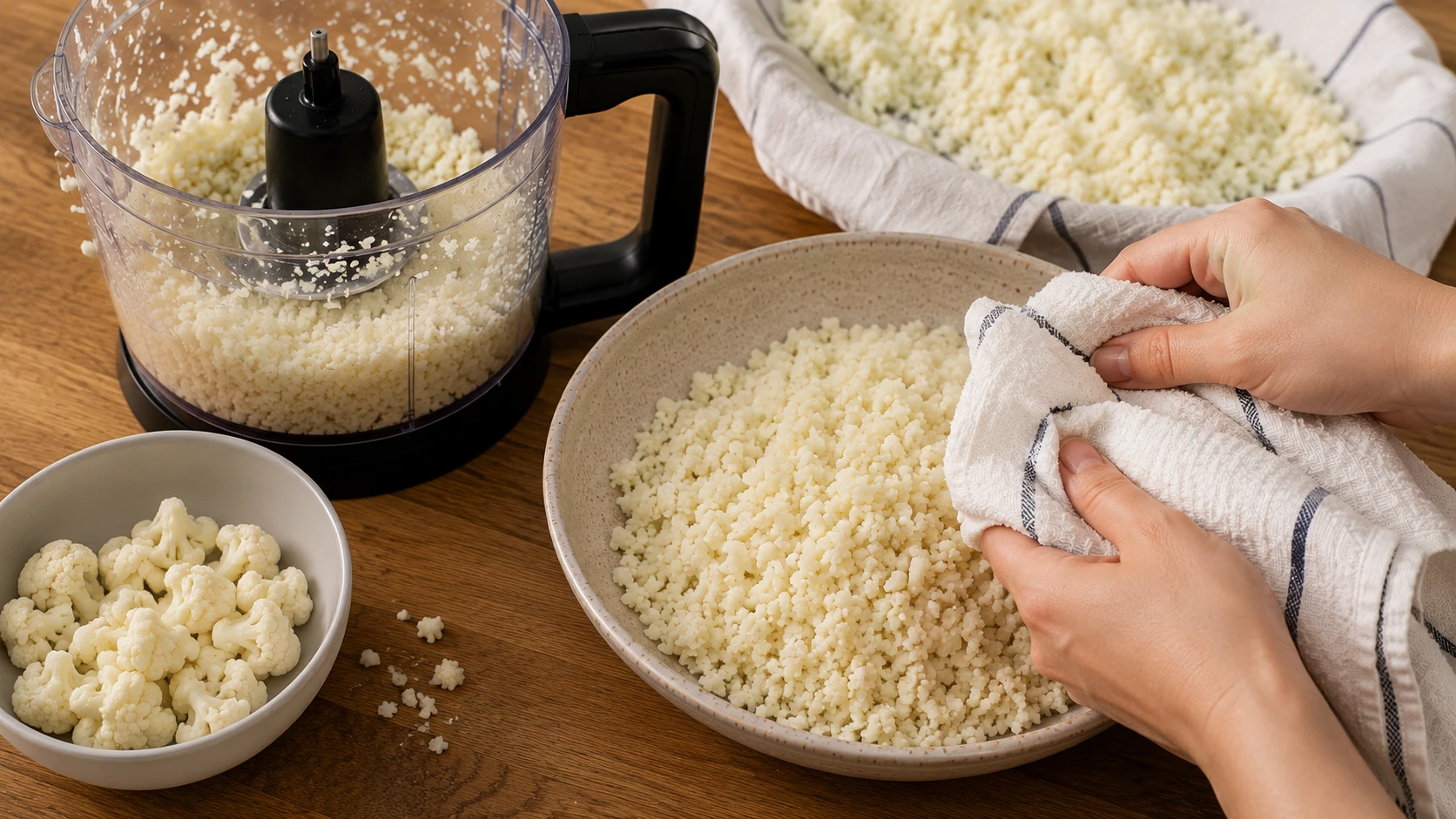
01
Rice the Cauliflower and Pat Dry
Ricing cauliflower in food processor and patting dry with towel for kimchi cauliflower fried rice

Pulse cauliflower florets in a food processor in short bursts until rice-sized — about 2-4mm pieces. If using pre-riced fresh cauliflower, pat it dry with a clean towel. If using frozen, thaw completely first and squeeze firmly in a tea towel.

💡
This step decides the whole dish. Every gram of water you remove here is a gram the pan does not have to fight later.
02
Dry-Fry the Cauliflower Rice — Drive Off Moisture
Cauliflower rice dry frying in thin layer cast iron pan golden char developing

Heat a wide cast iron pan over high heat with 1 teaspoon neutral oil. Add the riced cauliflower in a thin, even layer — do not crowd the pan. Leave undisturbed 3 minutes, then toss and repeat for 5-6 minutes total until visibly drier with light golden edges. Remove and set aside.
⚠️
Work in two batches if your pan is small. A crowded pan traps steam under the cauliflower, defeating the entire purpose of this step.
03
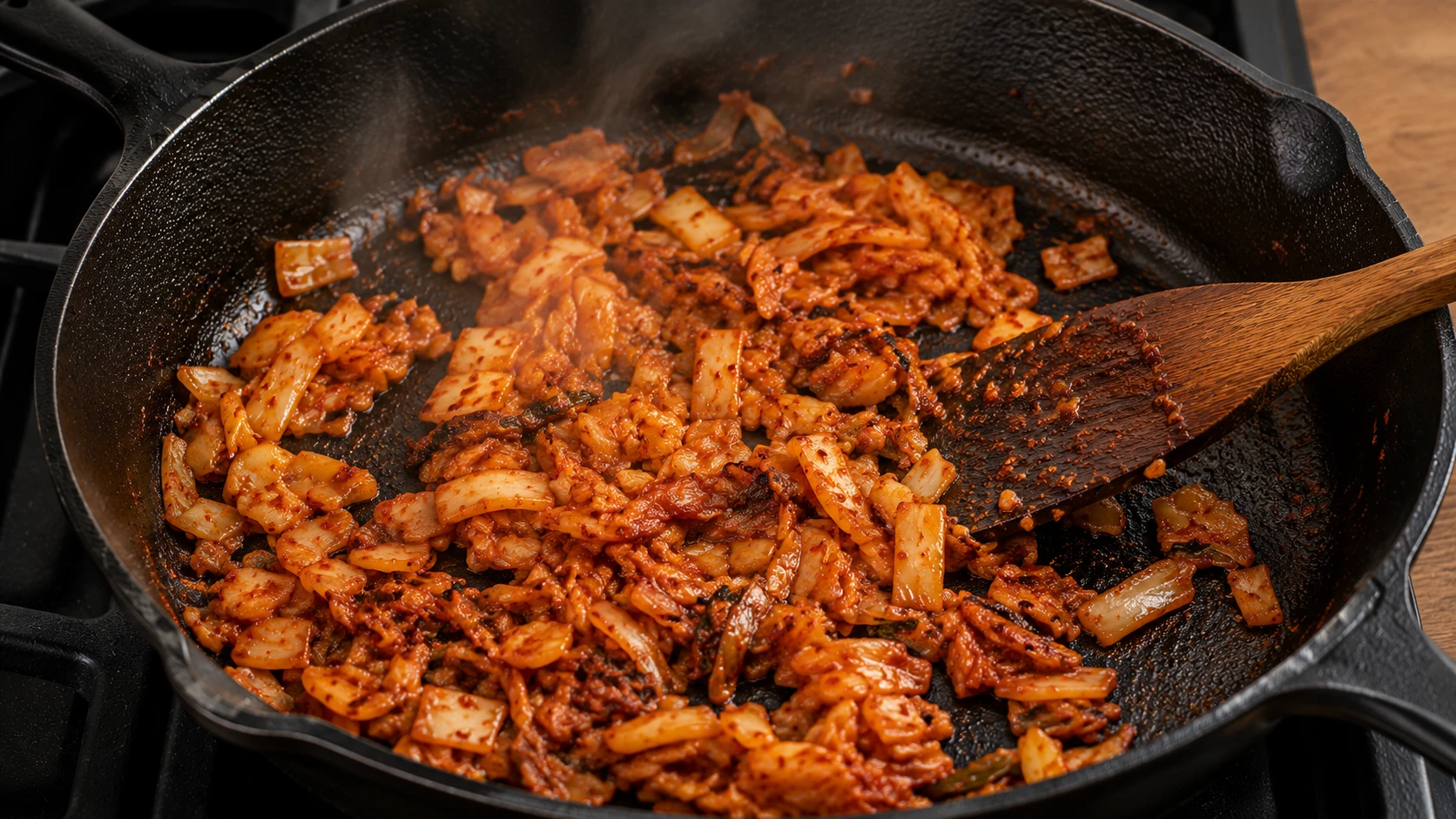
Caramelise Kimchi in the Same Pan
Kimchi caramelising in same cast iron pan used for cauliflower dry fry kimchi cauliflower fried rice

In the same hot pan, add ½ teaspoon sesame oil and the squeezed kimchi. Stir-fry over high heat for 3 minutes until the edges turn golden and the aroma shifts sweet and nutty.
04
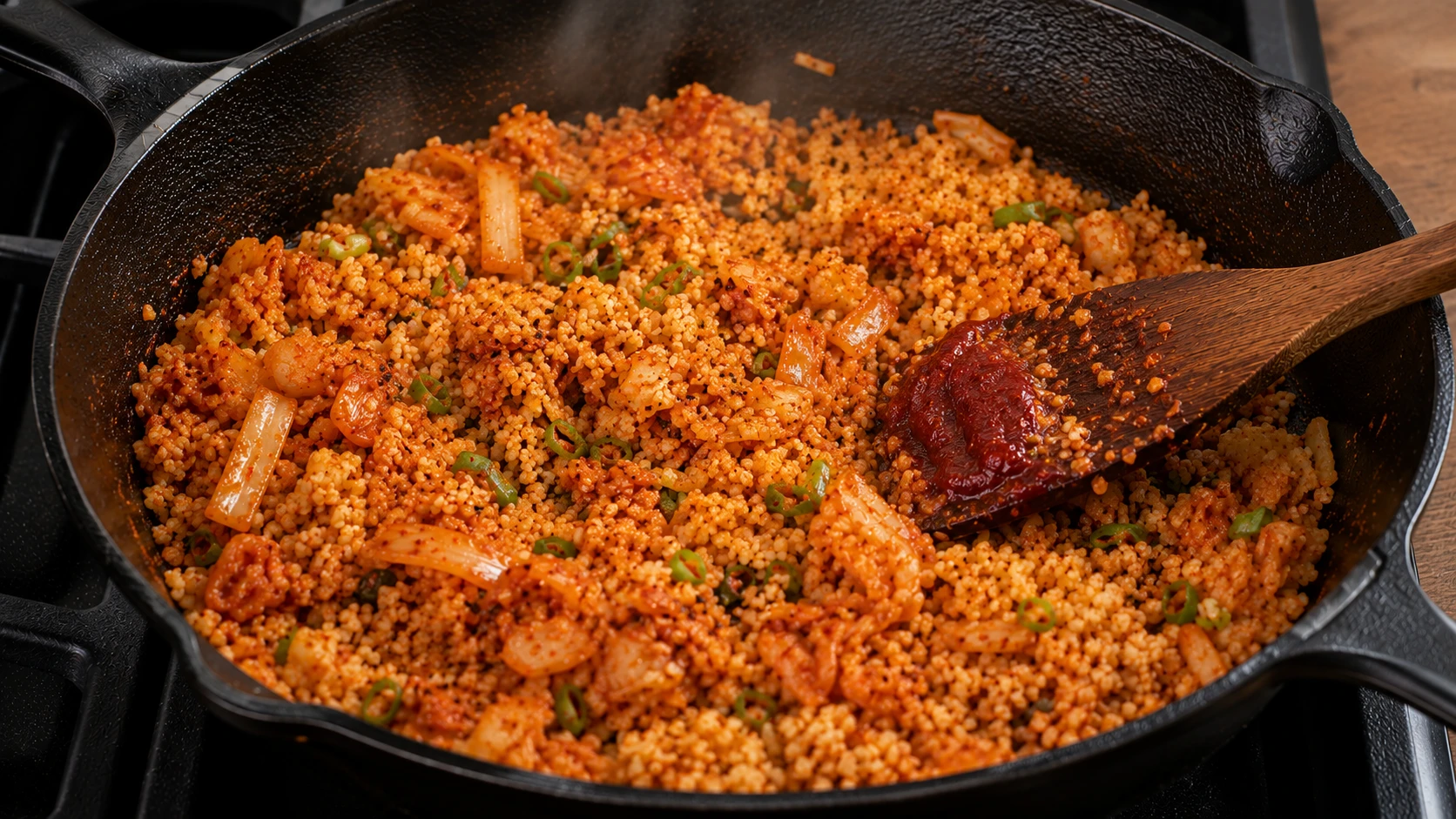
Toast Gochujang, Combine, Season Lightly
Combining dry fried cauliflower rice with caramelised kimchi and gochujang seasoning briefly

Push kimchi aside, toast the gochujang for 20 seconds. Return the dry-fried cauliflower rice to the pan. Add the reserved kimchi juice and soy sauce. Toss over high heat for 90 seconds only. Remove from heat and stir in the remaining sesame oil.
🥦
Ninety seconds is a hard limit. Cauliflower has no starch structure to firm back up — season, toss briefly, and stop.
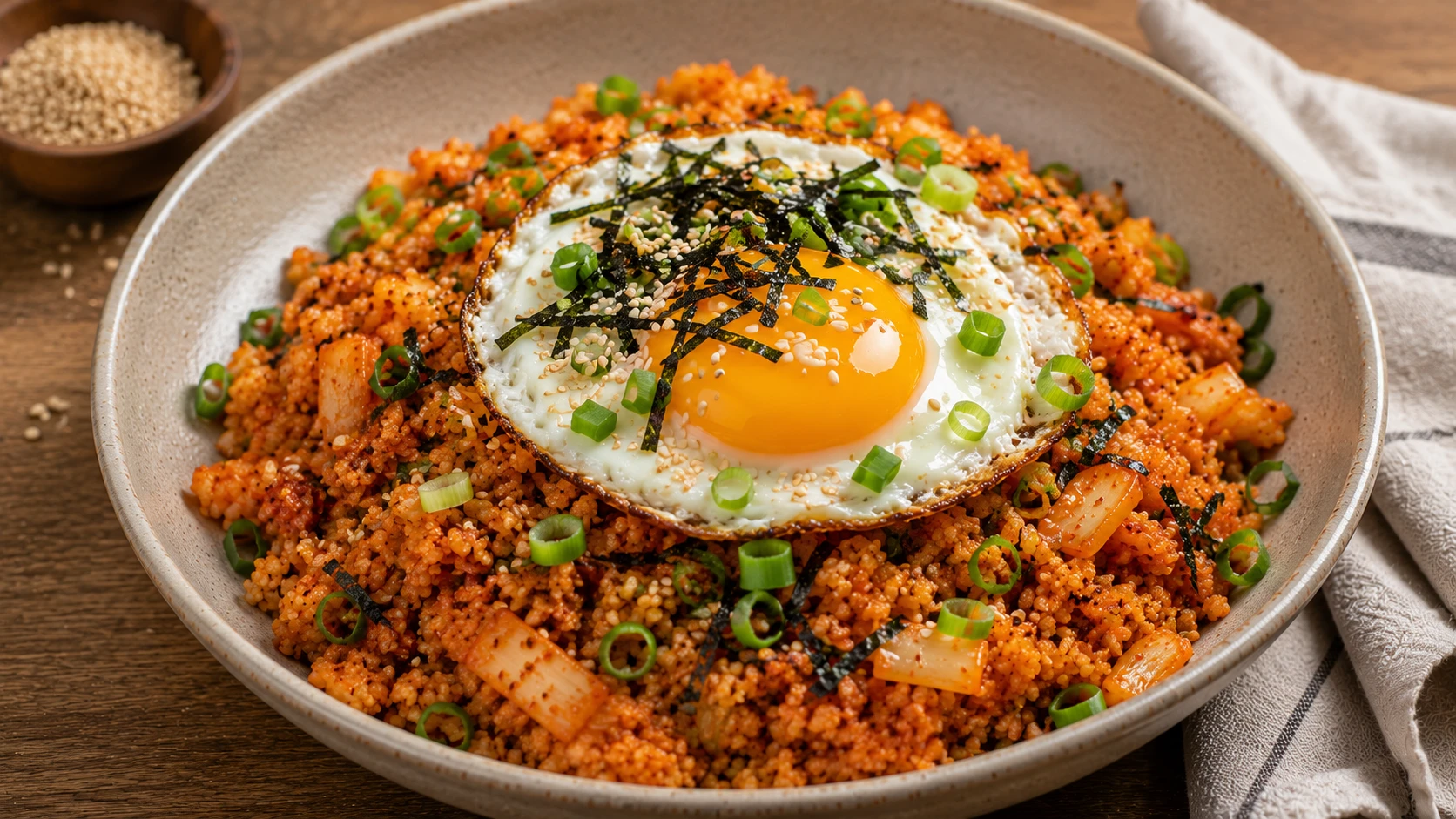
05
Baste-Fry the Egg and Serve Immediately
Kimchi cauliflower fried rice plated with basted egg spring onions sesame seeds nori low carb

In a small separate pan with ½ teaspoon sesame oil, baste-fry an egg until the white is set and the yolk stays fully runny. Serve immediately, topped with the egg, spring onions, sesame seeds, and torn nori.

Interactive Tool
🌶️ Spice Level Adjuster — Cauliflower Version
Note: cauliflower’s mild flavour lets kimchi and gochujang heat come through more directly than against grain rice. Consider starting one level lower than usual.
😌 No Spice🌶🌶 Medium🔥 Korean Hot
No SpiceMildMediumHotKorean Hot
🌶🌶 Medium — Standard Korean
Standard household level. Reads slightly hotter than the same amount would against grain rice.
Gochujang1 tbsp
Kimchi StageStage 3 (2-4 wks)
Kimchi Juice2 tbsp
Interactive Tool
⏱️ Dry-Fry Moisture Timer
Start this the moment riced cauliflower hits the hot pan. Six minutes is the tested default — watch for visible drying and light gold edges rather than the clock alone.
06:00
Ready — press start when the cauliflower hits the pan
Test Kitchen — 6 Batches

What We Tested for the Cauliflower Version

Batch 1 · Moisture Method
Dry-Fry vs. Steam-Then-Drain
Steam-then-drain stayed wet through the final toss. Dry-fry evaporated water before saucing, holding golden-edged grains. Dry-fry wins comprehensively.
✅ Always dry-fry, never steam first
Batch 2 · Fresh vs Frozen
Fresh Riced vs. Thawed Frozen
Fresh needed a shorter dry-fry (5 min). Frozen needed a hard squeeze plus 1-2 extra minutes to compensate for extra water.
✅ Fresh preferred, frozen workable with extra steps
Batch 3 · Rice Grain Size
Fine Mince vs. Rice-Sized vs. Coarse
Fine mince turned mushiest fastest. Coarse florets cooked unevenly. Rice-sized (2-4mm) was the correct balance.
✅ Rice-sized pieces, not finer or coarser
Batch 4 · Final Toss Duration
90 Seconds vs. 3+ Minutes
Extended toss released significant extra water. Short 90-second toss kept the dry-fried texture intact.
✅ Keep the final toss to 90 seconds
Batch 5 · Kimchi Juice Quantity
Full Classic Amount vs. Reduced
Full classic-recipe quantity pooled at the bottom of the pan. Reduced to 2 tablespoons coated properly without pooling.
✅ Reduce kimchi juice to 2 tbsp
Batch 6 · Pan Crowding
Thin Layer vs. Piled-Up Cauliflower
Piled-up cauliflower trapped steam underneath even in a hot pan. Thin, even layer produced the intended golden, drier result.
✅ Dry-fry in batches if needed, never crowd
🔑 Key Finding — Moisture Management Is the Entire Recipe

Every batch confirmed cauliflower rice succeeds or fails almost entirely based on how well moisture is managed before, during, and after the dry-fry step.
Kimchi cauliflower fried rice charred florets runny egg spring onions low carb keto

Kimchi Cauliflower Fried Rice (콜리플라워 김치볶음밥)

Dry-fry moisture method · Stage 3 kimchi · 25 min · ~180 calories, keto-friendly

Share:
12m
Prep
13m
Cook
25m
Total
2
Serves
180
Calories
Easy
Level
Ingredients
  • 500g riced cauliflower
  • 1 cup aged kimchi (Stage 3), chopped
  • 2 tbsp kimchi juice (reduced)
  • 1 tbsp gochujang
  • 1 tsp neutral oil (for dry-frying)
  • 1 tsp soy sauce (or tamari/coconut aminos)
  • 2 tsp sesame oil, divided
  • 2 eggs, baste-fried separately
  • 2 spring onions, sesame seeds, nori
Instructions
  1. Rice cauliflower in food processor. Pat dry, or squeeze if using thawed frozen.
  2. Dry-fry in a thin layer with 1 tsp oil, high heat, 5-6 min until visibly drier and lightly golden. Remove, set aside.
  3. Same pan: add kimchi with ½ tsp sesame oil. Stir-fry 3 min until edges golden.
  4. Push aside, toast gochujang 20 sec. Return cauliflower to pan. Add kimchi juice, soy sauce. Toss 90 seconds only. Off heat, stir in remaining sesame oil.
  5. Baste-fry eggs separately (runny yolk). Serve immediately with spring onions, sesame seeds, nori.
180
Calories
14g
Carbs
10g
Protein
11g
Fat
10g
Net Carbs
4g
Fibre
What to Serve With It

Pairing Guide — Cauliflower Version

Since this is already the lightest KFR variation, pairings can lean toward more substantial, protein-forward sides without pushing the meal off a low-carb target.
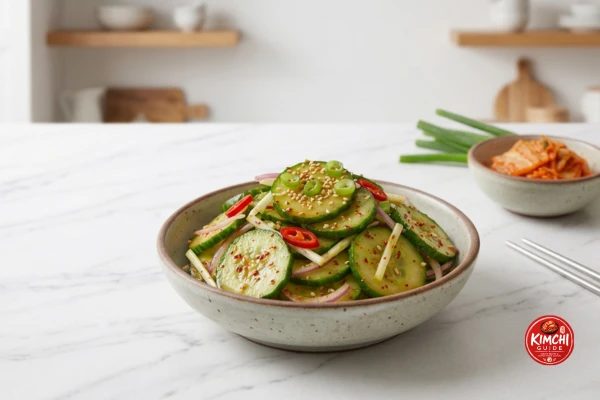
Oi muchim Korean cucumber salad low carb pairing kimchi cauliflower fried rice
Oi Muchim (Cucumber Salad)
Naturally low-carb and refreshing — keeps the whole meal light without adding meaningful calories or carbohydrate.
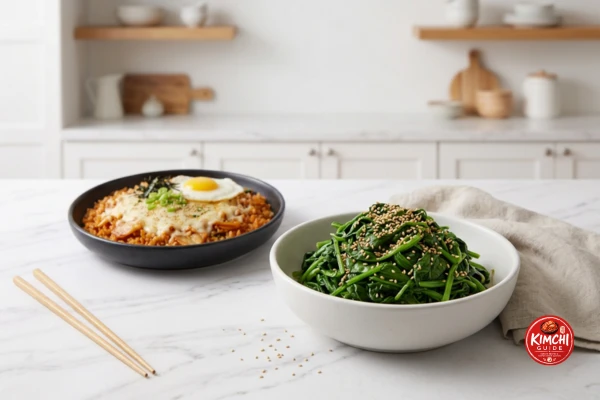
Spinach namul Korean sesame spinach light pairing cauliflower kimchi fried rice
Spinach Namul
Adds iron and additional fibre while staying within a low-carb frame.
Fresh kimchi banchan side dish pairing cauliflower kimchi fried rice
Extra Fresh Kimchi (Banchan)
A cold, crisp side portion of kimchi adds probiotic variety without meaningfully changing the calorie count.
Boricha Korean barley tea light pairing cauliflower kimchi fried rice
Boricha (Barley Tea)
A calorie-free, unsweetened way to round out the meal — stays aligned with the low-carb positioning.
Store & Reheat

Storage & Reheating — Cauliflower Version

This is the most delicate KFR variation to store, since cauliflower continues releasing water even after cooking. Plan to eat it fresh where possible.

❄️
Refrigerator Max 2 days
Store the dry-fried cauliflower rice and kimchi base together without the egg. Texture softens noticeably by day 2.
🧊
Freezer Not recommended
Freezing further breaks down cauliflower’s cell structure, releasing even more water on thawing. Cook a fresh batch instead.
🍳
Reheat — Hot Dry Pan 3-4 minutes
Reheat in a hot, dry pan without added liquid, tossing frequently. Add a splash of sesame oil only at the very end.
📡
Microwave — Not Recommended
Microwaving traps steam and softens the texture further. If it is the only option, use short 30-second bursts uncovered.
Nutrition — Lowest-Calorie KFR

Nutrition Comparison — All 9 KFR Variations

180
Calories (lowest KFR)
10g
Protein (with egg)
11g
Total fat
10g
Net carbs
-240
Cal vs classic recipe
VariationCaloriesProteinVegan?Best For
Cauliflower Version ← This page18010gNo (egg)Low-carb, keto, lightest option
Without Egg3607gNo (may use dairy)Calorie control, meal prep
Vegan (tofu)38014g✅ Fully veganPlant-based, egg-free protein
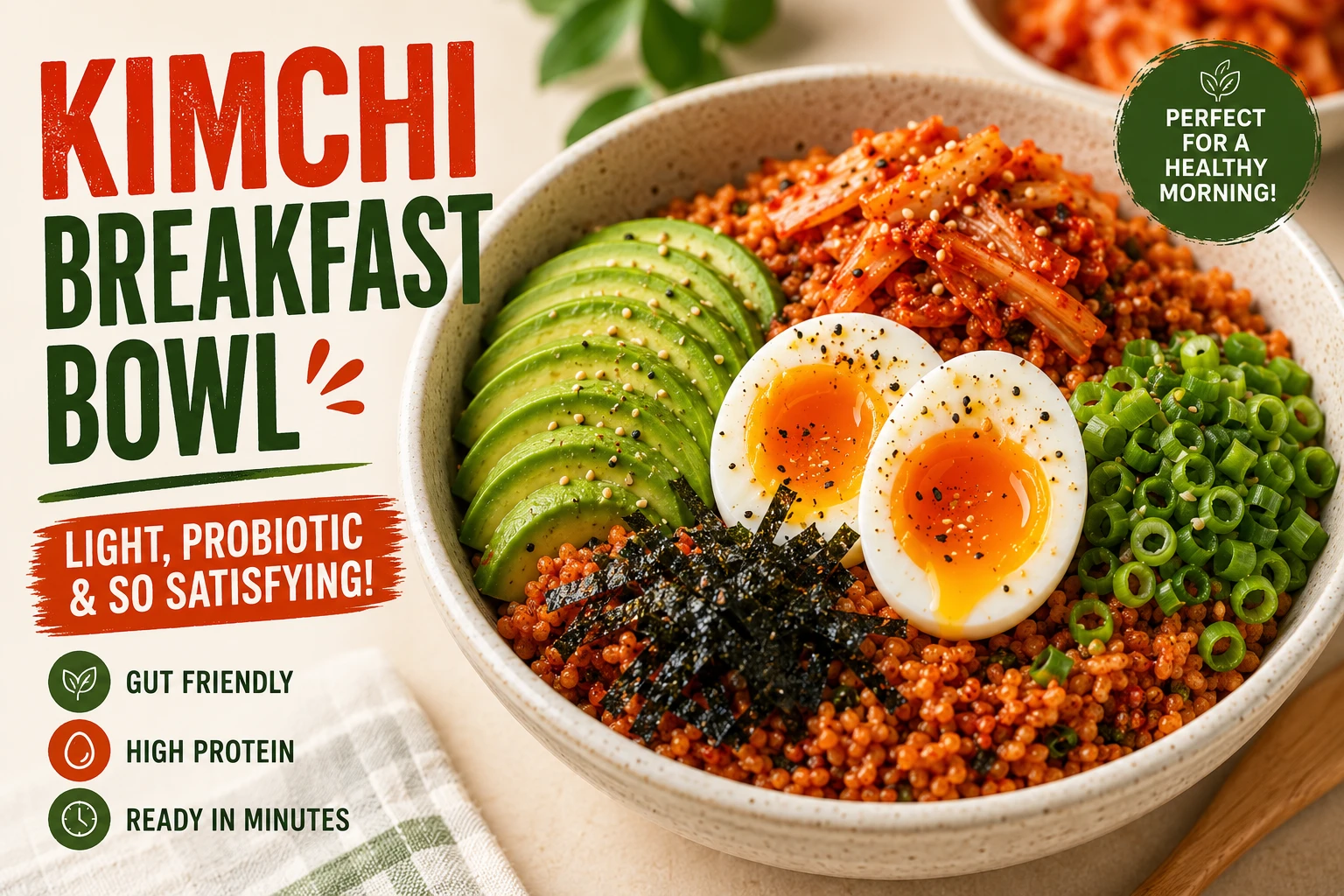
Breakfast Bowl38015gNo (egg, avocado)Mornings, lighter portion
Tuna Version41022gNoHighest protein, lean
Classic (with egg)42014gNoAll occasions
Cheese Version57019gNoEntertaining, most indulgent
Spam Version58024gNoComfort food, budae flavour
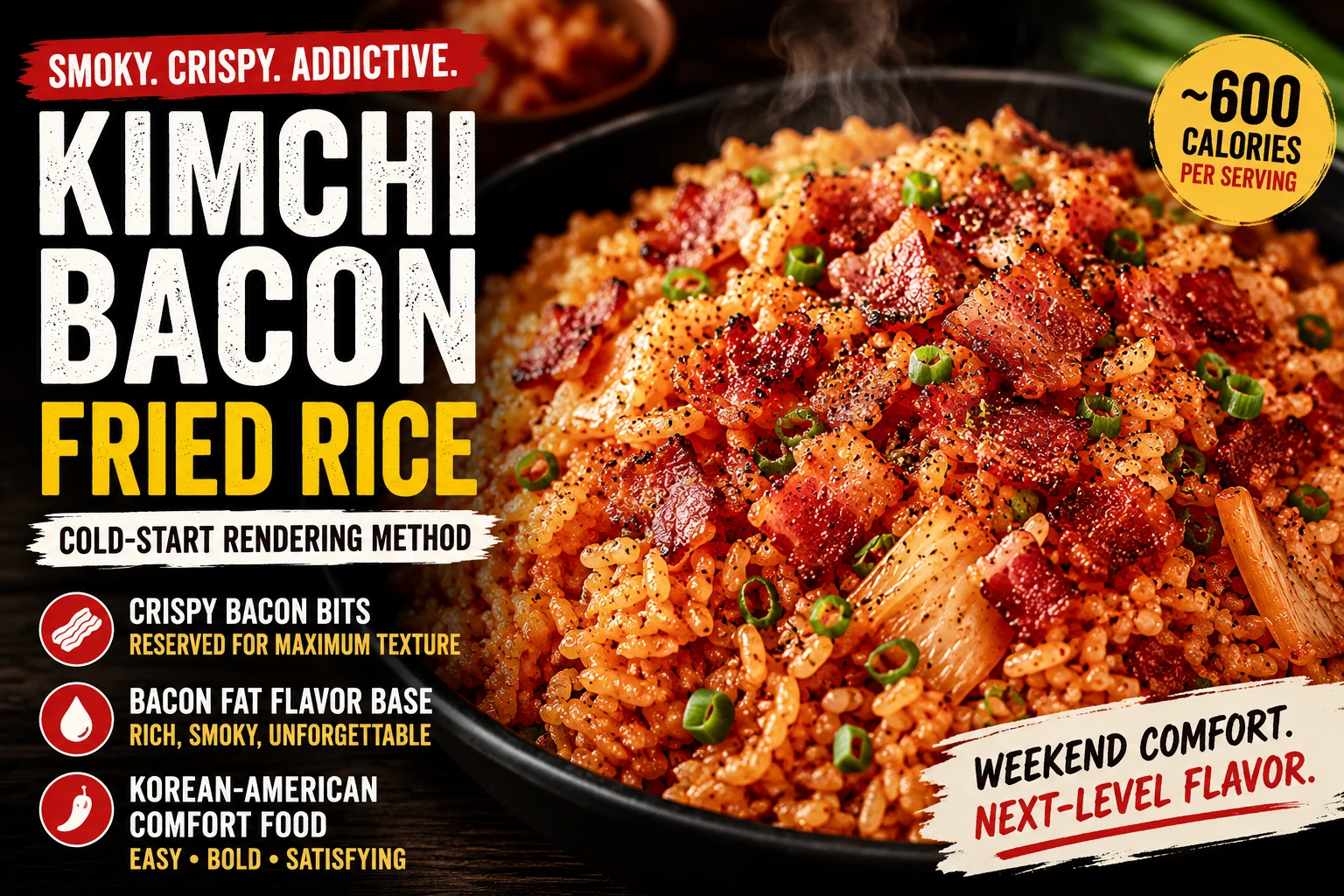
Bacon Version60021gNoWeekend indulgence
💡
Dr. Sarah Mitchell RD, PhD note: This is the only KFR variation suitable for strict ketogenic macro targets without further modification. The trade-off is losing the resistant starch benefit that cooled grain rice provides — consider rotating between the classic and cauliflower versions rather than choosing one exclusively.
Frequently Asked Questions

Kimchi Cauliflower Fried Rice FAQ — 19 Questions

Yes — approximately 14g total carbohydrate per serving versus 58g in the classic grain-rice version, with about 4g of that being fibre. Net carbs land around 10g per serving.

Excess moisture is almost always the cause. Always pat riced cauliflower dry and dry-fry it separately before combining with kimchi and seasoning.

Both work if handled correctly. Fresh needs a shorter dry-fry. Frozen must be fully thawed and squeezed dry in a tea towel first.

Yes — pulse florets in a food processor in short bursts until rice-sized. A box grater also works for smaller batches.

Dry-frying until lightly golden before saucing develops real roasted flavour through the Maillard reaction.

Stage 3 aged kimchi, fermented 2-4 weeks, is optimal — it carries flavour through the milder cauliflower base.

Yes — replace soy sauce with coconut aminos or tamari, and check your kimchi’s label for added sugar.

No — cauliflower is lower in calories and carbohydrate but also lower in resistant starch. It contributes different benefits like vitamin C and sulforaphane.

Yes — reduce to about 2 tablespoons. Cauliflower rice cannot absorb liquid like starchy grain rice does.

Yes — grilled chicken, tofu, shrimp, or a second egg all work well.

Approximately 240 calories per serving — a reduction of roughly 60 percent.

Partially — the dry-fried cauliflower rice and kimchi base can be refrigerated separately for up to 2 days.

Riced cauliflower is already nearly cooked after the initial dry-fry — a long final toss releases more water.

It can be — use tamari or coconut aminos, and confirm your gochujang and kimchi brands are labelled gluten-free.

Not recommended — freezing releases even more water on thawing that cannot be corrected with a dry-fry.

Lighter and slightly sweeter than the classic version, with a subtle nutty, roasted note from the dry-fried cauliflower.

Aim for pieces roughly the size of a rice grain, about 2-4mm.

Yes — convenient, but moisture content varies between brands, so always taste-test the dry-fry time.

Not quite the same, since cauliflower lacks starch — but the dry-fry step produces lightly charred, caramelised edges instead.


Ji-Young Park Korean food writer KimchiGuide
Written by
Ji-Young Park
Korean Food Writer & Fermentation Expert
Fermentation Expert Seoul Food Certified 6 Batches Tested 12 Years Experience
Ji-Young Park developed this low-carb version after repeated requests from readers managing blood sugar and weight goals who still wanted the full kimchi fried rice experience. The dry-fry moisture method took the most testing of any KFR variation to get right.
Full profile →
Dr Sarah Mitchell RD PhD nutrition reviewer KimchiGuide
Reviewed by
Dr. Sarah Mitchell
Registered Dietitian, PhD Nutrition Science
RD — Registered Dietitian PhD Nutrition Science Fermented Foods Specialist Reviewed: July 9, 2026
Dr. Sarah Mitchell reviewed all nutritional data, calorie counts, net carb calculations, and keto-suitability claims in this article.
Full profile →

Similar Posts

Leave a Reply

Your email address will not be published. Required fields are marked *