Best Store-Bought Kimchi Brands in the USA — All 19 Tested & Ranked (2026)
We bought every major kimchi brand sold across the USA and blind-tested them side by side on taste, fermentation depth, texture, ingredient quality and value, then checked pasteurization, vegan, halal and kosher claims against each brand’s own sources. Here’s the honest verdict, with no affiliate bias in the rankings.
As an Amazon Associate, KimchiGuide.com earns from qualifying purchases.
What Is the Best Kimchi Brand in the USA in 2026?
After blind-testing 19 brands sold across the USA on taste, fermentation, texture and ingredients, Jongga (종가집) is the best overall kimchi brand: it tastes closest to authentic homemade kimchi, with deep fermentation and balanced heat. Trader Joe’s is the best budget pick, Cosmos is the best premium choice for gifting, Bibigo is the easiest to find at mainstream grocery stores, and Olive My Pickle is the top pick if verified probiotic content matters most to you. Full rankings with scores are below.
How We Tested Every Kimchi Brand
Every brand was purchased at retail price, tasted blind with labels removed, and scored independently before any brand names or links were added back in.
Brand Selection
19 brands available across the USA: Jongga, Cosmos, Trader Joe’s, Bibigo, Mama O’s, Cleveland Kitchen, Mother-in-Law’s, Olive My Pickle, Sunja’s, Sinto Gourmet, 1000 Year Kimchi, Choi’s, Wildbrine, Surasang, Lucky Foods (Seoul Kimchi), Tobagi, Nasoya, Mama Kim’s, and Simple Truth (Kroger).
Label Removal & Decanting
Every jar was decanted into a numbered white bowl. No taster knew which brand they were evaluating during the primary round.
Three-Stage Tasting
Each brand was tasted fresh, aged 2 weeks open in the fridge, and aged 4 weeks, revealing how fermentation develops over time.
Cooking Test
Every brand was also cooked as kimchi fried rice. Some brands that taste great fresh turn watery and bland when cooked.
Scoring & Ranking
Six criteria scored 1-10: flavour depth, fermentation activity, crunch, heat balance, ingredient quality, and value. Scores were averaged across all three rounds; each card shows four of the six.
Fact Check
In September 2026 we re-checked each brand’s pasteurization, vegan, halal and kosher claims against its own product pages and retailer listings. Where sources disagree, we say so.
All 19 Kimchi Brands in the USA, Ranked
Every brand tested gets a full card. Tap any image to zoom in. Nutrition figures are per 1/4 cup from our own panel and can differ from package labels.
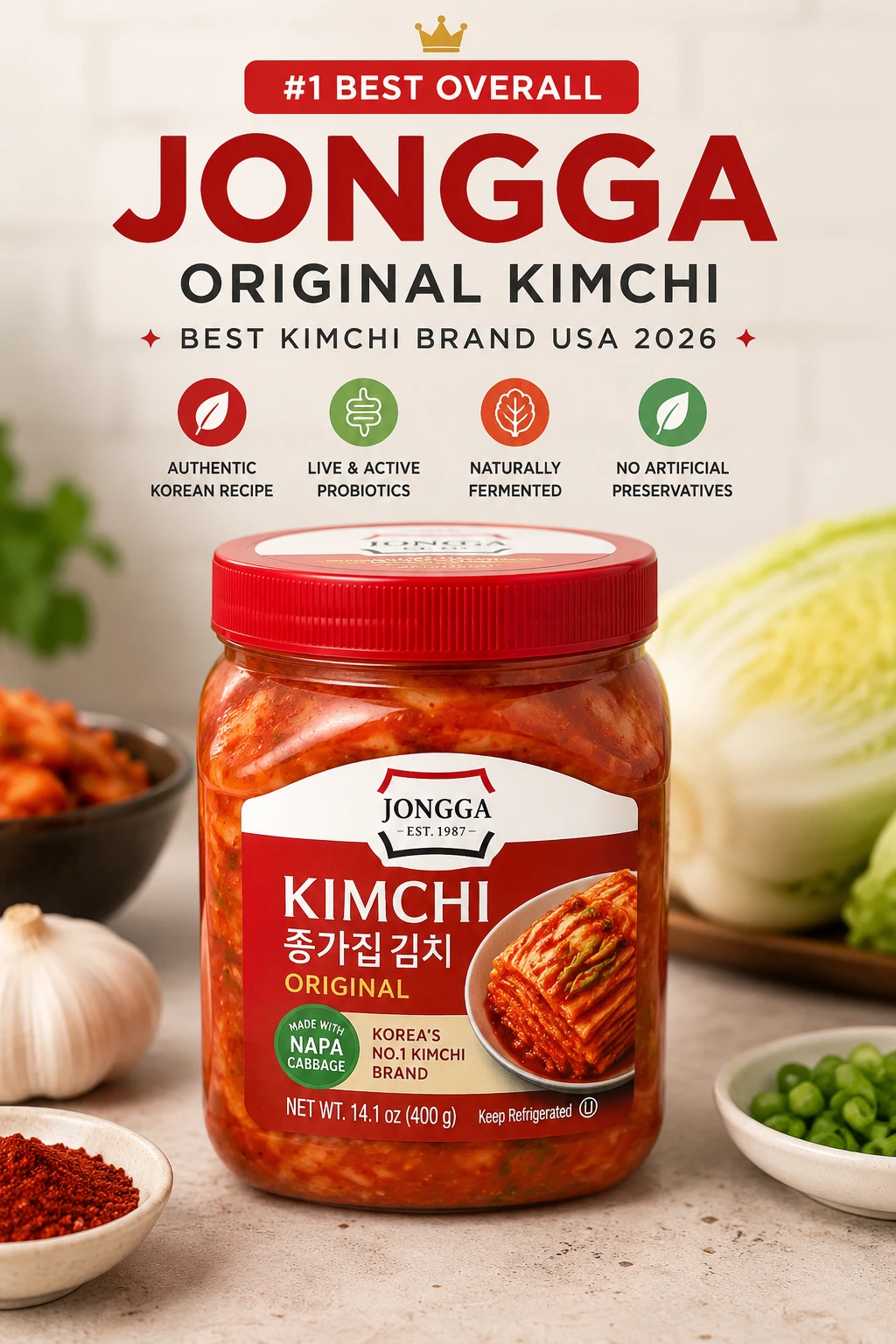
Jongga (종가집) Original Kimchi
Jongga cites Nielsen Korea data to call itself Korea’s top-selling kimchi brand, and the flavor backs it up. Traditional napa cabbage, gochugaru, fish sauce, garlic and ginger deliver genuine fermentation funk with no chemical shortcuts. Cabbage holds its crunch even after 4 weeks open, and the heat is a real slow Korean burn. The Costco tub is labeled Product of South Korea, and Daesang opened a Los Angeles kimchi plant in 2022. Jongga USA says most of its products are unpasteurized; its shelf-stable pouches are pasteurized.
⚠️ Recall disclosure: In November 2024, New Zealand recalled Jongga’s Gat Kimchi (mustard leaf variety, not the standard napa jar scored here) for an undeclared fish allergen. See our Jongga review.
Our Verdict: The closest a store-bought jar gets to the real thing. Top pick for eating fresh, cooking, and gifting.
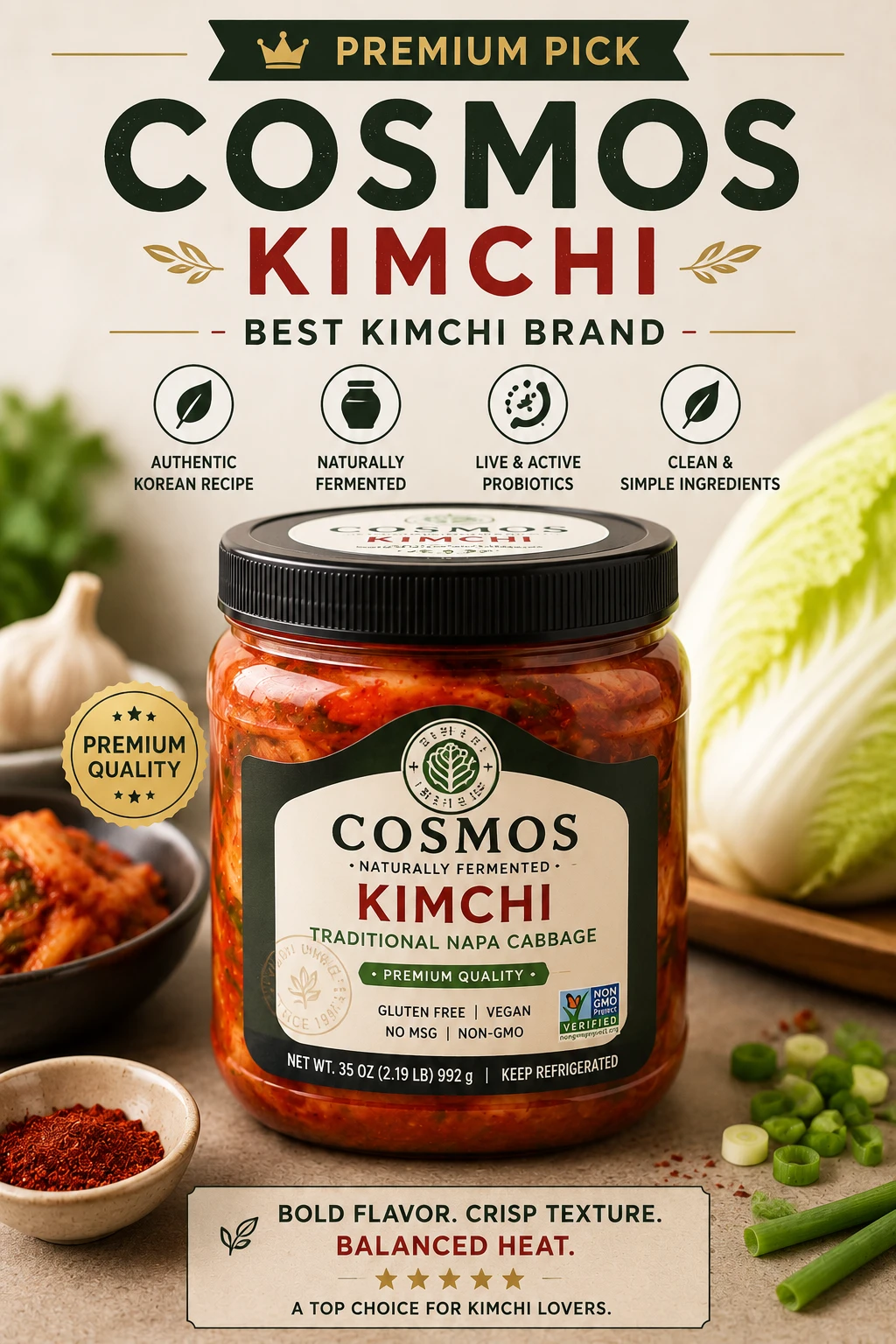
Cosmos Kimchi
Neck-and-neck with Jongga in pure flavour — some tasters preferred its deeper, more complex tang. Cabbage is cut larger and stays crunchier longer in our test, though at least one other reviewer describes the texture as softer than average — see our full review for that honest disagreement. Also sold at Costco (58oz tub) and Kroger/Ralphs, not just Korean grocery stores.
📝 Correction: The standard Cosmos jar contains MSG per retailer ingredient panels — a separate no-MSG variant of the same recipe exists if you want to avoid it.
Our Verdict: Premium quality, premium price. Outstanding in kimchi jjigae and pancakes.
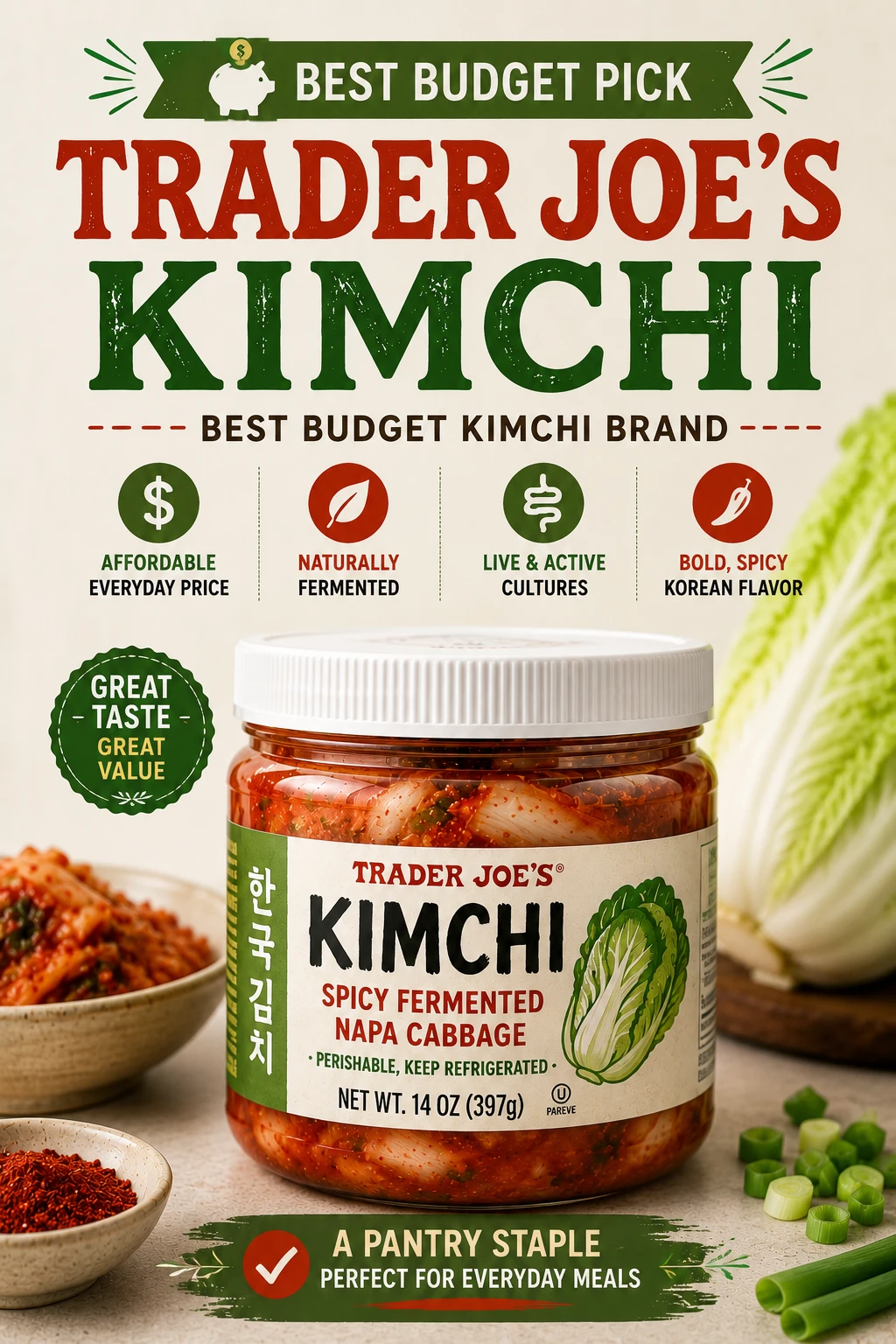
Trader Joe’s Kimchi
For under $5, remarkable — naturally fermented with live cultures, mild-medium heat that works for Western palates without being dumbed down. Genuinely low in calories too (~10-20 kcal per 2 tbsp). Less funky than Korean-made brands, but consistently fresh.
Our Verdict: Best-value kimchi on the market. A no-brainer weekly staple for regular TJ’s shoppers.
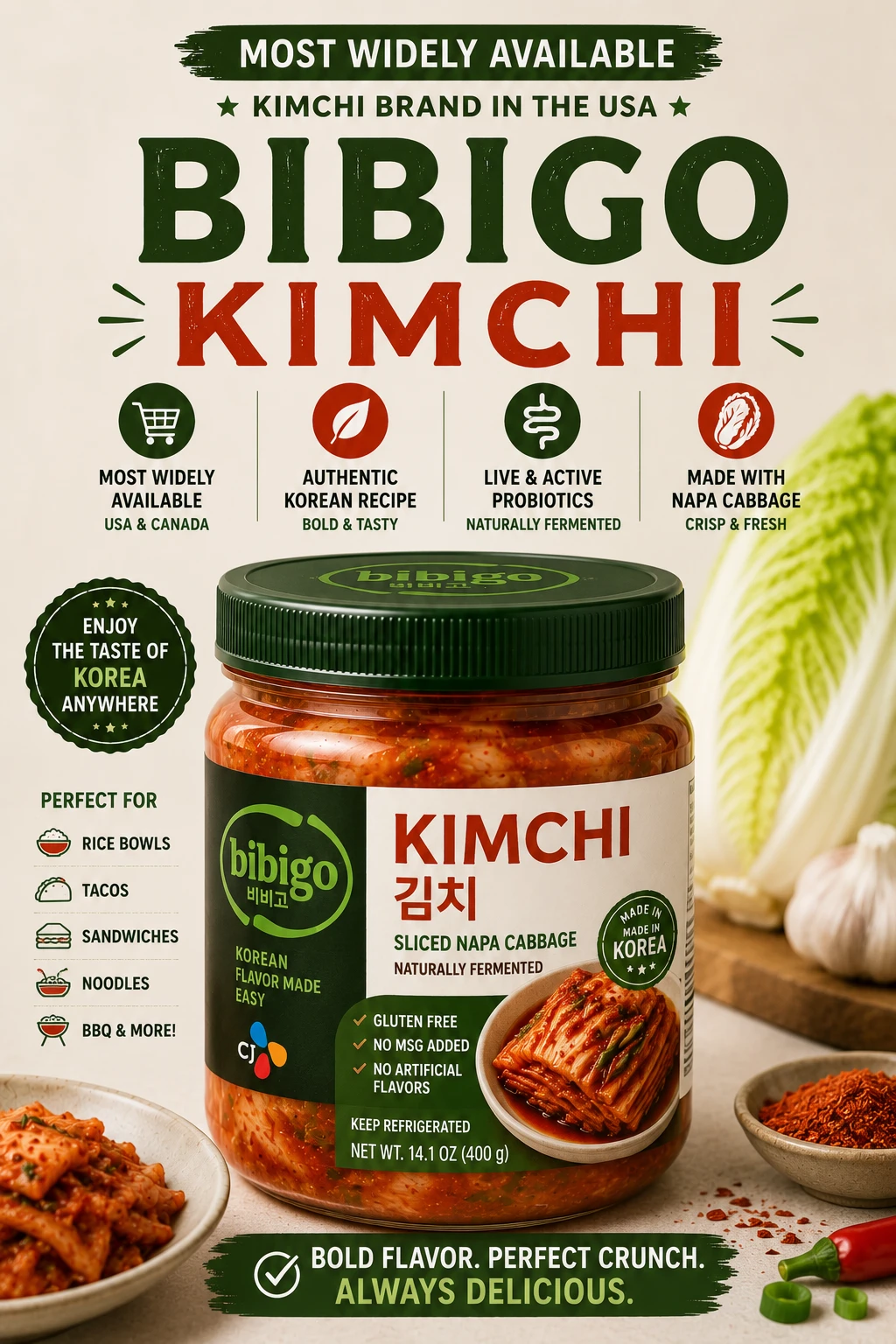
Bibigo Kimchi
By far the easiest Korean-made brand to find — most mainstream supermarkets stock it, and Walmart lists a 10 oz bottle at $3.18 alongside a separate vegan bottle. Milder than Jongga or Cosmos with gentler heat and a soft, uniform cut, a reliable everyday choice. The standard ingredient list includes anchovy fish sauce and MSG, while the UK ambient pouch is a different, vegan-by-default formulation. In June 2026 CJ launched a much spicier “Crazy Hot Kimchi” in Thailand, made in Vietnam.
ℹ️ Pasteurization: we found no pasteurization statement from Bibigo. The US bottles are sold chilled and list kimchi cultures; treat a room-temperature pouch as heat-treated unless the pack says otherwise.
Our Verdict: If you want good kimchi without hunting for a Korean grocer, this is the most convenient reliable option nationwide.
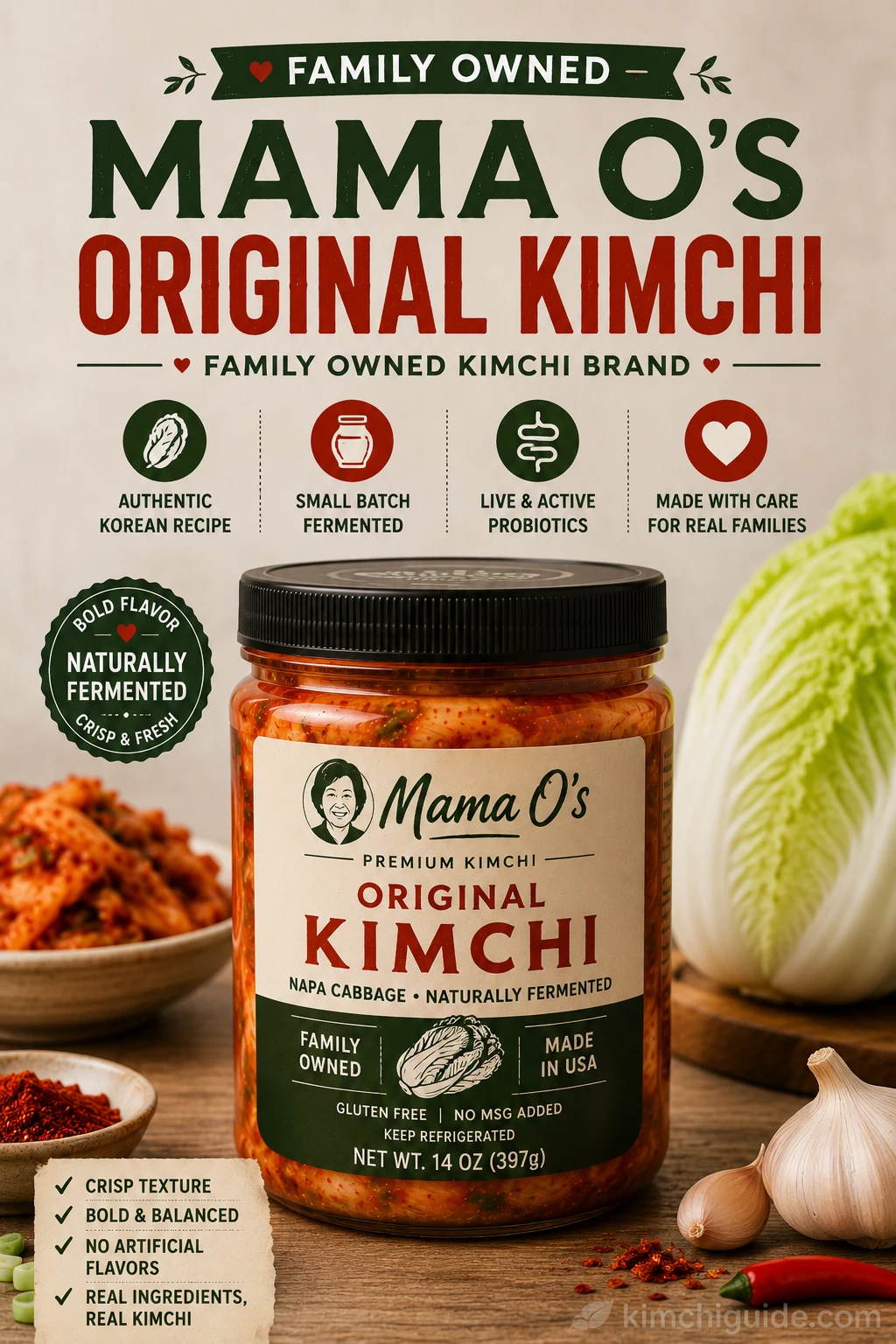
Mama O’s Original Kimchi
Well-balanced anchovy fish paste with a hint of sweetness. Thick cabbage slices, satisfying bite. Also sells kimchi paste, hot sauce, and seasoning if you like the flavour beyond the jar.
Our Verdict: A great pick for traditional fish-paste flavour from a smaller, family-run producer rather than a mass import.
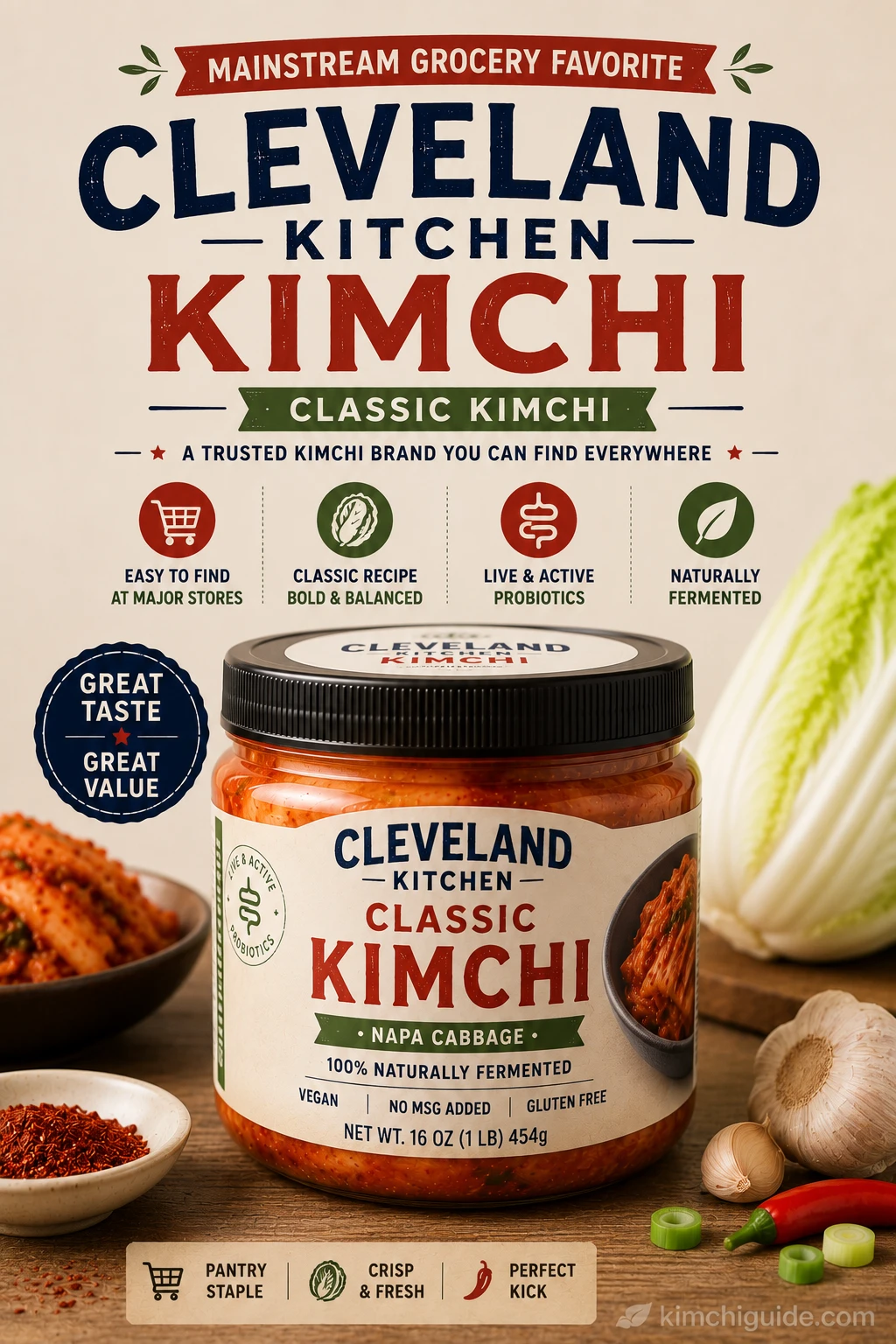
Cleveland Kitchen Classic Kimchi
Genuinely live-fermented with real probiotic activity, sold at mass retailers where fermented food used to be hard to find. Milder and less complex, cut smaller, but accessible everyday.
Our Verdict: If you’re already at Target or Kroger and want real fermentation without a special trip, this delivers.
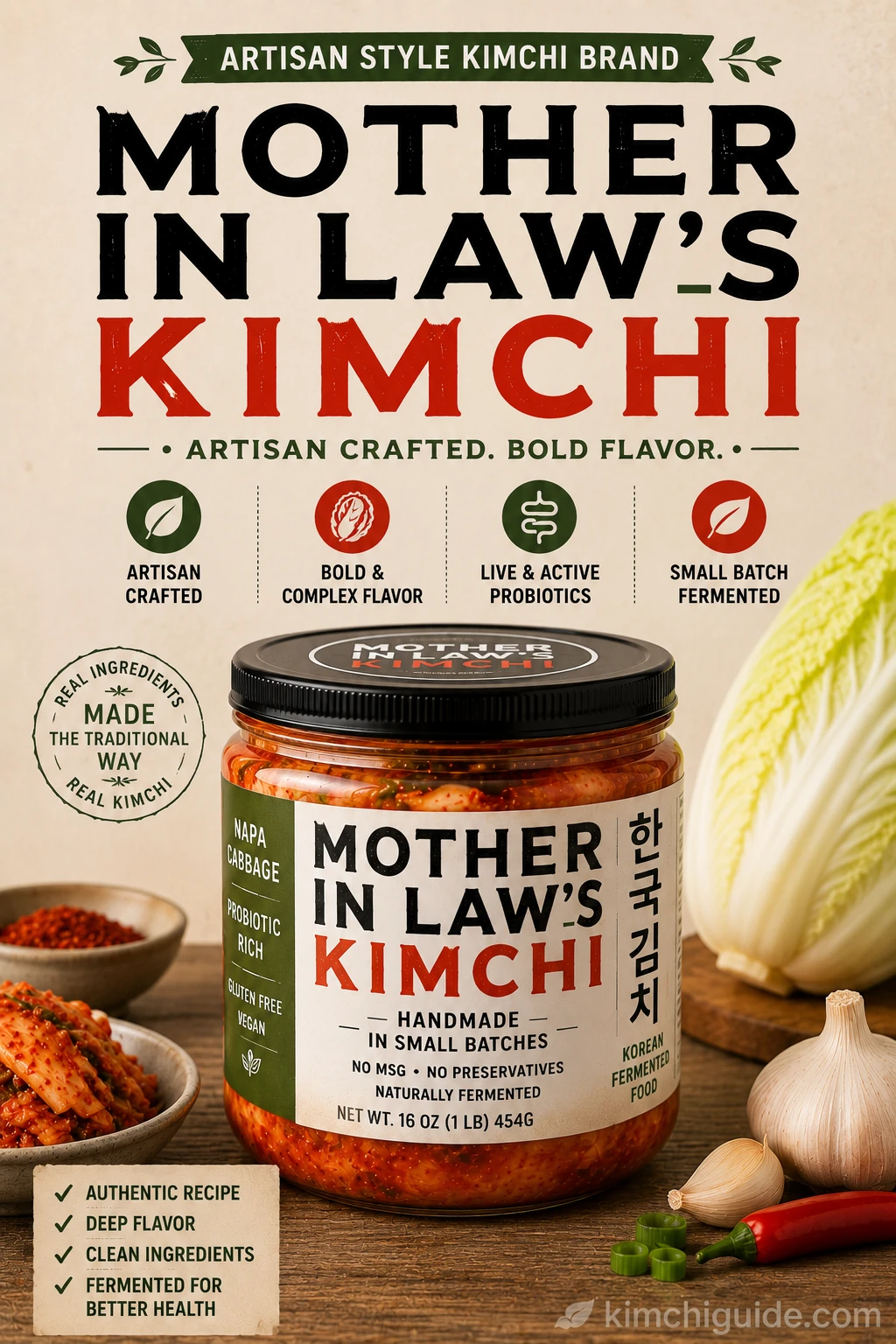
Mother-in-Law’s Kimchi
Artisan-style, clean ingredient list, no artificial additives. Milder than Korean-made brands but the 4-week-aged sample impressed in testing. Premium price for a US-made product.
Our Verdict: Strong artisan product with excellent ingredient transparency — quality justifies the higher price.
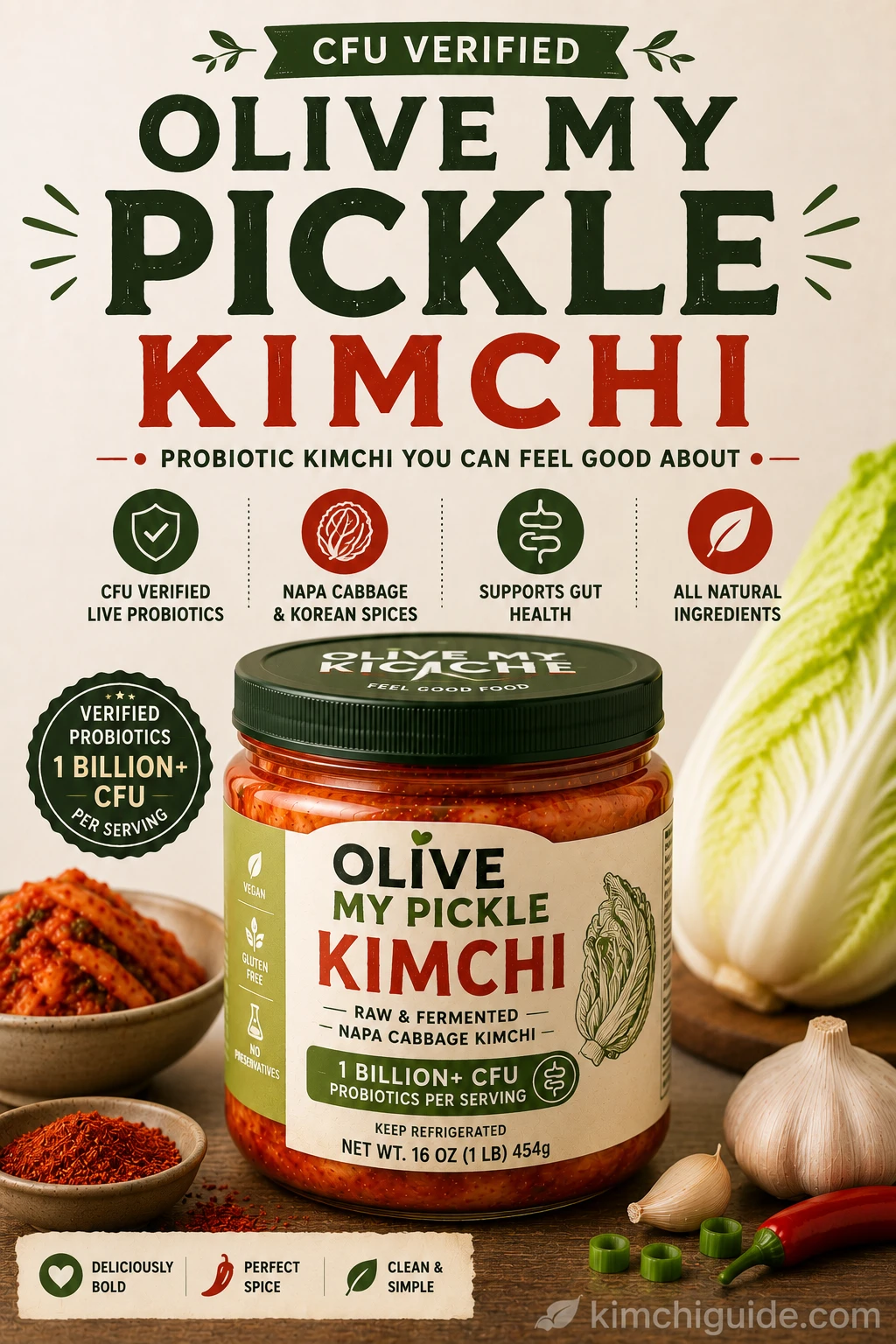
Olive My Pickle Kimchi
The only brand tested that publishes third-party verified CFU probiotic counts on its label. Flavour is simpler than artisan Korean brands, but transparency on live-culture content is unmatched.
Our Verdict: Choose this if verified probiotic content matters more to you than fermentation complexity.
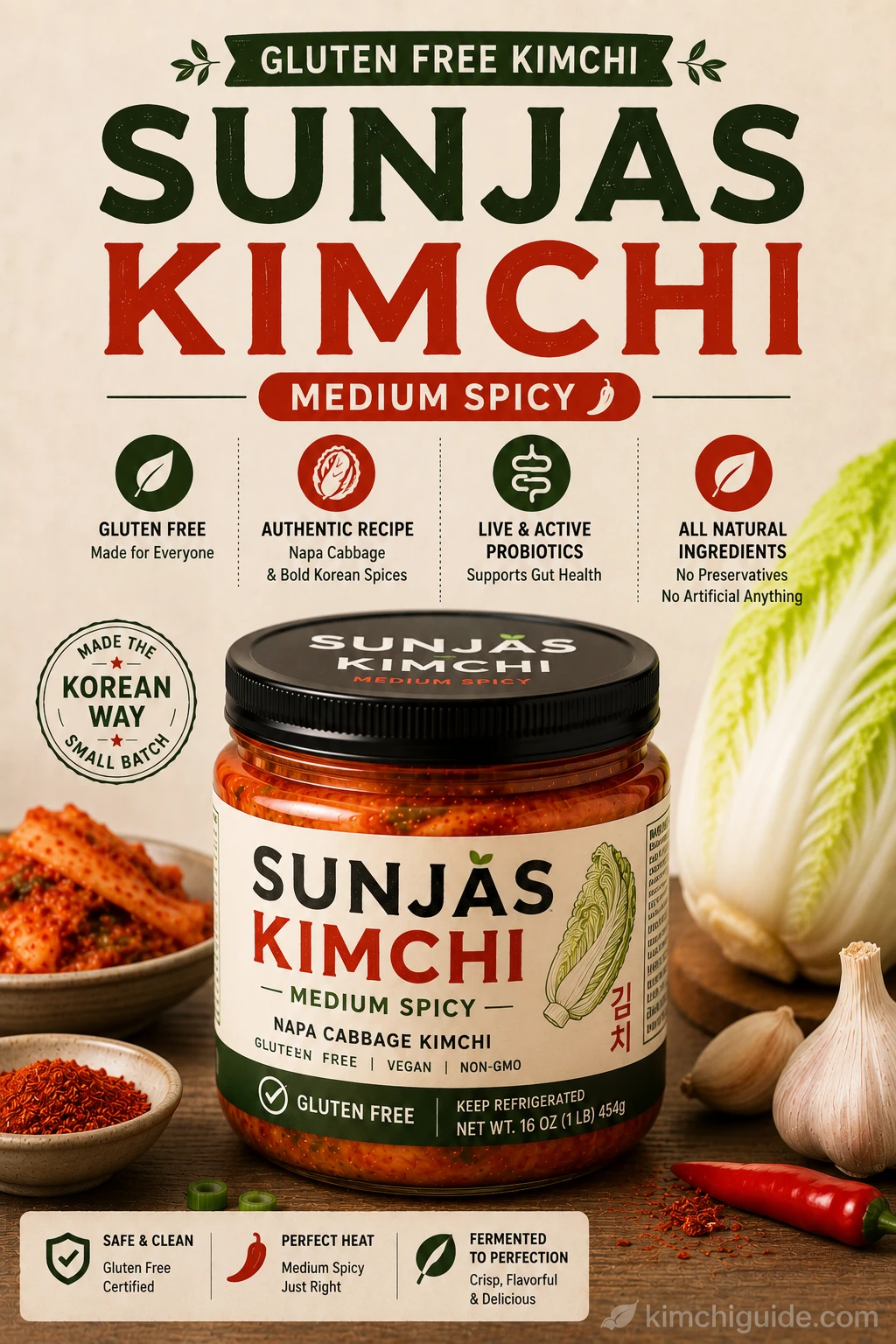
Sunja’s Medium Spicy Kimchi
Clean, consistent, and widely available. Straightforward ingredient list, reliable texture, genuinely medium heat. Never disappoints, though it lacks the depth of Korean-made brands.
Our Verdict: Reliable mid-tier pick, great for gluten sensitivity or MSG concerns.
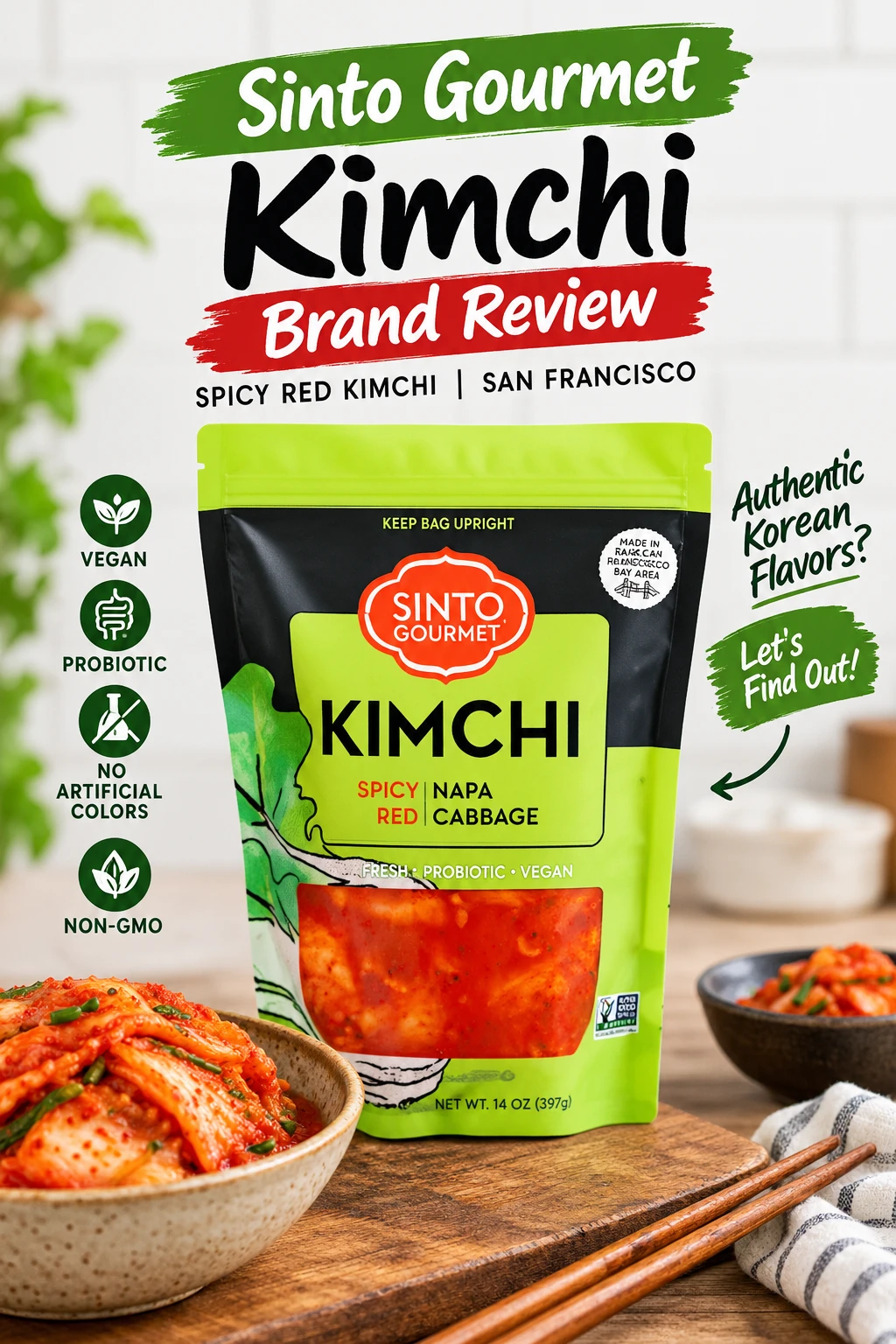
Sinto Gourmet Spicy Napa Kimchi
Handmade in San Francisco since 2010 by a family business using a grandmother’s recipes. Uses kelp powder instead of fish sauce, and carries a genuinely low sodium count verified against the physical label. Availability is regional rather than national.
Our Verdict: A genuinely low-sodium, handmade vegan pick — best for Bay Area shoppers or anyone willing to order through Amazon.
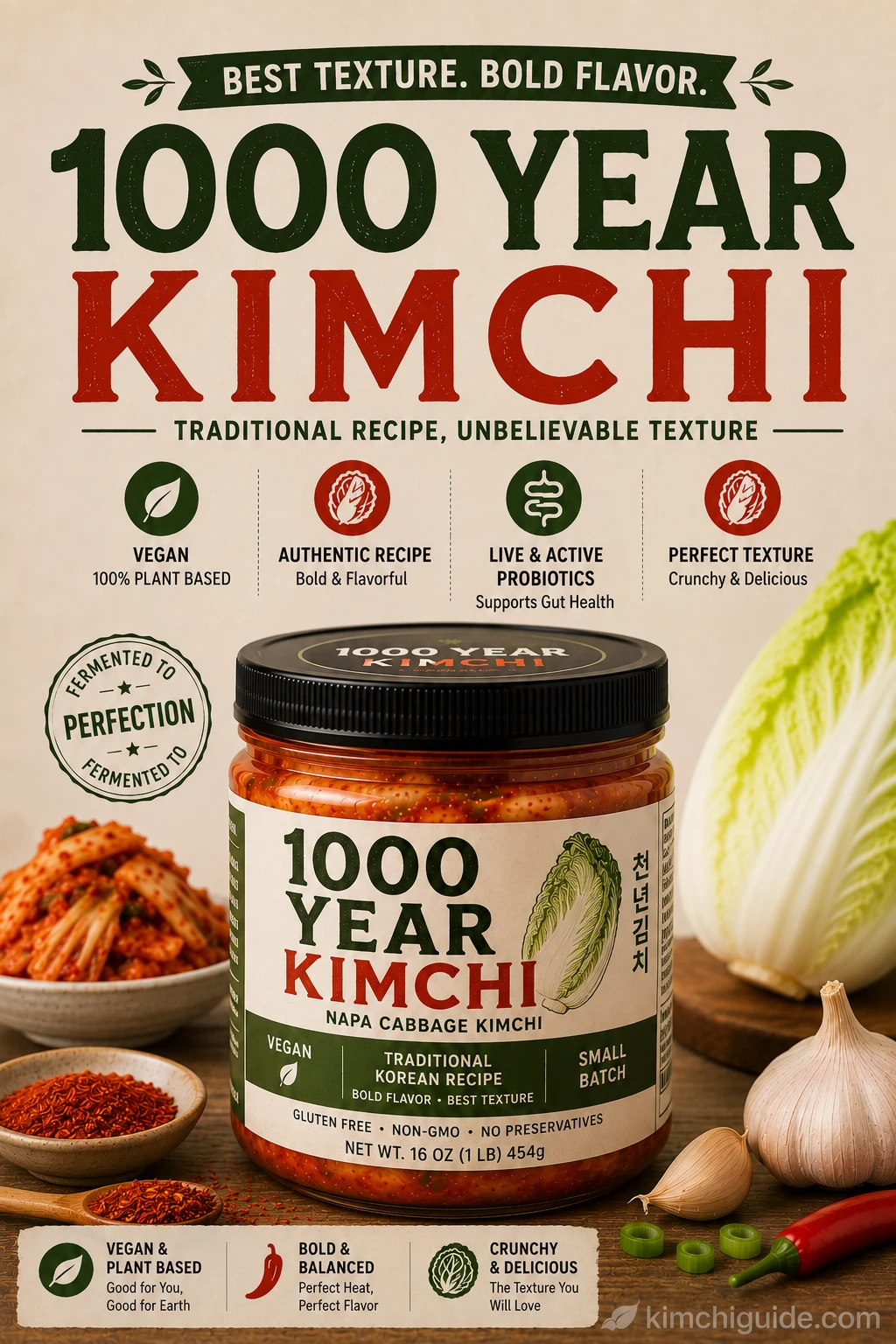
1000 Year Kimchi
Best texture of the vegan brands tested — a lively mix of crunchy and tender cabbage pieces. Milder flavour than fish-sauce-based brands, but doesn’t taste like it’s missing anything.
Our Verdict: The texture-focused pick among vegan brands — great if crunch matters more to you than deep funk.
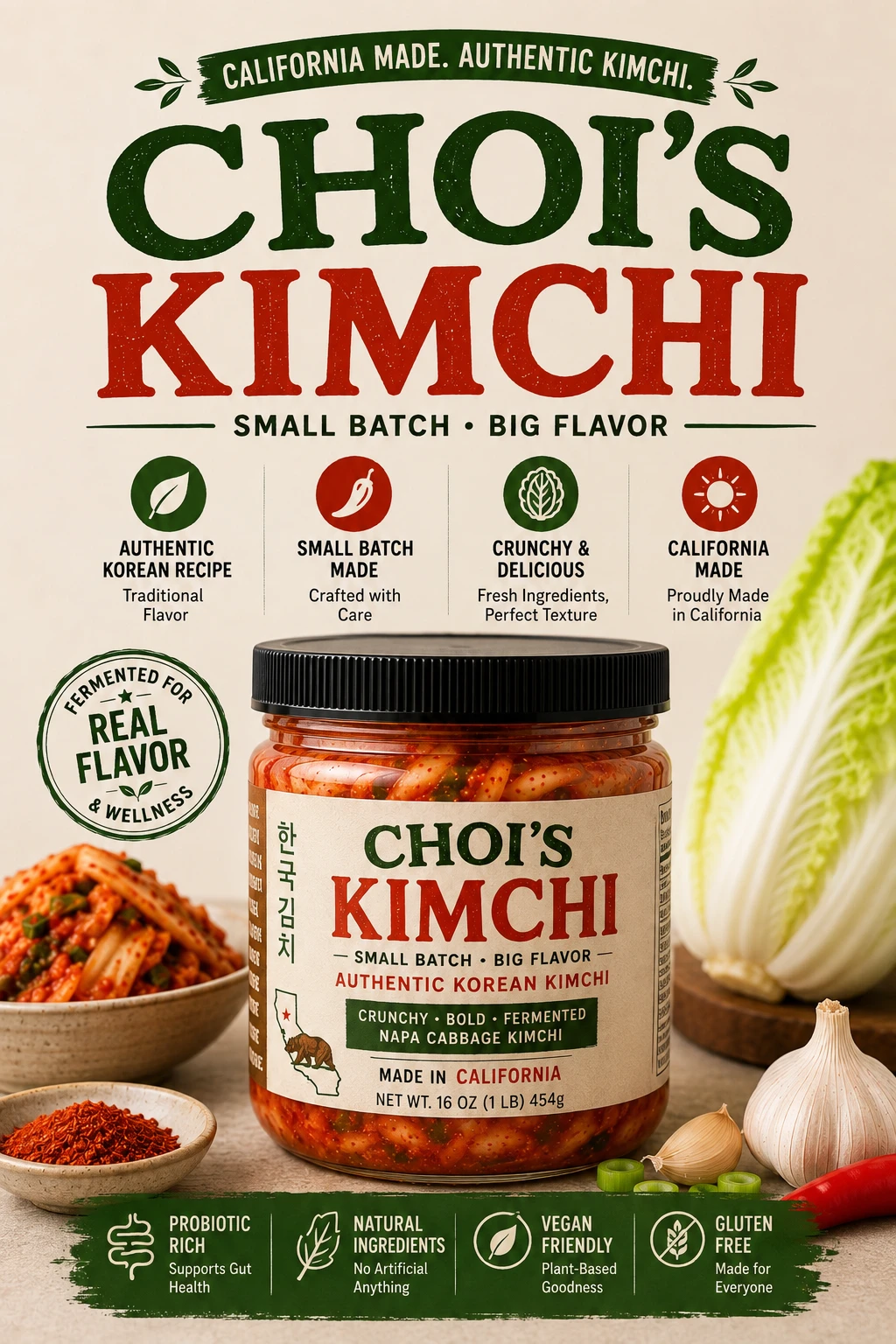
Choi’s Kimchi
A smaller, newer producer using a traditional recipe passed down through generations. Good gochugaru flavour without being overwhelming, and the cabbage stays crisp for weeks after opening. Not yet as widely available as the bigger brands, but worth seeking out.
Our Verdict: A promising smaller brand — great crunch and clean ingredients. Worth trying if you can find it, though distribution is still catching up to the bigger names.
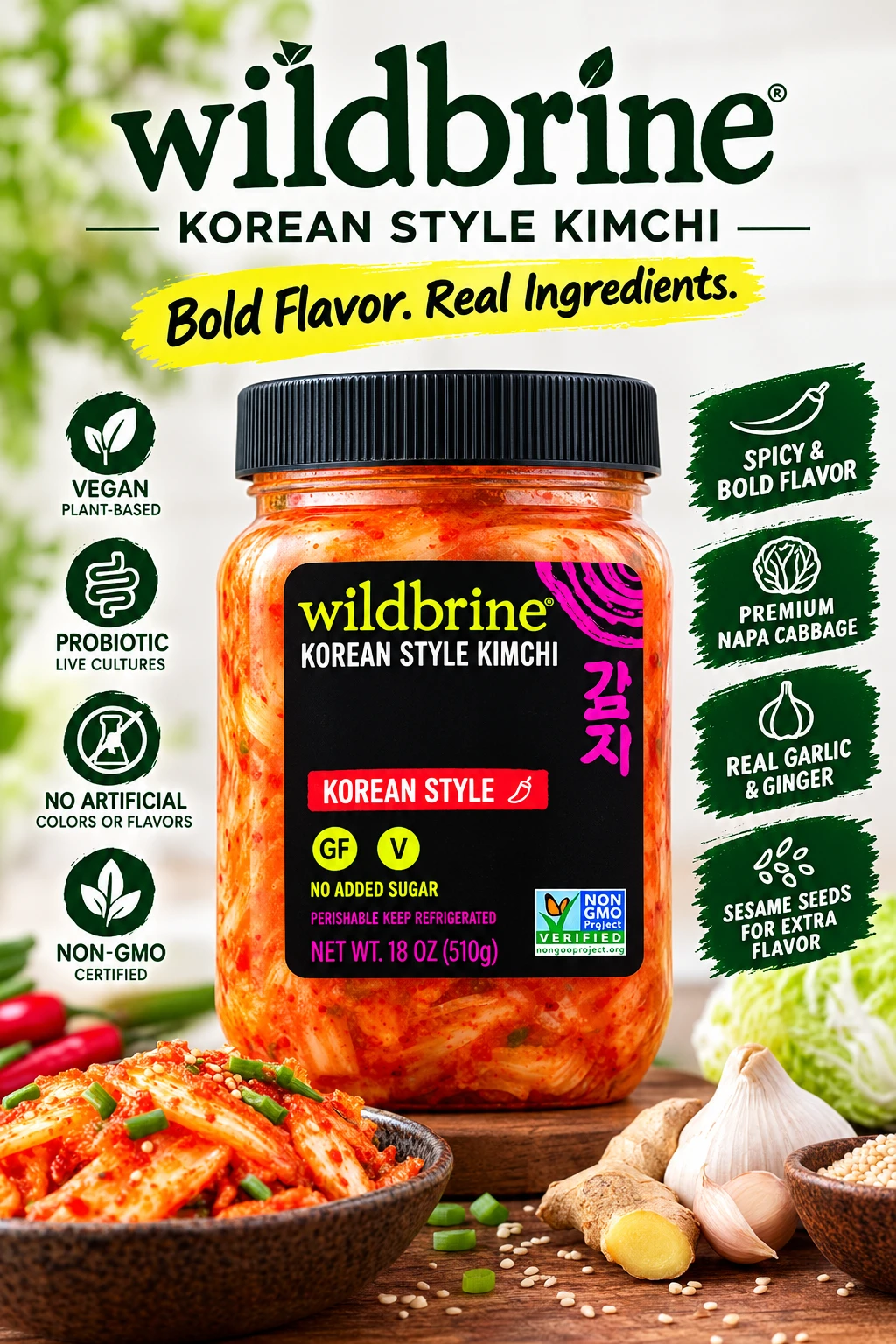
Wildbrine Korean Kimchi
Uses seaweed instead of fish sauce effectively — doesn’t taste like a substitute. Slightly sweeter than traditional brands but excellent for vegan households wanting a well-rounded jar.
Our Verdict: Best all-round vegan pick — the most balanced choice if you’re avoiding fish products entirely.
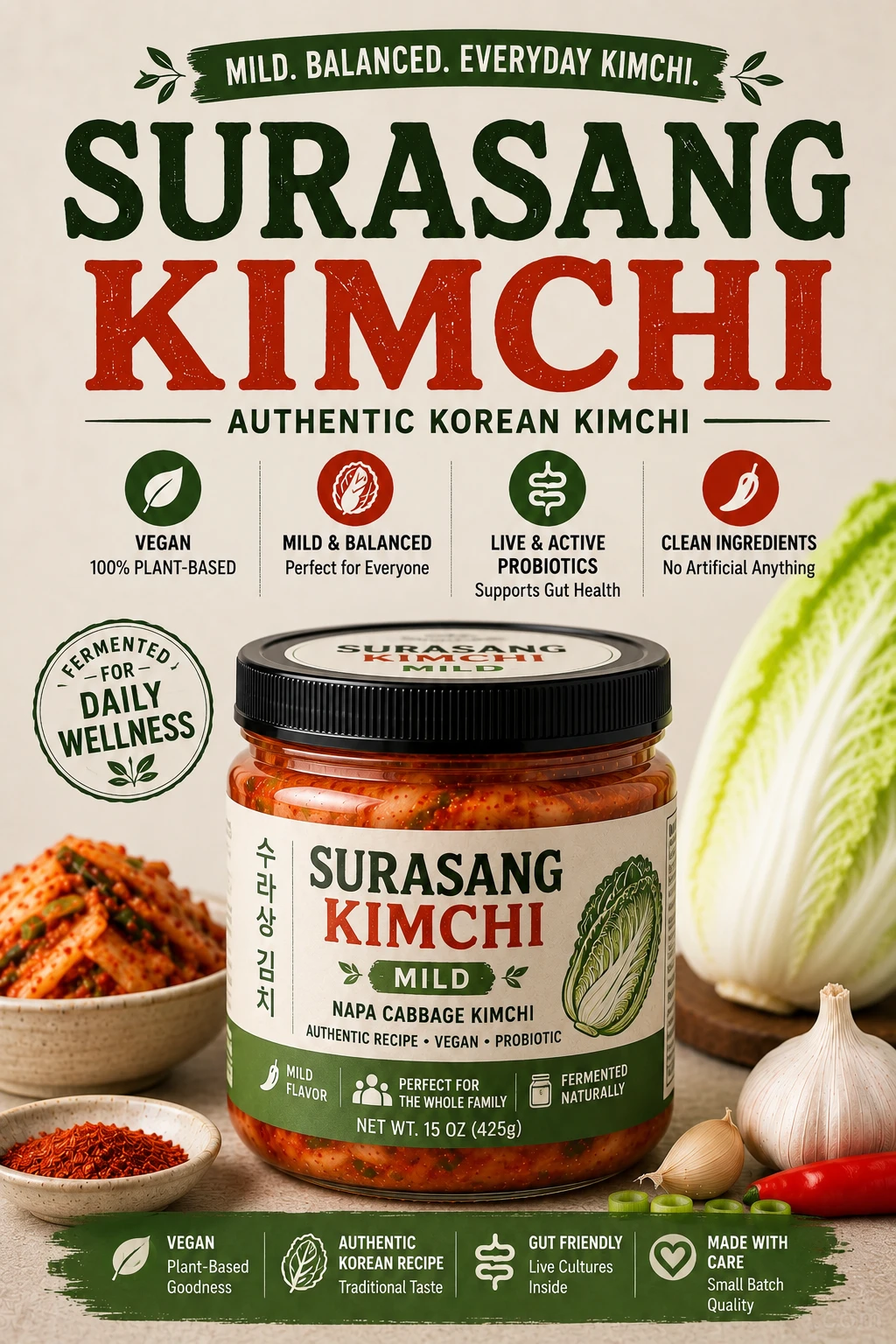
Surasang Kimchi
The mildest kimchi on this list — no fish sauce, minimal heat, and less of the funky fermentation punch that defines most brands here. Not for purists, but a genuinely good option if even Wildbrine feels too bold for your taste.
Our Verdict: Best pick for kimchi beginners who find even mild brands too spicy or too fermented-tasting. A gentle, approachable vegan option.
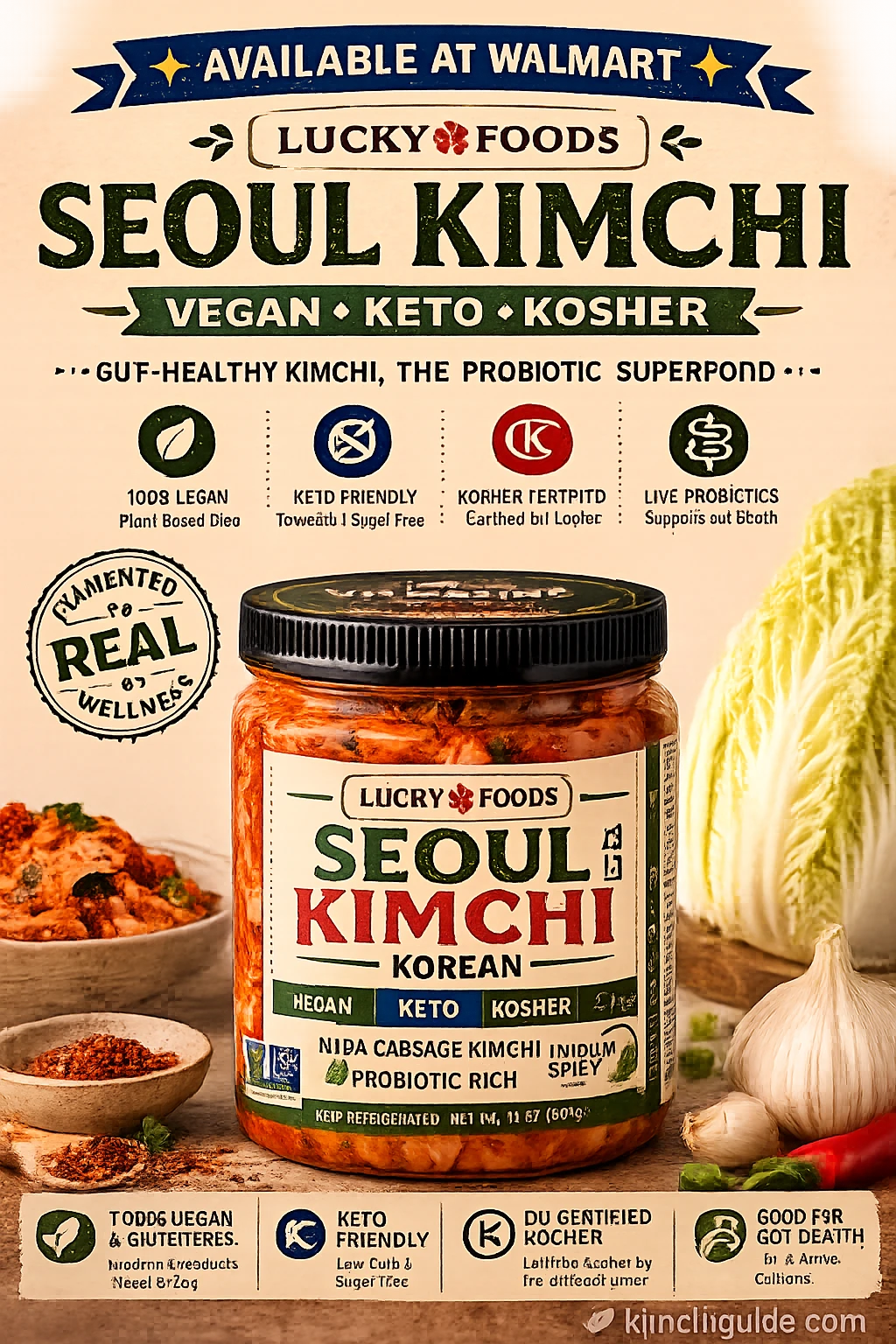
Lucky Foods (Seoul Kimchi)
Good availability and useful diet certifications, but lighter on fermentation depth than most brands in this ranking in our testing — better used as a cooking ingredient than eaten fresh from the jar. Lucky Foods is owned by Daesang, the maker of Jongga, but it is a separate brand. At least one other reviewer roundup rates its heat and crunch considerably higher than we did, so this may vary by batch or SKU.
Our Verdict: Convenient and diet-friendly, but treat it as a cooking kimchi rather than a table kimchi based on our tasting.
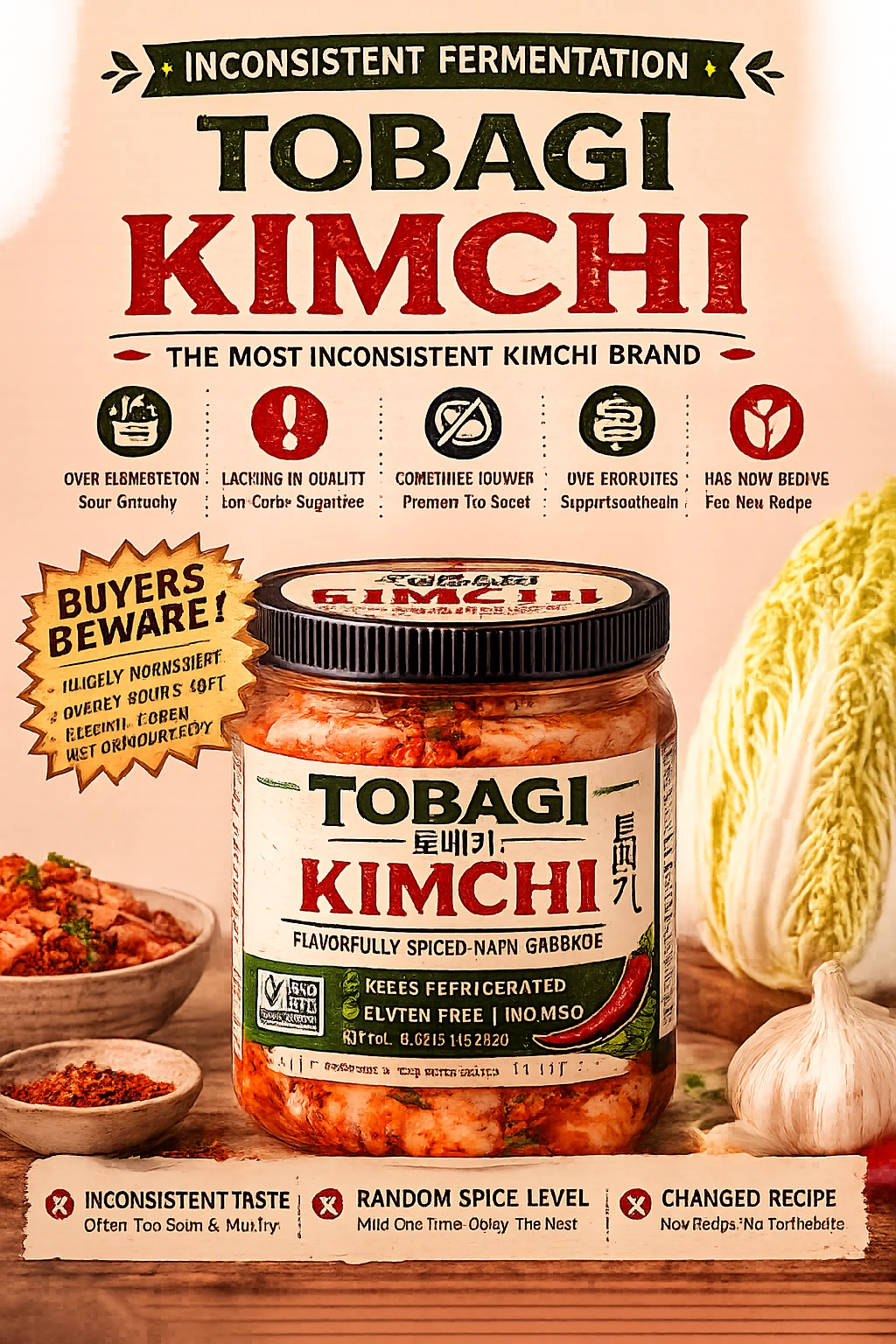
Tobagi Kimchi
Traditional recipe that should rank higher, but arrived inconsistently fermented across the jars we bought in the US, likely due to shipping time — flavour varied noticeably batch to batch.
Our Verdict: Good recipe on paper — for better results, buy direct from a Korean grocer with high turnover.
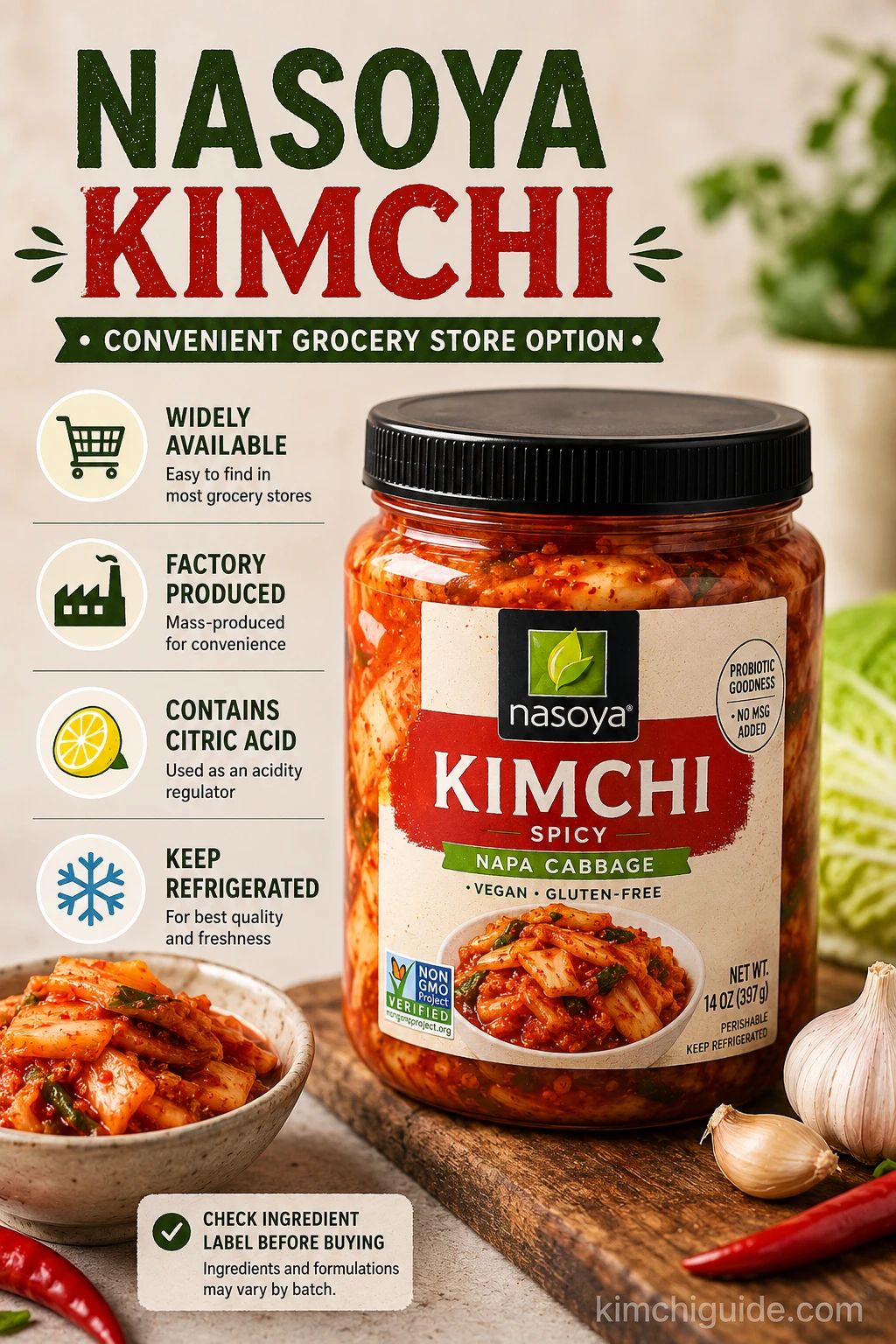
Nasoya Kimchi
Widely available but relies on citric acid to mimic tartness rather than real fermentation. Citric acid kills live cultures — only buy this if no other refrigerated kimchi is available.
Our Verdict: A supermarket fallback, not a first choice — better fermented options are usually nearby.
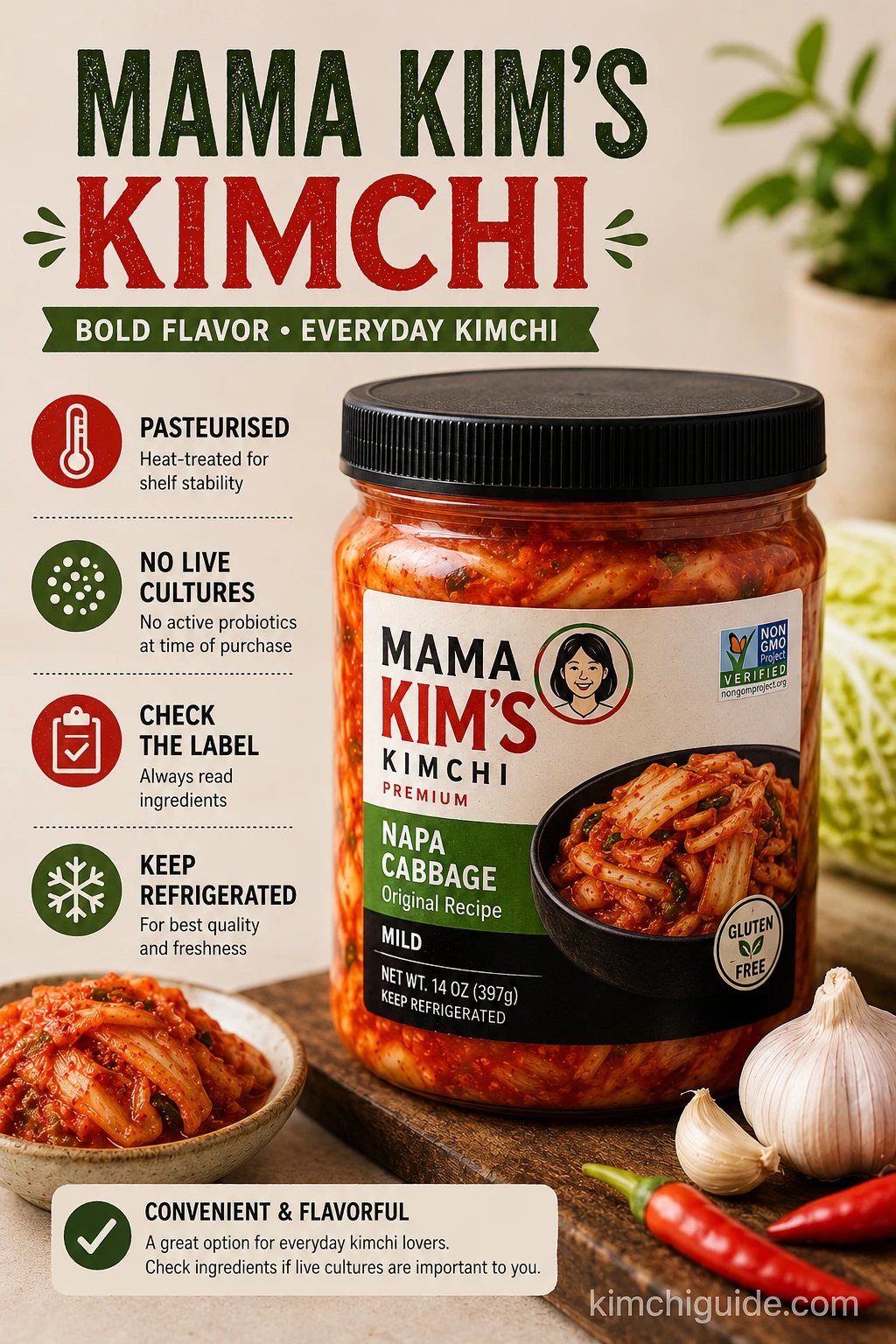
Mama Kim’s Kimchi
Pleasant flavour but pasteurised — zero live cultures. Works fine as a condiment topping, but offers no probiotic benefit and isn’t a true fermented kimchi.
Our Verdict: Fine as a condiment, but skip it if you’re buying kimchi specifically for gut-health benefits.
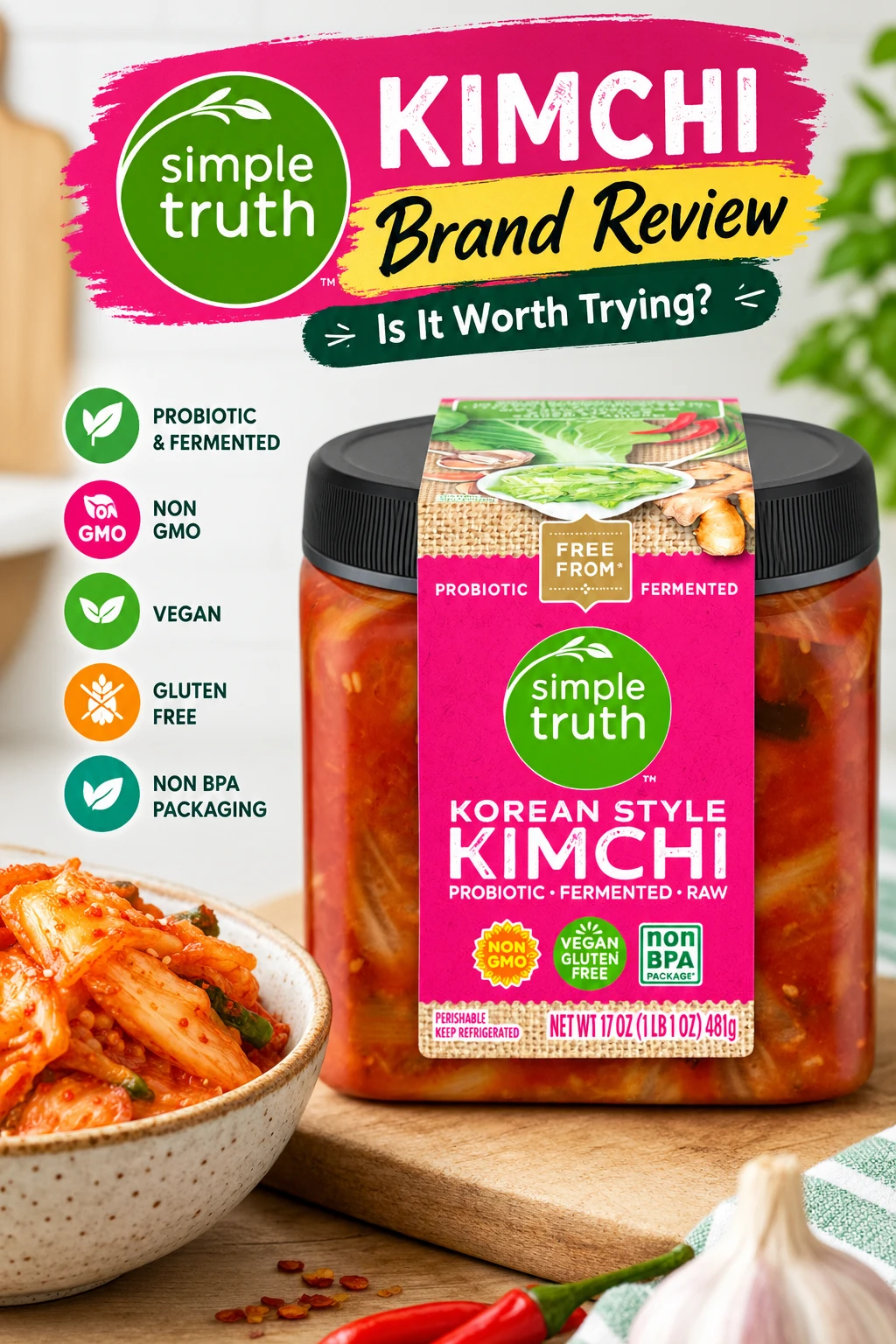
Simple Truth Kimchi (Kroger)
Kroger’s own natural/organic house brand, made with napa cabbage, green onion, seaweed, chili pepper, sea salt, garlic, and ginger — no fish sauce, so it’s genuinely vegan rather than relying on a seaweed substitute story. Certified organic, non-GMO, and gluten-free, and labeled “raw-fermented” rather than pasteurised. The catch: customer reviews are mixed on flavour depth, and stock-outs are a frequent complaint — several Kroger.com reviewers specifically mention it being hard to find in stock, and at least one competitor review has been openly critical of its flavour.
Our Verdict: Genuinely differentiated on paper — organic, non-GMO, vegan without a workaround — but inconsistent availability and mixed flavour reviews keep it at the bottom of this ranking. Worth trying if your local Kroger has it in stock and organic certification matters to you specifically; don’t expect Jongga-level depth.
Brands to Use Cautiously
None of these are unsafe to eat. They simply underdeliver relative to price, or don’t offer the live-fermentation benefits most buyers are looking for.
❌ Mama Kim’s
⚠️ Nasoya
⚠️ Tobagi
🥫 Shelf-stable pouches and cans
Allergens, Vegan, Halal & Kosher: All 19 Brands at a Glance
Traditional kimchi almost always uses fish sauce or salted shrimp (jeotgal) for depth of flavour, and that’s not always obvious from the name alone. If you’re buying for someone with a fish or shellfish allergy, or you eat vegan, halal or kosher, check this table before you check the ingredient list.
| Brand | Vegan | Fish Sauce / Shrimp Paste | Halal Certified | Kosher Certified |
|---|---|---|---|---|
| Jongga | ⚠️ Separate vegan jar | Yes (anchovy + shrimp sauce, Costco tub) | ⚠️ Sources conflict* | ⚠️ Sources conflict* |
| Cosmos | ❌ | Traditional recipe — check label | — | — |
| Trader Joe’s | ⚠️ Check label | Traditional recipe — check label | — | — |
| Bibigo | ⚠️ Vegan bottle (US), UK pouch | Standard: yes (anchovy). Vegan versions: no | ⚠️ Fish-free 150 g pack only* | — |
| Mama O’s | ❌ | Yes (anchovy fish paste) | — | — |
| Cleveland Kitchen | ❌ | Traditional recipe — check label | — | — |
| Mother-in-Law’s | ❌ | Traditional recipe — check label | — | — |
| Olive My Pickle | ⚠️ Check label | Traditional recipe — check label | — | — |
| Sunja’s | ❌ | Traditional recipe — check label | — | — |
| Sinto Gourmet | ✅ Vegan | No (uses kelp powder) | — | — |
| 1000 Year Kimchi | ✅ Vegan | No | — | — |
| Choi’s | ❌ | Traditional recipe — check label | — | — |
| Wildbrine | ✅ Vegan | No (uses seaweed) | — | — |
| Surasang | ✅ Vegan | No | — | — |
| Lucky Foods (Seoul Kimchi) | ✅ Vegan | No | — | ✅ Certified |
| Tobagi | ❌ | Traditional recipe — check label | — | — |
| Nasoya | ❌ | Traditional recipe — check label | — | — |
| Mama Kim’s | ❌ | Traditional recipe — check label | — | — |
| Simple Truth (Kroger) | ✅ Vegan | No | — | — |
*Certification belongs to specific plants and products, not to a whole brand. Jongga: its Korean site lists a Halal-certified plant (since 2010) and Kosher-certified flavor kimchi (since 2014), Jongga Global says some products are certified, but Jongga USA’s FAQ says its products are not Halal or Kosher certified, so we could not confirm either for US packages. Bibigo: the fish-free ambient 150 g sliced kimchi is listed by a distributor as IFANCA halal certified; we found no claim for the standard jar. “—” means no certification is stated in this article, not that a product definitely isn’t certified. “Traditional recipe — check label” means the brand follows the classic fish-sauce-based method and isn’t marketed as vegan, but we haven’t confirmed shrimp paste vs. fish sauce from the label alone. See our halal and kosher guide, vegan kimchi brands guide and gluten-free kimchi brands. If you’d rather skip the fish-sauce question altogether, our how to make vegan kimchi at home guide walks through a fully plant-based batch from scratch.
Full Comparison: All 19 Best Kimchi Brands in the USA Ranked
Save this chart for a quick reference next time you’re standing in the kimchi aisle.
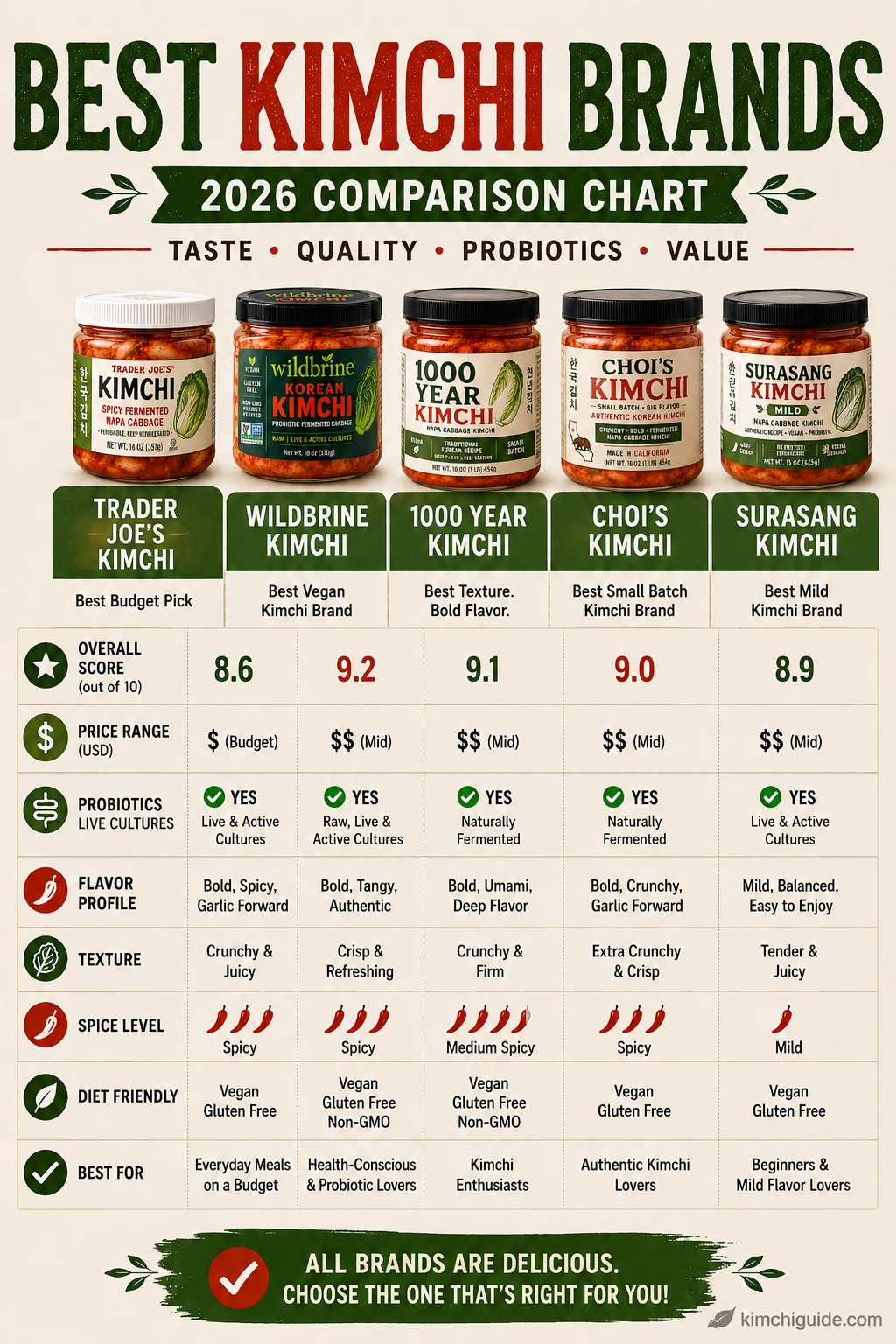
This chart condenses every score, price range and availability note from the full ranking into one visual, useful to save on your phone before a grocery run.
| Rank | Brand | Score | Live Cultures | Heat | Vegan | Price (jar) | Price / oz | Where to Buy |
|---|---|---|---|---|---|---|---|---|
| #1 | Jongga | 9.4 | ✅ (refrigerated) | 🌶🌶🌶 Med-High | ⚠️ Separate jar | $8-12 | ~$0.16/oz (Costco) | H Mart, Costco, Walmart |
| #2 | Cosmos | 9.1 | ✅ | 🌶🌶🌶 Med-High | ❌ | $10-14 | ~$0.75/oz | H Mart, Costco, Kroger |
| #3 | Trader Joe’s | 8.3 | ✅ | 🌶🌶 Medium | ⚠️ Check label | $4-5 | ~$0.32/oz | Trader Joe’s |
| #4 | Bibigo | 8.1 | ✅ Sold chilled | 🌶 Mild | ⚠️ Vegan bottle (US) + UK pouch | $3-9 | ~$0.32/oz (Walmart) | Walmart, most stores |
| #5 | Mama O’s | 8.0 | ✅ | 🌶🌶 Medium | ❌ | $9-10 | ~$0.59/oz | Central Market, Whole Foods |
| #6 | Cleveland Kitchen | 7.8 | ✅ | 🌶 Mild | ❌ | $6-8 | ~$0.47/oz | Target, Kroger, Walmart |
| #7 | Mother-in-Law’s | 7.7 | ✅ | 🌶🌶 Medium | ❌ | $11-15 | ~$0.87/oz | Whole Foods |
| #8 | Olive My Pickle | 7.6 | ✅ CFU-verified | 🌶 Mild | ⚠️ Check label | $9-12 | ~$0.44/oz | Online |
| #9 | Sunja’s | 7.5 | ✅ | 🌶 Mild-Med | ❌ | $9-12 | ~$0.75/oz | Whole Foods, Amazon |
| #10 | Sinto Gourmet | 7.5 | ✅ | 🌶🌶 Medium | ✅ | $9-11 | ~$0.64/oz | Sprouts, Amazon |
| #11 | 1000 Year Kimchi | 7.3 | ✅ | 🌶 Mild | ✅ | $8-11 | ~$0.59/oz | Online, specialty stores |
| #12 | Choi’s | 7.2 | ✅ | 🌶🌶 Medium | ❌ | $8-10 | ~$0.55/oz | Online, West Coast |
| #13 | Wildbrine | 7.1 | ✅ | 🌶 Mild | ✅ | $8-11 | ~$0.53/oz | Whole Foods |
| #14 | Surasang | 7.0 | ✅ | 🌶 Mild | ✅ | $7-9 | ~$0.50/oz | Asian grocers, Amazon |
| #15 | Lucky Foods (Seoul Kimchi) | 6.8 | ✅ | 🌶🌶 Medium | ✅ | $7-10 | ~$0.61/oz | Walmart |
| #16 | Tobagi | 6.5 | ✅ | 🌶🌶 Medium | ❌ | $9-12 | ~$0.36/oz | Korean grocers |
| #17 | Nasoya | 5.9 | ⚠️ Reduced | 🌶 Mild | ❌ | $6-8 | ~$0.50/oz | Supermarket fallback |
| #18 | Mama Kim’s | 5.4 | ❌ Pasteurised | 🌶 Mild | ❌ | $6-9 | ~$0.47/oz | Most supermarkets |
| #19 | Simple Truth (Kroger) | 5.3 | ✅ “Raw-Fermented” | 🌶 Mild-Med | ✅ | $5-7 | ~$0.38/oz | Kroger · Ralphs · Fred Meyer |
No brands match this combination of filters. Try removing one.
Price per ounce is approximate, based on typical jar size per brand: useful for comparing real value, not just sticker price. Jongga’s figure is for the 52.9 oz Costco tub; its smaller jars cost more per ounce. Bibigo’s is for the 10 oz Walmart bottle.
Jongga vs Bibigo: Which Should You Buy?
The two most commonly compared brands in our search data. Both are Korean-made and widely trusted, but they serve different needs.
🏆 Jongga Winner
- Deeper, more traditional fermentation
- Costco 1.5 kg tub at roughly 15-17 cents an ounce
- No MSG on the Costco tub label
- Refrigerated line unpasteurized per the brand
- Less common at mainstream chains
Bibigo
- Milder, more approachable flavour
- Far easier to find: Walmart 10 oz bottle listed at $3.18
- Vegan bottle in the US, vegan pouch in the UK
- Standard list includes anchovy fish sauce and MSG
- No pasteurization statement found
How to Read a Kimchi Label: The 6 Things That Matter
Knowing what to look for is more valuable than memorising brand names, since formulations change. Here’s exactly what to check before putting any jar in your basket.
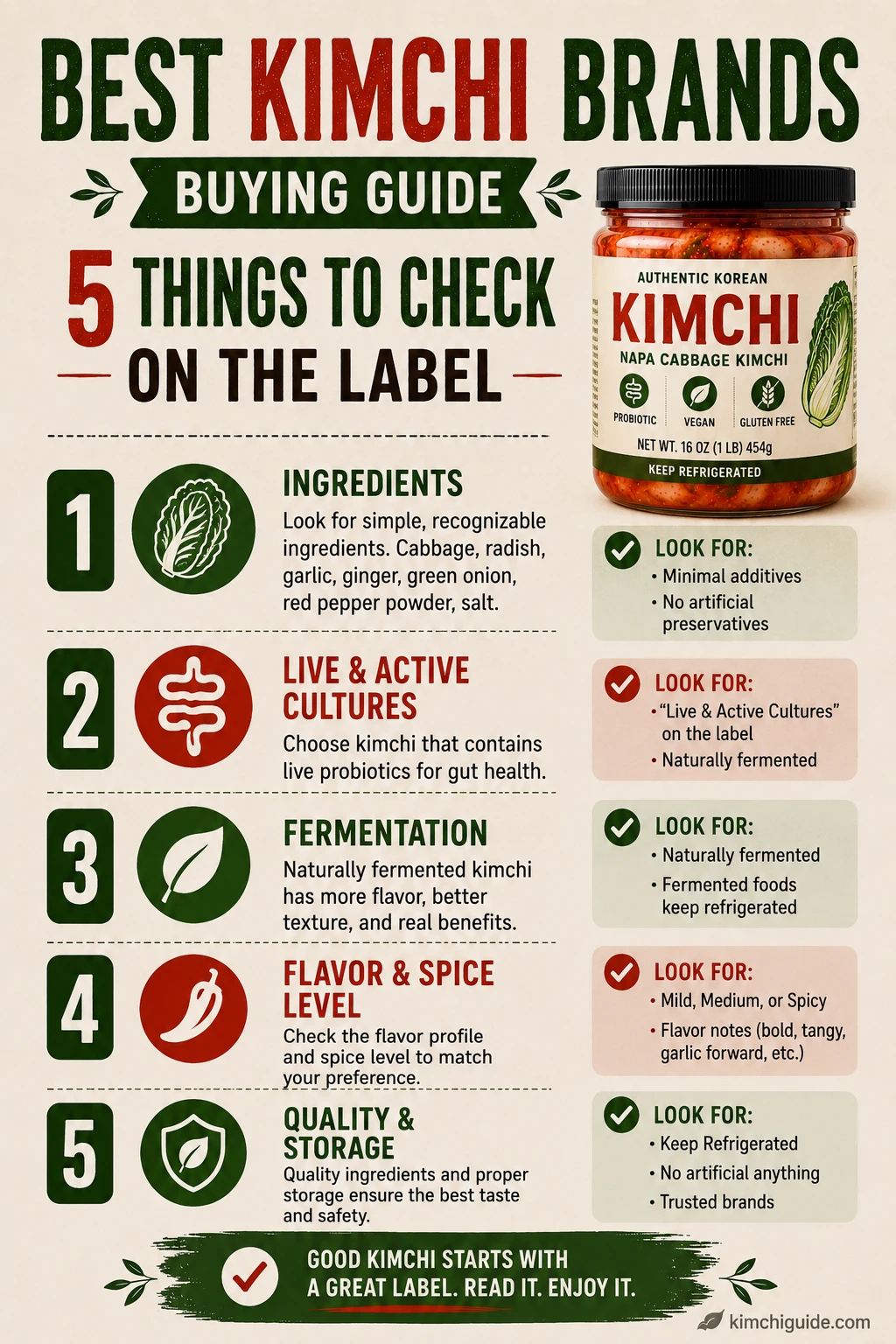
A quick-reference version of the checklist below, worth saving to your phone for next time you’re scanning labels in the store.
First Ingredient Must Be Napa Cabbage
If cabbage isn’t the first ingredient, it’s not real baechu kimchi. Some budget products pad with water, vinegar or cucumber as a primary ingredient.
Look for Gochugaru, Not “Red Pepper”
Authentic kimchi uses Korean red pepper flakes. Generic “red pepper” or “chili pepper” indicates a substitute with a different flavour and heat profile. See our gochugaru guide.
Avoid Citric Acid and Sodium Benzoate
These are probiotic killers, added to simulate tartness or extend shelf life without real fermentation.
Must Be Refrigerated, Not Shelf-Stable
Real live-culture kimchi is sold cold. A pouch or jar sitting at room temperature has been heat-treated. Brands can sell both: Jongga USA says its room-temperature products are pasteurized while most of its refrigerated ones are not. See our pasteurized vs. live-culture guide.
Shorter Ingredient List = Better Kimchi
Traditional kimchi has 6-10 ingredients. A 20-ingredient label with stabilisers and gums signals mass-produced shortcuts.
Check for MSG If That’s a Preference for You
MSG isn’t unsafe, but some shoppers avoid it. It appears on the standard ingredient panels of Bibigo (US and EU) and Cosmos, while the Jongga Costco tub label does not list it. Both Bibigo and Cosmos also sell or list alternatives, so read the specific label rather than assuming from brand reputation.
Where to Buy the Best Kimchi Brands in the USA
Kimchi has become mainstream enough that a dedicated Korean-grocery trip usually isn’t necessary anymore. For a fuller retailer-by-retailer breakdown, see our where-to-buy kimchi guide.
Mainstream Supermarkets
Korean / Asian Grocers
Online / Specialty
Kimchi Brands Outside the USA: UK, Canada & Australia
This guide is deliberately scoped to US availability. But we get real search traffic from readers outside the US, so here is an honest snapshot.
United Kingdom
Canada
Australia
How to Store Store-Bought Kimchi
Store-bought kimchi arrives already fermenting. How you store it after opening determines both shelf life and how good it gets.
Refrigerator (Opened)
Refrigerator (Unopened)
Freezer
Never at Room Temperature
Health Benefits: What the Science Says
Live-culture kimchi contains lactic acid bacteria, and that is the main reason people buy it for gut health. The evidence is mostly observational. The 2024 BMJ Open study found that Korean men eating one to three servings a day had lower odds of obesity than those eating less than one, and that radish kimchi was linked to less abdominal fat in both sexes, but it could not show that kimchi caused the difference, and eating five or more servings a day showed no extra benefit. Read the BMJ Group summary. Pasteurised kimchi has essentially no live bacteria, so the probiotic angle applies only to refrigerated, unpasteurised products.
If verified probiotic content specifically matters to you, Olive My Pickle is currently the only brand in this ranking that publishes third-party CFU counts on its label.
Sodium: The Trade-Off Nobody Puts on the Front Label
Salt isn’t optional in kimchi: it draws water out of the cabbage and creates the environment that lets fermentation happen safely, so no brand on this list is genuinely low-sodium. But content still varies. Based on our panel (per 1/4 cup), the lowest-sodium options are:
| Rank | Brand | Sodium (per 1/4 cup) |
|---|---|---|
| 1 | Olive My Pickle | 250mg |
| 2 | Mother-in-Law’s | 270mg |
| 3 | Cleveland Kitchen | 290mg |
| 3 | Surasang | 290mg |
| 5 | Cosmos | 300mg |
The highest in this ranking are Mama Kim’s at 420mg and Nasoya at 400mg per 1/4 cup, close to 70% more than the lowest. Package labels can differ from our panel: for example, Jongga’s Costco tub label lists about 190-200mg per 1 oz (28 g), and Bibigo’s EU jar lists about 1.8 g salt per 100 g, roughly 200mg per ounce. See our full sodium ranking of all 19 brands.
Best Kimchi Brand in the USA: FAQ
What is the best kimchi brand in the USA in 2026?
Based on our blind taste test of 19 brands sold in the USA, Jongga is the best overall kimchi brand for 2026: authentic sour-tangy fermentation, consistent crunch, and balanced heat. Trader Joe’s is the best budget pick, Cosmos the best premium pick, and Bibigo the most widely available in mainstream US grocery stores.
Is Bibigo kimchi good?
Bibigo kimchi is a solid, reliable choice and by far the easiest Korean-made brand to find in mainstream US stores like Walmart. It leans milder than Jongga or Cosmos, making it a good entry point, though more traditional brands have more fermentation depth. Its standard ingredient list includes anchovy fish sauce and MSG. See our full Bibigo review or Jongga vs Bibigo.
What is the healthiest kimchi brand to buy?
The healthiest brands are naturally fermented with live active cultures and no citric acid or sodium benzoate. Jongga’s refrigerated line, Cosmos, Mother-in-Law’s, and Olive My Pickle all meet this standard; Olive My Pickle is the only one that publishes third-party verified CFU counts.
Which kimchi brand has verified probiotic counts?
Olive My Pickle is currently the only major store-bought brand that publishes third-party-verified CFU counts on its packaging, the clearest choice for buyers prioritising gut health above flavour complexity.
What kimchi brands are sold at Target, Walmart, or Kroger?
Cleveland Kitchen and Bibigo are the most widely stocked live-fermented brands at Target and Kroger. Kroger also sells its own private-label option, Simple Truth Kimchi. Lucky Foods (Seoul Kimchi), Bibigo and Jongga’s 300 g jars are found at Walmart. Availability varies by region, so check the refrigerated international aisle.
Does store-bought kimchi have live probiotics?
Not all of it. Pasteurised kimchi has no live cultures because heat kills the Lactobacillus bacteria. Buy refrigerated kimchi and check for “live cultures” or “naturally fermented” on the label. Mama Kim’s, in our testing, was pasteurised and had no live cultures.
Which kimchi brands are pasteurized?
Mama Kim’s was pasteurised in our testing, and any shelf-stable pouch or can is heat-treated, including Jongga’s room-temperature pouches, which Jongga USA says are pasteurized while most of its refrigerated products are not. Bibigo does not state whether its products are pasteurized. See our pasteurized vs live-culture kimchi guide for every brand.
Which kimchi brand should I avoid?
Based on our testing, use caution with Mama Kim’s (pasteurised, zero live cultures), Nasoya (relies on citric acid rather than true fermentation), and Tobagi, which arrived inconsistently fermented in our US-purchased jars. These are not unsafe, just lower value than better-fermented alternatives.
How long does store-bought kimchi last after opening?
Store-bought kimchi lasts 3 to 6 months in the refrigerator after opening, provided you keep it submerged in its brine and use clean utensils. It keeps fermenting and gets tangier over time; very sour kimchi is ideal for kimchi fried rice, jjigae and pancakes. See what to do with sour kimchi.
What should I look for on a kimchi label?
Napa cabbage as the first ingredient, gochugaru rather than generic chili powder, fish sauce or salted shrimp for authentic flavor (skip if vegan), no citric acid or potassium sorbate, a refrigerated display rather than shelf-stable packaging, and MSG on the label if that is something you prefer to avoid. Some standard-line jars contain it while a no-MSG version of the same product often exists.
Which kimchi brand is best for kimchi fried rice?
Use an aged, sour kimchi rather than fresh mild kimchi. Jongga’s well-fermented tub, older Cosmos stock, or aged Cleveland Kitchen all caramelise well in a hot pan. Avoid fresh or mild brands for cooking, since they tend to turn watery. See our kimchi fried rice recipes, or our vegan kimchi fried rice recipe if you’re cooking with a plant-based jar.
What is the best vegan kimchi brand?
Wildbrine Korean Kimchi is the best all-round vegan pick, since seaweed replaces fish sauce effectively. 1000 Year Kimchi is a close second on texture. Jongga and Bibigo also sell separate vegan versions. Always verify the current label, and see our vegan kimchi brands guide. Prefer to skip the store altogether? Our how to make vegan kimchi at home guide walks through a fully plant-based batch from scratch.
Is Mama O’s kimchi vegan?
No. Mama O’s Original uses traditional anchovy fish paste for flavour, so it is not vegan. Choose Wildbrine or 1000 Year Kimchi instead if avoiding fish products.
Is Cleveland Kitchen kimchi authentic?
Cleveland Kitchen kimchi is genuinely live-fermented with real probiotic activity, which puts it ahead of pasteurised supermarket options. It leans milder and less complex than Korean-made brands like Jongga, but it is a strong, accessible choice at mainstream grocery chains.
Can I cook with store-bought kimchi straight from the jar?
Yes. Drain excess liquid first, then chop or slice to size. For kimchi fried rice, kimchi that has been open at least 2 weeks is more acidic and gives richer flavour when cooked. For kimchi jjigae, even fully sour kimchi works well.
Which kimchi brand has the most authentic Korean taste?
Jongga is the most traditionally authentic import; the Costco tub is labeled Product of South Korea. Cosmos follows the same traditional style (salted napa cabbage, gochugaru, fish sauce, garlic, ginger) but is produced in the USA by Cosmos Food Co., a Korean-American manufacturer operating since 1971, so it is authentic in recipe and technique even though it is not imported.
What is the spiciest store-bought kimchi brand?
Heat is not quantified on the labels, so this is a judgment call. In our test Jongga and Cosmos had the most heat among standard jars, and Jongga also sells spicier products such as its Super Spicy Silbi Kimchi at H Mart. Bibigo launched a much hotter Crazy Hot Kimchi in Thailand in June 2026, made in Vietnam, but we found no US launch. Outside reviewers disagree on how hot Jongga is, and batch age matters.
Where can I buy the best kimchi near me?
A Korean grocery store like H Mart or Zion Market offers the freshest selection and highest turnover. For everyday access, Whole Foods, Trader Joe’s, Target, Kroger, Walmart and Costco carry good refrigerated kimchi. Buy refrigerated, since shipped shelf-stable jars are usually pasteurised. See where to buy kimchi.
How do I know if my kimchi has gone bad?
Bad kimchi shows visible mold (green, black, or fuzzy white growth), not to be confused with kahm yeast, a harmless thin white film. A rotten smell distinct from normal sour-funky kimchi aroma, or a slimy texture beyond normal softening, are also red flags. Overly sour kimchi is not bad; it is just mature and ideal for cooking.
Does kimchi need to be refrigerated?
Yes. Any kimchi with live cultures must be refrigerated at all times, before and after opening. Shelf-stable kimchi in sealed, non-refrigerated packaging has been pasteurised and contains no live probiotics.
Which kimchi brand is best for beginners?
Trader Joe’s is the best choice for beginners: mild, widely available, affordable, and free of the intense fermented funk that can overwhelm first-time eaters. Bibigo is a close second at mainstream grocers. Once comfortable, step up to Jongga for a more traditional flavour profile.
Is CJ Foods kimchi the same as Bibigo?
Yes. Bibigo is CJ Foods’ (CJ CheilJedang’s) kimchi brand, so a search for a CJ Foods kimchi review and a Bibigo kimchi review lead to the same jar. In our testing it scored 8.1/10 and ranked #4 overall. See our CJ Foods kimchi review.
Which kimchi brands are kosher?
It depends on the exact product. Lucky Foods (Seoul Kimchi) is listed as kosher in our ranking. For Jongga, sources conflict: Jongga’s Korean site says its Geochang plant has been Kosher-certified since 2014 for flavor kimchi, while Jongga USA’s FAQ says its products are not certified. Check the certifying symbol on the jar, and see our halal and kosher kimchi brands guide.
Which kimchi brands are halal certified?
Certification belongs to specific products, not the brand. Bibigo’s fish-free ambient sliced kimchi (150 g) is listed by a distributor as IFANCA halal certified, and CJ says its halal program began in 2011. For Jongga, sources conflict: Jongga’s Korean site lists a halal-certified plant (since 2010) and lines, while Jongga USA says its products are not certified. Look for the certifier’s mark on the package, and see our halal and kosher guide.
Which kimchi brand is best for gut health?
For gut health, prioritise naturally fermented, refrigerated kimchi with live active cultures over flavour intensity. Olive My Pickle is the top pick since it publishes third-party verified CFU counts; Jongga’s refrigerated line, Cosmos, and Mother-in-Law’s are also strong live-culture choices. Skip pasteurised brands like Mama Kim’s.
Which kimchi brands are sold at Whole Foods?
Mother-in-Law’s, Olive My Pickle, Sunja’s, Mama O’s, and Wildbrine are the kimchi brands most commonly stocked at Whole Foods, alongside occasional Jongga availability in select stores. Selection varies by region, so check the refrigerated international or fermented foods aisle.
What is the lowest-sodium kimchi brand?
Based on the sodium figures from our testing, Olive My Pickle has the lowest sodium of the 19 brands at 250mg per 1/4 cup, followed by Mother-in-Law’s at 270mg and Cleveland Kitchen and Surasang tied at 290mg. No kimchi is truly low-sodium, since salt is essential to safe fermentation, but the highest are Mama Kim’s (420mg) and Nasoya (400mg). See our low-sodium kimchi brands guide.
Is kimchi high in sodium?
Yes, relative to many vegetables. Salt is a functional ingredient in kimchi, since it draws water out of the cabbage and creates the conditions fermentation needs. Sodium varies significantly by brand, from about 250mg to 420mg per 1/4 cup in our panel. If you are watching sodium, treat kimchi as a condiment in small portions and compare labels.
How many calories are in kimchi per 100g?
Plain fermented kimchi runs roughly 15-30 calories per 100g across the brands in this ranking, making it one of the lowest-calorie foods in a typical grocery store. This is for plain kimchi only; cooked kimchi dishes like fried rice run considerably higher.
Has kimchi been independently tested for heavy metals or sodium?
As of this writing, neither Consumer Reports nor ConsumerLab.com has published kimchi-specific testing in the US. The most relevant independent testing comes from Consumers Korea, a South Korean consumer advocacy group, which lab-tested 15 store-bought kimchi products in 2019. All 15 passed testing for heavy metals and food-poisoning bacteria, but sodium content varied by as much as 45% between products and even between batches of the same product.
Is kimchi sold at Aldi, Costco, or Sam’s Club in the US?
Costco commonly stocks Jongga’s 1.5 kg (52.9 oz) refrigerated tub for around $8-9, one of the more reliable warehouse-club options; see our Jongga at Costco guide. Aldi and Sam’s Club do not carry kimchi as a consistent year-round item in most locations. Trader Joe’s, Target, Kroger, Walmart and Whole Foods remain more consistent mainstream options.
What is the best kimchi brand in the UK, Canada, or Australia?
This guide is scoped to US availability, but Bibigo is the most globally consistent option, sold at Sainsbury’s and Ocado in the UK. Bibigo’s UK ambient pouch is a genuinely different, vegan-by-default formulation from the US standard jar. UK readers should use our UK kimchi brand guide. In Canada and Australia, availability leans on H Mart, Korean grocers and major supermarkets, so check your local retailer.
Has any kimchi brand in this ranking ever been recalled?
One documented case: on 13 November 2024, New Zealand recalled Jongga brand Gat Kimchi (mustard leaf kimchi, 500 g) for an undeclared fish allergen. It did not affect the standard napa cabbage kimchi scored in this ranking. No other brand in this ranking has a documented recall as of this update. See our kimchi recall tracker.

Ji-Young Park blind-tested all 19 brands in this guide across three tasting rounds, scoring each with labels removed, and keeps this ranking in step with the site’s individual brand reviews as new facts come in.
View full author profile →
Dr. Sarah Mitchell reviews the nutrition and ingredient information on KimchiGuide’s brand pages. Always use the label on your own package for allergens and sodium.
View full credentials →