🌱 6 Batches Tested · Press-and-Sear Tofu Method · Fully Plant-Based

Vegan Kimchi Fried Rice (비건 김치볶음밥 — Plant-Based Kimchi Bokkeumbap)

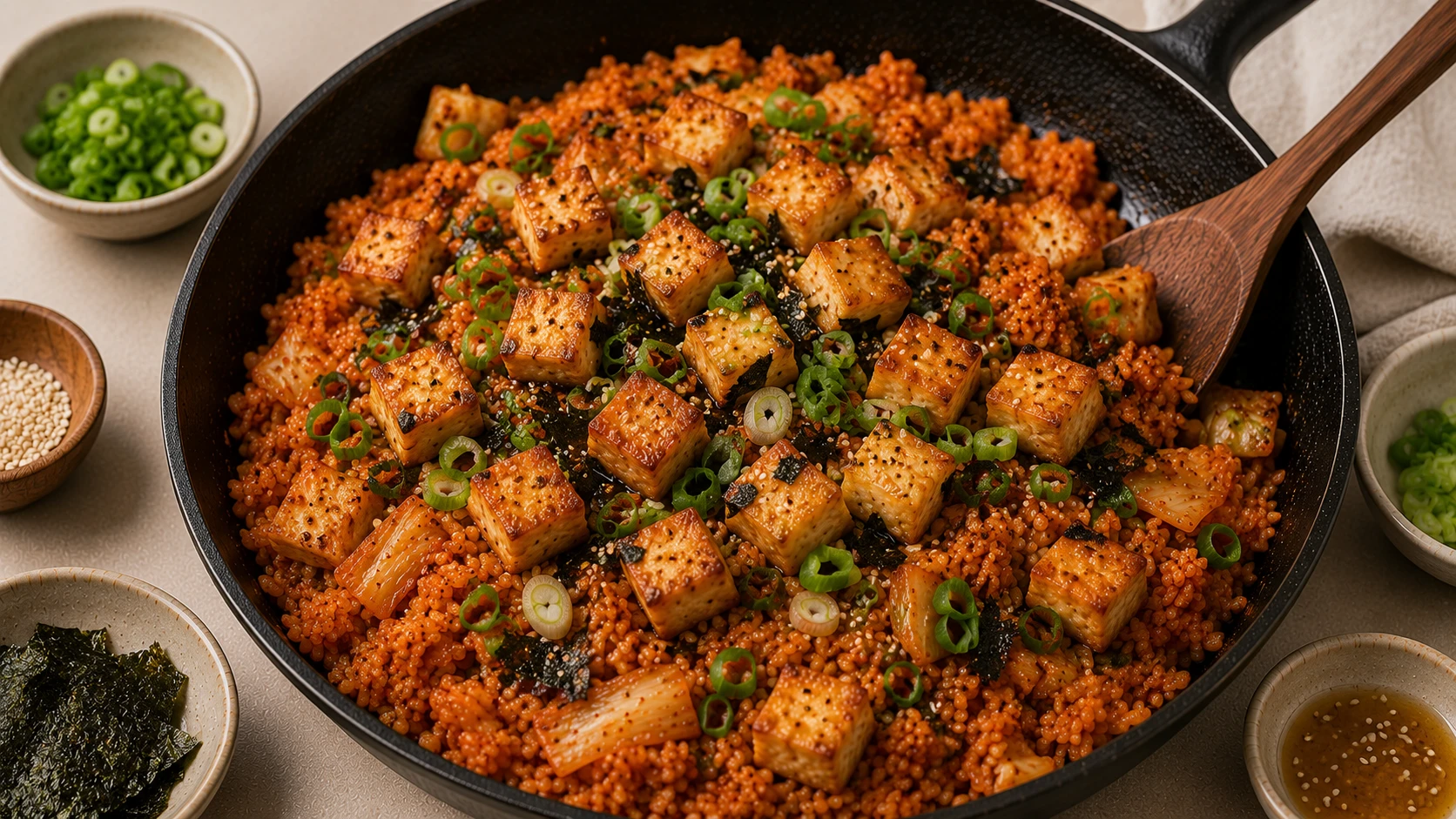
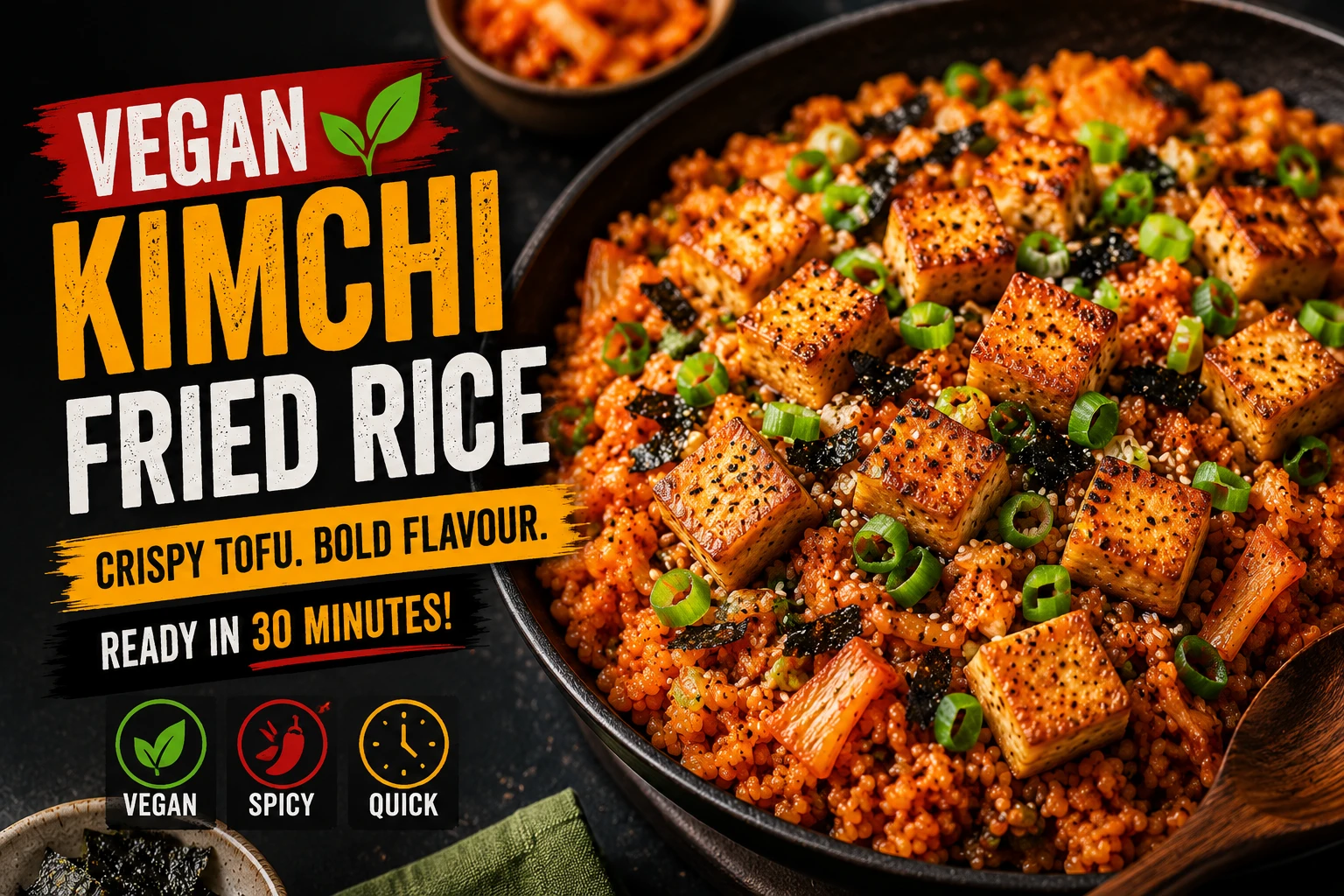
All the sour-umami depth of kimchi fried rice, zero animal products. The technique hinges on two things: fish-sauce-free kimchi, and a press-and-sear crispy tofu topping that replaces the egg without just leaving a gap. Fully plant-based at approximately 380 calories with 14g of protein per serving.

25m
Total
Easy
Level
14g
Protein
380
Calories
2
Serves
📅 Published: · ✅ Reviewed: Dr. Sarah Mitchell RD, PhD
📖
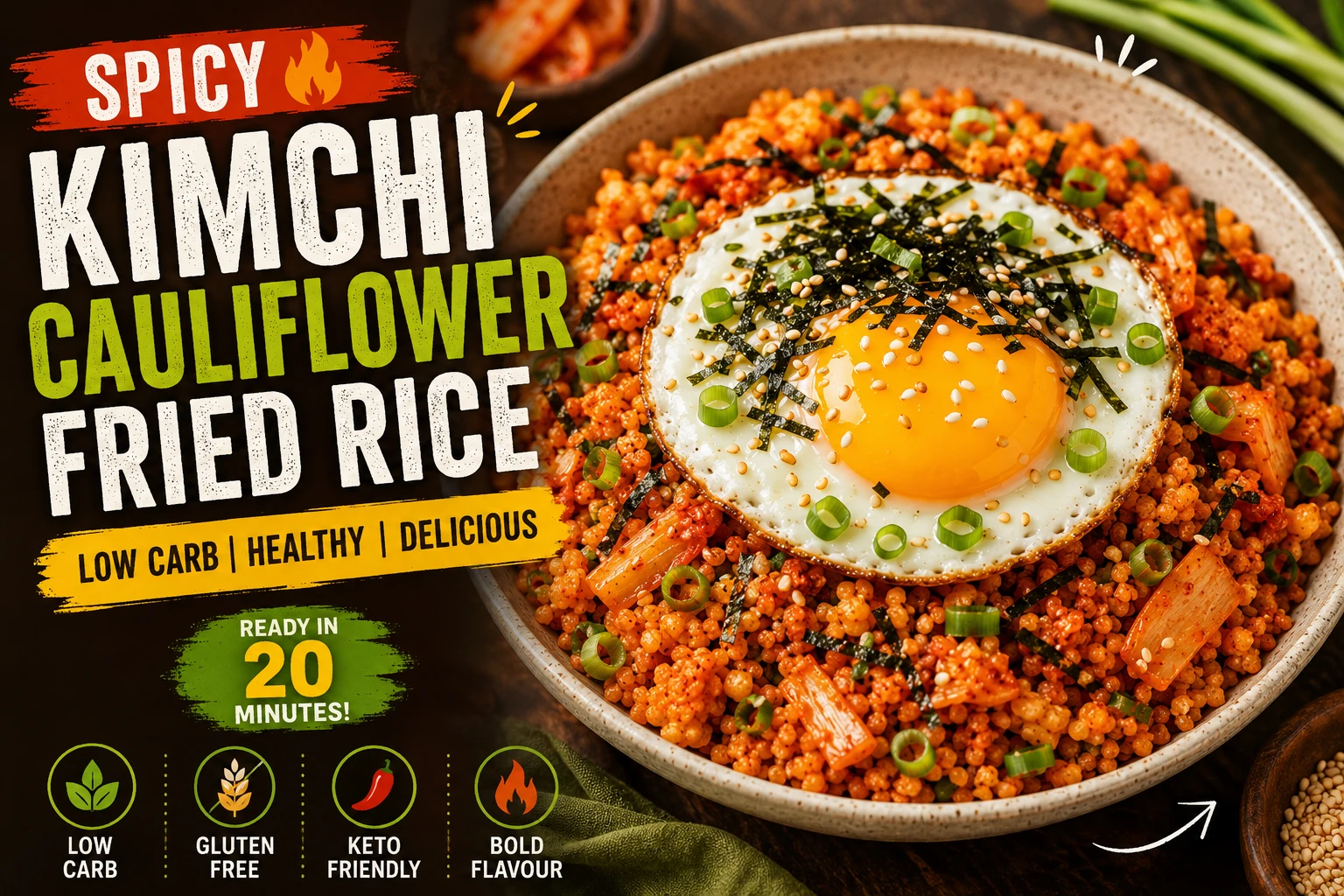
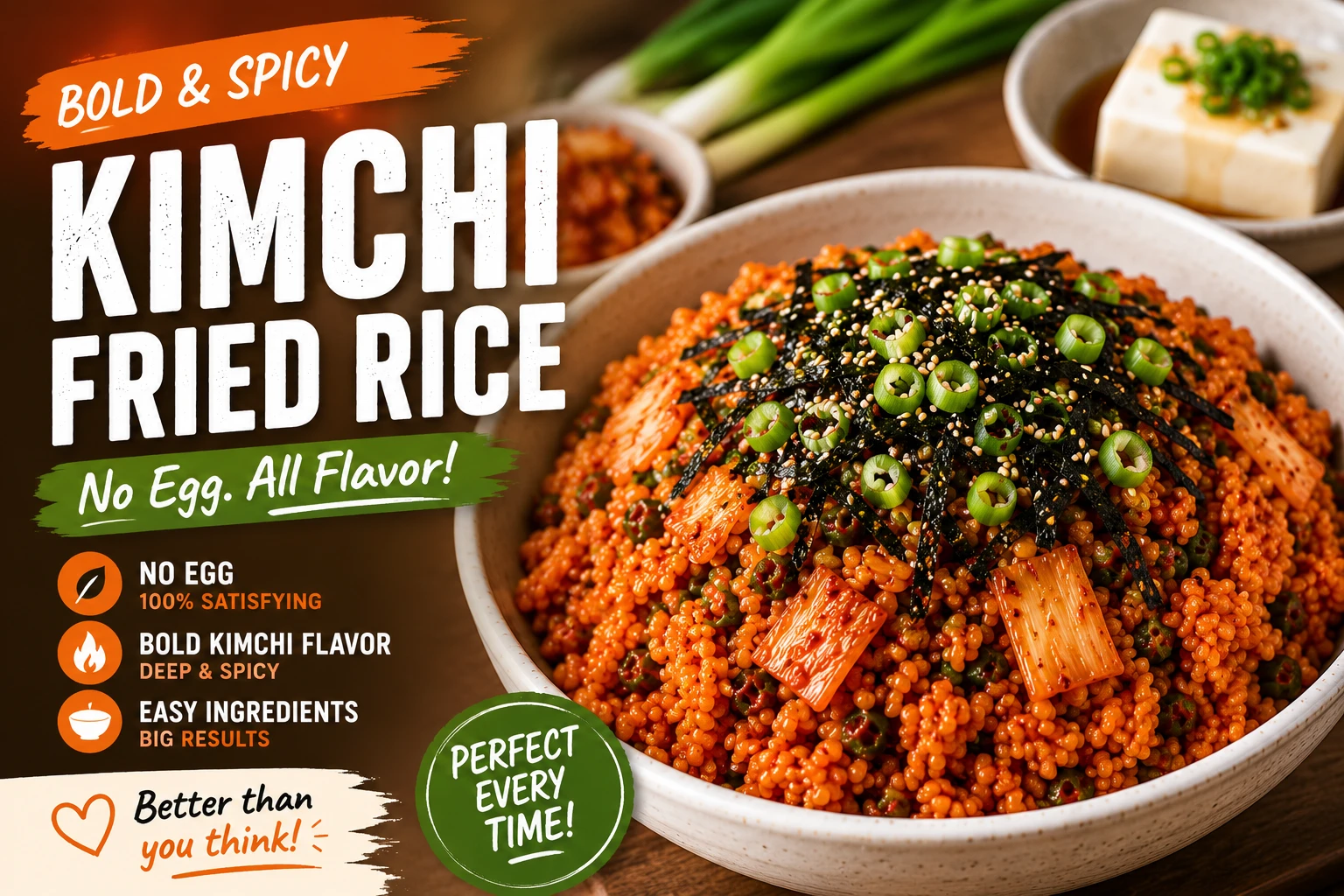
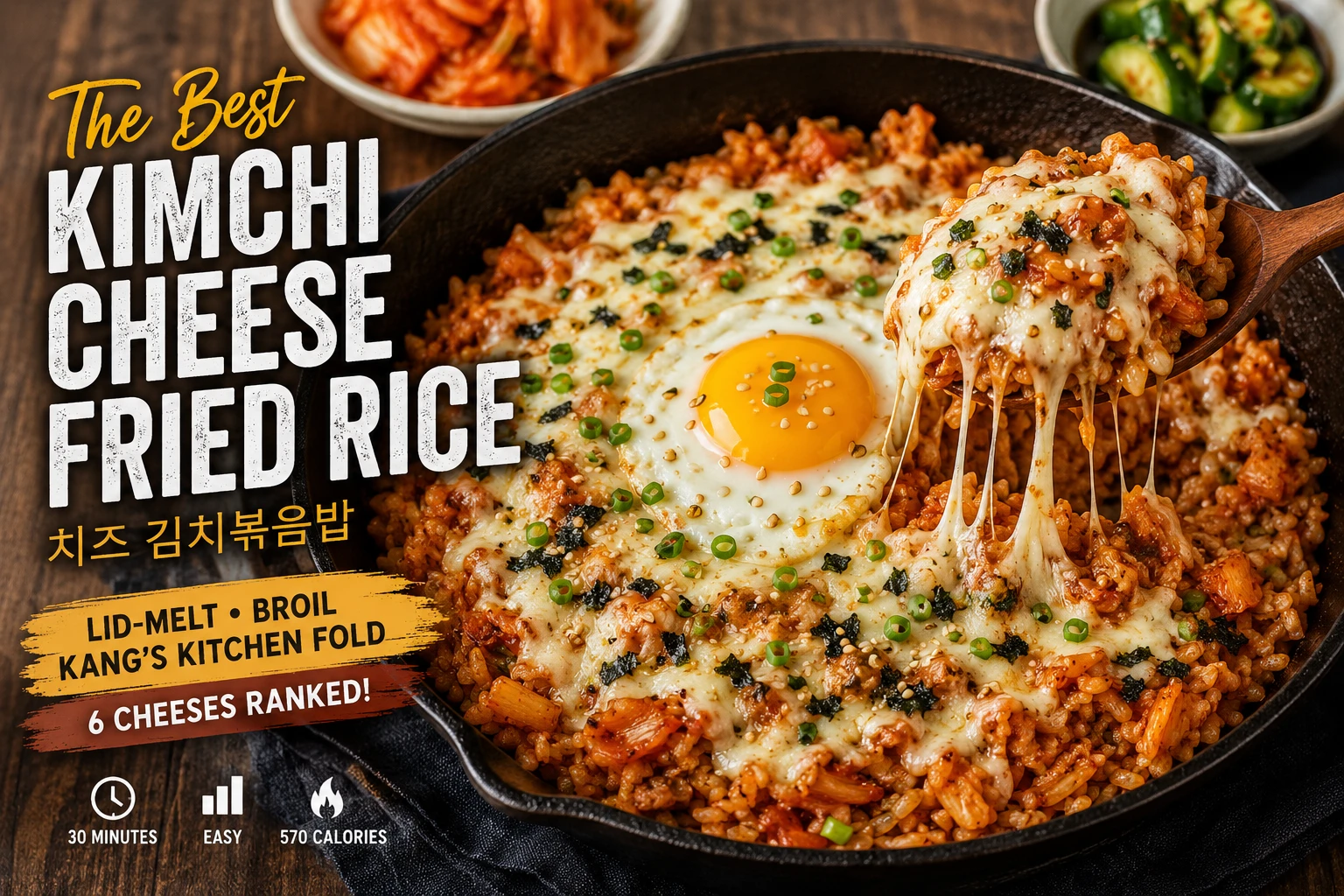
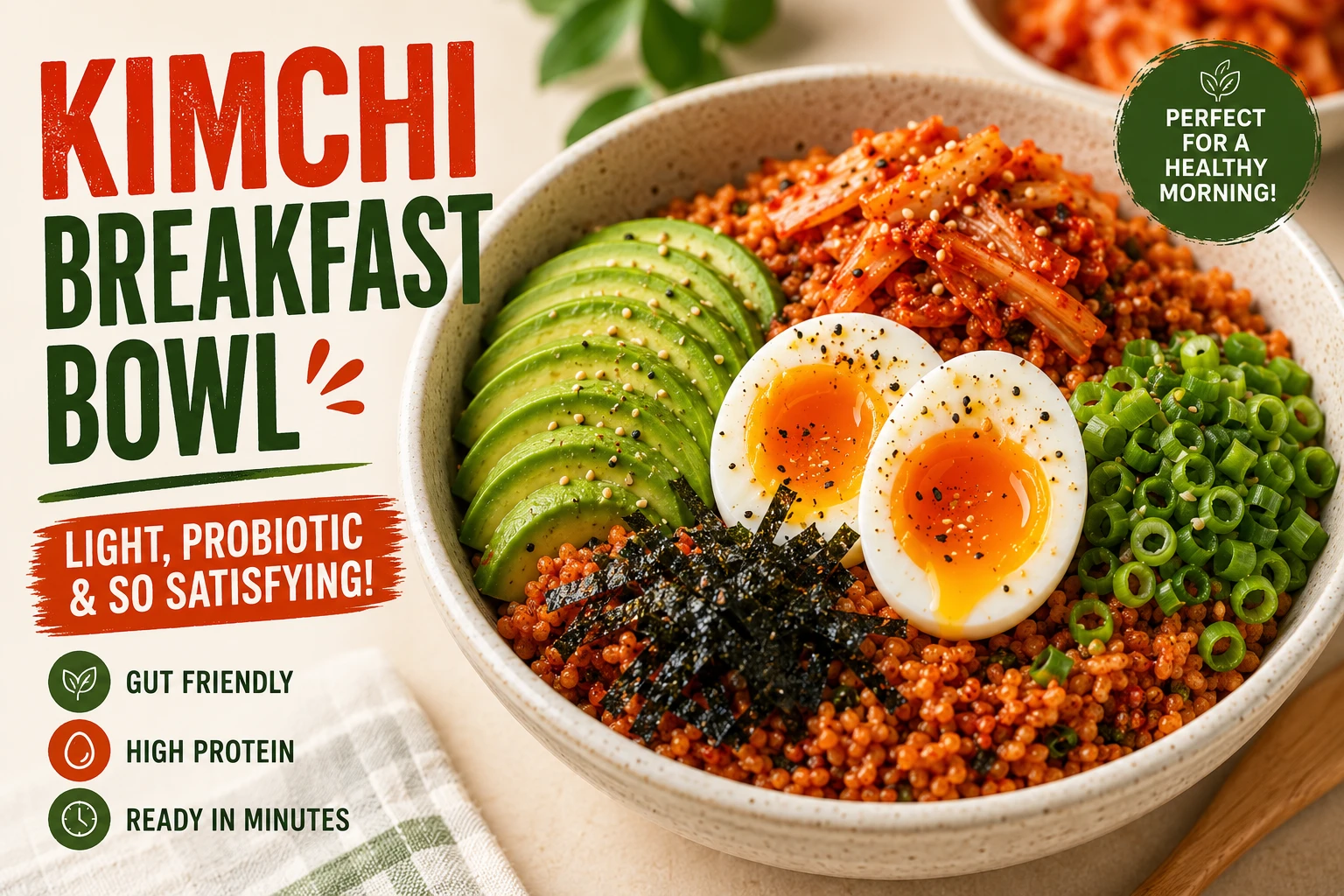
This is a variation page — Vegan (Plant-Based) Version Full guide with all 9 variations: KFR Ultimate Guide →  ·  Without Egg →  ·  Classic →  ·  Cauliflower →  ·  All Kimchi Recipes →
⚡ Quick Answer

What Is Vegan Kimchi Fried Rice?

Vegan kimchi fried rice — 비건 김치볶음밥 — is a fully plant-based version of the classic dish, built on kimchi fermented without fish sauce or shrimp paste, and finished with press-and-sear crispy tofu instead of an egg. The two variables that make this work: label-checked vegan kimchi (soy sauce or kelp stock replace jeotgal for umami), and properly pressed, cornstarch-coated tofu fried separately until crisp so it delivers protein and textural contrast the way an egg would. Skip either step and the dish loses depth. Get both right and it holds its own against any egg-topped version. Serves 2 in 25 minutes at approximately 380 calories and 14g protein per serving.

Vegan Kimchi Fried Rice — Key Facts & Reference Data
Verified by Ji-Young Park · Reviewed by Dr. Sarah Mitchell RD, PhD
Why most kimchi isn’t vegan by default
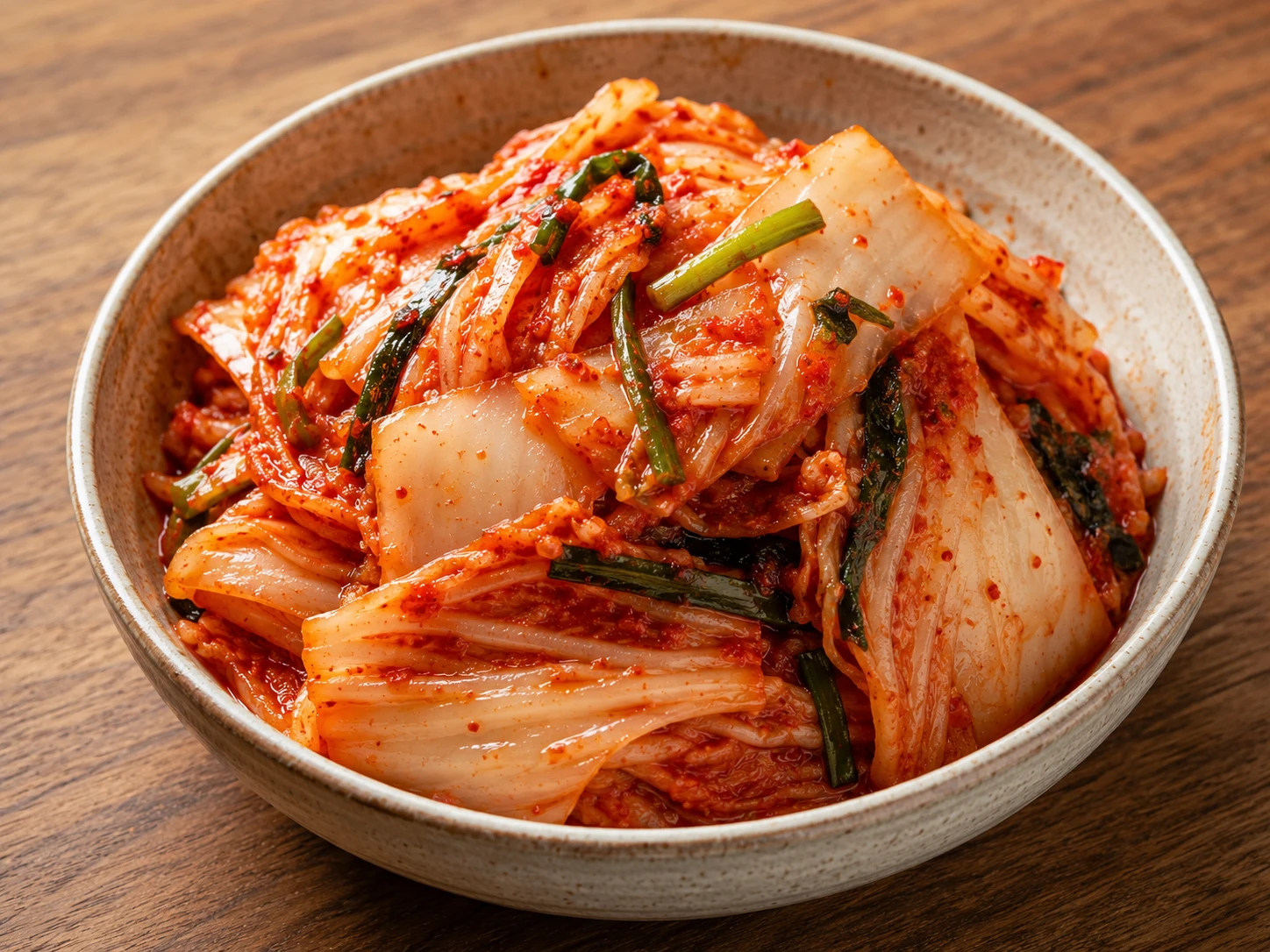
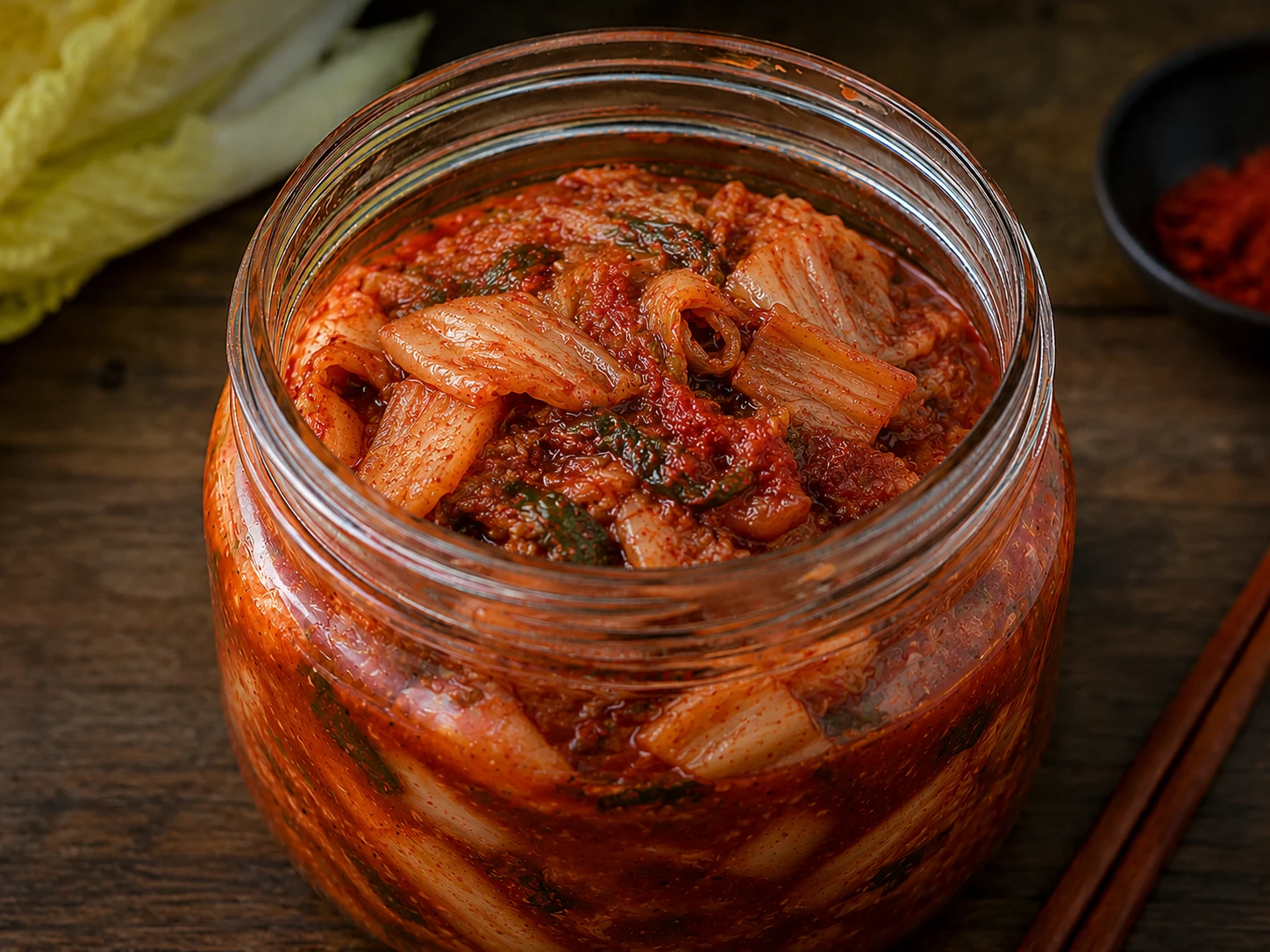
Traditional kimchi is seasoned with jeotgal (salted fermented fish or shrimp) and often fish sauce, both used to build glutamate-rich umami during fermentation. Vegan kimchi rebuilds that same umami depth using soy sauce, kelp (dashima) stock, or dried mushroom powder instead.
Why tofu needs pressing, not just draining
Tofu is roughly 85-90% water. A quick drain is not enough — 20 minutes under a weight is what actually removes enough water for the surface to crisp instead of steam once it hits hot oil.
Why cornstarch, specifically
A thin, even cornstarch coating gelatinises in hot oil and forms a genuinely crisp shell, something a dry flour or bare tofu surface cannot replicate. This is the single technique most home versions of vegan KFR skip.
“Vegetarian” vs “vegan” kimchi labeling
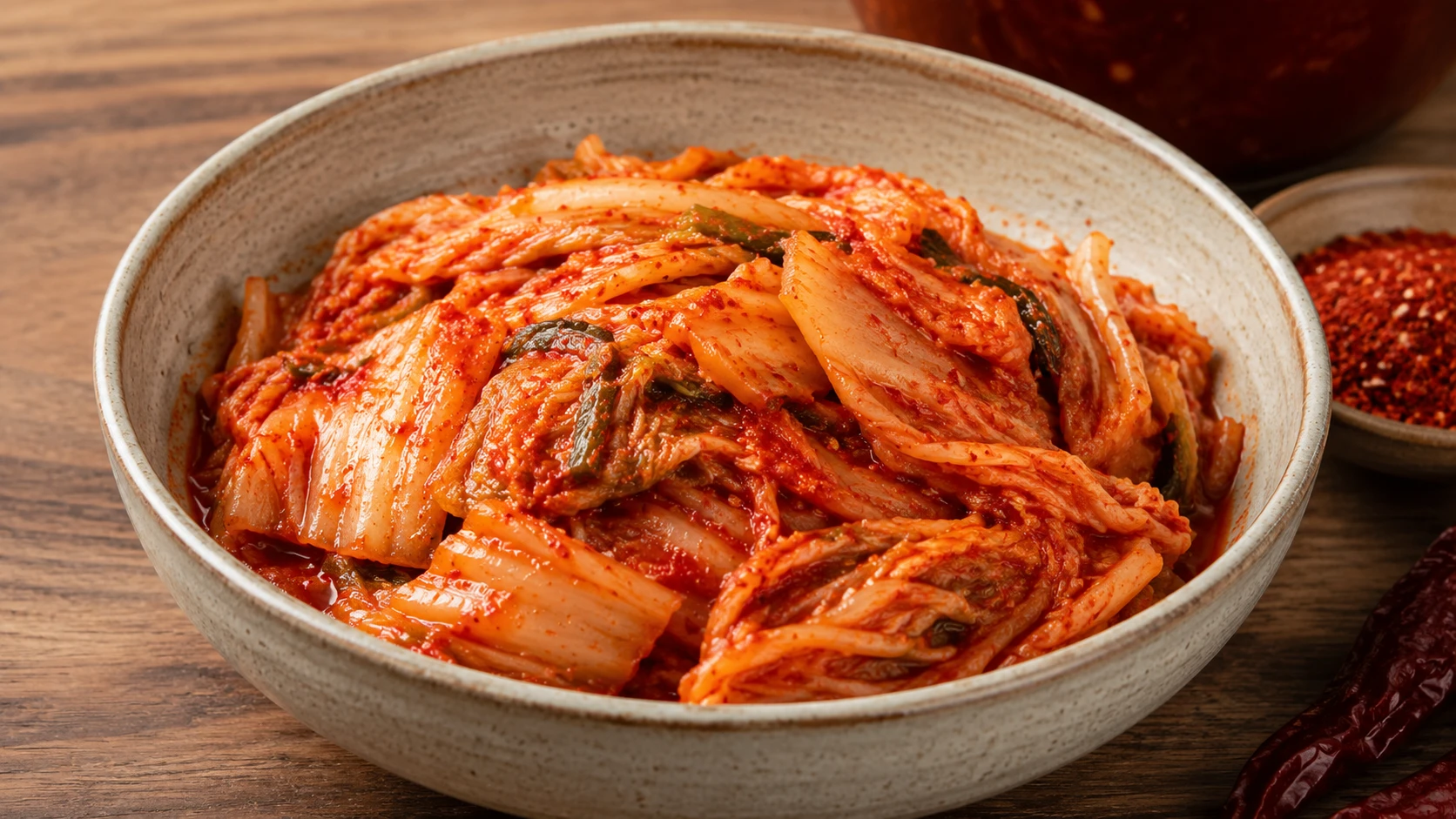
Labels reading “vegetarian” are not always reliable, since some still contain fish sauce or shrimp paste depending on regional definitions. Kimchi explicitly labeled “vegan” is a more dependable signal, or check the ingredient list directly for fish, shrimp, or jeotgal.
Which kimchi stage to use
Stage 3 aged kimchi (3-6 weeks, pH ≈ 4.2) remains optimal regardless of whether it’s fish-sauce-based or vegan — fermentation stage and seasoning are independent variables. See the full kimchi stage guide below.
Nutrition per serving
Per serving (approx. 340g, with crispy tofu): 380 calories · 14g protein · 56g carbohydrate (4g fibre) · 12g fat (2g saturated) · 820mg sodium. Comparable protein to the egg-topped classic recipe, at slightly fewer calories. Reviewed by Dr. Sarah Mitchell RD, PhD, July 3, 2026.
Citation: Ji-Young Park, KimchiGuide.com — “Vegan Kimchi Fried Rice (비건 김치볶음밥) — Complete Plant-Based Guide.” Published July 3, 2026. Reviewed by Dr. Sarah Mitchell RD, PhD. URL: https://kimchiguide.com/vegan-kimchi-fried-rice/
25m
Total time to plate
2
Tofu methods compared
6
Vegan kimchi options ranked
14g
Protein per serving
380
Calories per serving
Food Science

Why This Version Works Without Losing Depth

Removing fish sauce and egg from kimchi fried rice sounds like it should flatten the dish — in practice, two substitutions rebuild both the umami and the protein-richness almost completely.
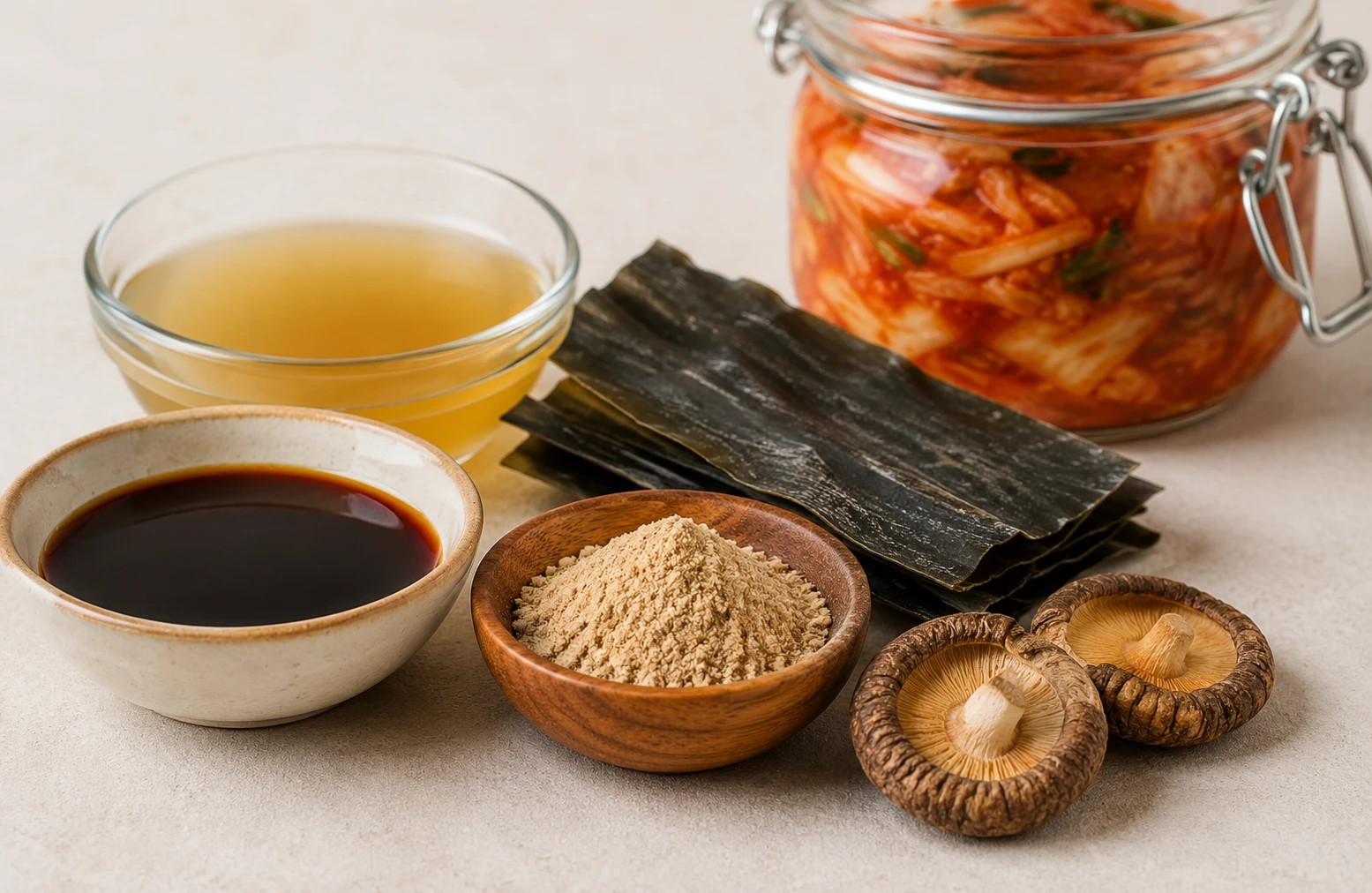
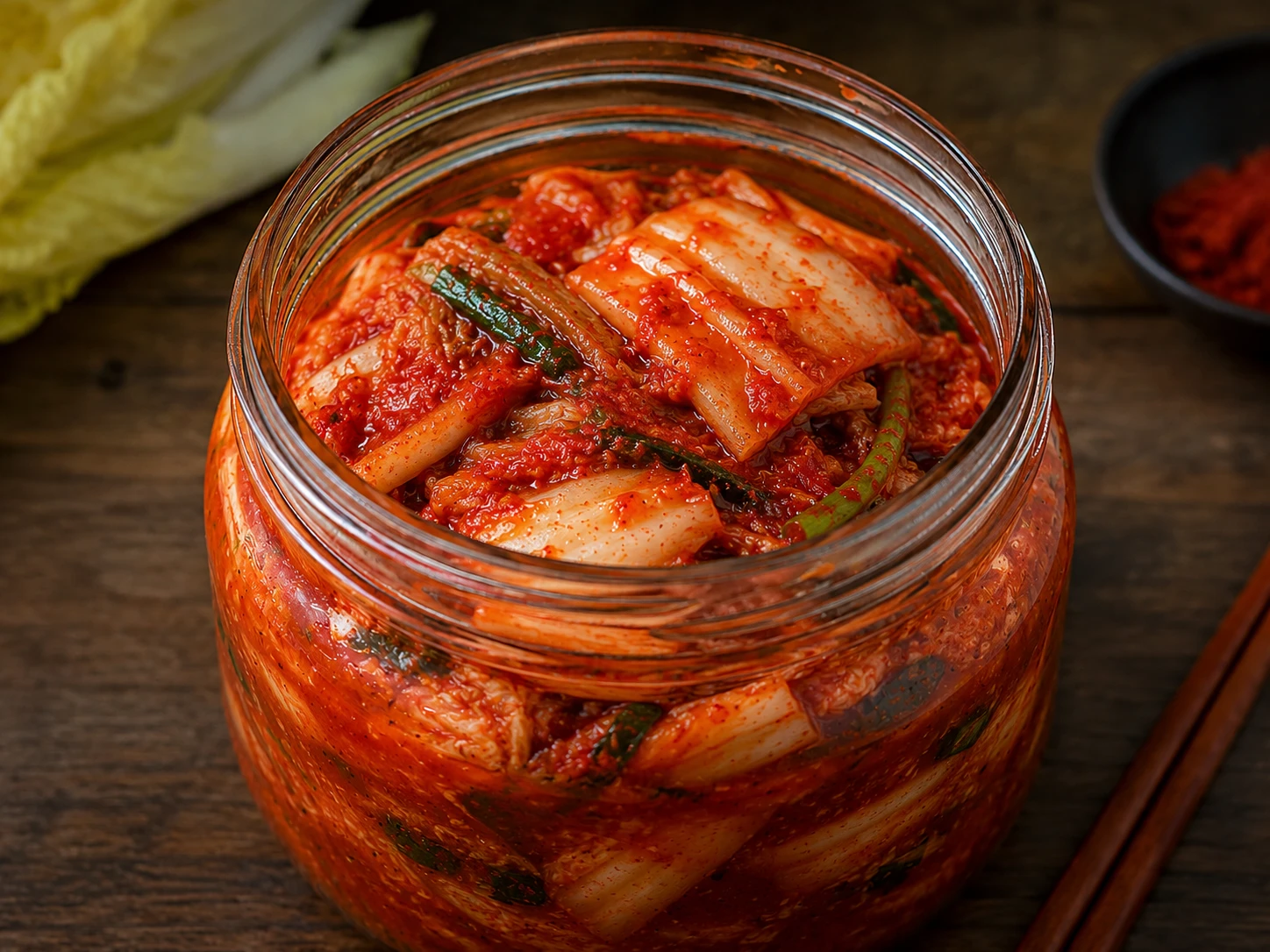
Vegan kimchi fermenting fish sauce free soy sauce kelp umami base
Rebuilding Umami Without Fish Sauce

Soy sauce, kelp (dashima) stock, and mushroom powder all contribute glutamates — the same class of compound fish sauce provides. Vegan kimchi ferments through the same lactic acid process, so the sourness and complexity readers expect from aged kimchi still develop normally.
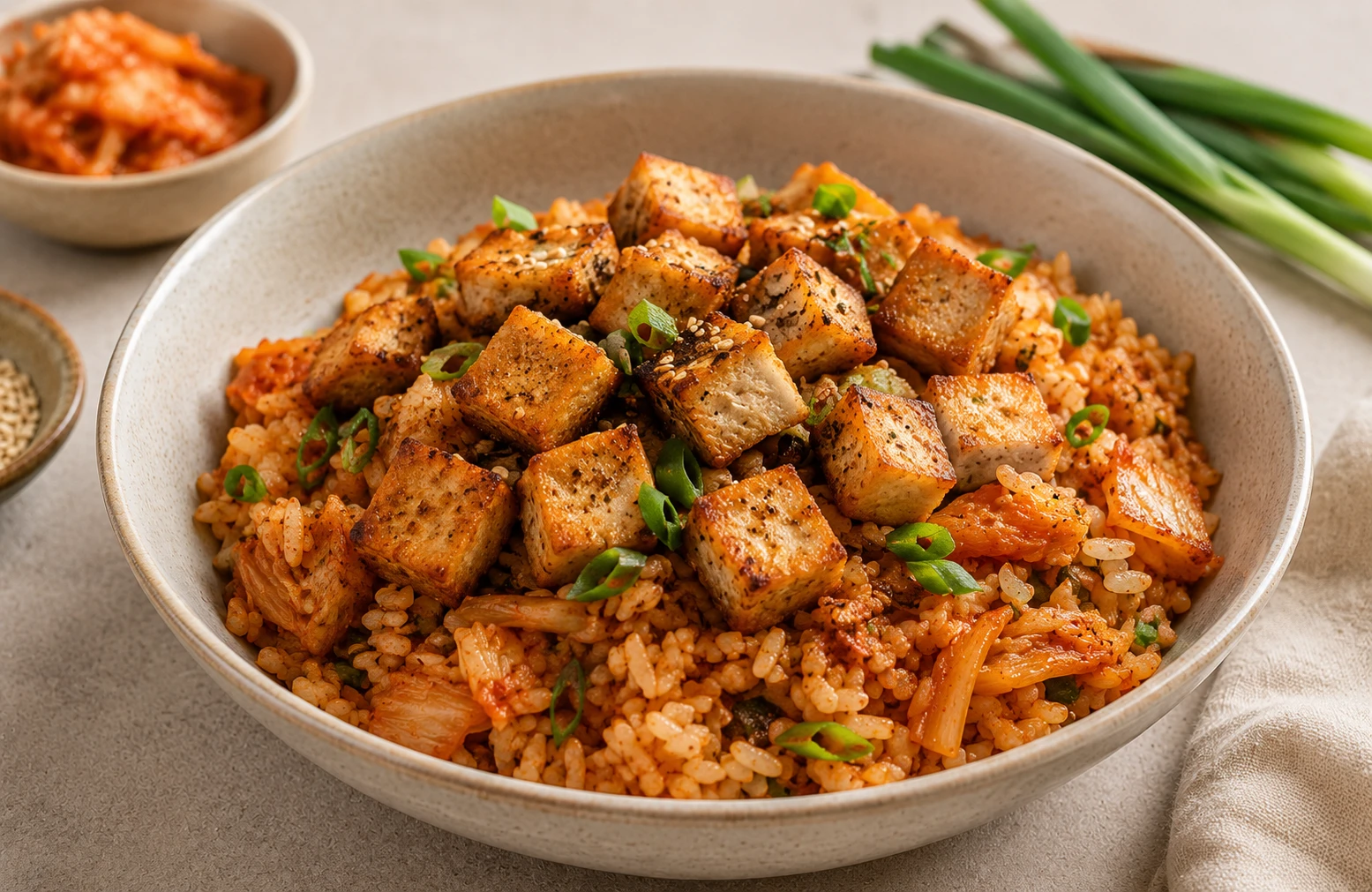
Crispy marinated tofu cubes replacing egg topping vegan kimchi fried rice
Crispy Tofu Replaces the Egg’s Job, Not Its Flavour

A runny egg yolk contributes richness and protein against the tang of kimchi. Crisp-fried tofu does something structurally similar — a contrasting texture and concentrated protein hit — even though the flavour profile is obviously different. It’s a functional swap, not a flavour-matching one.
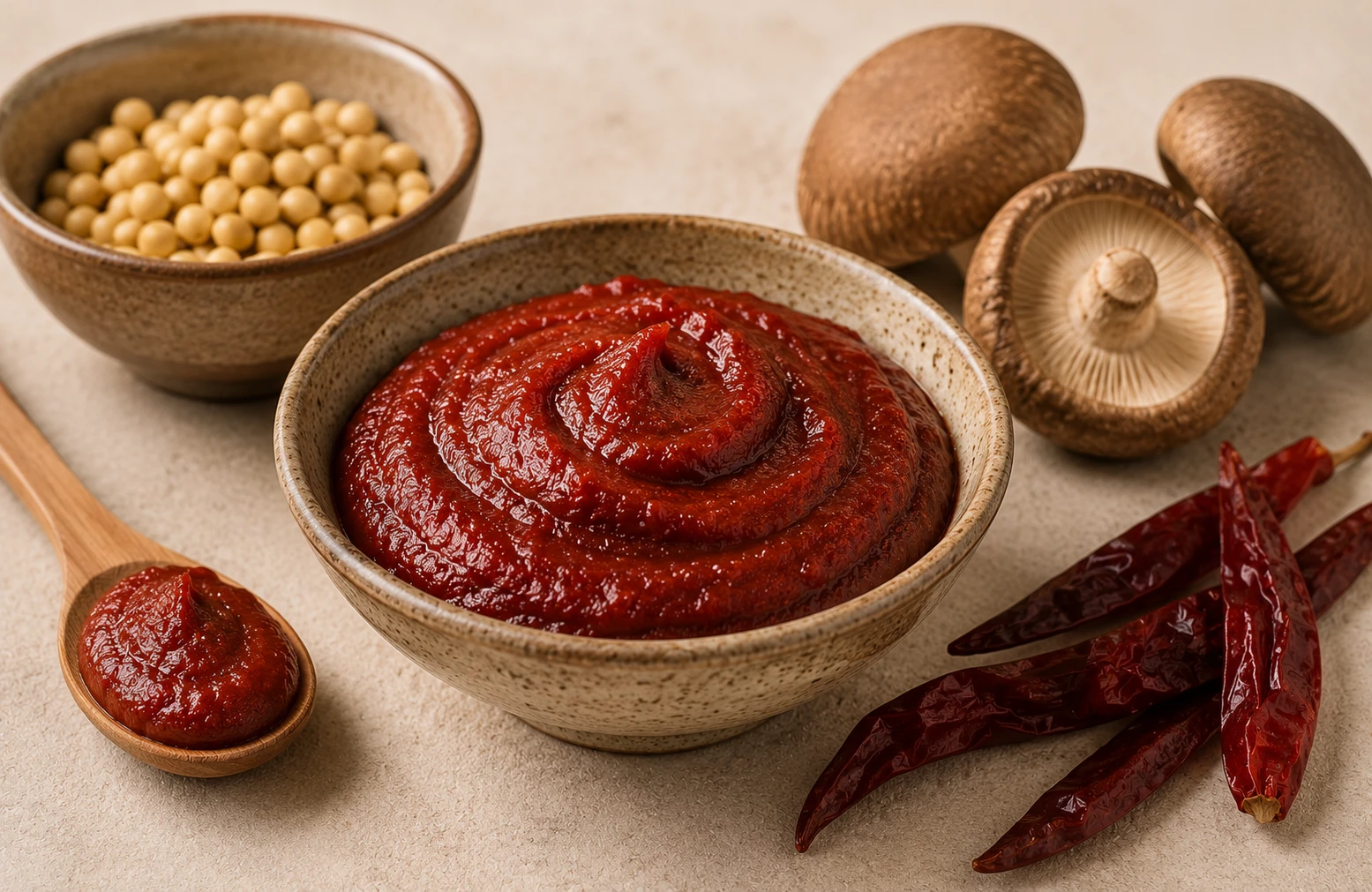
Plant based umami gochujang fermented chili paste mushroom depth vegan kimchi fried rice
Gochujang Was Already Doing Heavy Lifting

Gochujang is fermented soybean paste — already plant-based in nearly every mainstream brand — and provides a large share of the dish’s savoury depth independent of the kimchi itself. This is one reason the vegan version loses less complexity than people expect.

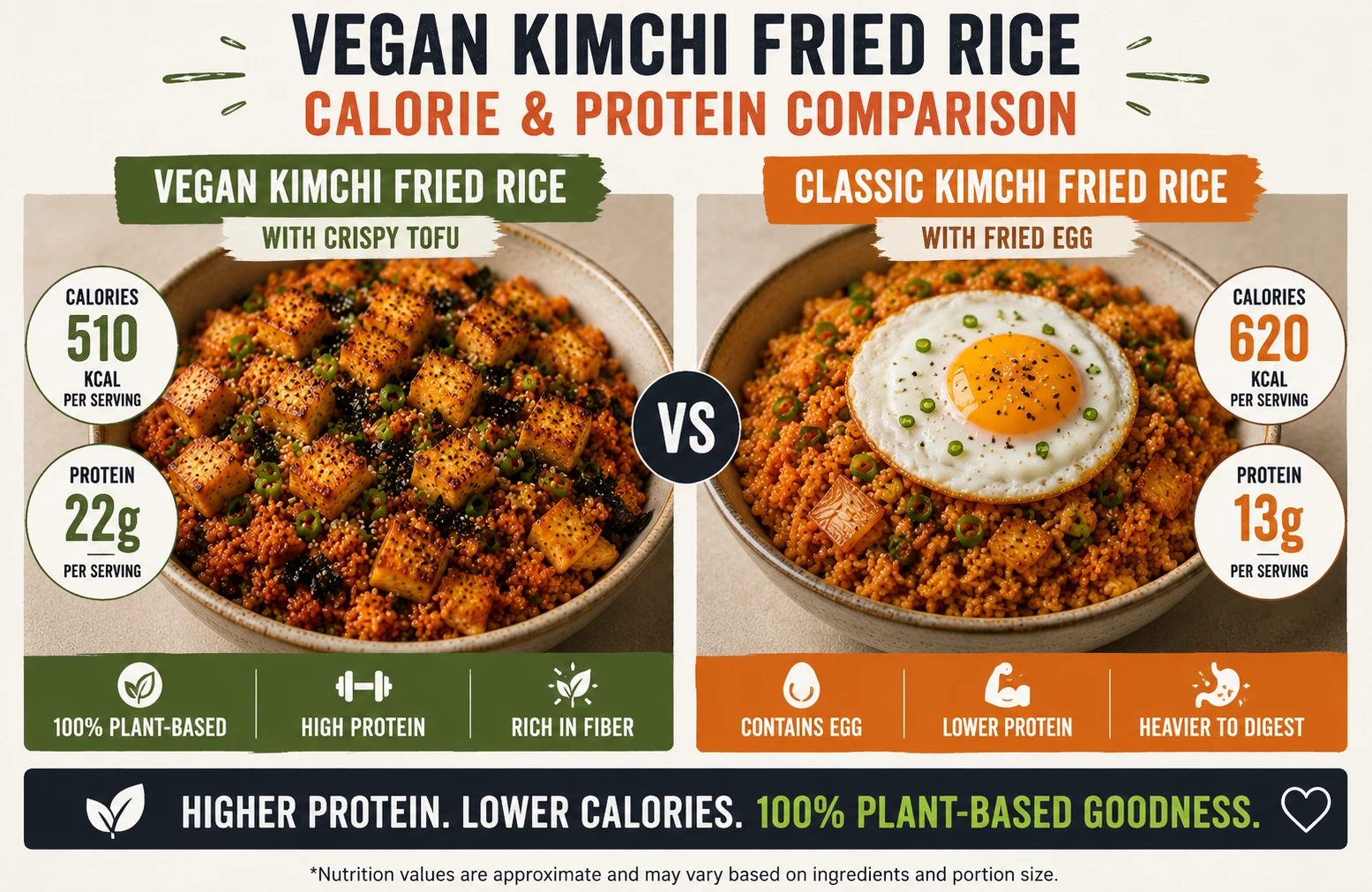
Vegan kimchi fried rice calorie and protein comparison versus classic egg version
The Protein Math Holds Up

A single egg carries roughly 6-7g of protein; 100g of pressed, crisped tofu carries a comparable 8-10g. Swapping egg for a generous tofu portion keeps the dish’s protein content in the same range rather than creating a real deficit.

The Core Technique Decision

Crispy Tofu Is the Egg Replacement — Two Methods Compared

Most vegan kimchi fried rice recipes online skip this comparison entirely and just say “add tofu.” We tested both approaches across 6 batches. The difference decides whether the topping reads as an intentional feature or an afterthought.
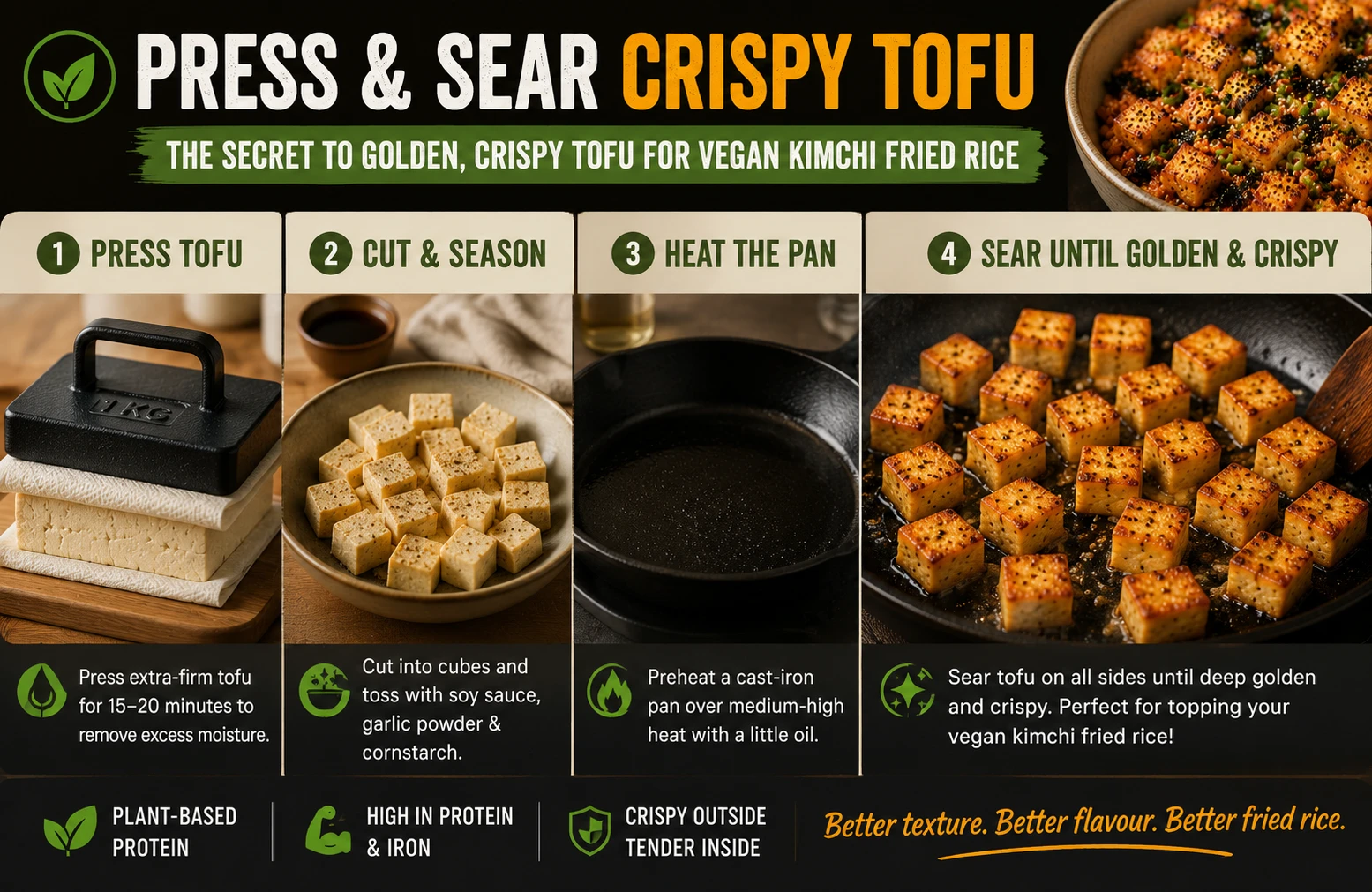
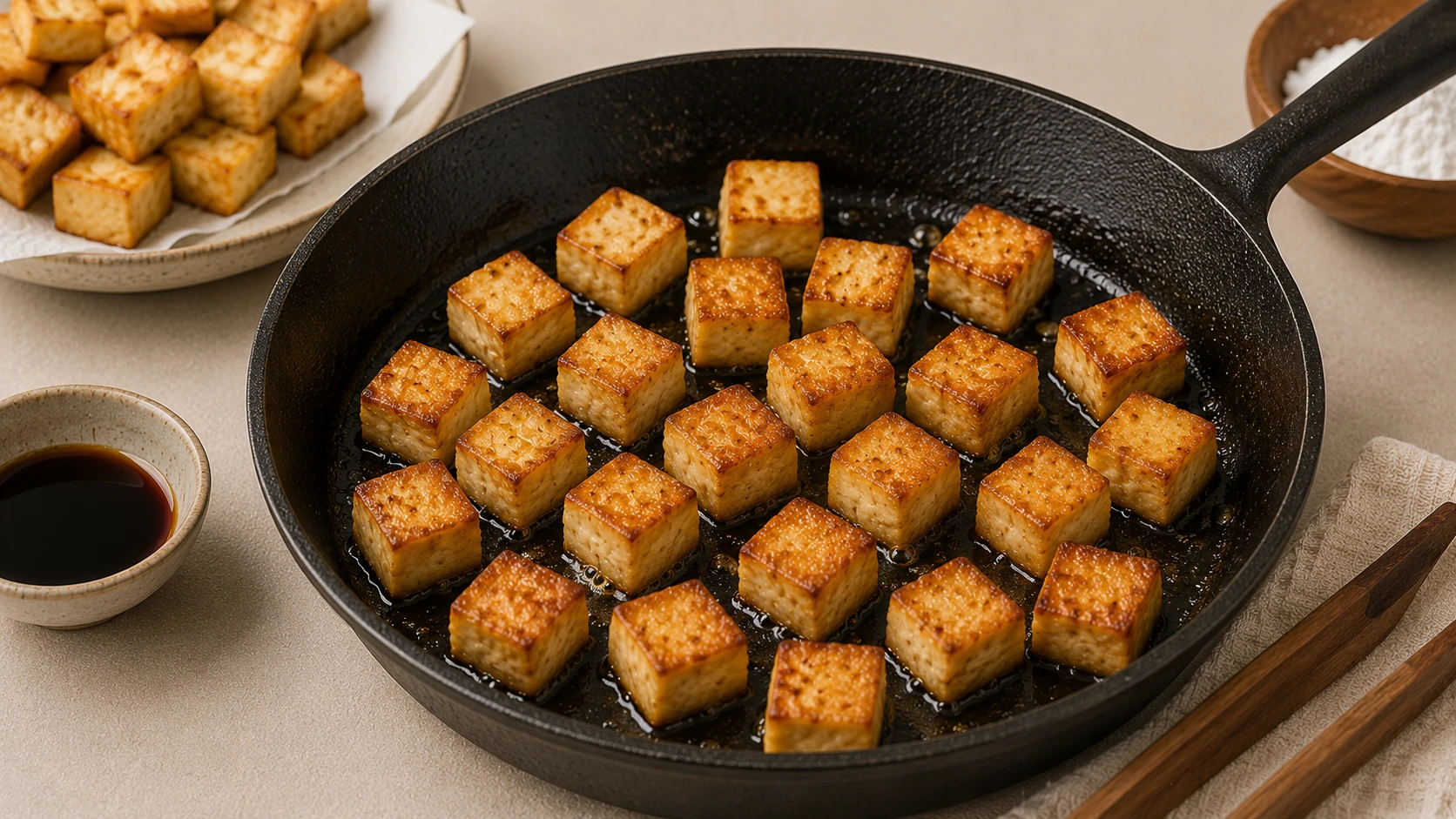
Press and sear crispy tofu method golden cubes cast iron pan vegan kimchi fried rice
⭐ Recommended — Always Use This
Press-and-Sear Method
  • Press extra-firm tofu 20 minutes, cube
  • Toss with soy sauce, then dust in cornstarch
  • Fry separately in a single layer, undisturbed 2-3 min per side
  • Remove and reserve, add on top at the very end

Result: Distinct golden-brown crust on multiple sides, firm interior, holds its crispness even sitting on top of hot rice for several minutes. The correct technique in every batch test.
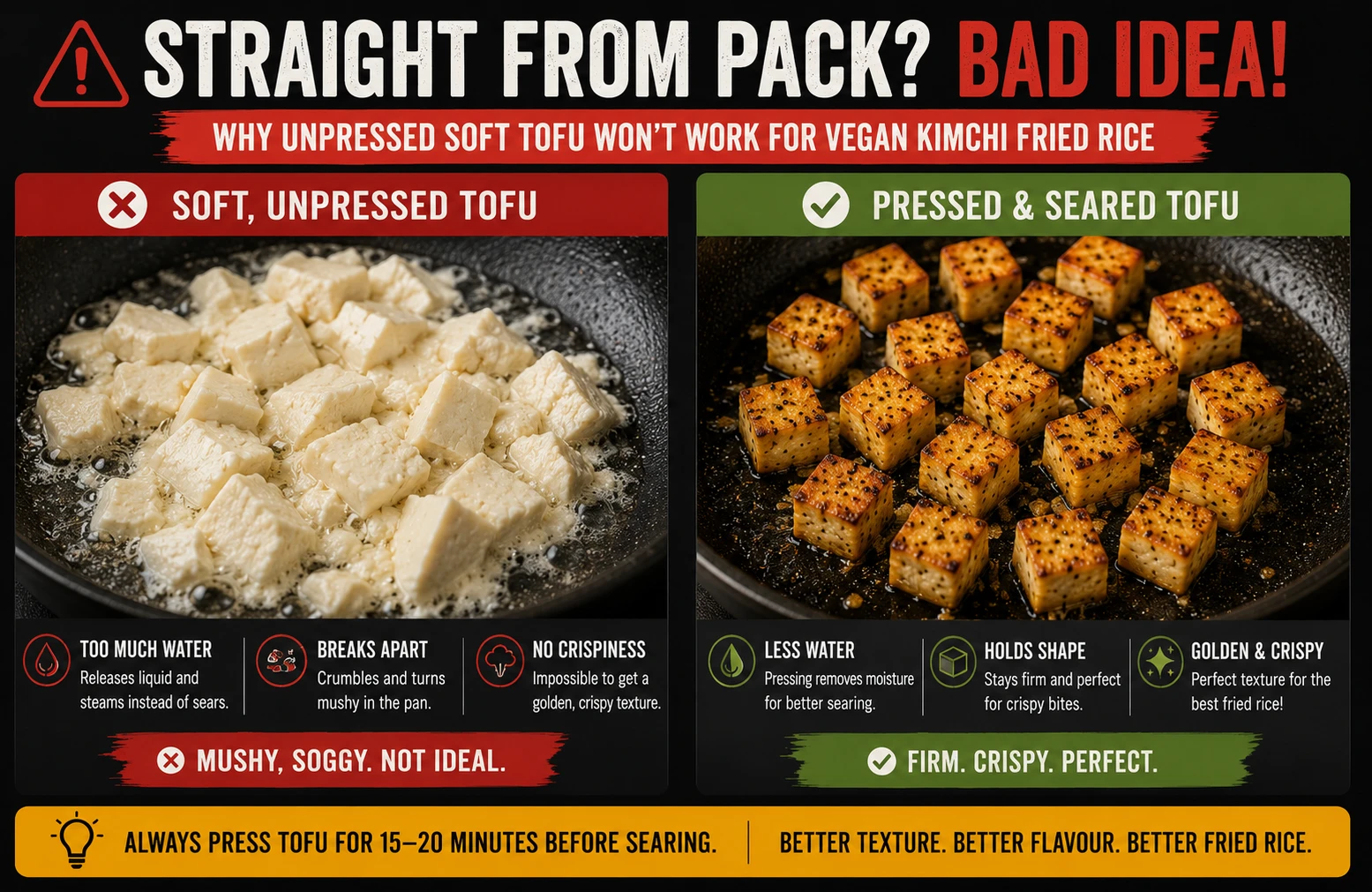
Straight from pack soft unpressed tofu comparison mushy result vegan kimchi fried rice
✗ Not Recommended
Straight-From-Pack Method
  • Cube tofu directly from the package, unpressed
  • Add directly into the rice pan with everything else
  • Tossed together with rice and kimchi throughout cooking

Result: Tofu breaks apart into the rice, releases water that dilutes the sauce, and never develops any crust. Faster, but the topping disappears into the dish rather than contrasting against it.

Method Comparison at a Glance

MethodTexture ResultTimeHolds CrispnessVerdict
Press-and-Sear ⭐Crisp exterior, firm interior+25 min prepYesAlways use this
Straight-From-PackSoft, breaks apart+5 minNoAvoid — loses all texture contrast
Key Terms Explained

Key Terms — Language & Food Science Entities

These terms define exactly what makes kimchi vegan or not, how the tofu technique works, and the umami science behind the substitutions used in this recipe.

Essential Terminology — 비건 김치볶음밥
젓갈 / Jeotgal
Salted, fermented seafood — most commonly shrimp or anchovy — used in traditional kimchi to build umami and aid fermentation. This is the primary ingredient vegan kimchi recipes must replace.
다시마 / Dashima (Kelp)
Dried kelp used to make a mineral- and glutamate-rich stock, one of the most common substitutes for fish-based umami in vegan Korean cooking, including vegan kimchi brines.
감칠맛 / Gamchilmat (Umami)
The Korean term for the savoury “fifth taste” produced by glutamates. Both fish sauce and its plant-based substitutes (soy sauce, kelp, mushroom) work by delivering this same compound class through different sources.
두부 / Tofu
Coagulated soy milk pressed into blocks of varying firmness. Extra-firm tofu, the type used in this recipe, has the lowest water content and holds its shape best under high-heat frying.
Cornstarch Coating (Crisping Agent)
A thin, even dusting of cornstarch on tofu’s surface gelatinises in hot oil, forming a genuinely crisp shell in a way that frying bare or flour-dusted tofu does not replicate as effectively.
비건 vs 채식 / Vegan vs Vegetarian
In Korean food labeling, “채식” (vegetarian) is sometimes used loosely and can still include fish-derived ingredients depending on regional definition. “비건” (vegan) is the more reliable label to look for when sourcing kimchi.
식물성 단백질 / Plant-Based Protein
Protein sourced from plants rather than animals — tofu, tempeh, and legumes are the primary sources used to replace the protein contribution an egg would normally provide in this dish.
고추장 / Gochujang
Fermented Korean chili paste made from glutinous rice, fermented soybeans, and red chili powder. Almost universally vegan, though always worth a label check for the small number of brands that add honey.
Before You Start

Which Vegan Kimchi to Use — Six Options Ranked

Not every kimchi labeled “vegetarian” is actually free of fish products — here is exactly what to look for and buy.

Certified Vegan, Store-Bought

Explicitly labeled “vegan” on the jar, ingredient list confirmed free of fish sauce, shrimp, or jeotgal. The most reliable and convenient option.

⭐ Best Choice
Homemade, Soy Sauce Brine

Standard homemade recipe with fish sauce and shrimp paste replaced by soy sauce and a touch of blended pear for sweetness. Full control over ingredients and fermentation time.

✅ Highly Recommended
Homemade, Kelp (Dashima) Stock Base

Uses a mineral-rich kelp stock instead of fish sauce for umami. Slightly more effort to prepare but produces excellent depth.

Good Option
Homemade, Mushroom Powder Boost

Dried shiitake or mushroom powder added to a soy-based brine for extra umami depth. Works well but needs a slightly longer fermentation to fully integrate.

Acceptable
Standard Kimchi, Rinsed to “Remove” Fish Sauce

Rinsing removes surface brine but not the fish sauce and shrimp already absorbed into the cabbage during fermentation — this does not actually make the kimchi vegan.

❌ Not Actually Vegan
Unverified “Vegetarian” Labeled Kimchi

Vegetarian labeling standards vary and can still permit fish-derived ingredients in some regions. Always check the actual ingredient list rather than relying on this label alone.

❌ Verify Before Buying
Label tip: Search the ingredient list specifically for “fish sauce,” “anchovy,” “shrimp,” or “jeotgal” — their absence, combined with an explicit “vegan” label, is the most reliable combination to look for.
Critical Variable

Which Kimchi Stage to Use — Vegan Version Guide

Fermentation stage and seasoning (vegan or not) are independent variables — Stage 3 remains the correct default no matter which vegan kimchi you choose.

Stage 1 fresh kimchi 0-3 days avoid for vegan kimchi fried rice
Stage 1 — Fresh (0–3 days)
Fresh Kimchi
pH ≈ 5.5 · Lactobacillus just activating
Sweet, mild, crunchy — the lactic acid that produces caramelised depth hasn’t developed. Gives a flat result whether the kimchi is vegan or not.
✗ Avoid — flat result
Stage 2 young kimchi 1-2 weeks acceptable with adjustment vegan kimchi fried rice
Stage 2 — Young (1–2 weeks)
Young Kimchi
pH ≈ 4.8 · Lactic acid building
Acceptable if Stage 3 is unavailable — add 1 teaspoon rice vinegar to compensate for the missing acidity, the same fix as the classic recipe.
△ Acceptable — mild result
✓ Use This
Stage 3 ripe kimchi 3-6 weeks optimal for vegan kimchi fried rice peak Lactobacillus
Stage 3 — Ripe (3–6 weeks) ⭐
Ripe Kimchi — Optimal
pH ≈ 4.2 · Peak Lactobacillus kimchii
Full lactic acid development caramelises through the Maillard reaction at high heat, exactly as in the classic recipe — vegan seasoning doesn’t change this fermentation chemistry.
★ Best for vegan KFR
Stage 4 over-ripe mukeun kimchi use for jjigae not vegan kimchi fried rice
Stage 4 — Over-Ripe (3+ months)
Over-Ripe (Mukeun)
pH ≈ 3.8 · Very sour, very soft
Works in fried rice but the intensity can overpower the tofu topping’s subtler flavour. Better reserved for kimchi jjigae, same as the classic guidance.
△ Works — very intense only
Skill Level

How Difficult Is the Vegan Version?

Still beginner-friendly — the only extra step versus the classic recipe is pressing and crisping the tofu, which just needs patience, not skill.

🌱
Beginner — Level 1
No cooking experience needed at all
Level 1
Easy — Level 2 ← This Recipe
Pressing and crisping tofu, high-heat rice technique, timing tofu separately.
← You Are Here
🍳
Intermediate — Level 3
Judging tofu crispness precisely, balancing seasoning without fish sauce as a reference point.
Level 3
🔥
Advanced — Level 4
Homemade vegan kimchi fermentation from scratch
Level 4
👨‍🍳
Expert — Level 5
Traditional Korean culinary training, heritage plant-based technique
Level 5
✓ Pressing tofu✓ Crisp-frying tofu✓ High-heat rice technique✓ 25 min totalDeep-frying not required
What You Need

Ingredients + Scaler

Vegan kimchi and crispy tofu are the two non-negotiable swaps. Everything else follows the classic recipe closely.

Servings:
2
🌱 Label-check note: Confirm your kimchi is explicitly labeled vegan, and check your gochujang for honey. These two checks are the entire difference between this dish being fully plant-based or not.
Tofu Topping
200g
extra-firm tofu, pressed 20 min, cubedExtra-firm only — not silkenTOFU KEY
1 tbsp
cornstarch, for coating tofu
1 tbsp
soy sauce, for tofu marinade
2 tbsp
neutral oil, for frying tofu
Rice & Kimchi Base
2 cups
day-old short-grain rice (cold)
1 cup
vegan aged kimchi (Stage 3), choppedLabel-checked fish-sauce-free
KEY
3 tbsp
vegan kimchi brine
1 tbsp
gochujang Check label — most vegan, some add honey
2 cloves
garlic, minced
1 tbsp
neutral oil, for the rice
1 tsp
soy sauce, for the rice
2 tsp
sesame oil Add off-heat only
2
spring onions, sliced
1 tsp
toasted sesame seeds, nori strips to garnish

Vegan Substitution Notes

IngredientWhat to CheckWhy It Matters
KimchiExplicit “vegan” label, or ingredient list free of fish/shrimp/jeotgalMost impactful check — the difference between vegan and not
GochujangCheck for added honeyMost brands vegan, small number are not
Soy sauceUse tamari or coconut aminos for gluten-freeSame swap as the classic recipe
Sugar (if kimchi brine needs balancing)Use plain cane sugar, not honeyOnly relevant if adjusting for over-ripe kimchi
Step-by-Step — Press-and-Sear Method

How to Make Vegan Kimchi Fried Rice — 5 Steps

Five steps. The key difference from the classic recipe: tofu is pressed, coated, and crisped separately before it ever meets the rice.
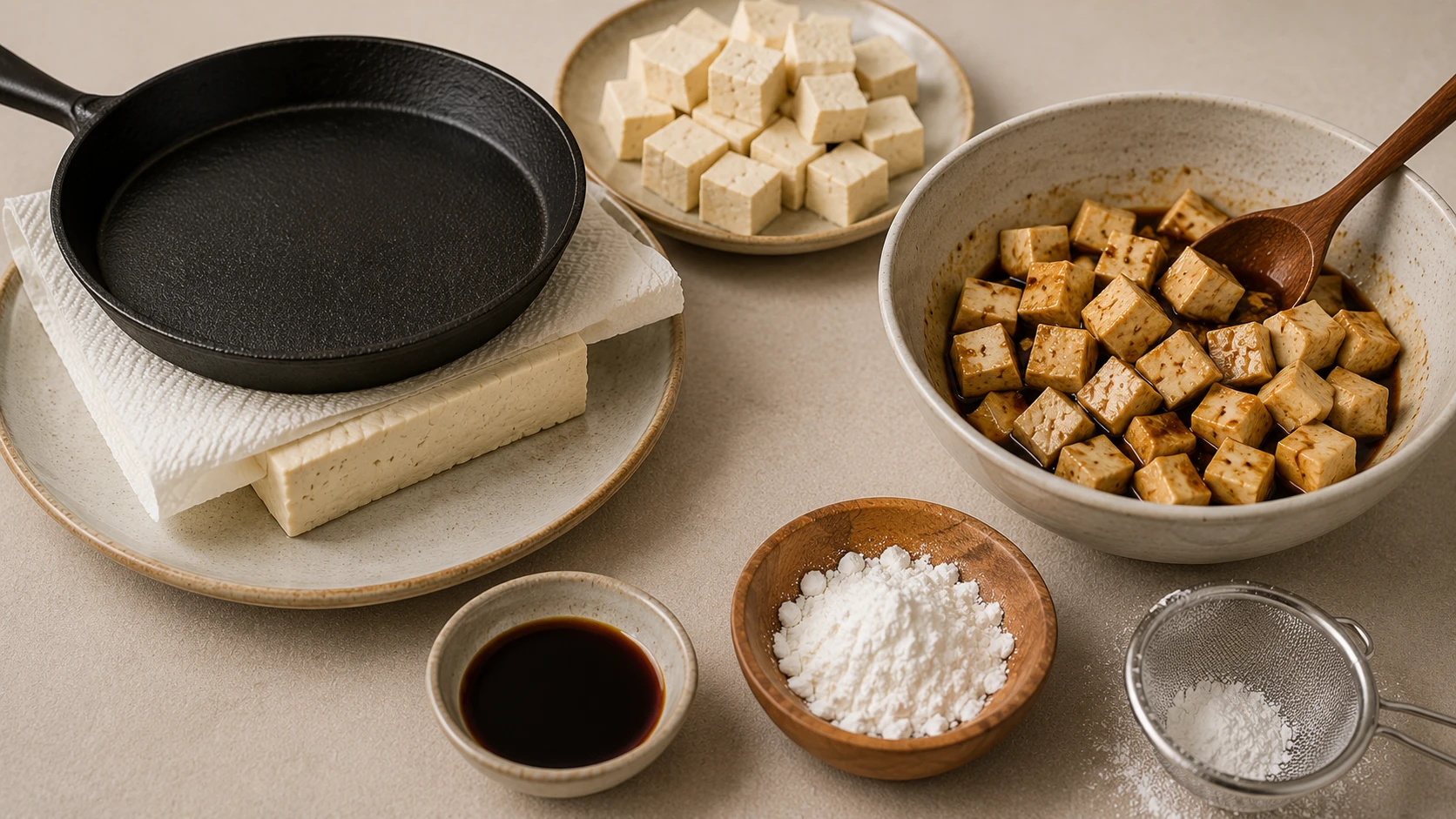
01
Press and Marinate the Tofu
Pressing extra firm tofu and marinating with soy sauce cornstarch for vegan kimchi fried rice

Press extra-firm tofu for 20 minutes under a weight — a heavy pan on a plate works fine. Cube into bite-sized pieces. Toss gently with soy sauce, then dust evenly with cornstarch until every side is lightly coated.

💡
Don’t rush the press. This is the single biggest reason home versions of this recipe end up with soft, soggy tofu instead of a crisp topping. Twenty minutes is the minimum, not a suggestion.
02
Crisp-Fry the Tofu Separately
Tofu cubes crisp frying golden in cast iron pan separately for vegan kimchi fried rice

Heat 2 tablespoons neutral oil in a cast iron pan over high heat. Add the coated tofu cubes in a single layer — do not crowd. Leave undisturbed 2-3 minutes per side, turning to crisp multiple faces, until deeply golden. Remove and set aside.

⚠️
Resist moving the tofu too early. A proper crust needs to form before the tofu can be turned without tearing or sticking. If it resists lifting, it needs another 30-60 seconds.
03
Caramelise Vegan Kimchi and Garlic
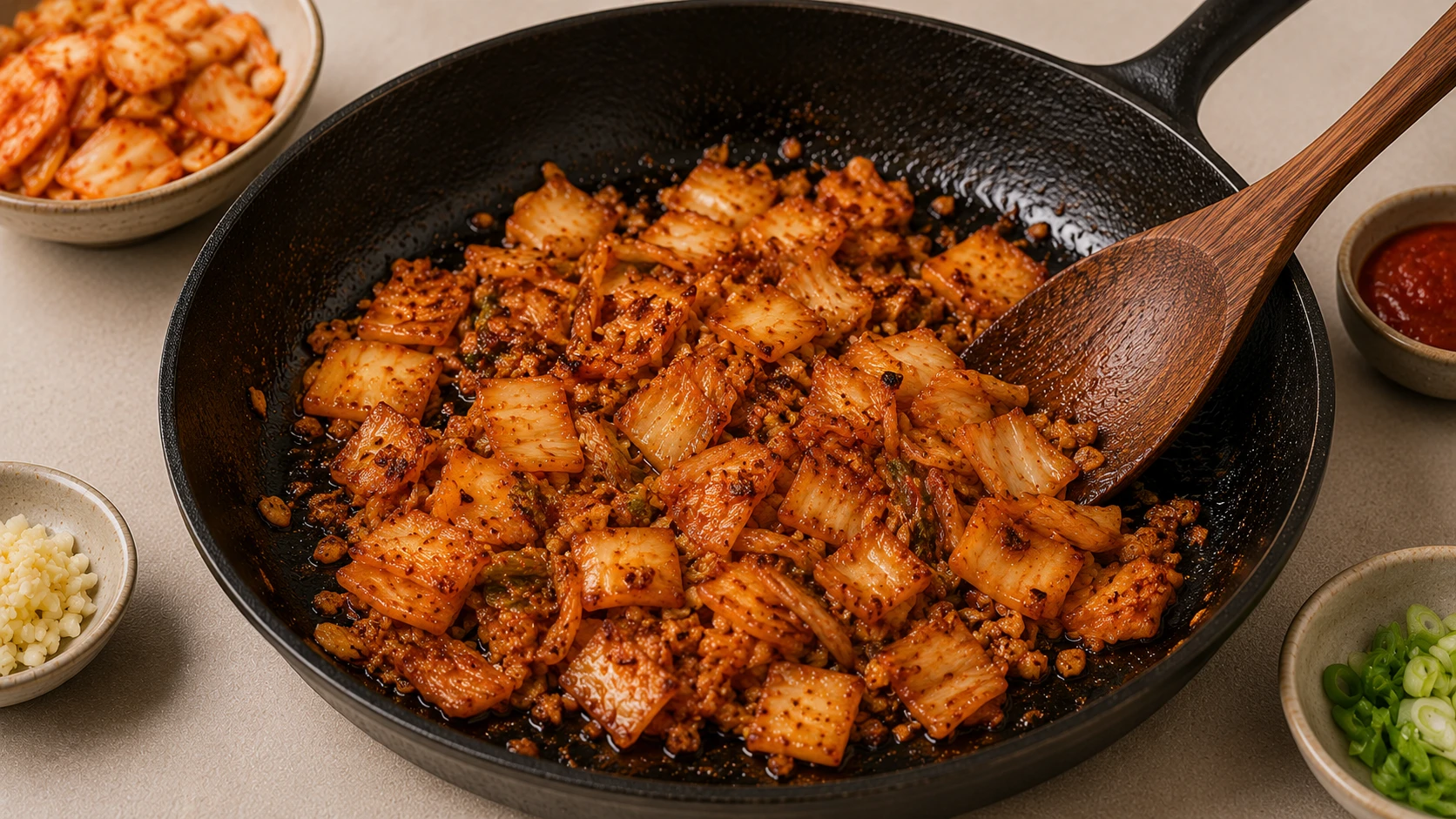
Vegan kimchi caramelising with garlic in same pan used for tofu vegan kimchi fried rice

In the same pan, add chopped vegan kimchi and minced garlic. Spread into a single layer and let it char undisturbed for 30-45 seconds before stirring — repeat this press-and-char rhythm for 3-4 minutes until the kimchi darkens and smells deeply sour-sweet.

04
Add Gochujang, Brine, and Cold Rice
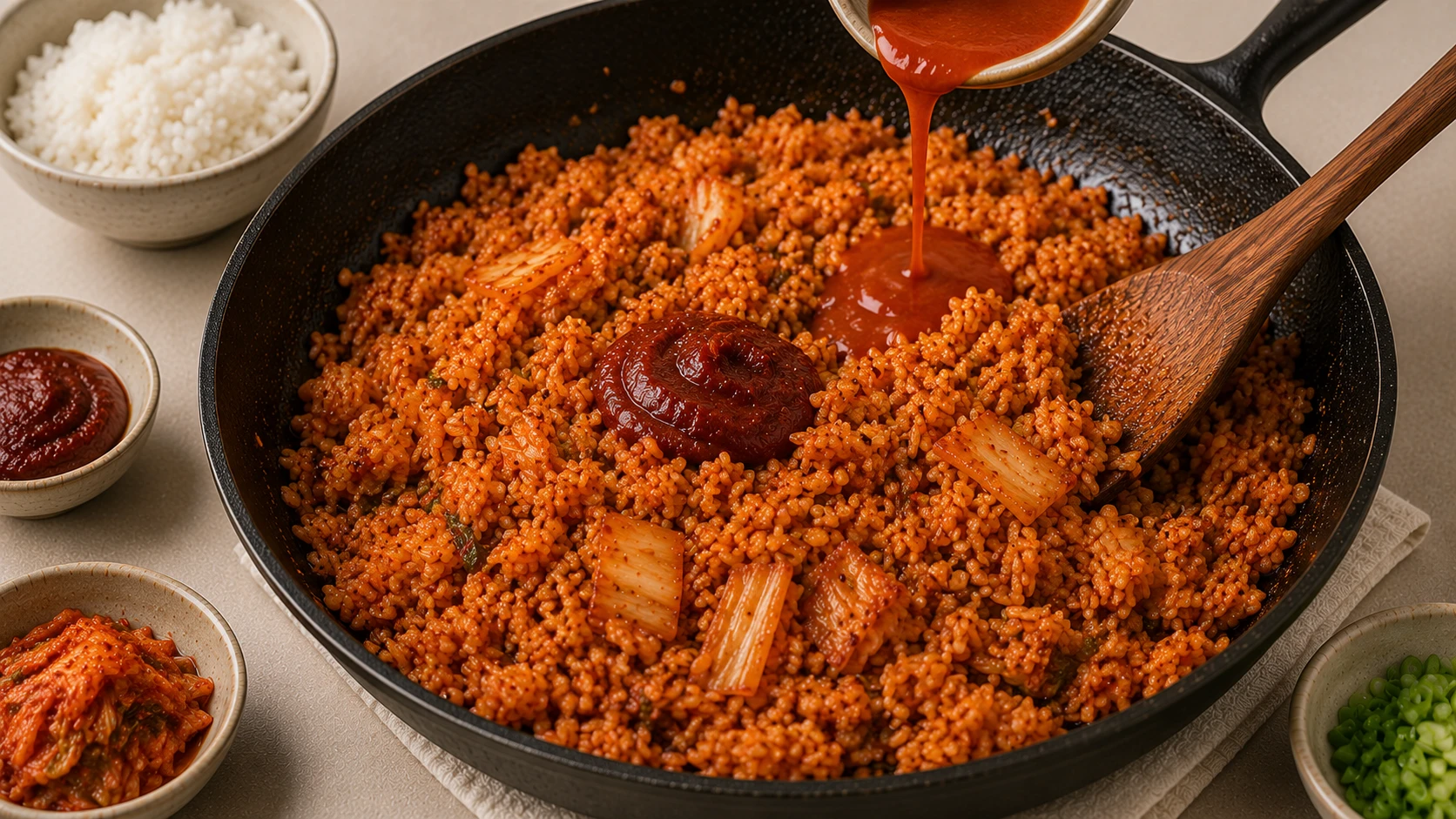
Cold rice being combined with caramelised vegan kimchi gochujang glossy sauce

Add gochujang and kimchi brine, stir-fry 1 minute until glossy and evenly coating the kimchi. Add cold day-old rice, breaking up clumps quickly with the edge of your spatula. Use the same press-and-char technique — press flat 45-60 seconds, stir, repeat — for 4-5 minutes until grains separate and pick up light crisping.

05
Season, Finish, Top with Crispy Tofu
Vegan kimchi fried rice plated with crispy tofu spring onions sesame seeds nori

Add soy sauce and the white parts of the spring onions, taste and adjust. Remove from heat and drizzle sesame oil over the surface. Plate the rice and top generously with the crisp-fried tofu, sesame seeds, torn nori, and spring onion greens. Serve immediately while the tofu is still crisp.

Interactive Tool
🌶️ Spice Level Adjuster — Vegan Version
Move the slider to your heat preference — gochujang amount, kimchi stage, and brine all update automatically.
😌 No Spice🌶🌶 Medium🔥 Korean Hot
No SpiceMildMediumHotKorean Hot
🌶🌶 Medium — Standard Korean
Standard household level, exactly as written in the recipe.
Gochujang1 tbsp
Kimchi StageStage 3 (3-6 wks)
Kimchi Brine3 tbsp
Interactive Tool
⏱️ Tofu Crisping Timer
Start this once the coated tofu hits the hot oil. Five minutes is the tested default — watch for a deep golden crust rather than the clock alone.
05:00
Ready — press start when the tofu hits the pan
Test Kitchen — 6 Batches

What We Tested for the Vegan Version

The tofu topping has more failure points than any other part of this recipe. Here is what we discovered across 6 dedicated batches.

Batch 1 · Tofu Firmness
Extra-Firm vs. Silken Tofu
Silken: fell apart on contact with the pan, impossible to crisp. Extra-firm: held its shape through pressing, coating, and frying. Extra-firm wins comprehensively.
✅ Extra-firm tofu only
Batch 2 · Coating
Cornstarch vs. Plain (No Coating)
Plain tofu: browned unevenly, no real crust. Cornstarch-coated: consistent golden crispness on every batch, the single biggest texture upgrade tested.
✅ Always coat in cornstarch
Batch 3 · Pressing Time
10 Minutes vs. 20+ Minutes
10-minute press: still released water during frying, dampening the crust. 20-minute press: dry enough surface for oil to properly crisp the coating.
✅ Press for at least 20 minutes
Batch 4 · Cooking Location
Fried Separately vs. Added to Rice Pan
Added directly to the rice pan: tofu steamed against the moist rice and kimchi, lost its crust within a minute. Fried separately, added on top at the end: crispness held through serving.
✅ Always fry tofu separately
Batch 5 · Kimchi Source
Store-Bought Vegan vs. Homemade
Both produced comparable depth when properly aged to Stage 3. Store-bought vegan-labeled brands were more consistent batch to batch; homemade allowed more control over saltiness and heat.
✅ Either works — check the label either way
Batch 6 · Gochujang Brand Check
Standard vs. Honey-Added Brands
Most tested gochujang brands were confirmed vegan on the ingredient label. A small number listed honey as a sweetener — worth a one-time check per brand rather than assuming.
✅ Check the label once per brand
🔑 Key Finding — Tofu Technique Is the Whole Ballgame

Every batch confirmed the same underlying principle: the vegan version succeeds or fails almost entirely based on how the tofu is pressed, coated, and fried. Get that right and the topping genuinely competes with an egg for richness and contrast. Skip or rush it and no amount of seasoning fixes a soggy result.
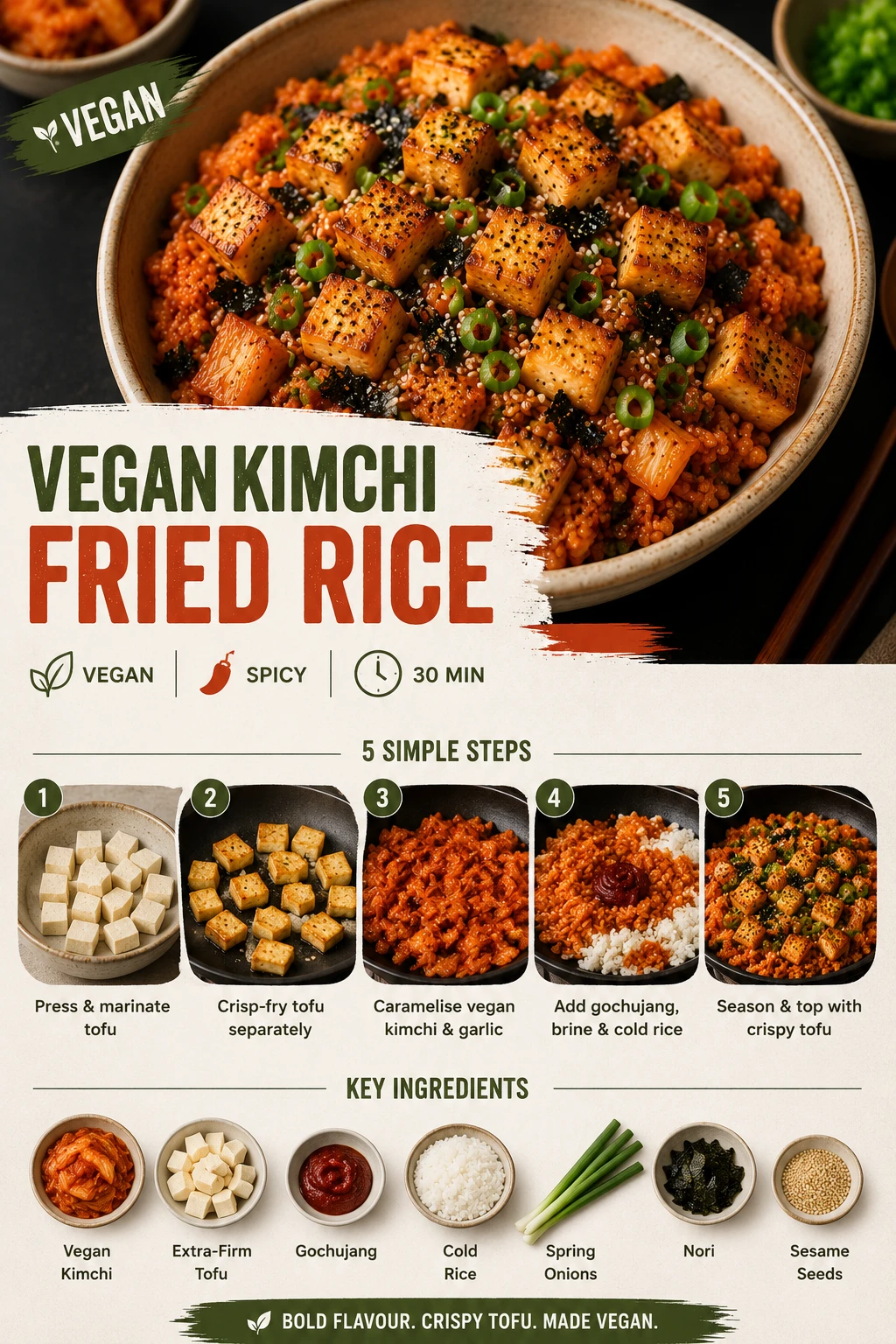
Vegan kimchi fried rice crispy tofu cubes sesame seeds spring onions plant based

Vegan Kimchi Fried Rice (비건 김치볶음밥)

Press-and-sear tofu method · Stage 3 vegan kimchi · 25 min · ~380 calories, fully plant-based

Share:
15m
Prep
10m
Cook
25m
Total
2
Serves
380
Calories
Easy
Level
Ingredients
  • 200g extra-firm tofu, pressed, cubed
  • 1 tbsp cornstarch
  • 1 tbsp soy sauce (tofu marinade)
  • 2 tbsp neutral oil (for tofu)
  • 2 cups day-old rice, cold
  • 1 cup vegan aged kimchi (Stage 3), chopped
  • 3 tbsp vegan kimchi brine
  • 1 tbsp gochujang (label-checked)
  • 2 cloves garlic, minced
  • 1 tbsp neutral oil (for rice)
  • 1 tsp soy sauce (for rice)
  • 2 tsp sesame oil, divided
  • 2 spring onions, sesame seeds, nori
Instructions
  1. Press tofu 20 min, cube. Toss with soy sauce, dust with cornstarch.
  2. Fry tofu in a thin layer, high heat, 2-3 min per side until crisp and golden. Remove, set aside.
  3. Same pan: add kimchi and garlic. Press flat, char 30-45 sec, stir. Repeat 3-4 min.
  4. Add gochujang, brine. Stir-fry 1 min. Add cold rice, break clumps. Press-and-char 4-5 min.
  5. Add soy sauce, spring onion whites. Remove from heat, drizzle sesame oil. Top with crispy tofu, sesame seeds, nori, spring onion greens.
380
Calories
56g
Carbs
14g
Protein
12g
Fat
4g
Fibre
820mg
Sodium
What to Serve With It

Pairing Guide — Vegan Version

All four pairings below are naturally plant-based, so nothing needs adjusting to keep the whole meal vegan.
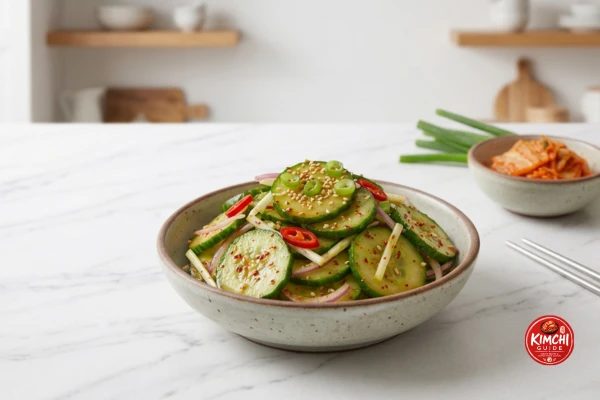
Oi muchim Korean cucumber salad vegan pairing kimchi fried rice
Oi Muchim (Cucumber Salad)
Naturally vegan and refreshing — cuts through the richness of the crispy tofu with cool acidity.
Spinach namul Korean sesame spinach vegan pairing kimchi fried rice
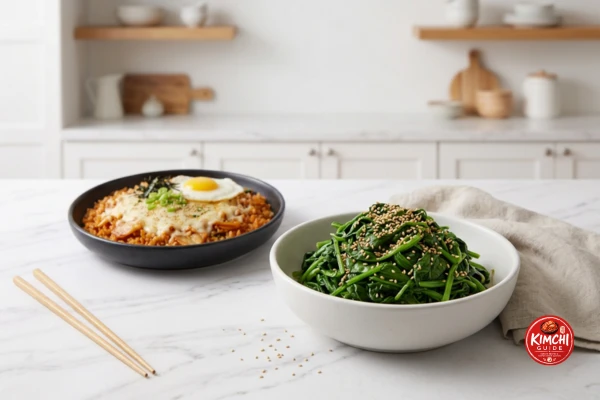
Spinach Namul
Plant-based iron and fibre, and a classic Korean banchan pairing that needs no modification for vegans.
Fresh vegan kimchi banchan side dish pairing vegan kimchi fried rice
Extra Fresh Vegan Kimchi (Banchan)
A cold side portion of the same vegan kimchi adds probiotic variety without introducing anything non-vegan.
Boricha Korean barley tea vegan pairing kimchi fried rice
Boricha (Barley Tea)
Calorie-free, naturally vegan, and the traditional way to round out a Korean home meal.
Store & Reheat

Storage & Reheating — Vegan Version

Store the crispy tofu separately from the rice whenever possible — it’s the only component that loses quality on standard reheating.

❄️
Refrigerator 3-4 days
Store the rice and kimchi base and the tofu in separate airtight containers. The rice base holds up well; the tofu softens if stored together with the moist rice.
🧊
Freezer Up to 1 month
The rice and kimchi base freezes well. Freeze the tofu separately if possible, or plan to make a fresh batch of tofu when reheating, since frozen tofu changes texture on thawing.
🍳
Reheat Rice — Hot Pan 3-4 minutes
Reheat the rice and kimchi base in a hot, dry pan, tossing frequently. Add a splash of sesame oil at the very end to freshen the aroma.
🌬️
Reheat Tofu — Air Fryer or Dry Pan 4-5 minutes
Reheat tofu in an air fryer or hot dry pan rather than the microwave to restore crispness. Microwaving softens the crust and undoes the point of the press-and-sear method.
Nutrition — Protein Comparison

Nutrition Comparison — All KFR Variations

380
Calories (this version)
14g
Protein (from tofu)
12g
Total fat
0g
Animal products
-40
Cal vs classic recipe
VariationCaloriesProteinVegan?Best For
Cauliflower Version18010gNo (egg)Low-carb, keto, lightest option
Without Egg3607gNo (may use dairy)Calorie control, meal prep
Vegan (tofu) ← This page38014g✅ Fully veganPlant-based, egg-free protein
Breakfast Bowl38015gNo (egg, avocado)Mornings, lighter portion
Tuna Version41022gNoHighest protein, lean
Classic (with egg)42014gNoAll occasions
Cheese Version57019gNoEntertaining, most indulgent
Spam Version58024gNoComfort food, budae flavour
Bacon Version60021gNoWeekend indulgence
💡
Dr. Sarah Mitchell RD, PhD note: This is the only fully plant-based KFR variation while still matching the classic recipe’s protein content almost exactly. For readers avoiding soy, cubed tempeh prepared the same way is a reasonable substitute, though it will change both the flavour and the fat content slightly.
Frequently Asked Questions

Vegan Kimchi Fried Rice FAQ — 19 Questions

Usually not. Traditional kimchi is seasoned with jeotgal — salted fermented fish or shrimp — and often fish sauce, both used to build umami depth. Vegan kimchi replaces these with soy sauce, kelp (dashima) stock, or mushroom powder instead.

Check the ingredient label specifically for fish sauce, anchovy, shrimp, or jeotgal — “vegetarian” labeling is sometimes used loosely and can still include these. Look for kimchi explicitly labeled “vegan” or “plant-based,” which is a more reliable signal than “vegetarian” alone.

Tofu replaces both the protein and the textural contrast the egg provides. A crisp, golden-seared tofu cube delivers a similar richness-against-tang effect that a runny yolk does, which simply omitting the egg does not replicate.

Tofu holds significant water, and that water prevents proper browning. Pressing for at least 20 minutes removes enough moisture that the surface can actually crisp in the pan instead of steaming.

Not for the crispy topping — silken tofu has too much water and structural fragility to hold its shape and crisp properly. Extra-firm or firm tofu is required for the press-and-sear method.

Most modern gochujang brands are vegan, but always check the label — a small number of brands add honey or other non-vegan sweeteners. This is worth verifying once per brand, not every time you cook.

Soy sauce, kelp (dashima) stock, and dried mushroom powder all contribute glutamates — the same umami-producing compounds fish sauce provides — allowing vegan kimchi to ferment into a comparably savoury result.

Yes — the lactic acid fermentation process driven by Lactobacillus is plant-based regardless of the seasoning used. Fish sauce affects flavour, not the fermentation mechanism itself, so vegan kimchi ages through the same Stage 1-4 progression.

Yes — replace fish sauce and shrimp paste in any standard recipe with a mix of soy sauce, kelp stock, and a small amount of blended fruit (like Korean pear or apple) for natural sweetness and body.

Aim for a firm, golden-brown crust on at least two to three sides of each cube, with the interior staying soft. If the tofu bends or feels soft on the outside, it needs more time undisturbed in the pan.

Yes — air-frying at 200°C for 15-18 minutes, shaking halfway, produces a comparable crisp exterior with less oil. Toss with the same cornstarch coating first for the best texture.

This is almost always insufficient pressing or moving the tofu too early. Give each side a full 2-3 minutes undisturbed before flipping — a proper crust needs to form before the tofu can be moved without breaking.

Reasonably — approximately 14g of protein per serving from the tofu alone, comparable to the egg-topped classic version. Adding a second block of tofu or edamame can raise this further.

Approximately 380 calories per serving, slightly lower than the classic recipe’s 420 calories, with the difference coming mainly from tofu’s lower fat content compared to a fried egg.

Yes, with one adjustment — store the crispy tofu separately from the rice and kimchi base, then reheat the tofu in a dry pan or air fryer just before serving to restore crispness rather than microwaving it with the rice.

It can be, with two swaps: use tamari or coconut aminos instead of regular soy sauce in both the tofu marinade and the rice, and confirm your gochujang and vegan kimchi brands are labelled gluten-free.

Yes — diced carrot, zucchini, or mushrooms all work well added alongside the kimchi during the caramelising step, and mushrooms in particular reinforce the umami the tofu and kimchi already provide.

Tempeh, cubed and pan-seared the same way, is a good substitute with a firmer, nuttier bite. Crispy chickpeas are another option, though they provide less protein per serving than tofu.

No — 10-15 minutes is enough for the soy sauce to season the surface before the cornstarch coating and fry. Marinating longer than 30 minutes can make the tofu too wet again for a good crisp.

Ji-Young Park Korean food writer KimchiGuide
Written by
Ji-Young Park
Korean Food Writer & Fermentation Expert
Fermentation Expert Seoul Food Certified 6 Batches Tested 12 Years Experience
Ji-Young Park developed this vegan version after repeated reader requests for a fully plant-based KFR that didn’t just “leave things out.” The press-and-sear tofu method took the most testing of any component — most failed early attempts came down to skipping the pressing step entirely.
Full profile →
Dr Sarah Mitchell RD PhD nutrition reviewer KimchiGuide
Reviewed by
Dr. Sarah Mitchell
Registered Dietitian, PhD Nutrition Science
RD — Registered Dietitian PhD Nutrition Science Fermented Foods Specialist Reviewed: July 3, 2026
Dr. Sarah Mitchell reviewed all nutritional data, calorie counts, and protein calculations in this article, with particular attention to confirming the tofu topping’s protein content genuinely offsets the removal of egg from the classic recipe.
Full profile →

Similar Posts

Leave a Reply

Your email address will not be published. Required fields are marked *