Gochugaru Guide: Korean Chili Flakes Heat Levels, Scoville Scale, Quality Selection, Storage & Uses
Complete guide to gochugaru (고추가루) — Korean red chili flakes used in kimchi, tteokbokki, bibimbap, and kimchi burgers. Learn heat levels on the Scoville scale, fine vs coarse grind, how to select quality, storage methods, and substitutions when gochugaru isn’t available.


What Is Gochugaru?
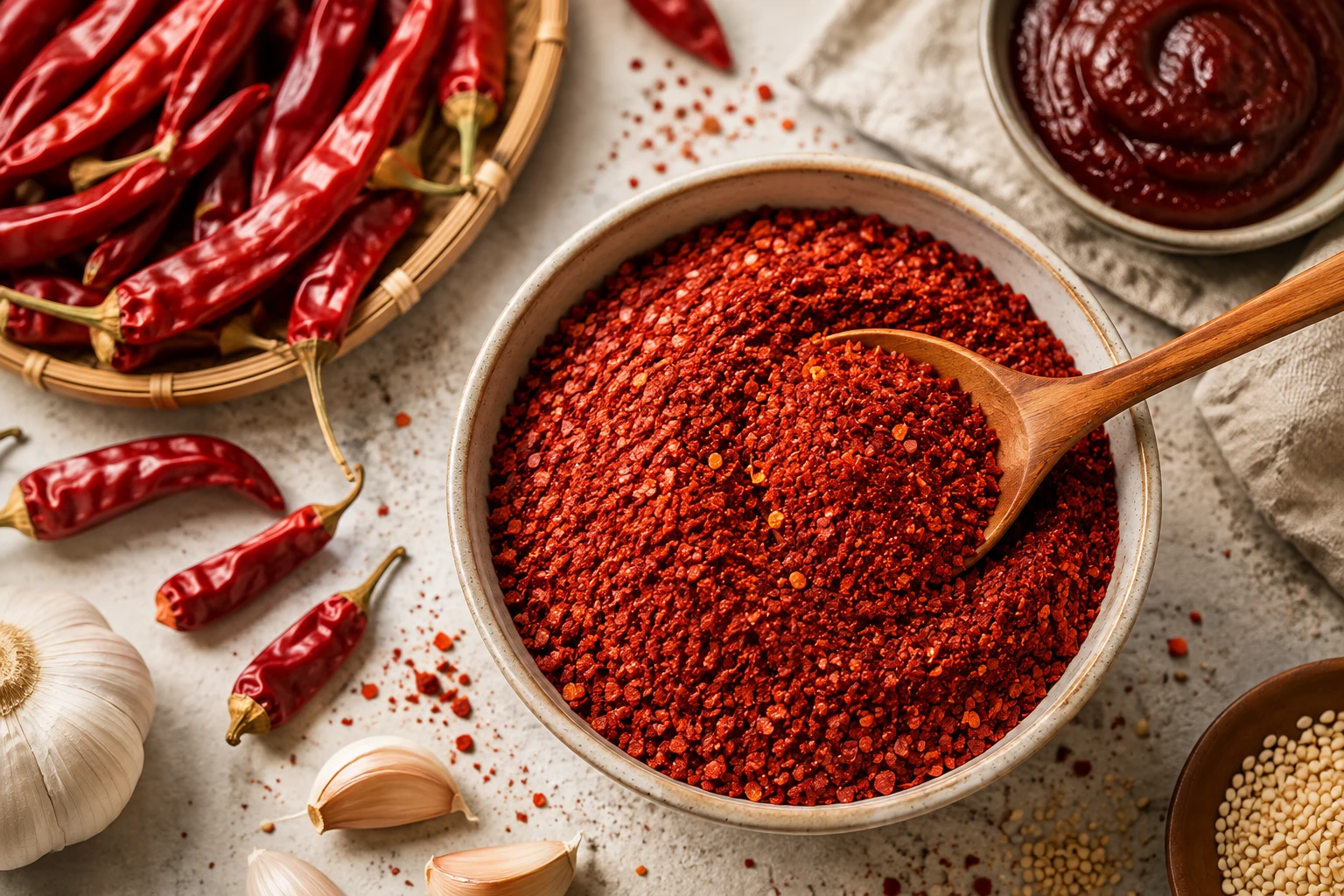
Korean red chili flakes (고추가루) made from dried red chili peppers. Finely or coarsely ground, bright red, used in kimchi fermentation, tteokbokki (spicy rice cakes), bibimbap, and Korean marinades. Most varieties fall in the 1,500-10,000 Scoville Heat Unit (SHU) range — overlapping a jalapeño but tasting sweeter, not just hotter. Milder than fresh chili peppers, more flavorful than generic chili powder.
Gochugaru At a Glance
Ingredient: Dried red chili peppers, ground fine or coarse | Heat: 1,500-10,000 SHU, varies by variety | Flavor: Sweet, fruity, slightly smoky | Color: Bright red to deep red | Texture: Fine powder or coarse flake | Uses: Kimchi, tteokbokki, bibimbap, marinades, burgers
Gochugaru vs Gochujang: What’s the Difference?
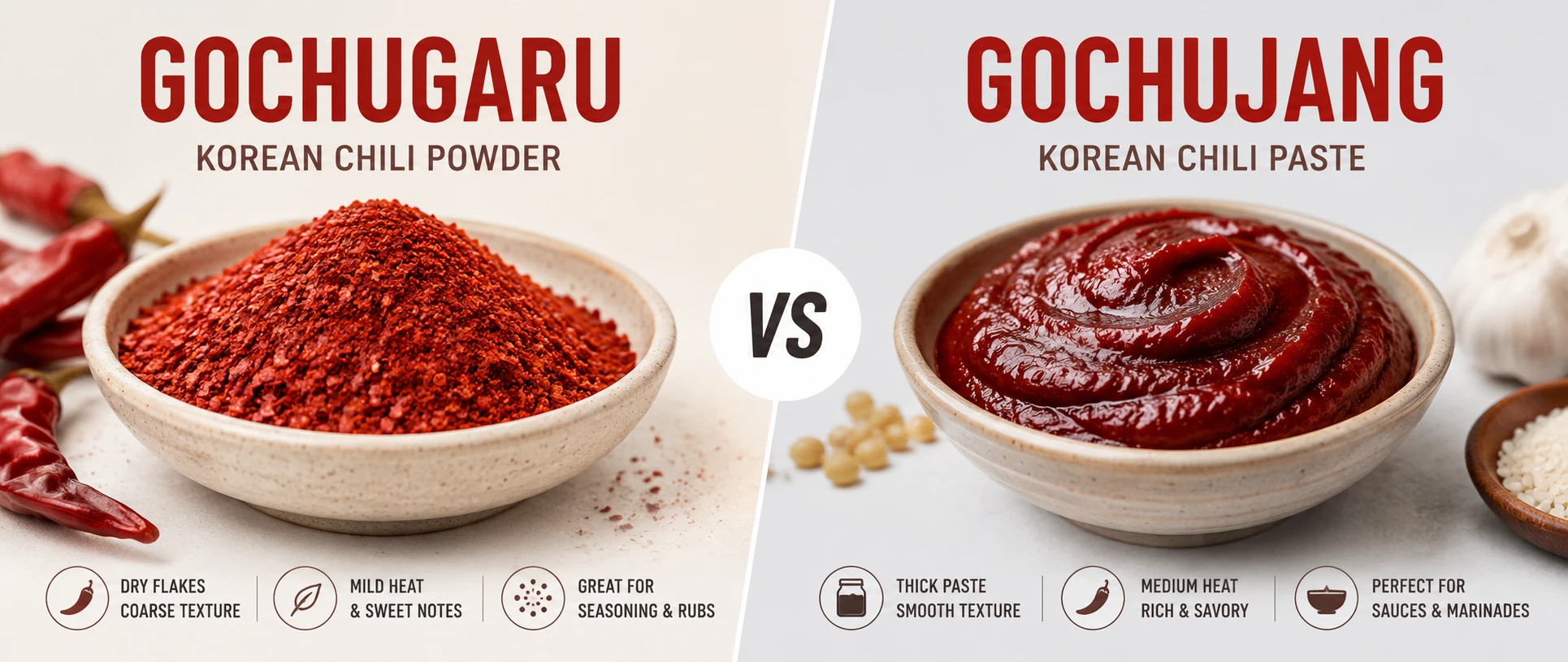
Both are made from red chili peppers, but they’re completely different ingredients with different uses.
Gochugaru Varieties & Heat Levels
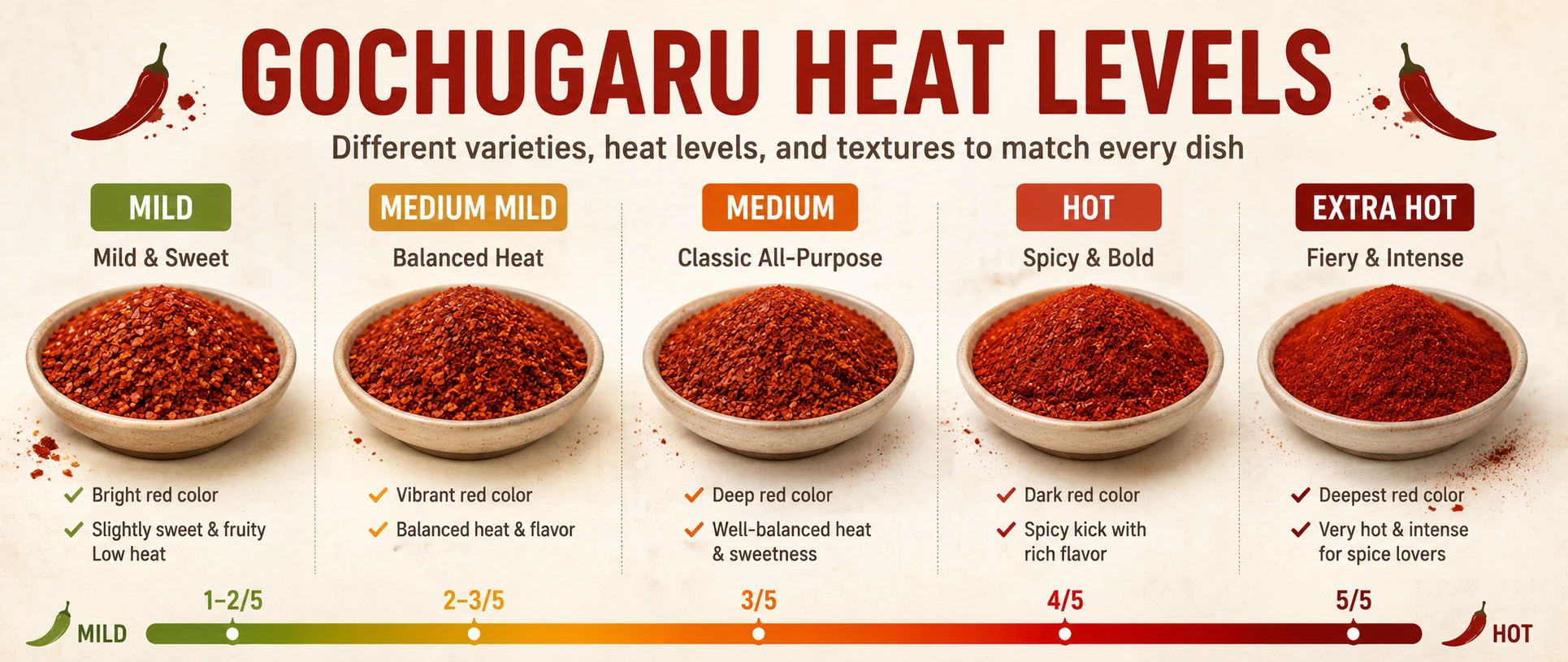
Not all gochugaru is the same. Heat levels vary significantly between varieties and regions.
The 5 Heat Levels
| Level | Heat (Scoville) | Color | Flavor | Best For |
|---|---|---|---|---|
| Mild | 1,000-3,000 | Light red | Sweet, fruity, minimal heat | Beginners, mild dishes, kids |
| Medium | 3,000-6,000 | Standard red | Balanced heat and sweetness | Most Korean cooking, kimchi |
| Medium-Hot (Standard) | 6,000-10,000 | Deep red | More heat, good sweetness | Most common, most recipes |
| Hot | 10,000-15,000 | Dark red | Significant heat, less sweetness | Heat lovers, tteokbokki, marinades |
| Extra Hot | 15,000+ | Very dark red/brown | Very hot, minimal sweetness | Spice enthusiasts, specialty dishes |
The Scoville Scale — How Hot Is Gochugaru, Really?
Scoville Heat Units (SHU) measure capsaicin concentration — the compound behind a chili’s heat. Here’s where gochugaru actually sits next to peppers you already know.

Fine vs Coarse Grind — Which One Should You Buy?
Gochugaru comes ground two main ways, and picking the wrong one for your dish is one of the most common first-time mistakes.

How Gochugaru Is Made
Understanding the process explains why quality varies so much between brands.

Nutrition & Capsaicin
Gochugaru is used in small amounts per dish, but it’s worth understanding what’s actually in it.

How to Select Quality Gochugaru
What separates good gochugaru from mediocre? Learn what to look for.
Visual Inspection
Particle Size Matters
As covered in the Fine vs Coarse section above, Korean gochugaru is sold in two main grinds. Neither is “wrong” — but know which one your recipe calls for before you buy, since fine and coarse aren’t interchangeable in a kimchi paste.
Brand Guide & Recommendations
8+ verified options available online. Here’s how they compare.
Disclosure: links marked “Available on Amazon” or “Available on Weee!” are affiliate links — KimchiGuide may earn a small commission at no extra cost to you.
Shop by Heat Level
Matching the 5-level table above to a real, verified product for each.
A true “extra hot” (15,000+ SHU) packaged gochugaru is genuinely hard to find pre-made — most brands cap around 10,000 SHU because gochugaru is bred for balanced flavor, not maximum heat. For that level, blend in a small amount of cayenne or Korean cheongyang chili powder, or see the Substitutions section below.
Storage & Shelf Life
Proper storage keeps gochugaru fresh and vibrant for years.
Uses in Korean Cooking
Gochugaru appears in dozens of Korean dishes. Here are the main applications.
Substitutions: When You Don’t Have Gochugaru
Can’t find gochugaru? Here are workarounds, ranked by how close they come.
Gochugaru’s Role in Kimchi Fermentation
Understanding why gochugaru matters in fermentation will make you a better kimchi maker.
Why Gochugaru, Not Gochujang?
Kimchi fermentation needs gochugaru (powder) because:
Heat Level Impact on Fermentation
The heat level of gochugaru you choose affects the final kimchi:
Gochugaru FAQ
Answers to your gochugaru questions. First 3 pre-opened.
No. Gochugaru is specifically Korean red chili flakes/powder. Generic “chili powder” is different — it’s a spice blend with cumin, garlic, and other spices added. Gochugaru is pure ground chili peppers with no additives. Not interchangeable for authentic Korean cooking. For best results, see our How to Make Kimchi from Scratch guide.
Not really. Gochujang is fermented paste with umami and complexity. Gochugaru is fresh ground chili. Different textures, different flavors. Use gochujang for sauces and condiments. Use gochugaru for fermentation and garnish. They serve different purposes.
Korean markets (best quality, freshest). Asian supermarkets (good selection). Regular supermarkets (limited but usually have at least one brand). Online (Amazon, Weee! — good for bulk and comparing brands). Korean market is ideal because you can see the color and smell before buying.
Unopened package: 1-2 years. After opening: 4-6 months pantry, 1-1.5 years refrigerated, 2-3 years frozen. Color and flavor degrade over time from oxidation. Opened packages last shorter because of air exposure. Store in airtight containers to extend life.
Yes, but slowly. Signs: dark brown color (oxidized), musty smell (aged), or mold (moisture). Discard if moldy. If just dark brown, still usable but lower quality. It doesn’t “spoil” like fresh food, but flavor degrades significantly after 2+ years.
Fine (most common): Powder-like, evenly distributed in fermentation, better for kimchi. Coarse: Visible flakes, used sometimes for garnish or texture. For fermentation, always use fine. Coarse won’t distribute evenly and fermentation will be uneven. See the full Fine vs Coarse section above.
Roughly 2-3 tbsp per 2 lbs cabbage for medium heat. Adjust up for hotter, down for milder. Start with 2 tbsp, taste the spice paste before fermenting, add more if needed. Every batch is different based on your heat preference.
Not necessarily. Depends on the variety and brand. Many gochugaru varieties are milder than standard red pepper flakes because they’re designed for kimchi (balanced flavor, not just heat). But hot gochugaru varieties can be as hot or hotter. Always check heat level before buying.
Yes, but requires drying. Dry fresh red chilies in sun (2-3 weeks) or oven at 250°F (2-3 hours). Then grind to powder. Tedious but you get fresh, customizable heat level. Better than store-bought for serious fermentation. Time investment is significant though.
Taekyung or The Spice Lab — both are consistent, widely available, and reliable. Medium heat level is beginner-friendly. Magic Plant if you want something milder. Korean market bulk if you want freshest. Start with mass market, upgrade later based on preferences.
Yes, highly recommended. Refrigeration extends shelf life significantly (1-1.5 years vs 4-6 months). Cold slows oxidation and flavor degradation. Freezer is even better (2-3 years). Pantry storage works for short-term but refrigeration is best practice.
Traditional Korean gochugaru is made from red chili peppers, not green or other colors. The red color indicates ripeness (red peppers are fully ripe). Red pepper flavor is also preferred in Korean cooking for its sweetness. See How Gochugaru Is Made above for the full process.
Absolutely. Gochugaru works in any dish needing red chili heat — Mexican salsa, Indian curries, Italian pasta, American BBQ sauce. The sweet, fruity flavor profile is more versatile than standard chili powder. Experiment with it.
Yes, gochugaru itself (pure ground chili) is naturally gluten-free. BUT check the label — some brands add ingredients or process in facilities with gluten. Read the label carefully. Most major brands (Taekyung, The Spice Lab) are explicitly gluten-free.
Most standard gochugaru (roughly 1,500-10,000 SHU depending on variety) overlaps with or slightly exceeds a jalapeño’s typical 2,500-8,000 SHU range, but gochugaru’s sweetness usually makes it taste less sharply hot than a jalapeño at a similar Scoville number. See the Scoville Scale section above for a full comparison chart.
Yes. Like all chili peppers, gochugaru’s heat comes from capsaicin, concentrated mainly in the pepper’s internal membranes rather than the flesh. Gochugaru also retains vitamin A and vitamin C from the dried pepper, though amounts used per dish are typically small. See Nutrition & Capsaicin above.
Fine gochugaru is generally preferred for kimchi paste because it blends evenly with the other ingredients, ensuring consistent fermentation and flavor throughout the batch. Coarse gochugaru is fine for garnishing or dishes where the paste isn’t the point.
Related Guides & Recipes
Gochugaru is part of a larger Korean cooking ecosystem. Explore related guides, or see the full Ingredients & Guides hub →
Every Korean pantry ingredient and kitchen guide on the site, organized in one place.
Confused which one your recipe needs? A quick decision tool and by-dish table.
Don’t have time to ferment your own? See which store-bought brands use quality gochugaru.
Perfect sauce made from fermented gochujang (the paste form of chili).
Fresh slaw using gochujang. Quick version without fermentation.
See exactly how gochugaru’s heat interacts with fermentation over time.
Gochugaru appears in multiple kimchi burger variations and marinades.
Was this guide helpful?
Your feedback helps us improve KimchiGuide.