Spam Kimchi Jjigae (스팸김치찌개 — Simple Comfort-Food Version)
Seared Spam, aged Stage 3 kimchi, and a rich, savoury broth simmered with tofu in just 25 minutes. This is the simple, single-protein comfort-food version of Spam in kimchi jjigae — not to be confused with the bigger combo stew, Budae Jjigae, which adds sausages, noodles, and cheese.


What Is Spam Kimchi Jjigae?
Spam kimchi jjigae — 스팸김치찌개 — is a Korean stew built around seared Spam instead of fresh meat: cubed Spam browned first to render fat and build flavour, then simmered with aged Stage 3 kimchi, tofu, and a savoury broth. It’s not the same dish as Budae Jjigae — that’s the bigger combo stew with sausages, baked beans, instant noodles, and cheese. This is the simple, single-protein comfort-food version, ready in 25 minutes. Because Spam is already well-seasoned and salty, go easy on any additional salt or brine. Serves 4 at approximately 380 calories and 16g protein per serving — the richest, saltiest recipe in the family, best treated as an occasional comfort-food dish rather than an everyday one.
Why This Recipe Works — Spam, Explained
Spam behaves like a hybrid between a fresh protein and a pantry staple, and that’s exactly why it earns its own place in this family rather than just being “budget pork.”

Unlike canned tuna, Spam is uncooked-adjacent enough that searing it genuinely browns the surface and renders real fat into the pot — much closer to how pork belly behaves elsewhere in this family than to a pre-cooked canned fish.

Spam arrives heavily cured and salted, which means this recipe needs meaningfully less added salt or brine than any other version in the family. Skipping that adjustment is the single most common mistake people make with it.
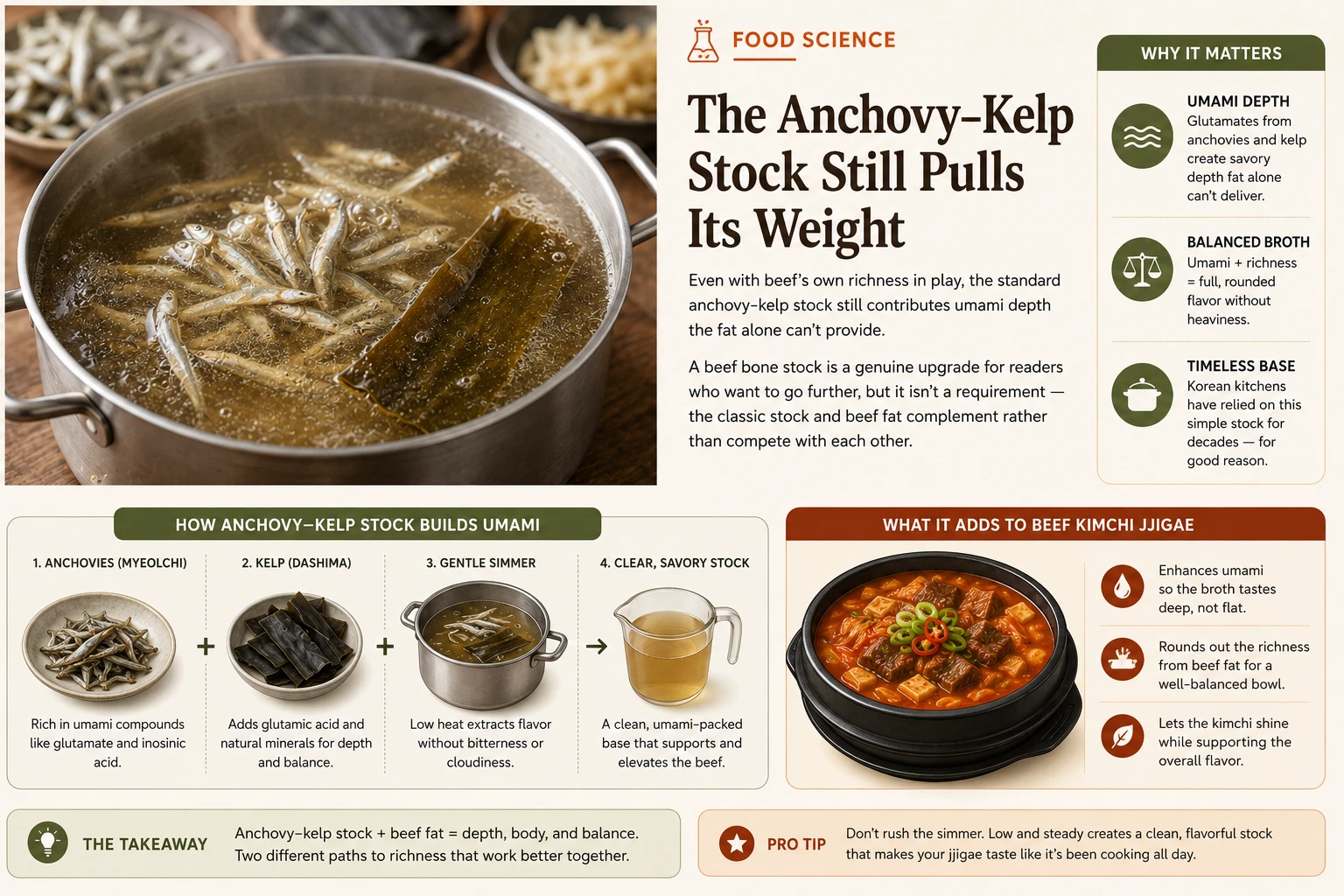
Myeolchi yuksu’s umami depth balances Spam’s saltiness the same way it balances every other protein in the family — though some households swap in starchy rice-rinse water instead, covered in Household Techniques below.
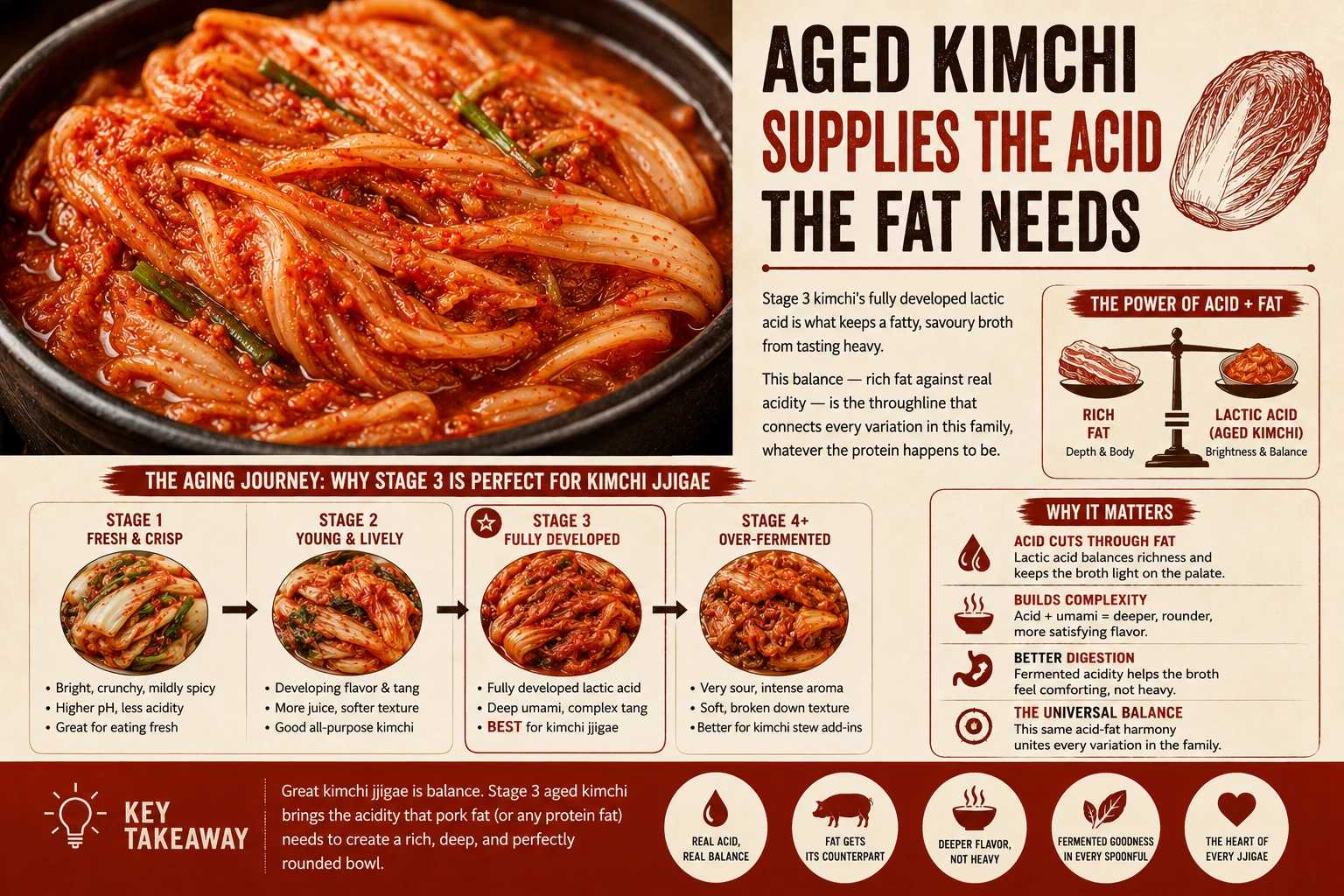
Spam is the fattiest, saltiest protein in this family — Stage 3 kimchi’s developed lactic acid is doing real work here, cutting through that richness more than in almost any other version.
The Origin of Spam in Korean Cooking
Kimchi-jjigae itself goes back centuries; Spam’s place in it is a distinctly 20th-century, war-shaped story.
Spam entered Korean cooking during and after the Korean War (1950-1953), when food was often scarce and canned goods from nearby US military bases became a valuable, sought-after resource. Small cans of Spam, sometimes obtained informally from base supply chains, found their way into Korean households and were stretched into whatever dish a family could make from them — kimchi jjigae among the most natural fits, since the salty, fatty canned meat paired naturally with fermented kimchi’s acidity the same way pork always had. See the full origin and etymology breakdown on the Classic recipe page for the dish’s broader history.
That same scarcity-era resourcefulness eventually grew into a much bigger dish too: Budae Jjigae (“army-base stew”), which combines Spam with sausages, baked beans, instant noodles, and cheese into one elaborate combo pot. This page is deliberately the simpler version — Spam and kimchi, nothing more — closer to how a single can might have actually been used in a home kitchen rather than the full army-base spread.
Sear-First vs Dump-Everything — and Regular vs Lite Spam
Two real decisions shape this recipe, and most online versions only ever show you one household’s answer. Here’s both, tested side by side.

- Brown the Spam cubes in a dry pot for 2-3 minutes before adding anything else
- Renders real fat and builds genuine Maillard browning flavour
- Add the kimchi straight into that same fat to saute it before the broth goes in
Result: A noticeably deeper, more savoury broth — worth the extra 2-3 minutes.

- Add Spam, kimchi, broth, and seasonings to the pot together
- Simmer until everything is tender — genuinely almost hands-off
- No searing step, no separate pan work
Result: Good and genuinely easier — just a slightly flatter broth without the browning step.
Regular Spam vs Spam Lite
| Type | Fat When Seared | Sodium | Verdict |
|---|---|---|---|
| Regular Spam ⭐ | Renders more fat, richer sear | Higher | The classic, most flavourful choice |
| Spam Lite | Renders less fat, milder sear | Meaningfully lower | Good option if managing fat or sodium |
Key Terms — Language & Food Science Entities
The core terms used throughout this recipe and the wider family it belongs to.
The Whole Family — How 13 Versions Differ
Every recipe below starts from the same base technique on the Classic (Pork) page. This Spam version keeps that same searing technique but swaps in a pantry protein — and stays deliberately simpler than its bigger cousin, Budae Jjigae.
| Version | What Changes | Simmer Time | Best For |
|---|---|---|---|
| Classic (Pork) | The original base technique | 15-20 min | Everyone — the reference point for the whole family |
| Chicken | Chicken thigh, browned skin-first | 18-20 min | Leaner, highest protein of the meat versions |
| Beef | Short rib or chuck, longer braise | 30-35 min | Richest, most indulgent broth |
| Seafood | Shrimp, mussels, clams added last | 5-8 min (seafood only) | Leanest jjigae-format option in the family |
| Soondubu | Silken tofu replaces firm, no draining | 10-12 min | Soft, custardy texture, highest search demand |
| Vegetarian | Mushroom + tofu + egg replace meat | 12-15 min | Meatless, egg and dairy still allowed |
| Vegan | Mushroom + tofu, no egg, fish-sauce-free kimchi required | 12-15 min | Fully plant-based |
| Tuna (Chamchi) | Canned tuna, added in the final 2-3 minutes only | 15-20 min broth + 2-3 min tuna | The leanest, fastest recipe in the family |
| Spam ← This Page | Seared Spam, simplest single-protein comfort version | 12-15 min | Rich, salty comfort food — an occasional treat, not everyday |
| Budae Jjigae | Spam, sausages, baked beans, instant noodles, cheese | 15 min | The bigger combo version — not the same dish as this page |
| Mackerel (Godeungeo) | Oily canned fish replaces pork | 10-12 min | Niche but authentic canned-fish alternative |
| Kimchi Guk | Thinner broth, less salt, soup format | 12-15 min | Lighter everyday side, not a main-dish jjigae |
| Instant Pot & Slow Cooker | Classic pork-belly recipe, hands-off appliance methods | Varies by method | Weeknight convenience, minimal supervision |
Household Techniques — 3 Real Approaches to Spam Kimchi Jjigae
Home cooks genuinely disagree on a few things here — how much technique to put in, and what liquid to build the broth from.

Brown the Spam, then saute the kimchi in the rendered fat, before any broth goes in. This recipe follows this method — it produces the deepest, most developed flavour.
This Recipe’s Method
A genuinely popular, much simpler approach: everything goes into the pot together and simmers until tender. Less developed flavour, but honestly still good, and about as low-effort as kimchi jjigae gets.
Good — Genuinely Easier
Some households use the cloudy, starchy water left over from washing rice instead of stock — it adds a subtle body and thickness to the broth that plain water or stock doesn’t. A genuinely useful zero-waste technique.
Worth Trying — Adds Real Body
Some recipes add a small pinch of sugar alongside the seasonings — it doesn’t make the broth sweet, just rounds out Spam’s saltiness and the kimchi’s acidity a little.
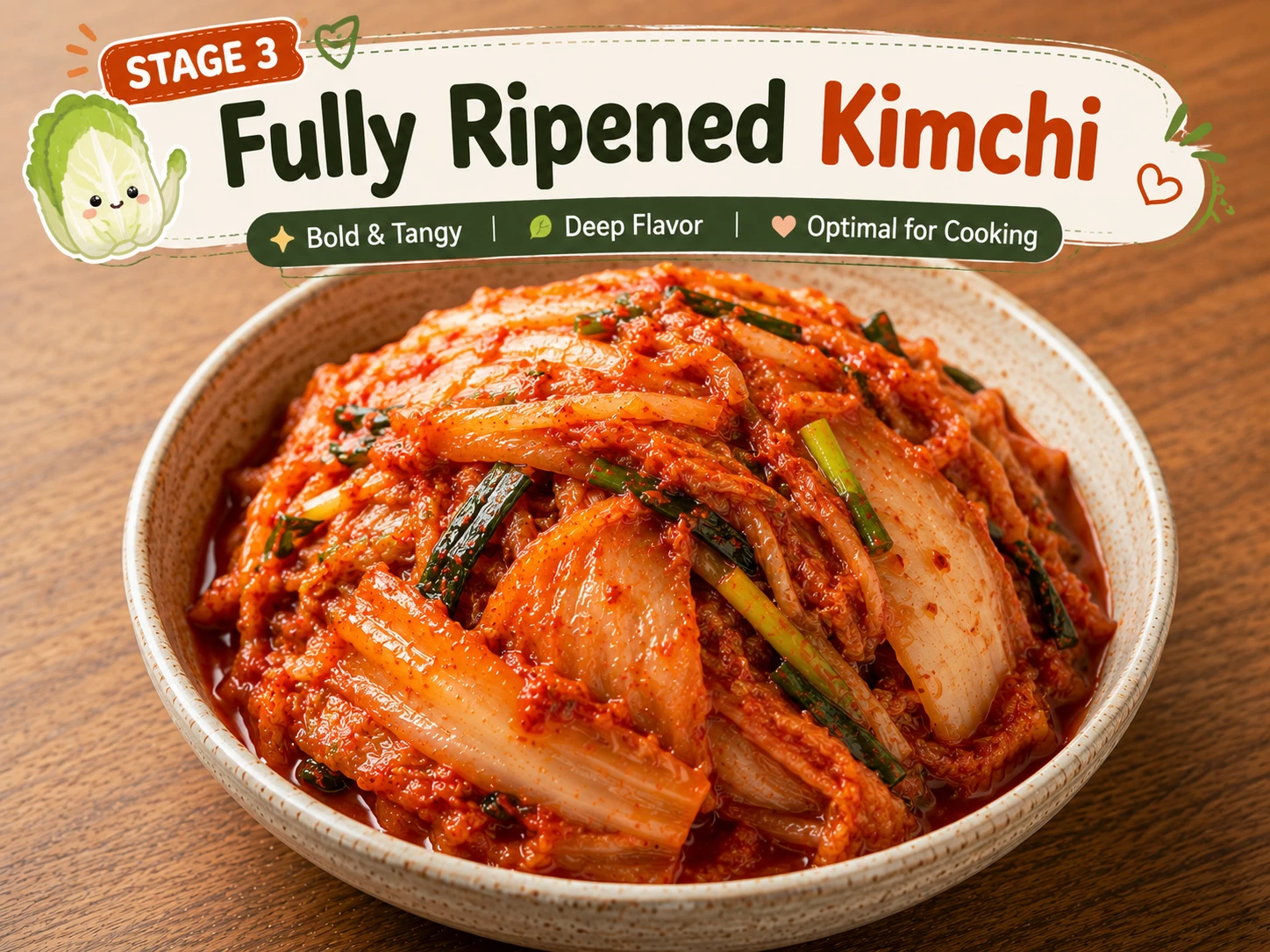
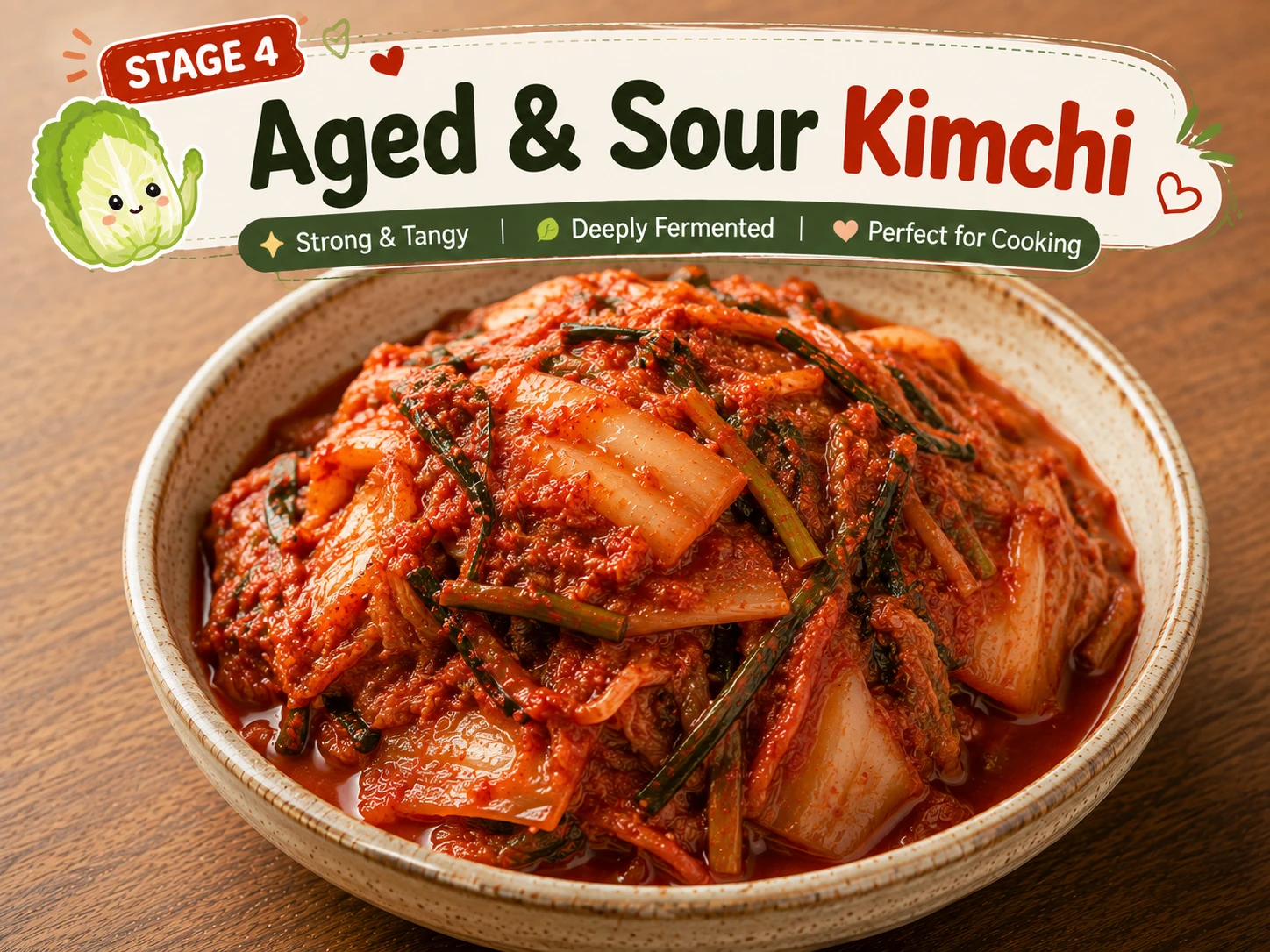
Optional, Genuinely Helps BalanceKimchi Fermentation — The Complete 4-Stage Guide
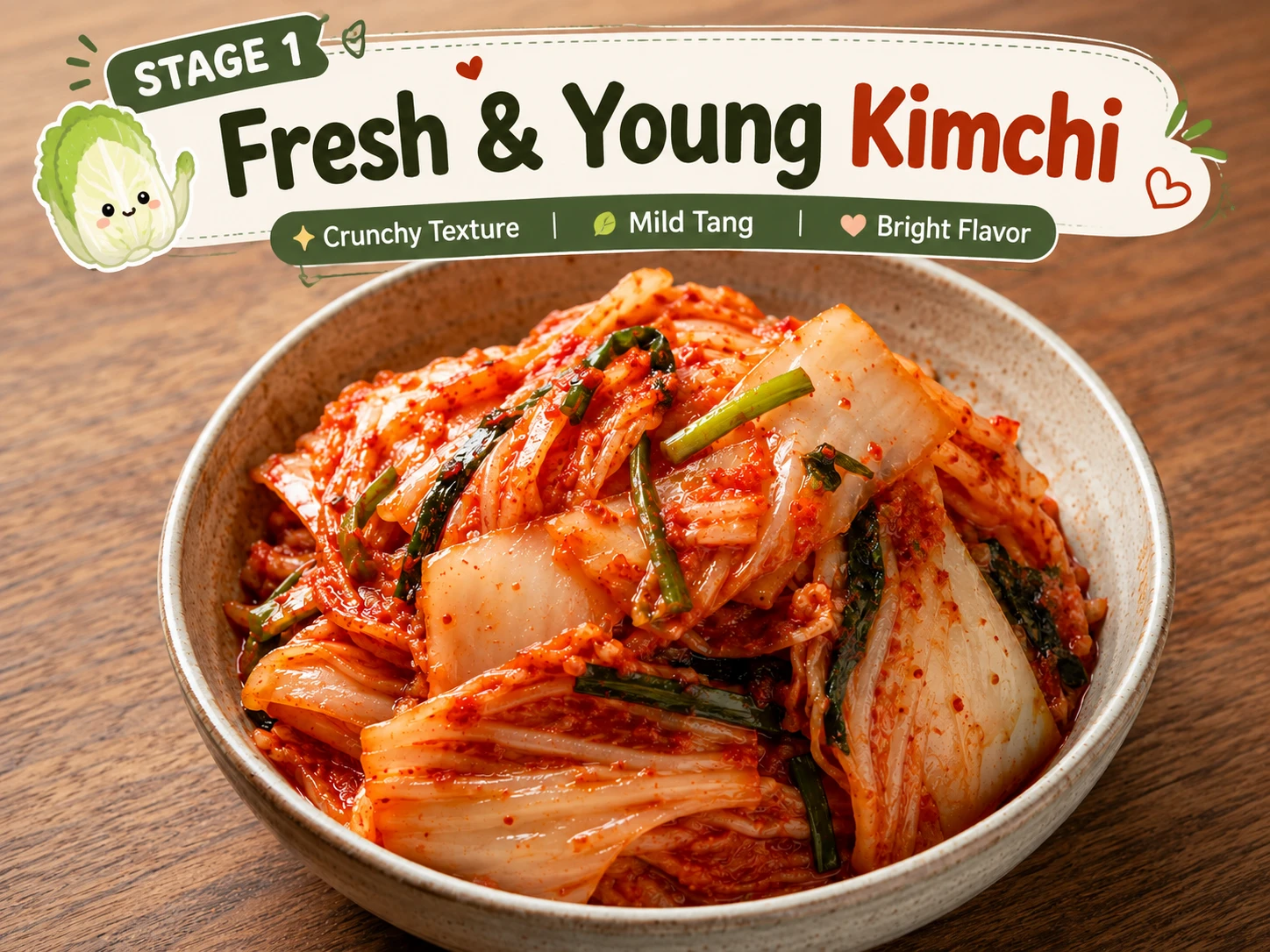
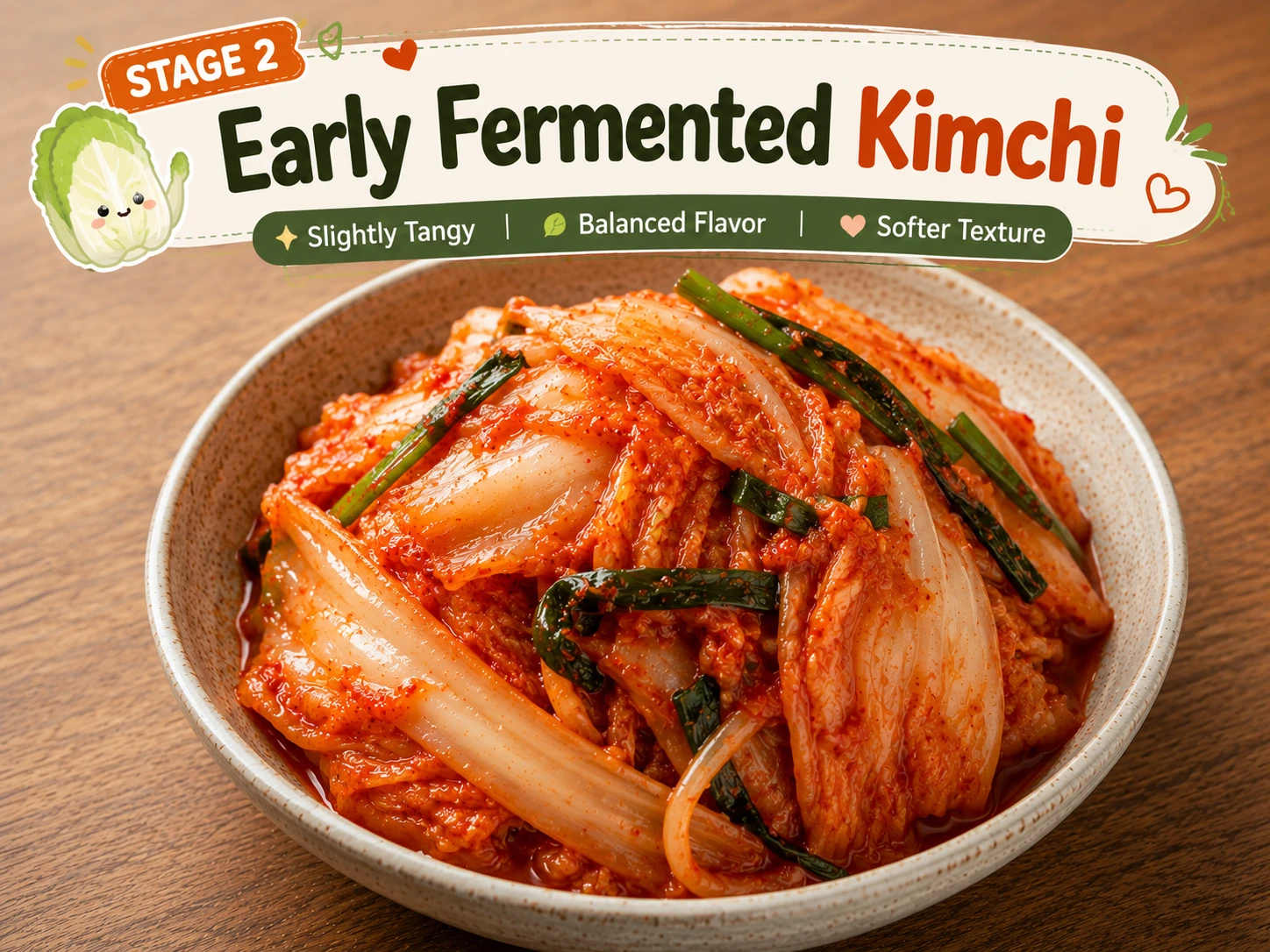
Every variation page on this site links back to this exact section for the full picture — here it is in full, not the shortened quick-reference version used elsewhere in the family.
Speeding Up or Slowing Down Fermentation at Home
Room temperature accelerates fermentation significantly — kimchi left on the counter can move through these stages in days rather than weeks, while refrigeration slows the process to a near-crawl, which is why store-bought refrigerated kimchi can sit at a similar stage for a long time. If your kimchi is fermenting faster than you’d like, refrigerate it sooner; if you need Stage 3 kimchi in a hurry, a day or two at room temperature can meaningfully speed things along.
Seasonal Adjustments — Summer vs Winter
As a rich, pantry-friendly comfort food, this recipe leans naturally toward colder months, though it’s genuinely quick enough to make year-round.
- Kimchi ferments noticeably faster in summer heat — check it 3-5 days earlier than the timeline above suggests
- Consider the lighter Tuna or Seafood versions if you want something less rich for a hot day
- Still genuinely quick — 25 minutes total even in warm weather
Result: Works fine year-round, though it’s not the lightest option if the weather’s hot.
- Kimchi ferments more slowly in cold storage — Stage 3 (3-6 weeks) is a reliable timeline in winter
- The rich, salty broth and rendered Spam fat are exactly what a cold night calls for
- Serve with extra rice — this version is genuinely built for a hearty cold-weather meal
Result: One of the best winter comfort-food options in the whole family.
How Difficult Is This Recipe?
One of the easiest recipes in the family — cube, sear briefly, simmer. No braising, no timing a raw protein’s doneness.
Equipment — What You Actually Need
A low equipment bar — no marinating dishes or long-braise cookware required. See the full Ttukbaegi Buying Guide if you’re considering a traditional stone pot for the presentation.
| Item | Why You Need It | Substitute |
|---|---|---|
| Any Pot or Ttukbaegi | Searing the Spam and simmering the broth | Any pot with a lid works — a ttukbaegi (뚝배기) just keeps it bubbling longer at the table |
| Cutting Board & Knife | Cubing the Spam and slicing aromatics | Any sturdy knife works — Spam is soft and easy to cut |
Ingredients + Scaler
Spam and Stage 3 aged kimchi are the two non-negotiables — everything else is standard pantry stock.

Substitutions & Allergen Notes
A few genuine swaps work directly in this recipe; bigger dietary or dish needs are better served by a dedicated page.
Sourcing Guide — Finding Ingredients Outside Korea
Genuinely one of the easiest recipes in the family to shop for — Spam is a mainstream supermarket staple almost everywhere.
How to Make Spam Kimchi Jjigae — 5 Steps
Five steps, twenty-five minutes. Go easy on the salt — Spam brings plenty of its own.

Cube the Spam into thick bite-size pieces. Slice the onion and mince the garlic.
Cut the Spam thicker than you think you need to — thinner pieces tend to break apart and lose texture during the simmer.

Heat a pot over medium-high with no added oil. Sear the Spam cubes 2-3 minutes until lightly browned on a couple of sides. Add the onion and garlic, then the chopped kimchi, and saute 2-3 minutes more.
The Spam renders its own fat as it browns — that’s what you’re sauteing the kimchi in. No extra oil is needed here.
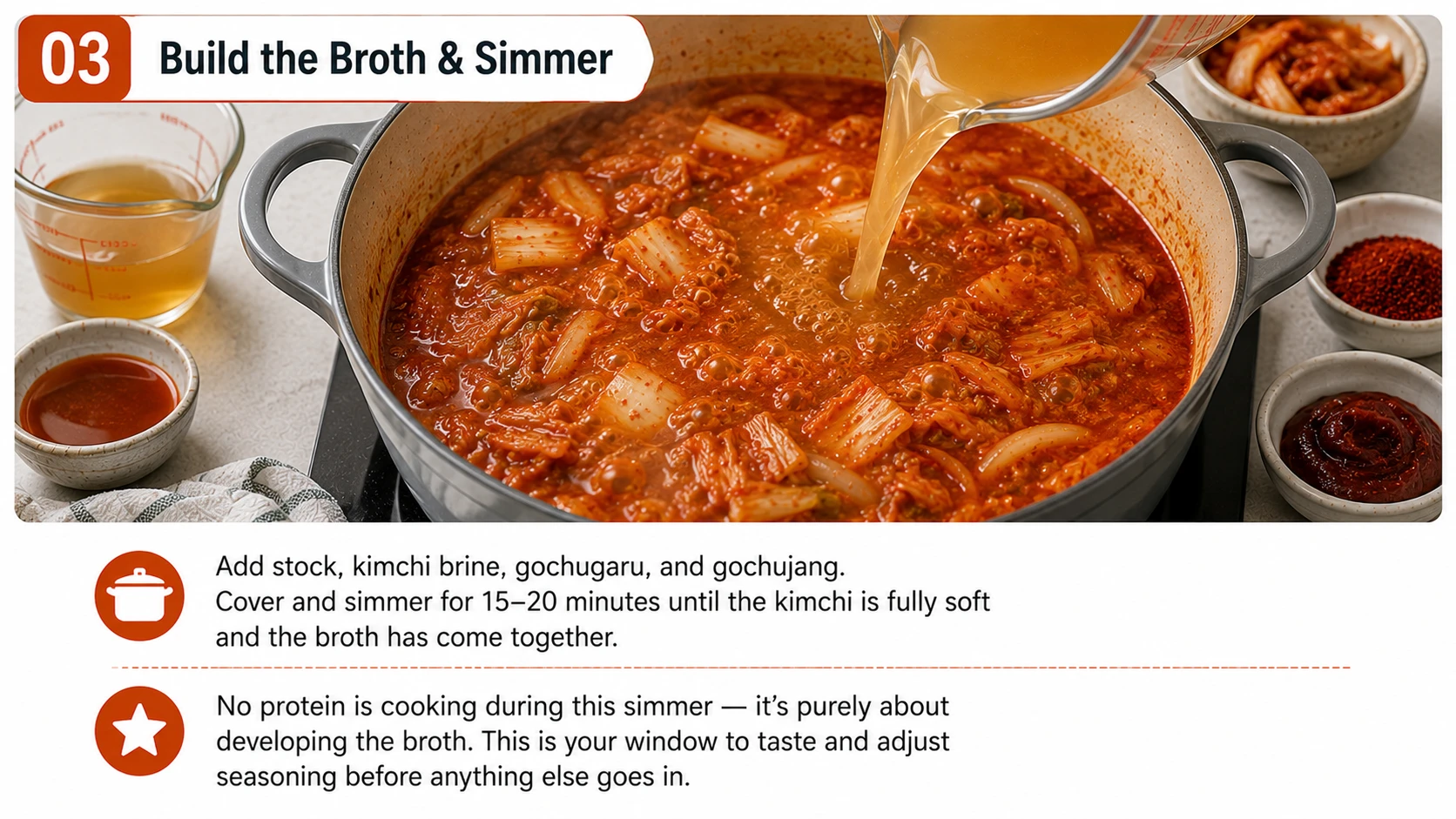
Add stock (or rice-rinse water), kimchi brine, gochugaru, and gochujang. Cover and simmer 12-15 minutes.
Hold off on any extra salt at this stage — taste once everything’s come together in the next steps, since Spam contributes real seasoning on its own.
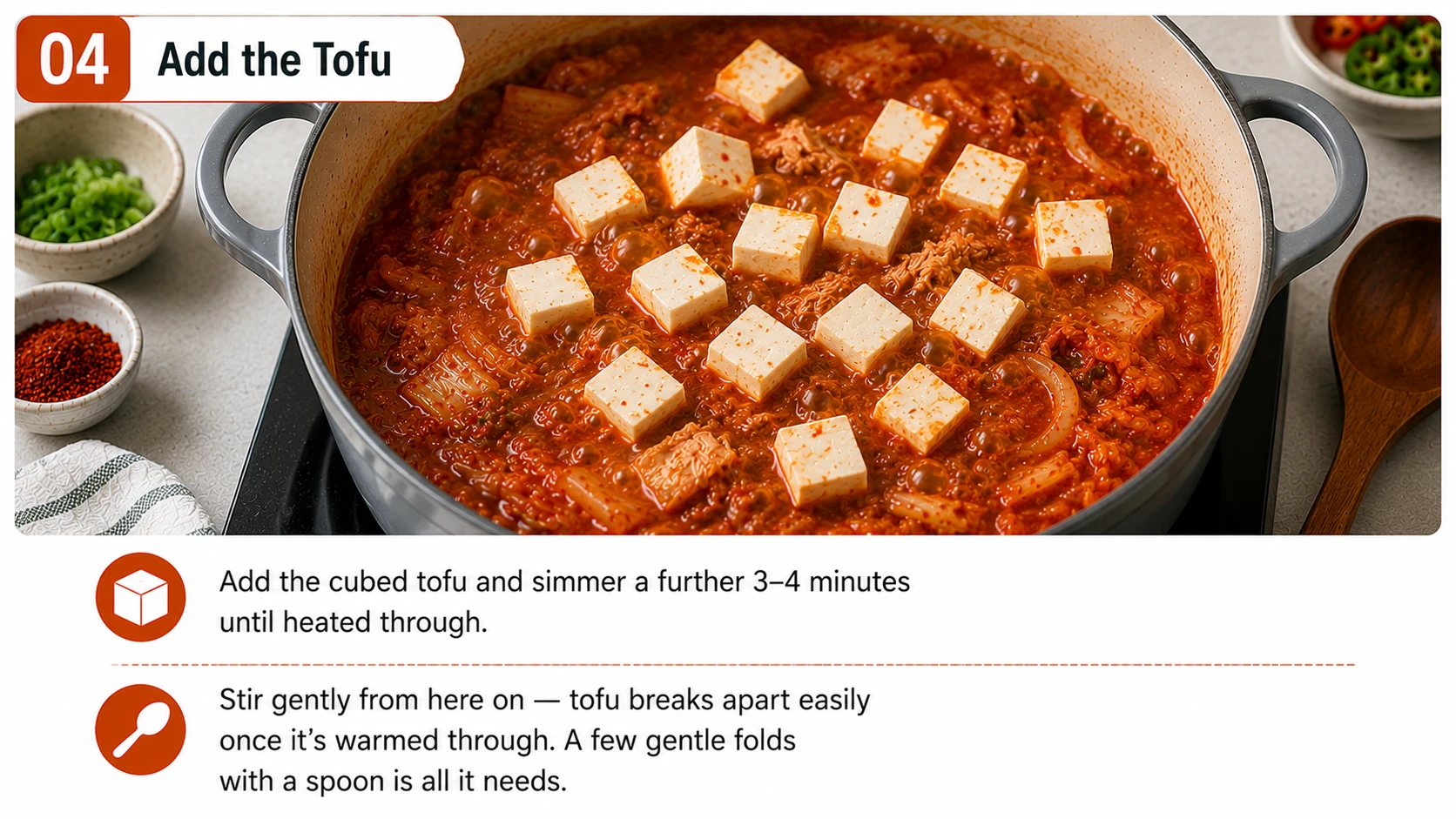
Add the cubed tofu and simmer a further 3-4 minutes until heated through.
Stir gently from here — tofu breaks apart easily once warmed through.

Remove from heat, drizzle with sesame oil, and scatter spring onions on top. Taste before adding any extra salt — it’s very easy to over-season this particular version.
Serve hot with rice.
The Science of Spam Kimchi Jjigae
Two mechanisms explain why this recipe’s technique and seasoning both work the way they do.
The Maillard Reaction: Why Searing Actually Matters Here
Spam has enough surface moisture and protein structure that a hot, dry pot genuinely browns it through the Maillard reaction — the same browning chemistry responsible for a good sear on any fresh meat. That’s a meaningful difference from canned tuna, which is already fully cooked and gains nothing from browning. Searing Spam for even 2-3 minutes measurably deepens the broth’s flavour, which is why the sear-first method consistently outperformed dump-and-simmer in testing, even though both are genuinely edible results.
Curing Salt and Sodium: Why the Seasoning Math Changes
Spam is a cured, processed meat, salted heavily during manufacturing both for flavour and preservation. That cured sodium dissolves directly into the broth as it simmers, which is why this version needs meaningfully less added salt or brine than any other recipe in the family — skipping that adjustment is the single most common seasoning mistake people make with it. Spam Lite genuinely helps here, since it’s formulated with less sodium content from the start.
What We Tested for the Spam Version
Three variables genuinely mattered; here’s what we found testing each of them side by side.
Unlike every other version in the family, where under-seasoning is the more common mistake, Spam kimchi jjigae’s real risk runs the opposite direction. Treating this recipe’s salt and brine amounts the same as the Classic (Pork) version consistently produced an over-salted broth in testing — Spam’s own cure genuinely does most of the seasoning work here.
Troubleshooting — Common Mistakes & How to Fix Them
Most problems with this recipe trace back to one of four issues below.

Spam Kimchi Jjigae
Seared Spam, aged Stage 3 kimchi, and a rich broth, simmered together with tofu. The simple, single-protein comfort-food version — not the Budae Jjigae combo.
Ingredients
- 4 cups anchovy-kelp stock (myeolchi yuksu), or rice-rinse water
- 1.5 cups aged kimchi (Stage 3), chopped
- 3 tbsp kimchi brine
- 1 tbsp gochugaru
- 1 tbsp gochujang
- 3 cloves garlic, minced
- ½ onion, sliced
- 1 can (340g) Spam, regular or lite, cubed
- 200g firm tofu, cubed
- 2 spring onions, sliced
- 1 tsp sesame oil
- Salt, only if needed to taste
Instructions
- Cube the Spam. Slice onion, mince garlic.
- Sear Spam in a dry pot 2-3 min. Add onion, garlic, then kimchi, saute 2-3 min.
- Add stock, brine, gochugaru, gochujang. Cover, simmer 12-15 min.
- Add tofu, simmer 3-4 min.
- Remove from heat, add sesame oil and spring onions. Taste before adding salt.
The Kimchi Jjigae Family — 13 Variations
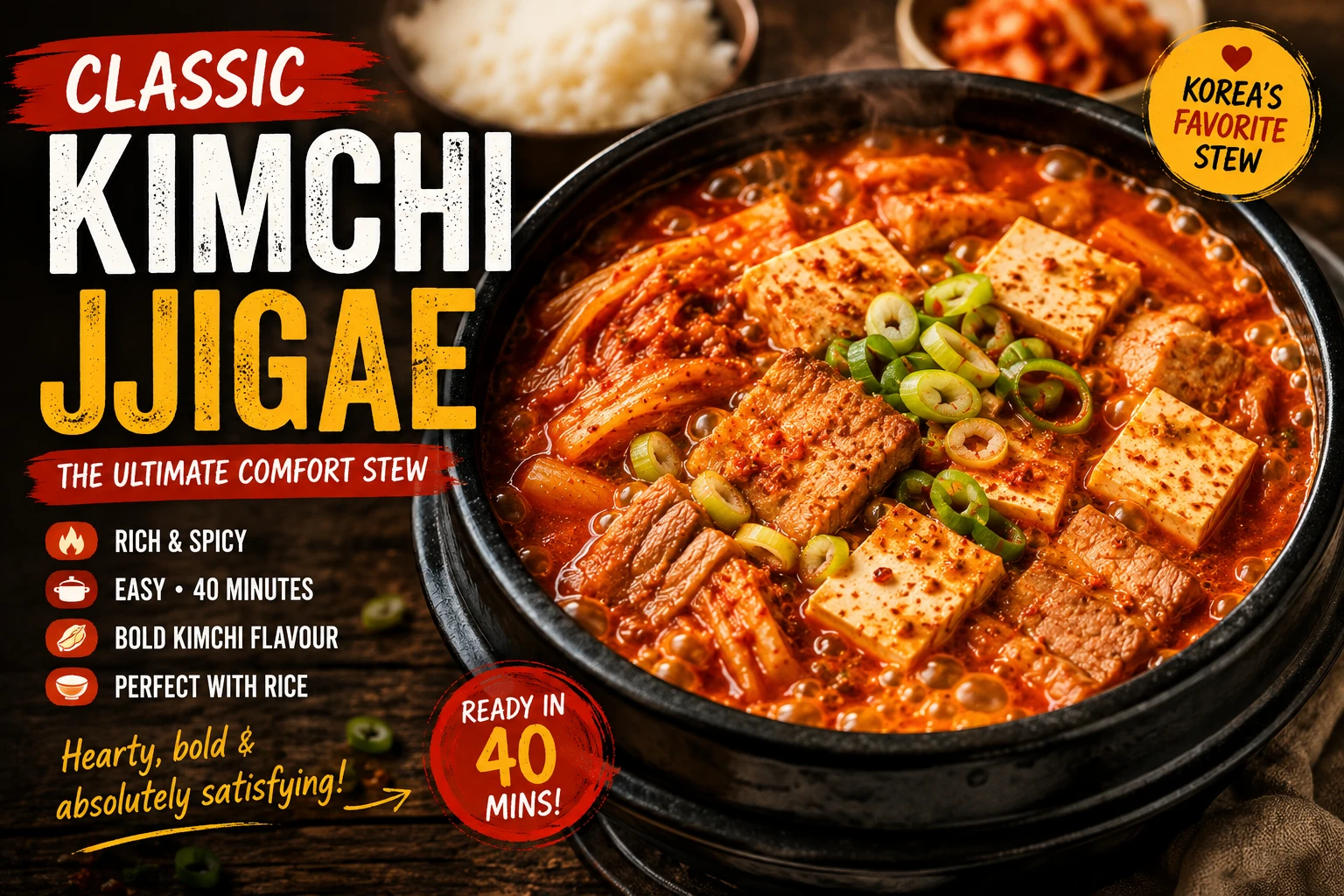
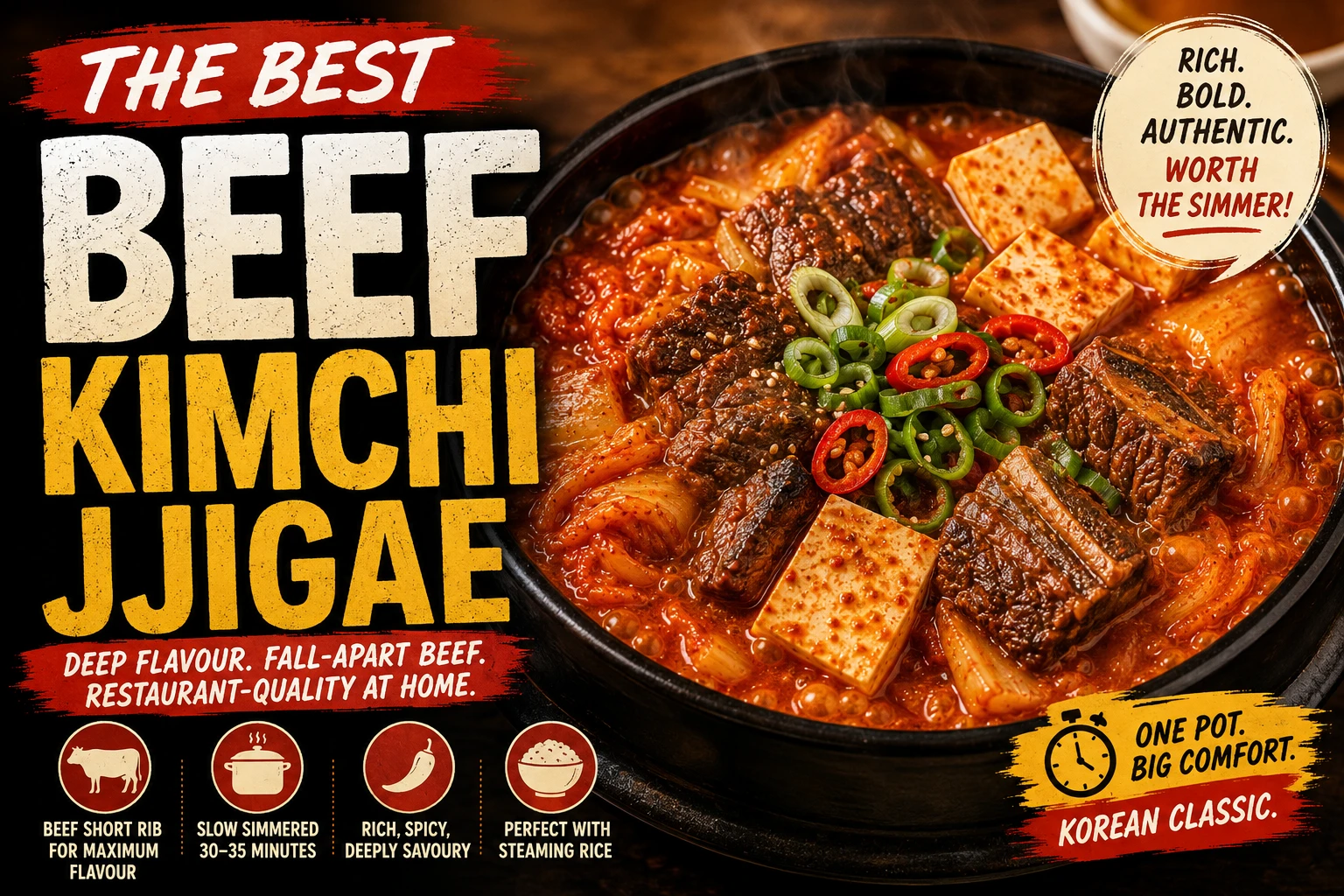
Every recipe below branches from the same base technique on the Classic (Pork) pillar page. Looking for the bigger combo stew instead? That’s Budae Jjigae →. The Kimchi Jjigae Ultimate Guide → compares every variation as it publishes.




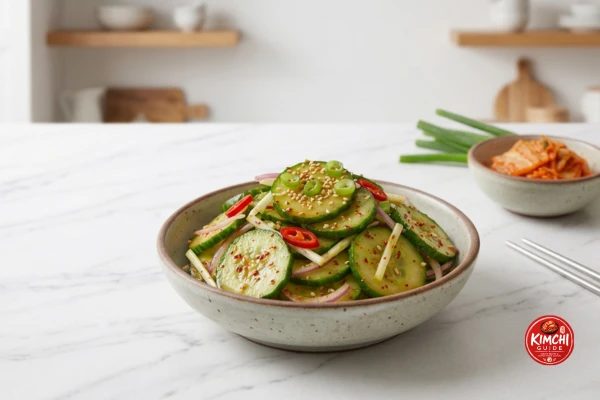
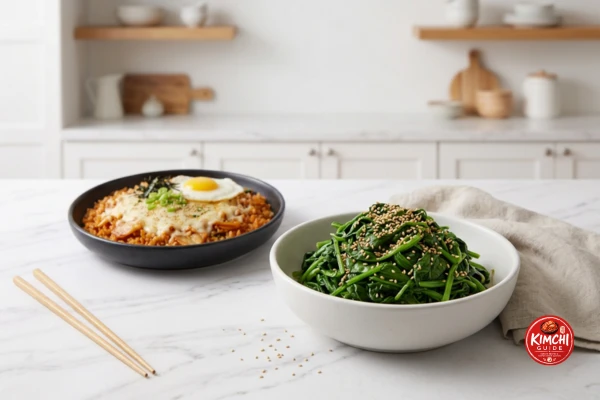
Pairing Guide — Spam Version
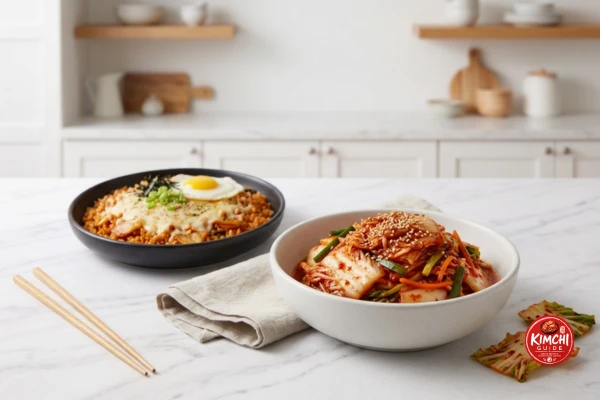
Since this version is rich and salty, cool, crisp, or acidic sides work especially well as a contrast.
Restaurant vs Homemade Spam Kimchi Jjigae
You’re more likely to see Budae Jjigae than this simpler Spam version on a Korean restaurant menu — this is much more of a home-cooking staple.
| Factor | Restaurant Version (Rare) | This Homemade Recipe |
|---|---|---|
| Availability | Rare as a standalone dish — usually only the bigger Budae Jjigae appears on menus | Always available — 25 minutes, pantry staples only |
| Salt Control | Unknown, often seasoned heavily for a crowd | You taste and adjust — the recipe’s whole point is not over-salting it |
| Spam Choice | Whatever’s on hand, usually regular | You choose regular vs Lite — see the comparison above |
| Sear Quality | Variable if made in bulk | Sear it yourself, exactly as described in the method above |
| Cost per Serving | N/A — rarely sold standalone | Roughly $2-3 per serving — inexpensive, pantry-driven |
Storage & Reheating — Spam Version
Spam holds up especially well to storage and reheating — better than most proteins in this family.
Meal Prep — Batch-Cooking This Recipe for the Week
The short cook time and pantry-stable Spam make this an easy recipe to keep stocked for a busy week.
Detailed Nutrition Comparison — All 12 Published Versions
A complete per-serving breakdown, reviewed by Dr. Sarah Mitchell RD, PhD, alongside how this Spam recipe compares to every other version currently published in the family — it’s the richest and saltiest of them all.
Nutrition Facts
Per serving — recipe makes 4 servings
How the Spam Version Compares to the Rest of the Family
| Variation | Calories | Protein | Sat. Fat | Sodium | Best For |
|---|---|---|---|---|---|
| Kimchi Guk | 130 | 9g | 1g | 620mg | Lightest, lowest-sodium option in the family |
| Seafood Jjigae | 210 | 20g | 1.5g | 780mg | Lean, low-sodium seafood option |
| Vegetarian | 220 | 13g | 2.5g | 710mg | Meatless without going fully vegan |
| Tuna (Chamchi) | 260 | 24g | 3g | 780mg | Highest protein-to-calorie ratio in the family |
| Chicken | 280 | 25g | 3g | 820mg | Lean, high-protein, comparable to Tuna |
| Instant Pot & Slow Cooker | 310 | 19g | 6g | 940mg | Same as Classic — hands-off convenience |
| Classic (Pork) | 320 | 18g | 7g | 980mg | The reference point — moderate on every measure |
| Beef | 340 | 24g | 8g | 1010mg | Richest meat-based option before Spam |
| Spam ← This page | 380 | 16g | 11g | 1420mg | Richest, saltiest — best as an occasional comfort-food dish |
Sources & Further Reading
The history, food-science, and nutrition claims on this page are cross-checked against the following references.
Spam Kimchi Jjigae FAQ — 17 Questions
Spam kimchi jjigae — 스팸김치찌개 — is a Korean stew made with cubed Spam, aged Stage 3 kimchi, tofu, and a savoury broth. It’s one of the simplest, most comforting versions of kimchi jjigae, distinct from the more elaborate Budae Jjigae, which adds sausages, baked beans, instant noodles, and cheese.
No. Spam kimchi jjigae uses Spam as its only protein alongside kimchi, tofu, and broth. Budae jjigae is a much larger combo stew that adds sausages, baked beans, instant ramen noodles, and often American cheese. See the dedicated Budae Jjigae page for that version.
Searing the Spam first is recommended — it renders some fat and builds real browning flavour that carries into the broth. A simpler dump-everything method also works and is genuinely easier, just with a slightly less developed flavour. See the comparison above.
Regular Spam renders more fat when seared and gives a richer broth. Spam Lite has meaningfully less fat and sodium and still works well, especially if you’re managing either. See the full comparison above.
Use Spam Lite, briefly rinse the cubed Spam under hot water before searing to wash off surface sodium, skip additional salt entirely, and taste before adding any extra brine. See the Health section above for the full breakdown.
Stage 3 aged kimchi (roughly 3-6 weeks fermented, pH approximately 4.2) is correct here, the same as most of the family. See the full fermentation stages section above.
About 25 minutes total — 10 minutes prep and 15 minutes cooking. It’s one of the fastest recipes in the entire 13-recipe Kimchi Jjigae family.
It’s the richest and highest-sodium version in the jjigae family — genuinely more of an occasional comfort-food dish than an everyday one. Spam Lite and the rinsing technique above can meaningfully reduce both fat and sodium if that matters to you.
Any canned luncheon meat works using the same technique. For a leaner recipe entirely, see the dedicated Chicken, Tuna, or Vegetarian Kimchi Jjigae pages, built around different proteins rather than a straight swap.
Spam entered Korean cooking during the Korean War era, when canned goods from US military bases were scarce and valuable — see the Origin section above for the full history.
Not by simply omitting the Spam. See the dedicated Vegetarian Kimchi Jjigae (egg and dairy allowed) or Vegan Kimchi Jjigae pages, built specifically around a mushroom-and-tofu base.
No — any pot works fine. A ttukbaegi keeps the stew bubbling at the table for longer, which suits the traditional presentation, but it’s not required for an authentic-tasting result.
Check your specific Spam variety and gochujang brand — some processed meats and fermented pastes include wheat-based ingredients. Confirm both are labelled gluten-free if that matters to you.
Approximately 16g of protein per serving — lower than the leaner versions in the family, since Spam’s calories lean heavily toward fat rather than protein.
Yes — like most kimchi jjigae variations, this genuinely tastes better the next day as the flavours continue to meld. Refrigerate and reheat gently on the stovetop.
Yes, for up to 2 months. Spam holds up well to freezing and reheating, better than more delicate proteins in the family — texture stays largely unchanged.
Almost always extra salt or brine added on top of the Spam’s own sodium. Taste before adding anything extra — Spam alone usually seasons the broth close to fully on its own. See Troubleshooting above.
Spam Kimchi Jjigae (스팸김치찌개 — Simple Comfort-Food Version)
Seared Spam, aged Stage 3 kimchi, and a rich, savoury broth simmered with tofu in just 25 minutes. This is the simple, single-protein comfort-food version of Spam in kimchi jjigae — not to be confused with the bigger combo stew, Budae Jjigae, which adds sausages, noodles, and cheese.
What Is Spam Kimchi Jjigae?
Spam kimchi jjigae — 스팸김치찌개 — is a Korean stew built around seared Spam instead of fresh meat: cubed Spam browned first to render fat and build flavour, then simmered with aged Stage 3 kimchi, tofu, and a savoury broth. It’s not the same dish as Budae Jjigae — that’s the bigger combo stew with sausages, baked beans, instant noodles, and cheese. This is the simple, single-protein comfort-food version, ready in 25 minutes. Because Spam is already well-seasoned and salty, go easy on any additional salt or brine. Serves 4 at approximately 380 calories and 16g protein per serving — the richest, saltiest recipe in the family, best treated as an occasional comfort-food dish rather than an everyday one.
Why This Recipe Works — Spam, Explained
Spam behaves like a hybrid between a fresh protein and a pantry staple, and that’s exactly why it earns its own place in this family rather than just being “budget pork.”
Unlike canned tuna, Spam is uncooked-adjacent enough that searing it genuinely browns the surface and renders real fat into the pot — much closer to how pork belly behaves elsewhere in this family than to a pre-cooked canned fish.
Spam arrives heavily cured and salted, which means this recipe needs meaningfully less added salt or brine than any other version in the family. Skipping that adjustment is the single most common mistake people make with it.
Myeolchi yuksu’s umami depth balances Spam’s saltiness the same way it balances every other protein in the family — though some households swap in starchy rice-rinse water instead, covered in Household Techniques below.
Spam is the fattiest, saltiest protein in this family — Stage 3 kimchi’s developed lactic acid is doing real work here, cutting through that richness more than in almost any other version.
The Origin of Spam in Korean Cooking
Kimchi-jjigae itself goes back centuries; Spam’s place in it is a distinctly 20th-century, war-shaped story.
Spam entered Korean cooking during and after the Korean War (1950-1953), when food was often scarce and canned goods from nearby US military bases became a valuable, sought-after resource. Small cans of Spam, sometimes obtained informally from base supply chains, found their way into Korean households and were stretched into whatever dish a family could make from them — kimchi jjigae among the most natural fits, since the salty, fatty canned meat paired naturally with fermented kimchi’s acidity the same way pork always had. See the full origin and etymology breakdown on the Classic recipe page for the dish’s broader history.
That same scarcity-era resourcefulness eventually grew into a much bigger dish too: Budae Jjigae (“army-base stew”), which combines Spam with sausages, baked beans, instant noodles, and cheese into one elaborate combo pot. This page is deliberately the simpler version — Spam and kimchi, nothing more — closer to how a single can might have actually been used in a home kitchen rather than the full army-base spread.
Sear-First vs Dump-Everything — and Regular vs Lite Spam
Two real decisions shape this recipe, and most online versions only ever show you one household’s answer. Here’s both, tested side by side.
- Brown the Spam cubes in a dry pot for 2-3 minutes before adding anything else
- Renders real fat and builds genuine Maillard browning flavour
- Add the kimchi straight into that same fat to saute it before the broth goes in
Result: A noticeably deeper, more savoury broth — worth the extra 2-3 minutes.
- Add Spam, kimchi, broth, and seasonings to the pot together
- Simmer until everything is tender — genuinely almost hands-off
- No searing step, no separate pan work
Result: Good and genuinely easier — just a slightly flatter broth without the browning step.
Regular Spam vs Spam Lite
| Type | Fat When Seared | Sodium | Verdict |
|---|---|---|---|
| Regular Spam ⭐ | Renders more fat, richer sear | Higher | The classic, most flavourful choice |
| Spam Lite | Renders less fat, milder sear | Meaningfully lower | Good option if managing fat or sodium |
Key Terms — Language & Food Science Entities
The core terms used throughout this recipe and the wider family it belongs to.
The Whole Family — How 13 Versions Differ
Every recipe below starts from the same base technique on the Classic (Pork) page. This Spam version keeps that same searing technique but swaps in a pantry protein — and stays deliberately simpler than its bigger cousin, Budae Jjigae.
| Version | What Changes | Simmer Time | Best For |
|---|---|---|---|
| Classic (Pork) | The original base technique | 15-20 min | Everyone — the reference point for the whole family |
| Chicken | Chicken thigh, browned skin-first | 18-20 min | Leaner, highest protein of the meat versions |
| Beef | Short rib or chuck, longer braise | 30-35 min | Richest, most indulgent broth |
| Seafood | Shrimp, mussels, clams added last | 5-8 min (seafood only) | Leanest jjigae-format option in the family |
| Soondubu | Silken tofu replaces firm, no draining | 10-12 min | Soft, custardy texture, highest search demand |
| Vegetarian | Mushroom + tofu + egg replace meat | 12-15 min | Meatless, egg and dairy still allowed |
| Vegan | Mushroom + tofu, no egg, fish-sauce-free kimchi required | 12-15 min | Fully plant-based |
| Tuna (Chamchi) | Canned tuna, added in the final 2-3 minutes only | 15-20 min broth + 2-3 min tuna | The leanest, fastest recipe in the family |
| Spam ← This Page | Seared Spam, simplest single-protein comfort version | 12-15 min | Rich, salty comfort food — an occasional treat, not everyday |
| Budae Jjigae | Spam, sausages, baked beans, instant noodles, cheese | 15 min | The bigger combo version — not the same dish as this page |
| Mackerel (Godeungeo) | Oily canned fish replaces pork | 10-12 min | Niche but authentic canned-fish alternative |
| Kimchi Guk | Thinner broth, less salt, soup format | 12-15 min | Lighter everyday side, not a main-dish jjigae |
| Instant Pot & Slow Cooker | Classic pork-belly recipe, hands-off appliance methods | Varies by method | Weeknight convenience, minimal supervision |
Household Techniques — 3 Real Approaches to Spam Kimchi Jjigae
Home cooks genuinely disagree on a few things here — how much technique to put in, and what liquid to build the broth from.
Brown the Spam, then saute the kimchi in the rendered fat, before any broth goes in. This recipe follows this method — it produces the deepest, most developed flavour.
This Recipe’s MethodA genuinely popular, much simpler approach: everything goes into the pot together and simmers until tender. Less developed flavour, but honestly still good, and about as low-effort as kimchi jjigae gets.
Good — Genuinely EasierSome households use the cloudy, starchy water left over from washing rice instead of stock — it adds a subtle body and thickness to the broth that plain water or stock doesn’t. A genuinely useful zero-waste technique.
Worth Trying — Adds Real BodySome recipes add a small pinch of sugar alongside the seasonings — it doesn’t make the broth sweet, just rounds out Spam’s saltiness and the kimchi’s acidity a little.
Optional, Genuinely Helps BalanceKimchi Fermentation — The Complete 4-Stage Guide
Every variation page on this site links back to this exact section for the full picture — here it is in full, not the shortened quick-reference version used elsewhere in the family.
Speeding Up or Slowing Down Fermentation at Home
Room temperature accelerates fermentation significantly — kimchi left on the counter can move through these stages in days rather than weeks, while refrigeration slows the process to a near-crawl, which is why store-bought refrigerated kimchi can sit at a similar stage for a long time. If your kimchi is fermenting faster than you’d like, refrigerate it sooner; if you need Stage 3 kimchi in a hurry, a day or two at room temperature can meaningfully speed things along.
Seasonal Adjustments — Summer vs Winter
As a rich, pantry-friendly comfort food, this recipe leans naturally toward colder months, though it’s genuinely quick enough to make year-round.
- Kimchi ferments noticeably faster in summer heat — check it 3-5 days earlier than the timeline above suggests
- Consider the lighter Tuna or Seafood versions if you want something less rich for a hot day
- Still genuinely quick — 25 minutes total even in warm weather
Result: Works fine year-round, though it’s not the lightest option if the weather’s hot.
- Kimchi ferments more slowly in cold storage — Stage 3 (3-6 weeks) is a reliable timeline in winter
- The rich, salty broth and rendered Spam fat are exactly what a cold night calls for
- Serve with extra rice — this version is genuinely built for a hearty cold-weather meal
Result: One of the best winter comfort-food options in the whole family.
How Difficult Is This Recipe?
One of the easiest recipes in the family — cube, sear briefly, simmer. No braising, no timing a raw protein’s doneness.
Equipment — What You Actually Need
A low equipment bar — no marinating dishes or long-braise cookware required. See the full Ttukbaegi Buying Guide if you’re considering a traditional stone pot for the presentation.
| Item | Why You Need It | Substitute |
|---|---|---|
| Any Pot or Ttukbaegi | Searing the Spam and simmering the broth | Any pot with a lid works — a ttukbaegi (뚝배기) just keeps it bubbling longer at the table |
| Cutting Board & Knife | Cubing the Spam and slicing aromatics | Any sturdy knife works — Spam is soft and easy to cut |
Ingredients + Scaler
Spam and Stage 3 aged kimchi are the two non-negotiables — everything else is standard pantry stock.
Substitutions & Allergen Notes
A few genuine swaps work directly in this recipe; bigger dietary or dish needs are better served by a dedicated page.
Sourcing Guide — Finding Ingredients Outside Korea
Genuinely one of the easiest recipes in the family to shop for — Spam is a mainstream supermarket staple almost everywhere.
How to Make Spam Kimchi Jjigae — 5 Steps
Five steps, twenty-five minutes. Go easy on the salt — Spam brings plenty of its own.
Cube the Spam into thick bite-size pieces. Slice the onion and mince the garlic.
Cut the Spam thicker than you think you need to — thinner pieces tend to break apart and lose texture during the simmer.
Heat a pot over medium-high with no added oil. Sear the Spam cubes 2-3 minutes until lightly browned on a couple of sides. Add the onion and garlic, then the chopped kimchi, and saute 2-3 minutes more.
The Spam renders its own fat as it browns — that’s what you’re sauteing the kimchi in. No extra oil is needed here.
Add stock (or rice-rinse water), kimchi brine, gochugaru, and gochujang. Cover and simmer 12-15 minutes.
Hold off on any extra salt at this stage — taste once everything’s come together in the next steps, since Spam contributes real seasoning on its own.
Add the cubed tofu and simmer a further 3-4 minutes until heated through.
Stir gently from here — tofu breaks apart easily once warmed through.
Remove from heat, drizzle with sesame oil, and scatter spring onions on top. Taste before adding any extra salt — it’s very easy to over-season this particular version.
Serve hot with rice.
The Science of Spam Kimchi Jjigae
Two mechanisms explain why this recipe’s technique and seasoning both work the way they do.
The Maillard Reaction: Why Searing Actually Matters Here
Spam has enough surface moisture and protein structure that a hot, dry pot genuinely browns it through the Maillard reaction — the same browning chemistry responsible for a good sear on any fresh meat. That’s a meaningful difference from canned tuna, which is already fully cooked and gains nothing from browning. Searing Spam for even 2-3 minutes measurably deepens the broth’s flavour, which is why the sear-first method consistently outperformed dump-and-simmer in testing, even though both are genuinely edible results.
Curing Salt and Sodium: Why the Seasoning Math Changes
Spam is a cured, processed meat, salted heavily during manufacturing both for flavour and preservation. That cured sodium dissolves directly into the broth as it simmers, which is why this version needs meaningfully less added salt or brine than any other recipe in the family — skipping that adjustment is the single most common seasoning mistake people make with it. Spam Lite genuinely helps here, since it’s formulated with less sodium content from the start.
What We Tested for the Spam Version
Three variables genuinely mattered; here’s what we found testing each of them side by side.
Unlike every other version in the family, where under-seasoning is the more common mistake, Spam kimchi jjigae’s real risk runs the opposite direction. Treating this recipe’s salt and brine amounts the same as the Classic (Pork) version consistently produced an over-salted broth in testing — Spam’s own cure genuinely does most of the seasoning work here.
Troubleshooting — Common Mistakes & How to Fix Them
Most problems with this recipe trace back to one of four issues below.
Spam Kimchi Jjigae
Seared Spam, aged Stage 3 kimchi, and a rich broth, simmered together with tofu. The simple, single-protein comfort-food version — not the Budae Jjigae combo.
Ingredients
- 4 cups anchovy-kelp stock (myeolchi yuksu), or rice-rinse water
- 1.5 cups aged kimchi (Stage 3), chopped
- 3 tbsp kimchi brine
- 1 tbsp gochugaru
- 1 tbsp gochujang
- 3 cloves garlic, minced
- ½ onion, sliced
- 1 can (340g) Spam, regular or lite, cubed
- 200g firm tofu, cubed
- 2 spring onions, sliced
- 1 tsp sesame oil
- Salt, only if needed to taste
Instructions
- Cube the Spam. Slice onion, mince garlic.
- Sear Spam in a dry pot 2-3 min. Add onion, garlic, then kimchi, saute 2-3 min.
- Add stock, brine, gochugaru, gochujang. Cover, simmer 12-15 min.
- Add tofu, simmer 3-4 min.
- Remove from heat, add sesame oil and spring onions. Taste before adding salt.
The Kimchi Jjigae Family — 13 Variations
Every recipe below branches from the same base technique on the Classic (Pork) pillar page. Looking for the bigger combo stew instead? That’s Budae Jjigae →. The Kimchi Jjigae Ultimate Guide → compares every variation as it publishes.
Pairing Guide — Spam Version
Since this version is rich and salty, cool, crisp, or acidic sides work especially well as a contrast.
Restaurant vs Homemade Spam Kimchi Jjigae
You’re more likely to see Budae Jjigae than this simpler Spam version on a Korean restaurant menu — this is much more of a home-cooking staple.
| Factor | Restaurant Version (Rare) | This Homemade Recipe |
|---|---|---|
| Availability | Rare as a standalone dish — usually only the bigger Budae Jjigae appears on menus | Always available — 25 minutes, pantry staples only |
| Salt Control | Unknown, often seasoned heavily for a crowd | You taste and adjust — the recipe’s whole point is not over-salting it |
| Spam Choice | Whatever’s on hand, usually regular | You choose regular vs Lite — see the comparison above |
| Sear Quality | Variable if made in bulk | Sear it yourself, exactly as described in the method above |
| Cost per Serving | N/A — rarely sold standalone | Roughly $2-3 per serving — inexpensive, pantry-driven |
Storage & Reheating — Spam Version
Spam holds up especially well to storage and reheating — better than most proteins in this family.
Meal Prep — Batch-Cooking This Recipe for the Week
The short cook time and pantry-stable Spam make this an easy recipe to keep stocked for a busy week.
Detailed Nutrition Comparison — All 12 Published Versions
A complete per-serving breakdown, reviewed by Dr. Sarah Mitchell RD, PhD, alongside how this Spam recipe compares to every other version currently published in the family — it’s the richest and saltiest of them all.
Nutrition Facts
Per serving — recipe makes 4 servings
How the Spam Version Compares to the Rest of the Family
| Variation | Calories | Protein | Sat. Fat | Sodium | Best For |
|---|---|---|---|---|---|
| Kimchi Guk | 130 | 9g | 1g | 620mg | Lightest, lowest-sodium option in the family |
| Seafood Jjigae | 210 | 20g | 1.5g | 780mg | Lean, low-sodium seafood option |
| Vegetarian | 220 | 13g | 2.5g | 710mg | Meatless without going fully vegan |
| Tuna (Chamchi) | 260 | 24g | 3g | 780mg | Highest protein-to-calorie ratio in the family |
| Chicken | 280 | 25g | 3g | 820mg | Lean, high-protein, comparable to Tuna |
| Instant Pot & Slow Cooker | 310 | 19g | 6g | 940mg | Same as Classic — hands-off convenience |
| Classic (Pork) | 320 | 18g | 7g | 980mg | The reference point — moderate on every measure |
| Beef | 340 | 24g | 8g | 1010mg | Richest meat-based option before Spam |
| Spam ← This page | 380 | 16g | 11g | 1420mg | Richest, saltiest — best as an occasional comfort-food dish |
Sources & Further Reading
The history, food-science, and nutrition claims on this page are cross-checked against the following references.
Spam Kimchi Jjigae FAQ — 17 Questions
Spam kimchi jjigae — 스팸김치찌개 — is a Korean stew made with cubed Spam, aged Stage 3 kimchi, tofu, and a savoury broth. It’s one of the simplest, most comforting versions of kimchi jjigae, distinct from the more elaborate Budae Jjigae, which adds sausages, baked beans, instant noodles, and cheese.
No. Spam kimchi jjigae uses Spam as its only protein alongside kimchi, tofu, and broth. Budae jjigae is a much larger combo stew that adds sausages, baked beans, instant ramen noodles, and often American cheese. See the dedicated Budae Jjigae page for that version.
Searing the Spam first is recommended — it renders some fat and builds real browning flavour that carries into the broth. A simpler dump-everything method also works and is genuinely easier, just with a slightly less developed flavour. See the comparison above.
Regular Spam renders more fat when seared and gives a richer broth. Spam Lite has meaningfully less fat and sodium and still works well, especially if you’re managing either. See the full comparison above.
Use Spam Lite, briefly rinse the cubed Spam under hot water before searing to wash off surface sodium, skip additional salt entirely, and taste before adding any extra brine. See the Health section above for the full breakdown.
Stage 3 aged kimchi (roughly 3-6 weeks fermented, pH approximately 4.2) is correct here, the same as most of the family. See the full fermentation stages section above.
About 25 minutes total — 10 minutes prep and 15 minutes cooking. It’s one of the fastest recipes in the entire 13-recipe Kimchi Jjigae family.
It’s the richest and highest-sodium version in the jjigae family — genuinely more of an occasional comfort-food dish than an everyday one. Spam Lite and the rinsing technique above can meaningfully reduce both fat and sodium if that matters to you.
Any canned luncheon meat works using the same technique. For a leaner recipe entirely, see the dedicated Chicken, Tuna, or Vegetarian Kimchi Jjigae pages, built around different proteins rather than a straight swap.
Spam entered Korean cooking during the Korean War era, when canned goods from US military bases were scarce and valuable — see the Origin section above for the full history.
Not by simply omitting the Spam. See the dedicated Vegetarian Kimchi Jjigae (egg and dairy allowed) or Vegan Kimchi Jjigae pages, built specifically around a mushroom-and-tofu base.
No — any pot works fine. A ttukbaegi keeps the stew bubbling at the table for longer, which suits the traditional presentation, but it’s not required for an authentic-tasting result.
Check your specific Spam variety and gochujang brand — some processed meats and fermented pastes include wheat-based ingredients. Confirm both are labelled gluten-free if that matters to you.
Approximately 16g of protein per serving — lower than the leaner versions in the family, since Spam’s calories lean heavily toward fat rather than protein.
Yes — like most kimchi jjigae variations, this genuinely tastes better the next day as the flavours continue to meld. Refrigerate and reheat gently on the stovetop.
Yes, for up to 2 months. Spam holds up well to freezing and reheating, better than more delicate proteins in the family — texture stays largely unchanged.
Almost always extra salt or brine added on top of the Spam’s own sodium. Taste before adding anything extra — Spam alone usually seasons the broth close to fully on its own. See Troubleshooting above.
Questions & Comments
Sear-first or dump-everything? Leave a question below — Ji-Young reads and responds to every comment.
Your email will not be published. All comments are reviewed before appearing.
Questions & Comments
Sear-first or dump-everything? Leave a question below — Ji-Young reads and responds to every comment.
Your email will not be published. All comments are reviewed before appearing.