Kimchi Guk (김치국 — The Lighter, Everyday Kimchi Soup)
The soup counterpart to kimchi jjigae — thinner broth, less salt, cooked faster, and served in individual bowls rather than one shared pot. This is the version Korean households actually eat most days, as part of the standard rice-soup-banchan meal, not the heartier stew reserved for a heavier comfort-food craving.
What Is Kimchi Guk?
Kimchi guk — 김치국 — is the thinner, lighter, everyday counterpart to kimchi jjigae. The two things that separate it from jjigae: a much higher broth-to-solid ratio (more liquid, less packed with ingredients), and a noticeably lighter hand with salt and seasoning, since guk is meant to be eaten as a daily soup alongside rice and banchan rather than as a standalone hearty stew. It also cooks faster — about 20 minutes total, roughly half the time of a fuller jjigae — because the broth doesn’t need to concentrate as much. Get the ratio and seasoning right and you get a comforting, mild soup that Korean households genuinely eat far more often than the heartier jjigae versions. Serves 4 in 20 minutes at approximately 130 calories and 9g protein per serving.
Why This Version Works — Light, Not Bland
Diluting a jjigae recipe with more water sounds like it should just make a weaker version of the same thing — in practice, kimchi guk rebalances several variables together, not just the liquid ratio, to stay flavourful while staying light.

Kimchi guk uses roughly 5 cups of stock to 1 cup of kimchi, compared to a jjigae’s closer-to-3-to-1 ratio — that extra dilution is intentional, not a mistake, and it’s the single biggest reason guk tastes lighter without tasting empty. The same core flavour compounds are present, just spread across more liquid, which is exactly the effect a daily soup is meant to have versus an occasional heavier stew.

Jjigae’s longer 10-12 minute simmer reduces and concentrates the liquid, building intensity. Guk’s shorter 5-8 minute simmer deliberately stops before that concentration happens, preserving a lighter, more soup-like consistency rather than letting the broth reduce down toward stew territory.

Even with less kimchi and less seasoning per cup of liquid, a properly made anchovy-kelp stock supplies enough underlying umami that the soup doesn’t taste watery or thin — this is why skipping the stock in favour of plain water is the single most common reason home versions of kimchi guk taste flat.

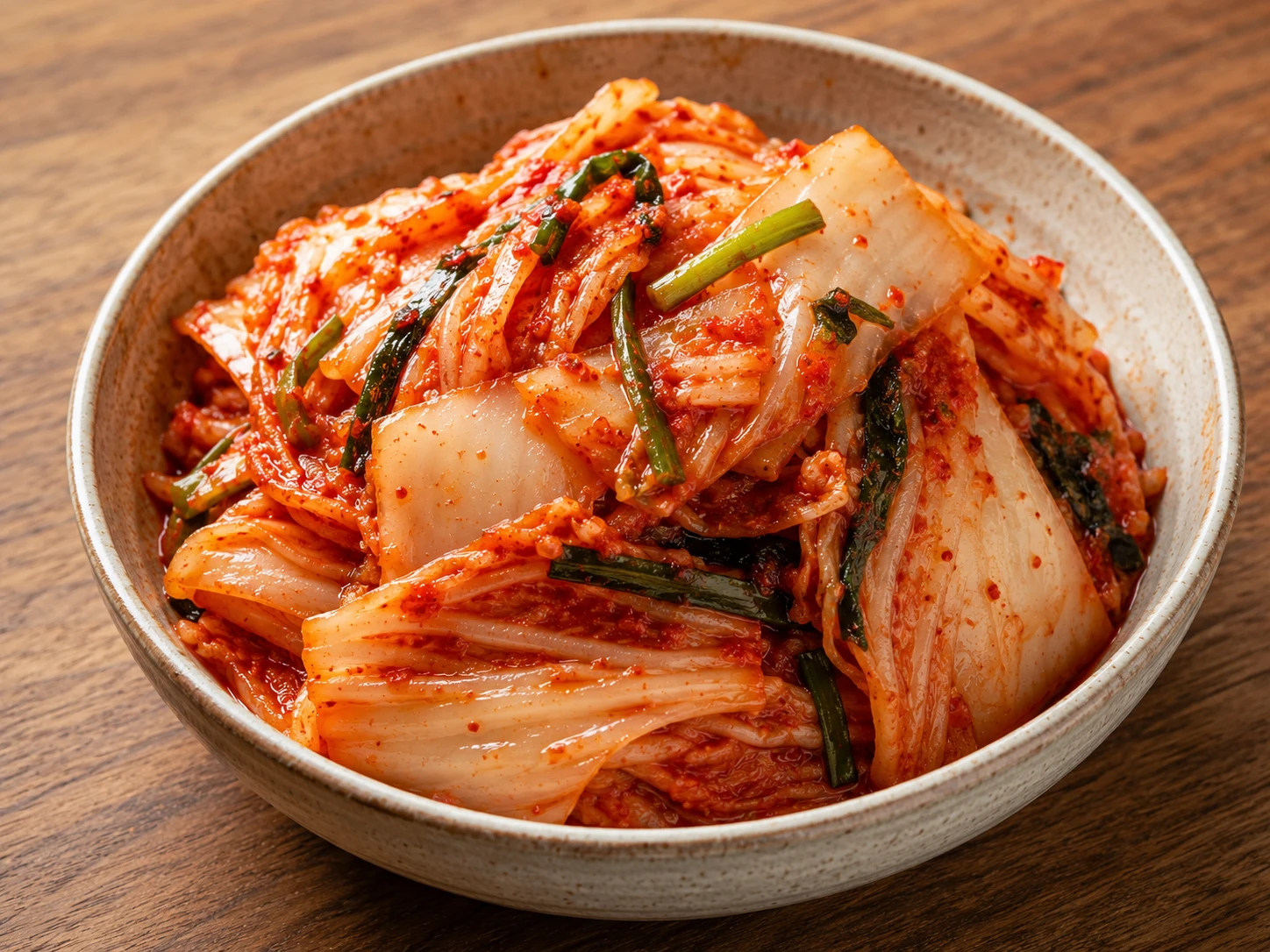
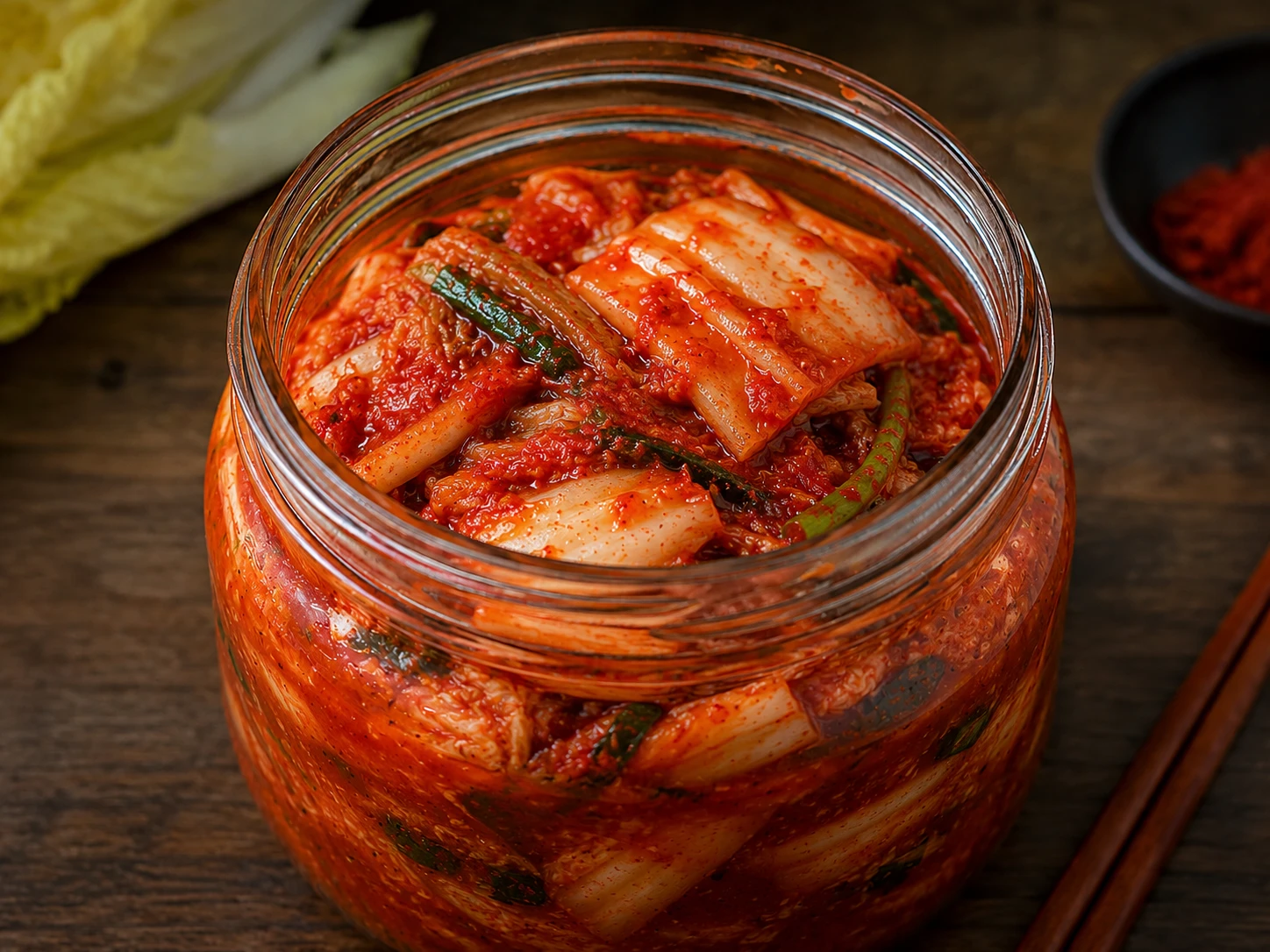
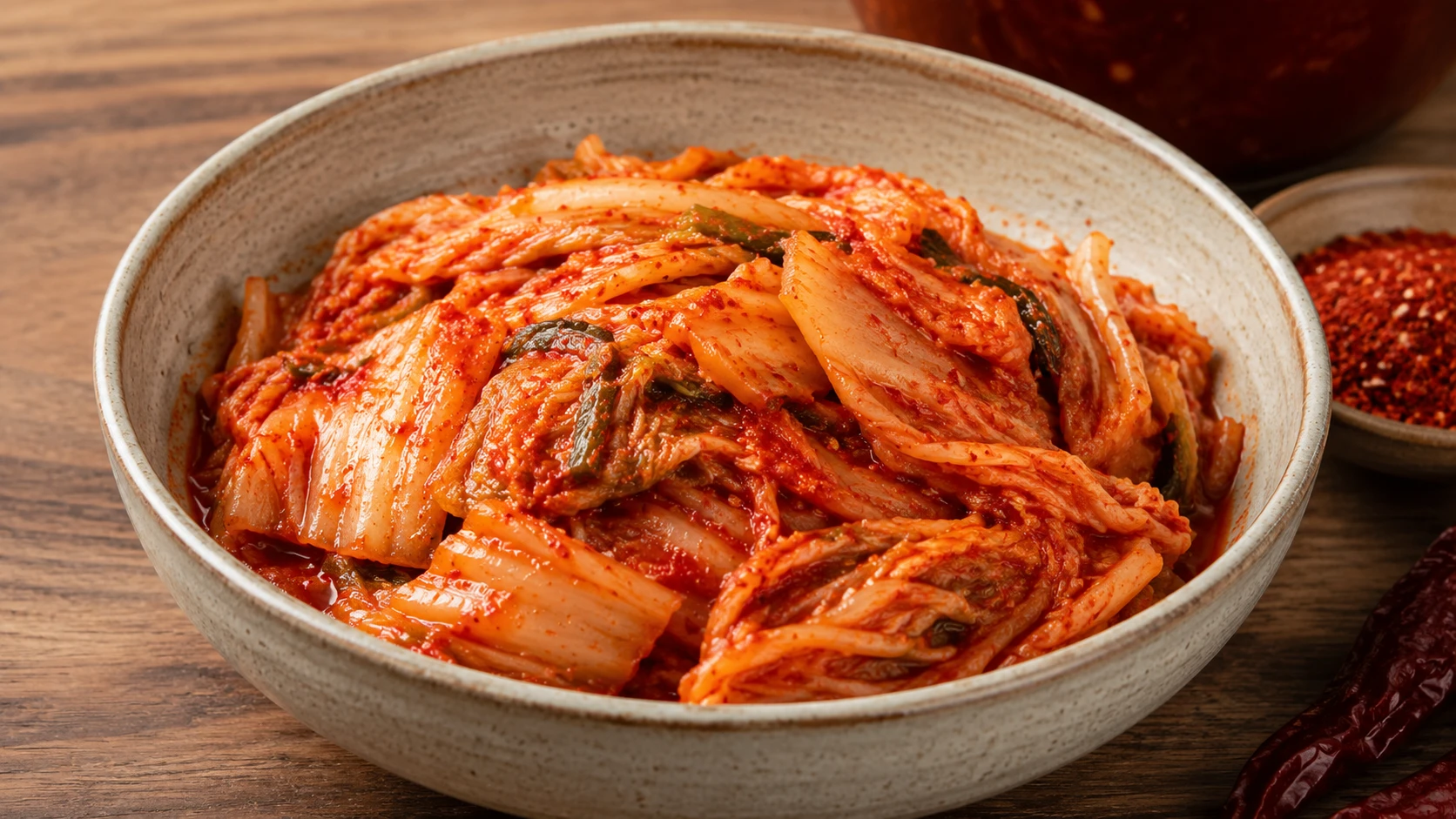
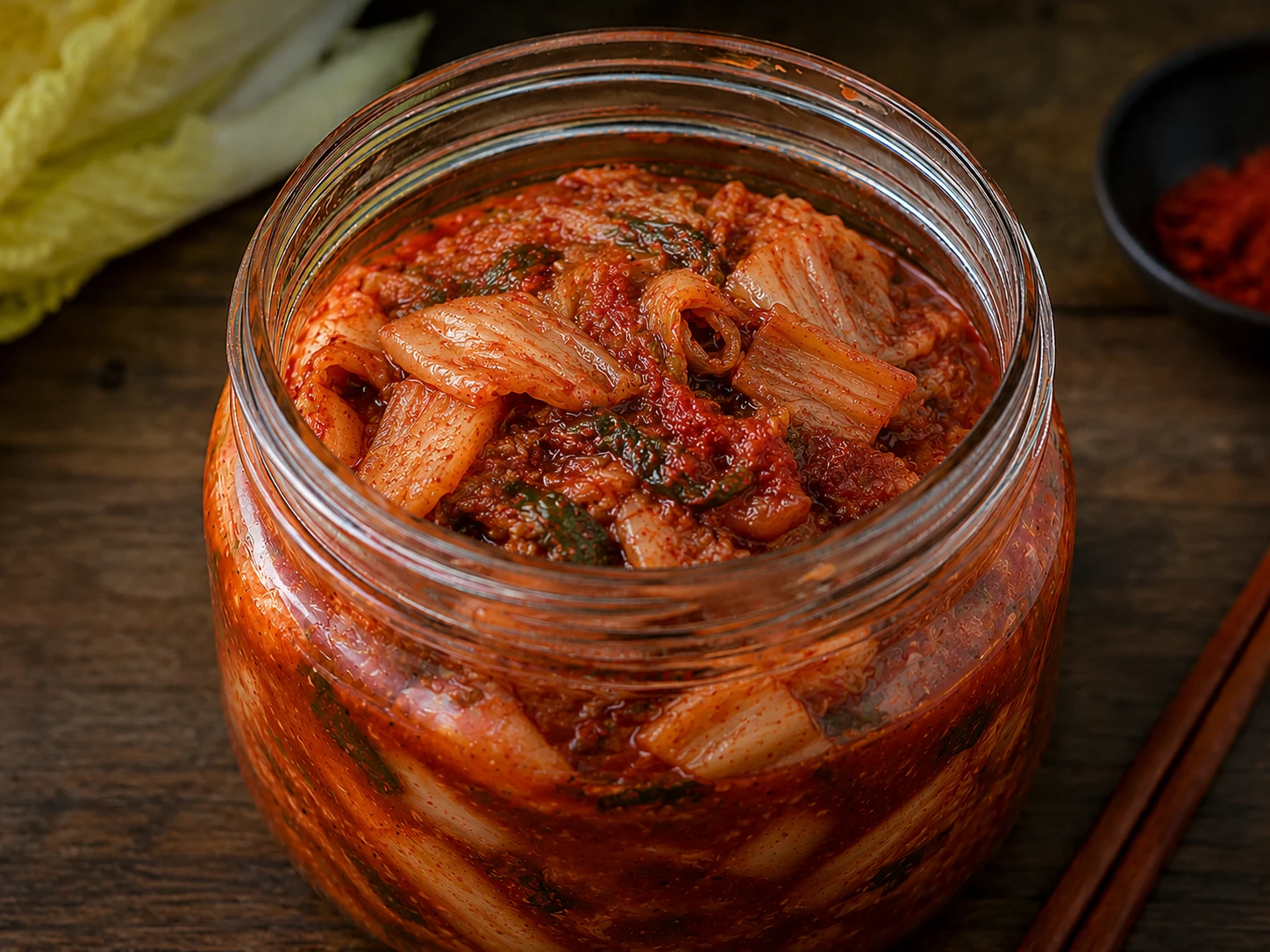
Where jjigae often benefits from very aged, intensely sour kimchi, guk’s lighter format is better matched by Stage 2-3 kimchi — fermented enough to have real character, but not so aggressively sour that it overwhelms the thinner broth it’s diluted into.
Guk vs Jjigae — Two Formats Compared
These two Korean cooking formats use the same ingredients in different proportions, cooked for different lengths of time, and served differently at the table. Understanding this distinction is the key to understanding kimchi guk specifically.
- Broth ratio: lower — closer to 3:1 stock-to-kimchi
- Simmer time: 10-12+ minutes to concentrate
- Salt level: saltier, more assertively seasoned
- Serving style: communal, from one shared pot (ttukbaegi)
- Kimchi stage: often very aged (Stage 3-4)
- Eating occasion: comfort food, heartier meal
- Broth ratio: higher — roughly 5:1 stock-to-kimchi
- Simmer time: 5-8 minutes, kept light
- Salt level: noticeably lighter, mild
- Serving style: individual bowls, part of a set meal
- Kimchi stage: Stage 2-3, moderately aged
- Eating occasion: everyday, routine daily soup
Both formats descend from the same fermented-kimchi cooking tradition, and the line between them isn’t always sharply drawn in home kitchens — some households make a “medium” version that sits between the two. This page documents the lighter end of that spectrum specifically.
Key Terms — Language & Food Science Entities
These terms define the format and vocabulary specific to kimchi guk — see the full silo glossary on the Kimchi Jjigae Hub for terms shared across the whole family.
Which Kimchi to Use — Four Options Ranked
Because guk is diluted more than jjigae, the kimchi you choose has a slightly different impact here than it would in a thicker stew.

The sweet spot for guk — enough fermentation for real character without overwhelming the lighter broth. Our default recommendation.
⭐ Best Choice
Works well too, and is the more traditional choice in many households — just reduce the kimchi quantity slightly since it carries more punch per cup.
✅ Also Excellent
Most commercial kimchi is sold too fresh. Refrigerate for 2 more weeks before using here for noticeably better results.
Good With Adjustment
Too mild even for guk’s lighter format — combined with the extra dilution, fresh kimchi produces a nearly flavourless broth.
❌ Too Mild, Even HereWhich Kimchi Stage to Use — Guk Version Guide
Guk’s ideal kimchi stage sits slightly earlier on the fermentation timeline than jjigae’s — here’s the full breakdown.
How Difficult Is Kimchi Guk?
This is one of the easiest recipes in the entire kimchi jjigae family — fewer steps, shorter cook time, and no timing-sensitive proteins to manage.
Ingredients + Scaler
A well-made anchovy-kelp stock and the right kimchi-to-broth ratio are what separate a good kimchi guk from a watery, forgettable one. Everything else is simple, everyday pantry cooking.

How to Make Kimchi Guk — 5 Steps
Five simple steps. Notice how much shorter each stage is compared to a fuller jjigae — that brevity is intentional, not a shortcut.

Bring anchovy-kelp stock (or water) to a gentle simmer in a soup pot. Unlike jjigae, there is no separate kimchi-saute step here — the lighter format doesn’t need the extra depth that step adds.
If you’re making the stock fresh, a smaller batch of anchovies and kelp than you’d use for jjigae is fine, since guk’s higher water ratio means the concentration doesn’t need to be as strong to still read as flavourful. A pre-made Korean soup stock bag or packet works well here too, and is a common shortcut even in Korean households on busy weeknights.

Add the chopped kimchi, kimchi brine, gochugaru, and garlic. Simmer for 5-8 minutes, noticeably shorter than jjigae’s 10-12 minutes, since the broth is meant to stay light rather than concentrate.
Resist the urge to simmer longer just because it “seems like it needs more time” — that instinct is trained by jjigae recipes, but a longer simmer here will start reducing the broth and pushing the flavour toward stew territory rather than the light, everyday soup this is meant to be. Set a timer if you tend to lose track of time at the stove.

Add the cubed tofu and simmer gently for 3-4 minutes until heated through.
Either soft or firm tofu works well in guk, unlike jjigae where firm tofu is generally preferred for structural integrity in a thicker stew — guk’s gentler, briefer cooking means even soft tofu holds together fine here. Cut the cubes on the smaller side (about 1.5cm) since this is a soup meant to be eaten by the spoonful along with the broth, not a stew with substantial chunks.

Taste and season with a small amount of salt if needed — kimchi guk should taste noticeably less salty than jjigae, so add salt sparingly and in small increments.

Remove from heat, drizzle with sesame oil, and scatter spring onions on top. Ladle into individual bowls and serve immediately alongside rice, as part of a standard rice-soup-banchan meal.
Unlike jjigae, which is often brought to the table still bubbling in its cooking pot, guk is traditionally ladled into individual serving bowls in the kitchen before reaching the table — this is part of the format distinction, not just a stylistic choice, and reflects guk’s role as a quieter, everyday accompaniment rather than the centrepiece of the meal.
What We Tested for Kimchi Guk
Four variables decide whether a kimchi guk tastes properly light or just watery. Here’s what we found across 4 dedicated batches.
No single variable saves a poorly balanced kimchi guk — the broth ratio, simmer time, kimchi stage, and stock quality all have to work together. Get all four right and the result is a genuinely satisfying light soup; get even one badly wrong and it either drifts toward a thin jjigae or tastes flat and watery.

Kimchi Guk (김치국)
Thinner broth method · Stage 2-3 kimchi · 20 min · ~130 calories, 9g protein
- 5 cups anchovy-kelp stock (or water)
- 1 cup aged kimchi (Stage 2-3), chopped
- 2 tbsp kimchi brine
- 1 tsp gochugaru
- 2 cloves garlic, minced
- 200g soft or firm tofu, cubed small
- 2 spring onions, sliced
- 1 tsp sesame oil, salt to taste
- Bring stock to a gentle simmer.
- Add kimchi, brine, gochugaru, garlic. Simmer 5-8 min.
- Add tofu, simmer 3-4 min.
- Taste and season lightly with salt.
- Remove from heat, drizzle sesame oil, top with spring onions. Serve hot with rice.
The Kimchi Jjigae Family — 13 Variations
This is page 2 of a growing 13-recipe family, all built on the same aged-kimchi base. The Kimchi Jjigae Ultimate Guide → compares every variation as it’s published.


Pairing Guide — Kimchi Guk
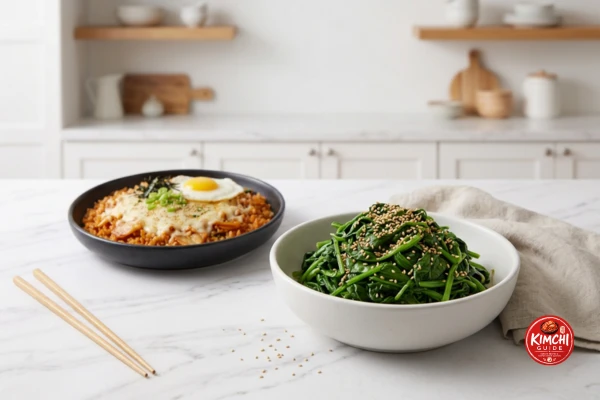
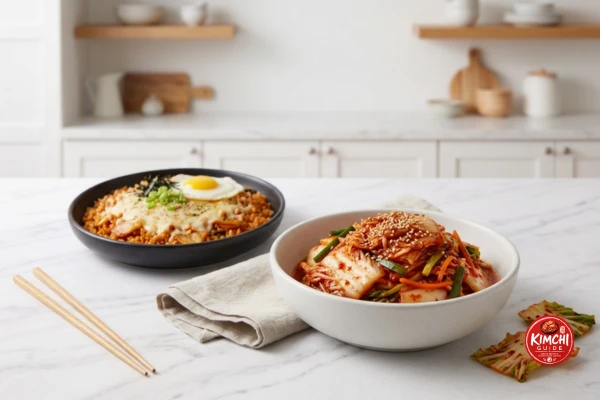
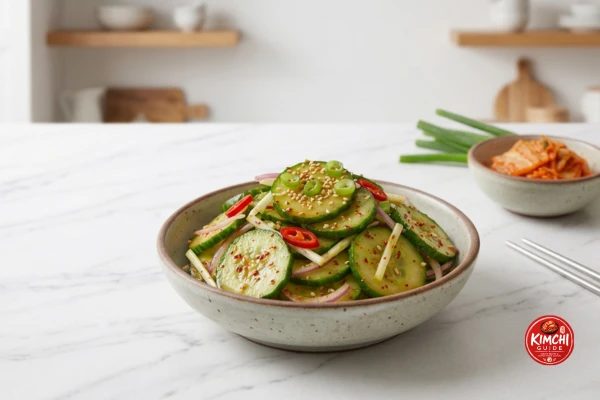
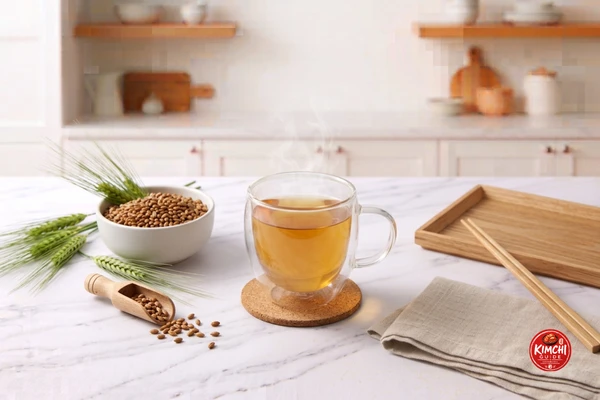
Since guk is already part of a full meal structure, pairings here are about completing that standard rice-soup-banchan set rather than standing alone.
Storage & Reheating — Kimchi Guk
Kimchi guk stores well thanks to its simple ingredient list — no timing-sensitive proteins to worry about here.
Detailed Nutrition Facts — Kimchi Guk
A complete per-serving breakdown, reviewed by Dr. Sarah Mitchell RD, PhD, alongside how this recipe compares to the rest of the kimchi jjigae family.
Nutrition Facts
Per serving — recipe makes 4 servings
How Kimchi Guk Compares to the Rest of the Family
| Variation | Calories | Protein | Sodium | Best For |
|---|---|---|---|---|
| Kimchi Guk ← This page | 130 | 9g | 650mg | Lightest, lowest-sodium option in the family |
| Seafood Jjigae | 210 | 20g | 920mg | Leanest jjigae-format option, high protein |
| Classic (Pork) | ~320 | 18g | ~950mg | Coming soon — the family’s pillar recipe |
Kimchi Guk FAQ — 16 Questions
Guk is a thinner soup with a higher broth-to-solid ratio, less salty, and served in individual bowls as part of a daily rice-soup-banchan meal. Jjigae is a thicker stew with less broth relative to solids, saltier, and typically served communally from one shared pot. Both use the same core kimchi and stock, but the ratios and serving style differ.
Not exactly. While broth ratio is the biggest difference, guk is also cooked for a shorter time, seasoned more lightly, and traditionally uses slightly younger kimchi than the very aged kimchi jjigae often favours. Simply adding water to a jjigae recipe gets you closer, but won’t fully replicate the lighter seasoning balance of a true guk.
Stage 2-3 kimchi (1-6 weeks) works well for guk — slightly younger than the Stage 3-4 often preferred for jjigae, since guk’s lighter format doesn’t need the most intense fermentation to taste balanced.
Yes, though it’s less traditional — a small amount of thinly sliced pork or a few pieces of tofu keep it in the spirit of a light, everyday soup. Larger quantities of protein tend to push the dish toward jjigae territory rather than guk.
This usually means too much kimchi brine or gochugaru was used relative to the stock, or salt was added without tasting first. Guk should taste noticeably lighter than jjigae — add salt in small increments and taste as you go.
Yes — kimchi guk is commonly adapted with additions like bean sprouts, radish, or a beaten egg swirled in at the end. Keep additions light and quick-cooking to preserve the soup’s format.
About 20 minutes total, compared to roughly 35 minutes for a seafood jjigae or similar. The shorter simmer time is part of what keeps the broth light rather than concentrated.
Generally yes, in terms of sodium and calories per serving, simply because the format uses more broth relative to salty, fermented solids and seasoning. It is not necessarily more nutritious in other respects — both share the same kimchi-derived probiotic and vitamin content.
Myeolchi yuksu is a Korean anchovy-and-kelp stock. You can substitute plain water, though the broth will taste noticeably flatter — myeolchi yuksu is what gives kimchi guk its underlying savoury depth despite the light seasoning.
No — tofu is a common but optional addition. Kimchi guk is sometimes made with no solid additions at all beyond the kimchi itself, especially in very simple, quick versions.
It can be, if you use a vegan-labeled kimchi (most kimchi contains fish sauce or shrimp) and a plant-based or kelp-only stock instead of anchovy-kelp stock.
The broth base keeps well for 2-3 days refrigerated. Add tofu fresh when reheating, since it can break down slightly if stored in the broth for multiple days.
Yes, as written — kimchi, anchovy-kelp stock, tofu, garlic, and sesame oil are all naturally gluten-free. Just confirm your specific kimchi brand doesn’t add wheat-based thickeners.
Kimchi guk is eaten as part of the standard Korean meal structure of rice, soup, and several banchan (side dishes) served together — it’s a daily-eating soup rather than a special-occasion dish.
The broth freezes reasonably well for up to a month, though tofu’s texture suffers on freezing and thawing. Freeze the broth without tofu and add fresh tofu when reheating.
This is usually from using fresh, unfermented kimchi, skipping the anchovy-kelp stock in favour of plain water, or under-seasoning. A small amount of kimchi brine added at the end can rescue a flat-tasting batch without making it too salty.


Questions & Comments
Did you find the right balance between guk and jjigae for your taste? Leave a question below — Ji-Young reads and responds to every comment.
Your email will not be published. All comments are reviewed before appearing.