Kimchi Jjigae Variations All 13 Types Compared — Nutrition, Method & Tools
Thirteen kimchi jjigae variations, side by side. Every variation shares the same aged-kimchi base — what changes is the protein, the stock, and the technique. Compare calories, protein, cost, and equipment, then jump straight to the full recipe for the one that fits.


13 Kimchi Jjigae Variations, One Base Technique
Kimchi jjigae (김치찌개) is one of the most cooked dishes in Korean home kitchens, and this site now covers 13 tested kimchi jjigae variations built on a single shared technique. Every version starts the same way — Stage 3 aged kimchi (3-6 weeks fermented), gochugaru and gochujang, kimchi brine, and a savory stock, simmered together until the lactic acid rounds into deep, sour-umami depth. What changes across these kimchi jjigae variations is the protein (pork, beef, chicken, tuna, spam, mackerel, seafood), the format (Instant Pot, Budae Jjigae’s combo style, Kimchi Guk’s soup style, Soondubu’s silken-tofu style), or the diet (vegetarian, vegan). Calories range from 130 (Kimchi Guk) to 380 (Spam), and protein from 9g to 25g per serving depending on which protein carries the dish.
This page is a comparison hub, not a single recipe — think of it as the reference layer that sits above all 13 individual recipe pages, the same way the Kimchi Fried Rice Guide compares that family’s 9 variations. Use the decision tool below to get matched to a variation, or scroll through the nutrition, cost, method, and equipment comparisons to make your own call.
History & Origin of Kimchi Jjigae
Kimchi jjigae’s history explains why it has more variations than almost any other Korean stew — it grew out of household practicality, not a single fixed recipe.
Kimchi itself dates back over a thousand years as a preservation method for vegetables through Korea’s cold winters. Without kimchi’s fermentation tradition, this dish simply could not exist — the sour, aged flavor is the entire point, not a seasoning choice.
As kimchi jars aged past their prime for eating fresh as banchan, households needed a use for increasingly sour, over-fermented kimchi. Simmering it with a stock and whatever protein was on hand became the standard solution — this is still the core logic behind every variation on this page.
Post-Korean War scarcity introduced canned American meats like Spam into Korean kitchens via army bases, giving rise to both the Spam variation on this page and its bigger cousin, Budae Jjigae.
The same household-improvisation logic that created the original dish now produces vegan, appliance-based, and format variations worldwide — which is exactly why this page can document 13 distinct, legitimate variations of what started as a single practical solution to aging kimchi.
🎯 Which Kimchi Jjigae Should You Make?
Answer a few quick questions — we will point you to the right variation and link straight to the full recipe.
All 13 Kimchi Jjigae Recipes
Every one of these 13 kimchi jjigae variations is grouped by category below — each card links to a full, published recipe. Tap any card for the complete method, exact quantities, and printable recipe card.
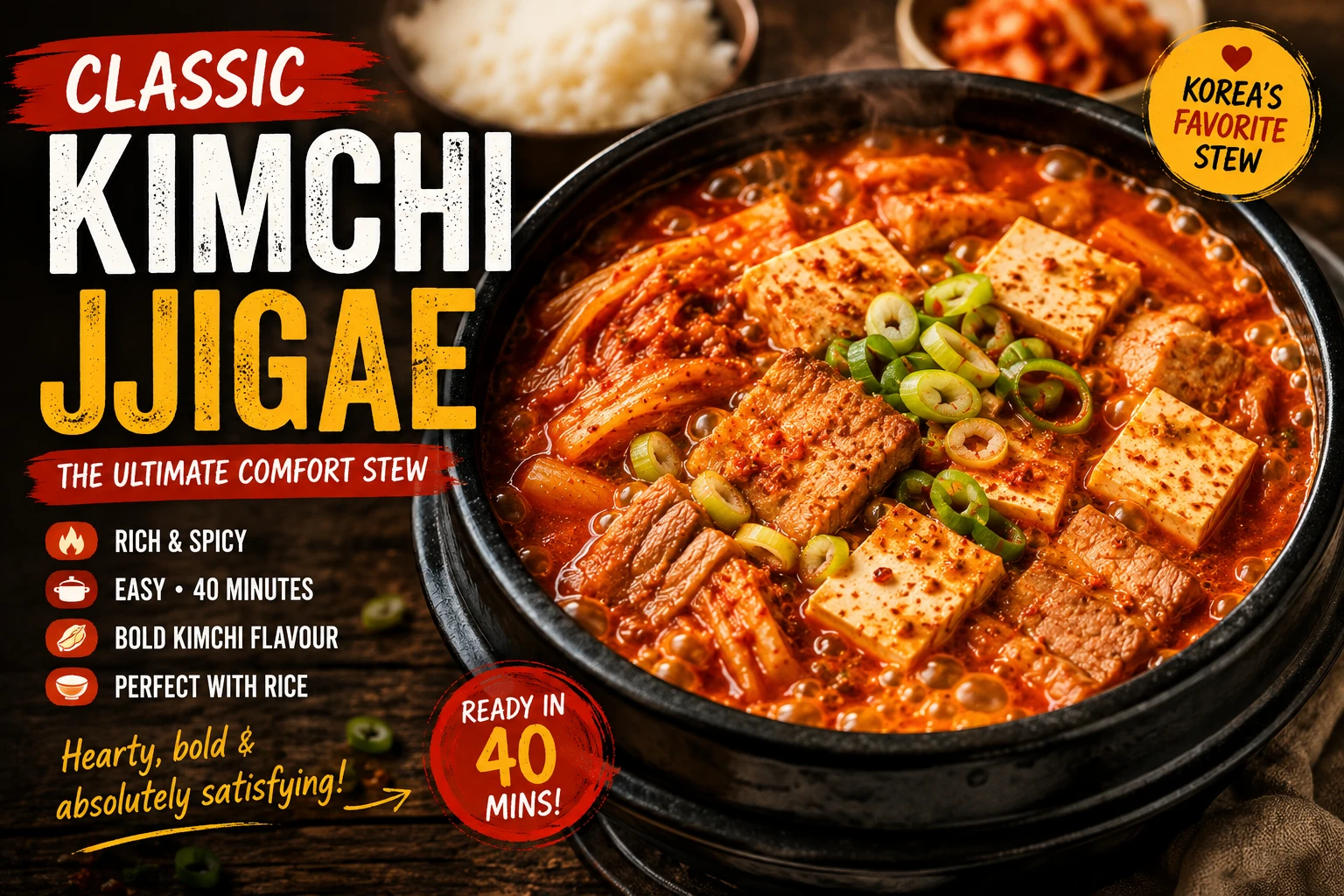
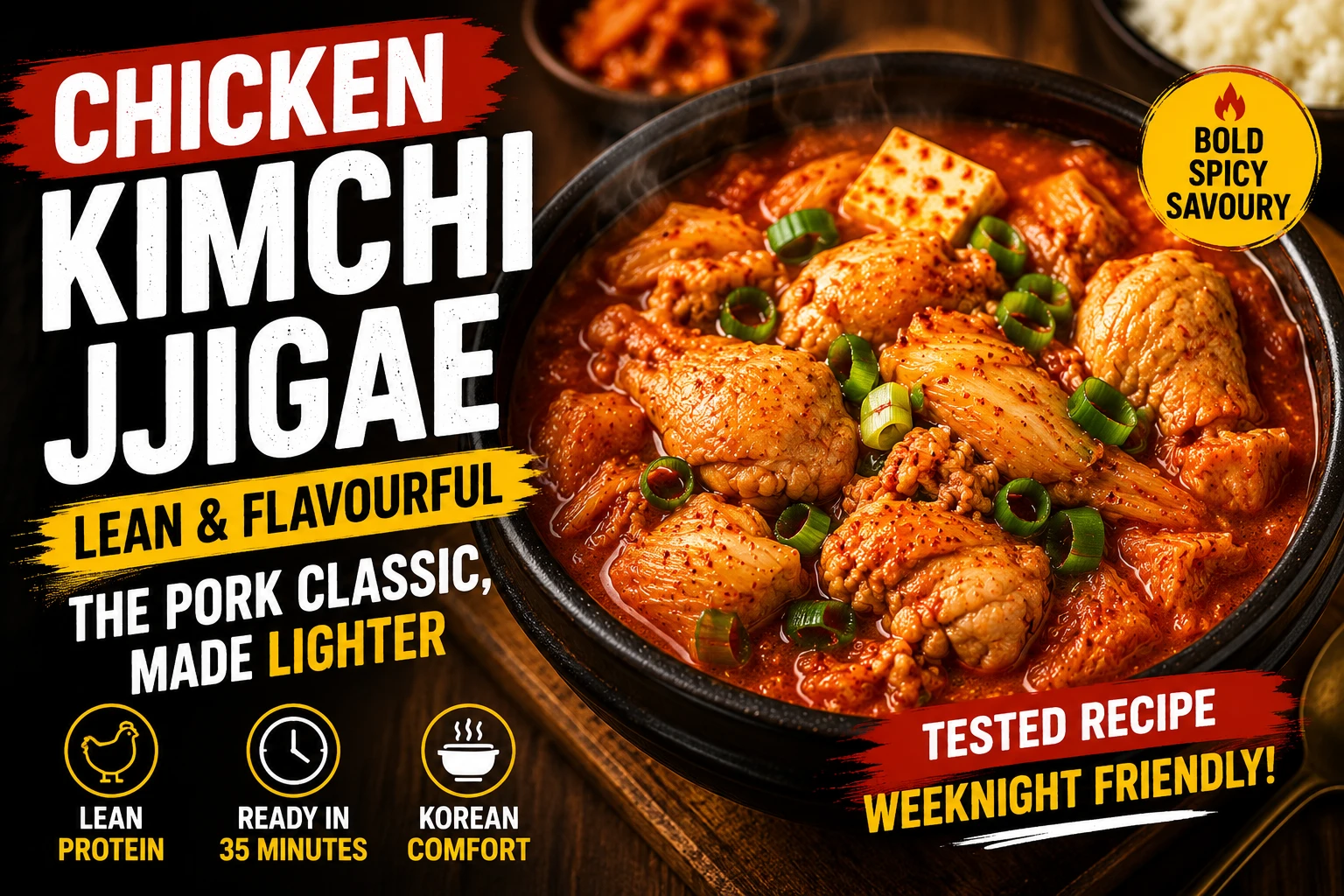
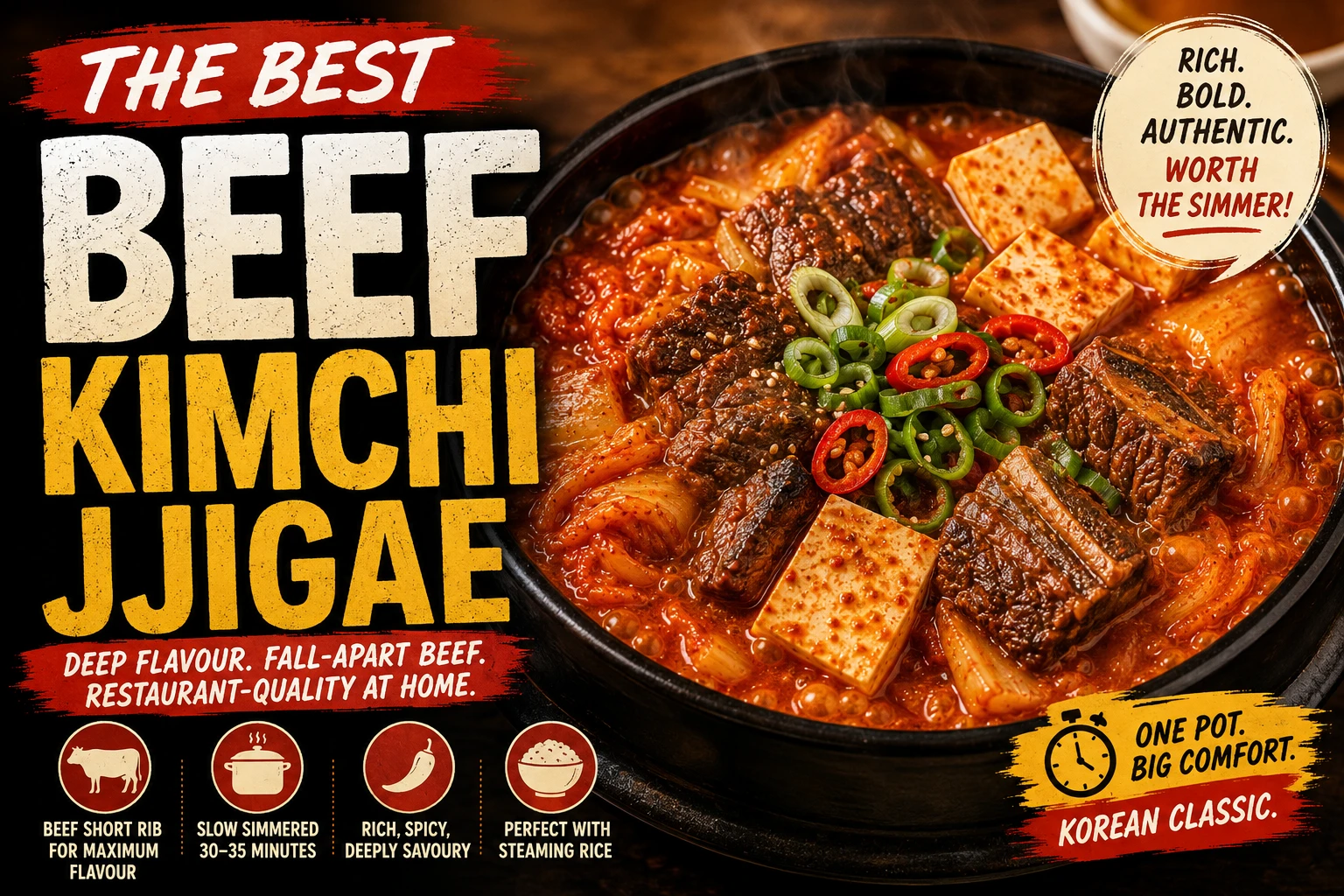

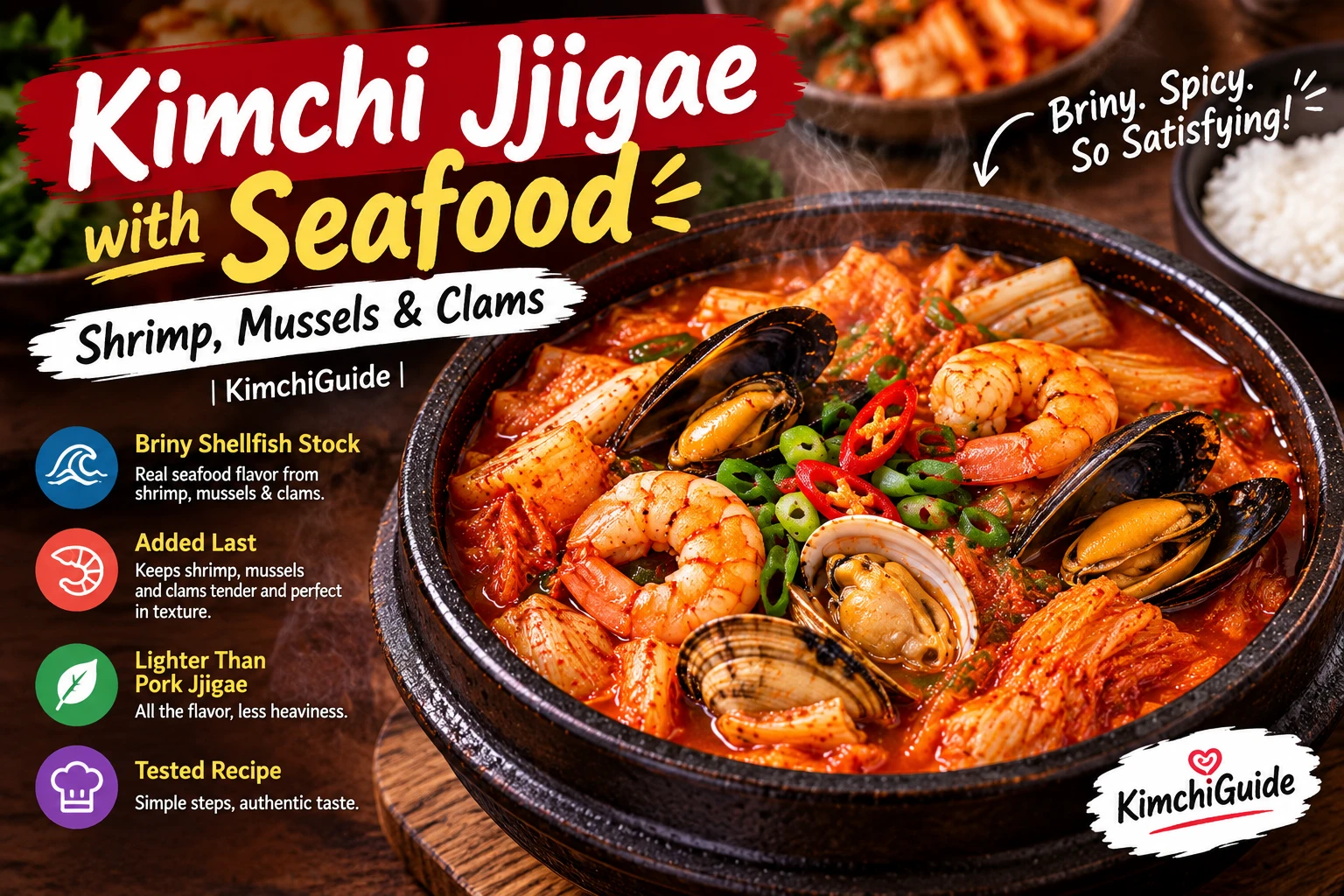


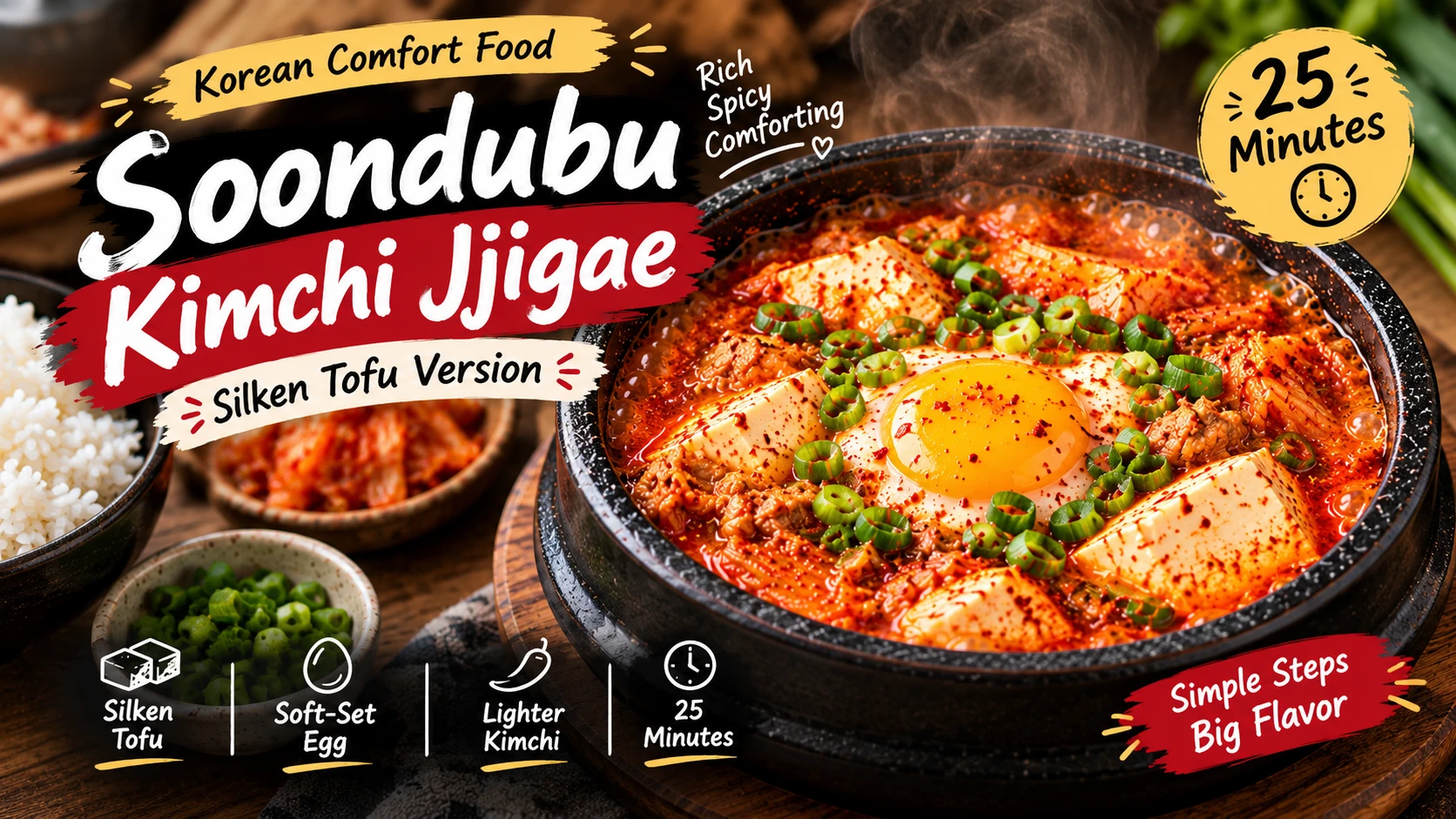


Kimchi Jjigae vs Kimchi Guk vs Jjim
Three Korean cooking-format words that get confused often, including within this exact family of recipes. Understanding the difference matters more than picking a protein.
🍲 Kimchi Jjigae (12 of 13 recipes here)
- Texture: thick, concentrated, saltier
- Role in a meal: often the centerpiece, shared from the pot
- Broth-to-solid ratio: low — more kimchi and protein than liquid
- Typical serving: family-style, one shared pot or ttukbaegi
🥣 Kimchi Guk (1 of 13 recipes here)
- Texture: thinner, lighter broth-to-solid ratio
- Role in a meal: an everyday side alongside rice, not the main event
- Broth-to-solid ratio: high — mostly liquid
- Typical serving: individual bowls, part of a larger spread
| Term | Texture | Role in a Meal | Example on This Site |
|---|---|---|---|
| 찌개 / Jjigae | Thick, concentrated, saltier | Often the centerpiece of the meal, shared from the pot | 12 of the 13 recipes in this guide |
| 국 / Guk | Thinner, lighter broth-to-solid ratio | Usually an everyday side alongside rice, not the main event | Kimchi Guk |
| 찜 / Jjim | Braised, minimal liquid, intensely flavored | A separate braised-dish category, not covered in this family | Not part of this silo |
Nutrition Comparison — All 13 Variations
Sorted lowest to highest calorie across all kimchi jjigae variations covered on this site. The macronutrient spread comes almost entirely from the protein — the aged-kimchi-and-stock base contributes a broadly consistent calorie count across every version.
| Variation | Calories | Protein | Sat. Fat | Sodium | Vegan? | Best For |
|---|---|---|---|---|---|---|
| Kimchi Guk | 130 | 9g | 1g | 620mg | ✗ (stock) | Lightest overall calorie count |
| Vegan | 200 | 12g | 1.5g | 650mg | ✓ | Lowest saturated fat, fully plant-based |
| Seafood | 210 | 20g | 1.5g | 780mg | ✗ | Lean, low-sodium seafood option |
| Vegetarian | 220 | 13g | 2.5g | 710mg | ✗ (egg) | Meatless, egg and dairy allowed |
| Soondubu | 240 | 14g | 3g | 760mg | ✗ | Soft, custardy texture |
| Tuna (Chamchi) | 260 | 24g | 3g | 780mg | ✗ | Highest protein-to-calorie ratio |
| Chicken | 280 | 25g | 3g | 820mg | ✗ | Lean, highest raw protein figure |
| Mackerel (Godeungeo) | 290 | 21g | 3.5g | 760mg | ✗ | Omega-3 rich, authentic pantry fish |
| Instant Pot & Slow Cooker | 310 | 19g | 6g | 940mg | ✗ | Same as Classic — hands-off convenience |
| Classic (Pork) | 320 | 18g | 7g | 980mg | ✗ | The reference point |
| Beef | 340 | 24g | 8g | 1010mg | ✗ | Richest meat-based option |
| Spam | 380 | 16g | 11g | 1420mg | ✗ | Richest, saltiest — an occasional indulgence |
Cost Per Serving Comparison
Across all 13 kimchi jjigae variations, the shared pantry staples (kimchi, gochugaru, gochujang, stock) cost roughly the same — cost differences come almost entirely from the protein, the same variable that drives the calorie spread above.
| Variation | Relative Cost | Why |
|---|---|---|
| Kimchi Guk | $ Low | No real protein cost — pantry staples and stock only |
| Tuna | $ Low | Canned tuna is inexpensive and shelf-stable |
| Vegetarian / Vegan | $ Low | Tofu and mushrooms cost less than most meat or seafood |
| Classic (Pork) | $$ Medium | Pork belly is moderately priced relative to other cuts |
| Chicken | $$ Medium | Chicken thigh is affordable and widely available |
| Spam | $$ Medium | A single can covers the whole recipe cheaply |
| Instant Pot & Slow Cooker | $$ Medium | Same ingredients as Classic — cost is in the pork, not the appliance |
| Mackerel | $$ Medium | Canned mackerel costs slightly more than tuna per can |
| Soondubu | $$ Medium | Silken tofu and optional egg keep this mid-range |
| Seafood | $$$ Higher | Shrimp, mussels, and clams cost more per serving than canned or land proteins |
| Budae Jjigae | $$$ Higher | Sausages, baked beans, instant noodles, and cheese add up across several ingredients |
| Beef | $$$ Higher | Short rib or chuck is the priciest protein in the family per serving |
Serving Size & Scaling Guide
Every recipe on this page is written for 4 servings by default. Scaling works cleanly for the broth and kimchi — the one thing to watch is pot size, since an overcrowded pot cooks unevenly and takes longer to come to a simmer.
| Servings | Stock | Kimchi | Gochugaru | Pot Size Needed |
|---|---|---|---|---|
| 2 (halve the recipe) | 2 cups | ¾ cup | 1½ tsp | Small pot (2-3 qt) |
| 4 (as written) | 4 cups | 1.5 cups | 1 tbsp | Standard pot or ttukbaegi (4-5 qt) |
| 8 (double) | 8 cups | 3 cups | 2 tbsp | Large pot (8+ qt) — or cook in 2 batches |
| 12+ (triple or more) | 12+ cups | 4.5+ cups | 3+ tbsp | Cook in batches — do not overcrowd one pot |
Proteins scale differently: pork, chicken, and beef scale roughly linearly per person, but Spam, tuna, and mackerel are usually fine scaled slightly under linear — their saltiness carries further than the ingredient math suggests. Taste and adjust seasoning after combining rather than scaling salt exactly by the numbers above.
Method & Technique Comparison
The base sequence — saute aromatics and protein, add kimchi, build the broth, simmer, finish — is shared across all 13 kimchi jjigae variations. What changes is the cooking fat, when the protein joins the pot, and how long it simmers.
| Variation | Cooking Fat | When Protein Joins | Extra Step vs Classic |
|---|---|---|---|
| Classic | Rendered pork fat | Seared first, builds the base | None — the baseline |
| Chicken | Rendered chicken fat, skin-first | Seared first | None — same sequence as Classic |
| Beef | Rendered beef fat | Seared first, then braised longer | Extended braise for collagen breakdown |
| Seafood | Neutral oil or none | Added last, 5-8 minutes only | Late-add timing to avoid overcooking |
| Tuna | Reserved tuna oil | Added last, 2-3 minutes only | Late-add timing, no searing needed |
| Spam | Rendered Spam fat | Seared first | None — same sequence as Classic, faster |
| Mackerel | Reserved mackerel oil | Added last | Late-add timing, similar to Tuna |
| Vegetarian | Neutral or sesame oil | Mushroom and tofu added mid-cook, egg last | Egg-timing decision (jammy vs set) |
| Vegan | Sesame oil | Tofu added gently near the end | Building a shiitake-kombu stock substitute |
| Soondubu | Neutral or sesame oil | Silken tofu added whole, no draining | None — actually simpler than Classic |
| Budae Jjigae | None — everything simmers together | Spam and sausages added together | Assembling more ingredients, not more technique |
| Kimchi Guk | Light or none | Varies | Less liquid reduction, thinner finish |
| Instant Pot & Slow Cooker | Rendered pork fat | Seared first (Instant Pot) or raw (slow cooker) | Appliance-specific timing, not a new technique |
Top Mistakes to Avoid — Across All 13
These five mistakes account for nearly every “why did my kimchi jjigae turn out wrong” question across the individual recipe pages.
Tools & Equipment — What You Actually Need
A pot covers every single one of these kimchi jjigae variations — no specialty cookware is strictly required anywhere except the Instant Pot method itself.
| Tool | Required For | Notes |
|---|---|---|
| Any pot with a lid | All 13 variations | The one non-negotiable tool — nothing else is strictly required |
| Ttukbaegi (stone pot) | Optional, all variations | Keeps the stew bubbling longer at the table — see the dedicated buying guide |
| Fine-mesh strainer | Tuna, Spam, Vegan (stock) | For draining canned protein or straining a homemade stock |
| Instant Pot or slow cooker | Instant Pot & Slow Cooker method only | Not required for any other variation |
Disclosure: This is an Amazon affiliate link. If you buy through it, KimchiGuide may earn a small commission at no extra cost to you.
🛒 Check Ttukbaegi (Stone Pot) Prices on AmazonShared Pantry Ingredients
These core Korean pantry staples appear in nearly every one of the kimchi jjigae variations on this page. Keep them stocked and you can make most of the 13 with just one extra grocery trip for the protein-specific ingredient.
Only the protein and stock base are variation-specific: pork, beef, chicken, tuna, spam, mackerel, seafood, tofu, or the plant-based stock substitutes used in the Vegetarian and Vegan recipes.
Disclosure: These are Amazon affiliate links. If you buy through them, KimchiGuide may earn a small commission at no extra cost to you.
Where to Buy the Ingredients
Kimchi, gochugaru, and gochujang have all become mainstream enough that a dedicated Asian grocery trip usually is not necessary anymore.
Substitution Cross-Reference
Because every one of these kimchi jjigae variations shares the same aged-kimchi base, you rarely need an external substitute — the closest match is usually just a different variation from this same family.
Beyond the 13 — Other Ways Korean Households Customize It
The 13 variations on this page are the ones tested and documented in full on this site, but kimchi jjigae is genuinely one of the most improvised dishes in Korean home cooking. If you have mastered the base technique from any of the 13 recipes above, these additional customizations use the same base and simply swap what goes in with the kimchi.
Meal-Prep & Storage Comparison — All 13
Not every one of the 13 kimchi jjigae variations stores equally well. Versions with a delicate protein lose more on reheating than versions built on a sturdier ingredient.
| Variation | Fridge Life | Best for Meal Prep? | Reheat Note |
|---|---|---|---|
| Spam | 3-4 days | ✓ Best keeper | Freezes whole, texture barely changes |
| Classic (Pork) | 3-4 days | ✓ Good | Broth improves on day 2 |
| Beef | 3-4 days | ✓ Good | Braise continues to soften — often better reheated |
| Chicken | 3-4 days | ✓ Good | Reheats cleanly, no texture loss |
| Budae Jjigae | 3-4 days | ✓ Good | Store noodles separately if freezing |
| Kimchi Guk | 3-4 days | ✓ Good | Thin broth reheats quickly |
| Instant Pot & Slow Cooker | 3-4 days | ✓ Good | Same as Classic once cooked |
| Vegan | 3-4 days, broth only | △ Add tofu fresh | Silken tofu texture changes on freeze-thaw |
| Vegetarian | 3 days | △ Add egg fresh | Egg is best cooked fresh each time |
| Mackerel | 3-4 days | △ Good, not frozen | Best kept refrigerated rather than frozen |
| Tuna | 3-4 days, broth only | △ Add tuna fresh | Previously-cooked tuna turns drier after freezing |
| Seafood | 2-3 days | ✗ Best fresh | Shellfish texture degrades fastest of the 13 |
| Soondubu | 2-3 days | ✗ Best fresh | Silken tofu breaks down on reheating |
For a full week of meal prep, Spam, Classic, Beef, and Chicken hold up longest. Seafood and Soondubu are best made fresh rather than batched ahead.
Authenticity Spectrum
Not every one of these kimchi jjigae variations carries the same relationship to traditional Korean cooking. Understanding where each sits on the spectrum helps explain why they taste the way they do — neither end is “more correct.”
- Classic (Pork)
- Seafood
- Kimchi Guk
- Mackerel
- Soondubu
- Spam
- Budae Jjigae (army-base era)
- Chicken (modern household staple)
- Tuna
- Vegetarian
- Vegan
- Beef
- Instant Pot & Slow Cooker
Classic, Seafood, Kimchi Guk, Mackerel, and Soondubu are closest to what you would be served in a Korean home kitchen today. Spam and Budae Jjigae trace to the post-Korean War army-base era — technically decades old and culturally embedded in Korea itself, which is why they sit in the middle rather than the fusion column. Vegan, Vegetarian, and the Instant Pot method reflect more recent adaptations built around modern dietary needs and appliance convenience rather than historical technique.
Which Kimchi Stage to Use
This is the one variable more important than which variation you pick. Nearly every recipe in this family calls for the same fermentation stage.
| Stage | Age | Approx. pH | Good For |
|---|---|---|---|
| Stage 1 — Fresh | 0-1 week | ~5.5-6.0 | Fresh eating, not recommended for jjigae |
| Stage 2 — Young | 1-3 weeks | ~4.5-5.0 | Mild jjigae, underwhelming depth for most recipes |
| Stage 3 — Aged ⭐ | 3-6 weeks | ~4.2 | Correct for nearly every recipe in this family |
| Stage 4 — Over-Ripe | 6+ weeks | ~3.8-4.0 | Sour-forward recipes, an acquired taste for jjigae |
Glossary of Korean & Technical Terms
Every Korean or technical term used across this page and the 13 recipe pages, in one place.
Difficulty Comparison — All 13
Where each of the 13 kimchi jjigae variations sits on the family’s overall difficulty curve.
Spice Level Comparison — All 13
Gochugaru quantity is similar across the base recipe, but the protein and format change how spicy each variation actually tastes at the table. Richer, fattier proteins coat the tongue and blunt perceived heat, while leaner or thinner formats let the full gochugaru heat come through more directly.
Want it milder no matter which variation you pick? Reduce gochugaru by half, or use Stage 2 young kimchi instead of Stage 3 — both work across every recipe without changing the core technique. Every recipe page also has its own interactive spice-level adjuster tool for exact ingredient amounts at your preferred heat.
Pairing Guide
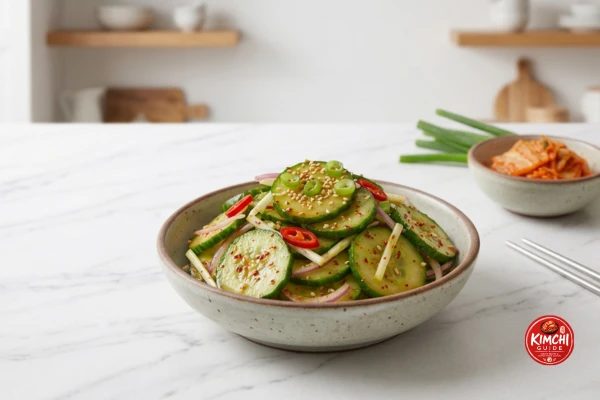
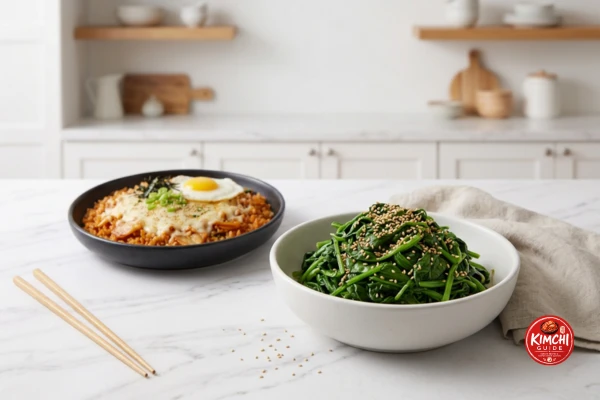
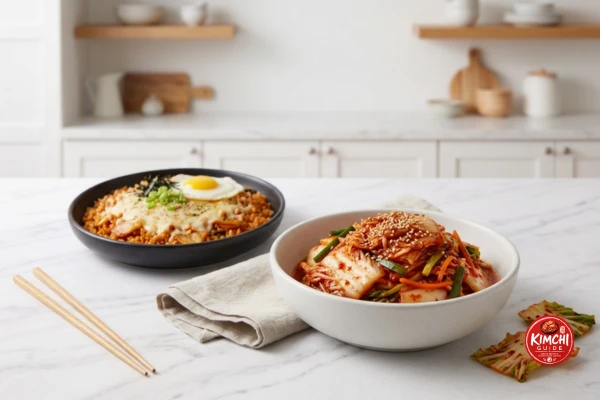
Korean home meals are traditionally built around banchan — small side dishes served alongside the main plate. These four pairings work with every one of the kimchi jjigae variations on this page, regardless of protein.
One-Page Comparison Cheat Sheet
Every number from this kimchi jjigae variations guide, condensed into a single printable table — good for sticking on the fridge or keeping on your phone while grocery shopping.
| Variation | Cal | Protein | Time | Cost | Difficulty |
|---|---|---|---|---|---|
| Kimchi Guk | 130 | 9g | 25m | $ | Easy |
| Vegan | 200 | 12g | 30m | $ | Easy |
| Seafood | 210 | 20g | 30m | $$$ | Easy |
| Vegetarian | 220 | 13g | 30m | $ | Easy |
| Soondubu | 240 | 14g | 25m | $$ | Easy |
| Tuna | 260 | 24g | 30m | $ | Easy |
| Chicken | 280 | 25g | 35m | $$ | Easy |
| Mackerel | 290 | 21g | 30m | $$ | Easy |
| Instant Pot & Slow Cooker | 310 | 19g | Varies | $$ | Easy |
| Classic (Pork) | 320 | 18g | 40m | $$ | Easy |
| Beef | 340 | 24g | 45-50m | $$$ | Medium |
| Spam | 380 | 16g | 25m | $$ | Easy |
| Budae Jjigae | — | — | 25m | $$$ | Medium |
Opens your browser’s print dialog — the page is formatted to print cleanly without navigation, tools, or the decision-tool section.
Kimchi Jjigae Variations — FAQ (20 Questions)
Kimchi jjigae is a thick Korean stew built from aged, fermented kimchi simmered with a protein and a savory stock, most often anchovy-kelp based. It is one of the most common home-cooked dishes in Korea, with dozens of household and regional variations.
Thirteen, spanning protein choices (pork, beef, chicken, tuna, spam, mackerel, seafood), formats (Instant Pot and slow cooker, Budae Jjigae’s combo style, Kimchi Guk’s soup format, Soondubu’s silken tofu style), and diets (vegetarian and vegan).
Tuna or Spam are the easiest entry points, with no braising or timing a raw protein’s doneness. The Classic (Pork) recipe is the most traditional starting point if you want the reference version everything else is compared against.
Kimchi jjigae is thicker, saltier, and served as a main dish. Kimchi guk is thinner, lighter, and often served as an everyday side rather than the centerpiece of a meal.
Budae jjigae is a specific, much larger combo version that adds sausages, baked beans, instant ramen noodles, and cheese, with roots in Korean War-era army-base cooking. Most other kimchi jjigae variations, including the Spam version, are simpler single-protein dishes.
Vegan and Kimchi Guk are the lightest overall, with the lowest saturated fat and calories. Tuna and Seafood offer the best protein-to-calorie ratio among the animal-protein versions. See the full nutrition comparison above.
Spam, followed closely by Beef. Both are best treated as occasional indulgences rather than everyday staples, given their higher saturated fat and, in Spam’s case, sodium.
Tuna and Spam both come together in 25-30 minutes with no braising. Beef is the slowest, needing a 30-35 minute simmer for the collagen to break down properly.
Yes — see the dedicated Vegetarian Kimchi Jjigae page (egg and dairy allowed, regular kimchi fine) or the Vegan Kimchi Jjigae page (verified fish-sauce-free kimchi and a mushroom-kombu stock required, no egg or dairy).
Stage 3 aged kimchi, roughly 3-6 weeks fermented, is correct for nearly every recipe in the family. See the full Kimchi Fermentation Stages Guide for the complete breakdown.
No, any pot works fine for every recipe in this family. A ttukbaegi keeps the stew bubbling longer at the table, which suits the traditional presentation, but it is not required.
The Classic (Pork) version is the most widely recognized and traditional starting point, and is the pillar recipe every other variation on this site branches from.
Tuna and Chicken are tied at the top of the published family on a protein-to-calorie basis, both offering lean, high-protein results.
The dedicated Instant Pot & Slow Cooker page covers the Classic pork-belly version specifically, with notes on adjusting timing for other proteins like chicken or beef. Cook times vary meaningfully by protein, so check that page before adapting a different recipe.
See the site’s How to Make Kimchi guide, plus the dedicated Kimchi Fermentation Stages Guide for understanding when your kimchi is ready for jjigae specifically.
Tuna and Kimchi Guk are typically the least expensive, relying on pantry staples plus a can of tuna or nothing extra at all. Beef and Budae Jjigae carry the highest per-serving cost. See the full Cost Comparison above.
Yes — since every recipe in this family shares the same aged-kimchi-and-stock base, combining techniques works well. A common example is using Chicken’s browning technique with Tuna’s late-add timing for a hybrid version. Adjust salt when combining two seasoned proteins.
Most freeze reasonably well for up to 2 months, though delicate proteins (tofu, tuna, seafood) are best added fresh when reheating rather than frozen in, since their texture degrades noticeably on thawing. See the Meal-Prep & Storage Comparison above for a per-recipe breakdown.
No — kimchi jjigae is closer to a technique than a fixed recipe, which is why so many variations exist. Protein choice often reflects what is on hand or regional influence: Spam traces to post-war army-base cooking, while pork or seafood are common everyday household defaults.
Both share the same aged Stage 3 kimchi foundation, but the technique differs entirely — jjigae is a simmered stew, while kimchi fried rice is a stir-fried rice dish. See the dedicated Kimchi Fried Rice Guide, comparing 9 fried rice variations built on the same fermentation principles.
Questions & Comments
Which variation did you end up trying? Leave a question or comment below — Ji-Young reads and responds to every comment.
Your email will not be published. All comments are reviewed before appearing.