Seafood Kimchi Jjigae (해물 김치찌개 — Shrimp, Mussel & Clam Stew)
The lightest-tasting stew in the kimchi jjigae family — briny shellfish liquor replaces pork fat as the richness source, built on an anchovy-kelp stock. The technique that makes or breaks this recipe: shrimp, mussels, and clams go in during the final few minutes only, so they stay tender instead of turning rubbery.


What Is Seafood Kimchi Jjigae?
Seafood kimchi jjigae — 해물 김치찌개 — is a lighter, brinier variation of Korea’s classic kimchi stew, common in coastal regions like Busan and Incheon where fresh seafood is cheaper and more available than pork. The two things that make this version work: an anchovy-kelp stock (myeolchi yuksu) instead of rendered pork fat, and adding the shellfish in the final few minutes only so shrimp, mussels, and clams stay tender instead of turning tough and rubbery from overcooking. Get both right and you get a briny, lighter-tasting stew that holds its own against the classic pork version. Serves 4 in 35 minutes at approximately 210 calories and 20g protein per serving.
Why This Version Works — Lighter, Not Weaker
Removing pork fat from kimchi jjigae sounds like it should flatten the dish — in practice, shellfish liquor and a proper anchovy stock rebuild the richness almost completely, just from a different direction.

Dried anchovies and dashima release glutamates and umami compounds during a 15-20 minute simmer — a different flavour profile than rendered pork fat, but a comparably deep savoury base for the kimchi to cook into. Myeolchi yuksu is the backbone of countless Korean soups and stews beyond kimchi-jjigae, from doenjang-jjigae to plain miyeok-guk, precisely because dried anchovy and kelp together deliver layered umami without any meat at all. Straining out the solids before adding the kimchi keeps the finished broth clean rather than gritty or fishy-tasting.

As clams and mussels open, they release their own briny liquor directly into the broth — this final layer of flavour only develops in the last few minutes, which is part of why timing the seafood addition correctly matters so much. This is the same principle behind French moules marinière or Italian vongole sauces: the shellfish essentially seasons its own cooking liquid as it opens, adding a natural salinity and depth that no amount of extra fish sauce or salt fully replicates if the shellfish is added too early or overcooked.

Because there’s no pork fat carrying richness, this recipe leans slightly more on gochugaru’s clean heat rather than gochujang’s fermented sweetness — the ratio here is adjusted from the classic recipe accordingly. Gochugaru (Korean sun-dried chili flakes) contributes colour and a brighter, more direct heat than the deeper, more caramelised heat of fermented gochujang, and that brighter profile pairs naturally with seafood’s own clean, briny flavour rather than competing with it the way a heavier, sweeter paste might.

200g of shrimp, mussels, and clams combined carries roughly 20g of protein at a fraction of pork belly’s saturated fat — this version keeps the protein content the classic recipe delivers while cutting fat meaningfully. Shellfish protein is also a source of lean marine nutrients like iodine, zinc, and vitamin B12 that a pork-based broth doesn’t provide, which is part of why coastal Korean households have long treated seafood kimchi-jjigae as a nutritionally distinct, not just a flavour-distinct, variation.
The Origin of Seafood Kimchi Jjigae — Coastal Korea’s Household Staple
This isn’t a modern fusion twist — haemul kimchi-jjigae has been a fixture of coastal Korean households for generations, built around whatever the day’s catch happened to be.
The word 찌개 (jjigae) comes from a verb root meaning “to stew” or “to simmer down,” and it describes a category of thick, communal stews served bubbling in the pot they were cooked in — as opposed to 국 (guk), a thinner soup ladled into individual bowls. Kimchi-jjigae itself is one of the oldest and most common jjigae variations, built on the same logic as almost every Korean home stew: take a well-fermented base ingredient, build a stock around it, and add whatever protein is on hand.
In inland and mountain regions, that protein was traditionally pork — cheap, available, and rich enough to round out the kimchi’s acidity. Along Korea’s western and southern coasts, where fishing communities had far more regular access to shellfish and small fish than to pork, the same stew took a seafood-forward direction instead. Haemul (해물) simply means “seafood” or, more literally, “things from the sea” — and haemul kimchi-jjigae grew out of practical necessity in fishing households rather than as a deliberate lighter alternative to the pork version, even though that’s often how it’s marketed today.
Shellfish Timing Is Everything — Two Methods Compared
Most seafood stew recipes online just say “add the seafood” without specifying when. We tested both approaches across 4 batches. The difference decides whether your shrimp is tender or rubbery.

- Build and simmer the broth base fully first (10-12 min)
- Add tofu, simmer 5 minutes
- Add mussels and clams, cover, cook 2-3 min until shells open
- Add shrimp last, cook 1-2 min until just opaque
Result: Tender shrimp, plump mussels and clams, briny liquor fully incorporated into the broth without overcooking. Correct in every batch test.

- Add all seafood at the start along with the broth base
- Simmer everything together for the full 15-20 minutes
Result: Shrimp turns tough and rubbery, mussels and clams shrink and toughen. Faster to prep, but the seafood loses its texture entirely by serving time.
Method Comparison at a Glance
| Method | Texture Result | Prep Order | Seafood Tender? | Verdict |
|---|---|---|---|---|
| Add-Last ⭐ | Tender, plump, briny | Broth → tofu → shellfish → shrimp | Yes | Always use this |
| Add-Early | Tough, rubbery, shrunken | Everything at once | No | Avoid — ruins the seafood |
Key Terms — Language & Food Science Entities
These terms define the technique and vocabulary specific to the seafood version — see the full silo glossary on the Kimchi Jjigae Hub for terms shared across all variations.
Which Seafood Mix to Use — Four Options Ranked
You don’t need all three shellfish types to make a good version of this — here’s how the options compare.

The full version as written. Most complex flavour, most textural variety, most visually impressive.
⭐ Best Choice
Fully thawed and patted dry, a frozen mixed blend performs nearly as well as fresh and is far more convenient and consistent.
✅ Highly Recommended
A common simplified version — use 300-350g shrimp in place of the mixed seafood. Loses some briny complexity but is faster and easier to source.
Good Simplified Option
Already-cooked shrimp or shellfish added at the end only needs reheating, not cooking — easy to overcook further since it’s already done. Requires extra care with timing.
❌ Needs Extra CareHow Seafood Kimchi Jjigae Changes by Region
This recipe follows a widely-used, home-style version — but the dish looks noticeably different depending on which Korean coastline it comes from.

Leans heavily on clams and mussels from the tidal flats of the Yellow Sea coast, with a clearer, brinier broth and comparatively less gochujang. This recipe is closest to this style.
This Recipe’s Base
Often adds a whole small white fish or fish head alongside the shellfish, and typically runs spicier — more gochugaru and a heavier gochujang presence than the West Coast version.
Spicier, Fish-Forward
Built around Jeju’s local shellfish — abalone, conch, or sea urchin where available — with lighter seasoning overall, letting the shellfish’s natural sweetness carry more of the flavour.
Lighter, Local Shellfish
The most common version in inland households today — built on a frozen mixed-seafood pack rather than live shellfish, prioritising convenience over regional specificity.
Most Common TodayWhich Kimchi Stage to Use — Seafood Version Guide
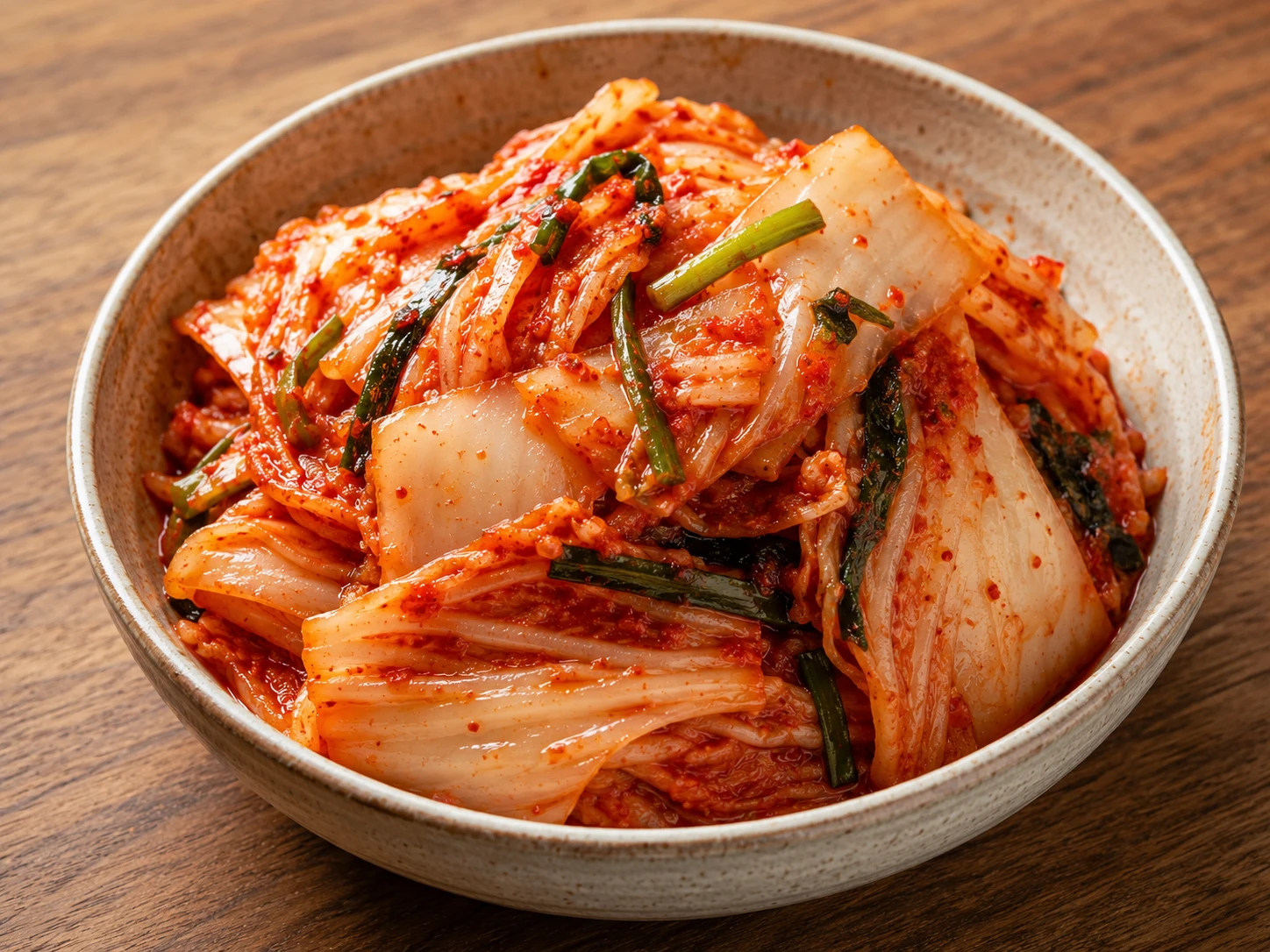
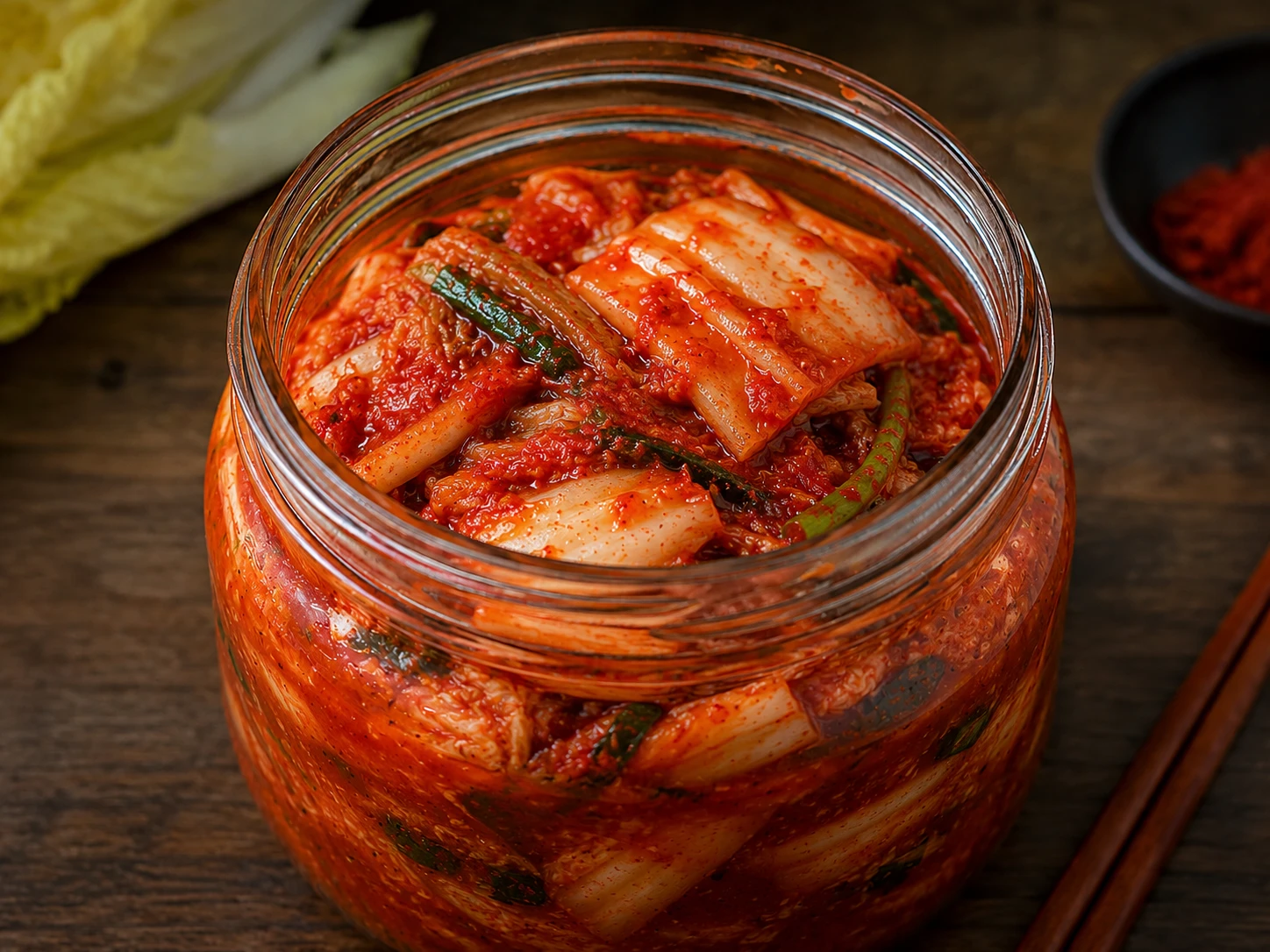
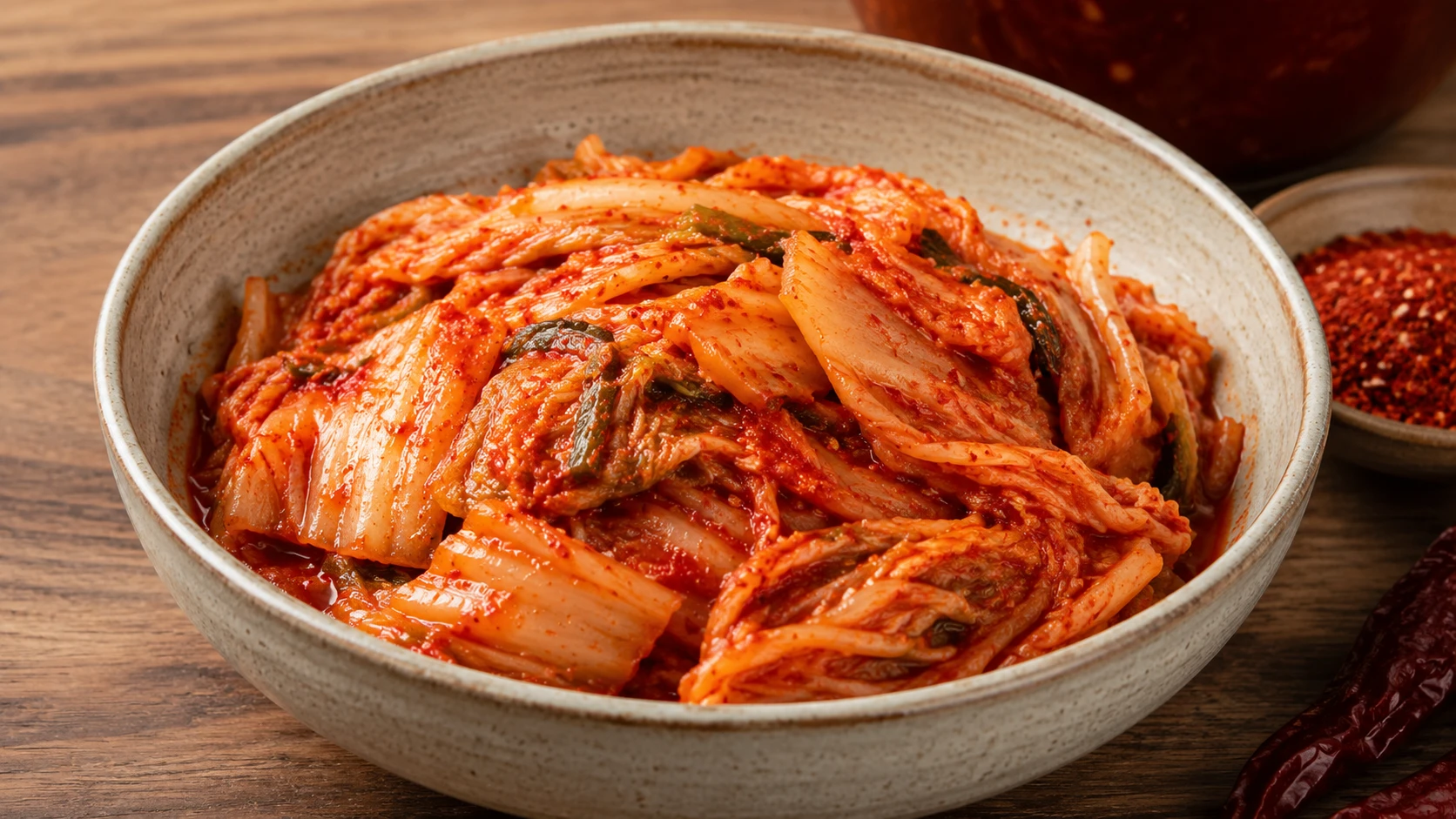
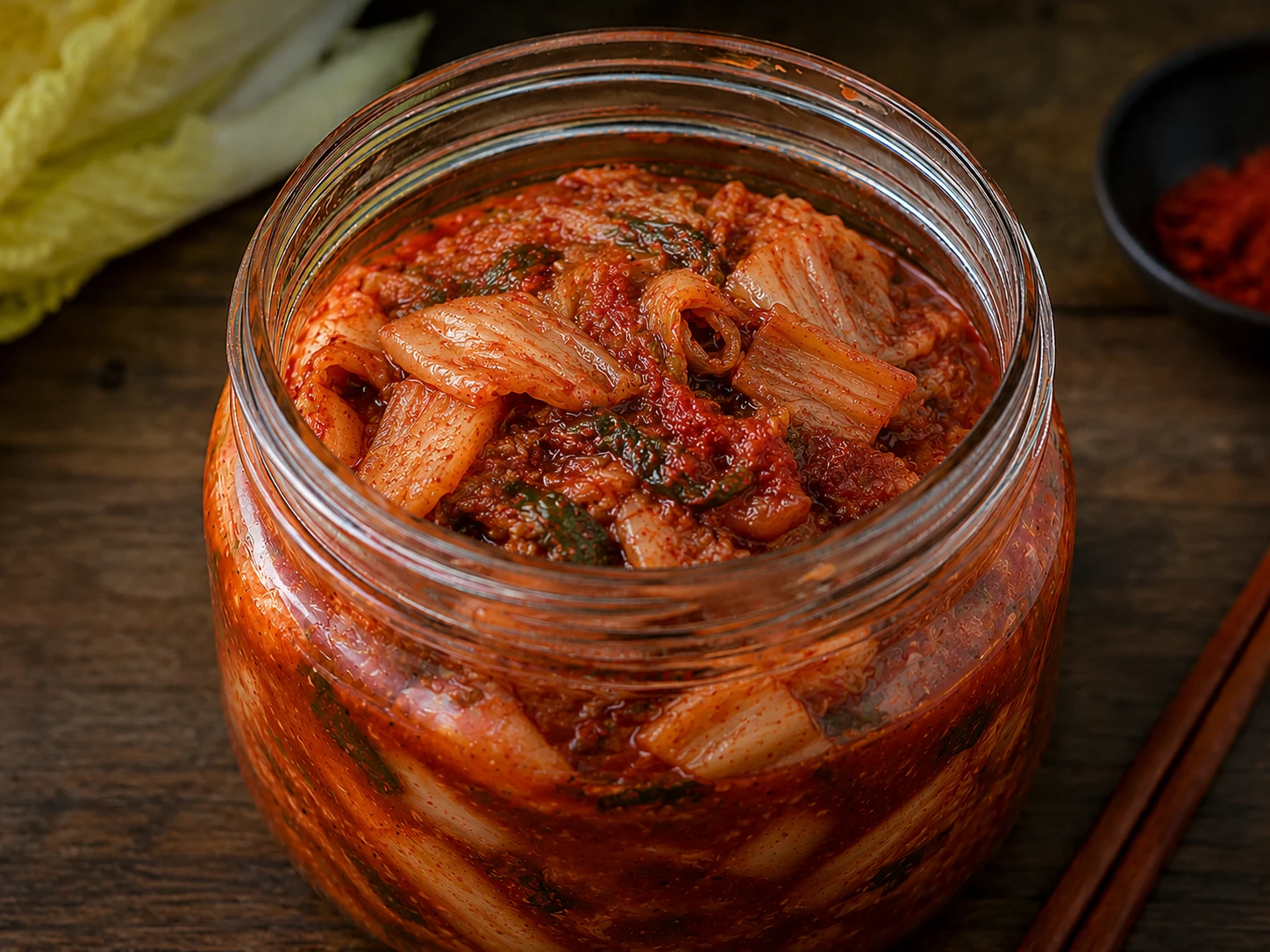
Fermentation stage and protein choice are independent variables — Stage 3 remains the correct default whether you’re making the pork classic or this seafood version.
Seasonal Adjustments — Summer vs Winter
The core recipe doesn’t change by season, but two things worth adjusting do: how your kimchi is fermenting, and how you want the broth served.
- Kimchi ferments noticeably faster in summer heat — check it 3-5 days earlier than the timeline in the kimchi-stage guide above suggests
- If your kitchen runs hot, taste-test daily once kimchi passes 2 weeks so it doesn’t overshoot Stage 3 before you’re ready to cook
- A slightly smaller shellfish portion and a shorter simmer keep the dish from feeling too heavy in warm weather
Result: The stew itself stays the same recipe — only your kimchi timeline and portion size shift.
- Kimchi ferments more slowly in cold storage — Stage 3 (3-6 weeks) is a reliable timeline, and over-ripe Stage 4 kimchi is far more commonly on hand in winter households
- A longer, gentler simmer (extend the broth stage by 3-5 minutes) suits colder weather and deepens the stock further
- Winter is traditionally when jjigae is eaten most often in Korean households, precisely because well-aged kimchi is naturally more available
Result: Winter is genuinely the recipe’s home season — well-fermented kimchi is easiest to source, and the dish is at its best.
How Difficult Is the Seafood Version?
Still beginner-to-easy — the only extra skill versus the classic recipe is timing the shellfish correctly and knowing how to clean/purge clams.
Equipment — Ttukbaegi vs Regular Pot vs Instant Pot
You don’t need a traditional stone pot to make this well, but it does change the eating experience — here’s how the three most common options compare.
| Equipment | Heat Retention | Serving Style | Best For |
|---|---|---|---|
| Ttukbaegi (뚝배기) ⭐ | Excellent — stays bubbling at the table for 10+ minutes | Serve directly in the pot, communal-style | Authentic texture and presentation; worth the investment if you cook Korean stews often |
| Stainless Steel or Enamelled Pot | Good, but cools noticeably faster than clay | Ladle into individual bowls to serve | Most households — performs the recipe identically, just loses the tableside bubbling |
| Instant Pot / Electric Pressure Cooker | N/A — used for the broth stage only, not final serving | Transfer to a pot or bowl to add seafood and serve | Building the anchovy-kelp stock faster (5-6 minutes on high pressure instead of 15-20 simmering); never pressure-cook the shellfish stage itself |
Ingredients + Scaler
A proper anchovy-kelp stock and correctly timed shellfish are the two non-negotiables. Everything else follows the same base kimchi jjigae logic.

Substitutions & Allergen Notes
Shellfish and fish sauce make this version harder to adapt than most jjigae variations — here’s what actually works.
Sourcing Guide — Finding Ingredients Outside Korea
This is the recipe in the family with the most sourcing friction for readers outside Korea — here’s where each key ingredient is realistically found.
How to Make Seafood Kimchi Jjigae — 5 Steps
Five steps. The key difference from the classic recipe: the seafood joins the pot in the final few minutes, not at the start.

Bring your anchovy-kelp stock to a simmer (or use water). In your ttukbaegi or a heavy pot, saute the chopped kimchi in a little oil for 2-3 minutes to deepen its flavour before adding any liquid.
If you’re making the stock from scratch, simmer 8-10 dried anchovies (heads and guts removed) with a 10cm piece of dashima in 4 cups of water for 15-20 minutes, then strain before using — don’t boil it hard or the stock turns bitter and cloudy. Store-bought myeolchi yuksu packets or Korean soup-stock bags work as a shortcut if you’re short on time.

Add the stock, kimchi brine, gochugaru, gochujang, garlic, ginger, and onion to the pot. Simmer uncovered for 10-12 minutes until the kimchi softens and the broth turns a deep red.
This is the stage where the lactic acid in aged kimchi actually integrates into the broth rather than sitting on top of it — you’ll notice the liquid go from a thin, separated look to a more unified, glossy red as the kimchi breaks down slightly and the seasonings emulsify. Taste the broth at this point before adding anything else; it should already taste balanced, since everything added afterward is really just protein, not further seasoning.

Add the cubed firm tofu and simmer for 5 minutes, letting it soak up the broth without breaking apart. Stir gently, not vigorously.
Firm or medium-firm tofu holds its shape best here — silken tofu will disintegrate into the broth within a couple of minutes of simmering, which is fine for a different dish but not what you want in a jjigae with distinct tofu cubes. Cut the cubes reasonably large (about 2cm) since they’ll continue to soften slightly through the rest of the cooking time.

Add the mussels and clams first, cover, and cook 2-3 minutes until the shells begin to open. Add the shrimp and cook a further 1-2 minutes until just pink and opaque throughout.
Covering the pot for this stage matters — it traps steam that helps the shells pop open evenly rather than some staying stubbornly shut while others overcook. Keep the heat at a gentle simmer rather than a rolling boil during this stage; a hard boil is what typically turns shrimp rubbery even within the correct time window.

Discard any mussels or clams that didn’t open. Remove from heat, drizzle sesame oil over the surface, scatter spring onions on top, and taste for salt — adjust with a splash of fish sauce if needed. Serve bubbling hot, straight from the pot, with steamed rice on the side.
Traditionally this goes straight to the table still in the ttukbaegi, still visibly bubbling from residual heat — part of the appeal of jjigae is eating it communally while it’s still actively cooking at the edges. Spoon the broth over individual bowls of rice at the table rather than mixing rice directly into the pot, which keeps the rice from turning mushy if there are leftovers.
What We Tested for the Seafood Version
Shellfish timing has more failure points than any other part of this recipe. Here’s what we found across 4 dedicated batches.
Every batch confirmed the same principle: this recipe succeeds or fails almost entirely on when the seafood goes into the pot. Get that right and the dish is tender and briny. Add it too early and no amount of stock quality or kimchi fermentation fixes rubbery shellfish.
Troubleshooting — Common Mistakes & How to Fix Them
Most problems with this recipe trace back to one of five issues below — here’s what causes them and how to correct course.

Seafood Kimchi Jjigae (해물 김치찌개)
Add-last shellfish method · Stage 3 kimchi · 35 min · ~210 calories, 20g protein
- 4 cups anchovy-kelp stock (or water)
- 1.5 cups aged kimchi (Stage 3), chopped
- 3 tbsp kimchi brine
- 1 tbsp gochugaru
- 1 tbsp gochujang
- 3 cloves garlic, minced
- 1 tsp ginger, minced
- ½ onion, sliced
- 200g firm tofu, cubed
- 150g shrimp, peeled
- 150g mussels, scrubbed
- 150g clams, purged
- 2 spring onions, sesame oil, salt/fish sauce
- Simmer stock. Saute chopped kimchi 2-3 min in a little oil.
- Add stock, brine, gochugaru, gochujang, garlic, ginger, onion. Simmer 10-12 min.
- Add tofu, simmer 5 min.
- Add mussels and clams, cover, cook 2-3 min until shells open. Add shrimp, cook 1-2 min until opaque.
- Discard unopened shells. Remove from heat, drizzle sesame oil, top with spring onions, season to taste. Serve hot with rice.
The Kimchi Jjigae Family — 13 Variations
This is page 1 of a growing 13-recipe family, all built on the same aged-kimchi base. The Kimchi Jjigae Ultimate Guide → compares every variation as it’s published.


Pairing Guide — Seafood Version
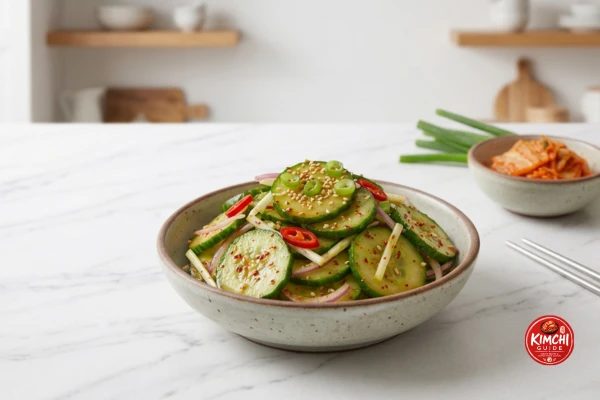
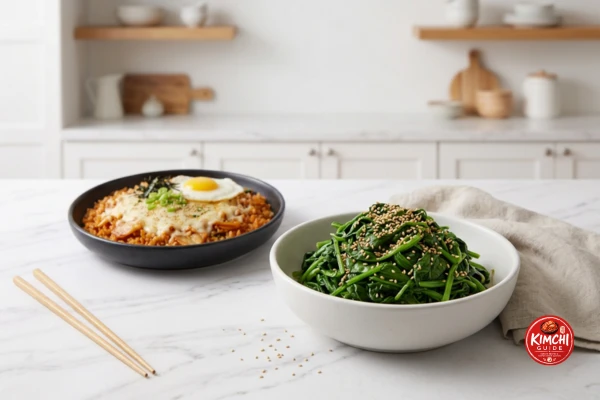
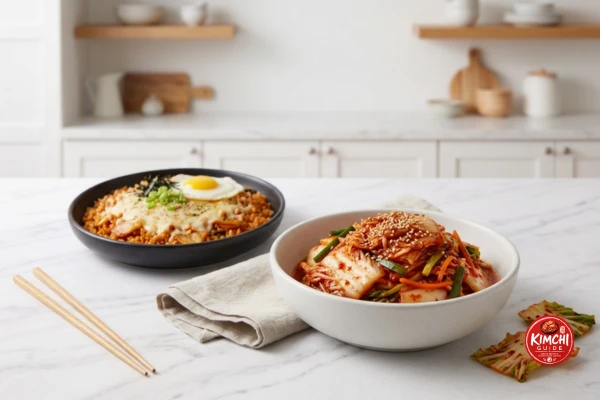
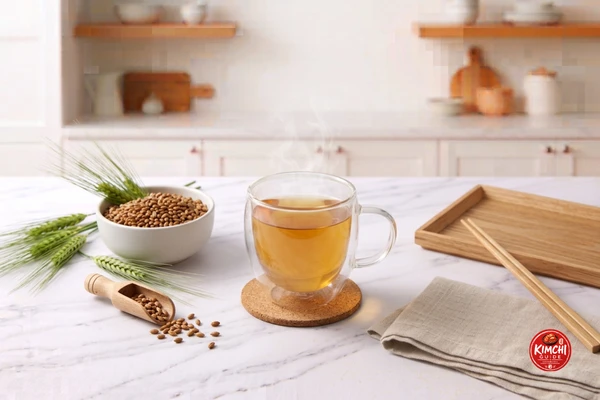
Because this version is already briny and light, pairings lean toward simple, non-competing sides rather than anything else assertively flavoured.
Restaurant vs Homemade Seafood Kimchi Jjigae
Ordering this at a Korean restaurant and making it at home produce genuinely different results — here’s what changes and why.
| Factor | Restaurant Version | This Homemade Recipe |
|---|---|---|
| Seafood Quantity | Often lighter on shellfish, bulked up with more broth to control food cost | Full 450g mixed seafood per batch — noticeably more generous |
| Shellfish Timing | Variable — busy kitchens sometimes pre-cook shellfish in batches, risking overcooking by the time it’s served | Add-last method controlled precisely, so texture is consistent every time |
| Kimchi Fermentation Stage | Usually whatever’s on hand that shift — not always ideal Stage 3 | You control and choose Stage 3 (or Stage 4) specifically for this dish |
| Sodium Level | Typically higher — restaurant broths are seasoned assertively for immediate impact | Adjustable to taste; nutrition figures above reflect a moderate seasoning level |
| Cost per Serving | $15-25 per bowl in most Western cities | Roughly $4-6 per serving when made at home, seafood included |
Storage & Reheating — Seafood Version
Seafood loses texture on reheating faster than any other protein in the jjigae family — plan around this if making ahead.
Meal Prep — Batch-Cooking the Broth Base for the Week
This isn’t a dish that reheats well as a finished bowl, but the broth base itself batches beautifully — the trick is separating what freezes well from what doesn’t.
Nutrition Comparison — Kimchi Jjigae Family
| Variation | Calories | Protein | Sat. Fat | Best For |
|---|---|---|---|---|
| Seafood ← This page | 210 | 20g | 1.5g | Lightest, leanest option in the family |
| Classic (Pork) | ~320 | 18g | 6g | Coming soon — the family’s pillar recipe |
| Kimchi Guk | ~150 | 10g | 2g | Coming soon — the lightest, thinnest format |
Sources & Further Reading
The food-science and nutrition claims on this page are cross-checked against the following references.
Seafood Kimchi Jjigae FAQ — 17 Questions
Jjigae is a thicker stew with less broth relative to solids, typically served communally from one pot. Guk is a thinner soup with more broth, less salty, and usually served in individual bowls. Seafood works well in both formats, but this recipe is written as a jjigae.
Yes. Thaw frozen shrimp, mussels, and clams fully in the refrigerator before adding, and pat them dry. Frozen seafood releases more water than fresh, so simmer the broth a few extra minutes beforehand to concentrate the flavour.
Shrimp, mussels, and clams cook in just a few minutes. Simmering them in the broth for the full cooking time toughens the texture significantly — adding them in the final 3-5 minutes keeps them tender.
Myeolchi yuksu is a Korean anchovy-and-kelp stock, made by simmering dried anchovies and dashima (kelp) in water for about 15-20 minutes. It is the standard broth base for many Korean soups and stews, including this seafood jjigae.
Yes — plain water works, though the broth will taste less complex. A vegetable or kelp-only stock is a good middle ground if you want depth without the anchovy flavour.
Yes. Soak clams in salted water for 20-30 minutes before cooking so they release trapped sand. Skipping this step is the most common reason for gritty seafood jjigae.
Discard any that remain closed after cooking — this indicates the shellfish was not alive before cooking and should not be eaten.
Yes. Shrimp-only is a common simplified version. Use about 300-350g of shrimp in place of the mixed seafood, added in the final 2 minutes only.
Moderately, from the gochugaru and gochujang. The briny sweetness from the seafood balances the heat more than in meat-based versions. Reduce gochugaru to 2 teaspoons for a milder result.
Yes — squid (sliced into rings) and oysters both work well added at the same stage as the shrimp, in the final 2-3 minutes of cooking.
Stage 3 aged kimchi (3-6 weeks, pH approximately 4.2) is correct for this recipe, same as every other variation in the kimchi jjigae family — fresh kimchi gives a flat result regardless of protein choice.
It is generally lower in saturated fat, since shellfish contain far less fat than pork belly. It also tends to be lower in overall calories per serving while remaining high in protein.
Prepare the broth base (through step 2) up to 2 days ahead and refrigerate. Add tofu and seafood fresh when reheating to serve, since seafood loses texture badly on reheating.
It can be — use a gluten-free gochujang brand and confirm your kimchi doesn’t contain wheat-based ingredients. Anchovy-kelp stock is naturally gluten-free.
Plain steamed short-grain rice, served alongside rather than mixed in — the broth is meant to be spooned over rice at the table, Korean-style, rather than combined during cooking.
This usually comes from not straining the anchovy-kelp stock, or from cooking the shellfish too vigorously (a hard boil rather than a gentle simmer) once they’re added.
A small amount (1 teaspoon) can be added with the gochujang for extra depth, though it’s not traditional in seafood versions and can compete with the seafood’s own brininess if overdone.

Questions & Comments
Did you make this with fresh or frozen seafood? Leave a question below — Ji-Young reads and responds to every comment.
Your email will not be published. All comments are reviewed before appearing.