Soondubu Kimchi Jjigae (순두부 김치찌개 — Silken Tofu Version)
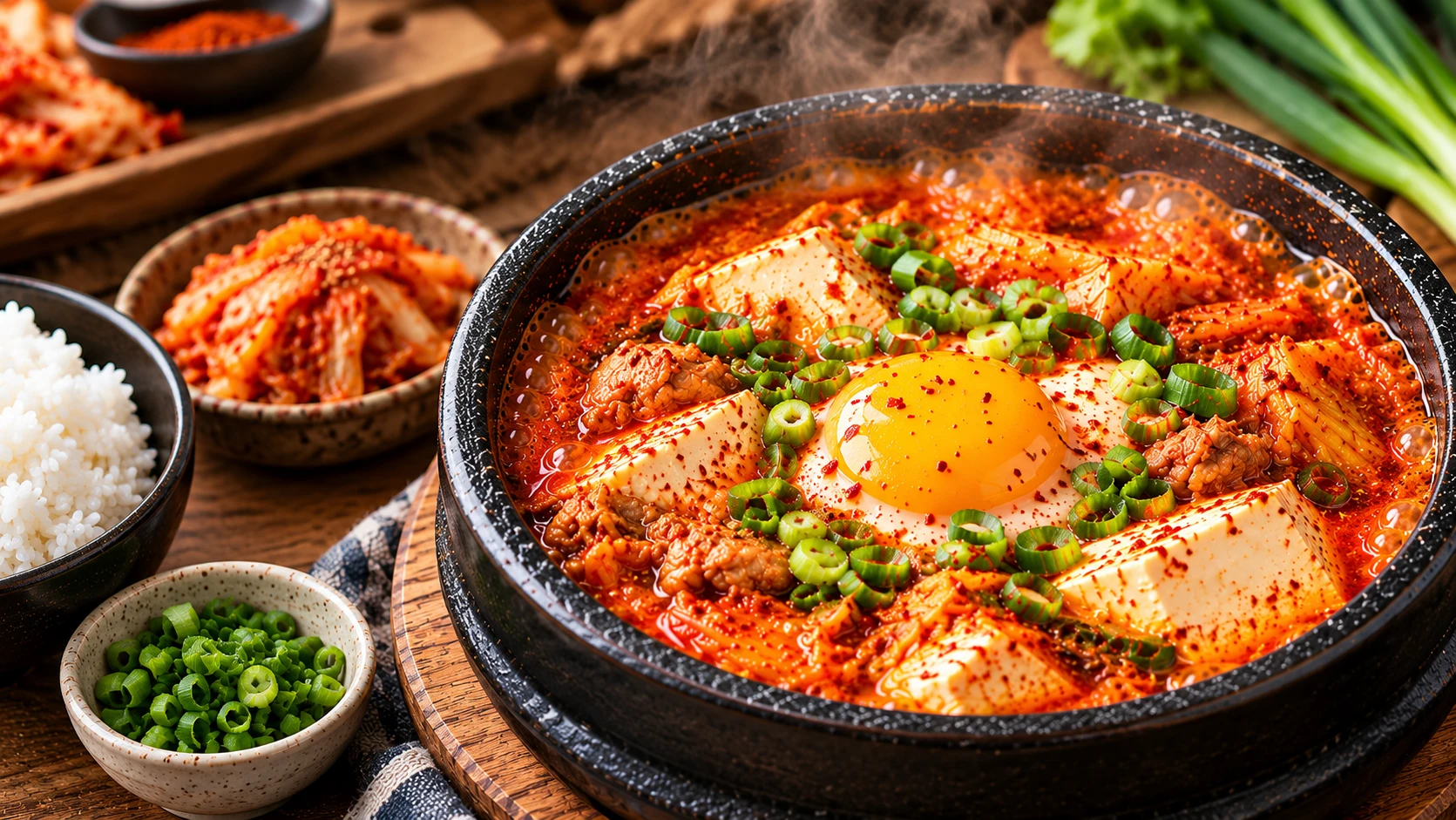
Uncut silken tofu spooned in at the very end, a lighter hand with kimchi than the classic recipe so the delicate broth stays clean, and an egg cracked into the residual heat so the white sets into soft ribbons rather than scrambling. One of the fastest, most restaurant-familiar variations in the family — the same style of dish popular Korean tofu-house chains build their whole menu around.
What Is Soondubu Kimchi Jjigae?
Soondubu kimchi jjigae — 순두부 김치찌개 — is the silken-tofu member of the family, and it differs from the classic recipe in three real ways, not just the tofu. Uncut silken tofu is spooned in at the very end and broken gently rather than diced ahead of time, noticeably less kimchi is used so the delicate broth stays clean instead of getting muddied, and an egg is cracked in off the heat so the white sets into soft ribbons instead of scrambling. Get those three details right and it’s one of the fastest, most restaurant-familiar dishes in the whole family — dedicated Korean tofu-house chains build their entire menu around this exact format. Serves 4 in about 25 minutes at approximately 260 calories and 18g protein per serving.
Why This Version Works — Three Details, Not Just the Tofu
Swapping firm tofu for silken sounds like the whole story, but the technique differences that actually separate a good soondubu jjigae from a mediocre one go further than the ingredient swap.
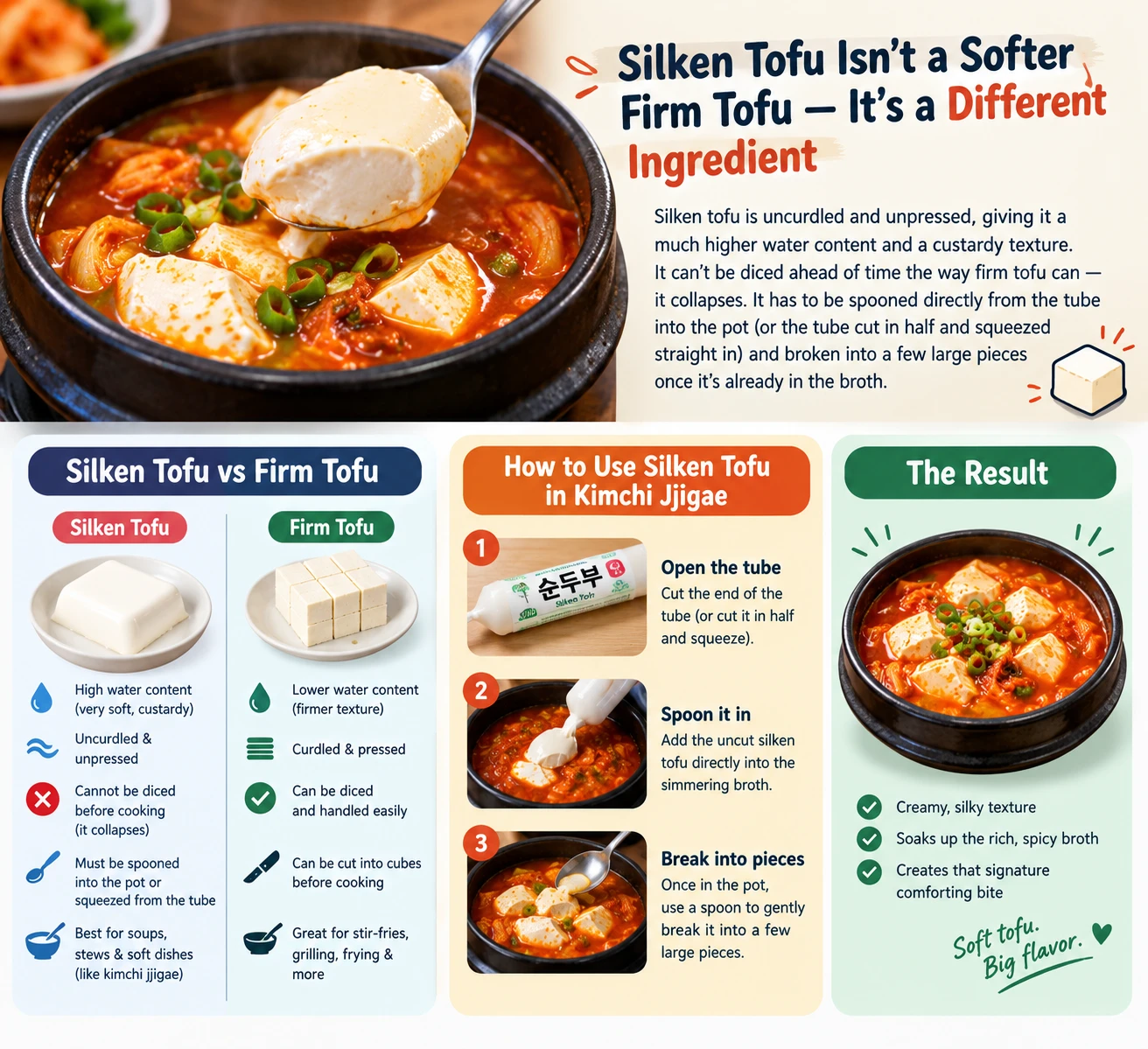
Silken tofu is uncurdled and unpressed, giving it a much higher water content and a custardy texture. It can’t be diced ahead of time the way firm tofu can — it collapses. It has to be spooned directly from the tube into the pot (or the tube cut in half and squeezed straight in) and broken into a few large pieces once it’s already in the broth.
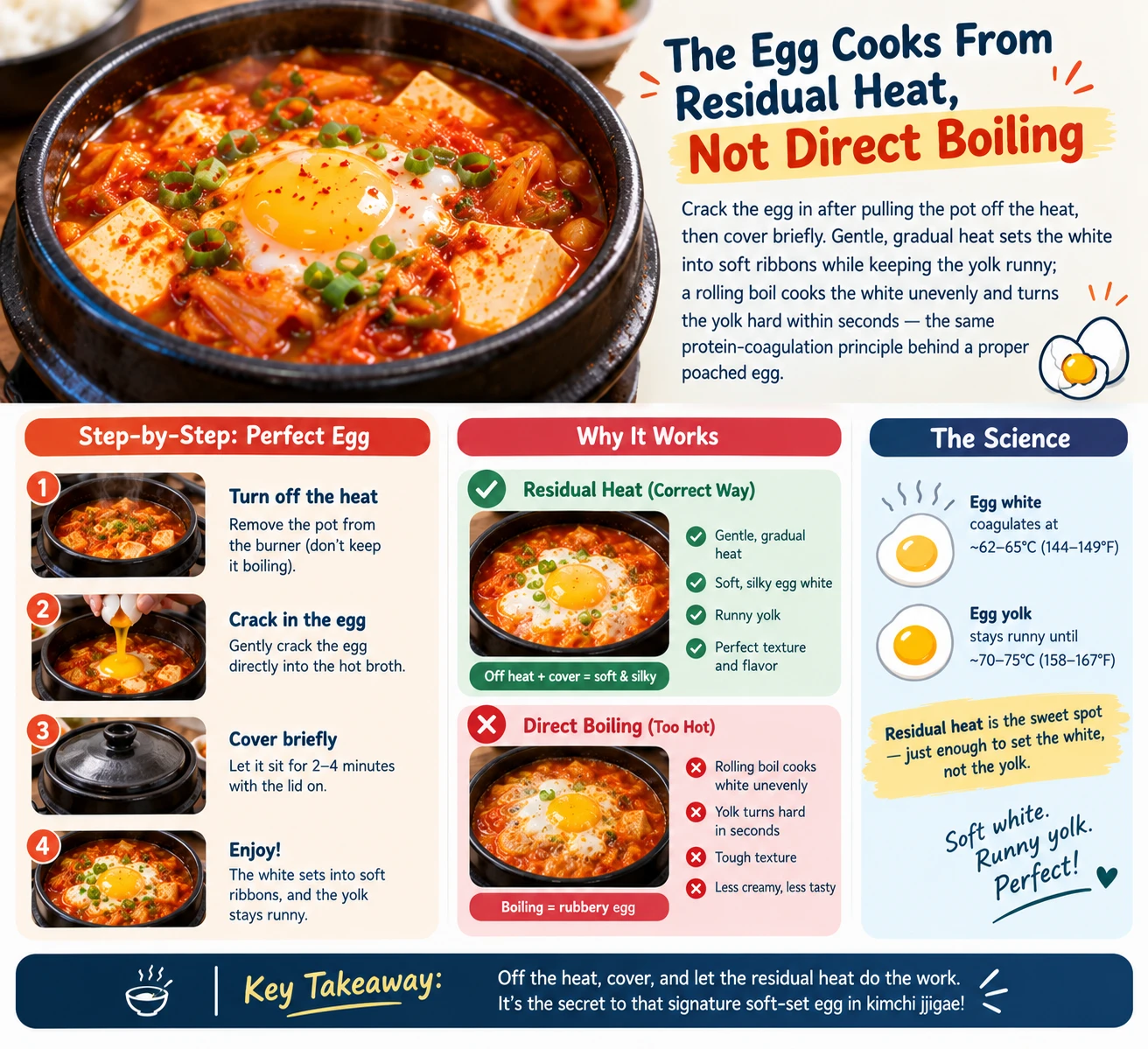
Crack the egg in after pulling the pot off the heat, then cover briefly. Gentle, gradual heat sets the white into soft ribbons while keeping the yolk runny; a rolling boil cooks the white unevenly and turns the yolk hard within seconds — the same protein-coagulation principle behind a proper poached egg.
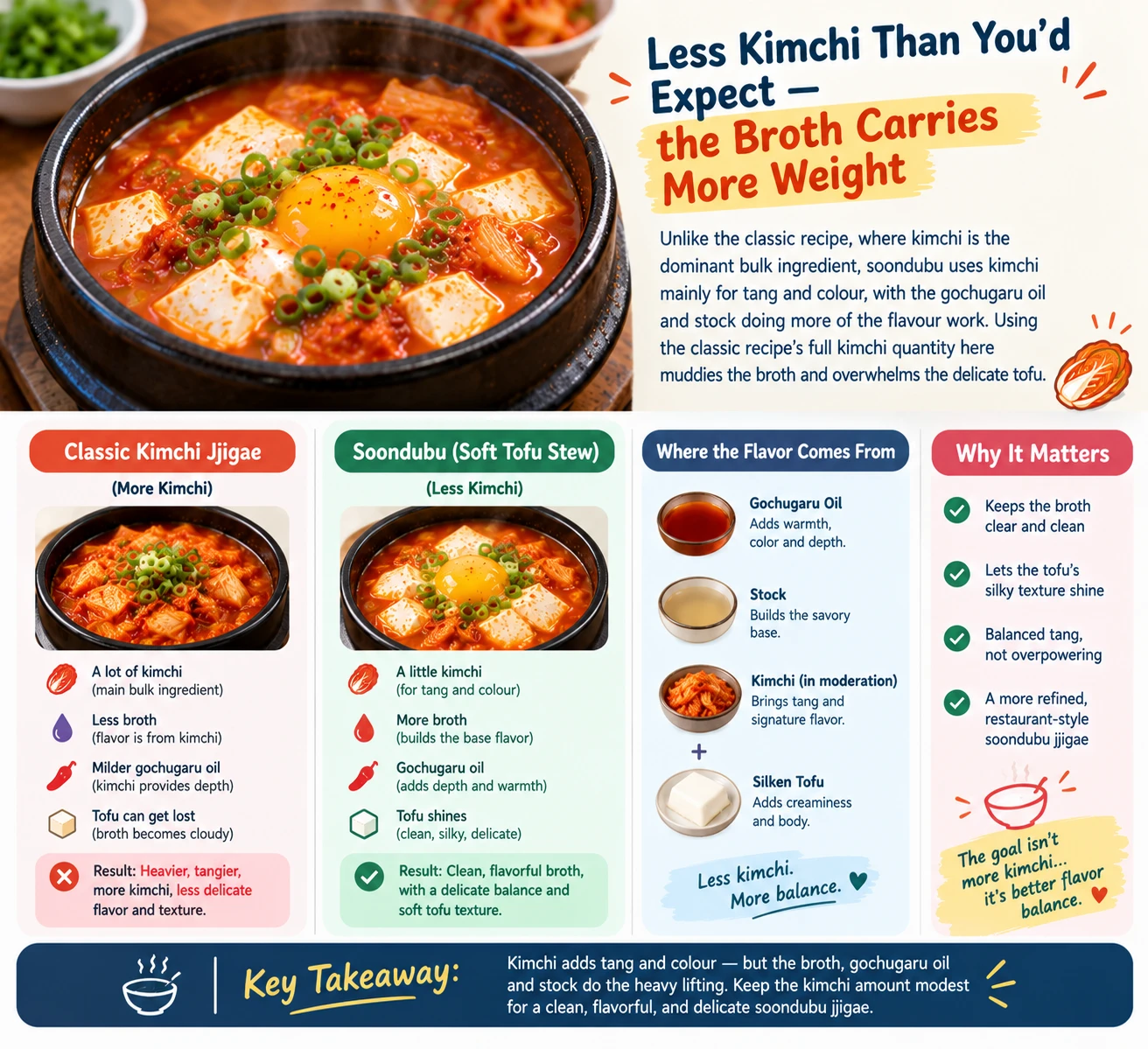
Unlike the classic recipe, where kimchi is the dominant bulk ingredient, soondubu uses kimchi mainly for tang and colour, with the gochugaru oil and stock doing more of the flavour work. Using the classic recipe’s full kimchi quantity here muddies the broth and overwhelms the delicate tofu.
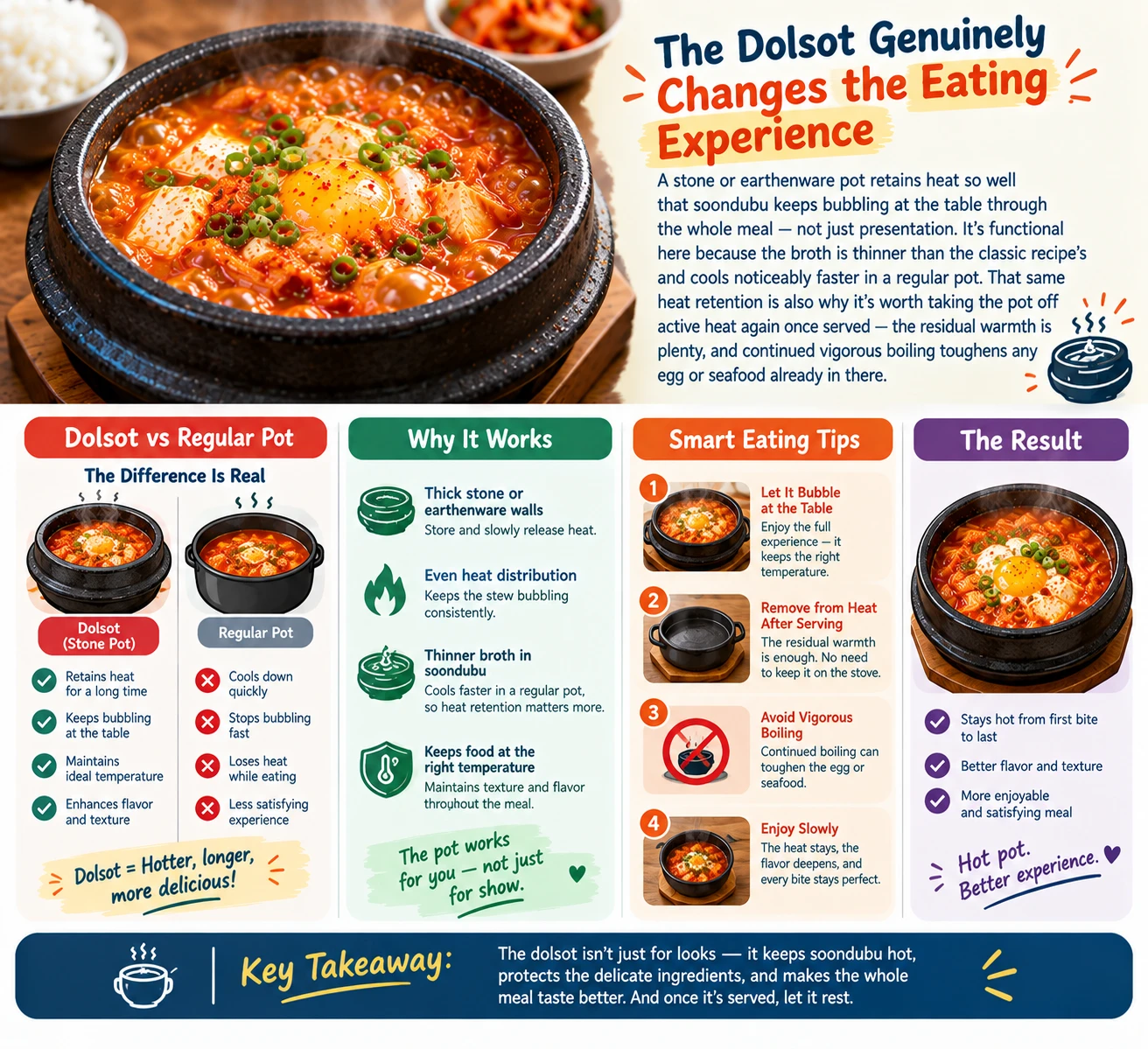
A stone or earthenware pot retains heat so well that soondubu keeps bubbling at the table through the whole meal — not just presentation. It’s functional here because the broth is thinner than the classic recipe’s and cools noticeably faster in a regular pot. That same heat retention is also why it’s worth taking the pot off active heat again once served — the residual warmth is plenty, and continued vigorous boiling toughens any egg or seafood already in there.
Silken vs Firm Tofu — Two Textures Compared
This is the single decision that determines whether you end up with soondubu jjigae or standard kimchi jjigae — they’re related dishes, not interchangeable versions of the same one.
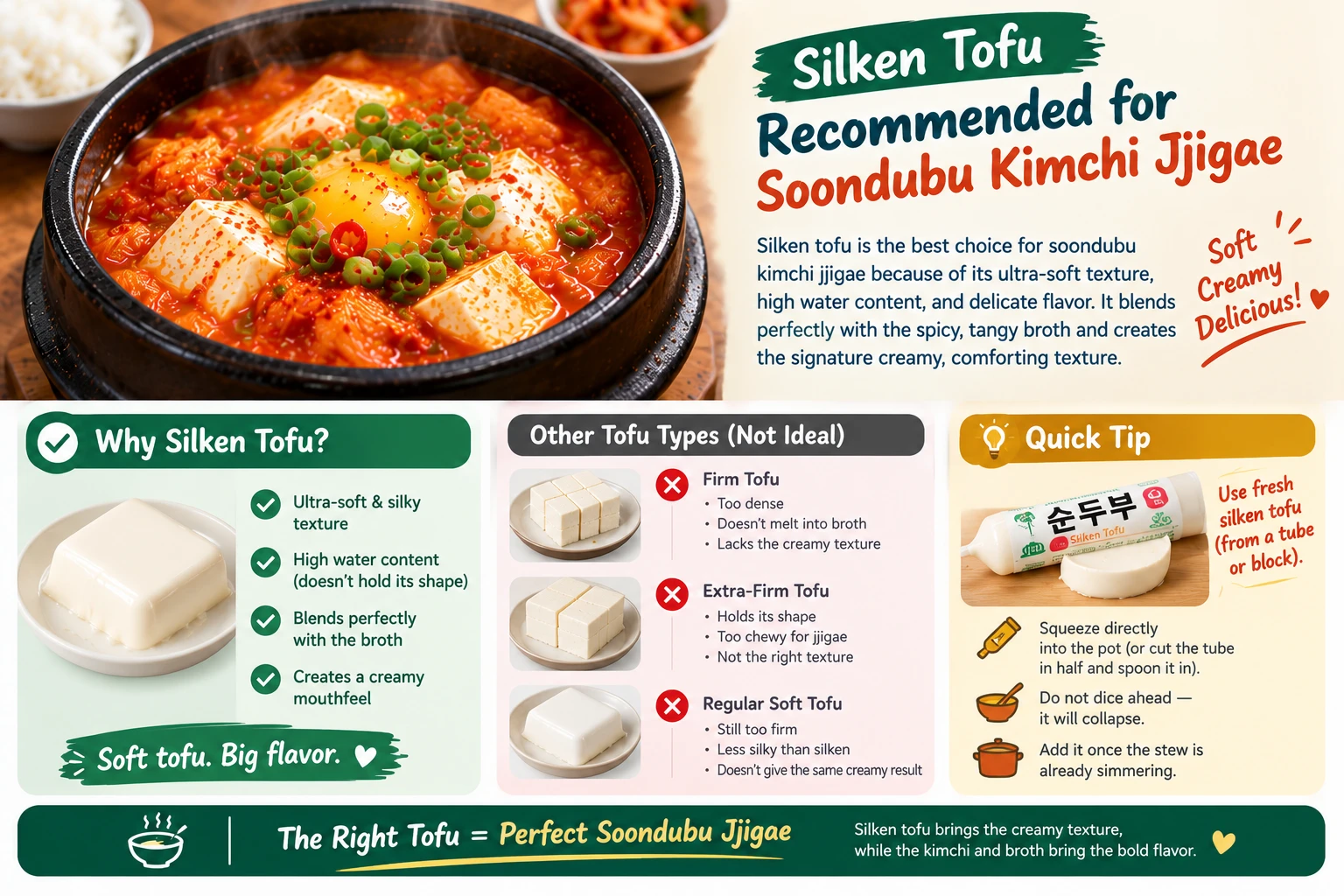
- Uncurdled, unpressed — very high water content
- Spoon straight from the tube, never pre-diced
- Added last, broken gently into a few large pieces
- Custardy, delicate mouthfeel that firm tofu can’t replicate
Result: Soft, silky, spoon-able texture — genuinely the defining feature of this specific dish.
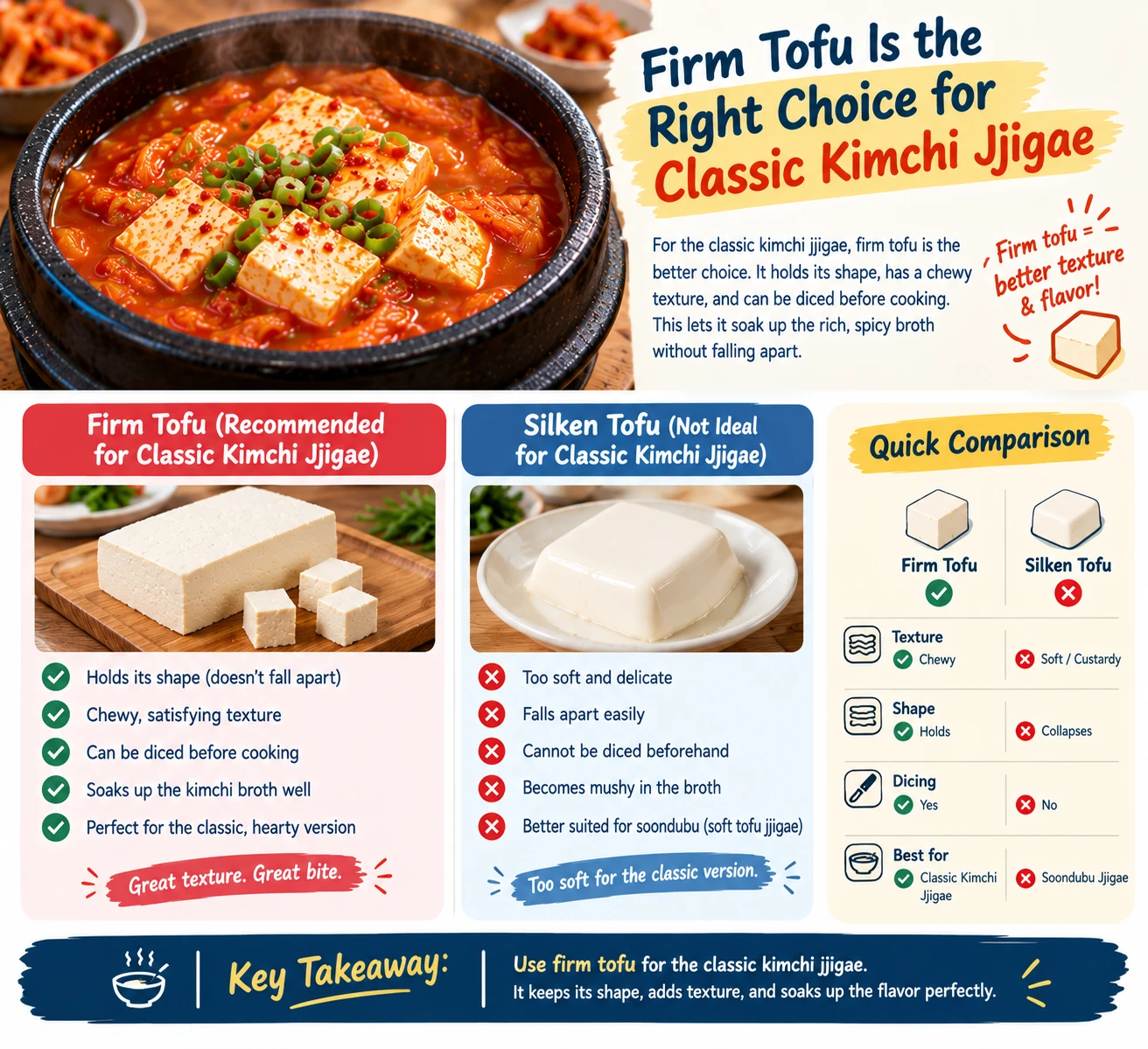
- Pressed, holds its shape as diced cubes
- Can be added earlier in the cook
- Firmer, chewier bite — the classic-jjigae standard
- Correct for the standard recipe, not this one
Result: Perfectly good tofu — just for a different, non-soondubu dish. See the Classic Kimchi Jjigae page instead.
Texture Comparison at a Glance
| Format | Texture Result | When to Add | Prep | Verdict |
|---|---|---|---|---|
| Silken ⭐ | Custardy, delicate, spoon-able | Last 2-3 min | None — spoon or squeeze in whole | Correct for soondubu, always use this |
| Firm | Chewier, holds cube shape | Earlier, 8-10 min | Dice into cubes | Use for classic jjigae instead |
Key Terms — Language & Food Science Entities
These terms define the technique and vocabulary specific to the soondubu version — see the full silo glossary on the Kimchi Jjigae Hub for terms shared across the whole family.
Which Protein to Use — Four Options Ranked
Unlike most of the family, soondubu’s defining feature is the tofu, not the protein — which means the protein itself is genuinely flexible. Here’s how the common choices compare.
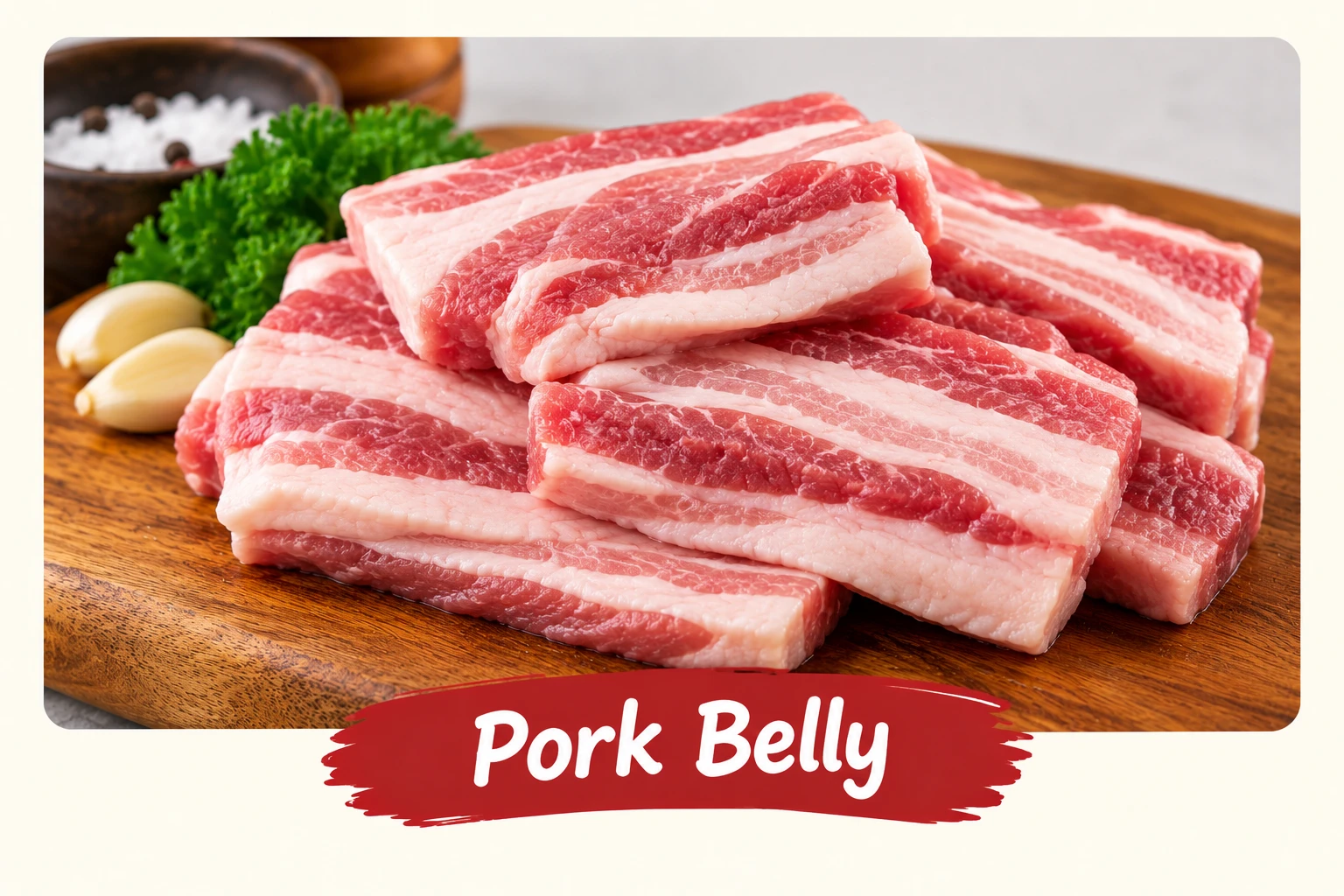
The recipe as written. Thin-sliced, browned first for a savoury fond that carries into the broth.
⭐ Best Choice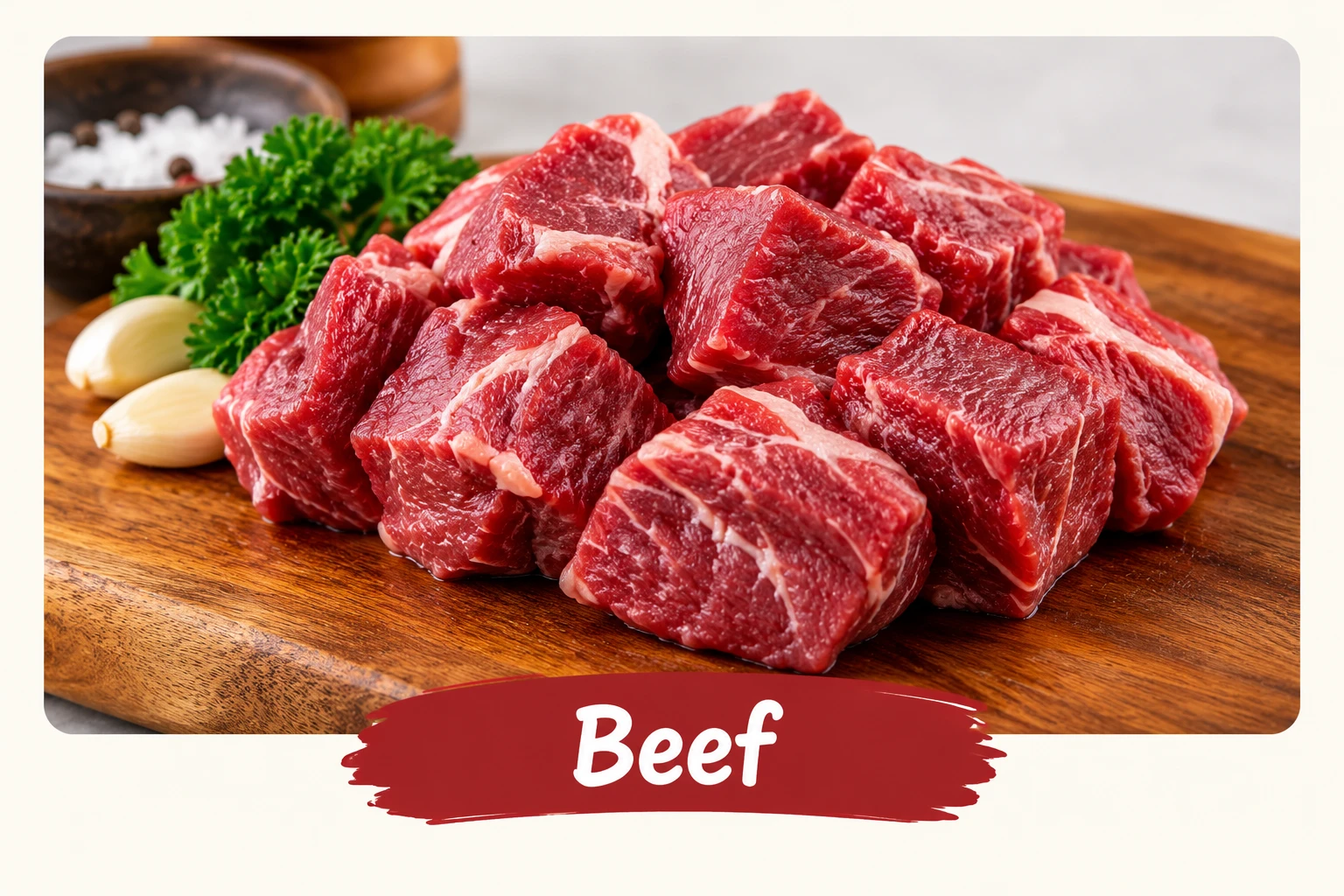
Skirt or chuck, thinly sliced — a richer, slightly more traditional-restaurant-style broth than pork.
✅ Classic Alternative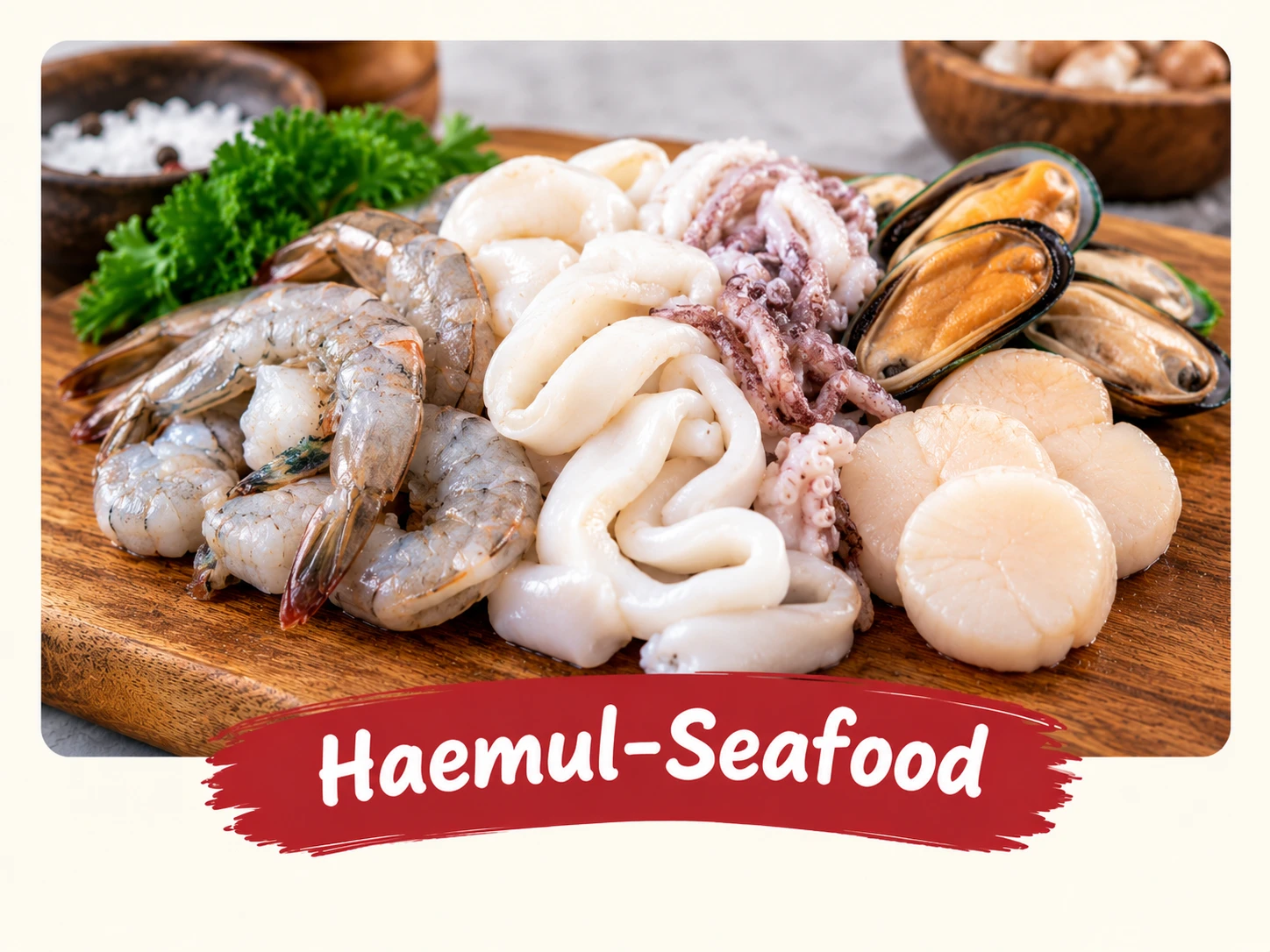
Shrimp and clams in place of meat — lighter, briny, a very common restaurant variation. Add them right at the end and don’t let the pot keep boiling once they’re in, or they turn tough and rubbery.
Good Lighter Option
Enoki or shiitake work as a full meat replacement for a vegan version, or simply as an addition alongside any of the proteins above — many restaurant versions include mushrooms regardless of the main protein.
Good Addition or Plant-Based SwapWhich Kimchi Stage to Use — Soondubu Version Guide
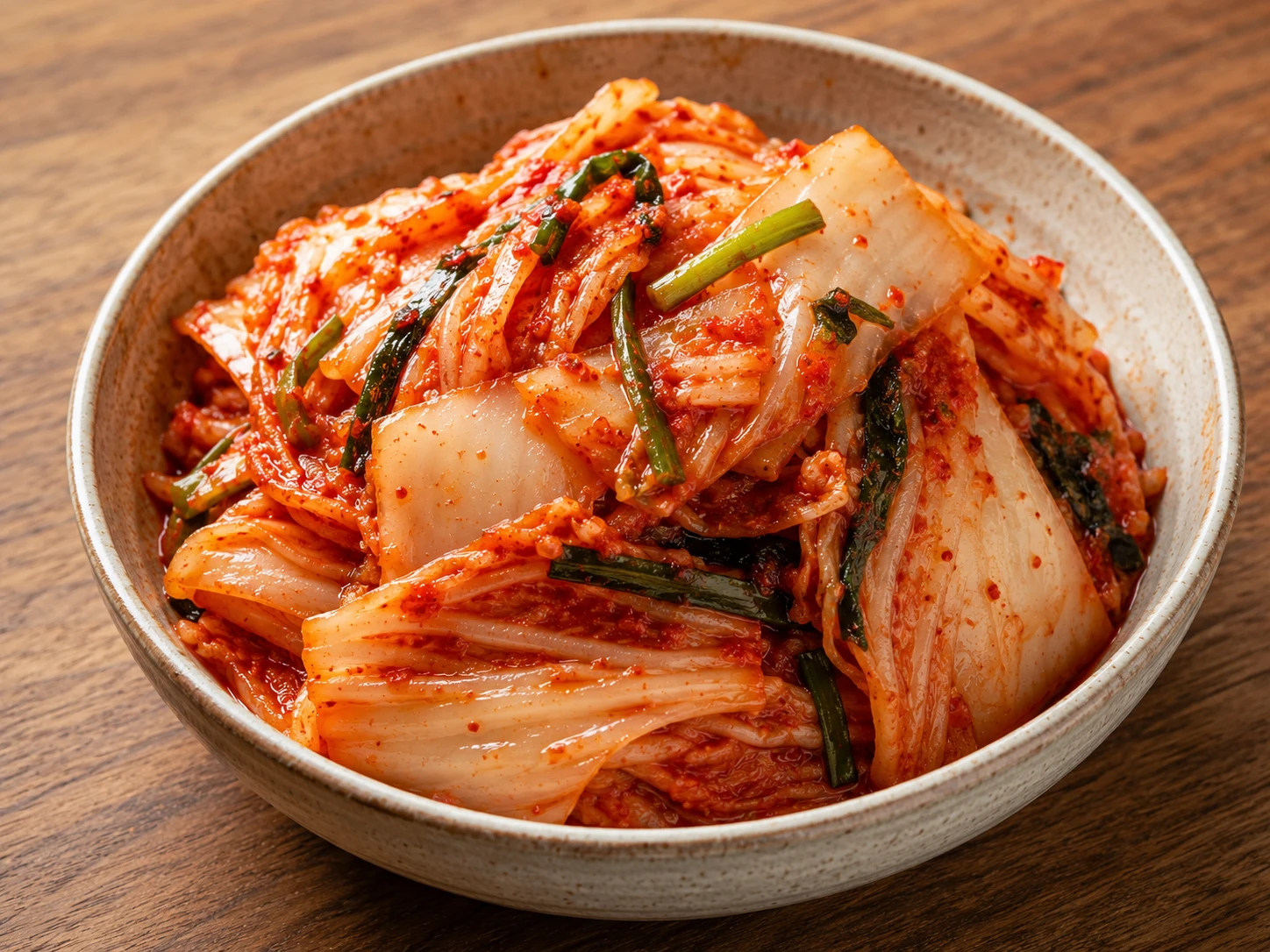
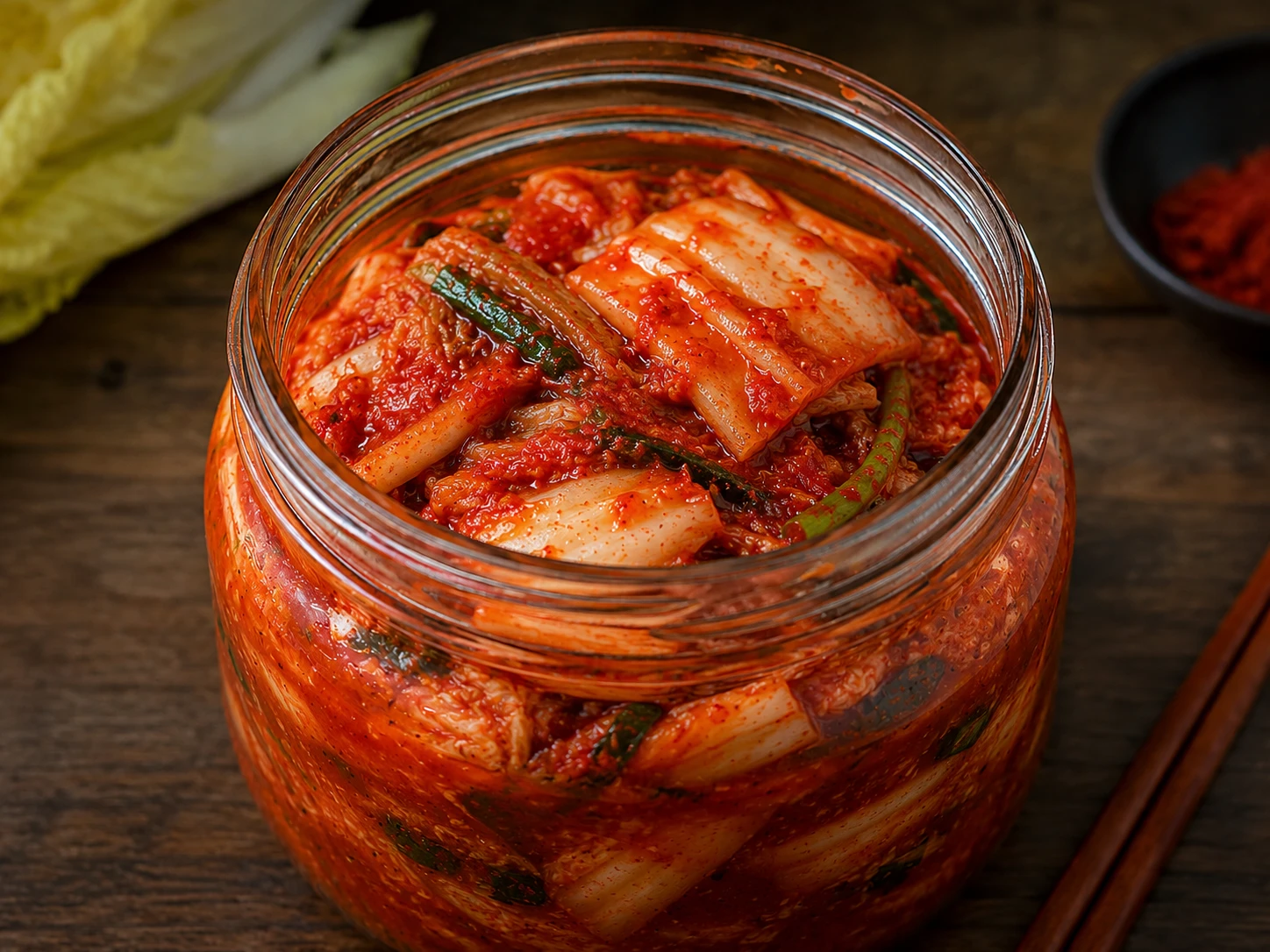
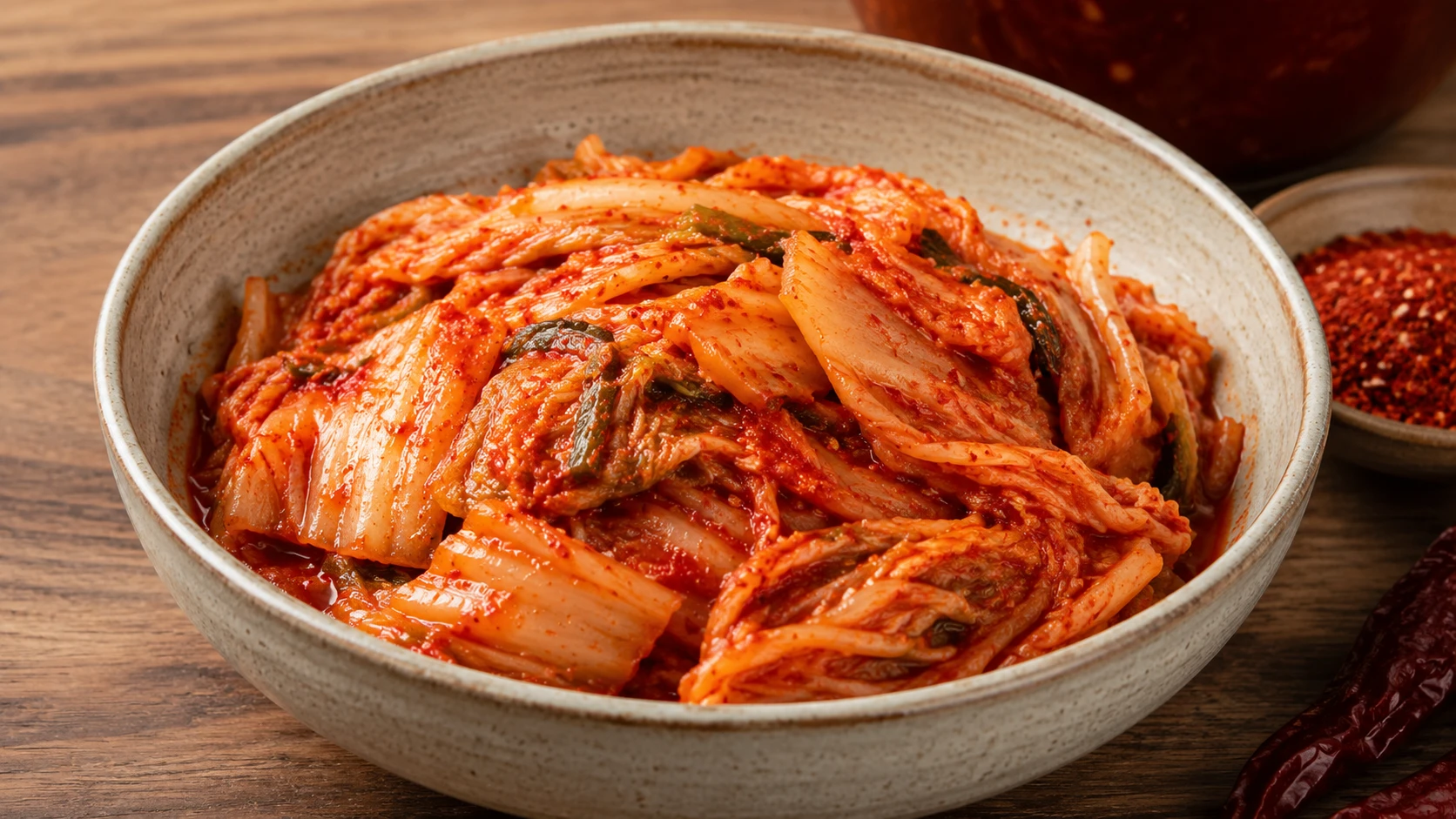
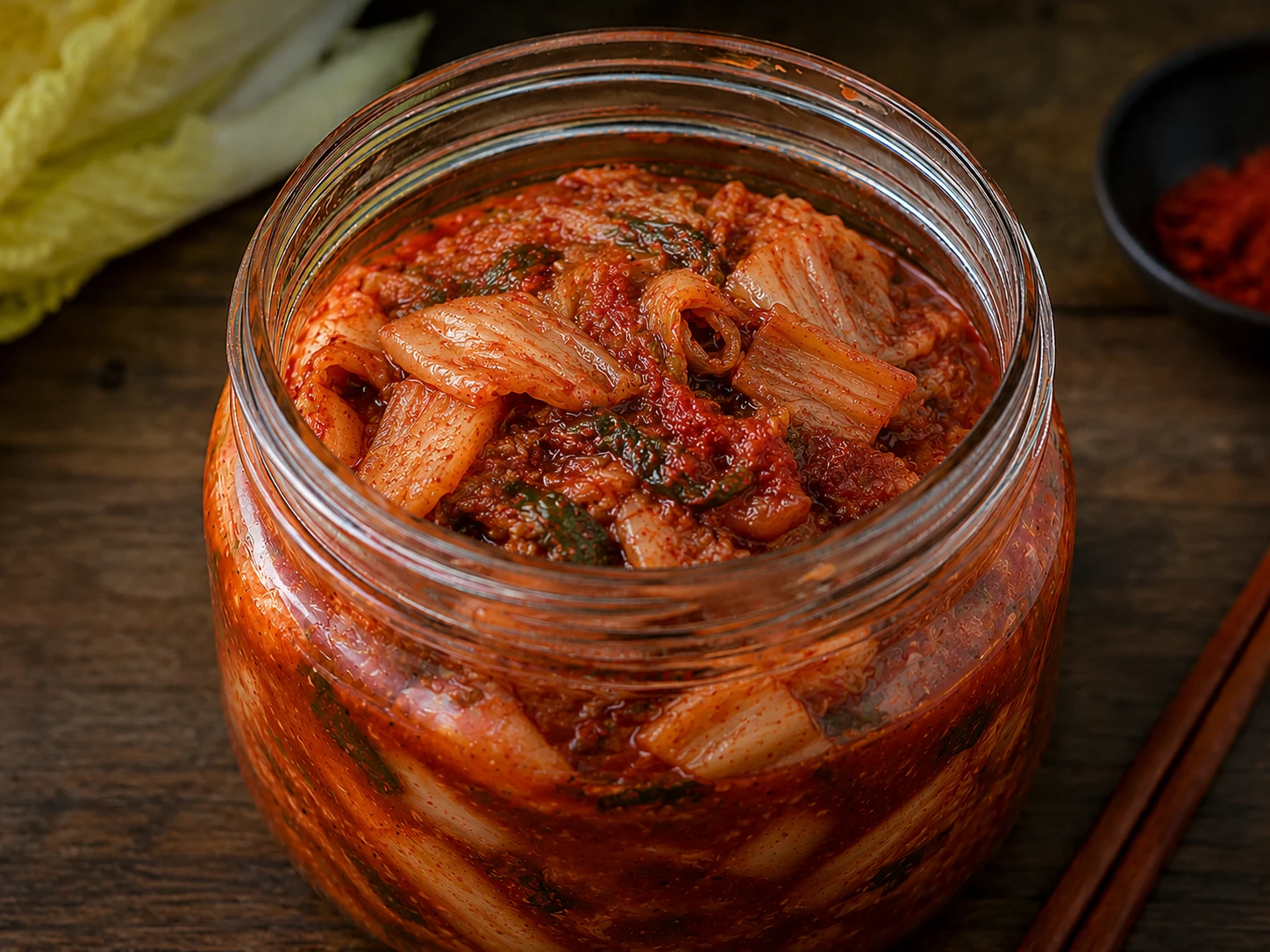
Fermentation stage and quantity are two separate variables — Stage 3 remains the correct default here too, even though you’ll use less of it than in the classic recipe.
How Difficult Is the Soondubu Version?
Genuinely one of the fastest and easiest recipes in the family — the only real technique to learn is timing the egg and handling the tofu gently.
Ingredients + Scaler
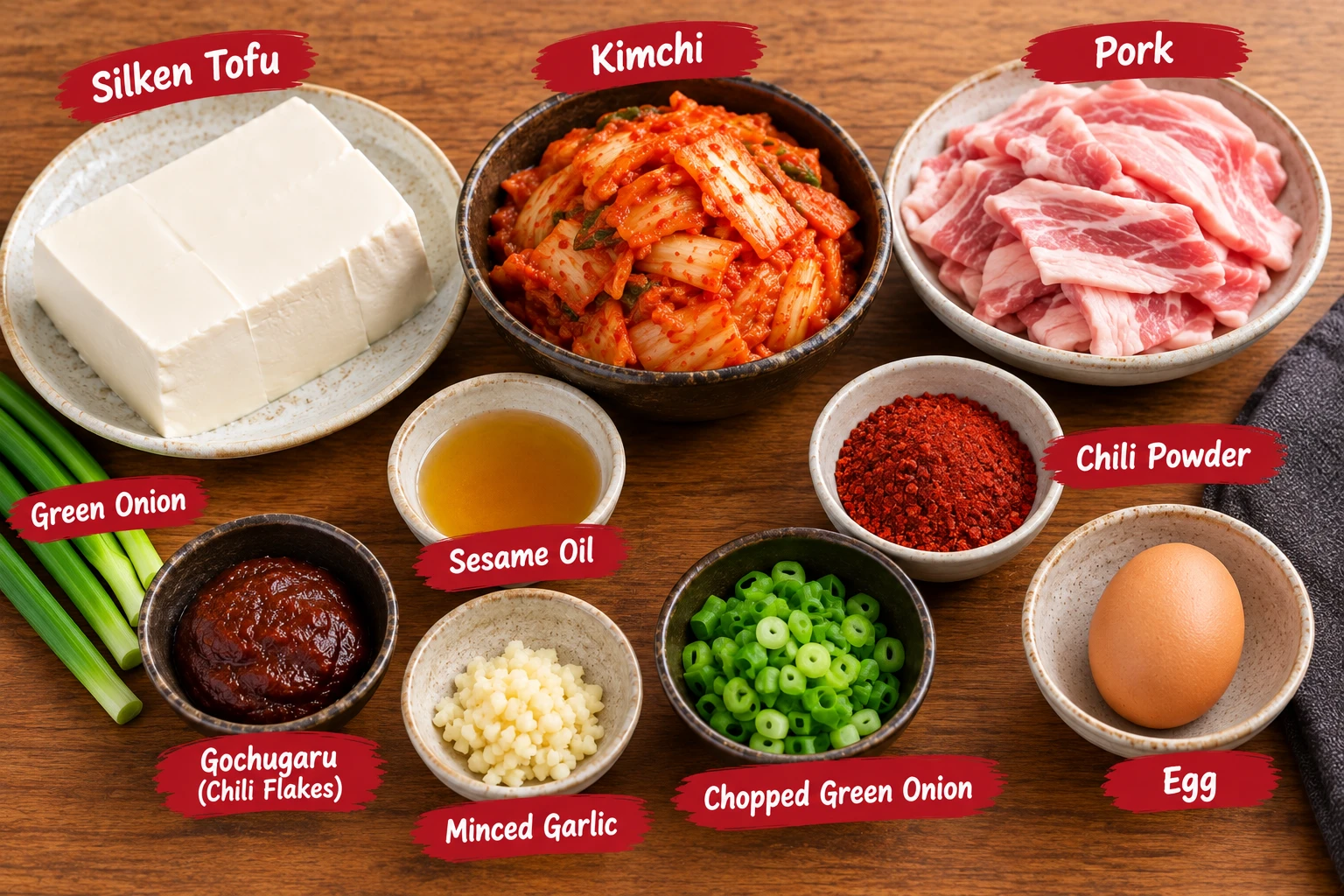
Silken tofu and a soft-set egg are the two non-negotiables. Everything else follows the same base kimchi jjigae logic, just in smaller quantity for the kimchi.
How to Make Soondubu Kimchi Jjigae — 5 Steps
Five steps, and genuinely the fastest recipe in the family. The two moments that matter most: adding the silken tofu gently near the end, and cracking the egg in only after the pot is off the heat.
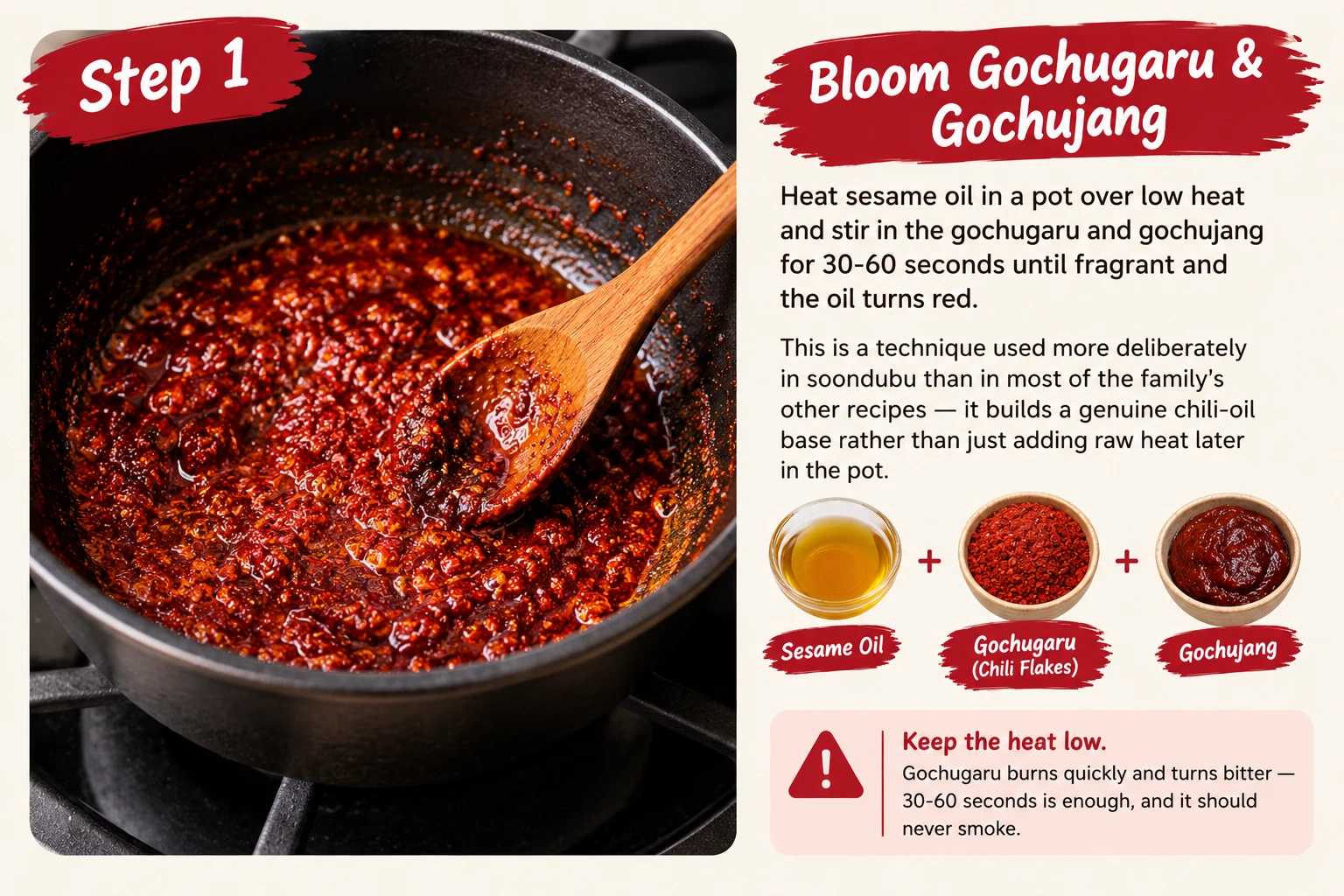
Heat sesame oil in a pot over low heat and stir in the gochugaru and gochujang for 30-60 seconds until fragrant and the oil turns red.
This is a technique used more deliberately in soondubu than in most of the family’s other recipes — it builds a genuine chili-oil base rather than just adding raw heat later in the pot.
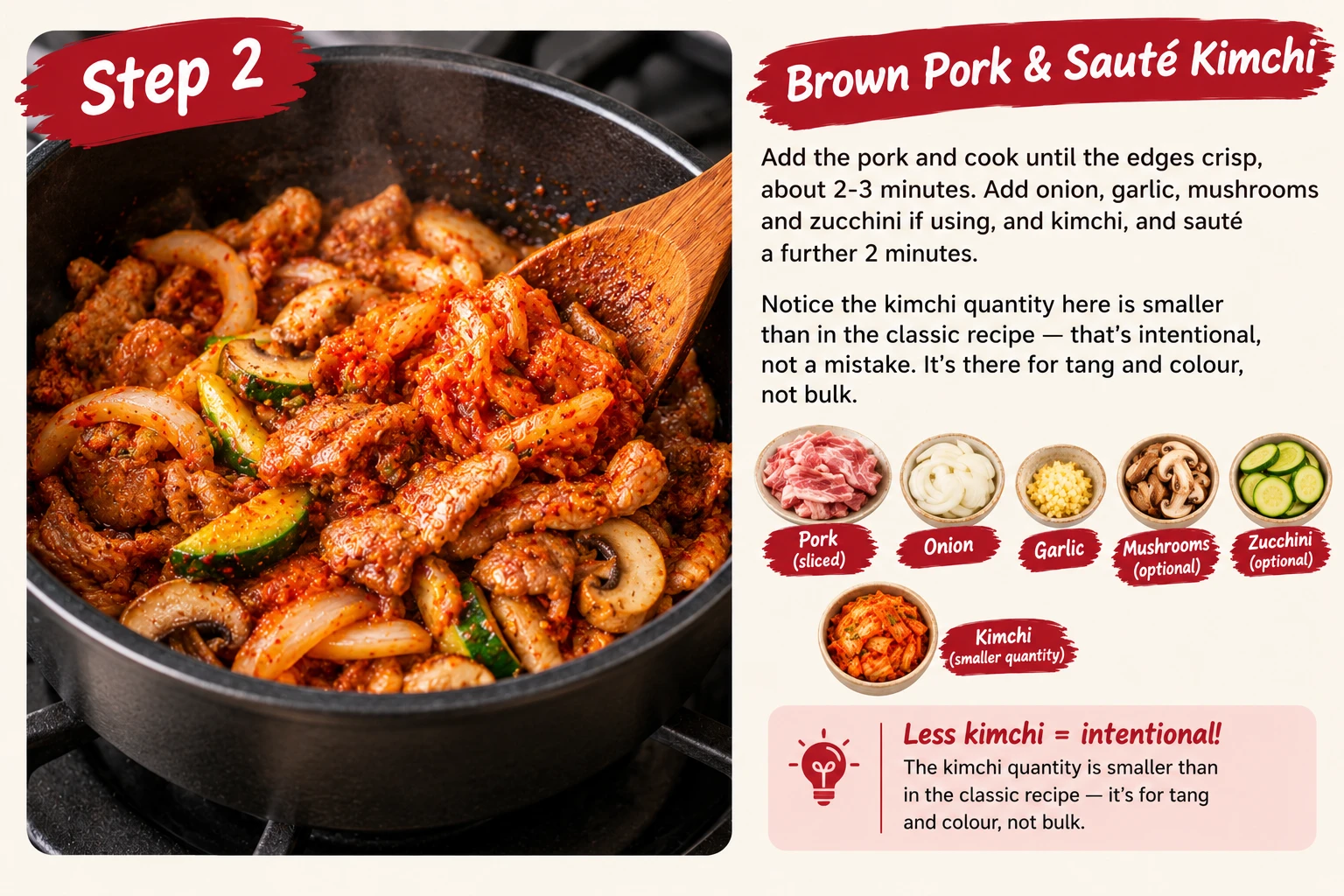
Add the pork and cook until the edges crisp, about 2-3 minutes. Add onion, garlic, mushrooms and zucchini if using, and kimchi, and sauté a further 2 minutes.
Notice the kimchi quantity here is smaller than in the classic recipe — that’s intentional, not a mistake. It’s there for tang and colour, not bulk.
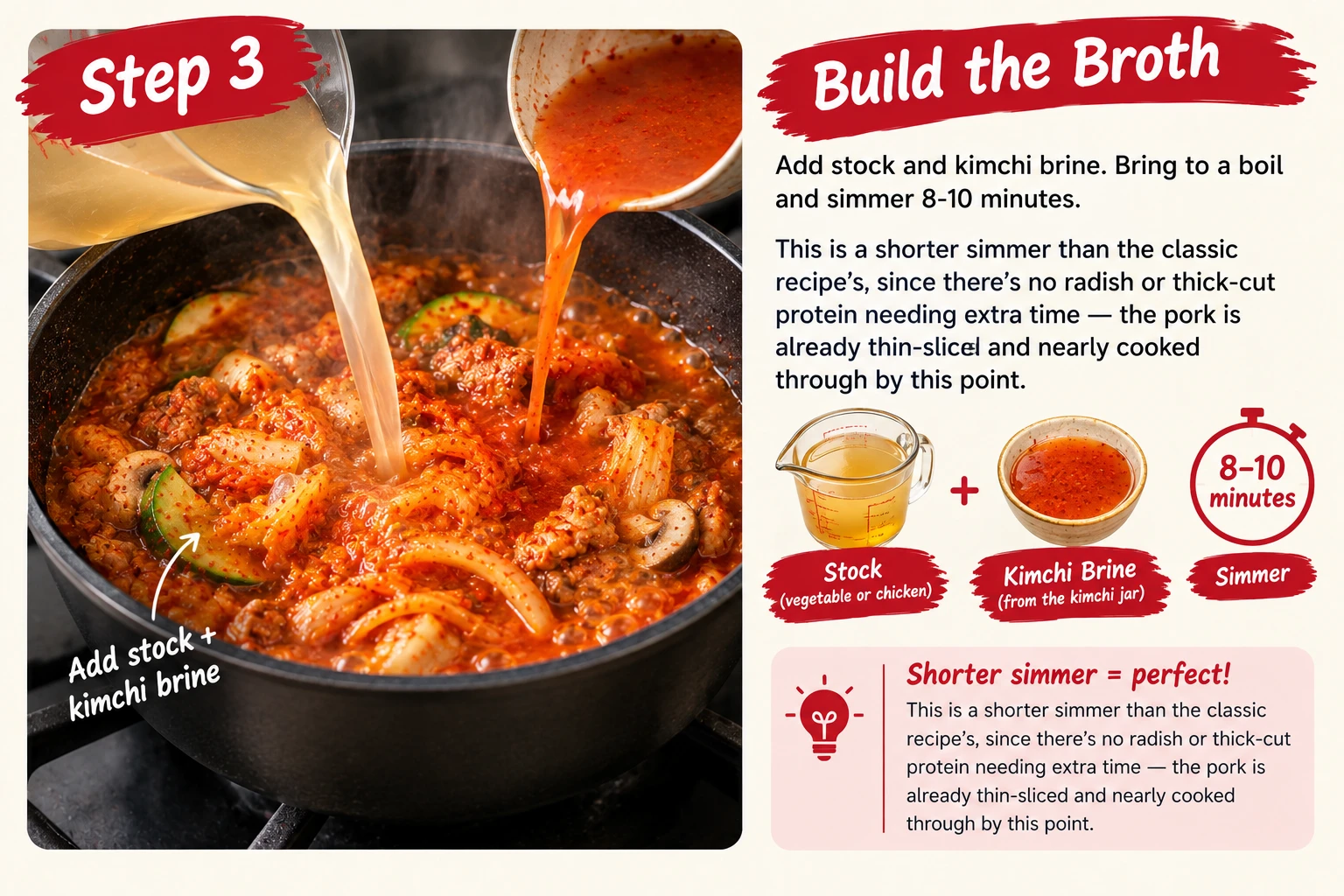
Add stock and kimchi brine. Bring to a boil and simmer 8-10 minutes.
This is a shorter simmer than the classic recipe’s, since there’s no radish or thick-cut protein needing extra time — the pork is already thin-sliced and nearly cooked through by this point.
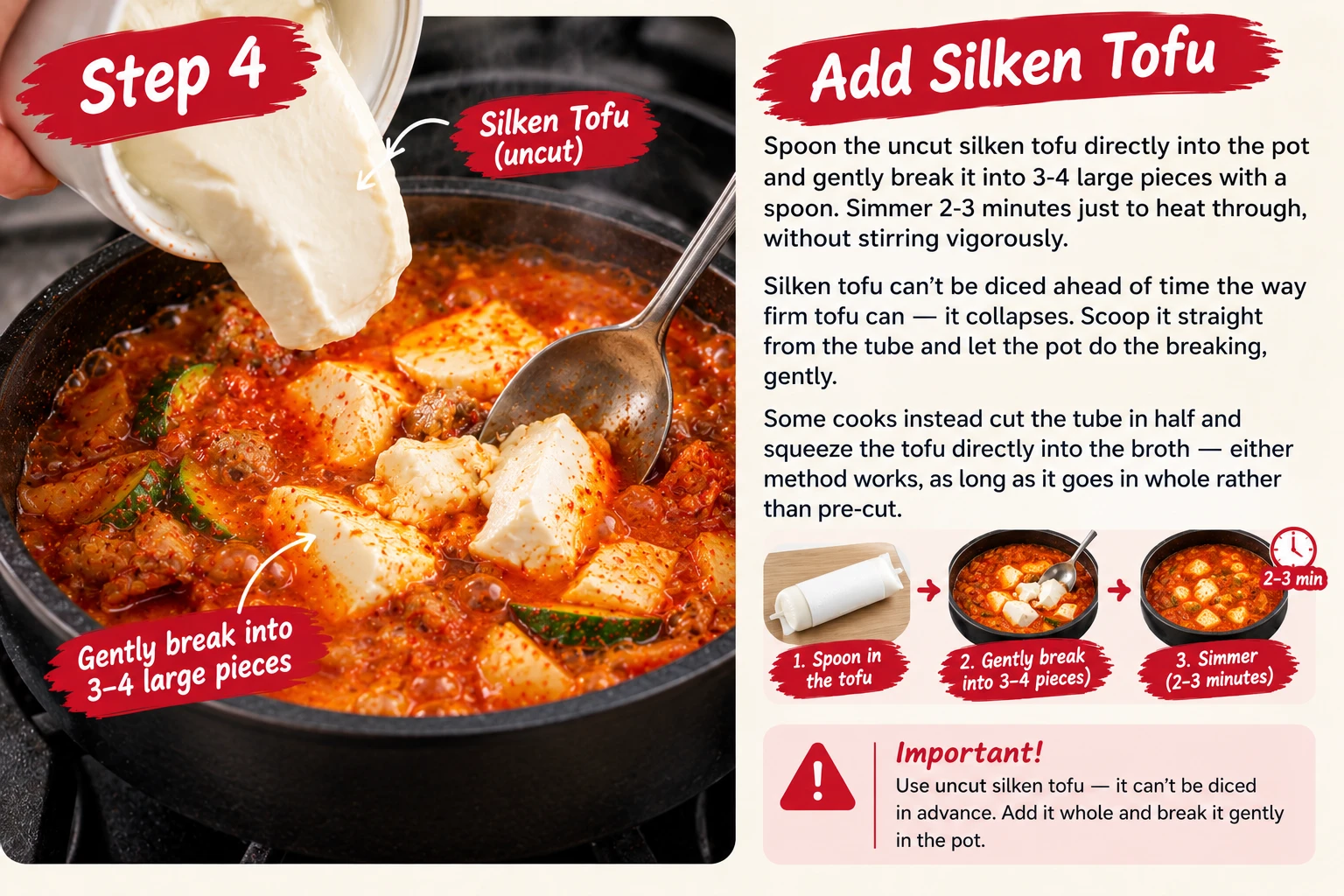
Spoon the uncut silken tofu directly into the pot and gently break it into 3-4 large pieces with a spoon. Simmer 2-3 minutes just to heat through, without stirring vigorously.
Silken tofu can’t be diced ahead of time the way firm tofu can — it collapses. Scoop it straight from the tube and let the pot do the breaking, gently. Some cooks instead cut the tube in half and squeeze the tofu directly into the broth — either method works, as long as it goes in whole rather than pre-cut.
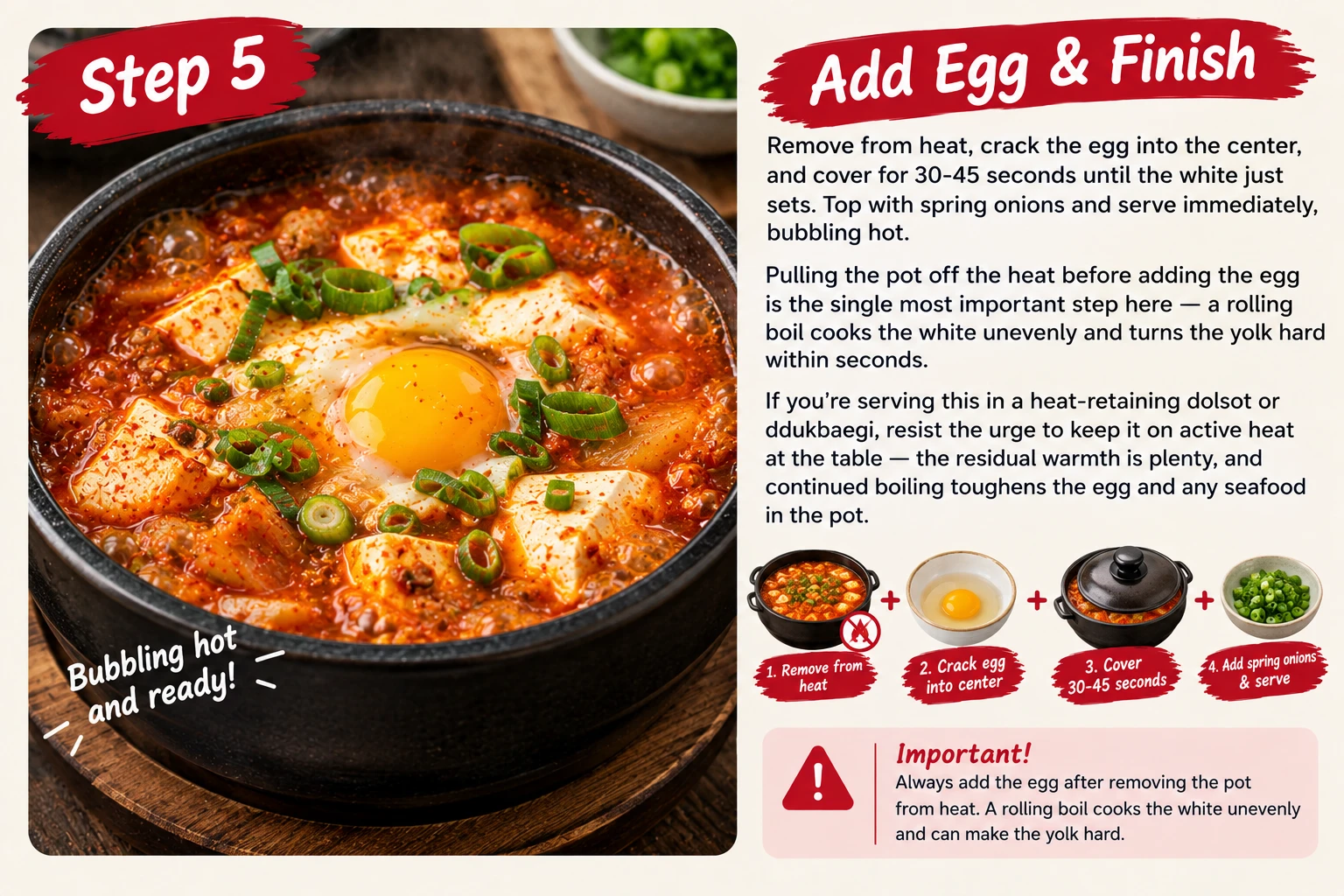
Remove from heat, crack the egg into the center, and cover for 30-45 seconds until the white just sets. Top with spring onions and serve immediately, bubbling hot.
Pulling the pot off the heat before adding the egg is the single most important step here — a rolling boil cooks the white unevenly and turns the yolk hard within seconds. If you’re serving this in a heat-retaining dolsot or ddukbaegi, resist the urge to keep it on active heat at the table — the residual warmth is plenty, and continued boiling toughens the egg and any seafood in the pot.
What We Tested for the Soondubu Version
Three variables decide whether this recipe tastes like a proper restaurant-style soondubu jjigae or a broken-up, cloudy stew. Here’s what we found.
Every other recipe in this family rewards more established fermentation and generous kimchi quantity. Soondubu is the exception on quantity — the reduced amount here isn’t a corner cut, it’s what makes the dish taste like proper soondubu instead of kimchi jjigae with unusual tofu floating in it.
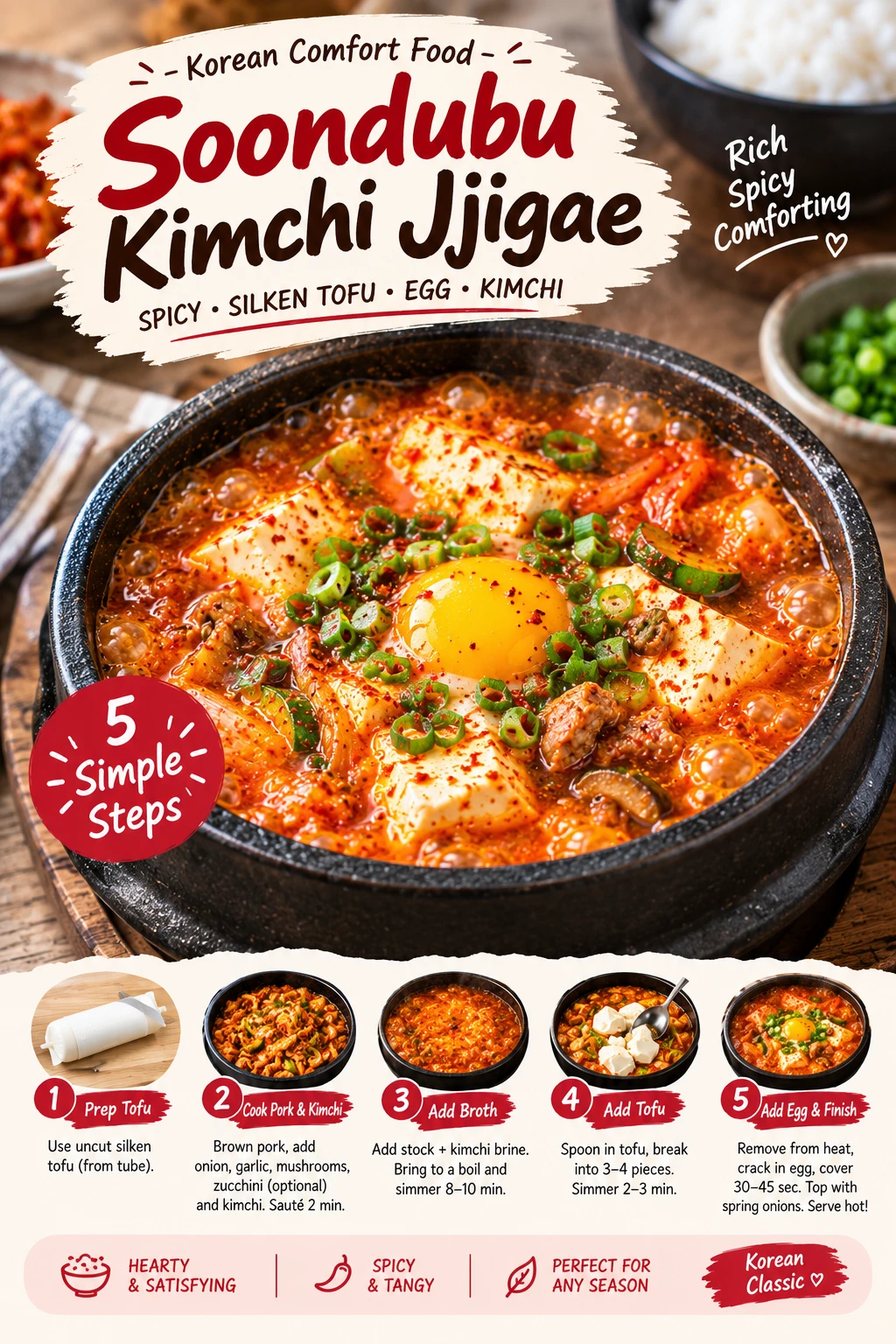
Soondubu Kimchi Jjigae (순두부 김치찌개)
Silken tofu · off-heat egg finish · 25 min · ~260 calories, 18g protein
- 1 tbsp sesame oil
- 1 tbsp gochugaru
- 1 tsp gochujang (optional)
- 150g pork belly, thinly sliced
- ½ onion, 3 cloves garlic, minced
- Optional: ½ cup sliced mushrooms
- ¾ cup aged kimchi (Stage 3), chopped
- 3 cups anchovy-kelp stock
- 2 tbsp kimchi brine
- 1 tube (350-400g) silken tofu, uncut
- 1-2 large eggs
- Saeujeot, spring onions, salt to taste
- Bloom gochugaru in warm sesame oil, 30-60 sec.
- Brown pork, sauté onion, garlic, mushrooms, kimchi 2 min.
- Add stock and brine, simmer 8-10 min.
- Spoon or squeeze in silken tofu, break gently, simmer 2-3 min.
- Off heat, crack in egg, cover 30-45 sec. Top with spring onions, serve hot.
🛒 Shop the Ingredients & Equipment
The exact-type ingredients and equipment used for this recipe, plus what to use if you’re starting from scratch.
Not making your own kimchi? See our guides on where to buy kimchi and the best store-bought kimchi brands — either works for the aged Stage 3 kimchi this recipe calls for.
The Kimchi Jjigae Family — 13 Variations
This is page 5 of a growing 13-recipe family, all built on the same aged-kimchi base. The Kimchi Jjigae Ultimate Guide → compares every variation as it’s published.




Pairing Guide — Soondubu Version
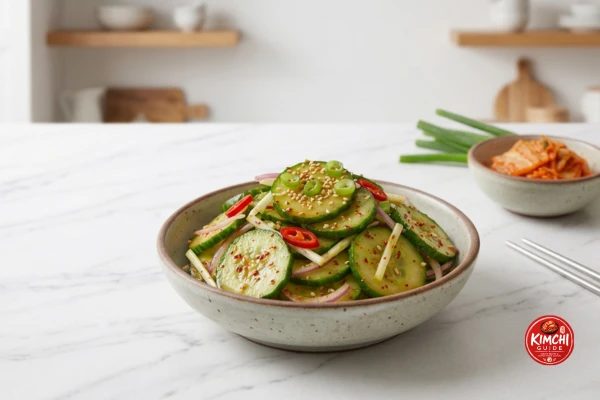
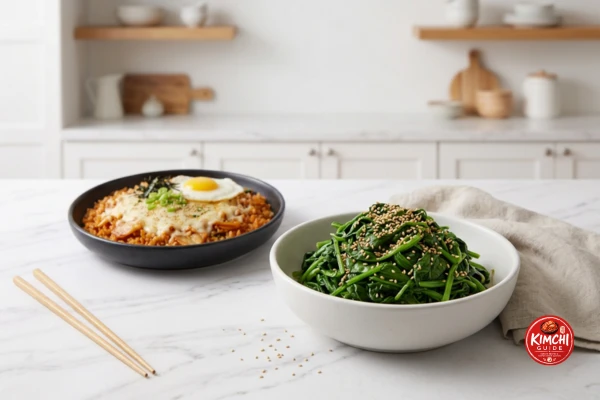
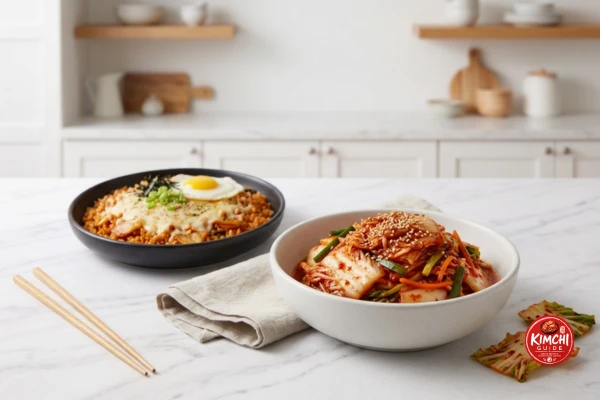
Because the broth here is thinner and lighter than the classic recipe, pairings that add a bit of substance or crunch work especially well.
Storage & Reheating — Soondubu Version
This one is genuinely best made fresh — the two ingredients that define it, silken tofu and a soft-set egg, don’t hold up well over time.
Detailed Nutrition Comparison — Soondubu Version
A complete per-serving breakdown, reviewed by Dr. Sarah Mitchell RD, PhD, alongside how this recipe compares to the rest of the kimchi jjigae family.
Nutrition Facts
Per serving — recipe makes 4 servings
How Soondubu Compares to the Rest of the Family
| Variation | Calories | Protein | Sat. Fat | Best For |
|---|---|---|---|---|
| Kimchi Guk | 130 | 9g | 1g | Lightest, lowest-sodium option in the family |
| Seafood Jjigae | 210 | 20g | 1.5g | Leanest jjigae-format option |
| Vegan | 200 | 12g | 1.5g | Lowest saturated fat in the family |
| Vegetarian | 220 | 13g | 2.5g | Meatless without going fully vegan |
| Soondubu ← This page | 260 | 18g | 5g | Fastest to cook, lowest carb, restaurant-familiar |
| Tuna (Chamchi) | 260 | 24g | 2g | Fastest, highest protein-to-calorie ratio |
| Chicken | 280 | 25g | 3g | Highest protein, leanest meat-based option |
| Instant Pot/SC | 310 | 19g | 6g | Same profile as Classic, adapted for appliances |
| Mackerel | 310 | 22g | 4g | Highest omega-3, most traditional and budget-friendly |
| Classic (Pork) | 320 | 18g | 7g | The family’s pillar recipe |
| Beef | 340 | 24g | 8g | Richest, most indulgent option in the family |
| Spam | 380 | 16g | — | Simple single-protein comfort food |
| Budae Jjigae | 480 | 24g | 12g | Richest, most filling, party/sharing-dish option |
Sources & Further Reading
The food-science, technique, and cultural claims on this page are cross-checked against the following references.
Soondubu Kimchi Jjigae FAQ — 18 Questions
Soondubu jjigae uses uncut silken (soft) tofu spooned in at the end instead of diced firm tofu, uses noticeably less kimchi so the delicate broth stays clean, and traditionally finishes with an egg cracked into the hot broth right before serving — regular kimchi jjigae does none of these.
You can, but at that point it’s a different dish — standard kimchi jjigae, not soondubu. Silken tofu’s soft, custardy texture is the entire point of this variation.
It’s the traditional finishing touch and adds a lot to the eating experience, but it’s not mandatory — leave it out for an egg allergy or simple preference without changing anything else about the recipe.
Pull the pot off the heat before cracking the egg in, then cover for 30-45 seconds. Direct exposure to a rolling boil cooks the white unevenly and turns the yolk hard.
A dolsot (or ddukbaegi) is a Korean stone or earthenware pot that retains heat exceptionally well, keeping the stew bubbling at the table well after it’s served. It’s traditional and genuinely useful here since the broth is thinner than the classic version and cools faster, but any heavy pot works fine. Once it’s at the table, it’s still worth pulling it off any active heat source soon after serving — continued vigorous boiling toughens seafood or egg that’s already in the pot.
Yes — reduce the gochugaru in the oil-bloom step. Use the spice level adjuster tool on this page to see exact amounts for five heat levels.
Pork belly is the classic choice, but beef, seafood (haemul soondubu), or mushrooms for a vegan version are all common and traditional — see the ranked protein comparison on this page. Sliced mushrooms are also a common addition alongside any of these proteins, not just a meat replacement.
Two common causes: skipping the gochugaru oil-bloom step (it builds real depth, not just heat), or not enough kimchi brine. Both matter more here since the kimchi quantity itself is deliberately lower than the classic recipe.
No — spoon it in whole, straight from the tube, and break it into a few large pieces gently with a spoon once it’s in the pot. Some cooks instead cut the tube in half and squeeze the tofu directly into the broth, which works just as well. Pre-dicing it causes it to disintegrate into mush by the time it’s served.
Some silken tofu brands pack more water around the tofu than others. If yours seems especially wet, gently drain a little of the liquid from the tube before adding it, rather than adding it all with the tofu.
Saeujeot is Korean salted fermented shrimp, a traditional seasoning that adds real umami depth. It’s optional here — fish sauce is a reasonable substitute if you don’t have it.
Yes — swap the pork for mushrooms (enoki works well), use a vegan gochujang, and skip the egg and saeujeot. Add a little extra umami from the mushrooms or a splash of soy sauce to compensate.
Yes — sliced zucchini (Korean or regular) is one of the most common additions across household and restaurant versions of this dish. Add it with the onion and garlic in Step 2, along with the mushrooms if you’re using them.
Moderately spicy from the standard gochugaru amount — adjustable up or down with the spice tool on this page.
Not really — silken tofu and egg are both best made fresh and don’t hold up well. You can prep the broth base ahead and add the tofu and egg fresh when you’re ready to eat.
It’s not recommended. Silken tofu breaks down badly after freezing and thawing, and a cooked egg doesn’t freeze well either.
It can be — check that your gochujang and any soy sauce or saeujeot brand are gluten-free. The core ingredients (tofu, kimchi, stock, gochugaru) are naturally gluten-free.
We tested it side by side — the full classic amount muddied the broth and overwhelmed the delicate silken tofu, while a smaller amount kept the broth clean and let the tofu remain the star. It’s the one variation in the family where less kimchi genuinely tastes better.


Questions & Comments
Did you try it with pork, beef, or the vegan version? Leave a question below — Ji-Young reads and responds to every comment.
Your email will not be published. All comments are reviewed before appearing.