Trader Joe’s Kimchi Review Is It Actually Good? (2026)
A standalone deep-dive on the cheapest widely available kimchi brand — real taste, nutrition, the actual ingredient list, who really makes it behind the private label, the probiotic debate, and honest safety notes.
Is Trader Joe’s Kimchi Good?
Yes, for what it is — a genuinely solid budget option rather than a top-tier one. In our 18-brand blind taste test, Trader Joe’s scored 8.3/10, our best-value pick by a wide margin: good crunch, mild-medium heat, and reliable quality at roughly $3.99 for a jar, a fraction of what Korean-import brands cost. It’s noticeably milder and less deeply fermented than brands like Jongga or Cosmos, and — genuinely unusual for kimchi — Trader Joe’s doesn’t actually make it themselves: like nearly everything sold under the Trader Joe’s label, it’s produced by an undisclosed third-party manufacturer in Korea under a private-label arrangement. If you want the most authentic flavor available, look elsewhere; if you want a cheap, low-calorie, no-fuss jar for everyday eating or cooking, this is a legitimately good pick.
Trader Joe’s Kimchi — At a Glance
Here’s what actually matters before you decide whether to put a jar in your cart.
- Taste: mild, clean, crunchy — noticeably less funky than traditional brands.
- Made by: an undisclosed Korean manufacturer under Trader Joe’s private label — TJ’s doesn’t disclose who.
- Ingredients: no fish sauce or shrimp listed — generally vegan-friendly.
- Nutrition: only 10-20 kcal per 2 tbsp (1oz) serving — genuinely light.
- Probiotics: genuinely debated — has a starter culture, but also added vinegar/lactic acid.
- Price: ~$3.99/jar — the cheapest widely available non-bulk option.
Trader Joe’s Kimchi — Product Overview & Scorecard
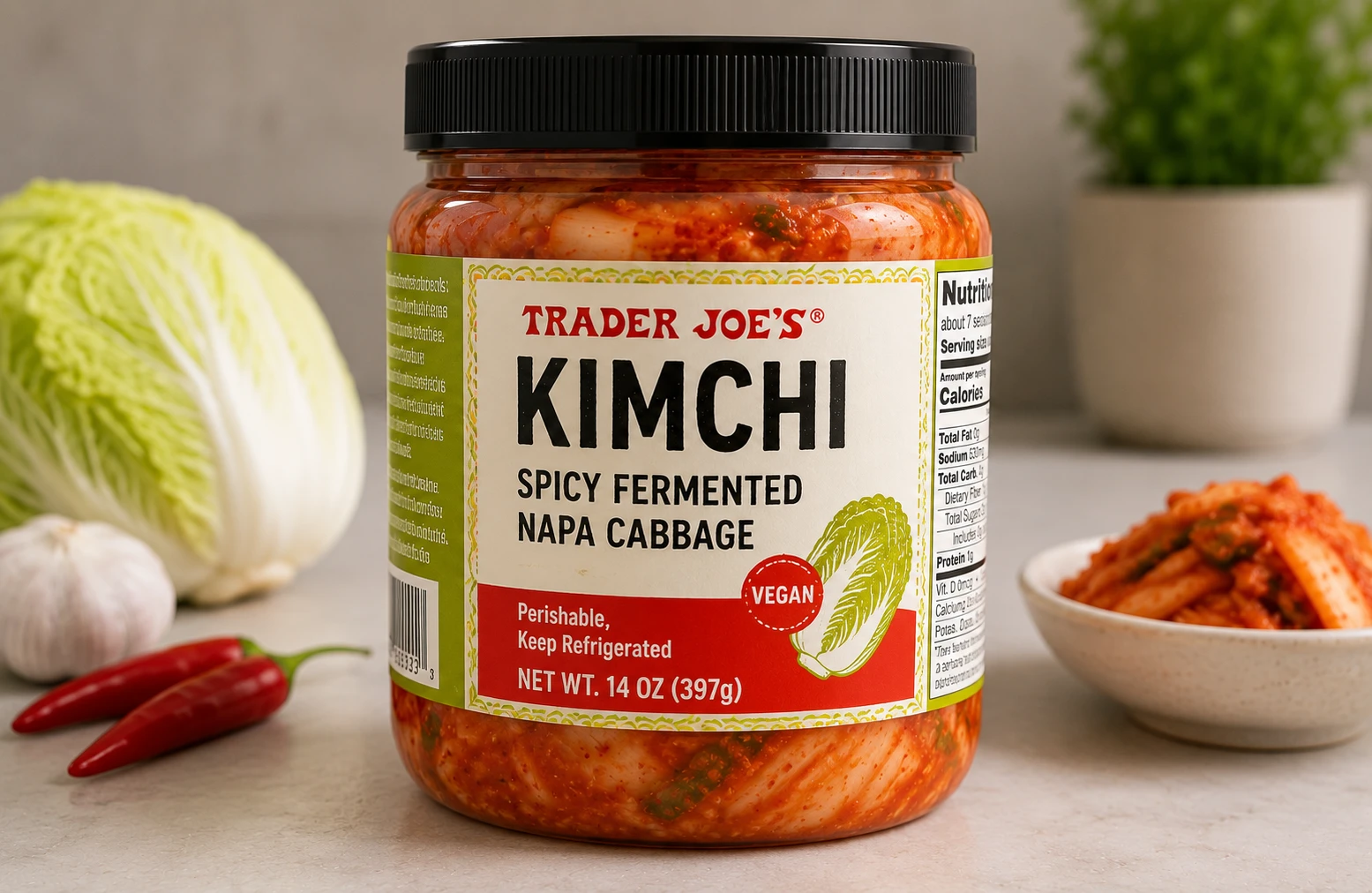
Here’s how Trader Joe’s scored across our core taste-test criteria, from the same 18-brand blind test used for our full brand ranking.
Who Actually Makes Trader Joe’s Kimchi?
This is the single most interesting thing about this brand, and almost no kimchi content covers it.
Every other brand in our full ranking is a company whose entire business is making and selling kimchi (or Korean food more broadly) under its own name. Trader Joe’s is different: it’s a grocery retailer, and like roughly 80-90% of everything sold under the Trader Joe’s label, its kimchi is a private-label product. Trader Joe’s does not own kimchi factories. It contracts with a third-party manufacturer — in this case based in Korea, per the “Made in Korea” label — under a supply agreement, and that manufacturer’s identity is kept confidential as a matter of standard Trader Joe’s business practice.
This isn’t unusual for Trader Joe’s specifically — it’s core to how the company operates across its entire catalog. Trader Joe’s was founded in 1958 (originally as Pronto Markets, renamed in 1967) and has been owned since 1979 by Albrecht Discounts GmbH, the German parent company of Aldi Nord. Despite that ownership, Trader Joe’s operates completely independently, with no shared branding, logistics, or store operations with Aldi Nord or Aldi Süd. Its business model has always centered on sourcing products from established manufacturers — including some very large, well-known companies — and selling them under the Trader Joe’s name at a lower price than the manufacturer’s own branded version, while keeping those supplier relationships strictly confidential.
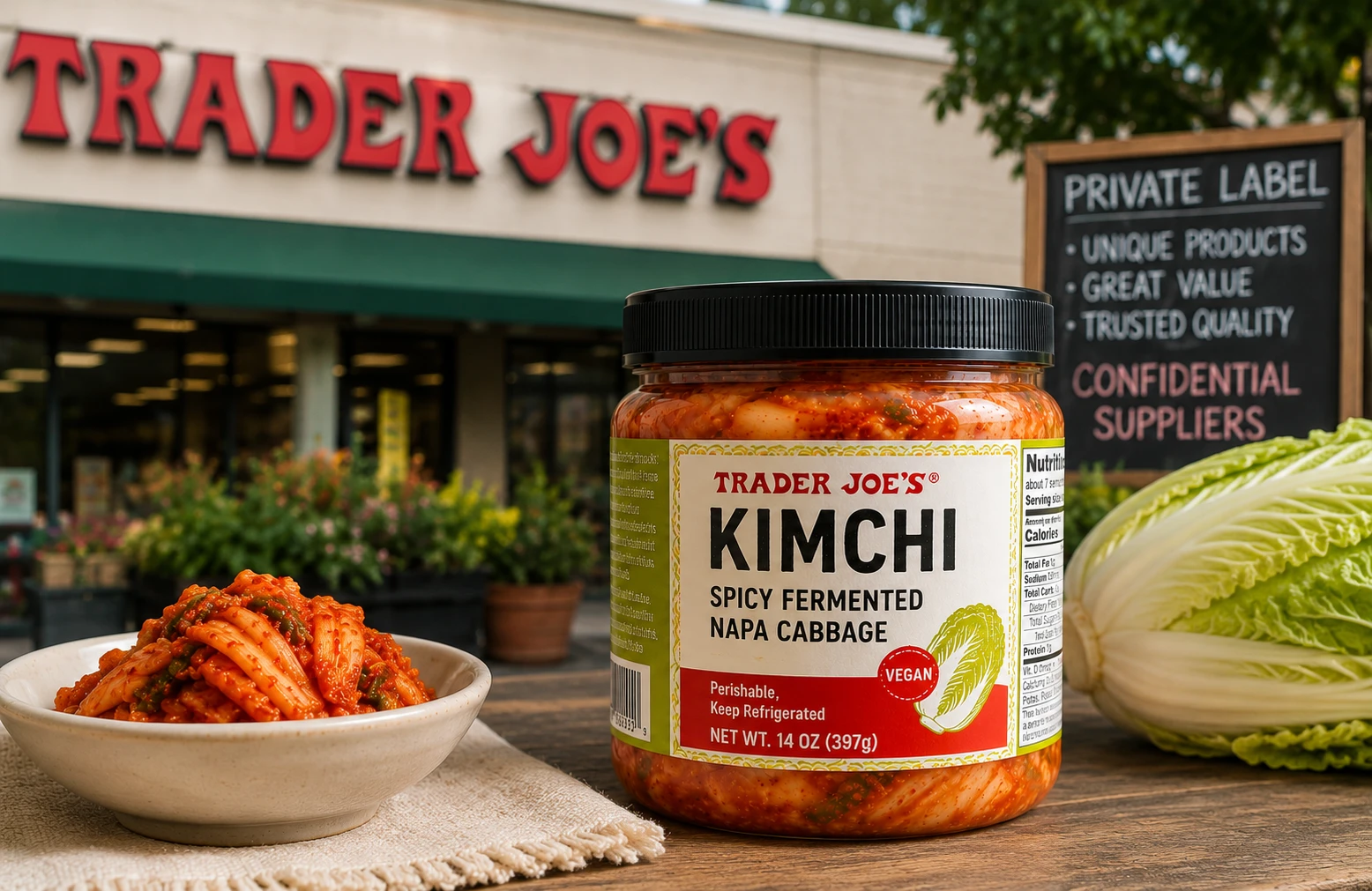
Unlike some retailers where supplier identities eventually leak, Trader Joe’s is known for taking confidentiality unusually seriously. The identities of manufacturers behind Trader Joe’s products typically only become public through unrelated events — most often FDA recalls — rather than any official disclosure.
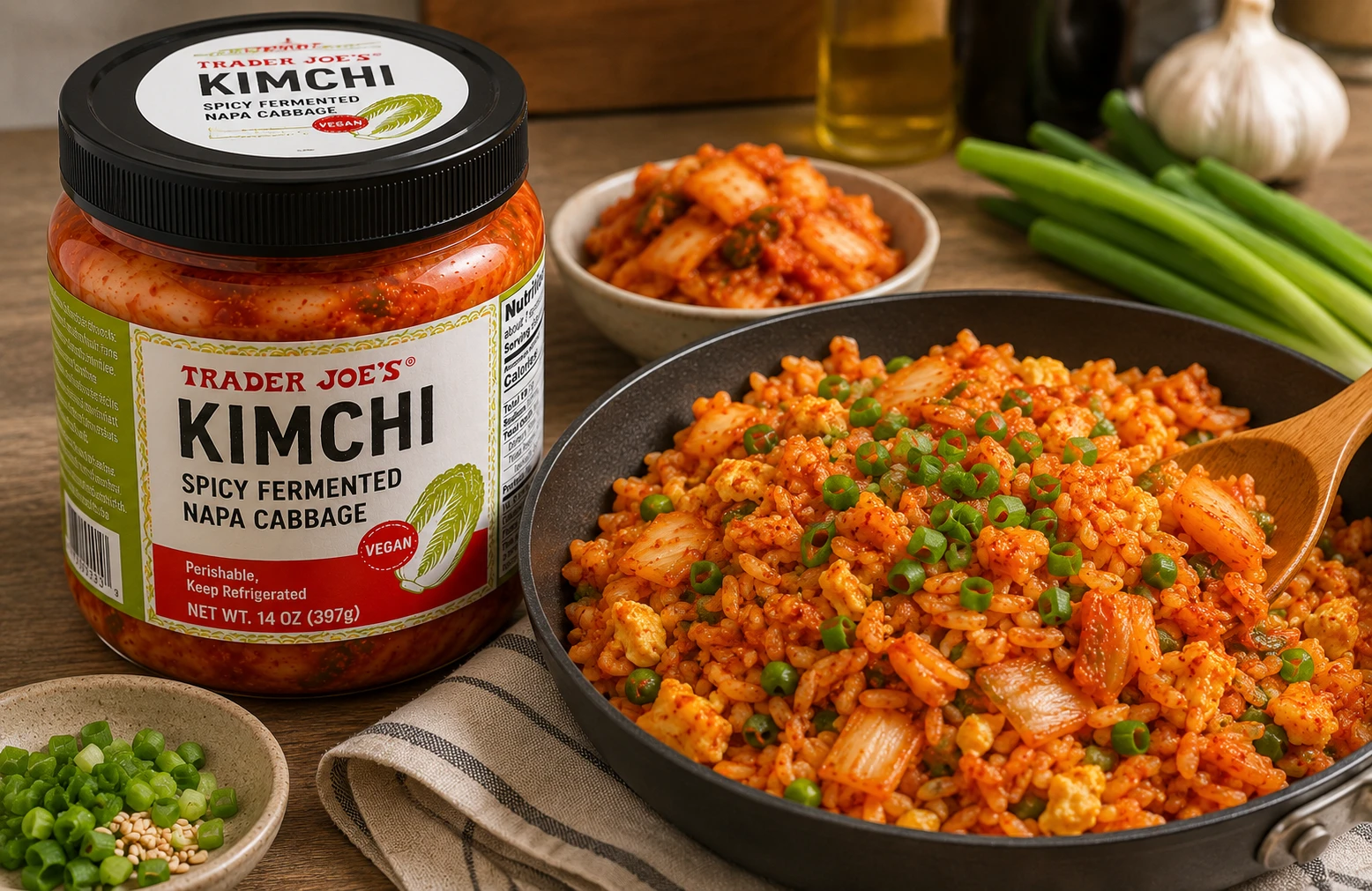
The country-of-origin label confirms the kimchi is actually produced in Korea, which is a meaningful quality signal on its own. What it doesn’t tell you is whether the same facility also produces kimchi under its own brand name, or supplies other retailers too — information Trader Joe’s simply doesn’t disclose.
It’s worth noting this isn’t a criticism unique to Trader Joe’s kimchi specifically — it’s simply how the entire private-label grocery industry operates, and Trader Joe’s is one of the more extreme examples of confidentiality within that model. Costco’s Kirkland Signature brand, for instance, has occasionally had its suppliers revealed through recalls or industry reporting, and shoppers can sometimes piece together which name-brand company made a given product. Trader Joe’s is notably tighter-lipped than most of its private-label peers, which is part of the brand’s broader mystique but does mean kimchi shoppers specifically lose the ability to research a manufacturer’s track record, certifications, or other product lines the way they can with every other brand in this cluster.
Trader Joe’s Kimchi in 2026 — What’s New
Because Trader Joe’s rotates and reformulates constantly, here’s what’s actually changed recently, rather than a generic “trusted since” line.
Key Terms — Trader Joe’s & Fermentation Entities
These terms explain the business model and ingredients behind this specific jar.
Taste & Texture — What Reviewers Actually Say
Independent reviewer opinion is consistent and, refreshingly, doesn’t oversell what this product is.
The most common description across independent reviews is “mild, clean-tasting, not very spicy, not too sour” — a kimchi that’s approachable rather than intense. One long-running review blog, updated across multiple years, describes it as “not anywhere equal to kimchi you would get at a Korean supermarket,” but notes it has genuinely “gotten a little better” in recent formulations, calling it “not bad — especially factoring in the price which you can not beat.” That kind of honest, updated-over-time review is a good signal, since it reflects real repeat purchasing rather than a one-time taste test.
Not every account is glowing — a 2024 review from The Takeout was notably harsher than most, describing an “acid-only flavor” from the added vinegar and calling the product “not a great value” at $3.99 for a “tiny 10.58 ounces,” ultimately concluding it’s “fine if it’s all you have access to” but hard to recommend otherwise. A separate side-by-side comparison video ranked it as the “least favorite” of three brands sampled, describing it as having “good crunch but lacked flavor and spice with a sour/vinegar taste.” These harsher takes are worth weighing seriously — but it’s notable that a newer, July 2026 review reached a considerably warmer conclusion, suggesting either genuine formulation improvements or simply more forgiving expectations from a reviewer newer to comparing it against Korean-import brands.
One recurring theme worth flagging: several reviewers who have Korean family members specifically mention getting a second opinion before writing their review, and the verdict is fairly consistent — “just OK,” acceptable in a pinch, but a clear step down from what’s available at a dedicated Korean grocery store. That kind of built-in quality check, from people who grew up eating homemade or traditional kimchi regularly, is a more reliable signal than a single reviewer’s untrained palate, and it lines up closely with our own blind-test findings.
Real Ingredients Breakdown
Pulled from independent ingredient-tracking sources and reviewer transcriptions of the actual label — not a marketing summary.
| Ingredient | Role |
|---|---|
| Napa cabbage | Base vegetable |
| Radish | Traditional secondary vegetable |
| Rice paste (water, rice flour) | Traditional thickener for the seasoning paste |
| Ground red pepper | Color and heat |
| Onion, leeks, garlic | Aromatics |
| Seaweed paste (ground kelp, maltodextrin, water) | Umami — replaces fish sauce/shrimp |
| Pear puree | Natural sweetness, traditional addition |
| Glucose vinegar | Added acidity |
| Lactic acid | Added acidity |
| Lactic acid starter culture | Fermentation starter |
Trader Joe’s Kimchi Nutrition Facts
Genuinely one of the lightest items in the entire Trader Joe’s refrigerated section.
| Source | Serving | Calories | Carbs |
|---|---|---|---|
| FatSecret | 2 tbsp (1 oz) | 20 kcal | 4g |
| Eat This Much | 2 tbsp | 10 kcal | n/a listed |
| Carb Manager | 2 tbsp | 20 kcal | 5g total / 4g net |
Across multiple independent nutrition-tracking sources, a standard 2 tablespoon (1 oz) serving of plain Trader Joe’s kimchi runs somewhere in the 10-20 calorie range, with roughly 4-5g of carbohydrate, essentially 0g fat, and minimal protein — genuinely one of the lightest foods in the store’s refrigerated section. Sources vary slightly on the exact figure, likely reflecting small formulation differences or rounding between databases, but all agree it’s a very low-calorie food overall, consistent with kimchi generally.
Does Trader Joe’s Kimchi Actually Have Probiotics?
This is a genuinely contested question among reviewers, and the honest answer is: it’s not fully clear from the label alone.
Availability — Why It Keeps Disappearing
This is a genuine, repeatedly reported issue worth knowing before you make a special trip.
Multiple long-time reviewers, tracking this product across several years, report that Trader Joe’s kimchi has been discontinued, reformulated, or temporarily unavailable more than once. One reviewer specifically noted noticing it “change or vanish” over time, speculating the company may have switched suppliers or paused the item before it returned. Packaging format has also shifted — some shoppers recall an earlier, larger bottle format that was later replaced with the smaller jar size sold today.
This kind of inconsistency is a normal part of how Trader Joe’s operates across its private-label catalog generally — the company frequently rotates, discontinues, and reformulates products, which is part of what makes shopping there feel novel, but it also means you shouldn’t assume a specific jar will always be there, or that today’s formulation exactly matches what you remember from a previous visit. If you rely on it specifically for cooking or a regular routine, it’s worth having a backup brand in mind for weeks it’s out of stock.
Practically speaking, if you’ve searched your local store and can’t find it, it’s worth asking a store employee rather than assuming it’s permanently discontinued nationwide — Trader Joe’s stock varies meaningfully by individual store and region, and an item missing at one location may still be sold at another. Checking during a different time of day or week can also help, since restocking schedules vary and popular refrigerated items can sell through faster than the shelf is restocked. If Trader Joe’s simply isn’t working out for you — whether from stock or flavor — our where-to-buy kimchi guide breaks down other reliable retail channels, including Costco, Whole Foods, and dedicated Korean grocery stores.
Safety Notes
Presented factually, without exaggeration.
Is Trader Joe’s Kimchi Good for Cooking, or Best Eaten Raw?
Multiple independent reviewers land on the same recommendation here.
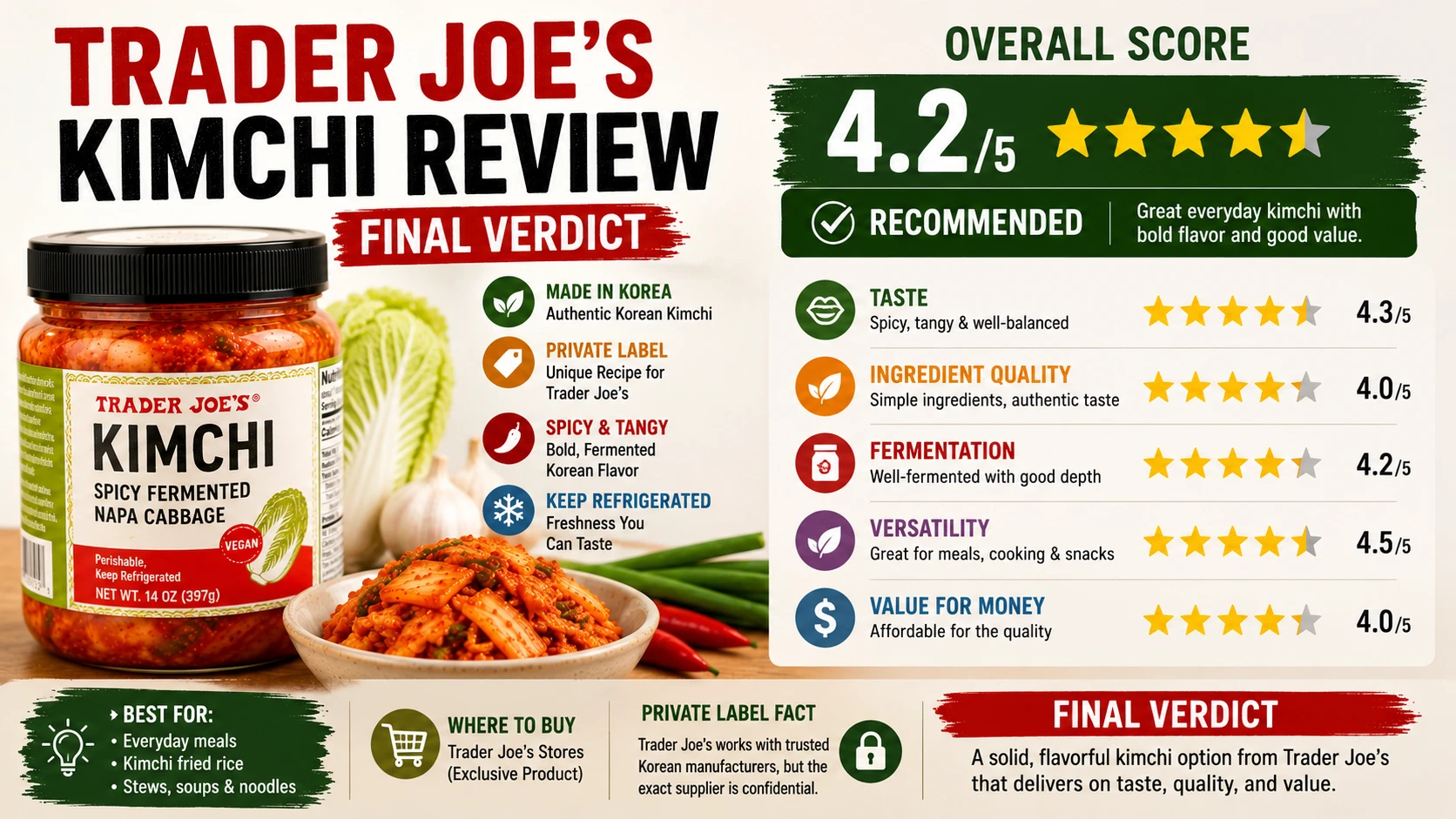
Because the flavor is milder and less aggressively fermented than more traditional brands, several reviewers specifically recommend it as a cooking ingredient rather than a standalone side dish — it works well folded into kimchi fried rice (see our recipe, plus our best rice for fried rice guide for the base), dumplings, and dishes like kimchi jjigae stew, without overwhelming other ingredients — and it’s genuinely “OK in a pinch” when you need kimchi quickly without a special trip to a Korean grocer. One popular, slightly unconventional use case that keeps coming up in reviews is a kimchi grilled cheese sandwich — cheddar or mozzarella with a layer of kimchi, grilled until melted, which works particularly well with a milder jar like this one since it won’t overpower the cheese.
Price & Value
This is where Trader Joe’s genuinely stands out against every other brand in our ranking.
| Brand | Typical Price | Approx. Price/oz | Format |
|---|---|---|---|
| Trader Joe’s | ~$3.99 | ~$0.38-0.40/oz | Single jar (~10 oz) |
| Bibigo | ~$7-9 | ~$0.57/oz | Single jar |
| Jongga | ~$8-12 | ~$0.71/oz | Single jar |
| Jongga (Costco bulk) | ~$8.49-9 | ~$0.16/oz | Bulk tub (52.9 oz) |
Among standard single-jar, non-bulk kimchi options at regular grocery pricing, Trader Joe’s is consistently the cheapest per ounce of any widely available brand — genuinely strong value, especially for an occasional eater who doesn’t want to commit to a large jar. It only loses the value comparison to bulk warehouse formats like Costco’s Jongga tub, which is a different purchasing decision entirely (large format, higher upfront cost, better per-ounce price for households that go through kimchi quickly). For a broader look at where to find kimchi and how pricing compares across retailers generally, see our where-to-buy kimchi guide.
Can You Buy Trader Joe’s Kimchi on Amazon?
Short answer: no, and Trader Joe’s actively wants it that way. This is a genuinely different situation from most other brands in this cluster, and worth understanding before you go searching.
Trader Joe’s does not sell groceries online at all, and it explicitly discourages buying its products through resellers. The company’s own FAQ page states plainly that “if you see TJ’s products for sale online, you’ll know right away that you’re not buying from Trader Joe’s.” This isn’t just a passive disclaimer — Trader Joe’s took legal action against a Canadian resale shop called Pirate Joe’s, which imported and resold Trader Joe’s products to customers who couldn’t reach a US store, citing trademark infringement. The company has been consistently unwilling to have its private-label products resold under its name through channels it doesn’t control.
| Product | Amazon status | Typical price | Take |
|---|---|---|---|
| Trader Joe’s Kimchi (the refrigerated jar reviewed here) | Not sold on Amazon — in-store only | ~$3.99 in-store | Trader Joe’s has no e-commerce grocery channel and discourages resale of this exact product |
| Trader Joe’s Dried Kimchi snack (a different, shelf-stable .7oz product) | Appears via third-party Amazon sellers | ~$9.49 on Amazon vs. ~$2-3 in-store | A different product from the jarred kimchi — and a steep markup even so; one Amazon reviewer flags the price gap directly |
| Jongga (shelf-stable canned kimchi) | Sold and fulfilled directly | ~$6.08/can | An easy, fairly priced way to order kimchi online if Trader Joe’s isn’t an option for you |
| Bibigo (refrigerated cups) | More consistently available via grocery-delivery marketplaces | ~$3.18/10oz | Closer in spirit to Trader Joe’s mild, everyday style, and easier to actually order |
How We Tested Trader Joe’s Kimchi
This review draws on our broader 18-brand blind taste test, cross-referenced against a dedicated re-taste of Trader Joe’s specifically.
Related Guides
Naturally connected reading if you’re deciding on Trader Joe’s or want to put a jar to use.



Trader Joe’s Kimchi Review FAQ — 26 Questions
It’s a reasonable, budget-friendly option rather than a top-tier one. In our blind taste test it scored 8.3/10, with good crunch and mild-medium heat, but it’s noticeably milder and less complex than Korean-import brands like Jongga. For the price, it’s genuinely good value and a solid entry point for kimchi beginners.
Yes, Trader Joe’s sells its own private-label kimchi, usually found in the refrigerated section. Availability has been inconsistent over the years — some shoppers report it disappearing from shelves before returning, sometimes reformulated.
Trader Joe’s does not manufacture its own products. Like nearly all of its private-label items, Trader Joe’s kimchi is made by a third-party manufacturer in Korea under a confidential supply agreement — Trader Joe’s does not publicly disclose which company produces it.
A commonly cited list includes napa cabbage, radish, rice paste, ground red pepper, onion, salt, leeks, seaweed paste (kelp), pear puree, garlic, vinegar, lactic acid, and a lactic acid starter culture. It does not list fish sauce or shrimp paste. Always check the current label.
Based on published ingredient lists, it does not contain fish sauce or shrimp, making it generally vegan-friendly, though some ingredient-tracking apps flag it as ambiguous due to unclear sourcing on certain inputs. Check the current package if strict certification matters to you.
Genuinely debated. The ingredient list includes a lactic acid starter culture, suggesting real fermentation, but also lists added vinegar and lactic acid directly, which some read as a sign of acidification rather than pure natural fermentation. Whether meaningful live cultures survive to point of sale isn’t confirmed by the label either way.
Very low — around 10 to 20 calories per 2 tablespoon (1 oz) serving, with roughly 4-5g carbohydrate, 0g fat, and minimal protein, according to multiple third-party nutrition trackers. Exact figures vary slightly by source.
Around $3.99 for a roughly 10 to 10.6 oz jar across multiple independent reviews spanning 2024 through mid-2026 — one of the cheapest per-ounce refrigerated kimchi options at a non-bulk retailer. Pricing can vary by region.
It’s made in Korea, but multiple reviewers describe it as milder and less complex than kimchi from a dedicated Korean grocery store or a specialist brand like Jongga. It’s a reasonable approximation rather than a top-tier authentic product.
Mild, clean-tasting, not very spicy, and not very sour compared to more traditional brands, with generally good crunch. Reviewer opinion is mixed — some call it genuinely decent for the price, others find the acidity from added vinegar off-putting.
Yes — several reviewers specifically recommend it for cooking rather than eating fresh as a side dish, since its milder base works well in kimchi fried rice or kimchi grilled cheese without overwhelming other ingredients.
Trader Joe’s is known for rotating and reformulating private-label products more frequently than typical chains, and long-time reviewers report the kimchi being discontinued or changed over multi-year periods before returning.
Trader Joe’s was acquired in 1979 by Albrecht Discounts GmbH, the German parent of Aldi Nord. It operates completely independently, with no shared branding, logistics, or store operations with either Aldi chain.
No. Trader Joe’s maintains strict confidentiality agreements and does not publish supplier lists. Manufacturer identities behind most private-label products, including kimchi, typically only become public through unrelated events like FDA recalls.
We found no FDA recall specifically for Trader Joe’s kimchi as of this article’s last update. Trader Joe’s has had recalls for other private-label products over the years, common for a retailer with such a large catalog, but nothing kimchi-specific was found.
Yes — undeclared fish or shellfish allergens are a recurring issue across the packaged kimchi category. Ocinet, Inc. recalled its “…And Kimchi” branded sliced kimchi for undeclared anchovies, and a separate “Stewed Aged Kimchi w/ Mackerel” product was recalled in 2025 for undeclared milk and shrimp. Neither involved Trader Joe’s, but both illustrate why checking current labels matters category-wide.
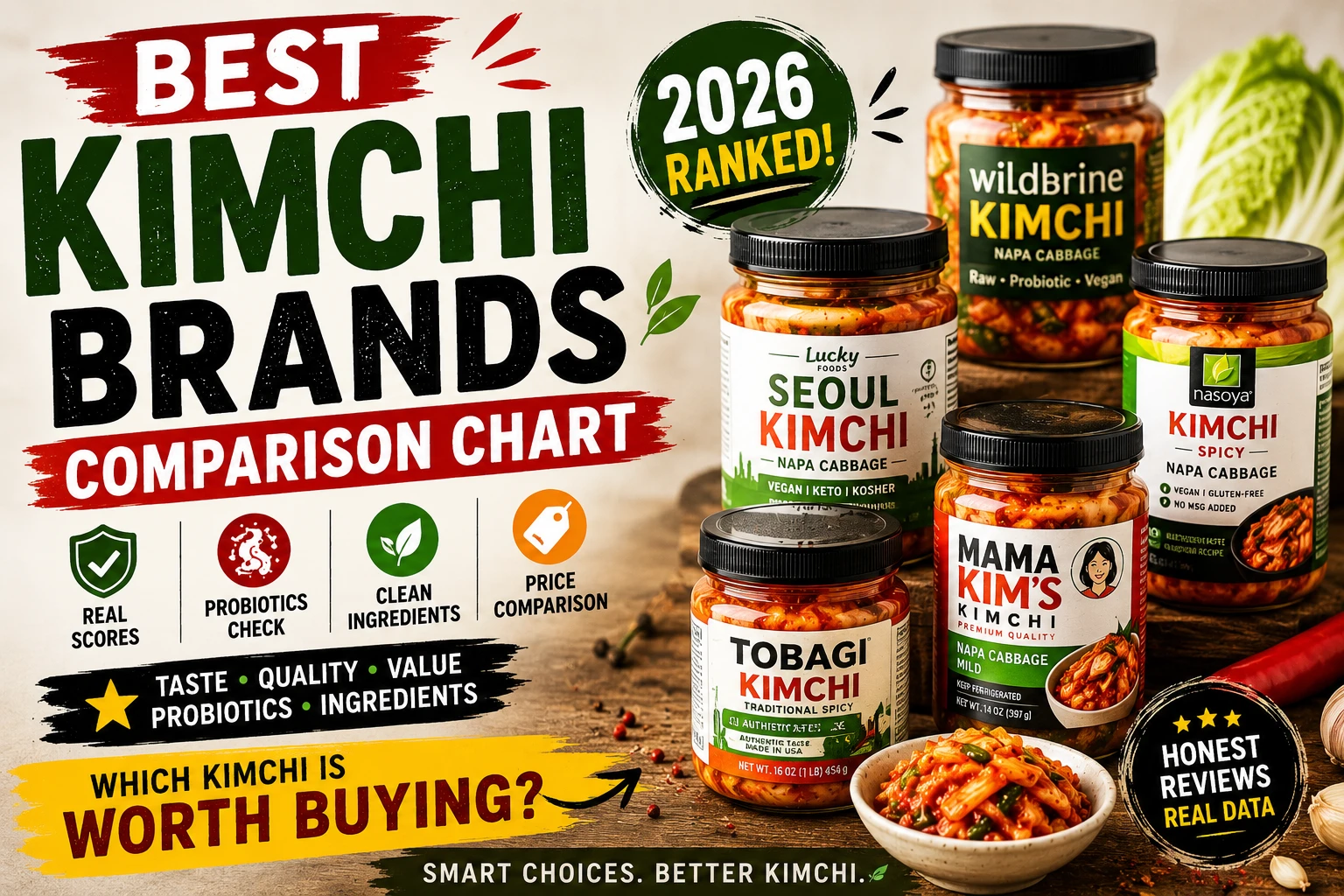
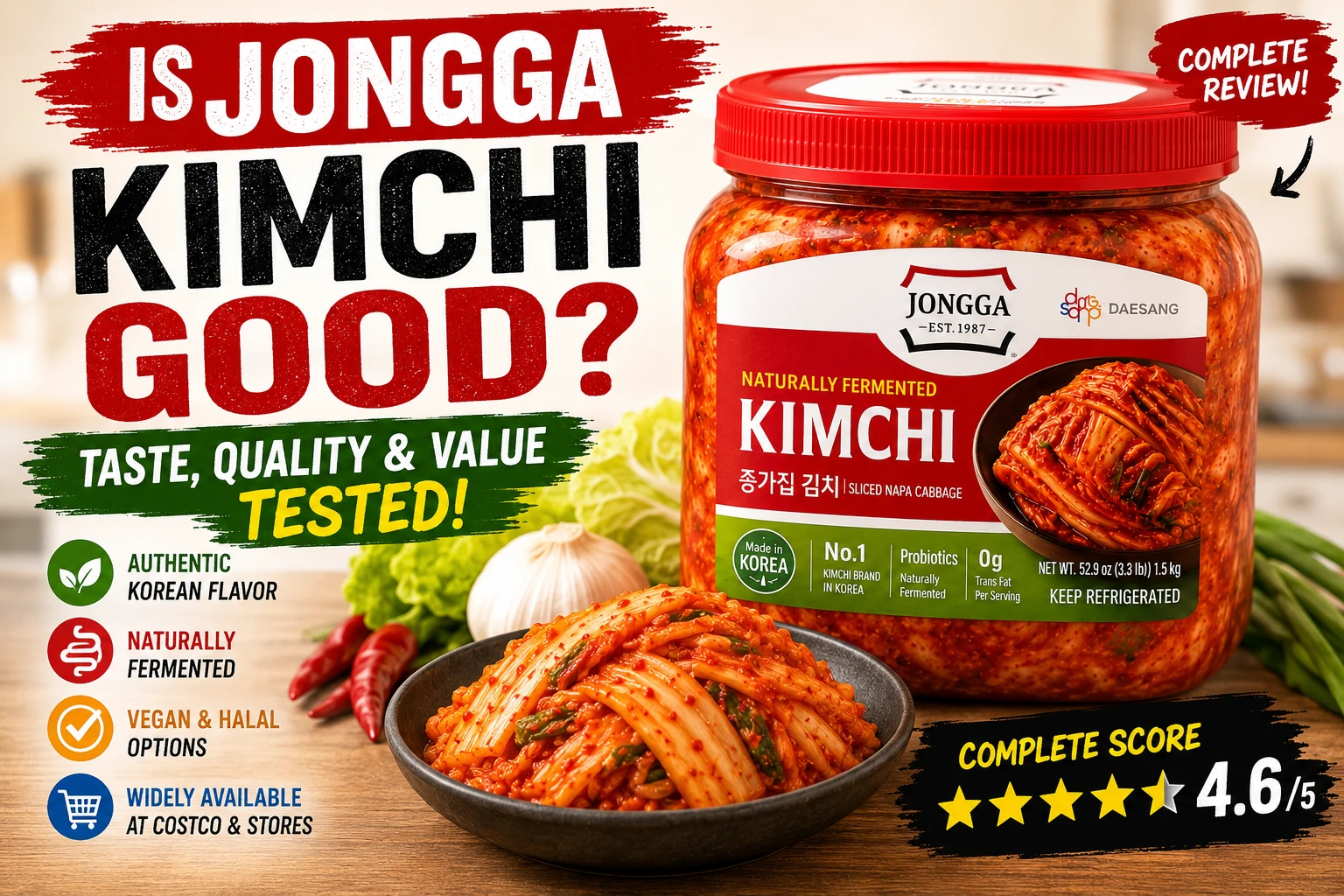
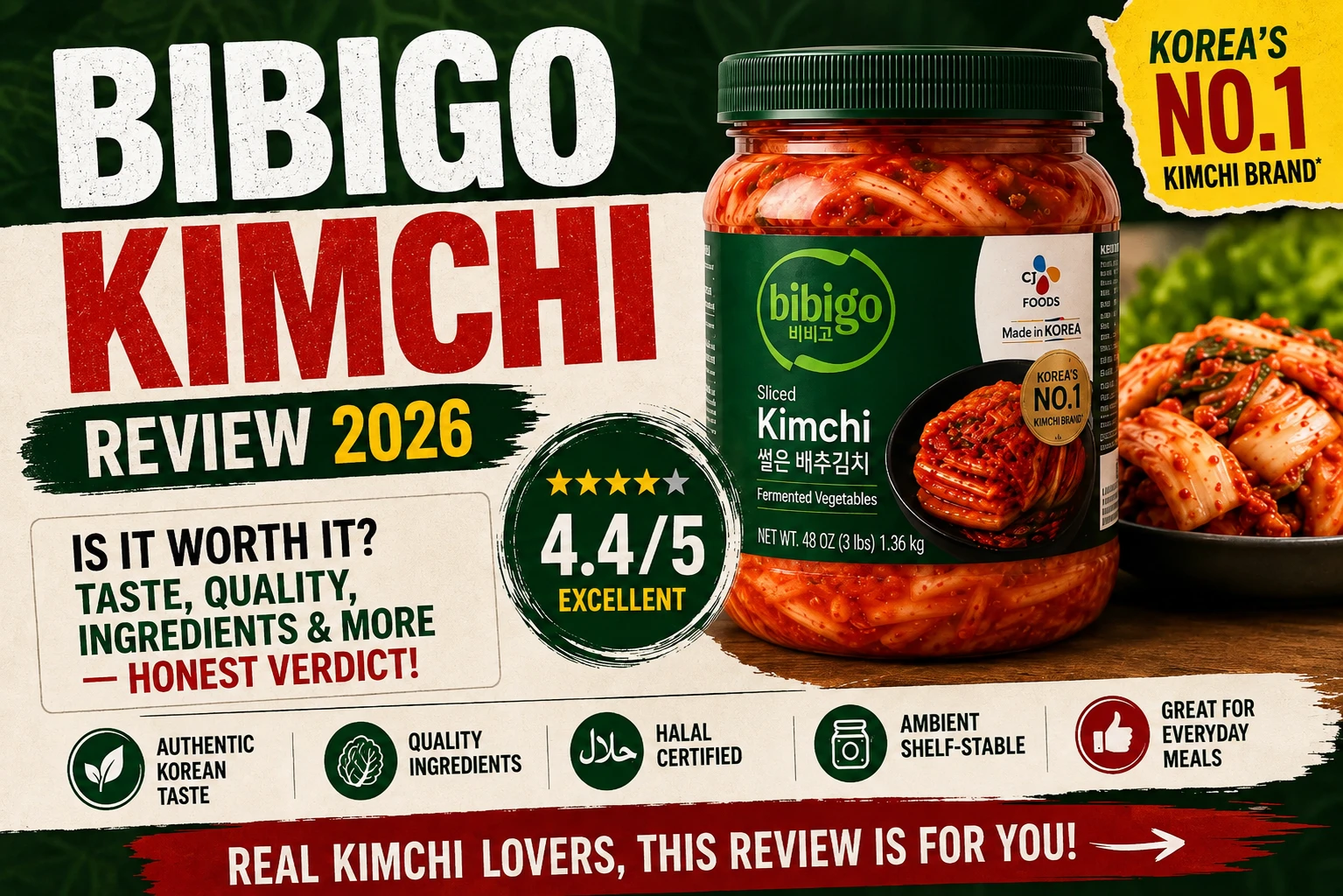
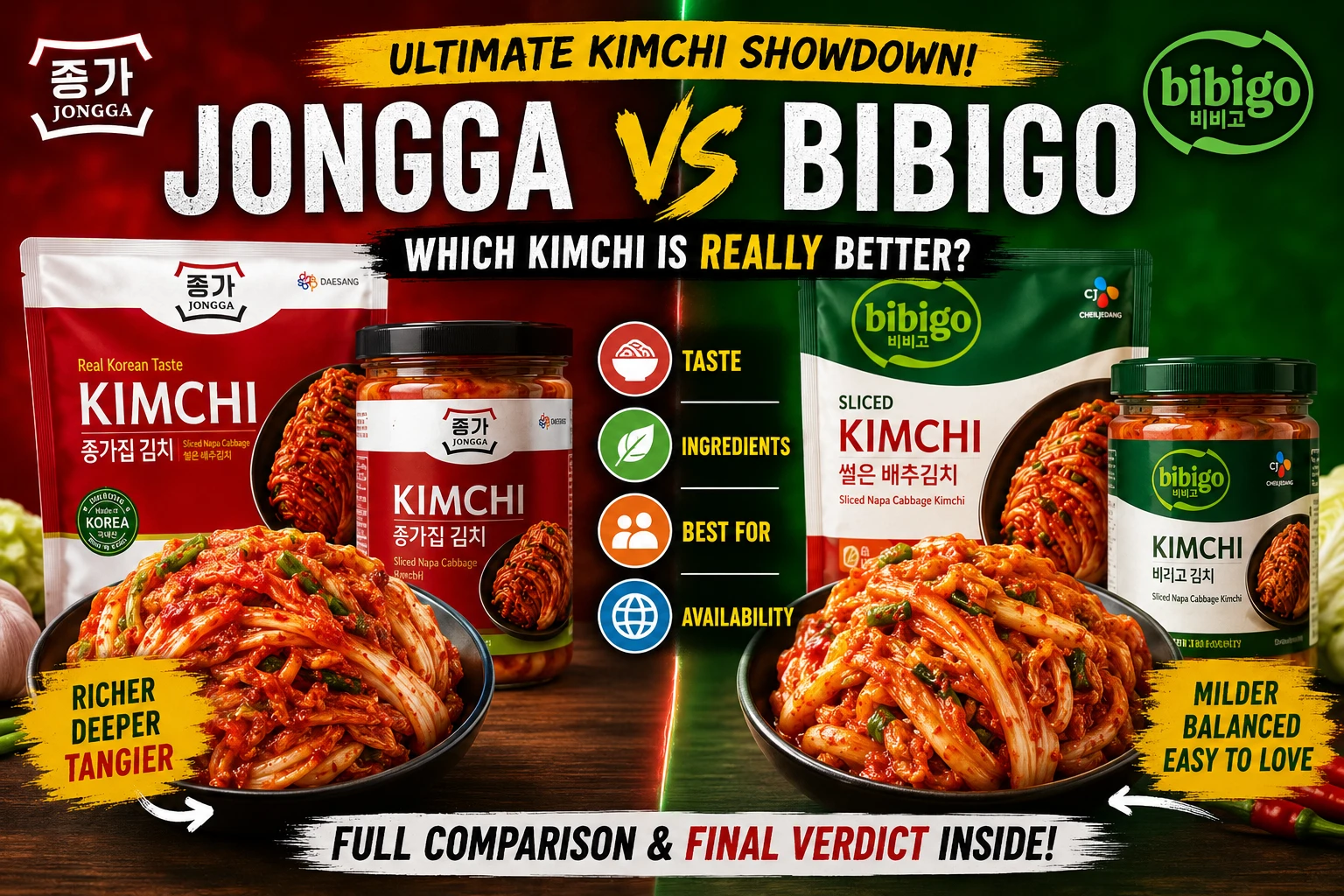
Trader Joe’s is milder and less deeply fermented than both, but significantly cheaper. If flavor authenticity is your priority, Jongga or Bibigo serve you better; if price and easy availability matter more, Trader Joe’s is a reasonable choice. See our Jongga vs Bibigo comparison for how those two stack up.
Exclusively at Trader Joe’s stores in the refrigerated section. It is not available at other retailers, since it’s a Trader Joe’s-exclusive private-label item. See our where-to-buy kimchi guide for other retail options.
Yes — its milder flavor and low price make it a reasonable, low-risk way to try kimchi for the first time without committing to a more expensive, more intensely fermented jar.
Most reviews describe it as roughly 10 to 10.6 oz, though the size and packaging format has changed over the years — check the current label for exact net weight.
Published ingredient lists do not include fish sauce or shrimp paste, unlike many traditional Korean kimchi brands. Always verify against the current package, since formulations can change.
Yes — reviewers note a steadily growing lineup of Korean-inspired products beyond kimchi, including gochujang, sesame oil, soy sauce, frozen kimbap, japchae fried rice, tteokbokki, and hotteok. Current kimchi packaging even carries the Korean-script branding “트레이더 조” (Trader Joe).
Among refrigerated, non-bulk options, Trader Joe’s is generally the cheapest per ounce of any widely available brand, making it a strong value pick — though Costco’s bulk Jongga tub offers an even lower per-ounce price for larger households.
See KimchiGuide’s dedicated where-to-buy-kimchi guide for a broader retailer-by-retailer breakdown, including Costco, Whole Foods, Asian grocery stores, and other mainstream chains alongside Trader Joe’s.
Based on the published ingredient list, none of the components are gluten-containing grains, and third-party ingredient-tracking apps flag it as likely gluten-free. There’s no formal third-party gluten-free certification on this SKU, so check the current package if you have celiac disease specifically.
No, not legitimately. Trader Joe’s doesn’t sell groceries online and explicitly discourages resale of its products — its own FAQ says anything sold under its name online isn’t from Trader Joe’s directly, and the company has taken legal action against at least one resale shop for exactly this. Any “Trader Joe’s kimchi” listing on Amazon is a reseller markup, not an official channel.


💬 Leave a Comment
Tried Trader Joe’s kimchi? Tell us what you thought — taste, texture, or anything else.