Jongga vs Bibigo Kimchi Taste, price and which to buy in the US (2026)
Two of the most recognizable kimchi brands, compared on flavor, price per ounce, pasteurization, MSG and fish sauce, halal and vegan options, using our blind test, each brand’s own product pages and independent reviews.
Jongga or Bibigo: which kimchi is better?
Jongga scored higher in our blind test (9.4/10 vs 8.1/10) for deeper fermentation and firmer crunch. Bibigo is the easier buy: a milder 10 oz bottle at Walmart, plus a vegan bottle in the US and a vegan pouch in the UK.
Outside reviewers are not unanimous. Chowhound ranked Bibigo above Jongga in a six-brand test, while Tasting Table called Jongga affordable with real heat. Practical differences: Jongga’s Costco tub costs about half as much per ounce, Bibigo’s ingredient lists include MSG while the Jongga tub label does not, and pasteurization depends on the format for both brands.
Jongga vs Bibigo: The Comparison Table
“Edge” shows which brand does better on that row. Where the facts are unclear or the brands tie, we say so instead of picking a winner.
| Category | Jongga | Bibigo | Edge |
|---|---|---|---|
| Our blind-test score | 9.4/10 | 8.1/10 | Jongga |
| Maker | Daesang Corporation (founded 1956) | CJ CheilJedang (founded 1953); Bibigo brand launched 2010 | – |
| Main US formats | 1.5 kg tub (Costco), 300 g jars (Walmart), more shapes at H Mart | 10 oz bottle and 10 oz vegan bottle (Walmart) | – |
| Price per ounce | About 15 to 17 cents (Costco tub, reported $8 to $9) | About 32 cents (Walmart 10 oz, listed $3.18) | Jongga |
| Flavor in our test | Deeper, tangier, more fermented | Milder, softer | Jongga for depth, Bibigo for mild |
| Outside reviews | Mixed: real heat (Tasting Table), mild with no heat (Chowhound, 5th of 6) | Mild and solid (Chowhound 4th of 6, Tasting Table) | Mixed |
| Texture | Firmer crunch in our test | Softer, more uniform | Jongga |
| Pasteurized? | Refrigerated line: mostly not (Jongga USA). Shelf-stable pouches and cans: yes | No statement found. Sold chilled (US) or at room temperature (UK pouch) | Jongga is clearer |
| Fish sauce and shellfish | Anchovy sauce and shrimp sauce (Costco tub) | Anchovy fish sauce (standard); none in vegan versions | – |
| MSG | Not listed on the Costco tub; Costco says no MSG | Monosodium glutamate listed (US and EU standard) | Jongga |
| Vegan version | 300 g sliced vegan jar (Walmart) | 10 oz vegan bottle (Walmart); UK V-Label pouch | Both |
| Halal | Unclear: Korean site says certified plant and lines, Jongga USA says not certified | Fish-free ambient 150 g listed as IFANCA halal; no claim found for the standard jar | Bibigo (one SKU) |
| Kosher | Unclear (same conflict) | None found | – |
| Sodium per ounce | About 190 to 200 mg | About 200 mg (EU 500 g jar: 1.8 g salt per 100 g) | Tie |
| Calories per ounce | About 10 | About 8 (EU jar: 27 kcal per 100 g) | Tie |
| Recalls | NZ Gat Kimchi, Nov 2024 (a different product) | None found for kimchi | – |
Brand Profiles
Scores come from the same 18-brand blind test behind our brand ranking.
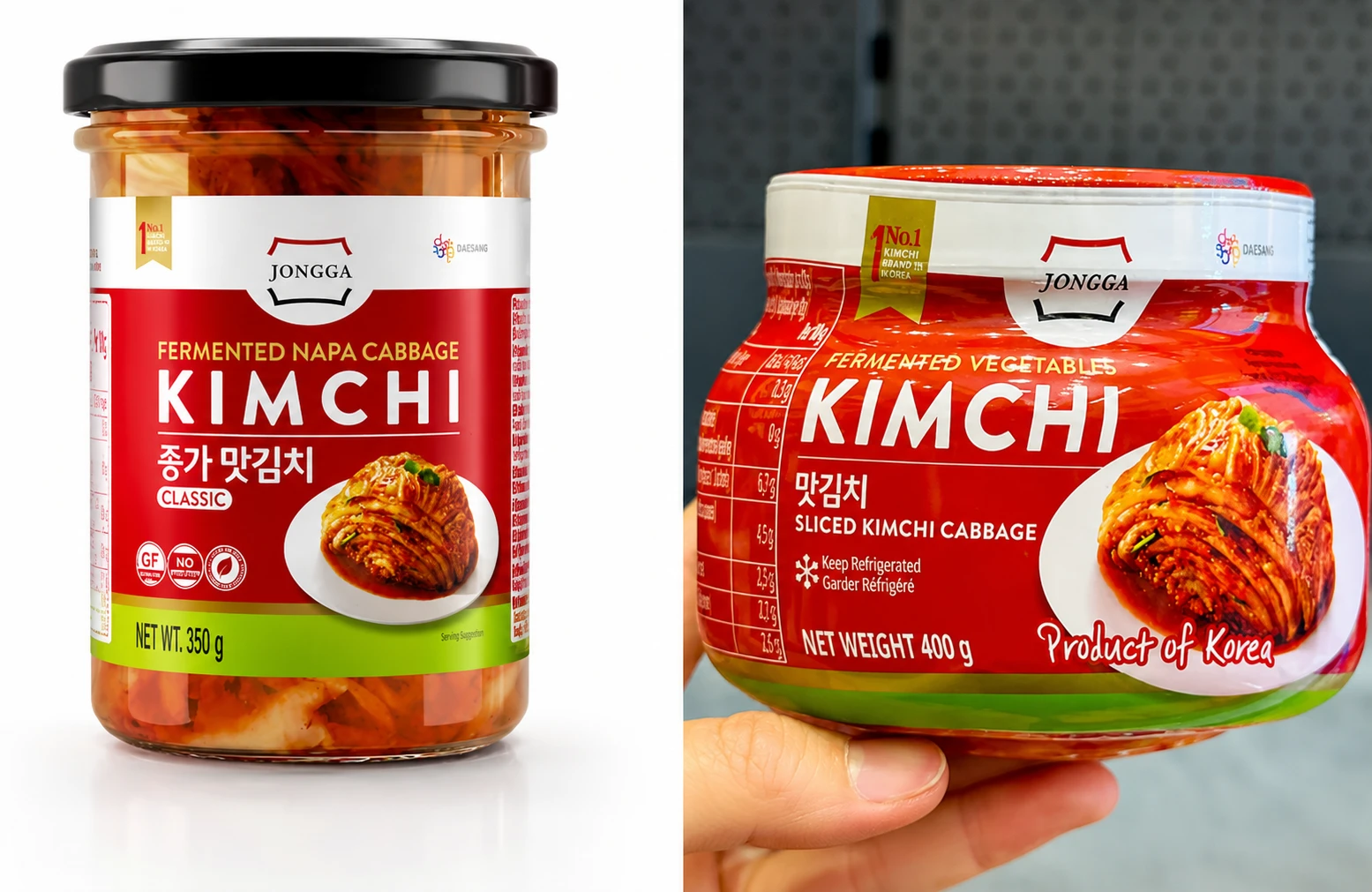
Jongga
Daesang · sliced napa cabbage, refrigerated
9.4/10 in our blind test- Deeper fermentation and firmer crunch in our test
- Costco 1.5 kg tub at roughly 15 to 17 cents an ounce
- Anchovy sauce and shrimp sauce; no MSG on the tub label
- Refrigerated line unpasteurized per the brand
Full review: Is Jongga kimchi good?
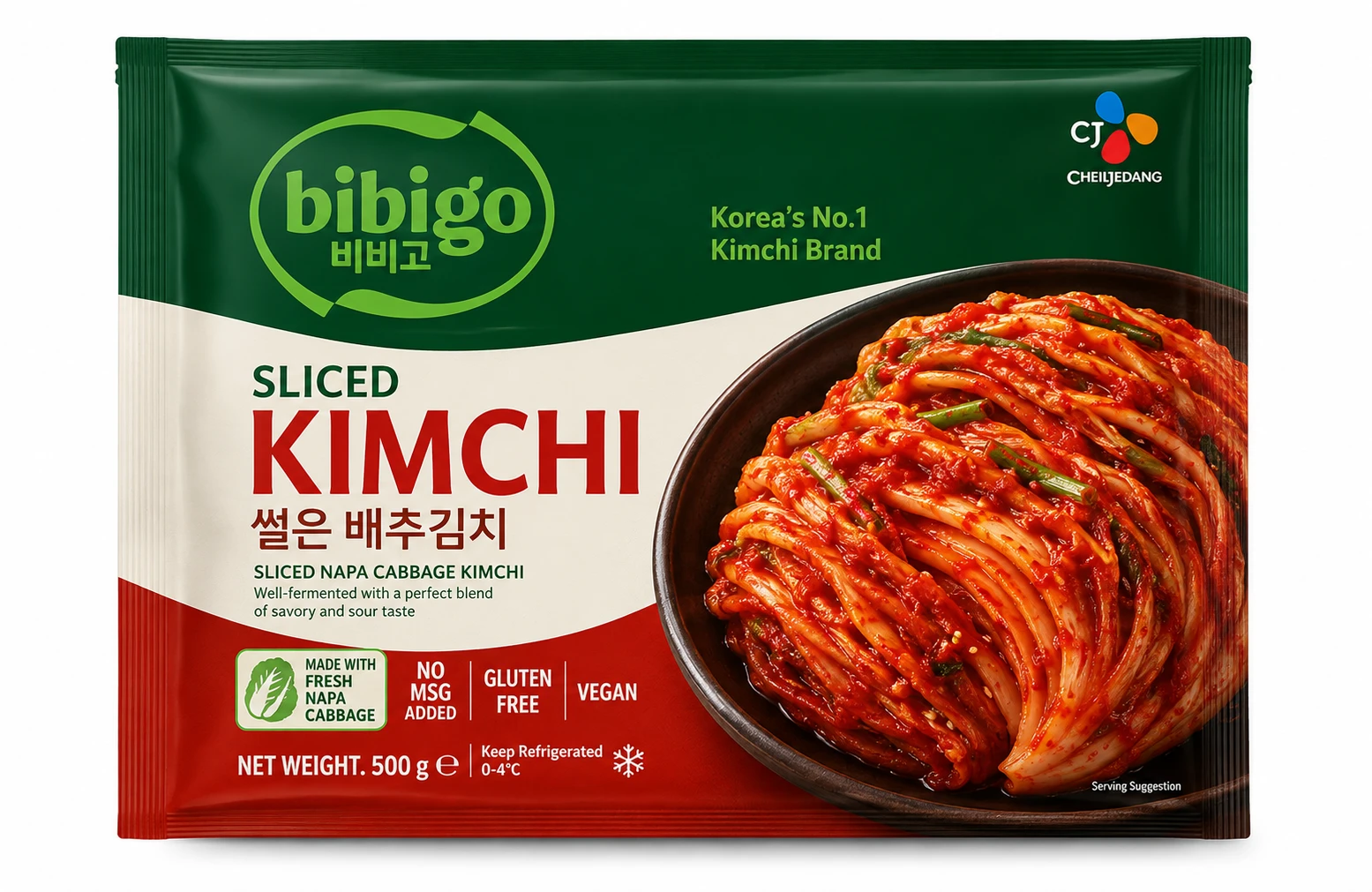
Bibigo
CJ CheilJedang · sliced napa cabbage, refrigerated
8.1/10 in our blind test- Milder and softer; easy to find
- 10 oz bottle at Walmart, listed at $3.18
- Anchovy fish sauce and MSG listed; separate vegan bottle
- Pasteurization not stated by the brand
Full review: Is Bibigo kimchi good?
Blind-test sub-scores
| Criterion (out of 10) | Jongga | Bibigo |
|---|---|---|
| Flavour | 9.6 | 7.6 |
| Texture | 9.2 | 8.5 |
| Fermentation | 9.4 | 7.4 |
| Value | 9.0 | 8.8 |
| Overall | 9.4 | 8.1 |
Taste and Texture: Our Test vs Outside Reviews
What our tasters found
In our blind test Jongga read as more fermented: sharper sourness, more umami depth and heat that builds, with a firmer cabbage crunch that holds up over weeks. Bibigo sat at the milder end, with a softer, more uniform cut and a gentler flavor. That is the gap behind 9.4 versus 8.1.
What independent reviewers say
Outside opinion does not line up neatly with ours, and it is worth knowing. Chowhound’s six-brand ranking (March 2026) put Bibigo 4th and Jongga 5th, calling Bibigo mild but a decent pick for people who want something tamer, and describing Jongga as mild with no noticeable heat. Tasting Table’s ranking (December 2024) took the opposite view of Jongga, saying it has real heat and is a more affordable brand, though not its favorite, and called Bibigo a solid, widely stocked option.
| Trait | Jongga | Bibigo |
|---|---|---|
| Initial crunch | Firm, distinct bite (our test) | Softer, more tender (our test) |
| Heat | Deeper in our test; outside reviews range from real heat to none | Mild; Crazy Hot (Thailand only) is 10 times spicier |
| Cut | Sliced napa cabbage, larger pieces | Sliced napa cabbage, uniform pieces |
Is Jongga or Bibigo Kimchi Pasteurized?
The two brands are not equally clear about this, so here is what each has actually said.
Jongga
- Jongga USA says most of its products are not pasteurized, but products made to sit at room temperature are.
- In practice: refrigerated tubs and jars are the live line; the Amazon shelf-stable pouches and cans are pasteurized.
- Jongga Global says it uses its own starter bacteria.
Bibigo
- We found no pasteurization statement from Bibigo or CJ.
- The US refrigerated bottles are sold chilled and the US ingredient listing includes kimchi cultures; CJ describes its own lactic acid bacteria.
- The UK pouch is sold at room temperature and lists acidity regulators; Bibigo does not say whether it is pasteurized.
Short version: for live cultures buy a refrigerated jar of either brand, and treat any room-temperature pouch as heat-treated unless the pack says otherwise. For all 18 brands, see our pasteurized vs live-culture guide, and for Jongga in depth, the pasteurization section of our Jongga review.
Ingredients, MSG and Fish Sauce
Ingredient lists come from retailer and brand listings, and they differ by product and market.
| Ingredient | Jongga Costco tub | Bibigo US sliced (standard) | Bibigo UK ambient pouch |
|---|---|---|---|
| Napa cabbage, radish | Yes | Yes | Yes |
| Fish sauce | Fermented anchovy sauce | Fish sauce (anchovy) | None (vegan) |
| Shrimp | Fermented shrimp sauce | Not listed | None |
| MSG | Not listed | Monosodium glutamate | Varies by listing: one Bibigo UK vegan page lists MSG, the Ocado text we saw does not |
| Thickener | Rice paste | Xanthan gum | Xanthan gum |
| Cultures or acidity | Lactic acid bacteria listed | Kimchi cultures; calcium lactate | Starter culture and acidity regulators (lactic acid, calcium lactate), depending on the listing |
| Allergens | Fish, shellfish | Fish | None listed |
More on the chili behind both brands is in our gochugaru guide.
Nutrition and Sodium, Normalized
Earlier versions of this page compared Jongga per 28 g with Bibigo per 50 g. Scaled to the same weight, the two are nearly identical.
| Per 1 oz (28 g) | Jongga (Costco tub) | Bibigo (EU 500 g jar) |
|---|---|---|
| Calories | About 10 kcal | About 8 kcal (27 kcal per 100 g) |
| Sodium | 190 to 200 mg | About 200 mg (1.8 g salt per 100 g) |
| Fat | 0 g | Under 0.5 g per 100 g |
Jongga’s figures come from retailer listings of the Costco tub; Bibigo’s from an EU retailer listing of its 500 g jar. We did not find a US label for the 10 oz bottle that we could verify, so check yours. Both are light on calories and moderately salty, and neither is a low-sodium pick: compare options in our low-sodium kimchi brands guide.
Vegan, Halal and Kosher
| Jongga | Bibigo | |
|---|---|---|
| Vegan | 300 g sliced vegan jar, Walmart; made without shrimp, anchovy or fish sauce | 10 oz refrigerated vegan bottle, Walmart; in the UK, a V-Label vegan ambient pouch |
| Halal | Sources conflict: Jongga Korea lists a Halal-certified plant (since 2010) and lines; Jongga USA says products are not certified | The fish-free ambient 150 g sliced kimchi is listed as IFANCA halal certified by a distributor and as halal by UK retailers. CJ says its halal program began in 2011, with kimchi among its first three items |
| Kosher | Same conflict; Korea site says Kosher since 2014 for flavor kimchi | No certification found |
Certification belongs to specific plants and products, not to a brand name, so look for a certifier’s mark on the exact package. Our halal and kosher guide and vegan kimchi brands guide compare every brand.
Price and Where to Buy
| Where | Jongga | Bibigo |
|---|---|---|
| Costco (US) | 1.5 kg (52.9 oz) tub, reported $8 to $9, about 15 to 17 cents an ounce | Not confirmed |
| Walmart (US) | 300 g original and vegan jars | 10 oz bottle and 10 oz vegan bottle, listed at $3.18 (about 32 cents an ounce) |
| Other US supermarkets | Limited; wider at H Mart | Widely stocked, including Target and Kroger in many regions |
| Costco UK | Not confirmed | Ambient sliced kimchi, 5 x 150 g |
Per package, Bibigo is cheaper and easier to grab. Per ounce, Jongga’s Costco tub is about half the price, if you can finish 3.3 lb of kimchi before it turns very sour. Prices change by store and week: see Jongga kimchi at Costco and where to buy kimchi. UK readers should use the UK where-to-buy guide.
Who Makes Jongga and Bibigo?
Jongga is owned by Daesang Corporation, founded in 1956, which also makes seasonings and pastes. Jongga says it began in 1987 and cites Nielsen Korea sales data to call itself Korea’s top-selling kimchi brand. Until October 2022 the English spelling was Chongga. Daesang also owns Lucky Foods, maker of Seoul Kimchi, which it bought in June 2023.
Bibigo’s parent company is CJ CheilJedang, founded in 1953. Bibigo is its global consumer brand, launched in 2010 and known for dumplings, sauces, rice and snacks as well as kimchi, and CJ says it is sold in about 80 countries. “CJ Foods” is the food business unit of CJ CheilJedang, so a “CJ Foods kimchi review” means Bibigo. CJ says it uses its own lactic acid bacteria to hold its kimchi at an ideal fermentation level.
Why availability differs. Bibigo reaches mainstream supermarkets on the back of its dumpling and rice lines. Jongga grew through Korean grocers and Costco. Bibigo also makes a much spicier Crazy Hot Kimchi, launched in Thailand in June 2026 and produced in Vietnam; we found no US launch.
Which One Should You Buy?
You want depth and value per ounce
- You want the more fermented, tangier flavor our tasters preferred
- You have a Costco or H Mart and will finish a big tub
- You are cooking jjigae or fried rice and want flavor that survives heat
- You want to avoid MSG
You want easy and mild
- You shop at Walmart or a standard supermarket
- You want a small bottle you can finish quickly
- You are new to kimchi and want a gentler start
- You want a labeled vegan bottle without a special trip
Cooking with either? Try kimchi jjigae, kimchi fried rice with the best rice for fried rice, or a quick kimchi slaw, where the brand difference matters least.
Safety and Recalls
Recall status changes, so check the FDA database and our 2026 kimchi recall tracker.
How We Tested and Checked
Taste: Ji-Young Park blind-tasted 18 brands with labels removed and scored each, including Jongga and Bibigo; the method is on our brand ranking. Facts: for the September 2026 update we re-checked pasteurization, ingredients, certifications, nutrition, price and availability against each brand’s own product pages, retailer listings, independent reviews and official recall notices, listed under Sources. Where sources disagree, as with halal and kosher, we say so.
Final Verdict
Related Guides
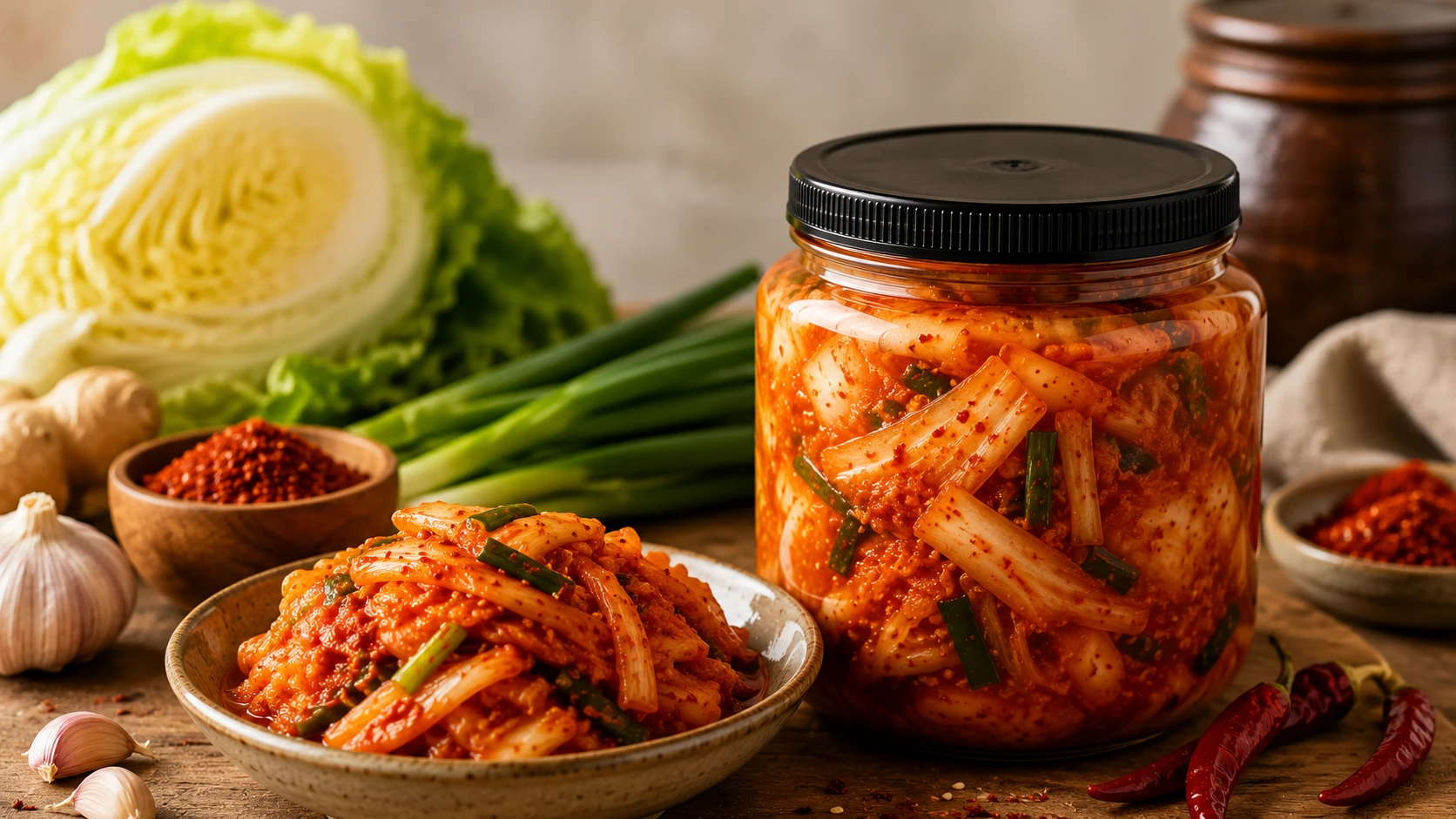
Best Store-Bought Kimchi Brands, Ranked
All 18 brands tested and ranked.
See the full ranking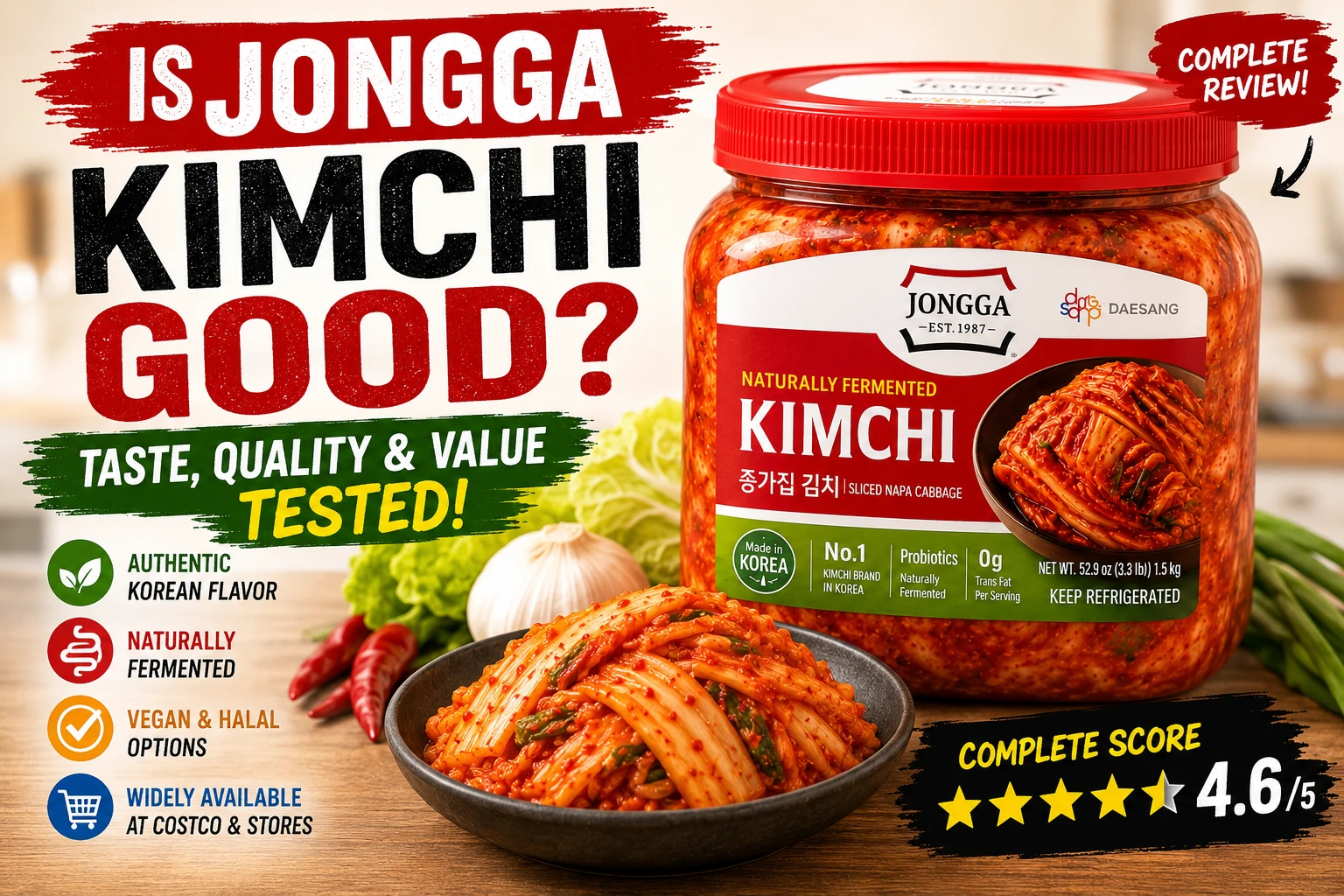
Is Jongga Kimchi Good?
Pasteurized or live, halal, ingredients, Costco.
Read the review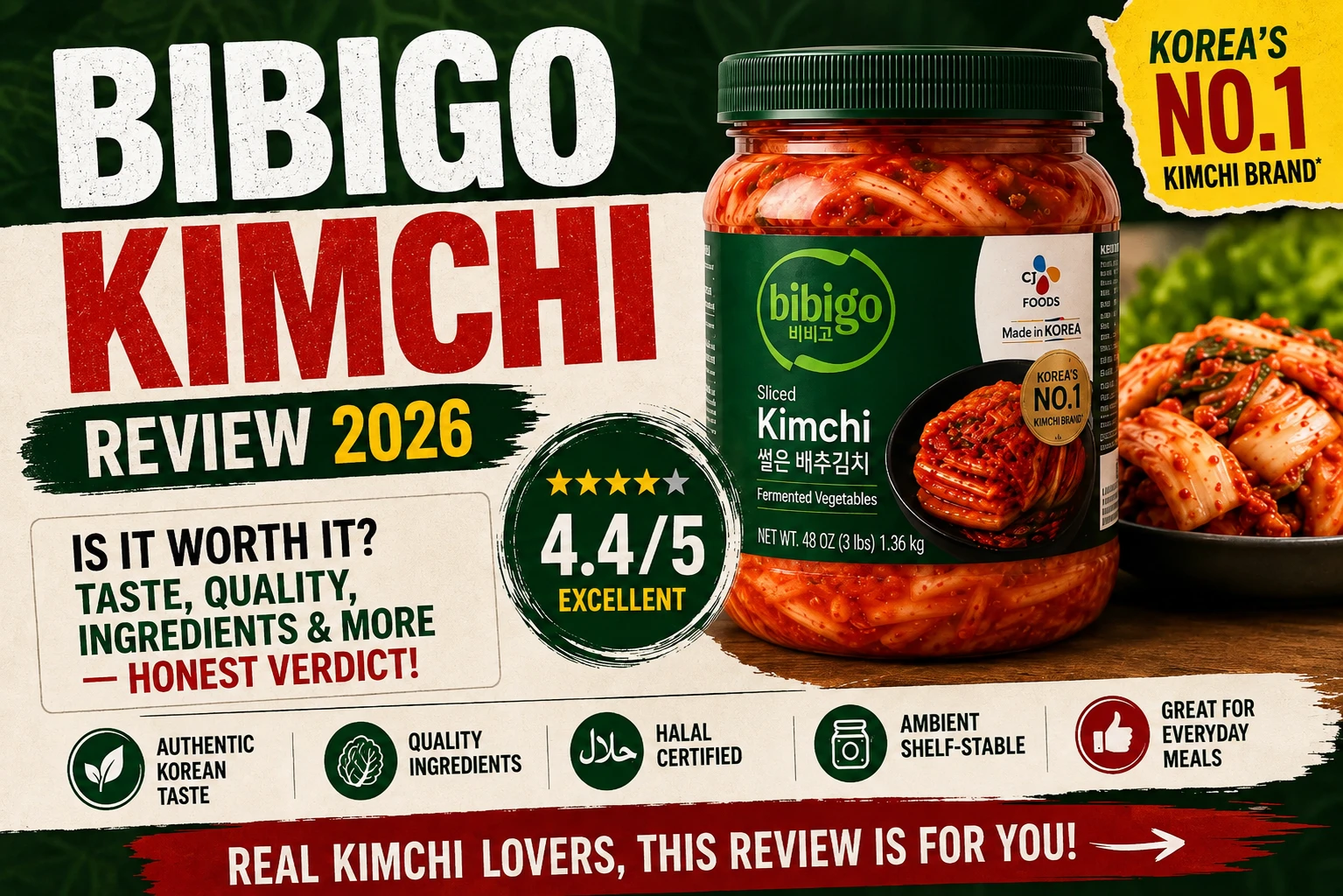
Is Bibigo Kimchi Good?
The most widely available brand, in depth.
Read the review
Pasteurized vs Live-Culture Brands
Which jars are live and which are heat-treated.
Check every brand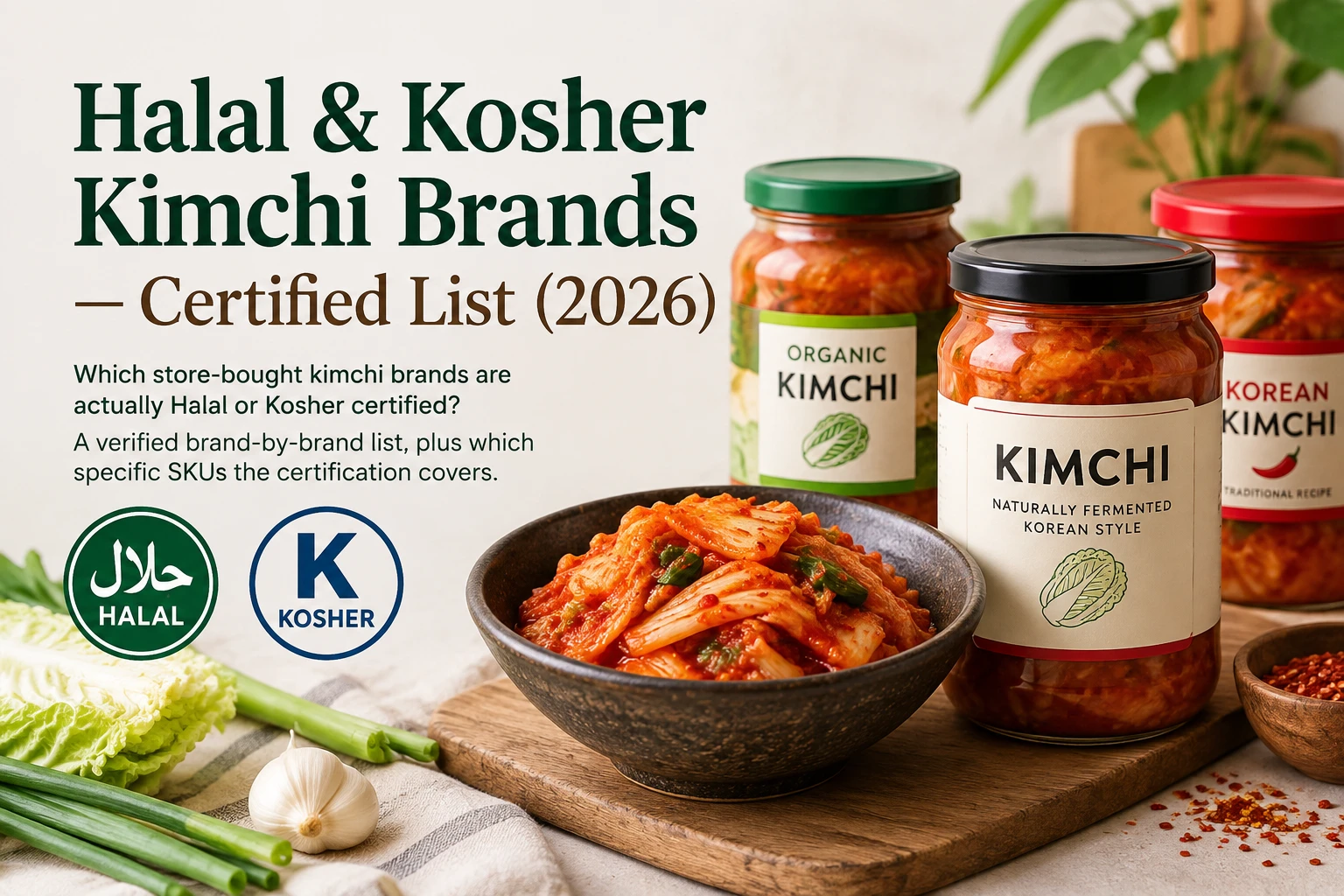
Halal and Kosher Kimchi Brands
Certification status, brand by brand.
See certifications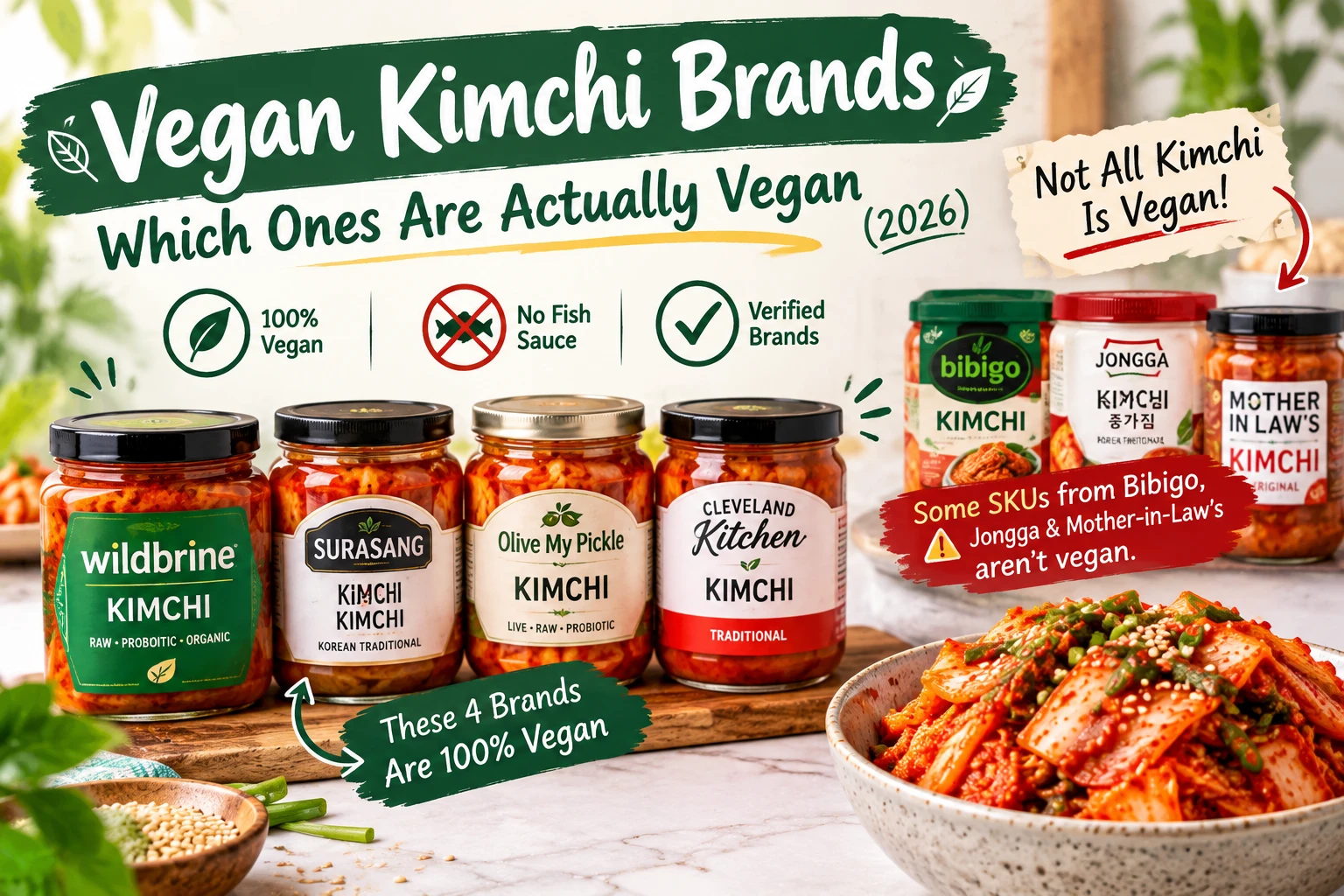
Vegan Kimchi Brands
Fish-sauce-free options by market.
Find vegan options
Low-Sodium Kimchi Brands
Sodium per serving across brands.
Compare sodium
Where to Buy Kimchi
Every reliable retail channel, compared.
See the guideJongga vs Bibigo Kimchi FAQ
It depends what you want. Jongga scored 9.4/10 in our 18-brand blind test for deeper fermentation and firmer crunch; Bibigo scored 8.1/10 and is milder and easier to find, with 10 oz bottles at Walmart. Independent reviewers are split: Chowhound ranked Bibigo above Jongga in a six-brand test, while Tasting Table called Jongga affordable with real heat.
In our blind test Jongga read spicier and more fermented. Outside reviews disagree: Tasting Table said Jongga has real heat, while Chowhound found it mild with no noticeable heat. Bibigo is generally described as mild. Batch age matters, because both keep fermenting in the fridge.
Mostly no. Jongga USA says most of its products are not pasteurized, but products made to be stable at room temperature are. The refrigerated tubs and jars are the unpasteurized line; the shelf-stable pouches and cans are pasteurized. Details in our Jongga kimchi review and the pasteurized vs live-culture guide.
We could not find a pasteurization statement from Bibigo. The refrigerated bottles are sold chilled and their US ingredient listing includes kimchi cultures, while the UK pouch is sold at room temperature and Bibigo does not say whether it is pasteurized. If live cultures matter, buy a refrigerated one and confirm on the package.
Both standard lines contain anchovy fish sauce; Jongga’s Costco tub also lists fermented shrimp sauce. Bibigo’s US and EU standard ingredient lists include monosodium glutamate, while the Jongga tub label we checked does not list MSG and Costco’s listing says no MSG. Both brands sell vegan versions without fish sauce.
It depends on the exact product. Bibigo’s fish-free ambient sliced kimchi (150 g) is listed by a distributor as IFANCA halal certified, and UK retailers list it as halal. For Jongga, sources conflict: Jongga’s Korean site lists a halal-certified plant and lines, while Jongga USA says its products are not certified. Check the package, and see our halal and kosher kimchi brands guide.
We could not confirm kosher status for either brand on US packages. Jongga’s Korean site says its Geochang plant has been Kosher-certified since 2014 for flavor kimchi, but Jongga USA says its products are not certified. We found no kosher certification for Bibigo kimchi. Look for a certifier’s mark on the package.
Yes, both. Jongga sells a 300 g vegan sliced kimchi jar (Walmart) made without shrimp, anchovy or fish sauce. Bibigo sells a refrigerated 10 oz vegan bottle at Walmart, and in the UK a room-temperature V-Label vegan pouch. See vegan kimchi brands for others.
Per ounce, Jongga’s Costco tub is roughly half the price: reported $8 to $9 for 52.9 oz is about 15 to 17 cents an ounce, while Bibigo’s 10 oz bottle at Walmart listed at $3.18, about 32 cents an ounce. Bibigo is cheaper per package. See Jongga kimchi at Costco.
In our test Jongga’s stronger fermentation carried better through heat in kimchi jjigae and fried rice, and needed less added gochujang. Bibigo works too, especially once aged a couple of weeks. See our kimchi jjigae and kimchi fried rice recipes.
Bibigo’s parent company is CJ CheilJedang, a South Korean food company founded in 1953. CJ launched the Bibigo brand in 2010, and it also covers dumplings, sauces, rice and snacks.
Bibigo is the consumer brand; CJ Foods is the CJ CheilJedang food business that makes and sells it. A search for a CJ Foods kimchi review almost always means Bibigo kimchi.
Jongga is owned by Daesang Corporation of South Korea, founded in 1956. Daesang also owns Lucky Foods, the Oregon maker of Seoul Kimchi, which it bought in June 2023.
One documented case: Jongga brand Gat Kimchi (mustard leaf, 500 g) was recalled in New Zealand in November 2024 for an undeclared fish allergen. We found no recall of Bibigo kimchi; a 2024 Bibigo recall in Korea involved dumplings. See our 2026 kimchi recall tracker.
Bibigo is at Walmart (10 oz bottles) and many other supermarkets. Jongga’s 1.5 kg tub is at Costco and its 300 g jars are at Walmart, with a wider range at H Mart. See where to buy kimchi; UK shoppers should use the UK kimchi brand guide.
Sources
Checked September 2026. Prices, labels and certifications change, so verify on your package.
- Jongga USA: About us and FAQ
- Jongga USA: refrigerated kimchi collection
- Jongga Global: fermentation and FAQ
- Jongga Korea: awards and certifications
- Costco Business Center: Jongga sliced napa cabbage 88.1 oz
- Warehouse Runner: Costco Jongga 52.9 oz listing
- Costco Verdict: Jongga ingredient list
- Walmart: Bibigo Refrigerated Korean-Style Napa Cabbage Kimchi 10 oz
- Walmart: Bibigo Refrigerated Vegan Kimchi 10 oz
- Food Is Good: Bibigo sliced kimchi ingredient list (US)
- bibigo Europe: sliced napa cabbage kimchi ingredients
- Yutaka: bibigo sliced kimchi 500 g jar nutrition
- Ocado: bibigo sliced kimchi (ambient, V-Label vegan)
- Costco UK: Bibigo ambient sliced kimchi 5 x 150 g
- Dynamic Equo: Bibigo sliced kimchi (no fish sauce), IFANCA halal listing
- CJ CheilJedang: halal market story (program began 2011)
- CJ CheilJedang: kimchi fermentation research
- Seoul Economic Daily: Bibigo Crazy Hot Kimchi in Thailand
- Chowhound: six store-bought kimchi brands ranked
- Tasting Table: best kimchi brands ranked
- NZ Ministry for Primary Industries: Jongga Gat Kimchi recall
- The Korea Herald: Daesang acquires Lucky Foods
- Wikipedia: CJ CheilJedang

Ji-Young Park ran the 18-brand blind taste test behind KimchiGuide’s brand rankings and keeps this comparison in step with the Jongga and Bibigo reviews.
Full profile
Dr. Sarah Mitchell reviews the nutrition and ingredient information on KimchiGuide’s brand pages. Always use the label on your own package for allergens and sodium.
Full profile