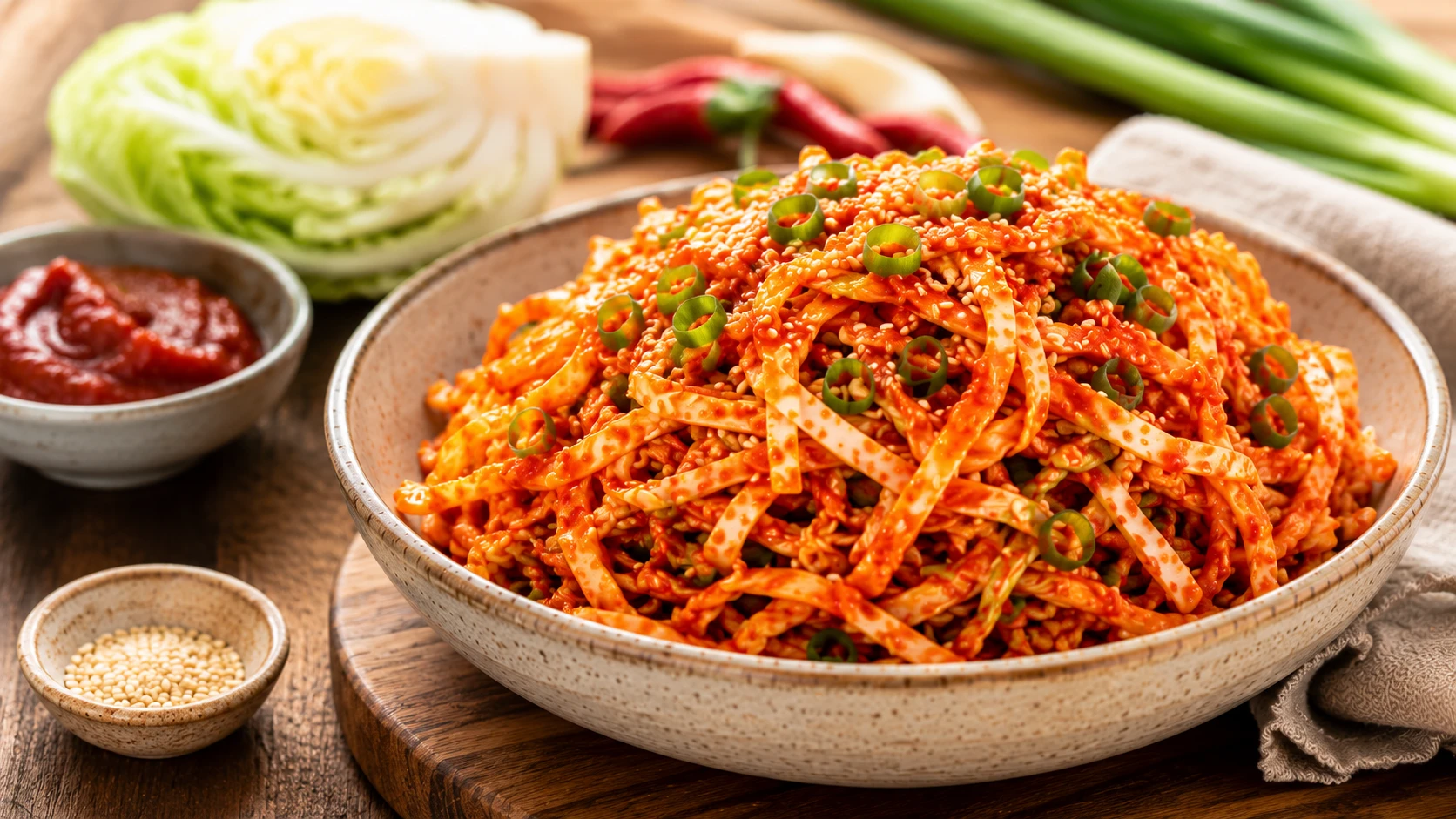
Quick Kimchi Slaw Recipe Napa Cabbage, Gochujang & Sesame — Ready Instantly
A no-ferment kimchi slaw that tastes fresh and alive in the time it takes to slice cabbage. Perfect topping for burgers, tacos, rice bowls, and sandwiches — or just eat it as a crunchy side.

What Is Quick Kimchi Slaw?
Thinly sliced napa cabbage dressed in a gochujang vinaigrette — no fermentation, ready to eat in minutes. It tastes fresh and crunchy with a tangy, spicy kick, without the funk of traditional fermented kimchi. Think coleslaw with Korean heat instead of mayo.
Quick Kimchi Slaw vs Fermented Kimchi — What’s the Difference?
Both are delicious. One takes 5 minutes, the other takes 3 days. Here’s how to choose.
How to Make Quick Kimchi Slaw
Slice cabbage → mix with dressing → serve.
- Slice: Quarter napa cabbage lengthwise, then slice thin crosswise.
- Dress: Toss with gochujang, rice vinegar, sesame oil, and a pinch of salt.
- Taste: Adjust seasoning to your preference (heat, tang, salt).
- Serve: Immediately, or let sit 30 minutes if you prefer softer texture.
Why Quick Kimchi Slaw Over Fermented?
Quick slaw serves a different purpose than fermented kimchi — each has moments when it’s the right choice.
Choosing the Right Napa Cabbage
Quality cabbage makes or breaks this recipe since it’s the only vegetable. A good head should feel firm and smell slightly sweet.
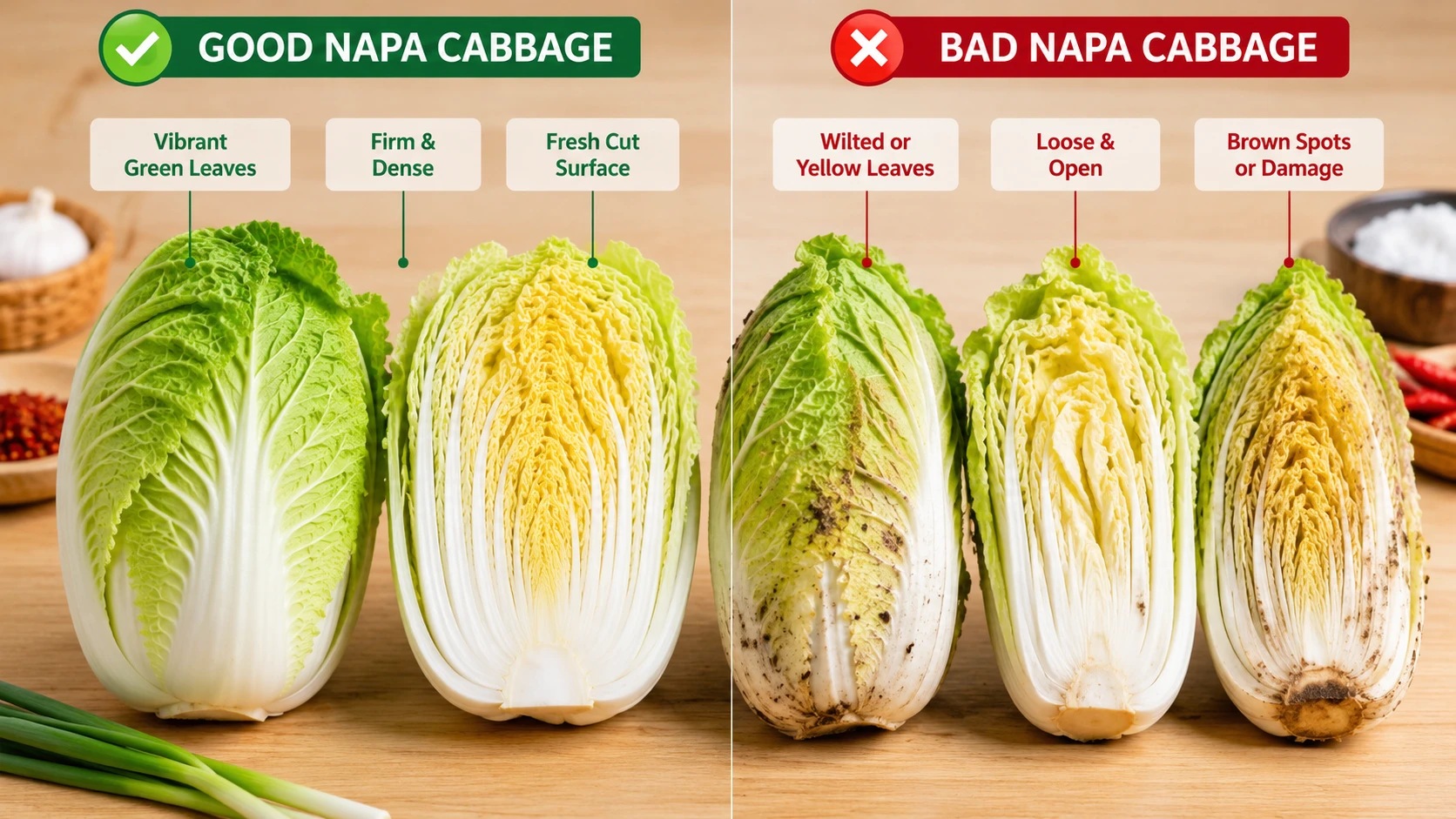
Firm head: Should feel heavy for its size. Gently squeeze — no soft spots. Colour: Pale yellow-green outer leaves, white-green inner. Smell: Slightly sweet, fresh cabbage smell.
Soft spots: Indicates rot starting. Brown or dried edges: Sign of age. Slimy leaves: Bacterial breakdown. Heavy chemical smell: Often means pesticides applied.
Ingredients
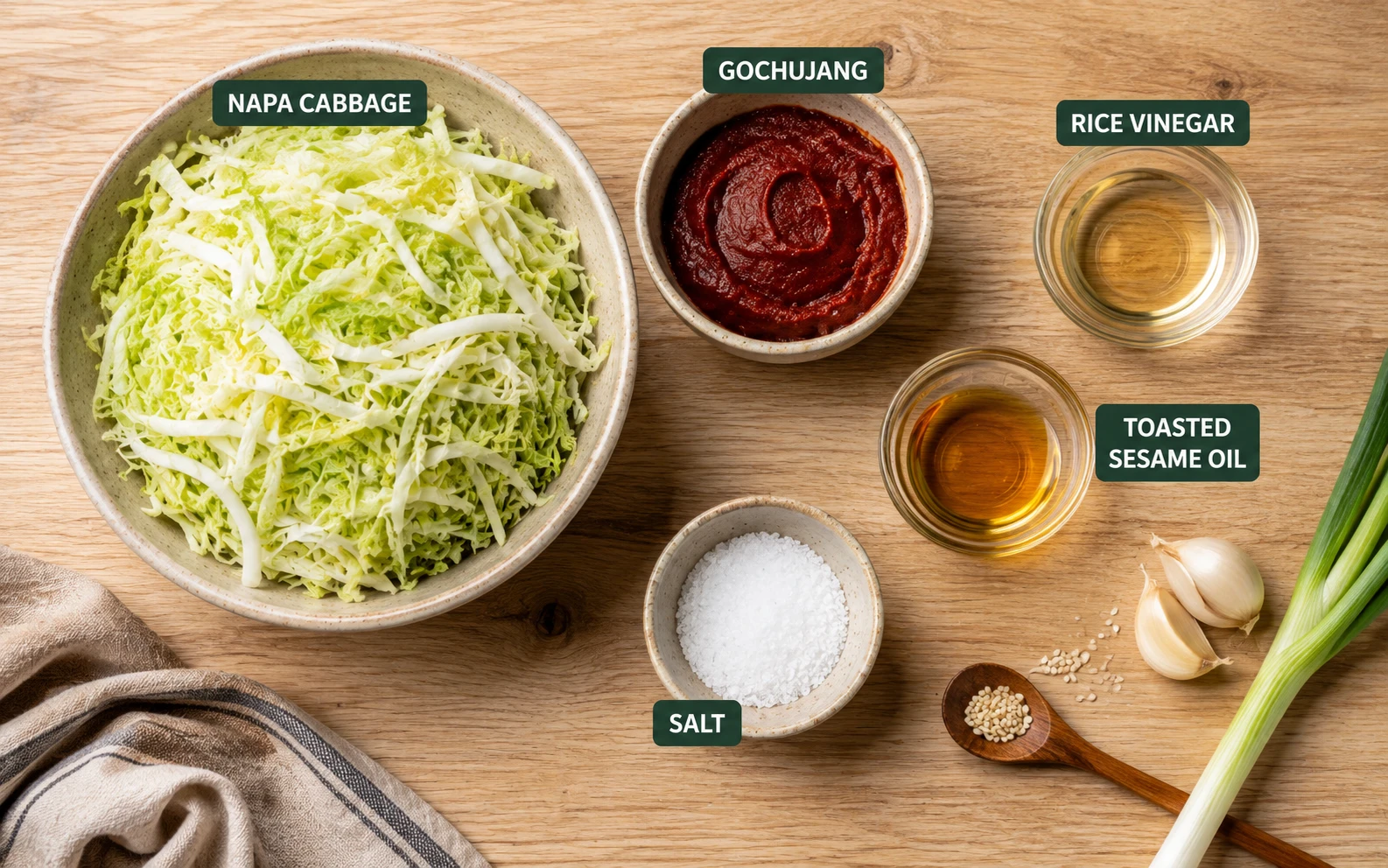
Substitution Guide
| Ingredient | Substitute | Ratio | Impact |
|---|---|---|---|
| Gochujang | Sriracha or chili paste | 1:1 | Less depth, more vinegar-forward. Use good-quality sriracha only. |
| Rice vinegar | Apple cider or lime juice | 1:1 | Different acidity profile — still works, slightly different tang. |
| Toasted sesame oil | Regular sesame oil (less pungent) | 1:1 | Loses nutty aroma, still adds richness. |
| Napa cabbage | Green or red cabbage (crunchy varieties) | 1:1 | Works, but loses traditional Korean character and mild sweetness. |
How to Make Quick Kimchi Slaw
Four steps, five minutes total. The only way to mess this up is under-seasoning.
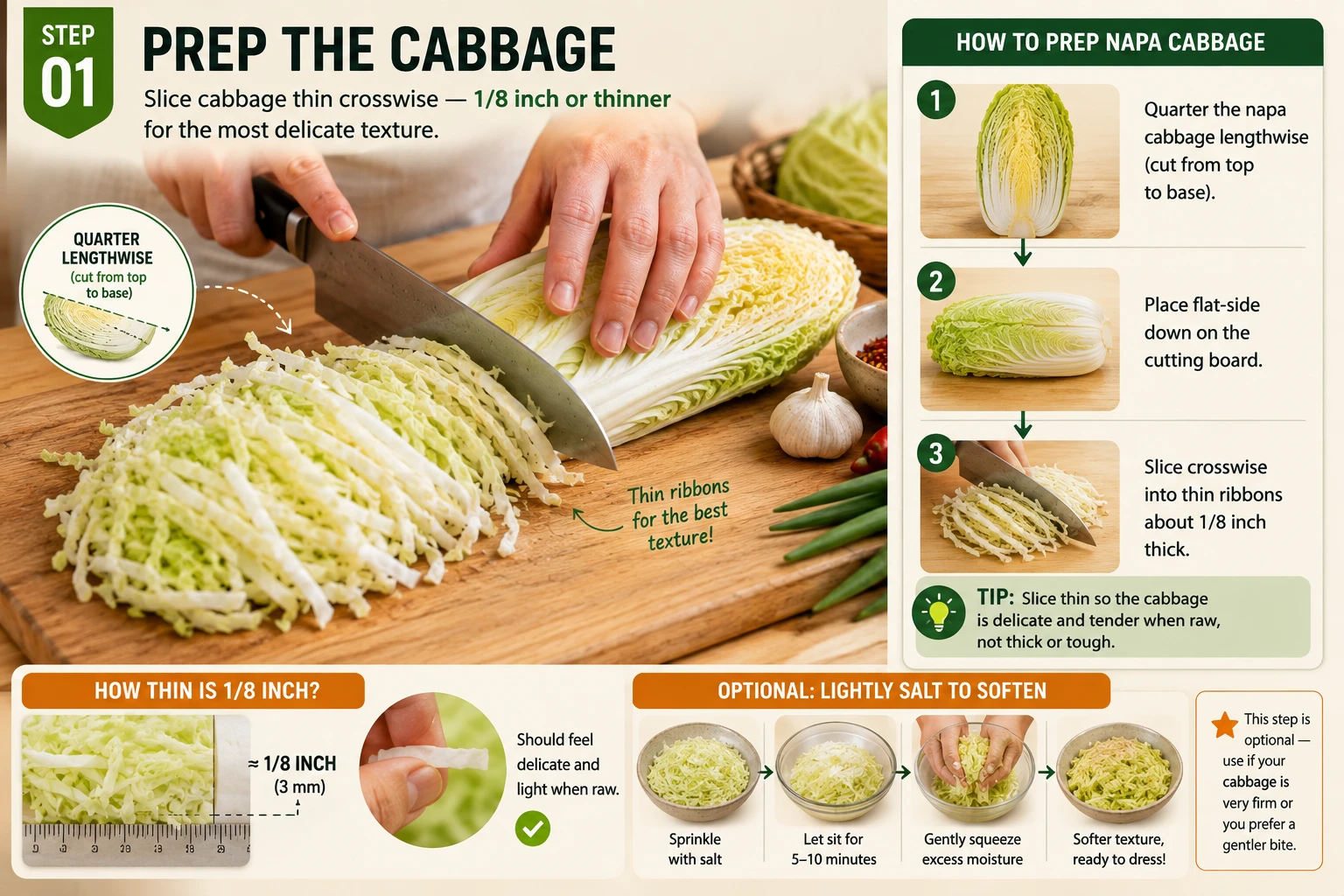
Quarter the napa cabbage lengthwise (cut from top to base), then place flat-side down and slice crosswise into thin ribbons about 1/8 inch thick. You want thin enough that they feel delicate when raw, not thick chunks.
If your cabbage is very firm, you can lightly salt it and let it sit 5-10 minutes to soften slightly before dressing — this is optional, but some people prefer a gentler texture.
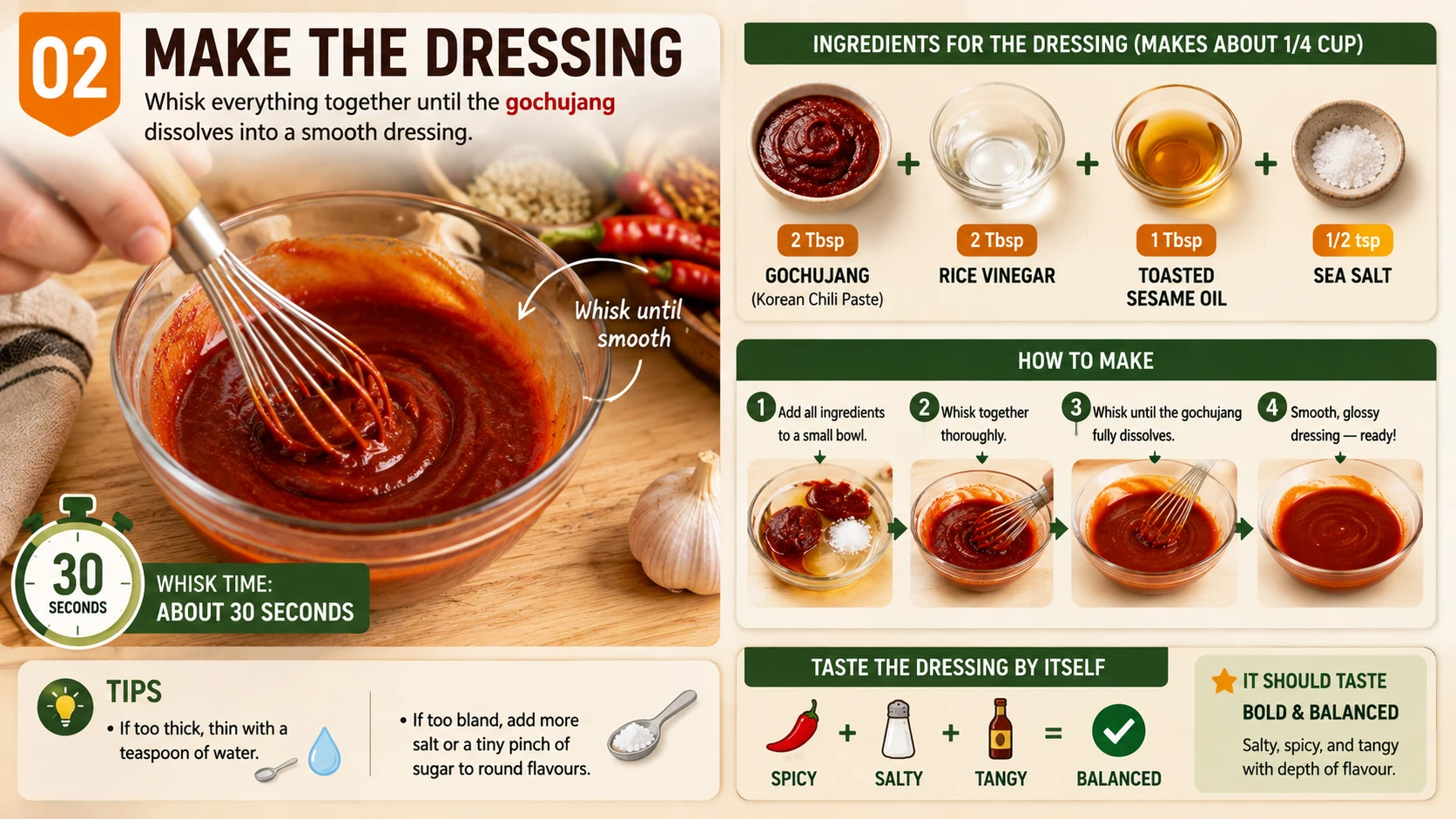
In a small bowl, whisk together 2 tablespoons gochujang, 2 tablespoons rice vinegar, 1 tablespoon toasted sesame oil, and ½ teaspoon sea salt. Whisk until the gochujang fully dissolves and no streaks remain — this takes about 30 seconds.
Taste the dressing by itself before adding to cabbage — it should taste bold and balance salty, spicy, and tangy. If too thick, thin with a teaspoon of water. If too bland, add more salt or a tiny pinch of sugar to round the flavours.
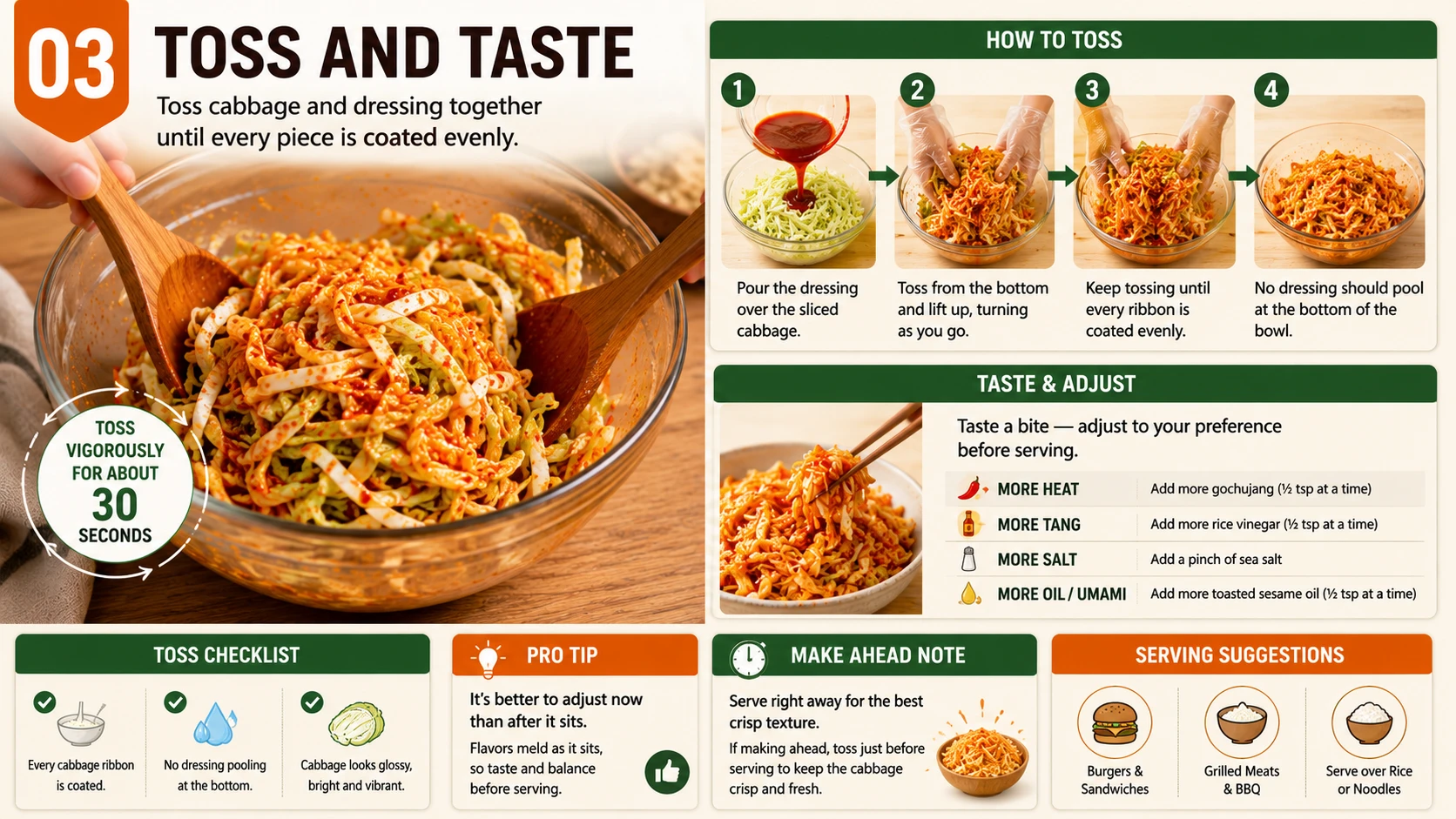
Pour the dressing over the sliced cabbage and toss vigorously for about 30 seconds until every ribbon is coated and no dressing pools at the bottom of the bowl.
Taste a bite — adjust heat (more gochujang), tang (more vinegar), salt, or oil (more sesame) to your preference before serving. Better to adjust now than after it sits.
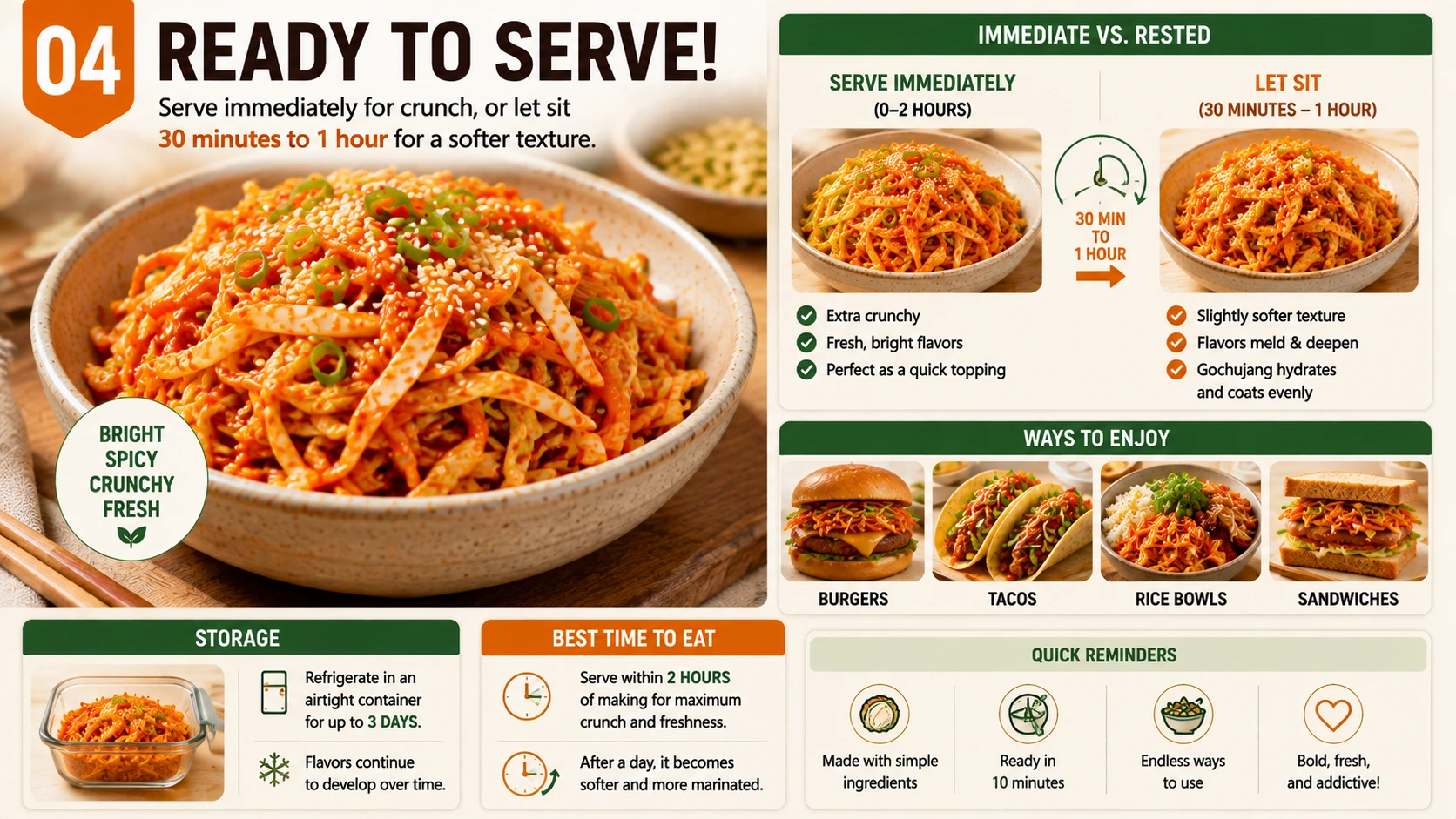
The slaw is ready to eat immediately — bright, crunchy, and fresh. Or let it sit at room temperature for 30 minutes to 1 hour, during which the cabbage will soften slightly and the flavours will meld deeper as the gochujang hydrates and distributes evenly.
Use as a topping on burgers, tacos, rice bowls, or sandwiches immediately, or transfer to a sealed container and refrigerate for up to 3 days.
Pro Tips & Variations
The thinner the slice, the more delicate the final texture. Thick pieces stay crunchy but feel raw — aim for thin ribbon texture like coleslaw.
Mixing warm dressing with cold cabbage is fine, but if your cabbage is straight from the fridge, let it sit out for 10 minutes to bring flavours together properly.
Sesame seeds (1 tbsp toasted), pine nuts, or even crispy fried shallots stirred in right before serving add textural contrast and depth.
Start with 2 tbsp gochujang, taste, then add ½ tbsp more if you want more heat. Gochujang brands vary in spice level significantly.
Minced garlic (½ tsp), fresh ginger (¼ tsp), or a small drizzle of honey work beautifully stirred into the dressing for extra depth.
Half napa cabbage + half julienned carrot or radish for colour and textural variety, though traditional uses only cabbage.
Storage & Shelf Life
In a sealed container with a clean spoon — cabbage will soften over time and brine flavours deepen.
Freezing destroys the crisp texture. Use fresh or refrigerated instead.
After 2 hours, cabbage begins to soften and dressing separates. Better to serve immediately or refrigerate.
Fresh and crunchy immediately after making. After 1 day in fridge, becomes softer and more marinated.
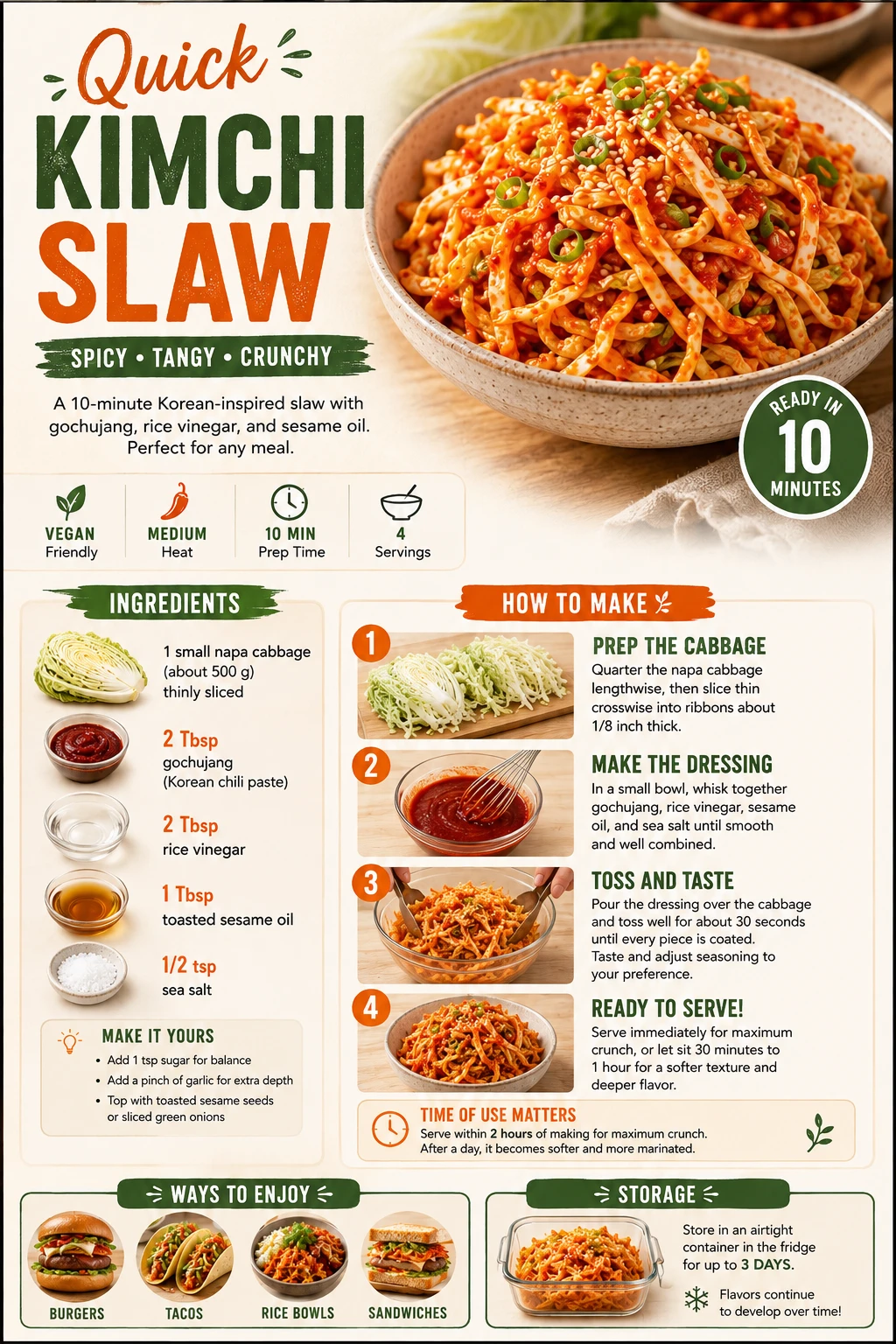
Quick Kimchi Slaw
5 minutes · No fermentation · Perfect topping
- 1 head napa cabbage (~1 lb)
- 2 tbsp gochujang
- 2 tbsp rice vinegar
- 1 tbsp toasted sesame oil
- ½ tsp sea salt
- 1Slice napa cabbage crosswise into thin ribbons (~1/8 inch).
- 2Whisk together gochujang, rice vinegar, sesame oil and salt until smooth.
- 3Toss cabbage with dressing until evenly coated.
- 4Taste and adjust seasoning. Serve immediately or let sit up to 1 hour.
Per serving (1/4 of recipe). Approximate values — may vary by brand and serving size.
How to Use Quick Kimchi Slaw
The obvious place is on a kimchi burger. Here are five other applications that work just as well.
The ideal pairing — layer on top after the gochujang mayo for crunch and bright flavour that cuts through the richness.
Use as a slaw topping on Korean-spiced pulled pork or bulgogi beef tacos — works better than regular coleslaw.
Pile on top of rice with grilled chicken, roasted vegetables, and a fried egg — adds crunch and spice without needing extra sauce.
Use like any coleslaw on sandwiches, but the gochujang kick adds Korean flair without mayo — pairs with turkey, pork, or beef.
A crunchy, spicy topping for boiled or pan-fried dumplings instead of plain soy sauce — same approach as a dipping side.
This slaw is the perfect accompaniment to the mayo guide — layer them together for maximum flavour impact.
Calories & Nutrition Breakdown
Per serving (1/4 of recipe = roughly 1.5 cups).
Related Recipes & Guides
Go deeper with the sauce and techniques that work with this slaw.
The perfect companion sauce — tested 3:1 ratio that pairs beautifully with this slaw on burgers.
The original burger this slaw was designed for — see both sauce and slaw work together.
Every build in the kimchi burger family — this slaw works on every single one.
Master the technique that makes these burgers so good — the slaw shines on a properly made smash.
Quick Kimchi Slaw FAQ
Covering the most common questions about making and using this slaw. First two questions always open.
This quick slaw is fresh, tangy, and ready immediately — no fermentation. Fermented kimchi takes 3–4 days, has probiotic benefits, and a deeper, more complex funky flavour. They’re both delicious but serve different purposes.
Up to 3 days refrigerated in a sealed container. It’s best eaten within the first 2 hours for maximum crunch, but tastes good marinated for a day. After 2 days it softens significantly.
Yes, but with caveats — make it the night before at earliest. After 24 hours it softens noticeably. For crispest texture, assemble 30 minutes before serving and refrigerate until needed.
Any mainstream Korean gochujang works fine — Sempio, Gochujang Boy, supermarket house brands all work. Heat levels vary between brands, so start with 2 tbsp and add more to taste.
Depends on your gochujang brand — many use wheat or barley malt as a thickener. Check the label. Several brands now offer gluten-free certified versions.
Yes, though you’ll lose the traditional Korean character and mild sweetness that napa brings. Red cabbage works, green cabbage works, but napa is ideal for this specific recipe.
The recipe uses 2 tbsp gochujang as a baseline. For mild, use 1½ tbsp. For hot, use 2½–3 tbsp. Taste as you go rather than adding all at once.
Apple cider vinegar or lime juice work as 1:1 substitutes. The final flavour will shift slightly but remain balanced and delicious.
Optional — if your cabbage feels very firm, lightly salt it and let sit 5–10 minutes before adding dressing. This softens it gently. Not necessary if you like it extra crisp.
Sure — shredded carrots, julienned radish, or thinly sliced daikon add colour and crunch. Keep napa as the base (at least 50%) and mix in others to taste.
A sharp knife, mandoline, or food processor all work. Aim for 1/8 inch thick — as thin as coleslaw slices, not chunky like a salad. This takes 2 minutes with a good knife.
Yes to both — use gluten-free certified gochujang (check the label), and all other ingredients are naturally vegan: cabbage, vinegar, sesame oil, salt. Make sure your sesame oil is pure with no additives.
Was this recipe helpful?
Your feedback helps us improve KimchiGuide for everyone.
Who Makes This Slaw
From home cooks to restaurants — this recipe works for everyone.
“Made this for burgers tonight. It’s so much fresher tasting than fermented kimchi and perfect when you want to eat right away.”
“Five minute side dish that tastes better than anything I can buy. Using this for everything now — tacos, bowls, sandwiches.”
“No fermentation makes it perfect for spontaneous dinner plans. Tastes good hot or cold, holds up great in the lunchbox.”
“My new go-to slaw. Less tangy than vinegar coleslaw, more complex than plain mayo-based. Perfect balance.”