Is Jongga Kimchi Good? The Full Review — Taste, Ingredients & Daesang Explained (2026)
A standalone deep-dive on Korea’s #1 kimchi brand since 1987 — taste, real ingredients, nutrition, who actually makes it, the Michelin-chef gourmet line, the space-kimchi story, Costco pricing, and an honestly updated safety section.
Is Jongga Kimchi Good?
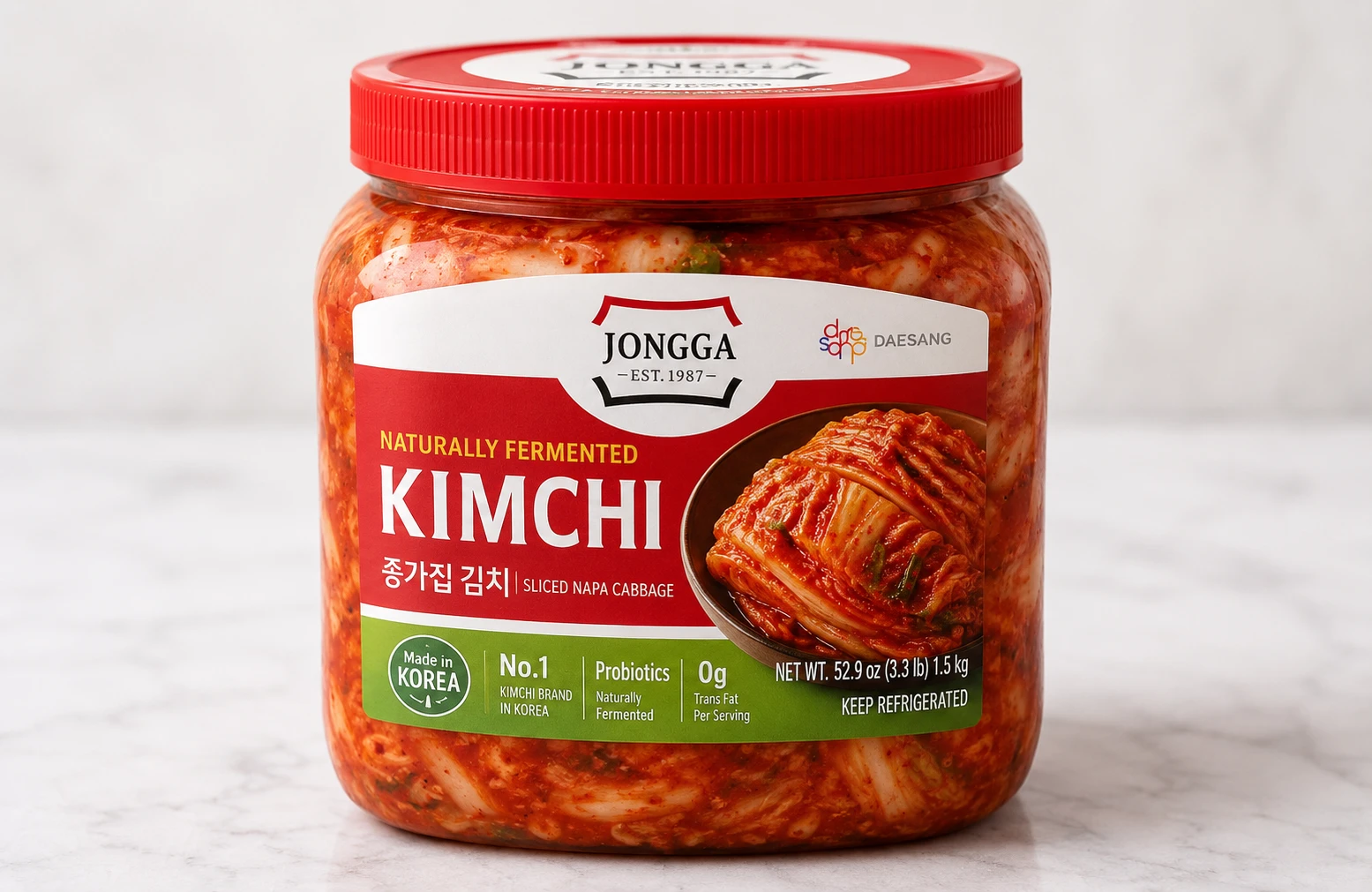
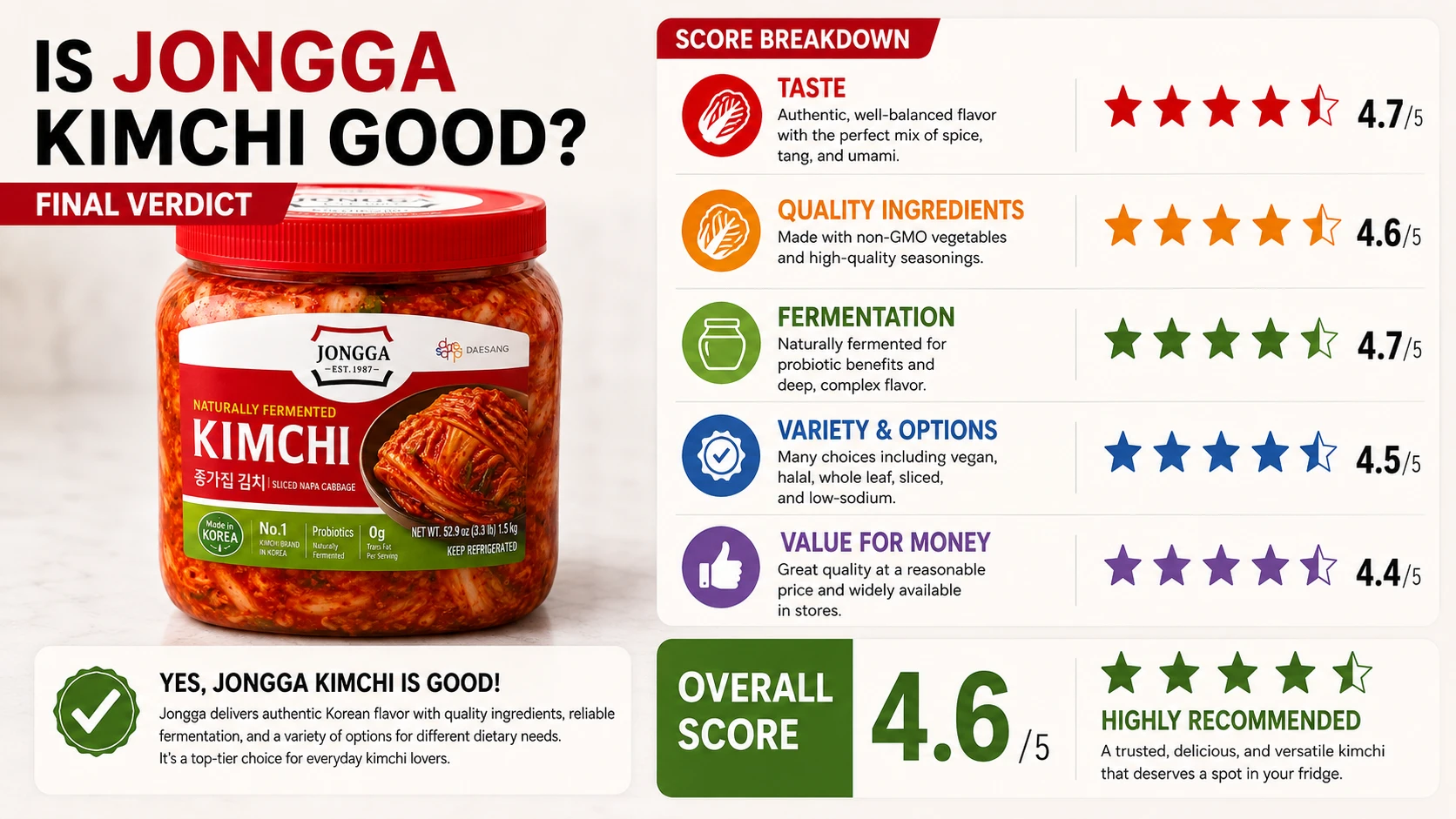
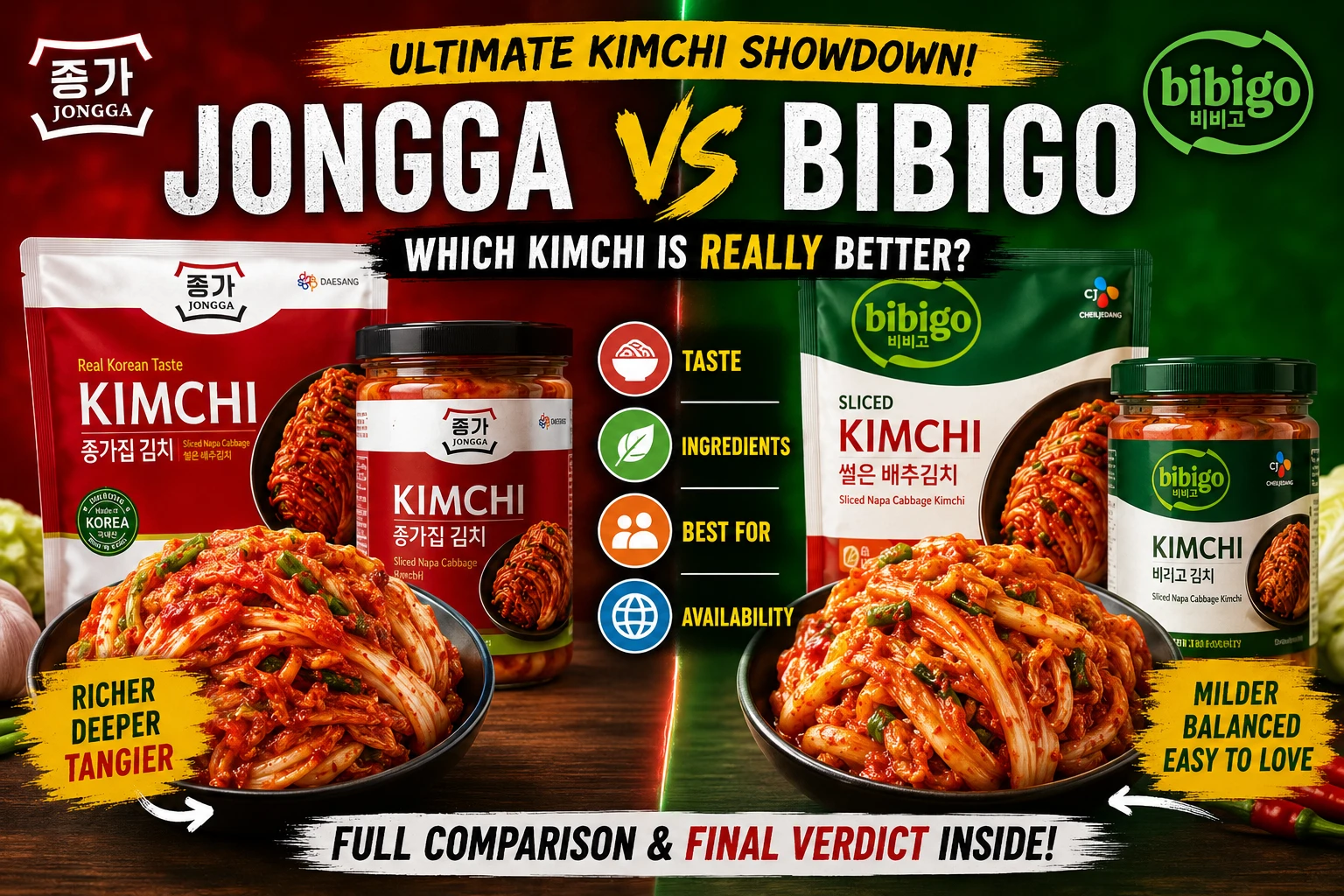
Yes — in our 18-brand blind taste test, Jongga scored highest overall at 9.4/10, our top pick by a clear margin. It’s made by Daesang Corporation, Korea’s #1 kimchi brand since 1987 and the first company to commercialize packaged kimchi globally. It delivers deep, well-developed sour-tangy fermentation, a firm crunch that holds up over weeks, and balanced heat that reads closest to homemade kimchi of any brand we tested. It’s also genuinely low in calories. The trade-off versus a brand like Bibigo is narrower mainstream availability — you’ll most reliably find it at Korean grocers, Costco, and select Walmart locations rather than every regular supermarket.
🛒 Check Price on AmazonJongga Kimchi — At a Glance
Here’s what actually matters before you decide whether to put a tub in your cart.
- Taste: deep, tangy, well-fermented — our #1 overall score.
- Made by: Daesang Corporation, Korea’s #1 kimchi brand since 1987.
- Ingredients: standard line contains fermented shrimp and fish sauce — check the label.
- Nutrition: ~10-15 kcal per 1oz (28g) serving, 200-270mg sodium.
- Vegan/Halal/Kosher: a dedicated no-fish-sauce line exists; Halal-certified since 2010, Kosher since 2014.
- Availability: Korean grocers, Costco, select Walmart — narrower than Bibigo, but growing fast.
Jongga Kimchi — Product Overview & Scorecard
Here’s how Jongga scored across our core taste-test criteria, from the same 18-brand blind test used for our full brand ranking.
Who Makes Jongga Kimchi? Daesang Corporation Explained
Understanding the company behind Jongga explains a lot about why it consistently outperforms in taste tests.
Jongga is owned and produced by Daesang Corporation, a South Korean food company founded in 1956. Unlike some competitors that are broad conglomerates dabbling in kimchi alongside dozens of unrelated product categories, Daesang’s identity is built specifically around fermentation and Korean pantry staples — including seasonings, soy sauce, gochujang, and doenjang alongside kimchi. Jongga has been the #1 kimchi brand in Korea since 1987, launched in collaboration with the Korea Advanced Institute of Science and Technology (KAIST) through a dedicated kimchi research project, and it was the first brand in the world to commercialize packaged kimchi at scale — essentially defining what “store-bought kimchi” means as a category.
In Korean, “Jongga” (종가) refers to the head family house — the eldest family line traditionally responsible for preserving and passing down authentic recipes across generations. The name is a deliberate signal of the brand’s positioning: heritage, craft, and traditional technique, rather than mass-market convenience. That positioning shows up directly in the taste — Daesang has developed its own proprietary starter bacteria to control the vegetable fermentation process, encouraging beneficial lactic acid bacteria while discouraging unwanted microbes, which produces the deep, stable, well-developed flavor our tasters consistently rated highest across all 18 brands.
Daesang’s scale is also worth putting in context: the global kimchi market itself was valued at roughly $5.7 billion in 2026 and is projected to grow to about $6.9 billion by 2030. Within that market, Daesang is consistently ranked among the small handful of largest global kimchi producers in industry reports, alongside CJ CheilJedang (Bibigo’s parent) — the two Korean giants that between them account for a large share of internationally exported kimchi.
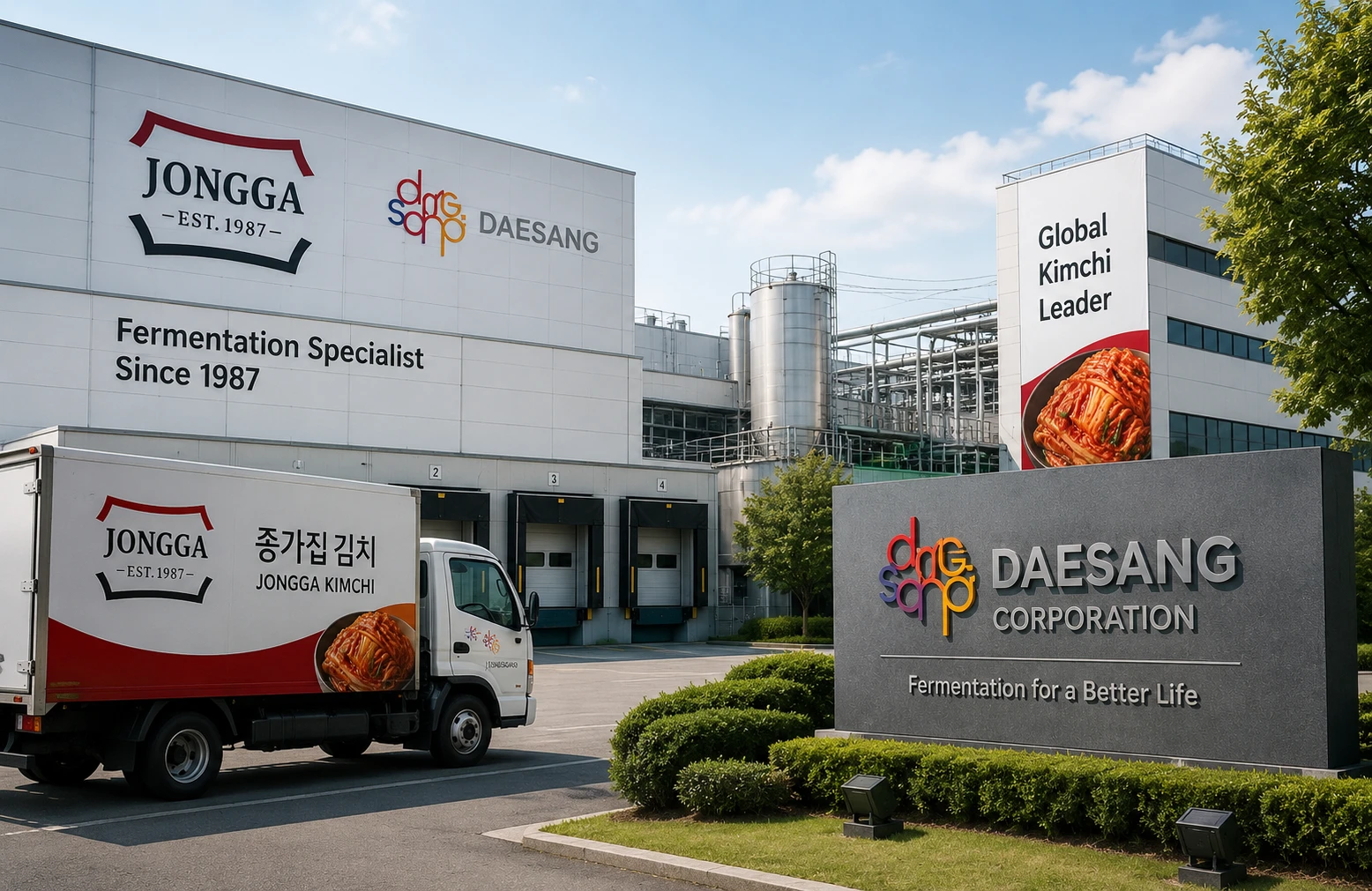
Daesang’s core businesses are food, fermentation, and starch/sweetener production — decades of specialized fermentation know-how sit behind every jar. This is a meaningfully different company profile than a broad conglomerate that happens to also sell kimchi.
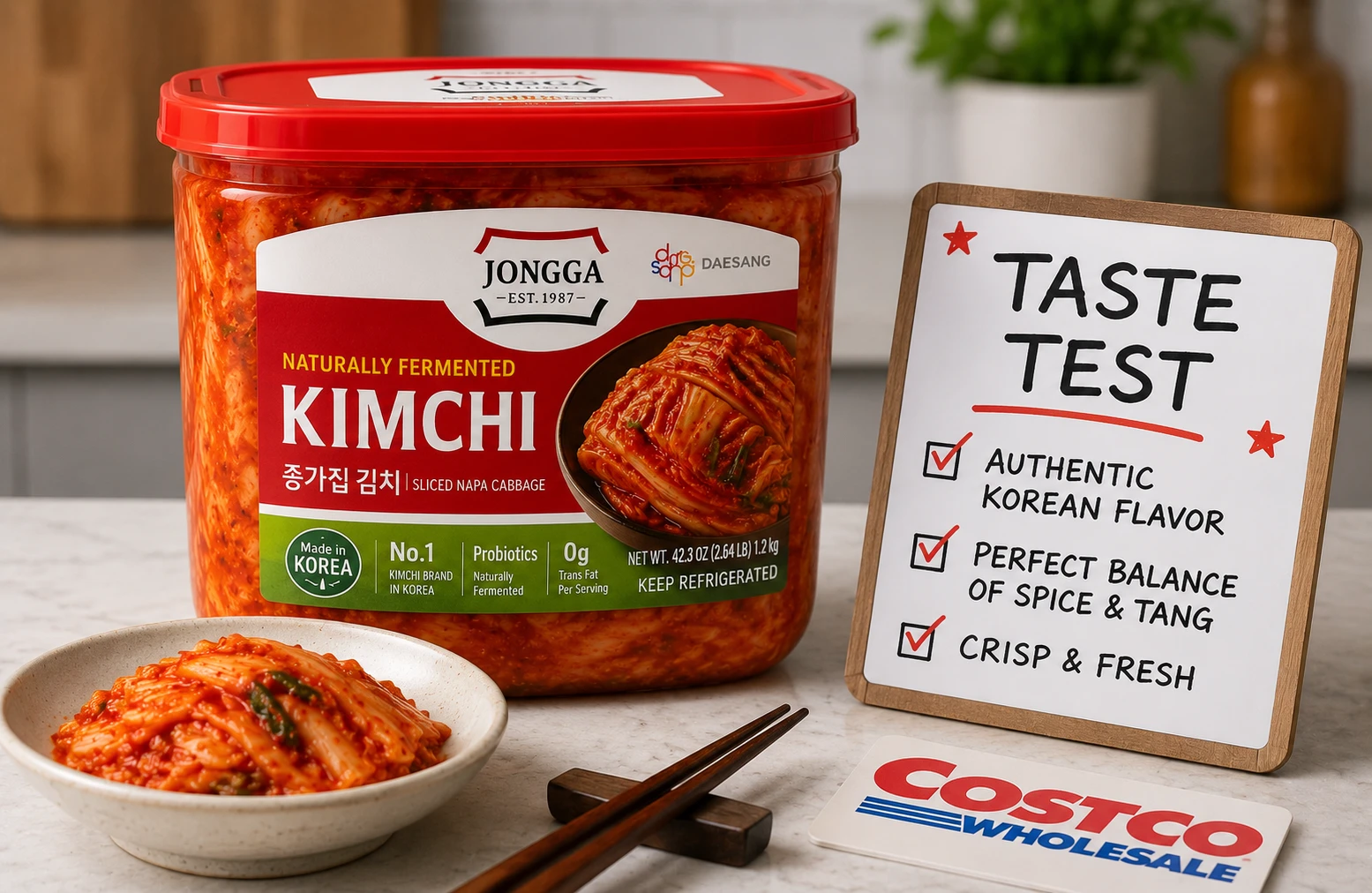
Where some competitors prioritized building the widest possible retail footprint first, Jongga’s strategy centered on proving out authentic, traditional flavor domestically for decades before scaling internationally — which is a large part of why it consistently reads as more genuinely traditional in blind taste tests.
Global Expansion — LA, Poland, Vietnam & the Michelin-Chef Line
Jongga’s recent growth story spans three continents, and most kimchi content only covers a fraction of it.
The United States became Jongga’s #1 export market for kimchi starting in 2023, driven by rising mainstream interest in Korean food and culture. To keep up with that demand, Daesang opened a large-scale kimchi production facility in Los Angeles in 2022 — the first Korean food company to establish local US kimchi manufacturing at this scale — and followed that in June 2023 by acquiring Lucky Foods, an Oregon-based Asian food manufacturer, adding a second US production base to the portfolio.
In Europe, what was once a planned expansion is now operational: Daesang’s Kraków, Poland facility — a joint venture called Daesang ChPN Europe, built with Polish fermented-vegetable producer ChPN — is targeting over 3,000 tons of kimchi production annually by 2030, supplying retailers including Carrefour, Auchan, and Lidl across the continent. Daesang has also continued investing in Southeast Asia, including a $21.8 million Vietnam production investment in June 2024 to expand kimchi output alongside other convenience foods.
On the premium end, Daesang’s Jongga brand partnered with a Michelin 3-star chef to launch San Ho Won Kimchi, a gourmet product line sitting above the standard retail tub — a genuine, officially announced collaboration rather than just influencer marketing. Jongga has also been running consumer-facing events like the “Jongga Kimchi Cook Off,” a cooking competition held across the US, UK, and France in partnership with culinary schools such as the Institute of Culinary Education, alongside music festival sponsorships and food truck campaigns aimed at introducing kimchi to a broader, non-Korean audience.
This growth story also explains why Jongga sits at the intersection of two different audiences with somewhat different expectations. Longtime Korean-American shoppers already know exactly what they’re buying and mostly care about consistency with the kimchi they grew up with. Newer, non-Korean buyers are often discovering fermented kimchi for the first time through Jongga specifically, frequently via social media food content rather than a family recommendation. Daesang’s cooking competitions, festival sponsorships, and the Michelin-chef collaboration all read as a deliberate strategy to serve that second audience without diluting the product itself for the first — a genuinely difficult balance that most food brands don’t manage successfully.
Jongga Kimchi in 2026 — What’s New
Because Daesang moves fast, here’s what’s actually changed or launched recently, rather than a generic “trusted since” line.
Key Terms — Jongga & Fermentation Entities
These terms explain what’s actually behind some of Jongga’s specific claims and positioning.
Taste & Texture — What Reviewers Actually Say
Jongga’s reputation for authentic flavor holds up consistently across both our own testing and independent reviewer accounts.
The most consistent theme across reviews is genuine surprise at how close Jongga tastes to homemade or restaurant-style kimchi. Independent reviewers describe it as “fresh, crunchy, and perfectly spicy,” with one specifically noting that after years of chasing a remembered flavor from Korea through “dozens of restaurant fails,” Jongga was “the one” — crisp, not mushy or overly salty like many other store-bought attempts, and “perfectly balanced” without being too sweet or heavy-handed with ginger. That kind of specific, unprompted comparison to homemade or restaurant kimchi shows up repeatedly and is a genuinely strong signal.
Texture is a particular strength — cabbage stays notably crunchy even weeks after opening, which is a common failure point for lower-scoring brands that turn soft and mushy quickly. Heat is balanced rather than aggressive: real spice with a “slow Korean burn” rather than a flat, one-note chili kick. Some more experienced kimchi eaters do note that as a mass-produced product, it inevitably can’t fully match a small-batch homemade jar — a fair and honest caveat, but one that applies to every store-bought brand, and Jongga closes that gap further than any other brand we tested.
It’s also worth being clear-eyed about what a 9.4 out of 10 actually means, rather than treating it as a claim of perfection. No mass-produced jar can fully replicate a small-batch kimchi made by someone who’s been perfecting their family’s exact ratios for decades — that’s simply the nature of scaled production versus artisanal, one-off fermentation. What Jongga has done well is close that gap further than any other widely available brand, using genuine fermentation expertise rather than shortcuts like added acidity or excess preservatives to fake the sourness other brands sometimes rely on.
Real Ingredients Breakdown
Pulled from real retail ingredient information and third-party product reviews — not a marketing summary.
| Ingredient | Role |
|---|---|
| Napa cabbage | Base vegetable |
| Radish | Traditional secondary vegetable |
| Rice paste | Traditional thickener for the seasoning paste |
| Kelp | Umami and mineral depth |
| Red pepper powder (gochugaru) | Color and heat |
| Garlic, ginger | Aromatics |
| Fermented shrimp (saeujeot) | Umami — not vegan/halal in standard line |
| Fish sauce (anchovy) | Umami — not vegan/halal in standard line |
| Proprietary starter culture | Controlled fermentation, live lactic acid bacteria |
One detail worth flagging for anyone comparing labels closely: rice paste and kelp, both listed in Jongga’s ingredient makeup, are traditional additions that thicken the seasoning paste and add a layer of savory depth beyond what chili and garlic alone provide. Not every brand includes these — some competitors simplify their seasoning base to cut costs or shorten the ingredient list for marketing purposes. Their presence here is a small but genuine signal of a more traditional, less corner-cut recipe, consistent with what shows up in the finished flavor.
Jongga Kimchi Nutrition Facts
Standard Jongga kimchi is genuinely light — one of the lowest-calorie foods you’ll find on a grocery shelf, though sodium is worth knowing about.
| Product | Serving | Calories | Sodium |
|---|---|---|---|
| Jongga Kimchi (standard) | 1 oz (28g) | 10-15 kcal | 200-270mg |
| Jongga Vegan Kimchi | 1 oz (28g) | ~10 kcal | ~290mg |
| Jongga Kimchi Ramen | 140g container | 470 kcal | N/A — check label |
| Jongga Authentic Korean Cold Noodles | 190g serving | 450 kcal | 1340mg |
On its own, plain Jongga kimchi is one of the lowest-calorie foods you’ll find on a grocery shelf — figures from Jongga’s own nutrition page and independent retail nutrition databases both put a standard 1oz (28g) serving in the 10-15 calorie range, with 0g fat and roughly 1g protein. The trade-off, typical of kimchi as a category, is sodium: fermentation depends on salt, so even a small serving carries a meaningful portion of a daily sodium allowance — figures across sources range from about 200mg up to 270mg per 28g serving depending on the exact product and batch. Interestingly, the vegan line runs slightly higher in sodium (around 290mg per serving) than the standard version, likely reflecting a different seasoning balance used to compensate for the umami that fish sauce would otherwise provide.
Jongga’s Vegan, Halal & Kosher Lines
Jongga’s plant-based and religiously-certified offerings go back further, and are more formally documented, than most kimchi content gives them credit for.
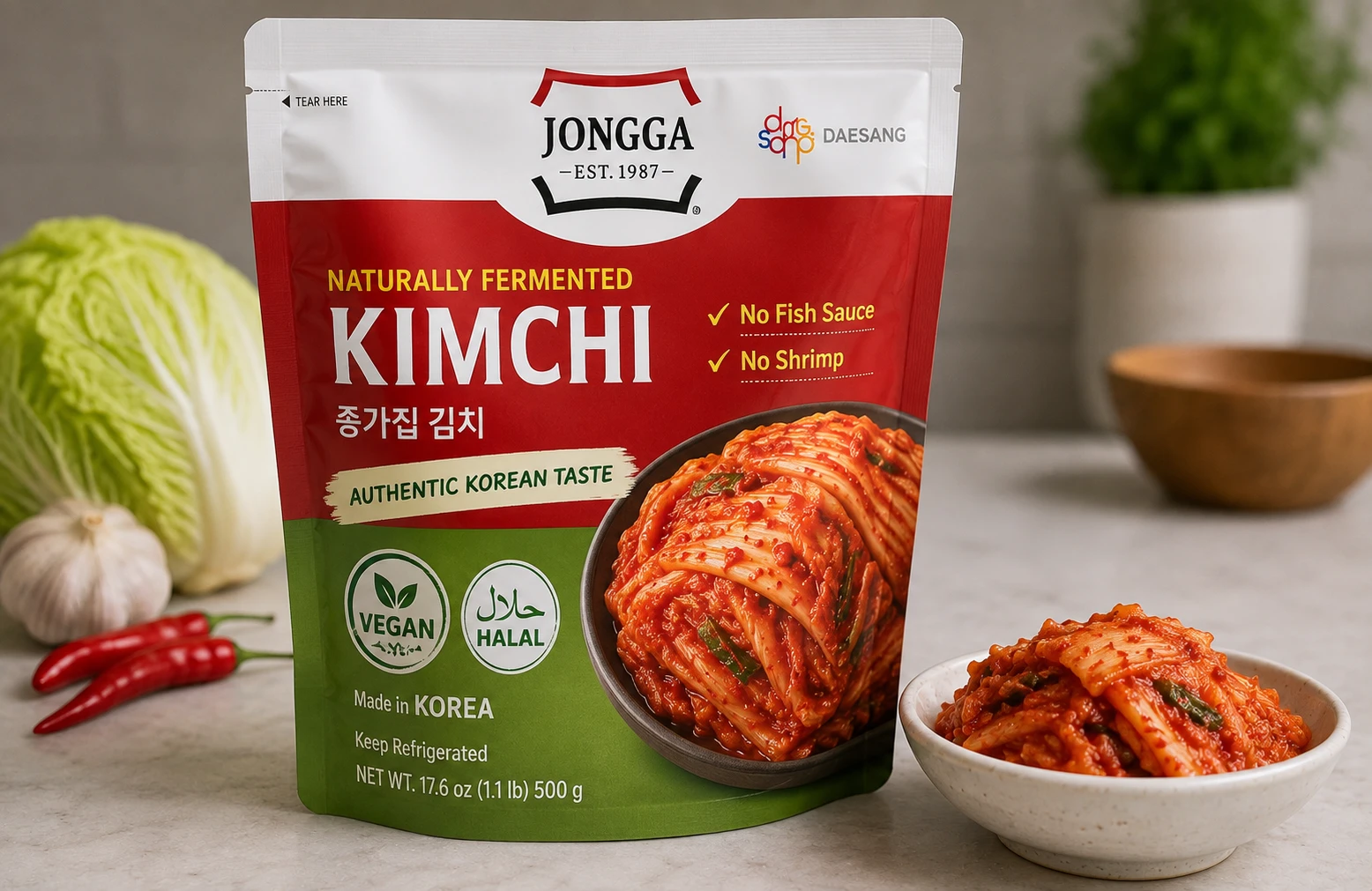
Jongga’s vegan kimchi removes fish sauce and shrimp paste, relying on vegetables and other umami sources for depth. Independent reviewer feedback is largely positive, describing it as “crisp, fresh, and perfectly balanced” and close to the standard version’s flavor — though it’s worth noting feedback isn’t unanimous, and a smaller number of tasters have found the vegan reformulation slightly less rounded than the original. It’s also gluten-free and keto-friendly per current retail listings.
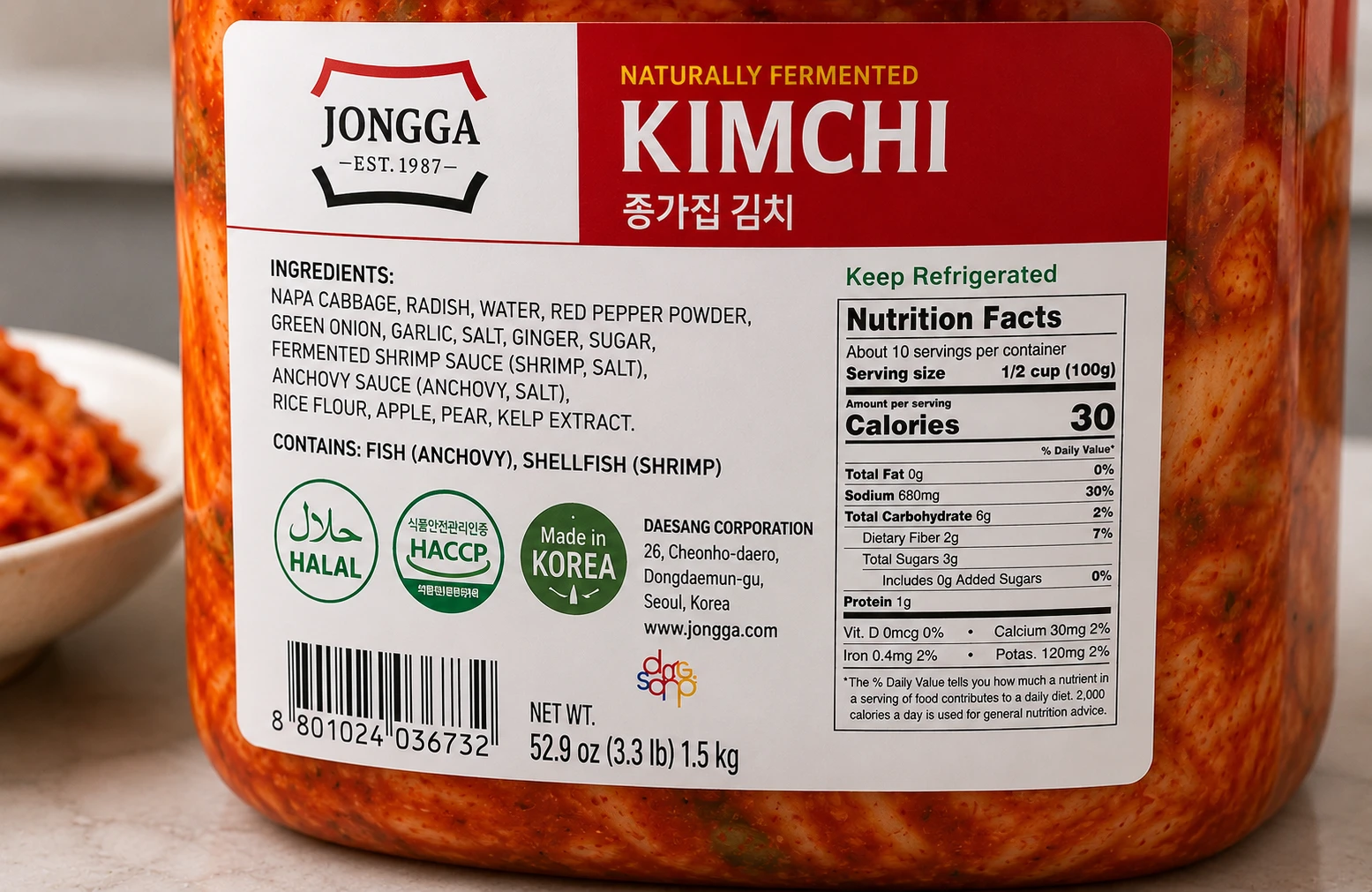
This isn’t a recent add-on: Jongga’s own Geochang production plant has held Halal certification since 2010 for its whole cabbage kimchi, young radish kimchi, sliced kimchi, and pickled young radish products, and Kosher certification since 2014 for its flavor kimchi products — both still active today. The plant also carries FSSC 22000, an internationally recognized food-safety management certification. As with any certification, look for the specific mark on your package rather than assuming it applies brand-wide, since not every Jongga product or every market carries it. See our full Halal & Kosher kimchi brands guide for how Jongga’s certification compares to other brands.
If plant-based, Halal, or Kosher eating is a firm requirement rather than a preference, treat the certified lines as a genuinely different product from the standard tub — check the specific packaging every time, since Jongga’s core retail identity is still built around its traditional, fish-sauce-based recipe.
Safety & Quality Notes
Since people specifically search for this, here’s what’s publicly documented — presented factually, without exaggeration, and corrected from our earlier reporting.
Is Jongga Good for Cooking, or Best Eaten Raw?
Both — and it’s arguably the strongest all-around performer of any brand we tested for either use case.
Jongga’s firm crunch and balanced heat make it an excellent raw side dish (banchan) straight from the tub, holding its texture well over multiple weeks in the fridge. For cooking, its deeper fermentation is a real advantage: dishes like kimchi fried rice and kimchi jjigae generally need less added gochujang to reach a deep, restaurant-style flavor when built on Jongga, since the base itself already carries significant tang and umami. If you’re specifically buying kimchi to cook with rather than eat fresh, an already-opened jar that’s had a couple of weeks to age further will caramelize even better in a hot pan.
Availability & Costco Pricing
This is Jongga’s one real trade-off against a brand like Bibigo — worth knowing before you go looking for it.
| Retail Channel | Availability |
|---|---|
| Korean / Asian grocery stores (H Mart, etc.) | ✓ Reliably stocked |
| Costco | ✓ Widely stocked, bulk tubs |
| Select Walmart locations | ✓ Growing availability |
| General mainstream supermarkets (Target, Kroger) | ◐ Limited, expanding |
| Europe (Carrefour, Auchan, Lidl) | ✓ Expanding via Poland plant |
| Amazon & major online grocery | ✓ Available |
At Costco specifically, Jongga is commonly sold as a large 52.9 oz (3.3 lb) tub, priced around $8.49-$9 depending on location, per shopper reports — genuinely strong value for the quantity and quality. Per a 1 oz (28g) serving, that tub reportedly runs about 10-15 calories, 2g carbohydrate, under 1g protein, 0g fat, and roughly 200-270mg sodium, broadly typical for fermented cabbage kimchi. Pricing and exact nutrition can vary by location and batch, so treat these as a reasonable estimate rather than a fixed guarantee, and check your local warehouse and the current label for specifics.
🛒 Check Price on AmazonIf you can’t find Jongga at your regular grocery run, it’s worth specifically checking Costco before assuming it’s unavailable near you — the large tub format and bulk pricing have made Costco one of the fastest-growing channels for the brand in the US, and it’s often stocked there even in regions where a dedicated Korean grocery store isn’t within easy reach. In Europe, the newly operational Poland facility means Jongga is increasingly showing up at major chains like Carrefour, Auchan, and Lidl rather than only specialty importers — worth a look if you’re in a market where it wasn’t previously stocked. Online ordering remains a reasonable fallback for anyone without a nearby option, though refrigerated shipping does add cost and reduces the value advantage of the bulk tub format.
How We Tested Jongga
This review draws on our broader 18-brand blind taste test, cross-referenced against a dedicated re-taste of Jongga specifically.
Related Guides
Naturally connected reading if you’re deciding on Jongga or want to put a tub to use.


Is Jongga Kimchi Good? FAQ — 24 Questions
Yes — in our 18-brand blind taste test, Jongga scored highest overall at 9.4/10. It delivers deep, well-developed sour-tangy fermentation, a firm and consistent crunch, and balanced heat that reads closest to homemade kimchi of any brand we tested.
Jongga kimchi is made by Daesang Corporation, a South Korean food company founded in 1956. Jongga has been Korea’s #1 kimchi brand since 1987 and was the first brand to commercialize packaged kimchi globally, launched in collaboration with KAIST.
Yes — Jongga is widely regarded as one of the most authentic mass-market kimchi brands available internationally, made using traditional recipes and Daesang’s proprietary fermentation starter culture.
A typical ingredient list for standard Jongga kimchi includes napa cabbage, radish, rice paste, kelp, garlic, ginger, and fermented seafood seasoning such as shrimp and anchovy sauce. Formulations vary by product line and market — always check the current label.
The standard Jongga kimchi line contains fermented shrimp and anchovy-based fish sauce. It is not suitable for vegans, vegetarians, or people with fish or shellfish allergies unless you specifically buy the labeled vegan line.
The standard line is not vegan. Jongga also sells a dedicated vegan kimchi made without fish sauce or shrimp paste, generally well-reviewed as crisp and balanced, and listed as gluten-free and keto-friendly on current retail packaging.
Yes, on certified lines. Jongga’s Geochang plant has been Halal-certified since 2010, covering whole cabbage kimchi, young radish kimchi, sliced kimchi, and pickled young radish. Look for the Halal mark on the specific package, since not every product or market carries it.
Yes, on certified lines. Jongga’s Geochang plant has been Kosher-certified since 2014 for its flavor kimchi products, and still maintains that certification today. Check the specific package for the certification mark.
Jongga kimchi is produced across multiple sites: Korea (including the Geochang plant), a Los Angeles factory opened in 2022, a Kraków, Poland facility (Daesang ChPN Europe), and production in China, Indonesia, and Vietnam. Daesang also acquired Oregon-based Lucky Foods in June 2023, adding further US capacity.
The 2022 Los Angeles facility, plus the 2023 acquisition of Lucky Foods, let Daesang meet fast-growing US demand — the US became Jongga’s #1 export market for kimchi starting in 2023 — with fresher local production and shorter supply chains than fully imported jars.
Yes — Jongga partnered with a Michelin 3-star chef to launch a premium gourmet line called San Ho Won Kimchi, announced via official press release, alongside its standard retail kimchi.
Yes — a specially radiation-sterilized kimchi, developed with Korea’s Atomic Energy Research Institute, traveled to the International Space Station with South Korea’s first astronauts in 2008. Jongga’s own awards page cites official certification of “astronaut kimchi” from Russia’s Federal Space Agency as part of this program.
Jongga kimchi at Costco is commonly sold as a large 52.9 oz (3.3 lb) tub, priced around $8.49-$9 depending on location, per shopper reports. Pricing varies by region.
A 1 oz (28g) serving of standard Jongga kimchi contains roughly 10-15 calories, about 2g carbohydrate, under 1g protein, 0g fat, and 200-270mg sodium depending on the source. The vegan version is similarly low in calories but slightly higher in sodium, around 290mg per serving.
Yes, at least once on record: in November 2024, New Zealand recalled Jongga brand Gat Kimchi (Mustard Leaf Kimchi, 500g) for an undeclared fish allergen. We found no separate major FDA recall specifically naming Jongga or Daesang in the US as of this update — always check your country’s current recall database.
Jongga reads as deeply fermented, tangy, and well-balanced in heat, with a firm cabbage crunch that holds up well over weeks in the fridge — closer to homemade or restaurant-style kimchi than milder mass-market brands.
Jongga is most reliably found at Korean and Asian grocery stores such as H Mart, at Costco (often in bulk tubs), at select Walmart locations, and increasingly through major online retailers. In Europe, look for it at Carrefour, Auchan, and Lidl.
Yes — Jongga’s deeper fermentation and stronger tang generally carry flavor better through cooking, such as in kimchi jjigae or kimchi fried rice, than milder brands, typically needing less added gochujang.
Jongga generally scores higher for authentic, deeply fermented flavor and texture in taste tests, while Bibigo wins on mainstream US availability. See our full Jongga vs Bibigo comparison for a detailed side-by-side breakdown.
Yes — refrigerated Jongga kimchi is naturally fermented using Daesang’s proprietary starter culture, designed to encourage beneficial lactic acid bacteria while discouraging unwanted microbes, producing genuine live-culture kimchi. See our full pasteurized vs. live-culture kimchi brands guide for how this compares to other brands.
Rising global interest in Korean food and culture, combined with Daesang’s US manufacturing investment (the LA plant plus the 2023 Lucky Foods acquisition) and wider retail placement at chains like Costco and Walmart, has pushed Jongga beyond its original Korean-American customer base in recent years.
Yes — Daesang’s global HMR brand Ofood launched Kimchi Ramyun made with real Jongga kimchi across major US and Canadian retail channels in January 2026, part of a broader push into instant noodles, rice cakes, and other convenience foods.
The global kimchi market was valued at roughly $5.7 billion in 2026 and is projected to reach about $6.9 billion by 2030. Daesang Corporation is consistently named among the handful of largest global players in industry market reports, alongside CJ CheilJedang (Bibigo).
Yes — Jongga is the top-scoring brand in our full 18-brand ranking, backed by a large, established manufacturer with decades of fermentation expertise and genuine international certifications (Halal since 2010, Kosher since 2014). If authentic flavor is your top priority, it’s our top recommendation.


💬 Leave a Comment
Tried Jongga kimchi? Tell us what you thought — taste, texture, or anything else.