Jongga Kimchi at Costco Is It Worth Buying? (2026)
A standalone buying guide to the big Jongga tub sold at Costco — price and per-ounce value against the regular jar, size, ingredients, the regional Hankook alternative, storage tips, and who this bulk format actually makes sense for.
Is the Costco Jongga Kimchi Tub Worth Buying?
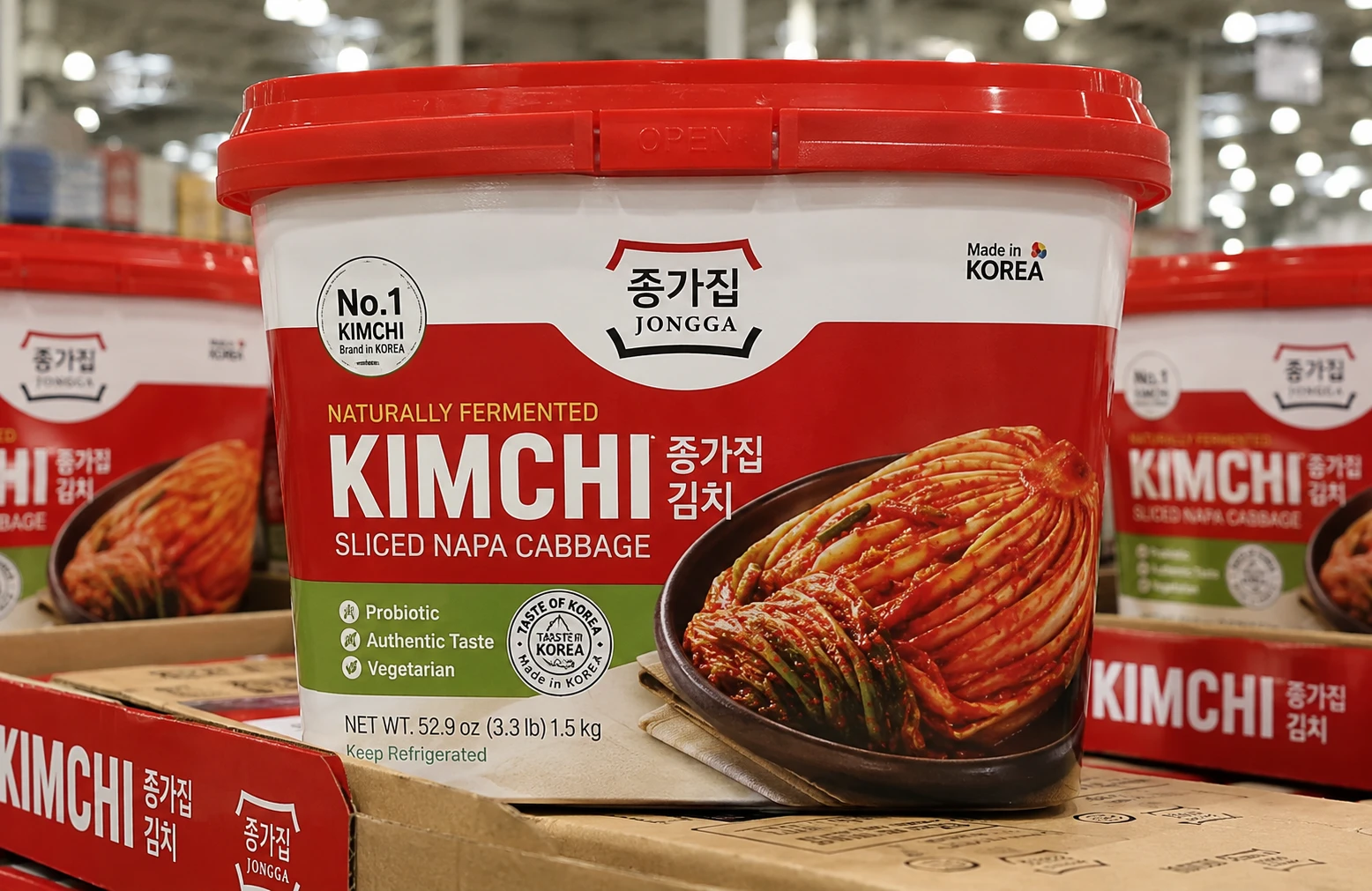
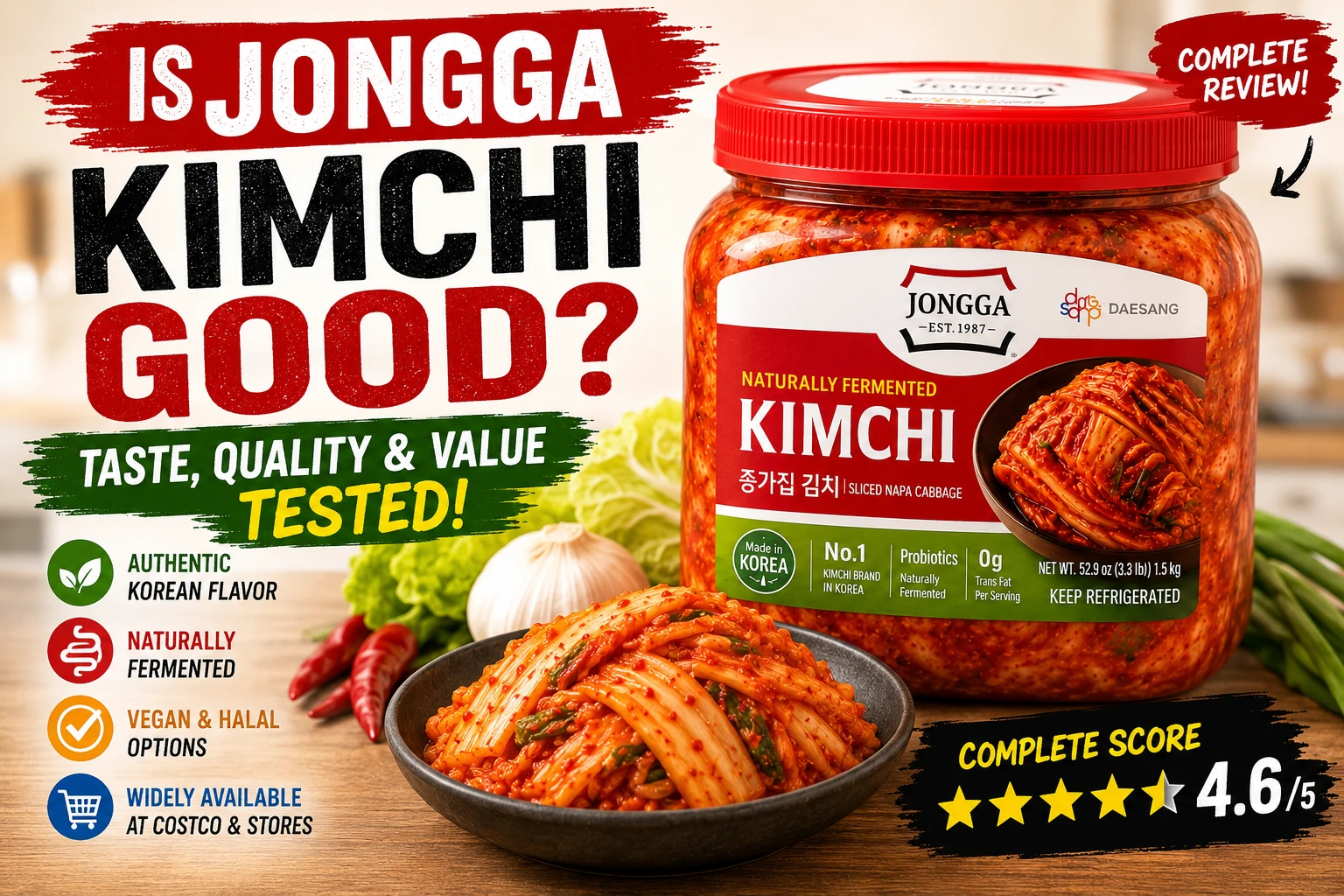
Yes, for most kimchi eaters. Costco commonly sells a 52.9 oz (3.3 lb) tub of Jongga sliced napa cabbage kimchi — the same brand that scored highest in our 17-brand blind taste test — for roughly $8.49-$9, which works out to about $0.16-0.17 per ounce. That’s a fraction of what a standard 10-16 oz retail jar costs per ounce. The catch is regional: not every Costco warehouse stocks Jongga specifically, some carry a Hankook-brand tub instead, and the large size only pays off if you’ll actually work through it before it over-ferments. For a big household or a regular kimchi eater, it’s an easy yes. For someone who eats kimchi occasionally, a smaller jar may make more practical sense.
Jongga Kimchi at Costco — At a Glance
Here’s what actually matters before you make a special trip.
- Size: typically a 52.9 oz (3.3 lb) tub — much larger than a standard jar.
- Price: roughly $8.49-$9, depending on location and date.
- Value: about $0.16-0.17/oz — far cheaper than the ~$0.71/oz standard jar.
- Same product: standard Jongga recipe, made by Daesang — not a separate line.
- Regional variation: some Costco warehouses stock Hankook instead of Jongga.
- Best for: regular eaters and larger households, not occasional snackers.
Jongga Kimchi at Costco — Product Overview & Scorecard
Since this is the same product behind our #1-ranked brand, the taste score carries straight over from our full 17-brand test — what changes here is the buying math.
Price & Per-Ounce Value
This is where the Costco tub genuinely separates itself from every other way to buy Jongga.
| Format | Typical Price | Approx. Price/oz | Size |
|---|---|---|---|
| Jongga at Costco | ~$8.49-$9 | ~$0.16-0.17/oz | 52.9 oz (3.3 lb) tub |
| Jongga standard retail jar | ~$8-12 | ~$0.71/oz | 10-16 oz jar |
| Bibigo standard jar | ~$7-9 | ~$0.57/oz | Single jar |
| Trader Joe’s kimchi | ~$3.99 | ~$0.38-0.40/oz | ~10 oz jar |
On a straight per-ounce basis, the Costco tub is the cheapest way to buy any brand in our full ranking — including Trader Joe’s, which is the budget pick among standard single-jar formats. You’re getting roughly four times the quantity per dollar compared to a standard Jongga jar, without any change in recipe, ingredients, or fermentation process. The only real “cost” is the size commitment and the Costco membership itself, which isn’t worth it if kimchi is the only reason you’d sign up.
Does My Costco Carry It? Regional Variation
This is the part most kimchi content skips entirely — kimchi stocking at Costco is genuinely inconsistent by region, and it’s worth knowing before you drive out specifically for it.
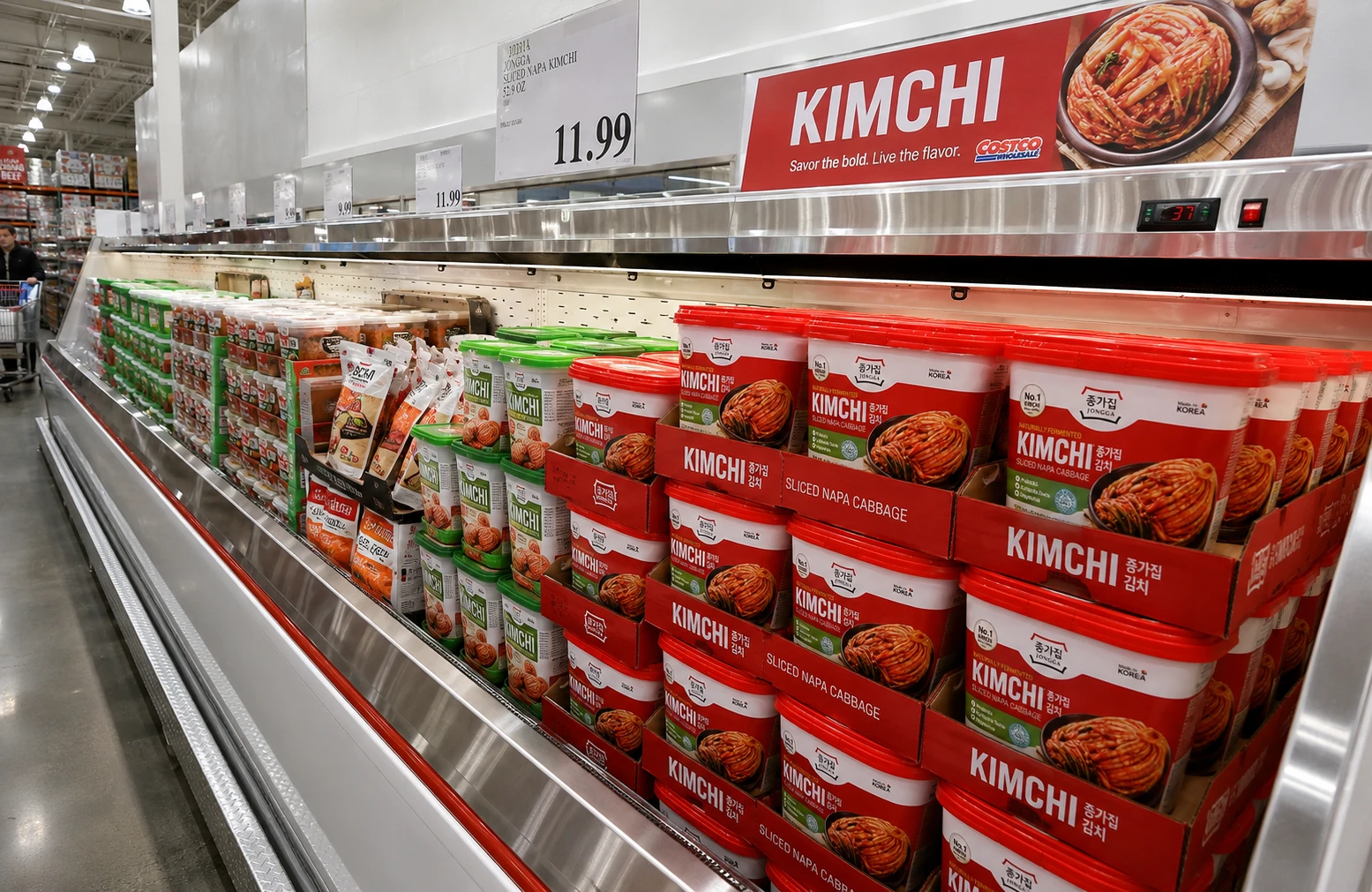
Jongga’s 52.9 oz tub shows up widely at Costco warehouses across the US, but stocking decisions are made regionally, not nationwide. A location near a larger Korean-American population is more likely to carry it consistently than a warehouse in an area with less demand for it.
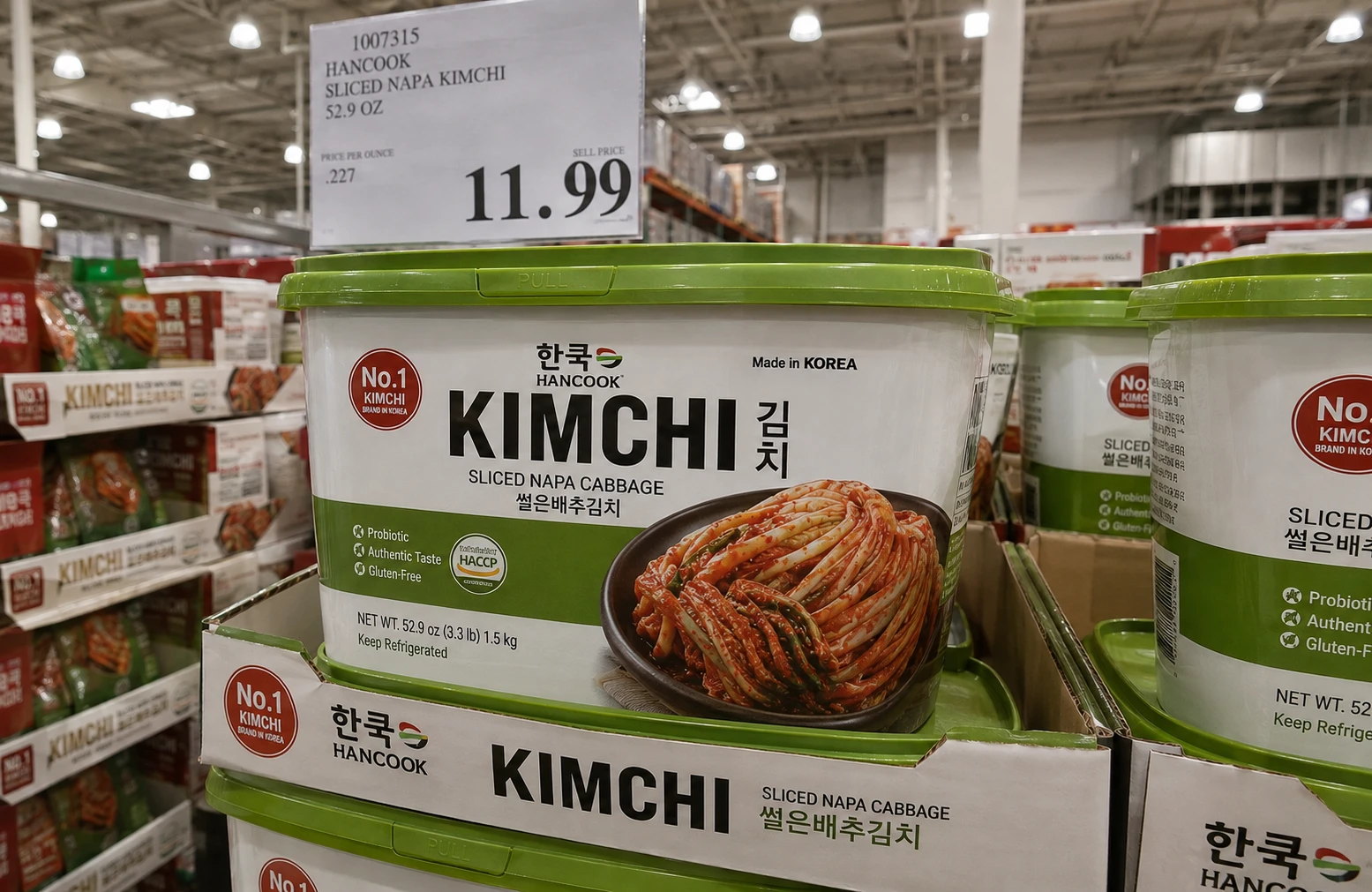
A number of Costco locations stock Hankook Original Kimchi rather than Jongga, sometimes under item number 49805. Reviewer accounts describe it as having large cabbage pieces and a heavier, saltier flavor profile with less crunch than a fresher-tasting brand — a decent everyday option, but generally not rated as highly as Jongga in side-by-side comparisons.
It’s also worth knowing that Costco rotates seasonal and regional items more than a typical grocery store, so a tub that was reliably in stock for months can occasionally disappear and return later, or get replaced by a different supplier’s version. This isn’t unique to kimchi — it’s simply how Costco’s warehouse-club model works, prioritizing high sell-through items and adjusting the exact SKU by region and season.
Ingredients & What’s in the Tub
Since this is standard Jongga kimchi in a larger container, the ingredient list matches the brand’s regular retail formulation.
| Ingredient | Role |
|---|---|
| Napa cabbage | Base vegetable |
| Radish | Traditional secondary vegetable |
| Rice paste | Traditional thickener for the seasoning paste |
| Kelp-based sauce | Umami and mineral depth |
| Red pepper powder (gochugaru) | Color and heat |
| Garlic, Korean leek, onion, chives, ginger | Aromatics |
| Fermented anchovy sauce | Umami — not vegan |
| Fermented shrimp sauce | Umami — not vegan |
| Lactic acid bacteria (starter culture) | Controlled fermentation, live cultures |
Storage — Keeping a Big Tub Fresh
A 3.3 lb tub behaves differently than a small jar you finish in a week or two — here’s how to manage it well.
- Keep it refrigerated at all times. Fermentation continues in the fridge, just slowly — kimchi left at room temperature for extended periods will sour and soften much faster than intended.
- Use a clean utensil every time. Reintroducing bacteria from a used spoon or fingers can encourage mold growth well before the kimchi would naturally spoil.
- Press it down under the brine. Keeping the kimchi submerged in its own liquid slows oxidation and helps prevent the top layer from drying out or discoloring.
- Consider portioning it out. Splitting the tub into two or three smaller airtight containers reduces how much air the remaining kimchi is exposed to each time you open it.
- Expect it to get more sour over time. That’s normal fermentation, not spoilage — if it’s aged further than you like for eating fresh, shift it toward cooking instead.
Who the Bulk Tub Actually Makes Sense For
The math is great, but the format only pays off if it actually fits how you eat.
| Situation | Costco Tub a Good Fit? |
|---|---|
| Eat kimchi with most meals, or cook with it regularly | ✓ Yes — great value, you’ll finish it fresh |
| Larger household (3+ people who eat kimchi) | ✓ Yes — splits the size problem across more eaters |
| Already have a Costco membership | ✓ Yes — no added cost to access it |
| Eat kimchi occasionally, live alone | ◐ Maybe — only if you’re comfortable freezing part of it |
| No Costco membership, would need to sign up just for this | ✕ No — a regular jar is more practical |
| Want the freshest, mildest kimchi possible | ✕ No — a smaller jar you finish quickly ages less |
Eating Fresh vs. Cooking With It
A large tub gives you room to do both without rationing a small jar.
In the first couple of weeks after opening, the tub eats well fresh as a side dish (banchan), with Jongga’s characteristic crunch and balanced heat. As it continues to age over the following weeks, it naturally becomes more sour and better suited to cooking — dishes like kimchi fried rice or kimchi jjigae actually benefit from a more deeply fermented base, since the tang carries through cooking better than a very fresh jar would. Having a large quantity on hand means you can eat some fresh early on and let the rest age specifically for cooking later, rather than having to choose one use for a small jar.
Safety Notes
Presented factually, without exaggeration.
How We Evaluated the Costco Tub
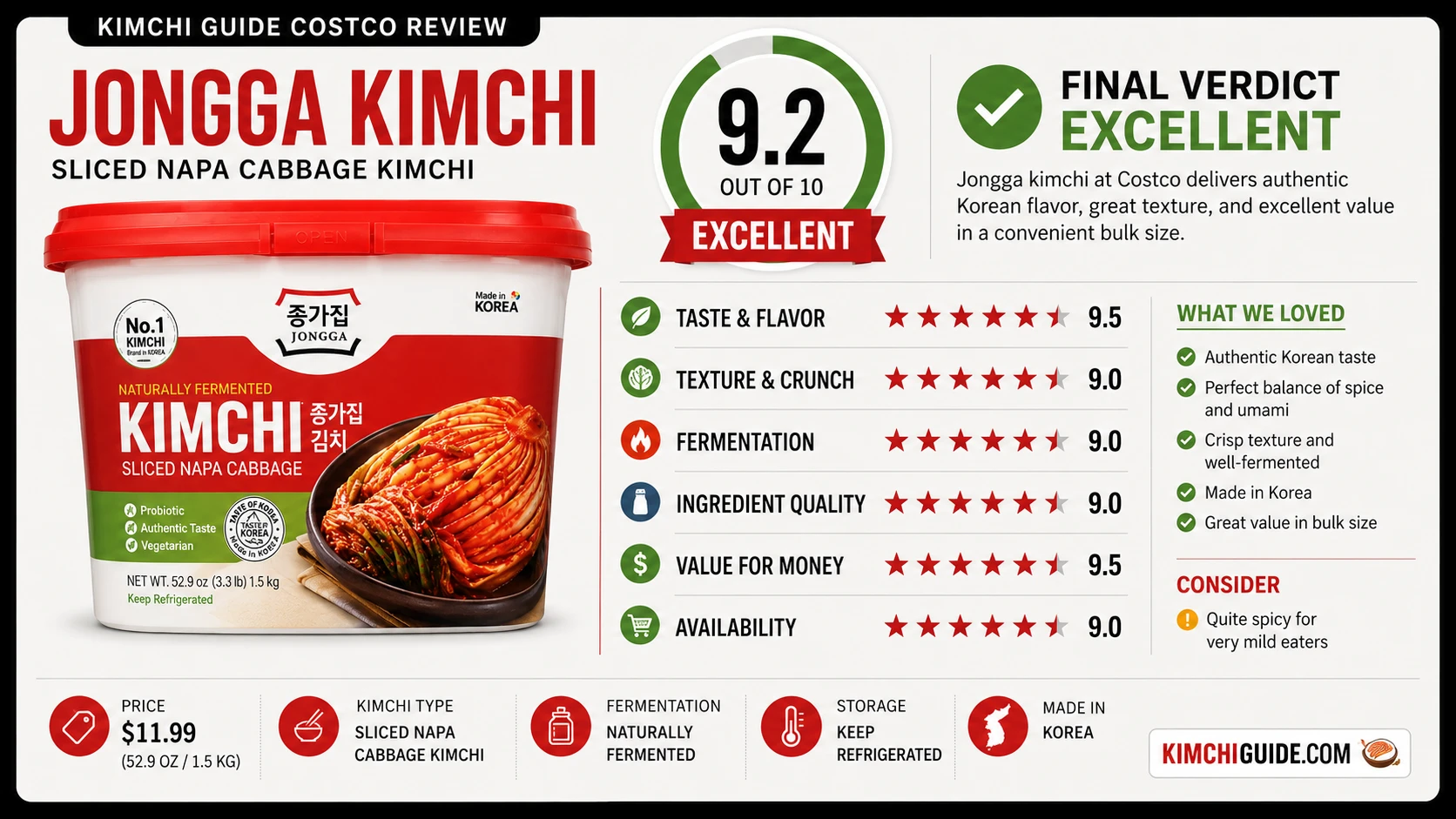
The taste score comes from our broader 17-brand blind test; the checks below are specific to the bulk Costco format.
Related Guides
Naturally connected reading if you’re deciding on the Costco tub or want to put it to use.


Jongga Kimchi at Costco — FAQ (18 Questions)
Yes, at many locations — Costco commonly stocks Jongga Kimchi Sliced Napa Cabbage in a large 52.9 oz (3.3 lb) tub in the refrigerated section, usually near the tofu and fresh noodles. Availability varies by region and warehouse, and some locations carry a different brand instead.
Shopper reports put the 52.9 oz tub at roughly $8.49 to $9, depending on location and date — around $0.16-0.17 per ounce, dramatically cheaper than a standard retail jar. Always confirm current pricing at your local warehouse.
Yes — the Costco tub is standard Jongga sliced napa cabbage kimchi made by Daesang Corporation, the same recipe and manufacturer behind the smaller retail jars. It’s simply a larger format at a lower per-ounce price, not a separate product line.
Most commonly 52.9 oz (3.3 lb / roughly 1.5 kg), sold in a resealable plastic tub. Some regions may see slightly different sizing — check the label at your specific warehouse.
No. Stocking varies by region and warehouse — some locations carry Jongga, others stock a Hankook-brand tub instead (sometimes item #49805), and a few may not carry a bulk kimchi tub at all. Check your local warehouse or a nearby one before making a special trip.
Commonly reported ingredients include napa cabbage, radish, rice paste, kelp-based sauce, red pepper powder, garlic, fermented anchovy sauce, salt, Korean leek, onion, chives, fermented shrimp sauce, lactic acid bacteria, and ginger. It contains fish and shellfish, so it is not vegan. Always check the current label.
Yes — Hankook Original Kimchi, stocked at some Costco locations instead of Jongga, has larger cabbage pieces and a saltier, heavier flavor with less crunch, per reviewer accounts. It’s decent but generally not rated as highly as Jongga in taste comparisons. Which brand your local Costco carries depends on regional distribution.
For regular kimchi eaters or larger households, yes — our #1-ranked brand at a fraction of the standard per-ounce price. For occasional eaters, a smaller grocery-store jar may be more practical, since a 3.3 lb tub can be a lot to finish before it over-ferments.
Properly refrigerated and kept submerged in its own brine, it can generally stay good for several weeks to a couple of months, gradually becoming more sour. Discard it if you see mold, an off or rotten smell, or unusual discoloration.
You can, but freezing softens the cabbage’s texture once thawed, so it’s better suited for cooking than eating fresh afterward. Portioning some into a freezer-safe container is a reasonable way to avoid waste if you can’t finish the tub fresh in time.
Not at the point of purchase — same fermentation and manufacturer. The practical challenge is on the consumption side: a 3.3 lb tub takes longer to finish than a 10-16 oz jar, giving it more time to sour in your fridge before you reach the bottom.
Keep it refrigerated, use a clean utensil each time, and press it down so it stays submerged under its own brine. Some shoppers portion it into smaller airtight containers to limit air exposure.
Yes — Jongga’s deeper fermentation carries flavor well in dishes like kimchi jjigae or kimchi fried rice, and a large tub means you don’t have to ration between eating fresh and cooking. As it ages, it becomes better suited to cooking than to eating raw.
Generally yes, on a per-ounce basis, since the bulk format spreads packaging and distribution costs over a larger quantity. Pricing varies by store and region, so it’s worth comparing your specific local options.
Yes — it’s the same naturally fermented product as the standard retail jar, made with Daesang’s proprietary starter culture, which encourages beneficial lactic acid bacteria. It’s genuine live-culture kimchi, not a shortcut acidified product.
We’re not aware of a Costco-specific recall. A November 2024 New Zealand recall affected a different Jongga product, Gat Kimchi (Mustard Leaf, 500g), for an undeclared fish allergen — that did not involve the Costco sliced napa cabbage tub. Always check your country’s current recall database.
If you eat kimchi regularly, cook with it often, or feed a larger household, the tub offers much better value. If you eat kimchi occasionally or live alone, a smaller jar may suit you better, even at a higher per-ounce price, to avoid waste or an overly sour tub near the end.
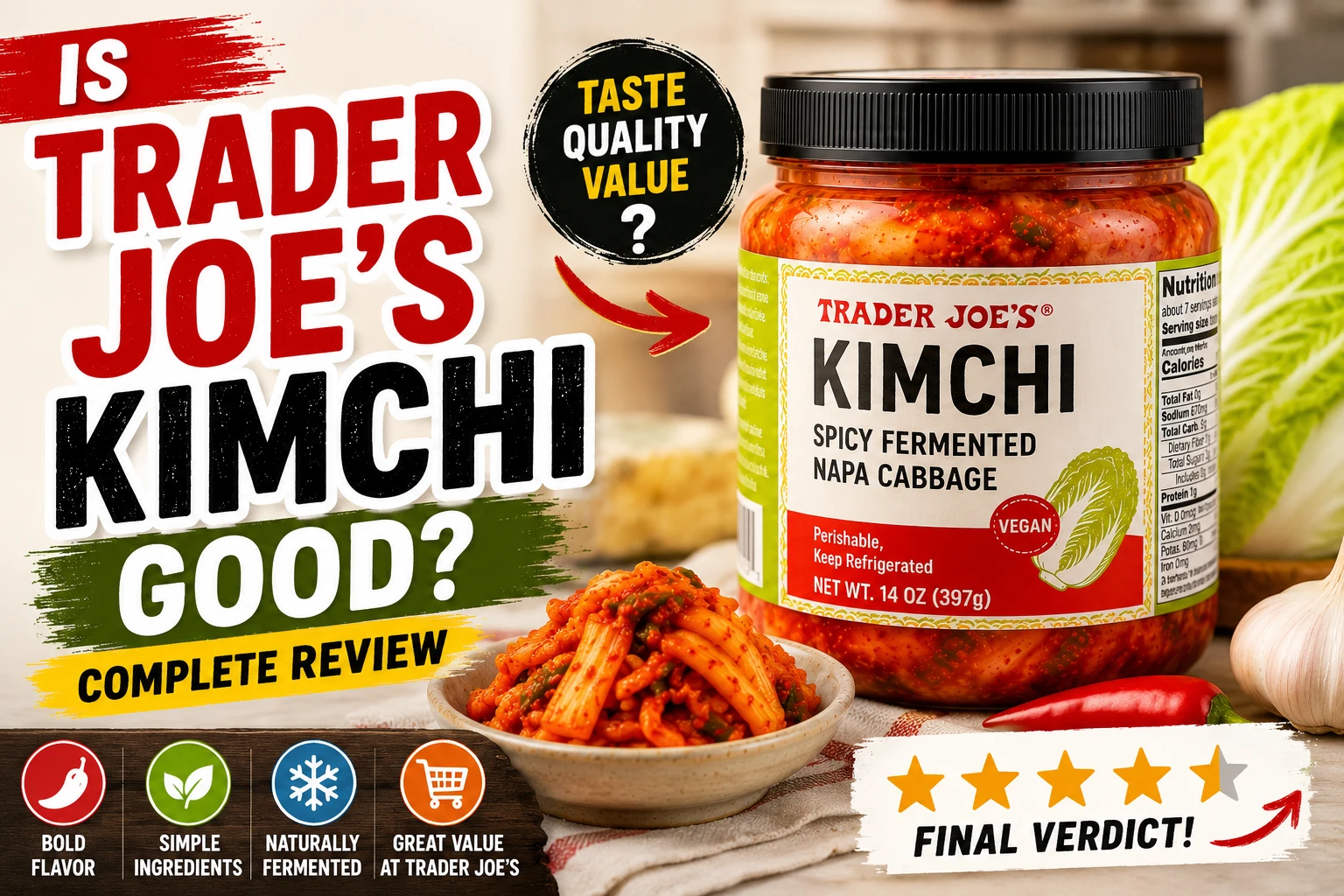
Costco’s tub has the lower per-ounce price — roughly $0.16-0.17/oz versus Trader Joe’s ~$0.38-0.40/oz — and scores higher in our taste test. Trader Joe’s remains the better fit for a small, low-commitment jar without a Costco membership. See our full Trader Joe’s kimchi review for the complete picture.


💬 Leave a Comment
Bought this at Costco? Tell us your warehouse’s price, size, or which brand it actually stocks.