Baechu KimchiNapa Cabbage Kimchi · 배추김치
Baechu Kimchi — whole napa cabbage salted and stuffed leaf by leaf with a gochugaru seasoning paste — is the original, most iconic kimchi, and the dish every other variety on this site is measured against. Here’s the full traditional recipe, its 3,000-year history, and how it compares to our faster mak kimchi method.
What Is Baechu Kimchi?
Baechu kimchi (배추김치) is the kimchi most people picture when they hear the word — whole napa cabbage, salted, then stuffed leaf by leaf with a gochugaru-based seasoning paste and fermented. Made the traditional way, keeping the cabbage in whole halves rather than cutting it into pieces, it’s properly called tongbaechu-kimchi, and it’s the most common kimchi made during kimjang, Korea’s UNESCO-recognized autumn tradition of communal kimchi-making. Salted, fermented cabbage goes back roughly 3,000 years in Korea — the red, spicy version most people know today is actually the newer part of that story, dating to around the 1600s–1700s. Around 18 calories per half-cup serving.
- Dish: Baechu kimchi (배추김치) — napa cabbage kimchi, the most iconic kimchi variety.
- Traditional method name: tongbaechu-kimchi (통배추김치) — “whole cabbage kimchi.”
- History: salted, fermented cabbage dates back roughly 3,000 years; the red, spicy version is newer, from around the 1600s–1700s.
- Kimjang: the autumn tradition of making it in large batches, UNESCO-listed since 2013.
- Main ingredients: napa cabbage, salt, gochugaru, garlic, ginger, fish sauce, rice porridge, radish, scallion.
- Total time: about 45 minutes active work plus a 6–10 hour (or overnight) salt.
- Vs. mak kimchi: same cabbage and seasoning, but this method keeps leaves whole and stuffs paste between every layer.
- Calories: approximately 18 per serving (1/2 cup).
How to Make Baechu Kimchi
Baechu kimchi takes about 45 minutes of active prep plus a 6-to-10-hour salt: salt the cabbage, rinse and drain, make a rice porridge, build the seasoning paste, stuff it between every leaf, fold and pack, then ferment.
- Salt the cabbage: halved, brined and salted between leaves, 6–10 hours.
- Rinse and drain: 2–3 rinses, drain at least an hour.
- Make the rice porridge: sweet rice flour simmered with water until thick.
- Build the paste: porridge + gochugaru + fish sauce + garlic + ginger + radish + scallion.
- Stuff every leaf: paste worked from base to tip, leaf by leaf.
- Fold and pack: wrap each half, pack tightly into a container.
- Ferment: 1–2 days at room temp, then refrigerate.
Why Baechu Kimchi Is “The” Kimchi
Every other variety on this site — radish, mustard greens, garlic chives, cut cabbage — is a variation on a theme this dish defined first.
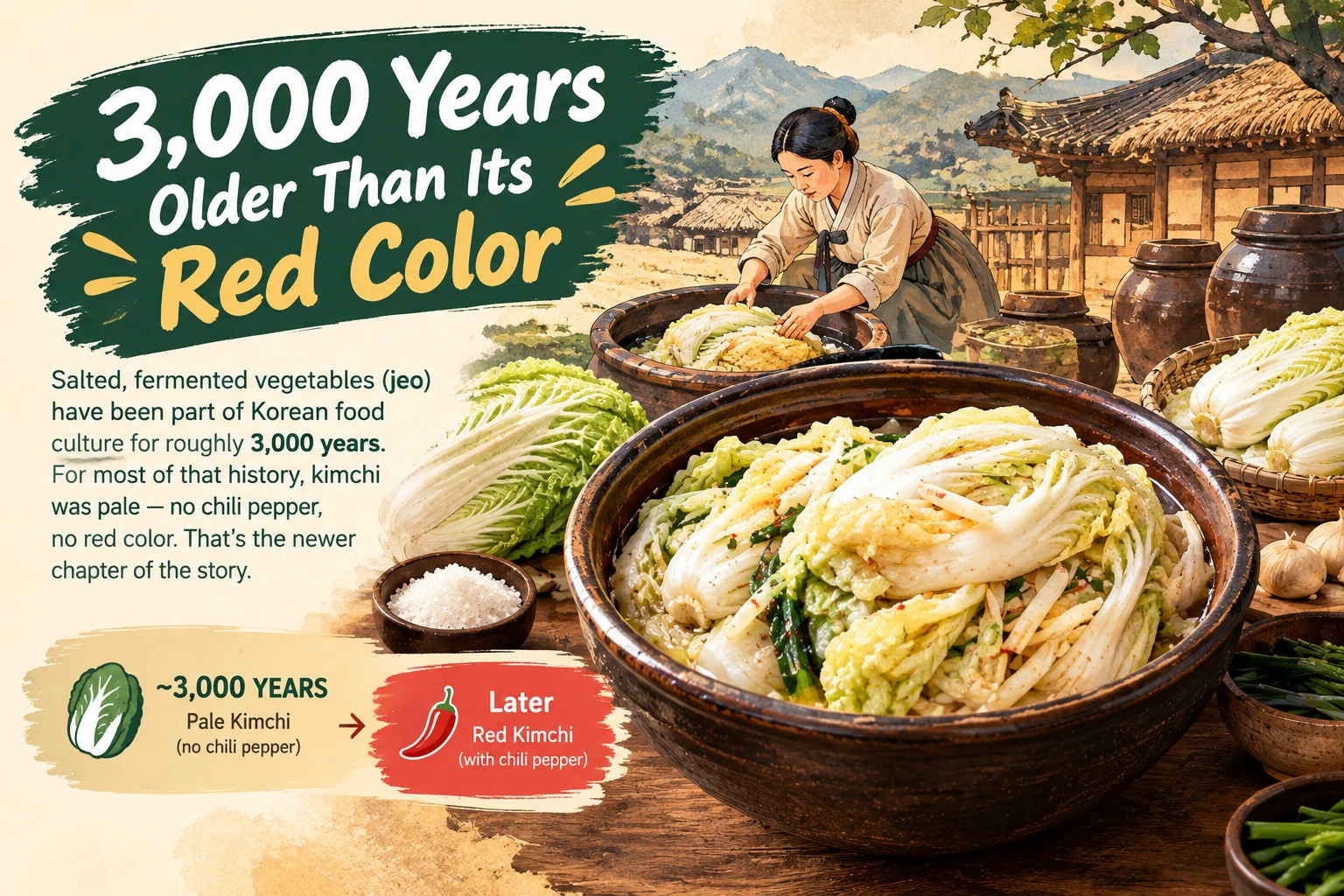
Salted, fermented vegetables (jeo) have been part of Korean food culture for roughly 3,000 years. For most of that history, kimchi was pale — no chili pepper, no red color. That’s the newer chapter of the story.
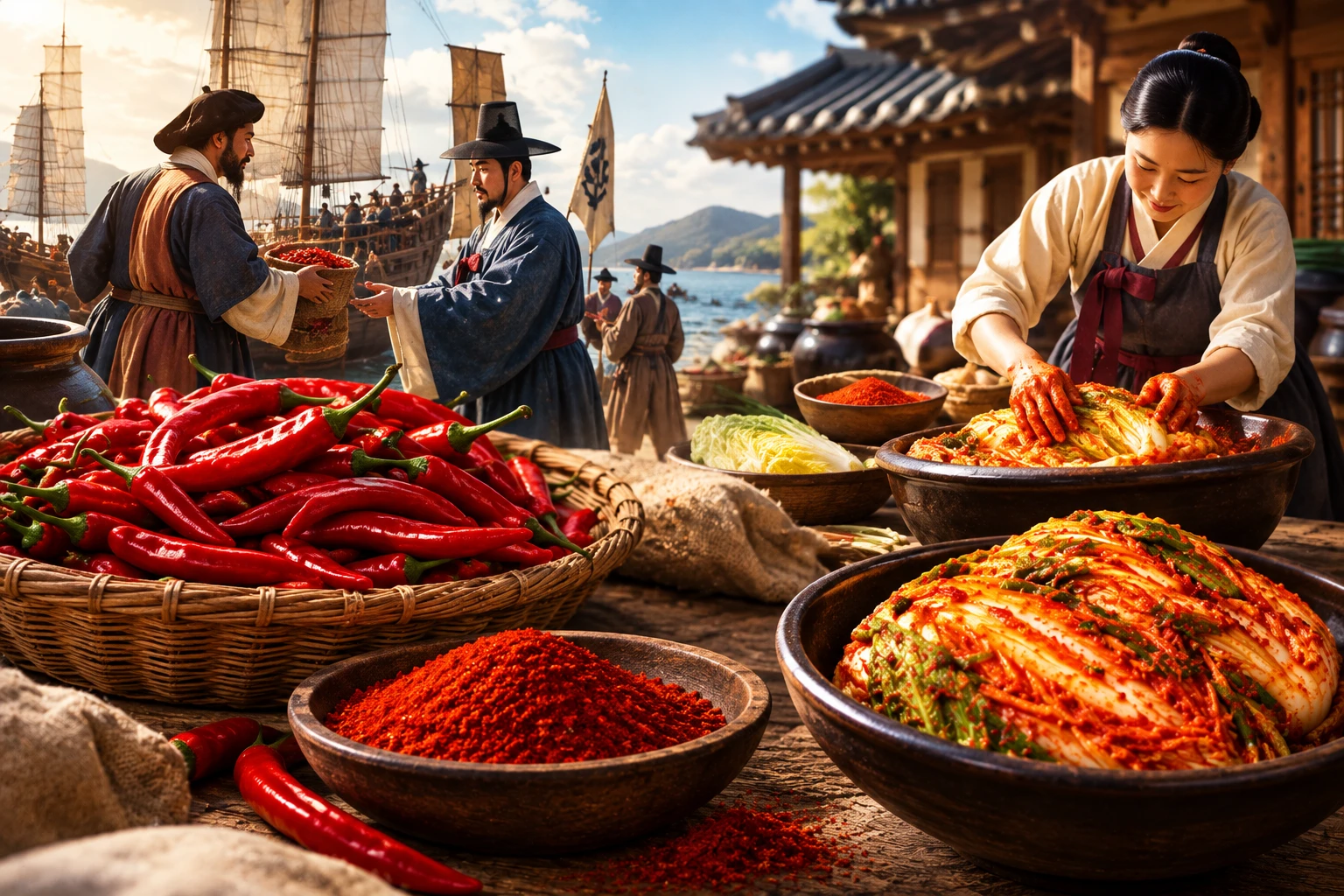
Red chili pepper (gochu) is generally understood to have reached Korea via trade routes around the late 1500s to 1600s, with its spread sometimes tied to the Imjin War period — historians still debate the exact timeline. By the 1700s, gochugaru had become the dominant seasoning, and kimchi turned red for good.
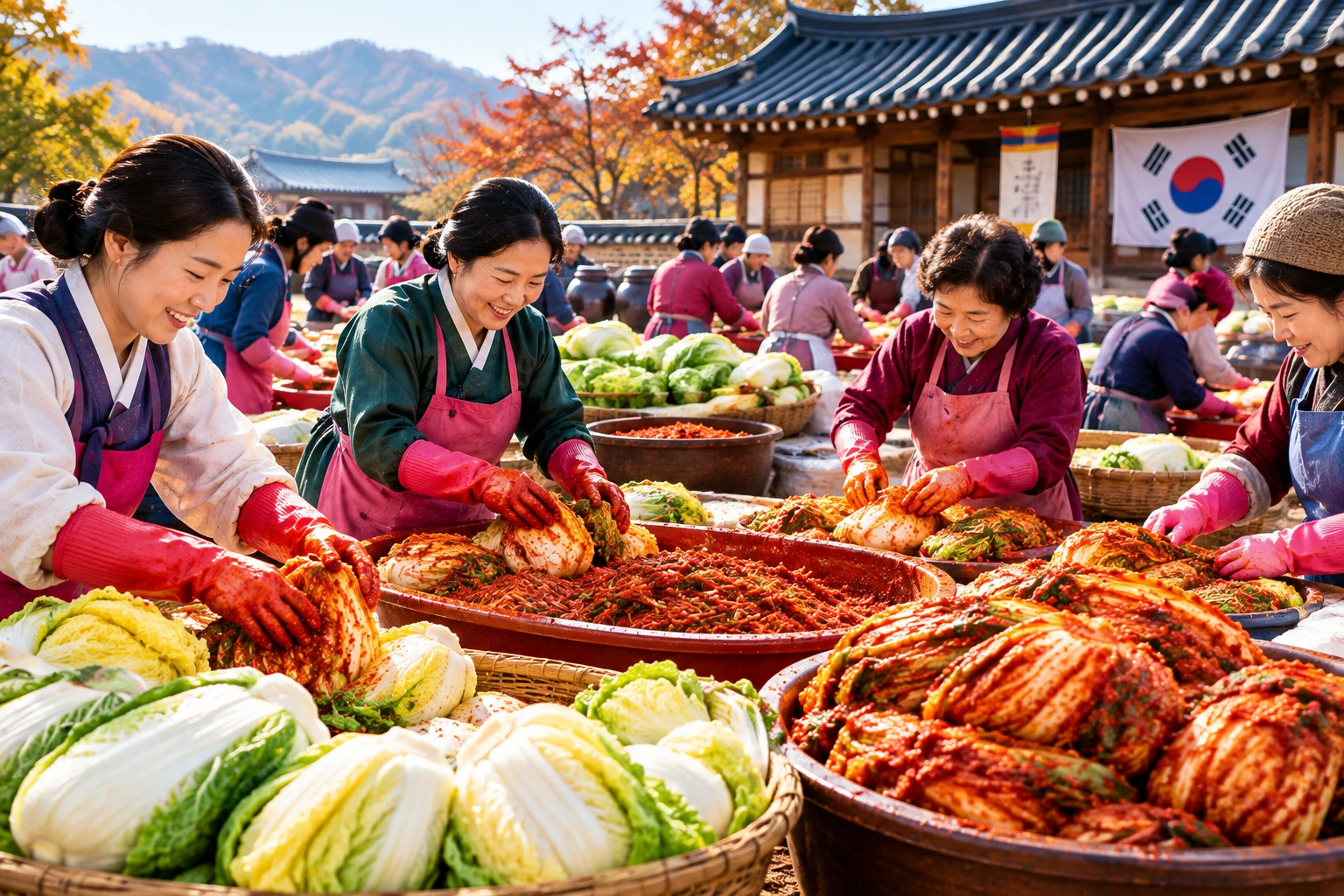
Kimjang, the autumn practice of communally preparing large batches of kimchi — almost always baechu kimchi — to last through winter, was inscribed by UNESCO on the Representative List of the Intangible Cultural Heritage of Humanity in 2013.
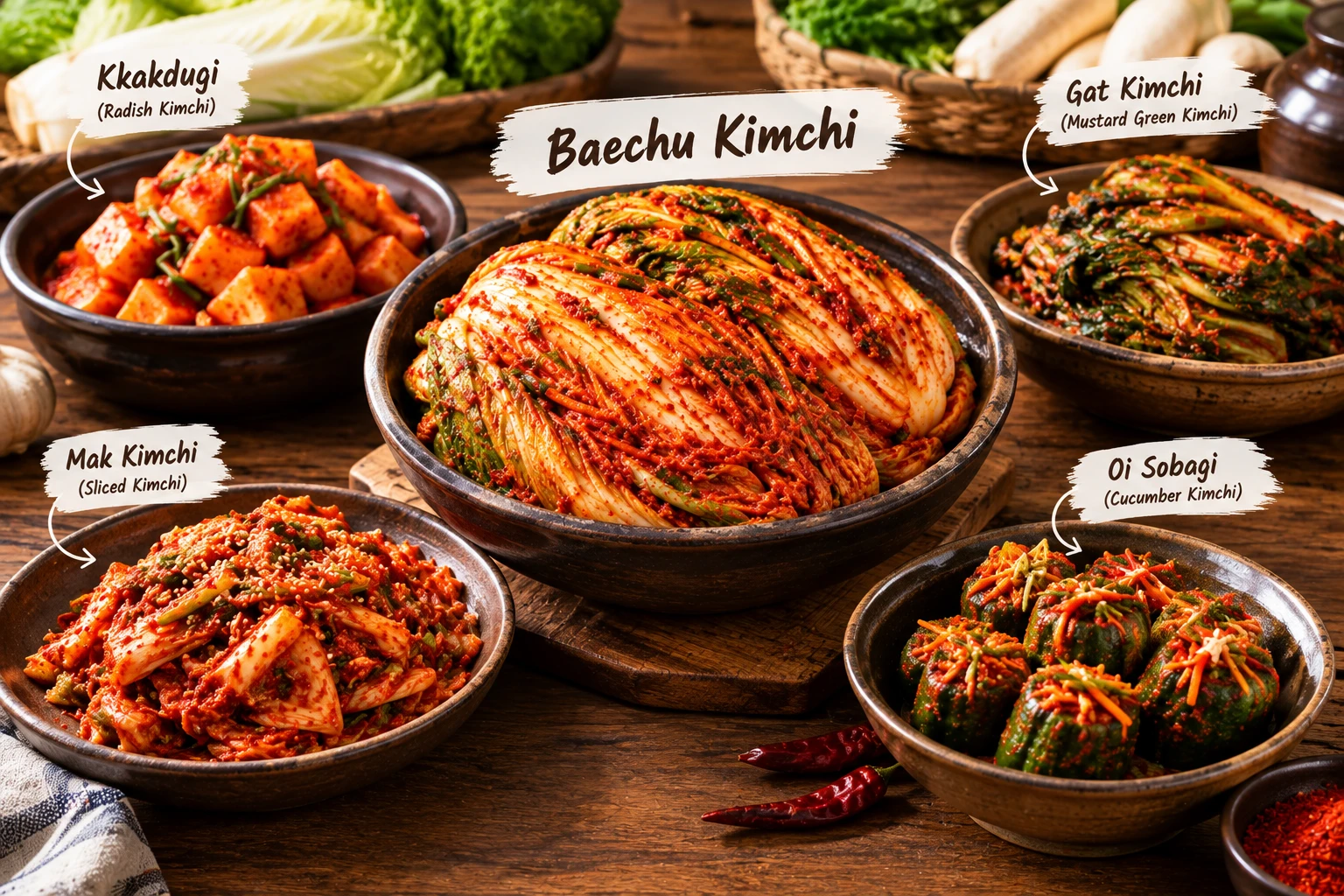
Kkakdugi swaps in radish, gat kimchi swaps in mustard greens, mak kimchi changes the cutting technique — nearly every kimchi variety is defined by how it departs from this one.
Whole-Leaf Baechu vs. Cut-Piece Mak Kimchi
Same cabbage, nearly the same seasoning — the entire difference between this recipe and our mak kimchi guide comes down to one technique decision.
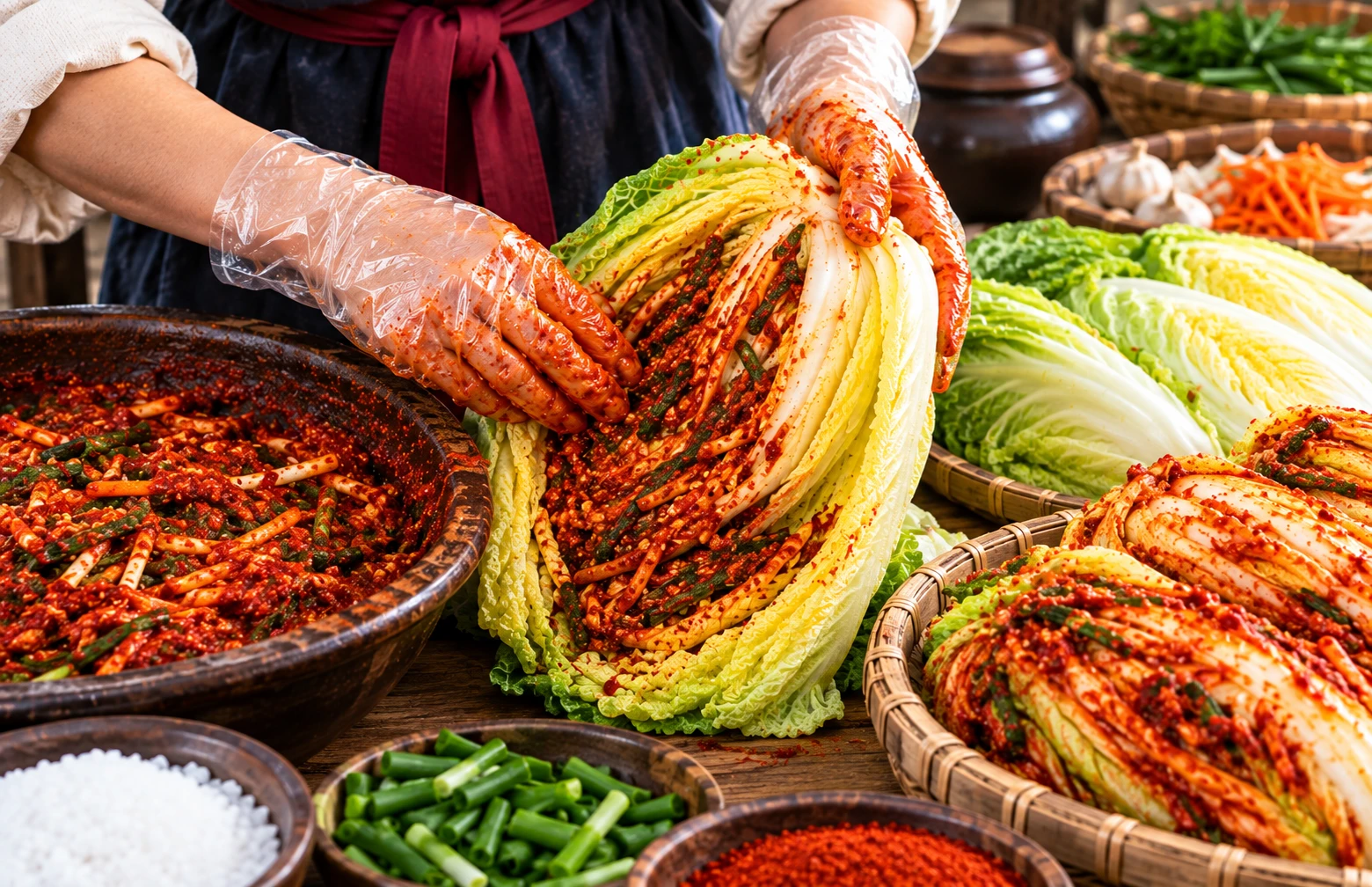
Cabbage stays in halves; paste is worked between every single leaf, base to tip. Slower and more labor, but it’s the traditional method, and the one used for kimjang batches.
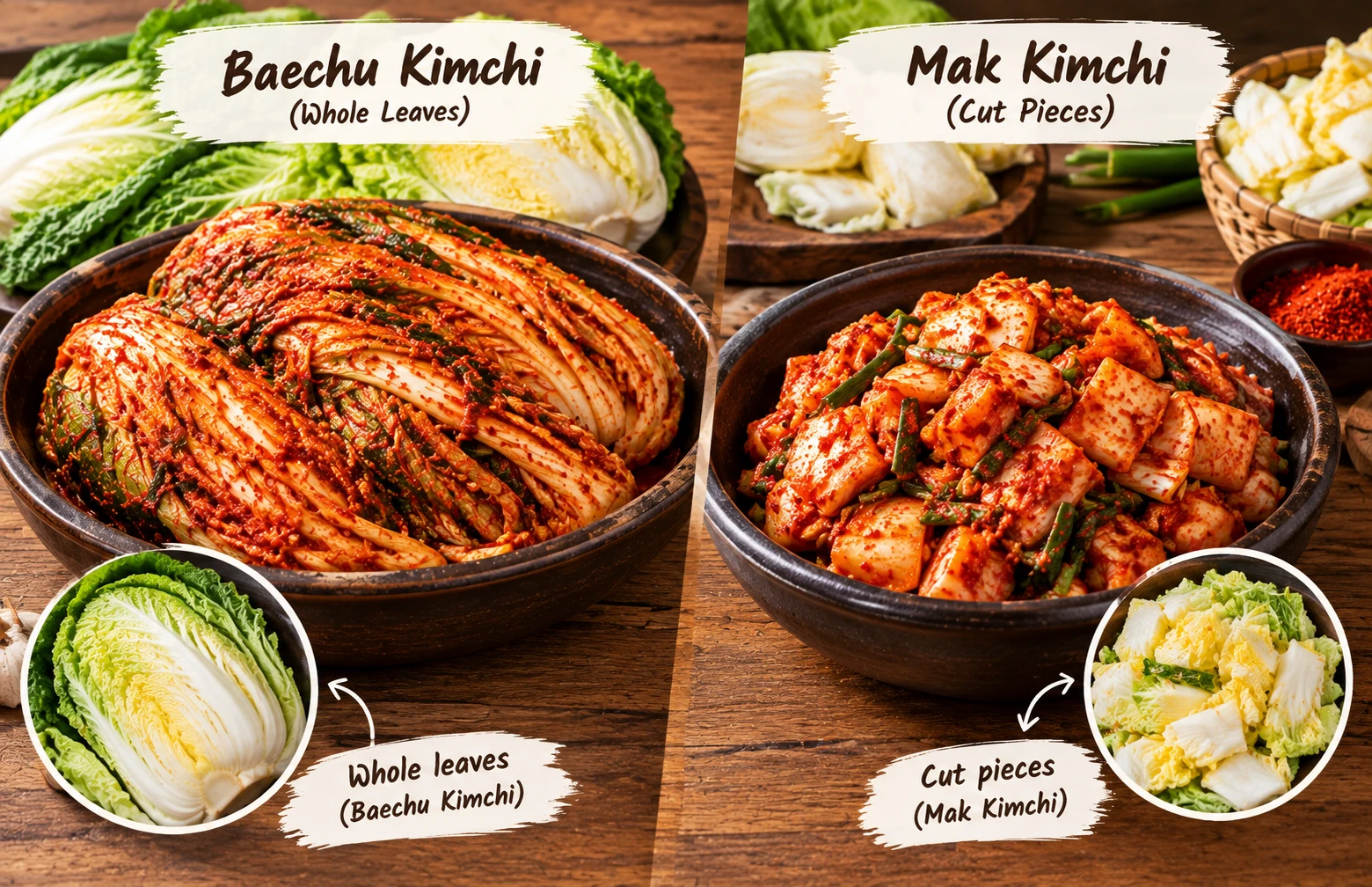
Cabbage is cut into bite-size pieces before seasoning, then simply tossed together. Faster and easier — see our full mak kimchi guide for that version, including the technique tradeoffs it has of its own.
At a Glance
| Method | Effort | Best For | Recipe |
|---|---|---|---|
| Whole-Leaf ← This page | Highest — leaf-by-leaf stuffing | Kimjang batches, the fullest traditional flavor and texture | You’re reading it |
| Cut-Piece | Lower — cut and toss | Weeknight batches, first-time kimchi makers | See Mak Kimchi → |
Key Terms Explained
How Difficult Is This Recipe?
This is the most hands-on recipe in our kimchi guide — the whole-leaf stuffing technique is what makes it traditional, and what makes it a genuine project.
Ingredients + Scaler
One full napa cabbage and standard kimchi pantry staples — the technique, not exotic ingredients, is what makes this recipe what it is.
Amounts scale automatically with the servings control above.
Common Substitutions
| Ingredient | Substitute | Notes |
|---|---|---|
| Fish sauce & saeujeot | Soy sauce, omit shrimp | Makes it fully vegan — see our vegan kimchi resources |
| Sugar | Grated Korean pear or apple | A more traditional, rounder sweetness than plain sugar |
| Korean radish (mu) | Daikon | Slightly more watery and mild — still workable |
| Whole cabbage (this method) | Cut-piece method | See our mak kimchi recipe for the faster alternative technique |
🛒 Shop This Recipe
A full cabbage batch benefits from real tools — a fermentation vessel sized for it, glutinous rice flour for the porridge, real saeujeot, coarse gochugaru, and gloves for the stuffing step.
| Item | Why You’d Want It Here | |
|---|---|---|
| Coarse Gochugaru (Korean Red Pepper Flakes) | Coarse-cut flakes made for kimchi specifically — this recipe uses a larger quantity than our other kimchi guides, so quality matters even more. | View on Amazon → |
| Erawan Glutinous Rice Flour | The sweet rice flour this recipe’s porridge base is built on. | View on Amazon → |
| Korean Salted Shrimp (Saeujeot) | The jeotgal this recipe calls for by name — a real jar rather than guessing at a substitute. | View on Amazon → |
| LockandLock Airtight Kimchi Container | A press-plate kimchi container sized to hold a full cabbage batch submerged and sealed through the room-temp start and the refrigerated ferment. | View on Amazon → |
| Food-Safe Disposable Gloves | For stuffing paste between every leaf (Step 5) without staining your hands red for days. | View on Amazon → |
As an Amazon Associate, KimchiGuide earns from qualifying purchases. Links go to Amazon.com; prices and availability may change.
How to Make Baechu Kimchi — 7 Steps
One long salt, one porridge, one paste, and the leaf-by-leaf stuffing that defines this method. Budget an afternoon.
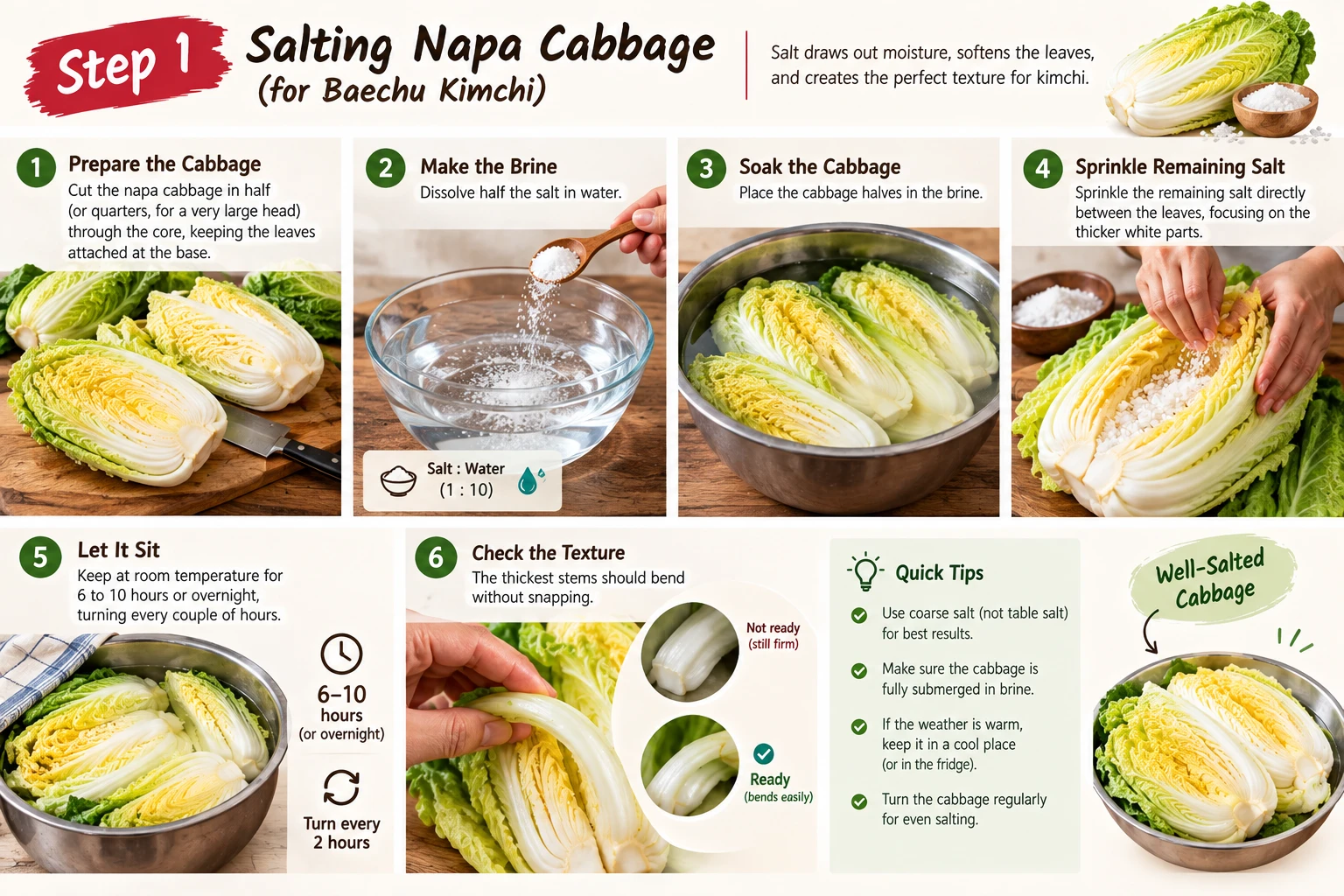
Cut the cabbage in half (or quarters, for a very large head) through the core, keeping the leaves attached at the base. Dissolve half the salt in the water. Soak the cabbage halves in the brine, then sprinkle the remaining salt directly between the leaves, focusing on the thicker white parts.
Let sit for 6 to 10 hours or overnight, turning every couple of hours, until the thickest stems bend without snapping.
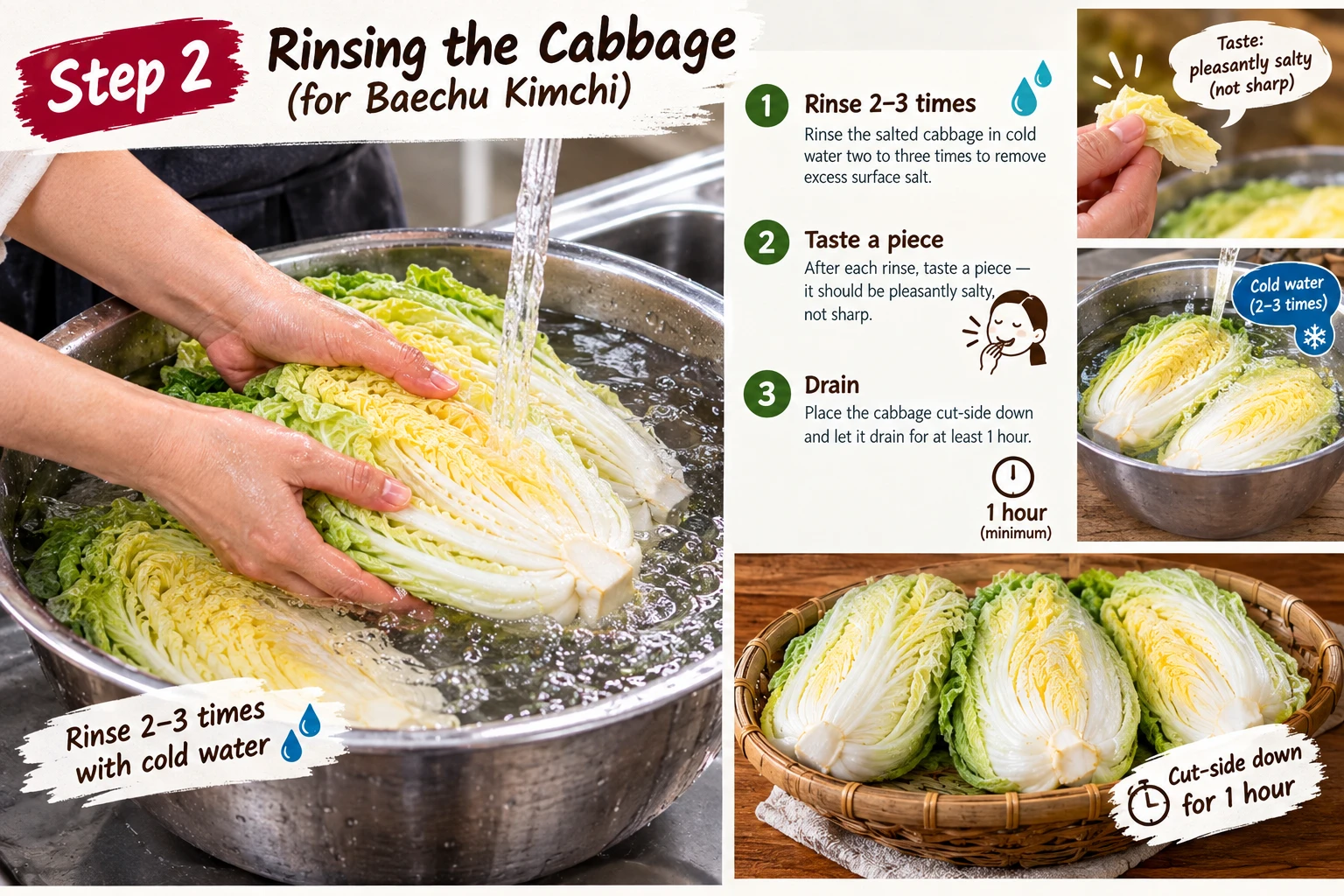
Rinse the salted cabbage in cold water two to three times to remove excess surface salt, tasting a piece each time — it should taste pleasantly salty, not sharp. Drain cut-side down for at least an hour.
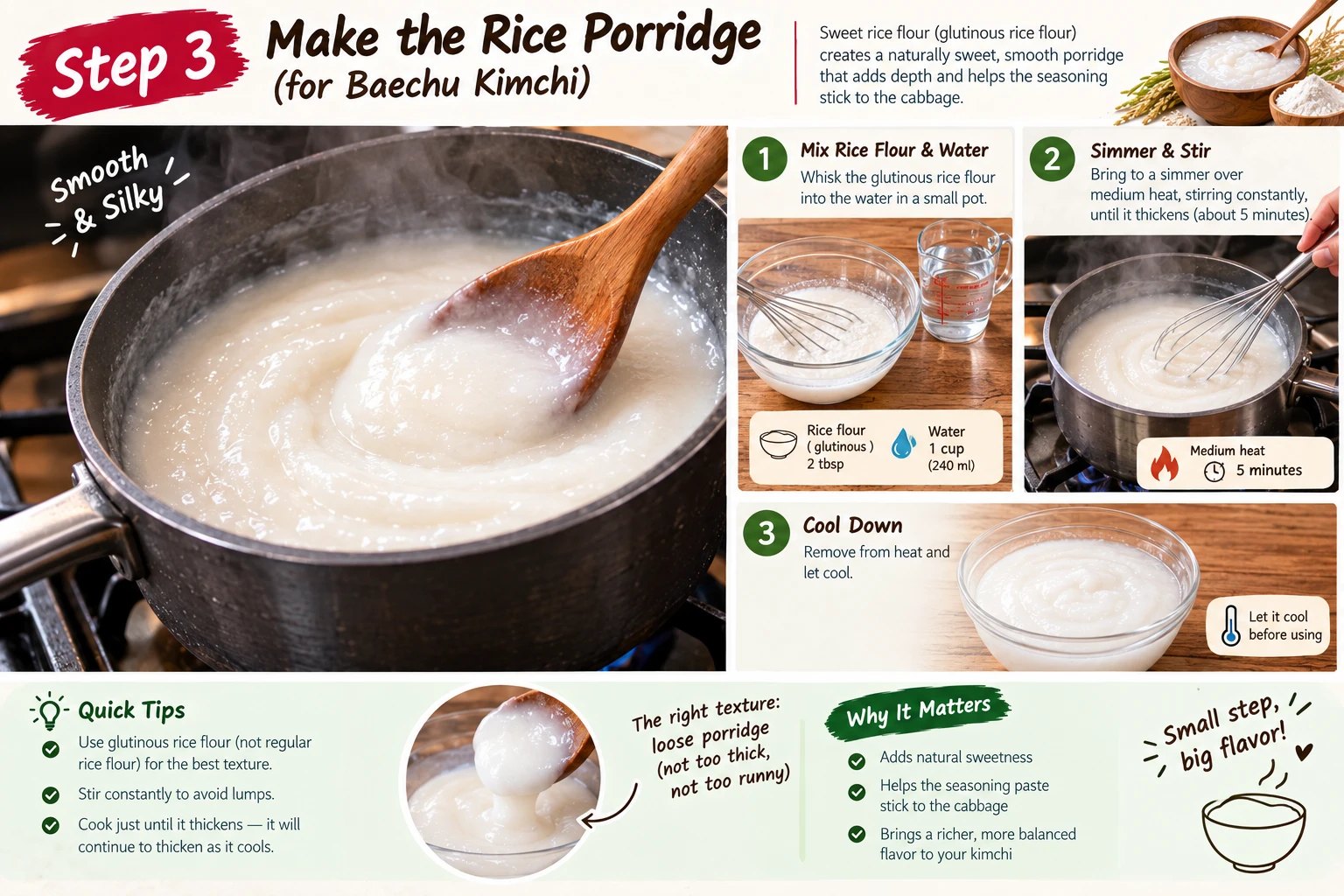
Whisk the glutinous rice flour into the water in a small pot. Bring to a simmer over medium heat, stirring constantly, until it thickens into a loose porridge, about 5 minutes. Remove from heat and let cool.
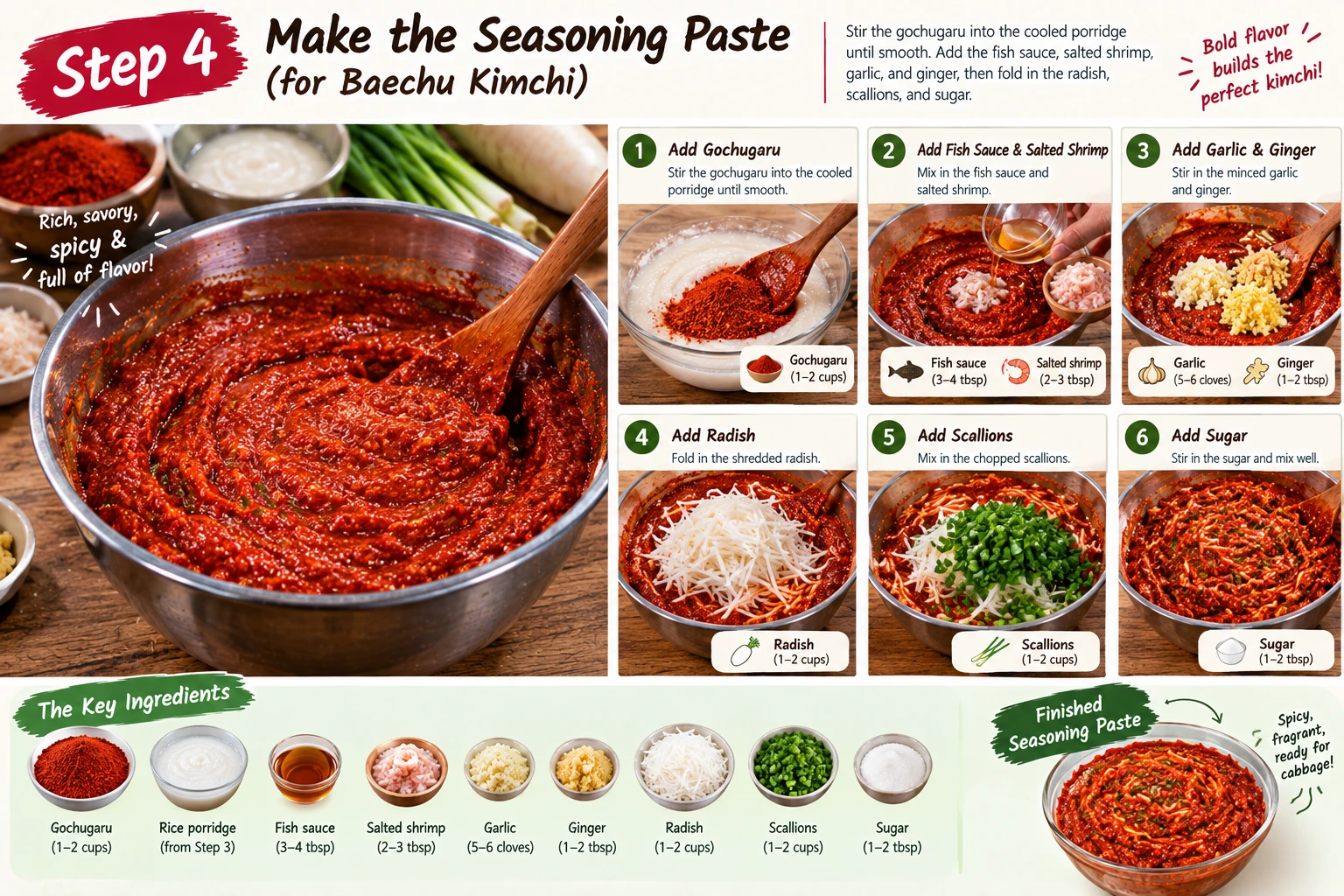
Stir the gochugaru into the cooled porridge until smooth. Add the fish sauce, salted shrimp, garlic, and ginger, then fold in the radish, scallions, and sugar.
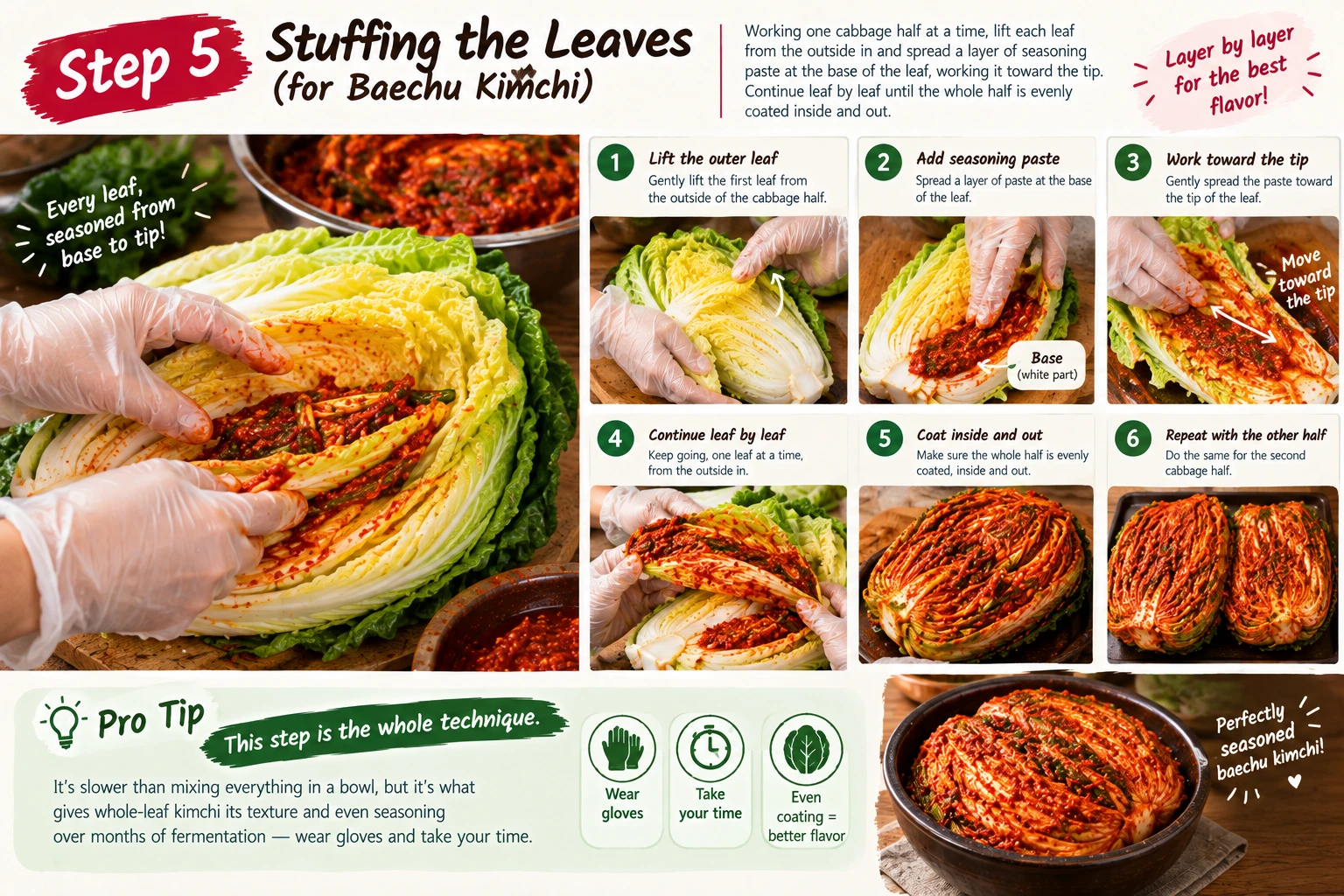
Working one cabbage half at a time, lift each leaf from the outside in and spread a layer of seasoning paste at the base of the leaf, working it toward the tip. Continue leaf by leaf until the whole half is evenly coated inside and out.
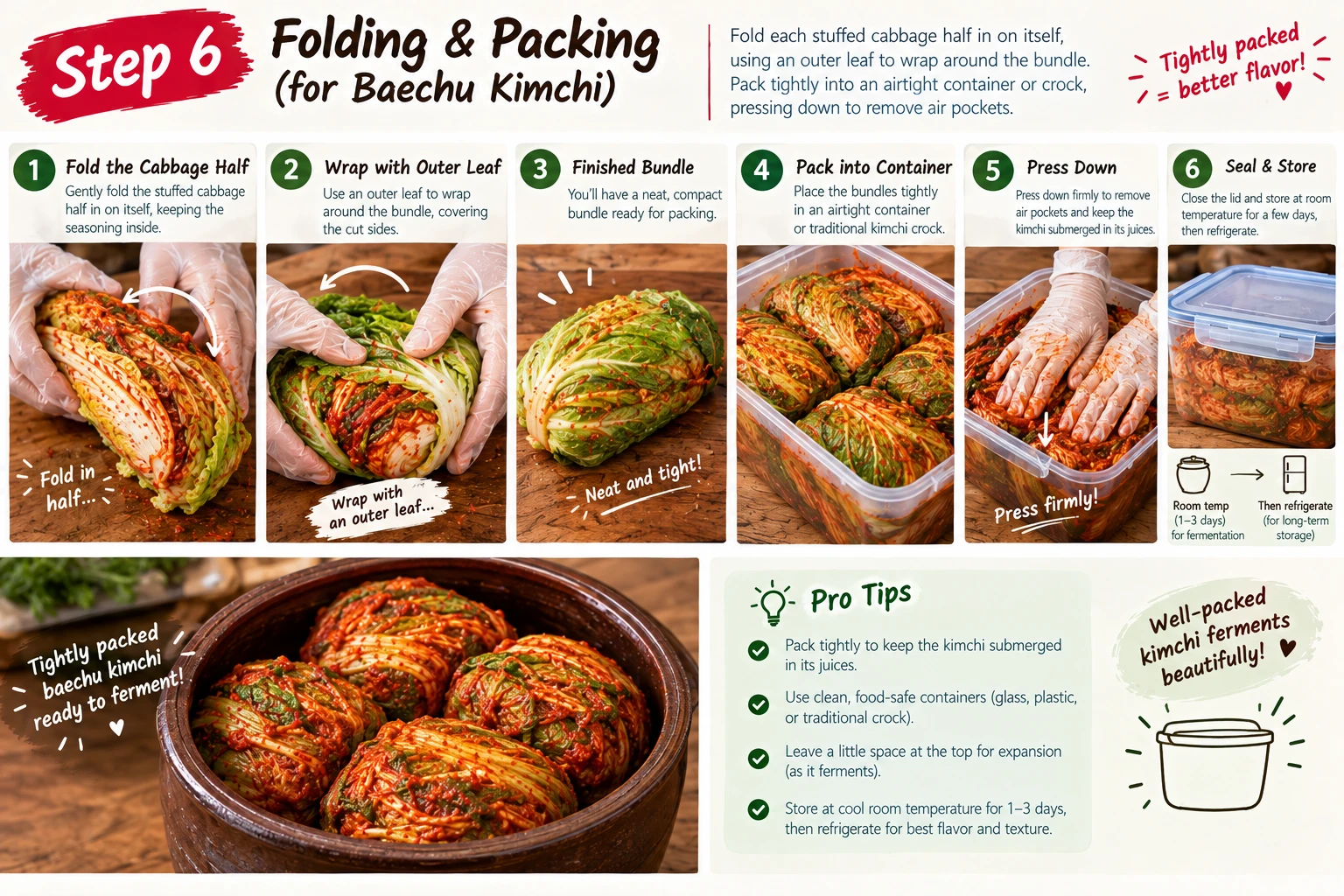
Fold each stuffed cabbage half in on itself, using an outer leaf to wrap around the bundle. Pack tightly into an airtight container or crock, pressing down to remove air pockets.
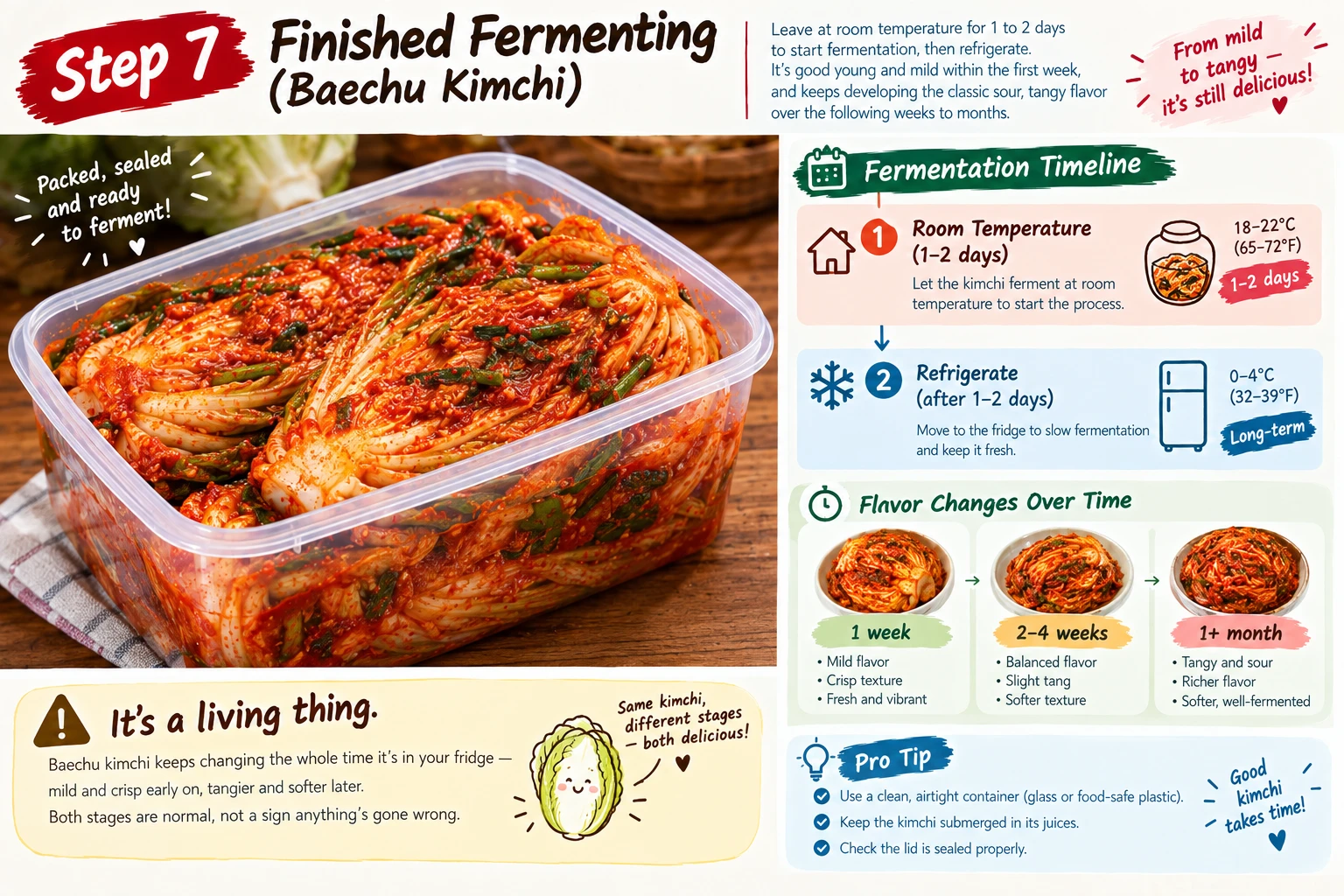
Leave at room temperature for 1 to 2 days to start fermentation, then refrigerate. It’s good young and mild within the first week, and keeps developing the classic sour, tangy flavor over the following weeks to months.
Baechu Kimchi — Recipe Card
배추김치 · The Original Kimchi · 45 Minutes Active + Overnight Salt. Save this to Pinterest, print it, or copy it straight to your notes app.
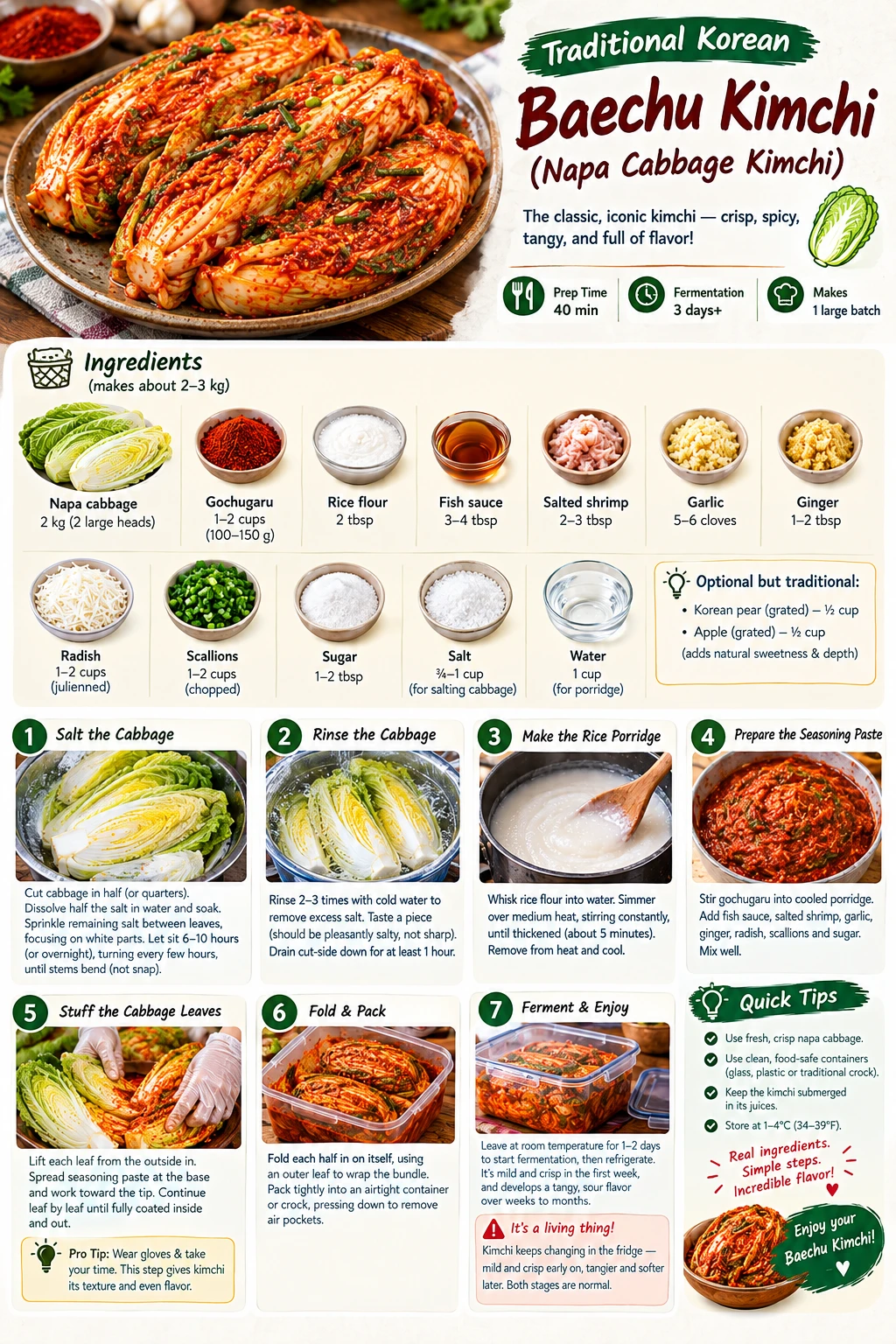
- 2000g napa cabbage (4–5 lbs), halved or quartered
- 240g Korean coarse sea salt (salting)
- 2000ml water (brine)
- 150g Korean radish, matchsticks
- 6 scallions, cut into 1-inch pieces
- 65g glutinous rice flour
- 480ml water (porridge)
- 135g gochugaru
- 120ml fish sauce
- 60g salted shrimp, minced (optional)
- 150g garlic, minced
- 20g fresh ginger, minced
- 4 tbsp sugar
- 1Halve cabbage; salt between leaves and brine, 6–10 hours.
- 2Rinse 2–3 times; drain at least 1 hour.
- 3Simmer rice flour and water into a porridge; cool.
- 4Mix porridge with gochugaru, fish sauce, shrimp, garlic, ginger, radish, scallion, sugar.
- 5Stuff paste between every leaf, base to tip.
- 6Fold each half; pack tightly into a container.
- 7Rest 1–2 days at room temp, then refrigerate.
Per serving (12 servings total). Reviewed by Dr. Sarah Mitchell RD, PhD · Published September 17, 2026
Ingredient Notes — What Each One Does and Why
A quick amount list only tells you how much. Here’s what each ingredient is actually doing, and where it’s safe to swap.
Where Every Other Kimchi Fits In
Baechu kimchi is the anchor of our 18+ variety guide — here’s how the site’s other quick-access varieties depart from it.
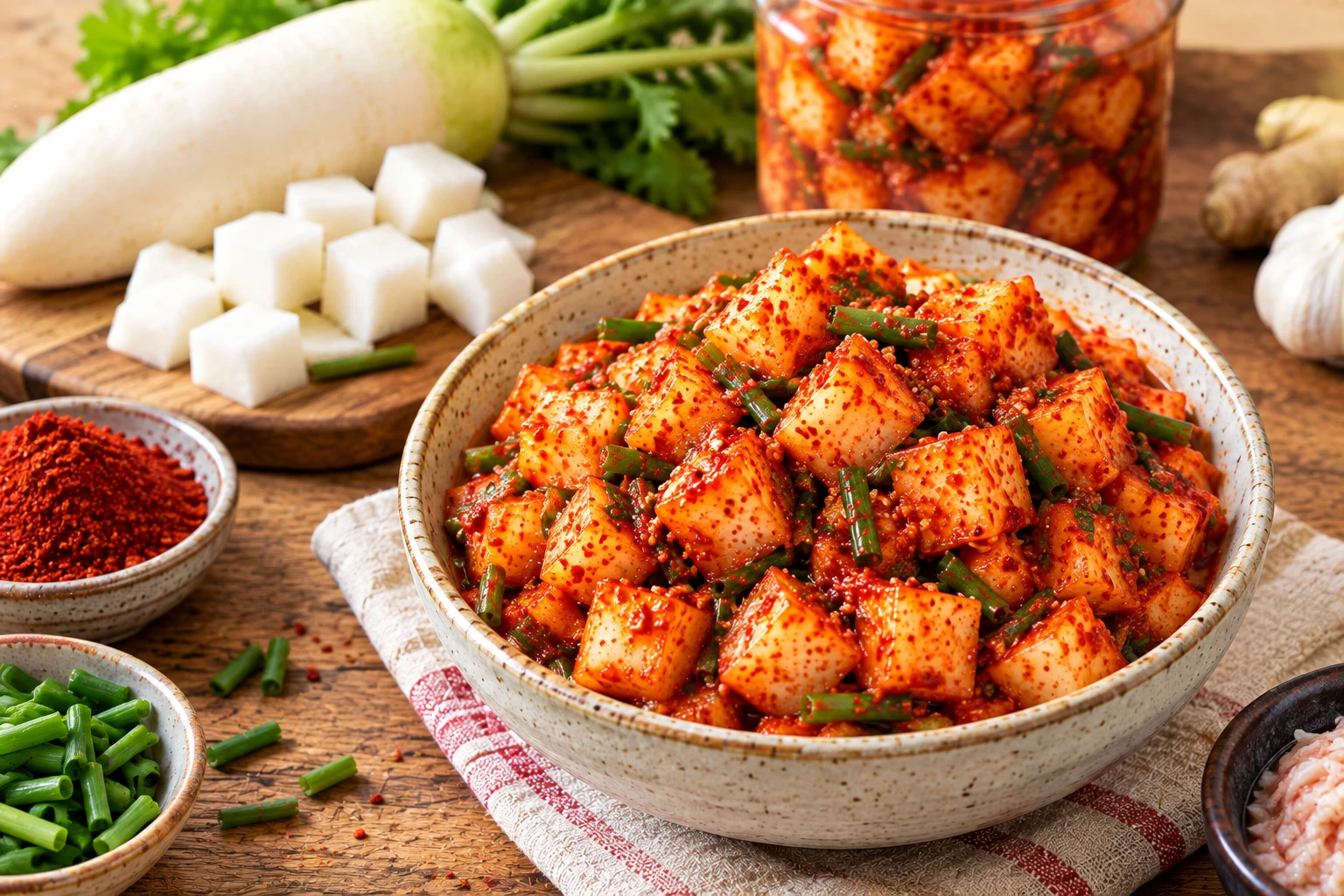
| Variety | Main Vegetable | Cutting Technique | Fermented? |
|---|---|---|---|
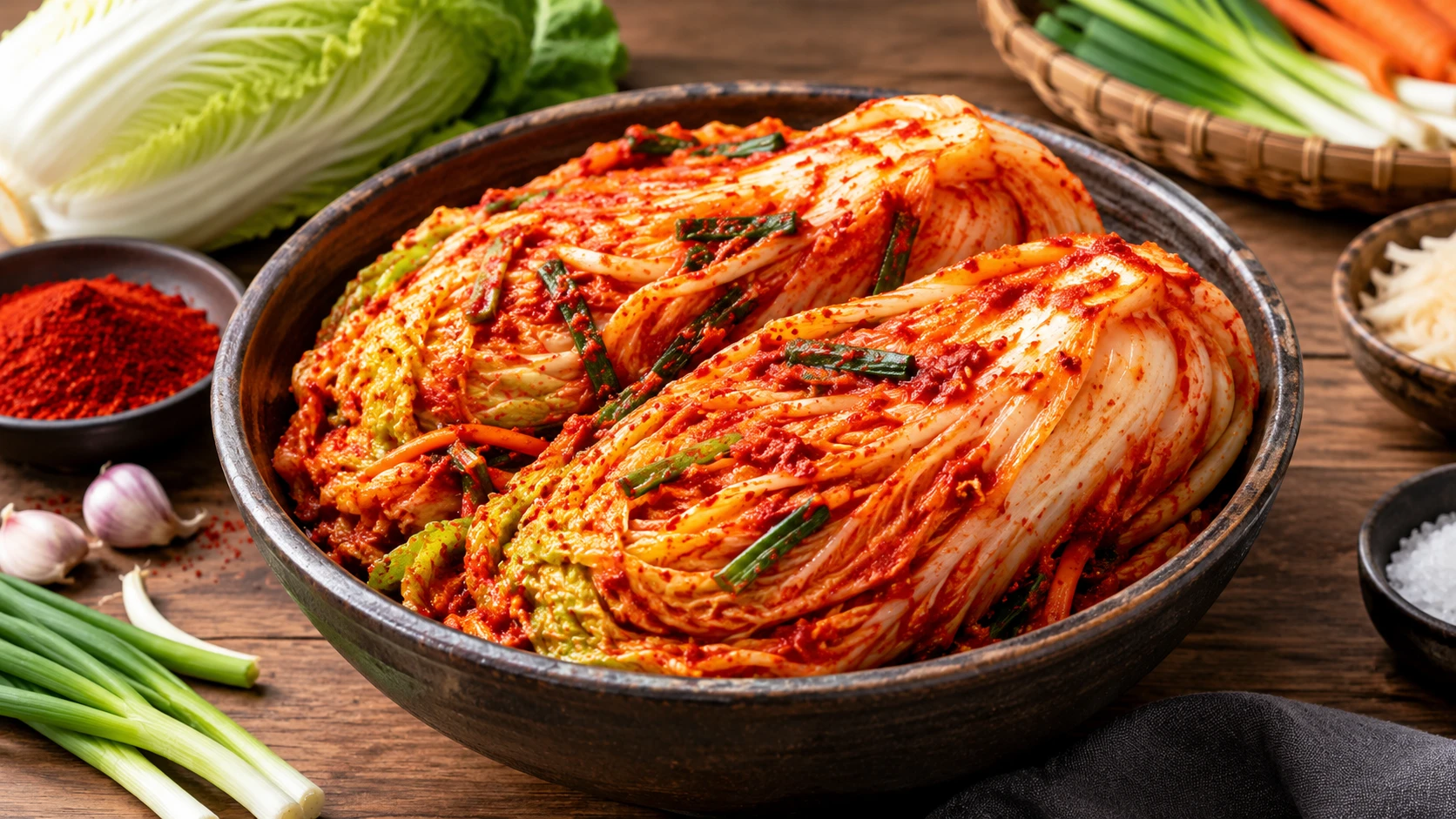
| Baechu Kimchi ← This page | Napa cabbage | Whole leaf | Yes |
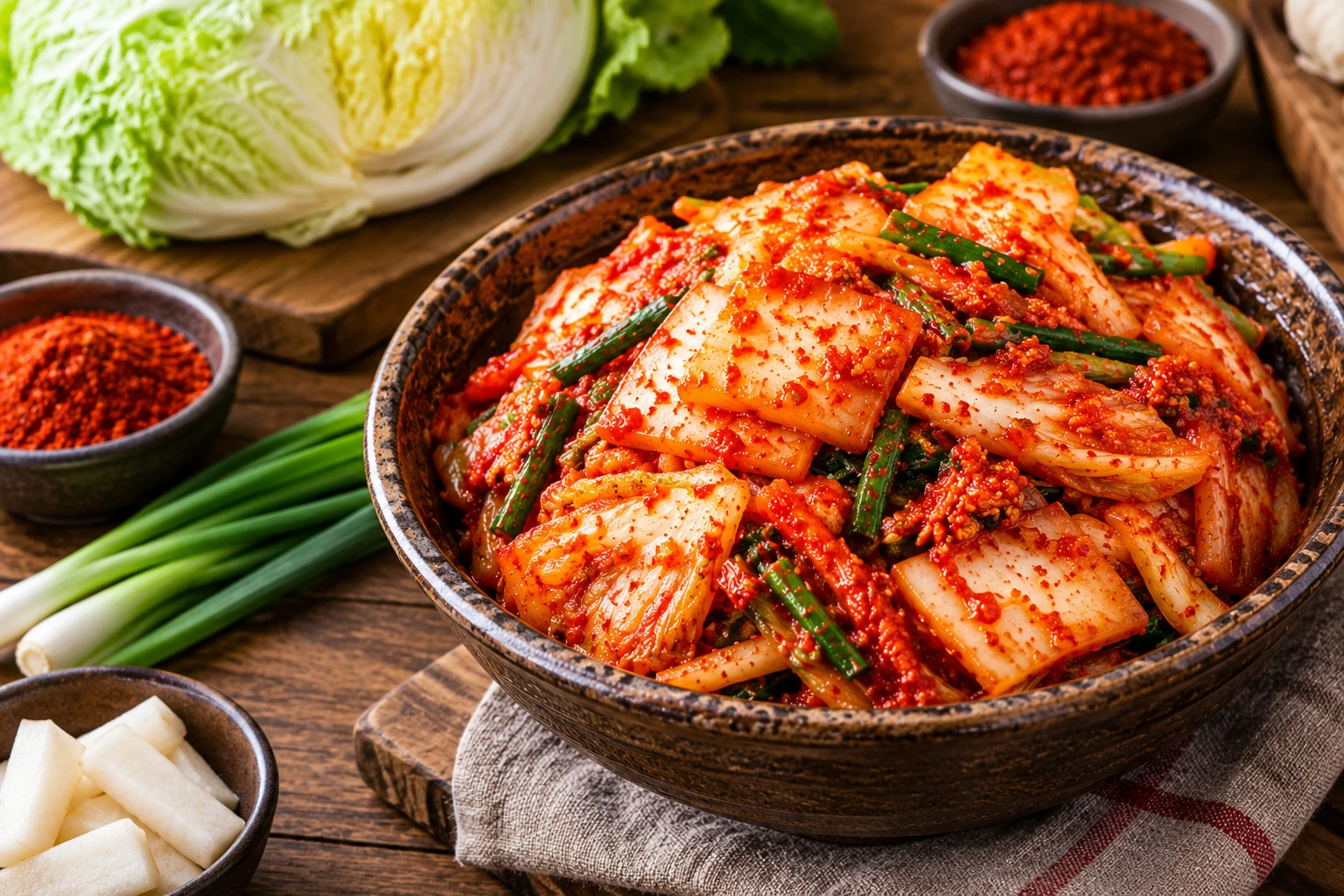
| Mak Kimchi | Napa cabbage | Cut into pieces | Yes |
| Kkakdugi | Korean radish | Cubed | Yes |
| Gat Kimchi | Mustard greens | Whole leaf | Yes |
| Buchu Kimchi | Garlic chives | Whole/loose | Yes |
Pairing Guide — Baechu Kimchi
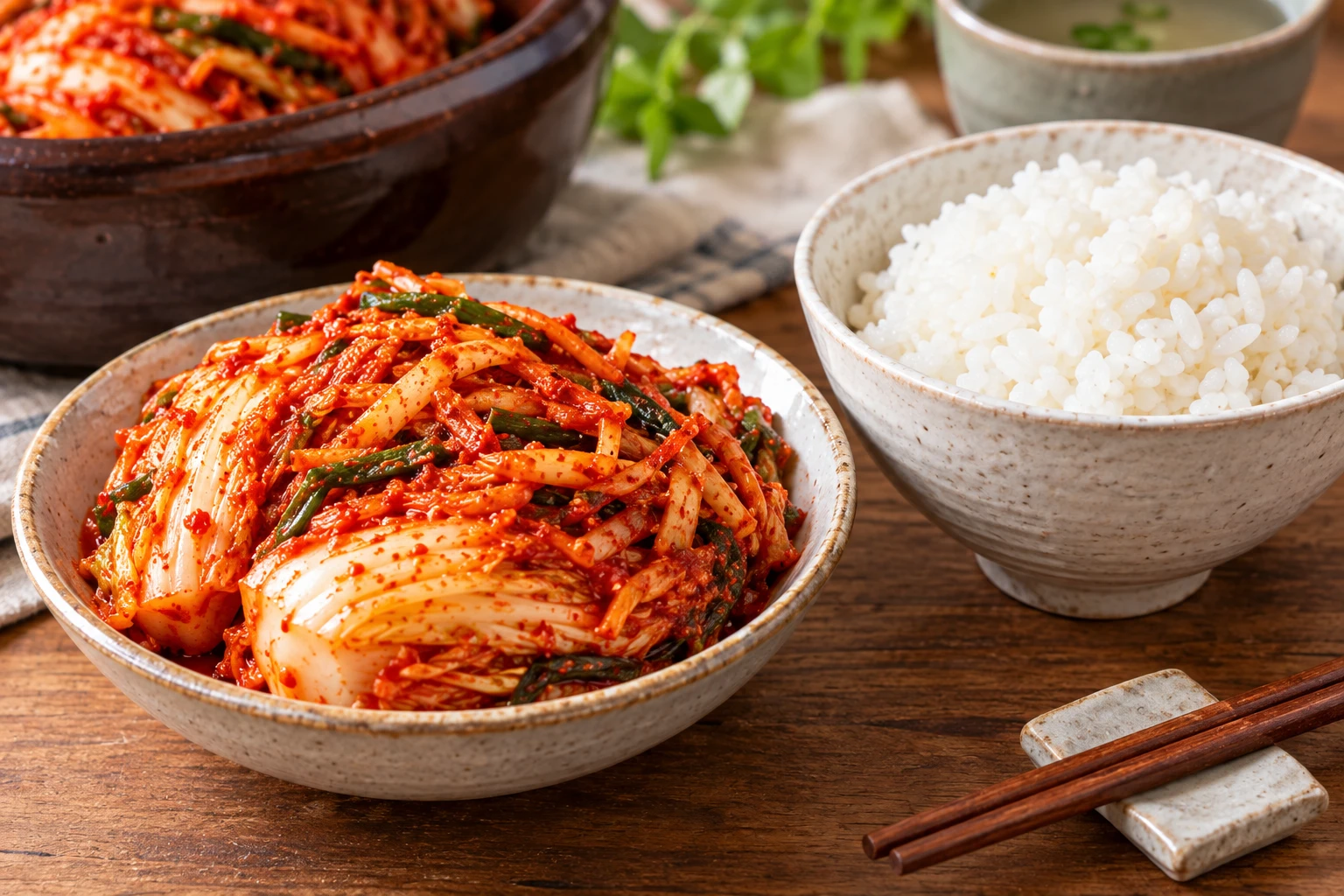
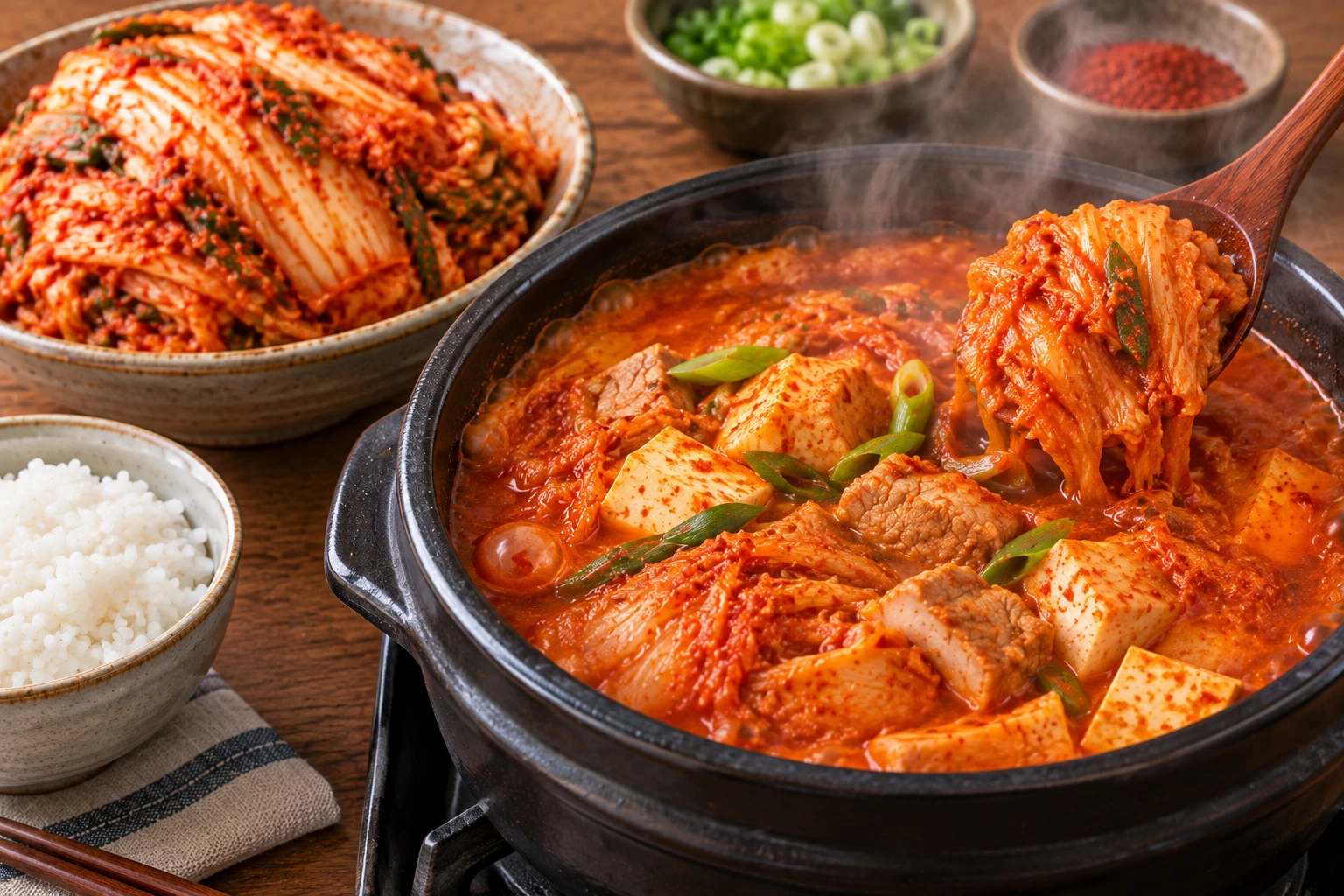
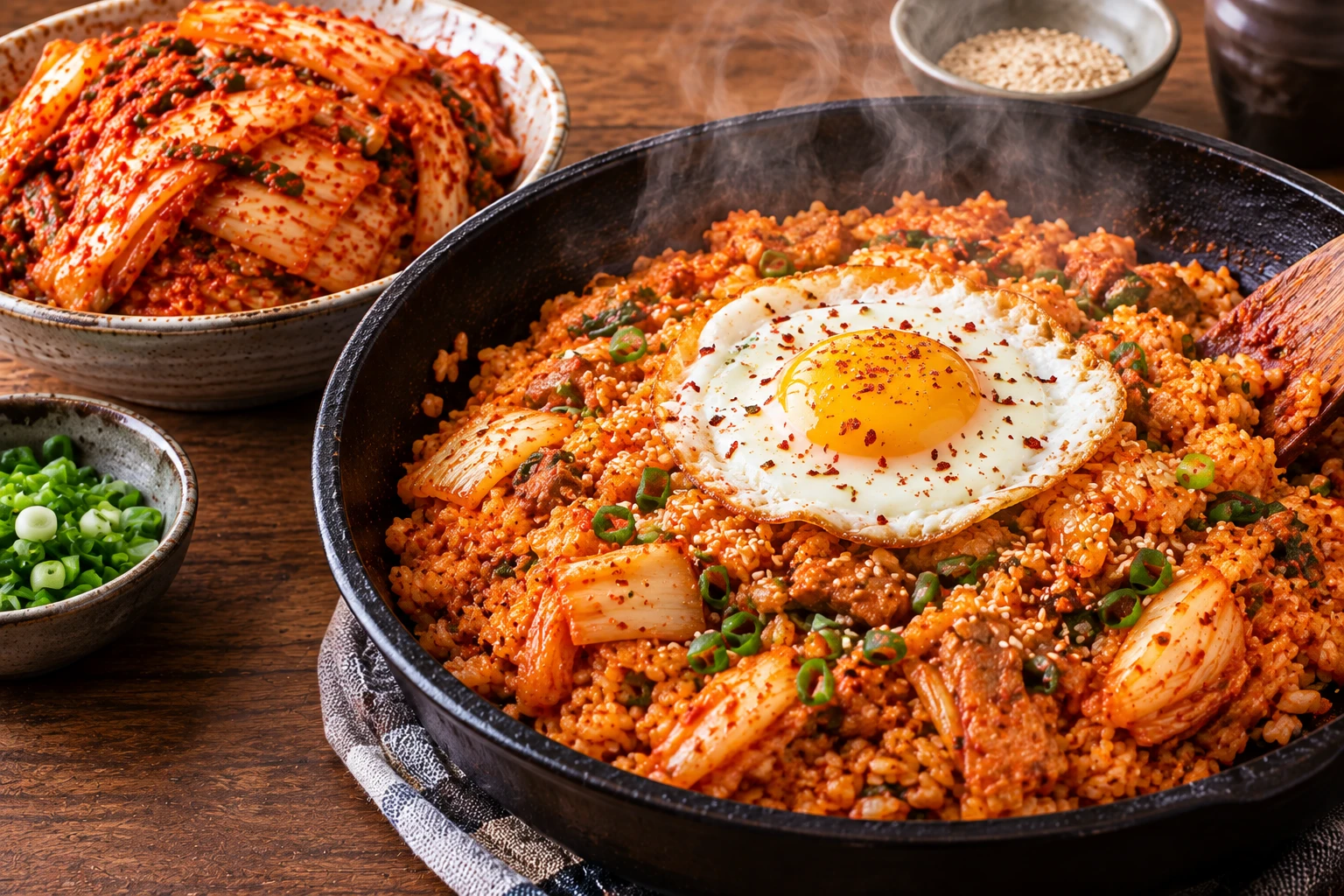
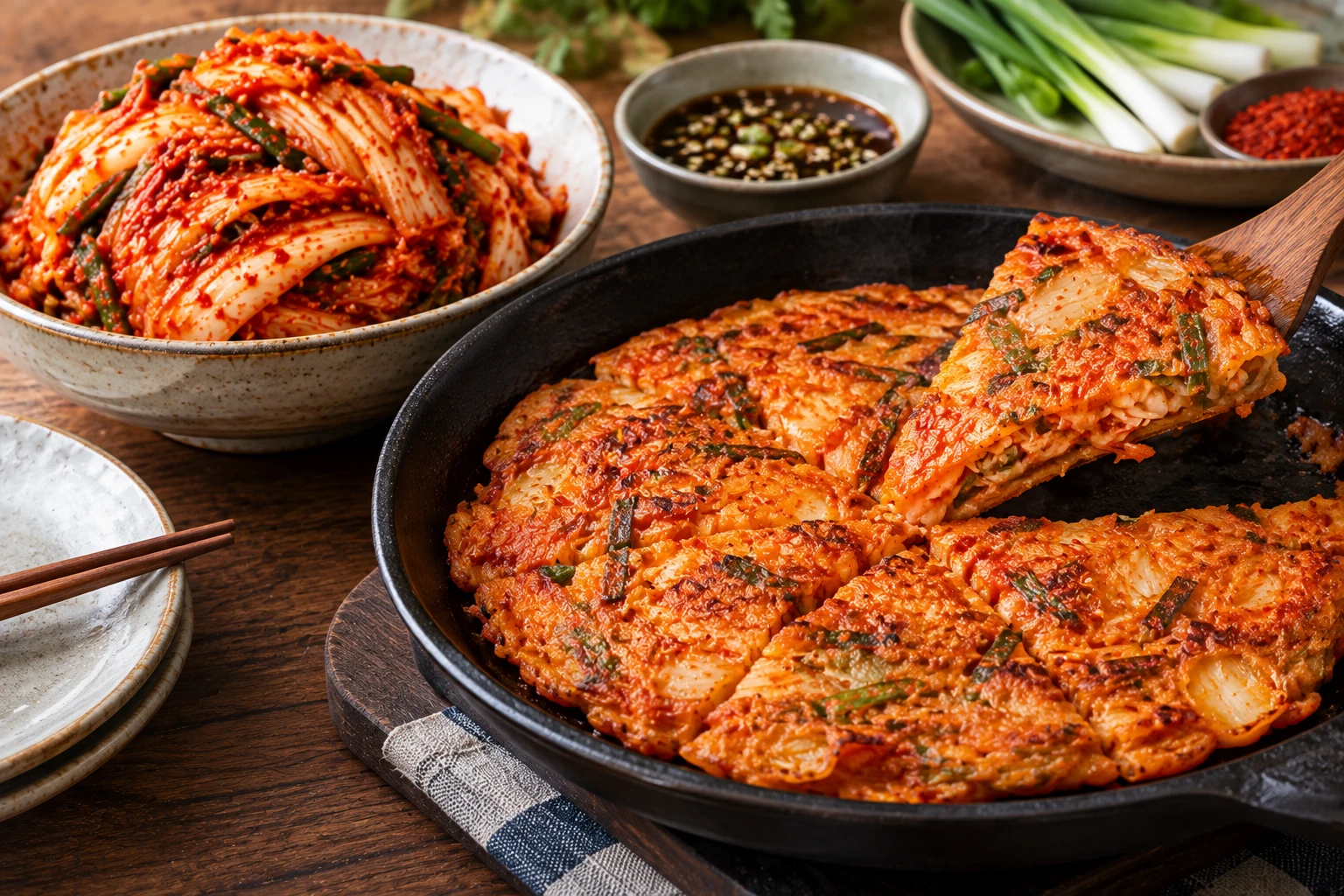
As Korea’s most essential banchan, baechu kimchi belongs on almost every table — and once it sours, it becomes the base ingredient for three of this site’s other recipes.
Storage & Fermentation Timeline
Baechu kimchi keeps changing for as long as it’s in your fridge — every stage below is normal, not a sign of spoilage.
How Baechu Kimchi Compares to Other Types
Baechu kimchi is the baseline every other type on this site is compared against — approximate figures per site convention.
| Variety | Calories | Sodium | Probiotic Load | Notes |
|---|---|---|---|---|
| Baechu Kimchi ← This page | ~15–23 kcal | ~450–750mg | High (long-fermented) | The most-studied variety in kimchi nutrition research — the reference point for every other row here. |
| Mak Kimchi | ~18–22 kcal | ~470–530mg | High once fully fermented | Nutritionally almost identical — only the cutting method differs. |
| Gat Kimchi | ~18–24 kcal | ~440–520mg | High once fully fermented (~2 weeks) | Regionally tied to Dolsan Island — see our full guide. |
| Kkakdugi | ~26–32 kcal | ~480–560mg | High once fully fermented (1–3 weeks) | Radish-based, slightly higher natural sugar than most types. |
| Dongchimi | ~8–14 kcal | Lowest of the common types | Moderate | Mostly water-based brine, so both figures run low. |
Looking to work more kimchi into your regular meals? See our 7-Day Kimchi Diet Plan or the more gradual 30-Day Kimchi Diet Plan.
What We Tested Before Writing This Guide
Cabbage selection and salting time matter more than any seasoning-paste tweak — a dense, well-salted cabbage forgives small paste adjustments, while a loose, under-salted one won’t hold together no matter how good the seasoning is.
Baechu Kimchi FAQ — 10 Questions
No. Salted, fermented cabbage and other vegetables (called jeo) go back roughly 3,000 years in Korea, long before chili pepper existed in the dish. Red chili pepper (gochu) is generally understood to have reached Korea via trade routes around the late 1500s to 1600s, with some sources tying its spread to the Imjin War period — the exact timeline is still genuinely debated among historians. Before that, kimchi was pale and seasoned with salt and other aromatics rather than gochugaru.
Kimjang is the traditional autumn practice of communally preparing large batches of kimchi — usually baechu kimchi — to last through the winter. It was inscribed by UNESCO on the Representative List of the Intangible Cultural Heritage of Humanity in 2013, recognizing it as a cultural practice as much as a cooking method.
Keeping the cabbage in whole leaves and working the paste into every layer is what defines tongbaechu-kimchi (whole cabbage kimchi) and gives it a slower, more even ferment and a texture that holds up over months. It’s more hands-on than cutting the cabbage into pieces first, which is the whole basis of our separate mak kimchi recipe.
Same cabbage, same basic seasoning — the difference is entirely in the technique. This recipe keeps the cabbage in halves and stuffs paste between every leaf, which takes longer but is the traditional method. Mak kimchi cuts the cabbage into pieces first and simply tosses everything together, which is faster and less hands-on. See our dedicated mak kimchi guide for that version.
Yes. Omit the salted shrimp and swap the fish sauce for soy sauce for a fully vegan version. The flavor will be a little less savory and complex, but it’s still a proper, fermented baechu kimchi.
Refrigerated in an airtight container, it easily lasts weeks to several months, continuing to sour gradually the whole time. It’s mild and crisp in the first week or two, develops the classic tangy flavor over the following weeks, and turns quite sour after a month or more — still excellent for cooking even once it’s very sour.
Taste the cabbage after rinsing, before you add any seasoning paste — it should taste pleasantly salty, not sharp or bland. If it’s too salty, rinse once more. If it tastes flat, the initial salting time was probably too short; next time, salt a little longer or check that the salt was worked into every layer, not just the surface.
Northern Korean kimchi is generally milder and soupier, with less gochugaru and a lighter seasoning. Southern-style kimchi tends to be saltier, spicier, and more pungent, often with more jeotgal (salted seafood). This recipe sits closer to the more common, moderately spiced southern-leaning style.
No. Traditional onggi earthenware crocks are still used in Korea, especially for large kimjang batches, but a good airtight plastic or glass container works fine for home-scale batches and is what most people use today, including in Korea.
Yes — very sour baechu kimchi is exactly what dishes like kimchi jjigae, kimchi fried rice, and kimchi pancake are built around. Don’t throw out kimchi just because it’s turned sharply sour; that’s the point at which it becomes most useful in cooking.
Was this guide helpful?
Your feedback helps us improve KimchiGuide for everyone.
Explore More
More guides and recipes from KimchiGuide.
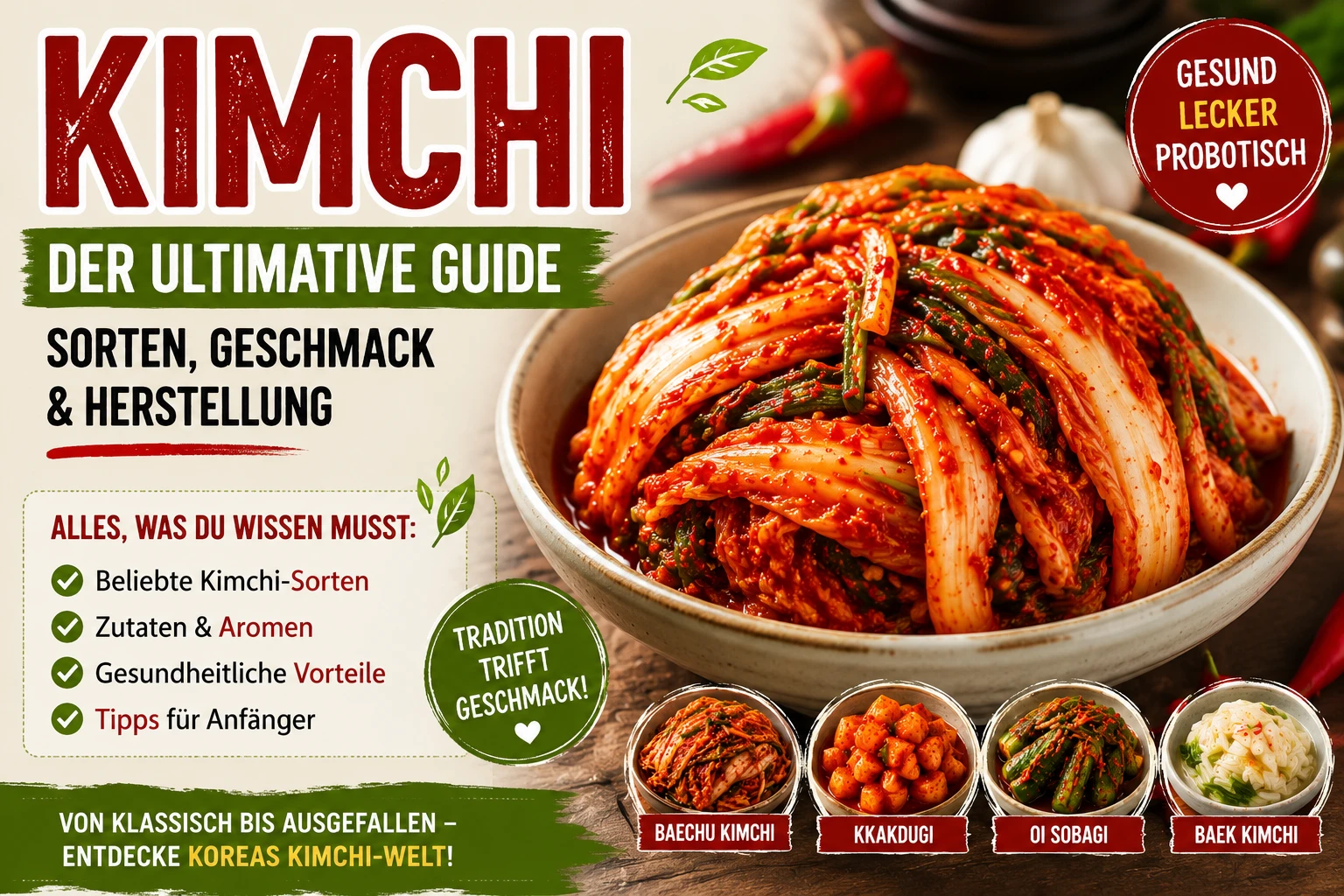
See how baechu kimchi anchors 18+ other varieties.
Read the guide →
The faster, cut-piece way to make the same cabbage kimchi.
Get the recipe →Radish takes cabbage’s place as the main ingredient.
Get the recipe →
A regionally-rooted, non-cabbage kimchi from Dolsan Island.
Get the recipe →
Exactly what your baechu kimchi is good for once it turns sour.
Get the recipe →
Another classic way to use up fully fermented baechu kimchi.
Get the recipe →
The other standard use for kimchi that’s gone sour.
Get the recipe →
Brand new to kimchi? Start with the fundamentals here.
Read the guide →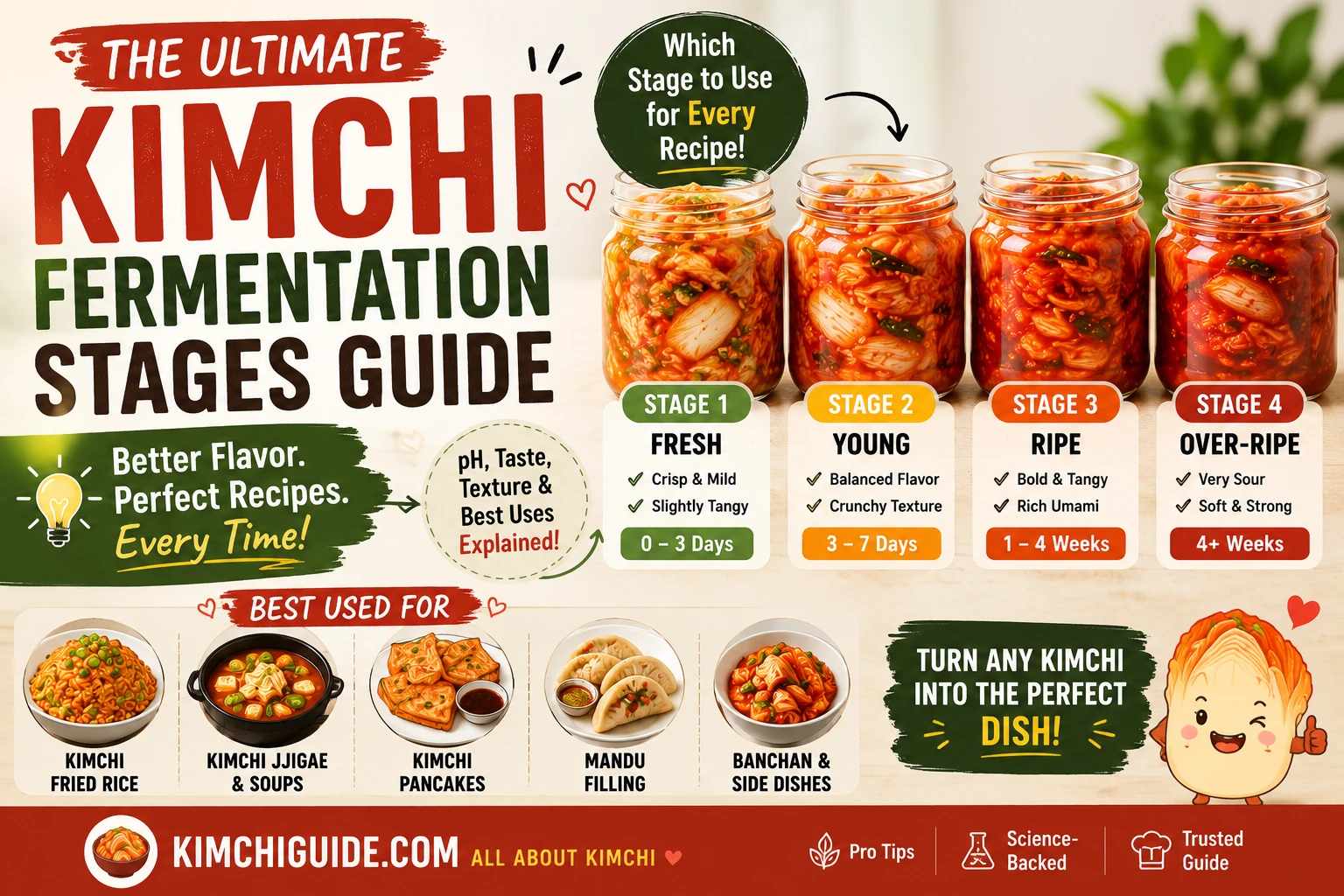
Figure out exactly how sour your baechu kimchi is at any point.
Read the guide →
More ways to use kimchi once it’s fully aged.
Read the guide →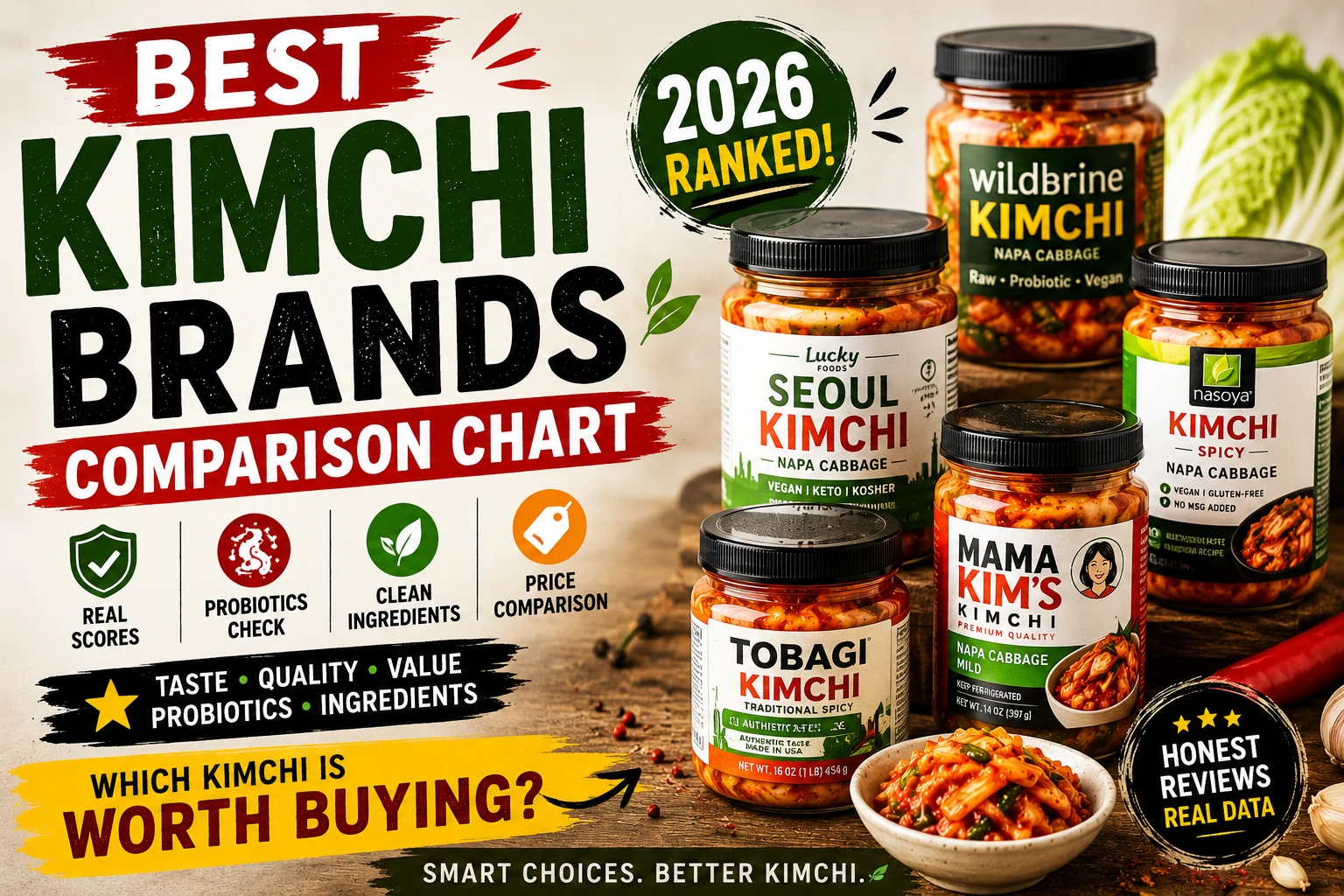
Not making it yourself today? See what’s actually worth buying.
Read the guide →
Two of the biggest store-bought brands, compared head to head.
Read the comparison →

Whole-Leaf or Cut — Which Method Do You Use?
Have you made the full whole-leaf version, or do you usually reach for the faster mak kimchi method? Let us know in the comments.