Gat KimchiMustard Greens Kimchi · 갓김치
Gat kimchi — Korean mustard greens kimchi — is the signature specialty of Dolsan Island near Yeosu, prized for its peppery bite and crisp texture. Here’s its history, a full recipe with step photos, and how to serve it.
What Is Gat Kimchi?
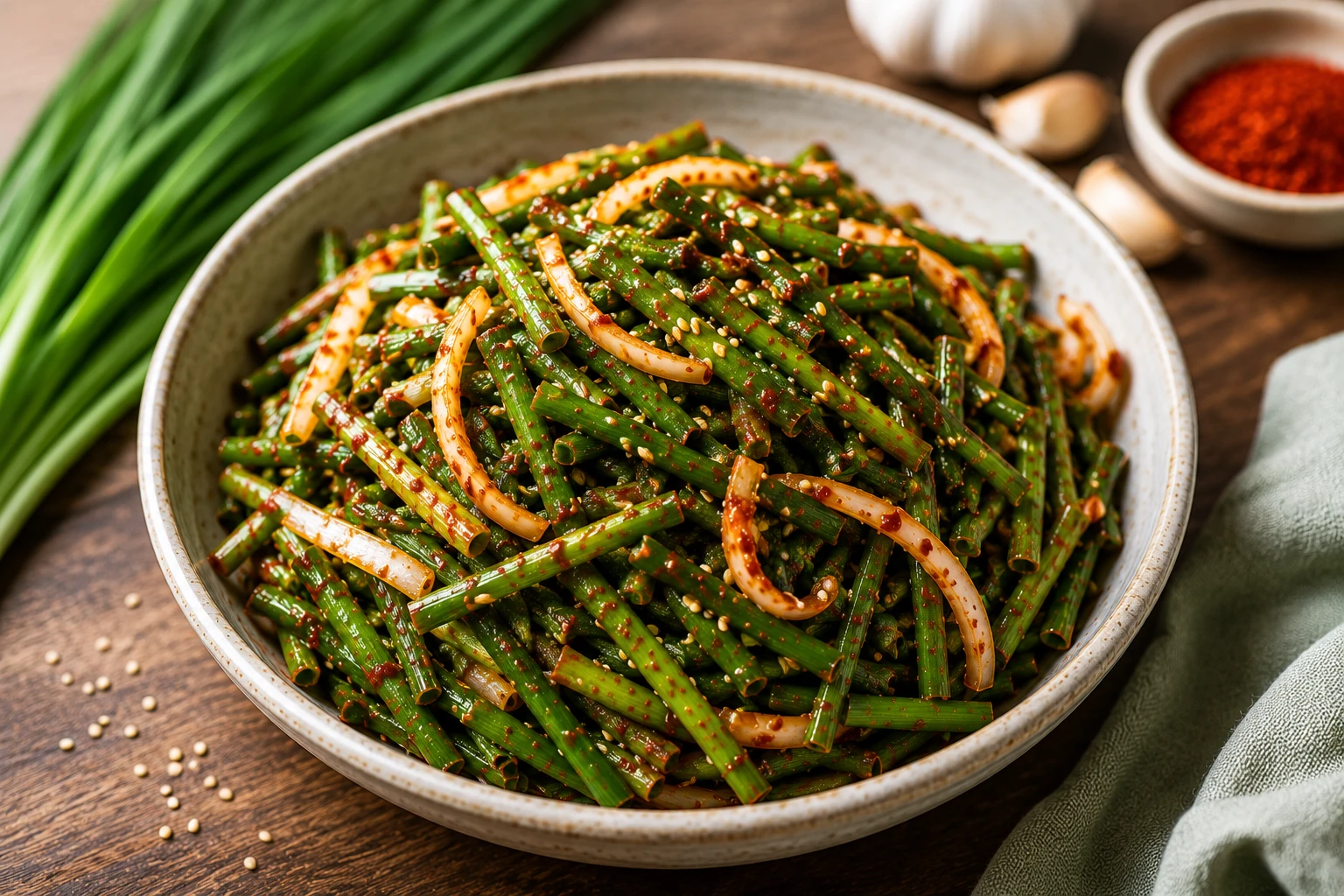
Gat kimchi (갓김치) is Korean kimchi made with gat — mustard greens — instead of napa cabbage, seasoned with the same gochugaru-based paste used across most kimchi types. It’s most closely associated with Dolsan Island near Yeosu, South Jeolla Province, where a locally adapted mustard-green cultivar called Dolsan gat has been grown since around 1980. The greens are salted for about 2 hours first — a much shorter version of the pre-salting napa cabbage needs — then coated in seasoning and either eaten fresh or fermented for roughly 2 weeks. Around 22 calories per half-cup serving.
How to Make Gat Kimchi
Gat kimchi takes about 20 minutes of active prep plus a 2-hour salting rest: salt the mustard greens, make a stock-based rice porridge, mix it with gochugaru and aromatics into a paste, rinse and coat the greens, then eat fresh or let it ferment for around two weeks.
- Salt the greens: mix with salt, rest 2 hours, turning every 30 minutes.
- Make the porridge: simmer rice flour with stock, stir in sugar and fish sauce, cool.
- Build the paste: stir in garlic, ginger, onion, and gochugaru.
- Rinse and coat: rinse the salted greens, then toss gently in the paste.
- Pack and wait: eat fresh, or ferment ~2 weeks in the fridge for the classic sour tang.
Why Dolsan Island Gat Kimchi Is Special
Gat kimchi can be made anywhere with any mustard greens — but the version from Dolsan Island has its own centuries-deep reputation, for real reasons.

Dolsan gat was introduced from Japan around 1980 and adapted to the island’s alkaline, red-clay soil and warm sea breeze. The result is a softer, milder, less fibrous leaf than mustard greens grown elsewhere — closer to a tender green than a tough one.

Gat-kimchi appears in the Joseon-dynasty agricultural text Jeungbo Sallim Gyeongje, making it one of the earliest catalogued kimchi varieties — well before red-pepper kimchi became the dominant style most people picture today.

Mustard greens are sturdier than delicate garlic chives but far less dense than a whole napa cabbage head. A 2-hour salt makes the leaves pliable and helps the seasoning cling — a fraction of the time cabbage kimchi requires.

Unlike diced kimchi types, gat kimchi is traditionally eaten by wrapping a whole leaf around a spoonful of rice — the peppery bite and the rice balance each other in a single bite.
Fresh vs. Fully Fermented — Compared
You can eat gat kimchi the day you make it, or let it develop the deeper sour tang most people associate with kimchi — both are completely normal.

Peppery, crisp, and sharp — closer to a spicy, seasoned green than a pickle. A great introduction if you’ve never had gat kimchi before and want to taste the mustard green itself clearly.

The classic gat kimchi experience — deeper, tangier, with the peppery bite mellowed by fermentation. This is the version most commonly served as banchan alongside a full Korean meal.
Style Comparison at a Glance
| Style | Texture | Flavor | Best For |
|---|---|---|---|
| Fresh | Crisp, firm leaves | Sharp, peppery, mustardy | Tasting the mustard green flavor clearly, quick side dish |
| Fully Fermented | Softened, tender | Tangy, deep, mellowed heat | The classic gat kimchi experience as banchan |
Key Terms & Dolsan Gat Explained
How Difficult Is This Recipe?
Straightforward for anyone who has made any kimchi before — the only extra step compared to buchu kimchi is a short salting rest.
Ingredients + Scaler
Mustard greens are the only ingredient that needs sourcing thought — everything else is standard kimchi pantry staples.
Amounts scale automatically with the servings control above.
Common Substitutions
| Ingredient | Substitute | Notes |
|---|---|---|
| Fish sauce | Soy sauce | Makes it fully vegan when combined with vegetable stock |
| Anchovy kelp stock | Vegetable stock, or plain water | Slightly less savory depth, but works fine |
| Dolsan gat | Any mustard greens | Confirmed by Maangchi — standard mustard greens make a genuine gat kimchi |
| Glutinous rice flour | All-purpose or regular rice flour | Slightly less glossy porridge, same thickening function |
How to Make Gat Kimchi — 5 Steps
One salting rest, one paste, one toss. The only step that needs advance planning is the first one.

Rinse the mustard greens and drain well. Sprinkle salt over them, using a little more on the thicker stem ends where it takes longer to penetrate, and mix well by hand. Let stand for 2 hours, turning every 30 minutes so they salt evenly.
This is a much shorter version of what napa cabbage kimchi does over several hours — just enough to soften the leaves and draw out a little moisture so the seasoning clings properly later.

While the greens salt, combine the glutinous rice flour and stock in a small pot over medium-high heat. Stir until it starts to bubble, about 2 minutes, then stir in the sugar until the mixture turns slightly translucent. Remove from heat, stir in the fish sauce, and let it cool completely.
Using anchovy kelp stock instead of plain water here is what gives traditional gat kimchi its deeper savory backbone — plain water or vegetable stock still works, just a touch lighter.

Once the porridge mixture is fully cool, stir in the minced garlic, ginger, sliced onion, and gochugaru until you have a smooth, evenly colored paste.
Make sure the porridge is completely cool before this step — adding gochugaru to a warm base can dull its color and give the paste a slightly cooked, muted flavor instead of the bright, fresh heat you want.

Rinse the salted greens in a couple of changes of cold water to remove excess salt, then drain well. Transfer to the bowl with the seasoning paste and gently toss by hand — wearing food-safe gloves if you like — until every leaf is evenly coated.

Pack the kimchi tightly into an airtight container, pressing down as you go to remove air pockets. Eat it fresh right away, or let it ferment about 2 weeks in the fridge (or a few days at room temperature for faster souring) until it tastes pleasantly sour.
Gat Kimchi — Recipe Card
갓김치 · Fresh or Fully Fermented · 20 Minutes Active. Save this to Pinterest, print it, or copy it straight to your notes app.

- 900g mustard greens (gat), stems trimmed
- 3 tbsp kosher salt
- 1/2 cup anchovy kelp stock (or water)
- 1 tbsp glutinous rice flour
- 1 tbsp sugar
- 1/4 cup fish sauce (or soy sauce)
- 4 cloves garlic, minced
- 1 tsp fresh ginger, minced
- 1/4 cup sliced onion
- 1/4 cup gochugaru
- 1Salt the greens, mix well, rest 2 hours, turning every 30 min.
- 2Simmer rice flour with stock 2 min, stir in sugar and fish sauce, cool fully.
- 3Stir garlic, ginger, onion, and gochugaru into the cooled porridge.
- 4Rinse salted greens, drain, and gently toss in the paste.
- 5Pack tightly. Eat fresh, or ferment ~2 weeks in the fridge.
Per serving (6 servings total). Reviewed by Dr. Sarah Mitchell RD, PhD · Updated August 14, 2026
Ingredient Notes — What Each One Does and Why
A quick amount list only tells you how much. Here’s what each ingredient is actually doing, and where it’s safe to swap.
Where Gat Kimchi Fits in the Kimchi Family
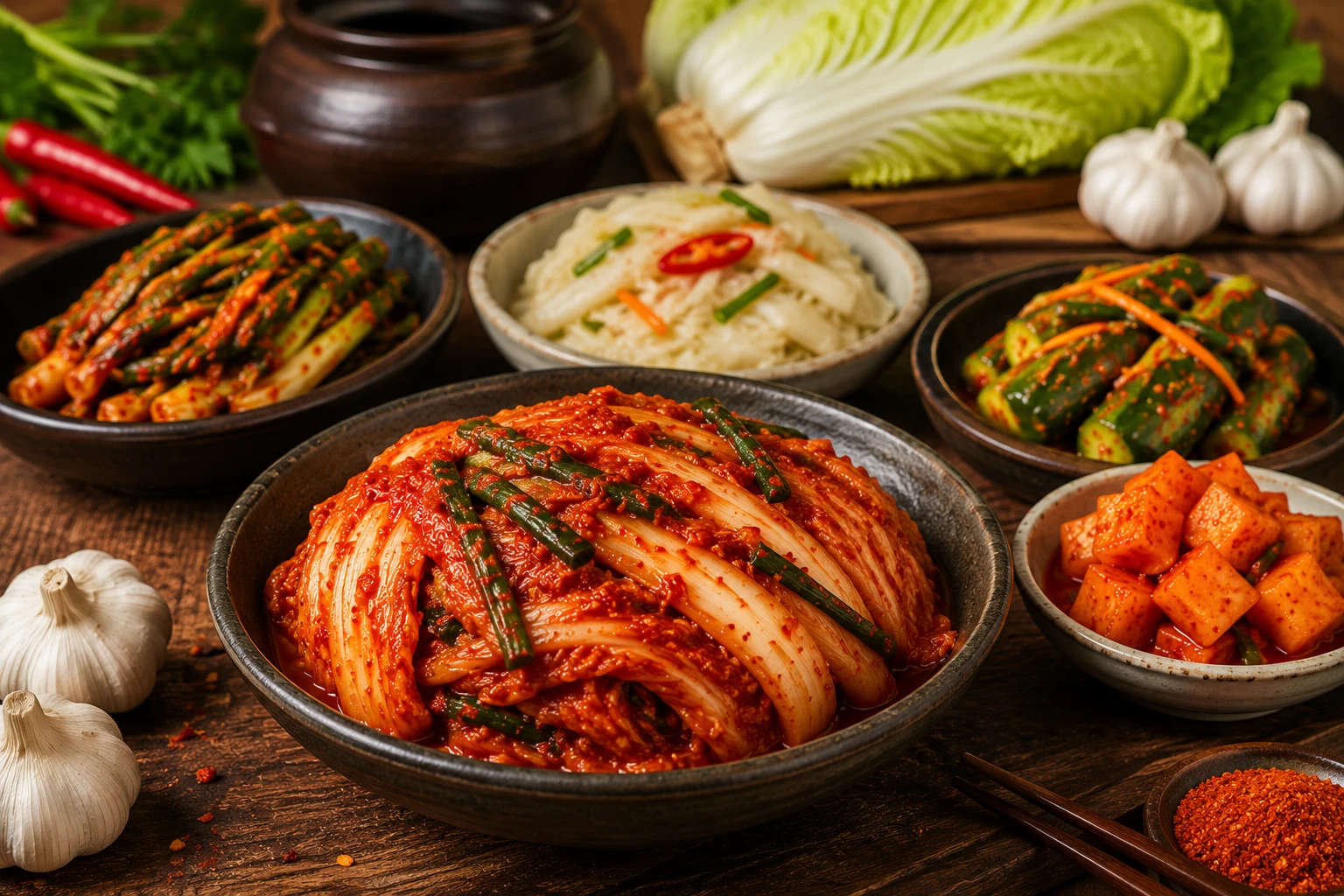
Gat kimchi is one of 18+ varieties covered on our pillar guide — here’s how it compares to two close relatives.

Pairing Guide — Gat Kimchi
Its peppery bite is built to stand up to rich, fatty foods — this is where it earns its place on the table.


Storage & Reheating
How Gat Kimchi Compares to Other Types
Figures below are drawn from our Types of Kimchi nutrition table, approximate per 100g serving.
| Variety | Calories | Sodium | Probiotic Load | Notes |
|---|---|---|---|---|
| Baechu Kimchi | ~15–23 kcal | ~450–750mg | High (long-fermented) | The most-studied variety in kimchi nutrition research. |
| Buchu Kimchi (fresh) | ~25–30 kcal | ~320–380mg | Minimal, unless short-fermented | Another southern, non-cabbage type — see our full guide. |
| Dongchimi | ~8–14 kcal | Lowest of the common types | Moderate | Mostly water-based brine, so both figures run low. |
| Gat Kimchi ← This page | ~18–24 kcal | ~440–520mg | High once fully fermented (~2 weeks) | Slightly saltier than buchu kimchi due to the anchovy kelp stock base. |
Gat Kimchi FAQ — 10 Questions
A peppery, slightly bitter bite from the mustard greens themselves, layered over the familiar tangy, garlicky, fermented kimchi flavor. It’s sharper and more assertive than napa cabbage kimchi, closer in spirit to a spicy mustard green.
Yes. Maangchi herself confirms any mustard greens work for this recipe, not just the Dolsan variety. The specific Dolsan gat grown in Yeosu is prized for being milder and less fibrous, but standard mustard greens from any grocery store make a perfectly good gat kimchi.
Dolsan gat is a specific mustard green cultivar grown on Dolsan Island near Yeosu, introduced from Japan around 1980. The island’s alkaline, red-clay soil and warm sea breeze give it a softer texture and milder, less fibrous bite than mustard greens grown elsewhere, which is why Dolsan gat kimchi has its own regional reputation.
Both work. You can eat it right after mixing for a fresh, crisp, peppery bite, or let it ferment — about 2 weeks in the fridge, or a few days at room temperature for faster souring — for the deeper, tangier flavor most people associate with kimchi.
Yes. Swap the fish sauce for soy sauce and use vegetable stock or plain water instead of anchovy kelp stock. The flavor will be a little less savory-briny, but the texture and heat level stay the same.
Unlike buchu (garlic chives), mustard greens are sturdier and slightly fibrous, so a short salting period softens the leaves and draws out a little moisture, which helps the seasoning cling and gives a better final texture. It’s a much shorter version of the same pre-salting step napa cabbage kimchi uses, not the multi-hour process cabbage needs.
Several weeks refrigerated in an airtight container. It will keep fermenting and getting more sour the longer it sits, similar to other kimchi types, so flavor is best in the first few weeks.
Yes. A version prepared in Korean Buddhist temple cuisine exists, particularly in Jeolla Province, typically leaving out the fish sauce, salted shrimp, and other animal-derived ingredients in favor of the sect’s traditional plant-based seasoning approach.
Both are non-cabbage kimchi types popular in southern Korea, but the vegetable and technique differ: gat kimchi uses mustard greens and needs a short 2-hour salting step, while buchu kimchi uses garlic chives and skips pre-salting entirely. Gat kimchi also tends to ferment longer (around 2 weeks) compared to buchu kimchi’s much shorter timeline.
The classic way is wrapping a whole leaf around a spoonful of rice. It’s also a popular banchan alongside grilled pork belly, folded into gimbap, or served as a palate cleanser between richer dishes.
Was this guide helpful?
Your feedback helps us improve KimchiGuide for everyone.
Explore More
More guides and recipes from KimchiGuide.
See how gat kimchi fits among 18+ other varieties.
Read the guide →Another southern, non-cabbage kimchi — no pre-salting needed.
Get the recipe →How to choose and use Korean chili flakes.
Read the guide →A fast way to use up any extra kimchi.
Get the recipe →A deeply savory kimchi stew to pair alongside.
Get the recipe →
Ways to use kimchi once it’s fully aged.
Read the guide →In a hurry? See what’s actually worth buying.
Read the guide →About the Author & Reviewer

Ji-Young Park
12 years writing about Korean home cooking, with 200+ kimchi batches tested for KimchiGuide, including regional and lesser-known varieties like gat kimchi and buchu kimchi.
View Full Bio →
Dr. Sarah Mitchell
Registered dietitian specializing in fermented foods and gut health, reviewing nutrition and food-safety claims across KimchiGuide’s kimchi guides.
View Full Bio →
Fresh or Fully Fermented — Which Do You Prefer?
Have you tried real Dolsan gat, or made this with regular mustard greens? Let us know in the comments.