Kimchi Ramen The Complete Guide
Kimchi ramen isn’t one dish — it’s a technique. This guide covers the broth architecture that makes it work, how to choose your kimchi, and links to all 13 fully tested variations we’ve built, from a simple broth-simmered Classic to a build-your-own ratio formula for whatever you have in the fridge.
What Is Kimchi Ramen?
Kimchi ramen is a Korean-style noodle soup built from a spicy, tangy broth made by sautéing aged kimchi with garlic, gochujang, and stock, served over ramen (or another noodle) with toppings like egg, scallions, and nori. There’s no single “correct” version — this guide covers 13 fully tested variations, each changing one core element: the protein, the broth style, the noodle, the temperature, or the cooking method. If you’re new here, start with the broth technique below, then pick a variation that matches what you’re in the mood for.
How to Choose Your Kimchi Ramen Variation
Pick based on what you want: a broth-based bowl (Classic through Creamy Udon), a lighter noodle soup, a cold dish for a hot day, a dry stir-fried version with no broth, or a build-your-own formula using whatever’s in your fridge.
- New to kimchi ramen? Start with Classic — it teaches the core broth technique.
- Want more protein? Try Pork Belly, Seafood, or Egg.
- Want it rich? Try Creamy, Creamy Udon, or Cheese.
- Want it light? Try Noodle Soup or Vegan.
- Hot day? Try Cold Kimchi Noodles.
- Want it dry, no broth? Try the Stir-Fry version.
- Already know the basics? Use the Noodle Bowl formula to build your own.
Why 13 Variations Instead of One Recipe
Most kimchi ramen content online gives you one fixed recipe. We built this guide differently — each variation isolates one change (protein, broth style, noodle, temperature, or method) and tests it properly, so you can find the exact version that fits what you’re craving or what’s in your fridge.

Nearly every variation uses the same broth-building sequence — learn it once here and apply it to whichever variation you pick.

Hot broth, cold noodles, dry stir-fry, and a build-your-own formula — one of the 13 fits whatever you’re in the mood for.

Each of the 13 guides includes its own test-kitchen batch results, not just a single write-up — you can see exactly what was compared.

The final variation, Noodle Bowl, teaches an actual ratio so you can go beyond all 13 and build your own combination.
The Kimchi Ramen Broth — Layer by Layer
A great kimchi ramen broth is built in layers, each ingredient going in at a specific moment for a specific reason. This sequence is what nearly every variation in this silo is built on top of.
| Layer | Ingredient | Why It Goes Here |
|---|---|---|
| 1 — Fat | Sesame oil (or rendered protein fat) | Carries fat-soluble flavor from everything that follows; adds fragrance immediately. |
| 2 — Aromatics | Garlic (and onion in some variations) | 30-60 seconds until golden — undercooked tastes raw, overcooked turns bitter. |
| 3 — Kimchi | Aged kimchi, sautéed | 3-4 minutes until caramelized — the step most competitor recipes skip or rush, and the one that separates a flat broth from a deep one. |
| 4 — Pastes | Gochujang (and doenjang in some variations) | Toasted 60 seconds until darkened — activates fermented compounds and removes raw paste flavor. |
| 5 — Liquid | Stock + kimchi brine | Brine adds depth that would otherwise take 20+ extra minutes of simmering to develop. |
| 6 — Seasoning | Soy sauce + gochugaru | Added last, after tasting — the brine and pastes already carry significant salt. |
Which Variation Should You Make?
A side-by-side comparison of all 13 variations by the things that actually decide which one fits your night — time, temperature, protein, and what makes it worth making.
| Variation | Time | Temp | Protein Focus | Best For |
|---|---|---|---|---|
| Classic | ~20m | Hot | Optional egg | Learning the core broth technique |
| Pork Belly | ~25m | Hot | Pork belly | A richer, more filling bowl |
| Creamy | ~25m | Hot | Flexible | A milder, dairy-rounded broth |
| Vegan | ~20m | Hot | Tofu | Fully plant-based nights |
| Cheese | ~20m | Hot | Optional egg | Comfort-food cravings |
| Seafood | ~25m | Hot | Mussels, shrimp, squid | A special-occasion bowl |
| Egg | ~20m | Hot | Whisked egg ribbons | A silkier, quicker broth |
| Udon | ~20m | Hot | Optional egg | A thicker, chewier noodle |
| Creamy Udon | ~25m | Hot | Flexible | Rich broth + thick noodles together |
| Noodle Soup | ~18m | Hot | Optional | The lightest, quickest option |
| Cold Noodles | ~15m | Cold | Optional egg | Hot weather, no stove-hovering |
| Stir-Fry | ~22m | Hot, no broth | Bacon (swappable) | A dry, charred texture instead of soup |
| Noodle Bowl | ~25m | Hot | Your choice | Using up whatever’s in the fridge |
What We Learned Building This Silo
Key Terms — Language & Food Science Entities
These terms come up across every variation in this silo.
Which Kimchi Stage to Use — Visual Guide
This single choice affects every variation in this silo more than almost any other ingredient decision.
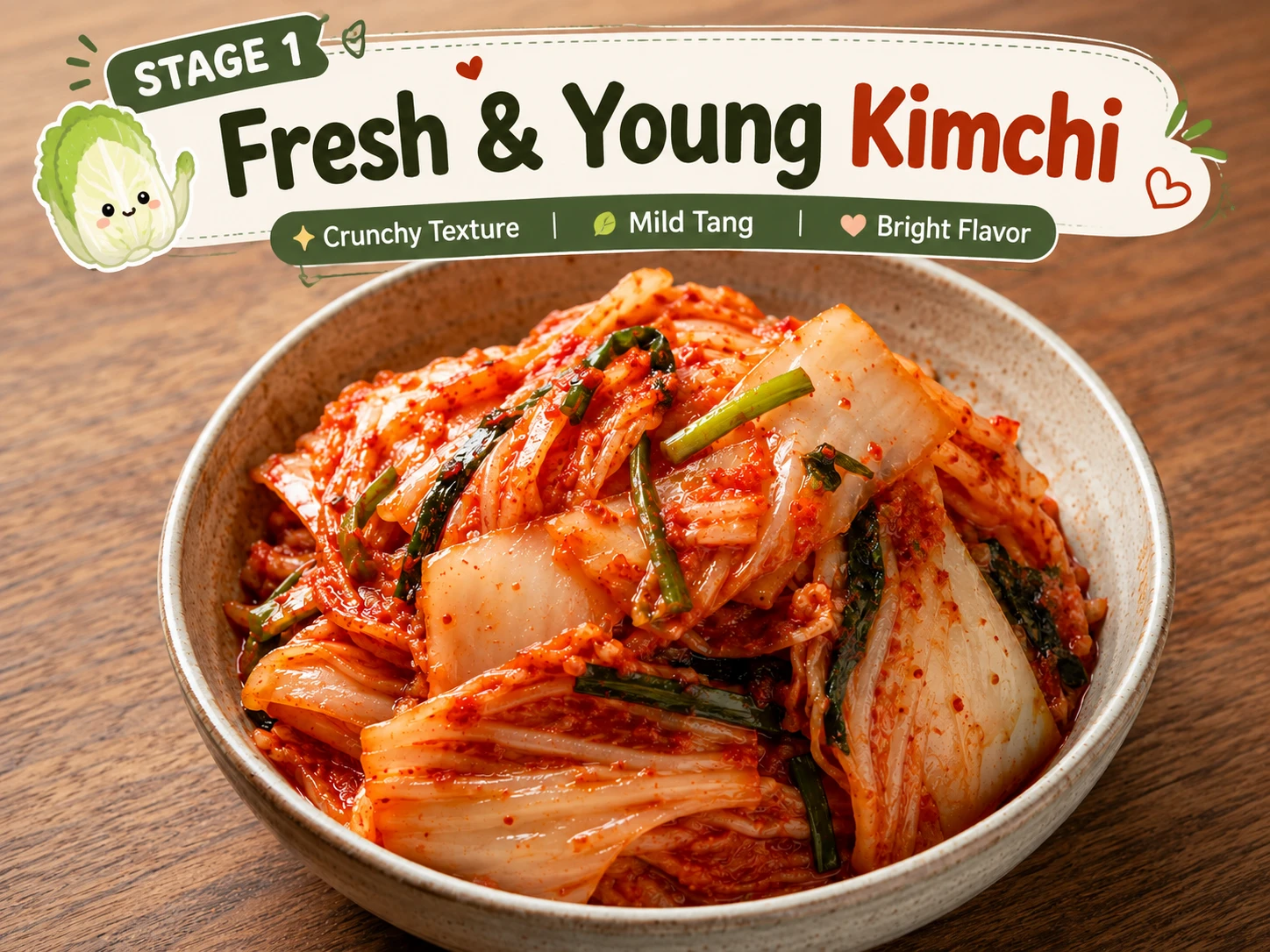
Too mild to carry any of these broths — not enough acidity or brine to build real depth.
✗ Do Not Use — broth tastes flat across every variation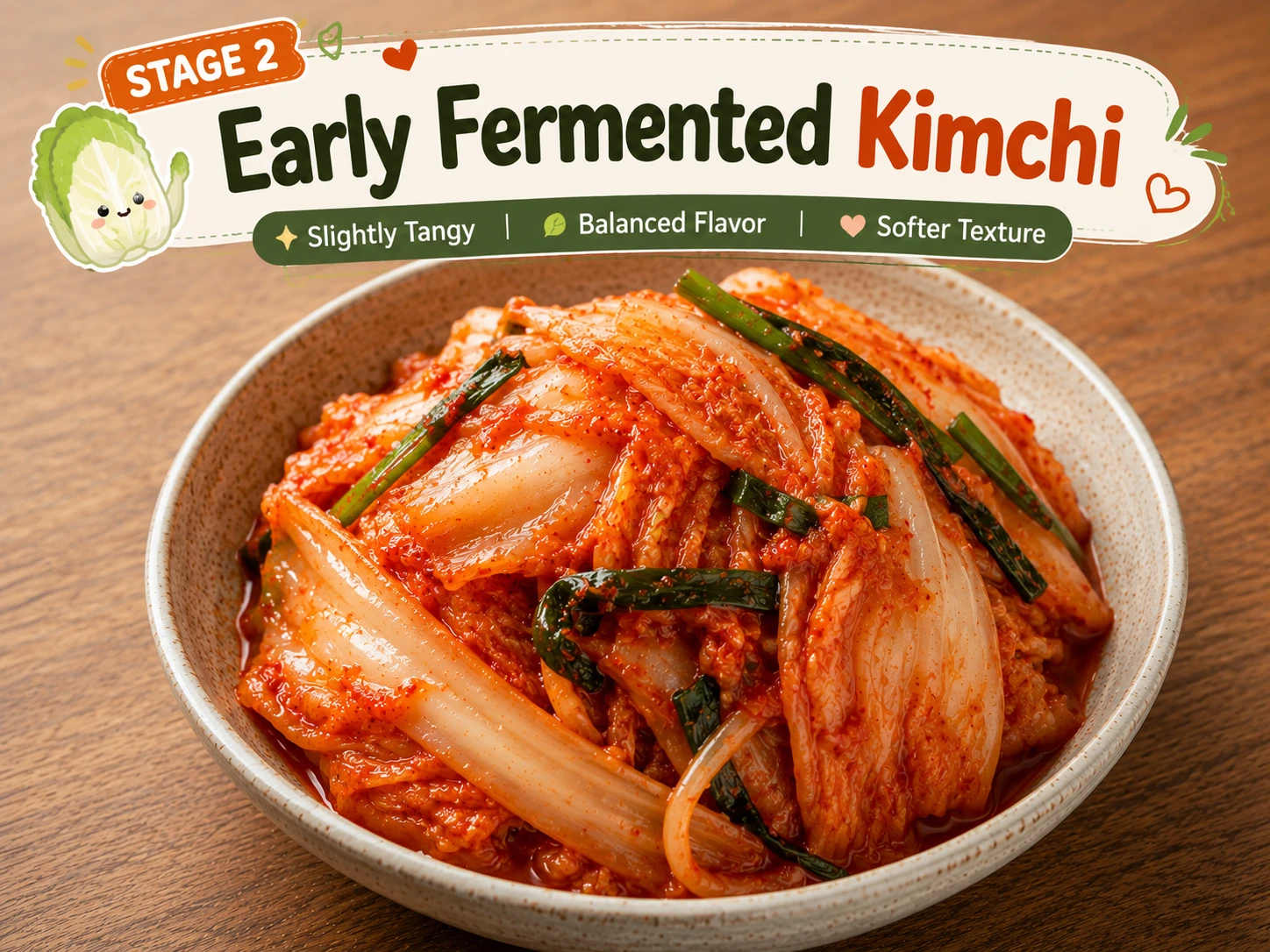
Workable in most variations with a small amount of extra gochujang to compensate for lighter brine.
△ Usable — add slightly more gochujang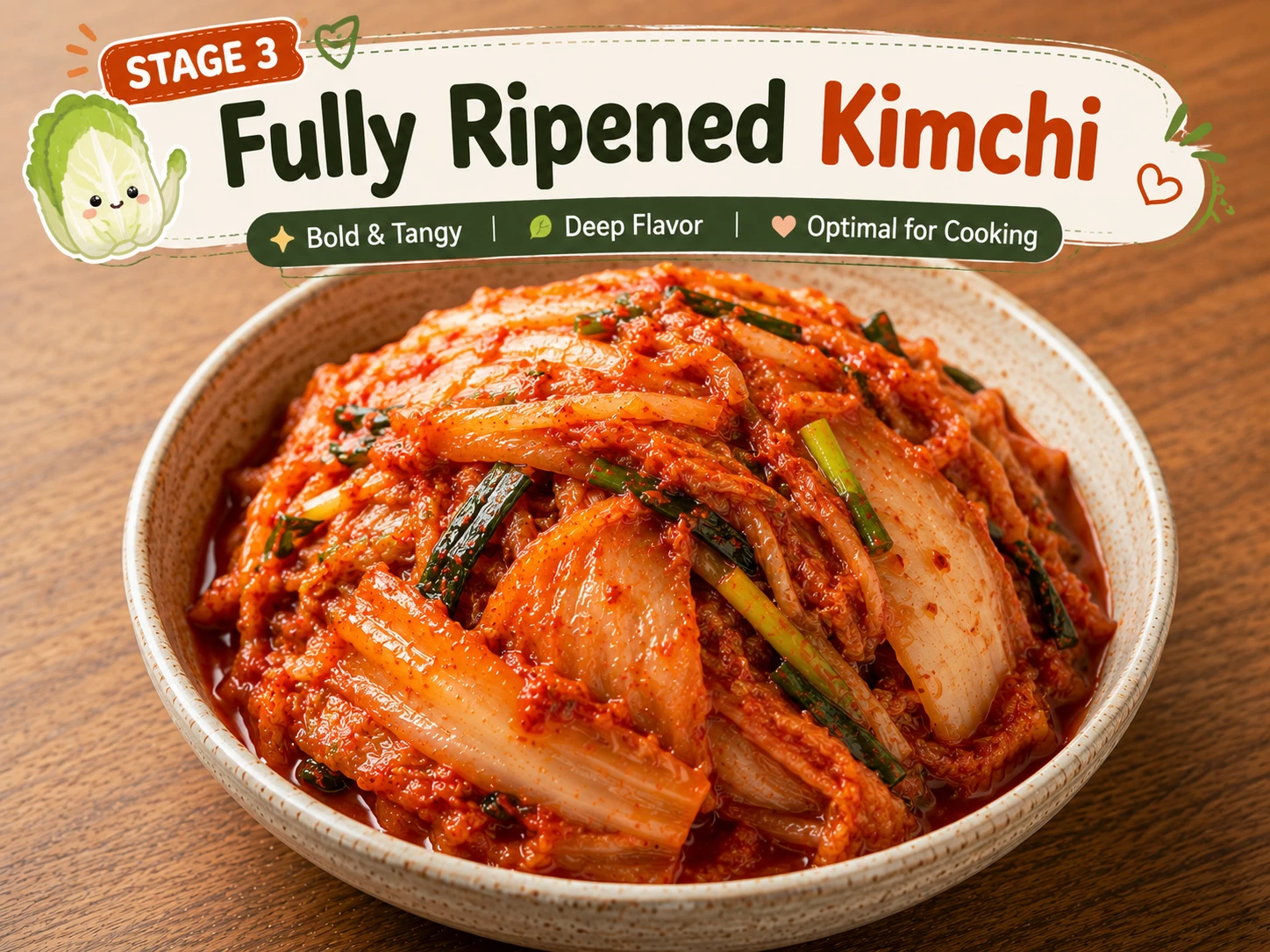
The recommended default across all 13 variations — reliable acidity and brine volume without needing any recipe adjustment.
★ Correct — works as written in every variation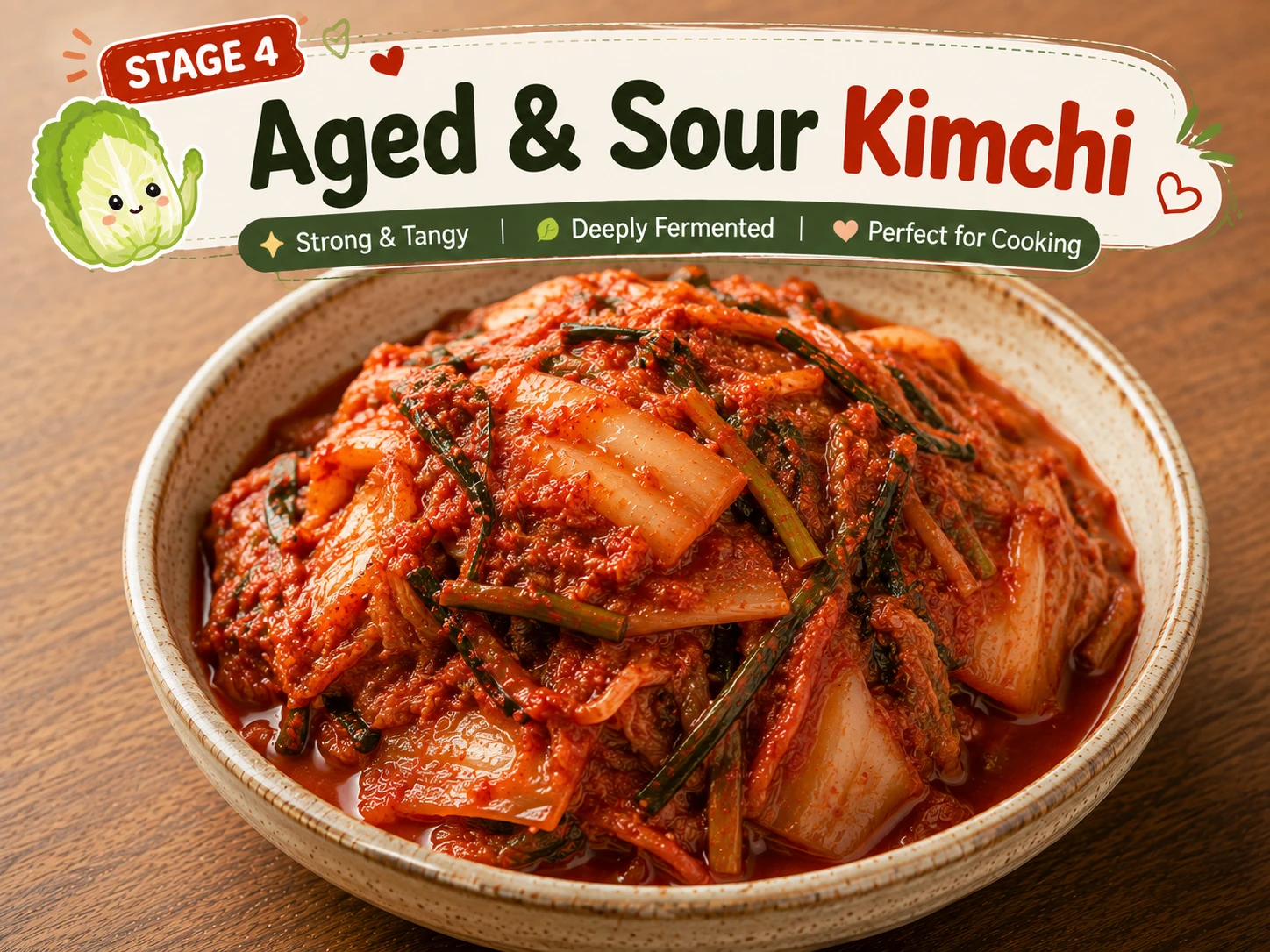
Strong flavor in every broth, but check each variation’s own guide for whether to cut back added soy sauce or sugar. See our What to Do With Sour Kimchi guide for more ways to use it up.
△ Usable — check each variation’s own adjustment notesAll 13 Kimchi Ramen Variations
Same broth foundation, 13 tested directions. Click through to any variation for its full recipe, test-kitchen results, and FAQ.


More Ways to Customize
Once you’re comfortable with the broth technique and the Noodle Bowl ratio, here are a few more directions worth trying — quick ideas, not full recipes. Swapping in tofu? See our Korean Tofu Guide for Stews for pressing and searing technique. Serving in a traditional stone pot? See our Ttukbaegi Buying Guide first. Keeping it halal or kosher? Check our Halal & Kosher Kimchi Brands guide before you shop.
What to Serve With Kimchi Ramen
These pairings work across nearly every variation on this page. See our Gochujang Mayo Sauce Guide for a dipping sauce that goes well alongside.


The General Storage Rule Across This Silo
All 13 Variations Compared
Reviewed by Dr. Sarah Mitchell RD, PhD. Figures below are per-serving as documented on each variation’s own page; some, marked with an asterisk, are estimated pending direct verification.
| Variation | Calories | Fat | Sat. Fat | Protein | Sodium |
|---|---|---|---|---|---|
| Classic | 410 | 14g | 4g | 16g | 980mg |
| Pork Belly* | 460* | 18g* | 6g* | 19g* | 1020mg* |
| Creamy* | 520* | 26g* | 12g* | 15g* | 1000mg* |
| Vegan* | 380* | 12g* | 2g* | 12g* | 850mg* |
| Cheese* | 490* | 22g* | 10g* | 19g* | 1150mg* |
| Seafood* | 440* | 12g* | 2g* | 24g* | 1300mg* |
| Egg* | 430* | 15g* | 4g* | 18g* | 1000mg* |
| Udon | 480 | 10g | 2g | 18g | 1120mg |
| Creamy Udon* | 540* | 24g* | 11g* | 17g* | 1080mg* |
| Noodle Soup | 320 | 6g | 1g | 12g | 780mg |
| Cold Noodles | 480 | 12g | 2g | 14g | 950mg |
| Stir-Fry | 540 | 24g | 7g | 17g | 1050mg |
| Noodle Bowl (example) | 480 | 18g | 5g | 20g | 980mg |
*Estimated figures pending direct verification against the live page — update once confirmed.
Essential Kimchi Ramen Ingredients & Tools
Everything you’ll need across all 13 variations, in one place. As an Amazon Associate, KimchiGuide earns from qualifying purchases made through the links below — this doesn’t change the price you pay.
As an Amazon Associate, KimchiGuide earns from qualifying purchases. Prices and availability are accurate as of the date of publishing and are subject to change.
Kimchi Ramen — 19 Questions Answered
Kimchi ramen is a Korean-style noodle soup built from a spicy, tangy broth made with sautéed aged kimchi, gochujang, garlic, and stock, served over ramen noodles with toppings like egg, scallions, and nori. This guide covers 13 tested variations of it, from a simple broth-simmered classic to a build-your-own formula.
Each variation changes one core element: the protein (pork belly, seafood), the broth style (creamy, vegan, cheese), the noodle (udon vs ramen), the temperature (cold noodles vs hot broth), or the cooking method (simmered vs dry-seared stir-fry). The final variation, Noodle Bowl, teaches a ratio so you can combine elements yourself.
Start with the Classic version if you’re new to kimchi ramen — it teaches the core broth technique every other variation builds on. If you already know the basics, jump straight to whichever variation matches what you have on hand.
Stage 3 aged kimchi (2-4 weeks fermented, pH around 4.2) works best across nearly every variation in this silo — it has enough acidity and brine to carry a broth without being overwhelmingly sour. Fresh, unfermented kimchi is too mild for most of these recipes.
Aromatics go in first to build a flavor base, then kimchi is sautéed until caramelized, then pastes are toasted briefly to activate their fermented compounds, and only then is liquid added. Skipping or reordering these steps produces a flatter, less complex broth.
Noodles cooked directly in broth release starch that thickens and dulls the broth, and the noodles themselves overcook and turn mushy by the time they reach the table. Nearly every variation in this silo cooks noodles in a separate pot and combines them with the broth only at serving.
Ramen usually refers to a more involved noodle soup, while ramyun (라면) is the Korean term for the instant or quick-cook version — bolder and more aggressively seasoned. The recipes in this silo sit between the two: homemade broths built in 15-25 minutes rather than hours.
Yes — see the dedicated Vegan Kimchi Ramen variation in this silo, which uses vegan kimchi, vegetable or kelp stock, and a tofu-based protein instead of egg or meat. See our Anchovy Kelp Stock Guide for the stock-building technique either way.
No. Kimchi jjigae is a thick, reduced stew eaten with rice on the side. Kimchi ramen is a brothier soup built around noodles as the centerpiece. See our separate Kimchi Jjigae guide for the stew version.
Most variations in this silo are written at a medium, Korean-restaurant heat level using standard amounts of gochujang and gochugaru. Every variation’s own guide includes a spice adjuster so you can scale it up or down.
Kimchi Noodle Soup is the lightest at roughly 320 calories per serving. The Vegan version is also comparatively light. The comparison table on this page lines up all 13 variations by calories, fat, and sodium so you can pick based on what matters to you. If sodium specifically is your concern, see our Low Sodium Kimchi Brands guide for which jars to start with.
Store broth and noodles separately in the fridge — noodles left sitting in broth continue absorbing liquid and turn mushy within hours. Most broths keep for 3-4 days refrigerated; reheat the broth and cook fresh noodles each time.
Fresh or dried ramen noodles are the standard choice, but udon, rice noodles, and soba all work depending on the variation — the Kimchi Noodle Bowl guide includes a tested swap matrix for exactly this.
Pork belly, soft-boiled egg, seafood, and tofu are all used across the variations in this silo. There’s no single correct choice — see the Kimchi Noodle Bowl guide for a tested ratio that works with any of them.
Yes — see the “More Ways to Customize” section on this page for quick ideas like budae jjigae-style additions, shredded chicken, extra mushrooms, or a Korean corn-and-butter topping, on top of any of the 13 tested variations.
13 fully tested variations, from a simple broth-simmered Classic through a dry-seared Stir-Fry version and a build-your-own ratio-based Noodle Bowl formula. Each has its own dedicated guide linked from this page.
Kimchi brine is the fermented liquid at the bottom of a kimchi jar. Several variations in this silo use it directly in the broth or sauce — it adds depth and authenticity that plain kimchi solids alone don’t provide.
Use the comparison table on this page, which lines up all 13 variations by time, temperature, protein focus, and what each one is best for. It’s the fastest way to match a variation to what you’re actually craving.
Sauté the kimchi until it genuinely caramelizes rather than just heating it through, and always cook noodles separately from the broth. These two habits made the biggest measurable difference across every test batch in this silo.

Ji-Young writes the full Kimchi Ramen silo at KimchiGuide, testing each variation across multiple batches before publishing.
Full Bio →
Dr. Mitchell reviews the nutrition data and health claims across every KimchiGuide recipe for accuracy.
Full Bio →
Leave a Comment
Tried one of these variations? Let us know which one you made and how it turned out.