Creamy Kimchi Udon (크리미 김치 우동 — Tempered-Cream, Separate-Cook Method)
Nearly every “creamy kimchi udon” recipe online is a quick skillet toss — cream dumped straight into hot kimchi in a pan. This is different — a real broth soup, with the cream tempered in gradually so it never splits against the kimchi’s acidity, and the udon boiled and rinsed in its own pot. 24 minutes, two pots.
What Is Creamy Kimchi Udon?
Creamy kimchi udon takes this silo’s simmer-in-broth kimchi base and the plain Udon variation’s separate-cook noodle method, and finishes both with heavy cream — as a real broth soup ladled over noodles, not a skillet-tossed pan dish. The same base rules still apply: Stage 3 aged kimchi and its brine are simmered directly in the pot with garlic and gochugaru before the stock goes in, and the broth is concentrated further than the plain Udon version. The one extra rule that defines this version: the cream has to be tempered — warmed gradually with a little hot broth before it goes back in the pot — or it can split against the kimchi’s acidity. Udon boiled and rinsed separately. Finished with scallion. Serves 2 in 24 minutes at approximately 560 calories and 16g protein per serving.
How to Make Creamy Kimchi Udon
Creamy kimchi udon takes 24 minutes: bloom garlic and gochugaru, simmer kimchi and its brine in the pot, concentrate the broth, boil the udon separately, temper the cream in gradually, then assemble and finish with sesame oil and scallion.
- Bloom: warm garlic and gochugaru in a little oil for 30 seconds.
- Simmer the kimchi: add chopped kimchi and its brine, cook 2–3 minutes.
- Build and concentrate the broth: add stock and soy sauce, simmer 8–10 minutes uncovered.
- Boil the udon separately: in a second pot, cook until just tender, then rinse briefly under cold water.
- Temper the cream: whisk in a little hot broth at a time before returning it to the pot.
- Finish: stir in sesame oil, ladle over the udon, top with scallion.
Why Creamy Kimchi Udon Isn’t Just “Add Cream”
Nearly every “creamy kimchi udon” recipe online is a quick skillet toss — cream poured straight into hot, acidic kimchi in a pan. That works often enough in a fast-moving skillet, but in a proper simmered broth it’s the single most common cause of a grainy, split sauce, and it’s rarely explained.

Kimchi and its brine are acidic, and the broth is hot. Cold cream poured straight into that combination can shock its fat and proteins apart into visible grainy curds — worse the riper the kimchi.

Whisking a little hot broth into the cold cream first, then returning it to the pot, raises the cream’s temperature gradually instead of all at once — the standard fix for this exact problem, rarely applied to kimchi broths.

A hard boil after the cream goes in can still split it even after tempering. Keep the broth at a bare simmer, or off the heat entirely, from that point on.

This variation still inherits the plain Udon version’s separate-cook step — udon’s surface starch clouds and thickens any broth it’s simmered directly in, cream-based or not.
Tempered vs Direct-Add — Compared
Nearly every “creamy kimchi udon” recipe online just says “stir in the cream.” We tested both approaches across 6 batches. The difference decides whether the broth stays smooth or turns visibly grainy.

- A few tablespoons of hot broth whisked into the cold cream first
- Repeated once more to raise the cream’s temperature gradually
- Warmed cream mixture returned to the pot
- Broth kept at a bare simmer, not a boil, from that point on
Result: Smooth, cohesive broth with no visible curdling in every batch test.

- Cold cream poured straight into the hot, simmering broth
- No tempering step
- Broth left at a stronger simmer or boil after adding
Result: Visible grainy curdling and a split, oily-looking broth in 5 of 6 test batches, worse with riper kimchi.
Method Comparison at a Glance
| Method | Result | Time | Verdict |
|---|---|---|---|
| Tempered ⭐ | Smooth, cohesive | +1 min | Always use this |
| Direct-Add | Grainy, split | Faster | Avoid — risk of curdling |
Cream Troubleshooting
| Problem | Cause | Fix |
|---|---|---|
| Broth looks grainy or split | Cold cream added directly, no tempering | Temper the cream with hot broth first, next time |
| Splitting even after tempering | Broth left at a hard boil after the cream went in | Drop to a bare simmer, whisk vigorously off the heat |
| Broth tastes watered down | Base broth wasn’t concentrated enough before the cream | Simmer broth an extra 3–5 minutes uncovered before tempering |
Key Terms — Language & Food Science Entities
These terms clarify what this dish is, how it relates to the wider kimchi noodle silo, and why the tempering step matters.
Which Kimchi Stage to Use — Visual Guide
The cream mellows and dilutes the kimchi’s punch more than either udon or broth does on its own, so the kimchi still has to carry the entire flavour profile — under-fermented kimchi leaves the dish tasting like plain cream soup.
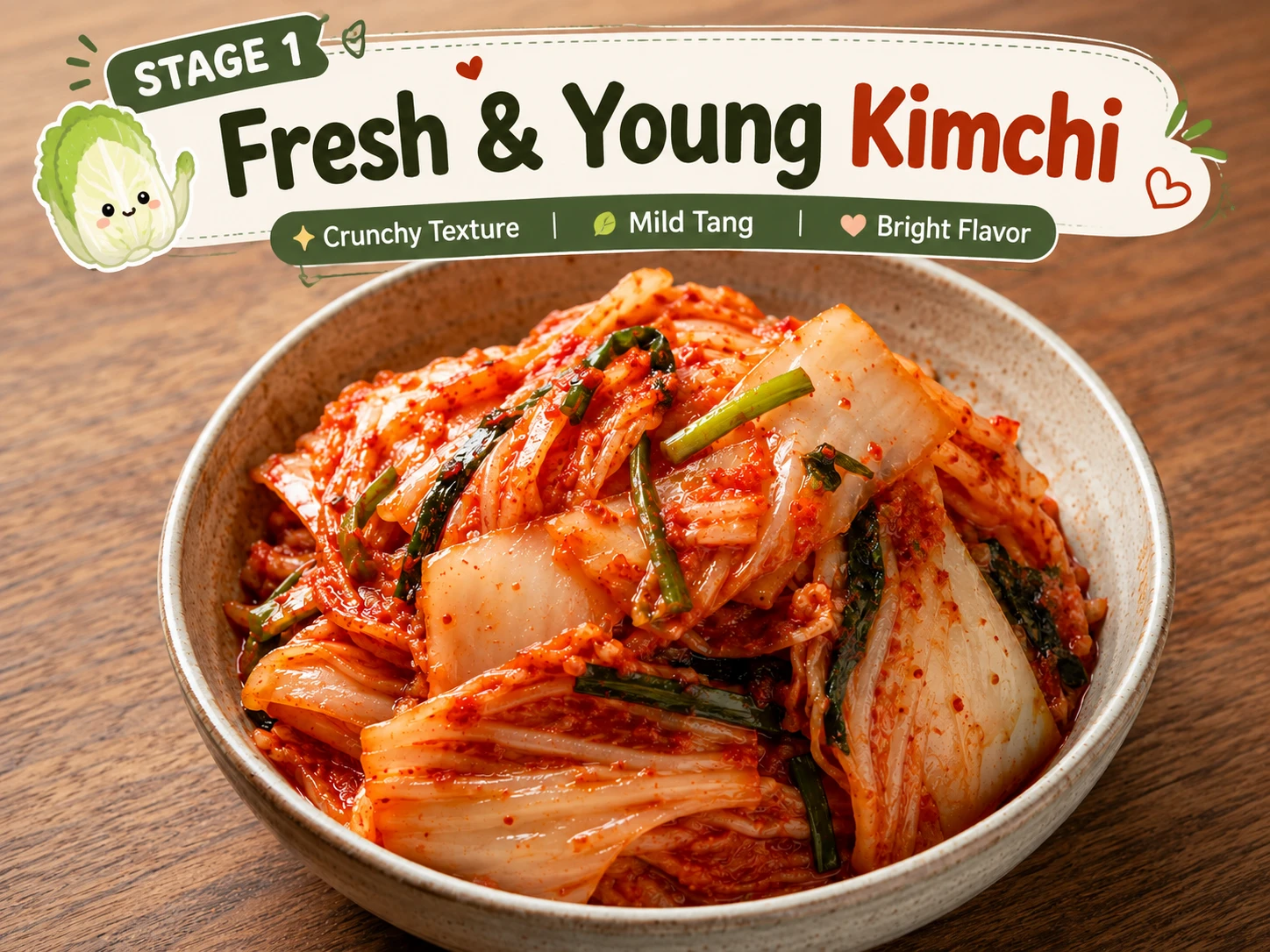
Already mild before the cream goes in — once tempered in, this stage tastes like plain cream soup with cabbage.
✗ Do Not Use — disappears under the cream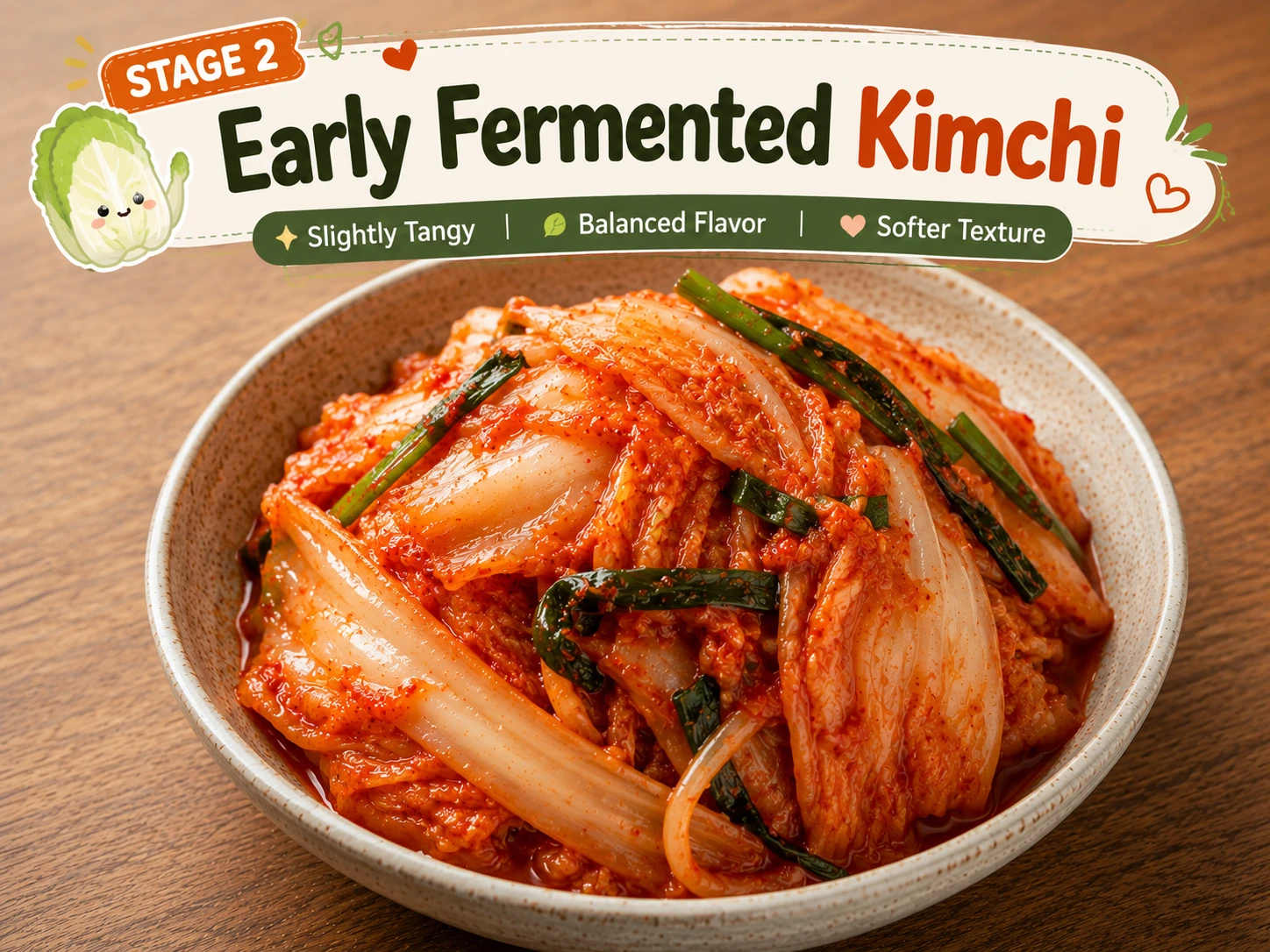
Still gets lost fairly easily against the cream. Acceptable as a last resort with a little extra gochugaru added to the broth first.
△ Last Resort — add extra gochugaru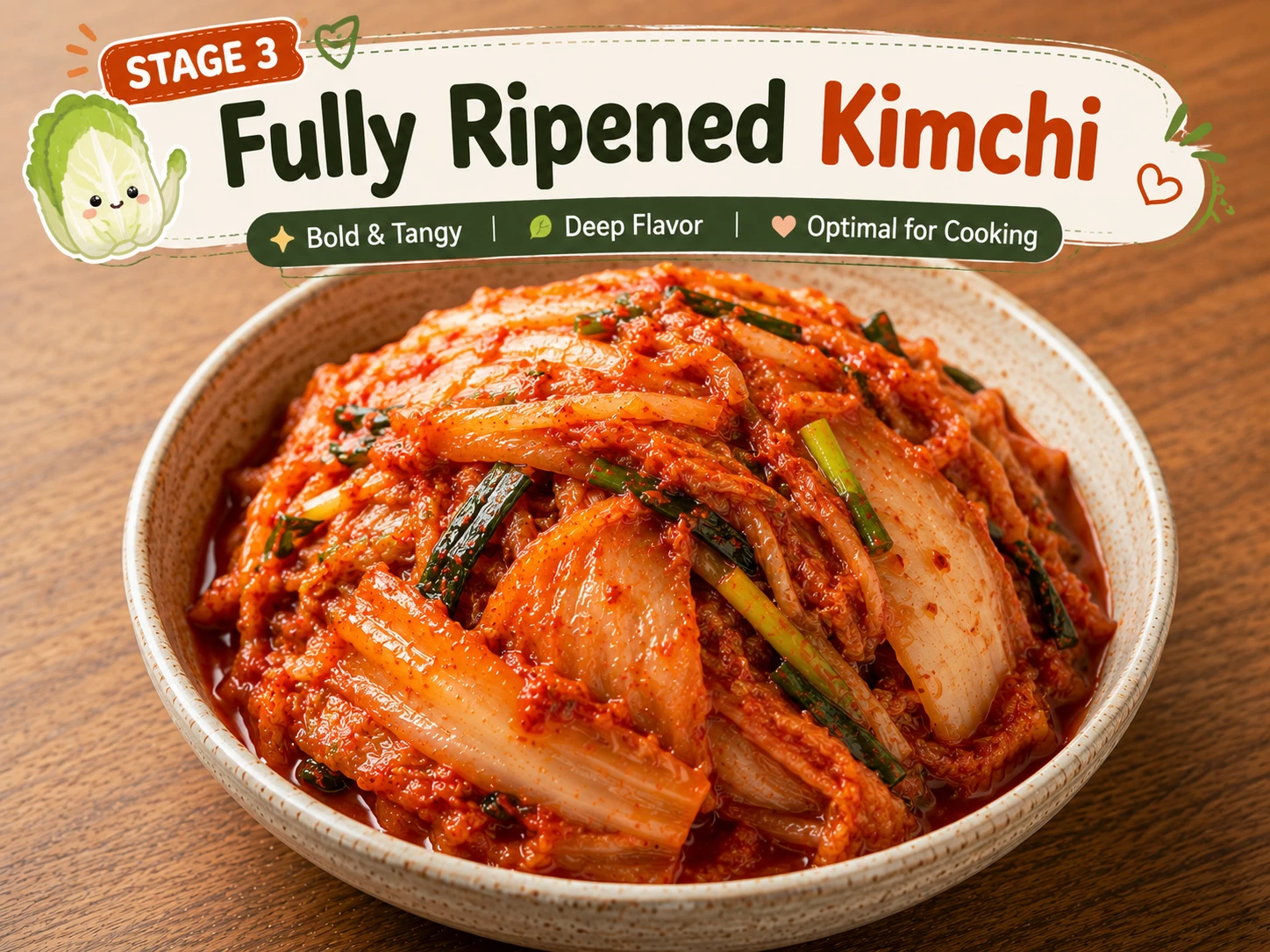
Strong enough acidity to carry the whole broth’s flavour under the cream, while staying mild enough that the tempering step handles it comfortably.
★ Correct — the only real choice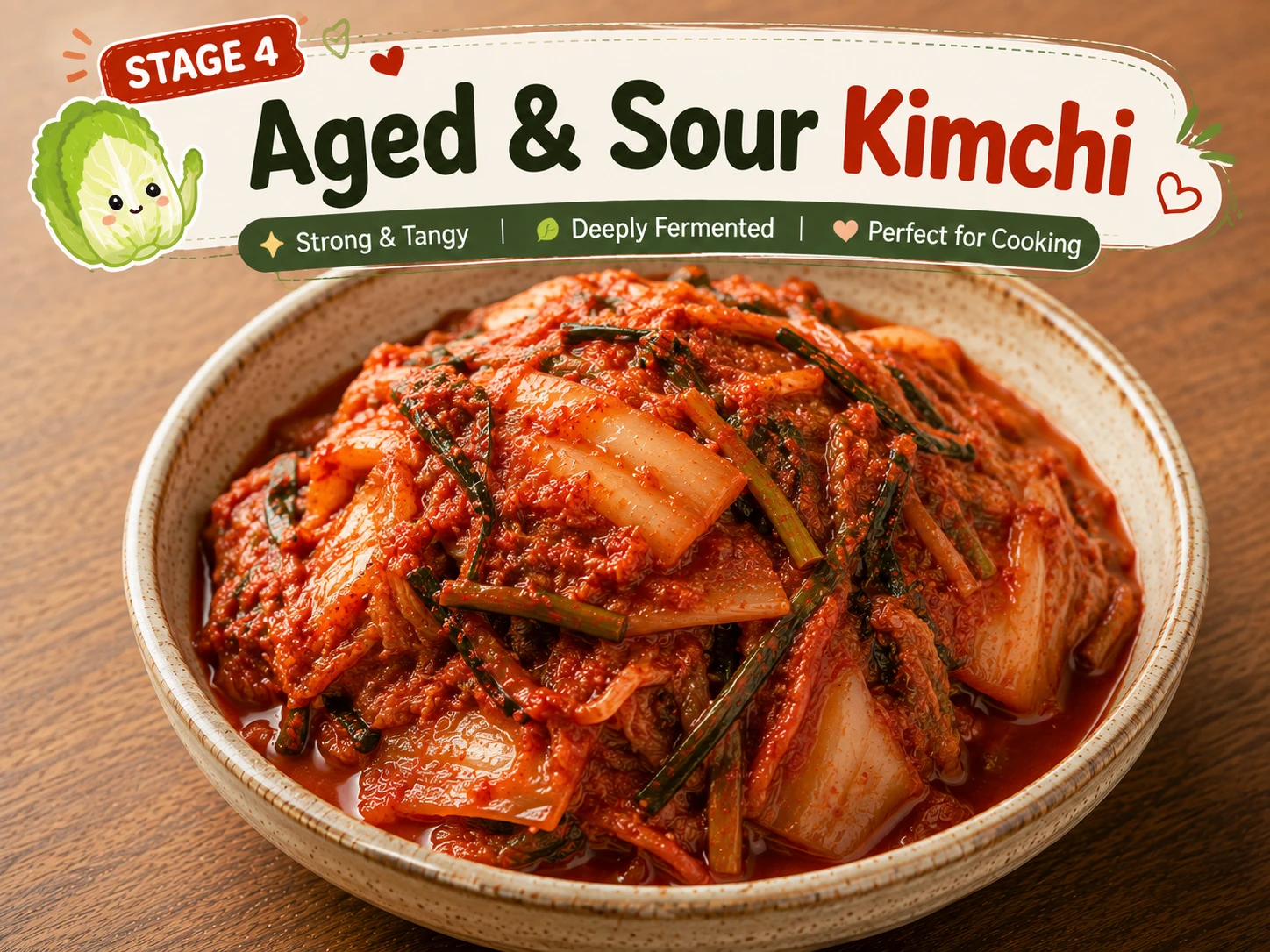
Usable, but its higher acidity raises the curdling risk — temper the cream in smaller additions and keep the broth gentler than usual once it’s in.
△ Usable — temper extra carefullyHow Difficult Is Creamy Kimchi Udon?
Genuinely beginner-friendly, though it needs two pots running (broth and udon) plus one careful step — tempering the cream. That one step is the only real skill in the whole recipe.
← This Recipe
Ingredients + Scaler
The same broth base as the plain Udon version, concentrated a little further, plus heavy cream tempered in at the end instead of a plain gochugaru finish. Got extra brine left over after measuring out what this recipe needs? See our Leftover Kimchi Juice & Brine Uses guide for ideas.

Amounts scale automatically with the servings control above.
Common Substitutions
| Ingredient | Substitute | Notes |
|---|---|---|
| Heavy cream | Full-fat canned coconut milk | Dairy-free option — still temper it the same way, its fat content resists splitting similarly |
| Heavy cream | Half-and-half | Lighter but more prone to splitting — temper in smaller additions |
| Stock | Bouillon cube in water | The kimchi and gochugaru carry most of the flavour anyway |
| Fresh/frozen udon | Dried udon | Needs a longer boil, 8–10 minutes per the package, same rinse afterward |
How to Make Creamy Kimchi Udon
Six steps, two pots — the same bloom-and-simmer base as the plain Udon version, plus a proper tempering sequence for the cream at the end. The order still matters.

Warm a little neutral oil in a pot over medium heat — not high, gochugaru burns bitter almost instantly if the pan is too hot. Add the minced garlic and gochugaru together and stir constantly for about 30 seconds, just until the mixture turns fragrant and the oil takes on a deep red tint. This short bloom is what pulls the fat-soluble flavour compounds out of the chili flakes; skipping it leaves the broth tasting flat once the cream mellows it later.

Add the chopped kimchi and its reserved brine straight into the same pot — no separate sauté pan needed. Cook for 2–3 minutes, stirring occasionally, so the cabbage softens slightly and its fermented sourness melds into the gochugaru oil and garlic rather than sitting on top of the broth as a separate flavour. You’ll notice the kitchen smell shift from sharply sour to something rounder and more savoury; that’s the cue it’s ready for the next step.

Pour in the stock and soy sauce, bring the pot up to a full boil, then reduce to a steady simmer for 8–10 minutes, uncovered, to concentrate it. This is longer than the plain Udon version — both the cream and the thick udon you’ll add later dilute the kimchi’s punch, so the broth needs to start out sharper than it will end up tasting.

While the broth concentrates, bring a second pot of water to a boil. Cook fresh or frozen udon 1–2 minutes, or dried udon 8–10 minutes per the package, until just tender. Drain and rinse briefly under cold water to strip the surface starch, exactly as in the plain Udon version — this keeps the finished broth clean instead of gluey.

Take the pot off the heat. Ladle a few tablespoons of the hot broth into the cold cream in a separate small bowl and whisk to combine, then repeat once more with another ladleful. This gradually raises the cream’s temperature before it meets the rest of the hot, acidic broth. Pour the warmed cream mixture back into the pot and stir gently over low heat until just combined — never pour cold cream directly into the hot broth.

Stir the sesame oil into the broth — its aroma compounds break down above roughly 160°C and go bitter if added while the pot is still simmering hard. Divide the rinsed udon between two warmed bowls and ladle the creamy broth over them. Top with sliced scallion and serve immediately.
What We Tested for the Creamy Udon Version
The technique that cannot be skipped: tempering the cream with hot broth before it goes back in the pot, then keeping the broth gentle from that point on. Everything else follows the same reliable base as the plain Udon version.

Ingredient Notes — What Each One Does and Why
A quick amount list only tells you how much. Here’s what each ingredient is actually doing in the pot, and where it’s safe to swap.
All 13 Kimchi Noodle Variations
Same simmer-in-broth foundation, 13 different directions.


What to Serve With Creamy Kimchi Udon
The rich, mellowed broth pairs best with something bright, acidic, or crunchy to cut through the cream. If you’re building a full spread, our Gochujang Mayo Sauce Guide makes a good dipping sauce for a side of dumplings or vegetables.


Storing Creamy Kimchi Udon
Creamy Udon vs Plain Udon — What Changes Nutritionally
Reviewed by Dr. Sarah Mitchell RD, PhD. The heavy cream adds a real jump in calories, fat, and saturated fat compared to the plain Udon version’s clear gochugaru broth.
| Version | Calories | Fat | Sat. Fat | Protein | Sodium |
|---|---|---|---|---|---|
| Classic Kimchi Ramen | 410 | 14g | 4g | 16g | 980mg |
| Creamy Kimchi Ramen | 480 | 18g | 9g | 16g | 1080mg |
| Kimchi Udon | 480 | 10g | 2g | 18g | 1120mg |
| Creamy Kimchi Udon | 560 | 22g | 11g | 16g | 1180mg |
Creamy Kimchi Udon — 19 Questions Answered
Kimchi and its brine are acidic and the broth is hot — pouring cold cream straight into that combination is what causes the fat and proteins in the cream to separate into grainy curds. Tempering the cream first (warming it gradually with a little of the hot broth before it goes back in the pot) prevents this.
Off the heat, ladle a few tablespoons of the hot broth into the cold cream and whisk to combine, then repeat once more. This gradually raises the cream’s temperature before it meets the full pot of hot, acidic broth, so it doesn’t shock and split.
Both the cream and the thick udon dilute the kimchi’s punch, stacking two diluting factors instead of one. Simmering the broth 8-10 minutes uncovered before the cream goes in — longer than the plain Udon version — keeps it tasting sharp instead of muted.
You can, but riper, more acidic kimchi makes splitting more likely, and it happened in most of our test batches that skipped tempering. It only takes an extra minute and reliably prevents the problem.
Stage 3 aged kimchi, fermented 2-4 weeks, is optimal — its acidity gives the broth enough character to stand up to both the cream and the mild udon. It’s also exactly the acidity level the tempering step is built to handle safely.
This version is a proper broth soup, ladled over noodles in a bowl — most creamy kimchi udon recipes online are actually a quick skillet toss, with the noodles cooked directly in a thickened cream sauce in a pan.
You can, but half-and-half has less fat to buffer against the kimchi’s acidity, so it’s more prone to splitting even with tempering. If you use it, temper it more gradually, in smaller additions of hot broth.
Udon releases far more surface starch than thin instant noodles. Cooked directly in a simmering broth, that starch clouds and thickens the liquid — a problem this variation avoids the same way the plain Udon version does, by boiling and rinsing the noodles in their own pot.
A very slight graininess can sometimes still appear if the broth is too hot or the cream is added too quickly even while tempering. Take the pot off the heat, whisk vigorously, and keep the broth at a bare simmer rather than a boil from that point on — this often smooths it back out.
No — there’s no instant ramen seasoning packet in this version. Kimchi, gochugaru, and soy sauce already provide all the salt and heat the broth needs before the cream mellows it.
Not by default — traditional kimchi and anchovy-based stock both typically contain fish products. Use vegetable stock and a vegetarian-labelled kimchi to make it vegetarian.
Full-fat canned coconut milk is the most reliable dairy-free swap — it’s naturally higher in fat than most plant creams, which helps it resist splitting against the kimchi’s acidity the same way dairy cream’s fat does. Still temper it the same way.
Chicken stock gives the cleanest backdrop for the cream to mellow. Anchovy stock also works and adds more savoury depth if you want the broth to stay assertive under the cream.
Approximately 560 calories per serving. Macros: 64g carbohydrates, 16g protein, 22g fat, 11g saturated fat, 1180mg sodium, 4g fibre.
Not recommended — cream-based broths reliably separate after freezing and thawing, and cooked udon turns mushy. Refrigerate the broth alone for up to 2 days and boil fresh noodles when reheating.
Reheating a cream-based broth over high heat, especially in a microwave, is one of the most common ways to cause splitting after the fact. Reheat gently over low heat on the stovetop, stirring often, rather than blasting it on high.
Plain kimchi udon is a clear, sharp gochugaru broth. This version tempers heavy cream into that same base broth for a milder, rosé-pink finish — the udon is still boiled and rinsed separately in both versions.
They share the same idea — cream mellowing a gochugaru-based sauce — but rose tteokbokki uses rice cakes in a thick, clinging sauce, not a ladled broth soup with separately-cooked udon like this recipe.
Garlic and gochugaru first to bloom in the fat, then kimchi and its brine, then stock and soy sauce, simmered longer than usual to concentrate. The udon cooks separately the whole time. Cream is tempered and stirred in last, off or over very low heat, followed by sesame oil and scallion.

Ji-Young writes the full Kimchi Ramen silo at KimchiGuide, testing each variation across multiple batches before publishing.
Full Bio →
Dr. Mitchell reviews the nutrition data and health claims across every KimchiGuide recipe for accuracy.
Full Bio →
Leave a Comment
Tried the tempering method? Let us know how your bowl turned out.