KimchiGuide› Kimchi Recipes› Kimchi Ramen› Vegan Version
🍜 6 Batches Tested · Double-Umami Stock Method · Variation 4 of 13

Vegan Kimchi Ramen (비건 김치라면 — Double-Umami Stock Method)

The problem with most vegan kimchi ramen: swap out the meat and the broth tastes thin. The fix is a kelp-and-shiitake stock that layers two separate umami compounds — glutamate and guanylate — into a broth that doesn’t miss the meat at all. Same tested simmer-in-broth kimchi base, fully plant-based. 25 minutes, one pot plus a quick stock.

25m
Total
Easy
Level
14g
Protein
380
Calories
2
Serves
📅 Published: · ✅ Reviewed: Dr. Sarah Mitchell RD, PhD
📖
This is variation 4 of 13 — Vegan Version Full guide with all 13 kimchi noodle variations: Kimchi Ramen Silo Guide →  ·  Kimchi Fried Rice Silo →  ·  All Kimchi Recipes →
⚡ Quick Answer

What Is Vegan Kimchi Ramen?

Vegan kimchi ramen is our classic simmer-in-broth kimchi ramen made fully plant-based: vegan-labelled kimchi (no fish sauce or shrimp paste) replaces regular kimchi, and a kelp-and-shiitake stock replaces the meat or anchovy stock. This double-umami stock layers glutamate from the kelp with guanylate from the dried shiitake — the same synergy that makes many savoury broths work, built here with no animal products at all. Stage 3 aged kimchi and its brine still simmer directly in the pot exactly as in the classic version. Finished with silken tofu instead of egg. Serves 2 in 25 minutes at approximately 380 calories and 14g protein per serving.

Quick Steps

How to Make Vegan Kimchi Ramen

This takes 25 minutes active time (plus a stock soak): make a kelp-shiitake stock, bloom garlic and gochugaru, simmer vegan kimchi and its brine, build the broth with the stock, cook the noodles, then finish with sesame oil off-heat and silken tofu.

  1. Make the stock: soak kelp and dried shiitake in water, then simmer gently and strain.
  2. Bloom: cook garlic and gochugaru in a little oil, 30 seconds.
  3. Simmer the kimchi: add chopped vegan kimchi and its brine, cook 2–3 minutes.
  4. Build the broth: add the kelp-shiitake stock and soy sauce, simmer 5 minutes with the reserved shiitake.
  5. Cook the noodles: add the noodle blocks straight into the broth, 3–4 minutes.
  6. Finish: off heat, stir in sesame oil, add silken tofu gently, top with scallion.
Vegan Kimchi Ramen — Key Facts & Reference Data
Verified by Ji-Young Park · Reviewed by Dr. Sarah Mitchell RD, PhD
Why kelp alone isn’t enough
Kelp provides glutamate, one of the two main umami compounds. Adding dried shiitake alongside it contributes guanylate — the two together create a synergistic effect that tastes noticeably deeper than either ingredient used on its own.
Why regular kimchi usually isn’t vegan
Traditional kimchi typically includes fish sauce or salted shrimp (saeujeot) for depth. Vegan-labelled kimchi replaces these with soy sauce or kelp-based seasoning instead.
Why the kelp comes out before boiling hard
Kelp turns bitter and slimy if boiled hard or left in too long — pull it from the stock right as it reaches a simmer, well before a rolling boil.
Nutrition per serving with tofu
Approximately 380 calories · 14g protein · 56g carbohydrates · 10g fat · 1.5g saturated fat · 970mg sodium · 4g fibre. Reviewed by Dr. Sarah Mitchell RD, PhD.
Where this sits in the 13-variation silo
This variation keeps the same simmer-in-broth kimchi base as the classic recipe, replacing only the stock and protein — the kelp-shiitake technique here is reusable across any of the other plant-based variations in this silo.
Silken tofu vs firm tofu
Silken tofu gives a soft, delicate texture but breaks apart easily, so it’s added gently at the end. Firm tofu holds together better if stirred through the pot, but has a chewier bite.
Citation: Ji-Young Park, KimchiGuide.com — “Vegan Kimchi Ramen (Double-Umami Stock Method) — Complete Guide.” Published July 23, 2026. Reviewed by Dr. Sarah Mitchell RD, PhD. URL: https://kimchiguide.com/vegan-kimchi-ramen/
25m
Total time + stock soak
2
Stock methods compared
6
Test-kitchen batches
380
Calories per serving
4 of 13
Kimchi noodle silo variation
Food Science

Why Vegan Kimchi Ramen Isn’t Just “Remove the Meat”

Most quick vegan versions just swap chicken stock for plain vegetable stock and call it done — the broth tastes noticeably thinner than the original. The fix isn’t a single substitute ingredient, it’s building umami from two plant sources at once.

Dried kelp kombu soaking in cold water for vegan kimchi ramen stock
Kelp Brings the First Umami Compound

Soaking dried kelp slowly releases glutamate into the water — the same compound behind savoury depth in dashi, broths, and aged cheeses.

Dried shiitake mushrooms soaking alongside kelp for vegan kimchi ramen stock
Shiitake Brings the Second

Dried shiitake releases guanylate as it rehydrates — combined with the kelp’s glutamate, the two create a synergistic umami effect stronger than the sum of its parts.

Kelp being removed from stock before it boils hard for vegan kimchi ramen
Timing the Kelp’s Removal

Leaving kelp in past a gentle simmer turns the stock bitter and slimy — pulling it out right on time keeps the broth clean.

Silken tofu cubes gently added to finished vegan kimchi ramen bowl
Tofu Takes the Egg’s Role

Silken tofu, added gently at the very end, gives the same soft, rounding contrast that a soft-boiled egg provides in the other variations.

The Core Technique Decision

Double-Umami Stock vs Vegetable-Only Stock — Compared

Nearly every “vegan kimchi ramen” recipe online just says “use vegetable stock.” We tested both approaches across 6 batches. The difference decides whether the broth stands on its own or tastes noticeably thin.

Double umami kelp and shiitake stock method for vegan kimchi ramen
⭐ Recommended — Always Use This
Double-Umami Stock Method
  • Soak dried kelp and dried shiitake together in cold water
  • Simmer gently, remove the kelp before a hard boil
  • Use the reserved shiitake, sliced, back in the broth
  • Build the kimchi broth on top of this stock

Result: A broth with real savoury depth in every batch test — no one missed the meat.

Plain vegetable stock only method comparison for vegan kimchi ramen
✗ Not Recommended
Vegetable-Only Method
  • Plain vegetable stock or bouillon used as-is
  • No kelp, no dried shiitake
  • Relying entirely on the kimchi and gochugaru for depth

Result: Noticeably thinner broth in every taste test — drinkable, but tasters consistently described it as missing something.

Method Comparison at a Glance

MethodBroth DepthExtra TimeVerdict
Double-Umami ⭐High+20 min soakAlways use this
Vegetable-OnlyThinNoneAvoid — noticeably flatter
See The Difference

Drag to Compare the Two Methods

A visual side-by-side of the two techniques tested above — drag the handle to see the difference for yourself.

Vegetable-Only (Thin) Double-Umami (Deep) Before comparison image After comparison image

Drag the slider (or tap anywhere on the image) to compare.

Key Terms Explained

Key Terms — Language & Food Science Entities

These terms clarify what this dish is, how it relates to the wider kimchi noodle silo, and why the stock-building steps matter.

Essential Terminology — 비건 김치라면 (Bigeon Kimchi Ramyeon)
Ramyeon / 라면
The Korean word for instant or ramen-style noodles — bigeon kimchi ramyeon is the plant-based subcategory within this silo.
Dashima / 다시마
Korean dried kelp (kombu), soaked or simmered to release glutamate as the base of many Korean stocks, vegan and otherwise.
Umami Synergy
The phenomenon where combining a glutamate source (like kelp) with a guanylate or inosinate source (like dried shiitake) produces a savoury effect stronger than either alone.
Saeujeot / 새우젓
Salted fermented shrimp traditionally used to season kimchi — the ingredient vegan kimchi specifically omits or replaces.
Kimchi Guk-mul (Brine)
The reserved liquid from a jar of fermenting kimchi, still simmered into the broth here exactly as in the classic version.
Sundubu / 순두부
Korean silken tofu, prized for its soft, custard-like texture — used here in place of the soft-boiled egg found in most of the other variations.
The Most Critical Variable

Which Kimchi Stage to Use — Visual Guide

With no meat-based umami to fall back on, the kimchi’s own fermentation depth carries even more of the final flavour here.
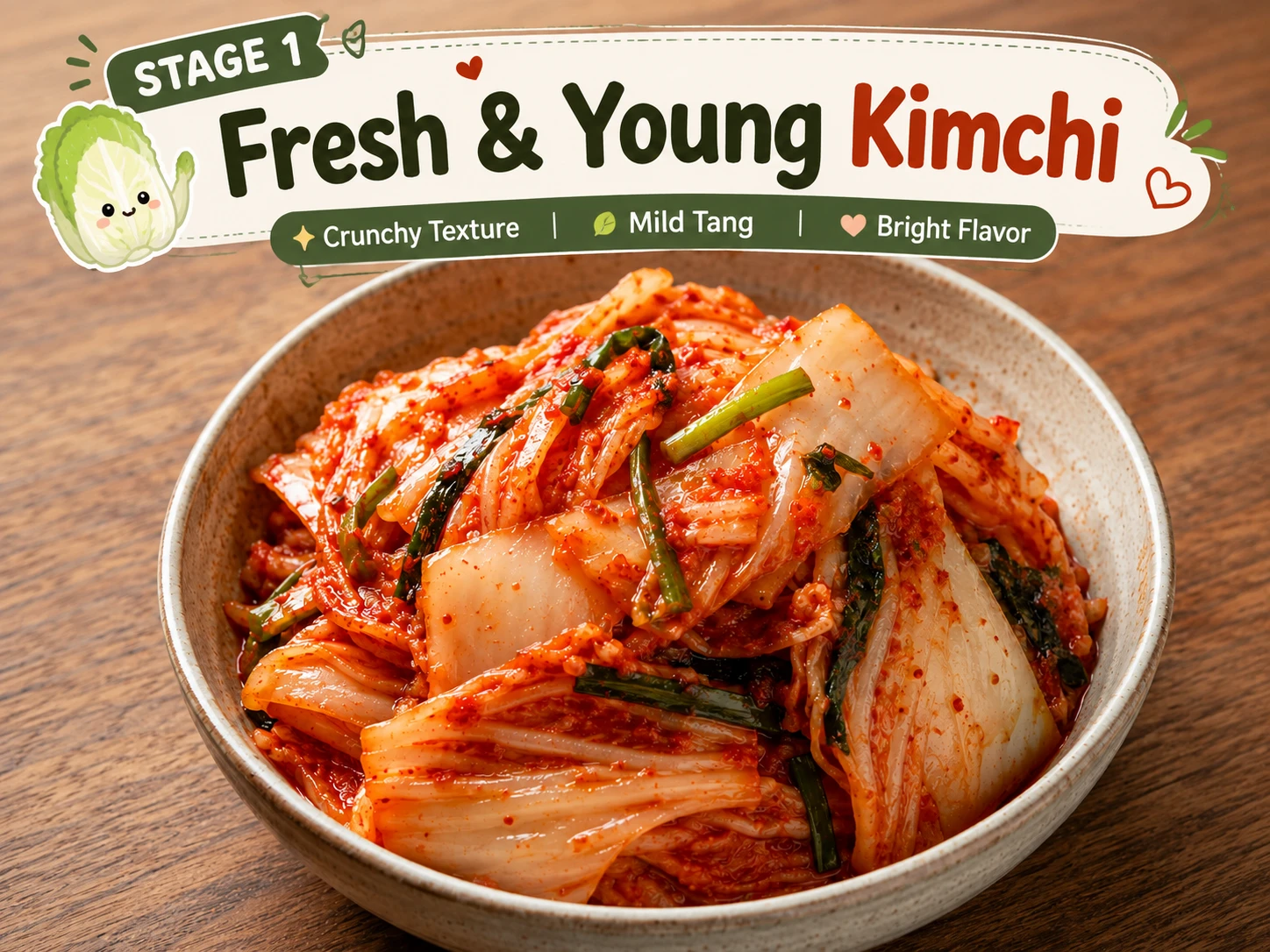
Kimchi Fermentation Stage 1 – Fresh, Young Kimchi, too mild for vegan kimchi ramen broth
Stage 1 — Fresh (0–3 days)
Fresh Kimchi
pH ≈ 5.5 · No lactic acid developed

Without meat-based umami to lean on, this stage leaves the broth tasting flat and under-seasoned.

✗ Do Not Use — flat broth
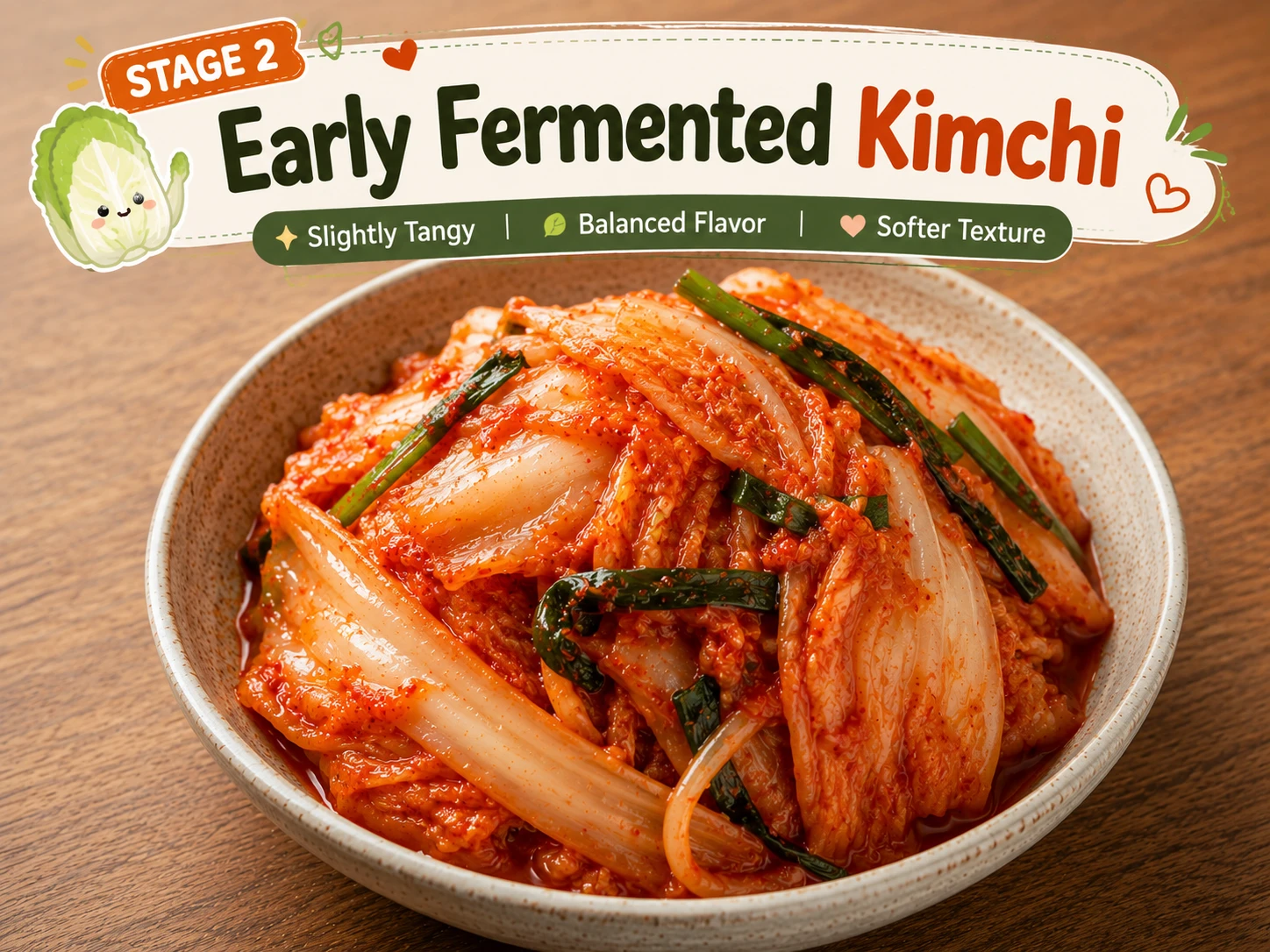
Kimchi Fermentation Stage 2 – Early Fermented Kimchi, acceptable for vegan kimchi ramen with rice vinegar adjustment
Stage 2 — Young (1–2 weeks)
Young Kimchi
pH ≈ 4.8 · Lactic acid building

Some acidity, but still relies heavily on the kelp-shiitake stock to carry the bowl. Acceptable as a last resort with a splash of rice vinegar.

△ Last Resort — add rice vinegar
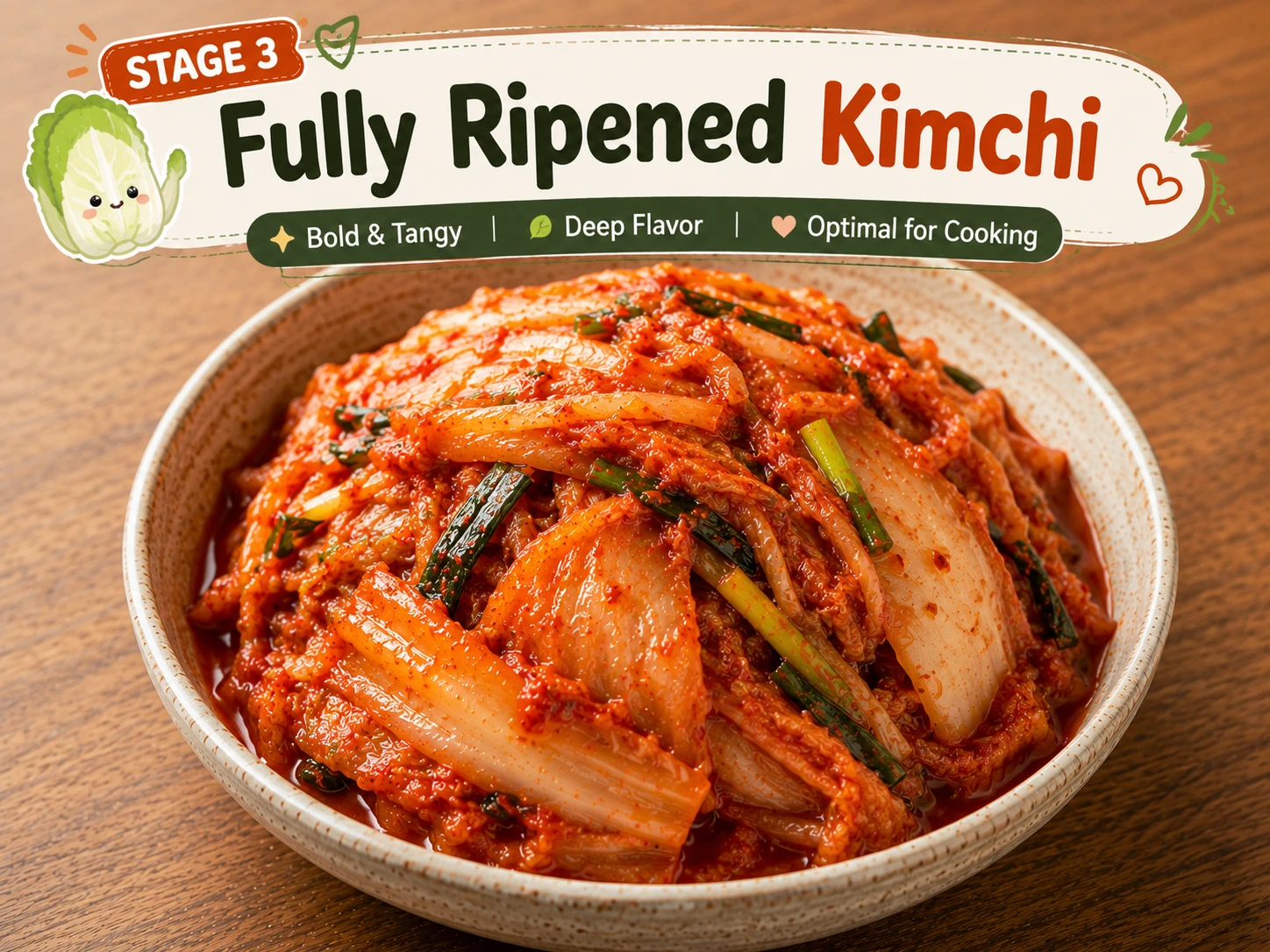
⭐ Use This
Kimchi Fermentation Stage 3 – Fully Ripened Kimchi, perfect for vegan kimchi ramen broth
Stage 3 — Ripe ⭐
Ripe Kimchi (2–4 weeks)
pH ≈ 4.2 · Peak Lactobacillus kimchii

Full lactic acid depth pairs with the kelp-shiitake stock to build a broth that doesn’t miss the meat at all.

★ Correct — the only real choice
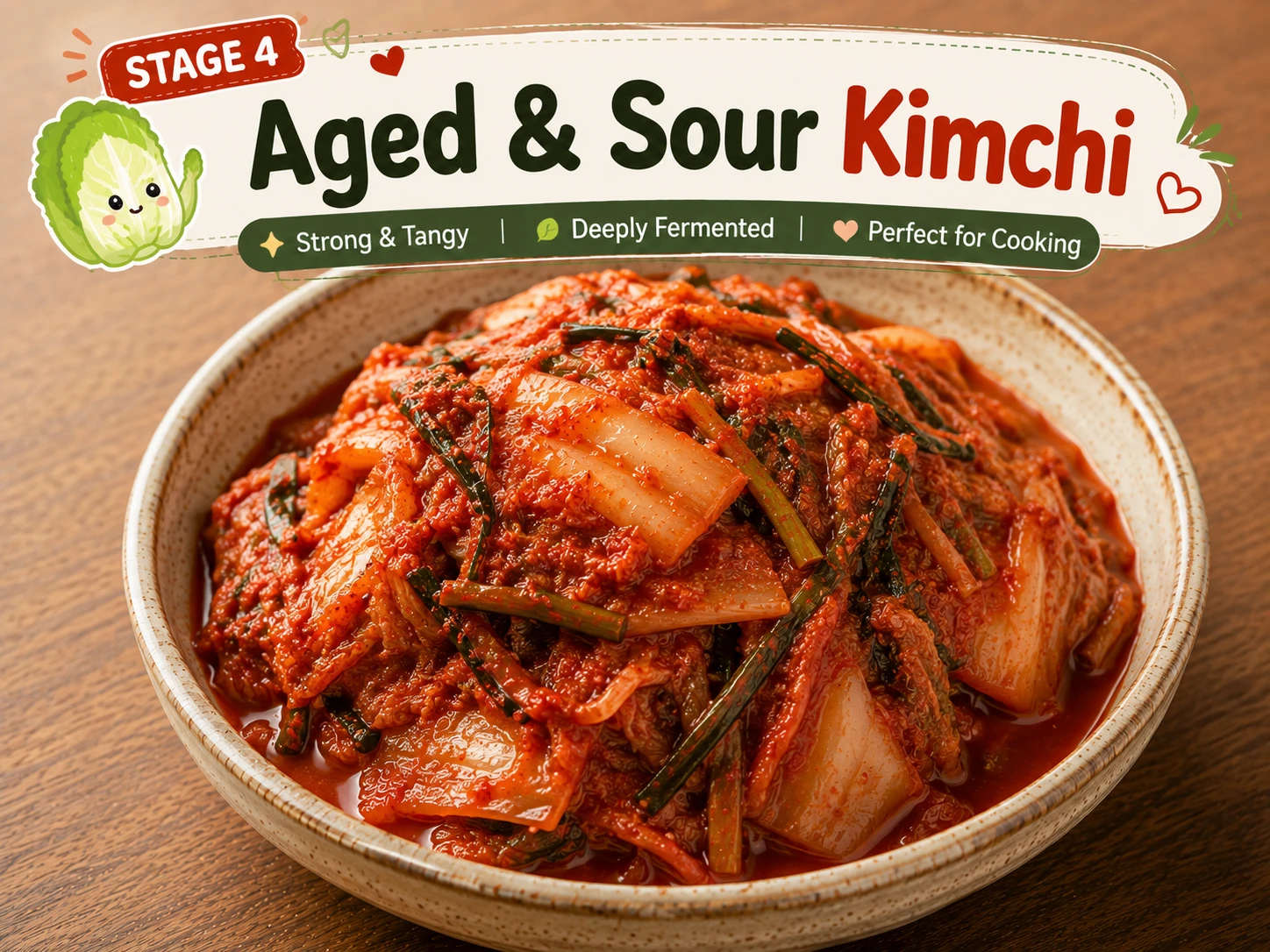
Kimchi Fermentation Stage 4 – Aged, Sour Kimchi, usable in vegan kimchi ramen with brine reduction
Stage 4 — Over-Ripe (4+ weeks)
Over-Ripe Kimchi
pH ≈ 3.8 · Very sour, soft texture

Very sour. Usable if you reduce the reserved brine slightly and add a touch of sugar to balance it.

△ Usable — reduce brine + add sugar
Quick check: Smell your kimchi jar. Pleasant, vinegary-sour aroma with visible bubbles in the brine = Stage 3. For the full breakdown of all four stages, see our Kimchi Fermentation Stages Guide.
Skill Level Assessment

How Difficult Is Vegan Kimchi Ramen?

Still genuinely beginner-friendly — the one extra step versus the classic version is planning ahead for the stock soak.

🌱
Beginner
✅
Easy
← This Recipe
🍳
Intermediate
🔥
Advanced
👨‍🍳
Expert
🔪 Rough chopping only — no precision needed 🍲 One pot, simmer and stir ⏱ 25 minutes active, plus a stock soak 🥢 Adding silken tofu gently — no real skill, just care
💡 The only real planningSoak the kelp and dried shiitake at least 20 minutes ahead (or overnight in the fridge) — everything else moves at the same easy pace as the classic recipe.
What You Need

Ingredients + Scaler

The same simmer-in-broth kimchi base as the classic version, built on a kelp-shiitake stock with silken tofu in place of egg.

Vegan Kimchi Ramen ingredients infographic Visual breakdown of all ingredients needed for vegan kimchi ramen, with their amounts, styled to match the KimchiGuide design system. Vegan Kimchi Ramen — Every Ingredient at a Glance Serves 2 · Scale amounts with the servings control below DOUBLE-UMAMI STOCK 🌊 Dried Kelp 1 piece, ~10cm square Remove before hard boil 🍄 Dried Shiitake 4, soaked Reserve for the broth 🥬 Vegan Kimchi 1 cup, chopped + 2 tbsp brine reserved 🌶️ Gochugaru + Garlic 1.5 tbsp · 2 cloves BROTH, NOODLES & FINISH 🍶 Soy Sauce / Tamari 1 tbsp 🍜 Instant Ramen 2 blocks, vegan-labelled 🧊 Silken Tofu 150g, cubed Add gently — replaces the egg 🌿 Sesame Oil + Scallion 1 tsp · 2 stalks
All ingredients for vegan kimchi ramen, grouped by double-umami stock and broth/noodles/finish — save this for your grocery run.
Servings:
2
Double-Umami Stock & Kimchi Base
1 piece
dried kelp (kombu/dashima), about 10cm squareRemove before the stock boils hard
KEY
4
dried shiitake mushroomsSoak, then slice and reserve for the broth
KEY
1 cup
vegan kimchi, chopped, brine reserved
1.5 tbsp
gochugaru (Korean chili flakes)
2 cloves
garlic, minced
Broth, Noodles & Finish
1 tbsp
soy sauce or tamari
1 tsp
sesame oil Off-heat only
OFF HEAT
2 blocks
instant ramen noodles (vegan-labelled)Seasoning packet discarded
150 g
silken or soft tofu, cubedAdd gently at the end
KEY
2
scallions, sliced, for garnish
GARNISH

Amounts scale automatically with the servings control above.

Common Substitutions

IngredientSubstituteNotes
Kelp + dried shiitakeStore-bought vegan dashi packetFaster, though usually less depth than making it fresh
Silken tofuFirm tofu, pan-friedChewier texture, adds a browned flavour — see our Korean Tofu Guide for more on choosing tofu textures
Instant noodle blocksFresh or frozen ramen noodlesCheck the label — some fresh noodles contain egg
Soy sauceTamariFor a gluten-free version
Step-by-Step Method

How to Make Vegan Kimchi Ramen

Six steps — the stock comes together first, then the same reliable kimchi base builds on top of it.

01
Make the Kelp and Shiitake Stock
Dried kelp and shiitake soaking in water for vegan kimchi ramen step 1

Soak the dried kelp and dried shiitake in 2.5 cups of cold water for at least 20 minutes, or overnight in the fridge for deeper flavour. Simmer gently for 10 minutes, then remove the kelp before the stock reaches a hard boil. Reserve the shiitake, sliced. For more on Korean stock-building techniques, see our Anchovy & Kelp Stock Guide (the kelp portion of that method applies here — simply skip the anchovy for a fully vegan stock).

02
Bloom the Garlic and Gochugaru
Garlic and gochugaru blooming in a pot for vegan kimchi ramen step 2

In a separate pot, warm a little oil over medium heat. Add the minced garlic and gochugaru, stirring for about 30 seconds until fragrant.

03
Simmer the Kimchi Directly in the Pot
Chopped vegan kimchi and brine simmering with garlic and gochugaru for vegan kimchi ramen step 3

Add the chopped vegan kimchi and its reserved brine. Cook for 2–3 minutes so it softens and releases its flavour into the fat and garlic.

04
Build the Broth with the Kelp-Shiitake Stock
Kelp shiitake stock poured into simmered kimchi base for vegan kimchi ramen step 4

Pour in the strained kelp-shiitake stock and soy sauce, bring to a boil, then reduce to a simmer for 5 minutes with the reserved shiitake, sliced.

🌊
Don’t skip the stock. This double-umami base is the entire difference between a vegan broth that stands on its own and one that tastes thin.
05
Cook the Noodles in the Broth
Instant ramen noodle blocks cooking directly in kelp shiitake kimchi broth for vegan kimchi ramen step 5

Add the noodle blocks directly into the simmering broth and cook until just tender, about 3–4 minutes, separating the strands with tongs as they soften.

06
Finish and Serve
Finished vegan kimchi ramen bowl with silken tofu and scallion garnish step 6

Remove from heat and stir in the sesame oil. Divide into bowls, gently add the cubed silken tofu on top, and garnish with sliced scallion. Serve immediately.

⚠️
Add the tofu gently. Silken tofu breaks apart easily — lower it into the bowl rather than stirring it through the pot.
Interactive Tool
🌶️ Spice Level Adjuster
Drag the slider to your preference — all ingredient amounts update in real time.
Spice Level: Korean Standard — Level 3Level 3 / 5
Mild (1)Low (2)Standard (3)Hot (4)Korean Hot (5)
Korean Standard
Balanced heat that builds gradually against the umami stock.
Gochugaru1.5 tbsp
Kimchi StageStage 3 (2–4 wks)
AdjustmentNone — use recipe as written
🗳️ How spicy did you make yours?
Thanks for voting! Your response has been counted.
Test Kitchen — 6 Batches

What We Tested for the Vegan Version

Batch 1 · Stock Method
Double-Umami vs Vegetable-Only
Kelp-shiitake stock gave a broth with real savoury depth. Plain vegetable stock tasted noticeably thinner in every blind test.
✅ Always make the double-umami stock
Batch 2 · Kelp Timing
Removed at Simmer vs Left to Boil
Kelp left in past a simmer turned the stock bitter and slightly slimy in 4 of 6 batches.
✅ Remove kelp before a hard boil
Batch 3 · Tofu Type
Silken vs Firm Tofu
Silken gave a softer, more delicate bite that tasters preferred; firm tofu held together better for leftovers.
✅ Silken preferred, firm as a backup
Batch 4 · Soak Time
20 Minutes vs Overnight
Overnight soaking in the fridge produced a noticeably deeper stock than the 20-minute minimum.
✅ Overnight soak when time allows
Batch 5 · Kimchi Stage
Stage 2 vs Stage 3 vs Stage 4
Stage 3 gave the cleanest balance against the umami stock; Stage 1 and 2 tasted flat without meat-based backup.
✅ Stage 3 preferred
Batch 6 · Seasoning Packet
Full Packet vs None
Full packet combined with kimchi, gochugaru, and the umami stock was over-salted in every taster’s rating.
✅ Discard the seasoning packet
🔑 Master Finding for Vegan Kimchi Ramen

The technique that cannot be skipped: building the kelp-and-shiitake double-umami stock instead of reaching for plain vegetable stock. Everything else follows the same reliable simmer-in-broth base as the classic version.

Overhead vegan kimchi ramen bowl with silken tofu shiitake mushroom scallion sesame seeds — Pinterest recipe card

Vegan Kimchi Ramen (비건 김치라면)

Double-umami stock method · Stage 3 kimchi · 25 min · Silken tofu

📌 Save to Pinterest
10m
Prep
15m
Cook
25m
Total
2
Serves
380
Calories
14g
Protein
Ingredients
  • 1 piece dried kelp
  • 4 dried shiitake mushrooms
  • 1 cup vegan kimchi + 2 tbsp brine
  • 1.5 tbsp gochugaru
  • 2 cloves garlic, minced
  • 1 tbsp soy sauce or tamari
  • 1 tsp sesame oil (off-heat)
  • 2 blocks instant ramen noodles (vegan)
  • 150g silken tofu, cubed
  • 2 scallions, sliced
Method
  1. Soak kelp and shiitake, simmer 10 minutes, remove kelp, reserve shiitake.
  2. Bloom garlic and gochugaru in oil, 30 seconds.
  3. Simmer vegan kimchi and brine, 2–3 minutes.
  4. Add the stock and soy sauce, simmer 5 minutes with shiitake.
  5. Add noodles, cook 3–4 minutes.
  6. Off heat, stir in sesame oil, add tofu gently, top with scallion.
380
Cal
56g
Carbs
14g
Protein
10g
Fat
970mg
Sodium
4g
Fibre
Pairing Guide

What to Serve With Vegan Kimchi Ramen

The lighter, umami-forward broth pairs well with other plant-based Korean sides.

Cucumber kimchi side dish pairing with vegan kimchi ramen
Cucumber Kimchi (Oi-sobagi)
Crisp and cooling, and naturally plant-based.
Plain steamed rice pairing with vegan kimchi ramen
Plain Steamed Rice
A neutral side to soak up the umami-rich broth.
Pan fried tofu pairing with vegan kimchi ramen
Pan-Fried Tofu
Extra protein with a crisp, golden exterior.
Barley tea pairing with vegan kimchi ramen
Roasted Barley Tea
A light, unsweetened drink that resets the palate.
Storage & Reheating

Storing Vegan Kimchi Ramen

🧊
Broth OnlyUp to 4 days
Refrigerate the finished kelp-shiitake kimchi broth without noodles or tofu.
❄️
FreezingUp to 1 month
The broth alone freezes well since there’s no dairy or egg to separate. Add fresh noodles and tofu when reheating.
🍜
Noodles & TofuAdd fresh each time
Never store noodles or silken tofu sitting in the broth — both turn mushy within hours.
🔥
ReheatingAny heat level
Unlike the dairy-based variations, this broth reheats easily over any heat without risk of splitting.
Nutrition Comparison

Vegan vs Classic — What Changes Nutritionally

Reviewed by Dr. Sarah Mitchell RD, PhD. Removing the egg and using tofu instead lowers both calories and saturated fat, along with sodium from the broth.

-30
Calories vs Classic
-4g
Fat vs Classic
-2.5g
Saturated Fat vs Classic
+1g
Fibre vs Classic
VersionCaloriesFatSat. FatProteinFibre
Classic Kimchi Ramen41014g4g16g3g
Vegan Kimchi Ramen38010g1.5g14g4g
Frequently Asked Questions

Vegan Kimchi Ramen — 18 Questions Answered

Yes — use a vegan-labelled kimchi, swap any meat-based stock for a kelp and shiitake stock, and use tofu instead of egg. The gochugaru base and simmer-in-broth technique stay the same.

Not usually — traditional kimchi is typically made with fish sauce or salted shrimp for depth of flavour. Look for kimchi specifically labelled vegan or plant-based.

Plain vegetable stock alone often tastes thin once the meat-based umami is removed. Kelp releases glutamates and dried shiitake releases guanylate — together they create a synergistic umami boost that’s noticeably deeper.

Kelp turns bitter and slimy if boiled hard or left in too long. Pull it out once the stock reaches a simmer, right before it starts to boil.

The noodle blocks themselves usually are, but the seasoning packet often contains meat extract or dried shrimp — check the label, or simply discard the packet as this recipe does anyway.

Yes, but you’ll lose some of the concentrated umami from the drying and rehydrating process. If using fresh, add a small piece of dried kelp alone to compensate.

Stage 3 aged kimchi, fermented 2-4 weeks, is optimal — its developed lactic acid gives the broth depth that helps make up for the absence of meat-based umami.

Cut the gochugaru by half and use a milder, younger vegan kimchi. You can always add heat back at the table with a small spoon of chili oil.

Yes — fresh or frozen ramen noodles both work well, just double-check the label for egg, since some fresh noodles contain it.

Toasted sesame oil has a low smoke point and turns bitter over direct heat. Stirring it in after the pot is off the heat keeps its aroma intact.

Yes — silken tofu breaks apart easily. Cube it and lower it into the bowl after ladling in the broth, rather than stirring it through the pot.

Yes, and it holds together better if you plan to stir the tofu through the pot rather than adding it gently at the end. Silken tofu gives a softer texture.

Yes — pressing and pan-frying cubed firm tofu until golden adds a chewier texture and browned flavour that holds up well in the hot broth.

Approximately 380 calories per serving with silken tofu. Macros: 56g carbohydrates, 14g protein, 10g fat, 1.5g saturated fat, 970mg sodium, 4g fibre.

The kelp-shiitake broth freezes reasonably well on its own for up to a month. Cook fresh noodles and add fresh tofu each time you reheat, since both turn mushy after freezing.

Dried shiitake is the classic choice since it also builds the stock. Enoki or button mushrooms both work as an additional garnish on top.

No — budae jjigae traditionally includes Spam and sausages and isn’t typically made vegan. This is a lighter, plant-based kimchi ramen built around a kelp-shiitake stock.

Make the kelp-shiitake stock first, then bloom garlic and gochugaru, then simmer the kimchi and its brine, then add the strained stock and soy sauce, then noodles last. Tofu and scallion go on top at the very end.

Ji-Young Park
Written By
Ji-Young Park
Korean Food Writer & Fermentation Expert
12 Years Experience6 Batches Tested

Ji-Young writes the full Kimchi Ramen silo at KimchiGuide, testing each variation across multiple batches before publishing.

Full Bio →

Dr Sarah Mitchell
Reviewed By
Dr. Sarah Mitchell
RD, PhD Nutrition Science
Registered DietitianPhD Nutrition

Dr. Mitchell reviews the nutrition data and health claims across every KimchiGuide recipe for accuracy.

Full Bio →
Step 1
0:00

Leave a Reply