Is Olive My Pickle Kimchi Good? The Full Review — Taste, Ingredients & Lab-Verified Probiotics (2026)
A standalone deep-dive on the Florida brand that publishes third-party lab-verified probiotic counts — the honest taste verdict, real ingredients across Classic, Cucumber, and Daikon Radish, sodium, Kosher certification, and what to actually expect from its direct-shipping model.
Is Olive My Pickle Kimchi Good?
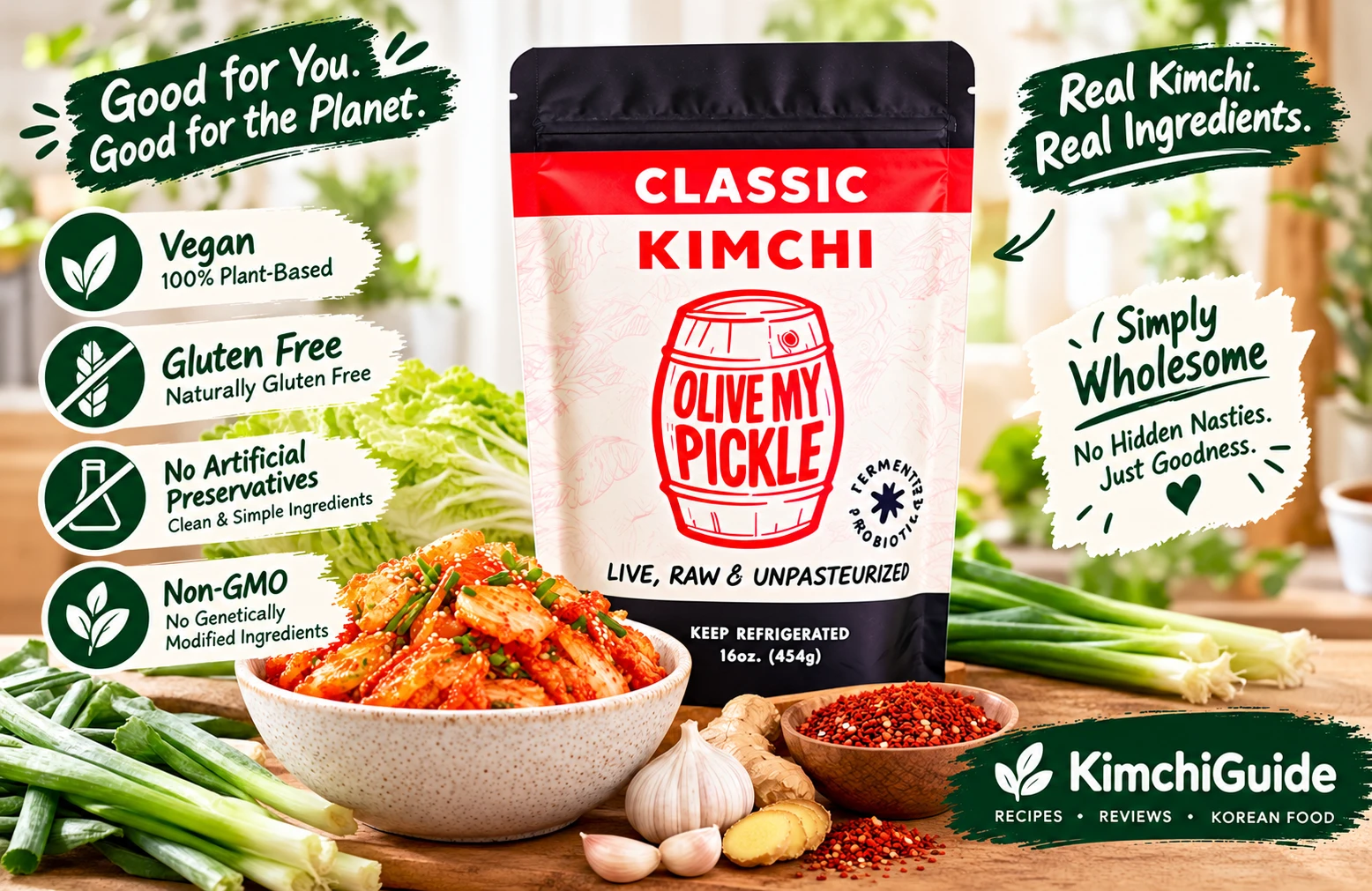
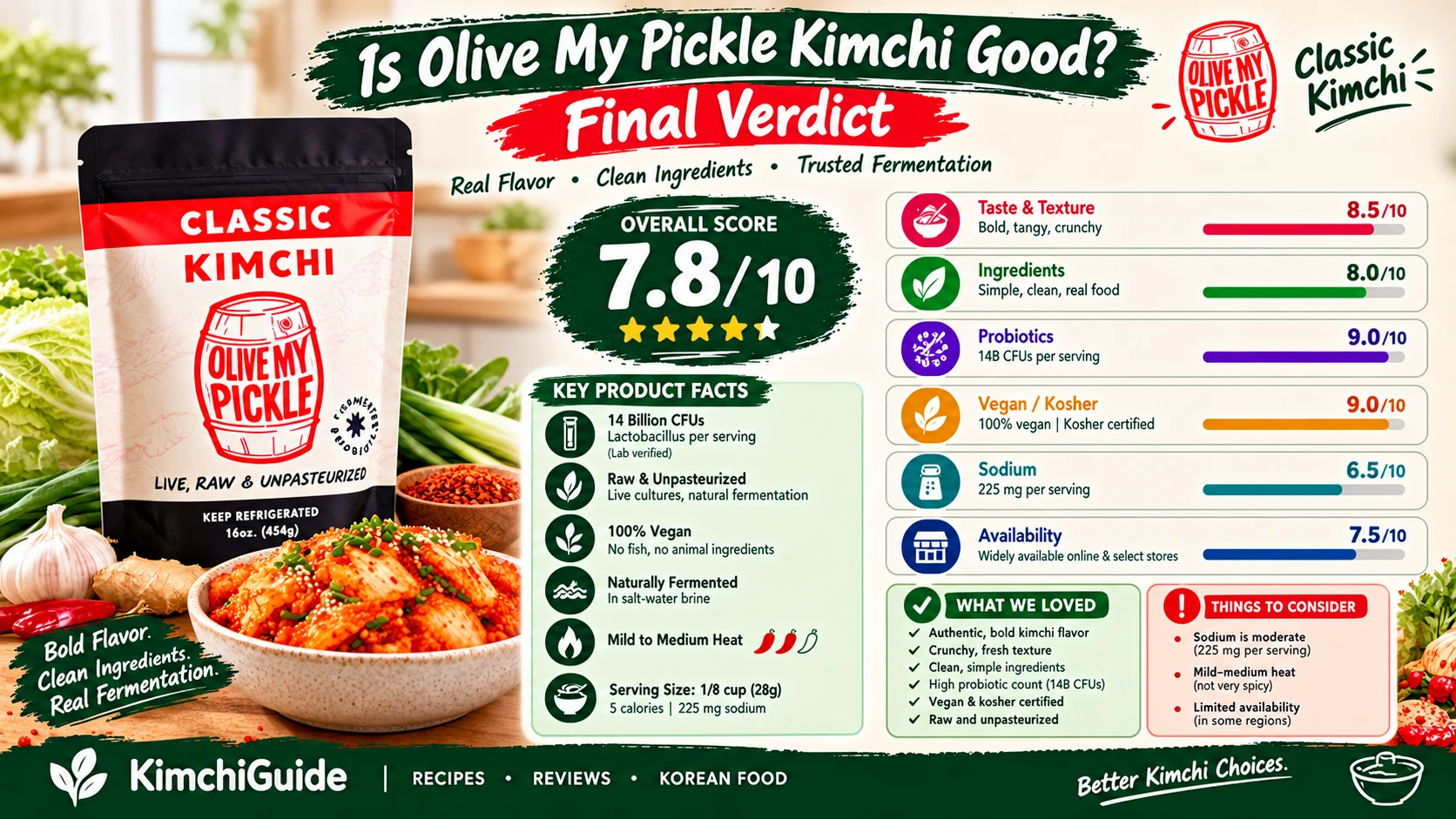
Yes, generally — in our 18-brand blind taste test, Olive My Pickle scored 7.8 out of 10. Founded in 2010 out of “The Pickle Factory” in Jacksonville, Florida, this small family business has a genuinely unique claim to back up its “gut health” positioning: it’s the only major US kimchi brand we found that publishes third-party lab-verified probiotic counts (14 billion CFUs per serving on its Classic line). All three varieties — Classic, Cucumber, and Daikon Radish — are 100% vegan and Kosher certified. The one real caveat: this is a direct-to-consumer brand, and independent review sites show a genuine, if inconsistent, pattern of shipping and customer-service complaints worth knowing about before you order.
🛒 Check Price on AmazonOlive My Pickle Kimchi — At a Glance
Here’s what actually matters before you decide whether to order a pouch.
- Taste: generally well-reviewed — fresh, crunchy, and genuinely fermented.
- Made by: a small family business, “The Pickle Factory,” Jacksonville, FL, since 2010.
- Unique claim: third-party lab-verified probiotic counts — no other major brand publishes this.
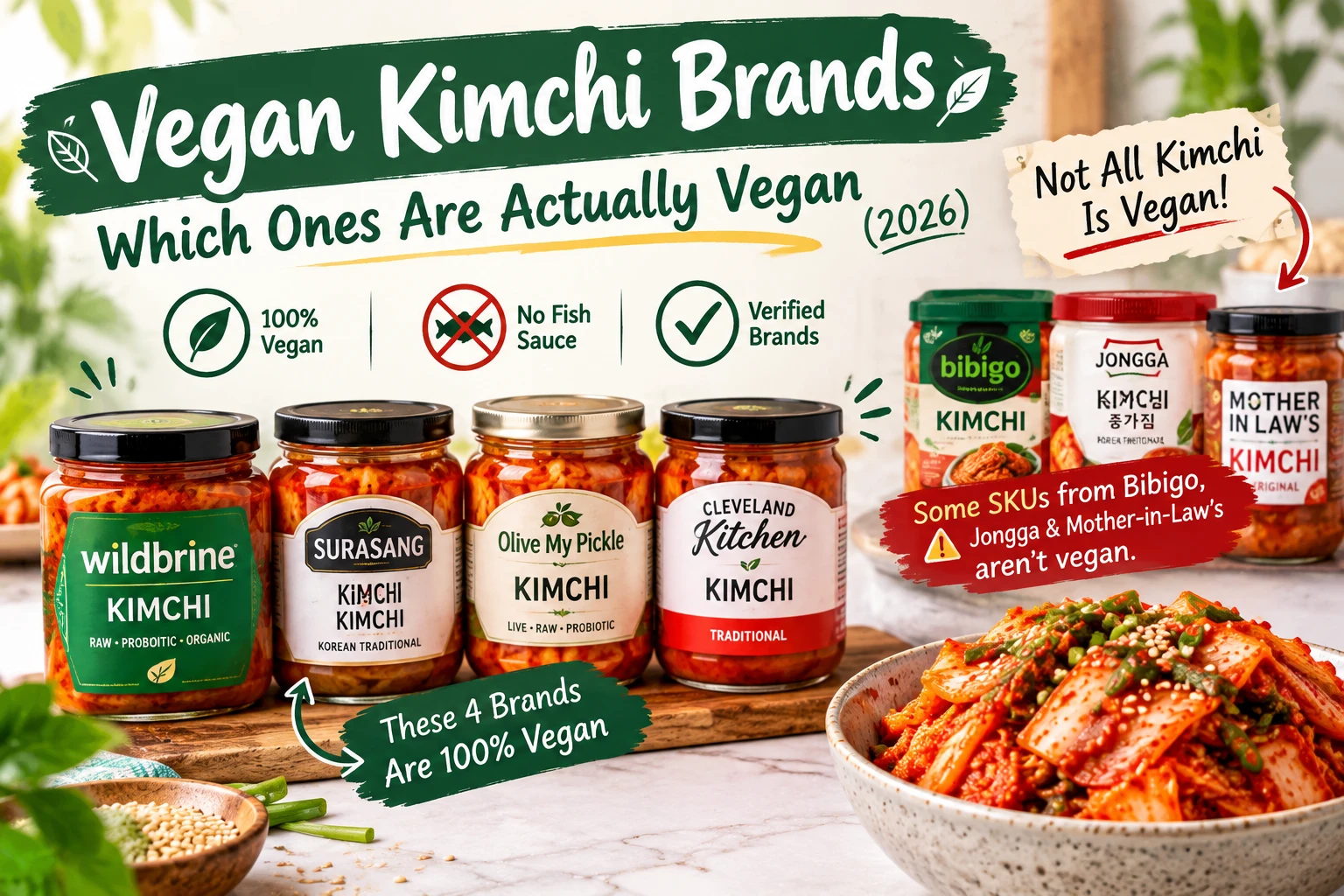
- Ingredients: always 100% vegan, no fish sauce ever, across every variety.
- Sodium: higher than its health branding might suggest — check the numbers, not just the label story.
- Buying model: mainly direct-to-consumer shipping, not a supermarket-shelf brand.
Olive My Pickle Kimchi — Product Overview & Scorecard
Here’s how Olive My Pickle scored across our core taste-test criteria, from the same 18-brand blind test used for our full brand ranking.
Who Makes It? The Pickle Factory Story
A small, obsessively fermentation-focused family business — literally operating out of something called “The Pickle Factory.”
Olive My Pickle was founded in 2010 as a small, family-run business in Jacksonville, Florida, operating out of a facility the company itself calls “The Pickle Factory.” The business started small — literally at farmers’ markets, where the founders got to talk face-to-face with curious customers about foods like kimchi that many Americans had never tried before. Over more than a decade, that direct, hands-on relationship with customers grew into a broader lineup: pickles, sauerkraut, olives, various fermented vegetables, and kimchi, all built around the same core process of real, salt-water brine lacto-fermentation.
The company describes itself as “wholeheartedly obsessed with fermentation, probiotic foods and microbiome health for over a decade” — and unlike several other small-batch brands in our ranking, that obsession shows up in a genuinely unusual, checkable way: published lab verification of exactly what’s in the jar, rather than just marketing language about “probiotics.” Vegetables are sourced primarily from local farms, with the company noting that just a day or two typically passes between harvest and fermentation, which it says helps preserve phytonutrients.
Few brands in this category can trace their growth as directly to face-to-face customer conversations as Olive My Pickle can — the direct-to-consumer model the brand uses today is a natural extension of how it started, rather than a recent pivot.
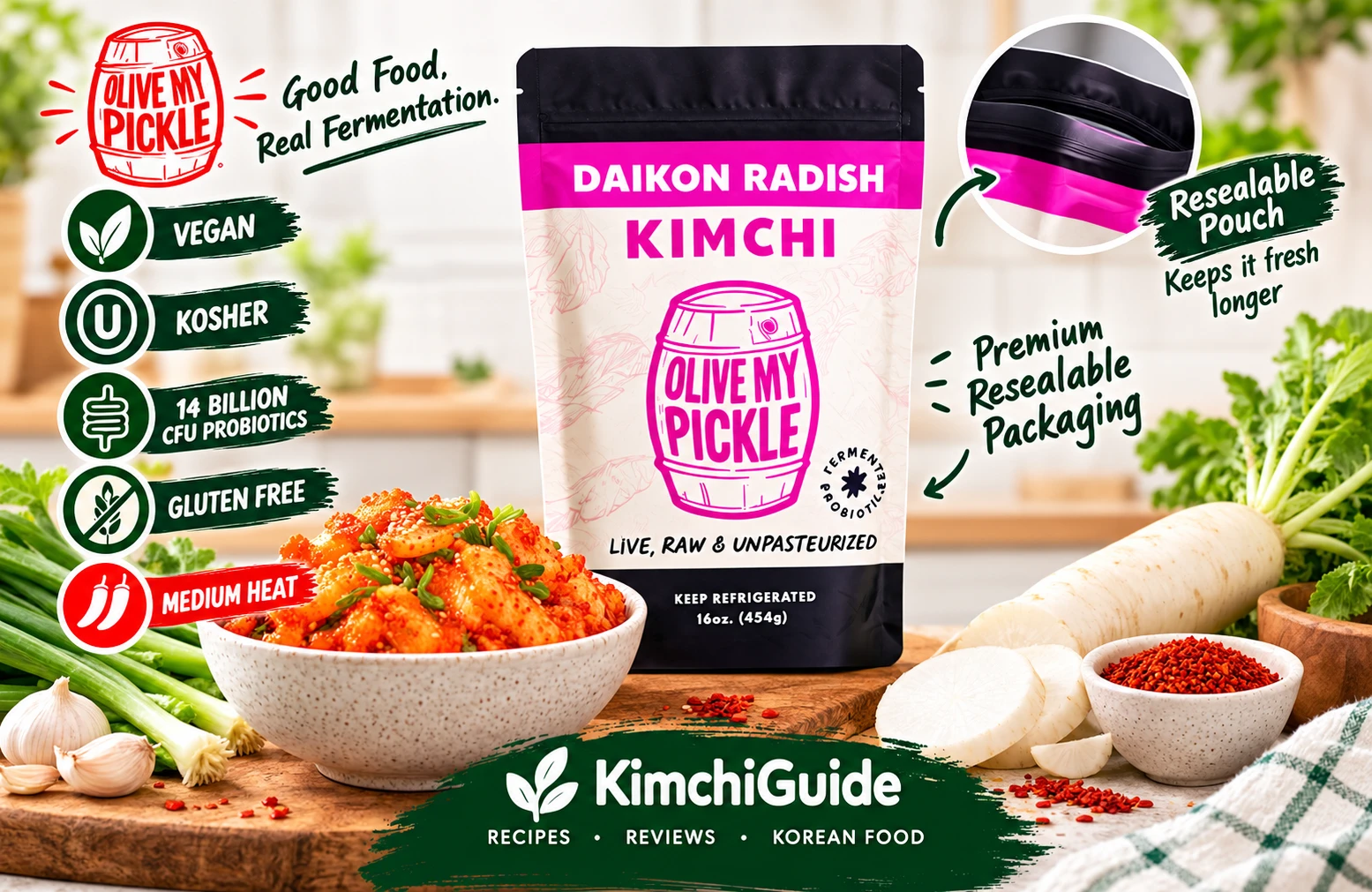
Olive My Pickle’s business today spans pickles, olives, sauerkraut, and various fermented vegetables in addition to kimchi — kimchi is one part of a much larger, unified fermentation-focused product catalog, sold through a “build a box” subscription model.
Lab-Verified Probiotics — Why It Matters
This is the single most distinctive thing about Olive My Pickle, and as far as we could find, no other major US kimchi brand does this.
Virtually every fermented food brand markets “live probiotics” or “good for gut health” — but almost none of them back that claim with an actual, verifiable number. Olive My Pickle does: its Classic Kimchi is third-party tested and lab verified to contain 14 billion CFUs (colony-forming units) of lactic acid bacteria per serving, specifically identifying the strains present — Lactobacillus Plantarum, Lactobacillus Brevis, Leuconostoc, and Pediococcus. The Daikon Radish variety’s published probiotic diversity profile is slightly different and even more detailed: Lactobacillus Plantarum, Lactobacillus Brevis, Pediococcus Aacidilactici, Pediococcus Cerevisiae, and Leuconostoc Mesenteroides.
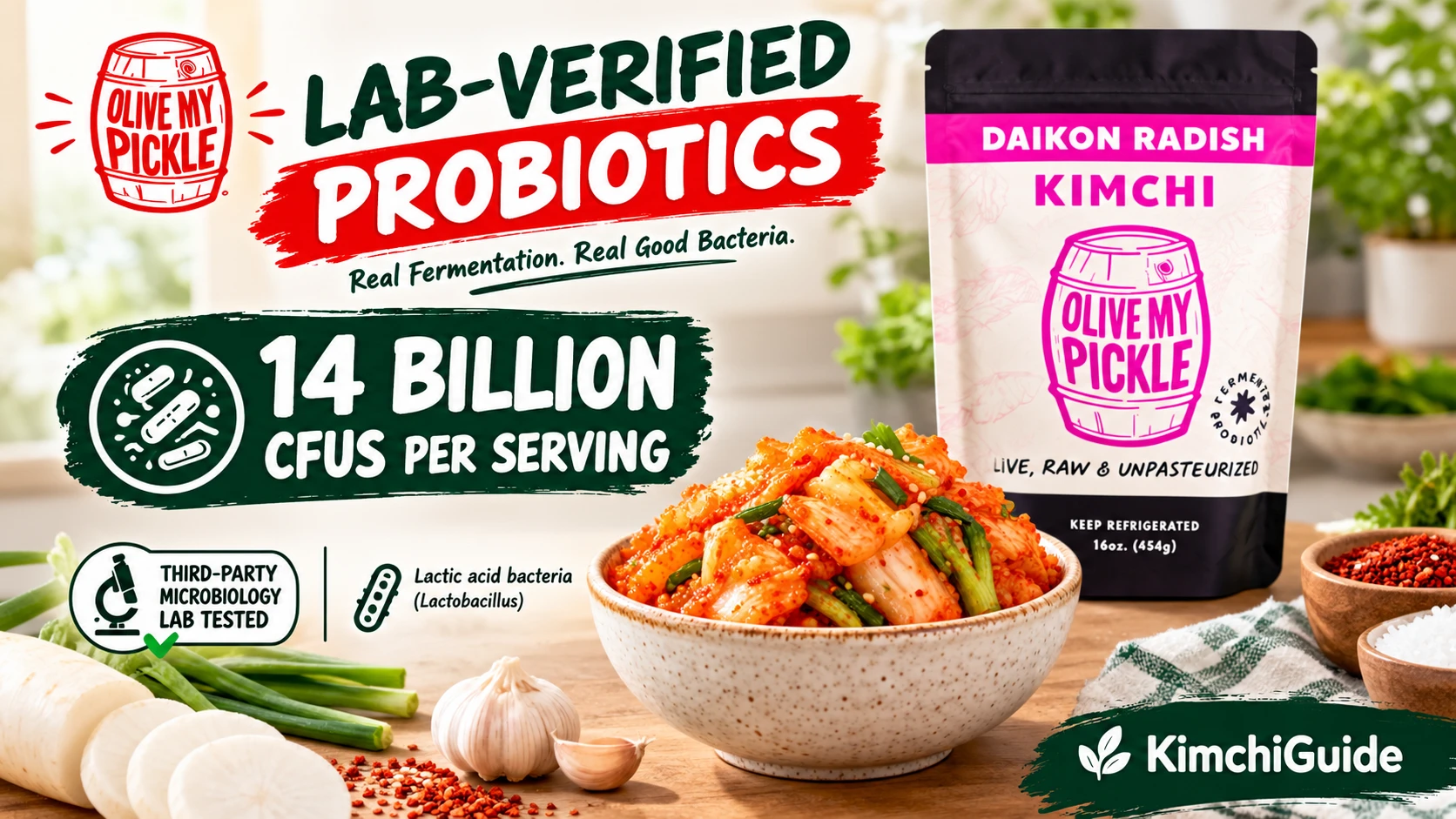
This matters for a practical reason: fermentation is a biological process that genuinely varies by batch, ingredient, temperature, and time — so a brand’s “contains probiotics” claim on a label is, for almost every competitor, essentially unverifiable by the shopper. A published, third-party-tested CFU count is a meaningfully stronger, checkable claim than the industry norm, even though exact counts will still fluctuate somewhat batch-to-batch in any live-fermented product.
Classic, Cucumber & Daikon Radish — All 3 Reviewed
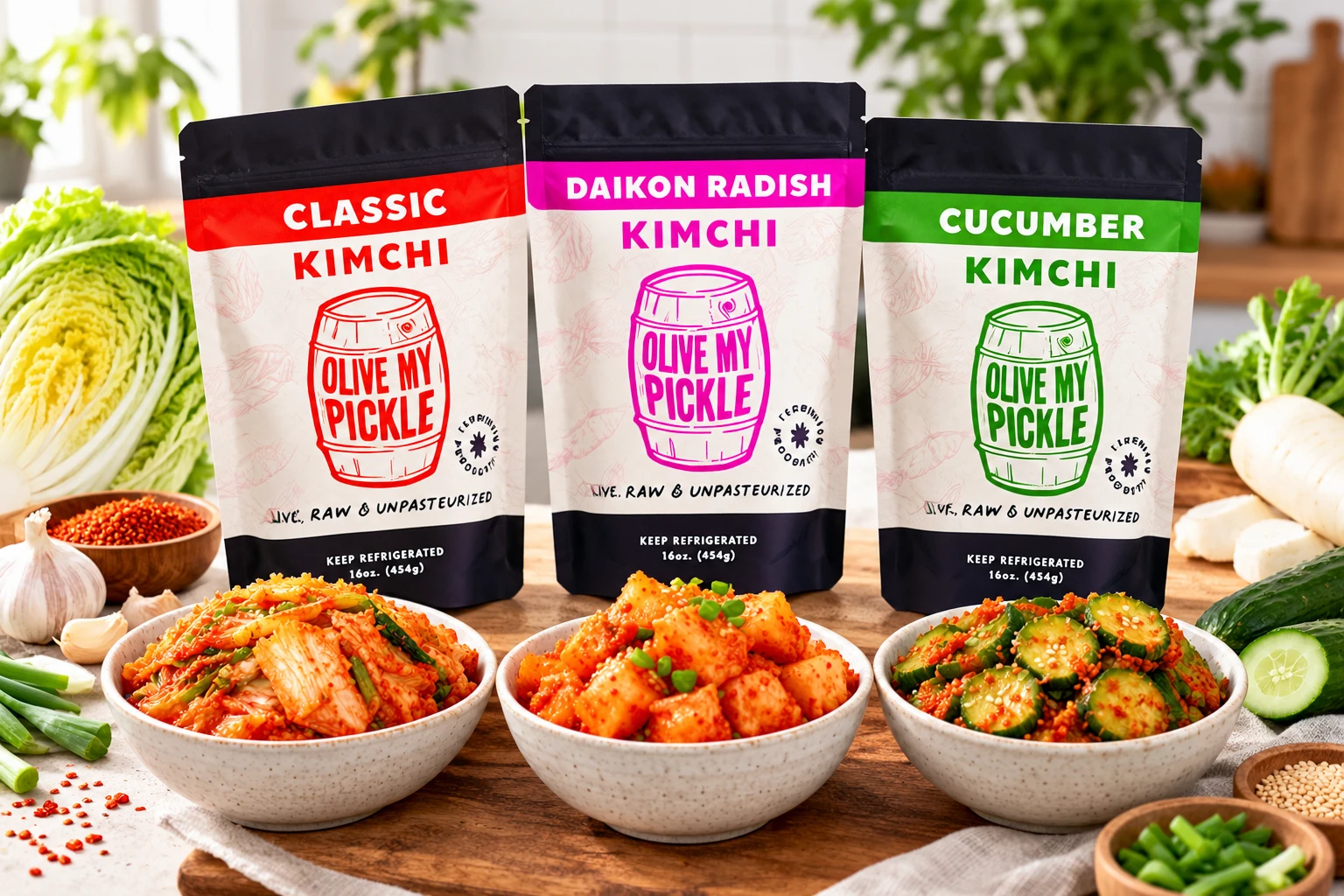
Olive My Pickle currently sells three kimchi varieties — here’s how each one differs.
| Variety | Heat Level | Notes | Amazon |
|---|---|---|---|
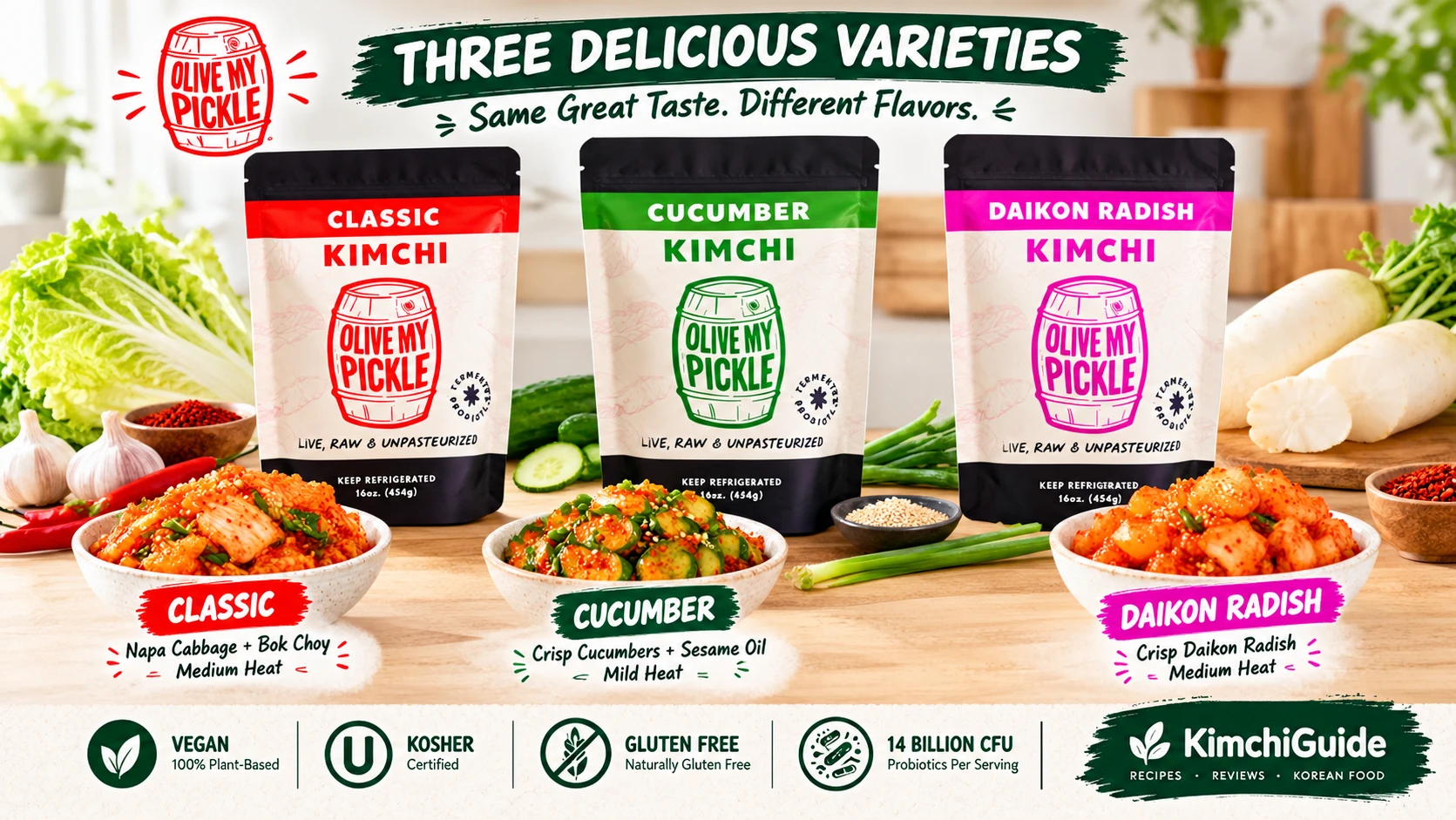
| Classic Kimchi | 🌶️🌶️ Medium | Napa cabbage and bok choy base, closest to traditional kimchi. The variety most third-party reviews focus on. | 🛒 Shop |
| Cucumber Kimchi | 🌶️ Mild | A genuinely unusual variety — tangy, spicy crunch finished with sesame oil. Most competitor brands don’t offer a cucumber-based kimchi at all. | 🛒 Shop |
| Daikon Radish Kimchi | 🌶️🌶️ Medium | Firm, crisp radish base with a slightly sweet, peppery taste finishing spicy-sour — closer to Korean kkakdugi-style kimchi. | 🛒 Shop |
Taste & Texture — The Honest Take
Genuinely well-reviewed on flavor — with a separate, distinct issue around shipping that’s worth separating from the taste question entirely.
Customer reviews on the brand’s own site and across TikTok are largely enthusiastic: reviewers describe Classic Kimchi as “fresh and crunchy with a nice spice,” and Daikon Radish Kimchi as having “won over” people who’d never tried kimchi before. The brand’s medium heat level across its spicier varieties is deliberately calibrated to be approachable — not “too hot” — which several reviewers specifically appreciate as a good entry point into kimchi generally.
Where this brand’s reviews get more complicated is not about taste, but about fulfillment. Independent review aggregators — Trustpilot and Wanderlog among them — show a real, if inconsistent, pattern of complaints specific to the direct-shipping model: vegetables arriving in less-than-fresh condition in some orders, and slow responses when customers reach out about a problem. This is a genuinely different kind of risk than buying a jar off a store shelf, where the retailer (not the brand) handles the final “last mile” of getting a fresh product into your hands.
Real Ingredients Breakdown
Pulled directly from the brand’s own product pages for the two most detailed listings.
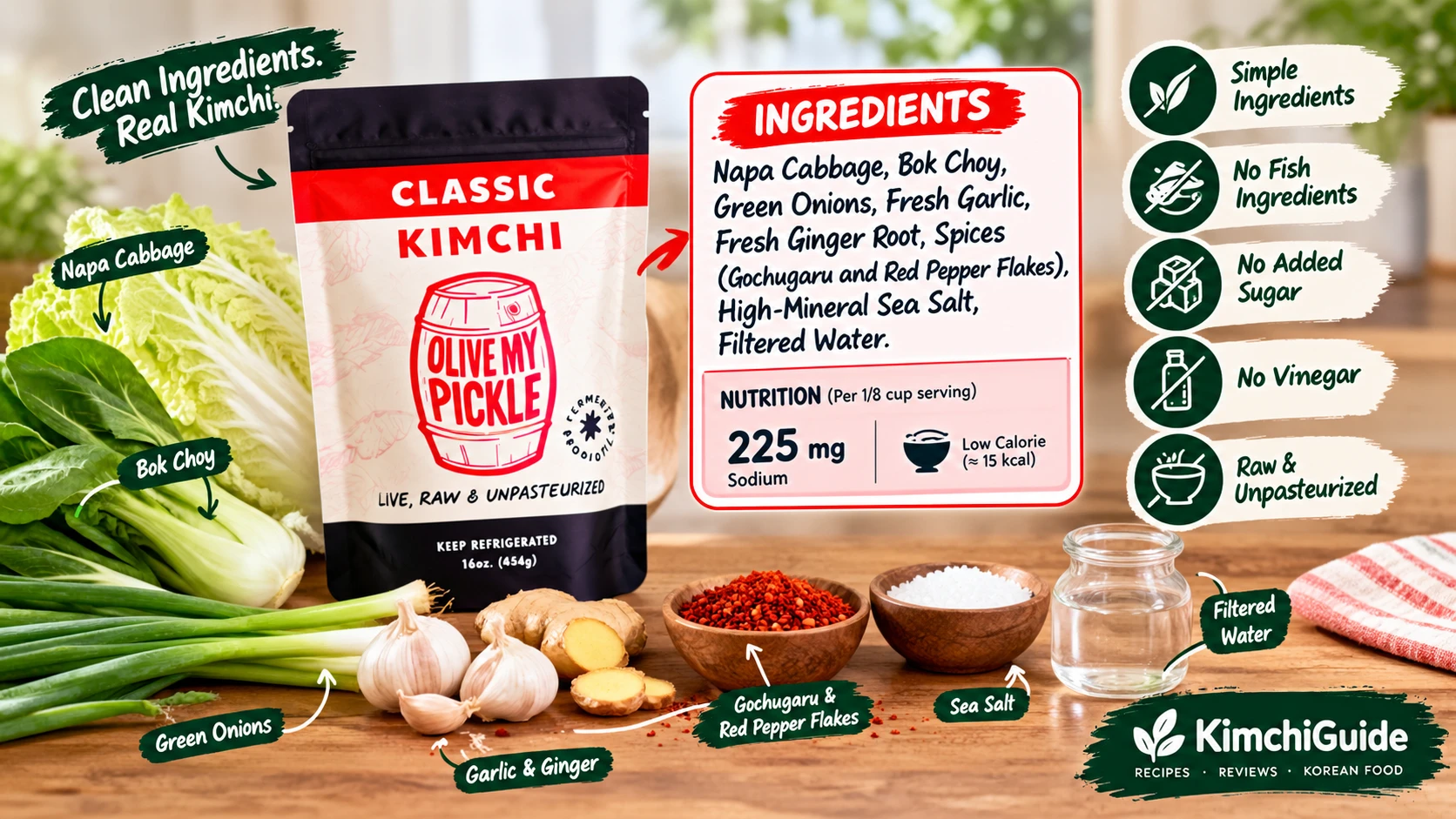
| Classic Kimchi | Daikon Radish Kimchi |
|---|---|
| Napa cabbage | Daikon radishes |
| Bok choy | Green onions |
| Fresh garlic | Fresh garlic |
| Fresh ginger | Fresh ginger root |
| Spices | Carrots, spices |
| Sea salt | High-mineral sea salt |
| Filtered water | Filtered water |
| (no fish sauce) | (no fish sauce) |
Olive My Pickle Kimchi Nutrition & Sodium Facts
Genuinely low-calorie — but the sodium numbers deserve an honest look rather than assuming “health-focused” branding means low-sodium.
| Variety | Serving | Calories | Sodium |
|---|---|---|---|
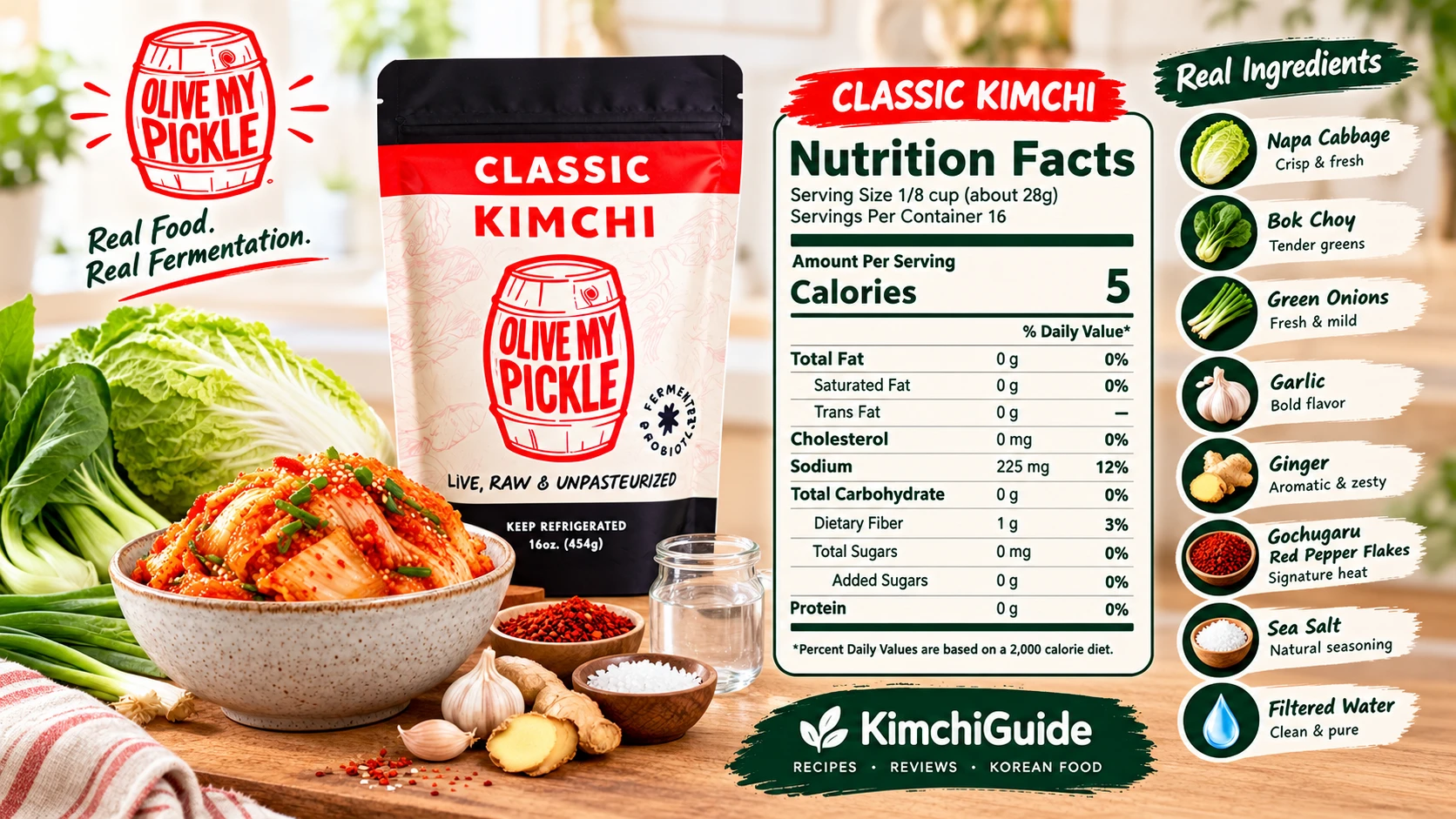
| Classic Kimchi | 0.13 cup (28g) | 5 kcal | 225mg |
| Cucumber Kimchi | 0.12 cup (~28g) | 14 kcal | Not confirmed in this source |
Certifications — Kosher, Vegan & the Gluten-Free Distinction
Real Kosher certification, always-vegan across the range, and one certification nuance worth understanding precisely.
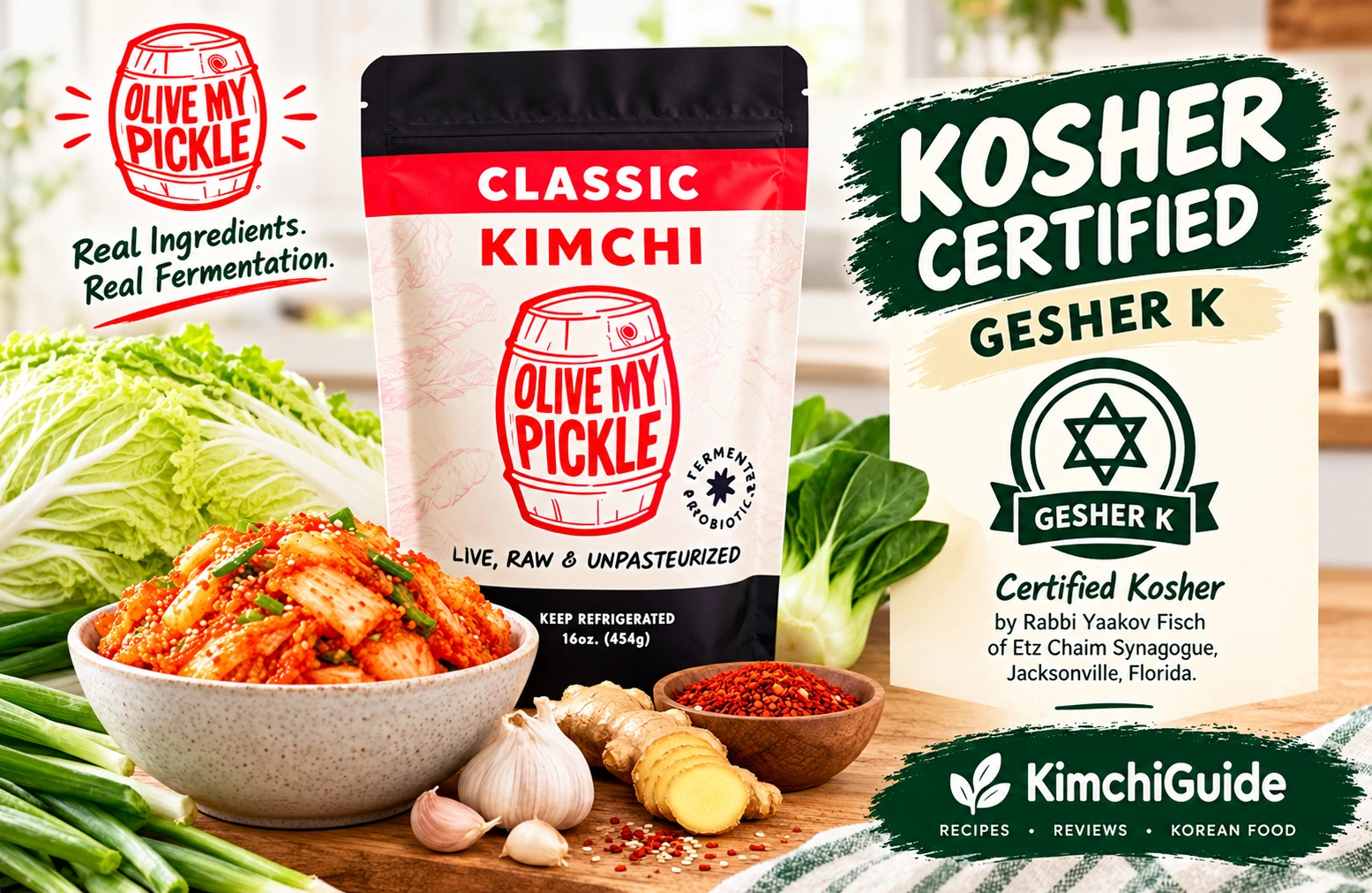
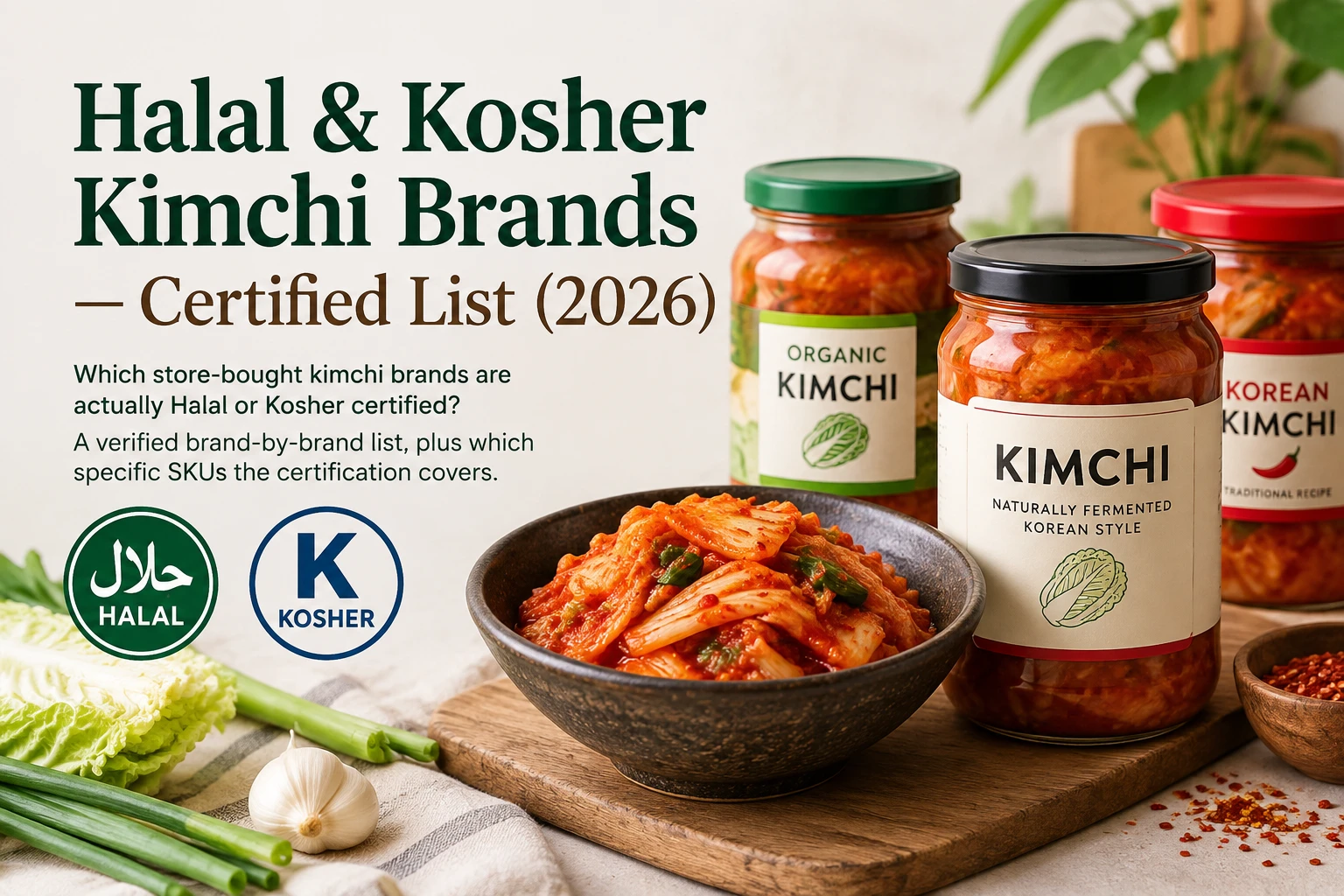
Olive My Pickle’s products are certified Kosher under the Gesher K certification mark — one of only a few brands in our full 18-brand ranking with genuine third-party religious certification. Combined with its always-vegan ingredient list, this makes it a strong option for Kosher-keeping shoppers. See our Halal & Kosher kimchi brands guide for the full picture across all 18 brands.
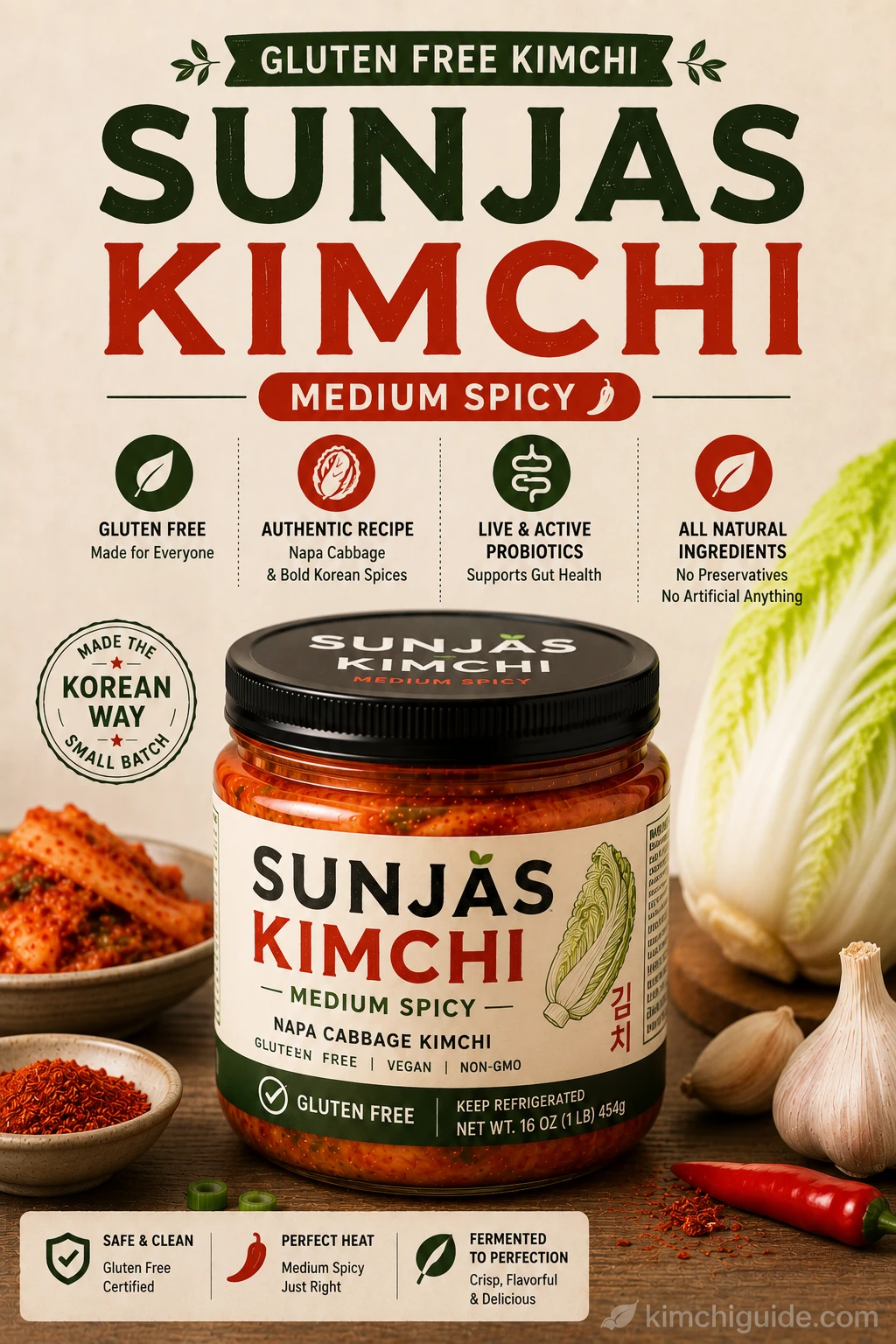
Amazon listings describe Olive My Pickle kimchi as compatible with Whole30, Paleo, Keto, Vegan, Clean, and Gluten Free dietary protocols, based on its ingredient list. This is different from a formal, third-party Gluten-Free certification badge like the one Sunja’s displays on its own site — a distinction worth understanding if certified labeling specifically matters to you for a gluten sensitivity. No Halal certification was found for any product. See our vegan kimchi brands guide or vegan kimchi hub for more on brands that skip fish sauce brand-wide.
Safety, Shelf Life & the Shipping Model
Here’s what’s publicly documented — including two unrelated recalls worth distinguishing clearly.
Is Olive My Pickle Good for Cooking, or Best Eaten Raw?
Both — the brand itself offers specific pairing suggestions for each variety.
Olive My Pickle’s own guidance suggests adding Classic Kimchi to a soup or ramen bowl for a spicy kick, enjoying it as a side with scrambled eggs, or chopping it into fried rice, grilled meats, or even a cold pasta salad. Daikon Radish Kimchi is specifically recommended added to meat or vegetable stews just before serving, letting its firm texture hold up to heat without turning mushy. As with most kimchi, letting a pouch sit in the fridge for an extra week or two after opening will deepen the sourness and make it more suited to cooking — see our kimchi fermentation stages guide or fresh vs. aged kimchi guide for exactly what changes as it ages.
Availability & Price
A genuinely different buying model than most brands in our ranking — mostly online, not on a store shelf.
| Channel | Availability |
|---|---|
| Direct via olivemypickle.com | ✓ Primary channel — “build a box” subscription available |
| Amazon | ✓ Multiple SKUs and pack sizes |
| Major national grocery chains | ✗ No confirmed placement found |
Unlike Sunja’s or Mother-in-Law’s, which lean primarily on physical retail shelves like Whole Foods, Olive My Pickle’s business is built around direct shipping — including a subscription “build a box” option where customers choose their own mix of products and delivery schedule. Pricing depends on pack size (16oz single pouches up to 48oz multi-packs) and whether you order individually or through a subscription bundle. Check current pricing directly on olivemypickle.com or Amazon, and see our where to buy kimchi guide for other channels worth checking if you’d rather not order direct.
🛒 Check Price on AmazonHow We Tested Olive My Pickle
This review draws on our broader 18-brand blind taste test, with all three current varieties tasted individually, plus independent review-aggregator research on the shipping experience.
Related Guides
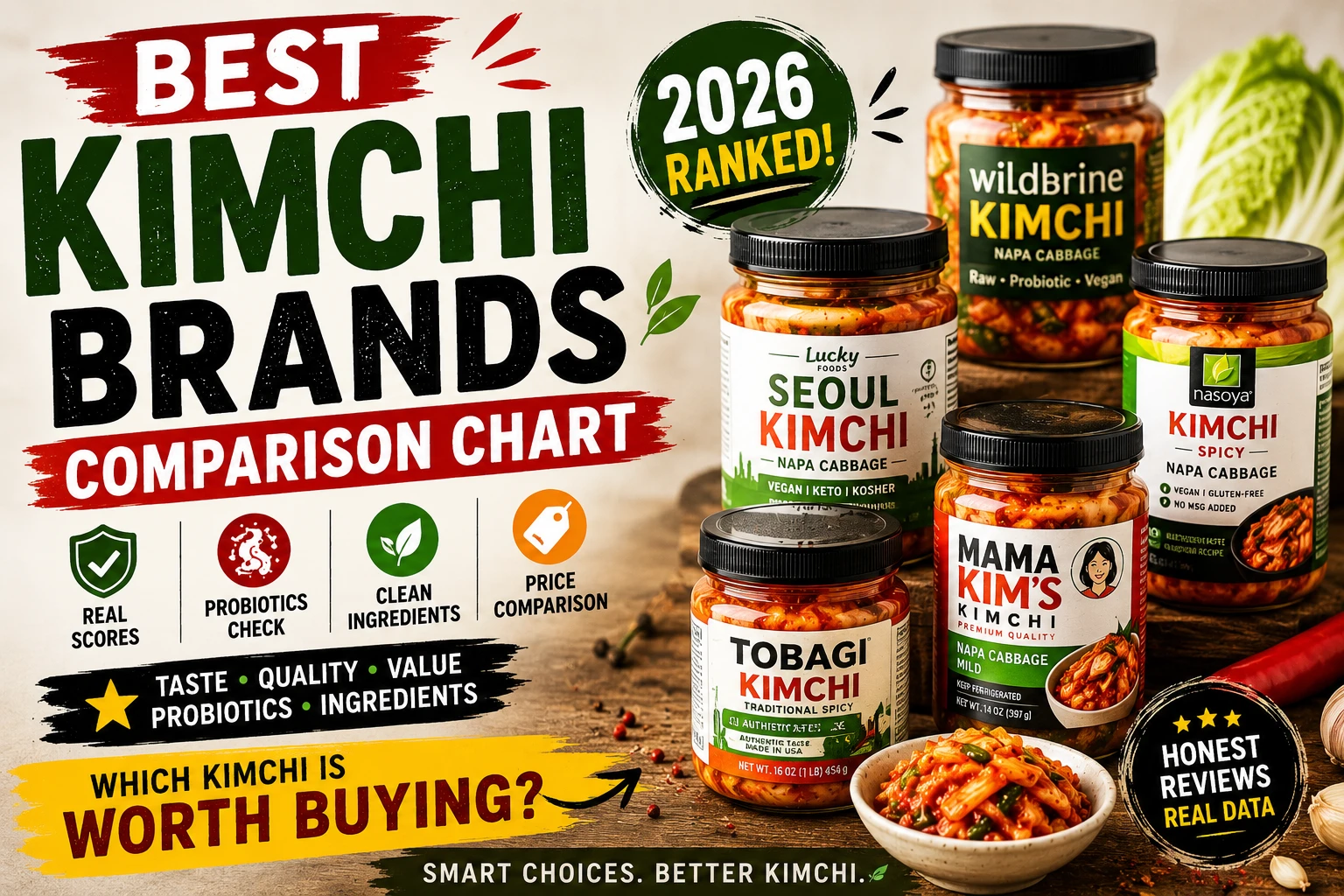
Naturally connected reading if you’re deciding on Olive My Pickle or comparing it against the rest of the ranking.


Is Olive My Pickle Kimchi Good? FAQ — 20 Questions
Yes, generally — in our blind taste test it scored 7.8/10. Its standout feature is being the only major US kimchi brand we found that publishes third-party lab-verified probiotic counts (14 billion CFUs per serving on the Classic line). Product reviews are largely positive, though independent review sites also surface real, recurring complaints about shipping quality and customer service response times.
Olive My Pickle is made by a small, family-run fermentation business founded in 2010, operating out of “The Pickle Factory” in Jacksonville, Florida. The company started at farmers’ markets and has grown into a broader lineup of fermented foods sold mainly direct-to-consumer.
Three: Classic Kimchi (napa cabbage and bok choy, medium heat), Cucumber Kimchi (a milder variety finished with sesame oil), and Daikon Radish Kimchi (medium heat, firm and crisp texture).
Classic Kimchi lists napa cabbage, bok choy, fresh garlic, fresh ginger, spices, sea salt, and filtered water. Daikon Radish Kimchi lists daikon radishes, green onions, fresh garlic, fresh ginger root, carrots, spices, high-mineral sea salt, and filtered water. None contain fish sauce.
Yes, all of it. Olive My Pickle states directly that none of its kimchi recipes contain any fish element, making every current variety vegan, unlike brands that split into a fish-sauce line and a separate vegan line.
Yes — Olive My Pickle’s products are certified Kosher (Gesher K), confirmed via multiple independent sources describing the brand’s Jacksonville, Florida facility.
It’s marketed as compatible with Whole30, Paleo, Keto, Vegan, Clean, and Gluten Free dietary protocols based on its ingredient list, but this is not the same as a formal third-party Gluten-Free certification badge — a distinction worth knowing if certified labeling specifically matters to you.
No Halal certification was found publicly for any Olive My Pickle product. The ingredient list contains no animal products, but that is a different claim from formal Halal certification.
It means an independent, third-party lab has tested the kimchi and confirmed a specific probiotic count rather than the brand simply claiming “contains live probiotics.” Classic Kimchi is verified at 14 billion CFUs per serving, including Lactobacillus Plantarum, Lactobacillus Brevis, Leuconostoc, and Pediococcus strains.
Classic Kimchi is fresh, crunchy, and medium-heat, close to traditional napa cabbage kimchi. Cucumber Kimchi is milder with a sesame oil finish. Daikon Radish Kimchi is firm and crisp, slightly sweet and peppery, finishing spicy-sour.
Classic Kimchi runs about 5 calories per 0.13 cup (28g) serving. Cucumber Kimchi runs about 14 calories per 0.12 cup serving. Both are very low-calorie, consistent with kimchi generally.
Not particularly. Classic Kimchi is listed at 225mg of sodium per roughly 1oz serving — higher than some other small-batch brands at a similar serving size. Check our low-sodium kimchi brands ranking for a full comparison.
Primarily direct-to-consumer via olivemypickle.com, including a “build a box” subscription option, and also on Amazon. We did not find confirmed placement at a major national grocery chain.
No FDA recall was found under the Olive My Pickle brand name. Don’t confuse this with two unrelated recalls: a 2021 Listeria recall by 5000 Years Foods, Inc. of Chicago, and a 2025 recall of Pinocchio Catering Aged Kimchi Mackerel by a different, unrelated company.
The brand publishes an exact figure: products are marked with an expiration date 6 months from packaging, and are best consumed within 3-6 months whether opened or unopened. Freezing is not recommended, as it alters texture.
Product reviews are largely positive, but independent review aggregators show real, recurring complaints specific to the direct-shipping model — vegetables arriving in poor condition in some orders, and slow customer-service responses. This is a different risk than buying off a store shelf.
Yes — the brand suggests adding Classic Kimchi to soup or ramen, using it as a fried rice topping, or pairing it with eggs. Daikon Radish Kimchi is specifically recommended added to stews just before serving.
Both are always-vegan, raw, unpasteurized, small-batch American brands. Sunja’s uses green cabbage instead of napa; Olive My Pickle publishes lab-verified probiotic counts and holds Kosher certification. Sunja’s sells mainly through retail shelves; Olive My Pickle sells mainly direct-to-consumer, which introduces shipping-related risk a shelf-bought jar doesn’t have.
Yes, with one caveat. It’s a genuine, small, family-run fermentation company with real Kosher certification and an unusually transparent, lab-verified probiotic claim no other major brand matches. The kimchi itself is well-reviewed. The real risk is specific to its direct-shipping model, where independent reviews show a real, if inconsistent, pattern of fulfillment complaints.


💬 Leave a Comment
Tried Olive My Pickle kimchi? Tell us which variety you ordered and what you thought — including how the shipping experience went.