Is Mother-in-Law’s Kimchi Good? The Full Review — Taste, Ingredients & Company Story (2026)
A standalone deep-dive on the artisan US brand built from a real family restaurant recipe — the honest taste verdict, the real ingredients across all four product lines, sodium and nutrition, founder Lauryn Chun’s story, and where it’s actually sold.
Is Mother-in-Law’s Kimchi Good?
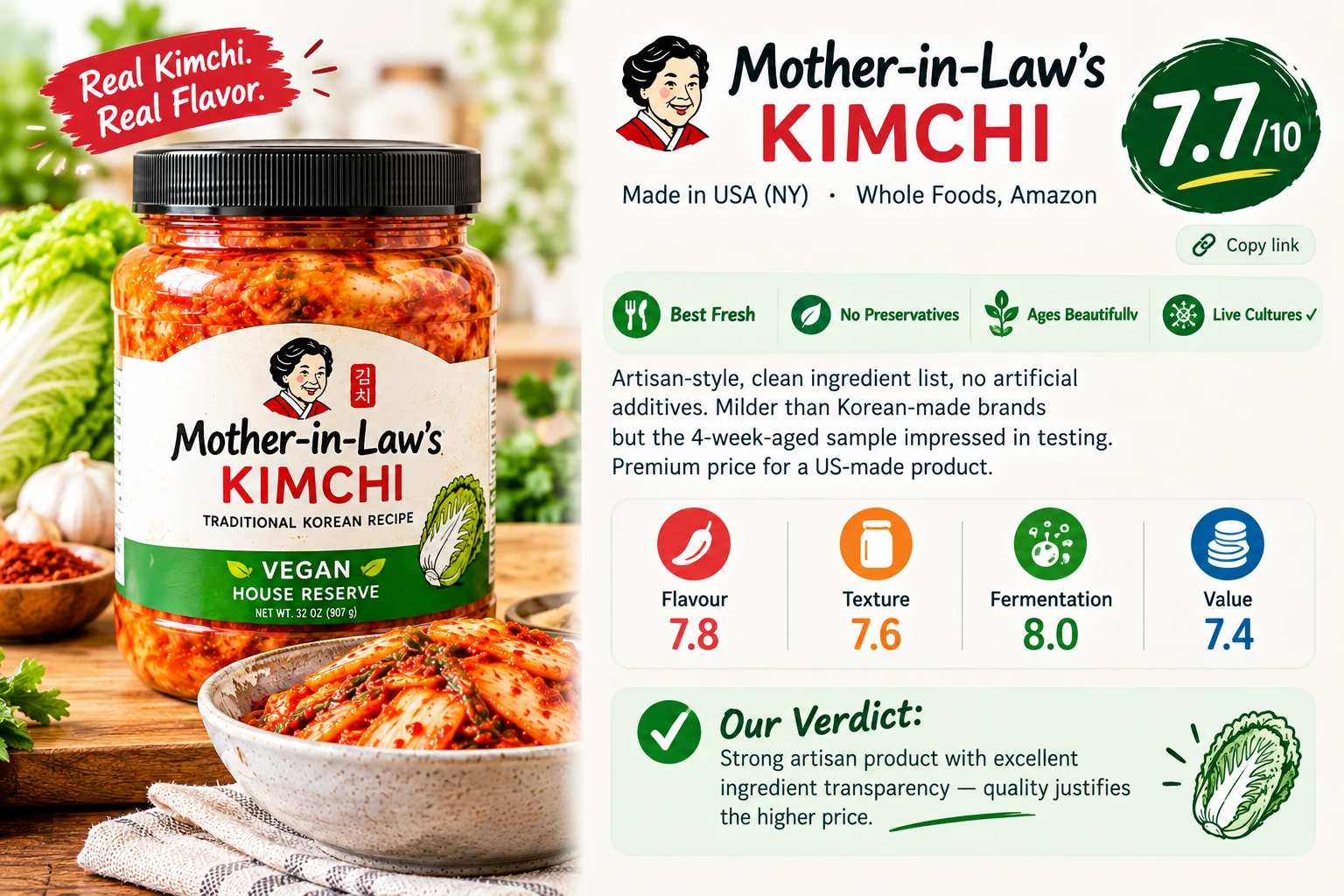
Mostly, yes. In our 18-brand blind taste test, Mother-in-Law’s scored 7.7 out of 10, ranking #7 overall — a founder-led, US-based artisan brand built on a real family restaurant recipe, with genuine ingredient transparency and the second-lowest sodium content of any brand we tested. Reviewer opinion on flavor is honestly mixed: some tasters (including our own) find real depth and call it a favorite, while at least one independent food-outlet test found a specific product line overly sour. The bigger thing to know before buying is that Mother-in-Law’s sells four different kimchi products with meaningfully different ingredients — including some that are vegan and some that aren’t — so which jar you pick matters as much as the brand name.
🛒 Check Price on AmazonMother-in-Law’s Kimchi — At a Glance
Here’s what actually matters before you decide whether to put a jar in your cart.
- Taste: genuinely mixed reviews — some love the tang, others find it too sour.
- Made by: founder Lauryn Chun, based on her mother’s restaurant recipe (est. 1989).
- Ingredients: vary a lot by line — House has fish sauce, beef broth & shellfish; House Reserve is vegan.
- Sodium: the 2nd-lowest of all 18 brands we tested — a real strength.
- No Halal/Kosher certification found publicly, unlike Jongga or Bibigo.
- Availability: Whole Foods, Sprouts, H-E-B, Meijer, Amazon — not as universal as Bibigo or Cleveland Kitchen.
Mother-in-Law’s Kimchi — Product Overview & Scorecard
Here’s how Mother-in-Law’s scored across our core taste-test criteria, from the same 18-brand blind test used for our full brand ranking.
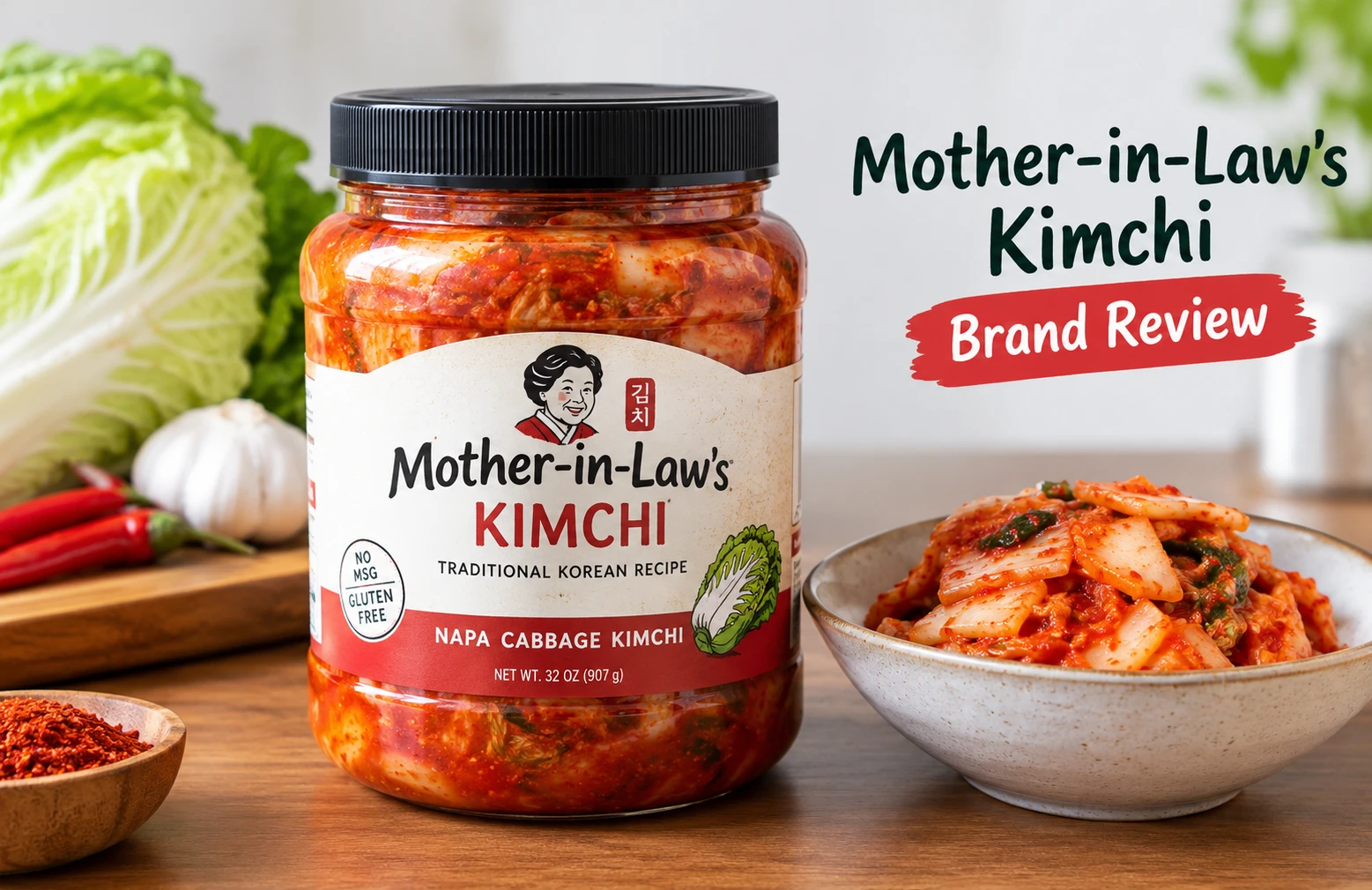
Who Makes Mother-in-Law’s Kimchi? Lauryn Chun & the Jang Mo Jip Story
Unlike Jongga or Bibigo, which trace back to large Korean food conglomerates, Mother-in-Law’s has a genuinely small, founder-led origin story worth understanding.
Lauryn Chun founded Mother-in-Law’s Kimchi in 2009, while living in New York City. A UCLA graduate (political science and history, 1993), Chun had spent years in the fine dining and wine industries — including a stint as a tastings editor at Wine & Spirits Magazine and time harvesting grapes across the Rhône Valley, Spain, and Italy. After a layoff during the 2008 recession, she found herself asking how she could turn what she loved into a business. Watching the American “craft” movement grow around beer, cheese, and jam, she saw an opening to position kimchi the same way: a serious fermented food, not just a Korean side dish.
The recipe itself isn’t invented — it comes directly from Chun’s mother’s restaurant, Jang Mo Jip (which translates from Korean as “Mother-in-Law’s House”), founded in 1989 in Garden Grove, California, and still operating today. Every visit home, Chun’s mother would send her back to New York with a jar of the restaurant’s kimchi — and there was nothing like it on shelves at the time. That gap became the business. In 2012, Chun authored The Kimchi Cookbook: 60 Modern and Traditional Ways to Make and Cook Kimchi, further building the brand’s credibility as a kimchi authority rather than just a packaged-food company.
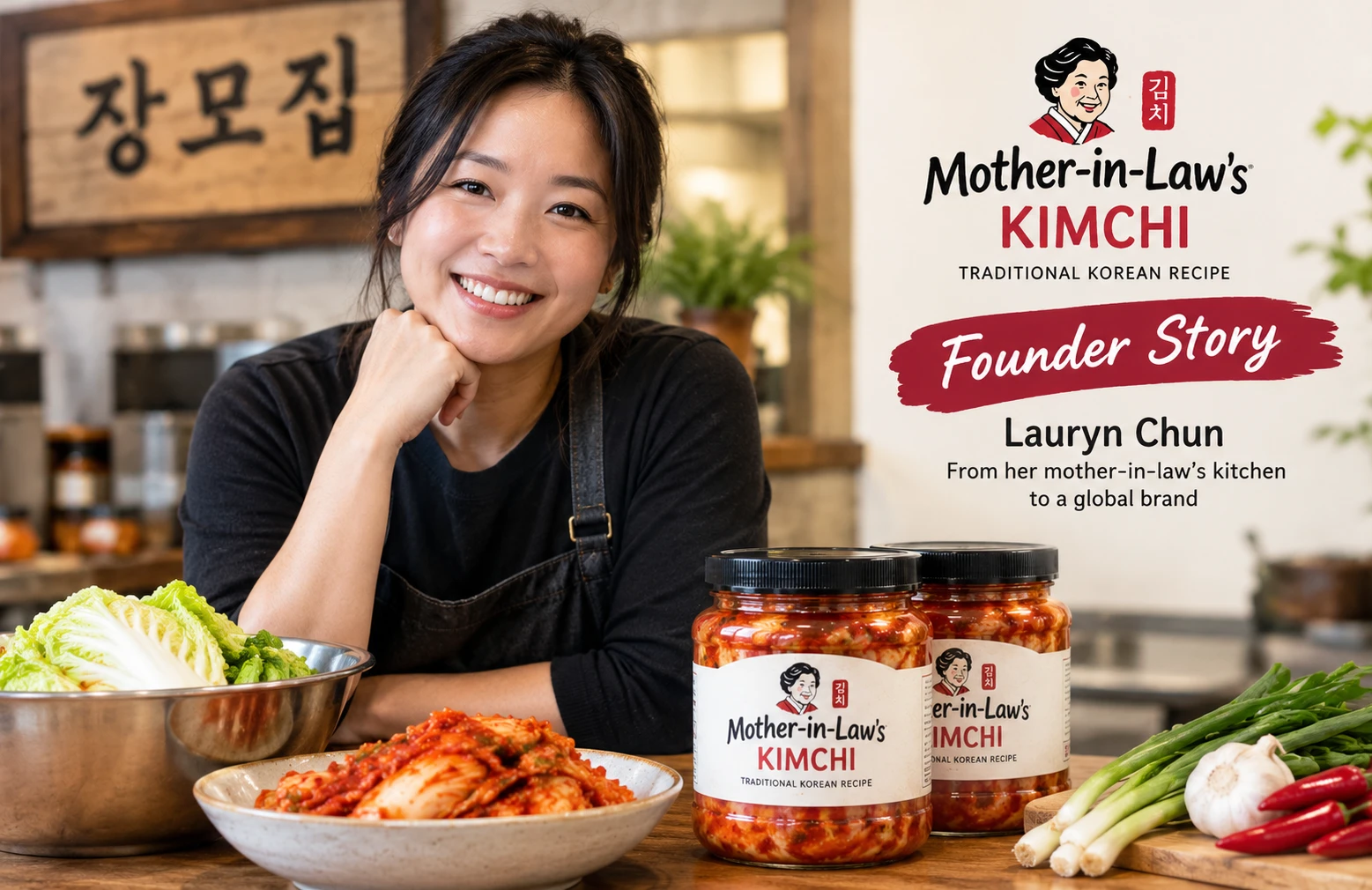
The “House” line’s exact recipe is inherited from a real, decades-old family restaurant rather than developed by a corporate R&D team — a genuinely different origin story than most brands in our ranking, including the mass-market ones and even the larger Korean-import brands.
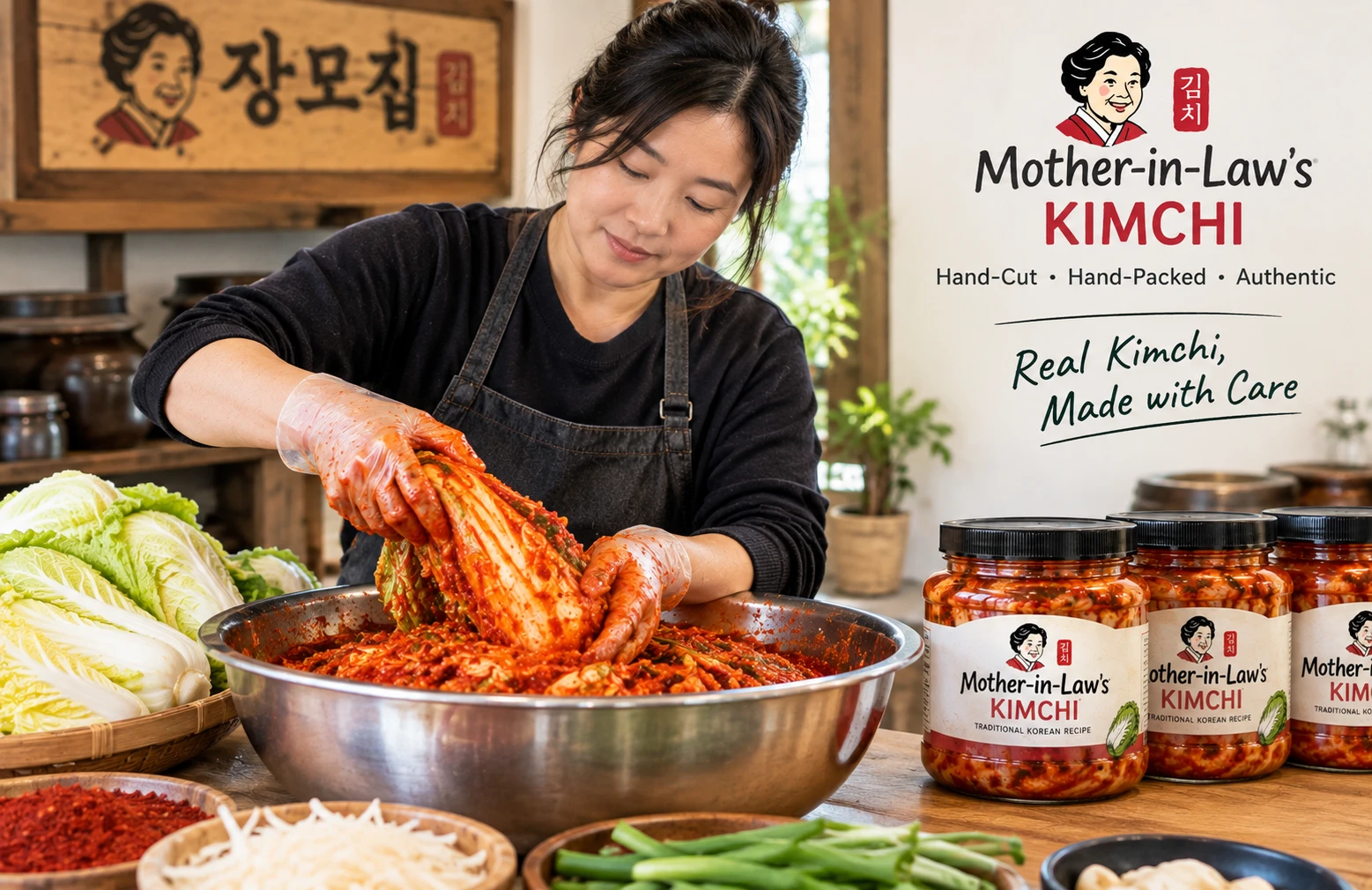
The brand emphasizes “son-mat” (손맛, “hand taste”) — cabbage is cut into long strips by hand rather than machine-sliced, and jars are hand-packed in small batches. Mother-in-Law’s also states it is the only US kimchi brand that ferments entirely in-house, rather than outsourcing production.
Four Products, Not One — Which Jar Is Which
This is the single most important thing most other kimchi content skips: “Mother-in-Law’s kimchi” isn’t one product. It’s four, with real ingredient and price differences between them.

| Product Line | Vegan? | Where Sold | Notes | Amazon |
|---|---|---|---|---|
| House Napa Cabbage (original, best-seller) | ✗ Not Vegan | Whole Foods, Amazon, specialty | Contains anchovy fish sauce, beef bone broth, and shellfish — a distinctive, less common combination. | 🛒 Shop |
| House Reserve Vegan | ✓ Vegan | Whole Foods, Amazon | No MSG, no preservatives, in-house fermented. Same base recipe with animal ingredients removed. | 🛒 Shop |
| Everyday Kimchi (Original & Spicy) | ⚠️ Varies | Sprouts, Meijer, H-E-B, ~$7.29 | Lower-priced mass-retail line. Original contains fish sauce (anchovies); Spicy’s label does not list it — check the jar. | 🛒 Shop |
| Extra Spicy Concentrated | ✓ Vegan | Amazon, Walmart | A gochujang-style paste, not a jarred kimchi. Contains wheat flour — not gluten-free. | 🛒 Shop |
Taste & Texture — The Honestly Mixed Reviews
This is a brand where presenting a single flat verdict would be dishonest — reviewer opinion is genuinely, meaningfully split.
On the positive side, our own hub ranking noted the 4-week-aged sample “impressed in testing,” with real depth once fully fermented, even if milder than Korean-made brands at first opening. Retail customer reviews echo this for some buyers: one long-term kimchi eater who’d lived in Korea and Koreatown called the House Reserve line “the most authentic I have found in my region” outside major Korean-food markets, while another described it as “absolutely my favorite store bought mass produced kimchi.”
On the other side, a national food outlet’s independent taste test of the Everyday Kimchi Original line reached a much less favorable conclusion — describing it as “overwhelmingly sour,” almost like cabbage pickled in pure vinegar, with none of the natural fizziness expected from a well-fermented jar, and specifically recommending it be avoided by anyone sensitive to sourness. Other retail customer reviews are similarly split: some call it “very nasty” and “nothing like authentic kimchi,” while others specifically praise its lighter, milder profile as a plus rather than a flaw.
It’s also worth noting that fermented foods are inherently more batch-variable than shelf-stable products — small-batch, hand-packed production (which Mother-in-Law’s leans into as a selling point) can mean more jar-to-jar variation than a fully automated line, for better and for worse. A jar that tastes noticeably different from the last one you bought isn’t necessarily a quality failure; it may simply reflect a different point in that batch’s natural fermentation curve.
Real Ingredients Breakdown — Line by Line
Pulled directly from retail ingredient panels (Amazon, Instacart, H-E-B) for the two most commonly bought lines — the differences are bigger than most brand pages let on.
| House Napa Cabbage (original, not vegan) | Everyday Kimchi, Original (mass-retail) |
|---|---|
| Napa cabbage | Brined napa cabbage (napa cabbage, sea salt) |
| Korean chile flakes (gochugaru) | Korean red chile pepper flakes |
| Onion | Yellow onion |
| Garlic | Sea salt, fresh peeled garlic |
| Ginger | Garlic (listed twice on panel), fresh ginger root |
| Sugar | Cane sugar |
| Salt | Daikon radish, yellow onions |
| Anchovy fish sauce | Fish sauce (anchovies, salt) |
| Beef bone broth | (not present) |
| Shellfish | (not present) |

Mother-in-Law’s Kimchi Nutrition & Sodium Facts
This is the brand’s clearest strength: genuinely lower sodium than most of the competition, backed by two independent data points.
| Source | Product / Serving | Calories | Sodium |
|---|---|---|---|
| Our own 18-brand hub testing | House line, per 1/4 cup | 15 kcal | 270mg |
| Independent third-party test (Eat This, Not That!) | Everyday Original, per 2 Tbsp | 8 kcal | 125mg |
| Retailer nutrition panel (Instacart) | Everyday Original/Spicy, per labeled serving | — | 150mg |

These figures come from two different lines and serving sizes, which is exactly why they don’t match perfectly — that’s a transparency note, not an inconsistency to hide. What’s consistent across all three sources is the direction: Mother-in-Law’s runs meaningfully lower in sodium than most of the 18 brands in our ranking, where the highest-sodium brands (Mama Kim’s, Nasoya) run 400-420mg per 1/4 cup — a gap of roughly 35-45% depending on which figure you compare. Calories are, as with kimchi generally, very low across the board regardless of which line you buy.
Vegan Status & Certifications
Unlike Jongga or Bibigo, Mother-in-Law’s doesn’t currently hold any third-party religious food certification — worth knowing plainly rather than assuming from the brand’s “clean” positioning.
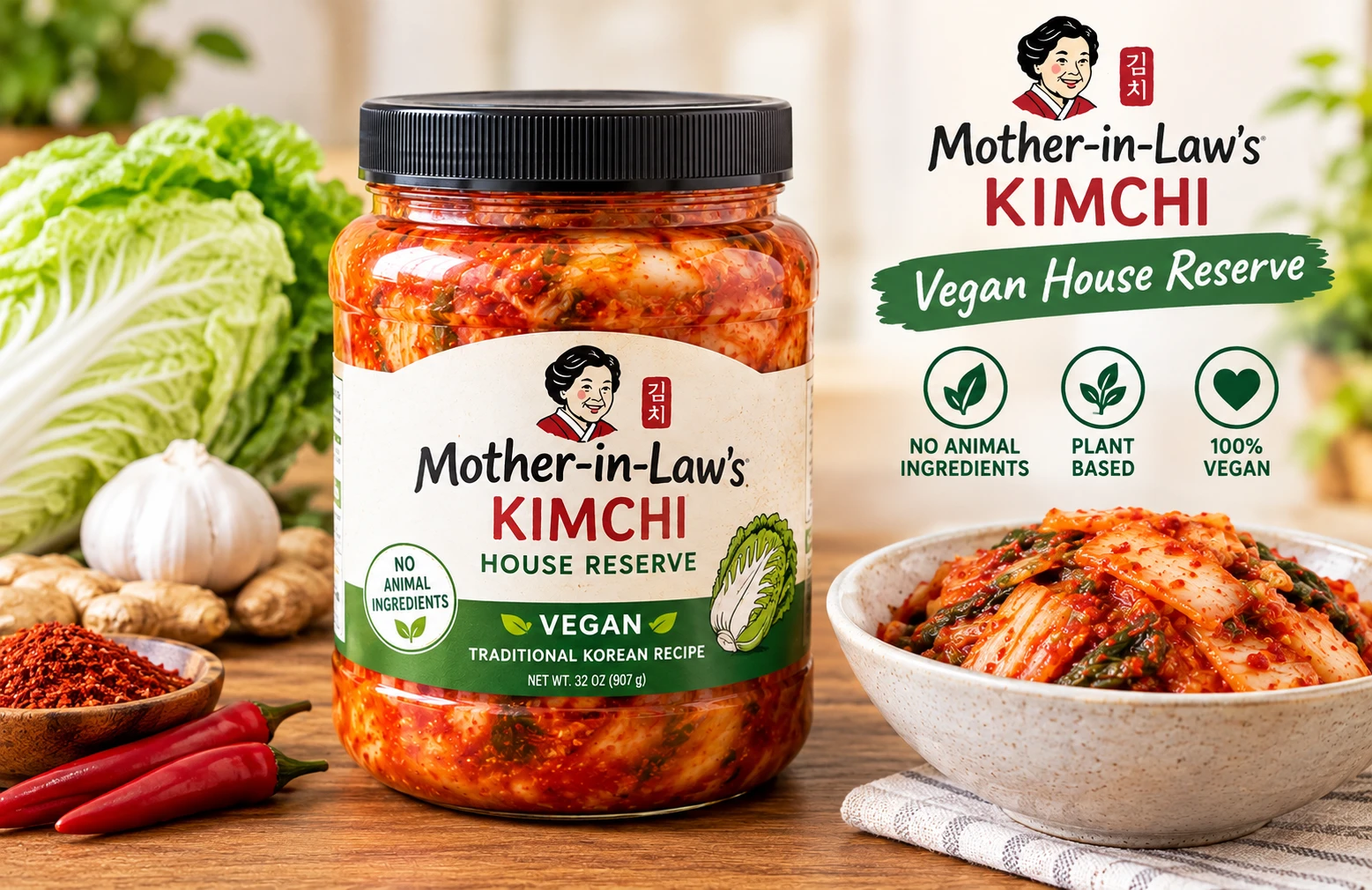
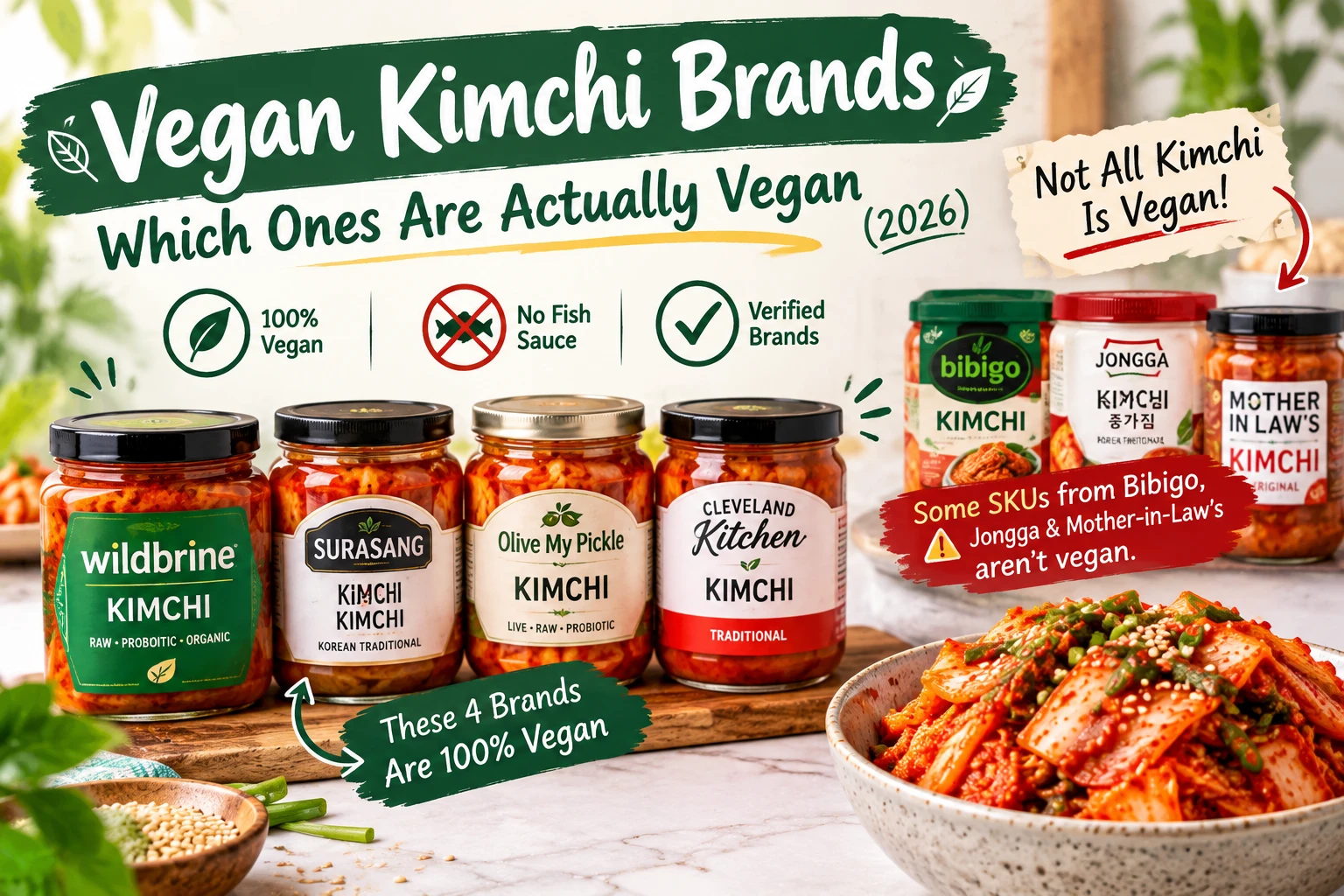
The House Reserve Vegan Napa Cabbage line and the Extra Spicy Concentrated paste are both genuinely free of animal ingredients by their published ingredient lists — no fish sauce, no shellfish, no beef broth. But the brand’s original best-selling House line, and the Everyday Original line, both contain fish sauce, and the House line additionally contains beef bone broth and shellfish. There is no single “is Mother-in-Law’s vegan” answer — it depends entirely on which jar you pick up. See our full vegan kimchi brands guide for how this compares to other brands that skip fish sauce brand-wide, or our vegan kimchi hub if you’d rather just make a fish-sauce-free batch yourself.
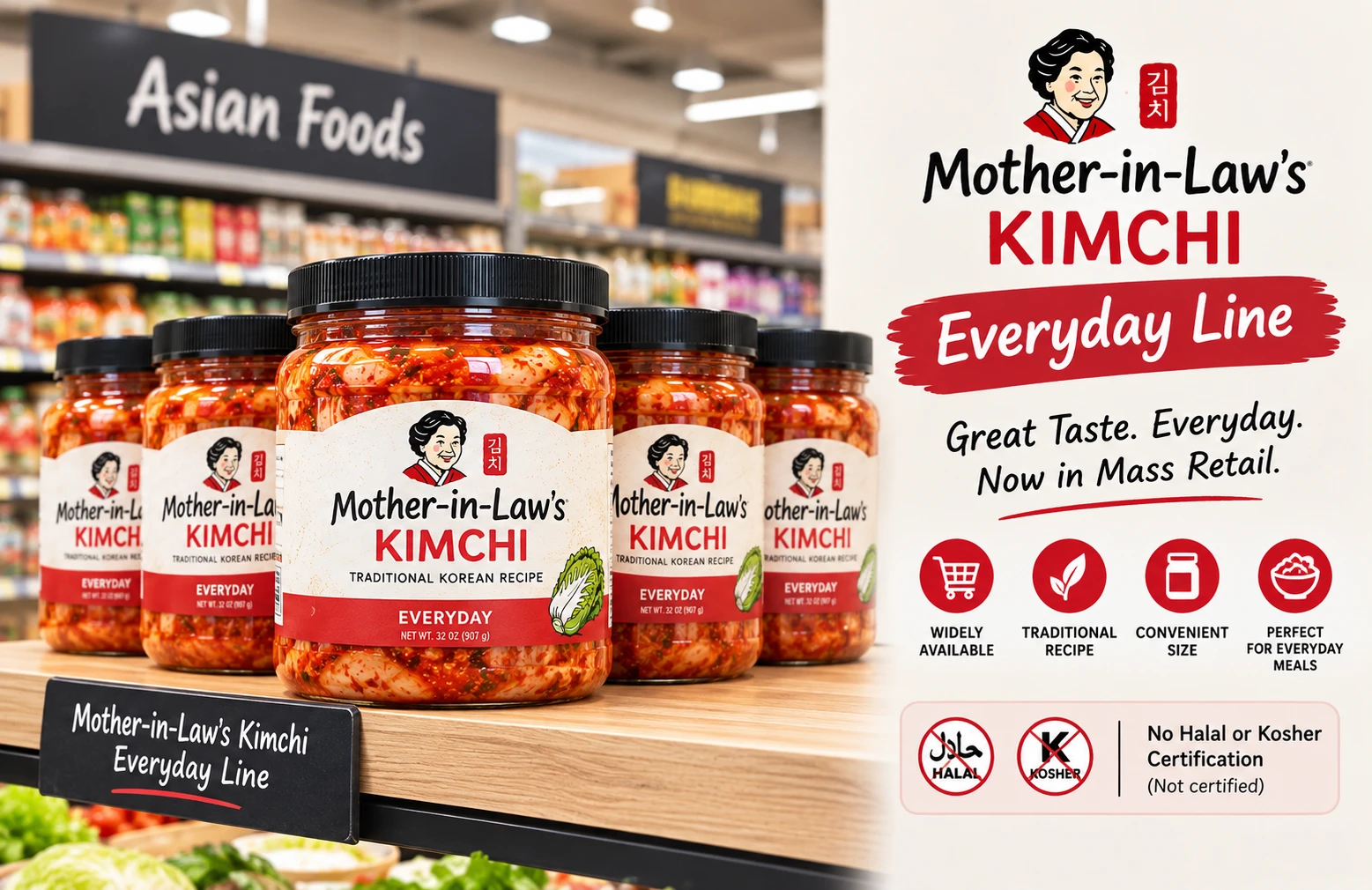
As of this writing, we found no publicly listed IFANCA, JAKIM, or Kosher certification for any Mother-in-Law’s product — a real difference from Jongga (Halal since 2010, Kosher since 2014) and Bibigo (IFANCA/JAKIM Halal-certified vegan lines). The vegan lines being free of animal ingredients is a genuine, verifiable ingredient-list fact, but it is not the same claim as formal third-party religious certification. See our Halal & Kosher kimchi brands guide for which brands do hold certification.
Safety & Quality Notes
Here’s what’s publicly documented — presented factually, without exaggeration in either direction.
It’s also worth keeping fish-sauce-containing kimchi in general context: the FDA has previously handled several undeclared-fish-allergen recalls across the broader kimchi category from other, unrelated brands, precisely because so many kimchi recipes include fish sauce or shrimp paste that isn’t always obvious from the product name. See our 2026 kimchi recall tracker for the current list of affected brands, none of which include Mother-in-Law’s as of this writing. If you have a fish or shellfish allergy, always check the ingredient panel directly rather than assuming based on a jar’s “vegetable” appearance — this applies to Mother-in-Law’s House and Everyday Original lines specifically, both of which contain fish sauce.
Is Mother-in-Law’s Good for Cooking, or Best Eaten Raw?
Both — and this is actually one of the brand’s better-reviewed use cases.
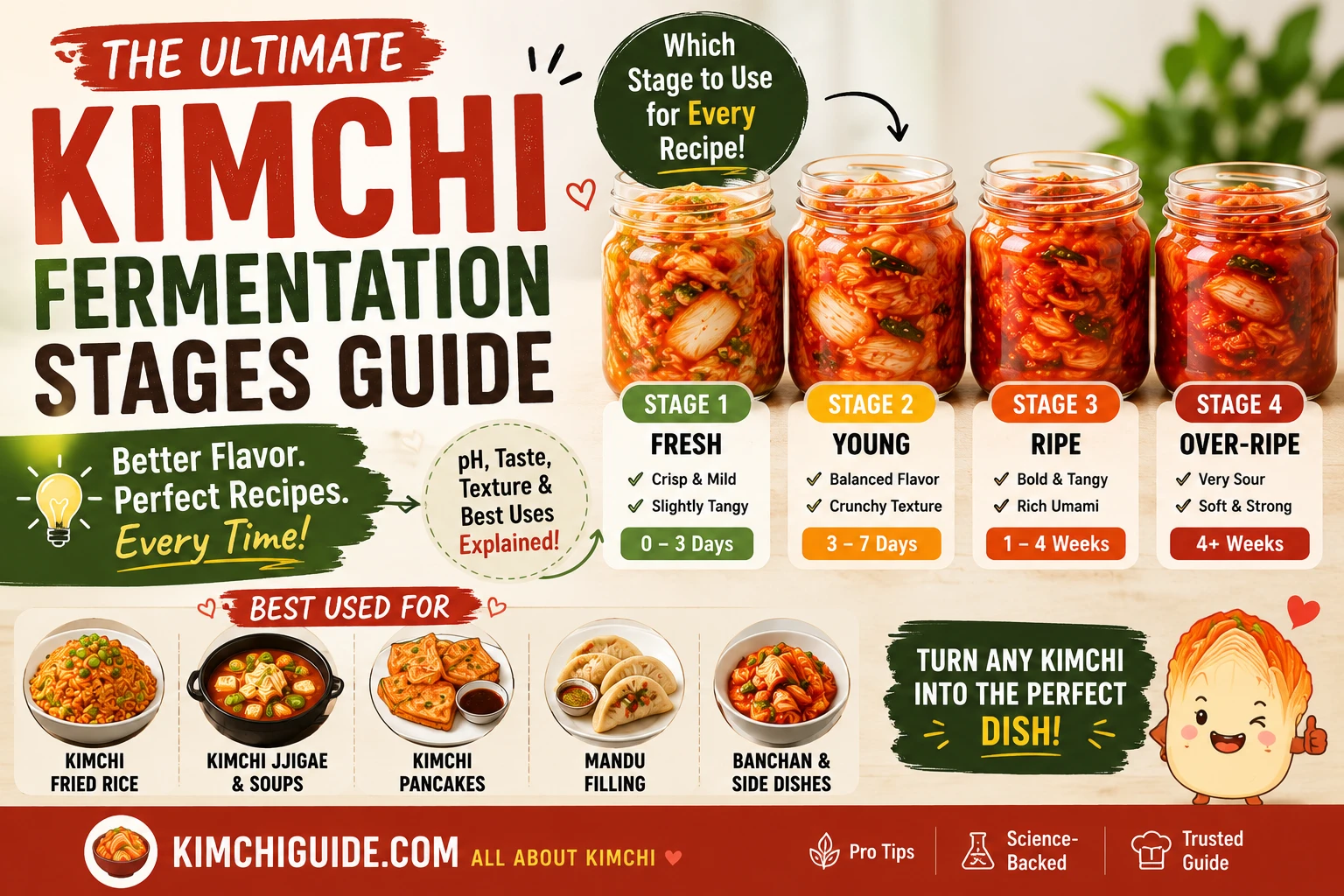
Our own hub testing specifically noted that the 4-week-aged sample of Mother-in-Law’s “impressed in testing” — milder than Korean-made brands fresh out of the jar, but developing real depth once properly aged in the fridge. See our fresh vs. aged kimchi guide for exactly what changes as a jar sours. This makes it a solid choice for kimchi fried rice or kimchi jjigae once it’s had two to three weeks to sour further, which also helps smooth over some of the sourness complaints from reviewers who tried it fresh. The brand’s own marketing specifically highlights the Everyday line as good for stir-fry and fried rice applications, in addition to eating straight from the jar as a side dish.
Availability & Price
Narrower distribution than the mass-market brands in our ranking — this is a specialty/natural-foods-channel brand more than a Walmart-aisle one.
| Retail Channel | Availability |
|---|---|
| Whole Foods Market | ✓ Widely stocked |
| Sprouts Farmers Market | ✓ Stocked (Everyday line) |
| The Fresh Market, Wegmans | ✓ Stocked |
| Meijer, H-E-B | ✓ Stocked (Everyday line) |
| Amazon | ✓ Multiple SKUs — House, Vegan Reserve, paste, gochugaru |
| Walmart, Target, Kroger, Costco | ✗ Not a confirmed regular stock item |
Pricing splits clearly by line: the mass-retail Everyday Kimchi runs around $7.29 for a 16oz jar at retailers like Sprouts — competitive with budget brands like Trader Joe’s. The premium House and House Reserve lines run considerably higher, typically $11-15 for a 16oz jar, reflecting the hand-cut, hand-packed, in-house-fermented process. Always check current pricing at your specific store or on Amazon, since it varies by retailer and region. If it’s not stocked near you, our where to buy kimchi guide covers other channels worth checking.
🛒 Check Price on AmazonHow We Tested Mother-in-Law’s
This review draws on our broader 18-brand blind taste test, cross-referenced against retailer and independent third-party reviews of the brand’s other product lines.
Related Guides
Naturally connected reading if you’re deciding on Mother-in-Law’s or comparing it against the rest of the ranking.


Is Mother-in-Law’s Kimchi Good? FAQ — 22 Questions
Yes, generally — in our blind taste test Mother-in-Law’s scored 7.7/10, ranking #7 of 18 brands, with real strengths in ingredient transparency, clean labeling, and notably lower sodium than most brands tested. Reviewer opinion on flavor is genuinely mixed: some tasters call it a favorite, while others (including one national food outlet’s independent test) found a specific line overly sour. It’s a legitimate artisan option, just less universally loved than the top-ranked imports.
Mother-in-Law’s Kimchi was founded in 2009 by Lauryn Chun, a UCLA graduate who had worked in the wine industry. She launched the brand in New York City, basing her original recipe on her mother’s 25-plus-year-old restaurant, Jang Mo Jip (“Mother-in-Law’s House”), in Garden Grove, California, founded in 1989.
The name comes directly from founder Lauryn Chun’s mother’s restaurant, Jang Mo Jip, which translates from Korean as “mother-in-law’s house.” It also nods to a real Korean cultural tradition: kimchi-making knowledge has traditionally been passed down from a mother-in-law to her son’s new wife when she marries into the family.
It depends entirely on which of the four product lines you buy. The original “House” line contains napa cabbage, Korean chile flakes, onion, garlic, ginger, sugar, salt, anchovy fish sauce, beef bone broth, and shellfish. The “House Reserve” Vegan line has no animal products. The “Everyday Kimchi Original” line lists napa cabbage, chile flakes, yellow onion, salt, cane sugar, green onion, garlic, ginger, daikon radish, and fish sauce (anchovies). Always check the specific jar’s label.
Some lines are, some aren’t. The original “House” Napa Cabbage kimchi (the best-seller) contains fish sauce, beef bone broth, and shellfish, so it is not vegan. The “House Reserve” Vegan line is fully vegan. The “Everyday Kimchi Original” also contains fish sauce; the Everyday Spicy variant’s retail label does not list fish sauce, but always verify the current label.
No third-party Halal or Kosher certification is publicly listed for any Mother-in-Law’s product as of this writing, unlike Jongga or Bibigo. The House Reserve Vegan line is naturally free of animal-derived ingredients by its ingredient list, but that is a different claim from formal religious certification. Look for an actual certifying mark on the jar if this matters to you.
Four distinct lines: House Napa Cabbage (original, contains fish sauce, beef broth, shellfish), House Reserve Vegan Napa Cabbage, Everyday Kimchi (a lower-priced mass-retail line in Original and Spicy), and Extra Spicy Concentrated, a gochujang-style paste rather than a jarred kimchi. The brand also sells gochugaru chile flakes and gochujang sauce separately.
Reviewer opinion is genuinely split. Positive reviews describe a bright, effervescent ferment with real depth. A national food outlet’s independent test of the Everyday Original line described it as overwhelmingly sour with little natural fermentation fizz. Which specific product line you buy seems to matter as much as the brand name itself.
The recipe traces directly to a real 35-plus-year-old Korean restaurant (Jang Mo Jip, founded 1989), and the brand hand-cuts and hand-packs each batch rather than using fully automated production. The House line’s use of beef bone broth alongside anchovy fish sauce is a distinctive addition not commonly seen in other brands.
Based on independent testing of the Everyday Original line, plain kimchi runs approximately 8 calories per 2-tablespoon serving — extremely low, consistent with kimchi generally. This figure is specific to the Everyday line; other lines haven’t been independently lab-tested to the same degree.
Relatively, yes. In our own 18-brand sodium ranking, Mother-in-Law’s came in at 270mg per 1/4 cup — the second-lowest of all 18 brands tested, behind only Olive My Pickle. An independent third-party test of the Everyday Original line found an even lower figure of roughly 125mg per 2 tablespoons.
Mother-in-Law’s is sold at Whole Foods Market, Sprouts, The Fresh Market, Wegmans, Meijer, H-E-B, and on Amazon, where the House Napa Cabbage, House Reserve Vegan, Extra Spicy Concentrated paste, gochugaru, and gochujang are all listed separately.
The mass-retail Everyday line runs around $7.29 for a 16oz jar at retailers like Sprouts. The House and House Reserve premium lines run higher, typically $11-15 for a 16oz jar, reflecting the hand-cut, hand-packed, in-house-fermented process.
No FDA recall specifically under the Mother-in-Law’s or MIL Kimchi brand name was found as of this writing. Some individual retailer customer reviews mention receiving a jar with a compromised seal that allowed mold growth — an isolated packaging report rather than an official recall. Check your country’s official food safety recall database directly for current status.
No — despite the similar name, they’re meaningfully different. The standard House line contains anchovy fish sauce, beef bone broth, and shellfish. House Reserve Vegan is a separate, fully vegan formulation with no animal-derived ingredients, no MSG, and no preservatives. Always check which specific jar is in front of you.
The jarred kimchi lines (House, House Reserve, and Everyday) are made from naturally gluten-free ingredients based on their published ingredient lists. The separate Extra Spicy Concentrated gochujang-style paste does contain wheat flour, so it is not gluten-free — don’t assume the whole product range is gluten-free.
This is a distinctive ingredient choice compared to most kimchi brands, which typically rely solely on fish sauce or shrimp paste for umami depth. Mother-in-Law’s markets this combination as giving their House line a deeper, more savory finish, comparing it to Bolognese-style depth of flavor. It means this line isn’t suitable for pescatarians who avoid meat broth, in addition to not being vegan.
Yes — our hub testing specifically notes the 4-week-aged sample impressed in testing, and the brand’s own marketing highlights it for stir-fry and fried rice. As with most kimchi, letting the jar age in the fridge for a couple of weeks after opening gives a more developed flavor that holds up better to heat.
Jongga and Bibigo are both larger Korean-import or Korean-parent-company brands scoring higher overall (9.4 and 8.1 respectively) for more traditional flavor and wider mainstream availability. Mother-in-Law’s is a smaller, US-based artisan producer that scores well specifically on ingredient transparency and lower sodium, but has more genuinely mixed reviewer opinion on flavor consistency.
Mother-in-Law’s markets its House Reserve line as fermented in-house, stating this gives richer probiotic content, and describes its process as naturally, slowly fermented. Check that the specific jar is sold refrigerated (not shelf-stable) if live-culture content matters to you.
Son-mat (손맛), literally “hand taste,” is a Korean culinary concept referring to the unique flavor that comes specifically from food prepared by experienced human hands rather than machine. Mother-in-Law’s uses this to explain why they hand-cut cabbage and hand-pack each jar rather than using fully mechanized production.
It’s a legitimate, founder-led artisan brand with a genuine origin story, real ingredient transparency, and a meaningfully lower sodium profile than most competitors. It scores a bit lower than the top Korean-import brands specifically on flavor consistency, based on genuinely mixed third-party and customer reviews, so go in expecting a solid, ingredient-forward option rather than the single most universally-loved jar on the shelf.


💬 Leave a Comment
Tried Mother-in-Law’s kimchi? Tell us which line — House, House Reserve, or Everyday — and what you thought.