Kimchi Health Benefits: 5 Potential Benefits, Risks & Sodium
Spicy, crunchy, fermented. Is kimchi good for you? Here are five potential benefits, plus the sodium trade-off most guides skip.


Is Kimchi Good for You?
Kimchi is a traditional Korean dish of salted, seasoned and fermented vegetables, most often napa cabbage and radish. It can be a flavorful, vegetable-based addition to a balanced diet. Properly fermented, unpasteurized kimchi may contain beneficial microorganisms, and the vegetables add fiber and nutrients. But kimchi can be high in sodium, so portion size matters, especially if you watch your salt intake. It is a food, not a treatment for any condition.
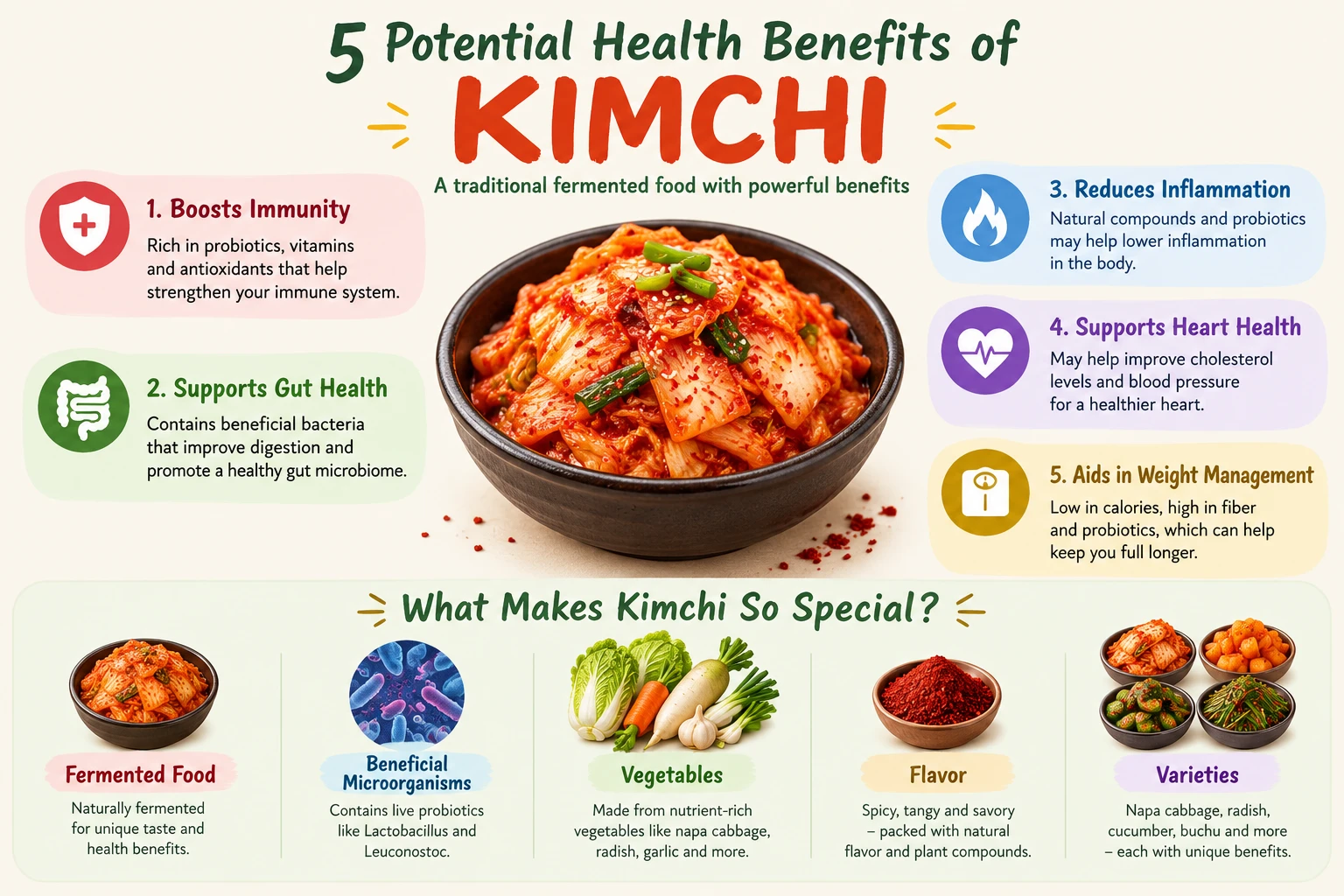
The 5 Benefits in One Picture
Save this infographic for later, or send it to someone who asks, “Is kimchi good for you?” Details, caveats and sodium facts are below.
Kimchi Health Benefits: Key Facts at a Glance
A short, structured summary of the core facts on this page, written by Ji-Young Park and reviewed by Dr. Sarah Mitchell, RD, PhD.
5 Potential Health Benefits of Kimchi
Words like “may” and “can” are deliberate. Kimchi research is promising but still developing, and benefits depend on how the kimchi is made.
- Fermented food — fermentation creates lactic acid and its sour flavor
- Beneficial microorganisms — possible in live, unpasteurized kimchi
- Rich in vegetables — fiber, vitamins and minerals in small servings
- Packed with flavor — makes simple meals more enjoyable
- Many varieties — cabbage, radish, cucumber, buchu and gat kimchi
Fermented food
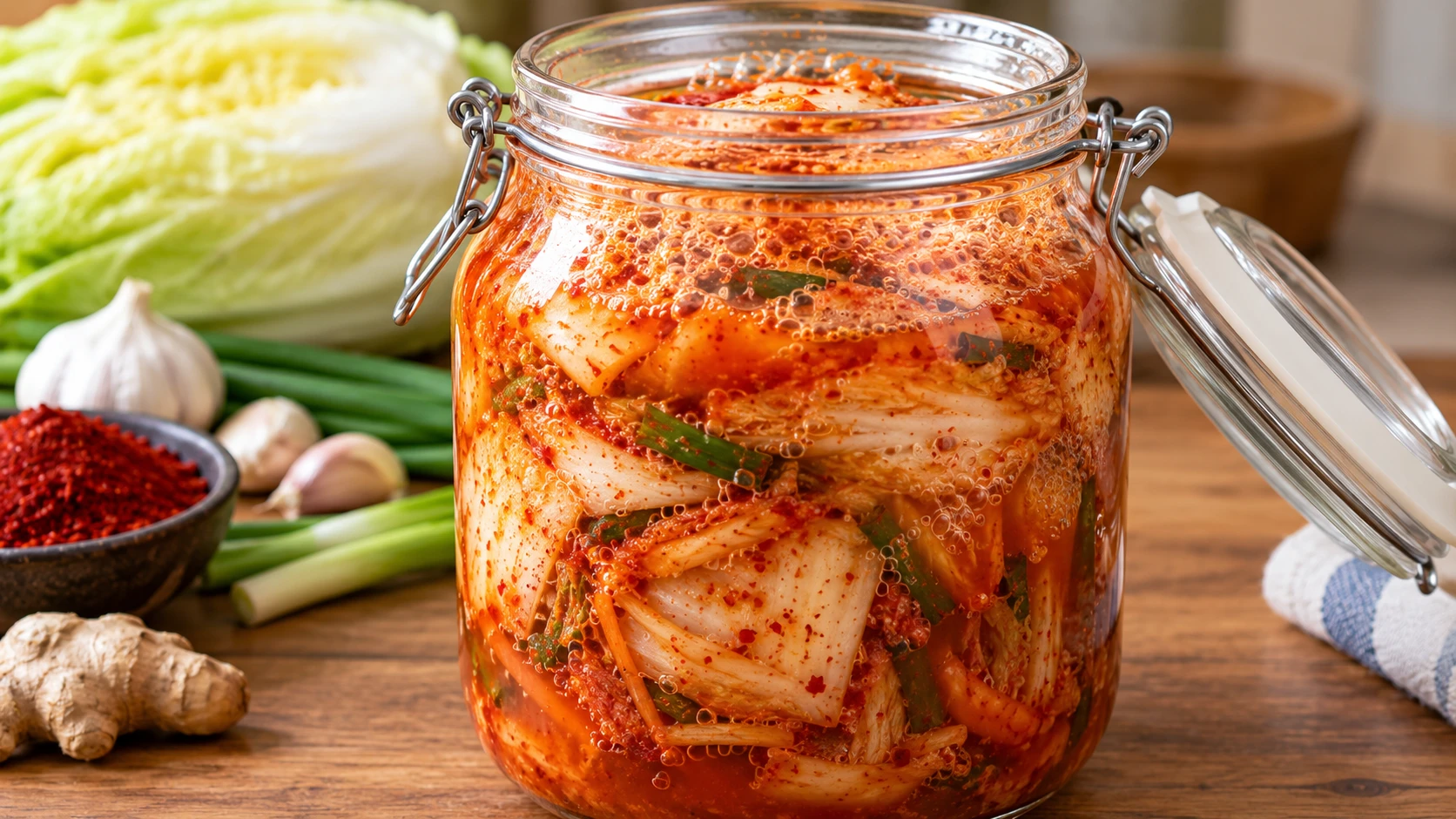
Traditional kimchi fermentation produces lactic acid and other compounds that give kimchi its sour flavor. Fermentation is also what makes kimchi different from a plain cabbage salad.
The caveat: Fermentation does not automatically make every jar healthier. Salt level, sugar and heat treatment all change what ends up in the jar.
Beneficial microorganisms
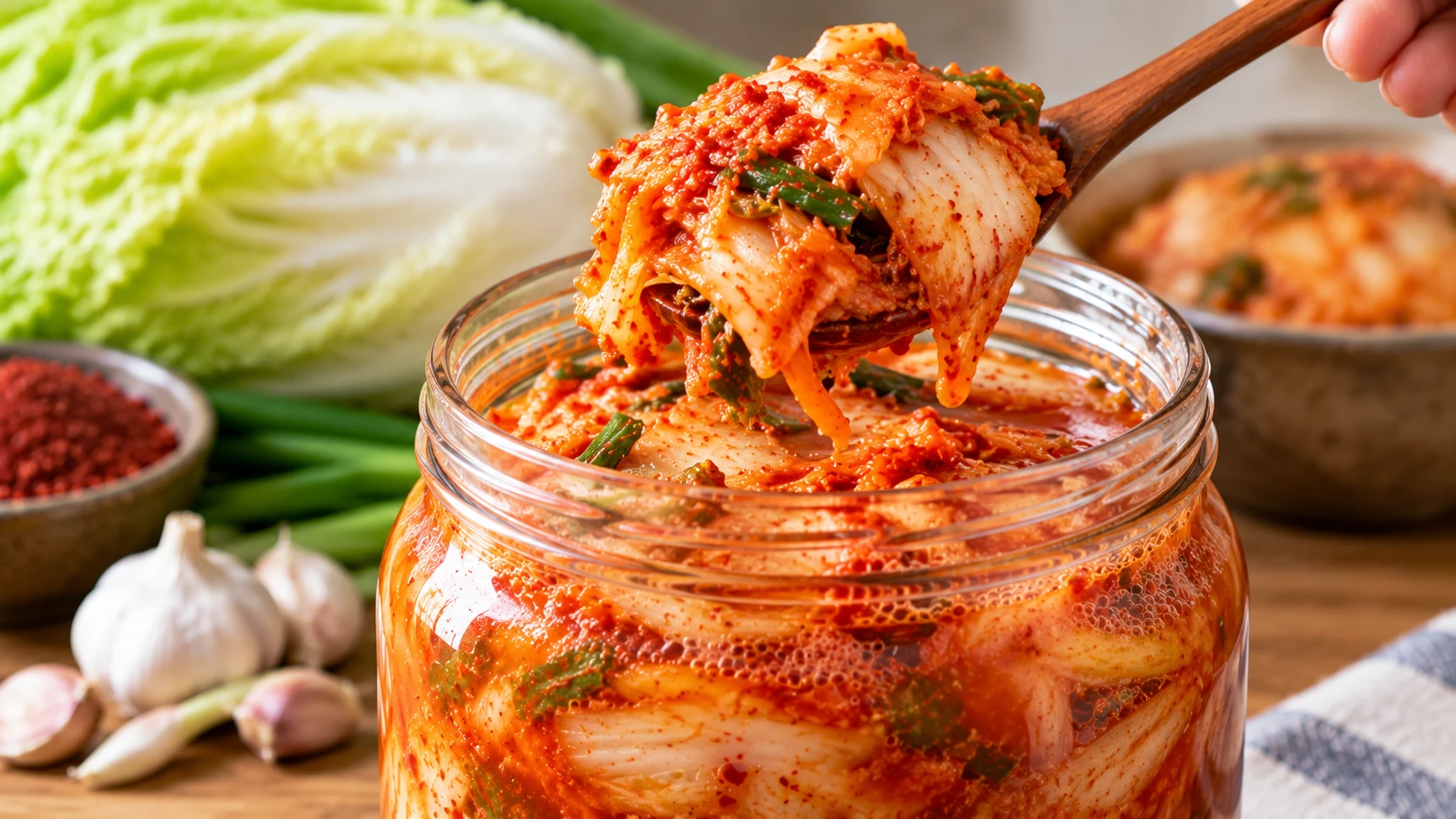
Properly fermented kimchi can contain live microorganisms, although the amount depends on the ingredients, fermentation, storage and heat treatment. Pasteurized kimchi may have none, so check whether your jar is live. Our fermentation stages guide explains how it changes over time, and fresh vs aged kimchi shows how that affects taste.
The caveat: Do not assume every jar is “probiotic”. Live-culture claims depend on the product, and the label is your best clue.
Rich in vegetables
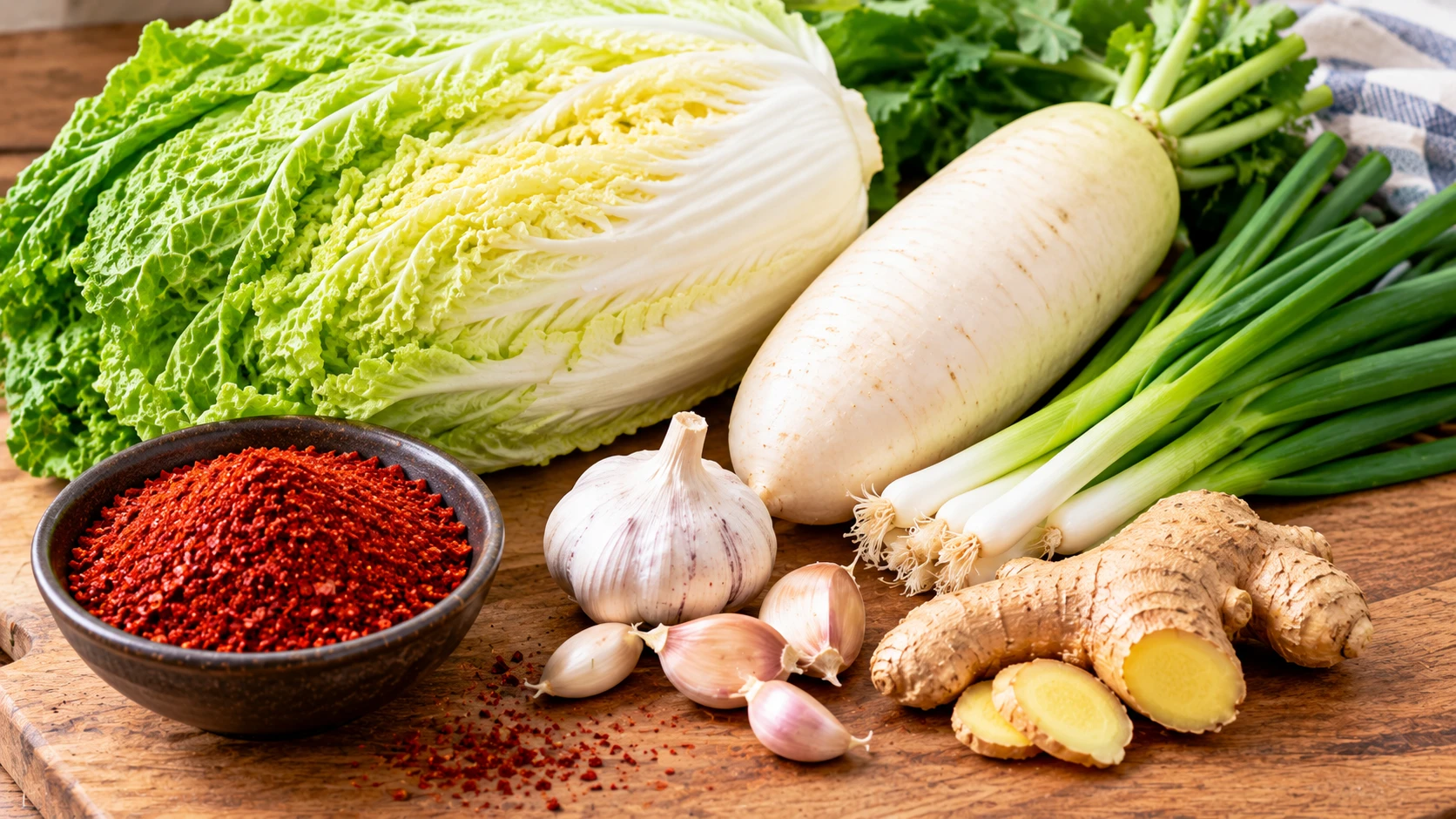
Napa cabbage, radish, scallions and garlic can provide fiber and a variety of vitamins and minerals. A small serving adds vegetables, but it is a side dish, not a replacement for a full portion of vegetables.
The caveat: Most people eat kimchi in spoonfuls, so the fiber and vitamin contribution is modest per serving.
Packed with flavor

A small serving can add spicy, sour, savory flavor to rice, noodles, eggs, soups and sandwiches. Flavor is a real benefit: it helps you enjoy simple, home-cooked food. See 20 ways to use kimchi.
The caveat: Flavor is not a health claim, but food you enjoy is food you keep eating in sensible amounts.
Many different varieties
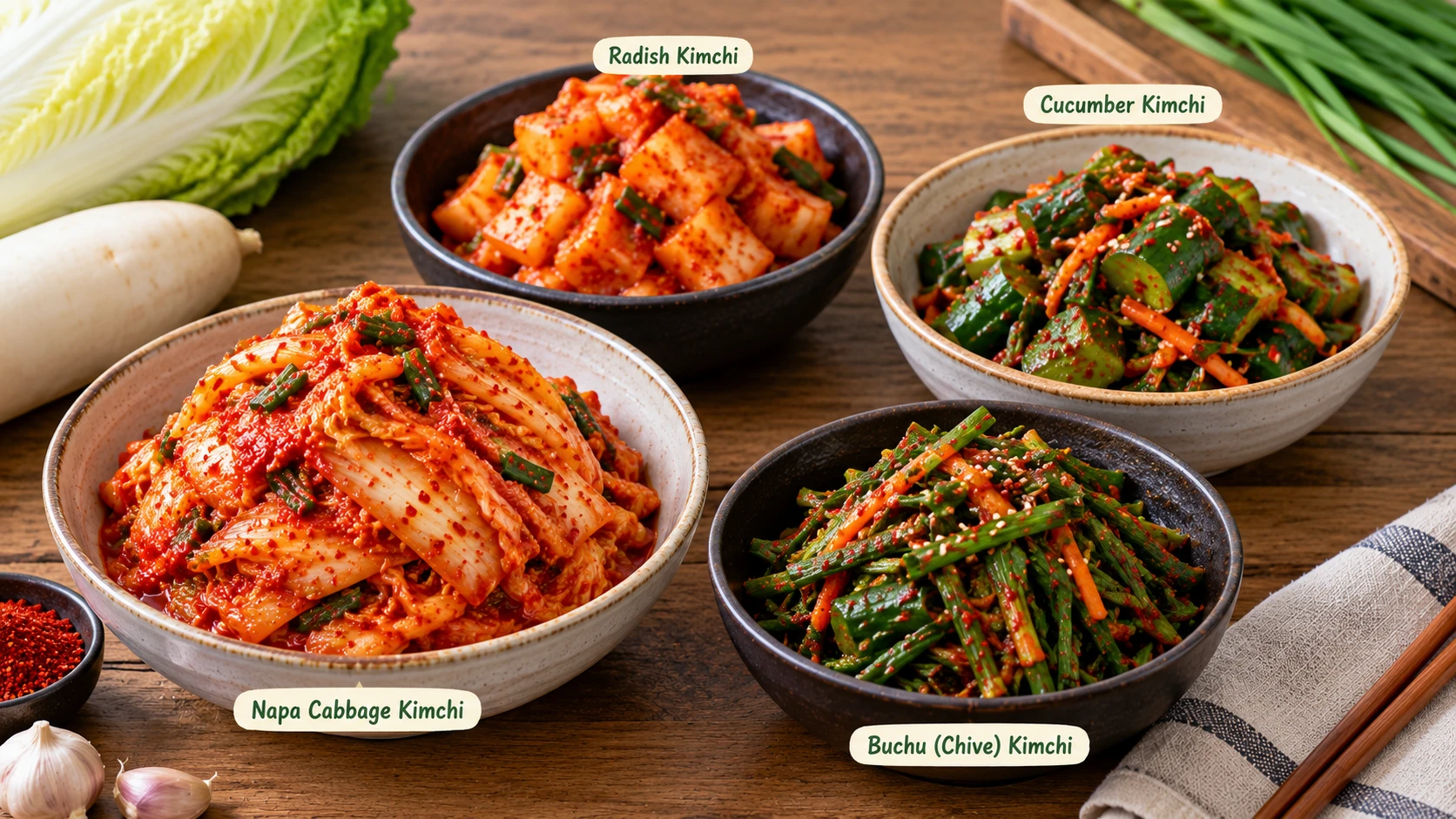
Napa cabbage kimchi, radish kimchi, cucumber kimchi, buchu kimchi and regional styles use different ingredients, so their texture, flavor and sodium differ. Explore the types of kimchi.
The caveat: Different varieties can have very different salt, sugar and fish-sauce content, so read each label.
What Is Actually in Kimchi?
Kimchi is more than cabbage. Each ingredient adds something different, and some of them matter for allergies, vegan diets and sodium.
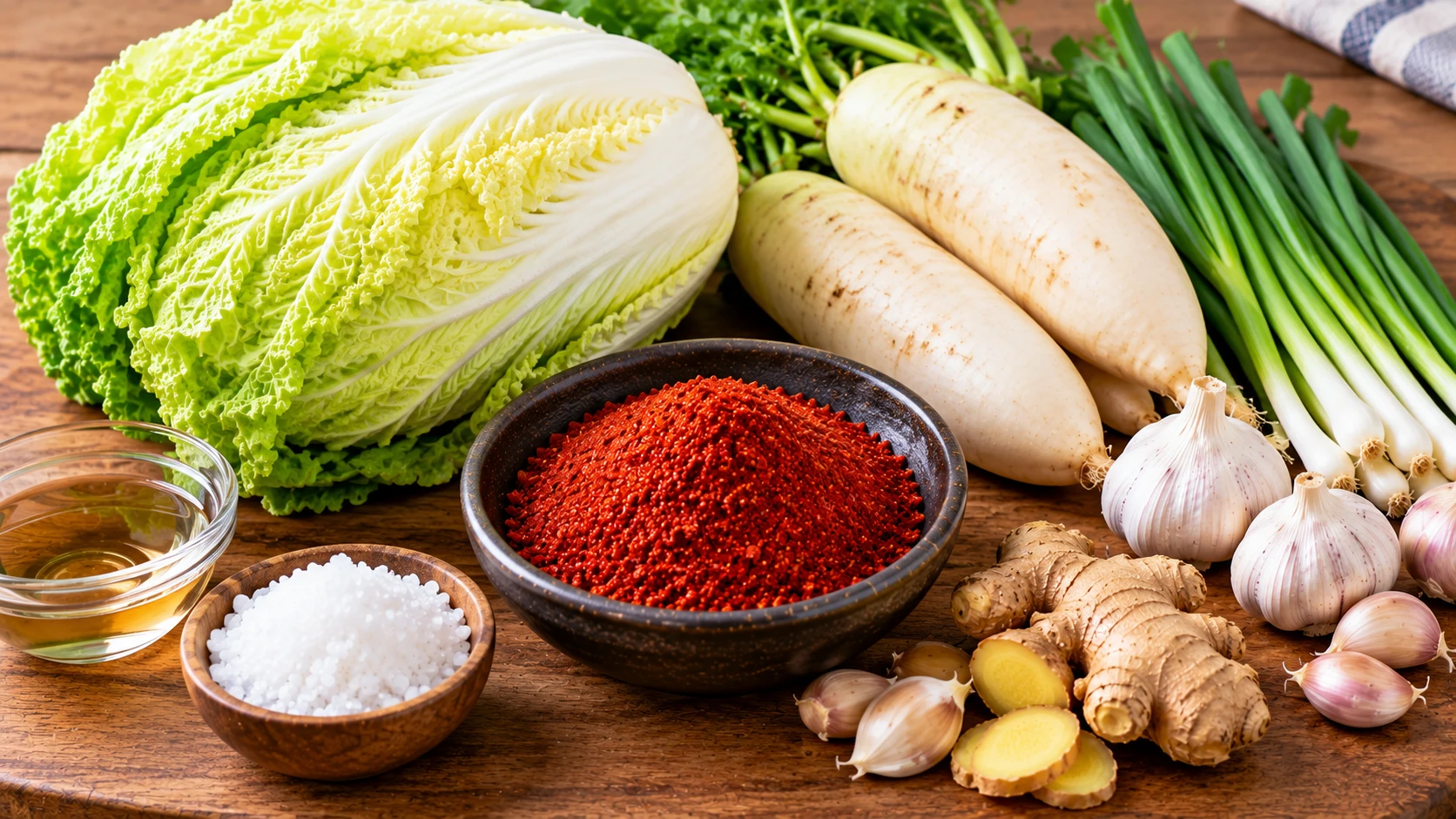
Ingredient guide: what each one adds (tap to open or close)
| Ingredient | What it adds | Worth knowing |
|---|---|---|
| Napa cabbage | The main vegetable: fiber, water, crunch | Most of the volume of a typical jar |
| Korean radish (mu) | Crunch and mild sweetness | Often used alongside or instead of cabbage |
| Garlic and ginger | Pungent, aromatic flavor | Traditionally valued in Korean cooking; research is ongoing |
| Gochugaru (chili flakes) | Heat and red color | See our gochugaru guide |
| Scallions | Fresh onion flavor and extra vegetables | Added in small amounts |
| Fish sauce, salted shrimp | Savory umami depth | Not vegan, and an allergen for fish or shellfish allergy. See vegan kimchi |
| Salt | Draws out water, shapes fermentation, preserves | The main source of the sodium in kimchi |
Kimchi Nutrition per 100 g (USDA Reference Entry)
| Nutrient | Per 100 g |
|---|---|
| Calories | 15 kcal |
| Protein | 1.1 g |
| Fat | 0.5 g |
| Carbohydrate | 2.4 g |
| Fiber | 1.6 g |
| Sugars | 1.1 g |
| Sodium | 498 mg |
Source: USDA FoodData Central, “Cabbage, kimchi” reference entry. This is generic kimchi, not a specific brand, so check your jar’s label.
Live vs Pasteurized Kimchi
If the “beneficial microorganisms” benefit is what interests you, this is the most important section on the page. Whether a jar contains live cultures depends on how it was made and stored.
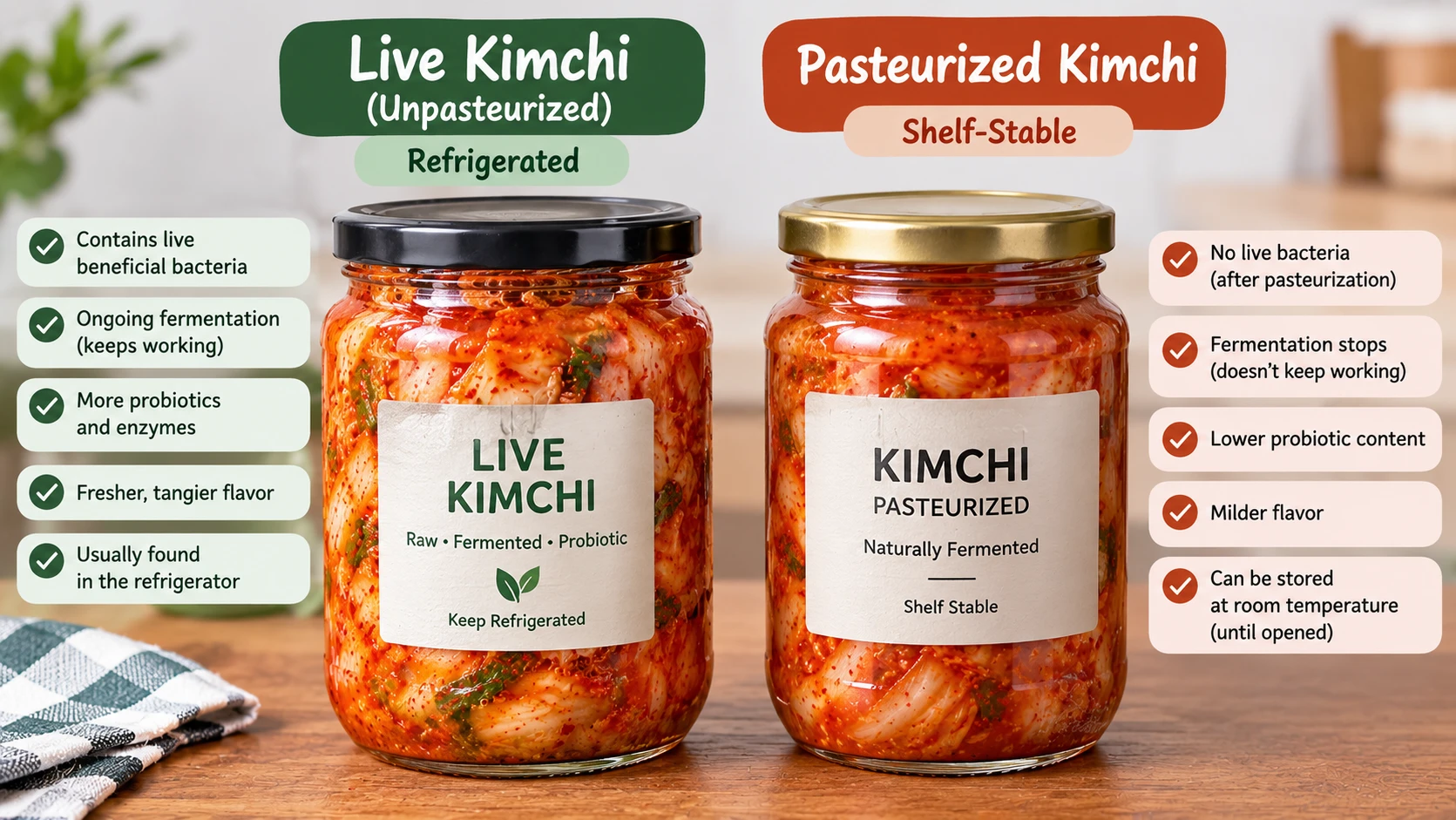
| Feature | Live / unpasteurized | Pasteurized |
|---|---|---|
| Live cultures | May be present | Unlikely, heat reduces or removes them |
| Changes in the fridge | Keeps fermenting and gets more sour | More stable and consistent |
| Storage | Usually kept refrigerated | Some are shelf-stable until opened |
| Taste over time | Evolves, from fresh to tangy to sour | Stays closer to the day it was jarred |
| Best for | Eating raw as a side dish | Convenience, cooking, longer storage |
What the Research Does and Does Not Show
Articles often call kimchi a “superfood”. The honest picture is more careful, and knowing the limits helps you judge any health claim you read.
What studies can tell us
Research suggests that kimchi ingredients and the microorganisms found in fermented kimchi are interesting for gut and general health. That is why kimchi appears so often in nutrition research.
What studies cannot tell us (yet)
Many studies use lab, animal or small human samples, and kimchi differs enormously from one recipe to the next. Studies of people who eat kimchi regularly cannot prove kimchi itself caused any benefit, because those people may also eat differently in other ways. Results from a single strain or extract also do not automatically apply to a spoonful from a jar.
5 Kimchi Health Myths, Checked
The Sodium Trade-Off
Salt is essential to kimchi: it draws water from the cabbage and shapes fermentation. The result is a food that can be high in sodium. A USDA reference entry for napa cabbage kimchi lists about 500 mg per 100 g, and individual brands vary widely.
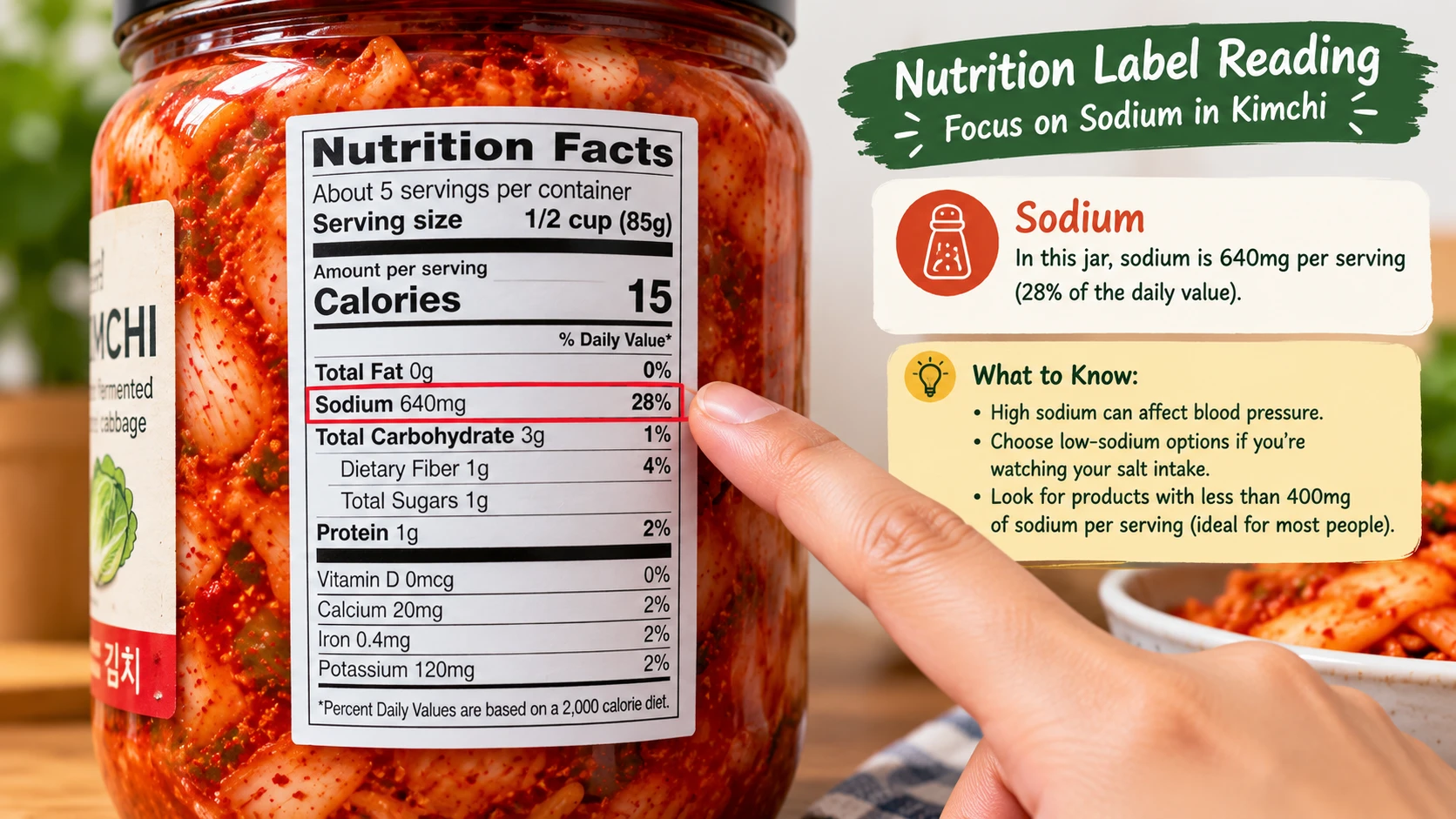
🧮 Kimchi Sodium Calculator
Enter the sodium from your jar’s label to see how much of a daily limit your kimchi uses.
General guide only. Your own limit may differ; ask your doctor or dietitian.
7 Ways to Lower the Sodium of a Kimchi Meal
How to Choose a Healthier Jar
Pasteurized kimchi is shelf-stable but may not contain live cultures; unpasteurized kimchi keeps fermenting in the fridge. Read more in our pasteurized vs live culture guide, then see where to buy kimchi. Stay current with kimchi recall 2026 notices too. Want to control the salt yourself? Try making kimchi from scratch.
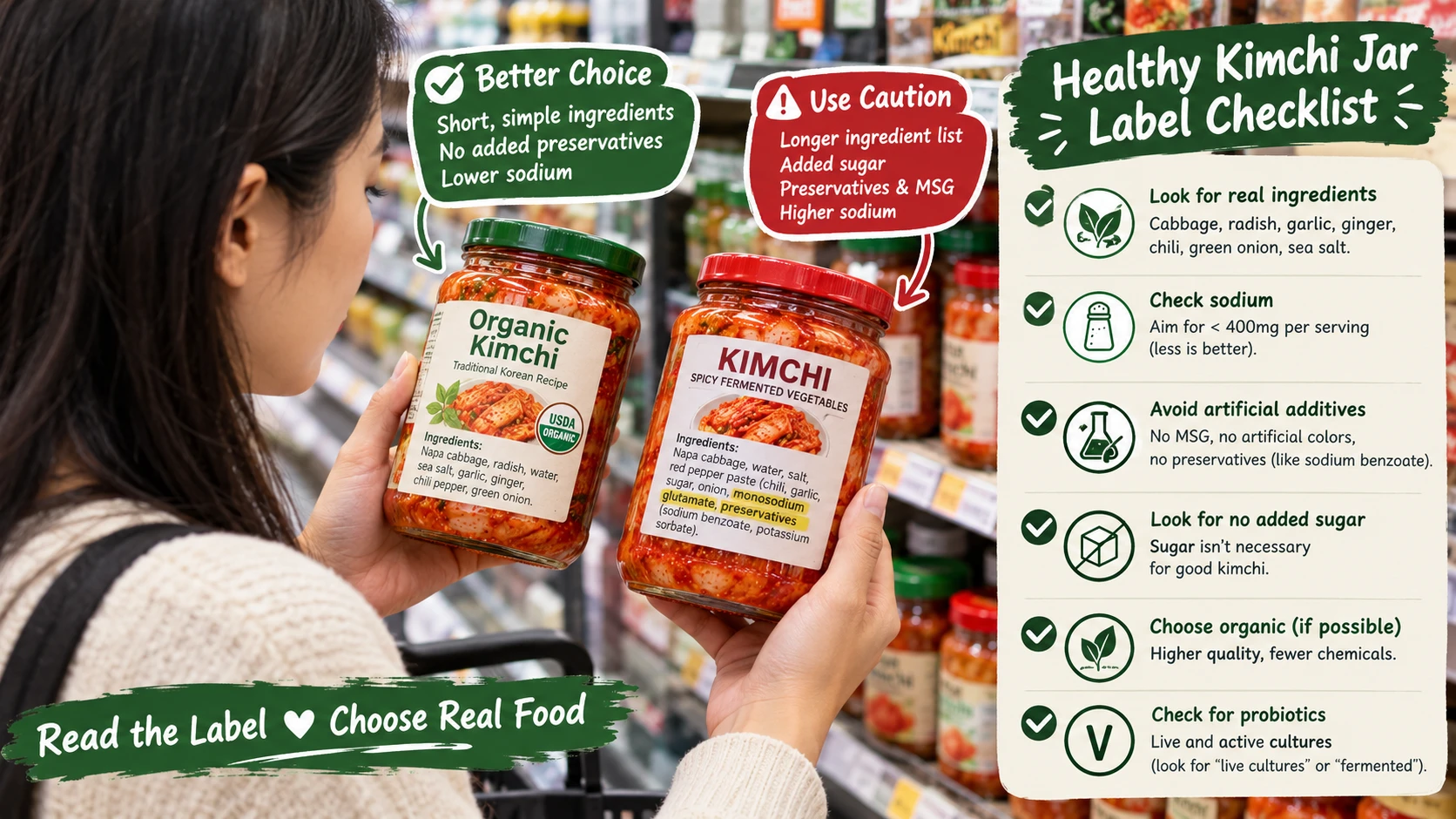
7 Label Checks Before You Buy a Jar
Who Should Be Careful with Kimchi?
Kimchi suits many people, but a few situations call for a closer look at the label or a quick word with a healthcare professional.
Who should be careful? (tap to open or close)
| Situation | Why | What to do |
|---|---|---|
| Salt-restricted diet (blood pressure, kidney or heart conditions) | Kimchi can be high in sodium | Ask your doctor, pick low-sodium jars, keep portions small |
| Fish or shellfish allergy | Traditional recipes use fish sauce or salted shrimp | Read the full ingredient list or choose vegan kimchi |
| Sensitivity to fermented foods | Fermented foods can bother some people, for example those sensitive to histamine | Start with a small amount and ask your doctor if symptoms occur |
| Pregnancy or weakened immune system | Questions about unpasteurized foods and food safety | Ask your healthcare provider what is right for you |
| Sensitive digestion | Spicy, fermented foods can cause gas or discomfort for some people | Begin with a spoonful and build up gradually |
How to Enjoy Kimchi Sensibly
A small, regular spoonful is easier to sustain than a big occasional portion, and it keeps sodium in check.

Raw kimchi suits the live-culture goal, while sour or older kimchi shines when cooked. For recipes and uses, browse what to do with kimchi, kimchi fried rice and fresh vs aged kimchi. If you have sour kimchi to use up, see what to do with sour kimchi; the leftover brine has its own brine uses guide. Planning a routine? See the 7-day and 30-day kimchi diet plans.
6 Easy Ways to Add Kimchi to Your Day
Sources and Further Reading
- USDA FoodData Central, “Cabbage, kimchi” reference entry (nutrition per 100 g).
- KoreaScience review of kimchi health functionalities on kimchi ingredients, lactic acid bacteria and metabolites.
- Clemson Cooperative Extension, “Kimchi – An Introduction”.
- Healthline, benefits of kimchi (general overview).
Information on this page is for general education and is not medical advice. Last reviewed October 6, 2026.
Kimchi Health FAQ
Kimchi is a vegetable-based food that can fit a balanced diet, and it may offer benefits such as fiber, vitamins and, in live versions, beneficial microorganisms. It can also be high in sodium, so portion size matters. Research on kimchi is still developing, so it should not be treated as a cure or treatment for any condition.
Properly fermented, unpasteurized kimchi can contain live microorganisms, but the amount depends on the ingredients, fermentation, storage and heat treatment. Pasteurized jars may not contain live cultures. See our guide to pasteurized vs live culture kimchi brands.
It can be. Salt is used in the brining and seasoning, and levels vary a lot by brand. A USDA reference entry for napa cabbage kimchi lists roughly 500 mg of sodium per 100 g. Compare jars in our low-sodium kimchi guide.
There is no official recommended amount. Many people eat a small side serving with meals. If you watch your salt intake, keep portions small and check the label. If you have a medical condition, ask your doctor or dietitian.
Cooking can reduce or remove live cultures, but the vegetables, fiber and flavor remain. Cooked kimchi is a fine way to use sour or older kimchi. See what to do with kimchi.
Neither is automatically better. Homemade lets you control salt and ingredients. Store-bought is convenient and varies by brand. Check the label for sodium, added sugar, and whether it is live or pasteurized. See the best store-bought kimchi brands.
This depends on your situation, including sodium limits and food-safety advice from your healthcare provider. Ask your doctor or dietitian before changing your diet.
Kimchi is a low-calorie vegetable food, but no single food causes weight loss. It can add flavor to meals without many calories, and overall diet matters most.
It can for some people, especially in larger portions or if you are new to fermented, spicy food. Start with a small amount and increase gradually. If discomfort continues, ask your doctor.
Not always. Traditional kimchi often contains fish sauce or salted shrimp, but vegan versions exist. See our guide to vegan kimchi brands.
Kimchi keeps fermenting and gets more sour in the fridge, which is normal. Mold or a truly mushy, off-smelling texture means it should be thrown away. See fresh vs aged kimchi.
There is no single best jar. Compare sodium per serving, check whether it is live or pasteurized, and choose one that fits your diet. Our brand ranking compares options.