Kimchi Broccoli Fried Rice (브로콜리 김치볶음밥 — Broccoli Kimchi Bokkeumbap)
The move most recipes skip: blanching the broccoli first, patting it bone-dry, then charring it separately before it ever meets the kimchi. Skip that and you get the classic failure mode — dull, olive-drab broccoli that’s gone soft in the sauce. 25 minutes, one wok.
What Is Kimchi Broccoli Fried Rice?
Kimchi broccoli fried rice — broccoli kimchi bokkeumbap (브로콜리 김치볶음밥) — is Korean fried rice built around blanched, charred broccoli instead of meat or cheese. The technique that actually decides whether it’s good: the broccoli is blanched and shocked first, patted completely dry, then charred separately in a hot pan — this is what keeps it bright green and crisp-tender instead of turning dull and soft once it meets the kimchi’s acid and salt. The kimchi and garlic caramelise in the same pan, day-old rice fries in with the gochujang, and the charred broccoli is folded back in only at the very end. Topped with a fried egg. Serves 2 in 25 minutes at approximately 390 calories and 6g fibre per serving — the highest fibre of any KFR variation on the site.
How to Make Kimchi Broccoli Fried Rice
Kimchi broccoli fried rice takes 25 minutes: blanch and shock small broccoli florets and diced stems, pat them bone-dry, char them separately in a hot wok, caramelise Stage 3 kimchi and garlic in the same pan, fry in day-old rice with gochujang, then fold the charred broccoli back in at the very end and top with a fried egg.
- Blanch: small florets and diced stems, 60–90 seconds, then shock in ice water.
- Char: pat bone-dry, then blister in a hot dry wok, undisturbed, 2 minutes. Set aside.
- Caramelise: garlic and kimchi in the same pan, 2–3 minutes.
- Fry the rice: add gochujang, kimchi juice, cold rice; press every 25–30 seconds.
- Finish: off heat, fold the charred broccoli back in. Top with a fried egg, scallions, sesame seeds.
Why This Isn’t Just “Stir-Fry the Broccoli In”
Most recipes online either steam raw florets directly in the pan with everything else, or grate the stem in raw. Both produce the same failure mode: broccoli that turns dull olive-green and soft instead of staying bright and crisp-tender.

A 60–90 second blanch followed immediately by an ice-water bath stops the cooking before the chlorophyll that gives broccoli its bright green colour has time to break down.

Wet broccoli dropped into a hot pan steams instead of browning. Patting it completely dry after blanching is what lets it actually blister and char in the wok.

Broccoli added at the same time as the kimchi simmers in acidic liquid for several minutes and loses both colour and bite. Folding it in off heat, right at the end, keeps the char intact.

Peeled and diced, the stems blanch and char exactly like the florets — a way to use the roughly 30% of the head most recipes throw straight in the bin.
Blanch-and-Char vs Straight-Into-the-Wok — Compared
Nearly every “kimchi broccoli fried rice” recipe online just throws raw florets in with the rest of the pan. We tested both approaches across 6 batches. The difference decides whether the broccoli stays bright and crisp-tender or turns drab and mushy.

Broccoli is blanched 60–90 seconds, shocked in ice water, patted bone-dry, then charred separately in a hot wok and folded back in at the end. Result: bright green, crisp-tender, visible char in every batch test.

Raw florets added directly with the kimchi, sauce, and rice. Result: dull olive-green colour and inconsistent texture — some pieces undercooked, others gone soft — in 5 of 6 test batches.
Method Comparison at a Glance
| Method | Colour & Texture | Time | Verdict |
|---|---|---|---|
| Blanch-and-Char ⭐ | Bright green, crisp-tender | +5 min prep | Always use this |
| Straight-Into-the-Wok | Drab, uneven texture | +0 min prep | Avoid — inconsistent results |
Key Terms & Prep Guide
Kimchi Fermentation Stage — Guide
Broccoli has a mild, slightly bitter edge and no rich fat to lean on, so the kimchi’s acidity needs to be developed enough to carry the dish. Stage 3 is the clear choice.
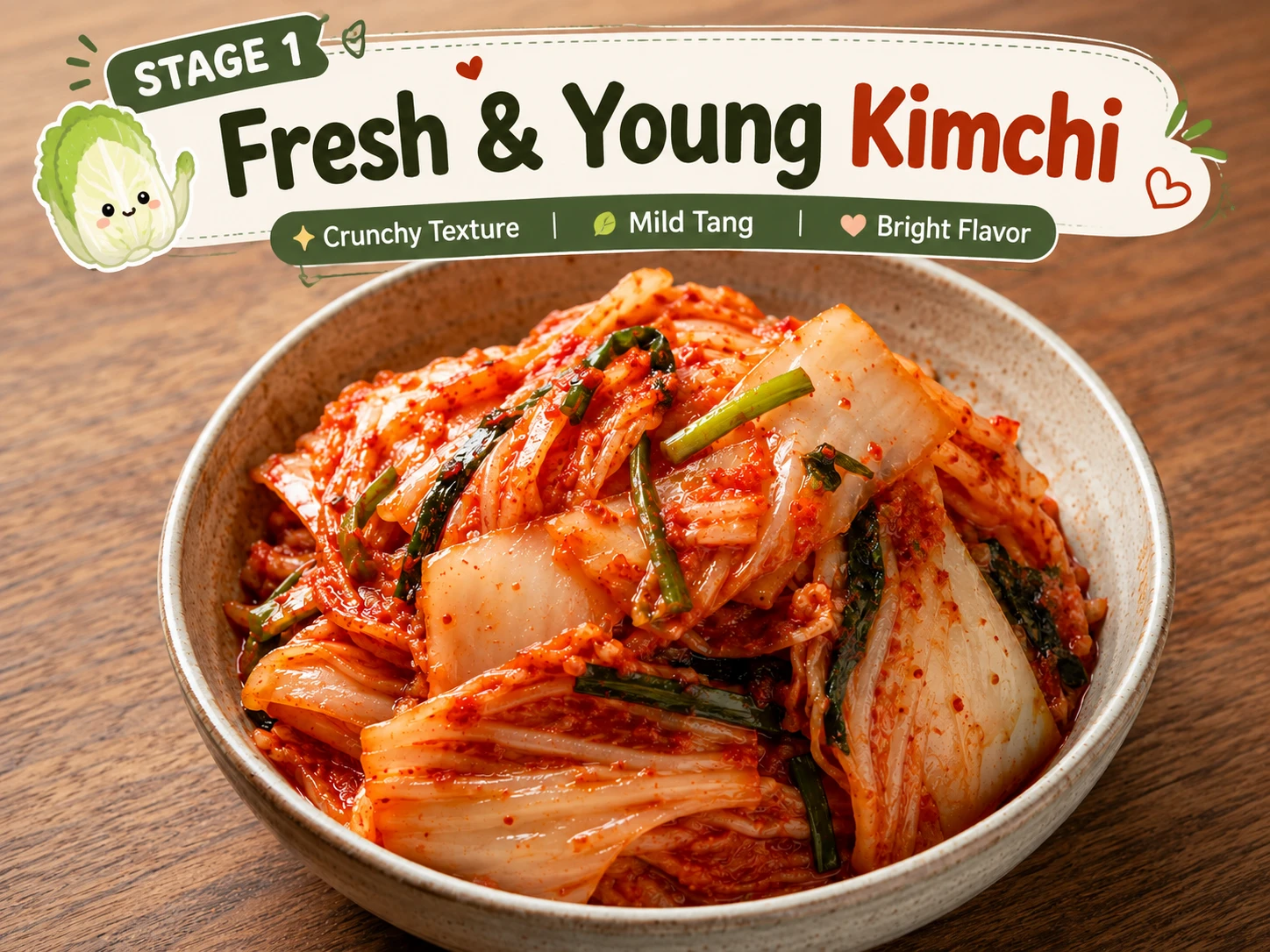
Too mild to stand up to broccoli’s bitterness — the dish tastes like plain stir-fried vegetables with cabbage.
✗ Do Not Use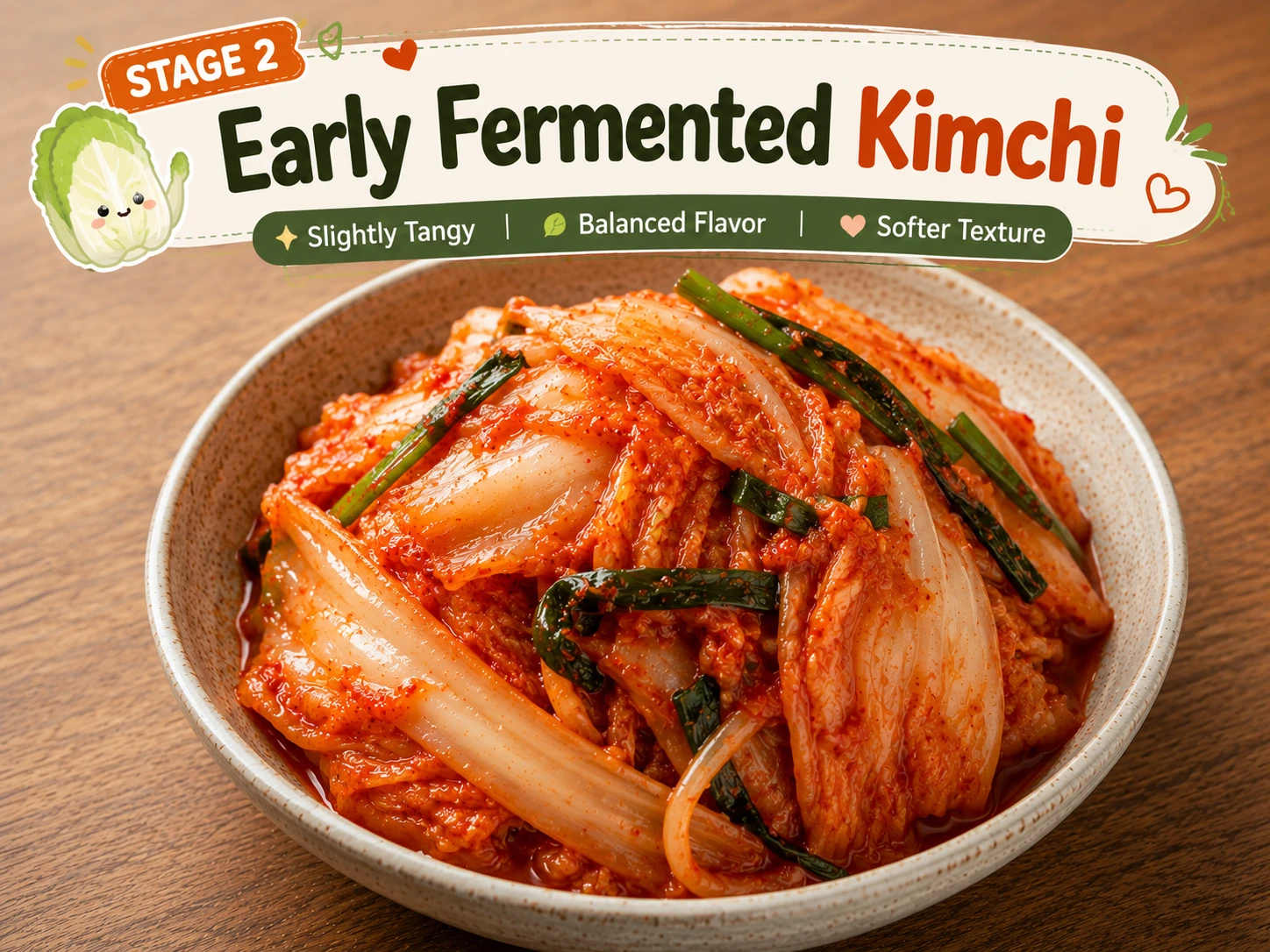
Workable with a touch more gochujang and an extra splash of kimchi juice to compensate for the missing tang.
△ Last Resort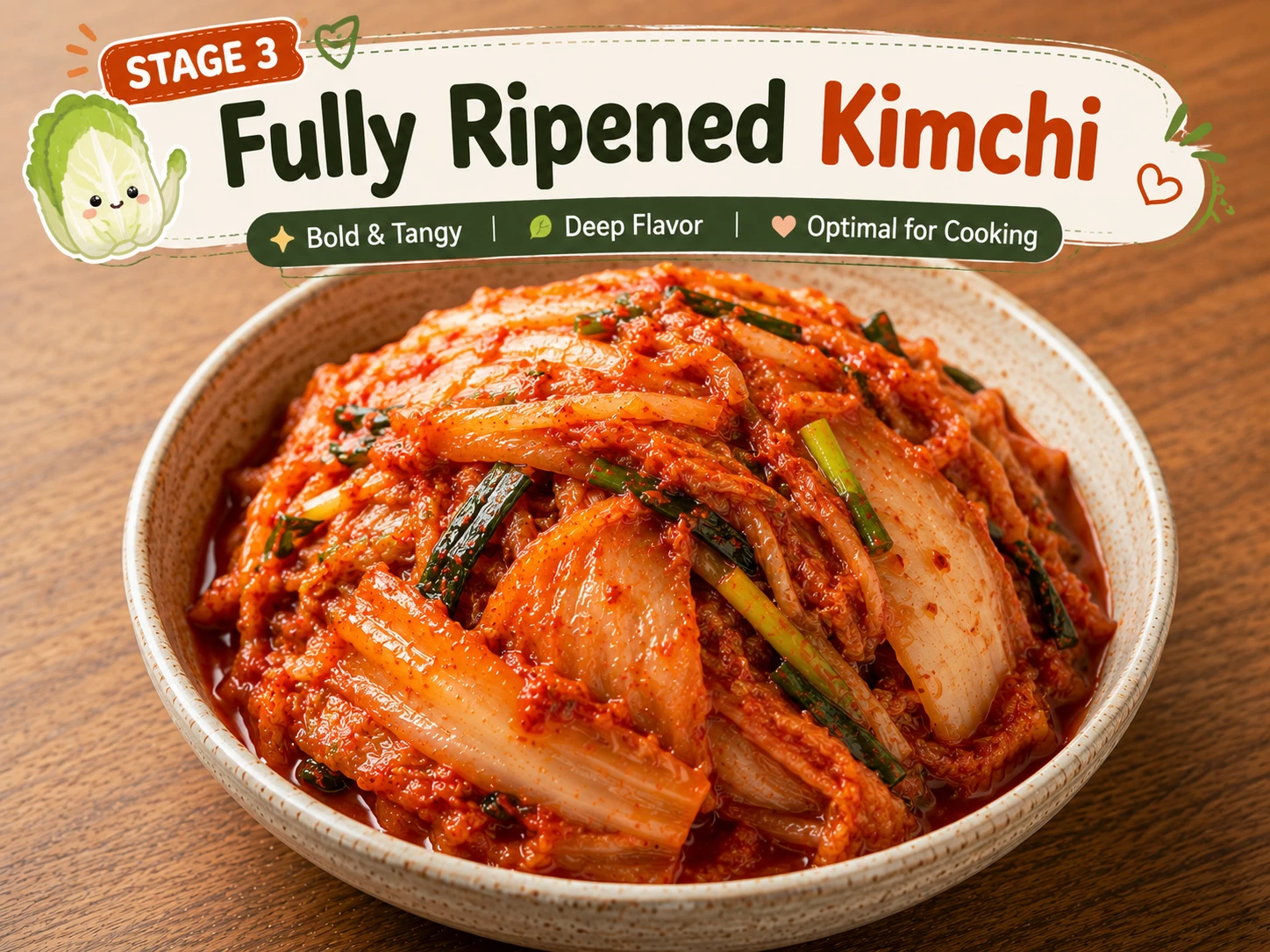
Strong enough acidity to carry the dish against broccoli’s mild bitterness, keeping it tasting like kimchi fried rice rather than plain vegetables.
★ Correct Choice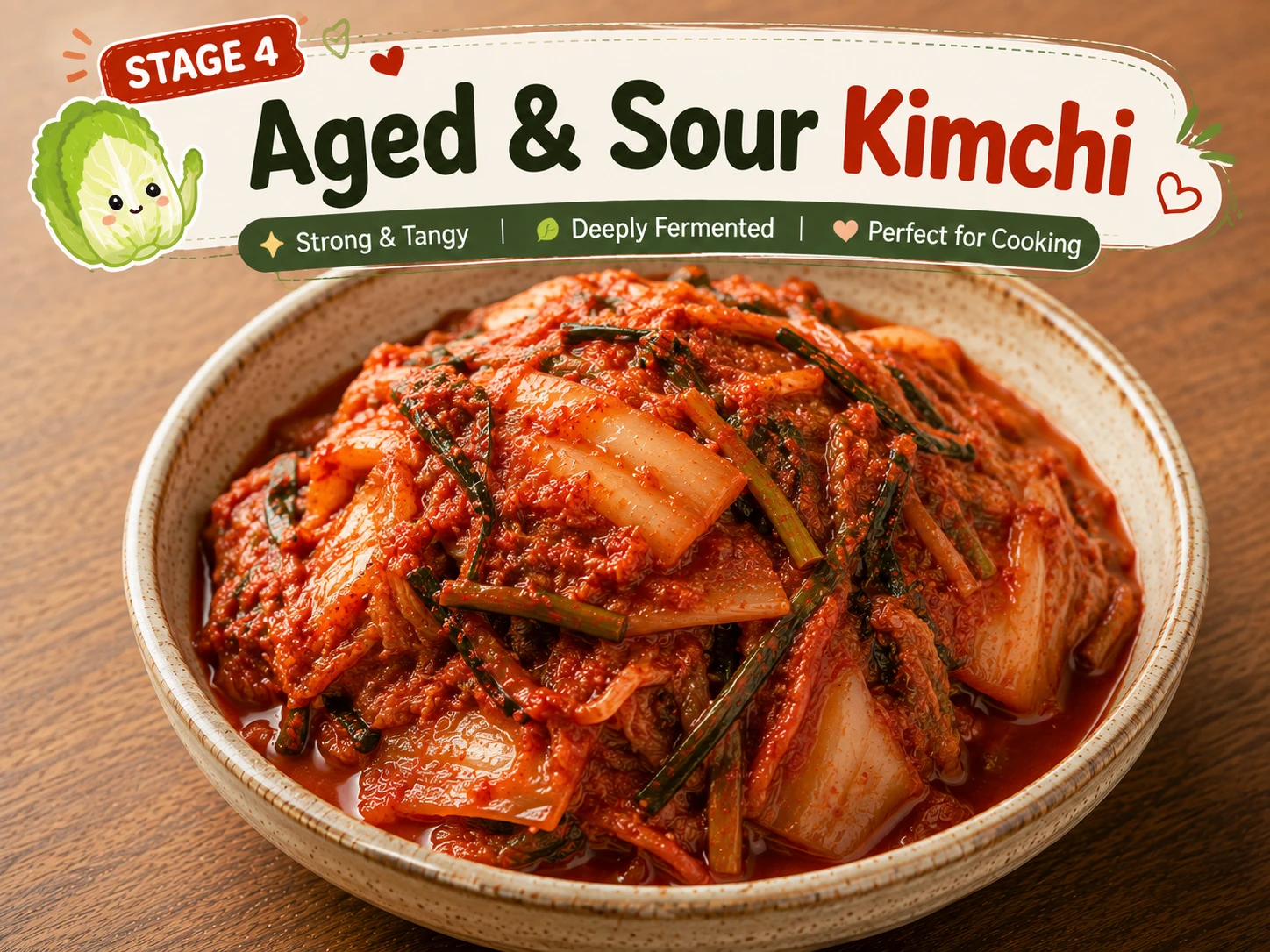
Its sharpness can overpower broccoli’s subtler flavour — usable, but the most intense option in the lineup.
△ Works — Intense OnlyHow Difficult Is This Recipe?
Genuinely beginner-friendly. The only extra step versus the classic recipe is blanching and charring the broccoli before it goes anywhere near the rice.
Ingredients + Scaler
Broccoli, blanched and charred properly, is the only ingredient that needs technique — everything else is standard KFR pantry staples. Day-old rice matters here as much as in every other variation; see our Best Rice for Fried Rice guide for why.
Amounts scale automatically with the servings control above.
Common Substitutions
| Ingredient | Substitute | Notes |
|---|---|---|
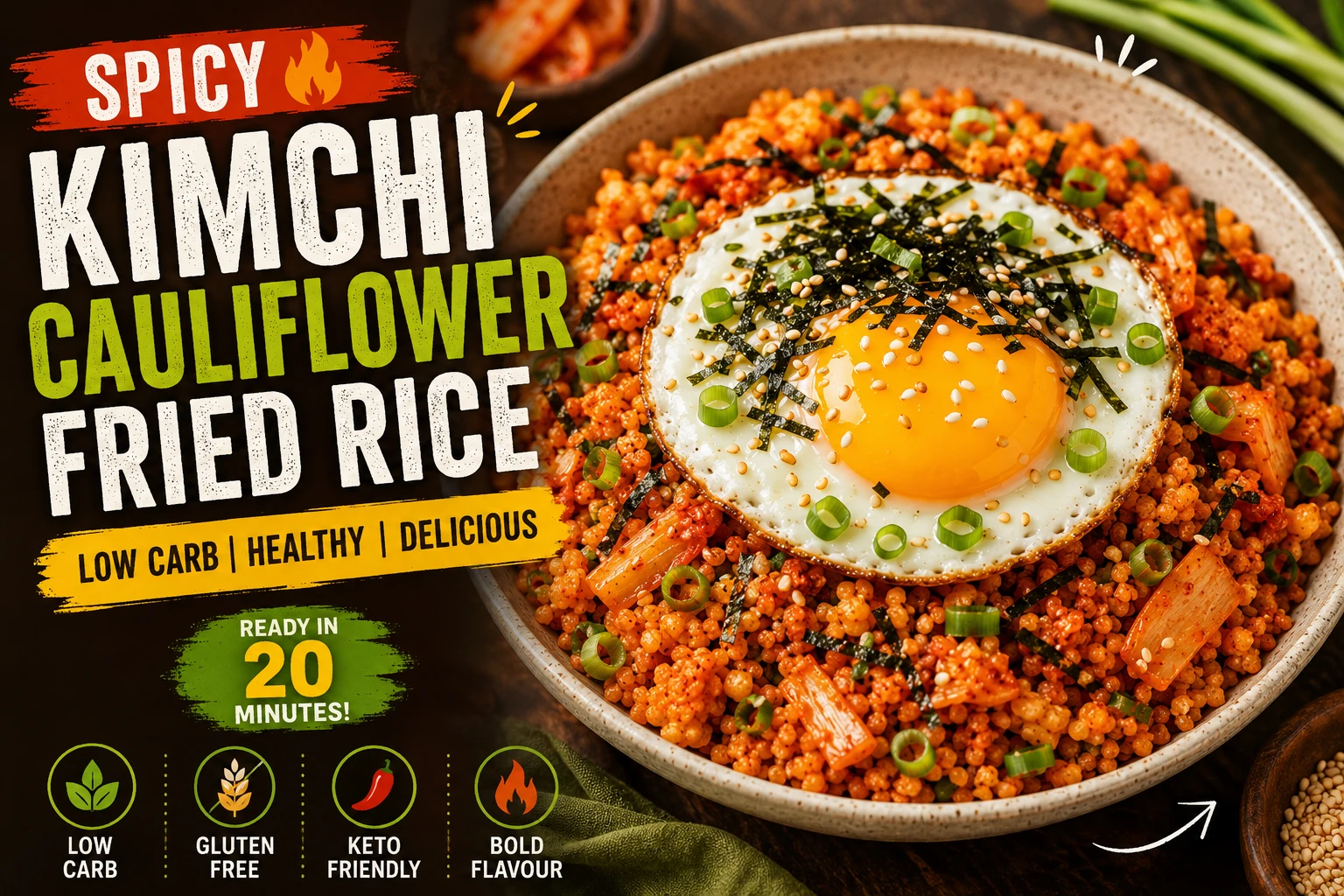
| Broccoli | Cauliflower florets | Same blanch-and-char method works — see our Kimchi Cauliflower Fried Rice for a version built around it |
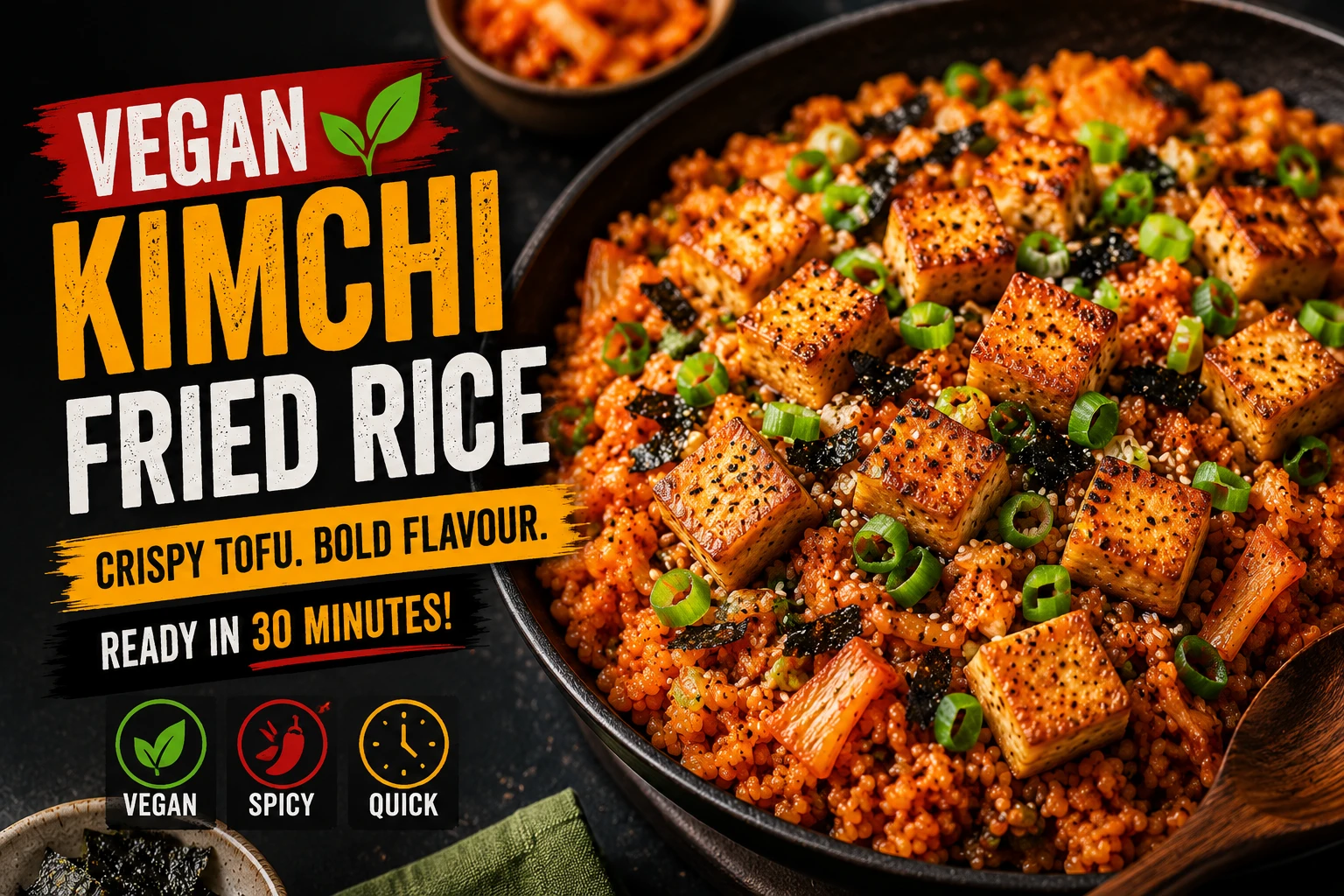
| Fried egg | Omit for vegan | Confirm kimchi and gochujang are vegan-labelled — see our Vegan Kimchi Fried Rice for the crispy tofu technique |
| Broccoli | Broccolini or Chinese broccoli (gai lan) | Slightly milder or more bitter respectively; blanch time may need a small adjustment |
| Gochujang | 2 tsp gochugaru + 1 tsp honey | Slightly different texture, similar heat and sweetness |
How to Make Kimchi Broccoli Fried Rice — 5 Steps
One pan (plus a pot for blanching), five steps. The blanch-and-dry sequence in steps 1–2 is the one to get right — everything after it moves fast.

Cut the broccoli into small, even bite-size florets. Peel the tough outer layer from the stems and dice them the same size. Bring a pot of salted water to a boil, blanch everything for 60–90 seconds until bright green, then immediately transfer to a bowl of ice water to stop the cooking.

Drain the broccoli and pat it completely dry with a clean towel — this matters more than it sounds like it should. Heat 1 tablespoon oil in a wok until just smoking, add the broccoli in a single layer, and leave it undisturbed for about 2 minutes until blistered and charred in spots. Remove and set aside.

In the same pan, add the remaining tablespoon of oil, the minced garlic, and the chopped kimchi. Stir-fry over high heat for 2–3 minutes until the kimchi darkens and smells caramelised rather than raw and sour.

Add the gochujang and reserved kimchi juice, stir-fry 1 minute until glossy. Add the cold day-old rice, breaking up clumps, and use the press-and-char technique — press flat 25–30 seconds, stir, repeat — for 3–4 minutes until a light crust forms.

Add the soy sauce and sugar, taste and adjust. Take the pan off the heat and fold the charred broccoli back in now — not before — so it keeps its colour and bite. Drizzle in the sesame oil. Fry the eggs sunny-side up in a separate pan while the rice rests. Plate, top each portion with a fried egg, sliced spring onion, and sesame seeds.
What We Tested for the Broccoli Version
The technique that cannot be skipped: blanch, shock, pat completely dry, then char separately and fold in at the very end. Every other adjustment is secondary to getting moisture and timing right.

- 250g broccoli florets + peeled diced stems
- 2 cups day-old short-grain rice
- 1 cup aged kimchi (Stage 3), chopped
- 3 tbsp kimchi juice
- 2 tbsp neutral oil, divided
- 1 tbsp gochujang
- 2 cloves garlic, minced
- 1 tsp soy sauce
- 1 tsp sugar
- 1 tsp sesame oil, off-heat
- 2 eggs, fried sunny-side up
- 2 spring onions, sliced
- 1 tsp toasted sesame seeds
- Cut broccoli into small florets, peel and dice stems. Blanch 60–90 sec, shock in ice water.
- Drain, pat bone-dry. Char in hot oiled wok, undisturbed 2 min. Remove, set aside.
- Same pan: fry garlic and kimchi in remaining oil, high heat, 2–3 min until caramelised.
- Add gochujang, kimchi juice, rice. Press-and-char 3–4 min, pressing every 25–30 sec.
- Add soy sauce, sugar. Off heat, fold in charred broccoli, drizzle sesame oil. Top with fried egg, scallion, sesame seeds.
Ingredient Notes — What Each One Does and Why
A quick amount list only tells you how much. Here’s what each ingredient is actually doing in the pan, and where it’s safe to swap.
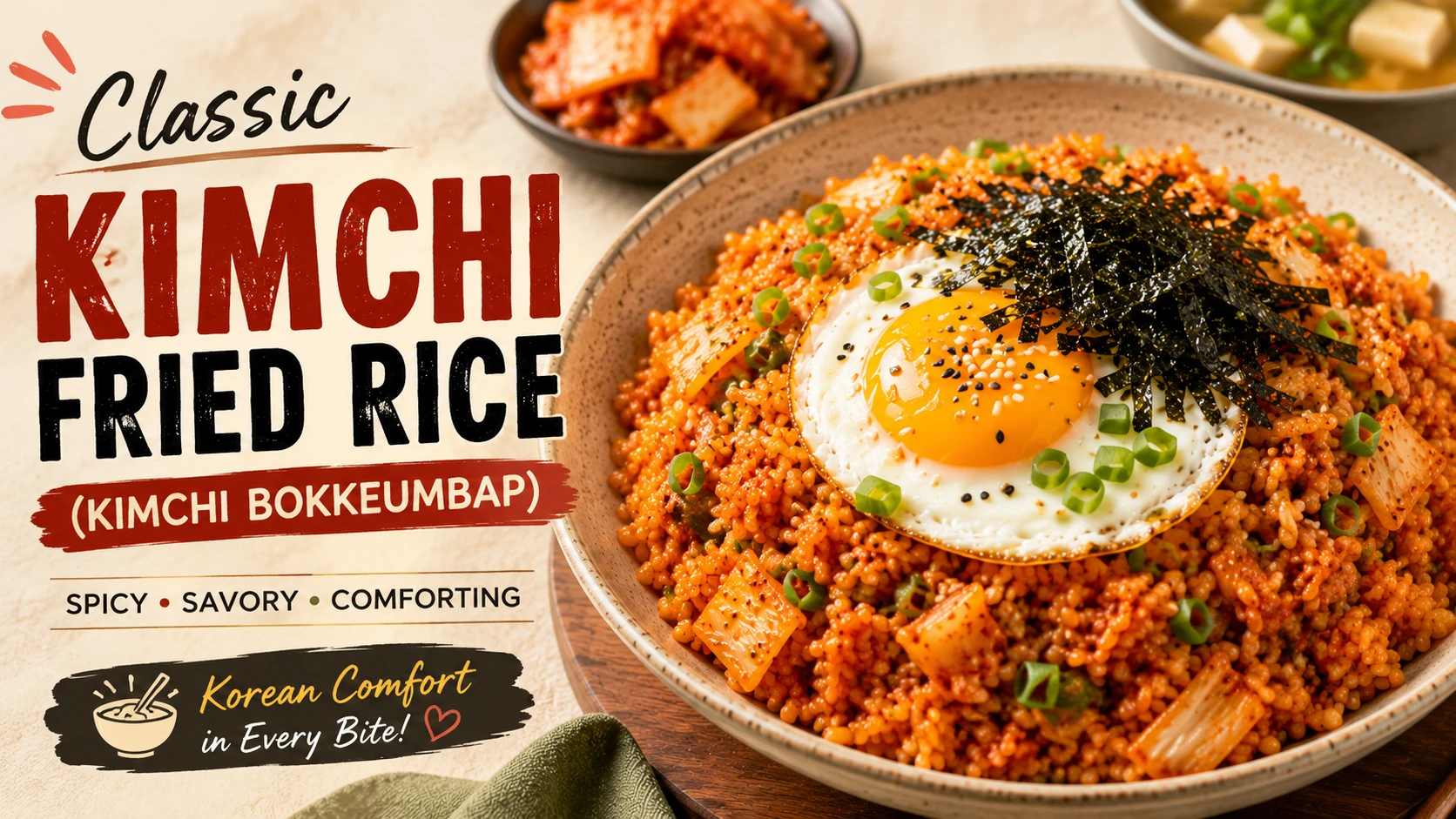
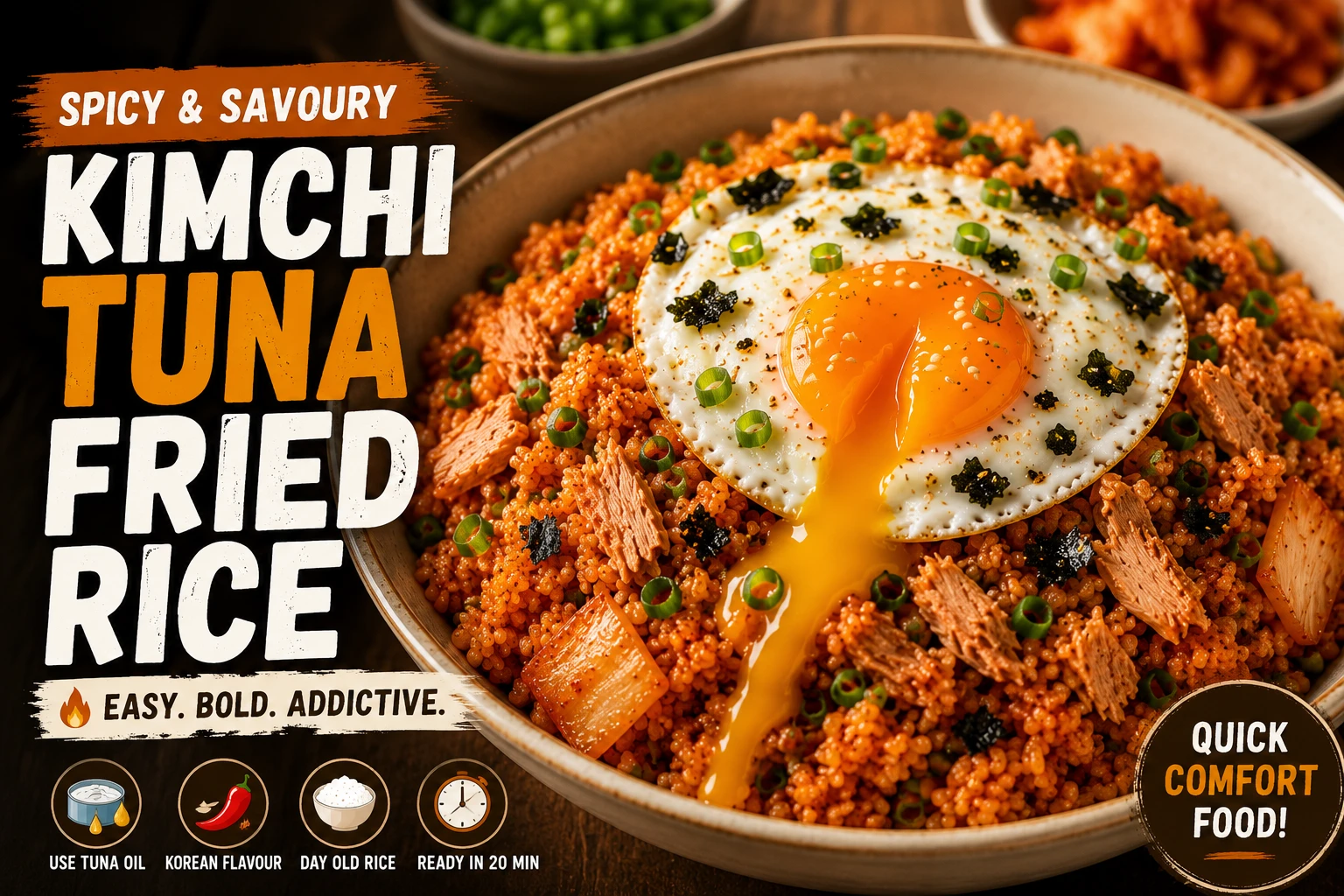
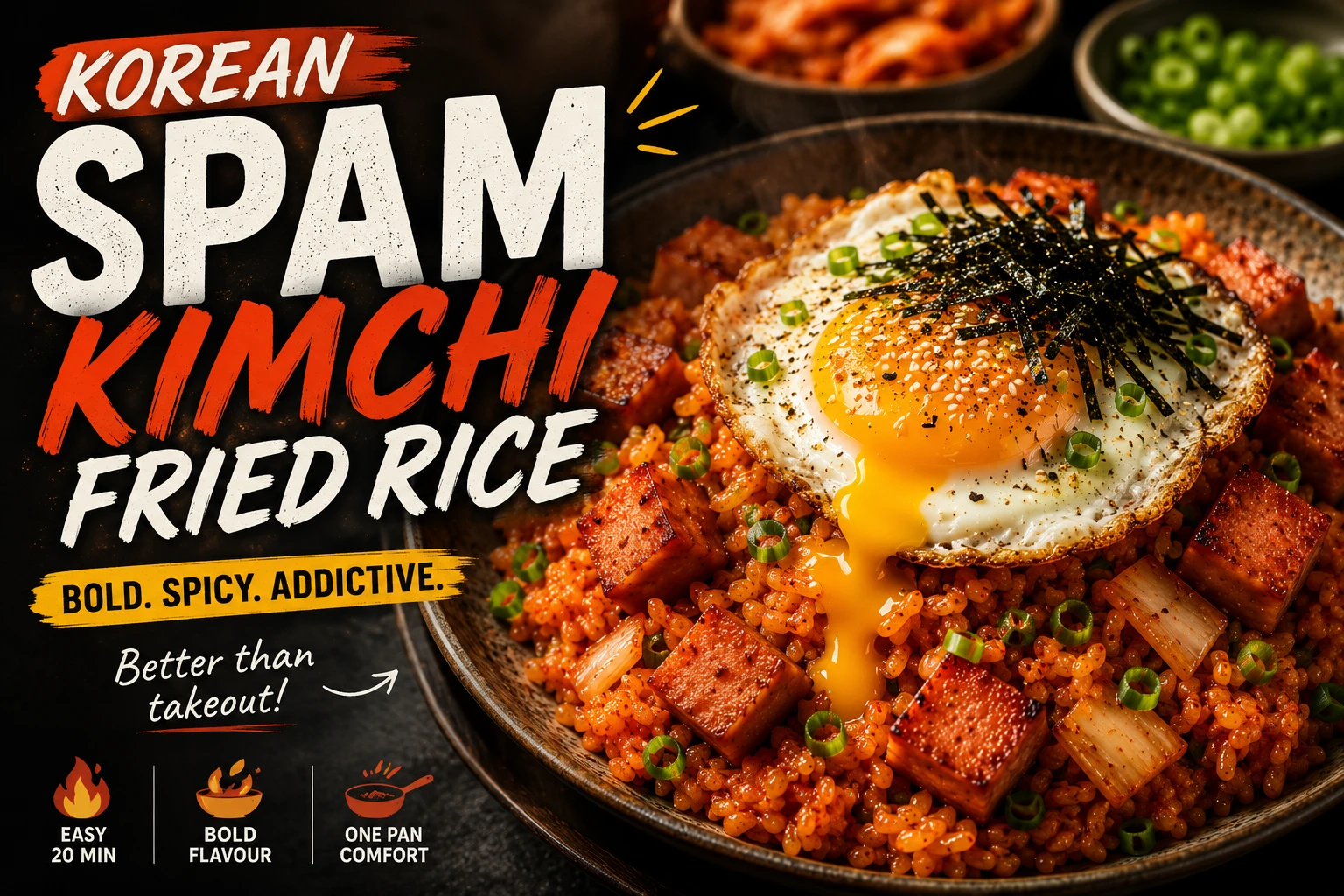
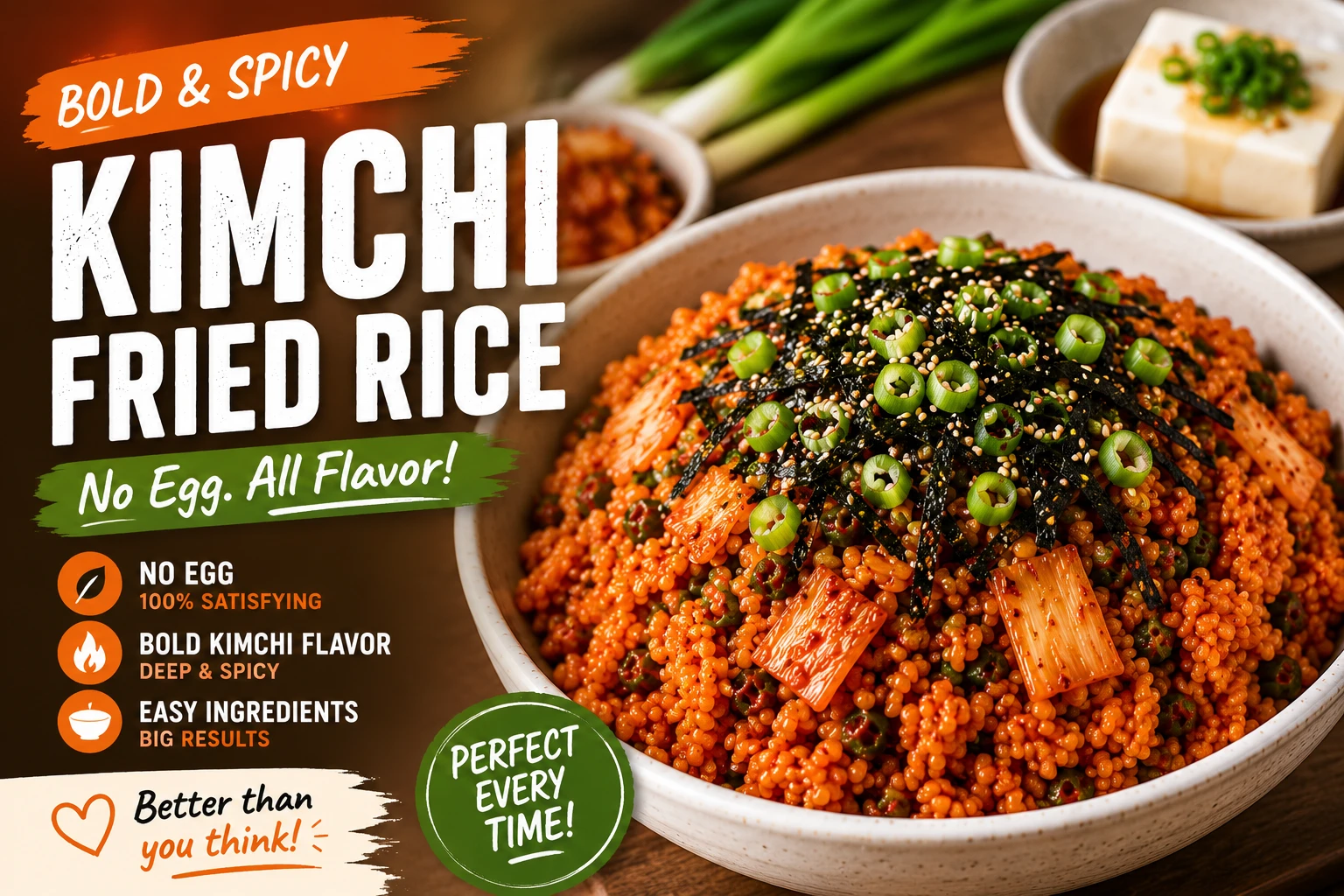
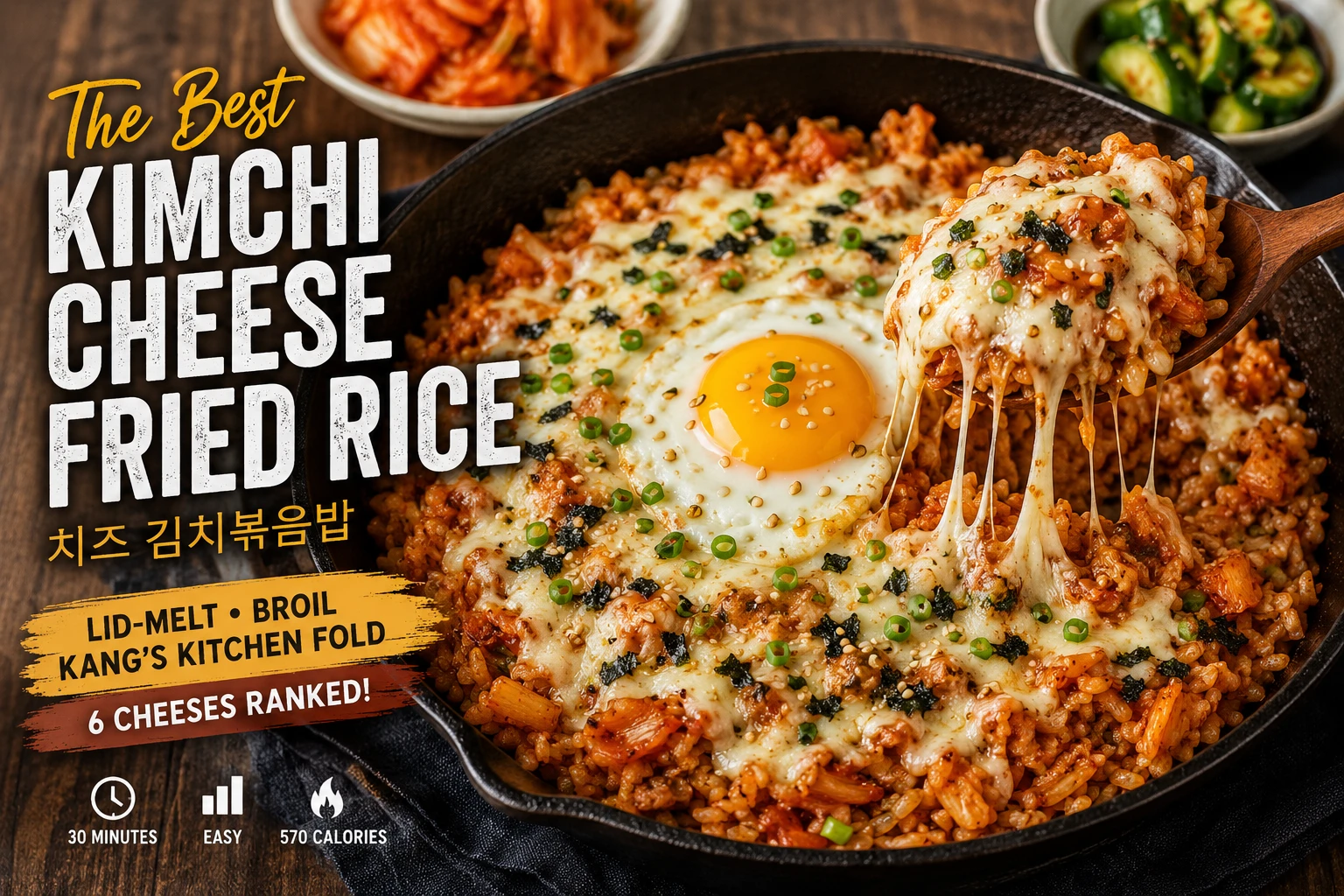
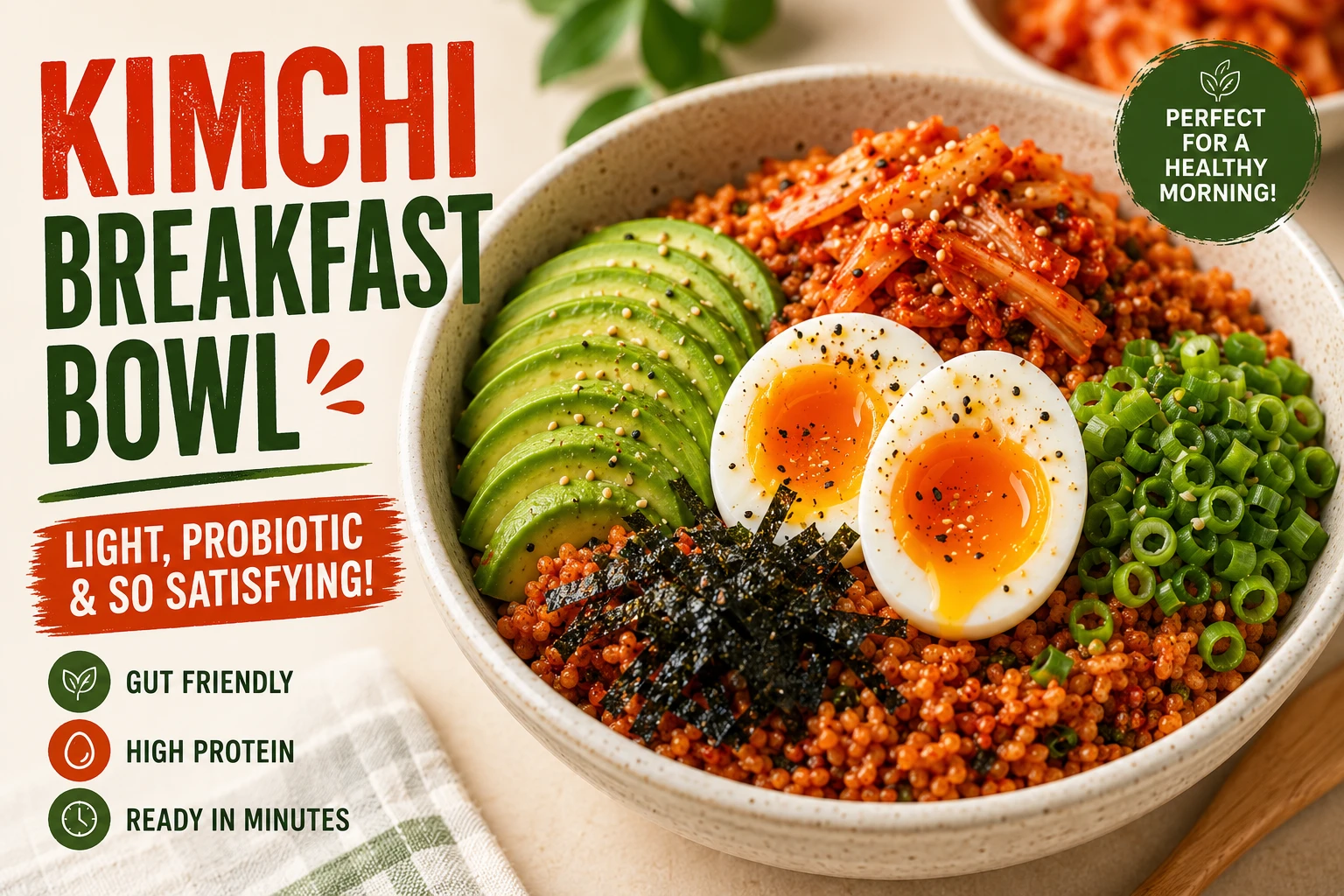
All 11 Kimchi Fried Rice Variations
The KFR Ultimate Guide → covers all 11 in one place with the full comparison table.
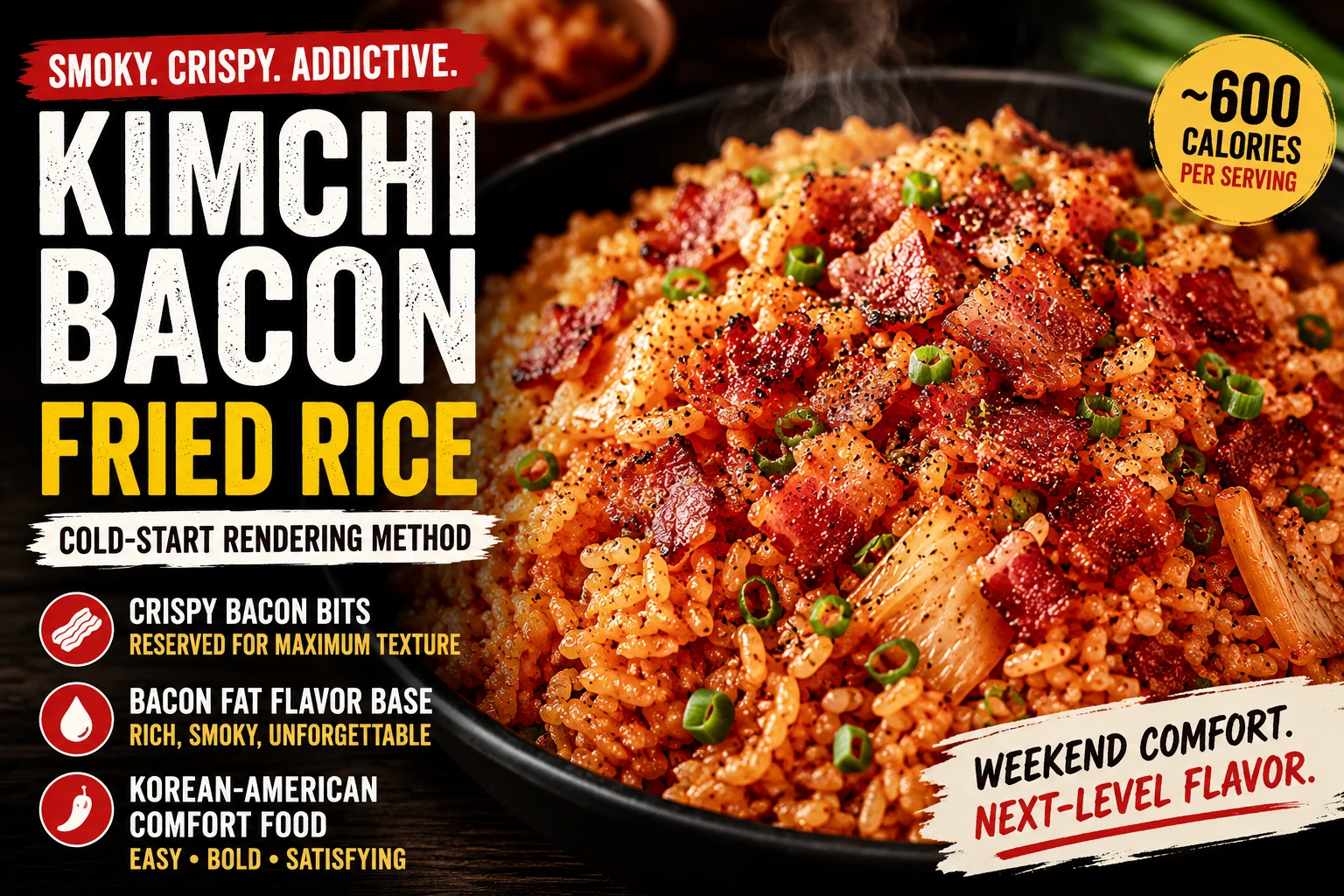


Pairing Guide — Kimchi Broccoli Fried Rice
This is a lighter, vegetable-forward variation — it pairs well with something that adds a bit more richness or protein alongside it.
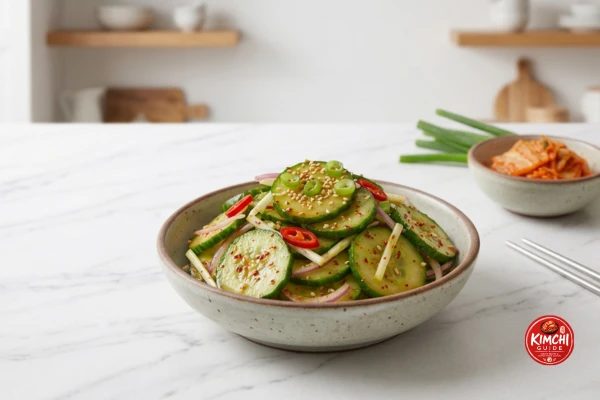
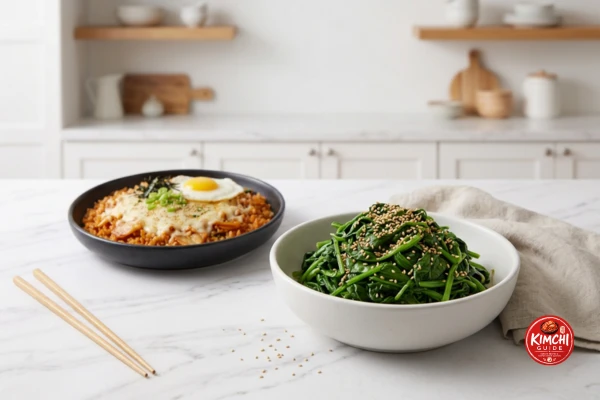
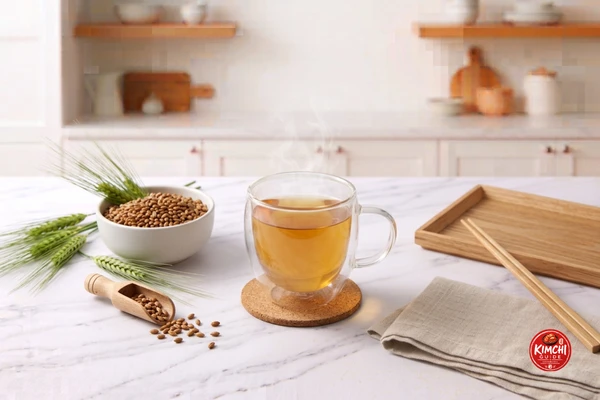

Storage & Reheating
How This Compares to the Rest of the Silo
| Variation | Calories | Protein | Fibre | Vegan? | Best For |
|---|---|---|---|---|---|
| Cauliflower Version | 180 | 10g | 3g | No (egg) | Low-carb, keto, lightest option |
| Without Egg | 360 | 7g | 3g | No (may use dairy) | Calorie management, meal prep |
| Vegan (tofu) | 380 | 14g | 4g | ✅ Fully vegan | Plant-based, egg-free protein |
| Breakfast Bowl | 380 | 15g | 4g | No (egg, avocado) | Mornings, lighter portion |
| Broccoli ← This page | 390 | 13g | 6g | No (egg) | Highest fibre, vegetable-forward |
| Tuna Version | 410 | 22g | 1g | No | Highest protein, lean |
| Classic (with egg) | 420 | 14g | 2g | No | All occasions |
| Cheese Version | 570 | 19g | 1g | No | Entertaining, most indulgent |
| Spam Version | 580 | 24g | 1g | No | Comfort food, budae flavour |
| Bacon Version | 600 | 21g | 1g | No | Weekend indulgence |
| Pork Belly Version | 610 | 20g | 3g | No | Weekend indulgence, richest texture |
Kimchi Broccoli Fried Rice FAQ — 19 Questions
Yes, for the best result. A brief 60-90 second blanch followed by an ice-water shock locks in bright green colour and gets the broccoli most of the way to tender, so the char step only needs to add colour and texture.
This almost always happens when raw broccoli is simmered directly in the kimchi’s acidic, salty liquid for several minutes — the acid breaks down chlorophyll and dulls the colour. Blanching first, then folding the broccoli back in only at the very end, avoids this.
You can, but in testing it produced uneven results — some pieces stayed raw and squeaky while others turned soft and drab before the centres cooked through. Blanching first gives far more consistent texture.
Surface water turns to steam the instant it hits a hot pan, which stops the broccoli from charring and instead makes it soggy. Patting it bone-dry after blanching is what allows real blistering and browning.
Use them — peel the tough outer layer with a vegetable peeler, dice the inside into small pieces, and blanch and char them exactly like the florets. They add texture and reduce food waste.
No — add it at the very end, off heat, after the rice and kimchi have finished cooking. Folding it in early lets the kimchi’s liquid soften and dull the broccoli instead of keeping it charred and crisp-tender.
Small and even, roughly 2-3cm pieces. Larger chunks stay raw in the centre by the time the outside chars, while very small pieces overcook and turn mushy.
It’s workable but not ideal — frozen broccoli releases more water as it thaws, making it harder to pat fully dry and char properly. If using frozen, thaw completely and blot it very thoroughly before cooking.
Stage 3 aged kimchi, fermented 3-6 weeks, is the correct choice — its developed sourness stands up against the broccoli’s mild, slightly bitter edge, which fresher kimchi doesn’t have the acidity to do.
Approximately 390 calories per serving with a fried egg. Macros: 58g carbohydrates, 13g protein, 11g fat, 2g saturated fat, 780mg sodium, 6g fibre — the highest fibre content of any KFR variation on the site.
Yes, as written it’s vegetarian (it includes a fried egg). For a fully vegan version, skip the egg and follow the tofu technique from our Vegan Kimchi Fried Rice variation instead.
Yes — omit the fried egg and check that your kimchi and gochujang are labelled vegan. Our Vegan Kimchi Fried Rice guide has the full fish-sauce-free kimchi and crispy tofu breakdown if you want added protein.
Day-old short-grain rice, chilled overnight. See our Best Rice for Fried Rice guide for why day-old rice fries better than fresh and which varieties hold up best.
Yes — thinly sliced carrot or bell pepper can be blanched and charred alongside the broccoli using the same method. Keep pieces a similar size so everything cooks evenly.
Yes — store the rice and broccoli together for up to 4 days refrigerated. Reheat in a hot, dry pan rather than the microwave to bring back some of the broccoli’s char.
Medium by default with 1 tablespoon of gochujang. Because there’s no rich fat from meat or cheese to cushion the heat, it reads slightly spicier than the pork belly or bacon variations at the same gochujang amount.
It freezes reasonably well for up to 2 months, though the broccoli loses some of its char and firmness on thawing. Thaw overnight in the fridge and reheat in a hot pan rather than the microwave.
Nurungji — the caramelised, slightly crisp layer that forms when rice is pressed flat against a hot pan repeatedly. Our Nurungji Korean Scorched Rice Guide covers the technique in more depth.
Blanch and shock the broccoli first, pat it bone-dry, then char it separately and set it aside. Caramelise the kimchi and garlic in the same pan, add gochujang and rice, and only fold the charred broccoli back in at the very end, off heat, before topping with a fried egg.


💬 Leave a Comment
Made this recipe? Tell us how the blanch-and-char method turned out for you.