Kimchi Spam Fried Rice (스팸 김치볶음밥 — Budae-Style Kimchi Bokkeumbap)
Korea’s most-cooked home version of kimchi fried rice, done properly. Cold-wok rendered Spam fat becomes the cooking medium for everything else — deeper flavour than any neutral oil. Budae jjigae history explained. Six Spam varieties ranked. 580 calories, 24g protein, the richest, saltiest KFR variation.
What Is Kimchi Spam Fried Rice?
Kimchi spam fried rice — 스팸 김치볶음밥 (seupaem kimchi bokkeumbap) — is the most popular Korean home version of kimchi fried rice, built on the cold-wok render method: Spam cubes go into a cold, dry wok and heat up gradually so the fat renders instead of searing off. That rendered spam fat becomes the cooking medium for everything else — Stage 3 aged kimchi is caramelised in it, gochujang is toasted, day-old rice is pressed into a nurungji crust, and the golden spam cubes are folded back in at the very end. This is the fried-rice descendant of budae jjigae (army base stew). Serves 2 in 30 minutes. At 580 calories with 24g protein, it is the saltiest and one of the richest of the 9 KFR variations.
Why Spam Makes Kimchi Fried Rice Better
Spam is not a shortcut ingredient in Korean cooking — it is a cultural staple with a deep post-war history and a genuine chemical reason for working so well with kimchi.
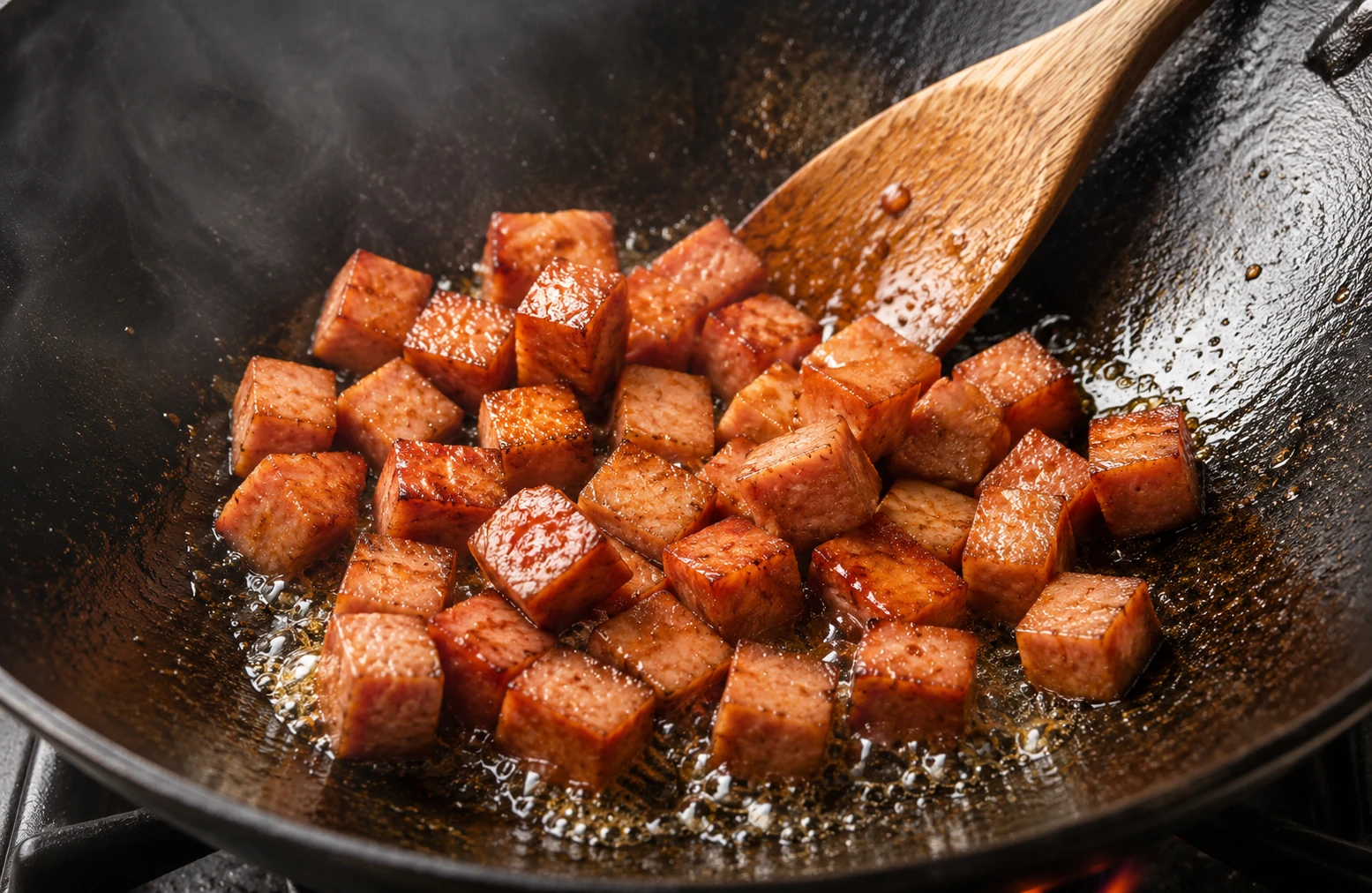
When spam is fried dry in a hot wok, its high-fat pork content renders and creates a flavoured cooking fat. This fat — not neutral oil — bastes the kimchi and rice during frying, delivering a richer, deeper flavour than neutral oil ever could.
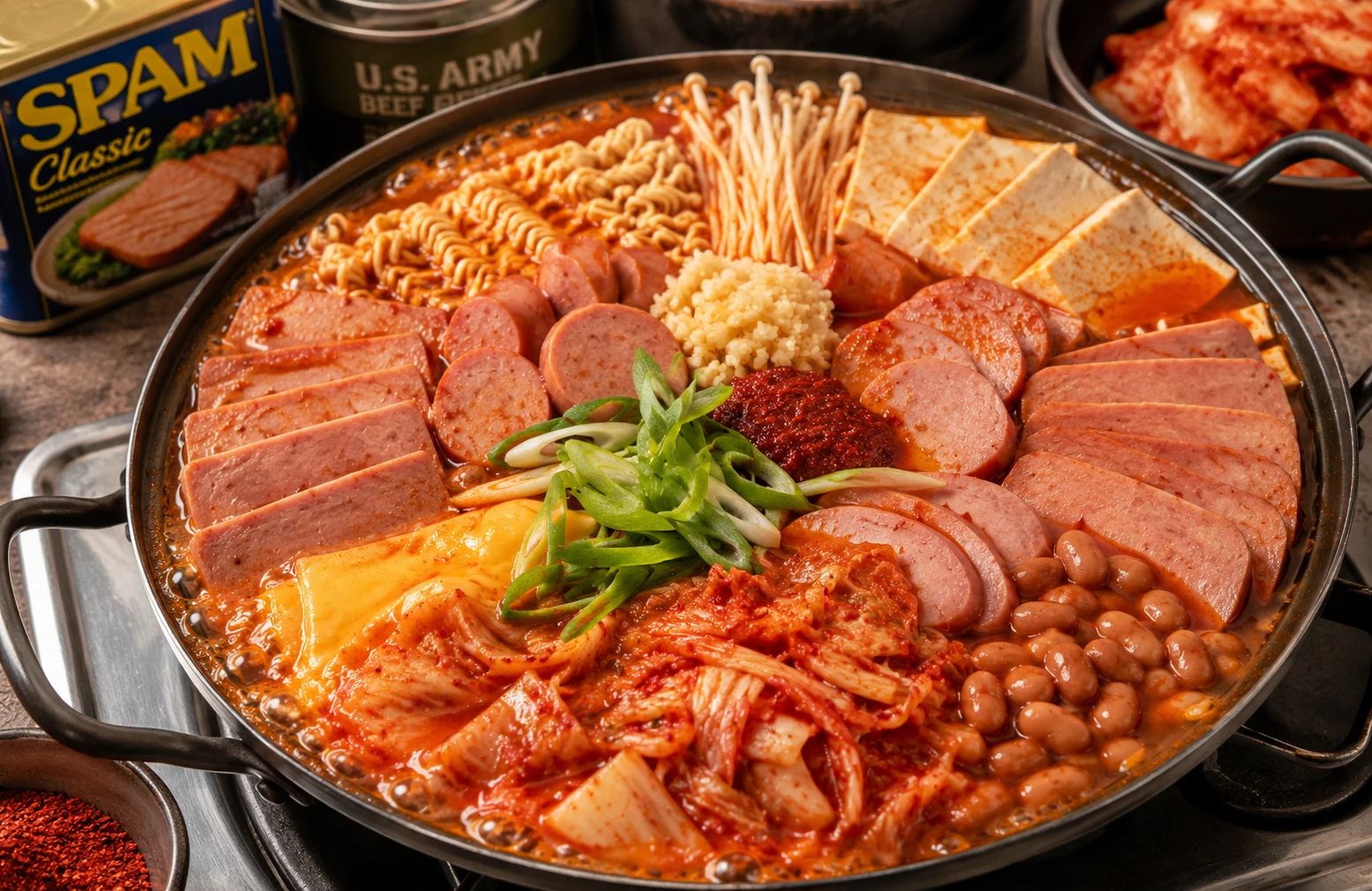
After the Korean War, US Army bases traded canned goods — spam, hot dogs, baked beans — to locals around camp gates. Koreans combined these with kimchi and gochujang, creating the iconic budae jjigae. Spam kimchi fried rice inherits this cultural hybrid flavour.
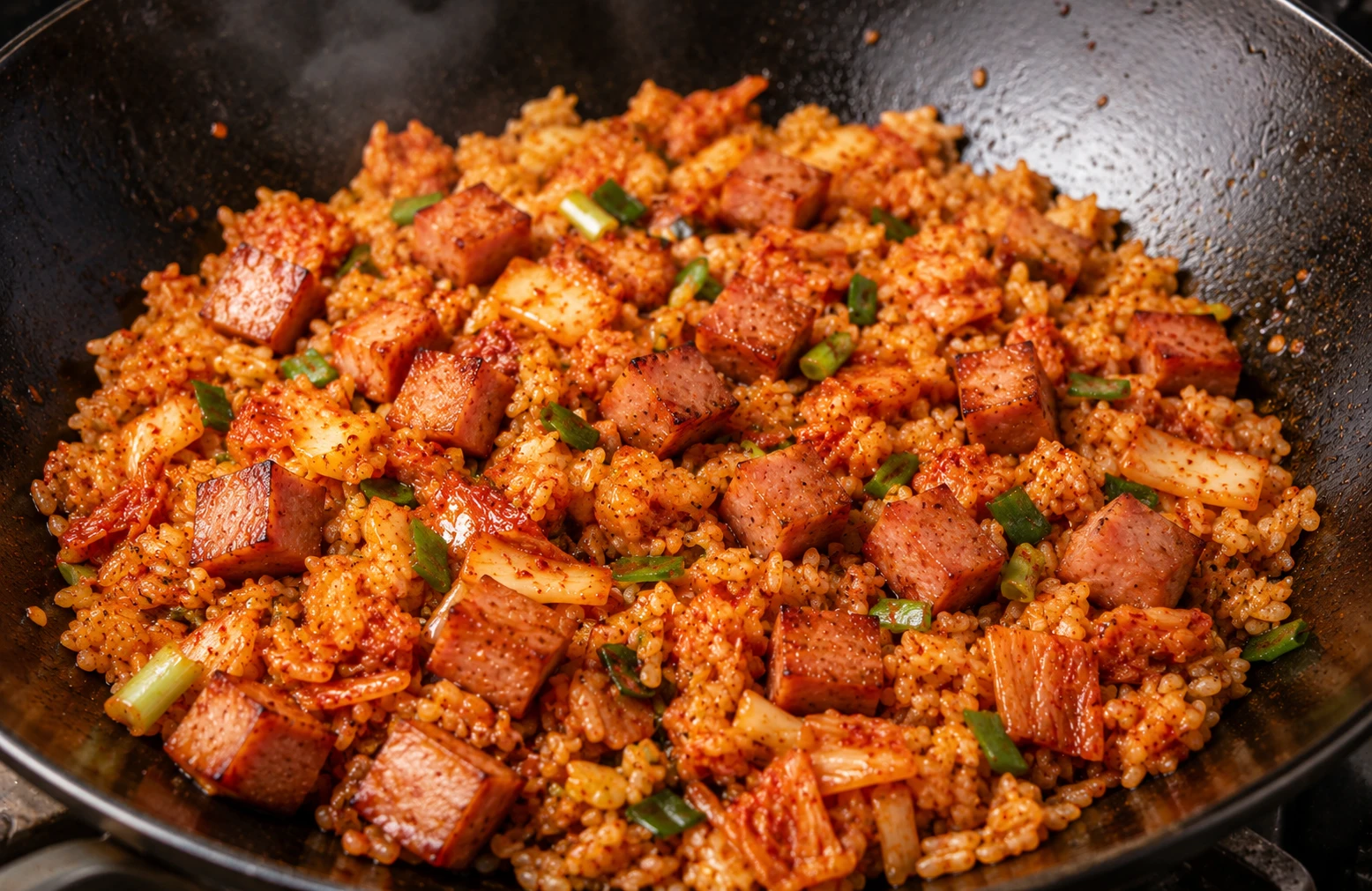
Kimchi provides fermented umami from Lactobacillus activity. Spam provides cured pork umami from its curing process. These two sources combine synergistically, creating a depth of flavour greater than either ingredient alone.
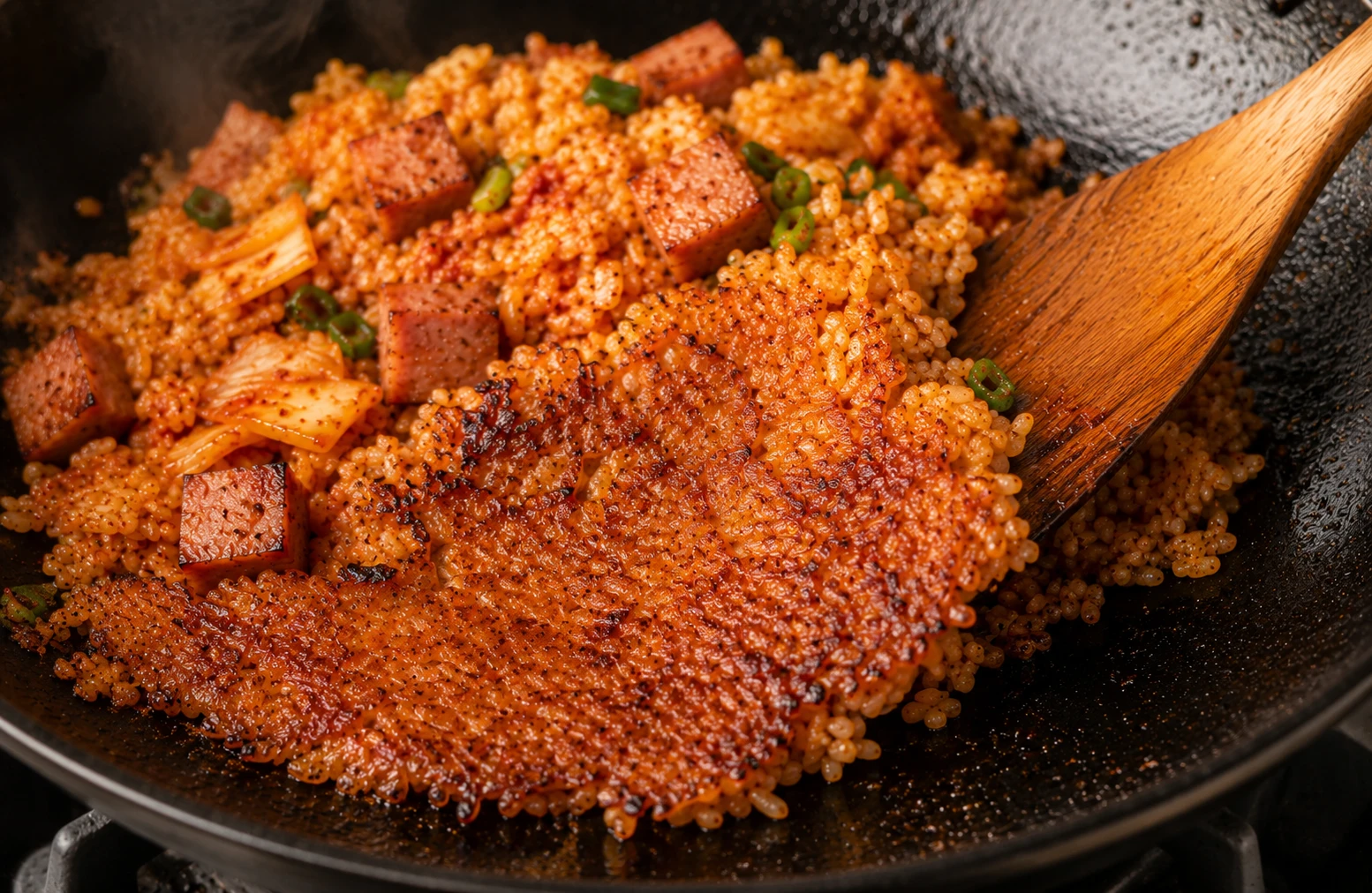
The rendered spam fat creates a better caramelised rice crust (nurungji) when the rice is pressed against the wok base — crispier and more flavourful than the classic version made with neutral oil.
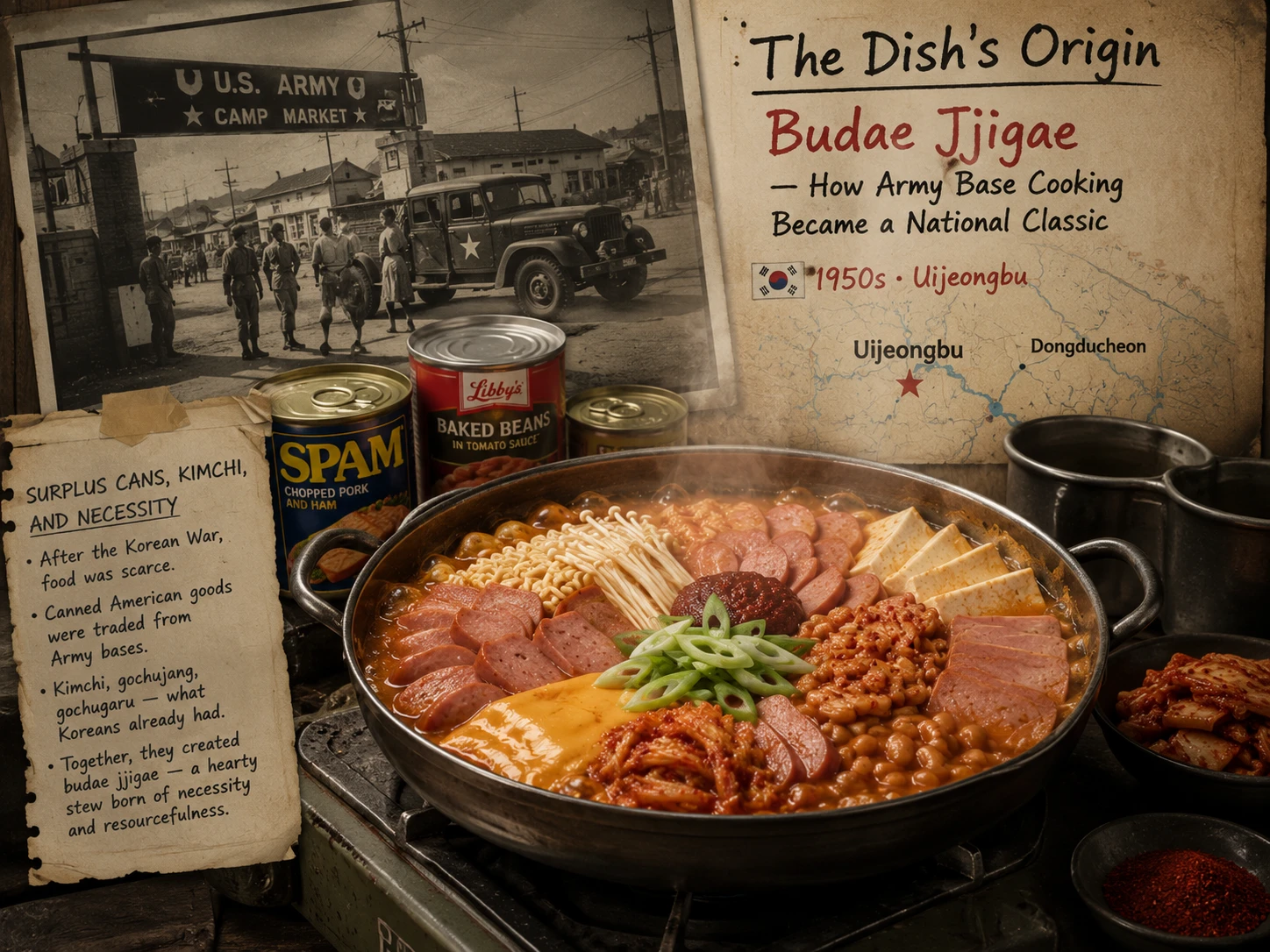
Budae Jjigae — How Army Base Cooking Became a National Classic
In the years after the Korean War, food was scarce and US military bases sat alongside impoverished Korean towns. Canned American goods — spam, hot dogs, processed cheese, baked beans — were traded or smuggled from base commissaries into local markets, especially around Uijeongbu and Dongducheon.
Korean cooks combined these surplus canned goods with what they already had: kimchi, gochujang, and gochugaru. The result was budae jjigae — “army base stew” — a spicy, hearty pot that stretched limited protein across a family meal.
Spam kimchi fried rice is the fried-rice descendant of that same instinct: rendered spam fat standing in for the beef fat or lard a home cook might not have had, kimchi providing the fermented backbone, gochujang tying it together. It remains one of the most-cooked dishes in Korean homes today.
Key Terms — Korean Language & Food Science Entities
These terms define exactly what this dish is, why the cold-wok technique matters, and what the food science behind rendered fat and fermentation actually means.
Cold Wok vs Hot Wok Start — Tested and Compared
Every kimchi spam fried rice recipe online skips this step entirely. We tested both across 8 batches. The difference is the single biggest factor in how rich the final dish tastes.
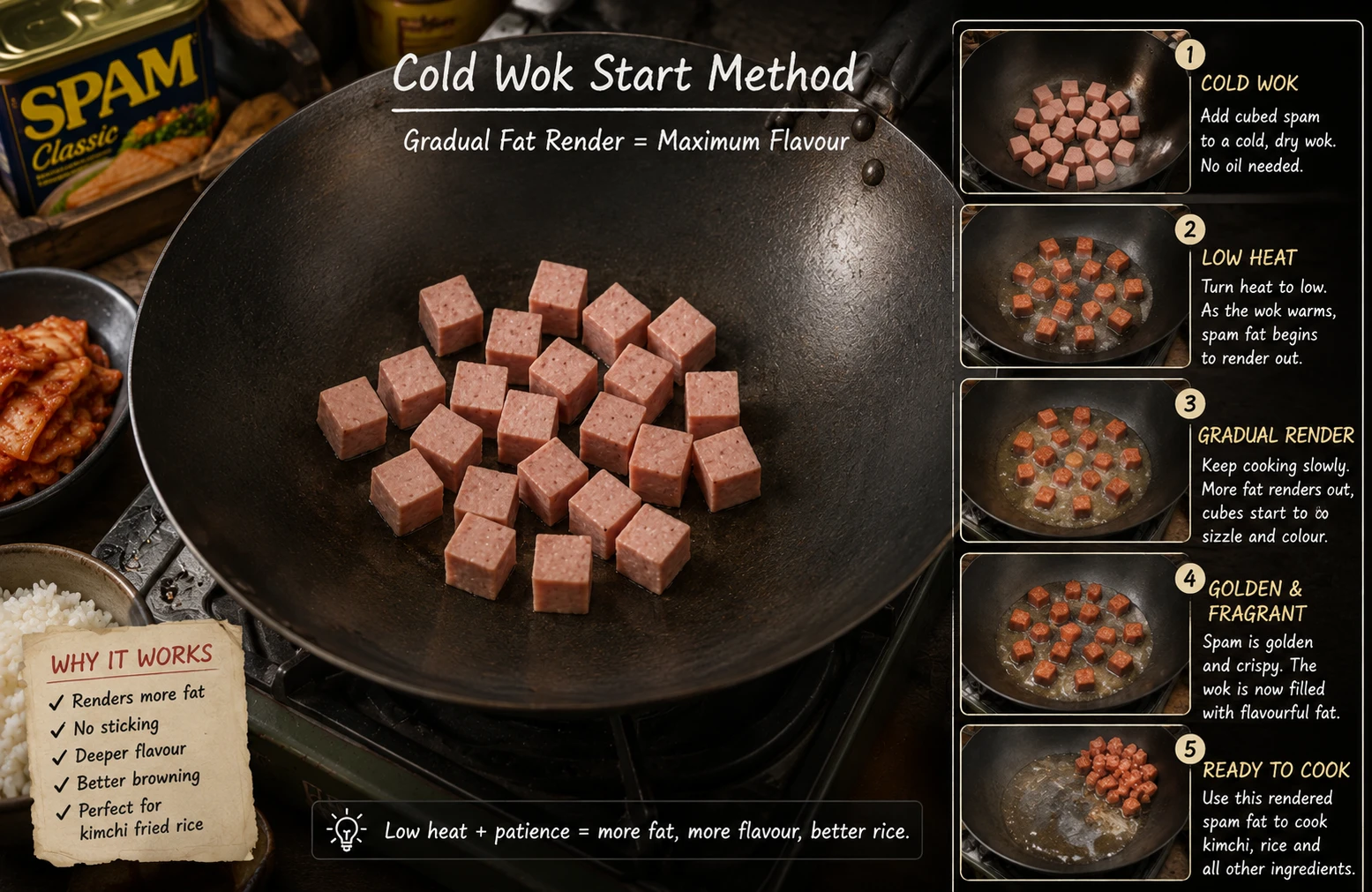
- Cube spam, add to a completely cold, dry wok
- Turn heat to medium-high — do not preheat first
- Fat renders gradually as the pan and spam heat together
- Fry undisturbed 3-4 minutes until deeply golden
- Toss, fry 2 more minutes, remove spam and reserve fat
Result: A large, flavourful pool of rendered fat that bastes every ingredient added after it. Winner in every batch test.
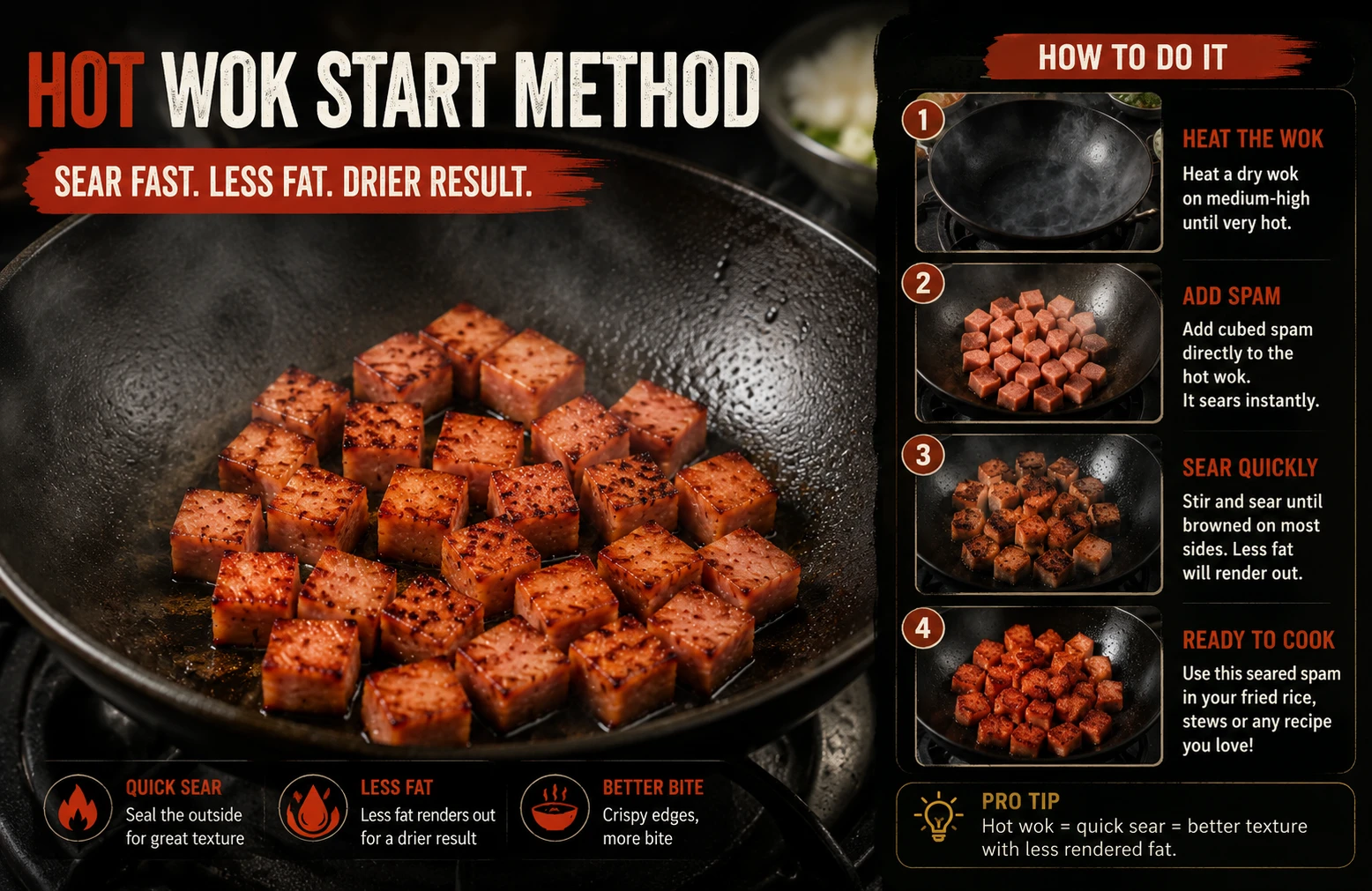
- Preheat wok until smoking
- Add spam cubes to the fully hot surface
- Outer surface sears almost immediately
- Fat has less time and lower pressure to render out
- Spam browns fast but stays drier inside
Result: Minimal rendered fat pool — the kimchi and rice end up tasting flatter. Clearly inferior across every test batch.
Method Comparison at a Glance
| Method | Fat Rendered | Time to Golden | Final Flavour | Verdict |
|---|---|---|---|---|
| Cold Wok ⭐ | Maximum | 5-6 min total | Rich, well-coated | Always use this |
| Hot Wok | Minimal | 3-4 min total | Flatter, drier | Avoid — do not preheat first |
Which Spam to Use — Six Options Ranked
Not all Spam varieties work equally well — fat content is critical for proper rendering.
The standard. Full fat, proper render, authentic budae flavour. Lotte luncheon meat is near-identical and often less expensive.
⭐ Best ChoiceSame fat content, roughly 25% less salt. Better for controlling seasoning.
✅ Highly RecommendedAdds extra heat alongside the kimchi. Reduce gochujang to ½ tbsp if using this variety.
Good OptionAdds a smoky note that pairs well with kimchi’s tang. Not traditional, but tasty.
AcceptableToo little fat to render properly — will stick to the wok and defeat the point of this dish.
❌ AvoidWrong flavour profile for Korean cooking — turkey fat does not complement kimchi and gochujang.
❌ AvoidWhich Kimchi Stage to Use — Spam Version Guide
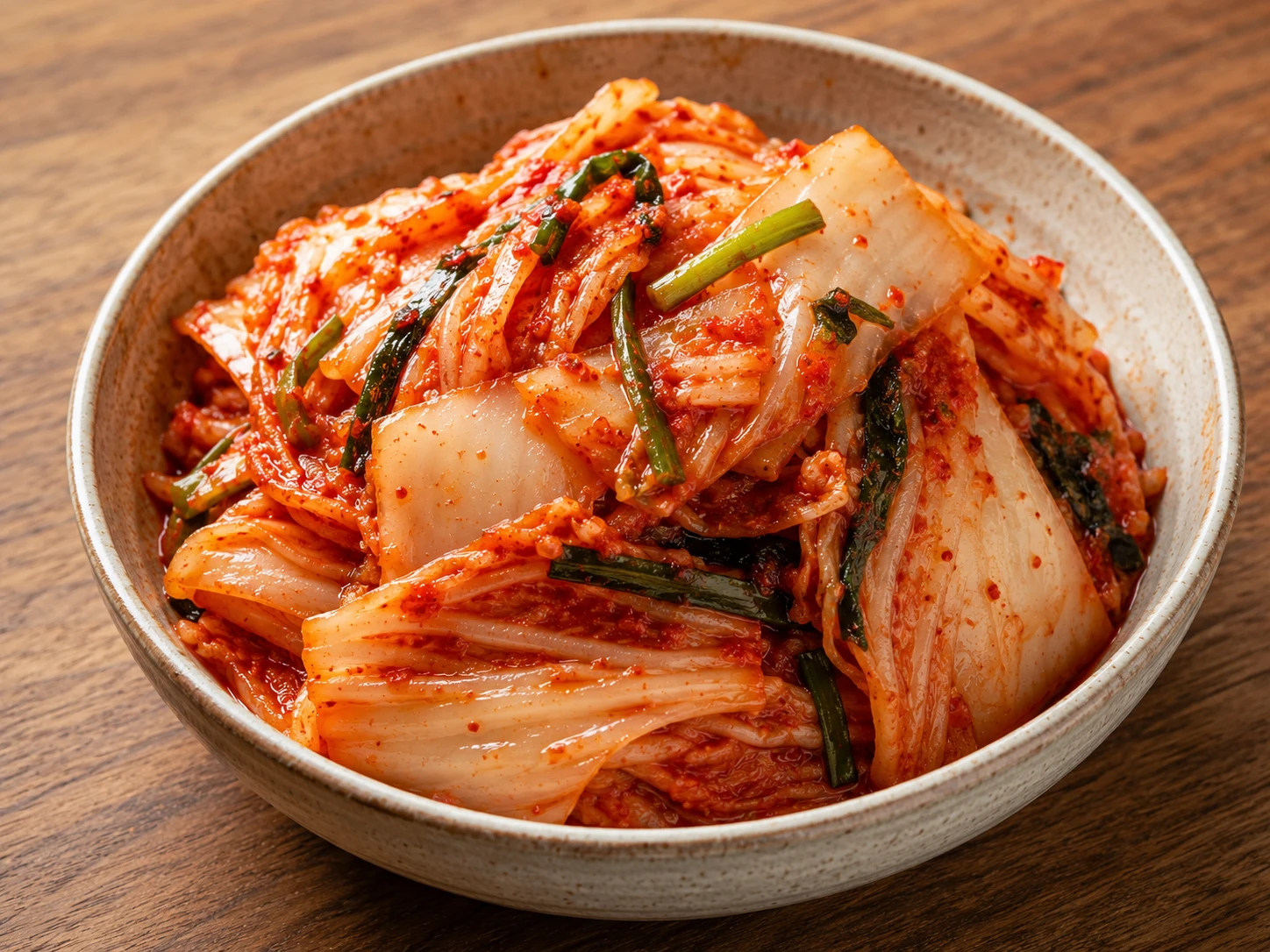
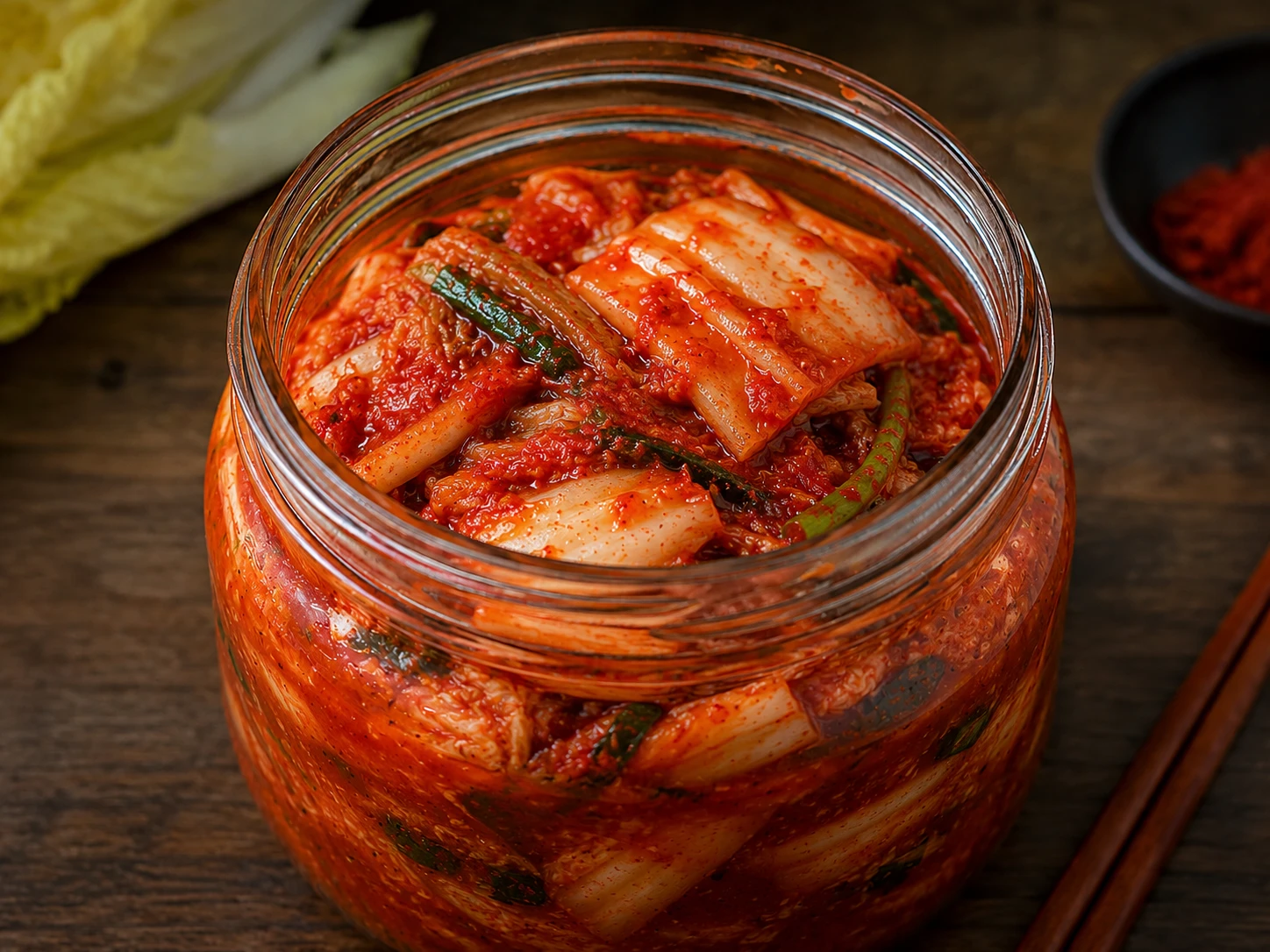
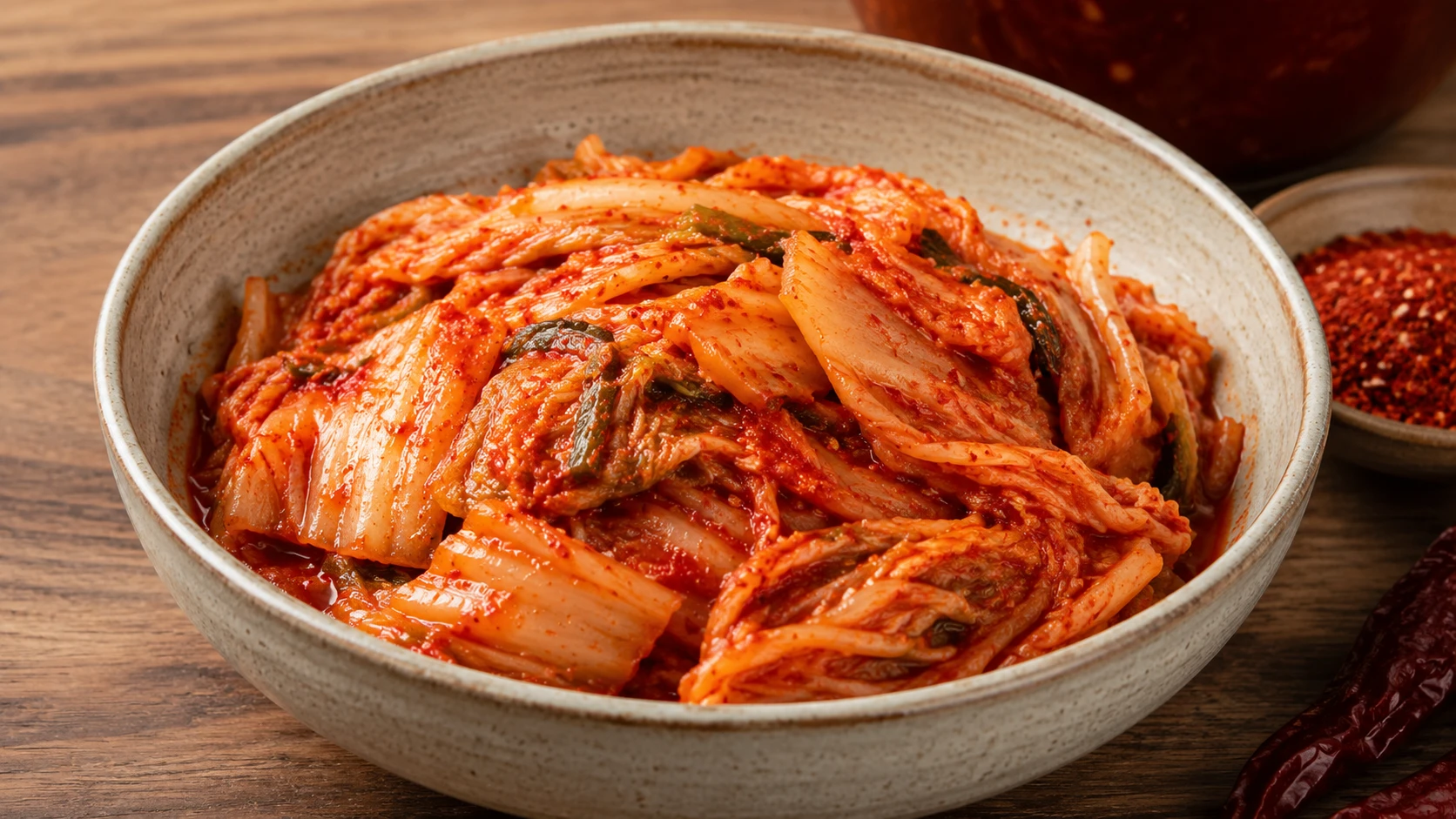
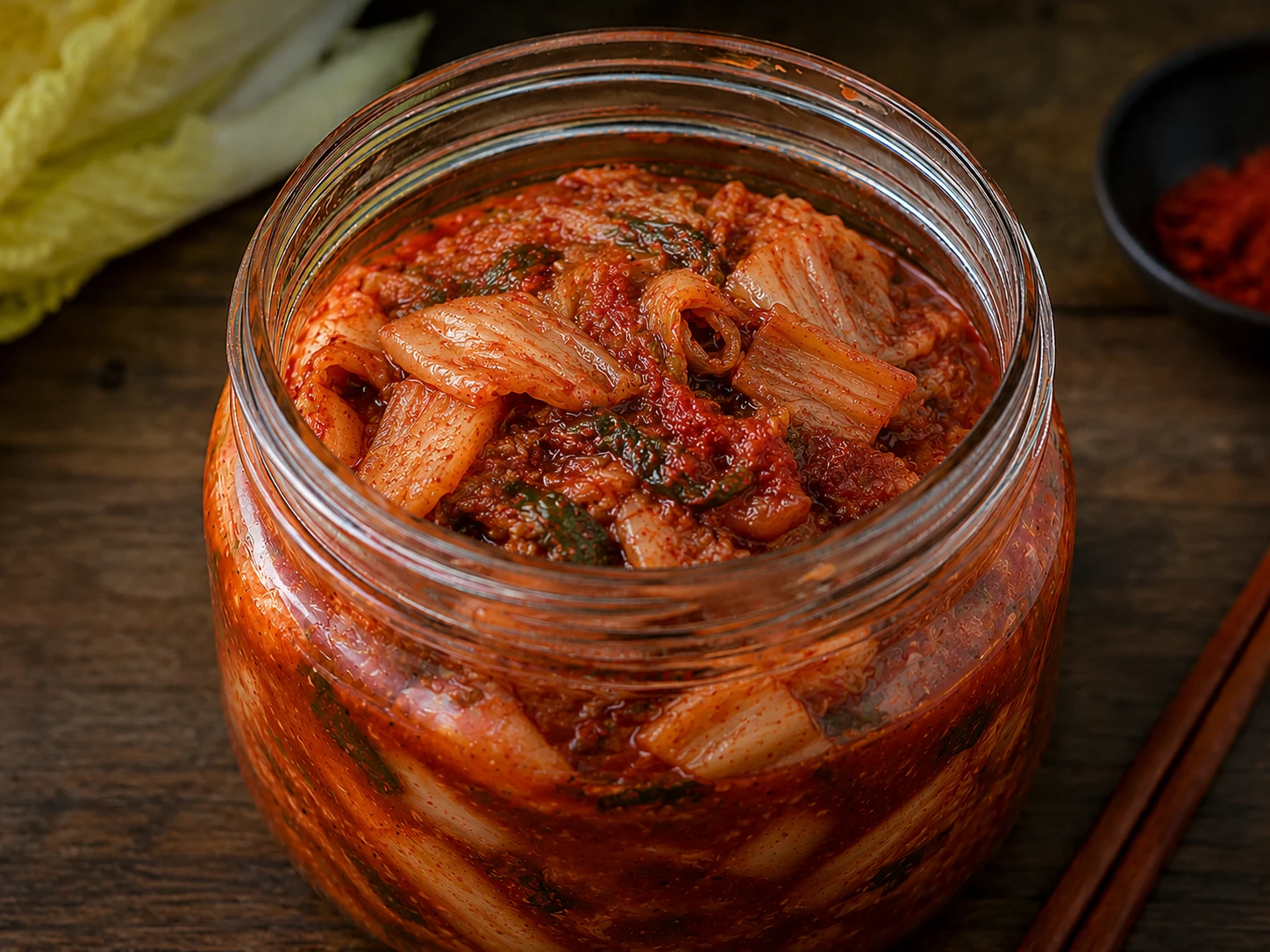
Spam’s saltiness and fat can mask under-fermented kimchi even more than the classic recipe does. Stage 3 remains the only correct default.
How Difficult Is the Spam Version?
Genuinely beginner-friendly. The only skill that matters is patience during the cold-wok render.
Ingredients + Scaler
One key ingredient does the heavy lifting: rendered spam fat replaces neutral oil entirely. Soy sauce is reduced because spam already contributes significant sodium.
Spam Substitutes
| Substitute | Prep Change | Fat Adjustment | Taste Result |
|---|---|---|---|
| Lotte luncheon meat | Identical — same cubing method | None needed | Identical to Spam Classic — best alternative |
| Thick-cut bacon | Cut into lardons, fry until crispy | Drain half the rendered fat before adding kimchi | Smokier, crispier — see our Bacon KFR variation → |
| Pork belly (thin sliced) | Cut into 3cm pieces, fry 4-5 min per side | No change needed | More refined, restaurant-quality result |
| Vienna sausages | Slice into rounds, fry 2 min until golden | Add ½ tbsp neutral oil (less fat than spam) | Sweeter, milder — good for kids |
| Firm tofu (vegan) | Press, cube, fry until golden in sesame oil | Add 1 tbsp neutral oil to replace spam fat | Different dish — see Vegan KFR → instead |
How to Make Kimchi Spam Fried Rice — 5 Steps
Five steps. The critical difference from the classic version: spam goes in first, cold wok, no oil.
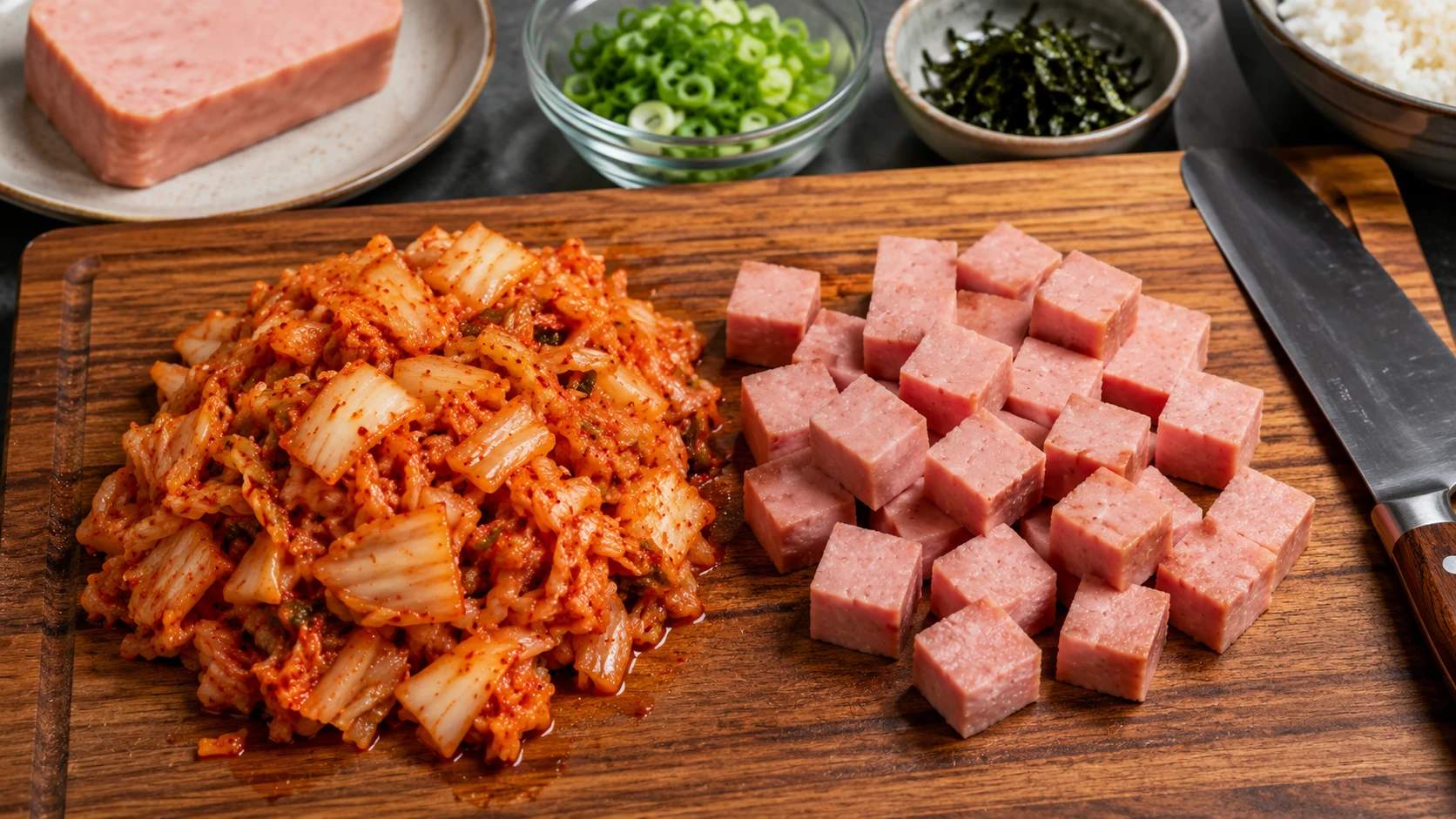
Chop kimchi into 2cm pieces and squeeze well — reserve 3 tablespoons of kimchi juice. Cut the spam into 1.5cm cubes. Add the spam cubes to a cold, dry wok. No oil, no preheating.
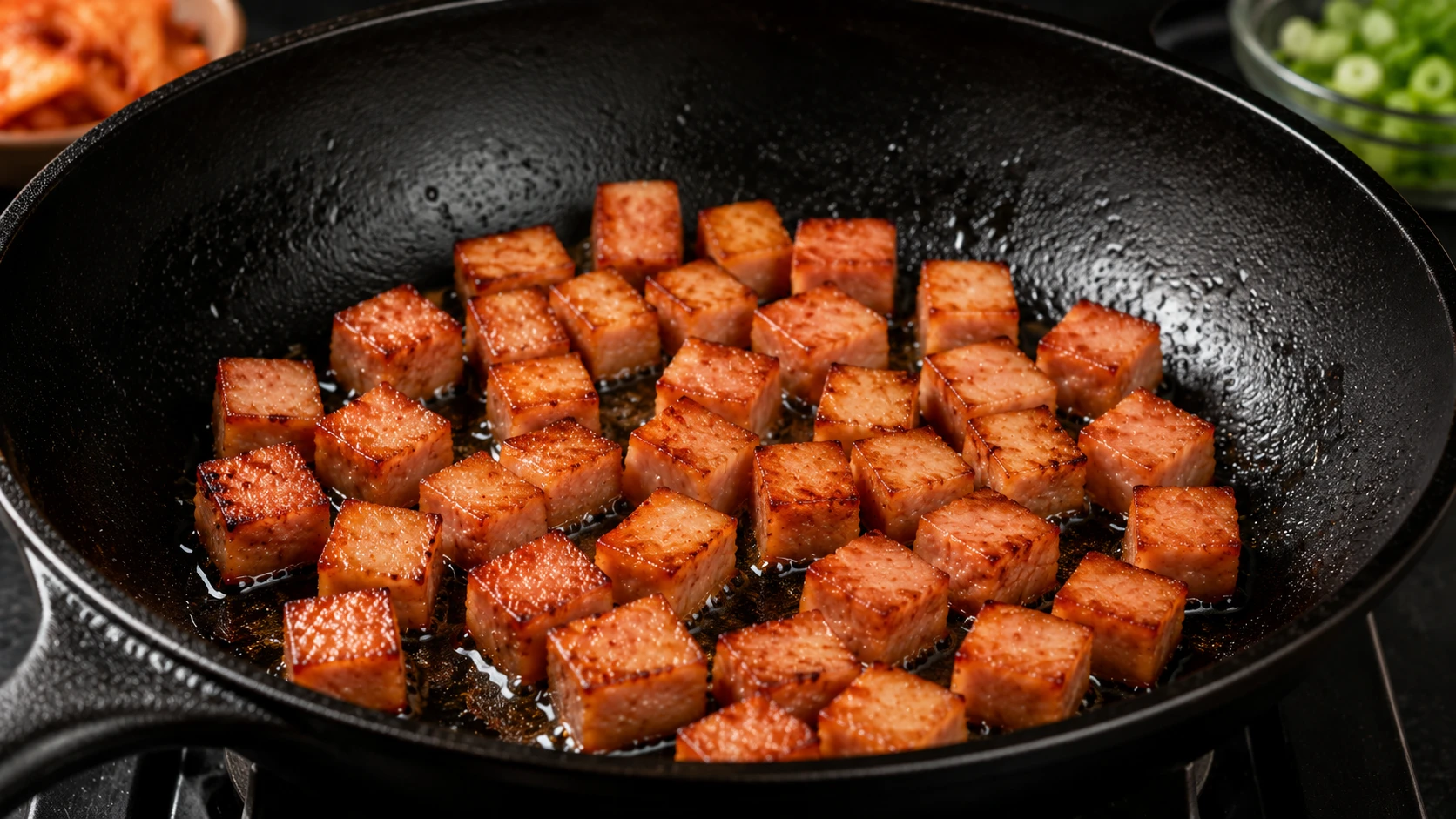
Turn the heat to medium-high. Leave the spam undisturbed for 3-4 minutes. Once one side is deeply golden, toss and fry a further 2 minutes. Remove the spam with a slotted spoon — do not wipe the wok.
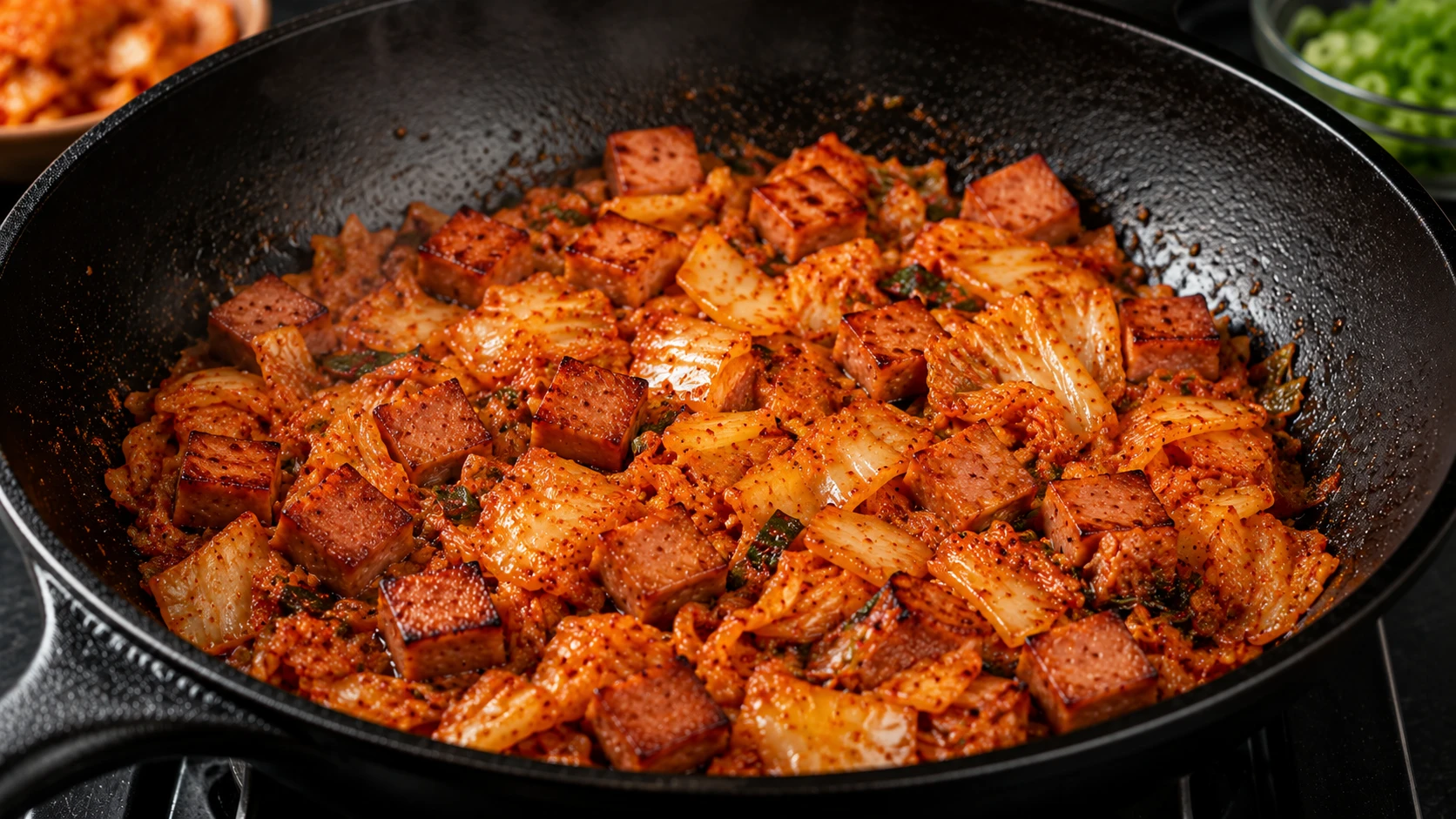
Turn the heat to maximum. Add the squeezed kimchi immediately into the smoking fat. Edges should turn slightly golden and nutty within 3-4 minutes.
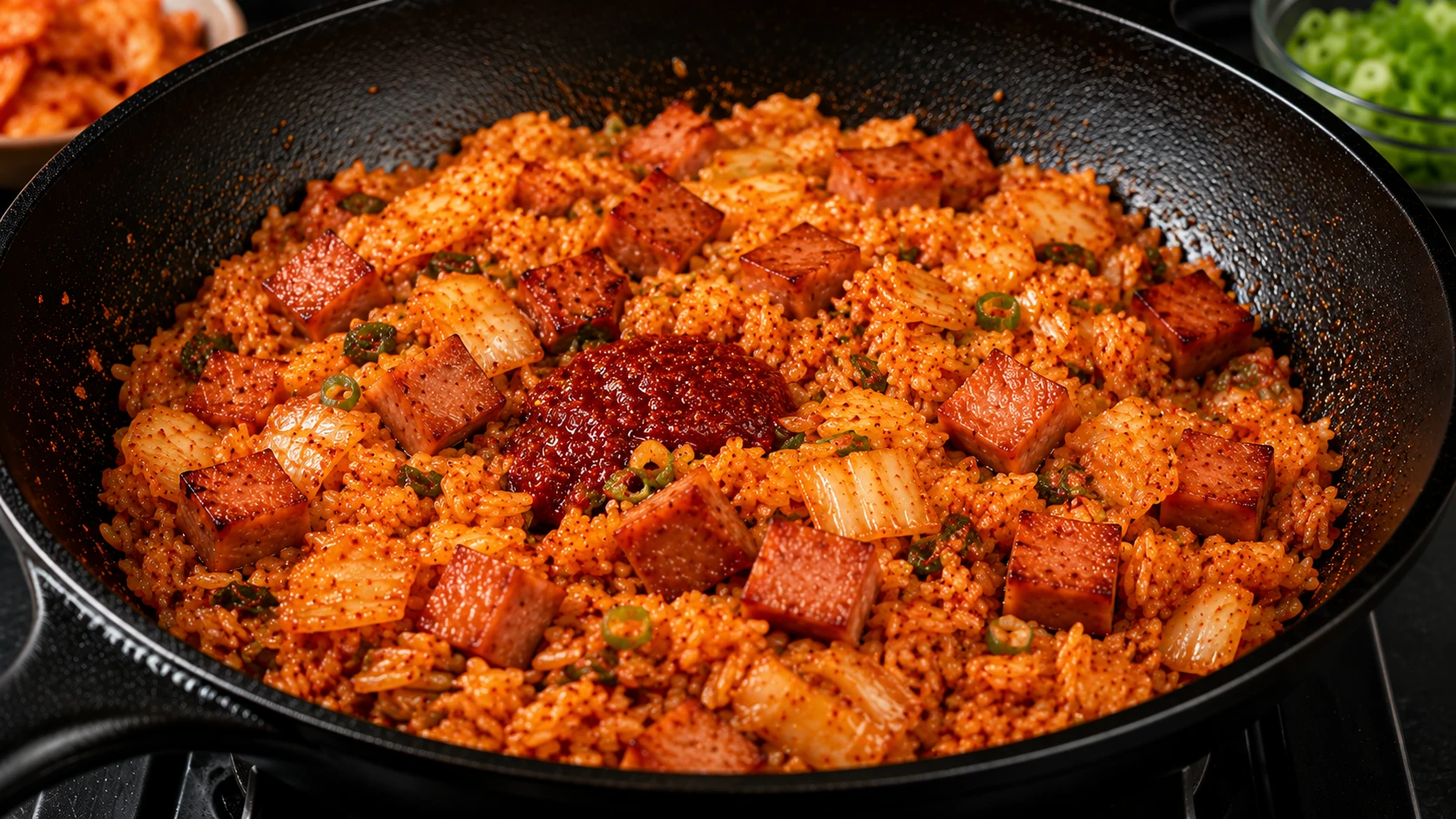
Push kimchi aside. Toast the gochujang directly in the empty hot wok for 30 seconds. Add the day-old rice and break up any clumps. Pour in the kimchi juice, soy sauce, and sugar. Toss for 2 minutes, pressing flat to build the nurungji crust. Fold in the reserved golden spam cubes. Remove from heat and stir in the sesame oil.
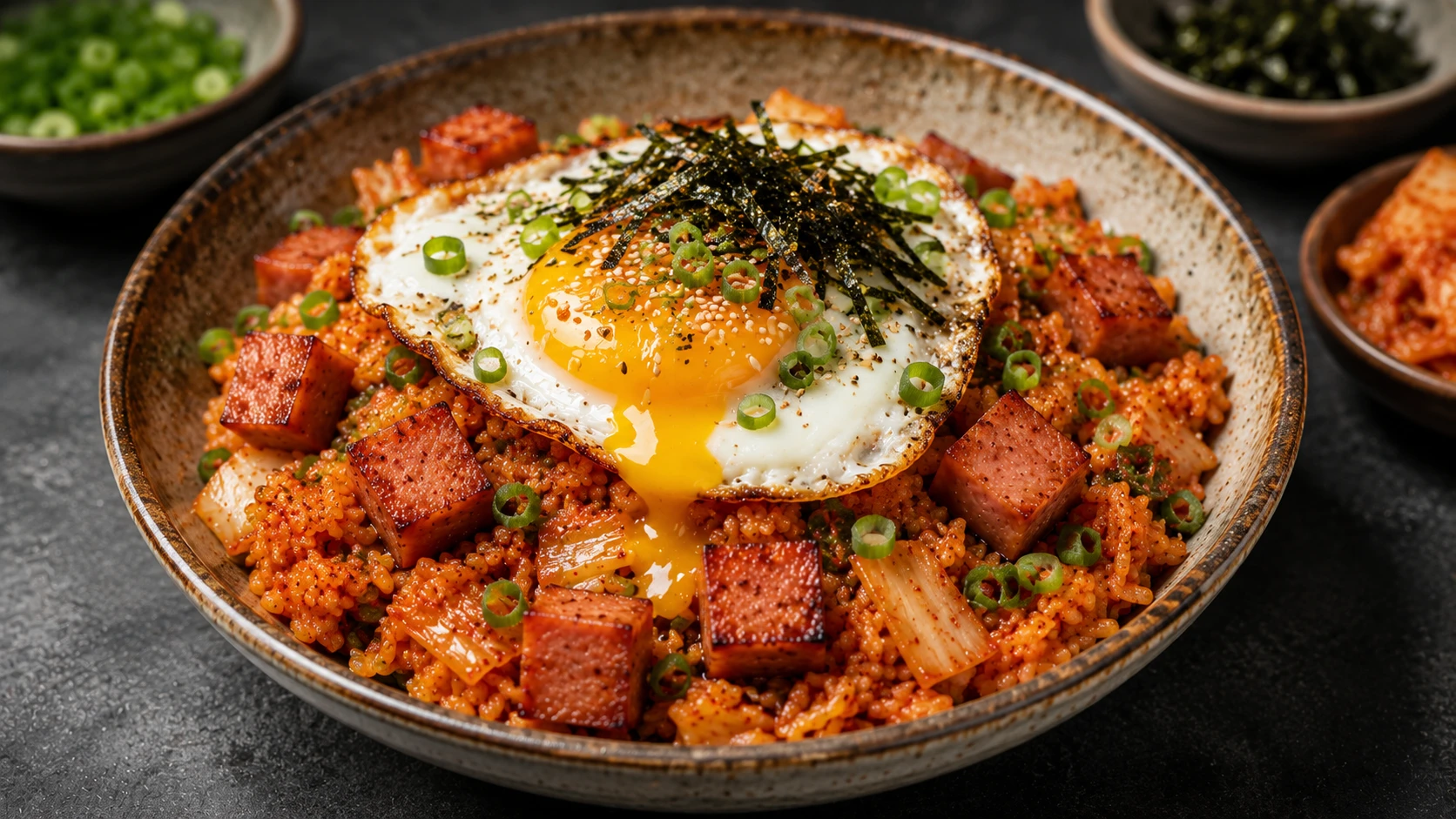
In a smaller pan over medium-high heat, add ½ teaspoon sesame oil. Crack in the egg and spoon hot oil over the yolk for 20 seconds — white fully set, yolk completely molten. Serve topped with the egg, spring onions, sesame seeds, and torn nori on the side.
What We Tested for the Spam Version
The spam version has more variables than the classic. Here is what we discovered across 8 dedicated batches.
The rendered spam fat is not a byproduct — it is the primary cooking medium that defines the dish. Cold wok start, correct spam variety, patience during rendering, and adding spam back at the very end separate great spam kimchi fried rice from simply adding spam as a topping.
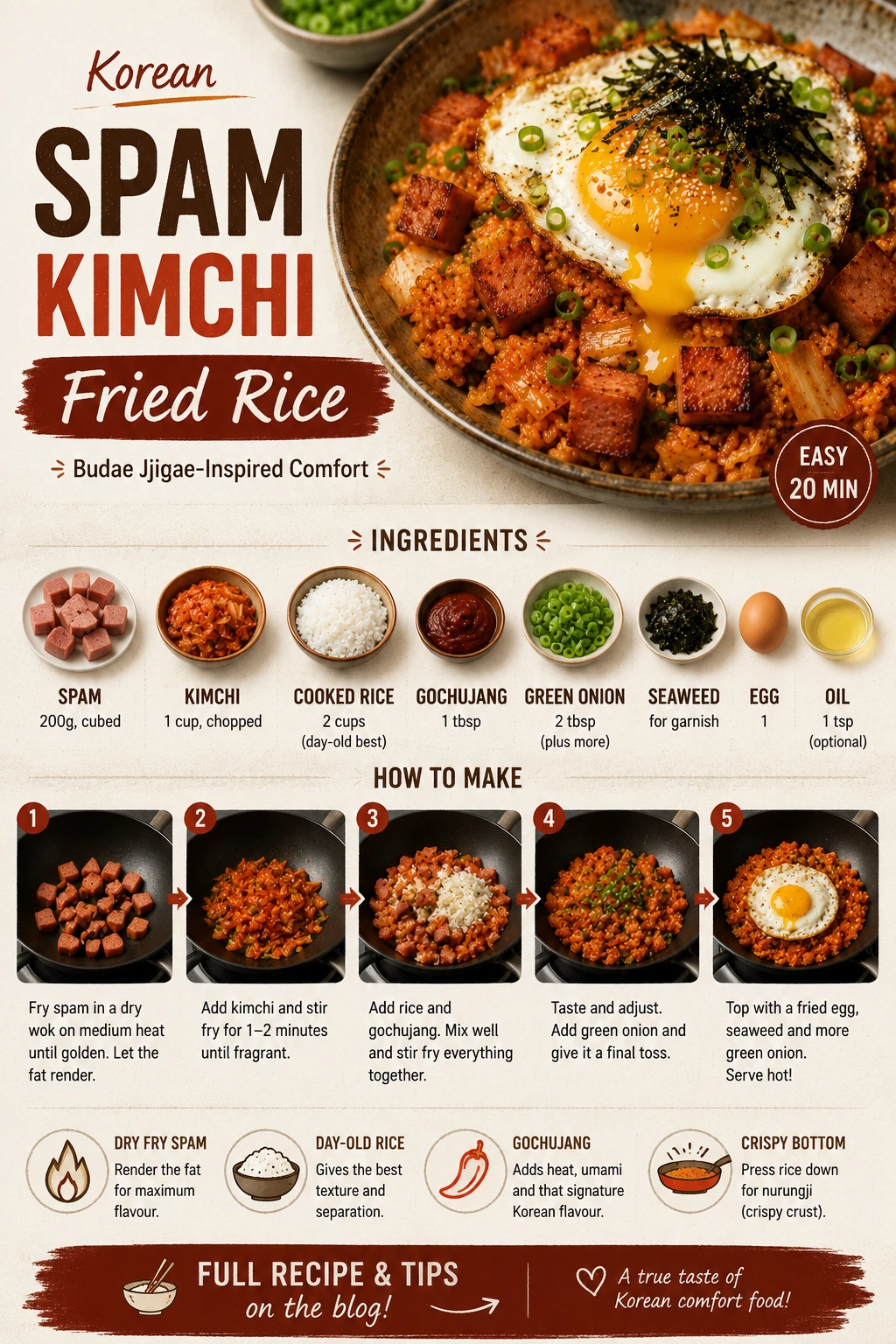
Kimchi Spam Fried Rice (스팸 김치볶음밥)
Cold-wok render method · 170g Spam Classic · 30 min · Budae-style technique
- 170g Spam Classic, 1.5cm cubes
- 2 cups day-old short-grain rice
- 1 cup aged kimchi (Stage 3), chopped
- 3 tbsp kimchi juice (reserved)
- 1 tbsp gochujang
- 1 tsp sesame oil (off-heat)
- 2 tsp soy sauce (reduced for spam)
- 1 tsp sugar
- 2 large eggs, baste-fried
- 2 spring onions, sesame seeds, nori
- Chop kimchi, squeeze, reserve 3 tbsp juice. Cut spam into 1.5cm cubes.
- Add spam to a COLD, dry wok. Heat to medium-high. Fry undisturbed 3-4 min until golden. Toss, fry 2 more min. Remove spam, keep fat in wok.
- Max heat. Add kimchi to spam fat. Stir-fry 3-4 min until caramelised.
- Push aside. Toast gochujang 30 sec. Add rice, break clumps. Add juice, soy, sugar. Toss high heat 2 min, press for nurungji. Fold spam back in gently. Off heat → sesame oil.
- Baste-fry egg (runny yolk). Serve on rice with spring onions, sesame seeds, nori.
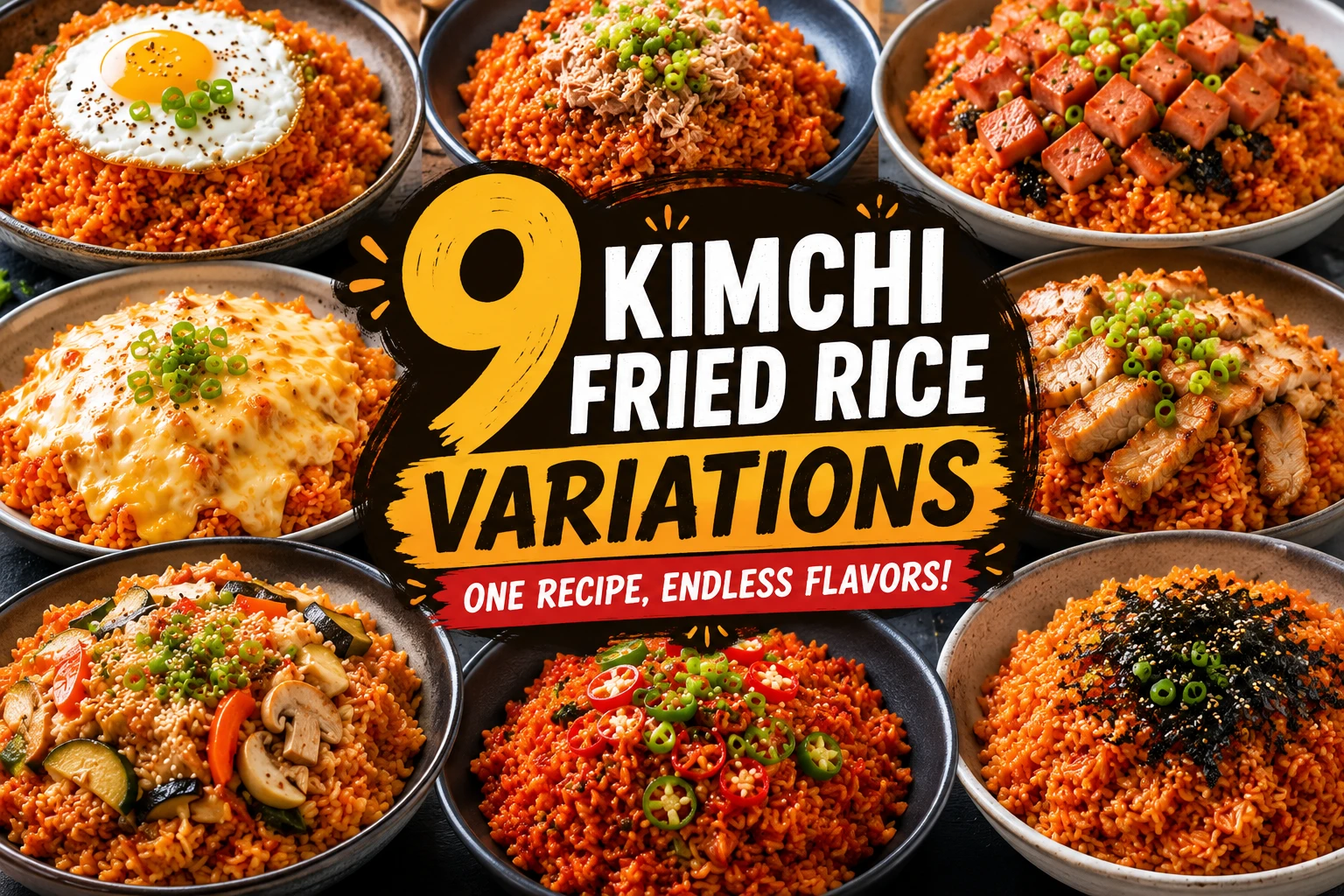
All 9 Kimchi Fried Rice Variations
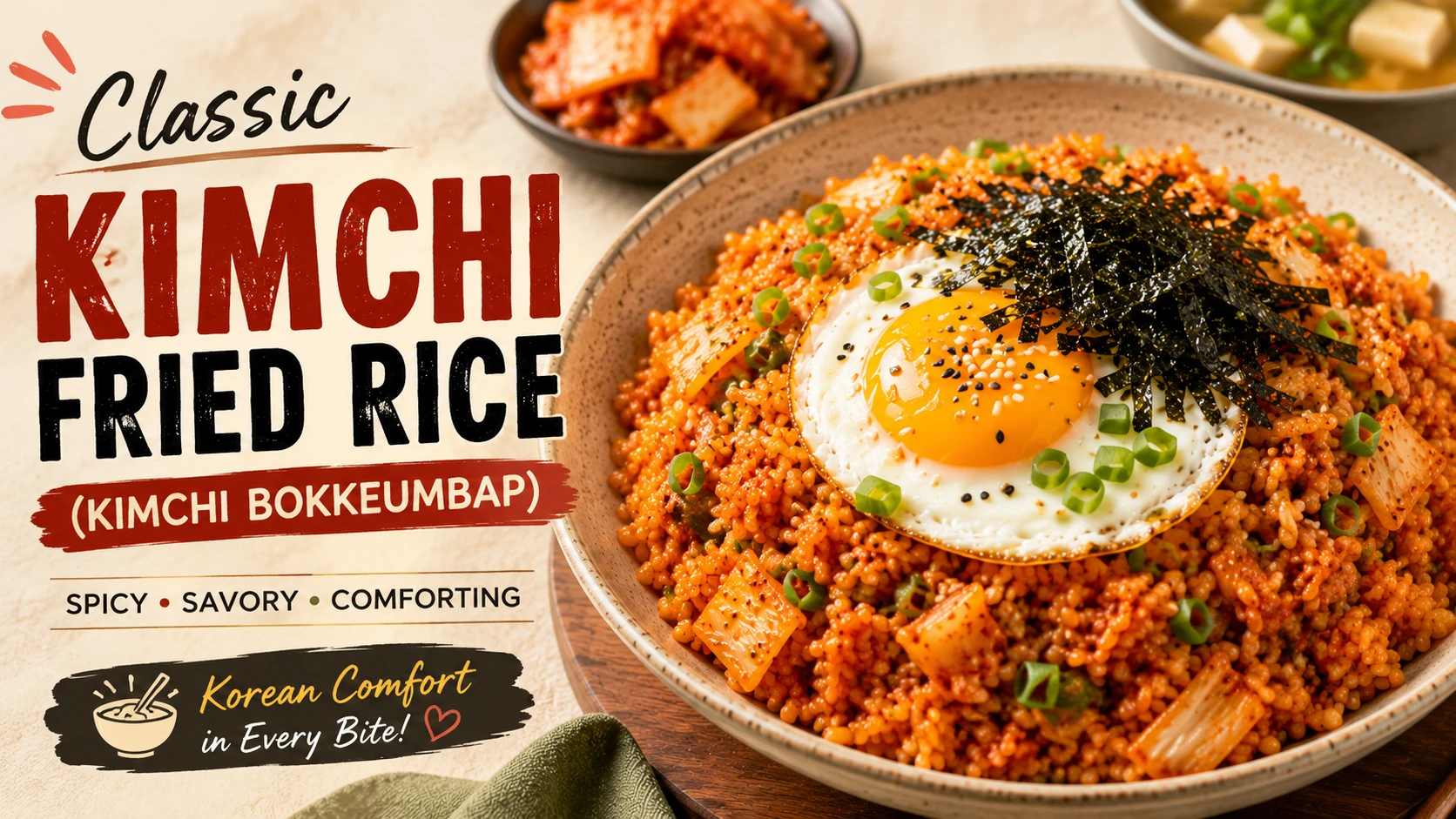
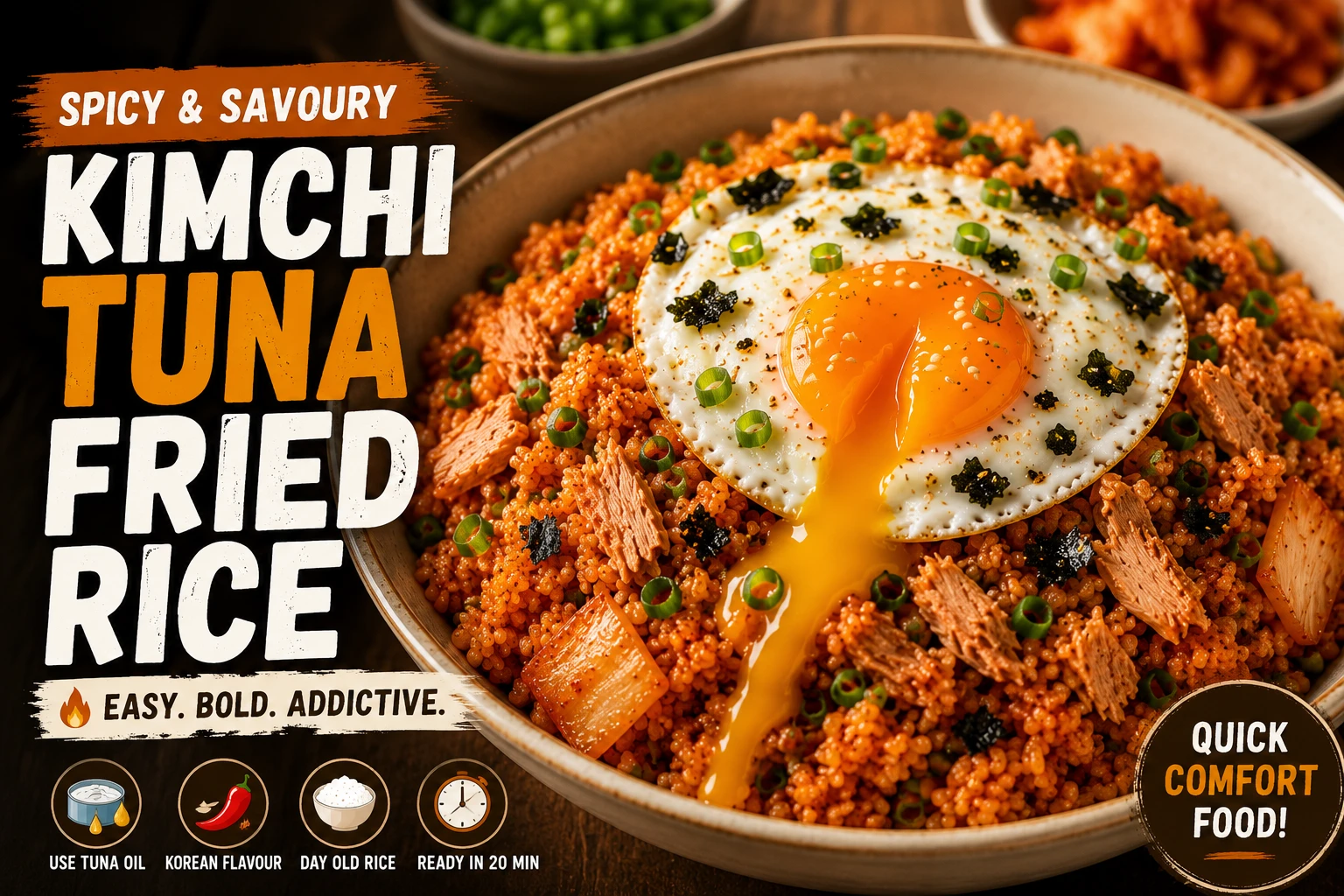
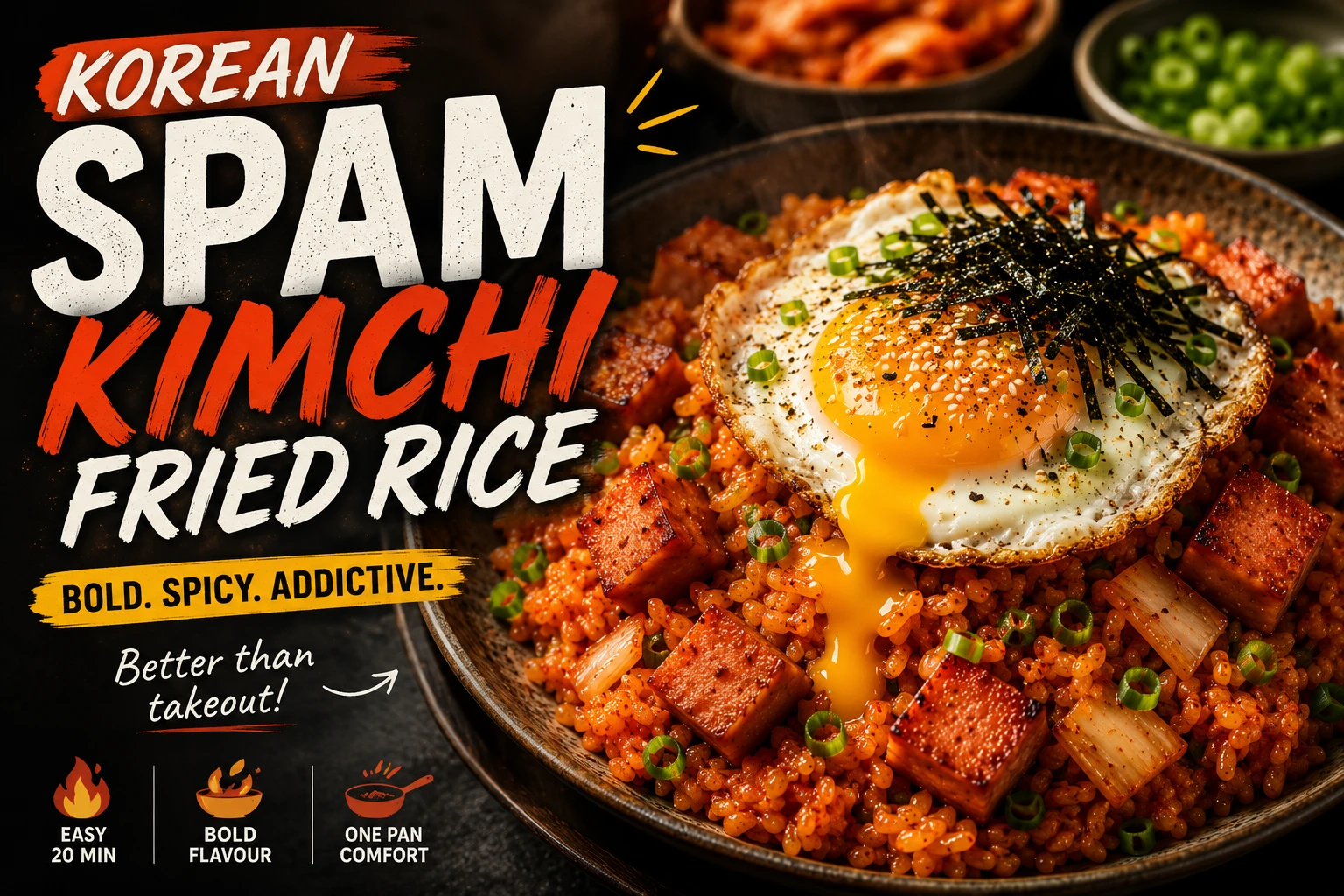
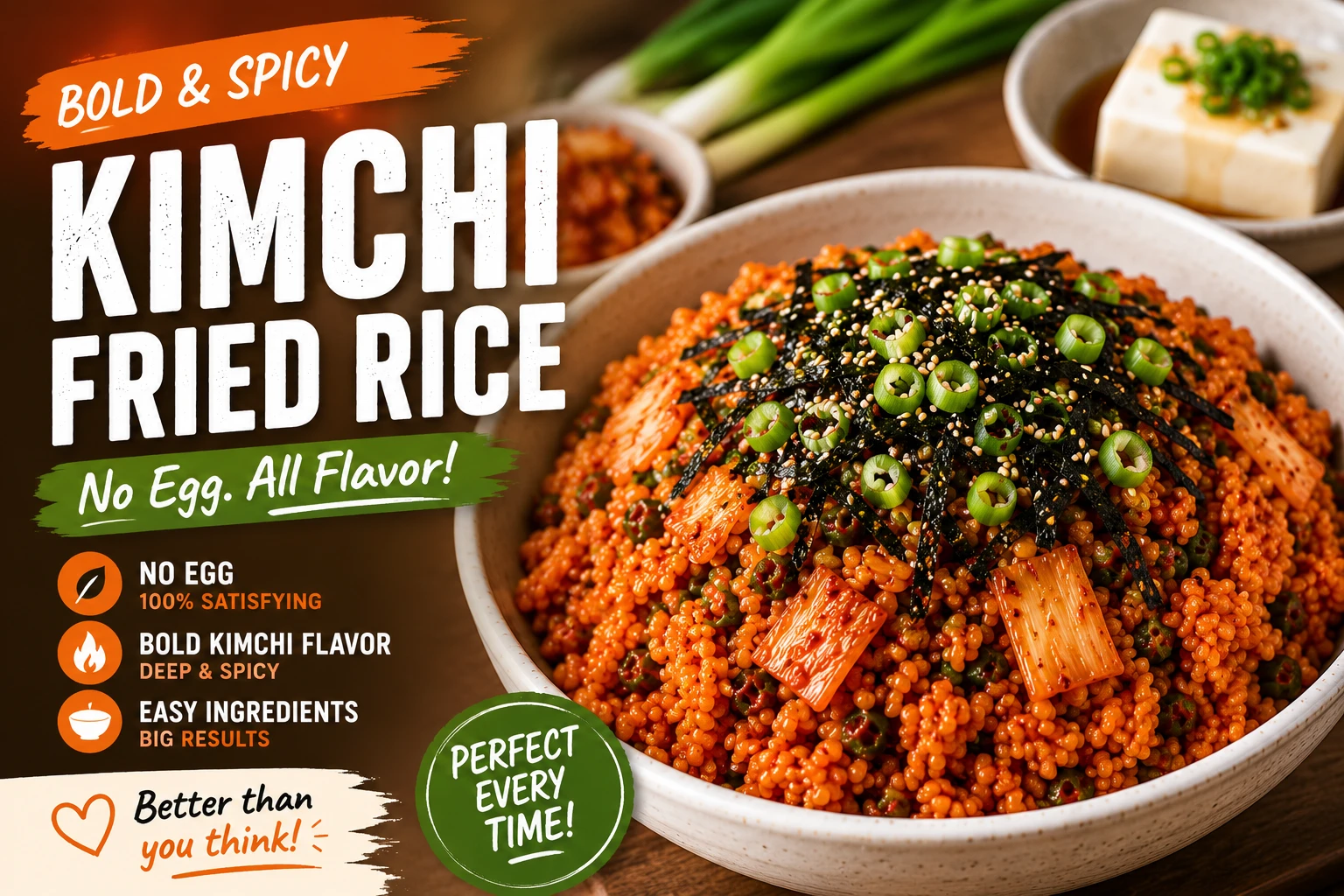
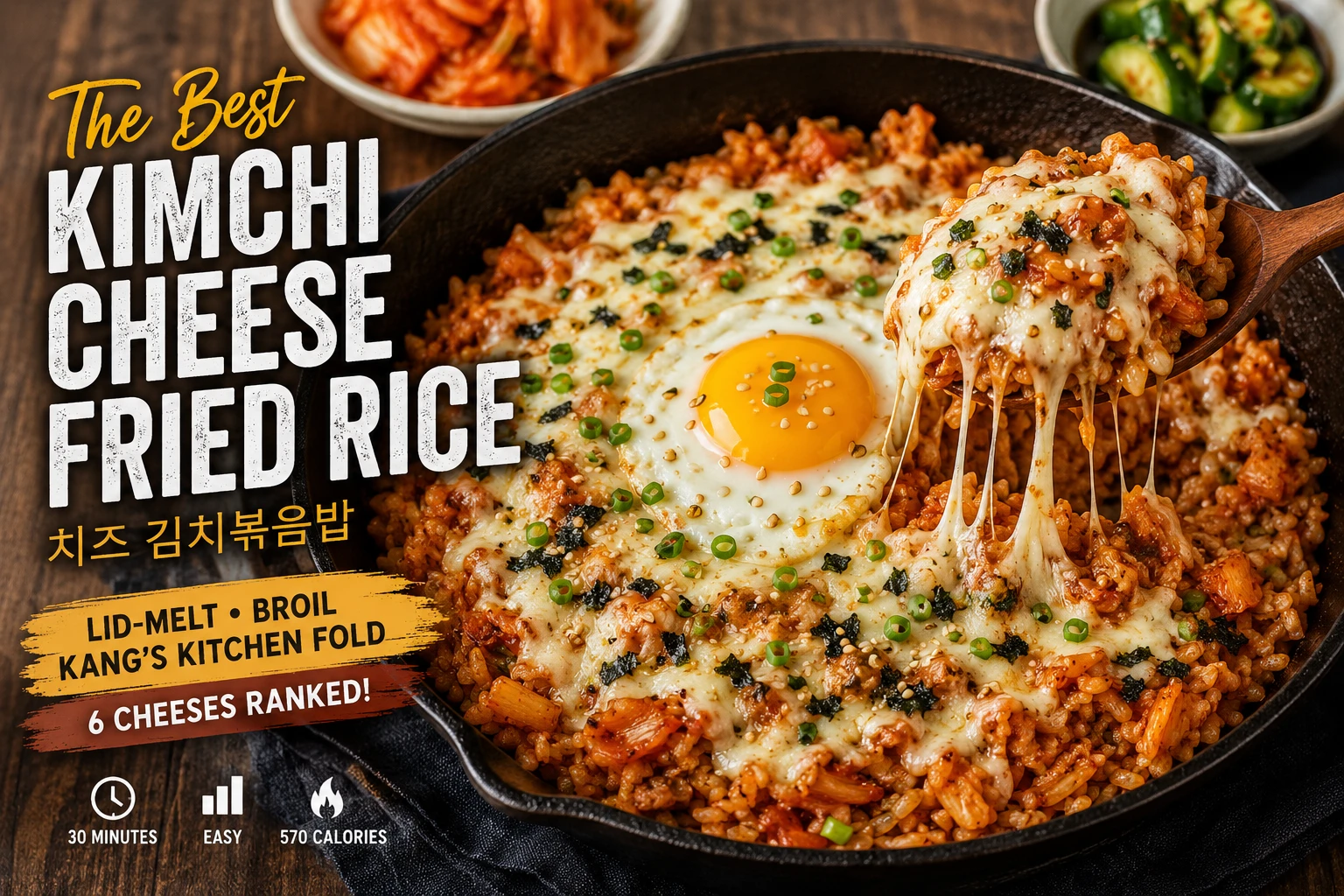
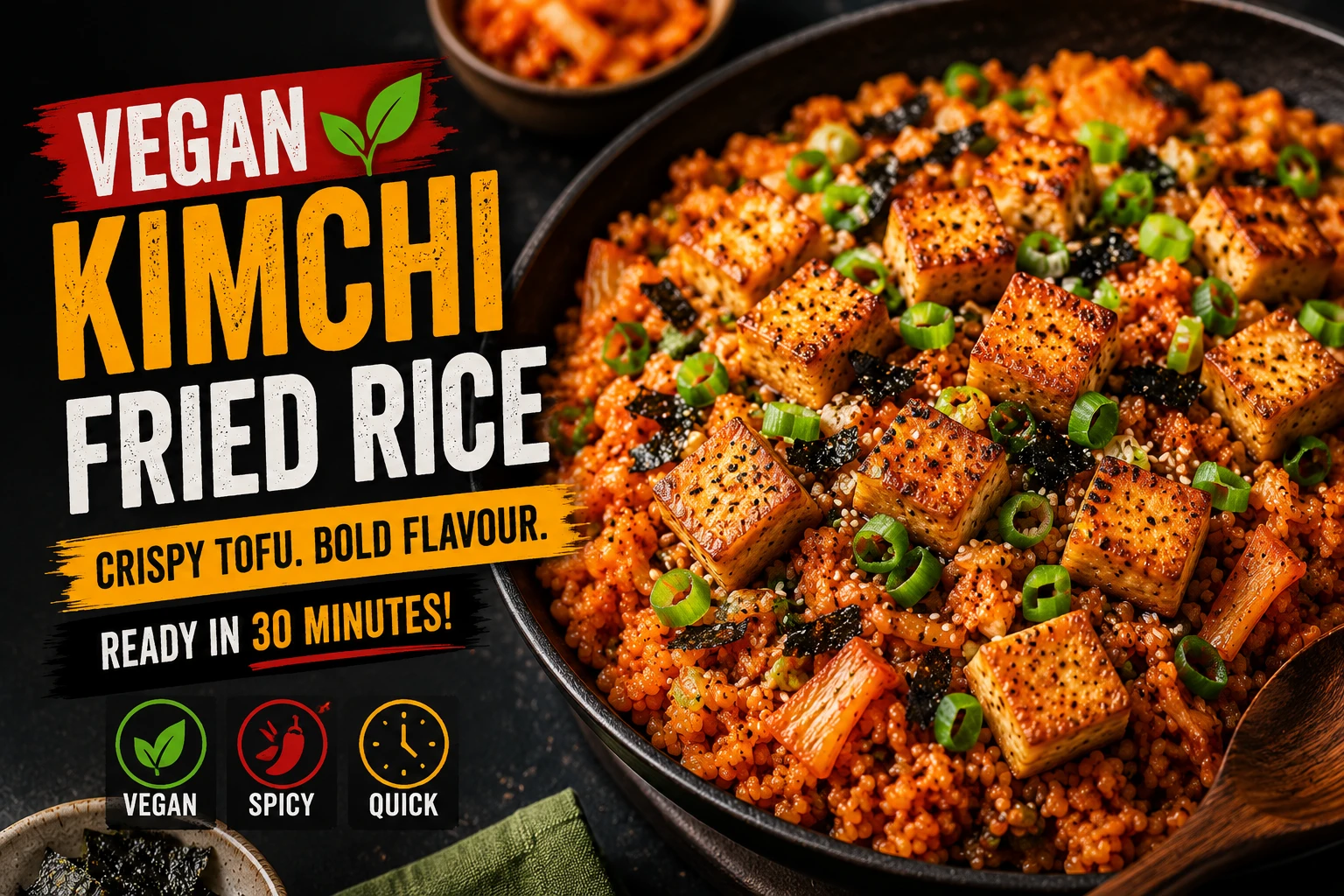
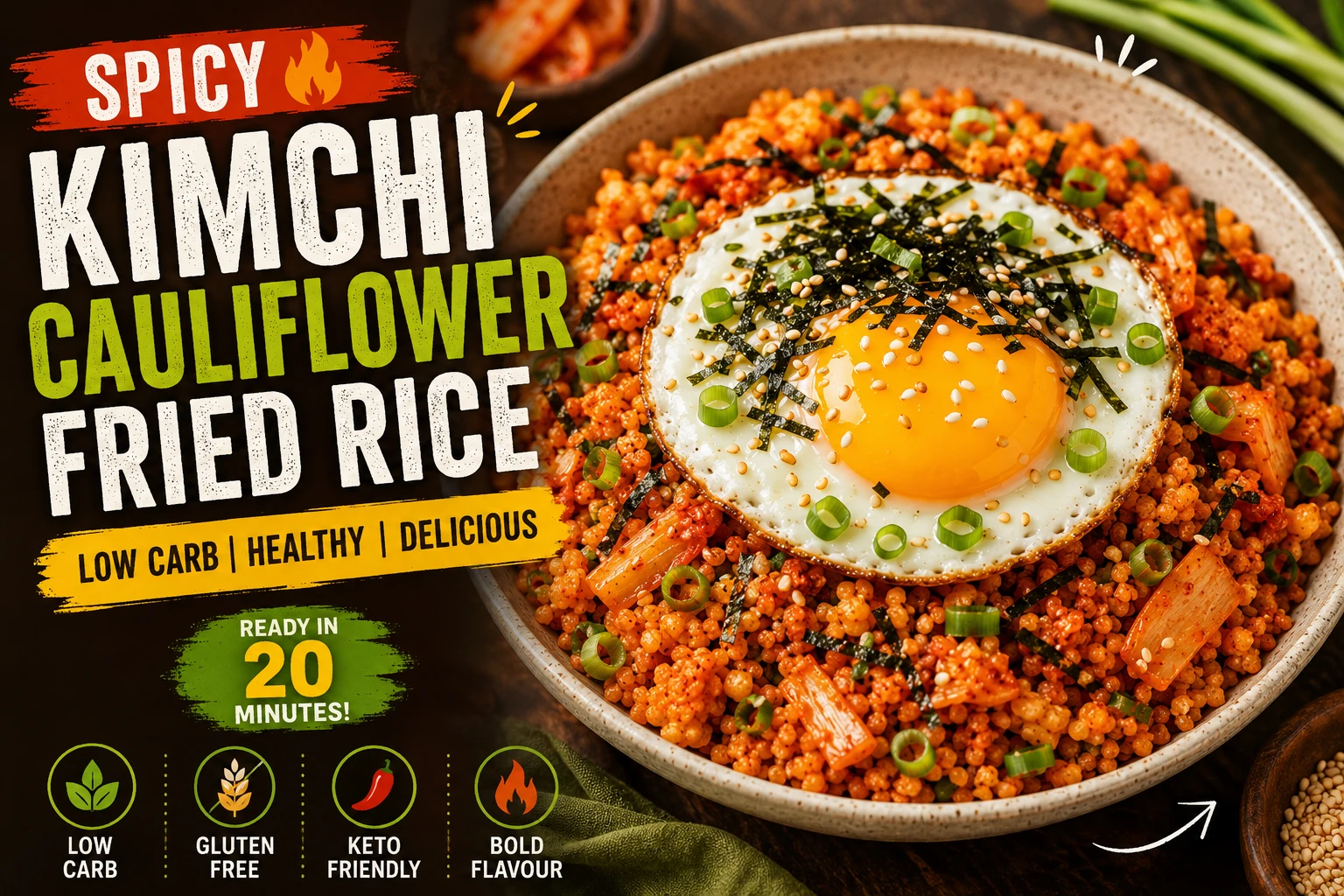
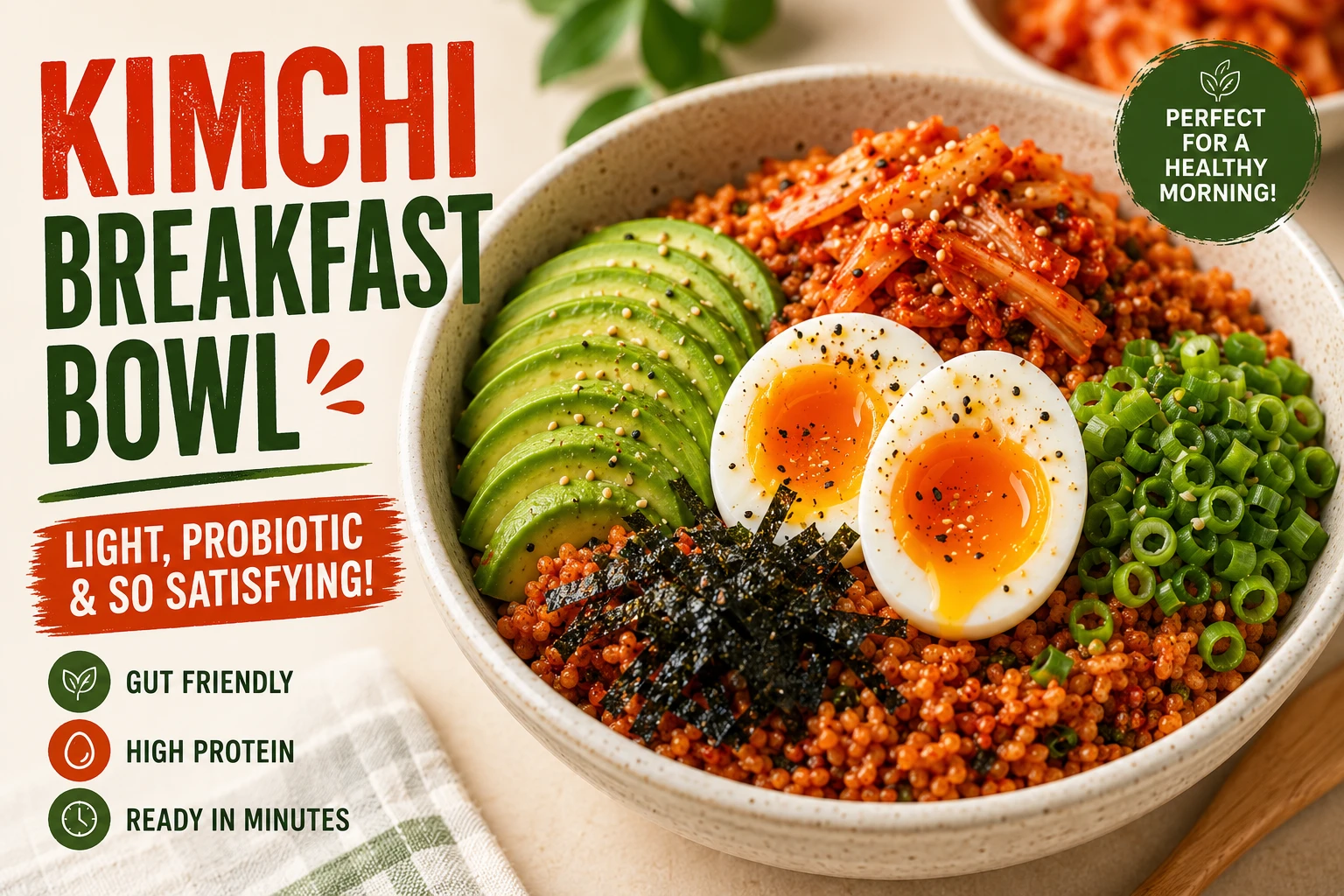
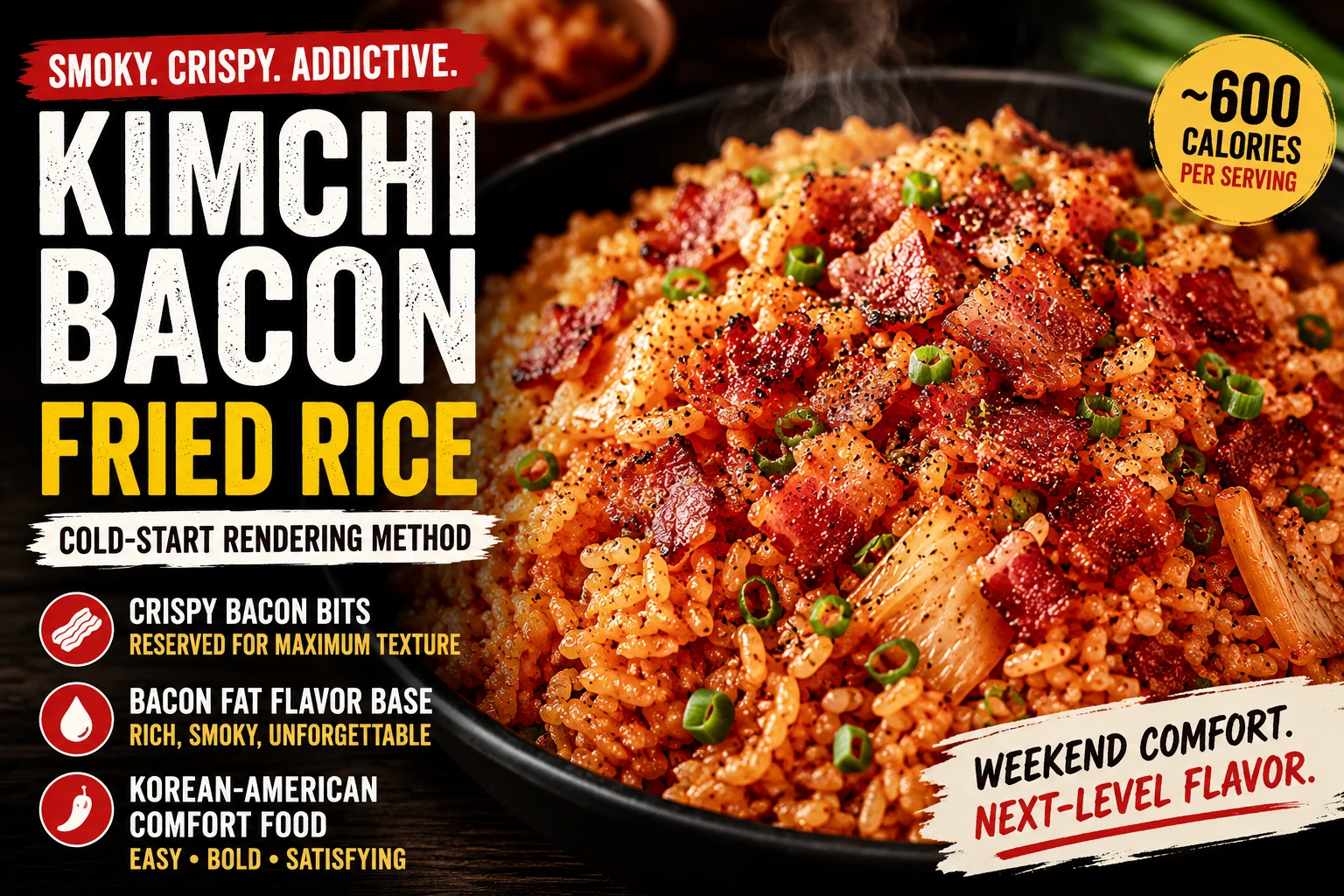
The KFR Ultimate Guide → covers all 9 in one place with the full comparison table.
Pairing Guide — Spam Version
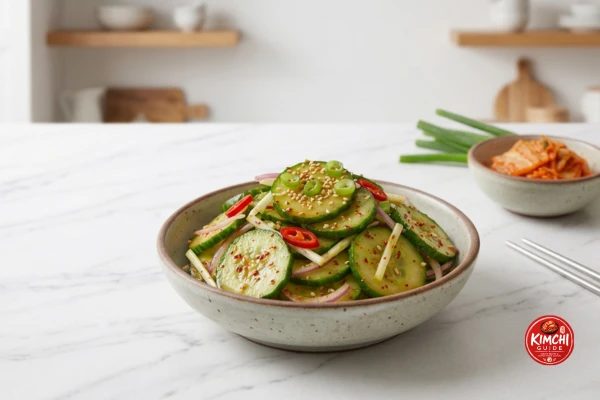
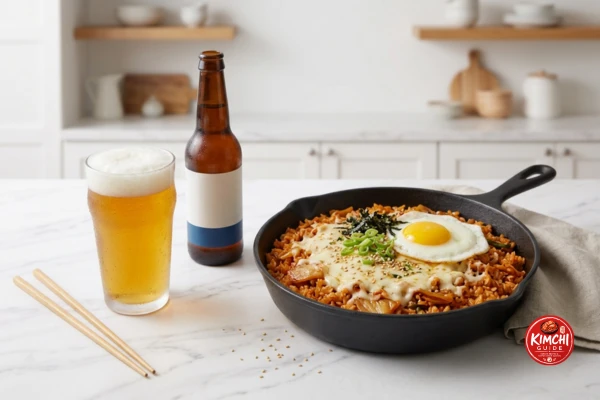
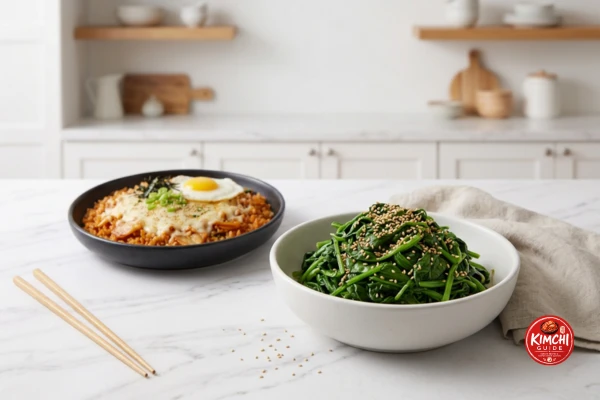
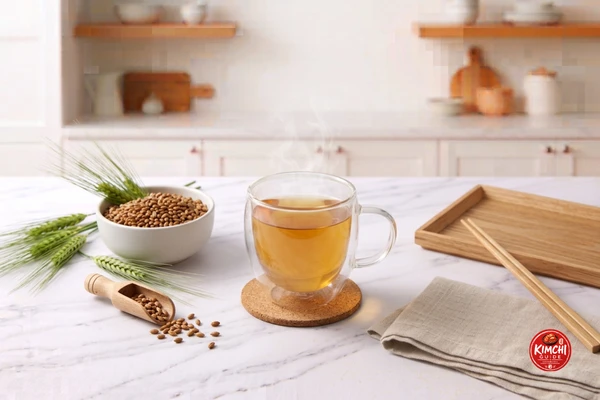
The spam version is richer and saltier than the classic. Pairings should be cool, light, and acidic to balance the fat and salt.
Storage & Reheating — Spam Version
Nutrition Comparison — All 9 KFR Variations
| Variation | Calories | Protein | Vegan? | Best For |
|---|---|---|---|---|
| Cauliflower Version | 180 | 10g | No (egg) | Low-carb, keto, lightest option |
| Without Egg | 360 | 7g | No (may use dairy) | Calorie control, meal prep |
| Vegan (tofu) | 380 | 14g | ✅ Fully vegan | Plant-based, egg-free protein |
| Breakfast Bowl | 380 | 15g | No (egg, avocado) | Mornings, lighter portion |
| Tuna Version | 410 | 22g | No | Highest lean protein |
| Classic | 420 | 14g | No | All occasions |
| Cheese Version | 570 | 19g | No | Entertaining, most indulgent |
| Spam Version ← This page | 580 | 24g | No | Comfort food, budae flavour |
| Bacon Version | 600 | 21g | No | Weekend indulgence |
Kimchi Spam Fried Rice FAQ — 20 Questions
Spam contains high-fat pork that renders when fried, creating a flavourful fat that bastes the kimchi and rice during cooking. Spam also adds salty, slightly sweet umami that creates the signature budae taste.
No — fry the spam in a dry wok with no oil. Only add neutral oil if your spam genuinely sticks after 2 minutes of frying.
Spam Classic is the standard. Spam Less Sodium works equally well with better salt control. Avoid Spam Lite and Spam Turkey.
Yes — Lotte luncheon meat, thick-cut bacon, pork belly, or Vienna sausages all work well. Avoid lean meats.
No — the surface brine adds flavour and the surface salt helps with caramelisation.
Frying spam first renders the fat that becomes the cooking medium for everything else, and creates golden cubes that hold their shape.
Budae jjigae means “army base stew” — a post-Korean War dish made from canned US Army surplus goods combined with kimchi and gochujang.
About 170g per 2 servings is the ideal ratio — noticeable presence without overpowering the kimchi.
Yes, but reduce it to 2 teaspoons, and taste before adding extra seasoning.
Yes — substitute 1 tablespoon gochugaru plus half a teaspoon white miso.
The spam version adds a second umami layer from rendered pork fat, producing a richer, saltier, more complex dish.
1.5cm cubes stay intact when folded through the rice and fit naturally on a spoon.
It’s calorie-dense comfort food at roughly 580 calories with significant sodium — treat it as an occasional indulgence.
Yes — Lotte brand canned luncheon meat produces an almost identical result with slightly less salt.
The rice without egg keeps 3 days refrigerated. Always fry a fresh egg when serving.
Yes, freeze without the egg for up to 2 months. Reheat in a hot wok rather than the microwave.
Rich, salty, slightly spicy, and deeply umami with a smoky pork note from the rendered fat.
Restaurant woks run at far higher heat, creating intense wok hei, and cooks often add extra lard on top of the rendered fat.
Oi muchim is essential to cut through the richness. Cold Korean beer such as Hite or Cass pairs well.
Spam gives the salty, classic budae flavour. Pork belly gives a cleaner, more refined result.


💬 Leave a Comment
Made this recipe? Tell us how the cold-wok render turned out for you.