Classic Kimchi Ramen (김치라면 — Simmer-in-Broth Method)
The technique most recipes skip: simmering kimchi and its brine directly in the broth with garlic and gochugaru before the noodles go in, instead of dropping raw kimchi on top of a plain instant soup. Soft-boiled egg, shiitake mushroom, spring onion. 25 minutes, one pot.
What Is Classic Kimchi Ramen?
Classic kimchi ramen — kimchi ramyeon (김치라면) — is instant noodle soup rebuilt around a broth that’s actually cooked, not just spiked with raw kimchi on top. The defining move: Stage 3 aged kimchi and its brine are simmered directly in the pot with garlic and gochugaru for 2–3 minutes before the stock even goes in, so the lactic acid and glutamates infuse the whole broth instead of sitting as an unincorporated topping. The seasoning packet gets discarded or barely used, since kimchi and gochugaru already carry the salt and heat. Finished with a soft-boiled egg and shiitake mushroom. Serves 2 in 25 minutes at approximately 410 calories and 16g protein per serving.
How to Make Classic Kimchi Ramen
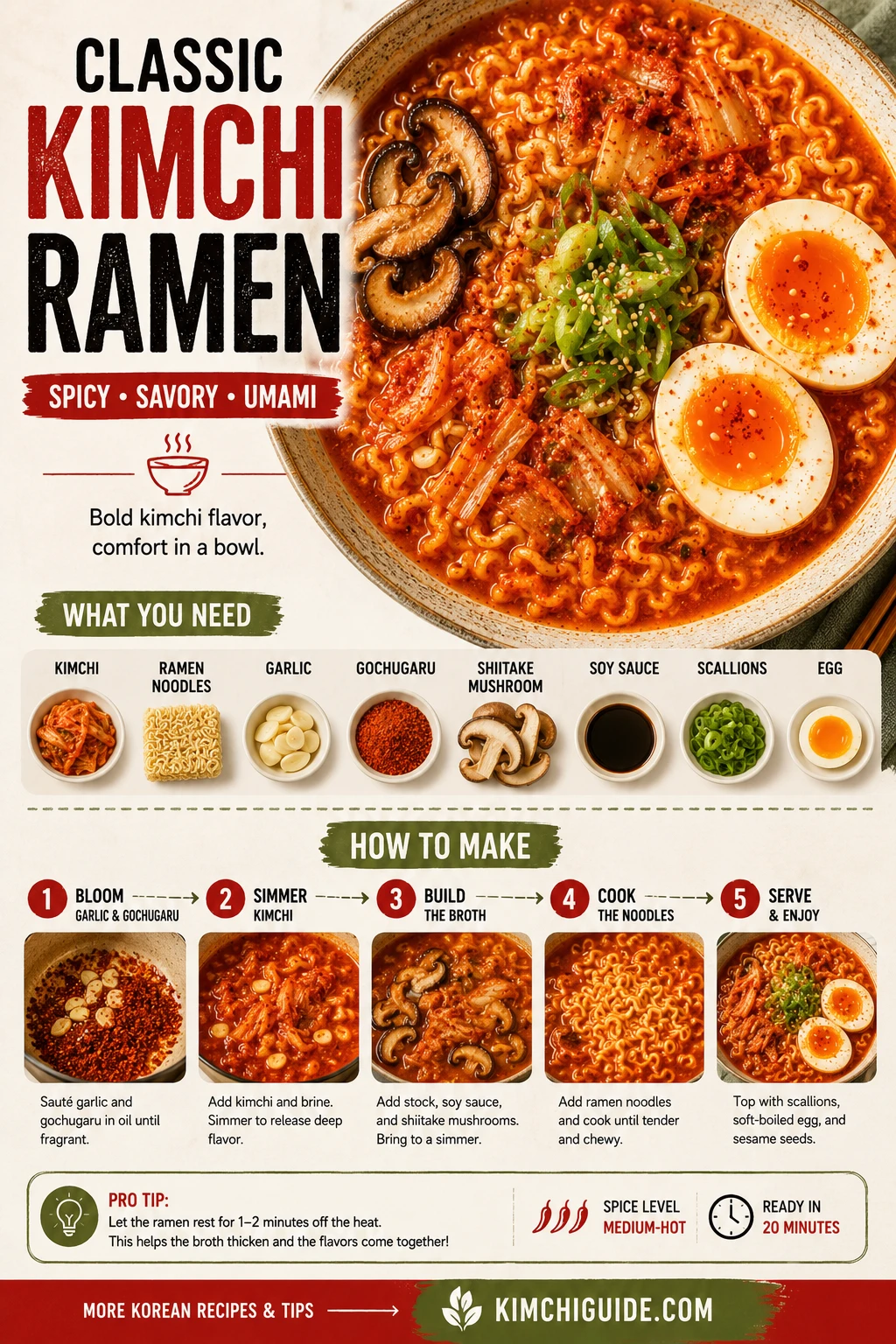
Classic kimchi ramen takes 25 minutes: bloom garlic and gochugaru, simmer kimchi and its brine directly in the pot, build the broth with stock, cook the noodles right in that broth, then finish with sesame oil off-heat and a soft-boiled egg.
- Bloom: warm garlic and gochugaru in a little oil for 30 seconds.
- Simmer the kimchi: add chopped kimchi and its brine, cook 2–3 minutes so it releases flavour into the pot.
- Build the broth: add stock and soy sauce, simmer 5 minutes with shiitake mushroom.
- Cook the noodles: add the noodle blocks straight into the broth, 3–4 minutes.
- Finish: off heat, stir in sesame oil, top with soft-boiled egg and scallion.
Why Kimchi Ramen Isn’t the Seasoning Packet Plus Kimchi
Most quick versions of this dish dump chopped kimchi straight into instant broth and call it done — it tastes thin and one-note. The step that actually changes the bowl is simmering the kimchi in the broth with its own brine, garlic, and gochugaru before the noodles go in. That’s the difference between “ramen with kimchi on top” and real kimchi ramen.
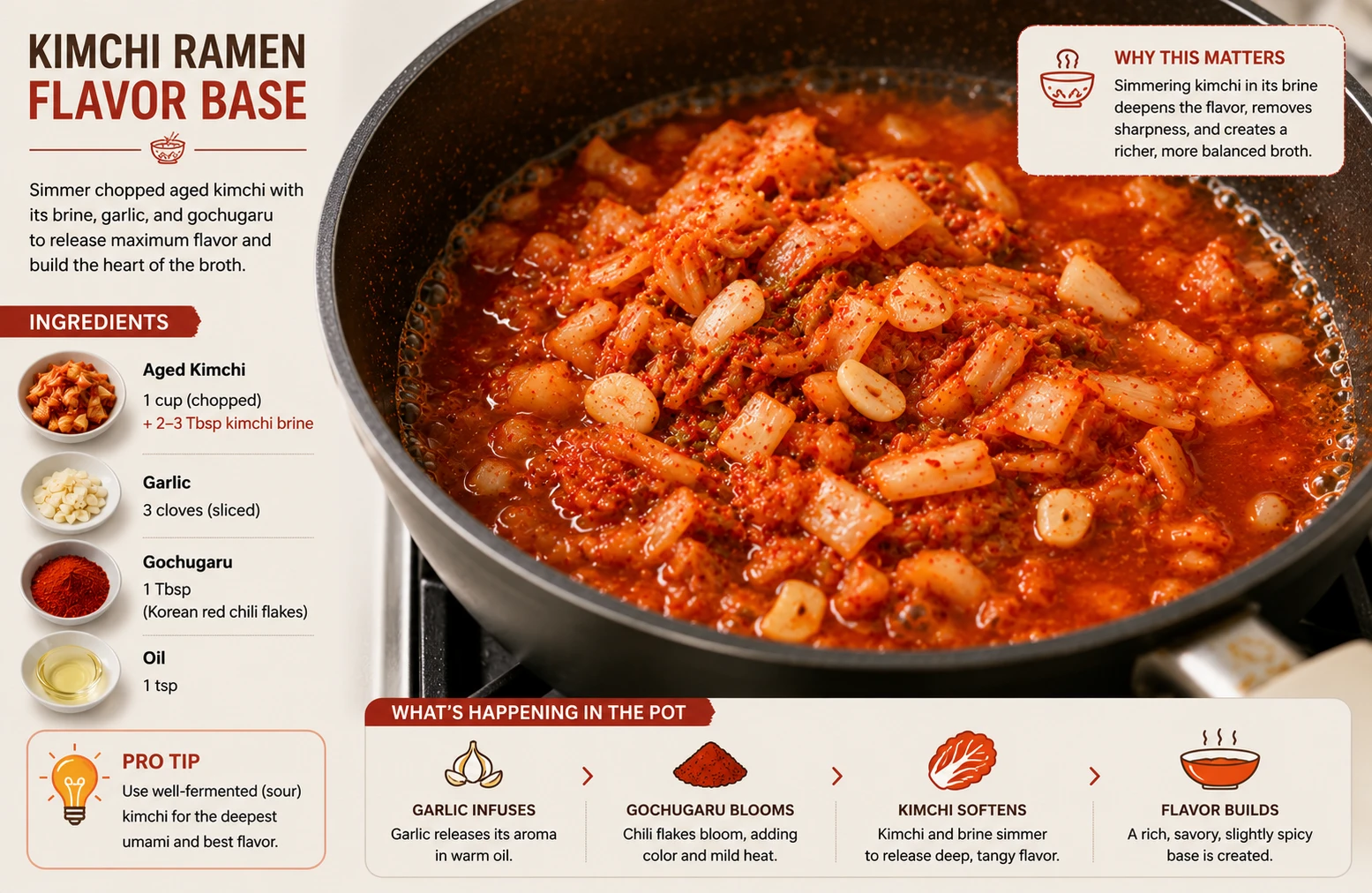
Kimchi’s reserved brine carries dissolved glutamates and lactic acid that plain chopped kimchi leaves behind. Simmering it into the pot alongside the solids is what actually seasons the broth.
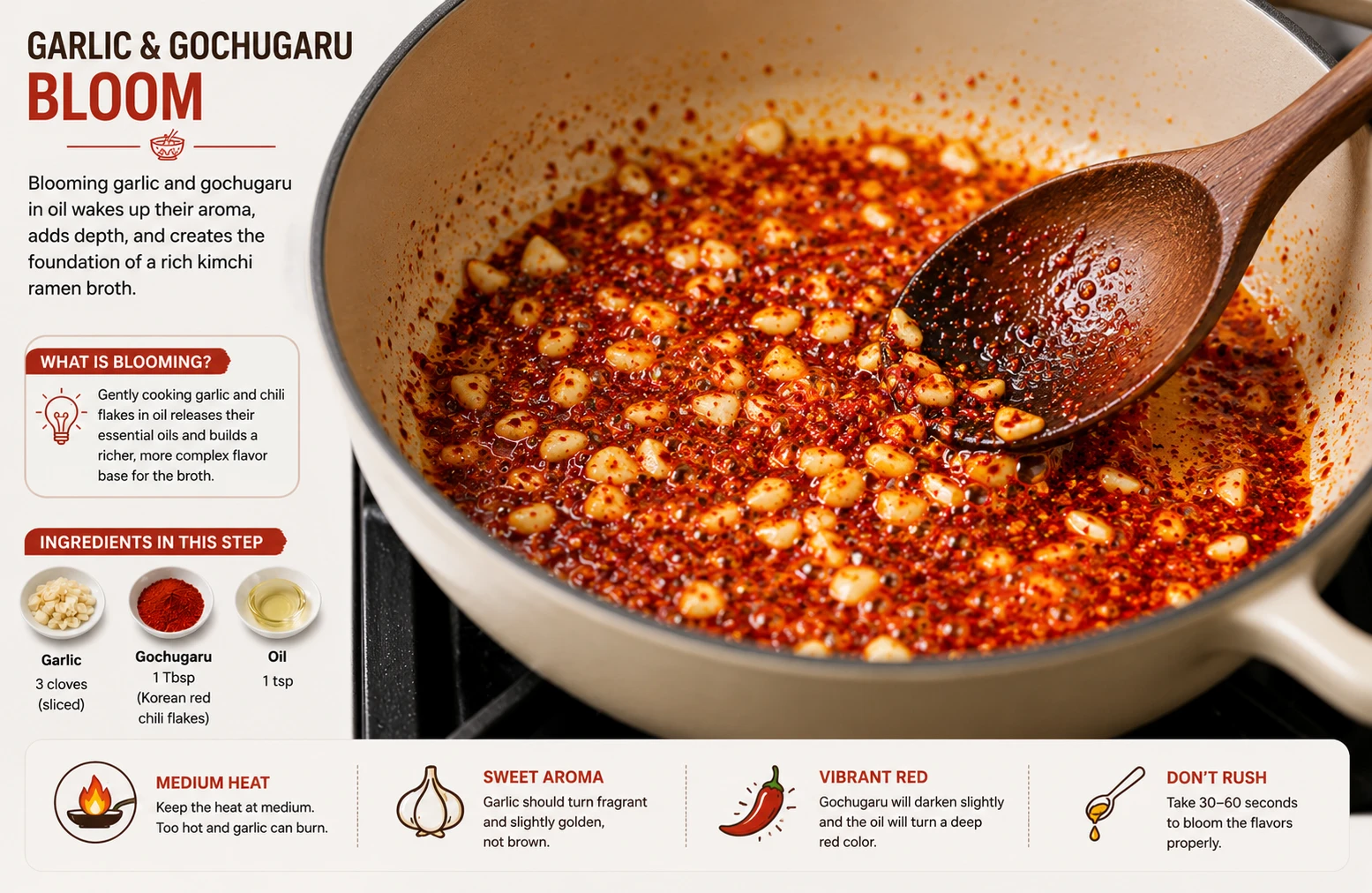
Thirty seconds of garlic and gochugaru in warm oil before the kimchi goes in wakes up the chili’s aroma compounds — skip this and the broth tastes flatter even with everything else done right.
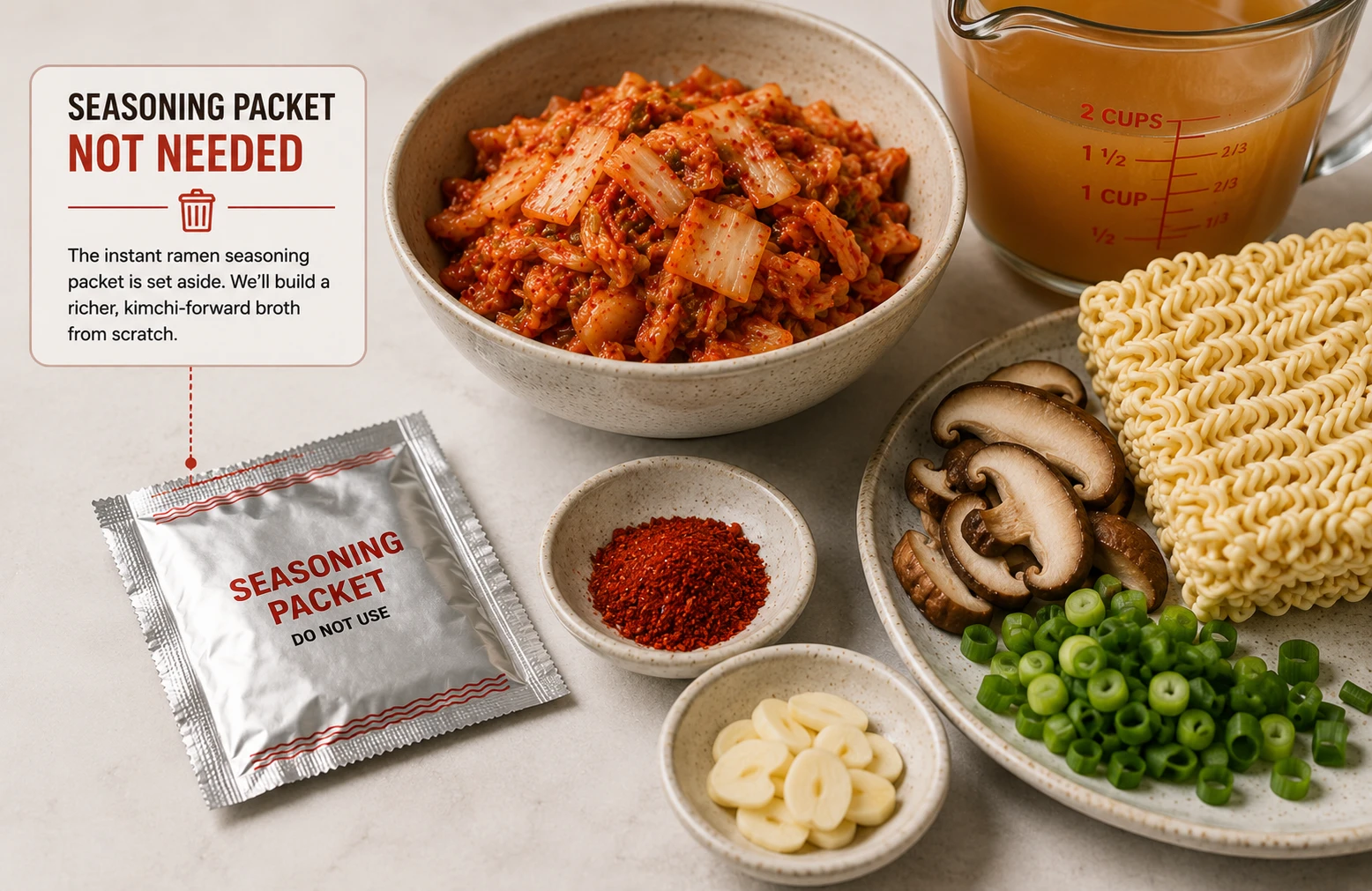
It’s built to flavour plain water. Once kimchi, gochugaru, and soy sauce are already doing that job, adding the full packet on top just oversalts an otherwise well-balanced bowl.
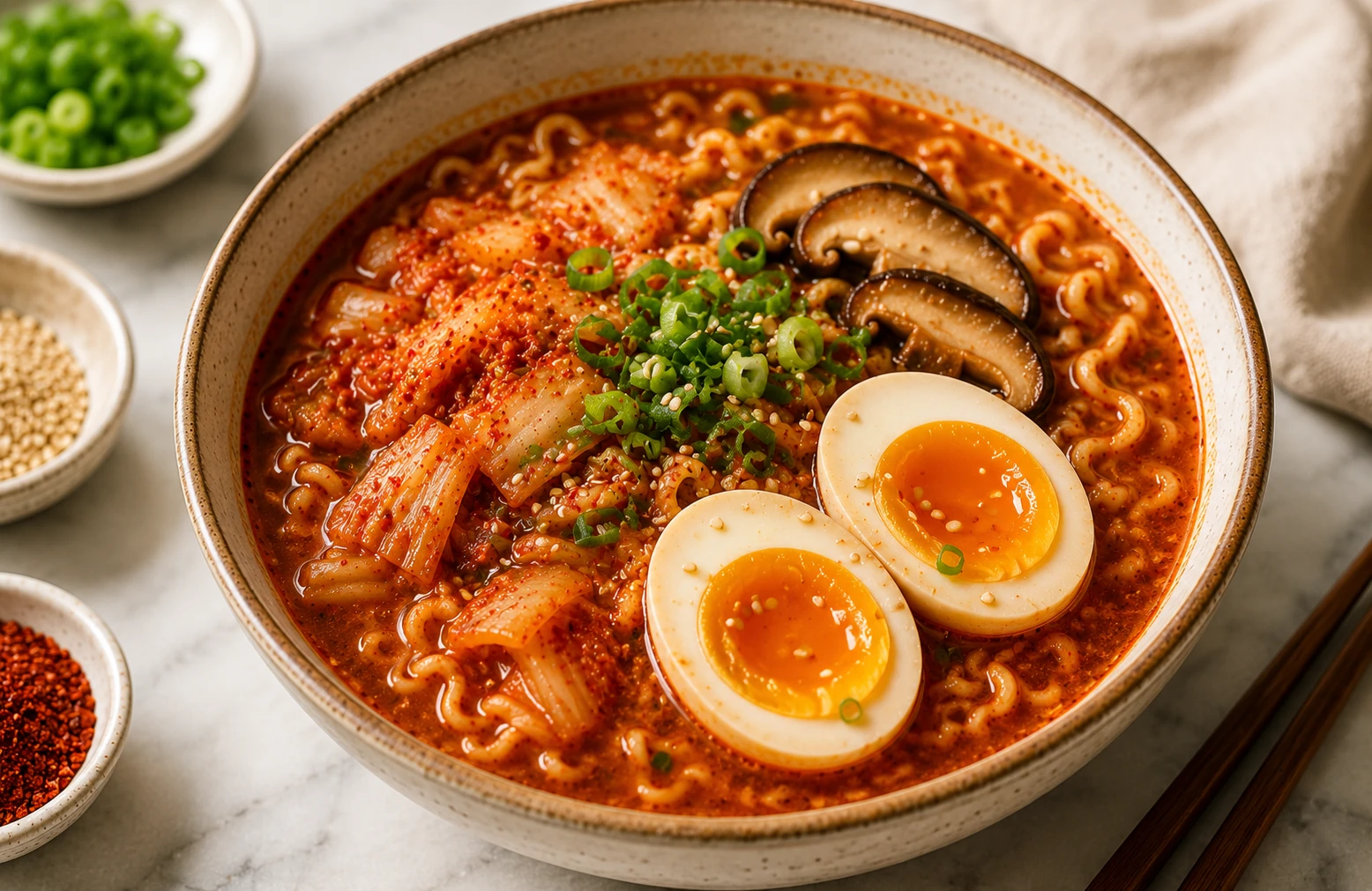
A jammy soft-boiled yolk breaks into the hot broth and mellows the kimchi’s tang — the same balancing role egg plays across almost every dish in the kimchi recipe family.
Simmer-in-Broth vs Kimchi-on-Top — Compared
Nearly every kimchi ramen recipe online skips this comparison and just says “add kimchi.” We tested both approaches across 6 batches. The difference decides whether the broth actually tastes like kimchi or just looks red.
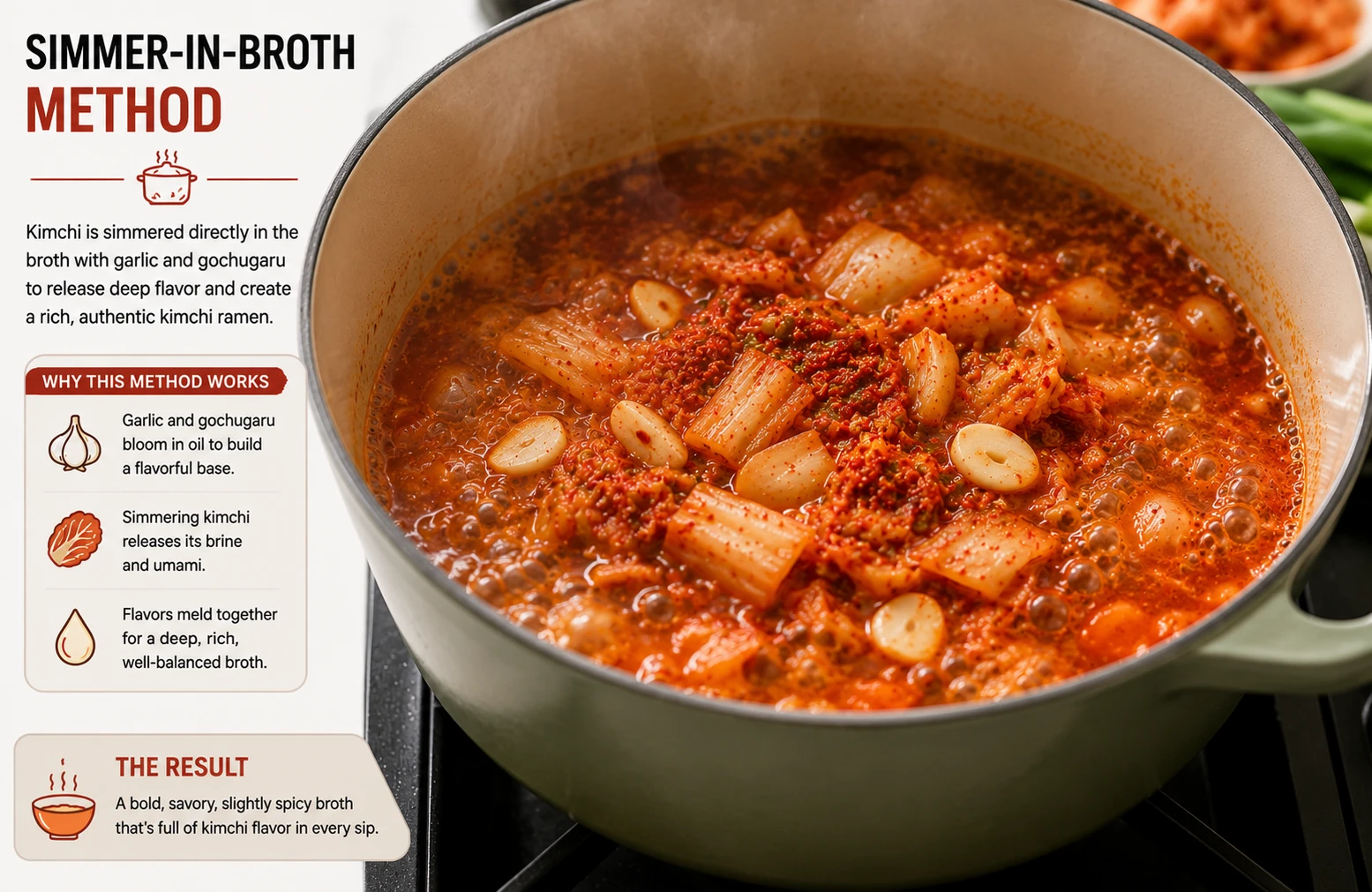
- Bloom garlic and gochugaru in oil, 30 seconds
- Add chopped kimchi and its brine directly
- Simmer 2–3 minutes before adding any liquid
- Build the broth around that base, then add noodles
Result: A broth with real depth — kimchi’s sourness and umami dissolved throughout, not floating on top. The correct technique in every batch test.
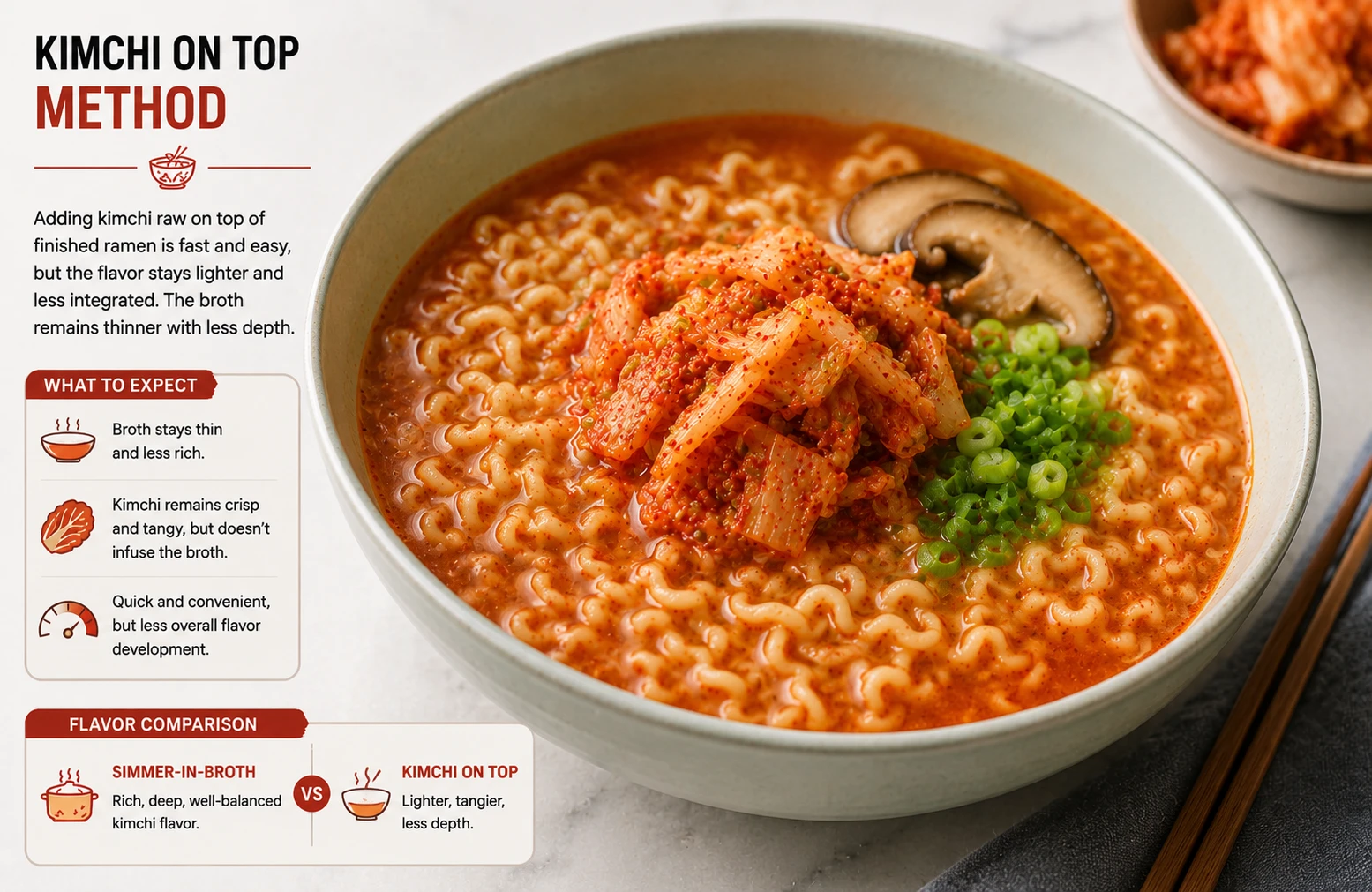
- Cook noodles in plain seasoned broth
- Chop kimchi and place it on top at the end
- No time for flavour to integrate into the broth
Result: Thin, one-note broth with kimchi sitting as an unincorporated garnish. Faster, but it’s ramen with kimchi on the side, not kimchi ramen.
Method Comparison at a Glance
| Method | Broth Depth | Time | Verdict |
|---|---|---|---|
| Simmer-in-Broth ⭐ | High | +3 min | Always use this |
| Kimchi-on-Top | Thin | Faster | Avoid — kimchi never integrates |
Key Terms — Language & Food Science Entities
These terms clarify what this dish is, how it relates to the wider kimchi noodle silo, and why each technique step matters.
Which Kimchi Stage to Use — Visual Guide
Since the simmer-in-broth method relies entirely on the kimchi to season the pot, the fermentation stage matters here even more than in a fried-rice application.
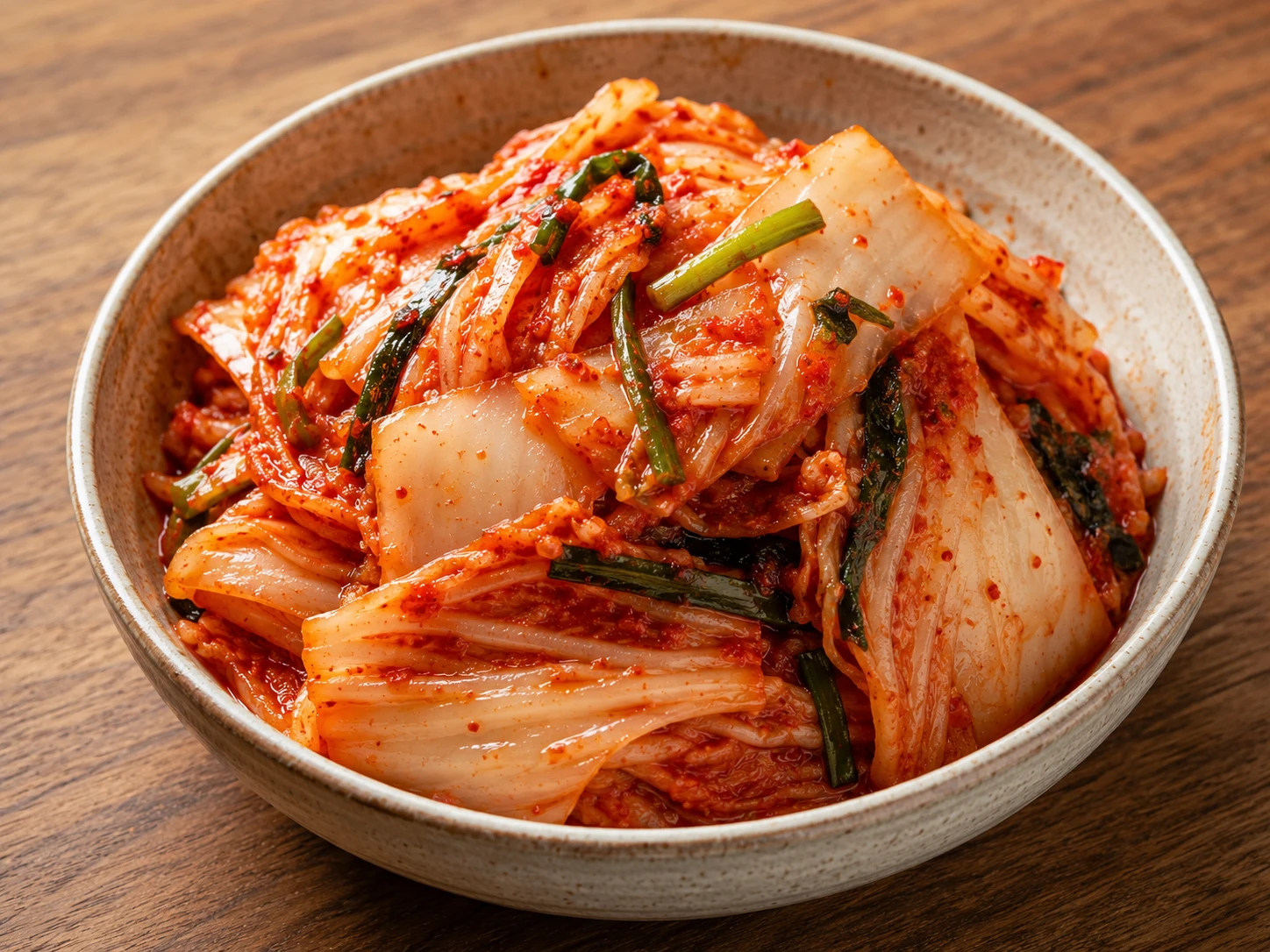
Sweet, mild, crunchy — even simmered, it lacks the acid needed to build a real broth.
✗ Do Not Use — flat broth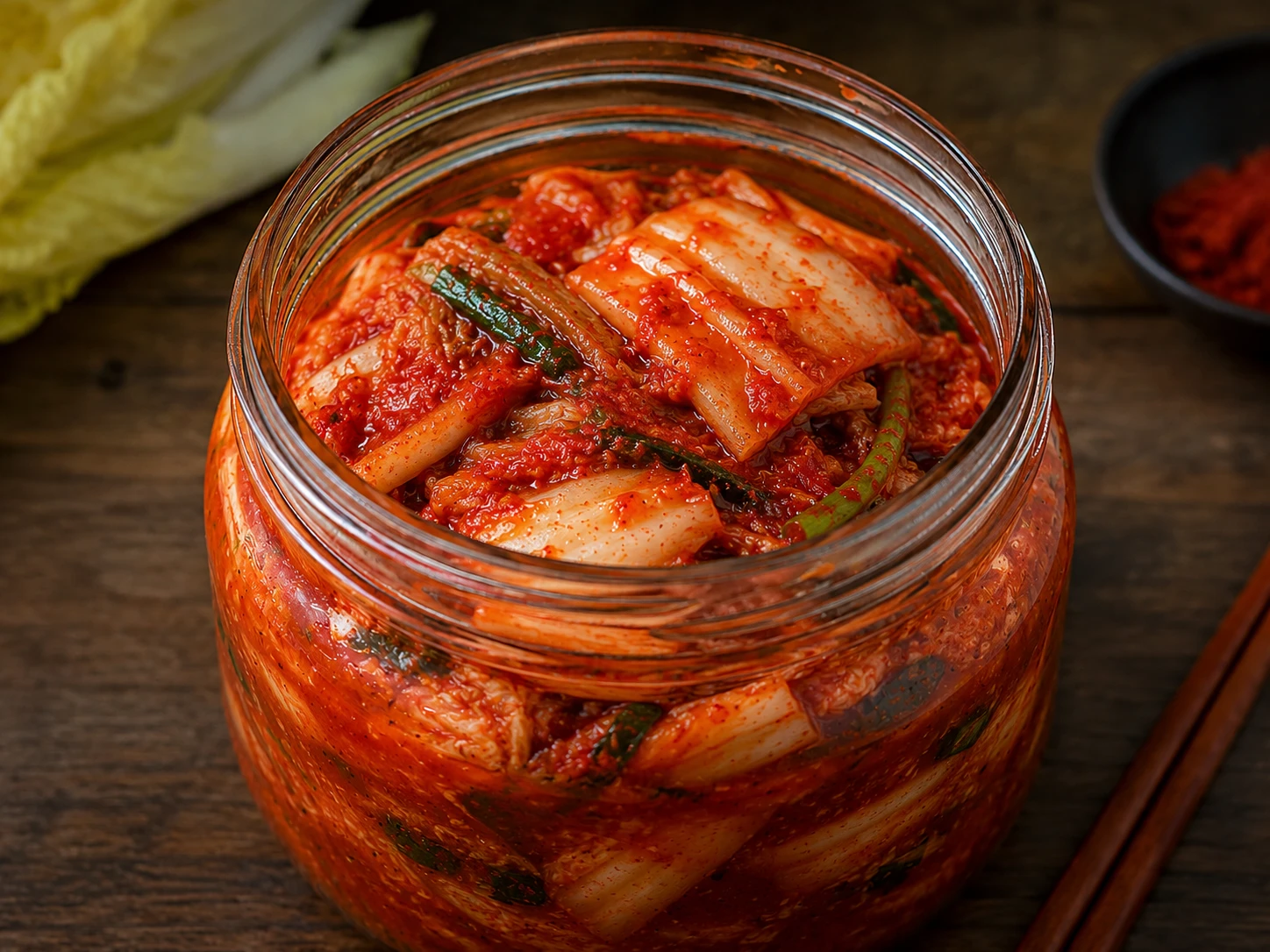
Light tang developing. Acceptable as a last resort with a splash of rice vinegar added to the broth.
△ Last Resort — add rice vinegar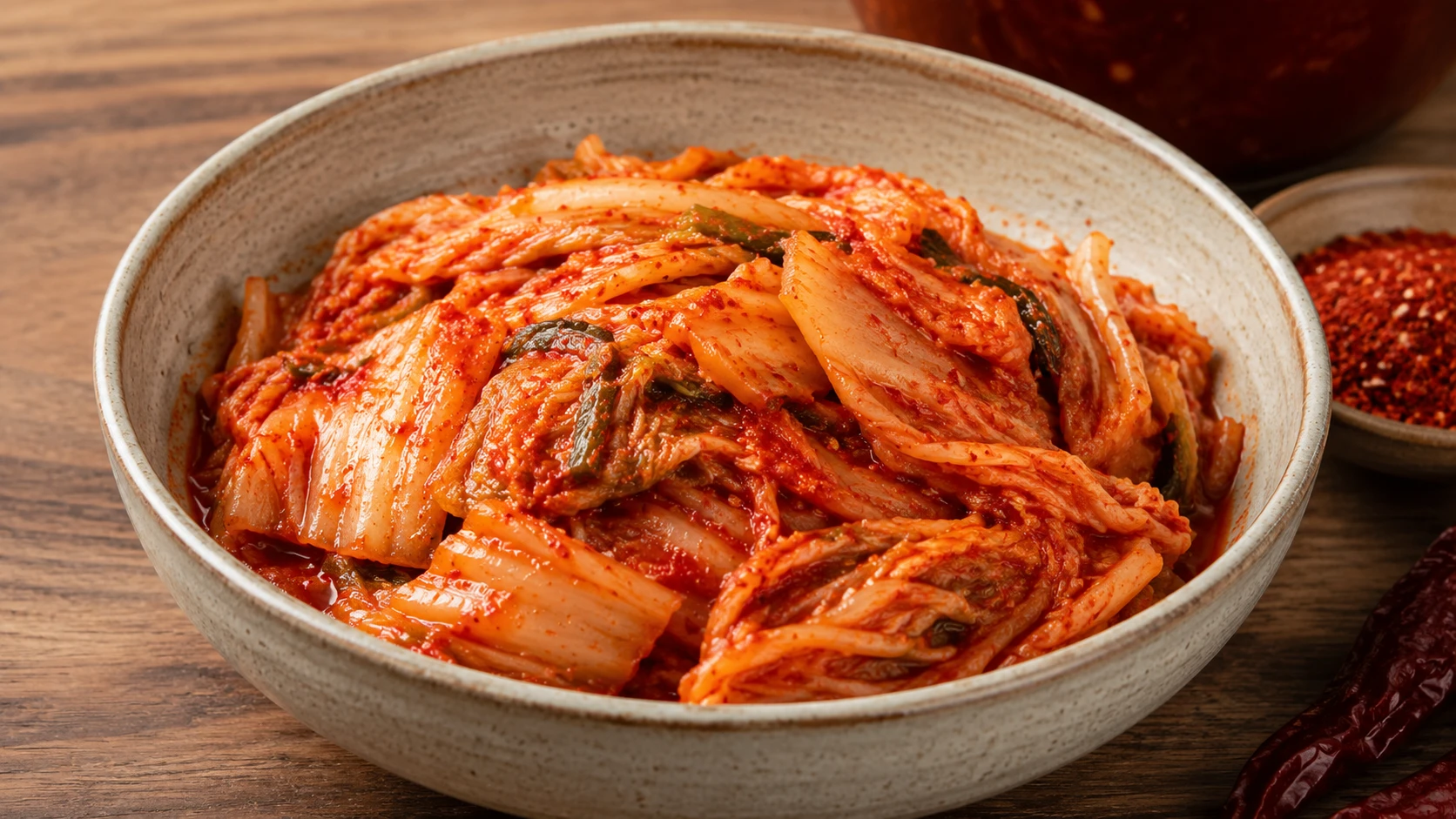
Full lactic acid. Simmered into the broth, this is what creates the sour-umami depth that defines authentic kimchi ramen.
★ Correct — the only real choice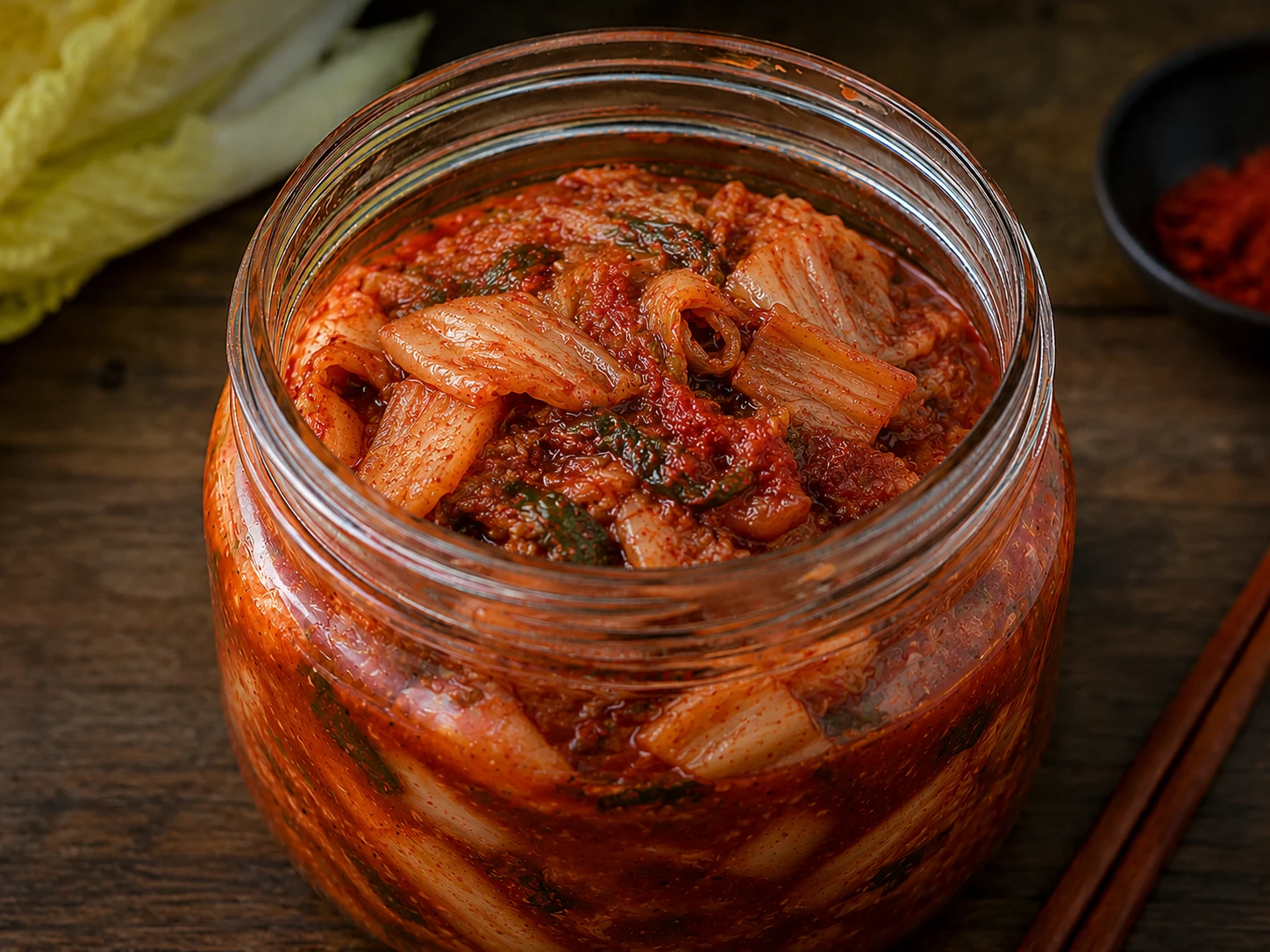
Very sour. Usable if you reduce the reserved brine slightly and add a touch of sugar to balance it.
△ Usable — reduce brine + add sugarHow Difficult Is Classic Kimchi Ramen?
Genuinely beginner-friendly — the only real skill is timing the soft-boiled egg and not rushing the simmer step.
← This Recipe
Ingredients + Scaler
The seasoning packet is deliberately absent — kimchi, gochugaru, and soy sauce already carry the flavour load.
Amounts scale automatically with the servings control above.
Common Substitutions
| Ingredient | Substitute | Notes |
|---|---|---|
| Stock | Bouillon cube in water | The kimchi and gochugaru carry most of the flavour anyway |
| Instant noodle blocks | Fresh or frozen ramen noodles | Shorter cook time, 1–2 minutes instead of 3–4 |
| Kimchi brine (if low) | Rice vinegar + extra ½ tsp gochugaru | Approximates the tang if your kimchi is on the drier side |
| Shiitake | Enoki or button mushrooms | Slightly milder flavour, still adds texture |
How to Make Classic Kimchi Ramen
Five steps, one pot. The order matters — garlic and gochugaru bloom first, kimchi simmers before any liquid, noodles go in last.
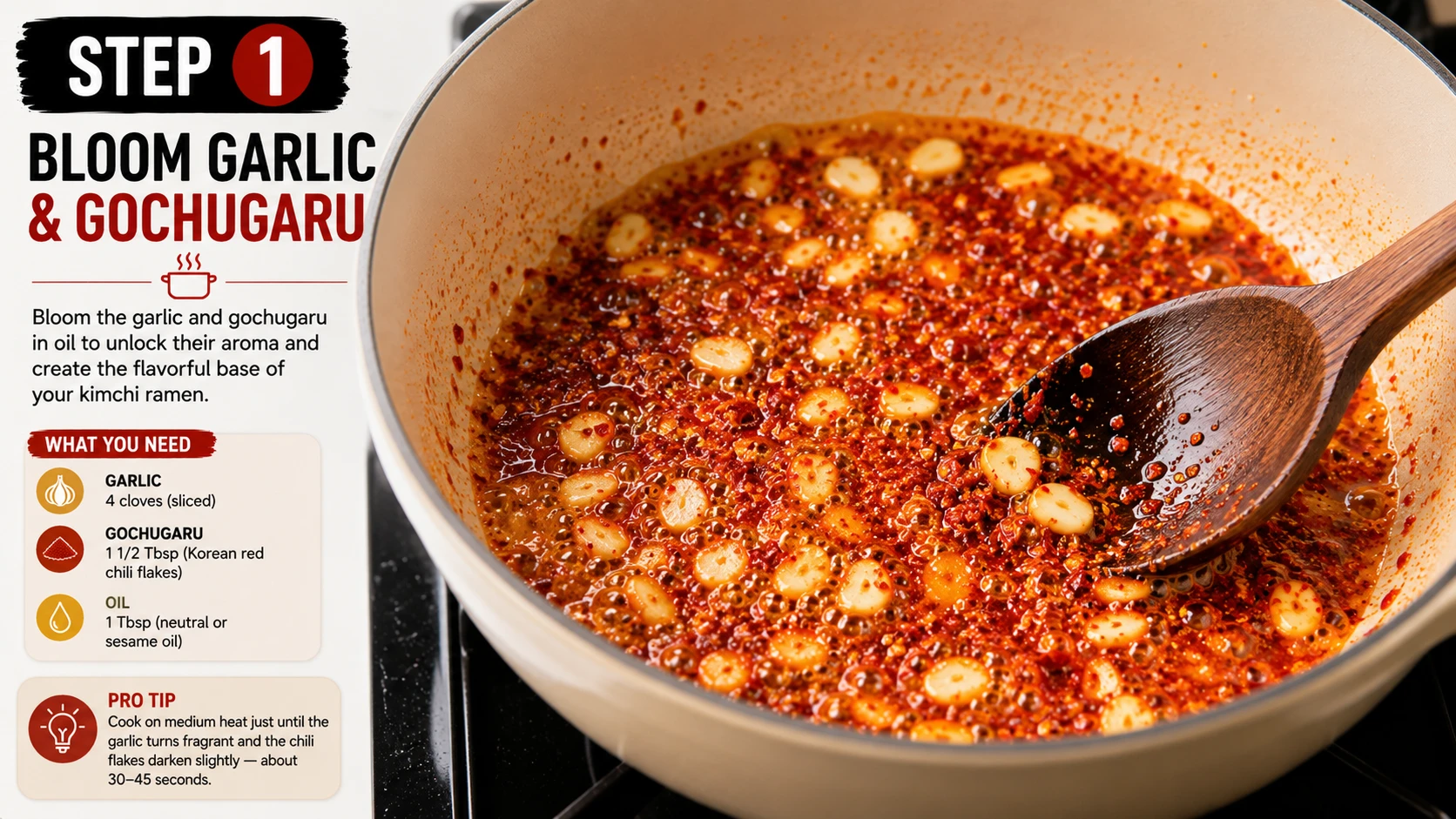
Warm a little oil in a pot over medium heat. Add the minced garlic and gochugaru, stirring for about 30 seconds until fragrant — watch closely, gochugaru scorches fast.
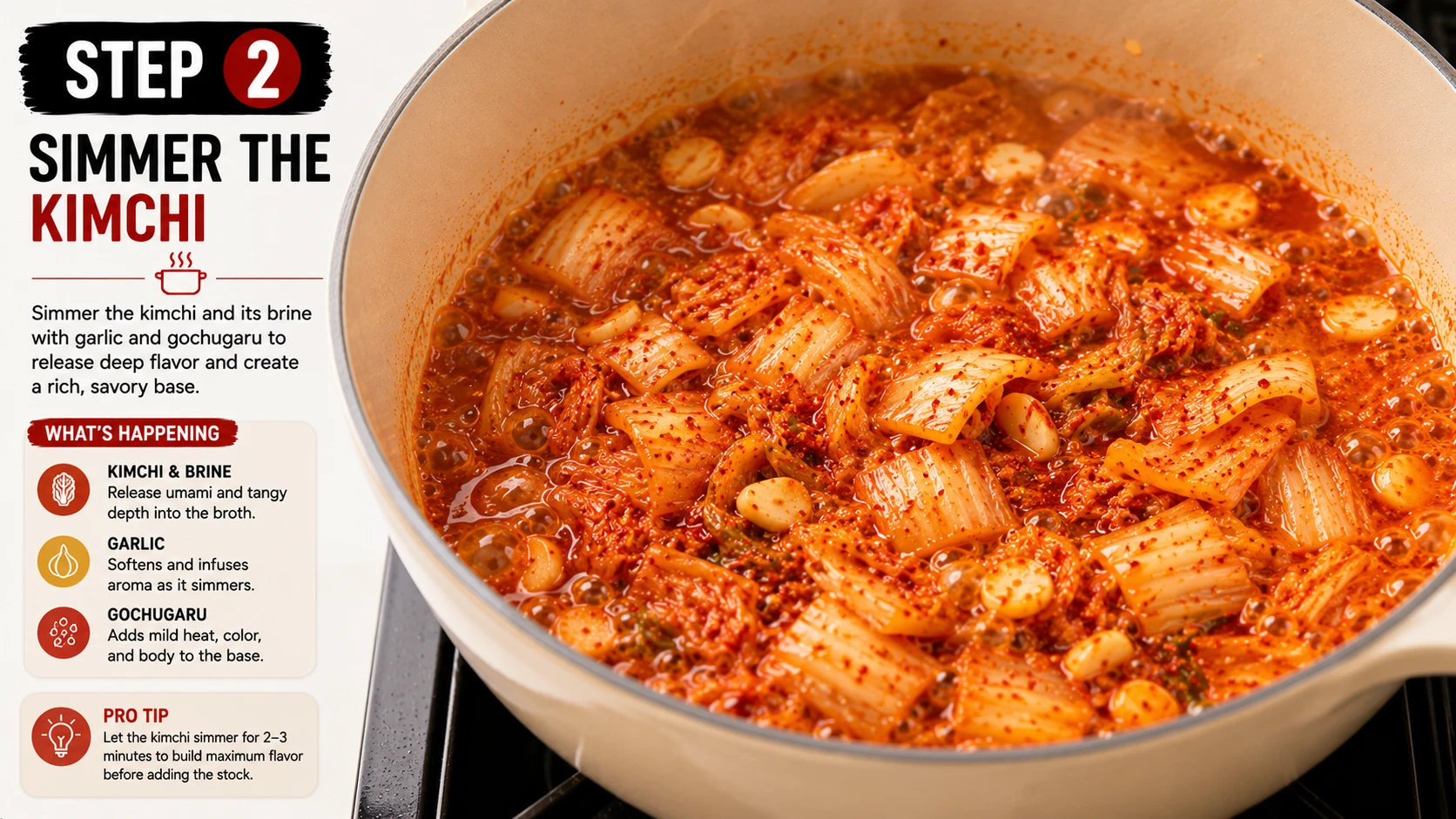
Add the chopped kimchi and its reserved brine. Cook for 2–3 minutes so it softens and releases its flavour into the fat and garlic — this is the step most quick recipes skip entirely.
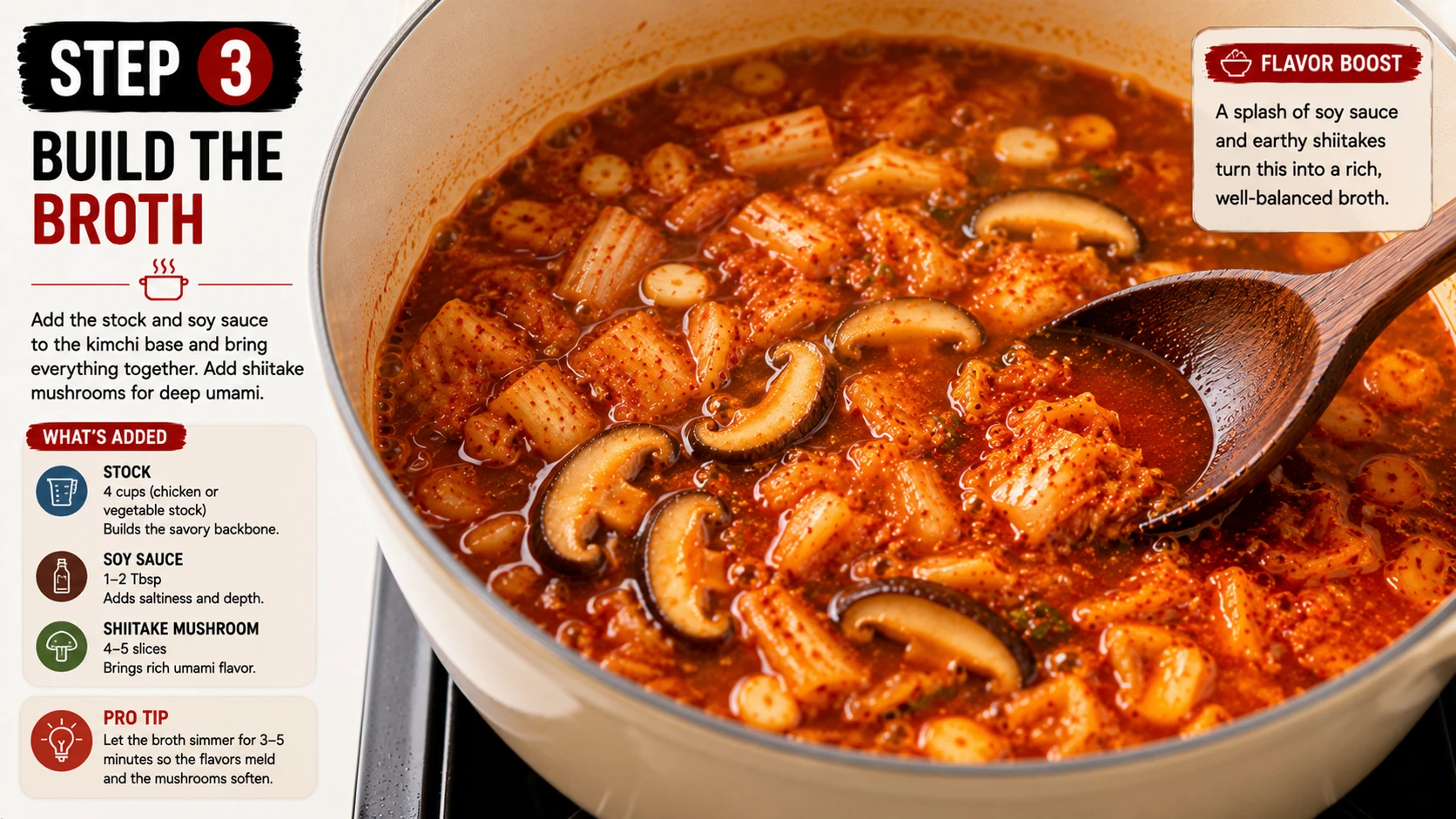
Pour in the stock and soy sauce, bring to a boil, then reduce to a simmer for 5 minutes with the sliced shiitake mushrooms.
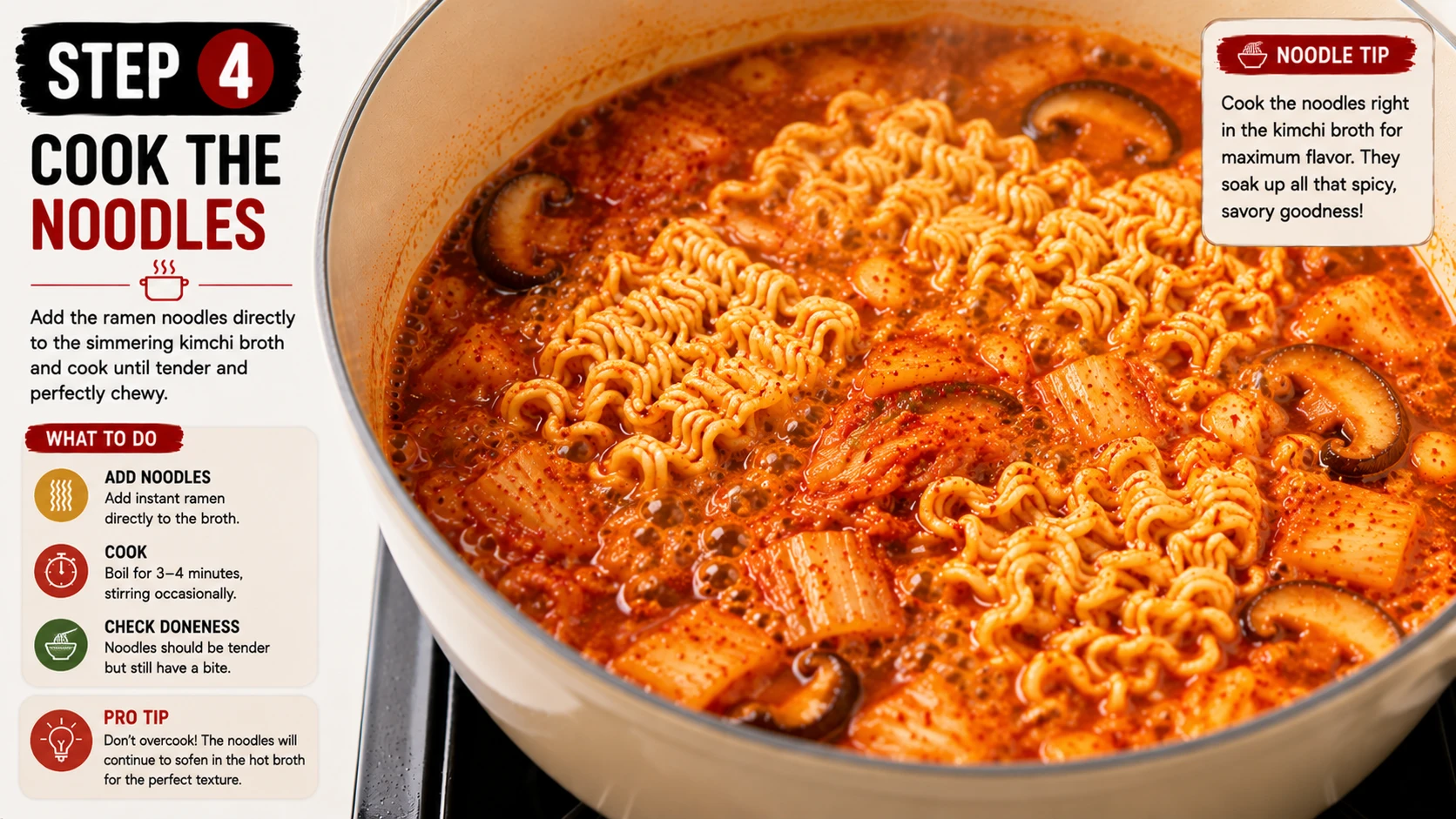
Add the noodle blocks directly into the simmering broth and cook until just tender, about 3–4 minutes, separating the strands with tongs as they soften.
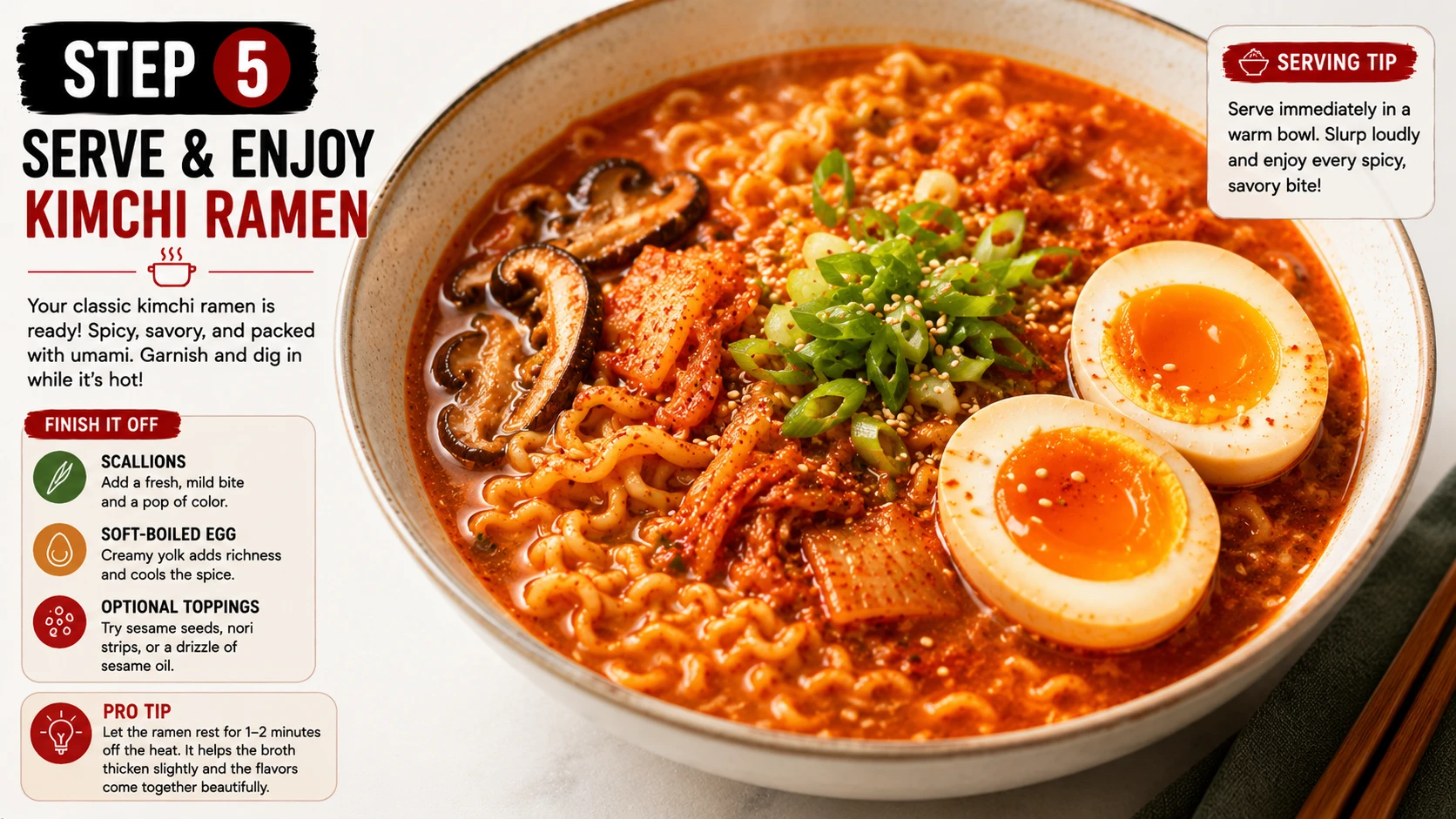
Remove from heat and stir in the sesame oil. Divide into bowls, top with the soft-boiled egg halves and sliced scallion. Serve immediately.
What We Tested for the Classic Version
The two techniques that cannot be skipped: simmering kimchi and its brine in the pot before any liquid goes in, and discarding or reducing the seasoning packet. Everything else in this recipe is genuinely forgiving.
All 13 Kimchi Ramen & Noodle Variations
The Kimchi Ramen Silo Guide → covers all 13 in one place with the full comparison table. Once the base broth technique is down, every variation below just changes one thing — protein, format, or temperature.



Classic Kimchi Ramen — Pairing Guide
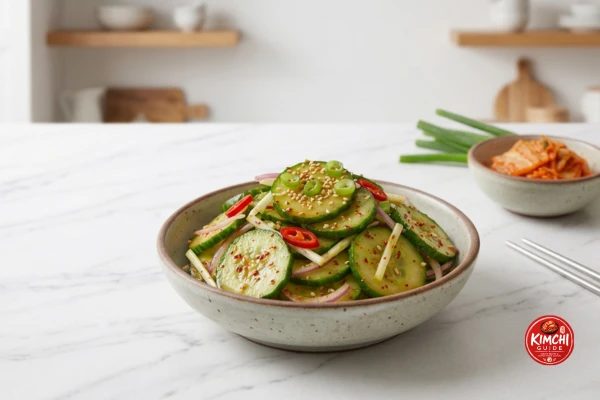
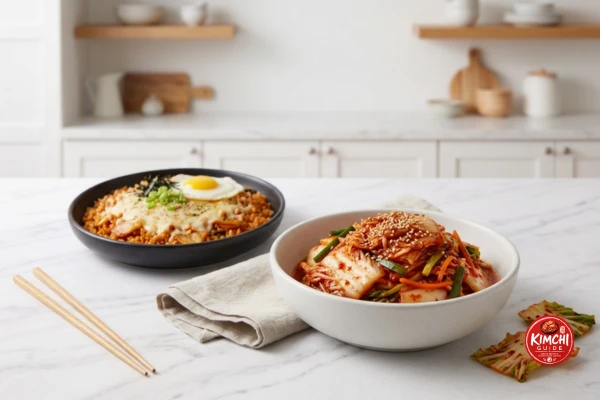
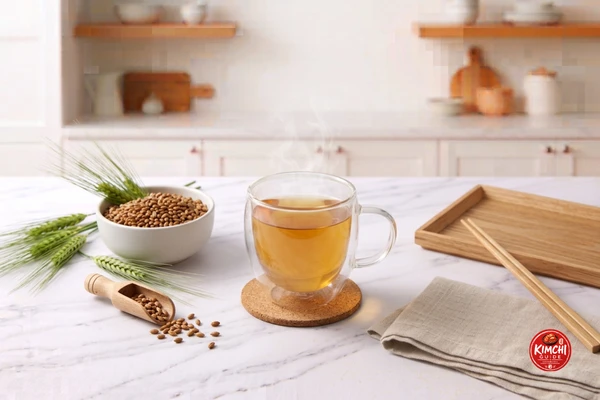
Kimchi ramen is a complete meal on its own, but these pairings follow the same logic Korean home meals use throughout — cold and crunchy against hot and savoury.

Storage and Reheating
Where Classic Sits Among the 13 Variations
| Variation | Calories | Protein | Vegan? | Best For |
|---|---|---|---|---|
| Kimchi Noodle Soup | 320 | 10g | No | Lightest option, no instant noodles |
| Cold Kimchi Noodles | 350 | 9g | No (may use egg) | Hot weather, quick meal prep |
| Vegan Kimchi Ramen | 380 | 13g | ✅ Fully vegan | Plant-based comfort food |
| Classic ← This page | 410 | 16g | No | The base technique, all occasions |
| Kimchi Egg Ramen | 420 | 18g | No | Extra protein, silky texture |
| Kimchi Udon | 440 | 15g | No | Chewier noodle format |
| Kimchi Seafood Ramen | 460 | 24g | No | Highest protein, coastal flavour |
| Kimchi Ramen with Pork Belly | 560 | 22g | No | Richer, weekend indulgence |
| Creamy Kimchi Ramen | 580 | 17g | No | Mellower, rosé-style broth |
| Kimchi Cheese Ramen | 600 | 19g | No | Richest, most indulgent |
Classic Kimchi Ramen FAQ
Yes — kimchi is one of the most common additions to instant and homemade ramen. For the best result, simmer it in the broth with its brine rather than adding it raw at the end, so its flavour actually infuses the soup instead of sitting on top.
Simmering kimchi with garlic and gochugaru for 2–3 minutes before the stock goes in releases its lactic acid and glutamates into the fat, building a broth with real depth. Adding kimchi raw at the end leaves the broth tasting thin, with the kimchi sitting as an unincorporated topping.
No, or only a small pinch. Kimchi, gochugaru, and soy sauce already provide salt and heat — using the full seasoning packet on top typically makes the bowl too salty.
Cut the gochugaru by half and use a milder, younger kimchi. You can always add heat back at the table with a small spoon of chili oil or extra gochugaru.
Jjigae is a thicker, stew-style dish meant to be eaten with a side of rice. Kimchi ramen is a lighter, noodle-forward soup built around instant or fresh ramen noodles cooked directly in the broth.
Make the broth ahead and refrigerate it for up to 3 days, but cook the noodles fresh each time you serve it — noodles left sitting in broth turn soft and bloated.
Stage 3 aged kimchi, fermented 2–4 weeks, is optimal. Its developed lactic acid and glutamates give the broth real depth when simmered — fresher kimchi tastes flat, and much older kimchi can be too sour for a light broth.
Chicken, anchovy, or vegetable stock all work — anchovy stock is closest to the traditional Korean flavour profile, but a simple bouillon cube in water is a fine substitute since the kimchi and gochugaru carry most of the flavour anyway.
Yes — fresh or frozen ramen noodles work well and often have a better chew than dried instant blocks. Cook time will be shorter, usually 1–2 minutes, so check them early.
Toasted sesame oil has a low smoke point and turns bitter if it hits high heat directly. Stirring it in after the pot is off the heat keeps its aroma intact.
Not by default — traditional kimchi and anchovy-based stock both typically contain fish products. Use a vegan-labelled kimchi and a vegetable or kelp stock to make it fully plant-based.
Lower eggs into boiling water and cook for 6.5 to 7 minutes for a jammy yolk, then transfer immediately to an ice bath for at least 3 minutes before peeling.
Yes, though that shifts it into a different variation — see the Creamy and Cheese kimchi ramen recipes in this silo, which are built specifically around those additions.
Approximately 410 calories per serving with one soft-boiled egg. Macros: 54g carbohydrates, 16g protein, 14g fat, 980mg sodium, 3g fibre.
Not recommended — the noodles and broth both lose texture badly on freezing and thawing. Refrigerate the broth alone for up to 3 days and cook fresh noodles when reheating.
Shiitake is the classic choice for its meaty texture and savoury depth, but enoki or button mushrooms both work fine as substitutes.
No — budae jjigae is a thick army-base-era stew built on Spam, sausages, and baked beans alongside kimchi. Kimchi ramen is a simpler, lighter noodle soup with none of those additions.
Garlic and gochugaru first to bloom in the fat, then kimchi and its brine to simmer, then stock and soy sauce to build the broth, then noodles last so they don’t overcook. The egg and garnish always go on top at the very end.
Was this guide helpful?
Your feedback helps us improve KimchiGuide for everyone.



💬 Leave a Comment
Made this recipe? Tell us how the simmer-in-broth technique turned out for you.