Kimchi Noodle Bowl (Build-Your-Own Formula)
Every “kimchi noodle bowl” recipe online gives you exactly one fixed combination — one noodle, one protein, no swap guidance. This is the final variation in this 13-part silo, and it’s different: a genuine ratio (1.5 cups broth : 170g noodles : 85g protein per bowl) tested across four noodle types and four proteins, so you can build a bowl from whatever you already have in the fridge.
What Is a Kimchi Noodle Bowl?
A kimchi noodle bowl is a modular, build-your-own take on kimchi noodles — the final variation in this 13-part silo. Instead of one more fixed recipe, this guide teaches the underlying ratio: 1.5 cups broth, 170g (6oz) noodles, and 85g (3oz) protein per bowl, topped with kimchi and garnishes. That ratio was tested across four noodle types (ramen, udon, rice noodles, soba) and four proteins (pork belly, egg, tofu, chicken) and held up in every combination — so you can build a bowl from whatever’s already in your fridge. Serves 2 in 25 minutes at approximately 480 calories and 20g protein per serving (example build).
How to Make a Kimchi Noodle Bowl
A kimchi noodle bowl takes 25 minutes and follows a simple ratio: build a broth base, cook 170g of any noodle separately, cook 85g of any protein separately, then assemble with 1.5 cups of broth per bowl, arranging the protein and kimchi topping separately on top rather than mixing everything together.
- Broth: simmer broth, kimchi brine, gochujang, gochugaru, soy sauce, and garlic.
- Noodles: cook 170g (6oz) per bowl of any noodle you have, separately.
- Protein: cook 85g (3oz) per bowl of any protein you have, using its own best method.
- Kimchi: warm briefly or leave raw — both work.
- Assemble: noodles first, then 1.5 cups broth per bowl.
- Top: arrange protein and kimchi separately, not mixed in.
- Garnish: scallions, sesame seeds, nori. Serve immediately.
Why Fixed Kimchi Noodle Bowl Recipes Fall Short
Every “kimchi noodle bowl” recipe we found online gives exactly one combination — one specific noodle, one specific protein, no guidance on what to do if you don’t have that exact thing on hand. That means a trip to the store for one missing ingredient, every single time.

1.5 cups broth : 170g noodles : 85g protein per bowl — a proportion you can apply to whatever you already have, instead of one specific shopping list.

Ramen, udon, rice noodles, and soba were all tested at the same 170g-per-bowl amount — the ratio held in every case, not just one.

Pork belly, soft-boiled egg, tofu, and shredded chicken were all tested at 85g per bowl — swap freely without rebalancing anything else.

Use the dry-sear technique from the Stir-Fry version, the cold-toss from Cold Noodles, or the tempering method from the Creamy version — all inside this one modular formula.
The Ratio Formula & Swap Matrix
This is the one number worth memorizing from the entire silo: 1.5 cups broth, 170g (6oz) noodles, 85g (3oz) protein, per bowl. Everything else — which noodle, which protein, which broth — is a swap you make freely.

- 1.5 cups broth per bowl, any base
- 170g (6oz) noodles per bowl, any type
- 85g (3oz) protein per bowl, any kind
- Assemble components separately, don’t mix
Result: A balanced bowl every time, using whatever you already have on hand.

- One specific noodle, no alternatives given
- One specific protein, no swap guidance
- No stated broth-to-noodle ratio
- Missing one ingredient means a store trip
Result: Works once, exactly as written — falls apart the moment you’re missing one ingredient.
Noodle Swap Matrix
| Noodle | Amount per Bowl | Cook Note |
|---|---|---|
| Ramen (fresh or dried) | 170g (6oz) | 2-4 min per package directions |
| Udon | 170g (6oz) | Boil and rinse separately per Variation 8’s method |
| Rice noodles | 170g (6oz) | Soak or boil per package; drain thoroughly |
| Soba | 170g (6oz) | Rinse under cold water after boiling to remove excess starch |
Protein Swap Matrix
| Protein | Amount per Bowl | Cook Note |
|---|---|---|
| Pork belly | 85g (3oz) | Pan-sear until crisp, as in Variation 2 |
| Soft-boiled egg | 1 egg (~85g) | 6.5 minutes at a rolling boil, then ice bath |
| Pan-fried tofu | 85g (3oz) | Press first, then sear until golden |
| Shredded chicken | 85g (3oz) | Use pre-cooked or rotisserie chicken, warmed through |
Key Terms — Language & Food Science Entities
These terms clarify what a build-your-own kimchi noodle bowl is and how it ties the whole silo together.
Which Kimchi Stage to Use — Visual Guide
Since kimchi appears twice here — in the broth as brine, and on top as a topping — its fermentation stage affects both roles at once.
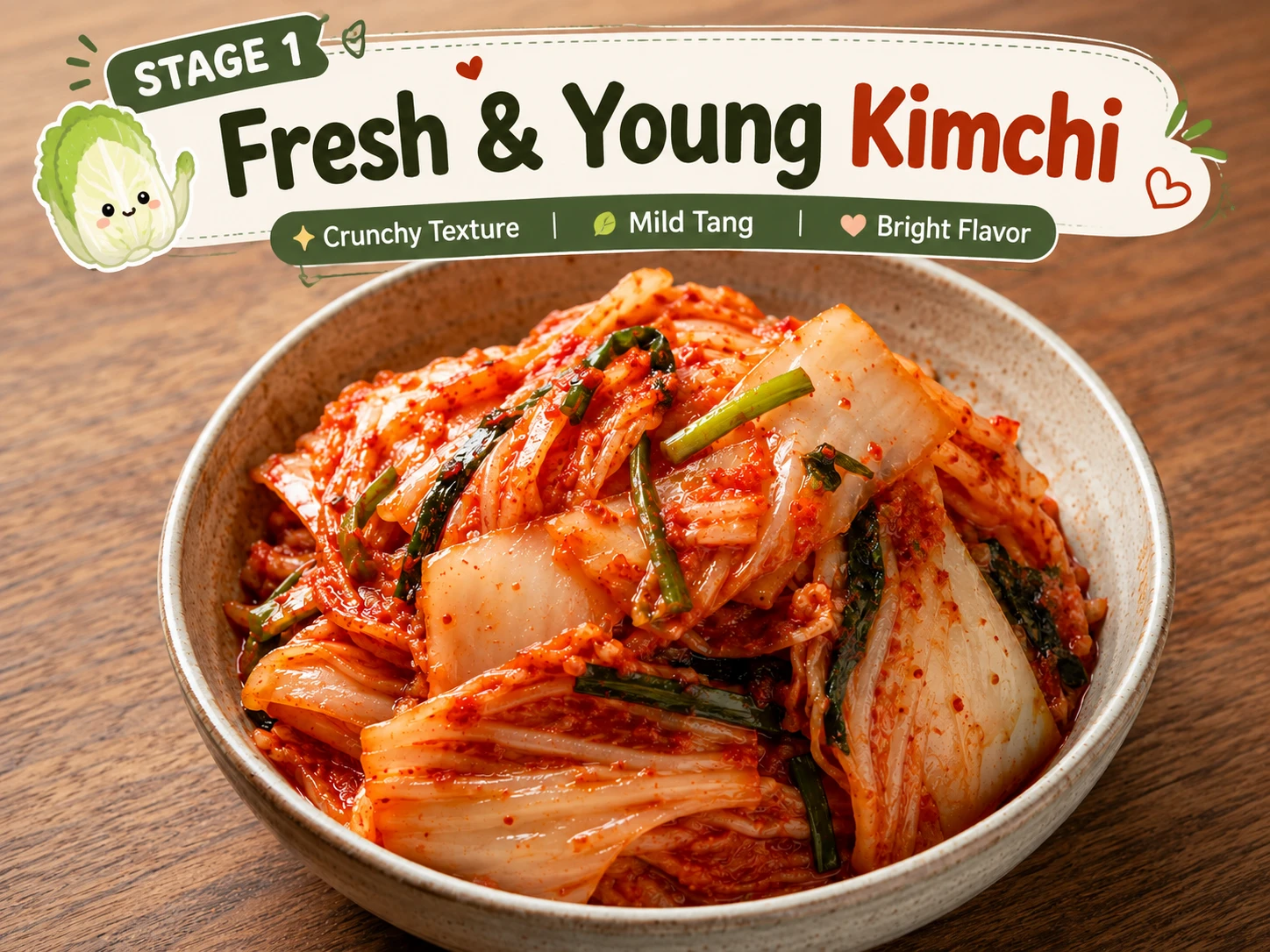
Not enough brine or acidity to carry the broth base, and too mild as a topping to contrast with the protein.
✗ Do Not Use — broth and topping both taste flat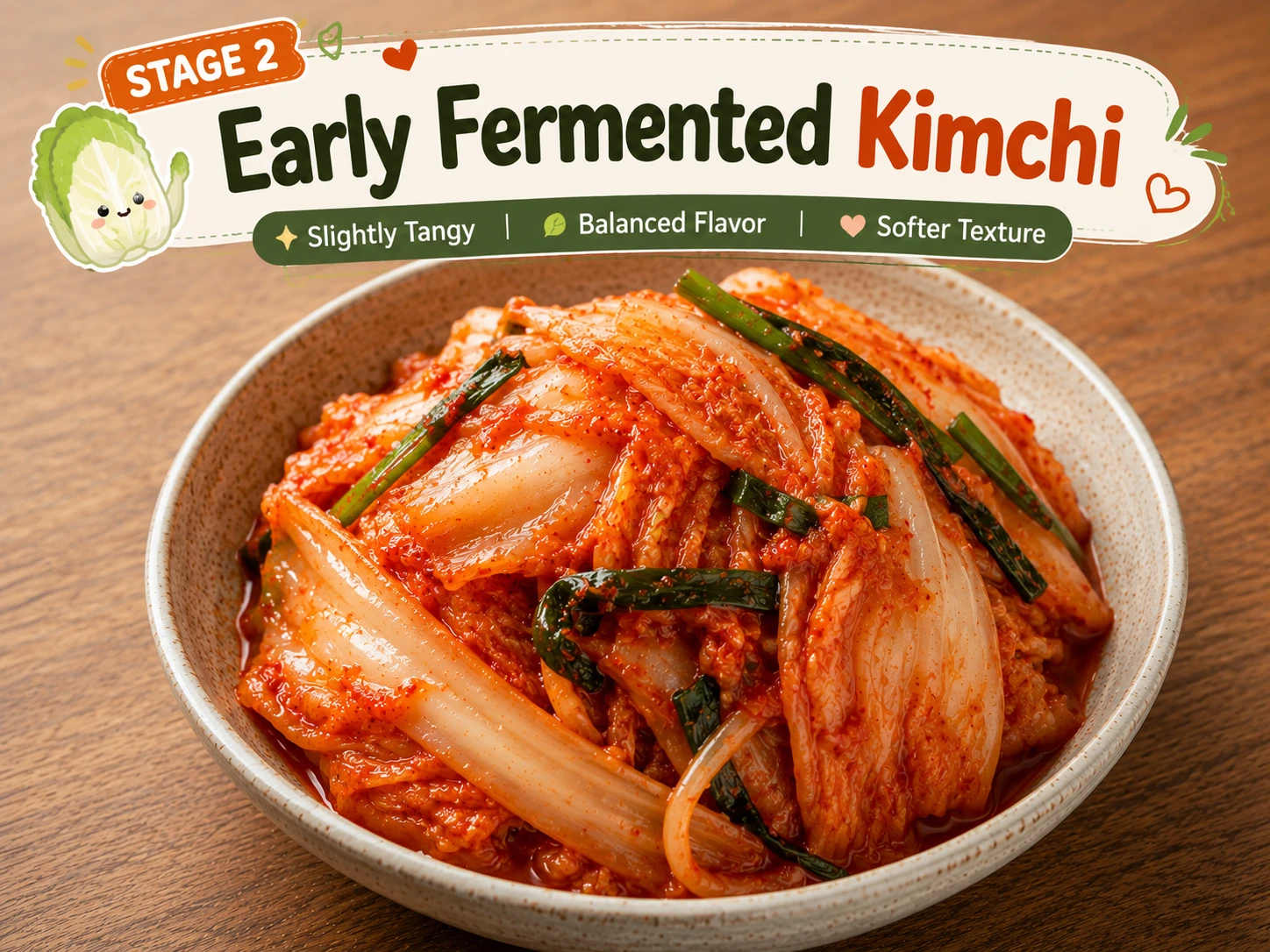
Workable, but the broth may need a touch more gochujang to compensate for the lighter brine.
△ Usable — add slightly more gochujang to the broth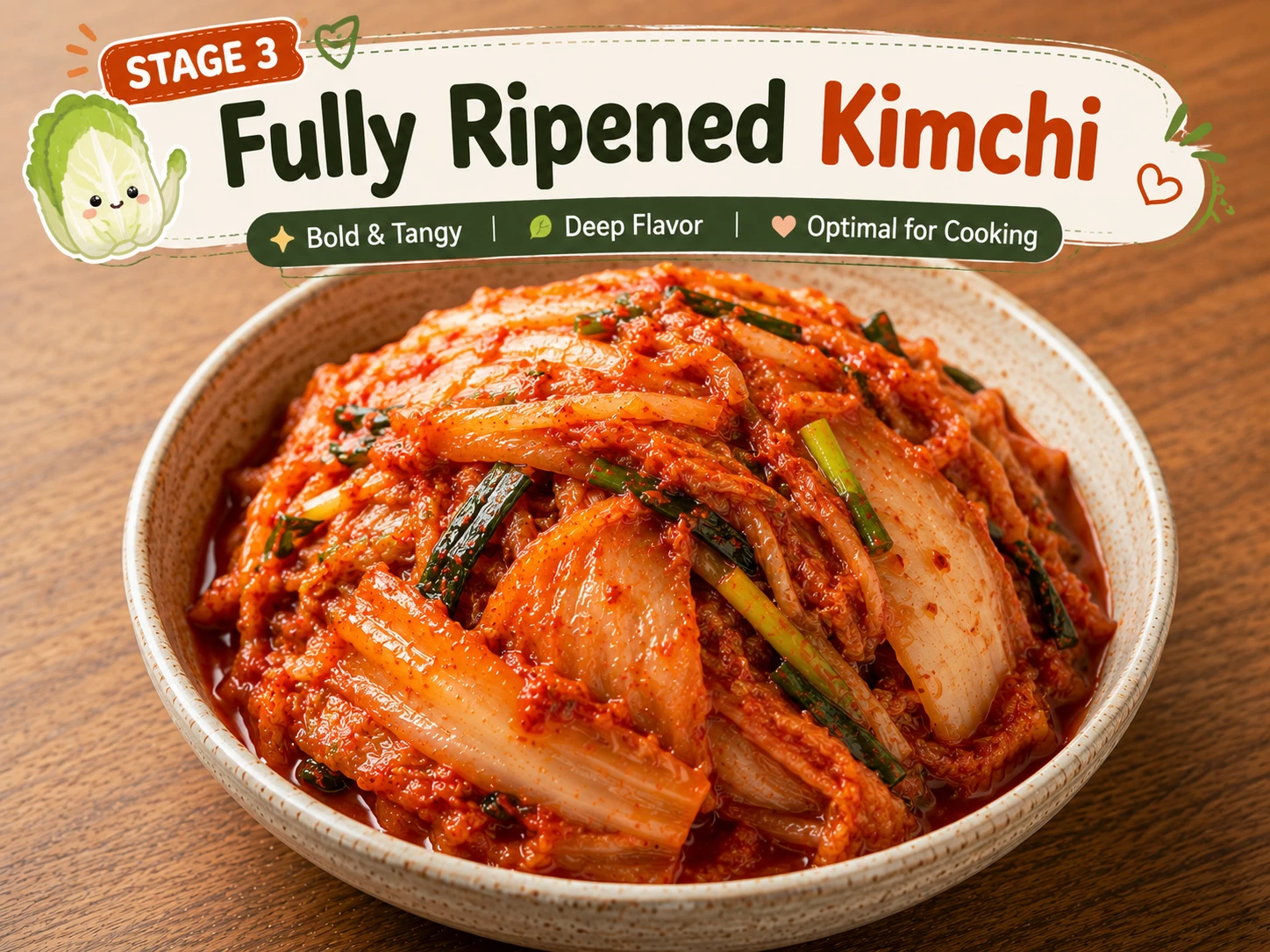
The most reliable choice for both roles — enough brine for the broth and enough tang as a topping, without needing any adjustment.
★ Correct — recipe as written works perfectly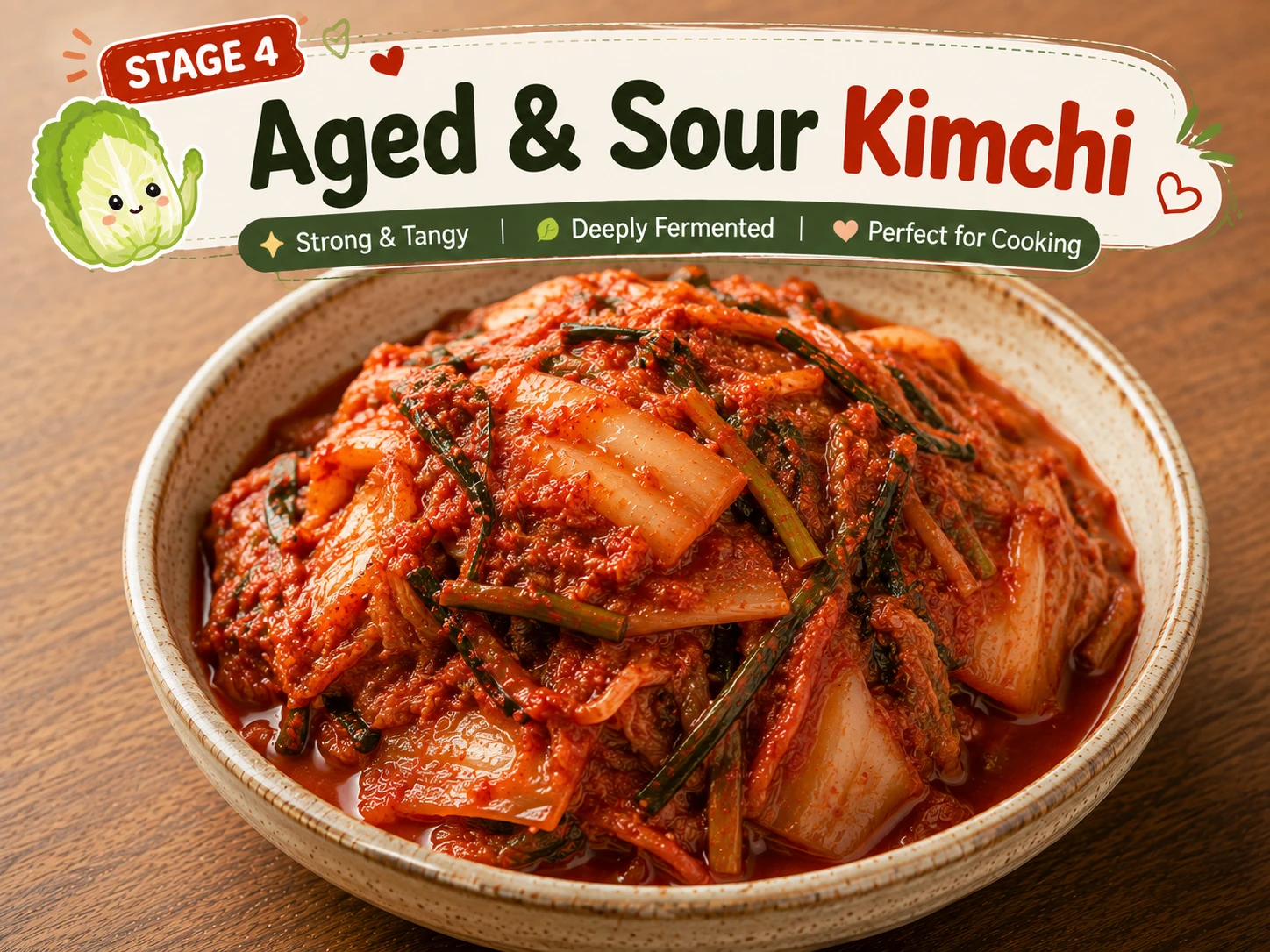
Strong broth, but consider warming the topping portion briefly (see method) to mellow its sharpness before serving.
△ Usable — warm the topping portion to mellow itHow Difficult Is a Kimchi Noodle Bowl?
Beginner-friendly, with one thing to keep straight: three separate cooking tasks (broth, noodles, protein) happening roughly at once. None of them are individually hard — it’s just coordination.
← This Recipe
Ingredients + Scaler
This example build uses rice noodles, soft-boiled egg, and pork belly — swap any of the three using the matrices above. Don’t have kimchi aged enough on hand? Check our Best Store-Bought Kimchi Brands guide, or see How to Make Kimchi from Scratch.

Amounts scale automatically with the servings control above.
Broth Base Substitutions
| Ingredient | Substitute | Notes |
|---|---|---|
| Kimchi brine | Extra 1/4 cup chopped aged kimchi + splash rice vinegar | Makes up the missing acidity — see FAQ below |
| Chicken broth | Pork or vegetable broth | Ratio stays the same regardless of base |
| Gochujang | Extra gochugaru + a little sugar | Loses some body and stickiness without gochujang |
How to Build Your Kimchi Noodle Bowl
Seven steps built around the ratio — swap the noodle and protein for whatever you have, and the sequence below still applies exactly as written.

In a pot, combine the broth, kimchi brine, gochujang, gochugaru, soy sauce, and garlic. Bring to a simmer and let it cook for 8–10 minutes. This is the fixed part of the recipe — 3 cups makes 1.5 cups per bowl, regardless of what noodle or protein you’re pairing it with.

While the broth simmers, cook 340g total (170g / 6oz per bowl) of whichever noodle you’re using, in a separate pot, following its package directions. Drain and divide between two bowls.

Cook 170g total (85g / 3oz per bowl) of your chosen protein using its own best method: pan-sear pork belly until crisp, soft-boil eggs 6.5 minutes then ice bath, pan-fry pressed tofu until golden, or warm through pre-cooked shredded chicken.

Optionally, warm the chopped kimchi topping briefly in a dry pan for 1–2 minutes to soften and mellow it — or leave it raw for more crunch and tang. Both work; this is a texture preference, not a technical requirement.

Ladle 1.5 cups of hot broth over the noodles in each bowl. This amount is what keeps the noodles from drowning (too much broth) or drying out and clumping (too little) — see the test kitchen findings below.

Arrange the cooked protein and the kimchi topping separately on top of the noodles, rather than stirring everything together. Keeping components distinct means each one keeps its own texture — crisp protein stays crisp, tangy kimchi stays tangy.

Top with sliced scallions, toasted sesame seeds, and nori strips if using. Serve immediately, while the broth is hot and the toppings are at their best texture.
What We Tested for the Ratio
The ratio — 1.5 cups broth, 170g noodles, 85g protein per bowl — is what makes this variation genuinely modular. Every noodle type, every protein, and every broth base tested held up against it. This is the one number worth remembering from the entire 13-part silo.

Ingredient Notes — What Each One Does and Why
A ratio only tells you the amounts. Here’s what each component is doing, and which parts are genuinely fixed versus flexible.
All 13 Kimchi Noodle Variations — Complete
Same kimchi-noodle foundation, 13 different directions. This is the final variation — thanks for following the whole silo.


What to Serve With a Kimchi Noodle Bowl
This bowl is a complete meal on its own. If you’re building a wider spread, our Gochujang Mayo Sauce Guide makes a good dipping sauce for a side of dumplings.


Storing a Kimchi Noodle Bowl
Noodle Bowl vs the Rest of the Silo — What Changes Nutritionally
Reviewed by Dr. Sarah Mitchell RD, PhD. Because this variation is ratio-based, nutrition shifts depending on which noodle and protein you pick — the numbers below reflect the example build (rice noodles, egg, pork belly).
| Version | Calories | Fat | Sat. Fat | Protein | Sodium |
|---|---|---|---|---|---|
| Classic Kimchi Ramen | 410 | 14g | 4g | 16g | 980mg |
| Kimchi Udon | 480 | 10g | 2g | 18g | 1120mg |
| Kimchi Noodle Soup | 320 | 6g | 1g | 12g | 780mg |
| Cold Kimchi Noodles | 480 | 12g | 2g | 14g | 950mg |
| Kimchi Ramen Stir-Fry | 540 | 24g | 7g | 17g | 1050mg |
| Kimchi Noodle Bowl (example build) | 480 | 18g | 5g | 20g | 980mg |
Kimchi Noodle Bowl — 16 Questions Answered
A kimchi noodle bowl is a modular Korean-style noodle dish built from a ratio rather than one fixed recipe: broth, a noodle of your choice, a protein of your choice, and kimchi plus garnishes on top. The ratio in this guide is 1.5 cups broth, 170g (6oz) noodles, and 85g (3oz) protein per bowl.
Every kimchi noodle bowl recipe found online gives exactly one fixed combination with no swap guidance. A ratio lets you build a bowl from whatever noodles, protein, and broth you already have on hand, rather than needing to shop for one specific ingredient list.
1.5 cups broth, 170g (6oz) noodles, and 85g (3oz) protein per bowl, topped with kimchi and garnishes to taste. This ratio was tested across four noodle types and four proteins and held up in all of them.
Ramen, udon, rice noodles, and soba were all tested and worked at the same 170g (6oz) per bowl amount. Adjust cook time to the noodle’s package directions, but the amount and broth ratio stay the same.
Pork belly, soft-boiled egg, pan-fried tofu, and shredded chicken were all tested at 85g (3oz) per bowl. Cook each using its own best method, then add it to the bowl at the same ratio.
Yes — chicken, pork, or vegetable broth all work with this ratio. The kimchi brine and gochujang provide most of the signature flavor regardless of which base broth you start with.
Testing found 1.5 cups per bowl was the sweet spot — 2 cups drowned the noodles and diluted the flavor, while 1 cup left the bowl too dry and the noodles clumped together.
Yes — use vegetable broth, swap the protein for pan-fried tofu, and use a vegetarian-labelled kimchi (traditional kimchi often contains fish sauce or salted shrimp).
The example build in this guide (rice noodles, soft-boiled egg, pork belly) is approximately 480 calories per serving. Macros: 52g carbohydrates, 20g protein, 18g fat, 5g saturated fat, 980mg sodium, 3g fibre. Calories will shift depending on which noodle and protein you choose.
Keep the protein and kimchi topping arranged separately on top of the noodles rather than mixing everything in — this keeps each component’s texture intact instead of everything turning into one uniform mush.
Yes — the broth base keeps well refrigerated for up to 4 days, and most proteins (pork belly, chicken) can be cooked ahead and reheated. Cook noodles fresh each time for the best texture.
Scallions, toasted sesame seeds, and nori strips are the base garnishes in this guide. A soft-boiled egg, extra gochugaru, or a drizzle of chili oil are common additions.
Every other variation in this silo is one specific, fixed recipe. This is the final variation and the only one built as a genuine formula — a ratio and swap system that lets you combine techniques from any of the earlier variations (dry-searing from the Stir-Fry version, cold-tossing from Cold Noodles, tempering cream from the Creamy version) into your own bowl.
Add an extra 1/4 cup of chopped aged kimchi in place of the brine, plus a small splash of rice vinegar to make up the missing acidity.
Yes — because it’s ratio-based, simply multiply each of the three core numbers (broth, noodles, protein) by the number of bowls you need. The ratio holds regardless of batch size.
Written as Korean-standard heat using 1 tablespoon gochujang and 1 teaspoon gochugaru per 3 cups of broth. Adjust either up or down to taste — the ratio for broth, noodles, and protein stays the same regardless of spice level.
Build the broth base and let it simmer, cook your chosen noodle separately, prepare your chosen protein, optionally warm the kimchi topping, then assemble: noodles, broth, protein and kimchi arranged separately, and garnish.

Ji-Young writes the full Kimchi Ramen silo at KimchiGuide, testing each variation across multiple batches before publishing.
Full Bio →
Dr. Mitchell reviews the nutrition data and health claims across every KimchiGuide recipe for accuracy.
Full Bio →
Leave a Comment
Tried building your own bowl? Let us know which noodle and protein combo you used.