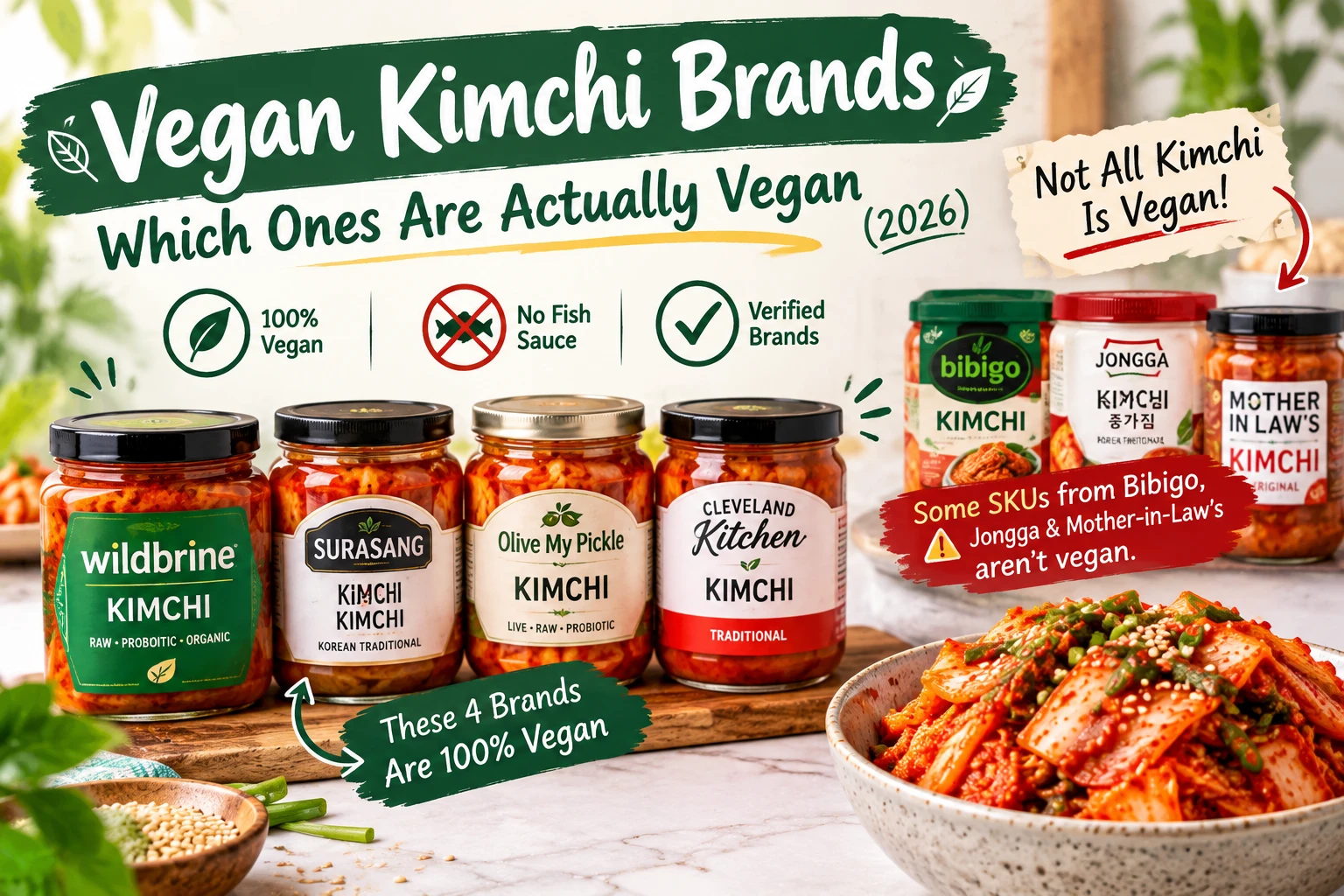
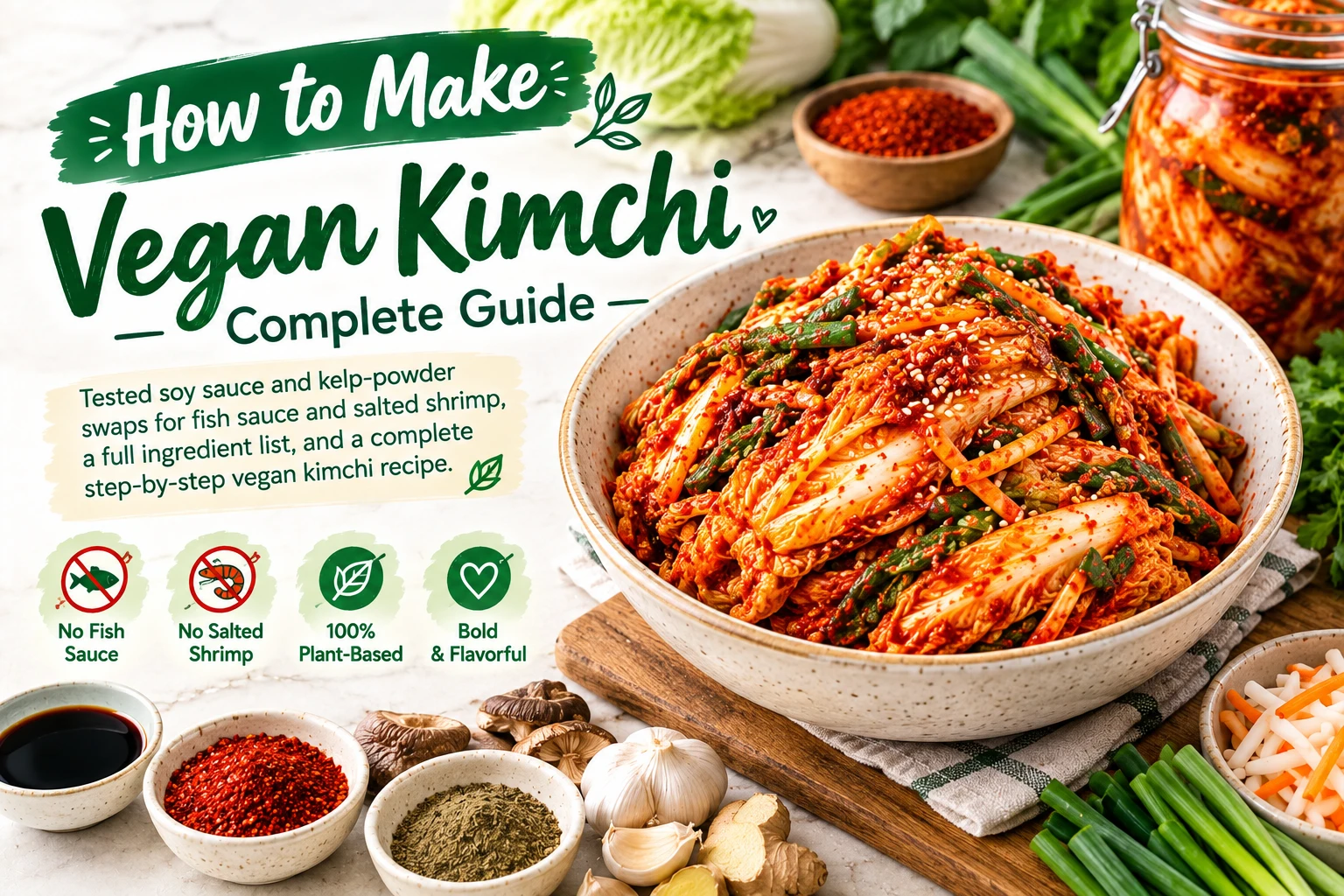
How to Make Vegan Kimchi — Complete Guide (No Fish Sauce) | KimchiGuide
KimchiGuide› Vegan Kimchi› How to Make Vegan Kimchi
🌱 100% Plant-Based — Tested Swaps, Verified Fermentation

How to Make Vegan Kimchi No Fish Sauce, No Jeotgal — Tested 1:1 Swaps

Traditional kimchi almost always contains fish sauce and salted shrimp. This guide swaps both out with soy sauce and shiitake or kelp powder, tested side-by-side against the traditional paste — same crunchy, sour-umami napa cabbage kimchi, zero animal products.


45m
Active
Easy
Level
23
Cal
🌱 100%
Vegan
📅 Published: September 15, 2026· ✅ Reviewed: Dr. Sarah Mitchell RD, PhD
📖
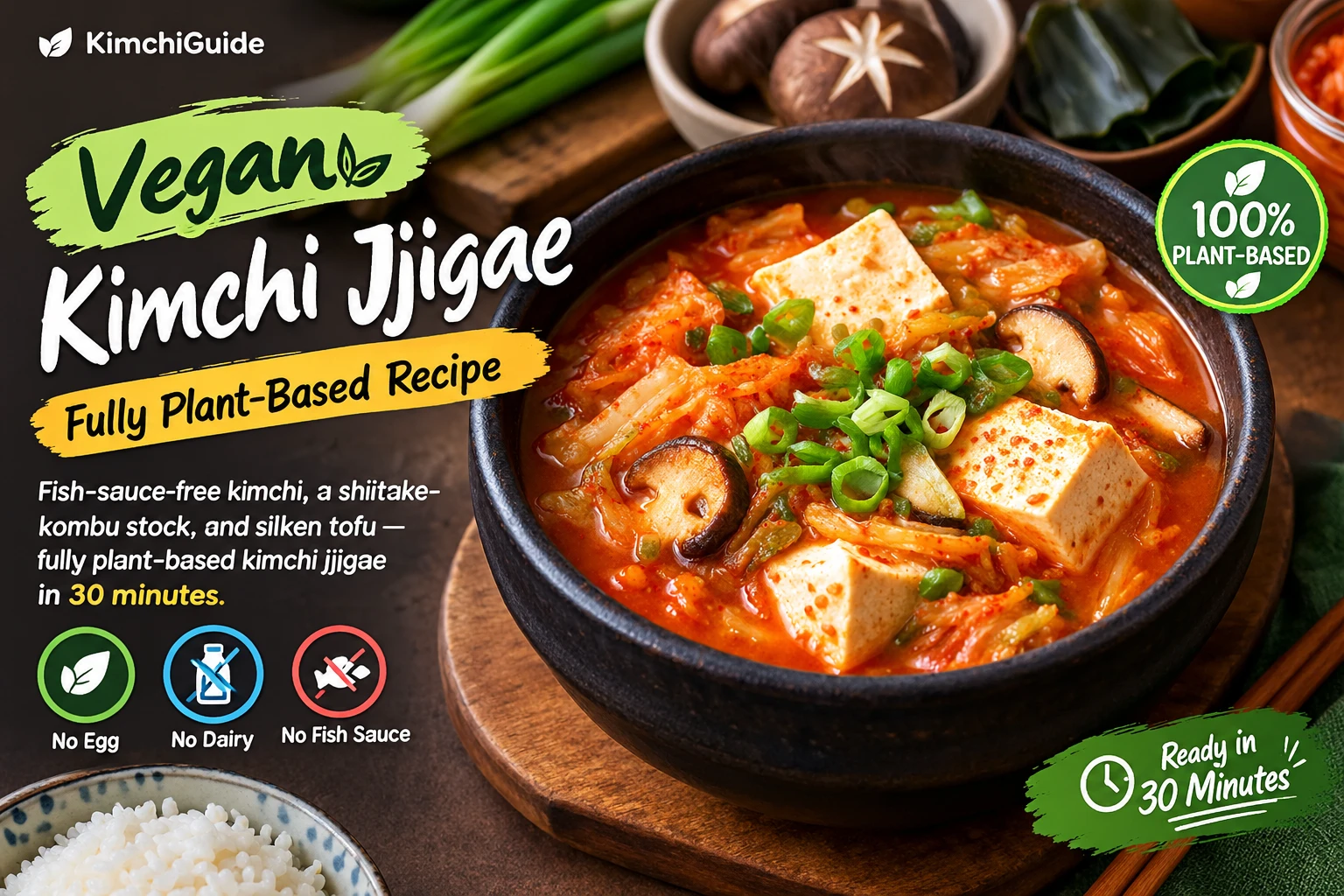
This is the base recipe for the whole Vegan Kimchi silo. Once you’ve made a batch, use it in Vegan Kimchi Fried Rice, Vegan Kimchi Jjigae, or a Vegan Kimchi Burger — or see the Vegan Kimchi hub for everything published so far. Would rather buy it? See Best Vegan Kimchi Brands.
⚡ Quick Answer

Is Kimchi Vegan? And How Do You Make It Vegan?

Not by default. Traditional kimchi uses fish sauce and often salted shrimp (saeujeot) for savory depth. To make it fully vegan, swap the fish sauce for soy sauce (roughly 1:1) and replace the salted shrimp with finely chopped shiitake mushroom or a pinch of kelp (dashima) powder. Everything else — salting the cabbage, the gochugaru amount, garlic, ginger, radish, spring onion, and the full fermentation timeline — is identical to the traditional recipe.

Quick Steps

How to Make Vegan Kimchi

Vegan kimchi takes about 45 minutes of hands-on time plus fermenting: salt the cabbage, build a vegan paste with soy sauce and shiitake or kelp powder, mix and pack, then ferment.

  1. Salt: brine quartered napa cabbage in salted water for 2 hours.
  2. Rinse: rinse three times, then drain thoroughly.
  3. Paste: bloom gochugaru, stir in soy sauce, shiitake or kelp powder, sugar, garlic, ginger.
  4. Mix & pack: massage the paste into the leaves with radish and spring onion, pack into a jar.
  5. Ferment: 1–2 days at room temperature, then refrigerate.
Vegan Kimchi — Key Facts & Reference Data
Verified by Ji-Young Park · Reviewed by Dr. Sarah Mitchell RD, PhD
The two swaps that matter
Fish sauce → soy sauce (roughly 1:1). Salted shrimp → 1 tbsp minced shiitake or 1 tsp kelp (dashima) powder.
What doesn’t change
The salt-brine step, gochugaru amount, garlic, ginger, radish, spring onion, and the full 1–2 day room-temp plus refrigerated fermentation timeline.
Fermentation is unaffected
Lactic acid fermentation runs on bacteria already on the cabbage — removing fish sauce and shrimp doesn’t slow or speed it up.
Vegan ≠ automatically gluten-free
Standard soy sauce contains wheat — use tamari or certified gluten-free soy sauce for both at once.
Nutrition per serving
Approximately 23 calories, 1g protein, 5g carbohydrate, 0g fat, 420mg sodium per 1/2-cup serving.
Where this fits on the site
The base recipe for every vegan recipe on KimchiGuide. See the Vegan Kimchi hub for the full list.
Citation: Ji-Young Park, KimchiGuide.com — “How to Make Vegan Kimchi.” Published September 15, 2026. Reviewed by Dr. Sarah Mitchell RD, PhD. URL: https://kimchiguide.com/how-to-make-vegan-kimchi/
2
Ingredients swapped for vegan
2h45m
Total active + brine time
1–3mo
Fridge shelf life
23
Calories / 1/2-cup serving
Before You Shop

Substitution Check — What to Swap for Vegan Kimchi

Kimchi looks like a plant dish at a glance — cabbage, chili flakes, garlic — but two ingredients in the traditional paste come from animals. Swap these two and everything else stays identical.

🍶
Fish Sauce → Soy Sauce, ~1:1
Fish sauce brings salt and umami depth to the paste. Soy sauce is the simplest swap — same role, similar amount. It won’t taste identical to fish sauce’s briny funk, but it carries the salty backbone the paste needs. 🛒 Shop soy sauce
🍄
Salted Shrimp (Saeujeot) → Shiitake or Kelp Powder
Saeujeot adds a briny, savory backbone soy sauce alone doesn’t fully replace. Finely chopped shiitake (1 tbsp) or kelp/dashima powder (1 tsp) both add real umami depth without any seafood. 🛒 Shop shiitake · 🛒 Shop kelp powder
🌶️
Gochugaru — Check for Fish-Based Additives
Plain gochugaru is naturally vegan, but a small number of “seasoned” blends add dried anchovy or shrimp powder. See our Gochugaru Guide for how to pick a safe one.
🥬
Cabbage, Radish, Garlic, Ginger — No Swap Needed
Everything else in the recipe is already plant-based straight from the vegetable itself — no substitution required anywhere else in the ingredient list.
Bottom line: Swap two ingredients — fish sauce and salted shrimp — and the rest of this recipe is exactly traditional kimchi, technique for technique.
What Actually Changes in the Kitchen

What Changes When You Go Vegan

Beyond the two swaps, going vegan changes very little about how the recipe behaves in the jar — fermentation doesn’t care whether the umami came from a fish or a mushroom.

Flavor & Fermentation Notes
Flavor balance
You lose some of fish sauce and shrimp’s specific briny funk. You keep the cabbage’s natural sweetness, gochugaru’s clean heat, and the garlic-ginger backbone — most of the character anyway.
Shiitake vs kelp powder
Shiitake adds a rounder, meatier umami and blends in almost invisibly. Kelp powder dissolves completely for a cleaner, more concentrated note with zero texture.
Fermentation timeline
Completely unaffected — lactic acid bacteria on the cabbage do the work regardless of seasoning. Same salt-then-ferment schedule as the traditional recipe.
Where to use it
Any recipe on the site calling for “vegan aged kimchi” — Fried Rice, Jjigae, Burger — is built around this exact batch.
Key Terms Explained

Key Terms — Vegan Kimchi Entities

Essential Terminology — 채식 김치 (Vegan Kimchi)
젓갈 / Jeotgal
Salted, fermented seafood — most commonly shrimp or anchovy — the ingredient this recipe replaces.
다시마 / Dashima (Kelp)
Dried kelp, commonly ground into powder as a plant-based umami booster in Korean cooking.
고추가루 / Gochugaru
Korean red chili flakes — source of color and heat, unaffected by the vegan swap.
비건 vs 채식 / Vegan vs Vegetarian
“채식” (vegetarian) is sometimes used loosely and can still include fish-derived ingredients. “비건” (vegan) is more reliable — see our brands guide for store-bought verification.
배추김치 / Baechu Kimchi
The napa cabbage kimchi this recipe makes vegan is just one of dozens of varieties — see our Types of Kimchi guide for the full range, including radish, cucumber and water-based versions.
Skill Level Assessment

How Difficult Is Vegan Kimchi?

The technique is identical to traditional kimchi — the only new step is measuring two substitute ingredients instead of the originals.

🌱
Beginner
← This Recipe
✅
Easy
🍳
Intermediate
🔥
Advanced
👨‍🍳
Expert
💡 The only real skillDraining the salted cabbage thoroughly, and being patient enough to let fermentation finish for the best flavor.
The Most Important Variable

Fermentation Stage Guide

Vegan kimchi ferments on the same timeline as traditional kimchi. For the full science behind these four stages, see our dedicated Kimchi Fermentation Stages Guide.
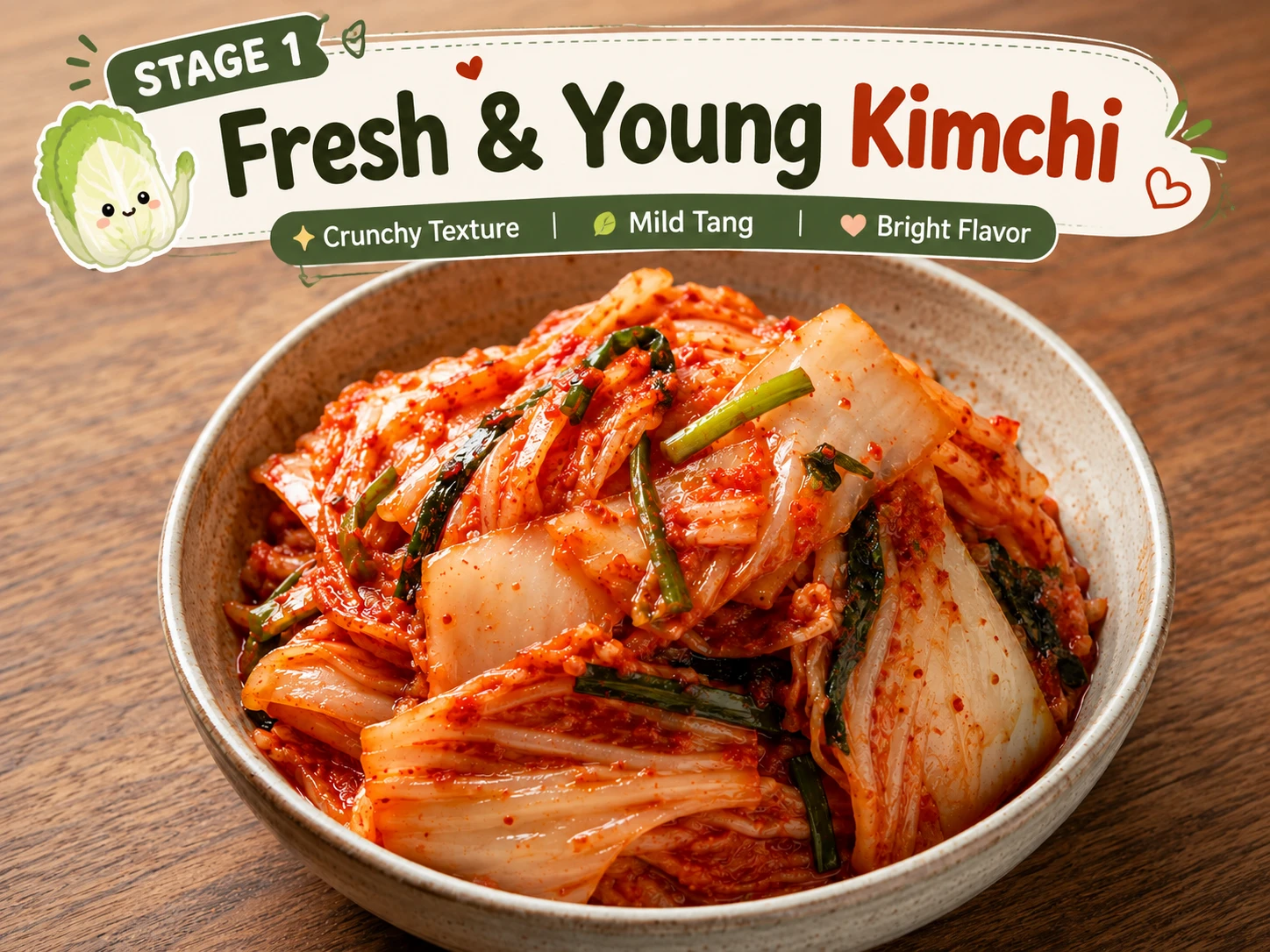
Fresh vegan kimchi on day 0 to 1, bright and crunchy before fermentation has started
Stage 1 — Fresh
Day 0–1
No sourness yet

Tastes mostly like seasoned raw cabbage — crunchy and spicy but flat.

✗ Too Early
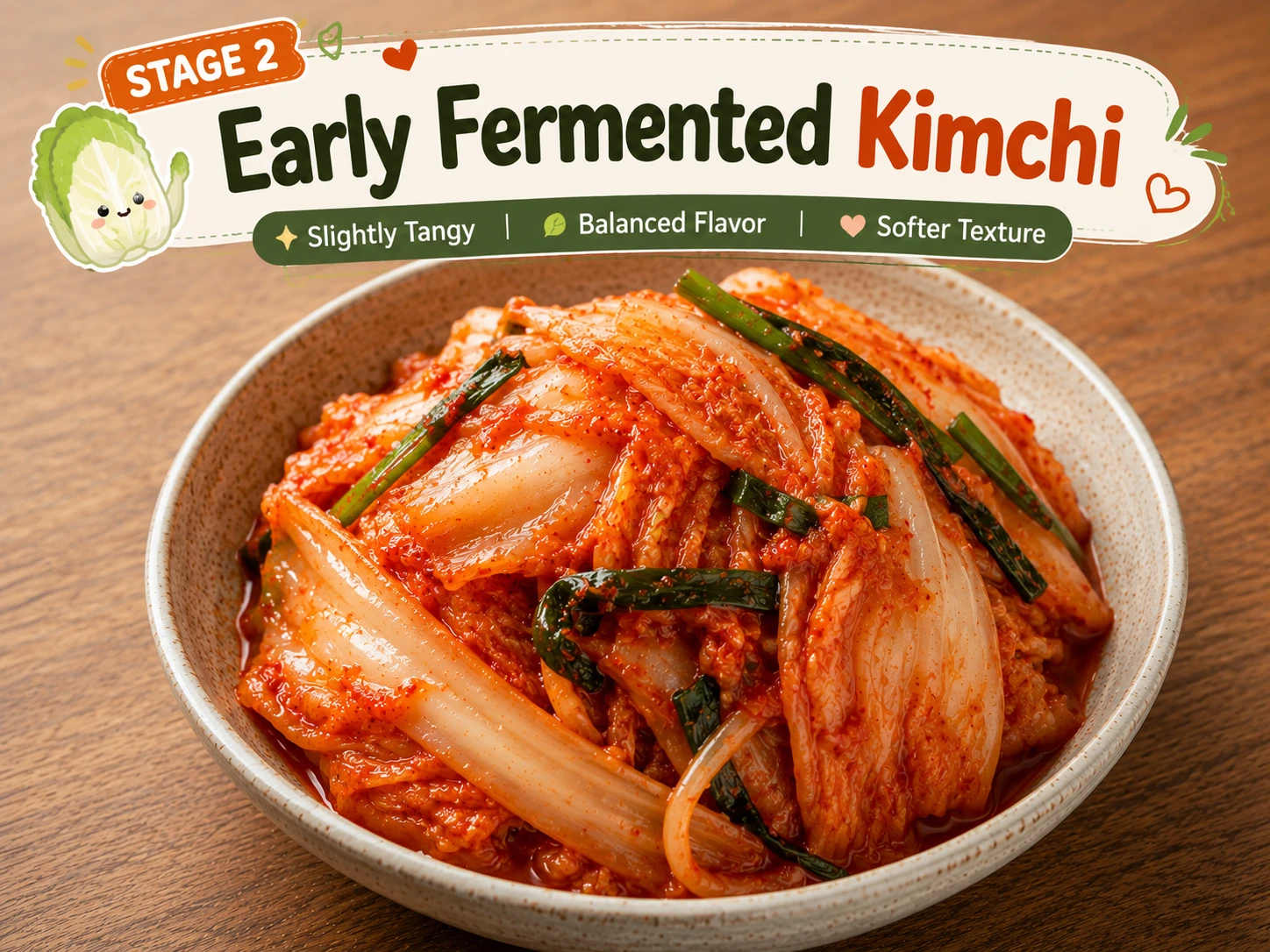
Vegan kimchi at day 1 to 2, small bubbles forming during the required room temperature rest
Stage 2 — Room Temp
Day 1–2
Light fizz starting

Required room-temperature window before refrigerating.

△ Required, Not Ready
⭐ Use This
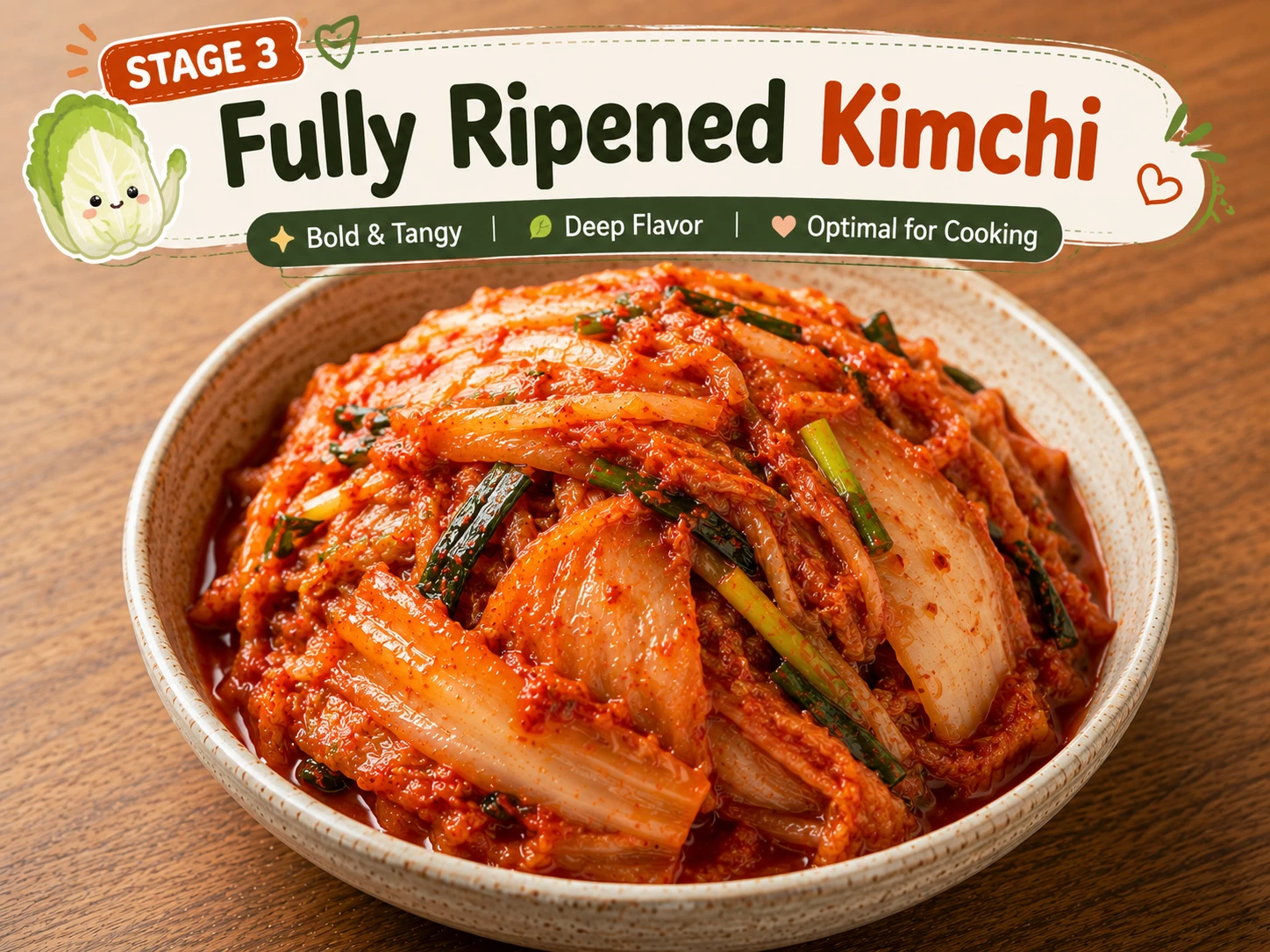
Ripe vegan kimchi at week 1 to 4 refrigerated, the correct stage with balanced sour spicy flavor
Stage 3 — Ripe ⭐
Week 1–4
Balanced sour-spicy

The target flavor this recipe is built around — crunchy, balanced, ideal for eating raw.

★ Correct Stage

Well aged vegan kimchi past 4 weeks, softened texture and deep sour flavor best used in cooking
Stage 4 — Aged
4+ Weeks
Very sour, softer

Great for cooking into jjigae or fried rice. See what to do with sour kimchi and fresh vs aged kimchi for more on how flavor keeps changing past this point.

△ Best for Cooking
What You Need

Ingredients

Servings:8
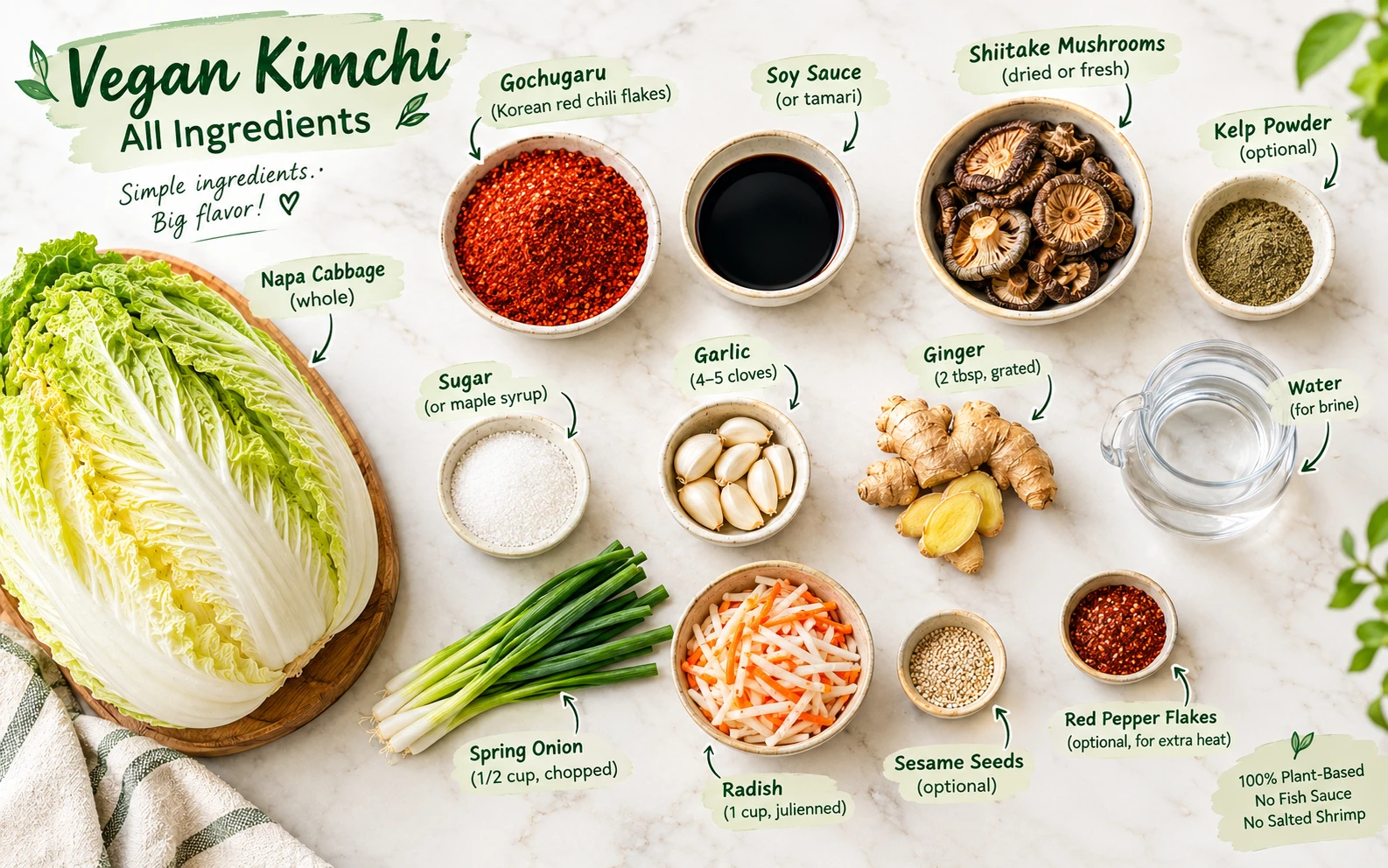
Flat lay of every ingredient needed for vegan kimchi including napa cabbage, gochugaru, soy sauce, shiitake, garlic and spring onion
Everything you need — no fish sauce, no salted shrimp anywhere in this list.
Cabbage & Brine
1400gnapa cabbage (1 large head), quartered and cored Naturally veganKEY
1/2 cupcoarse salt, for the brine 🛒 Shop
2.5Lwater, for the brine
1small Korean radish (mu), julienned
4spring onions, cut into 1-inch pieces
Vegan Seasoning Paste
1/3 cupgochugaru Check labels on blended brands 🛒 ShopKEY
3 tbspsoy sauce Replaces fish sauce 🛒 ShopVEGAN SWAP
1 tbspminced shiitake 🛒 Shop OR 1 tsp kelp (dashima) powder Replaces saeujeot 🛒 ShopVEGAN SWAP
1 tbspsugar
5 clovesgarlic, minced
1 tspfresh ginger, minced
2–3 tbspreserved brine, to loosen the paste Save the rest — see leftover kimchi brine uses

As an Amazon Associate, KimchiGuide earns from qualifying purchases. Links go to Amazon.com; prices and availability may change.

Substitution Guide

These two swaps are all this recipe needs. For a fuller comparison of fish sauce alternatives (sodium, gluten-free, halal/kosher notes), see our Fish Sauce Substitutes guide.

IngredientBest SubstituteRatioNotes
Fish sauceSoy sauce~1:1Best structural match for salt/umami. 🛒 Shop
Fish sauce (alt)Tamari or coconut aminos1:1Tamari also covers gluten-free. 🛒 Shop
Salted shrimpMinced shiitake1 tbsp per recipeRounder, meatier umami. 🛒 Shop
Salted shrimp (alt)Kelp (dashima) powder1 tsp per recipeCleaner, no added texture. 🛒 Shop
Napa cabbageRegular green cabbage1:1 by weightDenser, firmer result.
Step-by-Step Method

How to Make Vegan Kimchi

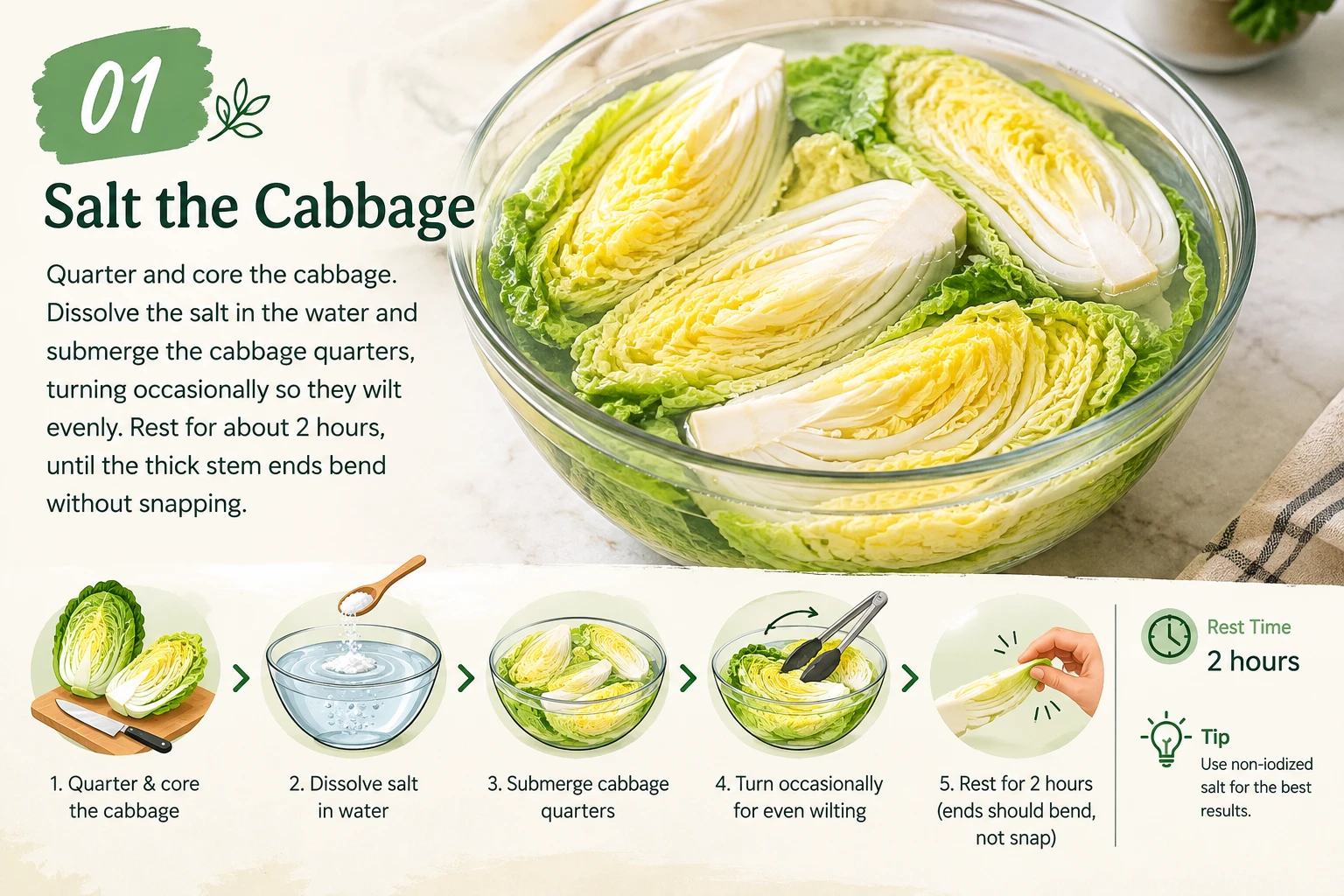
01Salt the Cabbage
Napa cabbage quarters submerged in salt brine for vegan kimchi

Quarter and core the cabbage. Dissolve the salt in the water and submerge the cabbage quarters, turning occasionally so they wilt evenly. Rest for about 2 hours, until the thick stem ends bend without snapping.
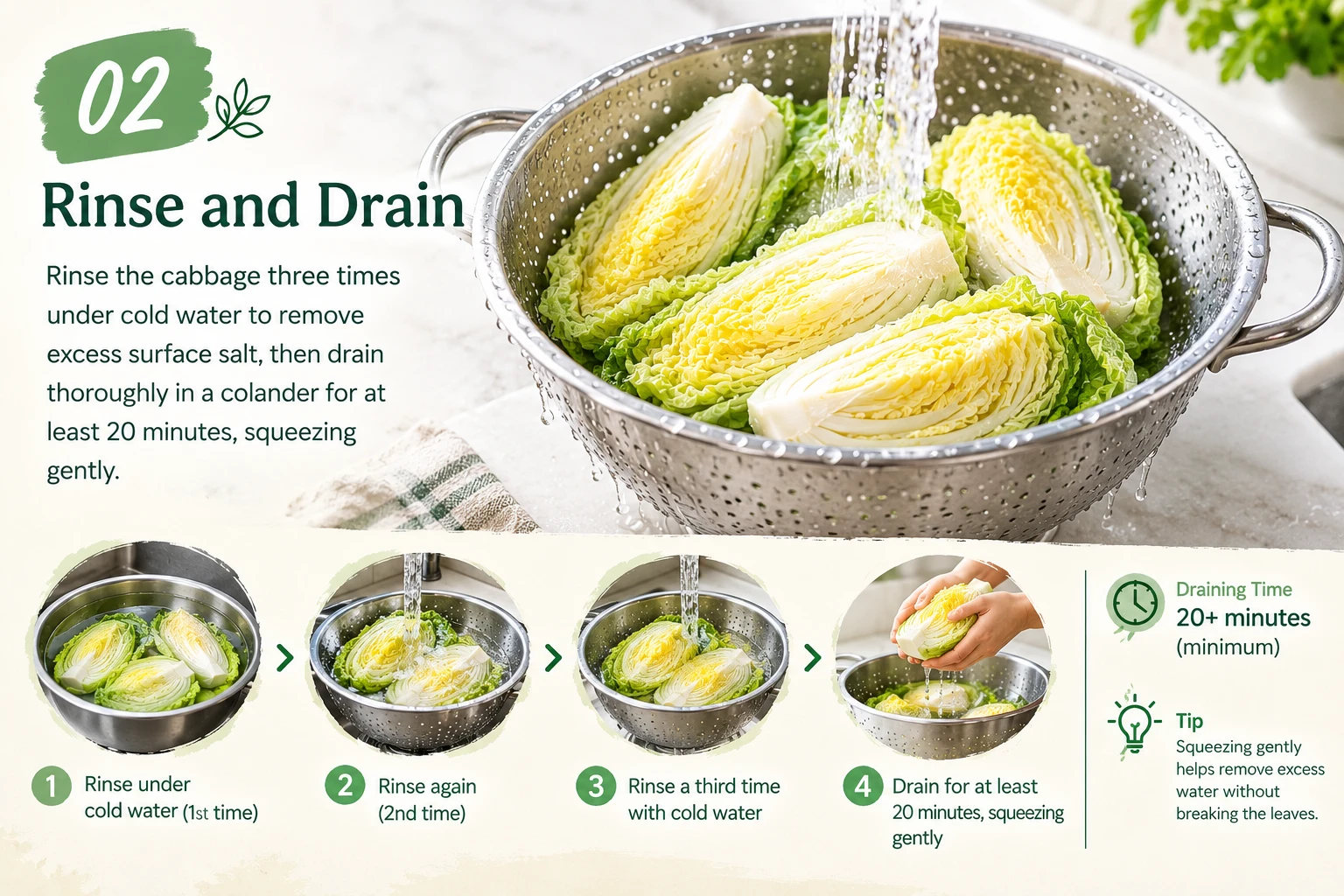
02Rinse and Drain
Salted cabbage being rinsed and drained for vegan kimchi

Rinse the cabbage three times under cold water to remove excess surface salt, then drain thoroughly in a colander for at least 20 minutes, squeezing gently.
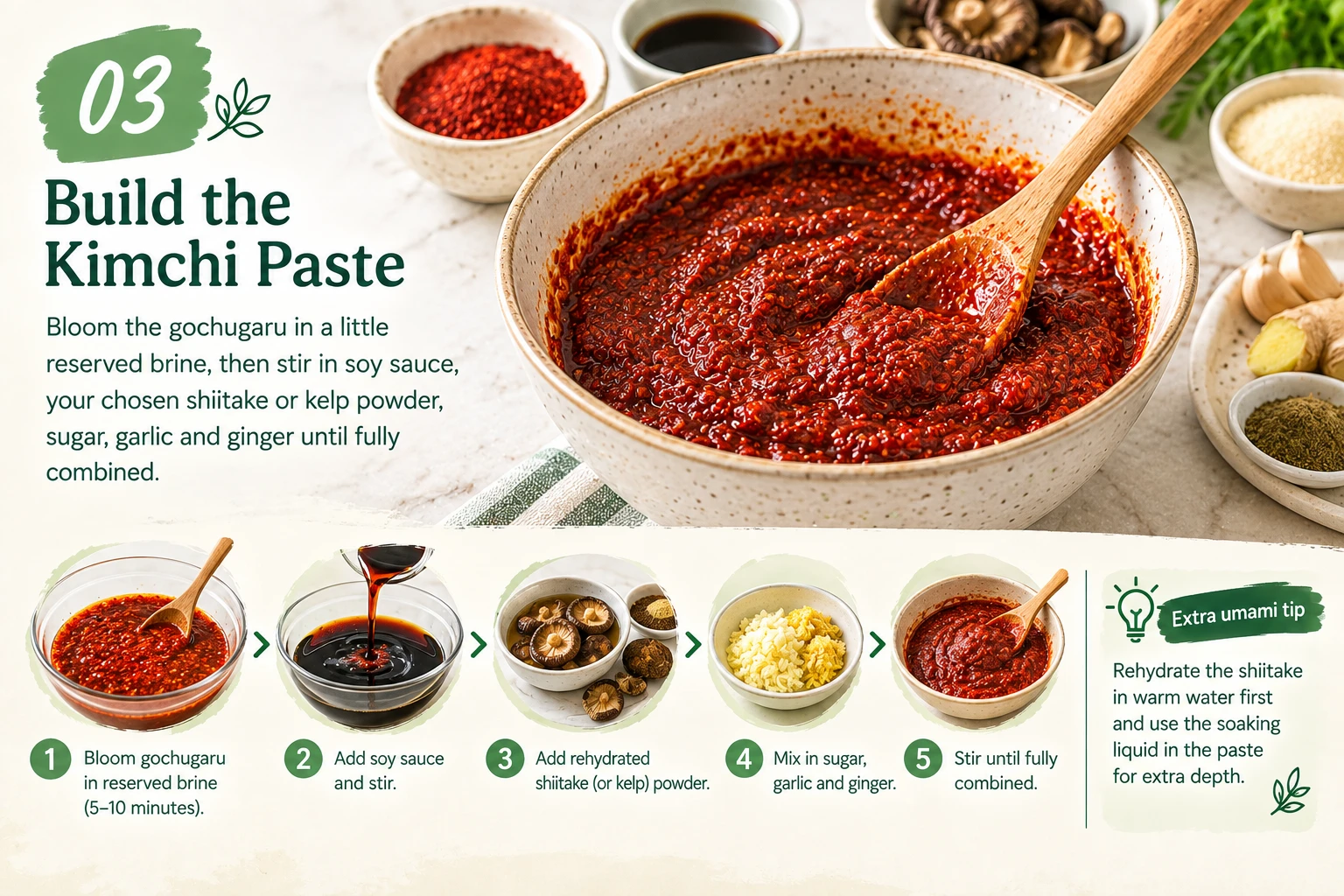
03Build the Vegan Paste
Gochugaru blooming with soy sauce, shiitake, garlic and ginger for vegan kimchi paste

Bloom the gochugaru in a little reserved brine, then stir in soy sauce, your chosen shiitake or kelp powder, sugar, garlic and ginger until fully combined.
💡 Extra umami tipRehydrate the shiitake in warm water first and use the soaking liquid in the paste for extra depth.
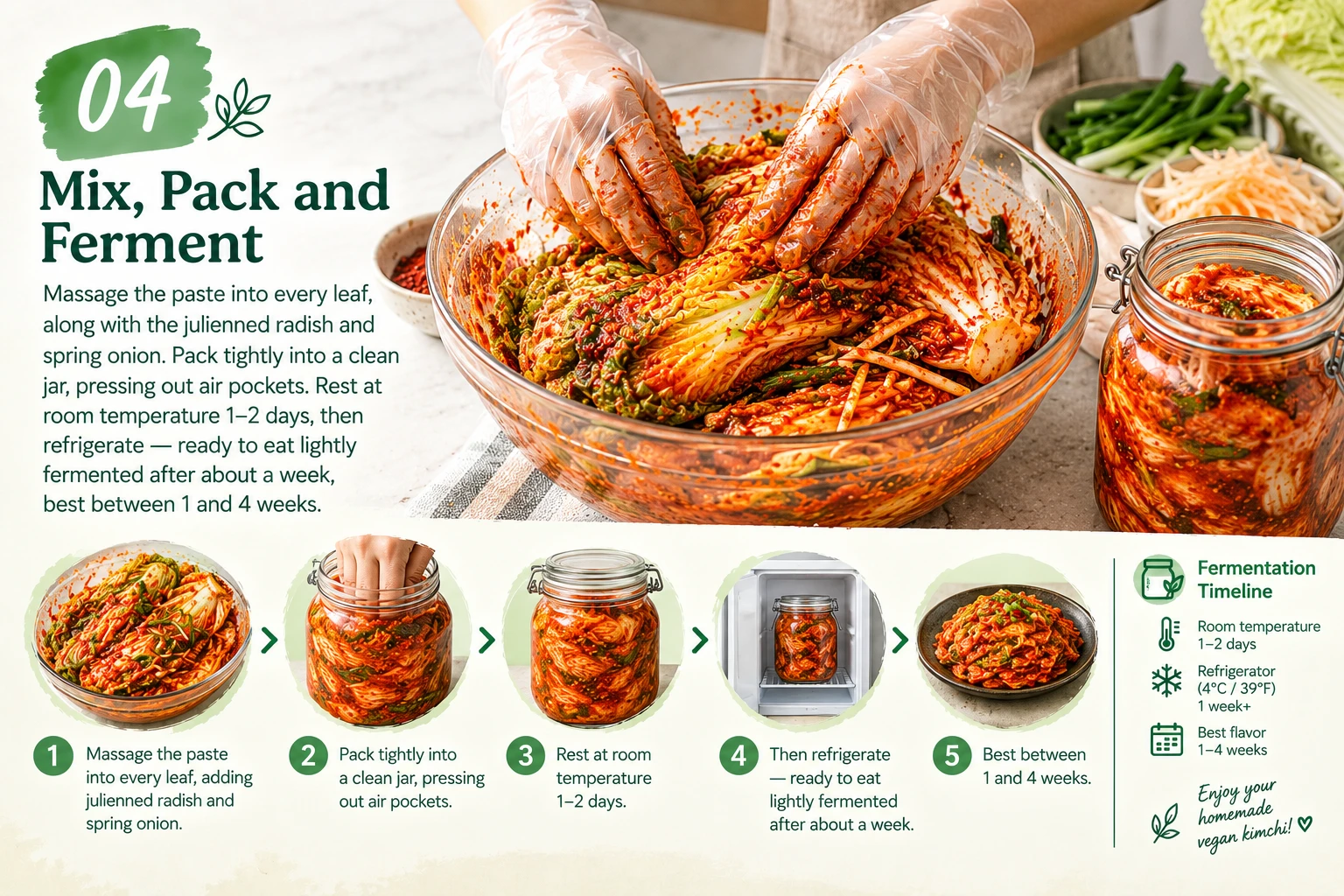
04Mix, Pack and Ferment
Vegan kimchi paste being massaged into cabbage leaves with radish and spring onion

Massage the paste into every leaf, along with the julienned radish and spring onion — food-prep gloves keep the gochugaru stain off your hands. Pack tightly into a clean fermentation jar, pressing out air pockets. Rest at room temperature 1–2 days, then refrigerate — ready to eat lightly fermented after about a week, best between 1 and 4 weeks.

Interactive Tool
🌶️ Spice Level Adjuster
Drag the slider — the gochugaru amount updates, vegan swaps stay constant.
Spice Level: Classic Balance
MildLowStandardHotFire
Classic Balance
Balanced heat, standard gochugaru amount.
Gochugaru1/3 cup
Vegan Umami1 tbsp shiitake or 1 tsp kelp powder
AdjustmentNone
Swap Testing

Test Kitchen Results

Tested against a traditional fish-sauce-and-saeujeot control batch.

Batch 1
Soy Sauce Ratio

The 1:1 swap matched the traditional recipe’s salt level closely.

Keep the 1:1 ratio
Batch 2
Shiitake vs Kelp Powder

Both rated close to the traditional saeujeot version — texture preference decides.

Either works
Batch 3
Fermentation Timeline

Vegan and traditional batches reached the same fermentation markers on identical timelines.

No timing difference
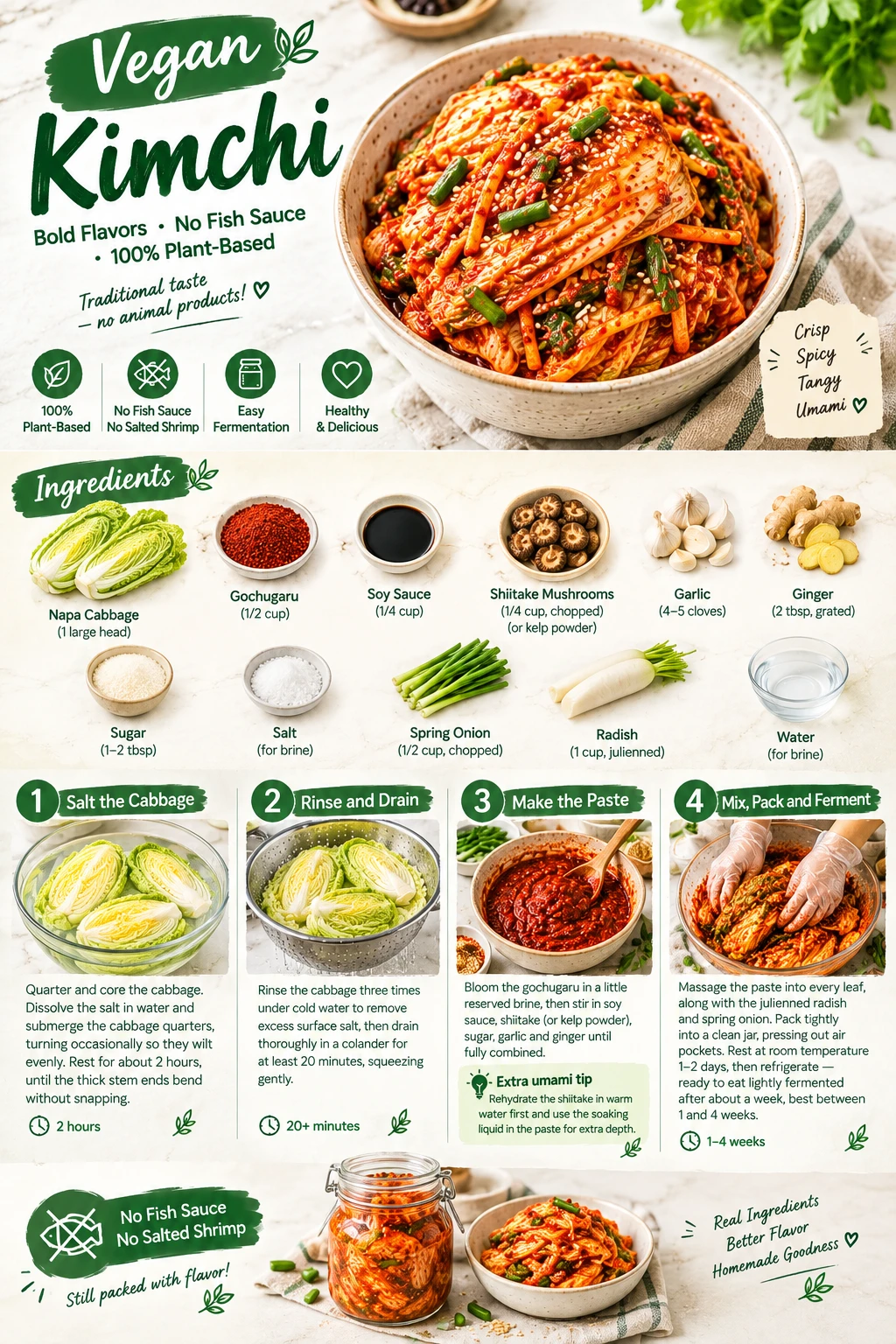
Overhead shot of vegan napa cabbage kimchi with no fish sauce or salted shrimp

Vegan Kimchi

No fish sauce · No jeotgal · 100% plant-based

45m
Prep
0m
Cook
2h45m
Active Total
8
Serves
🌱 100%
Vegan
Ingredients
  • 1400g napa cabbage, quartered and cored
  • 1/2 cup coarse salt + 2.5L water (brine)
  • 1/3 cup gochugaru
  • 3 tbsp soy sauce (replaces fish sauce)
  • 1 tbsp minced shiitake OR 1 tsp kelp powder (replaces saeujeot)
  • 1 tbsp sugar
  • 5 cloves garlic, minced + 1 tsp ginger, minced
  • 1 small Korean radish, julienned
  • 4 spring onions, cut into 1-inch pieces
  • 2–3 tbsp reserved brine
Instructions
  1. 1Brine quartered cabbage 2 hours, turning occasionally.
  2. 2Rinse 3 times, drain thoroughly 20+ minutes.
  3. 3Bloom gochugaru in reserved brine; stir in soy sauce, shiitake or kelp powder, sugar, garlic, ginger.
  4. 4Massage paste into leaves with radish and spring onion, pack tightly, ferment 1–2 days at room temp then refrigerate.
23
Calories
1g
Protein
5g
Carbs
0g
Fat
420mg
Sodium

Per 1/2-cup serving. Reviewed by Dr. Sarah Mitchell RD, PhD.

What We Actually Use

Tools & Ingredients We Recommend

ℹ️The links below are Amazon affiliate links. As an Amazon Associate, KimchiGuide earns from qualifying purchases — at no extra cost to you.
🍶
Naturally Brewed Soy Sauce
A well-balanced Korean soy sauce — the fish sauce swap this recipe is built around.
🛒 View on Amazon →
🌊
Kelp (Dashima) Powder
The cleaner, no-texture umami swap for salted shrimp — dissolves fully into the paste.
🛒 View on Amazon →
🍄
Dried Shiitake Mushrooms
The rounder, meatier umami swap — mince after a quick rehydration soak.
🛒 View on Amazon →
🌶️
Coarse Gochugaru
Coarse-cut Korean chili flakes made for kimchi — the texture this paste is built around.
🛒 View on Amazon →
🥣
Large Fermentation Jar
A wide-mouth glass jar with an airtight lid makes packing and burping the batch far easier.
🛒 View on Amazon →
🧤
Food-Prep Gloves
Gochugaru paste stains and lingers on skin — gloves make massaging the paste into the cabbage much easier to clean up after.
🛒 View on Amazon →
Store & Use

Storage

Rest packed jars at room temperature 1–2 days to kickstart fermentation, then refrigerate. Sealed in the fridge, vegan kimchi keeps well for 1 to 3 months, souring gradually the whole time — the same shelf life as traditional kimchi. Once it’s aged past your preferred eating point, fold it into jjigae or fried rice rather than eating it raw — see what to do with sour kimchi for more ideas.

Questions Answered

Vegan Kimchi FAQ

Usually not. Traditional kimchi is seasoned with jeotgal — salted fermented fish or shrimp — and often fish sauce. This recipe replaces both with soy sauce and shiitake or kelp powder.

Soy sauce is the simplest swap, roughly 1:1 by volume. It won’t taste identical to fish sauce’s briny funk, but it brings the same salty umami backbone the paste needs.

Finely chopped shiitake mushroom or a pinch of kelp (dashima) powder both add savory depth without any seafood.

Yes — lactic acid fermentation is driven by bacteria already on the cabbage and in the environment, not by fish sauce or shrimp, so the same salt-then-ferment timeline applies.

Plain gochugaru is naturally vegan. Most gochujang brands are vegan too, though a small number add honey — worth a one-time label check per brand.

Stored in a sealed container in the fridge, it keeps well for 1 to 3 months, continuing to ferment and sour gradually the whole time.

Yes — see our Best Vegan Kimchi Brands guide for which store-bought jars are genuinely fish-sauce-free and label-checked.

Ji-Young Park
Written by
Ji-Young Park
Korean Food Writer & Fermentation Expert
Fermentation ExpertVegan Swap Tested

Ji-Young Park built this as the base recipe every other vegan dish on the site depends on, testing the swap side by side with the traditional paste across multiple batches.

View full author profile →
Dr Sarah Mitchell
Reviewed by
Dr. Sarah Mitchell
RD, PhD Nutrition Science
Registered Dietitian

Dr. Sarah Mitchell reviewed all nutrition claims on this page against the traditional recipe for accuracy.

View full credentials →

Was this guide helpful?

Thank you for your feedback! 🙏
© 2026 KimchiGuide. All rights reserved.

Leave a Reply