Is Wildbrine Kimchi Good? The Full Review — Taste, Ingredients & Sodium Facts (2026)
A standalone deep-dive on the California-born, sea-vegetable-instead-of-fish-sauce brand behind our “Best Vegan Overall” pick — the honest taste verdict, all 4 varieties, a real sodium/sesame discrepancy between the jar and the website, and what to actually expect.
Is Wildbrine Kimchi Good?
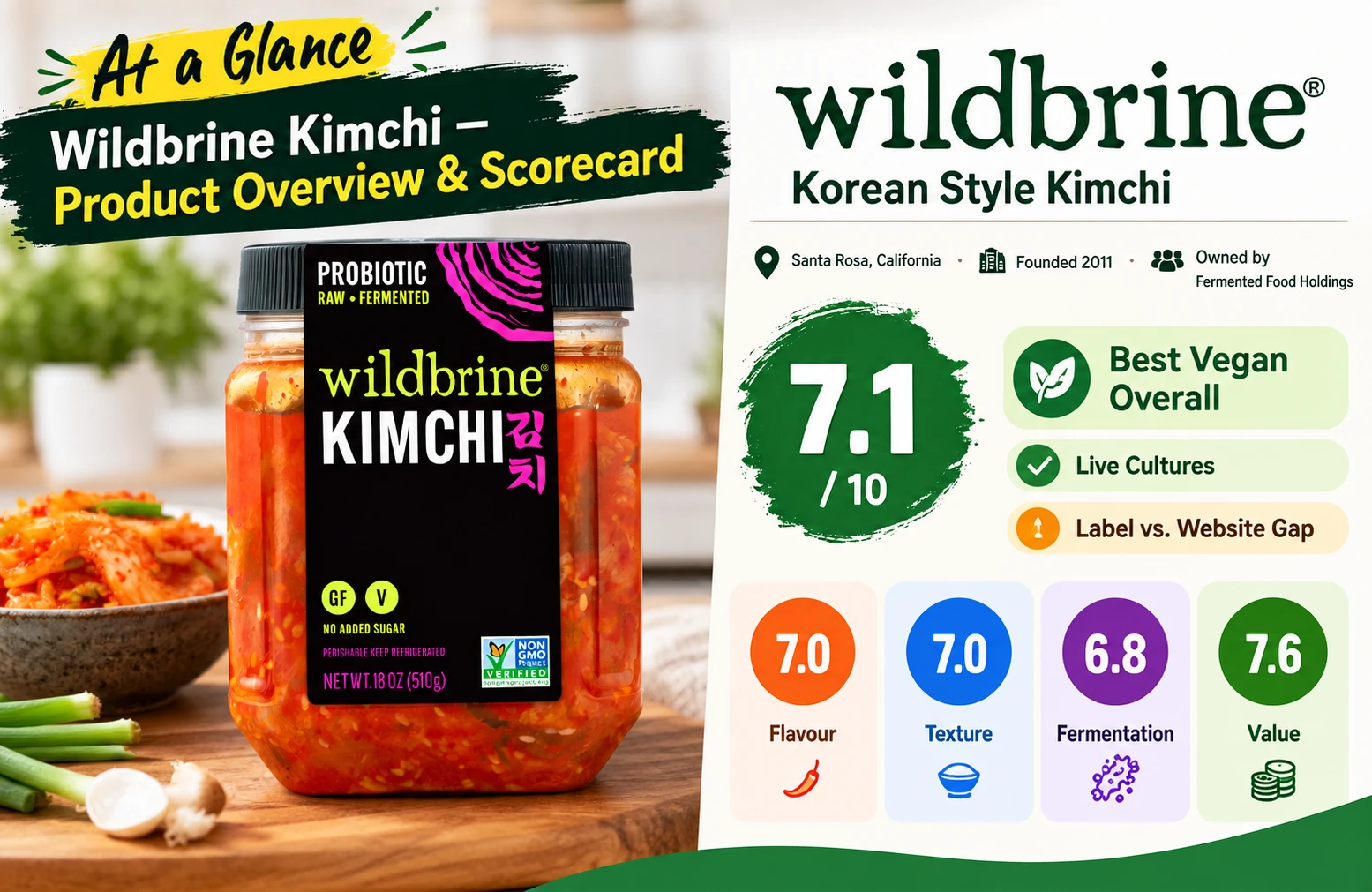
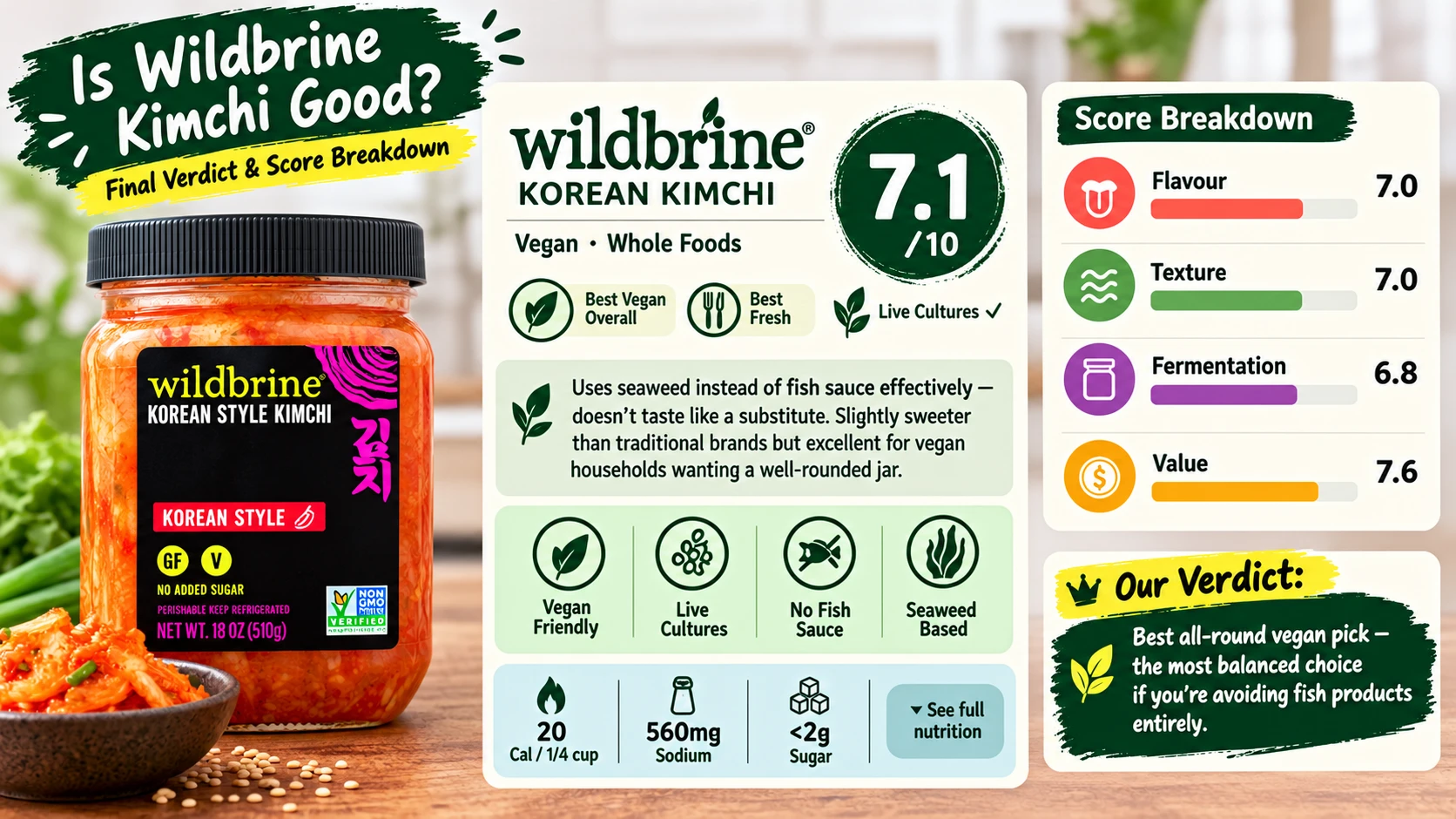
Generally, yes — in our 18-brand blind taste test, Wildbrine scored 7.1 out of 10 and is our pick for Best Vegan Overall, using Korean sea vegetable in place of fish sauce. Founded in 2011 in Santa Rosa, California, and now owned by Fermented Food Holdings, it’s sold across mainstream chains like Whole Foods, Sprouts, Costco, and Kroger — wider retail reach than most small-batch brands we’ve reviewed. The real caveat: independent reviewer sentiment is genuinely more mixed than most brands on our list, and we found a real discrepancy between the sodium and sesame content on the brand’s own website versus what’s actually printed on the retail jar.
🛒 Check Price on AmazonWildbrine Kimchi — At a Glance
Here’s what actually matters before you decide whether to pick up a jar.
- Taste: genuinely mixed — some tasters and buyers love the crunch, one major taste test ranked it last of 8 brands.
- Made by: founded 2011 in Santa Rosa, CA, out of a cancer-support meal charity; now owned by Fermented Food Holdings.
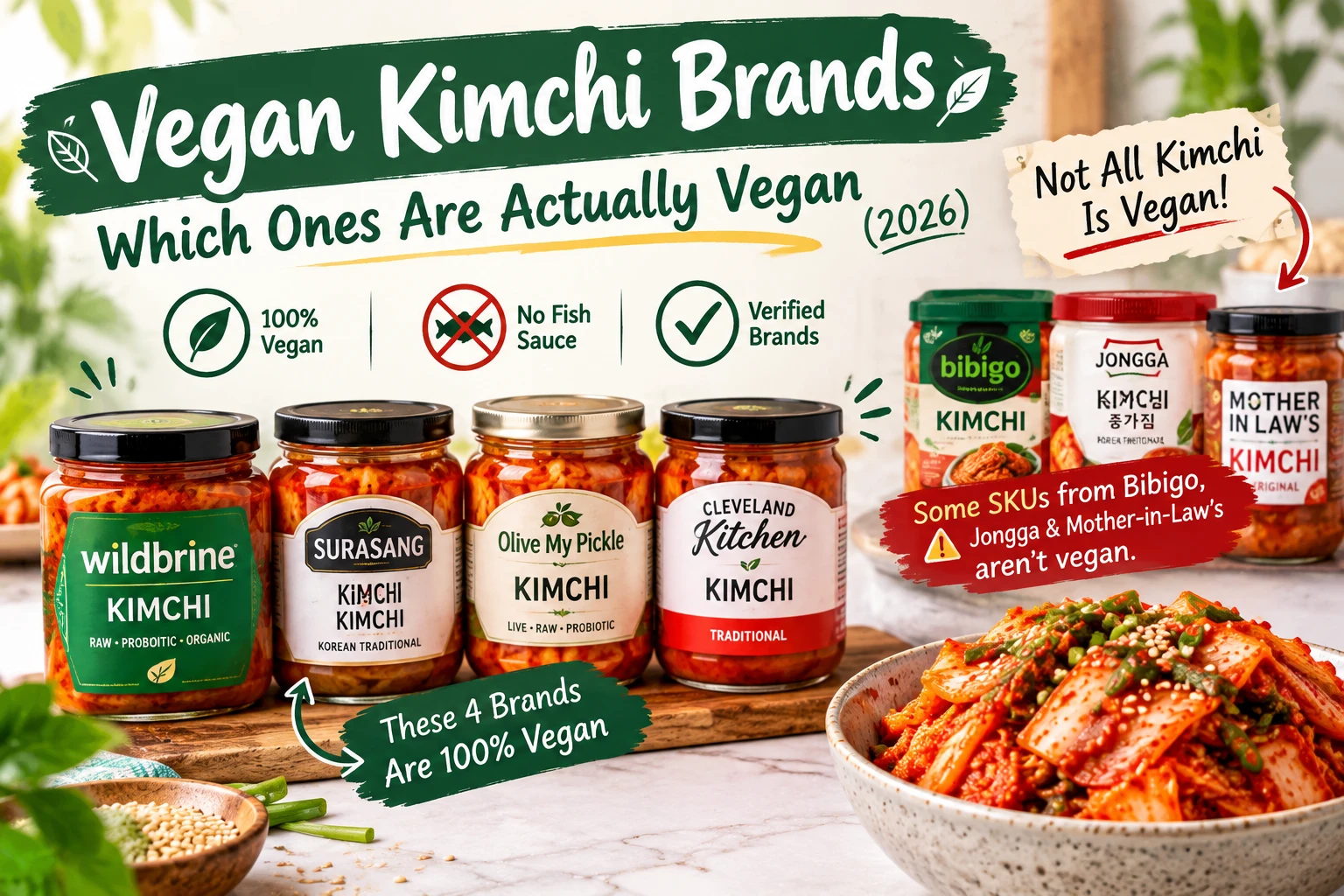
- Unique angle: sea vegetable instead of fish sauce — always vegan, no “check which line” caveat needed.
- Watch for: the jar’s label and the brand’s own website disagree on sodium (280mg vs 220mg) and sesame content.
- Sodium: higher than our hub previously listed — not a low-sodium pick despite the health-forward branding.
- Availability: genuinely wide — Whole Foods, Sprouts, Costco (exclusive size), Kroger, and Amazon.
Wildbrine Kimchi — Product Overview & Scorecard
Here’s how Wildbrine scored across our core taste-test criteria, from the same 18-brand blind test used for our full brand ranking. These are the same published sub-scores already on our pillar page.
Who Makes It? The Santa Rosa Story
A brand that started as an offshoot of a charity meal program, and has changed hands since.
Wildbrine was founded in 2011 in Santa Rosa, California, by Rick Goldberg and Chris Glab. The company grew out of the Ceres Community Project, a nonprofit that prepares meals for people living with cancer — a genuinely different origin story than most brands in this category, which typically start as a family recipe or a farmers’-market side business.
In March 2022, Wildbrine was acquired by Fermented Food Holdings, which also owns the sauerkraut and pickle brand Bubbies. A February 2026 press release lists the company’s headquarters as Madison, Wisconsin, with Jorge Azevedo as CEO, and includes the brand’s own claim that its Korean Style Kimchi is the best-selling kimchi item in the Natural grocery channel — a claim made by the brand itself, which we have not independently verified.
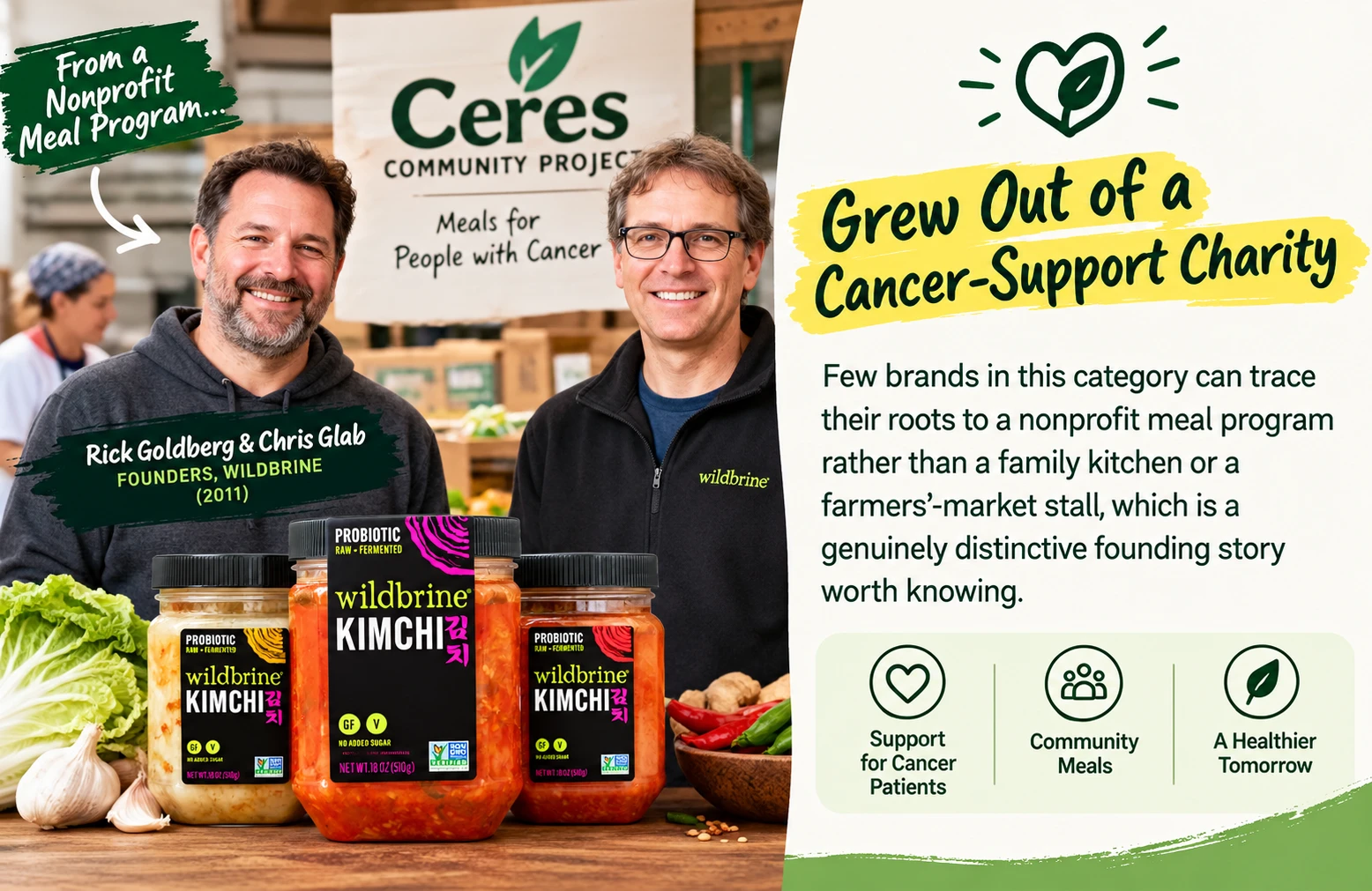
Few brands in this category can trace their roots to a nonprofit meal program rather than a family kitchen or a farmers’-market stall, which is a genuinely distinctive founding story worth knowing.
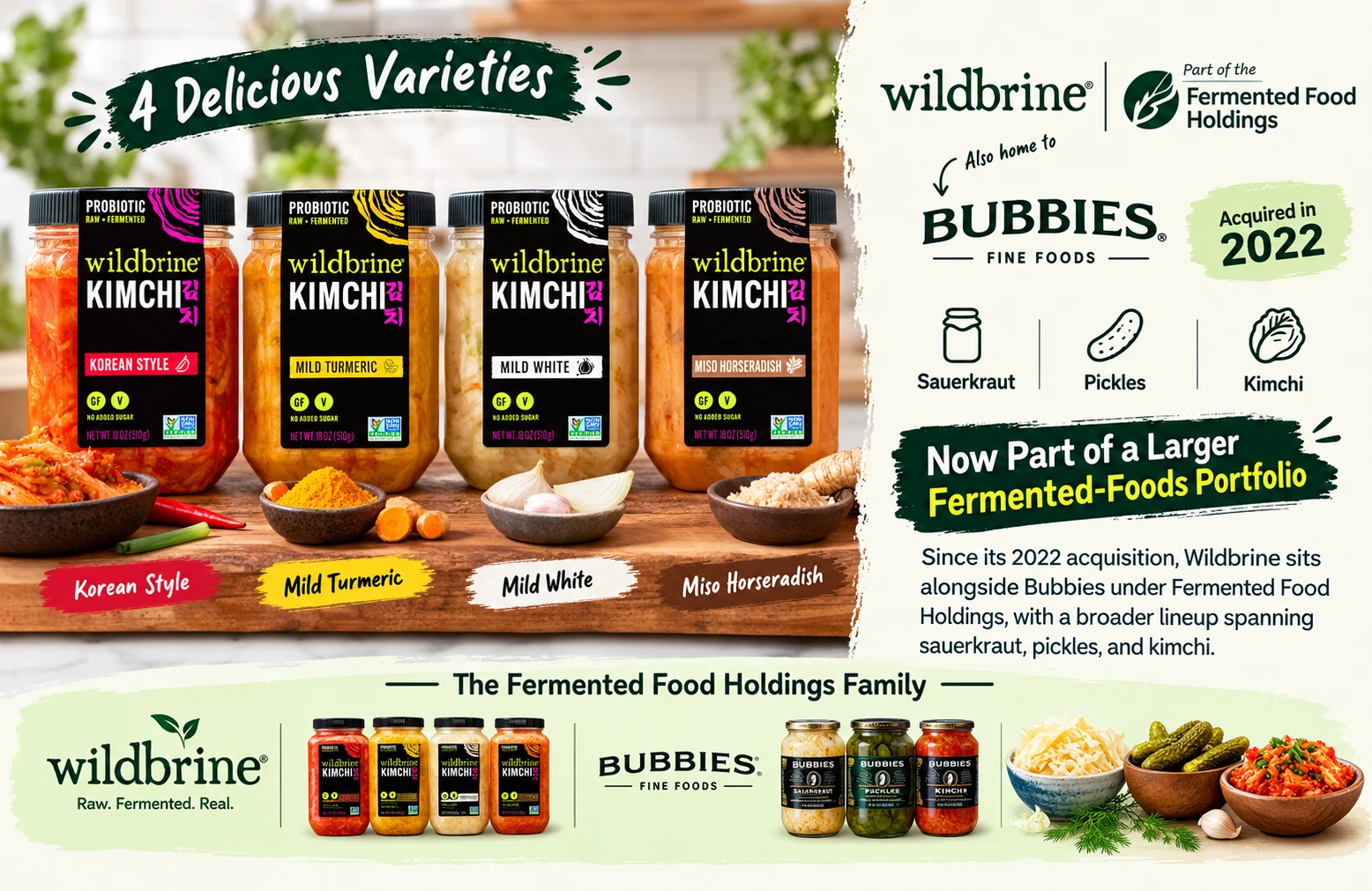
Since its 2022 acquisition, Wildbrine sits alongside Bubbies under Fermented Food Holdings, with a broader lineup spanning sauerkraut, pickles, and kimchi.
The Jar vs. Website Discrepancy
This is the single most important thing to know about Wildbrine before you check the numbers anywhere else.
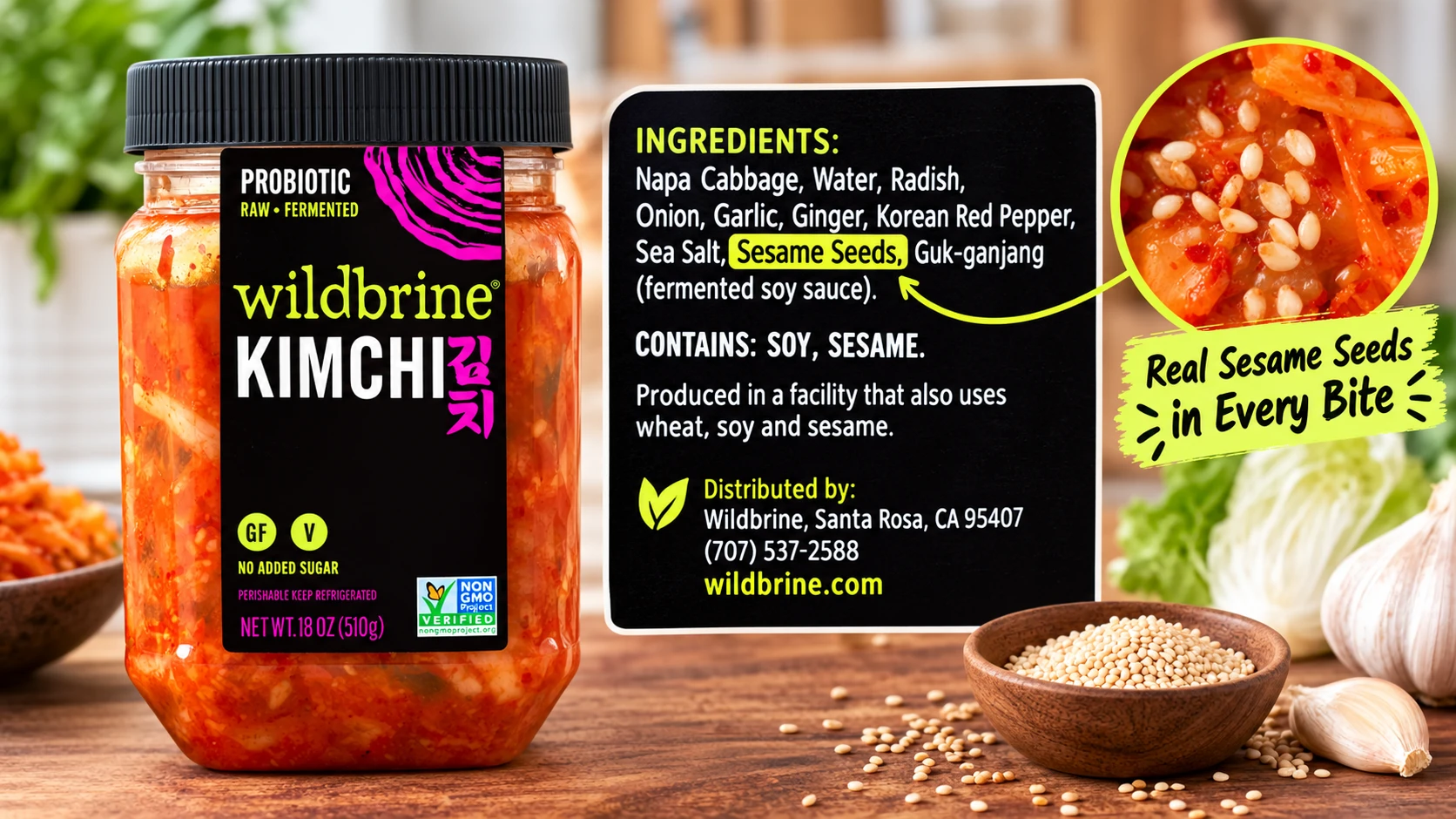
We compared Wildbrine’s own website recipe for Korean Style Kimchi against a physical retail jar (UPC 858159002167) purchased from a store shelf, and found two real differences. The website’s nutrition panel lists 220mg of sodium per 2 tablespoon serving and does not list sesame seeds in the ingredients. The physical jar’s own label lists 280mg of sodium for the identical serving size, does list sesame seeds as an ingredient, and carries an allergen statement for a facility that also uses soy and sesame. Whole Foods’ own product listing independently matches the jar’s higher figures, not the website’s.
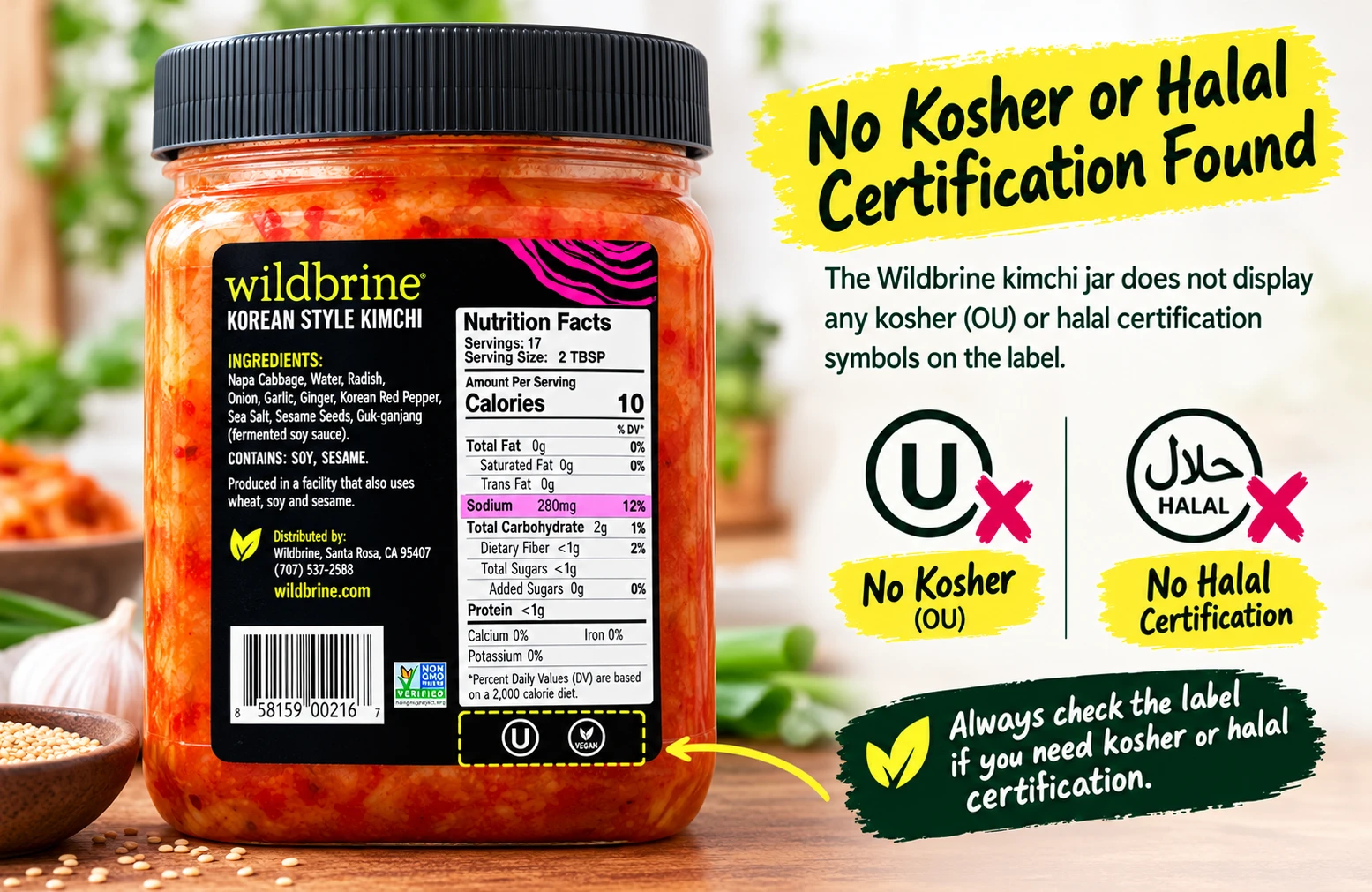
We default to the physical jar label throughout this review, since that’s what actually ships to store shelves — a website recipe can lag behind a real reformulation. If you have a sesame allergy, check the jar in your hand rather than trusting the brand’s website description alone.
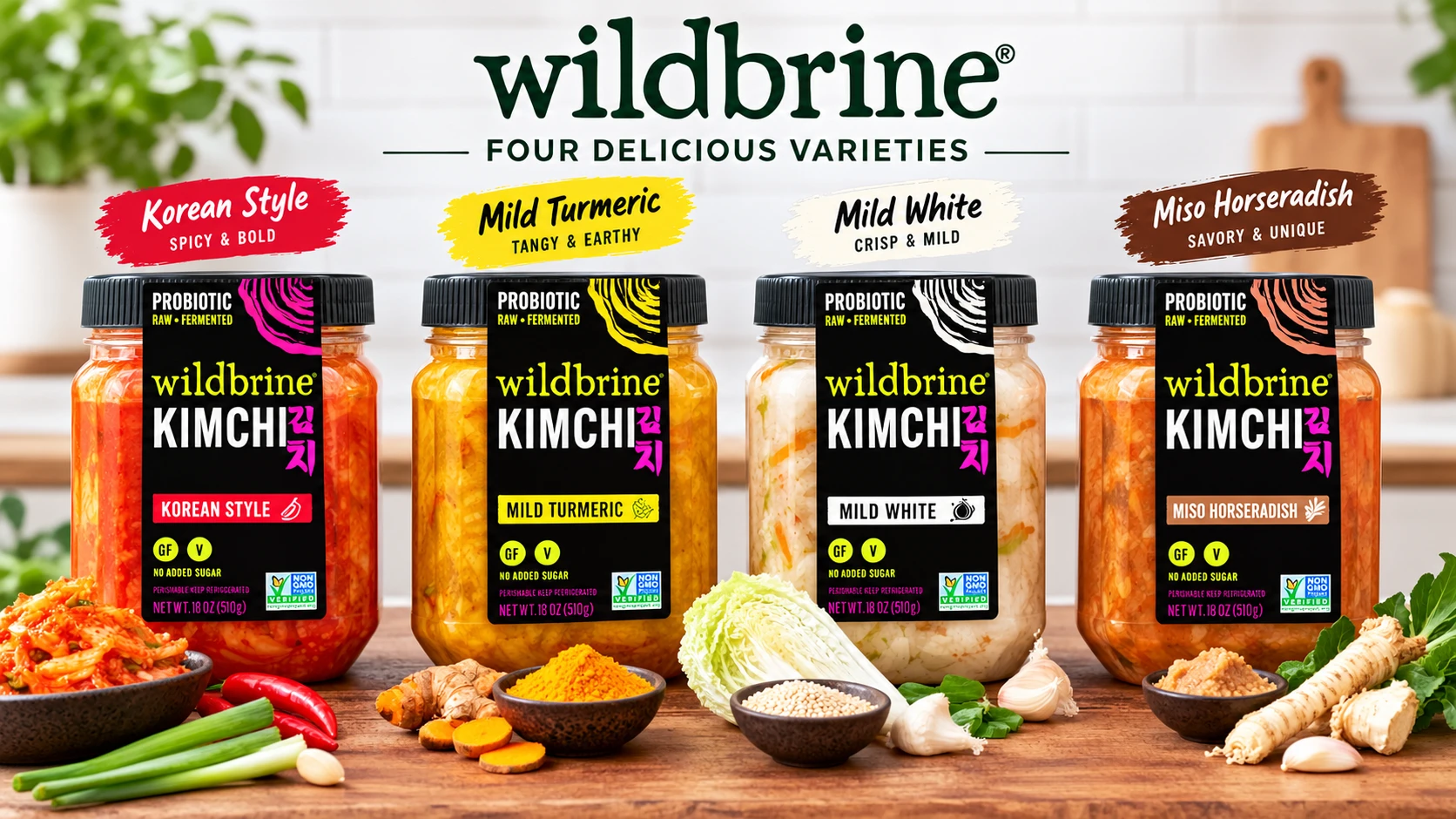
Korean Style, Mild with Turmeric, Mild White & Miso Horseradish
Wildbrine currently sells four kimchi varieties — here’s how each one differs.
| Variety | Heat Level | Notes | Amazon |
|---|---|---|---|
| Korean Style | 🌶️🌶️ Medium-Spicy | The flagship — napa cabbage, chili, garlic, ginger, sea vegetable in place of fish sauce. | Check Price → |
| Mild Kimchi with Turmeric | 🌶️ Mild | Daikon, carrot, pear, red bell pepper, and turmeric — no chili heat, sweeter base. | Check Price → |
| Mild White | 🌶️ Mild | Same mild, no-chili base as the Turmeric variety; also sold in an exclusive 30oz size at Costco. | Check Price → |
| Miso Horseradish | 🌶️🌶️ Medium | A less traditional variety built on miso, tamari, horseradish, and orange peel; contains soy. | Check Price → |
Taste & Texture — The Honest Take
More genuinely divided than most brands we’ve reviewed — worth going in with realistic expectations.
Wildbrine’s Korean Style is a savory-sour, spicy jar where sea vegetable stands in for fish sauce, giving it a mild, briny depth rather than a fishy funk. Wildbrine’s fans describe it as crunchy, fresh, and good value — a common thread in Amazon customer reviews, several of which specifically praise the “nice chunks of cabbage” and call it their go-to jar.
But a 2024 head-to-head taste test comparing 8 kimchi brands ranked Wildbrine last, describing the cabbage as limp, the fizz as excessive, and the chili heat as dry and unbalanced by any sweetness — closer to a spicy sauerkraut than to Korean-market kimchi, in that reviewer’s words. Other Amazon reviews echo a specific complaint about the ginger flavor being too dominant, alongside a smaller number who simply wrote that the jar “did not taste like kimchi” to them.
Real Ingredients Breakdown
Pulled directly from the physical retail jar’s own label — which, as covered above, differs slightly from the brand’s website.
| Korean Style (jar label) | Mild Kimchi with Turmeric |
|---|---|
| Napa cabbage | Daikon radish |
| Green onion | Carrot |
| Sea vegetable | Pear |
| Chili pepper | Red bell pepper |
| Sea salt | Turmeric |
| Sesame seeds | Sea salt |
| Garlic | Garlic |
| Ginger | Ginger |
| (no fish sauce) | (no fish sauce) |
Wildbrine Kimchi Nutrition & Sodium Facts
Low-calorie, as expected for kimchi — but the sodium numbers deserve a closer look given the jar-vs-website gap.
| Source | Serving | Calories | Sodium | Sugar |
|---|---|---|---|---|
| Retail jar label | 2 tbsp (30g) | 10 kcal | 280mg | <1g (0g added) |
| Brand’s own website | 2 tbsp (30g) | ~10 kcal | 220mg | <1g |
| Eat This, Not That (2024) | ~2 tbsp | — | 260mg | — |
Certifications — Vegan, Kosher & Halal
Always vegan across the range, but no religious certification found for the kimchi line specifically.
Wildbrine states directly that its kimchi uses Korean sea vegetable rather than fish sauce or shrimp paste — every current variety is vegan, with no separate non-vegan line to watch out for.
A separate Wildbrine product, Raw Organic Sauerkraut, carries a Kosher mark at Costco Business Center — but that does not extend to the kimchi line. No Halal certification was found for any Wildbrine product, and the Miso Horseradish variety’s tamari and miso typically involve alcohol during fermentation, worth a direct check if that matters to you.
Safety, Shelf Life & Where It’s Actually Made
Here’s what’s publicly documented — including one unresolved question we couldn’t fully answer.
Is Wildbrine Good for Cooking, or Best Eaten Raw?
Both — a straightforward, all-purpose kimchi that works either way.
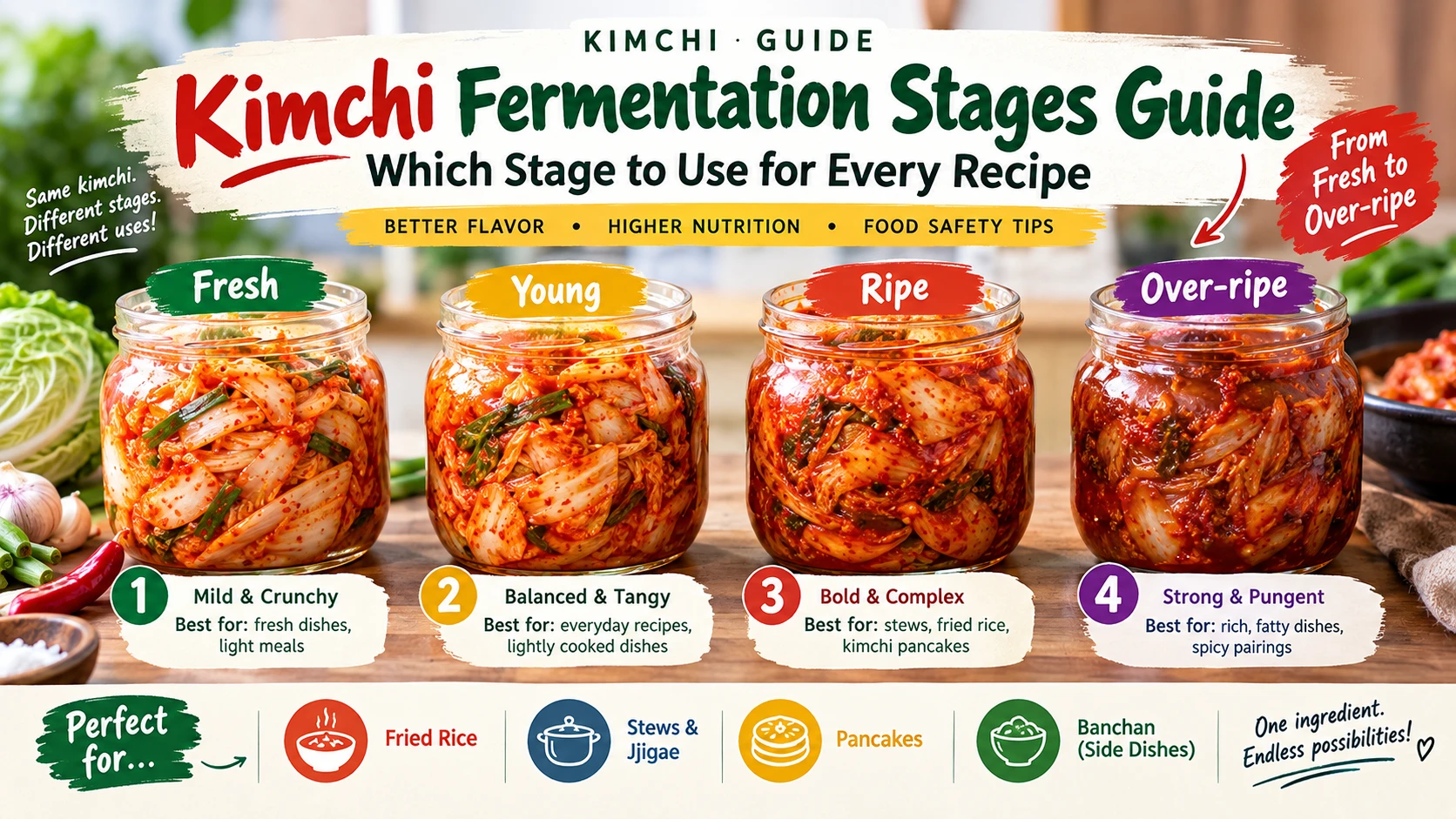
Korean Style holds up well cooked into fried rice, stirred into ramen, or folded into a pancake batter, since its chili heat and sea-vegetable savoriness carry through heat without disappearing. Straight from the jar, it works as a standard banchan side or a sandwich topping. The milder Turmeric and White varieties suit raw applications — like a fresh slaw topping or alongside eggs — better than a long-cooked stew, since they lack the chili base that gives Korean Style its backbone under heat.
Availability & Price
Genuinely wide mainstream retail availability — a real strength compared to several small-batch brands we’ve reviewed.
| Channel | Availability |
|---|---|
| Whole Foods, Sprouts, Natural Grocers | ✓ Confirmed via brand’s own site |
| Costco | ✓ Exclusive 30oz Mild White size |
| Kroger, The Fresh Market | ✓ Confirmed via brand’s own site |
| Amazon | ✓ Multiple confirmed listings |
| Direct via wildbrine.com | ✗ Listed as temporarily unavailable as of this writing |
Retail-price trackers put an 18oz jar in roughly the $6-8 range at stores like Sprouts, with Costco’s exclusive 30oz size seen priced anywhere from about $3 to $7.50 depending on location. We were not able to confirm live, current Amazon pricing at the time of writing — check the listing directly for today’s price.
🛒 Check Price on AmazonHow We Tested Wildbrine
This review draws on our broader 18-brand blind taste test, cross-checked against a physical jar and independent secondary reviews for a brand where opinions genuinely diverge.
Related Guides
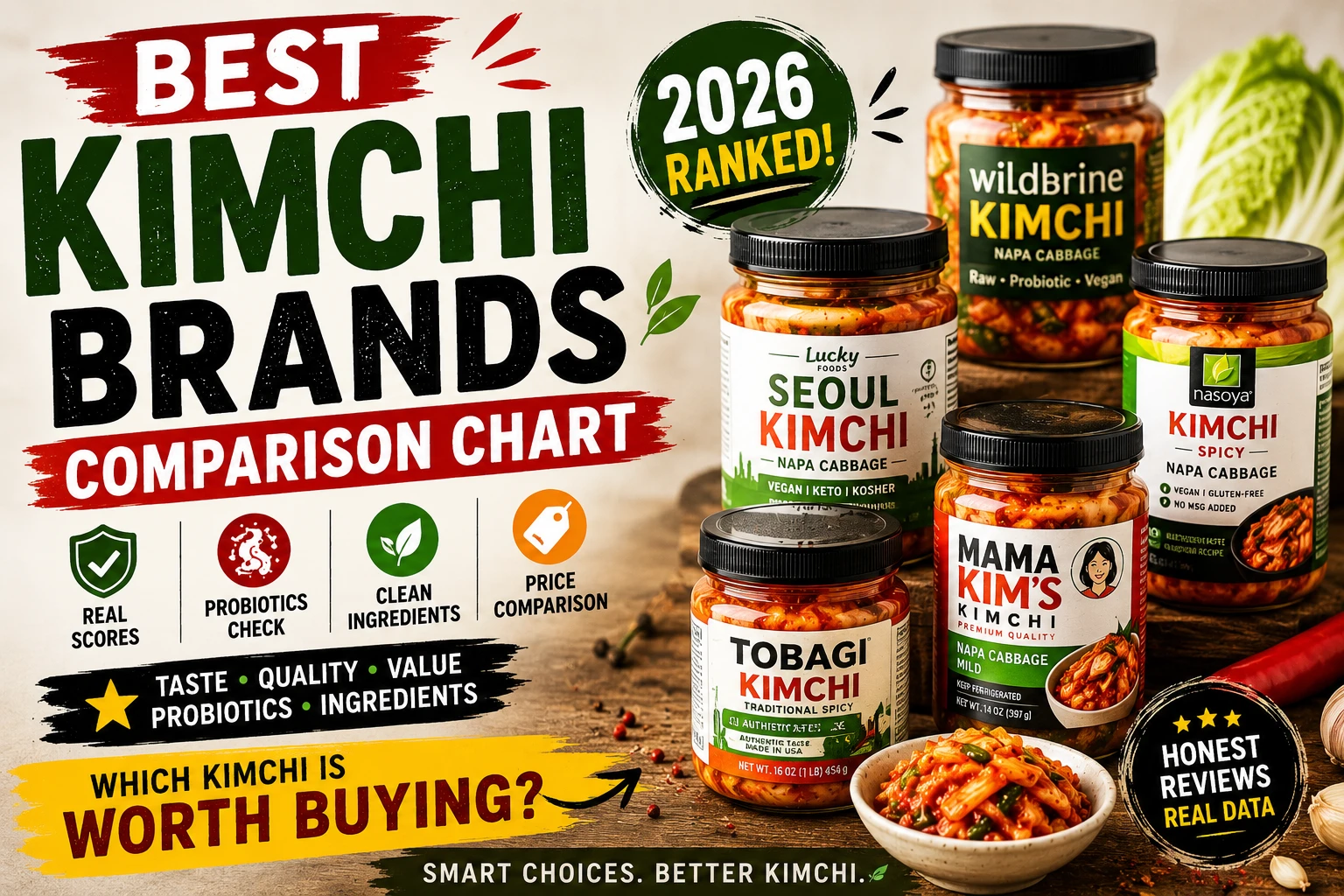
Naturally connected reading if you’re deciding on Wildbrine or comparing it against the rest of the ranking.
Is Wildbrine Kimchi Good? FAQ — 20 Questions
Generally, yes — in our 18-brand blind taste test, Wildbrine scored 7.1/10 and is our pick for best all-round vegan option. That said, independent opinions genuinely vary more than with most brands we’ve reviewed: one 2024 multi-brand taste test ranked it last of 8 for limp texture and excess fizz, while other reviewers and many Amazon customers describe it as crunchy and well-balanced.
Wildbrine was founded in 2011 in Santa Rosa, California, by Rick Goldberg and Chris Glab, growing out of the Ceres Community Project, a nonprofit that prepares meals for people with cancer. The brand was acquired by Fermented Food Holdings, which also owns Bubbies, in March 2022; company materials from 2026 list its headquarters in Madison, Wisconsin.
Four current varieties: Korean Style (spicy flagship), Mild Kimchi with Turmeric, Mild White, and Miso Horseradish. Costco also carries an exclusive 30oz Mild White size not sold elsewhere.
Per the physical retail jar: napa cabbage, green onion, sea vegetable, chili pepper, sea salt, sesame seeds, garlic, and ginger, made in a facility that also uses soy. The brand’s own website recipe lists the same core ingredients but does not include sesame — we default to the physical jar since that’s what actually ships to stores.
Yes. Wildbrine uses Korean sea vegetable in place of fish sauce or shrimp paste across every current variety, rather than splitting into vegan and non-vegan lines.
No Kosher certification was found for the kimchi line. A separate Wildbrine product, Raw Organic Sauerkraut, carries a Kosher mark at Costco Business Center, but that does not extend to the kimchi.
No Halal certification was found for any Wildbrine product. The Miso Horseradish variety’s tamari and miso typically involve alcohol during fermentation, which halal-conscious shoppers may want to check directly with the brand.
The brand markets all of its kimchi as gluten-free based on its ingredient list. This is a brand claim rather than a third-party gluten-free certification badge.
The physical retail jar’s ingredient list includes sesame seeds, plus an allergen statement for a facility that also uses soy and sesame. The brand’s website recipe for the same product does not list sesame — check the jar in hand if you have a sesame allergy.
The physical jar lists 280mg of sodium per 2 tbsp (30g) serving for Korean Style. The brand’s website lists a lower 220mg for the same serving. Doubled to a 1/4 cup serving, that’s roughly 560mg (jar) or 440mg (website) — not a low-sodium kimchi.
Opinions are genuinely mixed. It’s a savory, sour, spicy jar with sea vegetable standing in for fish sauce. One 2024 taste test called it limp and overly fizzy with no balancing sweetness; other reviewers and many Amazon customers call it crunchy and good value, with occasional complaints about the ginger flavor specifically.
No. It’s raw and never pasteurized or heated, keeping live fermentation cultures active. Jars vent gas rather than sealing fully, so some fizz and occasional leakage is normal.
The brand’s current FAQ recommends consuming an opened jar within 10 days, keeping it submerged in brine until the best-by date if unopened. Older guidance said 2-3 weeks, and one Amazon listing says 7 days — sources are inconsistent, so we use the current official 10-day figure.
Whole Foods, Sprouts, Natural Grocers, Costco (exclusive 30oz Mild White), Kroger, The Fresh Market, and Amazon. Direct online ordering via the brand’s own site is listed as temporarily unavailable as of this writing.
Retail-price trackers put an 18oz jar around $6-8 at stores like Sprouts, with Costco’s 30oz exclusive size seen anywhere from about $3 to $7.50 depending on location. We could not confirm live Amazon pricing at the time of writing — check the listing directly.
No FDA recall was found under the Wildbrine brand name as of this writing. Don’t confuse this with an unrelated 2026 recall of “…And Kimchi” brand products for undeclared anchovy — a completely different company.
This is genuinely unclear. Wildbrine’s Santa Rosa, California production facility reportedly closed in late 2024, and its Santa Rosa warehouse closed in October 2025, following the brand’s 2022 acquisition. Retail jars still print the old Santa Rosa address — we could not confirm where production actually happens now.
It’s raw, live-cultured, and never pasteurized, which is the basic requirement for active probiotic bacteria. Unlike Olive My Pickle, Wildbrine does not publish a third-party lab-verified CFU count.
Both are always-vegan, raw, unpasteurized brands. Olive My Pickle publishes lab-verified probiotic counts and holds real Kosher certification. Wildbrine has wider mainstream retail availability at chains like Whole Foods, Sprouts, and Costco. Reviewer sentiment is more consistently positive for Olive My Pickle; Wildbrine’s is more genuinely mixed.
Yes, with real caveats. It’s a genuinely vegan, raw, never-pasteurized kimchi with wide mainstream availability. But reviewer sentiment is more mixed than most brands we’ve reviewed, there’s an unresolved gap between the jar’s label and the brand’s website on sodium and sesame, and we couldn’t confirm the current manufacturing location. A solid, accessible vegan pick — not a flawless one.


💬 Leave a Comment
Tried Wildbrine kimchi? Tell us which variety you got and whether your jar matched the sodium and sesame numbers on the label.