Kimchi Noodle Soup (김치 국수 — Broth-Forward, Noodle-Agnostic Method)
Every “kimchi noodle soup” recipe online locks you into one specific noodle — a shopping list, not a soup. This is different — a lighter broth built to work with whatever thin noodle you already have, with a ratio guide so it comes out right whichever one you use. 18 minutes, two pots, the lightest bowl in this whole silo.
What Is Kimchi Noodle Soup?
Kimchi noodle soup is the lightest, broth-forward variation in this silo — the same simmer-in-broth kimchi base as the rest, but built to work with whatever thin noodle you already have instead of locking you into instant ramen. The same base rules still apply: Stage 3 aged kimchi and its brine are simmered directly in the pot with garlic and gochugaru before the stock goes in. The one rule that defines this version: the broth stays thinner and less concentrated than the rest of the silo on purpose, with a ratio guide so it comes out balanced whether you’re using somyeon, rice vermicelli, soba, or glass noodles. Finished with scallion. Serves 2 in 18 minutes at approximately 320 calories and 12g protein per serving — the lightest bowl in the whole silo.
How to Make Kimchi Noodle Soup
Kimchi noodle soup takes 18 minutes: bloom garlic and gochugaru, simmer kimchi and its brine in the pot, build a lighter broth, cook whatever noodle you have separately, adjust the ratio for that noodle type, then assemble and finish with scallion.
- Bloom: warm garlic and gochugaru in a little oil for 30 seconds.
- Simmer the kimchi: add chopped kimchi and its brine, cook 2–3 minutes.
- Build a lighter broth: add stock and soy sauce, simmer 5 minutes — don’t reduce further.
- Pick your noodle: cook it separately in its own pot per its package, then rinse.
- Adjust the ratio: more broth for absorbent noodles, less for others — see the guide above.
- Finish: stir in sesame oil, ladle over the noodles, top with scallion.
Why “Use Any Noodle” Isn’t Just “Add Noodles”
Nearly every “kimchi noodle soup” recipe online just locks you into one specific noodle. Saying “use whatever you have” sounds simpler, but it only works if the broth itself adjusts — different noodles absorb liquid at very different rates, and getting that wrong is what makes a “light broth” turn watery or sludge-thick.

Unlike the richer variations in this silo, this broth isn’t reduced further after its initial simmer. It’s meant to taste light and clean, which also keeps it flexible enough to work across noodle types.

Thin wheat noodles and rice vermicelli soak up broth quickly once combined. Soba and glass noodles pull less. Using the same amount of broth for all of them is why “any noodle works” recipes often come out wrong.

Whichever noodle you use, cook and rinse it in its own pot rather than directly in the broth. This keeps the broth clear and lets you control exactly how much goes over the noodles at the end.

Kimchi, gochugaru, and soy sauce carry all the flavour this broth needs. Skipping a seasoning packet, plus keeping the broth at a lighter concentration, is what makes this the lowest-sodium bowl in the silo.
Noodle Ratio Guide — By Type
Nearly every “kimchi noodle soup” recipe online just says “your choice of noodles” without saying how much broth to use. We tested four common types across 6 batches. The ratio is what decides whether the bowl comes out balanced or watery/sludgy.

- Cook 3-4 minutes in a separate pot
- Absorbs broth quickly once combined
- Use the full broth amount, or slightly more
- Serve immediately — softens fastest of the four
Result: The lightest, most classic texture — this recipe’s default.

- Cook 2-3 minutes, softens fast
- Even more absorbent than somyeon
- Use 1/4 cup extra broth per serving
- Best eaten right away, softens quickly
Result: Very light and delicate — needs the most broth of the four.
Broth Ratio by Noodle Type
| Noodle | Cook Time | Broth Adjustment | Notes |
|---|---|---|---|
| Somyeon ⭐ | 3-4 min | Use recipe amount as written | This recipe’s default, most classic texture |
| Rice Vermicelli | 2-3 min | +1/4 cup broth per serving | Most absorbent, softens fastest |
| Soba | 4-5 min | −1/4 cup broth per serving | Less absorbent, holds texture longer |
| Glass Noodles | Per package | Use recipe amount as written | Chewiest texture, doesn’t break down as fast |
Noodle Soup Troubleshooting
| Problem | Cause | Fix |
|---|---|---|
| Broth tastes watery | Wrong ratio for an absorbent noodle like rice vermicelli | Add extra broth per the ratio guide above |
| Bowl turns sludgy or thick | Noodles cooked directly in the broth instead of separately | Always cook and rinse the noodle in its own pot first |
| Broth tastes bland | Kimchi wasn’t ripe enough for this lighter concentration | Use Stage 3 kimchi, or add a touch more gochugaru |
Key Terms — Language & Food Science Entities
These terms clarify what this dish is, how it relates to the wider kimchi noodle silo, and why the ratio guide matters.
Which Kimchi Stage to Use — Visual Guide
Since this broth is deliberately lighter and less concentrated than the rest of the silo, the kimchi has even less room to hide — under-fermented kimchi leaves the dish tasting like plain, watery broth.
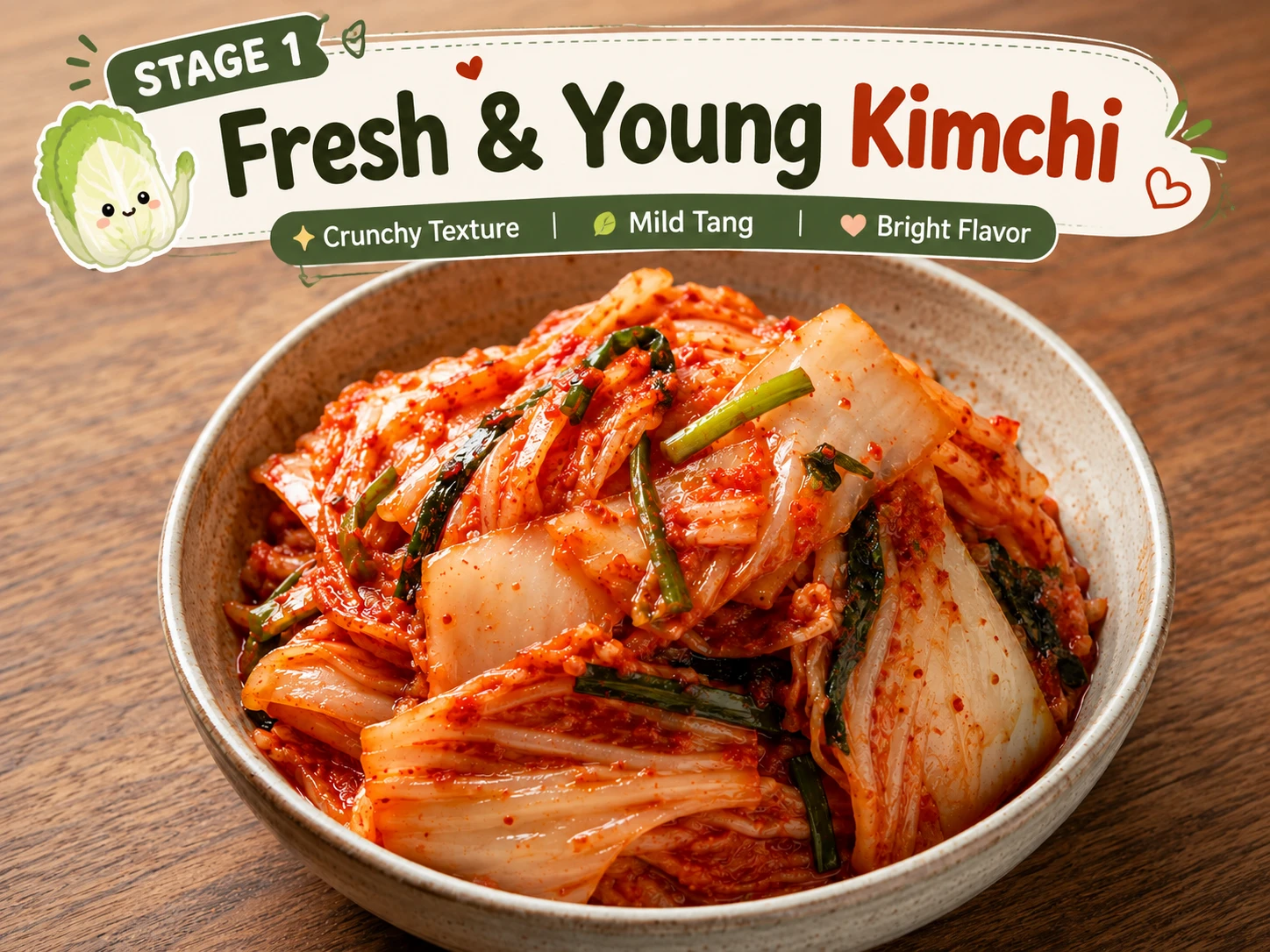
Already mild before the broth is even thinned out — at this lighter concentration, this stage tastes like plain cabbage water.
✗ Do Not Use — disappears in a light broth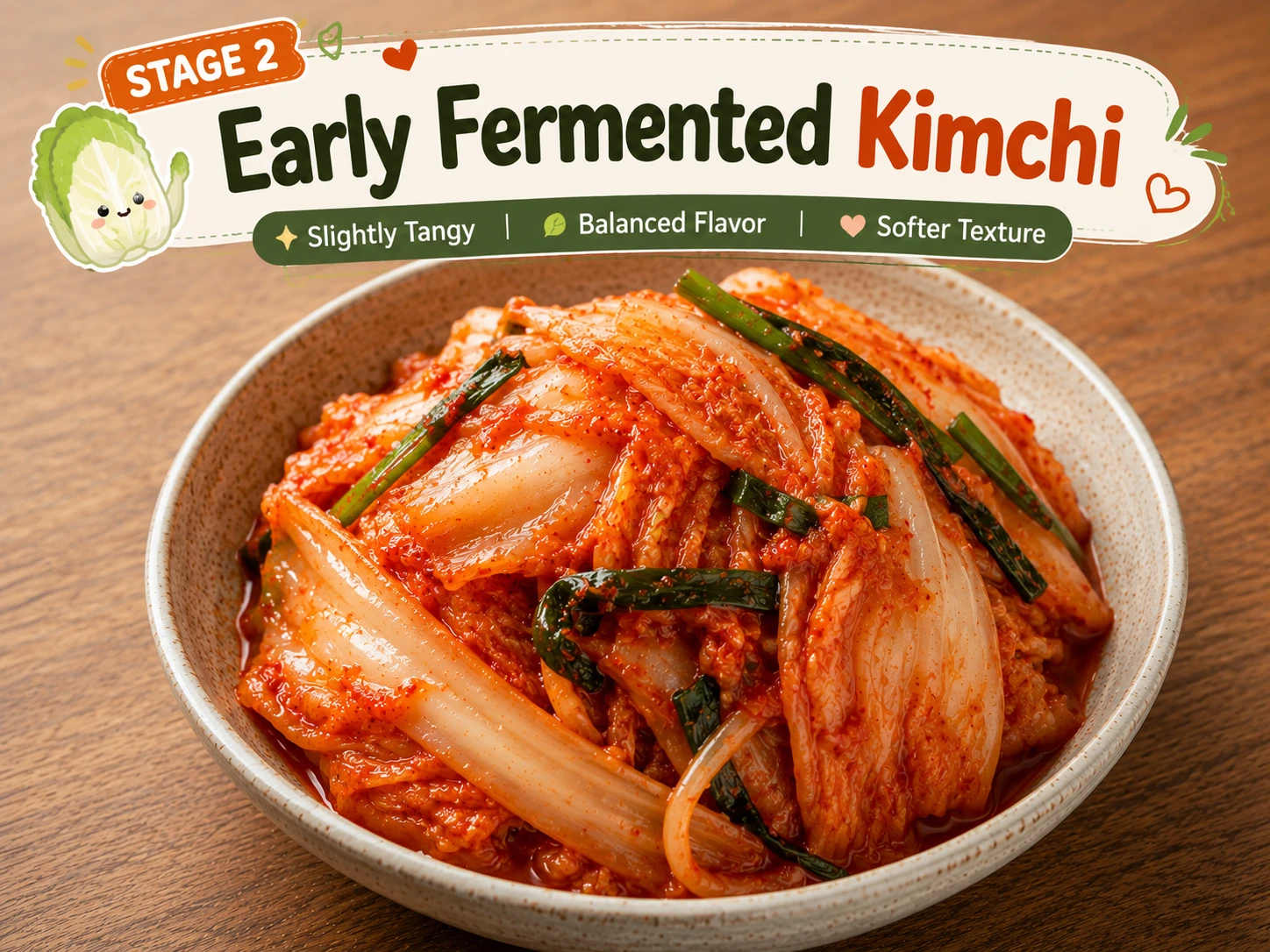
Still gets lost fairly easily in a broth this light. Acceptable as a last resort with a little extra gochugaru added to the broth first.
△ Last Resort — add extra gochugaru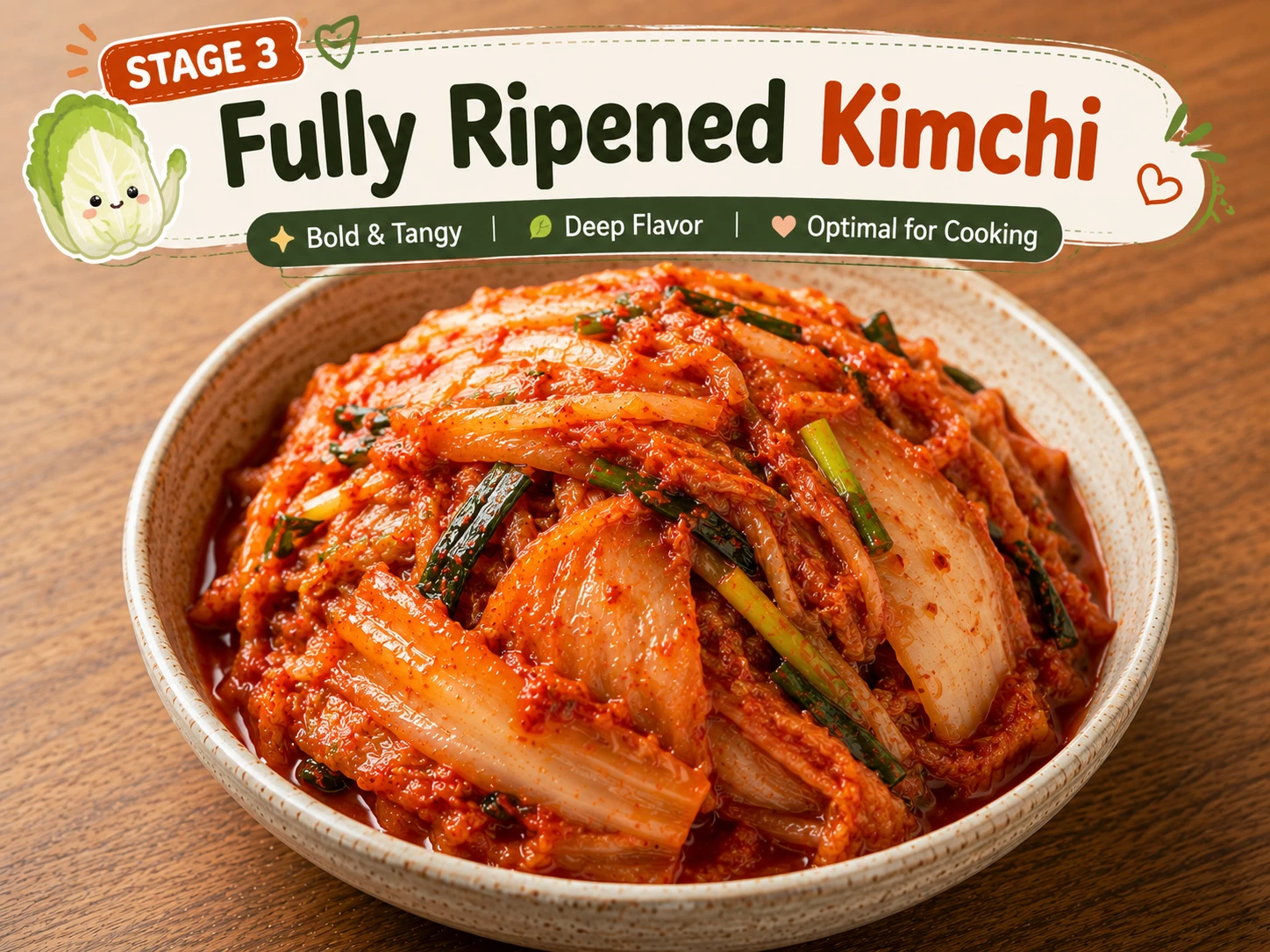
Strong enough acidity to carry the whole broth’s flavour even at this lighter, thinner concentration — the only stage that reliably works here.
★ Correct — the only real choice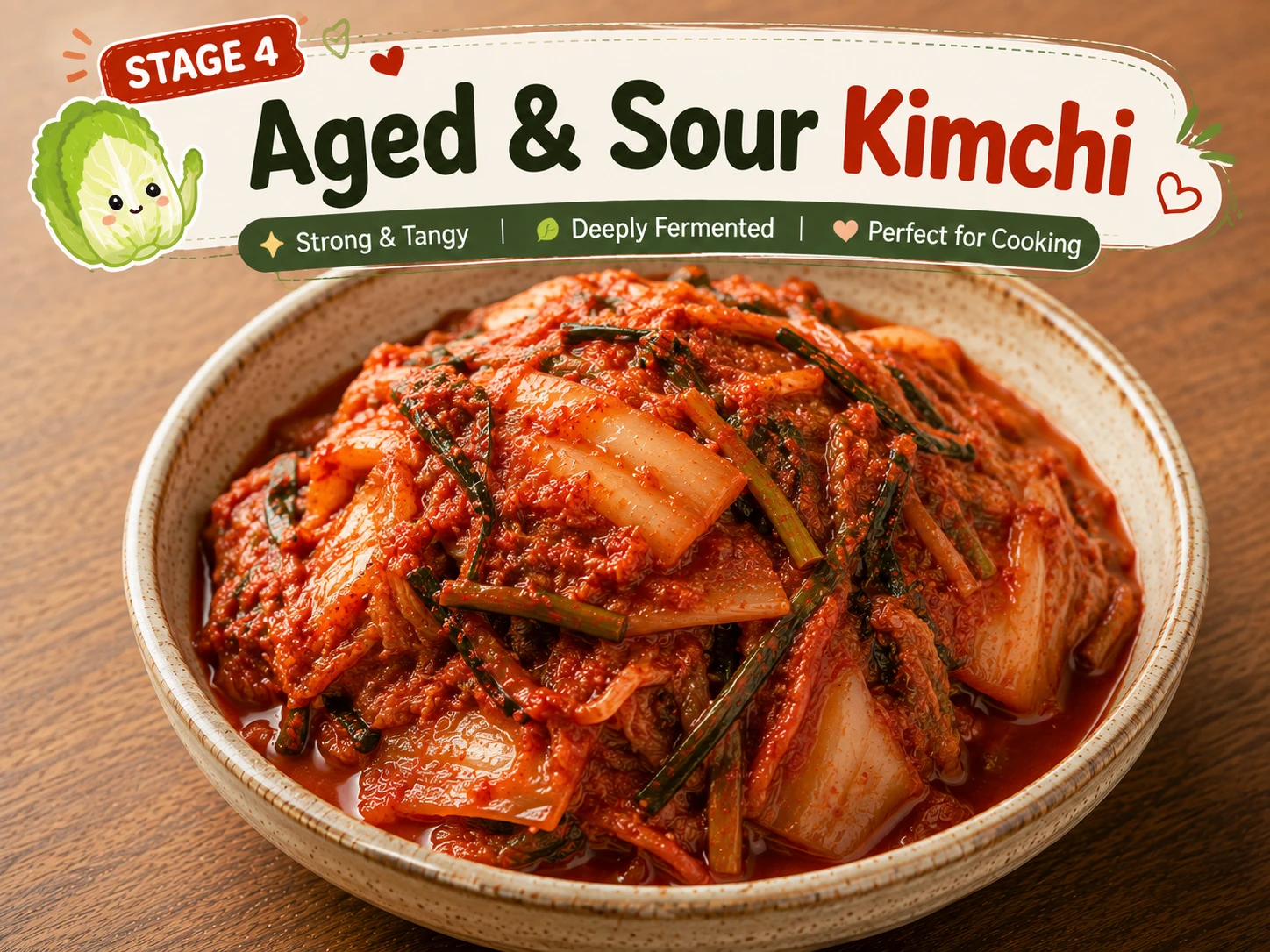
Its sharper sourness comes through clearly even in a light broth, though the reserved brine should be reduced slightly to keep it from turning too tangy.
△ Usable — reduce brine slightlyHow Difficult Is Kimchi Noodle Soup?
Genuinely beginner-friendly, and the simplest broth in the silo — no reduction, no tempering, no egg-drop timing at all. The one real skill is matching the broth amount to whichever noodle you picked.
← This Recipe
Ingredients + Scaler
A lighter, less concentrated version of this silo’s base broth, built around whatever thin noodle you already have rather than one specific type. No seasoning packet, ever. Got extra brine left over after measuring out what this recipe needs? See our Leftover Kimchi Juice & Brine Uses guide for ideas.

Amounts scale automatically with the servings control above.
Common Substitutions
| Ingredient | Substitute | Notes |
|---|---|---|
| Somyeon | Rice vermicelli, soba, or glass noodles | Adjust broth per the ratio guide above for your noodle |
| Stock | Bouillon cube in water | The kimchi and gochugaru carry most of the flavour anyway |
| Gochugaru | A touch more if using Stage 2 kimchi | Compensates for less-ripe kimchi in this lighter broth |
| Scallion garnish | Toasted sesame seeds or extra kimchi | Both work well without adding much extra sodium or fat |
How to Make Kimchi Noodle Soup
Six steps, two pots — the same bloom-and-simmer base as the rest of the silo, kept lighter and finished with whichever noodle you’re using. The order still matters.

Warm a little neutral oil in a pot over medium heat — not high, gochugaru burns bitter almost instantly if the pan is too hot. Add the minced garlic and gochugaru together and stir constantly for about 30 seconds, just until the mixture turns fragrant and the oil takes on a deep red tint. This short bloom is what pulls the fat-soluble flavour compounds out of the chili flakes; skipping it leaves the broth tasting flat and one-dimensional instead of rounded.

Add the chopped kimchi and its reserved brine straight into the same pot — no separate sauté pan needed. Cook for 2–3 minutes, stirring occasionally, so the cabbage softens slightly and its fermented sourness melds into the gochugaru oil and garlic rather than sitting on top of the broth as a separate flavour. You’ll notice the kitchen smell shift from sharply sour to something rounder and more savoury; that’s the cue it’s ready for the next step.

Pour in the stock and soy sauce, bring the pot up to a full boil, then reduce to a simmer for 5 minutes. Unlike the richer variations in this silo, don’t reduce it any further — this broth is meant to taste light and clean, not concentrated, which is also what keeps it flexible enough to work with whichever noodle you’re using.

While the broth simmers, bring a second pot of water to a boil. Cook your noodle of choice according to its package — thin wheat noodles (somyeon) about 3–4 minutes, rice vermicelli or soba slightly less, glass noodles per their package. Drain and rinse under cold water to keep the strands from clumping and to stop the noodle from carrying extra starch into the broth.

Thinner, more absorbent noodles like somyeon or rice vermicelli soak up broth quickly once combined — use slightly more broth than you think you need for these. Thicker or less absorbent noodles like soba or glass noodles need less. Check the ratio guide earlier in this post for your specific noodle before ladling.

Stir the sesame oil into the broth — its aroma compounds break down above roughly 160°C and go bitter if added while the pot is still simmering. Divide the noodles between two bowls and ladle the broth over them using the ratio you settled on. Top with sliced scallion and serve immediately.
What We Tested for the Noodle Soup Version
The technique that cannot be skipped: matching the broth amount to your noodle type, and never reducing the broth further than the recipe calls for. Everything else follows the same reliable base as the rest of the silo.

Ingredient Notes — What Each One Does and Why
A quick amount list only tells you how much. Here’s what each ingredient is actually doing in the pot, and where it’s safe to swap.
All 13 Kimchi Noodle Variations
Same simmer-in-broth foundation, 13 different directions.


What to Serve With Kimchi Noodle Soup
This light, broth-forward bowl pairs well with something a little heartier if you want a fuller meal, or something bright to keep it feeling clean. If you’re building a full spread, our Gochujang Mayo Sauce Guide makes a good dipping sauce for a side of dumplings or vegetables.


Storing Kimchi Noodle Soup
Noodle Soup vs the Rest of the Silo — What Changes Nutritionally
Reviewed by Dr. Sarah Mitchell RD, PhD. Skipping the seasoning packet and keeping the broth unreduced makes this meaningfully lighter than every other variation in the silo.
| Version | Calories | Fat | Sat. Fat | Protein | Sodium |
|---|---|---|---|---|---|
| Classic Kimchi Ramen | 410 | 14g | 4g | 16g | 980mg |
| Kimchi Udon | 480 | 10g | 2g | 18g | 1120mg |
| Creamy Kimchi Udon | 560 | 22g | 11g | 16g | 1180mg |
| Kimchi Noodle Soup | 320 | 6g | 1g | 12g | 780mg |
Kimchi Noodle Soup — 19 Questions Answered
Any thin noodle you already have works — somyeon (thin wheat noodles), rice vermicelli, soba, or even glass noodles. This recipe is built around a broth that adjusts to the noodle rather than locking you into one specific type.
This is the one variation in the silo built to be noodle-agnostic — a lighter, broth-forward bowl meant to use up whatever thin noodle is already in your pantry, rather than a shopping list for one specific kind.
Thinner, more absorbent noodles like somyeon or rice vermicelli soak up broth quickly once combined, so use slightly more than you think you need. Thicker or less absorbent noodles like soba need less — see the ratio guide in this post.
The broth here isn’t reduced or concentrated the way the richer variations are — it’s simmered just enough to build flavour, then left thinner on purpose, since this version is meant to taste light and clean rather than rich.
Many recipes online lean on a full seasoning packet, extra soy sauce, or a heavily reduced broth, which stacks sodium quickly. This version skips the seasoning packet entirely and keeps the broth at a lighter concentration, so sodium stays meaningfully lower.
Cook them separately in their own pot, then combine at the bowl. This keeps the broth clear and lets you control exactly how much broth goes with however much noodle you’re using, especially useful with different noodle types.
Stage 3 aged kimchi, fermented 2-4 weeks, is optimal — its acidity carries the broth’s flavour even at this lighter concentration. Fresher kimchi tastes flat in a broth this thin.
Yes, though at that point you’re essentially making the Classic Kimchi Ramen variation in this silo — this recipe is specifically for when you want something lighter and don’t have (or don’t want) instant noodle blocks.
Not by default — traditional kimchi and anchovy-based stock both typically contain fish products. Use vegetable stock and a vegetarian-labelled kimchi to make it vegetarian; it’s vegan as written with no egg or dairy.
Toasted sesame oil has a low smoke point and turns bitter over direct heat. Stirring it in after the pot is off the heat keeps its aroma intact.
Chicken stock gives the cleanest, most neutral broth for a light bowl like this. Anchovy stock also works and adds more savoury depth if you want it slightly more assertive.
Approximately 320 calories per serving. Macros: 52g carbohydrates, 12g protein, 6g fat, 1g saturated fat, 780mg sodium, 3g fibre — the lightest nutritional profile in the whole silo.
Not recommended — the noodles turn mushy and soft after freezing and thawing regardless of type. Refrigerate the broth alone for up to 3 days and cook fresh noodles when reheating.
Yes — sliced tofu, shredded chicken, or a soft-boiled egg all work well without changing the core broth technique. Add them as a topping rather than simmering them into the broth itself, to keep it light.
This broth is meant to taste lighter than the other silo variations, but if it’s genuinely bland, it likely needs either riper kimchi or a touch more gochugaru — check the Stage 3 kimchi guidance above.
No — jjampong is a Korean-Chinese seafood noodle soup, and budae jjigae (army stew) is a heartier dish with spam, sausage, and cheese. This is a much lighter, simpler bowl built around kimchi broth and whatever thin noodle you have.
Make the broth ahead and refrigerate it up to 3 days, but cook the noodles fresh each time you serve — pre-cooked noodles sitting in broth turn soft within hours regardless of type.
Kimchi ramen (the classic version in this silo) uses instant ramen noodles in a more concentrated broth. This version is deliberately lighter and thinner, and works with any thin noodle instead of a specific instant block.
Garlic and gochugaru first to bloom in the fat, then kimchi and its brine, then stock and soy sauce, simmered only briefly rather than reduced further. The noodles cook separately in their own pot the whole time. Sesame oil and scallion go in at the very end, off the heat.

Ji-Young writes the full Kimchi Ramen silo at KimchiGuide, testing each variation across multiple batches before publishing.
Full Bio →
Dr. Mitchell reviews the nutrition data and health claims across every KimchiGuide recipe for accuracy.
Full Bio →

Leave a Comment
Tried this lighter, noodle-flexible version? Let us know how your bowl turned out.