Types of Kimchi: The Complete Guide
Kimchi isn’t one dish — it’s a whole category, and estimates of how many types exist range from 50 to over 300. Here’s every everyday variety, how kimchi changes by Korean region, the rare heritage types most people never encounter, and a quick finder tool to match a type to your taste.


What Are the Main Types of Kimchi?
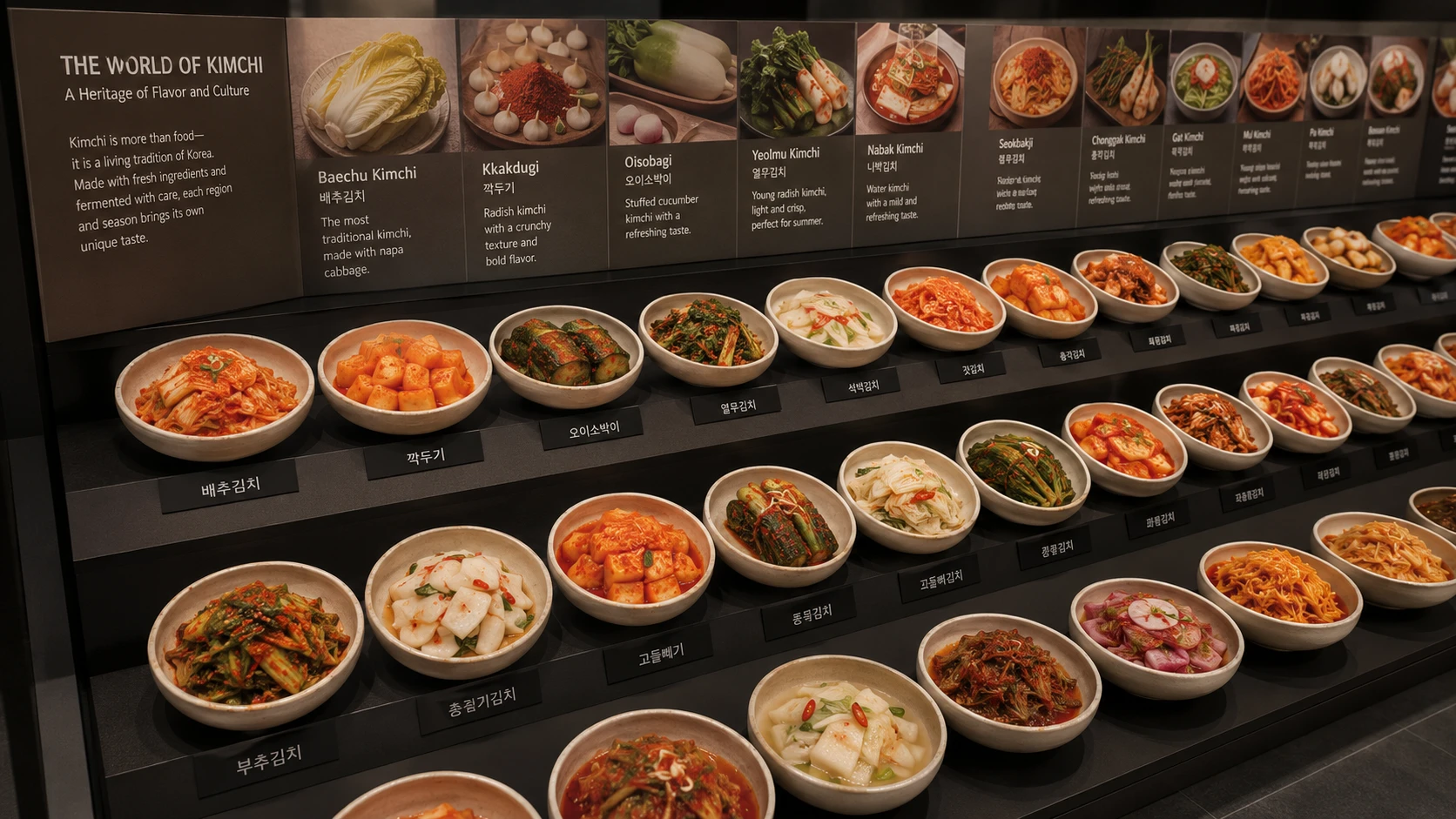
Baechu kimchi (napa cabbage) is the most common type — it’s what most people mean by default when they say “kimchi.” Beyond that, kimchi is really a whole category: kkakdugi (cubed radish), oi sobagi (stuffed cucumber), baek kimchi (non-spicy white kimchi), dongchimi (radish water kimchi), pa kimchi (scallion), gat kimchi (mustard greens), and geotjeori (fresh, unfermented) are the varieties most people encounter regularly. Beyond those, kimchi changes by Korean region and season, coastal areas even make kimchi with fish as the main ingredient, and there are dozens of rarer heritage varieties most people never come across at all.
How Many Types of Kimchi Are There, Really?
Ask this question and you’ll get a different number depending on where you look — and almost nobody explains why.
| Cited Number | Source | What It Likely Counts |
|---|---|---|
| 187 | The Kimchi Field Museum, Seoul | Documented historic and current varieties held in a formal museum collection. |
| 336 | A 1995 survey (cited by Michelin Guide) | The most exhaustive count found, including lesser-known regional and household varieties like ginseng, pumpkin, and seaweed kimchi. |
| “200+” | Widely repeated across food blogs, and Encyclopaedia Britannica | A rounded figure that even a major reference encyclopedia repeats, sitting between the museum count and the fuller 1995 survey. |
| “50+” | Some travel and lifestyle blogs | Probably counts only the varieties a typical traveler or home cook is likely to actually encounter, not the full historical range. |
The honest answer is that there’s no single agreed-upon number, because it depends entirely on what counts as a distinct “type” — a different vegetable base, a regional seasoning tweak, a household recipe passed down for generations, and a historical variant no longer commonly made could all reasonably be counted separately or lumped together. What’s certain is that kimchi is less a single dish than an entire category of fermented, seasoned vegetables, the same way “bread” covers everything from a baguette to a bagel.
Common & Everyday Varieties
Of all the types of kimchi that exist, these are the ones you’re most likely to see at a Korean restaurant, in a grocery store, or in a home fridge.
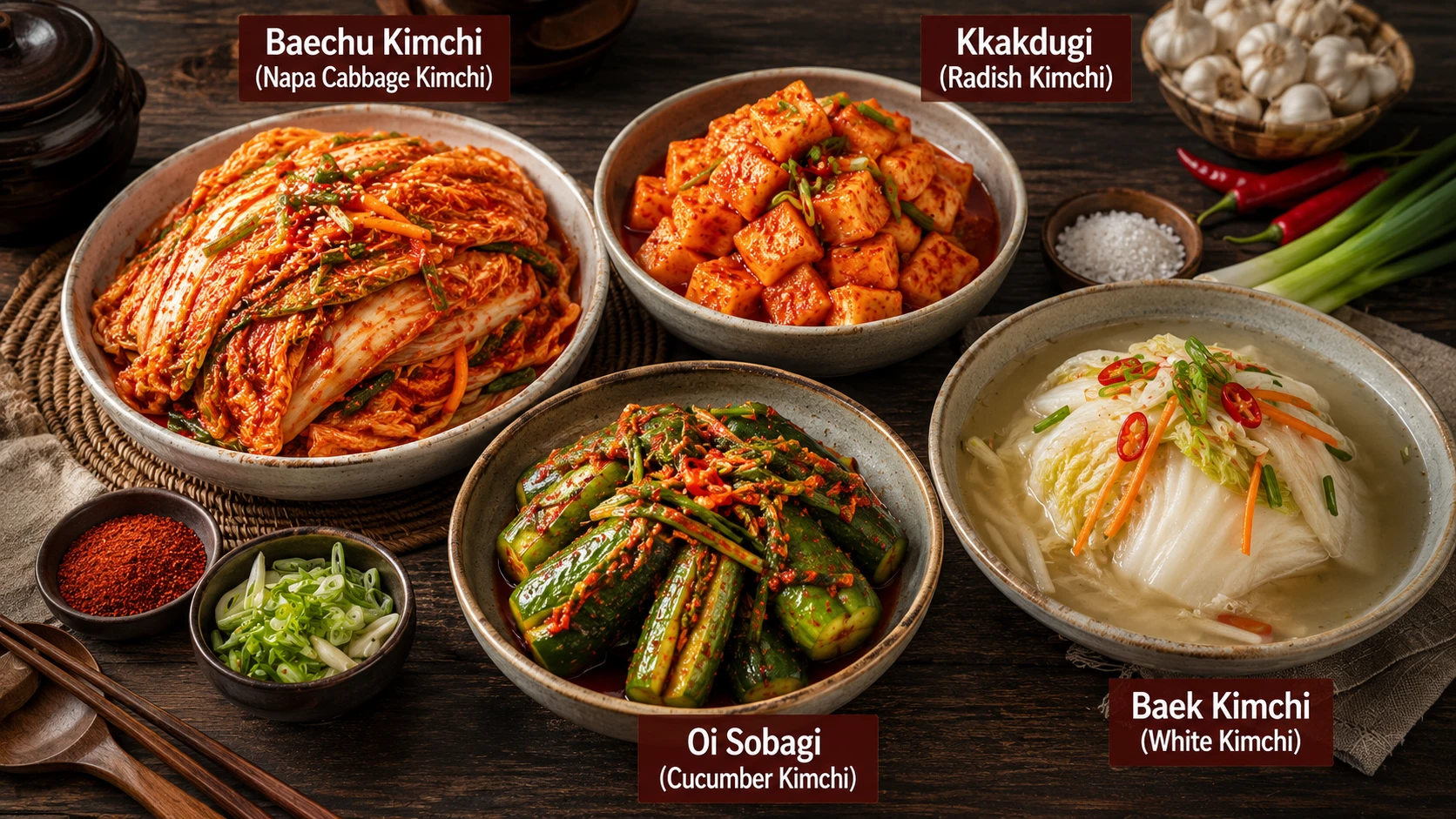
| Tried? | Variety | Made From | Spice | Best Paired With / When to Eat |
|---|---|---|---|---|
| Baechu Kimchi (배추김치)Tried | Napa cabbage | 🌶️🌶️🌶️ | The everyday side dish — served with nearly any meal. See the full recipe. | |
| Kkakdugi (깍두기)Tried | Cubed Korean radish | 🌶️🌶️🌶️ | Classic pairing with soupy, broth-based dishes like seolleongtang or kalguksu. | |
| Oi Sobagi (오이소박이)Tried | Cucumber, slit and stuffed | 🌶️🌶️ | A summer table staple — light enough to eat alongside grilled meat in hot weather. | |
| Baek Kimchi (백김치)Tried | Napa cabbage, no chili | — | Good for kids or spice-sensitive eaters; pairs well with rich, fatty dishes it can cut through. | |
| Dongchimi (동치미)Tried | Whole radish in seasoned water | — | Often served cold alongside noodles (naengmyeon) or to cut the richness of winter stews. | |
| Nabak Kimchi (나박김치)Tried | Cabbage and radish, thin-sliced | 🌶️ | A lighter, milder cousin of dongchimi — good as a palate cleanser between rich courses. | |
| Pa Kimchi (파김치)Tried | Korean scallions (jjokpa) | 🌶️🌶️ | Made fresh in spring; a sharp, aromatic side for grilled or fatty meats. | |
| Gat Kimchi (갓김치)Tried | Mustard greens | 🌶️🌶️🌶️ | Especially good alongside rich, fatty grilled pork belly, which its bitterness cuts through. | |
| Chonggak Kimchi (총각김치)Tried | Small “ponytail” radishes, whole | 🌶️🌶️🌶️ | A Korean BBQ table staple — the cold crunch balances the fat of grilled pork belly. | |
| Yeolmu Kimchi (열무김치)Tried | Young radish greens | 🌶️🌶️ | Made fresh in spring; often tossed with noodles as a light, cold summer meal. | |
| Geotjeori (겉절이)Tried | Napa cabbage or greens, unfermented | 🌶️🌶️ | Eaten the same day it’s made — a fresh, salad-like side rather than a fermented staple. |
Compare Two Varieties
“Kkakdugi vs Chonggak — what’s actually different?” Pick any two types below for a direct, side-by-side comparison.
Flavor Profile Guide
Spice is only one axis. These four bars — heat, sourness, funk, and crunch — give a fuller sense of what each variety actually tastes and feels like.
What Do the Names Actually Mean?
Korean kimchi names aren’t random — most describe exactly what’s in the jar, or tell a small story of their own.
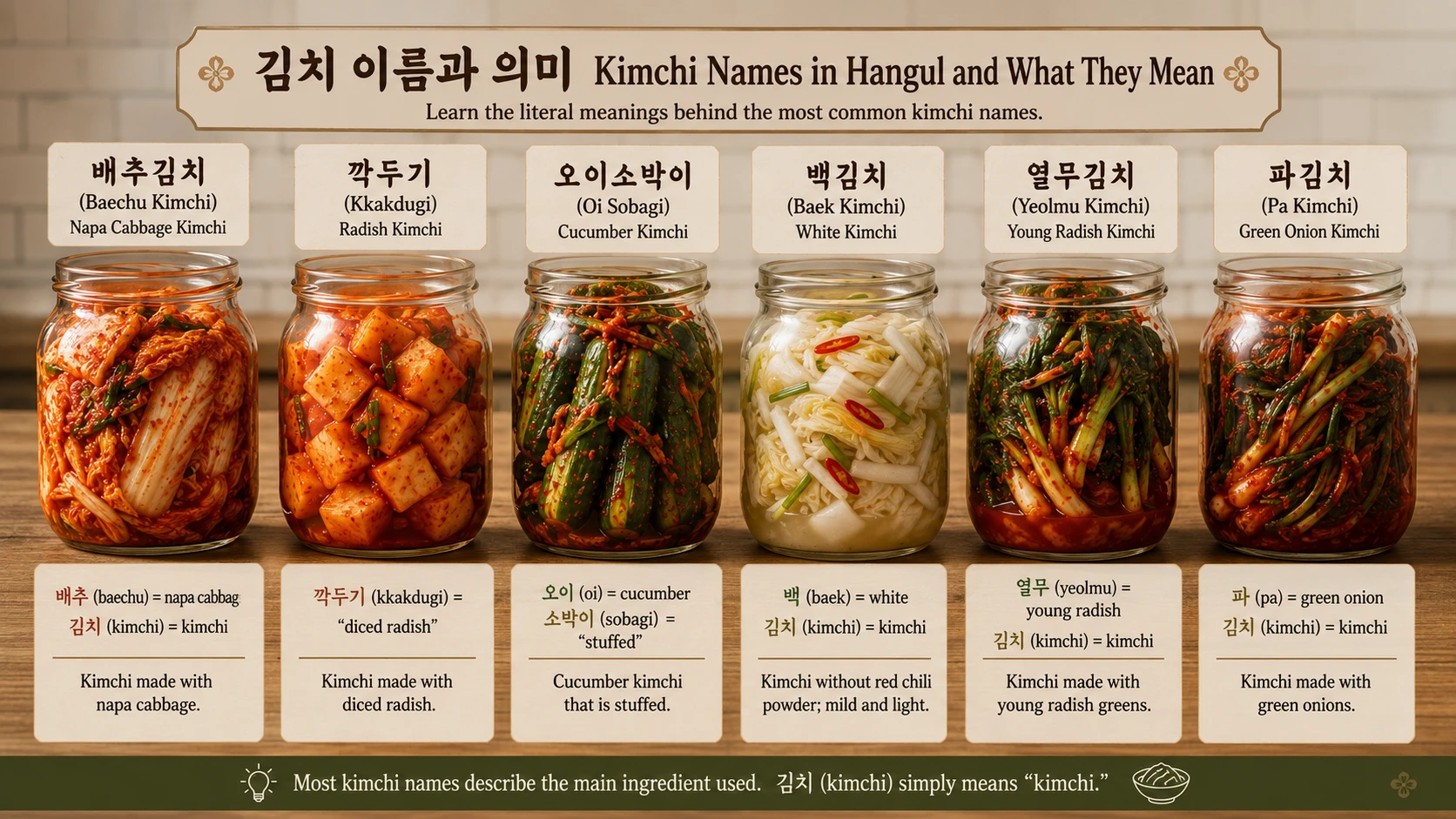
| Name | Literal Meaning | Why It’s Named That |
|---|---|---|
| Kimchi (김치) | “Salted vegetables” | The name itself describes the core process — salt draws out moisture and creates the conditions fermentation needs. |
| Chonggak (총각김치) | “Bachelor” | The radish’s long, trailing green stems were said to resemble the topknot hairstyle worn by unmarried young men in the Joseon Dynasty. |
| Oi Sobagi (오이소박이) | “Stuffed cucumber” | “Sobagi” means stuffed — a literal description of cucumber sliced and packed with seasoning. |
| Dongchimi (동치미) | Contains “dong” (동/冬), “winter” | Traditionally made in late autumn specifically to last through the winter months. |
| Baechu (배추김치) | “Napa cabbage” | Named simply for its main ingredient — the most literal name of the common varieties. |
Kimchi by Region
Some of the most distinct types of kimchi come down to geography — the same variety made in two different provinces can taste almost unrecognizably different, since climate, local seafood, and tradition all shape it.
| Region | Flavor Profile | Why |
|---|---|---|
| Seoul & Gyeonggi-do | Mildly spicy, less seasoning, light shrimp paste | Historically tied to royal court cuisine; home to refined variants like jang kimchi and bineul kimchi. |
| Chungcheong-do | Savory but simpler | Relies more on salt and fermentation than on salted seafood for flavor. |
| Gangwon-do | Milder, stores longer | Uses mountain herbs and wild ingredients, with less salted fish than coastal regions. |
| Jeolla-do (esp. Yeosu & Gwangyang) | Bold, generous, deep umami | Korea’s culinary heartland — liberal use of fish sauce (anchovy, big-eyed herring); the coastal areas around Yeosu and Gwangyang specifically are where the wild mustard leaf used in gat kimchi grows largest and most flavorful. |
| Gyeongsang-do | Fresh and punchy | Sources describe it both ways — some emphasize fresh, light ingredients (young radish, cucumber), others its bold garlic and chili use; likely both are true depending on the specific dish. |
| Jeju Island | Distinct, seafood-forward | Island geography means abundant, different seafood options feeding into local recipes. |
| Northern regions (historically) | Milder, more watery | Colder climates naturally slow fermentation, needing less salt and seafood to control the process. |
The Seasonal Kimchi Calendar
Beyond region, many types of kimchi are tied to a specific season — made when an ingredient is at its best, and often eaten to complement the weather.
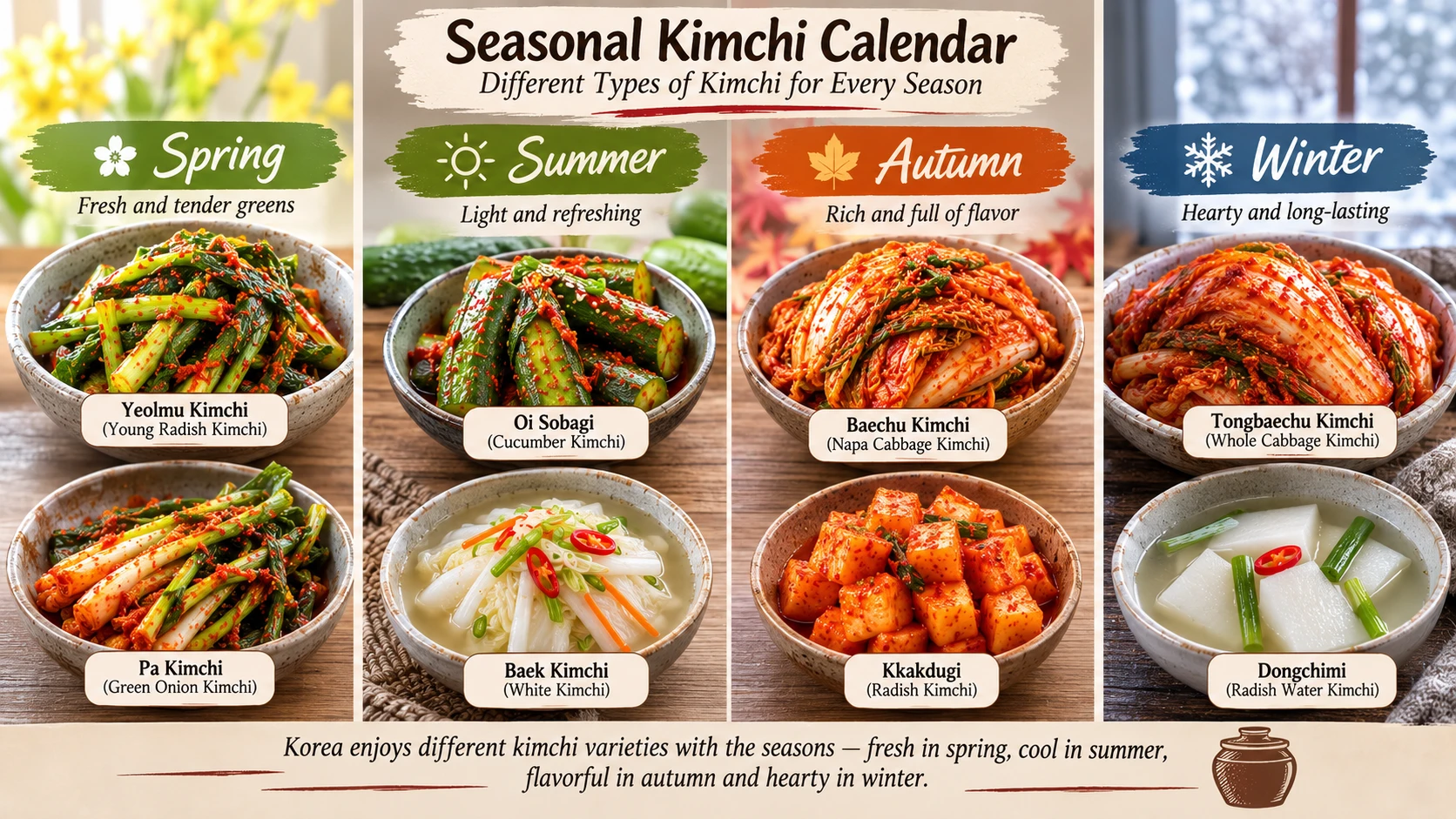
| Season | Kimchi Made/Eaten | Why This Timing |
|---|---|---|
| Spring | Pa kimchi (scallion), yeolmu kimchi (young radish) | Korean scallions (jjokpa) and tender young radish greens are both in season, at their most delicate. |
| Summer | Oi sobagi (stuffed cucumber) | Cucumbers are at their crispest, and a light, fast-fermented kimchi suits the heat better than a heavy, long-aged one. |
| Autumn | Baechu kimchi (kimjang season) | Kimjang, the communal kimchi-making tradition, happens in late autumn — large batches of napa cabbage kimchi made to last through winter. |
| Winter | Dongchimi, well-aged baechu | Dongchimi’s cold, mild brine cuts through richer winter stews, while the autumn kimjang batch reaches its best eating stage. |
Rare & Heritage Varieties
Most of the 300+ historically documented types of kimchi never made it to mainstream restaurants or supermarkets — these are a few worth knowing about.


Fish & Seafood Kimchi
In most kimchi, seafood is a seasoning — a spoonful of fish sauce or salted shrimp folded into the paste. But in Korea’s coastal provinces, a small number of varieties flip that: fish or seafood is the main ingredient, not just the flavoring.


Before Chili: The Original Kimchi
Every variety on this page assumes chili is optional — but for most of kimchi’s history, it wasn’t just optional, it didn’t exist yet.
Chili peppers are native to the Americas and only reached Korea after contact with Portuguese and Japanese traders in the late 16th and early 17th centuries. For roughly a thousand years before that, kimchi was made the way baek kimchi and dongchimi still are today — salted, fermented vegetables with no chili at all, relying on salt, garlic, and sometimes mustard for flavor and preservation instead of heat.
That means the “original” kimchi looked much closer to today’s white kimchi than to the red, spicy version most people picture. Chili didn’t become a standard kimchi ingredient until the 18th century, and its main appeal at the time wasn’t just flavor — the capsaicin also helped mask the smell of salted seafood and acted as an additional preservative, which is part of why it spread so widely once adopted.
Global Recognition — UNESCO, Codex, and the “Kimchi vs Paocai” Debate
Kimchi’s reach today goes well beyond Korean kitchens, and that visibility has brought both formal recognition and a genuine cross-border naming dispute worth understanding.
UNESCO and National Heritage Status
In December 2013, UNESCO inscribed Kimjang, making and sharing kimchi on its Representative List of the Intangible Cultural Heritage of Humanity — notably, the recognition was for the communal tradition of making and sharing kimchi together each autumn, not for a specific recipe or variety. South Korea has separately designated the broader practice of kimchi-making itself, “kimchi damgeugi,” covering all regional types, as a National Intangible Cultural Heritage item.
The International Standard
In 2001, the Codex Alimentarius Commission — the joint FAO/WHO body that sets international food standards — published a voluntary definition of kimchi as a fermented food made from salted napa cabbage mixed with seasonings, going through lactic acid fermentation at low temperature. It was one of the earliest formal international acknowledgments of kimchi as a distinct food category.
Kimchi vs Paocai: What the Dispute Was Actually About
In November 2020, the ISO (International Organization for Standardization) approved a production standard for Sichuan paocai, a Chinese pickled-vegetable dish. Chinese state media described this as an “international standard for the kimchi industry,” which many South Korean media outlets and social media users read as a claim that kimchi itself originated in China — sparking what press coverage dubbed a “kimchi war.” In practice, the ISO standard applied specifically to paocai, a different dish with a different production process, and did not redefine or certify kimchi. South Korea’s government subsequently established a distinct official Chinese-language name for kimchi (“xinqi”) specifically to avoid future translation conflation between the two foods.
Fermentation Time & Storage, By Type
“How long until it’s ready, and how long will it last?” — the two most practical questions this guide gets, answered per variety.
| Variety | Ready to Eat | Fully Fermented | Fridge Shelf Life |
|---|---|---|---|
| Geotjeori | Immediately | Doesn’t ferment — eaten fresh | 2–3 days |
| Oi Sobagi | Same day | 1–2 days | 3–5 days (best eaten fresh) |
| Baechu Kimchi | 1–2 days (fresh style) | 1–4 weeks at fridge temp | Several months, flavor keeps evolving |
| Kkakdugi | 2–3 days | 1–3 weeks | 1–2 months |
| Dongchimi | 2–3 days (mild) | 5–7 days at room temp, then fridge | Several weeks, brine stays drinkable |
| Baek Kimchi | 2–3 days | 1–2 weeks | 3–4 weeks |
| Pa Kimchi | 1 day | 3–5 days | 2–3 weeks (softens over time) |
The Science of Why Each Vegetable Ferments Differently
Napa cabbage, radish, and cucumber don’t just taste different in kimchi — they ferment at genuinely different rates, and the reason comes down to basic plant biology.


How Kimchi Is Actually Made
Every variety on this page — spicy or not, cabbage or fish — follows roughly the same four-stage process. The differences between types mostly come down to what happens inside each stage.
Nutrition & Health Benefits, By Type
Every type of kimchi shares a lactic-acid-bacteria fermentation base, but calories, sodium, and probiotic content shift depending on the vegetable and how long it’s fermented.
| Variety | Calories | Sodium | Probiotic Load | Notes |
|---|---|---|---|---|
| Baechu Kimchi | ~15–23 kcal | ~450–750mg | High (long-fermented) | The most-studied variety in kimchi nutrition research. |
| Kkakdugi | ~20–28 kcal | ~400–650mg | High | Radish adds a bit more natural sugar and crunch-retaining fiber. |
| Baek Kimchi | ~12–18 kcal | Lower (no chili-salt paste) | Moderate–High | A good starting point if you’re limiting sodium or spice. |
| Dongchimi | ~8–14 kcal | Lowest of the common types | Moderate | Mostly water-based brine, so both calories and sodium run low. |
| Oi Sobagi | ~14–20 kcal | ~350–550mg | Lower (short ferment) | Eaten fresh, so bacteria haven’t had as long to build up. |
| Geotjeori | ~10–16 kcal | ~300–500mg | Minimal (unfermented) | Fresh-salad style — the probiotic benefit mainly kicks in with fermentation, which this skips. |
Common Mistakes to Avoid, By Variety
A few type-specific mistakes come up constantly — here’s what to watch for.
Food Safety: Normal Fermentation vs. Actual Spoilage
Kimchi’s sourness, fizz, and strong smell are all signs it’s working correctly — but there’s a real line between “fermenting” and “spoiled,” and it’s worth knowing where it is.
- Sharp, sour, tangy smell — the hallmark of active lactic acid fermentation
- Fizzing or a faint hiss when the jar is opened
- A thin, harmless white film (kahm yeast) on the surface of the brine, which can be skimmed off
- Color deepening or darkening slightly over weeks of fermentation
- Cabbage softening gradually as fermentation progresses
- Fuzzy mold in green, blue, black, pink, or orange (not to be confused with flat white kahm yeast)
- A putrid, rotten, or otherwise “off” smell distinct from normal sourness
- Sliminess on the vegetable surface, rather than just softness
- Any unusual gas buildup combined with a foul odor
Which Kimchi Goes With Which Dish?
The common-varieties table above goes dish-by-dish for each kimchi. This flips it: start from what you’re eating, find the kimchi that goes with it.
| If You’re Eating… | Order/Make This Kimchi | Why It Works |
|---|---|---|
| Samgyeopsal (grilled pork belly) | Gat kimchi or chonggak kimchi | Their bitterness and crunch cut through the fat of the pork. |
| Seolleongtang (ox bone soup) | Kkakdugi | The crunchy, tangy radish is the traditional pairing for milky, rich broths. |
| Naengmyeon (cold noodles) | Dongchimi | Its brine is sometimes literally used as the noodle broth itself. |
| Bulgogi | Baechu kimchi | The everyday default — balanced enough not to compete with the sweet-savory marinade. |
| Spicy stews (kimchi jjigae, sundubu) | Well-aged baechu kimchi | Older, more sour kimchi actually improves these dishes rather than fresh kimchi. |
| Fried or greasy food generally | Baek kimchi | Mild and non-spicy, it cools the palate instead of adding more heat on top of heat. |
Kimchi vs Other Asian Fermented Vegetables
Kimchi isn’t the only fermented-vegetable tradition in Asia — here’s how it compares to its closest relatives.
| Dish | Origin | Key Difference From Kimchi |
|---|---|---|
| Kimchi | Korea | Seasoned with chili, garlic, ginger, and usually fish sauce or shrimp before fermenting. |
| Tsukemono | Japan | A broad pickling category, often simpler — salt, rice bran, or vinegar rather than a spiced paste; usually less sour and less pungent. |
| Paocai | China (Sichuan) | Brined in a saltwater solution rather than coated in a paste; milder and less spicy than most kimchi. |
| Atchara | Philippines | A sweet-and-sour vinegar pickle, not lactic-fermented like kimchi — closer to a relish than a fermented side dish. |
| Sauerkraut | Germany | Just cabbage and salt — no chili, garlic, or seafood seasoning at all. |
Restaurant Ordering Phrasebook
A handful of useful phrases if you’re ordering kimchi in Korea and want to know what you’re getting.
Kimchi Etiquette
A few small customs worth knowing if you’re eating kimchi in a traditional or family setting.
Substitutions
Not everyone has access to Korean ingredients — here’s what changes if you substitute.
Buying Guide: Store-Bought vs Homemade
Most people’s first kimchi comes from a jar, not a batch they made themselves — here’s what to know before you buy.
- Usually refrigerated, often in Asian grocery stores or the fridge section of larger supermarkets
- Jar may hiss or bubble when opened — a sign of live, active fermentation
- Probiotics are alive, and flavor keeps evolving (getting more sour) over time
- Shorter shelf life; needs to stay refrigerated
- Sold unrefrigerated, often in the international aisle, in sealed pouches or cans
- Heat-treated after fermentation, which kills the live probiotic bacteria
- Flavor is “locked in” — won’t keep souring the way fresh kimchi does
- Longer shelf life and easier to ship or store
Introducing Kids to Kimchi
Kimchi’s heat and funk can be a lot for a young palate — here’s a gentler way in.
Start with baek kimchi or a very fresh, mild geotjeori rather than a fully fermented, spicy baechu kimchi — both give the crunch and tang of kimchi without the heat. Rinsing a small piece of regular kimchi under water briefly can also mellow the spice for a first taste, though it changes the texture and flavor somewhat.
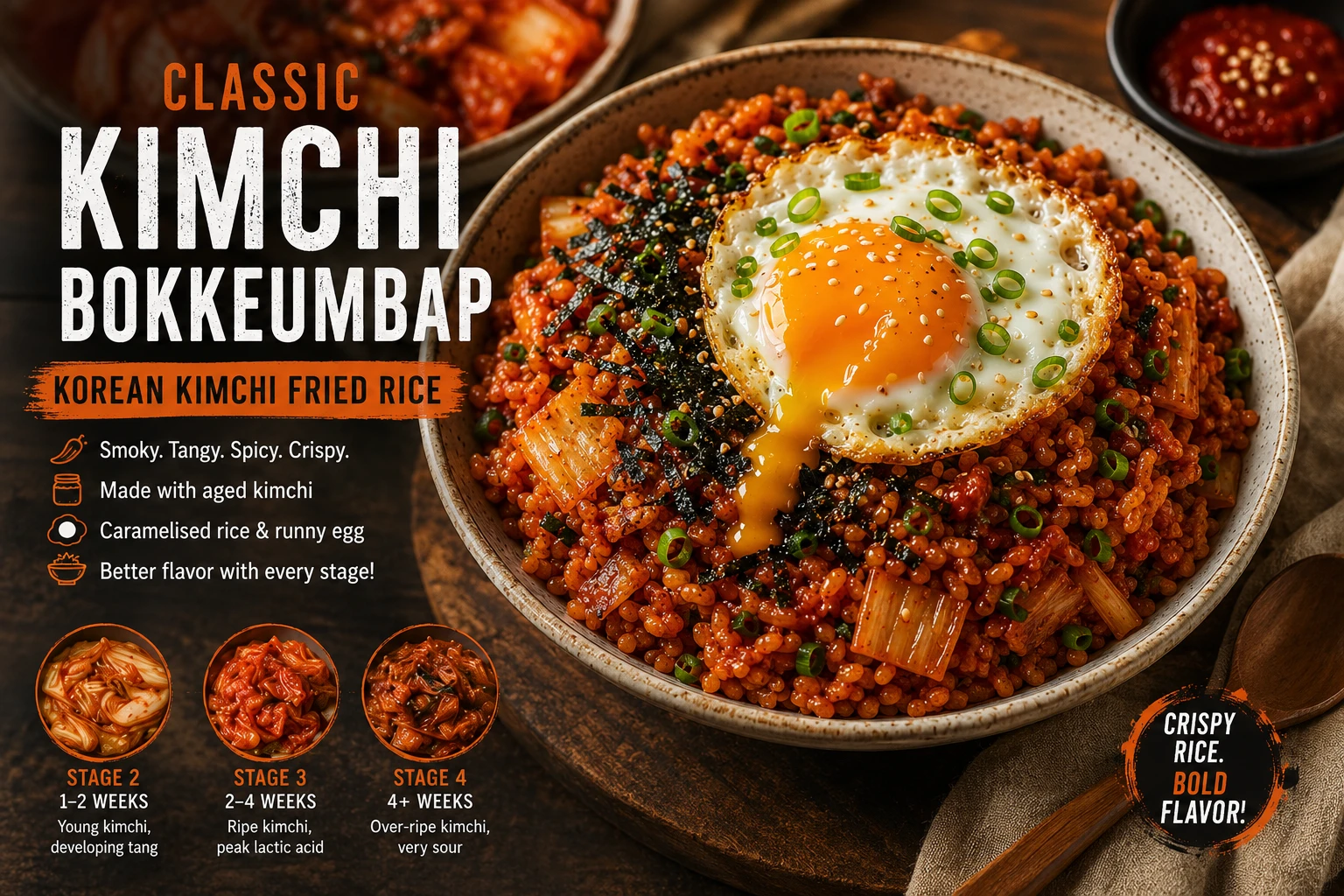
Many Korean families introduce kimchi cooked into a dish before serving it raw — kimchi fried rice or a mild kimchi pancake mellows both the spice and the fermented funk, making it a gentler bridge than jumping straight to a raw side dish. There’s no fixed “right age” — it depends entirely on the individual child’s spice tolerance and how they take to fermented flavors generally.
Modern & Trending Kimchi
Kimchi has moved well beyond the side-dish role — it’s increasingly treated as an ingredient category in its own right.


Kimjang Basket Planner
Thinking about making a big seasonal batch the way Korean households traditionally do before winter? Get a rough starting estimate.
Spice Reality Check
Spice perception is subjective — this gives a rough, personalized read on how a variety might actually taste to you.
Regional Kimchi Quiz
Five quick questions — guess the region or variety from the clue.
Not Sure About Kimchi Yet? That’s Completely Normal
Most guides to the types of kimchi assume you already love it. If you’ve tried it once and weren’t convinced, here’s an honest take.
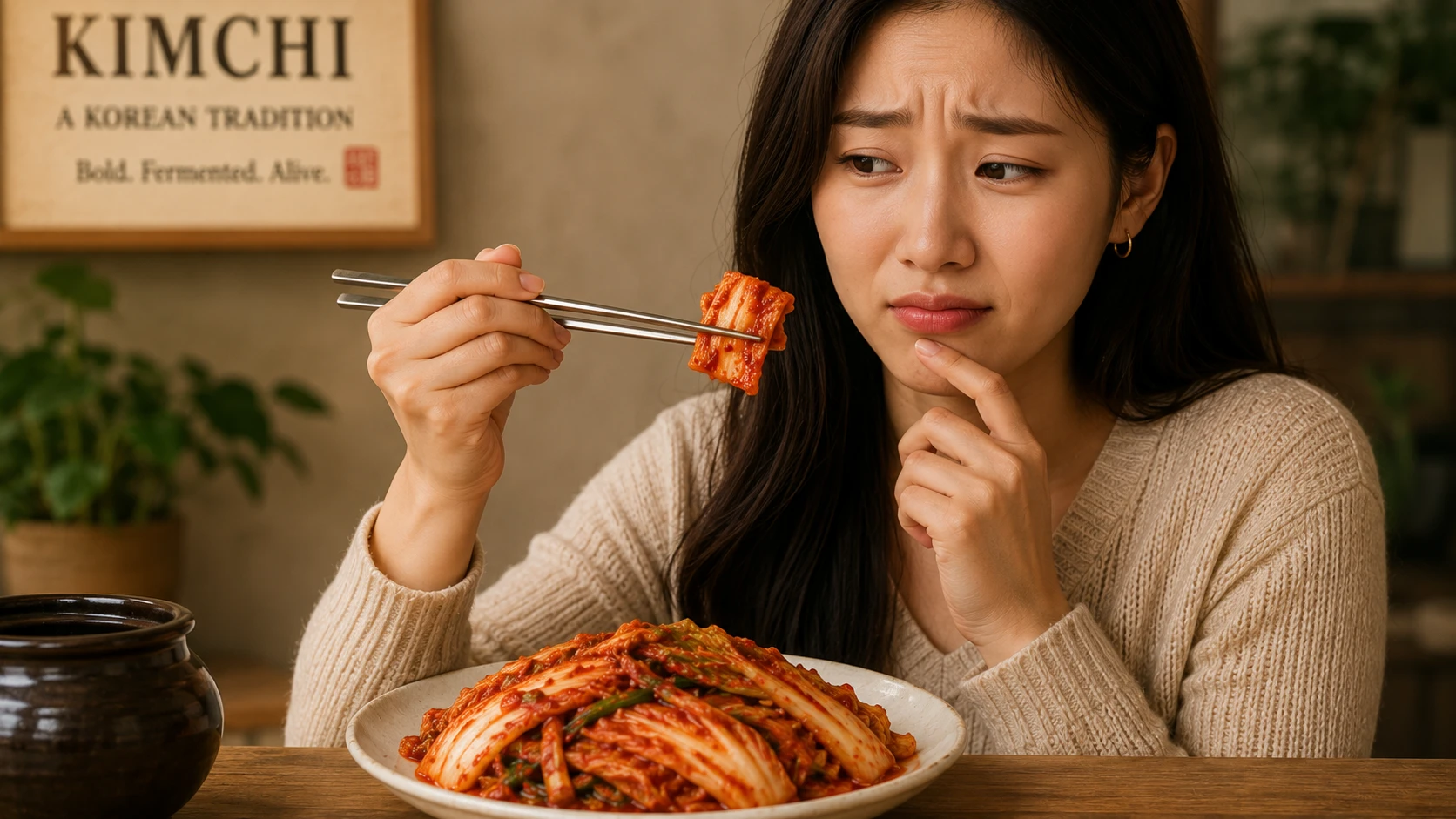
Three things trip up a lot of first-timers, and none of them mean something’s wrong with you or the kimchi: the texture (raw, crunchy cabbage reads as unusual if you’re expecting something cooked and soft), the smell (fermentation has a distinct pungency that’s genuinely stronger than most Western pickled foods — it’s why dedicated kimchi refrigerators exist, specifically to keep that smell from spreading to everything else in a regular fridge), and the sourness itself, which is an acquired taste the same way strong cheese or very dark coffee can be.
Not every Korean loves every type of kimchi either — preference varies a lot by variety, region, and person, the same as any other food. I still remember my own grandmother keeping four kimchi jars going at once in her kitchen — a daily baechu, a seasonal one, and always something milder on standby for whichever grandchild wasn’t ready for the spicy version that week. If baechu kimchi’s texture wasn’t for you, a milder, less crunchy option like baek kimchi or dongchimi is a reasonable next thing to try before writing off kimchi altogether — or try it cooked rather than raw, since kimchi fried rice and kimchi jjigae both mellow the rawness and funk considerably.
Find Your Type
Answer three quick questions and get a starting recommendation.
Photo Wall
Share a photo of the kimchi you made or ordered. This is a lightweight, browser-only wall — photos are saved on your own device for this demo, not uploaded to a public server.
Common Myths & Misconceptions
A handful of misunderstandings about kimchi come up constantly — here’s the honest version of each.
Kimchi & Fermentation Glossary
Terms used throughout this guide, in one place.
Frequently Asked Questions
Search or tap any question below.
It depends on the source. The Kimchi Field Museum in Seoul documents 187 varieties, a 1995 survey cited by Michelin Guide identified 336, and many articles simply repeat a round “200+” figure. The gap comes down to whether hyper-regional, household-specific, and historical variants are counted separately.
Baechu kimchi, made with napa cabbage, is by far the most common type — it’s what most people mean by default when they say “kimchi”, and the version served as a side dish with nearly every Korean meal.
Baek kimchi (“white kimchi”) and dongchimi (radish water kimchi) are both made without any chili at all, giving a mild, tangy flavor instead of heat — both are common starting points for people who don’t eat spicy food.
No — while napa cabbage (baechu) kimchi is the most familiar type, kimchi is really a category of fermented, seasoned vegetables. Radish, cucumber, scallion, mustard greens, and even burdock root, perilla leaves, or fish have their own dedicated kimchi varieties.
Northern regions traditionally make milder, more watery kimchi with less salted seafood, since the cold climate slows fermentation naturally. Southern regions like Jeolla and Gyeongsang use bolder seasoning and more fermented seafood, since the warmer climate needs stronger salt and spice to control fermentation.
Most traditional kimchi isn’t vegan, since fish sauce or salted shrimp are standard seasonings even in classic baechu kimchi. Baek kimchi and dongchimi are more often made without seafood, but it’s never guaranteed — always check, or make a vegan version at home by swapping in soy sauce or a mushroom-based umami substitute.
Heritage varieties like ginseng kimchi, pumpkin kimchi, seaweed kimchi, and sandfish sikhae are among the rarest, largely passed down within families rather than sold commercially — a 2-Michelin restaurant in Seoul is known for reviving several of these alongside modern reinterpretations like banana white kimchi.
Baechu kimchi is the best starting point, since it’s the most balanced and widely available version. From there, kkakdugi (radish) and oi sobagi (cucumber) are easy, approachable next steps with different textures.
No — both are fermented cabbage, but kimchi is seasoned with chili, garlic, ginger, and usually fish sauce or shrimp before fermenting, while sauerkraut is just cabbage and salt. The seasoning gives kimchi a spicier, more complex flavor than sauerkraut’s simpler tang.
Dedicated kimchi refrigerators keep temperature more consistent for slower, more controlled fermentation, and just as importantly, keep kimchi’s strong smell contained instead of spreading to every other food in a regular fridge.
Yes — coastal regions of Korea traditionally make kimchi where fish is the main ingredient rather than just a seasoning, including hairtail kimchi and pollack or cod kimchi. These are considered a delicacy since the fish holds its texture through fermentation instead of breaking down, and they’re rarely found outside Korea’s coastal provinces or specialty restaurants.
More From KimchiGuide

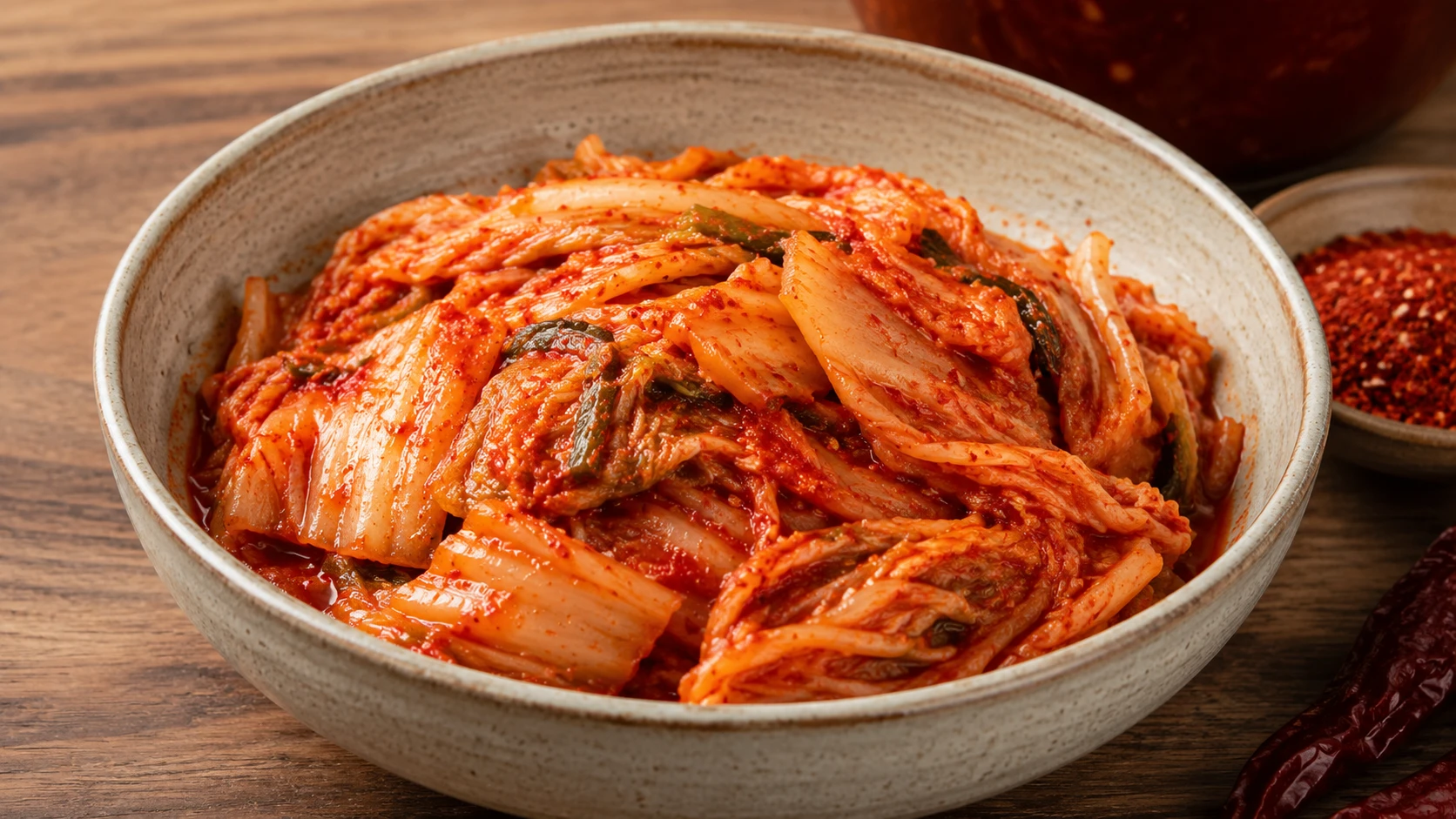




Types of Kimchi — Quick Reference Cheat Sheet
| Variety | Base | Spice | Vegan-easy |
|---|---|---|---|
| Baechu Kimchi | Napa cabbage | Hot | Yes, with substitution |
| Kkakdugi | Cubed radish | Hot | Yes, with substitution |
| Oi Sobagi | Cucumber | Medium | Yes, with substitution |
| Baek Kimchi | Napa cabbage | None | Yes, with substitution |
| Dongchimi | Radish, water | None | Yes, with substitution |
| Nabak Kimchi | Cabbage & radish | Mild | Yes, with substitution |
| Pa Kimchi | Scallion | Medium | Yes, with substitution |
| Gat Kimchi | Mustard greens | Hot | Yes, with substitution |
| Chonggak Kimchi | Baby radish | Hot | Yes, with substitution |
| Yeolmu Kimchi | Young radish greens | Medium | Yes, with substitution |
| Geotjeori | Cabbage/greens, fresh | Medium | Yes, with substitution |
| Bossam-Kimchi | Wrapped cabbage + seafood | Mild | No |
| Uong Kimchi | Burdock root | Mild | Yes, with substitution |
| Muchae Kimchi | Shredded daikon | Hot | Yes, with substitution |
| Kaennip Kimchi | Perilla leaf | Mild | Yes, with substitution |
| Galchi Kimchi | Hairtail fish | Medium | No |
| Dongtae Kimchi | Pollack/cod | Medium | No |
Source: kimchiguide.com/types-of-kimchi/ · Ji-Young Park, reviewed by Dr. Sarah Mitchell RD, PhD
Which Type Is Your Favorite?
Tell us which variety you grew up with, or ask a question — Ji-Young reads every comment.