Sour Kimchi? Here’s What To Do With It
Sour kimchi isn’t spoiled kimchi — a jar that’s turned sharply sour has just fermented further, not gone bad. Here’s how to tell sour apart from actually bad, the recipes that specifically want sour kimchi, and how to mellow it out if you’d rather eat it fresh.


Is Sour Kimchi Still Good? What Should I Do With It?
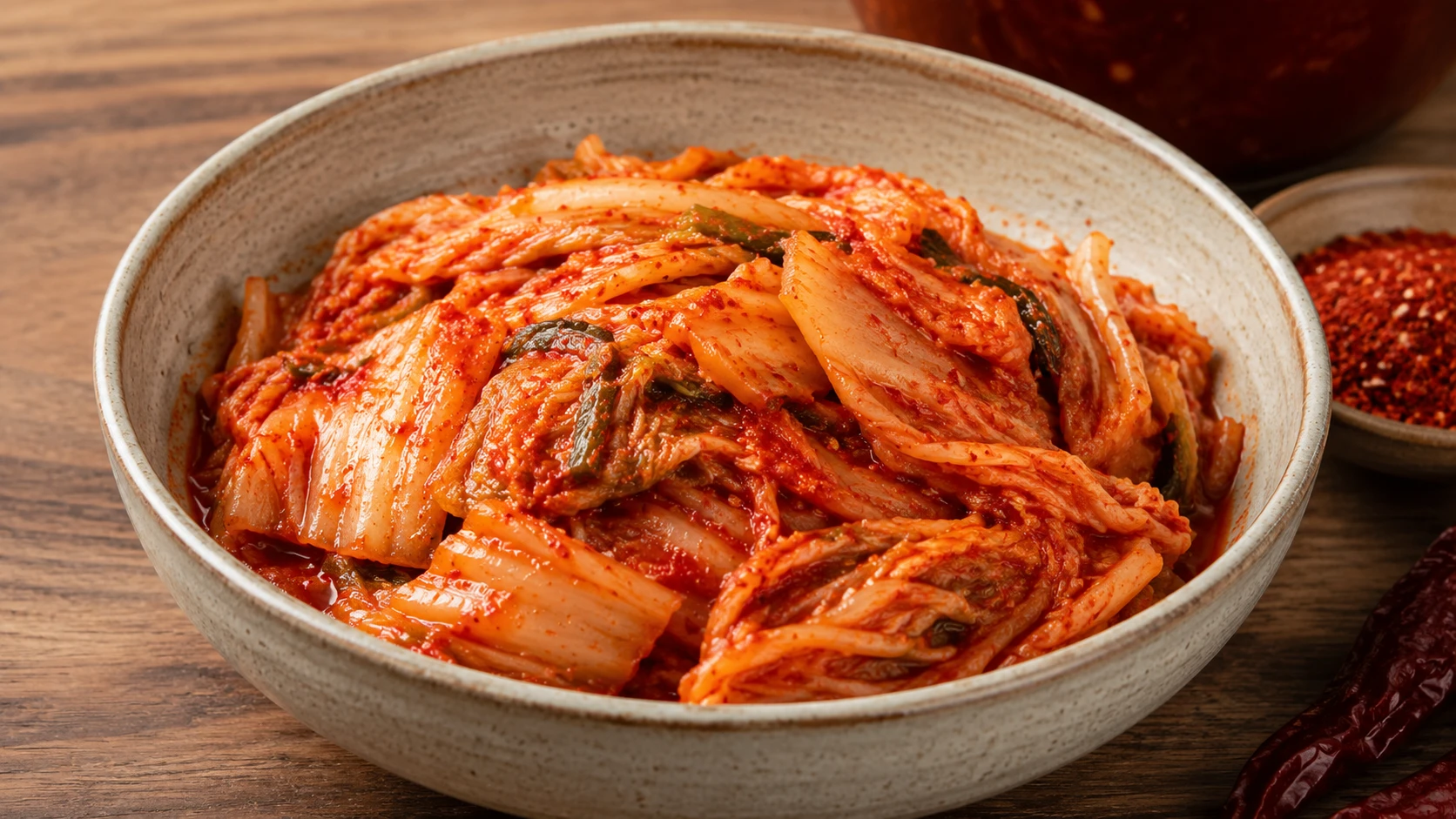
In almost every case, yes — sour kimchi is still good to eat, it’s just further along in fermentation than fresh kimchi, not spoiled. The sharper and more sour it gets, the better it works in cooked dishes — kimchi fried rice, kimchi jjigae (stew), and kimchi ramen all specifically call for well-fermented, sour kimchi rather than fresh. If you’d rather eat it raw, mixing in a little sugar, sesame oil, and fresh scallion mellows the sharpness out. The only time to actually discard it is if you see fuzzy mould or notice a rotten (not sour) smell — covered in detail below.
Why Does Kimchi Get More Sour Over Time?
Kimchi never really “finishes” fermenting — it just keeps going, slower and slower, for as long as it’s stored.
The same lactic acid bacteria (mainly Lactobacillus) responsible for kimchi’s tangy flavour in the first place don’t stop working once a jar goes in the fridge — cold temperatures just slow them down dramatically rather than stopping them. Over weeks and months, they keep converting sugars into lactic acid, which is exactly what makes kimchi taste progressively more sour the longer it sits.
A few things speed this up: time spent at room temperature instead of refrigerated, a warmer fridge setting, kimchi stored near the front of the fridge (warmer) rather than the back, and simply how long it’s been since it was made.
The Sourness Scale — From Mild to Very Sour
Where your jar sits on this scale is really the only thing that decides what to do with it.
Match the Stage to the Use
Sour vs Spoiled — How to Tell the Difference
Sourness is not a defect. These are the actual warning signs to look for instead.

| Sign | What It Means | Verdict |
|---|---|---|
| Sharp, tangy, sour smell and fizzy bubbles | Normal, active lactic acid fermentation continuing over time. | ✅ Safe — use as desired |
| Thin white film on the surface (kahm yeast) | A harmless, common yeast that can form on fermented vegetables in warm conditions. | ✅ Safe — skim it off and eat |
| Very strong, almost vinegar-like or fizzy-alcohol smell | Heavily over-fermented, extremely sour kimchi (shin-kimchi territory). | ✅ Safe — best for cooking, not raw eating |
| Fuzzy spots — blue, green, black, or pink | Mould contamination, usually from unclean utensils or exposed pieces above the brine. | ❌ Discard the batch |
| Rotten, sulfurous, or “off” smell — not sour | Spoilage from unwanted bacteria, distinct from a sour fermentation smell. | ❌ Discard the batch |
| Sliminess combined with a bad odor | Spoilage rather than normal fermentation texture change. | ❌ Discard the batch |
Best Recipes for Sour, Well-Fermented Kimchi
This is where sour kimchi actually shines — cooking mellows sharp acidity into deep, rounded flavour, and several dishes specifically call for kimchi at this stage over fresh.





How to Mellow Sour Kimchi (For Eating It Raw)
If you’d rather eat it as-is instead of cooking with it, these three tricks take the edge off sharp sourness.
Can You Slow Down the Souring?
You can’t stop fermentation entirely, but a few habits noticeably slow it down.
- Keep kimchi in the coldest part of the fridge (the back, not the door) rather than the front where temperature swings more with each opening.
- Always keep pieces fully submerged under the brine — exposed pieces both dry out and ferment unevenly.
- Portion a big batch into smaller jars rather than opening one large jar repeatedly — every time a jar is opened, it warms slightly and lets in more air, both of which speed things up.
- Press the kimchi down firmly after each use to push out air pockets before sealing it back up.
Freezing Sour Kimchi
If a jar is getting away from you faster than you can cook through it, the freezer is a legitimate option.
Freezing essentially pauses fermentation — the texture softens once thawed, so frozen-and-thawed kimchi is best earmarked for cooked dishes rather than eating raw, which lines up well with what very sour kimchi is already best used for anyway. Portion it into the amounts you’d actually use per dish (a cup or two) rather than freezing one giant block.
The kimchi juice/brine is worth freezing separately too, in an ice cube tray — it’s a fast flavour boost for soups, marinades, and fried rice later on, without needing to defrost solid kimchi pieces for a splash of liquid. See the full guide to leftover kimchi juice for the complete list of uses, plus how to use it to jumpstart your next batch.
Frequently Asked Questions
Search or tap any question below.
No — sourness on its own is just a sign kimchi has kept fermenting, not that it has spoiled. It’s only a problem if it also shows fuzzy mould, a rotten or alcohol-heavy smell, or an unpleasant slimy texture alongside the sourness.
Properly refrigerated sour kimchi that just tastes and smells strongly sour is safe to eat. Kimchi that has visible fuzzy mould, discoloured spots, or a rotten (not sour) smell should be discarded rather than eaten.
Kimchi sours faster at warmer temperatures, so time left out of the fridge, a warm kitchen, or simply more time passing in storage all speed up the lactic acid bacteria responsible for the sour flavour.
Yes — a small pinch of sugar or honey mixed in balances out sharp acidity if you want to eat it fresh or raw, though it won’t undo the fermentation, and the sourness will keep building afterward.
Sour, well-fermented kimchi generally has more developed lactic acid bacteria activity than fresh kimchi, though cooking it in a hot dish like fried rice or stew kills most of the live bacteria regardless of how sour it started.
Cooked dishes are the best match for very sour kimchi — kimchi fried rice, kimchi jjigae (stew), and kimchi ramen are the three most common uses, since cooking mellows the sharp acidity into a deeper, rounder flavour.
Yes, if the sourness isn’t too overwhelming for your taste — tossing it with a little sugar, sesame oil, and fresh scallion (kimchi-muchim style) is the classic way to mellow it out for eating on its own or as a side dish.
Discard it if you see fuzzy, coloured mould spots (not to be confused with a harmless thin white kahm yeast film), notice a rotten or sulfurous smell rather than a sour one, or the texture has turned unpleasantly slimy alongside a bad smell.
It’s better not to, since mixing an older, more fermented batch into a fresh one speeds up souring across the whole jar. Keep batches separate and use the older one first in cooked dishes instead.
Got a Jar That’s Gone Sour?
Tell us what you made with it, or ask a question — Ji-Young reads every comment.