Nurungji — Korean Scorched Rice Guide
The golden, crackling crust from the bottom of the rice pot — snack, tea, soup, and the same crispy-bottom science behind kimchi fried rice. Here’s the method, the science, and how it stacks up against tahdig, socarrat, and okoge worldwide.


What Is Nurungji?
Nurungji (누룽지) is the crispy, golden-brown crust that forms at the bottom of a pot of cooking rice, once eaten purely as a byproduct and now made deliberately as a snack, a base for sungnyung (toasted rice tea), or a soup. It’s built on the same principle as Persian tahdig, Spanish socarrat, and Japanese okoge — rice caramelising against a hot surface through the Maillard reaction — but with its own texture, uses, and place in Korean home cooking.
History & Origins
Nurungji wasn’t invented — it was noticed. Before electric rice cookers, nearly every pot of rice cooked over a wood or coal fire left a scorched layer behind, and Korean households simply never let it go to waste.
The Science of the Crust
Nurungji isn’t burnt rice in the “mistake” sense — it’s a specific, controllable browning reaction, the same one responsible for seared steak crust and toasted bread.
| What’s Happening | Why It Matters |
|---|---|
| Moisture evaporates from the rice touching the pot | Once the surface dries out, it’s no longer being cooled by steam, so its temperature can climb well past boiling |
| Surface temperature exceeds ~200°C | This is the threshold where the Maillard reaction — browning between amino acids and sugars — kicks in and produces nurungji’s nutty, toasted flavour |
| Starch on the rice’s surface gelatinises then hardens | This is what gives the crust its firm, structural crunch rather than just a browned, still-soft grain |
| The reaction window is narrow | There’s roughly a 2-minute gap between deep golden-brown (done) and black/bitter (burnt) — timing and attention matter more than exact minutes on a recipe card |
Classic Stovetop Method
This is how nurungji has been made for generations — slow heat, a heavy pot, and a little patience. Each step below shows exactly what to look for.
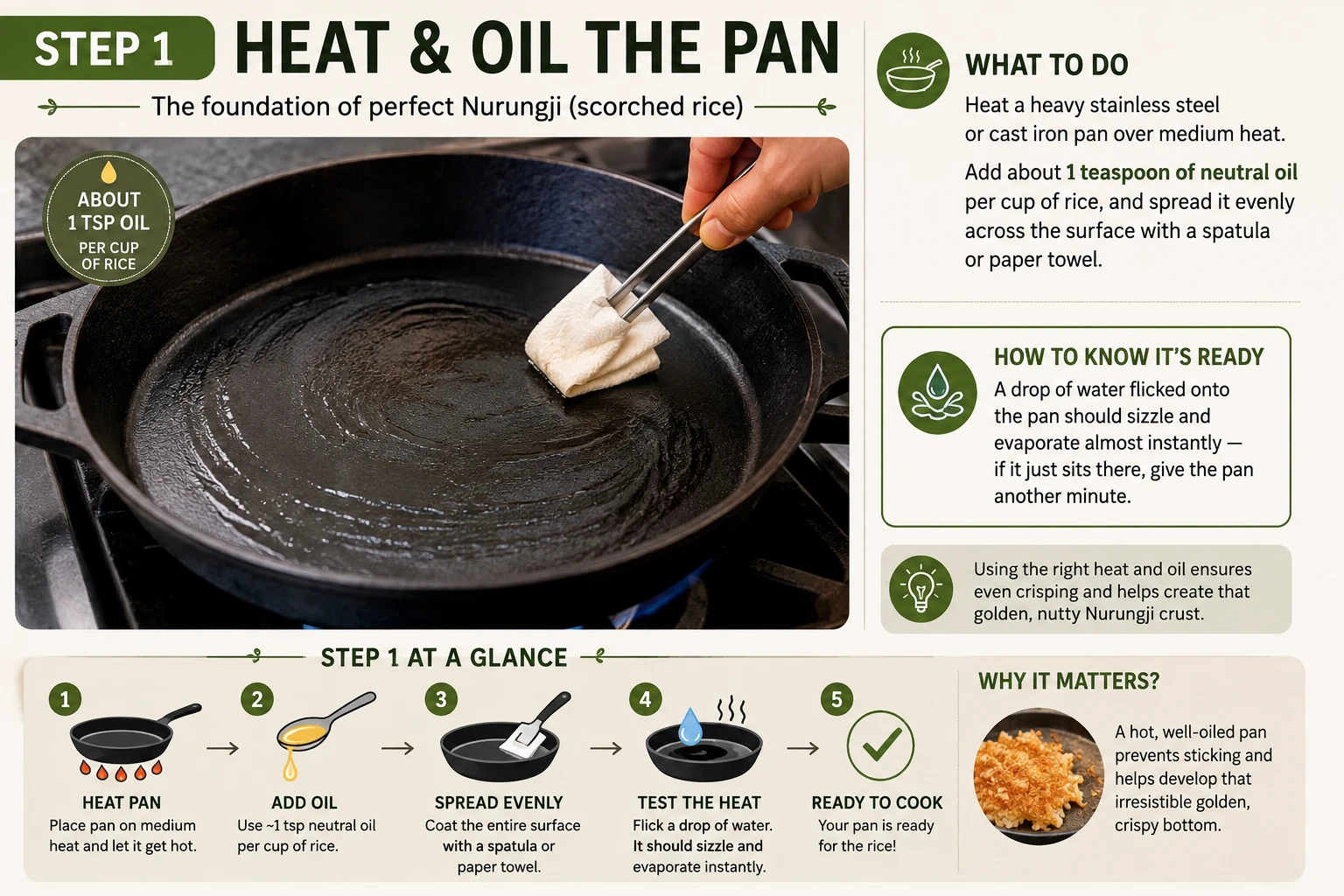
Heat a heavy stainless steel or cast iron pan over medium heat. Add about 1 teaspoon of neutral oil per cup of rice, and spread it evenly across the surface with a spatula or paper towel.
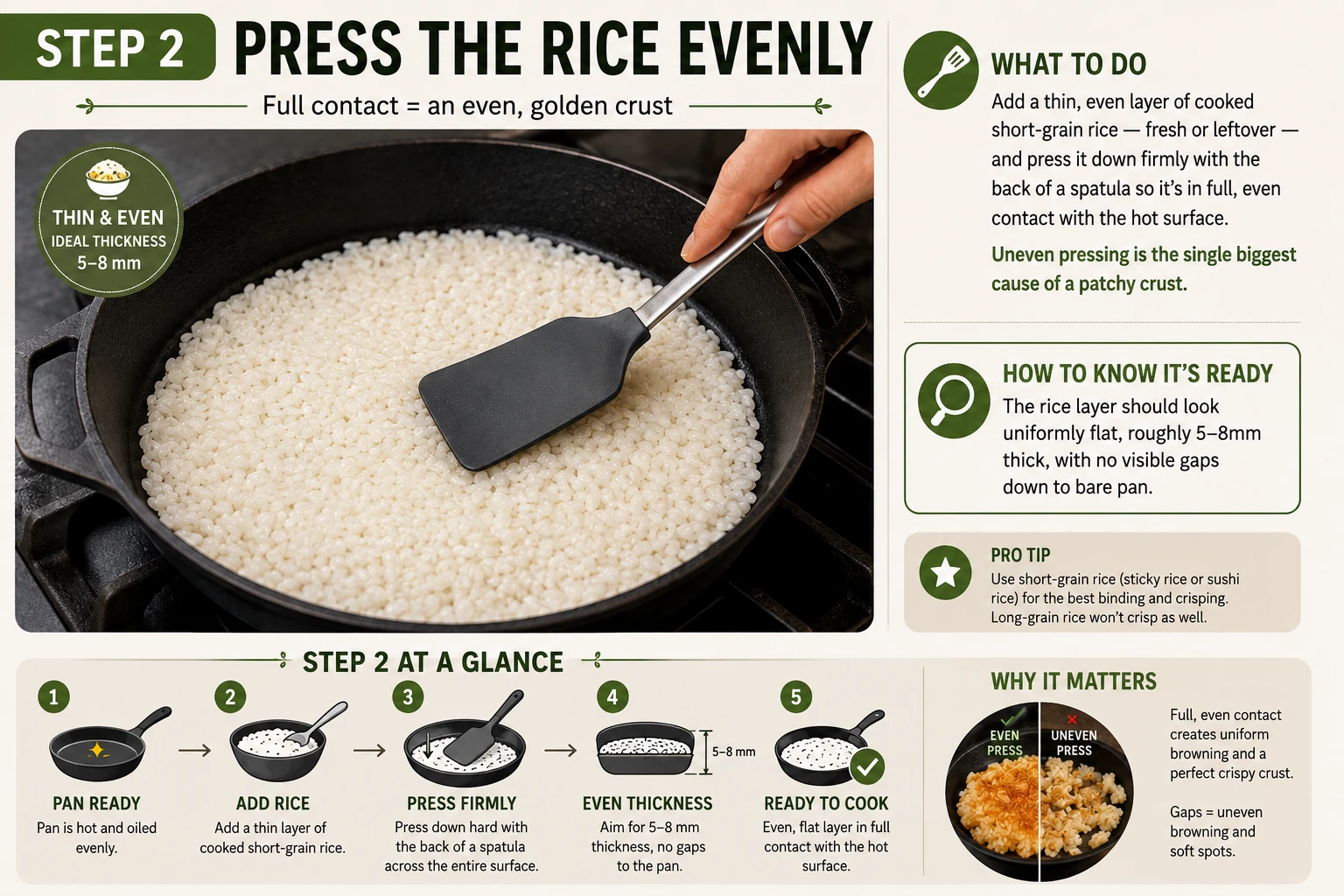
Add a thin, even layer of cooked short-grain rice — fresh or leftover — and press it down firmly with the back of a spatula so it’s in full, even contact with the hot surface. Uneven pressing is the single biggest cause of a patchy crust.
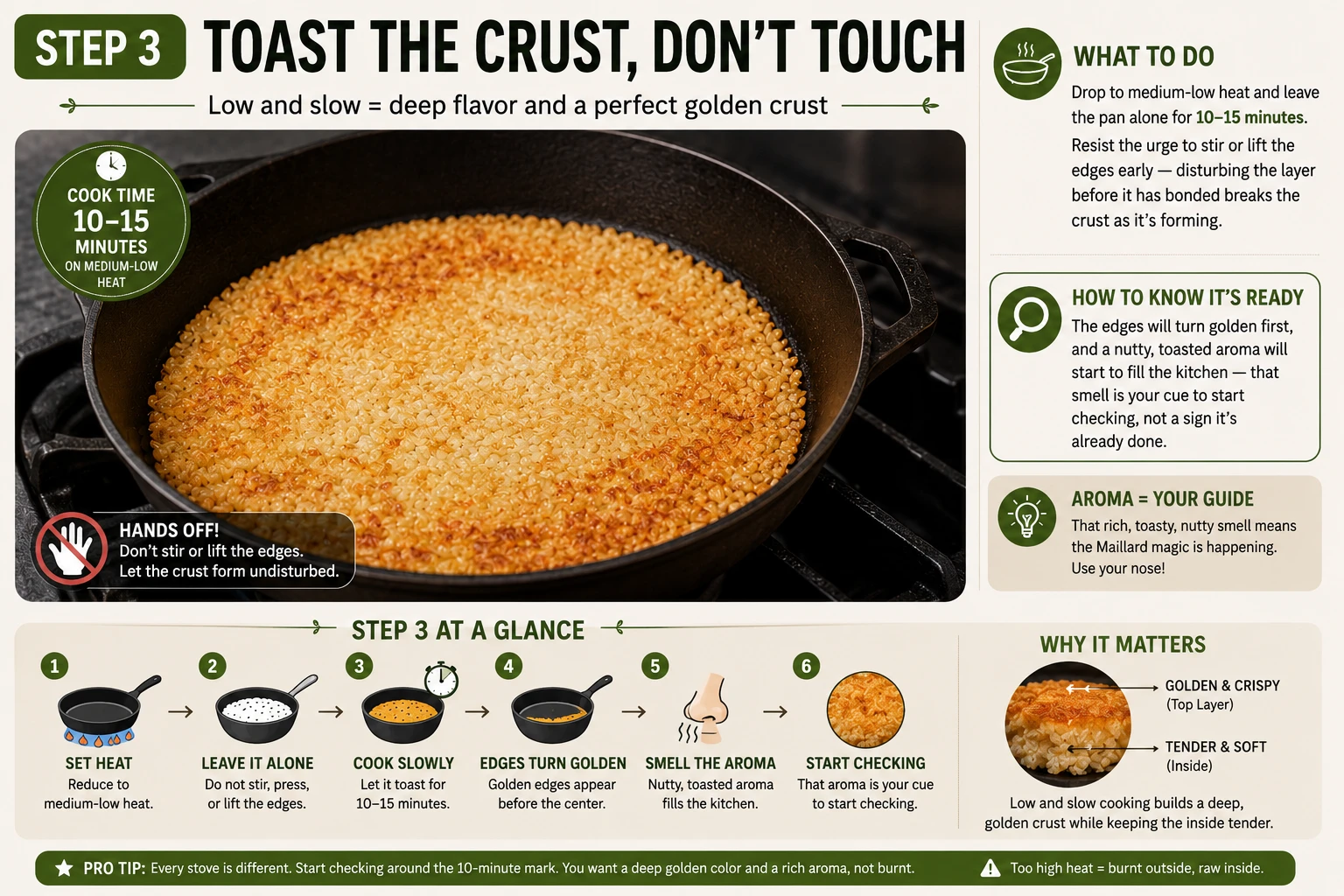
Drop to medium-low heat and leave the pan alone for 10-15 minutes. Resist the urge to stir or lift the edges early — disturbing the layer before it has bonded breaks the crust as it’s forming.
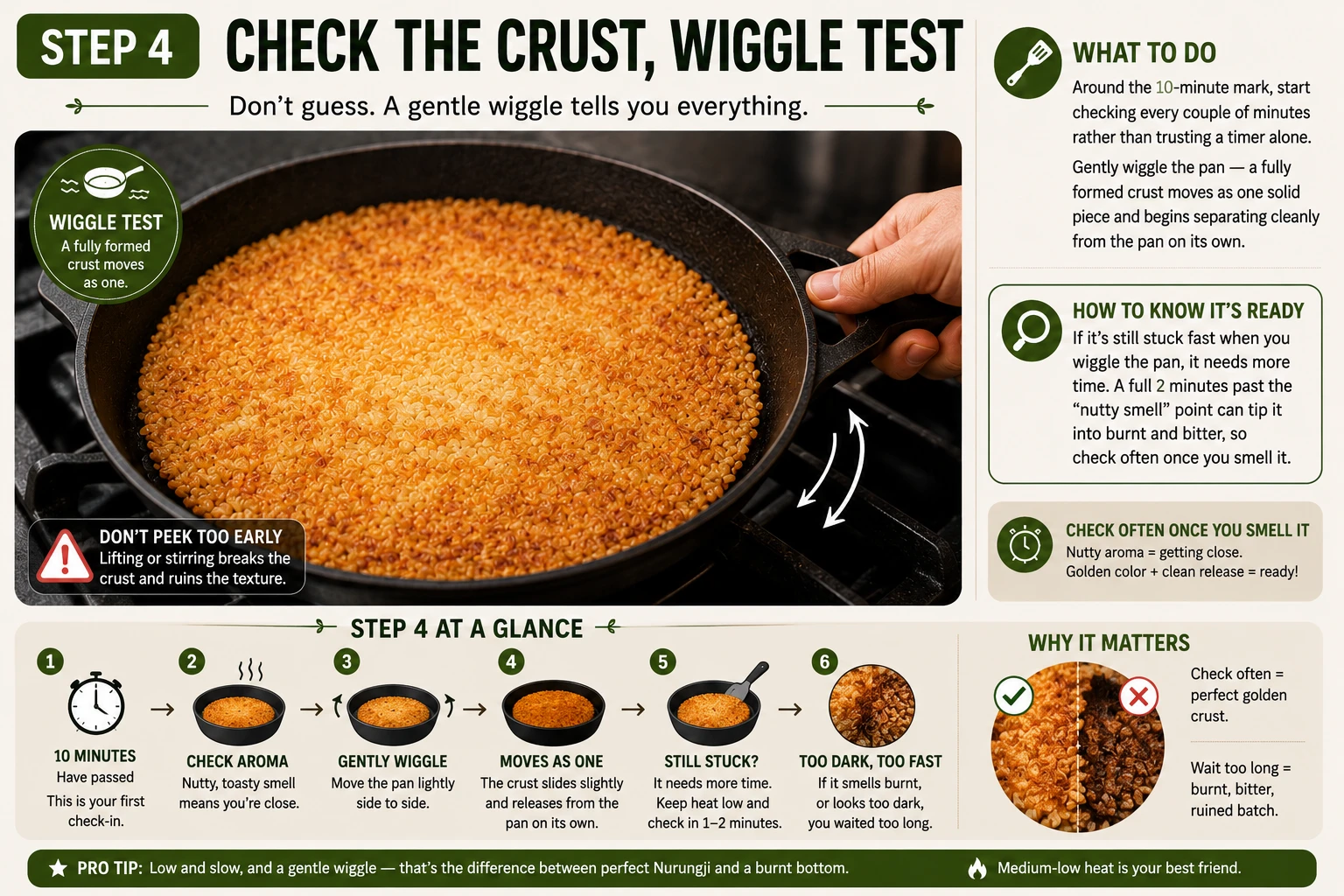
Around the 10-minute mark, start checking every couple of minutes rather than trusting a timer alone. Gently wiggle the pan — a fully formed crust moves as one solid piece and begins separating cleanly from the pan on its own.
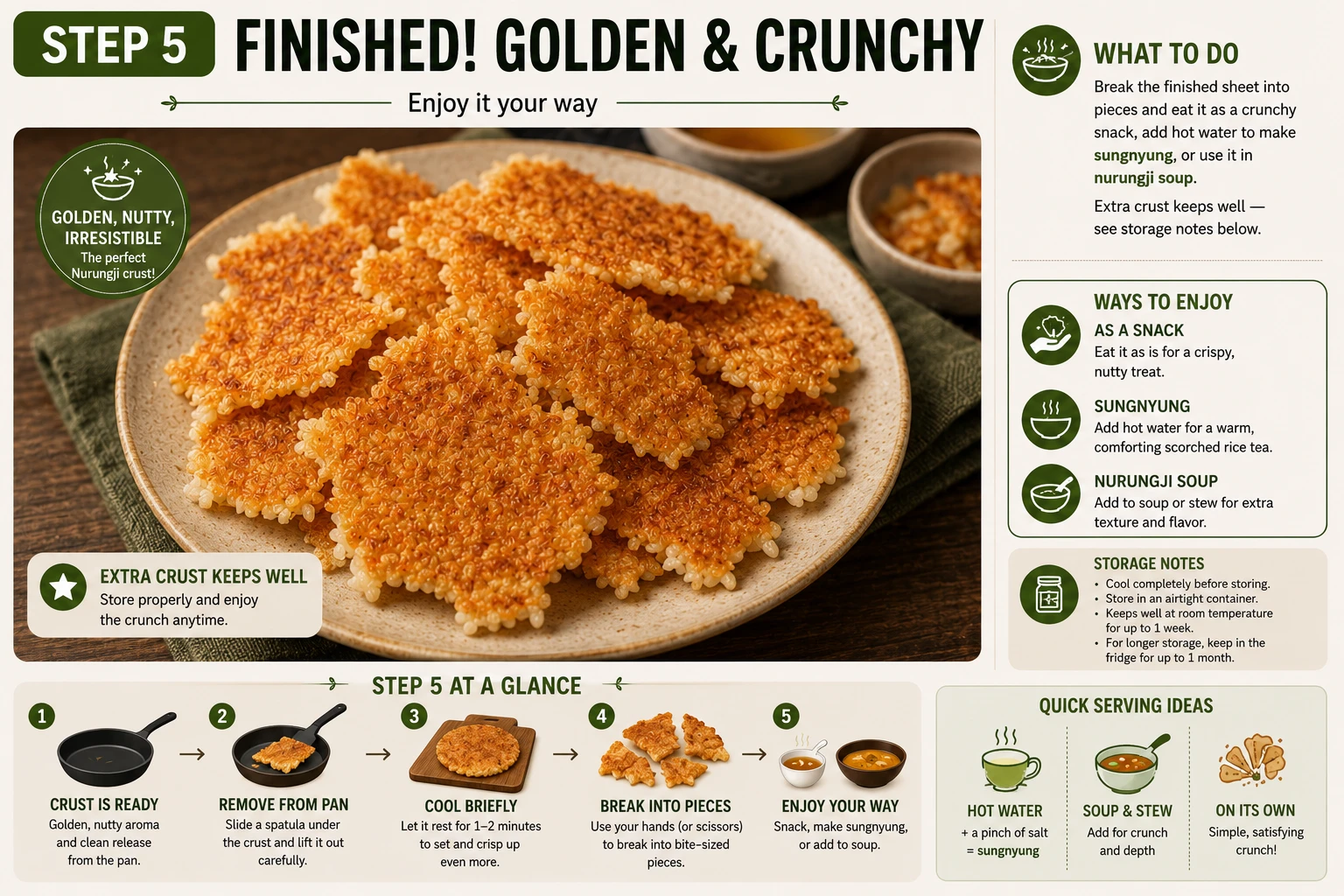
Break the finished sheet into pieces and eat it as a crunchy snack, add hot water to make sungnyung, or use it in nurungji soup. Extra crust keeps well — see storage notes below.
Air Fryer Method
No stovetop babysitting required — the air fryer gives a very close result with far less attention, and it’s the easiest way to use up leftover rice.
| Step | Stovetop | Air Fryer |
|---|---|---|
| Prep | Oil the pan, press rice into a thin layer | Press rice into a thin layer on parchment paper — little to no oil needed |
| Heat | Medium, then medium-low on the stovetop, constant attention | Around 175–190°C (350–375°F), hands-off once set |
| Time | 10–15 minutes, checked every couple of minutes near the end | Roughly 10–14 minutes, flipping halfway for even crisping |
| Texture result | Slightly more variable crust thickness, deeper Maillard flavour from direct pot contact | Very consistent, evenly crisp throughout — easier for a first attempt |
| Best for | Cooking rice and making nurungji from the same pot in one step | Using up leftover rice quickly with minimal cleanup |
See the Texture Difference
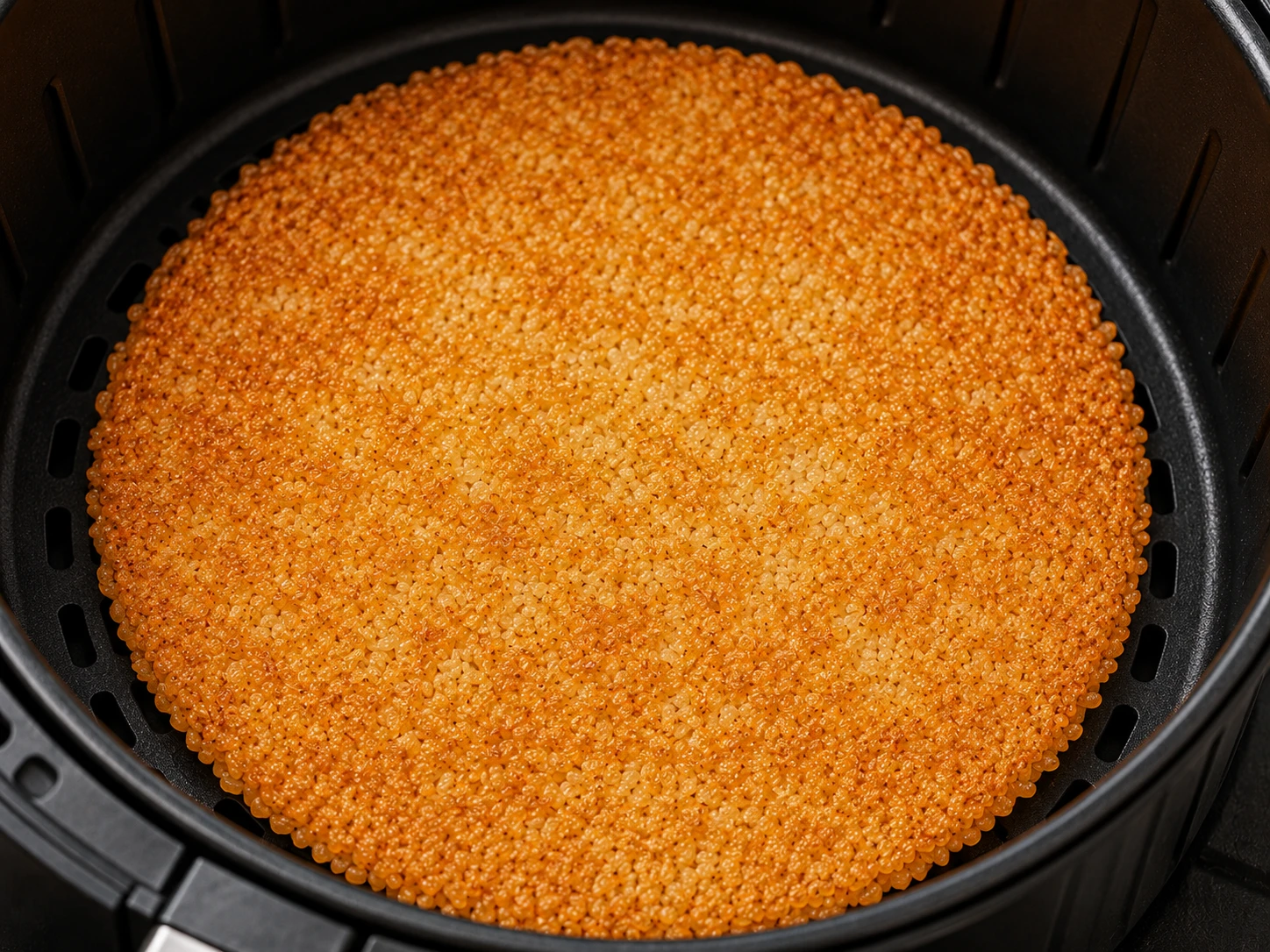
Drag to compare a stovetop batch (deeper, more uneven toasting from direct pot contact) against an air fryer batch (more even, consistently golden edge to edge).
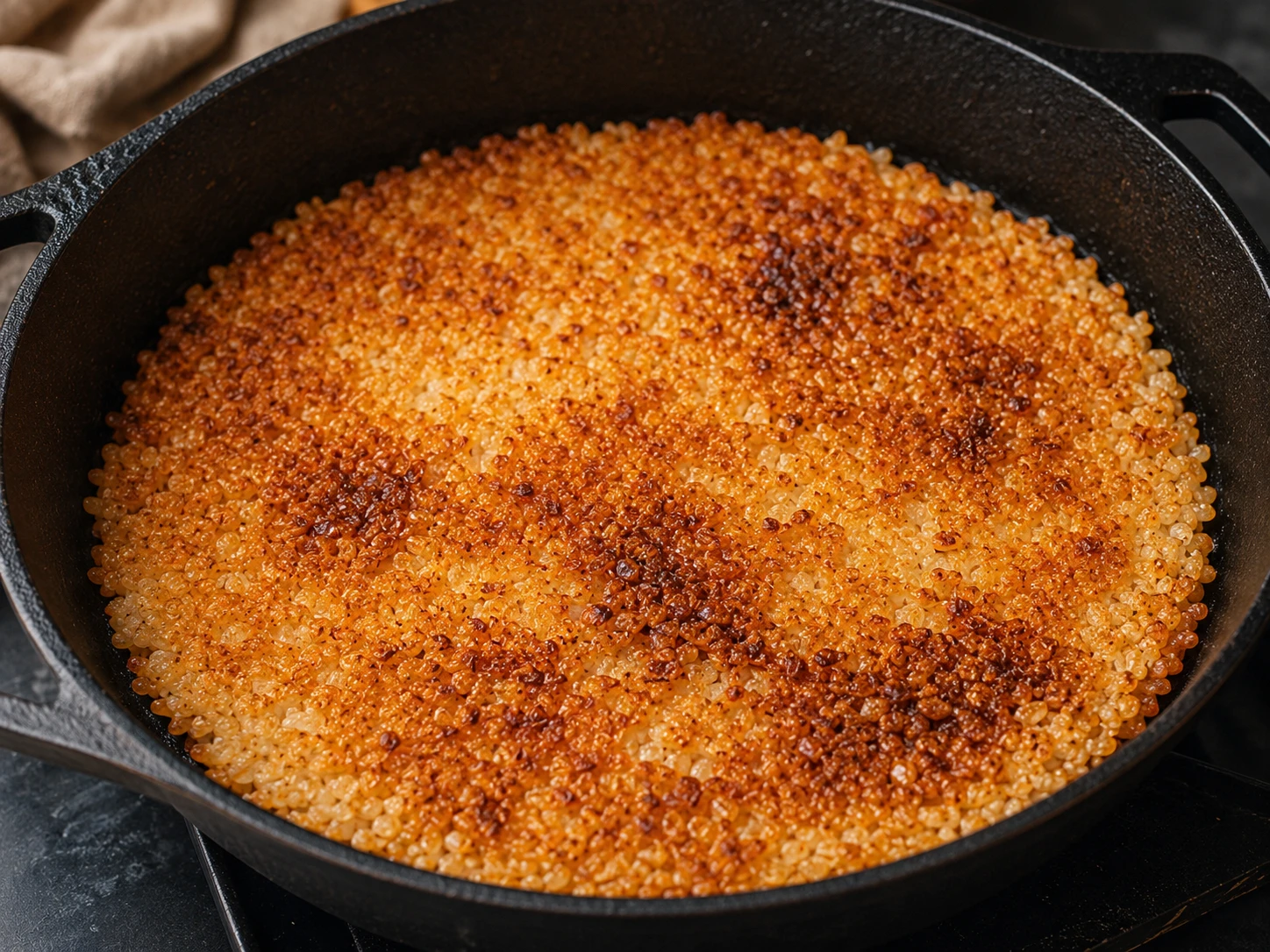
 Stovetop
Air Fryer
Stovetop
Air Fryer
↔ Drag left/right (or tap and hold on mobile) to compare
Choosing & Prepping Your Rice
The crust is only as good as the rice underneath it — a few prep choices make a bigger difference than most recipes mention.
Nonstick vs Stainless vs Cast Iron
Recipes genuinely disagree here — and both sides have a point, depending on what you’re optimising for.
| Pan Type | The Case For It | The Trade-Off |
|---|---|---|
| Stainless steel / cast iron | Allows real adhesion between rice and pan, which some cooks consider essential to forming a proper structural crust rather than just dry, toasted grains | Requires more technique and attention — sticking too hard or too long can mean a genuinely stuck, hard-to-clean pan |
| Nonstick pan | Far more forgiving for beginners, releases easily, minimal cleanup | Some cooks find the crust that forms is less textural, since the coating prevents the same bonding phase from happening |
| Traditional stone pot (gamasot / dolsot) | The traditional choice, gives the deepest, most authentic flavour and texture | Specialty item, not something most non-Korean kitchens already own |
Troubleshooting
Nearly every nurungji problem traces back to one of four variables: oil, heat, time, or patience.
| Problem | Likely Cause | Fix |
|---|---|---|
| Rice sticks and won’t release cleanly | Too little oil, too high heat too early, or removing it before the crust has fully set | Use about 1 teaspoon of neutral oil per cup of rice, medium-low heat, and wait until the edges lift on their own |
| Crust is patchy or uneven | Rice layer wasn’t pressed down evenly, or the pan has uneven heat distribution | Press firmly and evenly with a spatula before toasting; use a heavier pan for more even heat |
| Burnt and bitter rather than golden | Left too long past the roughly 2-minute window between done and burnt | Start checking every 1–2 minutes once you smell a nutty aroma, rather than trusting a timer alone |
| Not crispy, still soft or chewy | Heat too low, or removed before the crust fully set | Increase heat slightly and extend time in short increments, checking frequently |
| Rice grains stay loose instead of bonding into a sheet | Rice was too dry, or long-grain rice was used instead of short-grain | Use short-grain rice, and add a few drops of water while pressing the layer down to help it bond |
| Flipping falls apart | Attempting to flip before the first side has fully set | Wait until the underside releases cleanly on its own before attempting to flip with a spatula or plate |
Sungnyung — Scorched Rice Tea
Sungnyung (숭늉) is what happens when nurungji meets hot water — a mild, nutty, lightly toasted rice tea traditionally served at the end of a meal.
Pour hot water directly into the pot or pan with the nurungji still in it, right after removing the rest of the cooked rice.
Simmer over low heat for a couple of minutes, then let it sit off heat for a few more minutes to steep and soften slightly.
Serve as-is, with a few softened rice pieces still in the cup — traditionally enjoyed after a meal, often alongside kimchi.
Nurungji Soup (Nurungji-tang)
Where sungnyung is simple and mild, nurungji-tang turns the same scorched rice into a fuller, more savoury meal.
| Version | What’s Added | Best For |
|---|---|---|
| Simple sungnyung | Just nurungji and hot water | A quick, soothing drink after a meal, under 10 minutes |
| Basic nurungji-tang | Nurungji simmered longer in water until it softens into a light porridge-like consistency | A gentle breakfast, or recovering from an upset stomach |
| Seafood or mushroom nurungji-tang | Nurungji simmered in a light broth with seafood, mushrooms, and a cornstarch thickener | A fuller, restaurant-style meal — the roasted-rice flavour deepens the broth |
All versions start the same way — nurungji simmered in liquid until it softens — the only real variable is what else goes into the pot. Quinoa or mixed-grain nurungji works especially well here, adding extra texture and nutrition to the base soup.
Health & Nutrition
Nurungji’s reputation as a comfort food isn’t just nostalgia — there’s a real nutritional case for it, alongside a few caveats worth knowing.
Buying Nurungji Instead of Making It
Pre-made nurungji is widely available, from Korean grocery stores to online retailers — useful when you want the snack or the tea without the stovetop attention.
| Format | What It Is | What to Check |
|---|---|---|
| Plain packaged nurungji sheets/pieces | Pre-toasted rice crust, ready to eat as a snack or steep for sungnyung | Closest to homemade — check for added sugar or oil on the ingredient label |
| Nurungji tea bags | Blended, dried nurungji (often mixed with roasted brown rice or grains) for instant sungnyung | Convenient, but flavour is milder and less textured than steeping real nurungji pieces |
| Fried or seasoned nurungji snacks | Deep-fried and sometimes sweetened or salted versions sold as a standalone snack food | Closer to a packaged snack food nutritionally than to plain homemade nurungji — check sodium and added sugar if that’s a concern |
If the goal is the traditional after-meal tea or a gentle, plain snack, plain packaged nurungji or homemade is the closer match — fried or heavily seasoned versions are better thought of as a separate snack category.
Nurungji vs Tahdig vs Socarrat vs Okoge
Nurungji isn’t a one-off — nearly every rice-eating culture has developed its own version of the same idea, each with its own fat, seasoning, and presentation.
Formed at the bottom of a plain pot of rice, eaten dry as a snack or steeped into sungnyung tea. The plainest of the group, letting the toasted rice flavour stand alone.
★ This guide’s focusA generous amount of oil or butter and a deliberately layered base (sometimes bread or potato slices) are used to build an extra-crisp, golden crust, usually served as the centrepiece of the dish rather than a side.
△ Richer, more deliberately engineeredBuilt into a dish already full of sofrito, saffron, and stock, so the crust carries all of paella’s seasoning rather than being plain — considered the most prized part of the pan.
△ Flavoured by the dish it’s part ofOkoge is mechanically closest to nurungji — plain, incidental crust from cooking rice. Guoba is frequently made deliberately and served with a hot sauce poured over it tableside for a sizzling effect.
△ Okoge closest to nurungji; guoba more theatricalWays to Use Nurungji
Once you can make a reliable crust, it shows up in more places in the kitchen than just a bowl on its own.
Broken into pieces and eaten warm, plain or lightly salted — the simplest and most traditional use.
Simmered into sungnyung or a fuller nurungji-tang with seafood or mushrooms for a light meal.
Crumbled over salads, bibimbap, or poke bowls for texture — the same crunch as a crouton, with a nuttier, toasted flavour.
Frequently Asked Questions
Search or tap any question below.
Nurungji (누룽지) is the crispy, golden crust that forms at the bottom of a pot of cooking rice. It’s eaten as a crunchy snack on its own, or simmered with water to make sungnyung, a toasted rice tea.
Yes, mechanically it’s the same phenomenon — a crust of rice caramelised against a hot surface. Dolsot bibimbap’s crispy bottom and kimchi fried rice’s crispy edges are both forms of nurungji, even though the term is most associated with plain scorched rice from cooking a pot of rice.
Yes. Leftover cooked rice, even day-old rice from takeout, works well — press it into a thin, even layer in a hot pan with a little oil and toast it the same way as fresh rice.
No. A traditional stone or cast-iron pot (gamasot) makes it easiest, but a heavy stainless steel or cast iron pan works well too. A regular nonstick pan can also work, though some cooks find the crust releases with less textural bond than on stainless or cast iron.
Usually too little oil, too high heat too early, or trying to remove it before the crust has fully set. About 1 teaspoon of neutral oil per cup of rice, medium-low heat, and waiting until the edges lift on their own generally solves it.
Look for a deep golden-brown colour and a nutty, toasted aroma. True black or bitter-smelling char means it’s gone too far — there’s roughly a 2-minute window between perfectly golden and burnt, so it’s worth checking every couple of minutes near the end.
Sungnyung (숭늉) is a traditional Korean drink made by pouring hot water over nurungji and letting it steep for a few minutes, producing a mild, nutty, lightly toasted rice tea traditionally served after a meal.
Generally yes — it’s naturally gluten-free, retains much of the original rice’s fibre and minerals, and the toasting process increases antioxidant compounds through the Maillard reaction. Store-bought versions can sometimes be deep-fried or have added sugar or sodium, so homemade or plain packaged versions are the better choice if that’s a concern.
In Korea, nurungji and sungnyung are commonly eaten as a gentle, easy-to-digest food when recovering from overeating, drinking, or an upset stomach — the mild, plain carbohydrate base is soothing rather than irritating.
They’re all built on the same principle — rice caramelising against a hot surface — but differ in fat, seasoning, and rice type. Persian tahdig is often layered with yogurt or saffron and a generous amount of oil or butter; Spanish socarrat forms at the base of paella with sofrito flavour built in; Japanese okoge is typically plainer, closer to nurungji itself.
Yes, plain nurungji made from rice alone is naturally gluten-free, as long as no wheat-based seasonings or additives are introduced during preparation.
Yes — many Korean grocery stores and online retailers sell pre-made nurungji in bags, along with nurungji tea bags for an instant version of sungnyung. Check labels for added sugar or sodium if that’s a health concern, since some commercial versions are lightly fried or sweetened.
Yes — brown rice, mixed-grain (japgok), and even quinoa blends can be toasted the same way, though cooking times may vary slightly and the flavour becomes nuttier and more textured than with plain white short-grain rice.
Made Your Own Batch? Questions?
Share what pan or method worked for you, or ask a question — Ji-Young reads every comment.