Kimchi Fried Rice Without Egg (Egg-Free Kimchi Bokkeumbap — 계란 없는 김치볶음밥)
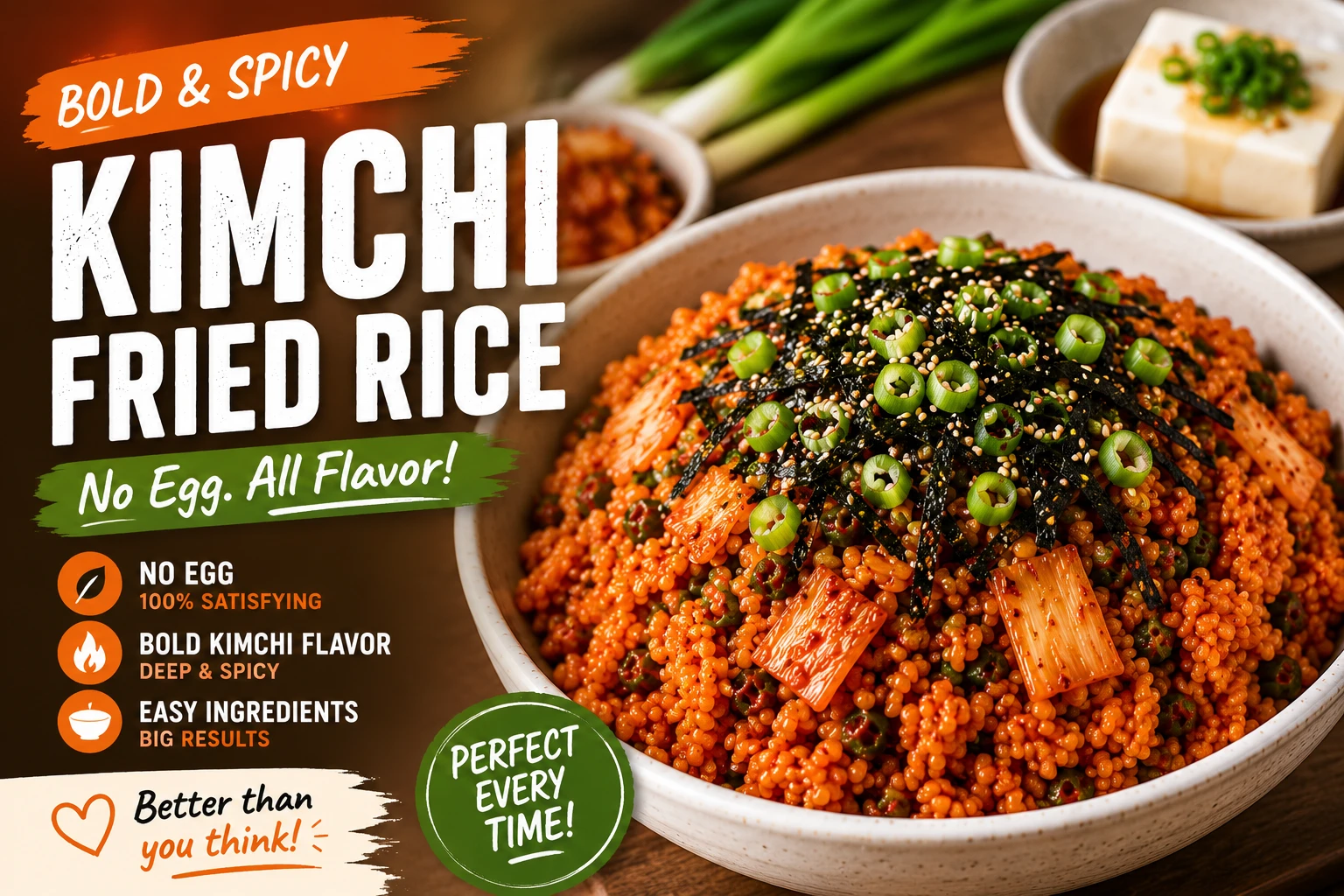
Egg-free does not mean flavour-free. Extra sesame oil off-heat replaces the yolk’s richness. Cold silken tofu alongside delivers the creamy contrast. Generous garnish does the visual work. 20 minutes — 5 minutes faster than the classic.
What Is Kimchi Fried Rice Without Egg?
Kimchi fried rice without egg — gyeran eobsneun kimchi bokkeumbap (계란 없는 김치볶음밥) — is the classic Korean weeknight rice dish made with two key adjustments: increase sesame oil from 1 to 1½ tablespoons off-heat, and increase the garnish (3 spring onions, doubled sesame seeds, generous nori). Serve cold silken tofu alongside for the creamy temperature contrast the runny yolk usually delivers. Total time: 20 minutes — 5 minutes faster than the classic. The lowest-calorie KFR variation at 360 calories, and the best version for meal prep.
How to Make Kimchi Fried Rice Without Egg
Egg-free kimchi fried rice takes 20 minutes: caramelise Stage 3 kimchi in a smoking-hot pan, toast gochujang, fry in cold rice with extra pressing time for nurungji crust, then finish off-heat with 1½ tablespoons of sesame oil and a generous garnish — no egg needed anywhere.
- Prep: chop and squeeze the kimchi, prepare garnish, cube cold silken tofu if using.
- Caramelise: fry squeezed kimchi in a smoking-hot pan, 3–4 minutes.
- Fry the rice: toast gochujang, add cold rice, kimchi juice, soy sauce, sugar; press 25-second intervals for extra nurungji.
- Finish: off heat, drizzle 1½ tbsp sesame oil — this replaces the egg’s richness.
- Plate: generous spring onions, doubled sesame seeds, nori, and cold silken tofu alongside.
Why No Egg — What Changes, What Replaces It
Removing the egg changes two things only: richness and visual focal point. Both are compensated with specific techniques. The kimchi flavour actually improves without the yolk moderating it.
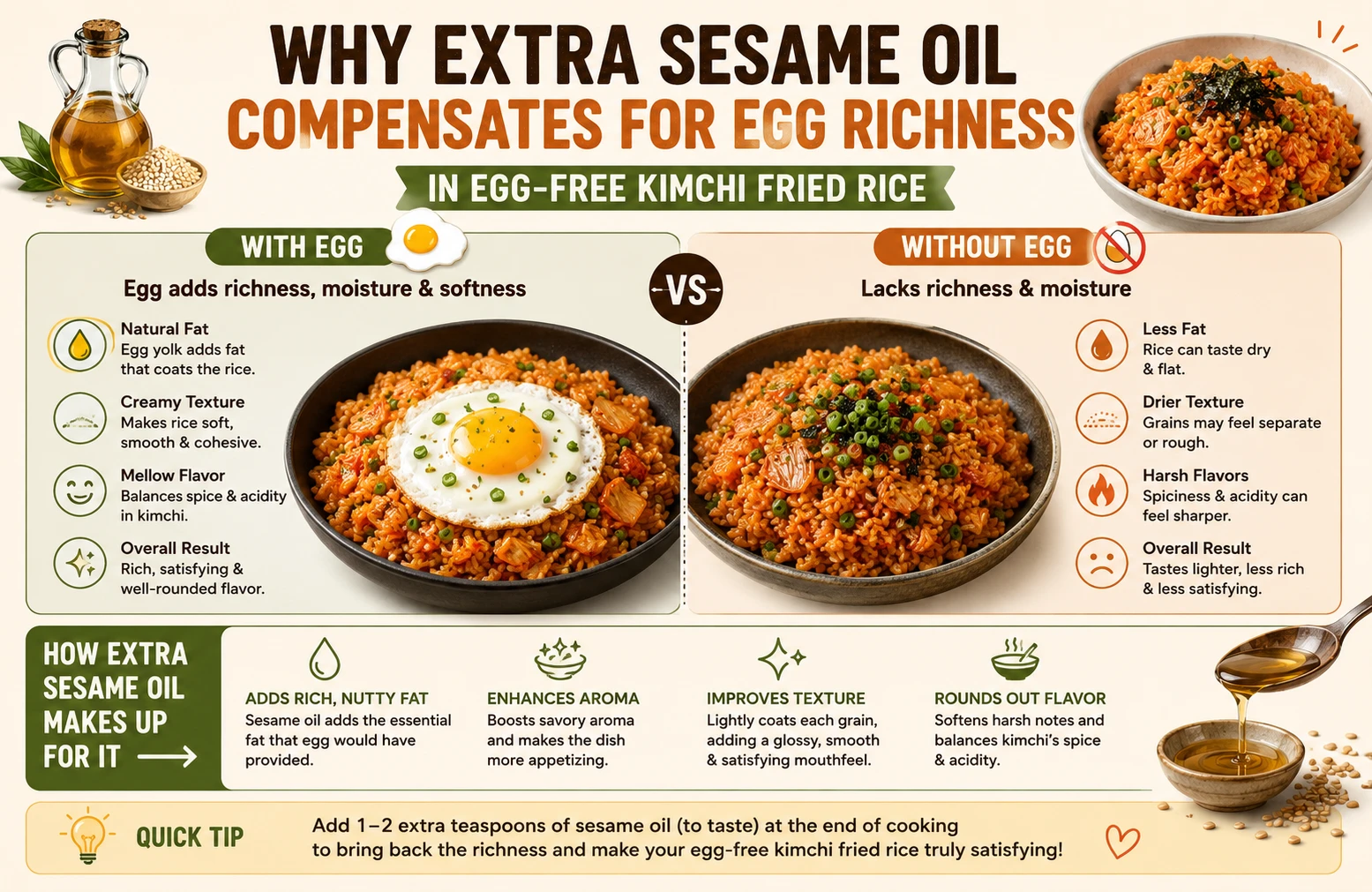
Increasing sesame oil from 1 to 1½ tablespoons — added off-heat — compensates directly for the egg yolk’s fat and lecithin-based richness. The result is a more aromatic dish, not a less rich one.
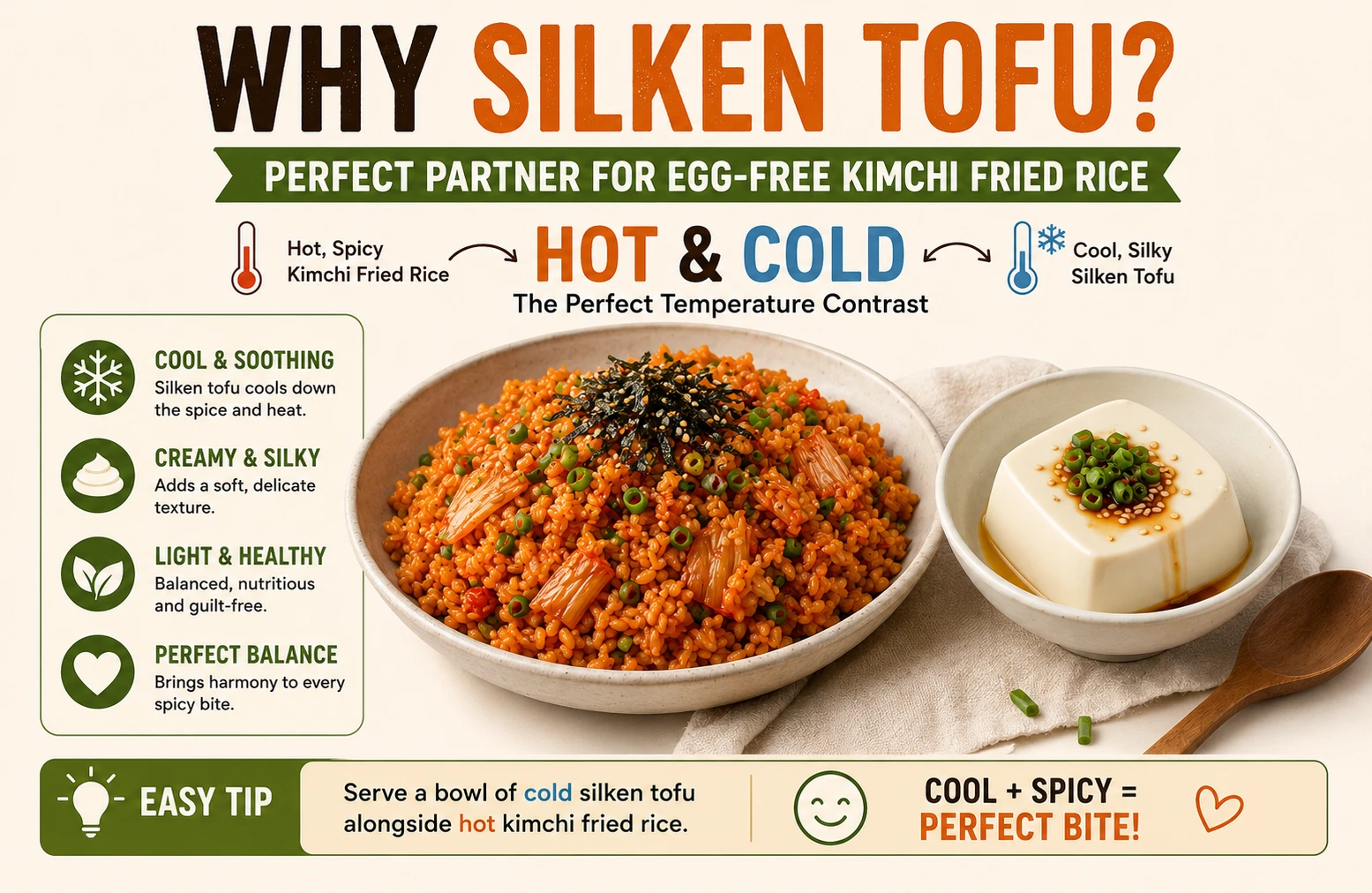
Cold silken tofu — cubed and dressed with a couple drops of soy sauce and sesame oil — replicates the temperature contrast the runny yolk delivers against hot rice.
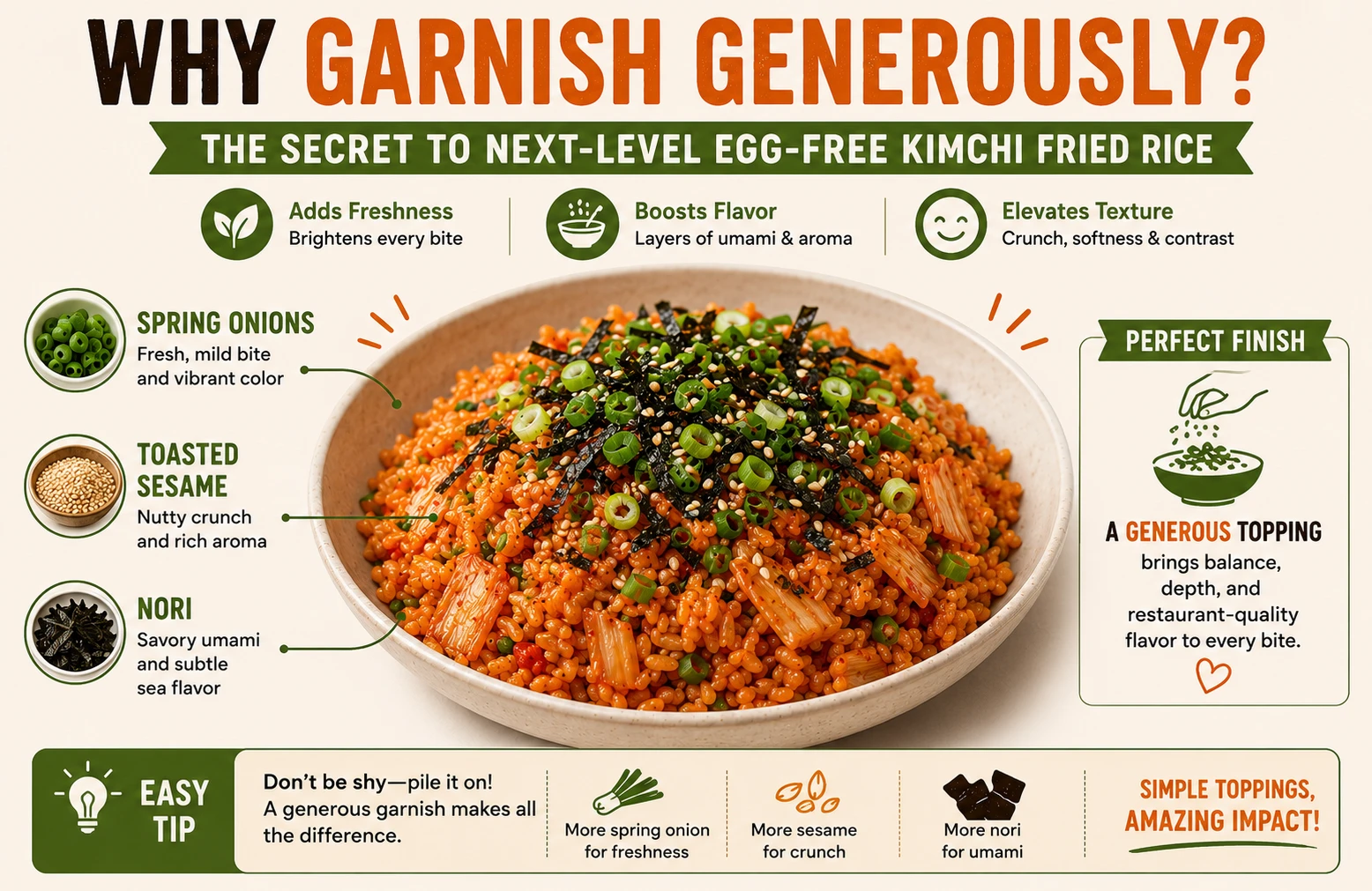
3 spring onions instead of 2, doubled sesame seeds, and torn nori arranged around the rim. The garnish carries more visual weight without an egg as the focal point.
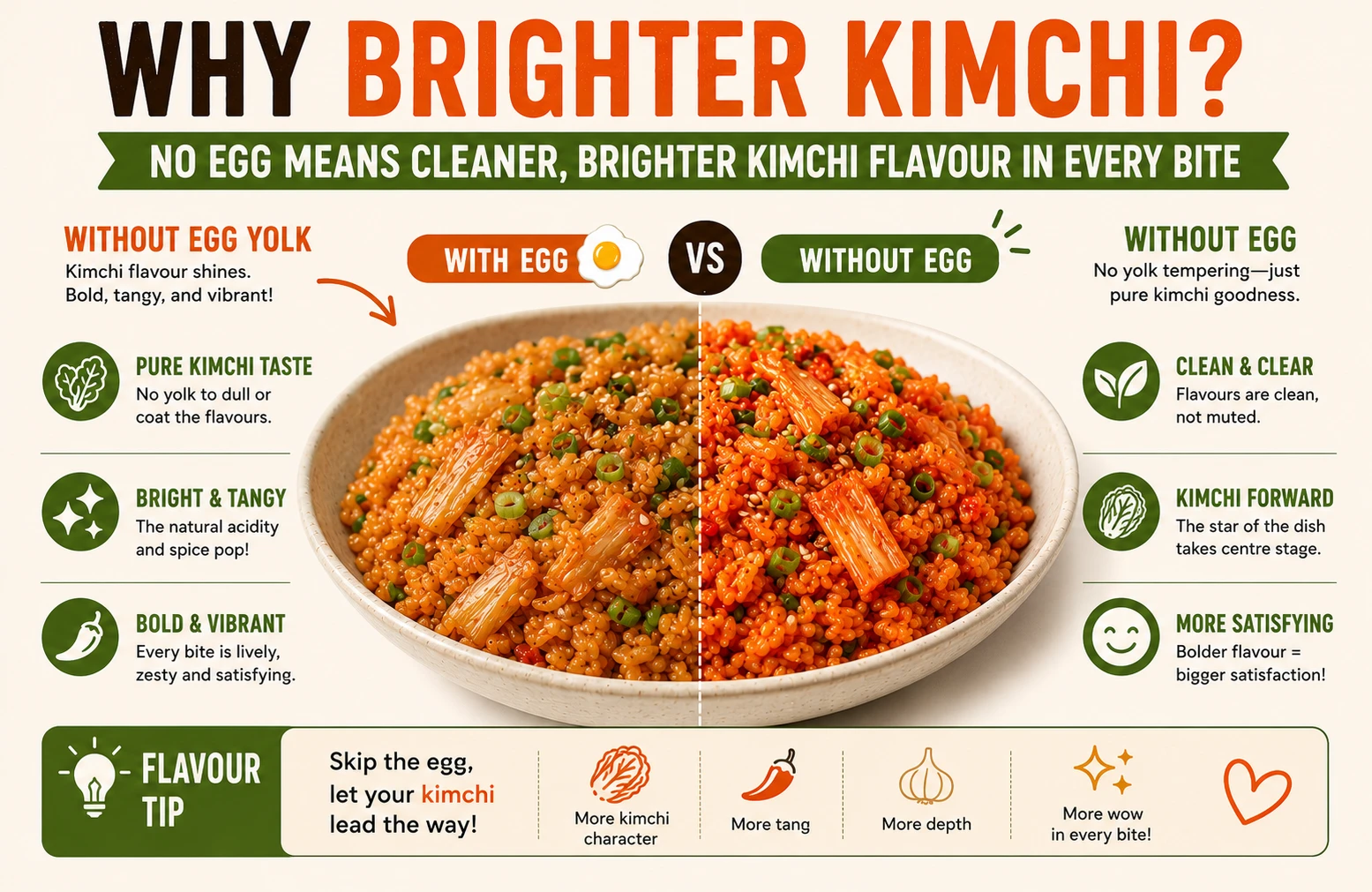
Without the egg yolk moderating it, kimchi’s fermented character comes through more directly. Several tasters in our tests preferred this cleaner, more forward kimchi taste.
Best Egg Substitutes + Toppings — Ranked
These are not egg replacements — they are legitimate toppings that make the dish complete in their own right.
100g cold from fridge, cubed, dressed with soy sauce + sesame oil. Closest to the runny yolk’s temperature and texture contrast.
⭐ Best ChoiceHalf sliced, served alongside. The fat content compensates effectively. Add lime and salt.
✅ ExcellentPre-made from Asian grocery stores. Adds crunch, umami, and visual height.
Good Option1 tbsp tahini thinned with 1 tsp water, drizzled over. Rich, nutty fat.
Creative Choice3 spring onions, 2 tsp sesame seeds, generous nori. The most traditional egg-free presentation.
Classic ApproachMicrowaved, lightly salted, folded in with the sesame oil. +8g protein per 80g serving.
Protein BoostEgg Substitute Comparison
| Option | Richness | Temp Contrast | Protein | Effort | Best For |
|---|---|---|---|---|---|
| Cold Silken Tofu | High ✓ | High ✓ | 5g / 100g | Zero — serve cold | Overall best substitute |
| Avocado | High ✓ | Medium | 2g / half | Slice only | Avocado lovers |
| Crispy Shallots | Medium | Low | 1g | Buy pre-made | Texture & umami |
| Tahini Drizzle | High ✓ | Low | 3g / tbsp | Thin with water | Extra richness |
| Just Garnish | Medium | Low | 0g extra | Zero | Purist / fastest |
| Edamame | Low | Low | 8g / 80g | Microwave 90s | Protein & colour |
Key Terms — Korean Language & Food Concepts
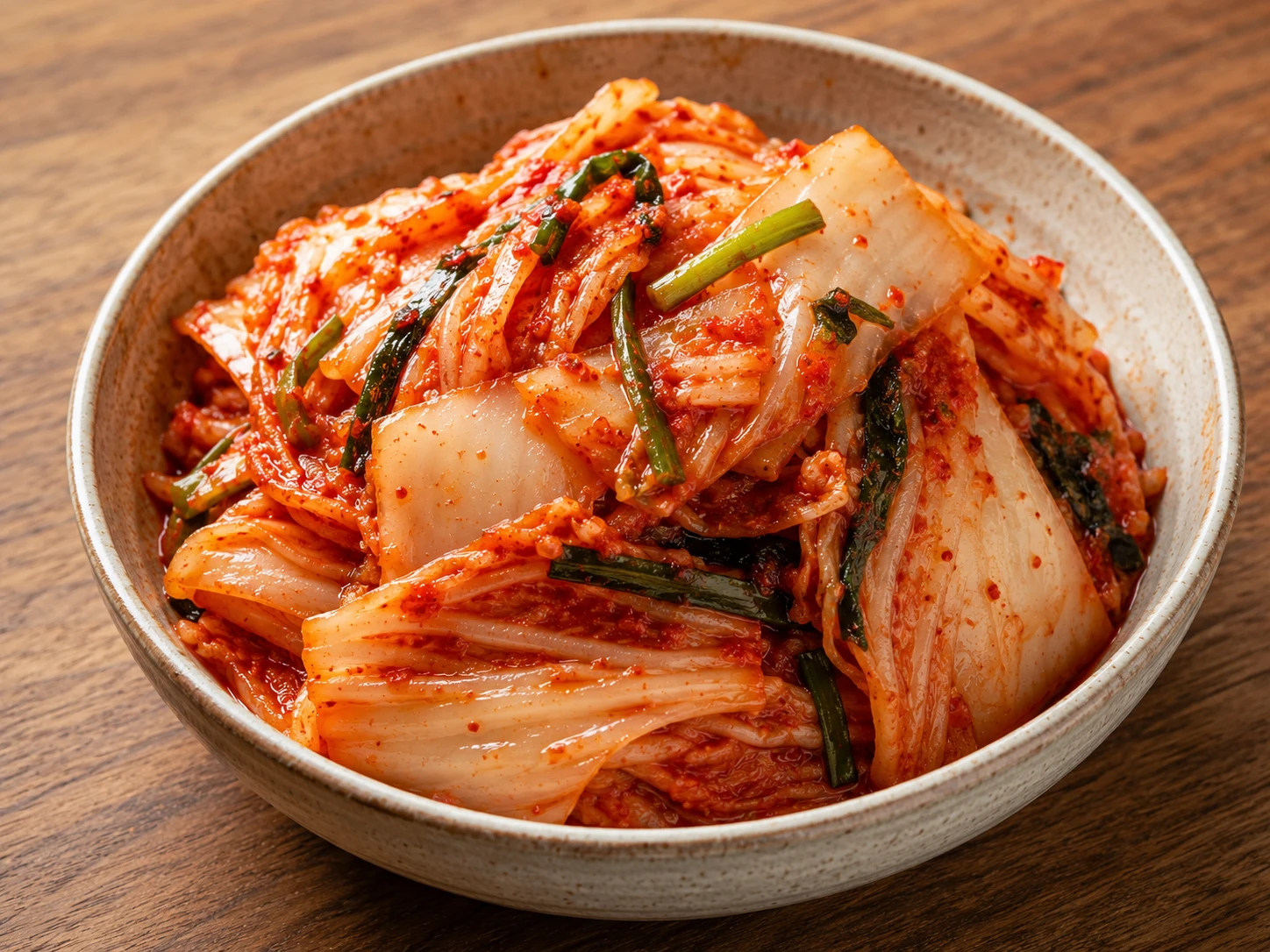
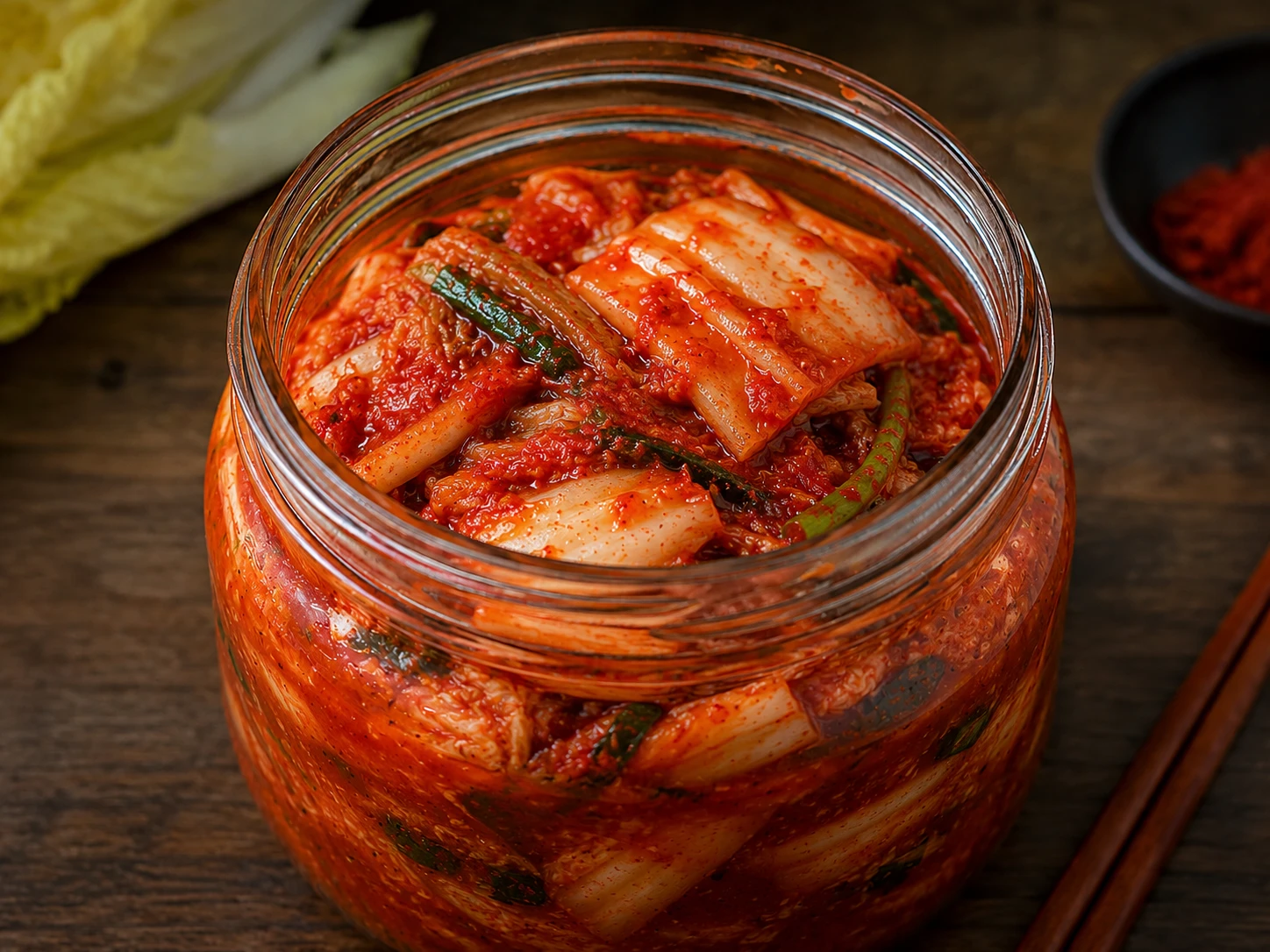
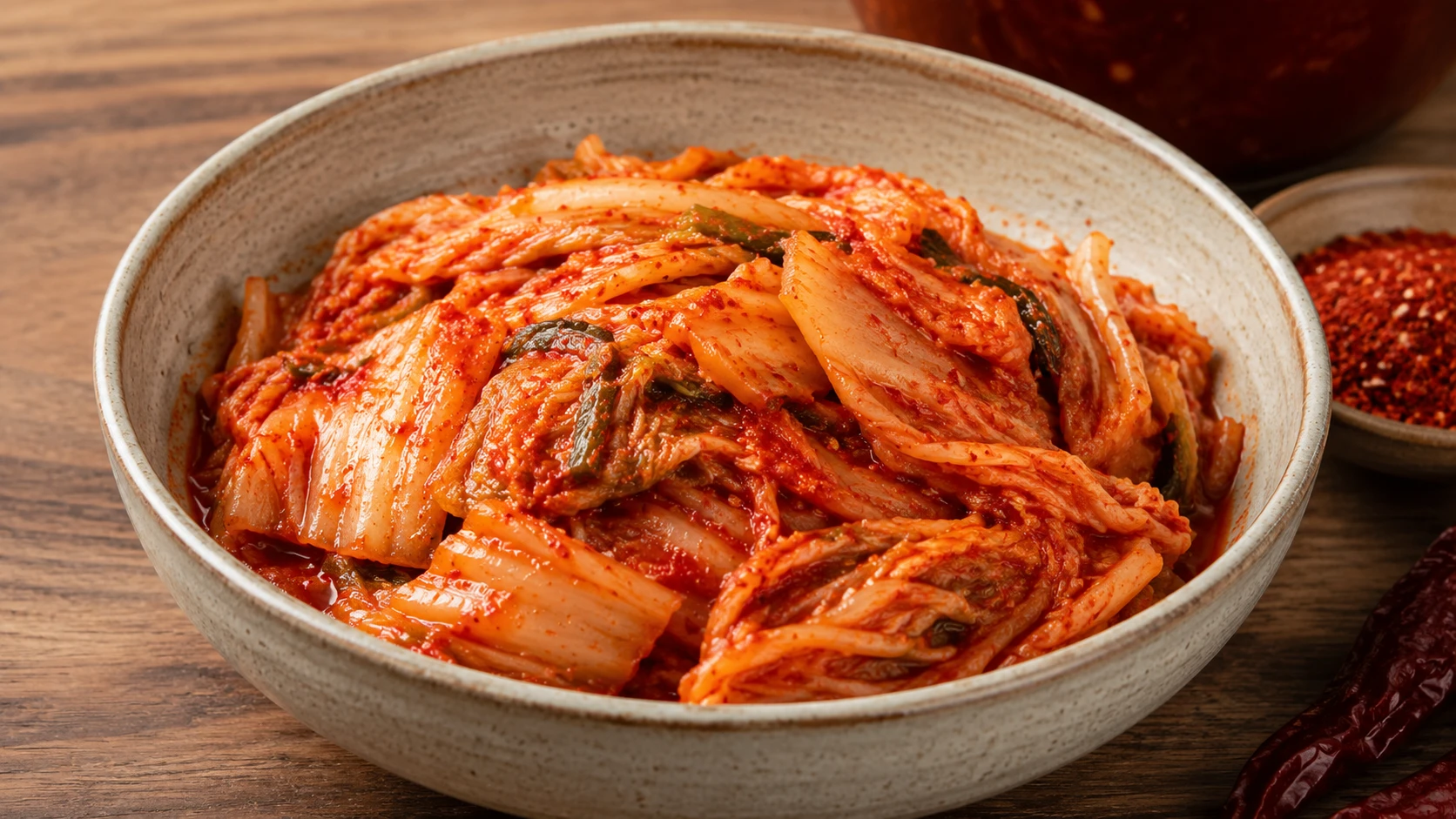
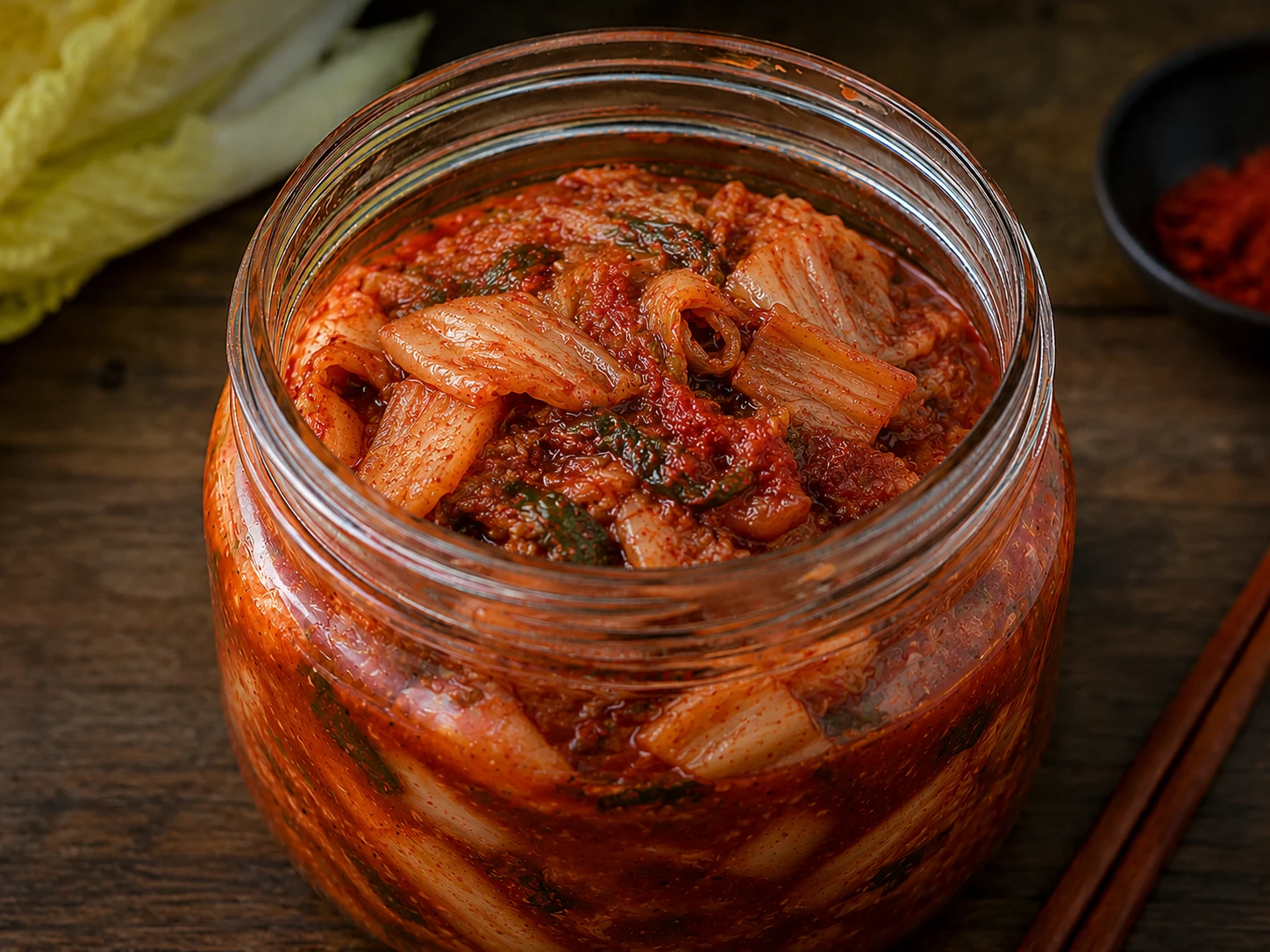
Kimchi Fermentation Stage — Egg-Free Version Specific Guide
Without the egg yolk moderating the kimchi’s acidity, the fermentation stage matters even more here. Stage 3 is non-negotiable.
How Difficult Is This Recipe?
This is the easiest KFR variation. No second pan. No timing a runny yolk. No careful plating around a fragile egg.
Ingredients + What Changes Without the Egg
Only four changes from the classic recipe. Everything else is identical.
How to Make Egg-Free Kimchi Fried Rice — 4 Steps
Four steps instead of five — the egg step is removed entirely. Total time: 20 minutes.
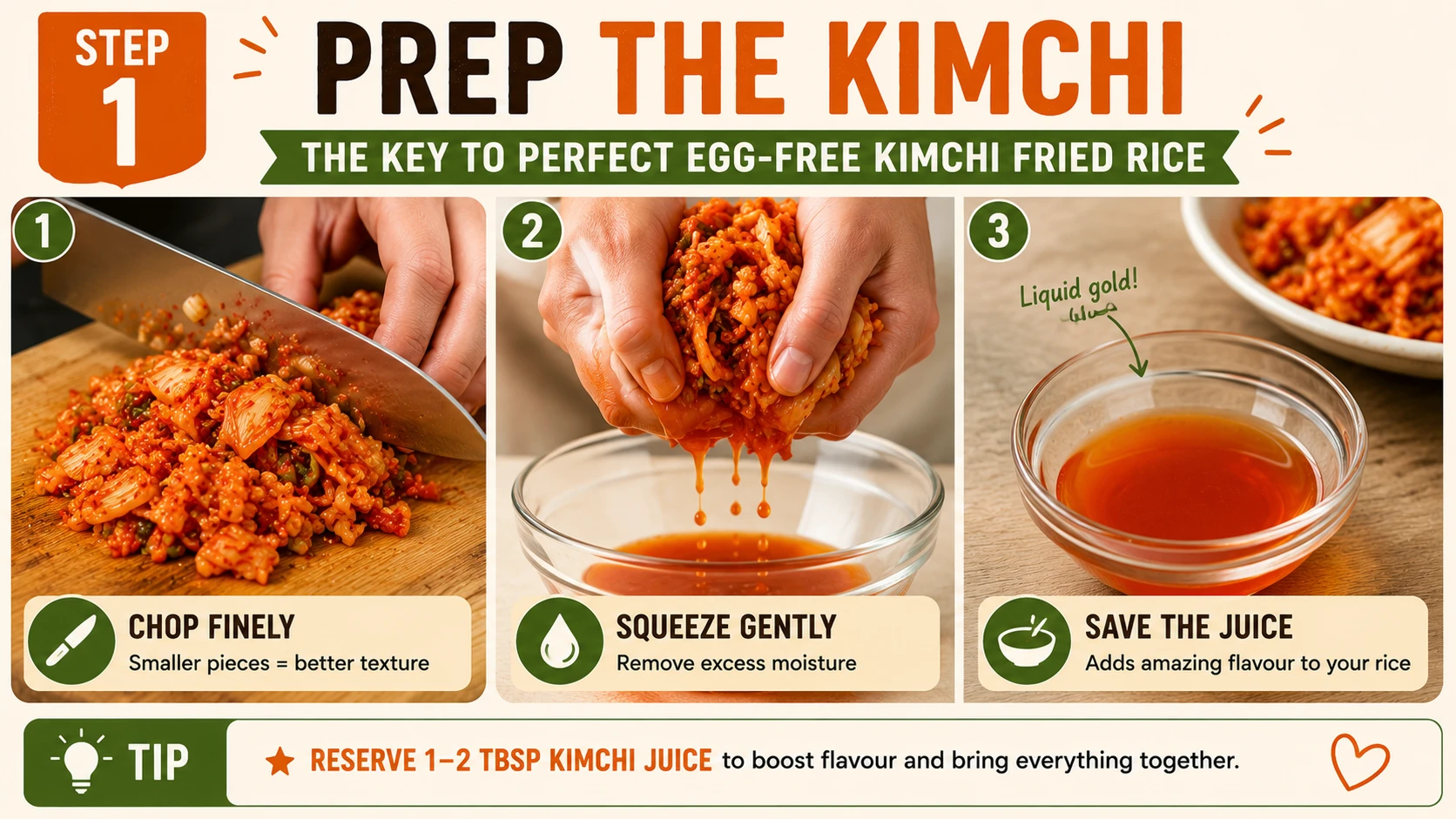
Roughly chop kimchi into 2cm pieces. Squeeze firmly and reserve 3 tablespoons of kimchi juice. Prepare your garnish now — slice spring onions, measure sesame seeds, tear nori, cube tofu and keep it cold.
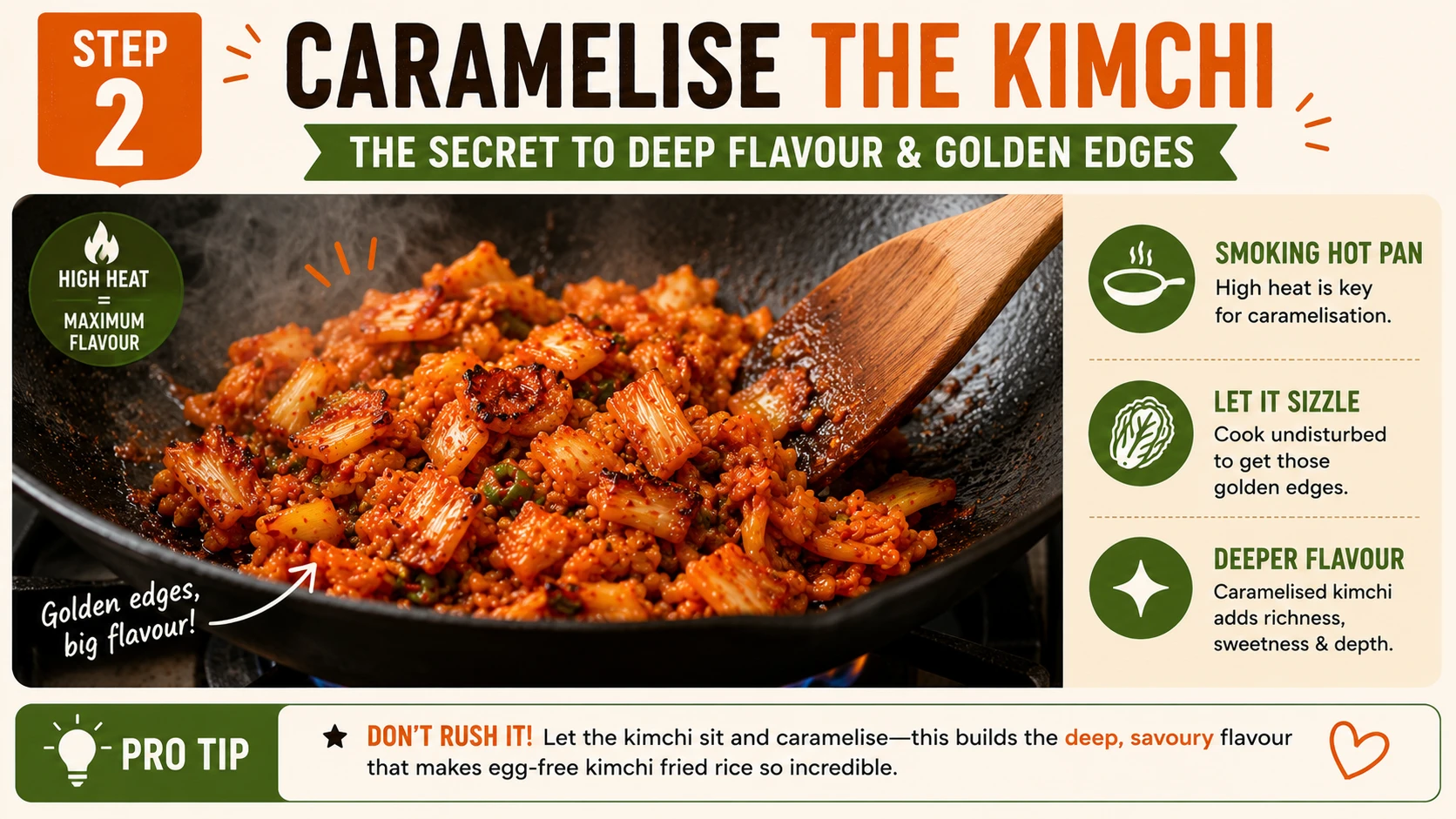
Heat the wok until smoking, add neutral oil then squeezed kimchi. Press-and-char 3–4 minutes until deep golden and nutty-smelling — this is the primary flavour driver without the egg.
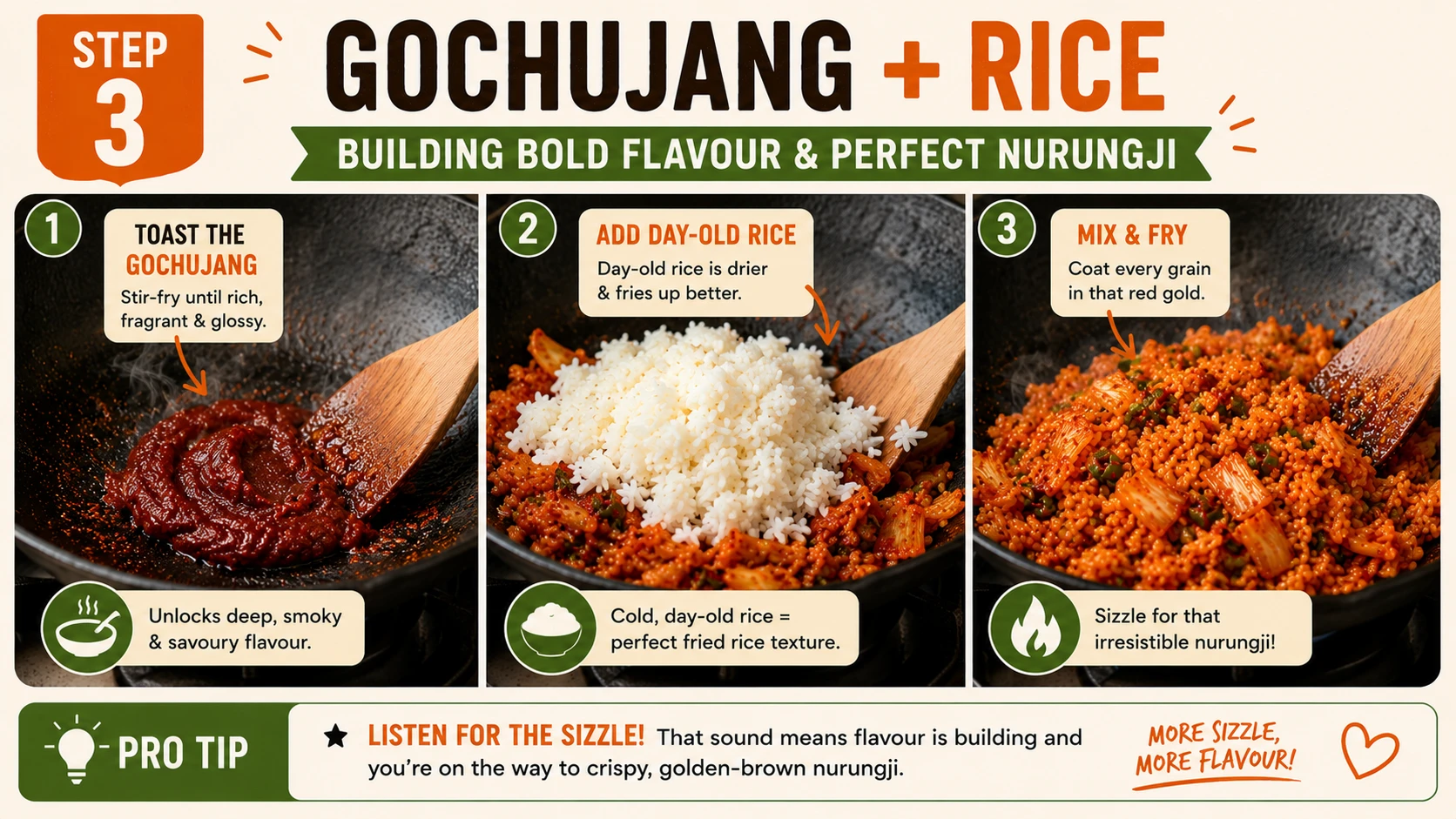
Push kimchi aside, toast gochujang 30 seconds. Add cold rice, kimchi juice, soy sauce, sugar. Toss 2 minutes, pressing flat every 25–30 seconds — slightly longer than the classic — for extra nurungji crust.

Off heat, drizzle 1½ tablespoons sesame oil, stir once. Serve immediately with mounded spring onions, sesame seeds, nori, and cold silken tofu alongside. Serve within 3 minutes of plating.
What We Tested for the Egg-Free Version
Kimchi fried rice without egg is a distinct dish with its own character — brighter, faster, better for storage. Not a compromise for people who cannot eat eggs, but a legitimately excellent weeknight dish in its own right.
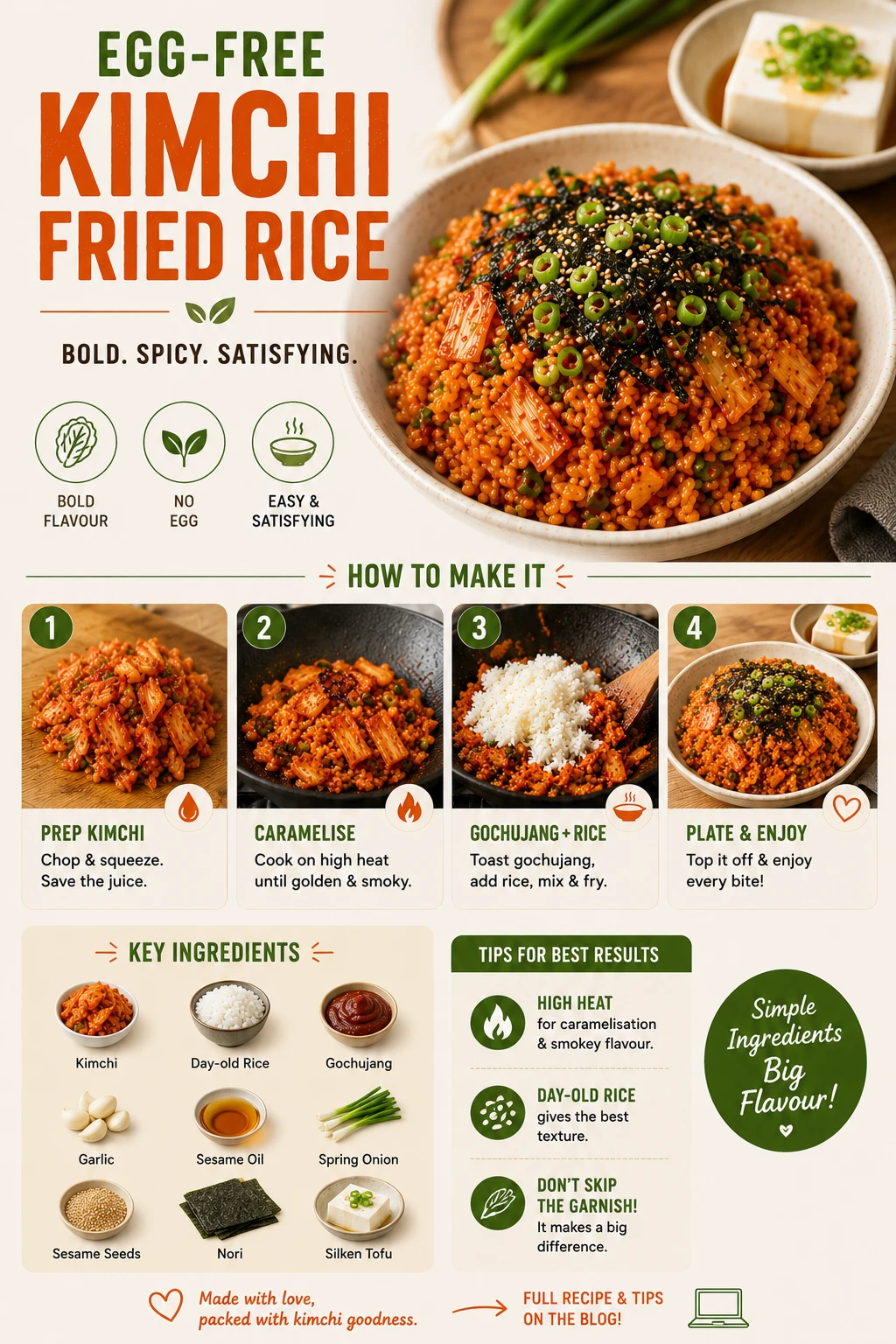
Kimchi Fried Rice Without Egg
계란 없는 김치볶음밥 · Egg-Free · 20 Minutes
- 2 cups day-old short-grain rice
- 1 cup aged kimchi (Stage 3), chopped
- 3 tbsp kimchi juice
- 1 tbsp gochujang
- 1½ tbsp sesame oil — off-heat ↑
- 1 tbsp neutral oil
- 2 tsp soy sauce
- 1 tsp sugar
- 3 spring onions, sliced ↑
- 2 tsp toasted sesame seeds ↑
- 100g cold silken tofu (optional) NEW
- 2 sheets nori, torn
- Chop kimchi, squeeze, reserve 3 tbsp juice. Prepare garnish. Cube silken tofu, keep cold.
- Heat wok until smoking. Add oil, then kimchi. Press-and-char 3–4 min.
- Toast gochujang 30 sec. Add rice, juice, soy, sugar. Toss 2 min, pressing 25 sec intervals for nurungji.
- Off heat, drizzle 1½ tbsp sesame oil, stir once. Plate immediately with garnish and cold tofu alongside.
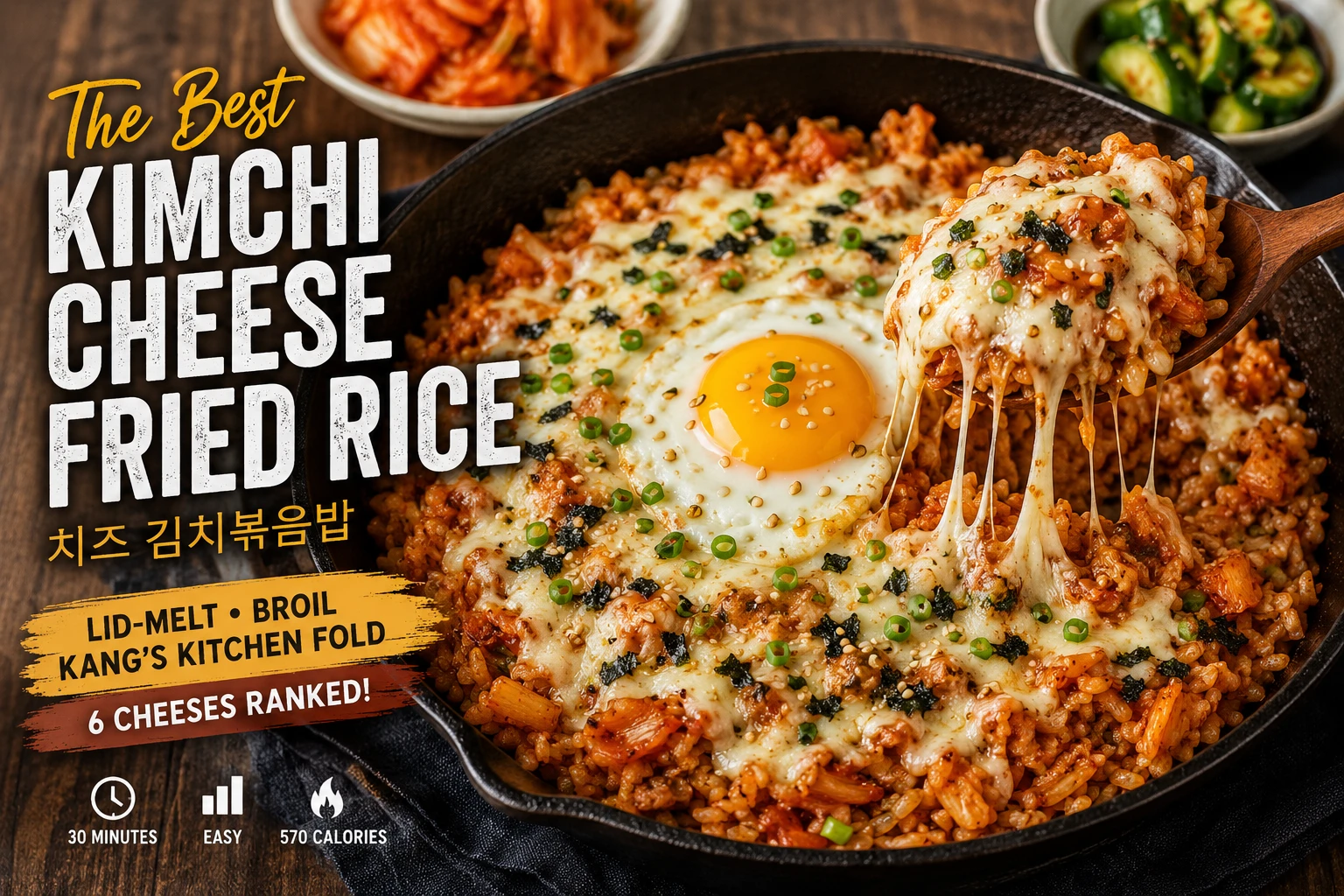
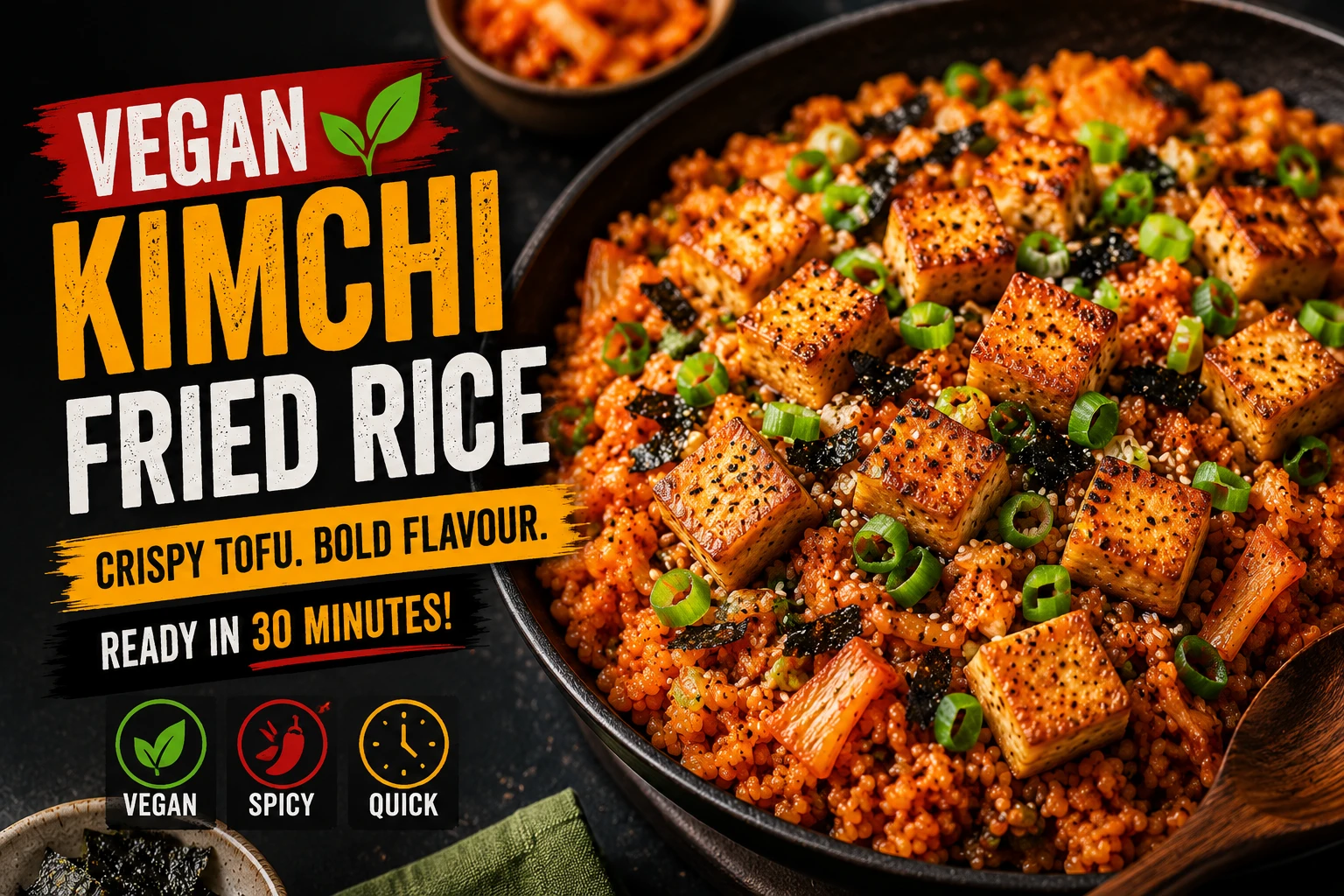
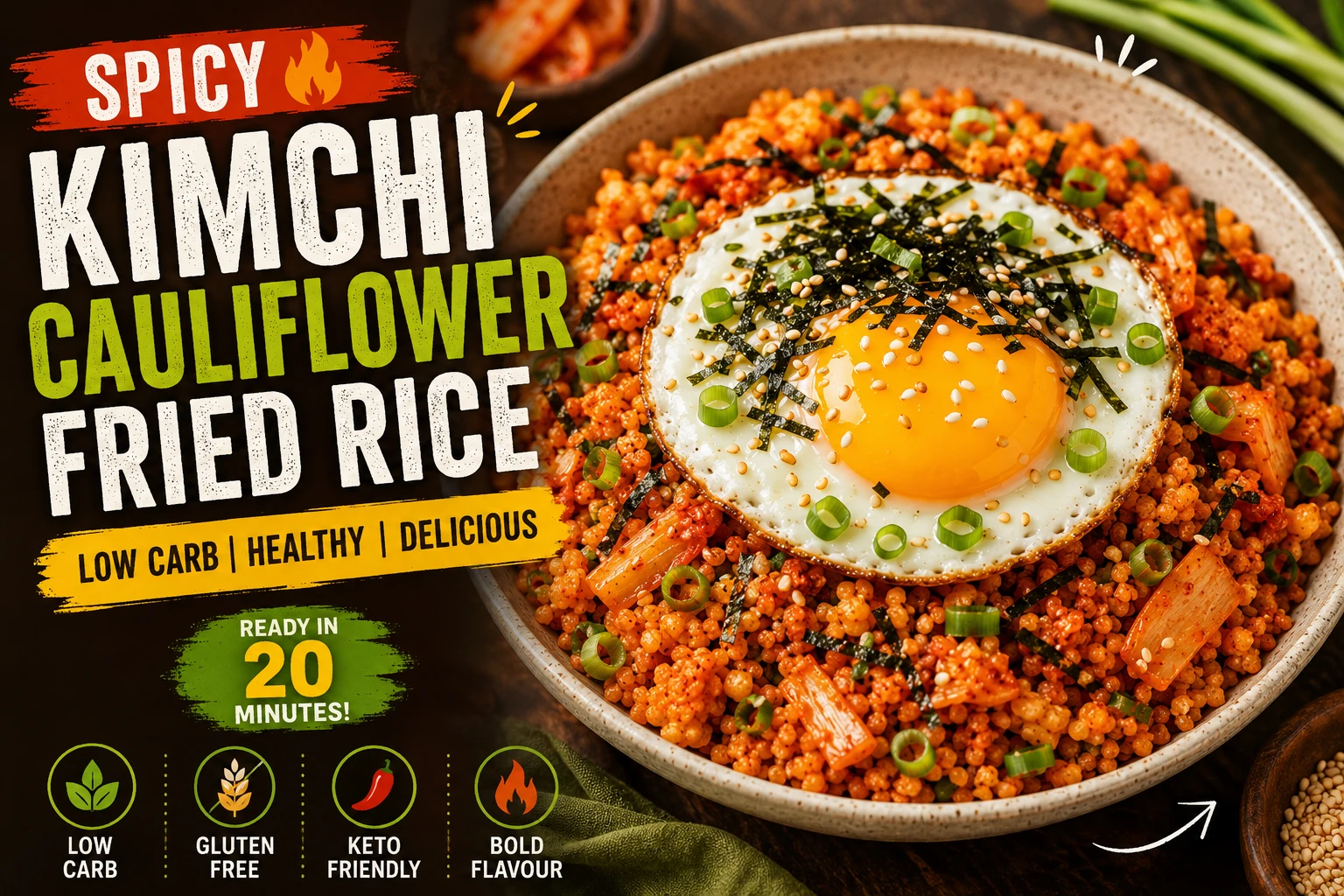
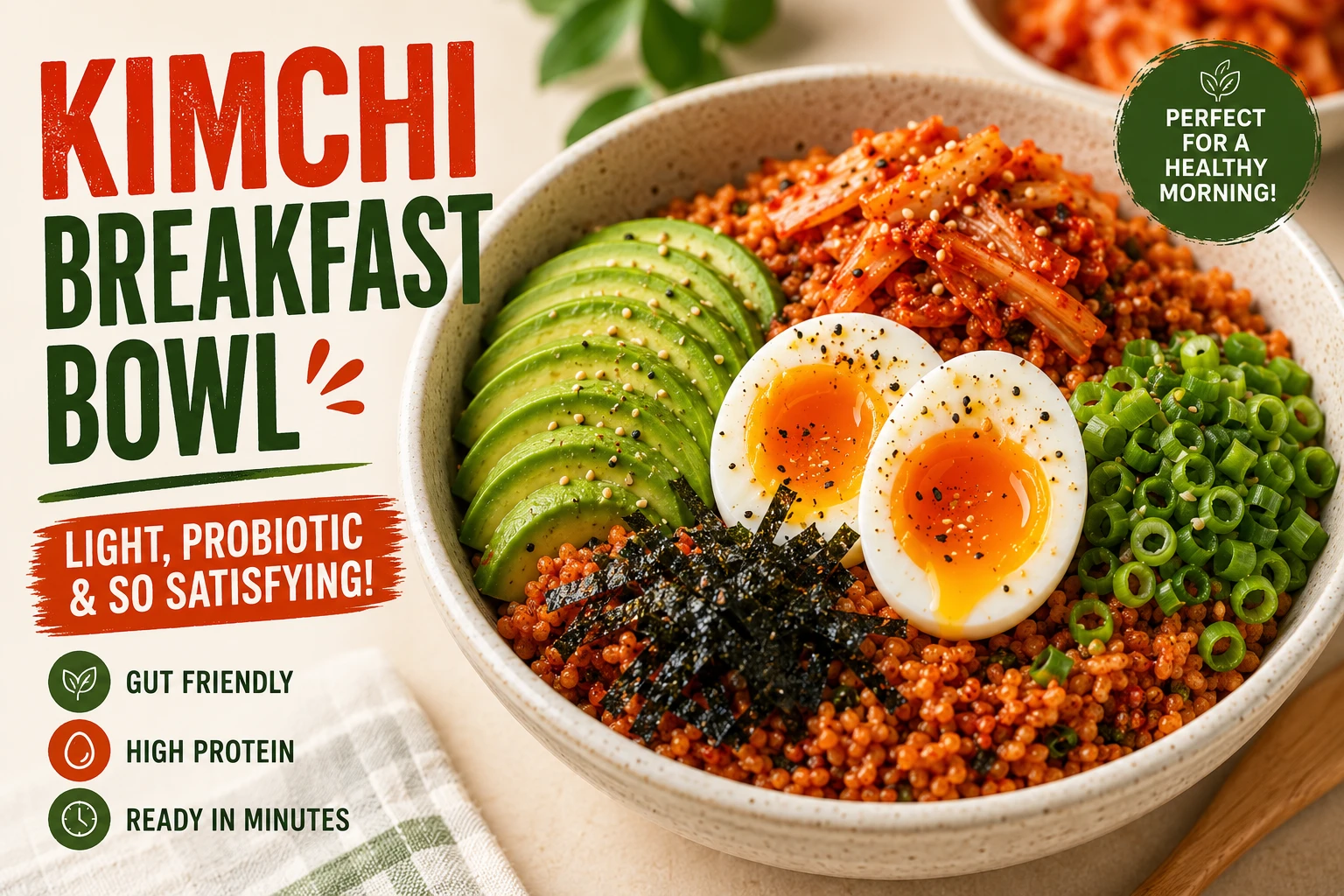
All 9 Kimchi Fried Rice Variations
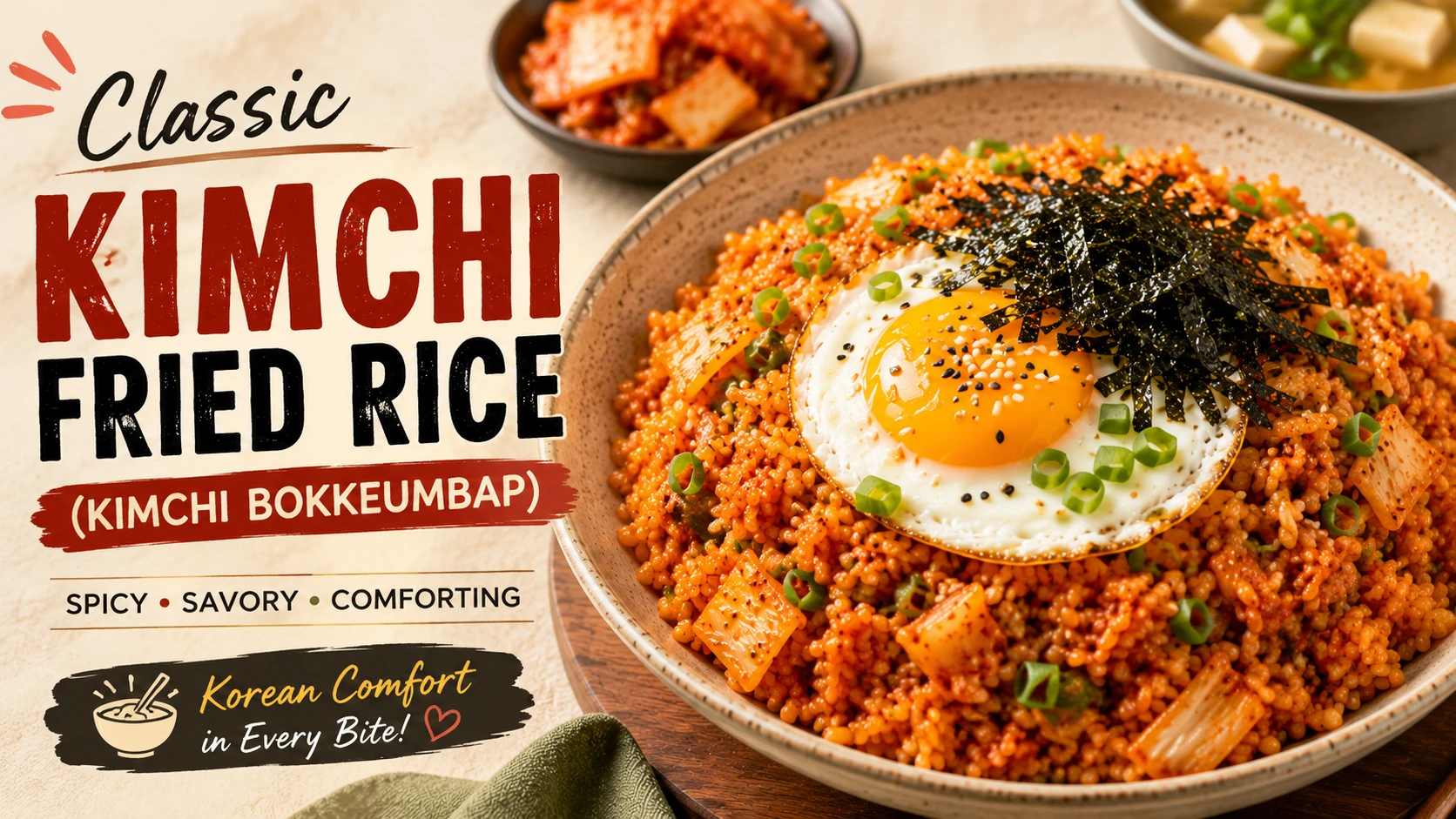
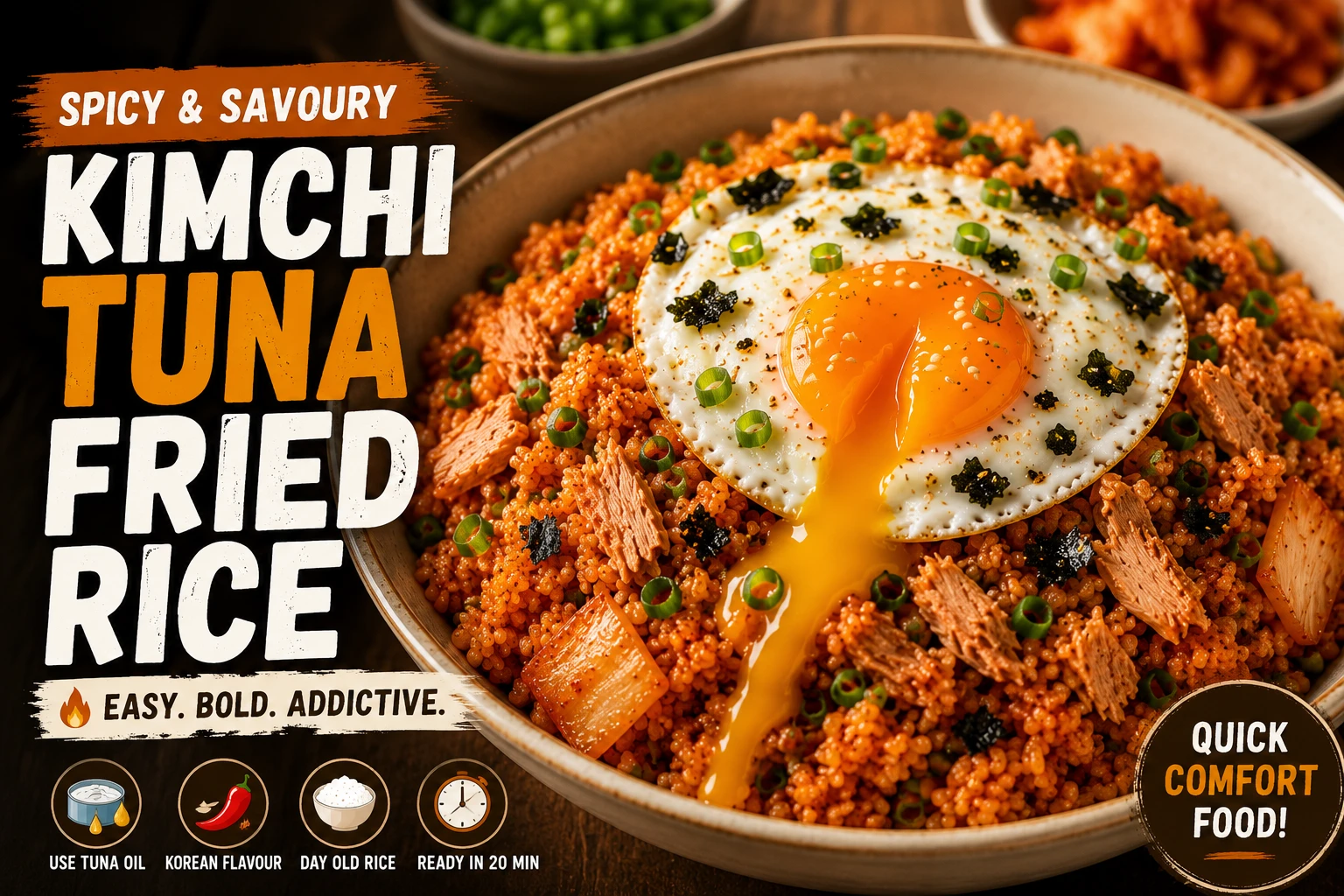
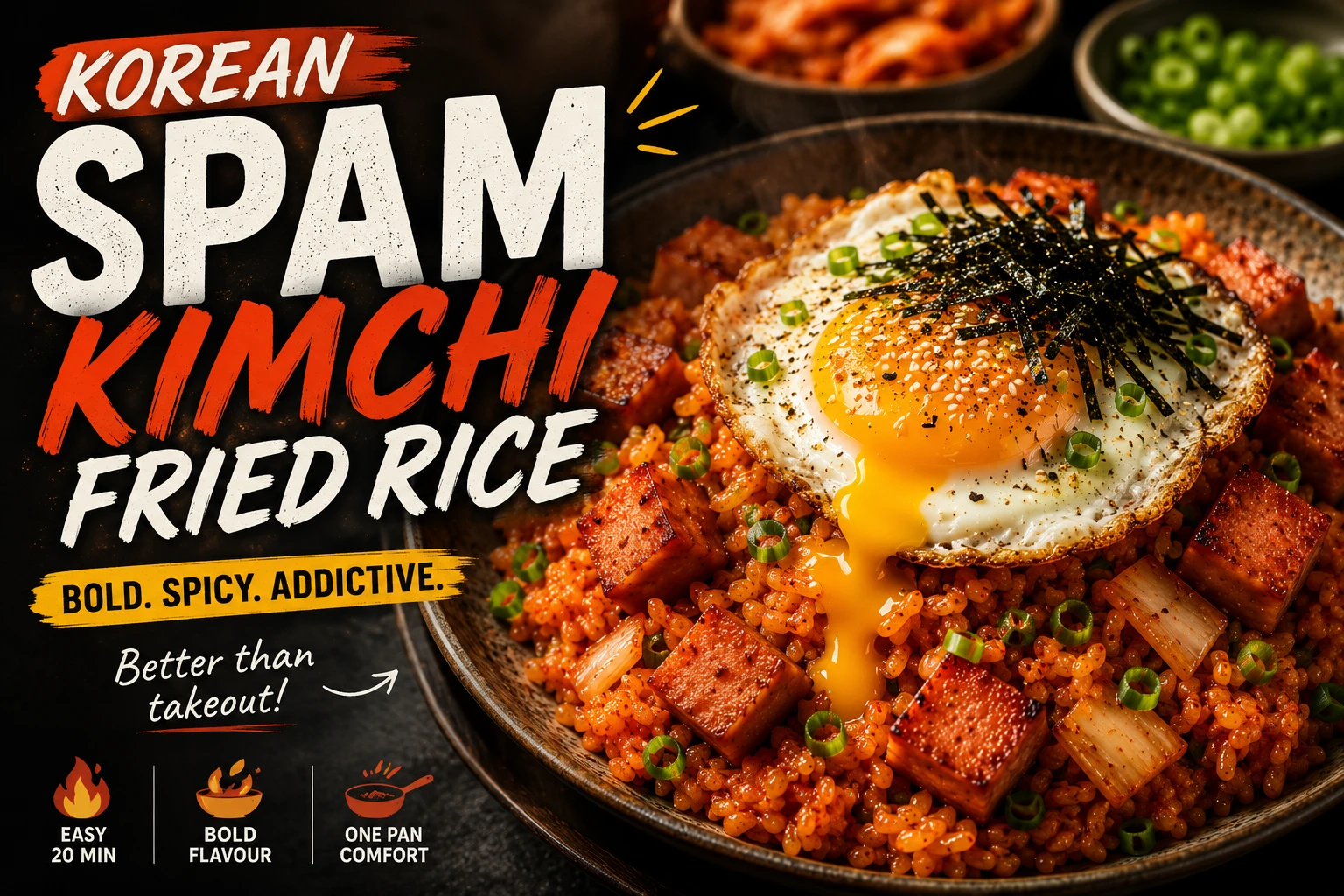
The KFR Ultimate Guide → covers all 9 in one place with the full comparison table.
Pairing Guide — Egg-Free Kimchi Fried Rice
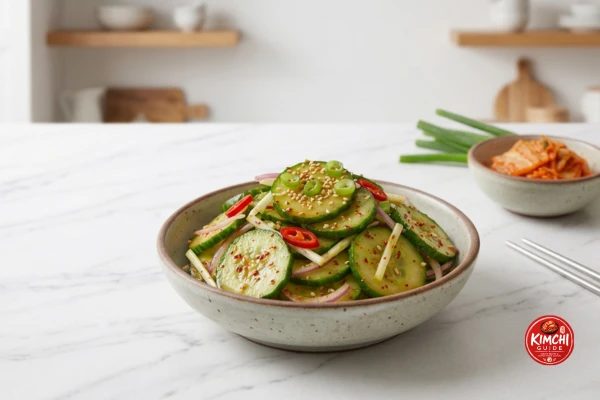
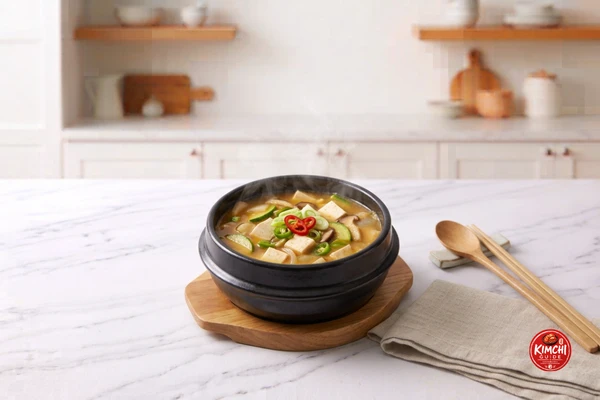
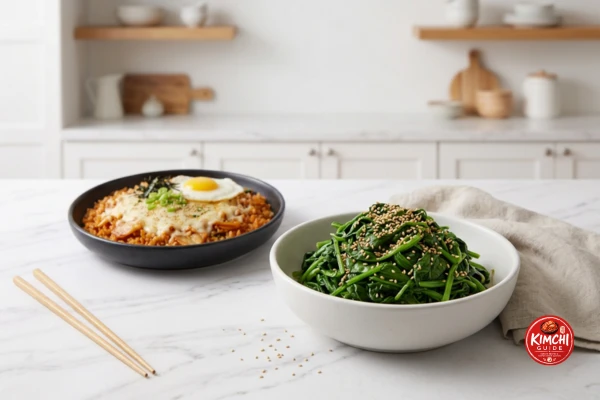
The egg-free version’s brighter, cleaner kimchi flavour pairs best with cooling, refreshing sides.



Storage & Reheating — Best KFR for Meal Prep
How Nutrition Changes Without the Egg
| Variation | Calories | Protein | Vegan? | Best For |
|---|---|---|---|---|
| Cauliflower Version | 180 | 10g | No (egg) | Low-carb, keto, lightest option |
| Without Egg ← This page | 360 | 7g | No (may use dairy) | Calorie management, meal prep |
| Vegan (tofu) | 380 | 14g | ✅ Fully vegan | Plant-based, egg-free protein |
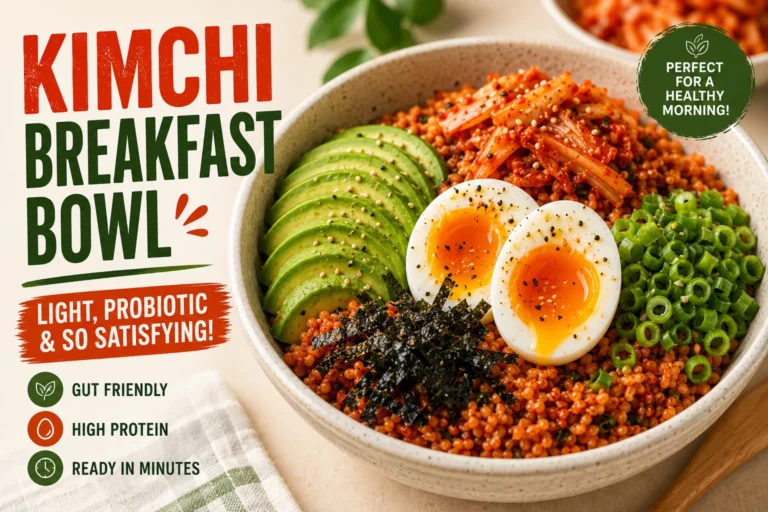
| Breakfast Bowl | 380 | 15g | No (egg, avocado) | Mornings, lighter portion |
| Tuna Version | 410 | 22g | No | Highest protein, lean |
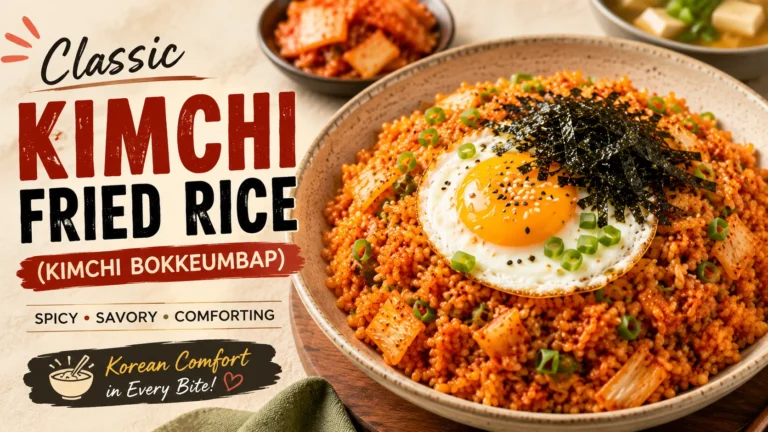
| Classic (with egg) | 420 | 14g | No | All occasions |
| Cheese Version | 570 | 19g | No | Entertaining, most indulgent |
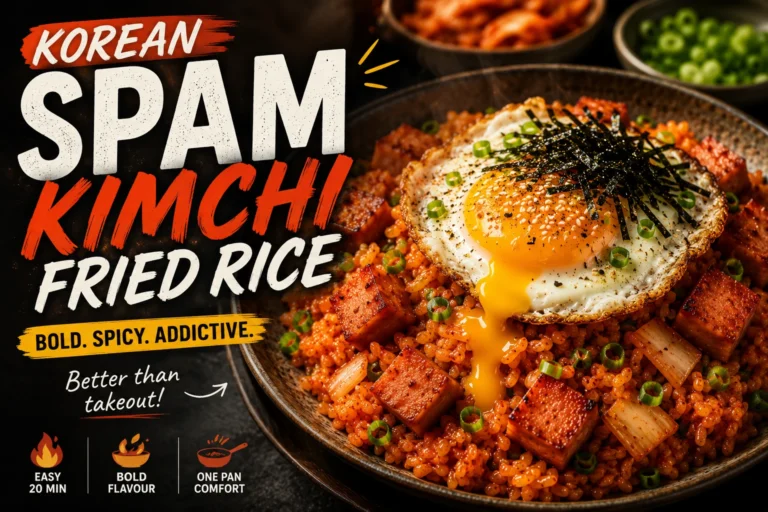
| Spam Version | 580 | 24g | No | Comfort food, budae flavour |
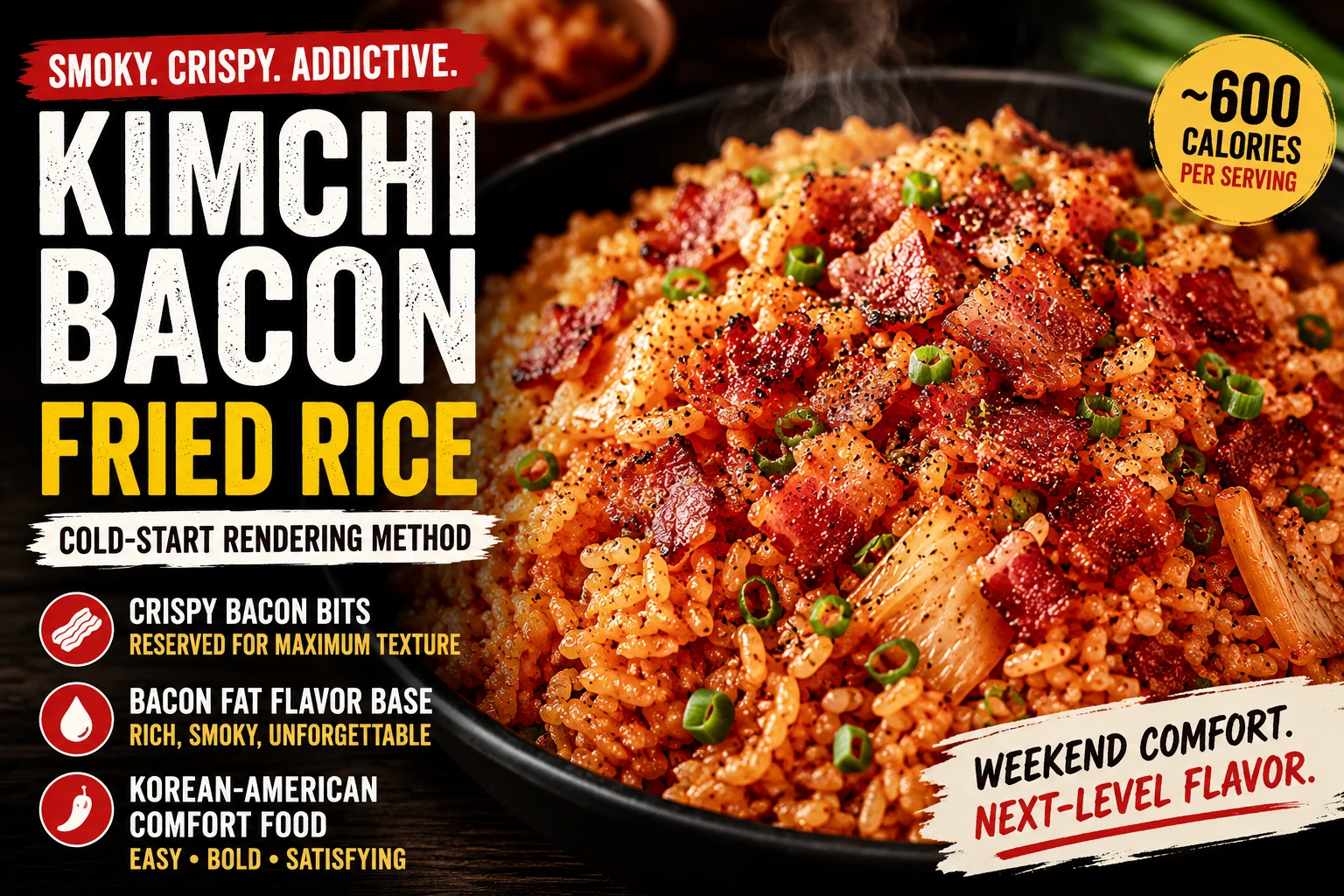
| Bacon Version | 600 | 21g | No | Weekend indulgence |
Egg-Free Kimchi Fried Rice FAQ — 20 Questions
Yes — increase sesame oil to 1½ tablespoons off-heat, use extra spring onions and doubled sesame seeds for garnish, and serve cold silken tofu alongside. The kimchi flavour is brighter without the egg yolk tempering it.
Egg allergy, vegan diet, cholesterol management, religious restrictions, or personal preference. Plenty of Korean households skip the egg by default.
Cold silken tofu, avocado slices, tahini drizzle, or simply increase sesame oil to 1½ tablespoons. All produce a satisfying, complete dish.
Yes — scrambling and folding it through at the end is a common Korean home-cooking approach if avoiding egg entirely isn’t the goal.
Calories drop from 420 to 360, protein from 14g to 7g, fat from 14g to 10g. Add silken tofu, tuna, or edamame to compensate for protein.
Not automatically — traditional kimchi contains fish sauce. Use vegan kimchi made with kelp brine to make this fully plant-based.
Yes — lighter and brighter. The kimchi’s fermented character comes through more directly without the egg moderating it.
Increase sesame oil to 1½ tablespoons off-heat and use an extra spring onion plus doubled sesame seeds for garnish. The rest is identical.
Cold silken tofu, sliced avocado, crispy shallots, extra cold kimchi, or a tahini drizzle — legitimate toppings, not substitutes.
Increase sesame oil to 1½ tbsp off-heat, add 1 tbsp tahini, or crush extra toasted sesame seeds into the rice while tossing.
The wok method is identical — you skip frying the egg, increase sesame oil, and press rice slightly longer per interval. 5 minutes faster overall.
Silken tofu served cold from the fridge, cubed, seasoned with a few drops of soy sauce and sesame oil. Do not fry it.
Yes — this is the best KFR variation for meal prep. Stores 3 days refrigerated, reheats evenly, freezes well.
3 days refrigerated, up to 2 months frozen — the only KFR variation that freezes successfully without quality loss.
Canned tuna, cubed Spam, cold silken tofu, edamame, or hemp seeds all work well as additions.
Yes, this recipe contains no egg. Wash equipment thoroughly if previously used for eggs, and check kimchi and tofu labels for severe allergies.
Replace soy sauce with tamari and use certified gluten-free gochujang. Everything else is naturally gluten-free.
3 spring onions mounded in the centre, 2 teaspoons of sesame seeds scattered widely, torn nori around the rim, and cold silken tofu alongside.
Yes — 5 minutes faster, 20 minutes total instead of 25, since there’s no egg to fry separately.
Yes, at 360 calories. For even lower, swap in cauliflower rice for approximately 180 calories.


💬 Leave a Comment
Made this recipe? Tell us how the egg-free version turned out for you.