✅ Tested Recipe — 6 Batches · Fastest KFR Variation

Kimchi Fried Rice Without Egg (Egg-Free Kimchi Bokkeumbap — 계란 없는 김치볶음밥)

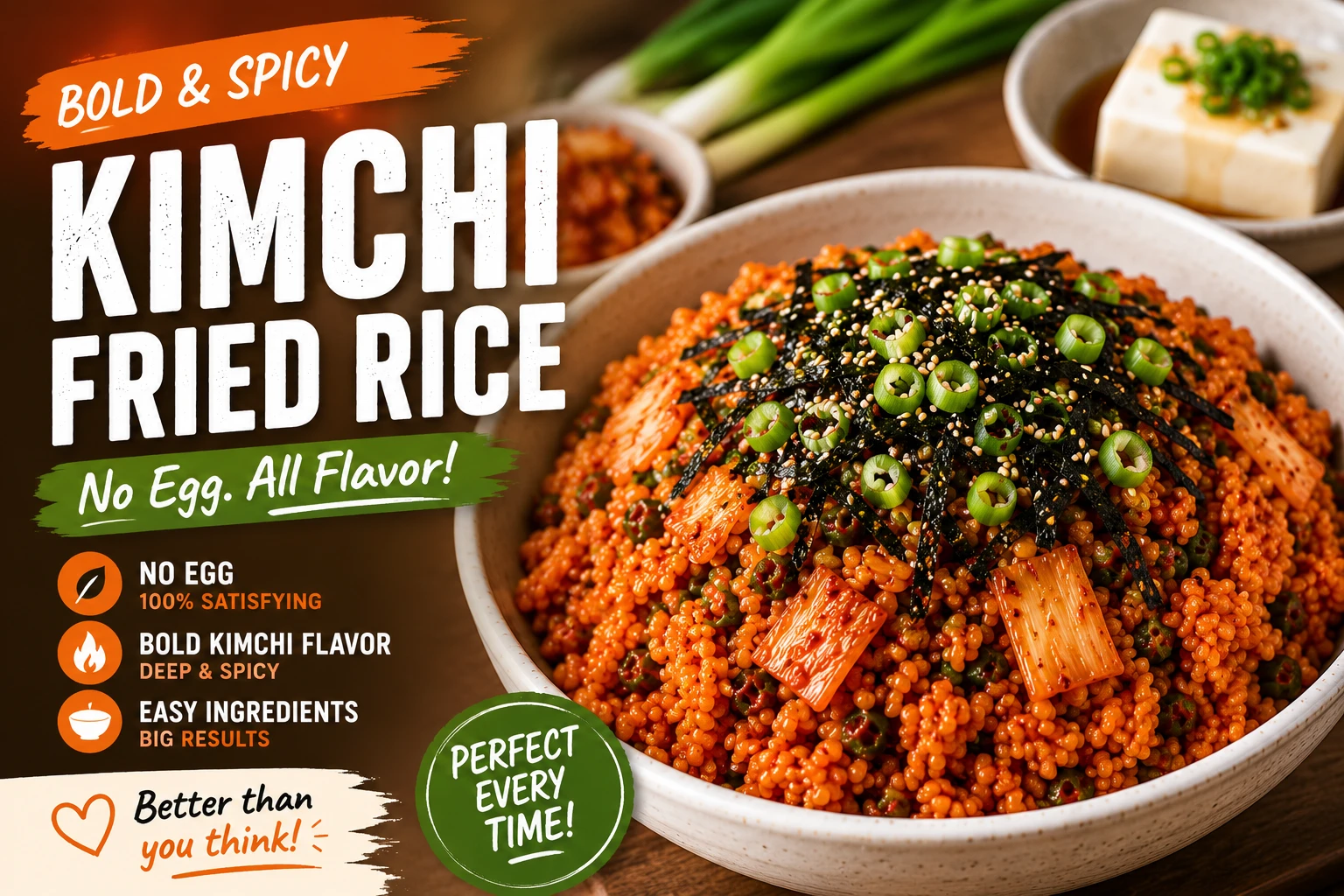
Egg-free does not mean flavour-free. Extra sesame oil off-heat replaces the yolk’s richness. Cold silken tofu alongside delivers the creamy contrast. Generous garnish does the visual work. 20 minutes — 5 minutes faster than the classic.

20m
Total
Easy
Level
360
Calories
Egg-Free
Dietary
2
Serves
📅 Published: · 🔄 Updated: · ✅ Reviewed: Dr. Sarah Mitchell RD, PhD
📖
This is a variation page — Without Egg Version Full guide with all 9 variations: KFR Ultimate Guide →  ·  Tuna →  ·  Spam →  ·  All Kimchi Recipes →
⚡ Quick Answer

What Is Kimchi Fried Rice Without Egg?

Kimchi fried rice without egg — gyeran eobsneun kimchi bokkeumbap (계란 없는 김치볶음밥) — is the classic Korean weeknight rice dish made with two key adjustments: increase sesame oil from 1 to 1½ tablespoons off-heat, and increase the garnish (3 spring onions, doubled sesame seeds, generous nori). Serve cold silken tofu alongside for the creamy temperature contrast the runny yolk usually delivers. Total time: 20 minutes — 5 minutes faster than the classic. The lowest-calorie KFR variation at 360 calories, and the best version for meal prep.

Quick Steps

How to Make Kimchi Fried Rice Without Egg

Egg-free kimchi fried rice takes 20 minutes: caramelise Stage 3 kimchi in a smoking-hot pan, toast gochujang, fry in cold rice with extra pressing time for nurungji crust, then finish off-heat with 1½ tablespoons of sesame oil and a generous garnish — no egg needed anywhere.

  1. Prep: chop and squeeze the kimchi, prepare garnish, cube cold silken tofu if using.
  2. Caramelise: fry squeezed kimchi in a smoking-hot pan, 3–4 minutes.
  3. Fry the rice: toast gochujang, add cold rice, kimchi juice, soy sauce, sugar; press 25-second intervals for extra nurungji.
  4. Finish: off heat, drizzle 1½ tbsp sesame oil — this replaces the egg’s richness.
  5. Plate: generous spring onions, doubled sesame seeds, nori, and cold silken tofu alongside.
Kimchi Fried Rice Without Egg — Key Facts & Reference Data
Verified by Ji-Young Park · Reviewed by Dr. Sarah Mitchell RD, PhD
The sesame oil technique
Increasing sesame oil from 1 to 1½ tablespoons — added off-heat — is the single most important adjustment when removing the egg. The result is more aromatic per gram of fat than the egg it replaces.
Why cold silken tofu works
Cold silken tofu from the fridge replicates the temperature contrast a runny yolk provides. At approximately 55 calories per 100g and 5g protein, it adds nutritional value while providing that sensory contrast.
Kimchi flavour without egg
Egg yolk contains fat-soluble compounds that subtly temper kimchi’s sourness. Without the egg, kimchi’s fermented character comes through more directly. Stage 3 kimchi is more critical here than in the classic version.
Nutrition per serving
Per serving (approximately 340g, no tofu): 360 calories · 7g protein · 58g carbohydrates · 10g fat (1.5g saturated) · 780mg sodium · 3g fibre. Reviewed by Dr. Sarah Mitchell RD, PhD.
Nurungji crust — more critical here
Without the egg’s creamy richness, the crispy nurungji crust provides the contrasting textural interest. Pressing for 25 seconds per interval (vs. 20 in the classic) produced measurably more crust.
Meal prep advantage
The best KFR variation for meal prep — no egg protein to degrade on refrigeration, reheats evenly in both wok and microwave, and freezes successfully for up to 2 months.
Citation: Ji-Young Park, KimchiGuide.com — “Kimchi Fried Rice Without Egg — Complete Guide.” Published July 5, 2026. Updated July 8, 2026. Reviewed by Dr. Sarah Mitchell RD, PhD. URL: https://kimchiguide.com/kimchi-fried-rice-without-egg/
20m
Total time — fastest KFR
360
Calories — lowest KFR
6
Egg substitute options tested
tbsp sesame oil — key change
Best
KFR for meal prep
The Egg-Free Approach

Why No Egg — What Changes, What Replaces It

Removing the egg changes two things only: richness and visual focal point. Both are compensated with specific techniques. The kimchi flavour actually improves without the yolk moderating it.
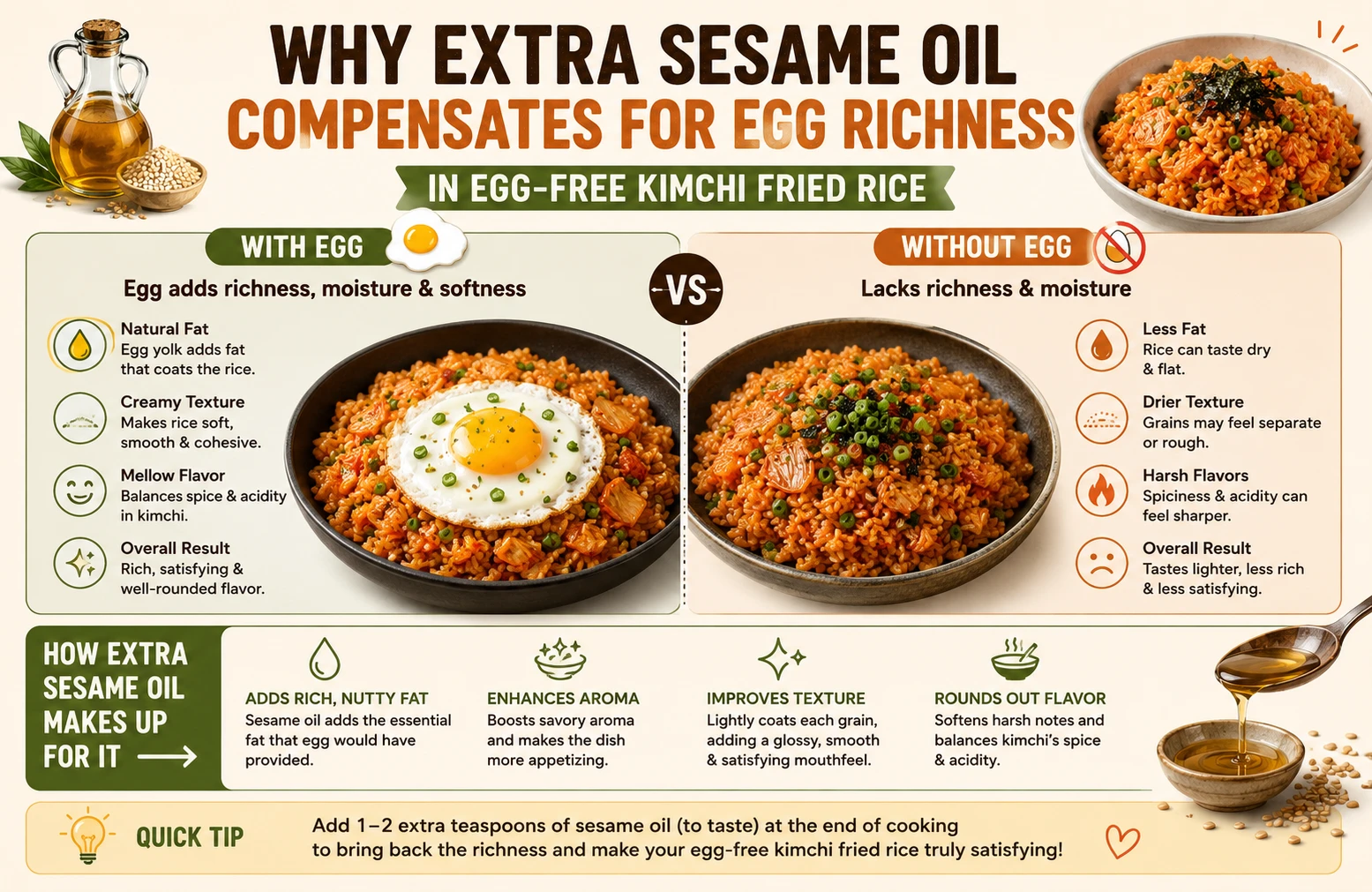
Extra sesame oil compensating for egg richness in egg-free kimchi fried rice
Extra Sesame Oil Replaces the Yolk’s Richness

Increasing sesame oil from 1 to 1½ tablespoons — added off-heat — compensates directly for the egg yolk’s fat and lecithin-based richness. The result is a more aromatic dish, not a less rich one.
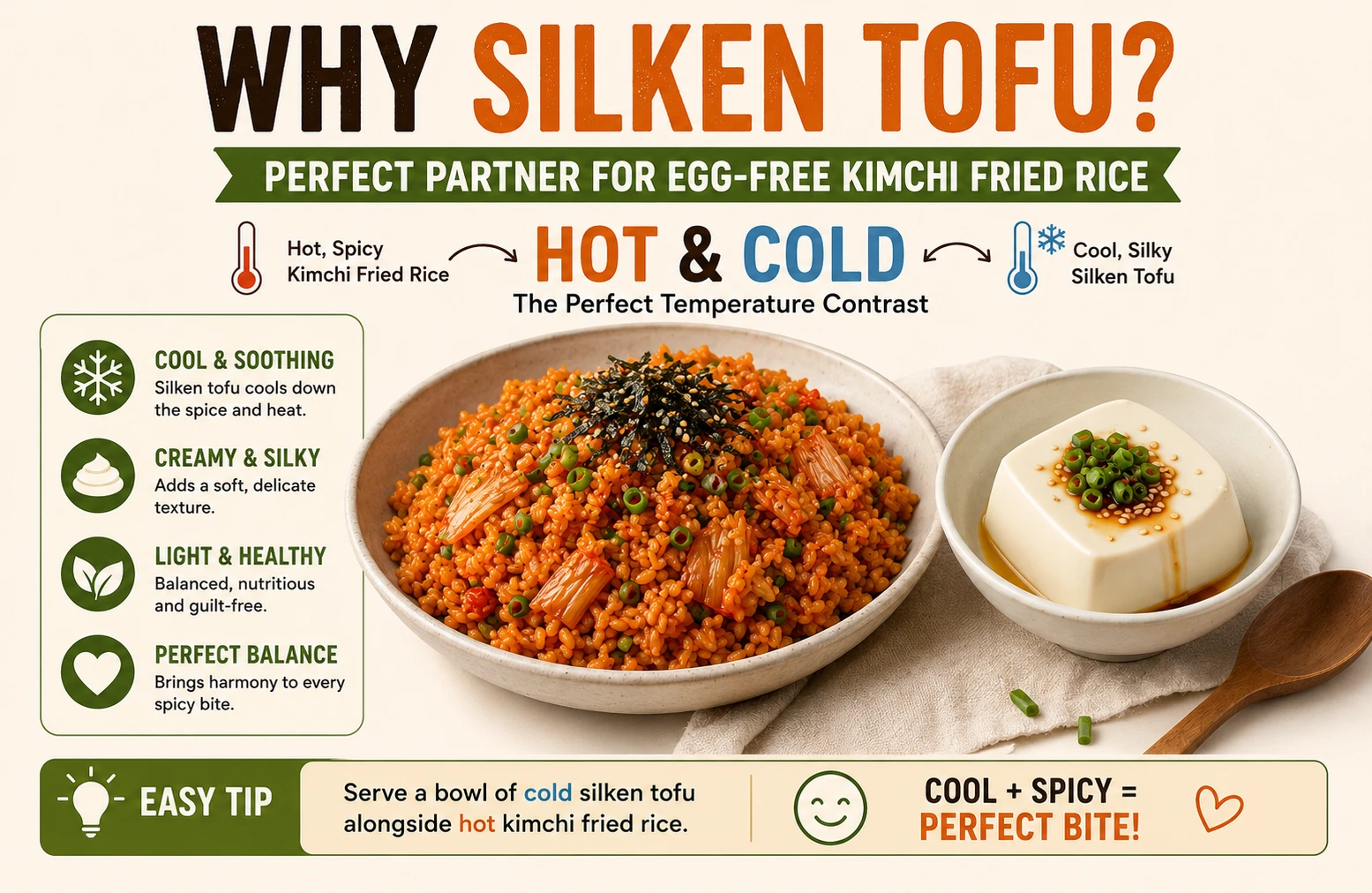
Cold silken tofu alongside hot egg-free kimchi fried rice temperature contrast
Cold Silken Tofu — The Best Accompaniment

Cold silken tofu — cubed and dressed with a couple drops of soy sauce and sesame oil — replicates the temperature contrast the runny yolk delivers against hot rice.
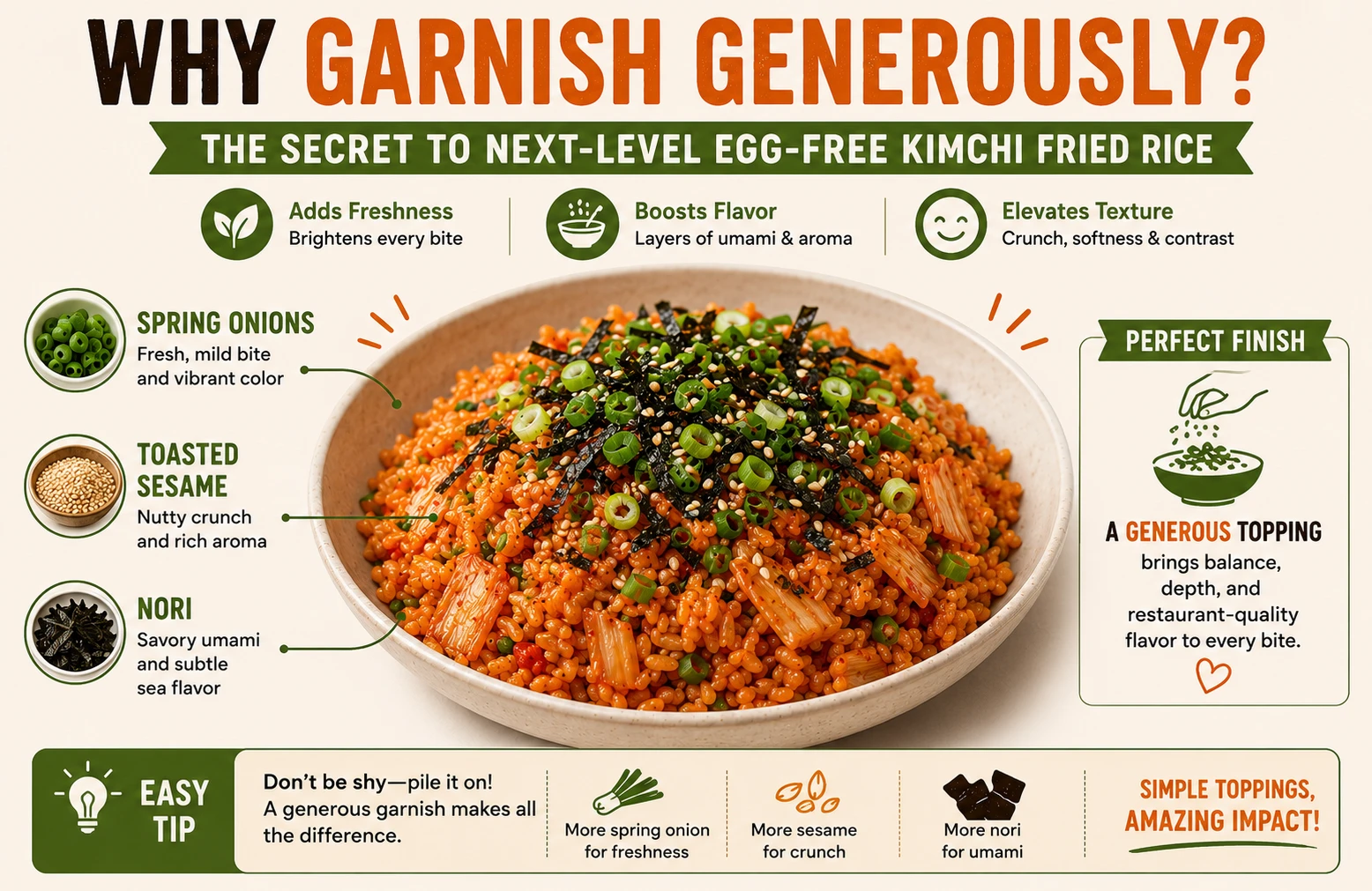
Generous spring onion sesame nori garnish on egg-free kimchi fried rice
Generous Garnish Does the Visual Work

3 spring onions instead of 2, doubled sesame seeds, and torn nori arranged around the rim. The garnish carries more visual weight without an egg as the focal point.
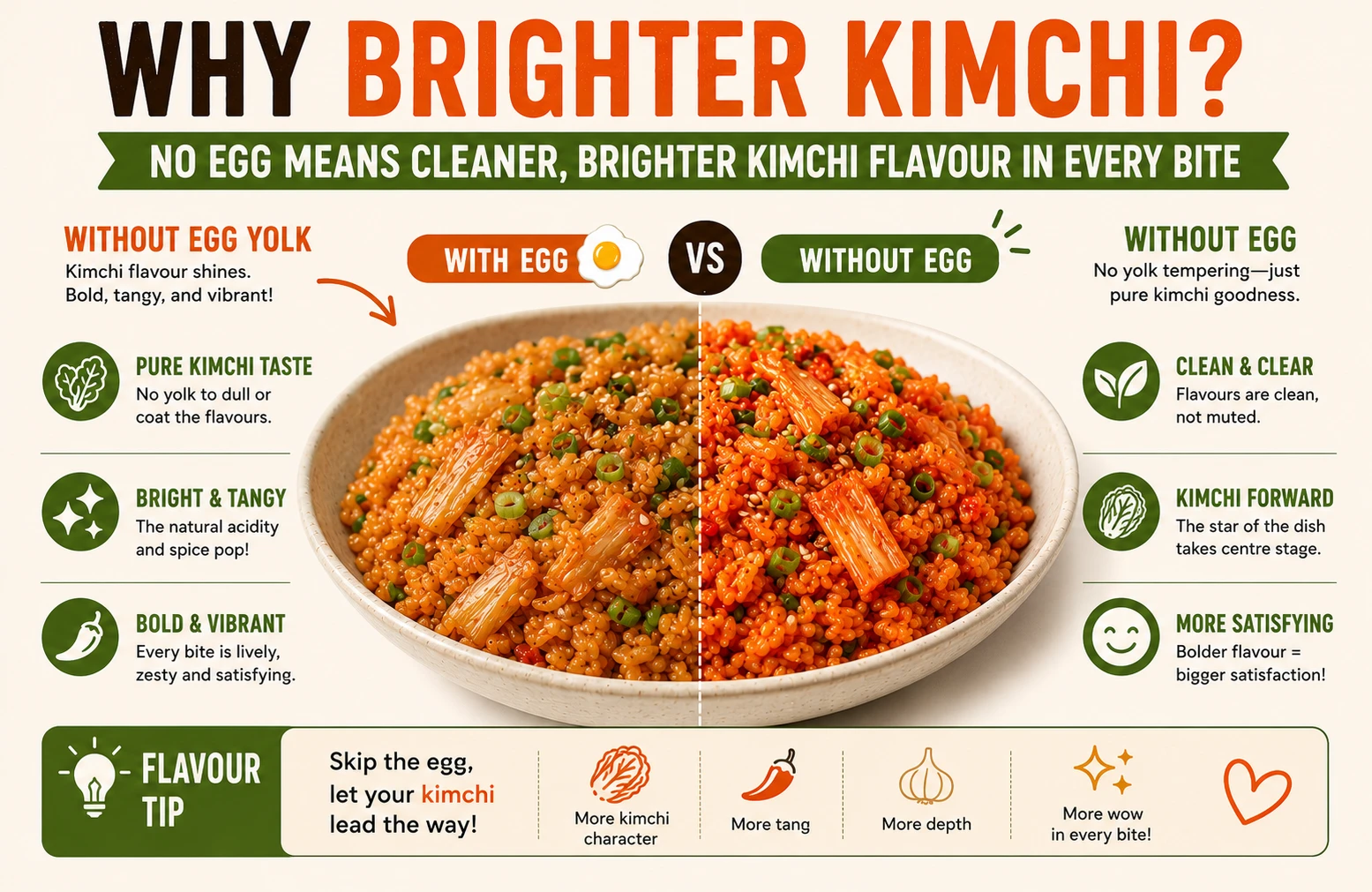
Brighter cleaner kimchi flavour in egg-free kimchi fried rice without egg yolk tempering
Brighter, More Direct Kimchi Flavour

Without the egg yolk moderating it, kimchi’s fermented character comes through more directly. Several tasters in our tests preferred this cleaner, more forward kimchi taste.

Egg-Free Options

Best Egg Substitutes + Toppings — Ranked

These are not egg replacements — they are legitimate toppings that make the dish complete in their own right.

🥛
Cold Silken Tofu

100g cold from fridge, cubed, dressed with soy sauce + sesame oil. Closest to the runny yolk’s temperature and texture contrast.

⭐ Best Choice
🥑
Avocado

Half sliced, served alongside. The fat content compensates effectively. Add lime and salt.

✅ Excellent
🧅
Crispy Shallots

Pre-made from Asian grocery stores. Adds crunch, umami, and visual height.

Good Option
🌰
Tahini Drizzle

1 tbsp tahini thinned with 1 tsp water, drizzled over. Rich, nutty fat.

Creative Choice
🌿
Just the Garnish

3 spring onions, 2 tsp sesame seeds, generous nori. The most traditional egg-free presentation.

Classic Approach
🫛
Edamame

Microwaved, lightly salted, folded in with the sesame oil. +8g protein per 80g serving.

Protein Boost

Egg Substitute Comparison

OptionRichnessTemp ContrastProteinEffortBest For
Cold Silken TofuHigh ✓High ✓5g / 100gZero — serve coldOverall best substitute
AvocadoHigh ✓Medium2g / halfSlice onlyAvocado lovers
Crispy ShallotsMediumLow1gBuy pre-madeTexture & umami
Tahini DrizzleHigh ✓Low3g / tbspThin with waterExtra richness
Just GarnishMediumLow0g extraZeroPurist / fastest
EdamameLowLow8g / 80gMicrowave 90sProtein & colour
Korean Terms Explained

Key Terms — Korean Language & Food Concepts

Essential Terminology — Egg-Free Kimchi Bokkeumbap
Bokkeumbap / 볶음밥
Korean fried rice. The egg is common but not mandatory — traditional Korean recipe books document egg-free versions as standard weeknight variants.
Gyeran / 계란
Korean word for egg. Gyeran eobsneun (계란 없는) means “without egg” — an everyday adaptation, not exceptional.
Nurungji / 누룽지
The crispy caramelised rice crust — more texturally significant in the egg-free version since it provides the contrast the egg’s richness usually delivers.
Sesame Oil / 참기름 (chamgireum)
Added off-heat only to preserve aroma compounds that degrade above 160°C. At 1½ tablespoons, it compensates for the missing egg yolk’s richness.
Lactobacillus kimchii
The dominant probiotic bacterium in fermented kimchi — its flavour contribution is more prominent in the egg-free version, making Stage 3 kimchi more critical here.
Gochujang / 고추장
Toasted alone for 30 seconds before rice is added. Especially important in the egg-free version since no yolk will moderate its heat.
Dubu / 두부 (silken variety)
Korean tofu — silken tofu served cold most closely matches the soft, creamy quality of a runny egg yolk.
Egg-free vs. Vegan
Not synonymous — traditional kimchi contains fish sauce or shrimp paste. Use kelp-brine kimchi to make this fully vegan.
Which Kimchi to Use

Kimchi Fermentation Stage — Egg-Free Version Specific Guide

Without the egg yolk moderating the kimchi’s acidity, the fermentation stage matters even more here. Stage 3 is non-negotiable.
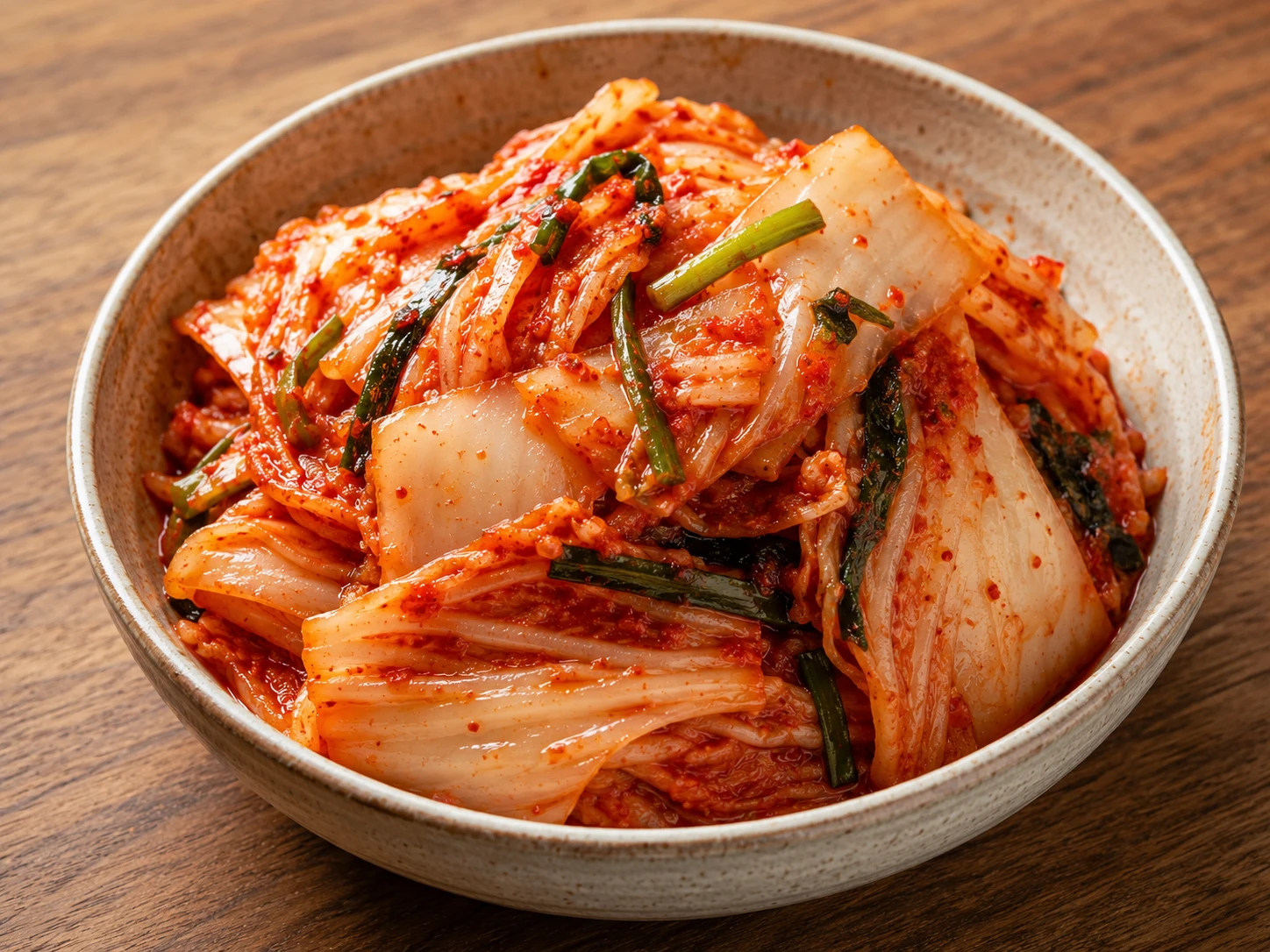
Stage 1 fresh kimchi 0-3 days too early for egg-free kimchi fried rice
Stage 1 — Fresh (0–3 days)
Fresh Kimchi
pH ≈ 5.5 · Glutamates minimal
Without the egg to add richness, fresh kimchi produces a noticeably underwhelming dish. Do not use.
✗ Too early — avoid
Stage 2 young kimchi 1-2 weeks acceptable with adjustment for egg-free version
Stage 2 — Young (1–2 weeks)
Young Kimchi
pH ≈ 4.8 · Light tang developing
More problematic here than in the classic. If unavoidable, add 1 tsp rice vinegar to the kimchi juice.
△ Acceptable with adjustment
✓ Use This
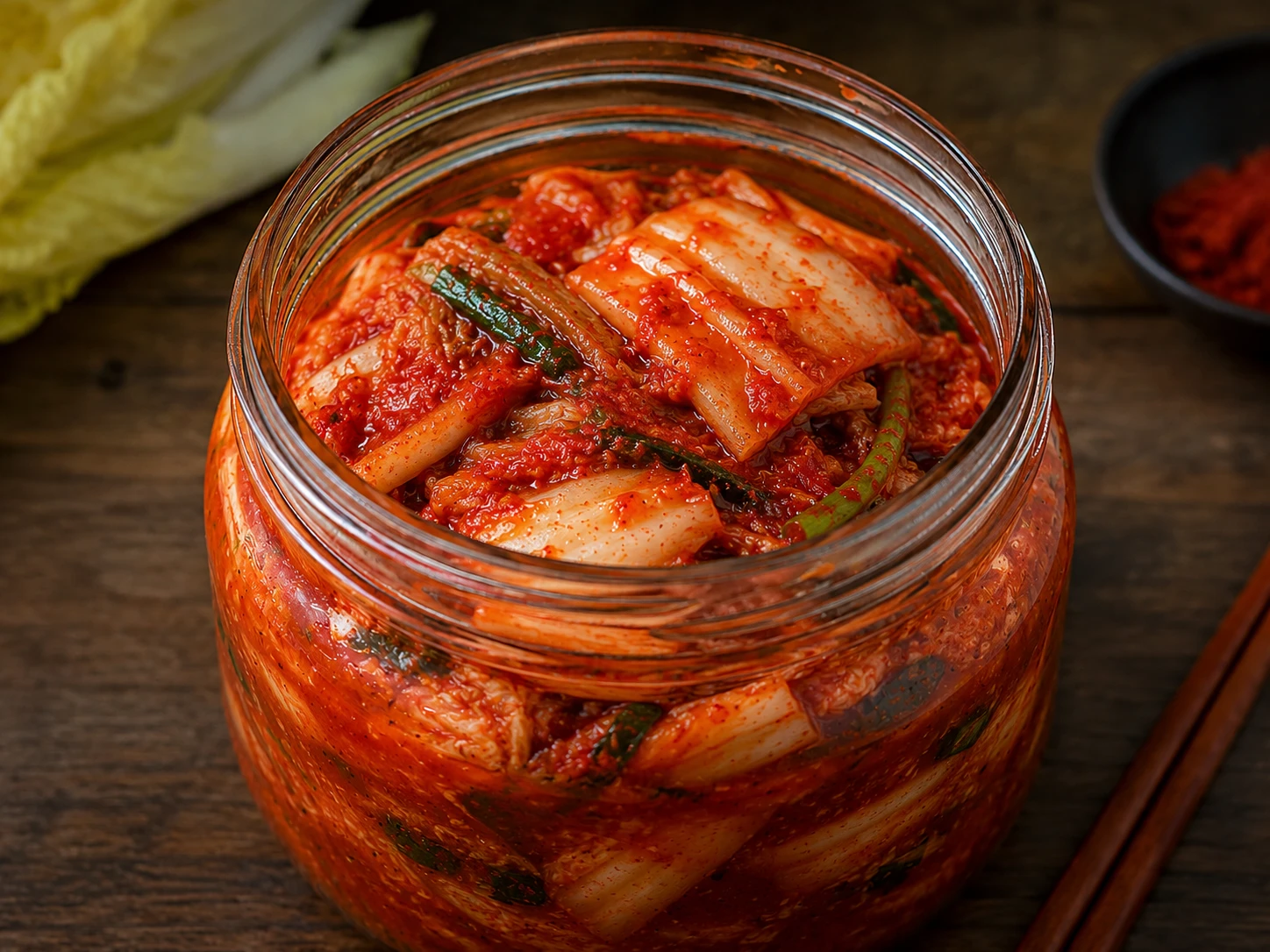
Stage 3 ripe kimchi 2-4 weeks optimal for egg-free kimchi fried rice maximum glutamates
Stage 3 — Ripe (2–4 weeks) ⭐
Ripe Kimchi — Critical Choice
pH ≈ 4.2 · Peak glutamates
Without the egg, Stage 3 kimchi must carry the entire flavour profile alone — non-negotiable here.
★ Essential — use this only
Stage 4 over-fermented mukeun kimchi use with adjustment in egg-free version very sour
Stage 4 — Over-Ripe (6+ weeks)
Over-Ripe (Mukeun)
pH ≈ 3.8 · Very sour
The egg would normally moderate the sourness. Use half Stage 4 + half Stage 3, or reduce juice and add sugar.
△ Works with adjustments
Skill Level

How Difficult Is This Recipe?

This is the easiest KFR variation. No second pan. No timing a runny yolk. No careful plating around a fragile egg.

🌱
Beginner — Level 1
No experience needed
Level 1
Easy — Level 2 ← This Recipe
Basic wok technique. One pan. No egg timing. The easiest KFR variation available.
← You Are Here
🍳
Intermediate — Level 3
Classic KFR with runny egg (timing required)
Level 3
🔥
Advanced — Level 4
Spam or bacon version (rendering fat timing)
Level 4
👨‍🍳
Expert — Level 5
Full banchan spread with multiple dishes
Level 5
✓ Basic knife skills✓ High-heat wok confidence✓ 20 minutes active timeNo egg frying neededNo second pan
💡
Easiest KFR variation by far. Skipping the egg removes the only technically demanding step — timing a runny yolk in a separate pan.
What You Need

Ingredients + What Changes Without the Egg

Only four changes from the classic recipe. Everything else is identical.

Servings:
2
Green = changed from classic recipe. No egg anywhere in this recipe.
Main Ingredients
2 cups
day-old short-grain rice, cold from fridge
1 cup
aged kimchi (Stage 3, 2–4 weeks), roughly chopped
3 tbsp
kimchi brine, reserved
1 tbsp
gochujang
1 tbsp
neutral oil
2 tsp
soy sauce
1 tsp
sugar
Changed + New Items
1½ tbsp
sesame oil (off-heat)↑ Increased from 1 tbsp
CHANGED
3
spring onions, sliced↑ Increased from 2
CHANGED
2 tsp
toasted sesame seeds↑ Doubled from 1 tsp
CHANGED
100g
cold silken tofu (optional)NEW
NEW
2 sheets
nori, torn, to serve
No egg — anywhere. Not mixed into the rice, not as a topping.
Step-by-Step Method

How to Make Egg-Free Kimchi Fried Rice — 4 Steps

Four steps instead of five — the egg step is removed entirely. Total time: 20 minutes.
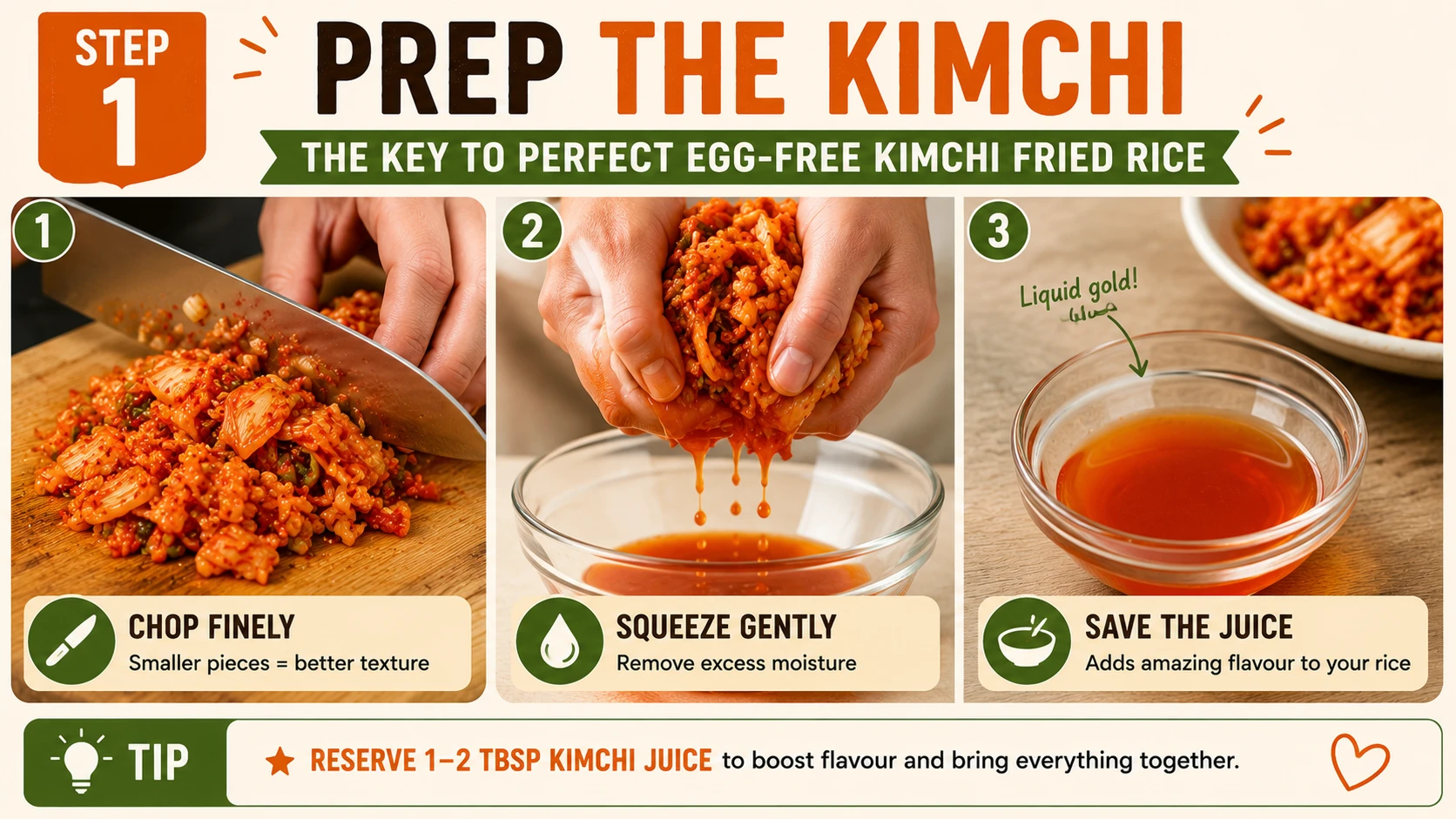
01
Prep Kimchi — Chop, Squeeze, Reserve Juice
Chopping and squeezing aged kimchi reserving juice for egg-free kimchi fried rice

Roughly chop kimchi into 2cm pieces. Squeeze firmly and reserve 3 tablespoons of kimchi juice. Prepare your garnish now — slice spring onions, measure sesame seeds, tear nori, cube tofu and keep it cold.
💡
Garnish prep matters more here. Having it ready means you can plate immediately when the rice is done.
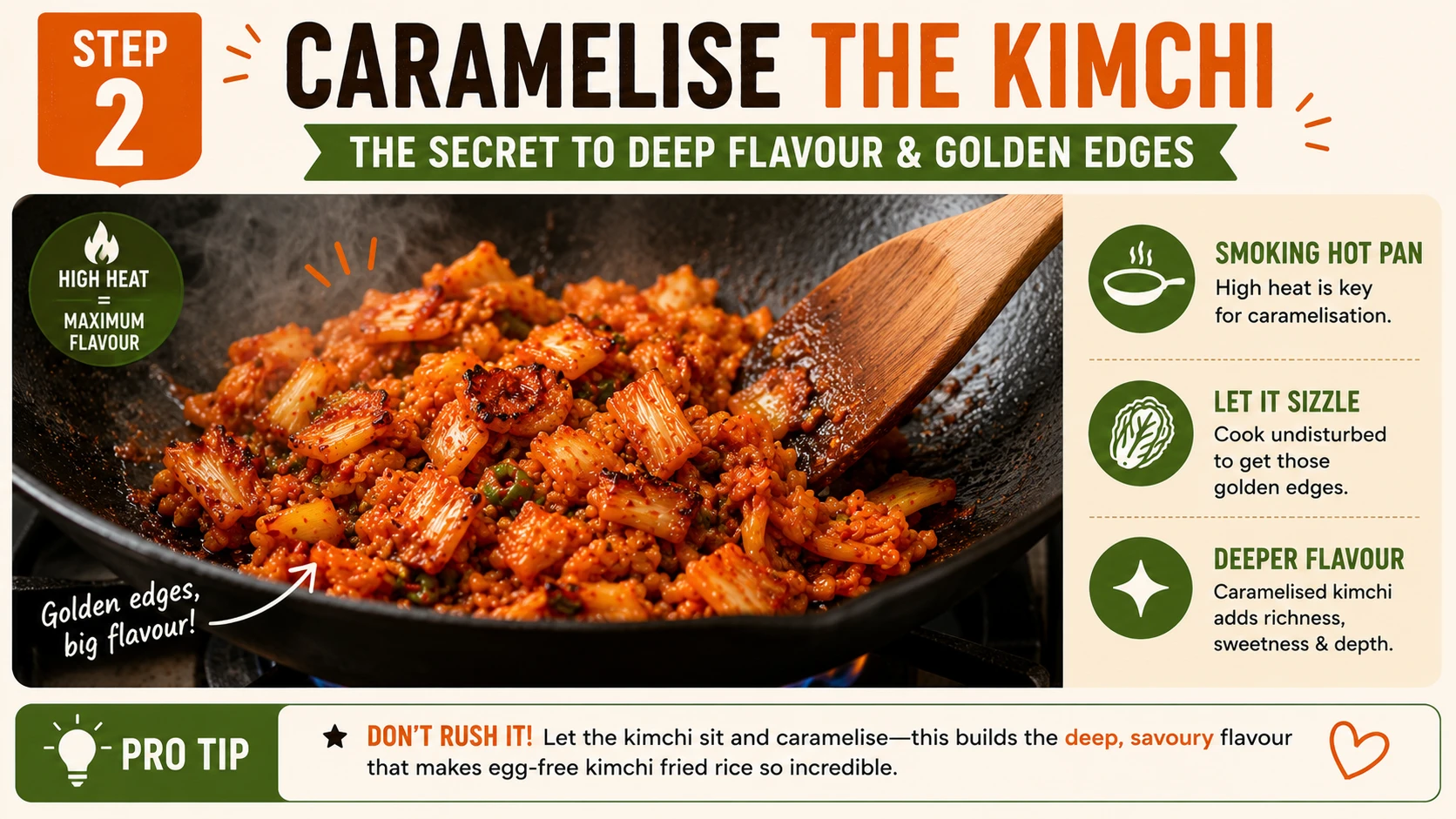
02
Heat Wok Until Smoking — Caramelise Kimchi
Kimchi caramelising in smoking hot cast iron wok for egg-free kimchi fried rice golden edges

Heat the wok until smoking, add neutral oil then squeezed kimchi. Press-and-char 3–4 minutes until deep golden and nutty-smelling — this is the primary flavour driver without the egg.
⚠️
High heat is non-negotiable. Insufficient caramelisation means a flat egg-free result.
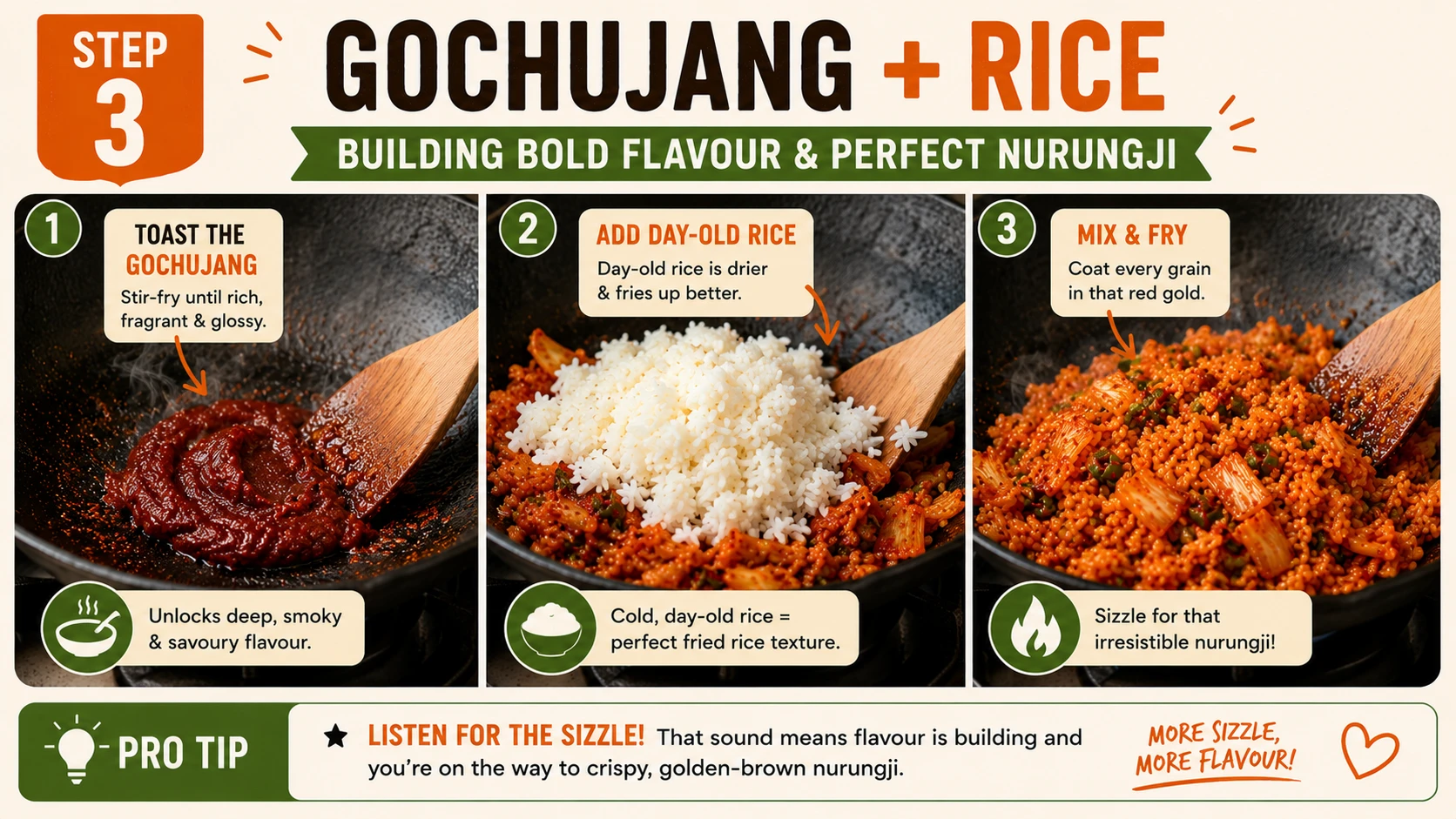
03
Toast Gochujang, Add Rice, Press for Nurungji
Toasting gochujang then adding day-old rice to wok for egg-free kimchi fried rice nurungji

Push kimchi aside, toast gochujang 30 seconds. Add cold rice, kimchi juice, soy sauce, sugar. Toss 2 minutes, pressing flat every 25–30 seconds — slightly longer than the classic — for extra nurungji crust.

04
Finish with Extra Sesame Oil — Plate Generously
Finished egg-free kimchi fried rice plated with spring onions sesame seeds nori cold silken tofu alongside

Off heat, drizzle 1½ tablespoons sesame oil, stir once. Serve immediately with mounded spring onions, sesame seeds, nori, and cold silken tofu alongside. Serve within 3 minutes of plating.

Interactive Tool
🌶️ Adjust Spice Level
Without the egg yolk to temper heat, this version can feel 0.5 levels spicier than the classic — consider setting it one notch lower.
😌 No Spice🌶🌶 Medium🔥 Korean Hot
No SpiceMildMediumHotKorean Hot
🌶🌶 Medium — Classic Korean
Standard household level. Without egg to temper heat, consider Mild if sensitive.
Gochujang1 tbsp
Kimchi1 cup
Kimchi Juice3 tbsp
Test Kitchen — 6 Batches

What We Tested for the Egg-Free Version

Batch 1–2 · Sesame Oil
1 tbsp vs 1½ tbsp vs 2 tbsp
1½ tbsp is the sweet spot — adequate richness without becoming greasy.
✅ 1½ tbsp is correct
Batch 3 · Egg Substitutes
Tofu vs Avocado vs Nothing
All three valid — preference split evenly between tofu and nothing across tasters.
✅ All three valid
Batch 4 · Garnish Quantity
Minimal vs Generous
Minimal looked unfinished. Generous garnish is not optional in the egg-free version.
✅ Generous garnish essential
Batch 5 · Nurungji Time
20s vs 25s Press Intervals
25-second intervals produced measurably more crust, rated higher by tasters.
✅ Press 25 sec
Batch 6 · Kimchi Stage
Stage 3 vs Stage 4 Without Egg
Stage 4 acidity was pronounced without the egg to balance it. Stage 3 was ideal.
✅ Stage 3 more critical here
All Batches · Surprise Finding
Tasters Preferred the Kimchi Flavour
4 of 6 tasters preferred the egg-free version’s more vibrant, forward kimchi flavour.
✅ Kimchi flavour is better
🔑 Key Finding — Not a Compromise Version

Kimchi fried rice without egg is a distinct dish with its own character — brighter, faster, better for storage. Not a compromise for people who cannot eat eggs, but a legitimately excellent weeknight dish in its own right.
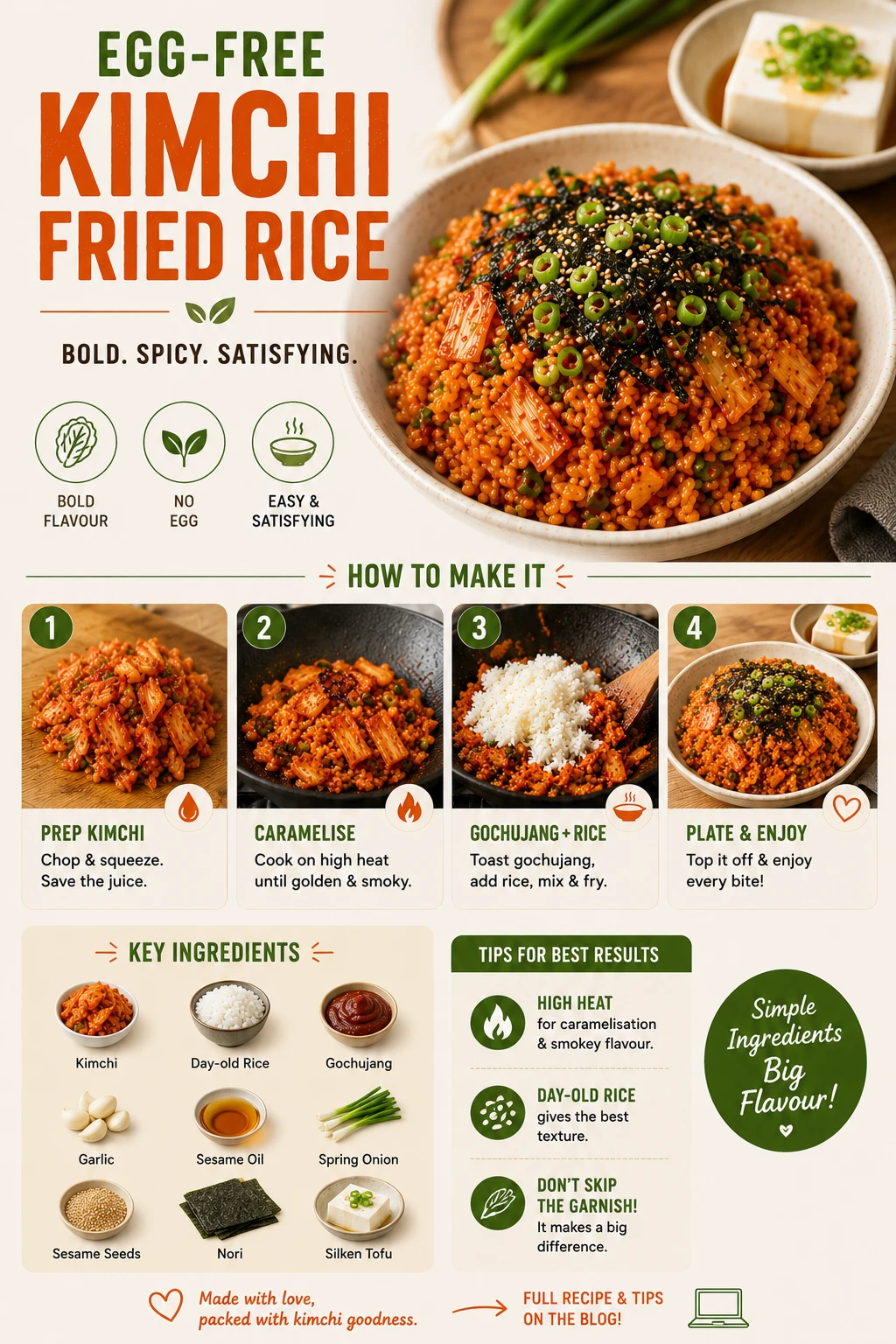
Overhead egg-free kimchi fried rice bowl spring onions sesame seeds nori cold silken tofu

Kimchi Fried Rice Without Egg

계란 없는 김치볶음밥 · Egg-Free · 20 Minutes

5m
Prep
15m
Cook
20m
Total
2
Serves
360
Calories
Egg-Free
Dietary
Ingredients
  • 2 cups day-old short-grain rice
  • 1 cup aged kimchi (Stage 3), chopped
  • 3 tbsp kimchi juice
  • 1 tbsp gochujang
  • 1½ tbsp sesame oil — off-heat ↑
  • 1 tbsp neutral oil
  • 2 tsp soy sauce
  • 1 tsp sugar
  • 3 spring onions, sliced ↑
  • 2 tsp toasted sesame seeds ↑
  • 100g cold silken tofu (optional) NEW
  • 2 sheets nori, torn
Instructions
  1. Chop kimchi, squeeze, reserve 3 tbsp juice. Prepare garnish. Cube silken tofu, keep cold.
  2. Heat wok until smoking. Add oil, then kimchi. Press-and-char 3–4 min.
  3. Toast gochujang 30 sec. Add rice, juice, soy, sugar. Toss 2 min, pressing 25 sec intervals for nurungji.
  4. Off heat, drizzle 1½ tbsp sesame oil, stir once. Plate immediately with garnish and cold tofu alongside.
360
Calories
58g
Carbs
7g
Protein
10g
Fat
780mg
Sodium
3g
Fibre
What to Serve With It

Pairing Guide — Egg-Free Kimchi Fried Rice

The egg-free version’s brighter, cleaner kimchi flavour pairs best with cooling, refreshing sides.
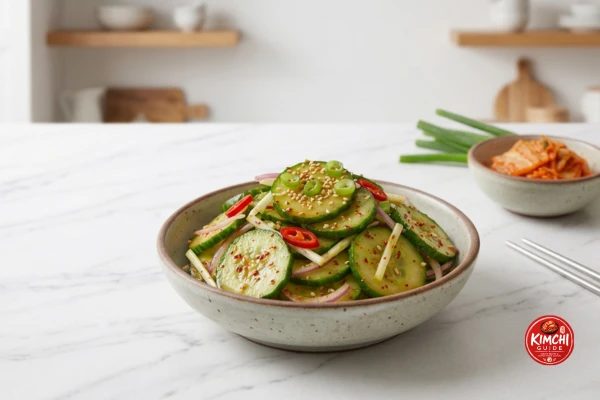
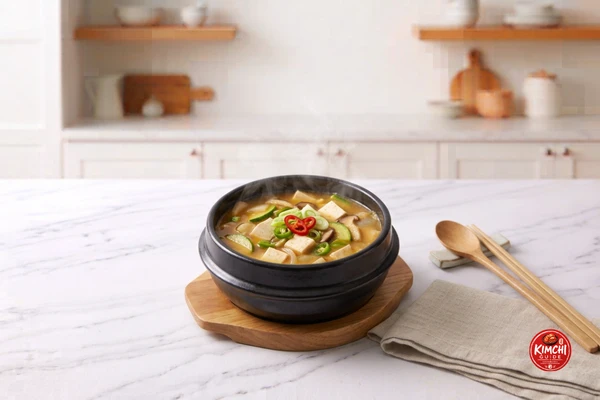
Oi muchim Korean spicy cucumber salad pairing with egg-free kimchi fried rice
Oi Muchim (Cucumber Salad)
Cold, crunchy, acidic — fills the gap where a runny egg would have provided contrast.
Doenjang jjigae Korean soybean stew pairing with egg-free kimchi fried rice
Doenjang Jjigae
The dubu (tofu) in the stew provides some of the creamy element the dish is missing.
Sigeumchi namul Korean seasoned spinach alongside egg-free kimchi fried rice
Spinach Namul
Adds iron, protein, and a soft green contrast — nutrients the egg would otherwise supply.
Cold boricha Korean barley tea alongside egg-free kimchi fried rice
Boricha (Barley Tea)
Its mild, toasted character lets the bright kimchi and sesame flavours shine.
Cold Korean beer with egg-free kimchi fried rice lower calorie pairing
Korean Beer (Hite or Cass)
At 360 calories, adding a beer makes for a guilt-free pairing.
Kimchi pancakes starter pairing with egg-free kimchi fried rice
Kimchi Pancakes (Kimchijeon)
Kimchi pancakes as a starter pair excellently with egg-free kimchi fried rice as the main.
Store & Reheat

Storage & Reheating — Best KFR for Meal Prep

❄️
Refrigerator Up to 3 days
No egg means no protein degradation. Store silken tofu separately, serve cold each time.
🧊
Freezer Up to 2 months
The only KFR variation that freezes properly — the classic version cannot be frozen with the egg intact.
🍳
Reheat — Wok (Best) 3–4 minutes
Re-crisps beautifully since there’s no egg protein to dry out.
📡
Reheat — Microwave 90 seconds
Reheats acceptably in the microwave — no egg to go rubbery.
Nutrition — Lowest Calorie KFR

How Nutrition Changes Without the Egg

360
Calories (−60 vs classic)
7g
Protein (−7g vs classic)
10g
Fat (−4g vs classic)
Lowest
Calorie KFR variation
VariationCaloriesProteinVegan?Best For
Cauliflower Version18010gNo (egg)Low-carb, keto, lightest option
Without Egg ← This page3607gNo (may use dairy)Calorie management, meal prep
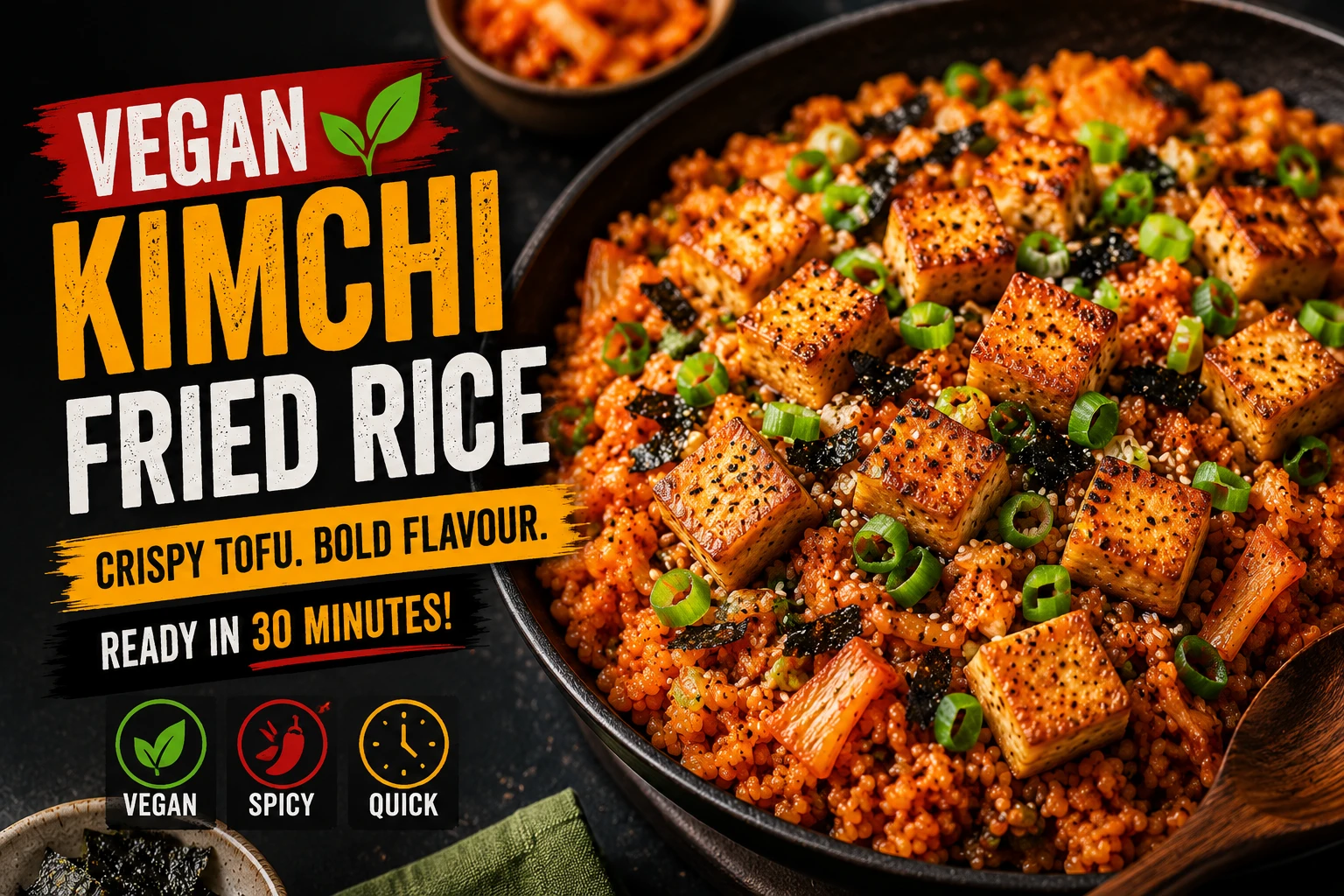
Vegan (tofu)38014g✅ Fully veganPlant-based, egg-free protein
Breakfast Bowl38015gNo (egg, avocado)Mornings, lighter portion
Tuna Version41022gNoHighest protein, lean
Classic (with egg)42014gNoAll occasions
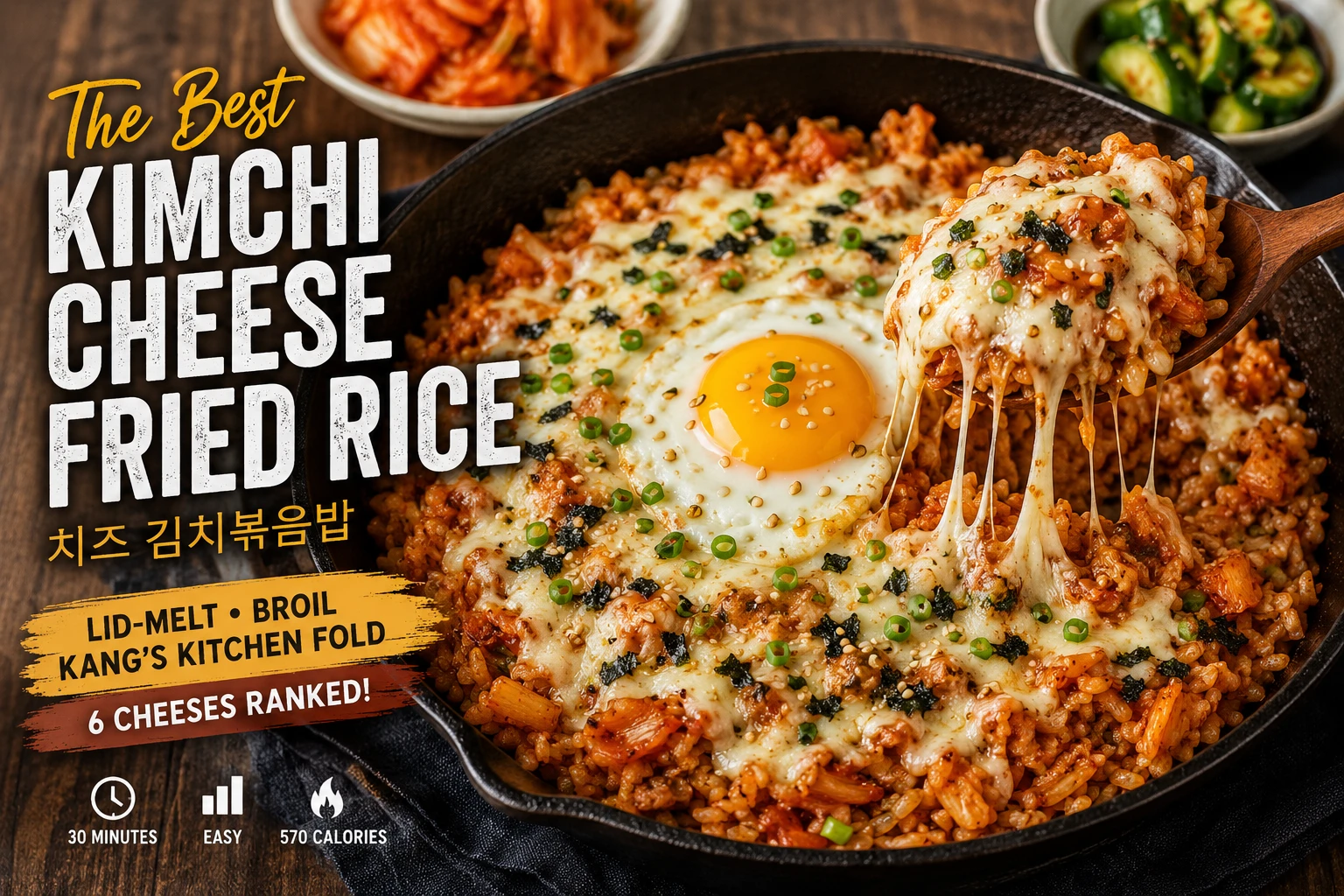
Cheese Version57019gNoEntertaining, most indulgent
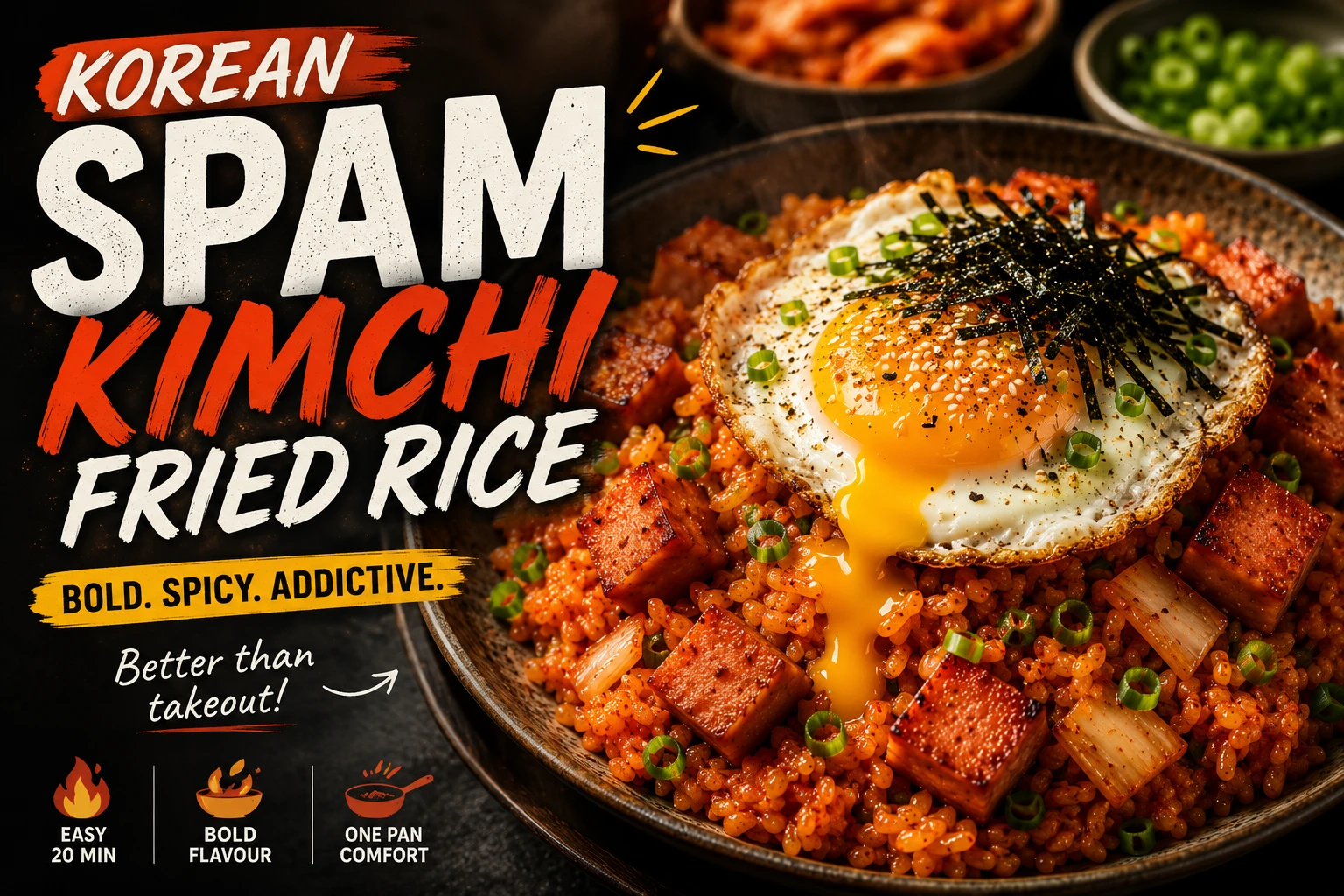
Spam Version58024gNoComfort food, budae flavour
Bacon Version60021gNoWeekend indulgence
💡
Reviewed by Dr. Sarah Mitchell RD, PhD: Adding cold silken tofu (100g) brings protein to approximately 12g and adds only 55 calories. For an even lower-calorie option, swap in cauliflower rice for approximately 180 calories.
Frequently Asked Questions

Egg-Free Kimchi Fried Rice FAQ — 20 Questions

Yes — increase sesame oil to 1½ tablespoons off-heat, use extra spring onions and doubled sesame seeds for garnish, and serve cold silken tofu alongside. The kimchi flavour is brighter without the egg yolk tempering it.

Egg allergy, vegan diet, cholesterol management, religious restrictions, or personal preference. Plenty of Korean households skip the egg by default.

Cold silken tofu, avocado slices, tahini drizzle, or simply increase sesame oil to 1½ tablespoons. All produce a satisfying, complete dish.

Yes — scrambling and folding it through at the end is a common Korean home-cooking approach if avoiding egg entirely isn’t the goal.

Calories drop from 420 to 360, protein from 14g to 7g, fat from 14g to 10g. Add silken tofu, tuna, or edamame to compensate for protein.

Not automatically — traditional kimchi contains fish sauce. Use vegan kimchi made with kelp brine to make this fully plant-based.

Yes — lighter and brighter. The kimchi’s fermented character comes through more directly without the egg moderating it.

Increase sesame oil to 1½ tablespoons off-heat and use an extra spring onion plus doubled sesame seeds for garnish. The rest is identical.

Cold silken tofu, sliced avocado, crispy shallots, extra cold kimchi, or a tahini drizzle — legitimate toppings, not substitutes.

Increase sesame oil to 1½ tbsp off-heat, add 1 tbsp tahini, or crush extra toasted sesame seeds into the rice while tossing.

The wok method is identical — you skip frying the egg, increase sesame oil, and press rice slightly longer per interval. 5 minutes faster overall.

Silken tofu served cold from the fridge, cubed, seasoned with a few drops of soy sauce and sesame oil. Do not fry it.

Yes — this is the best KFR variation for meal prep. Stores 3 days refrigerated, reheats evenly, freezes well.

3 days refrigerated, up to 2 months frozen — the only KFR variation that freezes successfully without quality loss.

Canned tuna, cubed Spam, cold silken tofu, edamame, or hemp seeds all work well as additions.

Yes, this recipe contains no egg. Wash equipment thoroughly if previously used for eggs, and check kimchi and tofu labels for severe allergies.

Replace soy sauce with tamari and use certified gluten-free gochujang. Everything else is naturally gluten-free.

3 spring onions mounded in the centre, 2 teaspoons of sesame seeds scattered widely, torn nori around the rim, and cold silken tofu alongside.

Yes — 5 minutes faster, 20 minutes total instead of 25, since there’s no egg to fry separately.

Yes, at 360 calories. For even lower, swap in cauliflower rice for approximately 180 calories.

Ji-Young Park Korean food writer KimchiGuide
Written by
Ji-Young Park
Korean Food Writer & Fermentation Expert
Fermentation ExpertSeoul Food Certified6 Batches Tested
Ji-Young Park grew up in Busan eating kimchi fried rice in all its forms — with egg, without egg, with tuna, with whatever was in the cupboard. The egg-free version was one of her first recipe tests for this site — and the batch results surprised even her.
Full profile →
Dr Sarah Mitchell RD PhD nutrition reviewer KimchiGuide
Reviewed by
Dr. Sarah Mitchell
Registered Dietitian, PhD Nutrition Science
RD — Registered DietitianPhD Nutrition ScienceReviewed: July 8, 2026
Dr. Sarah Mitchell reviewed this article for nutritional accuracy, including the calorie comparison between KFR variations and the protein impact of removing the egg.
Full profile →

Similar Posts

Leave a Reply

Your email address will not be published. Required fields are marked *