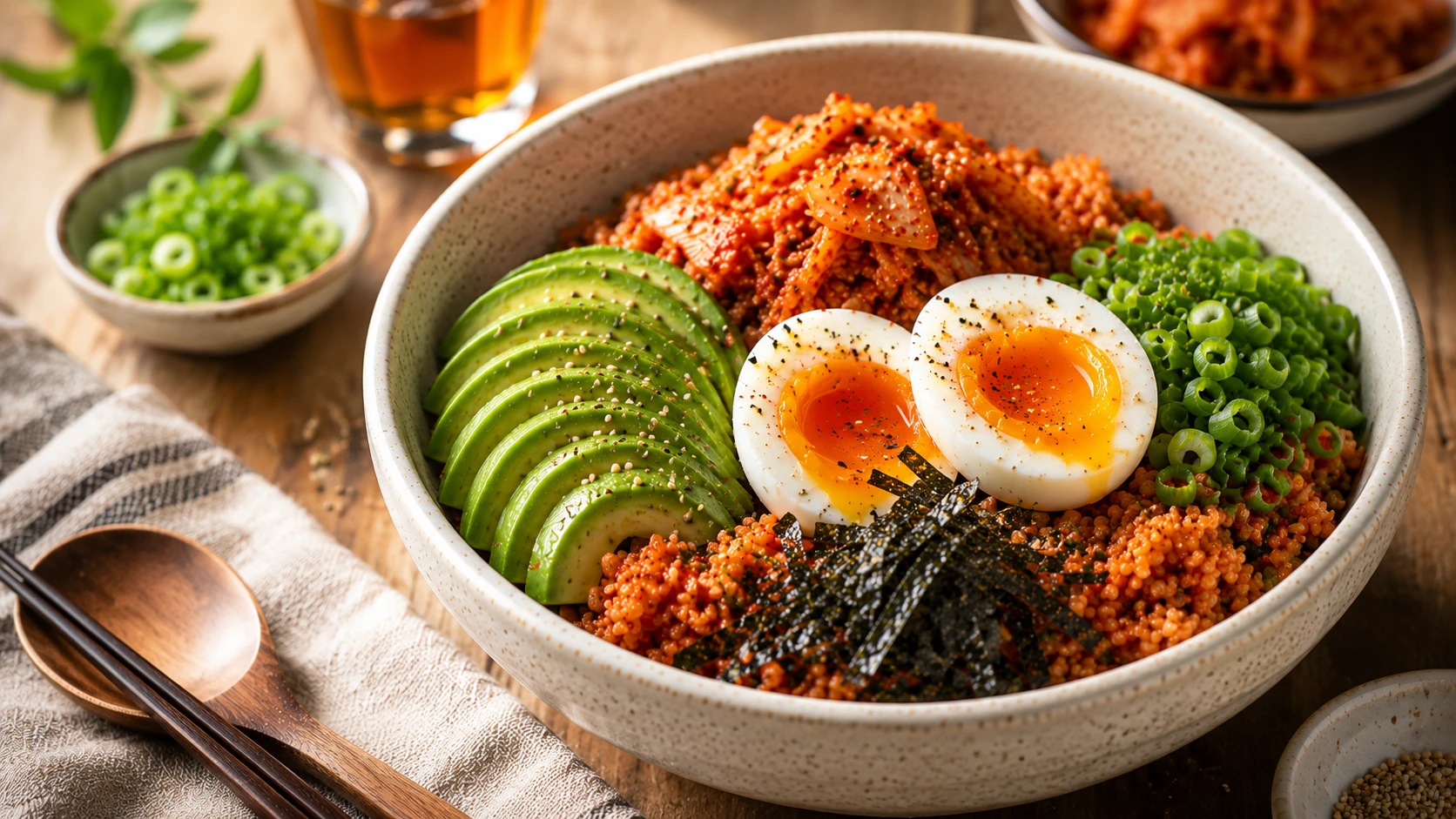
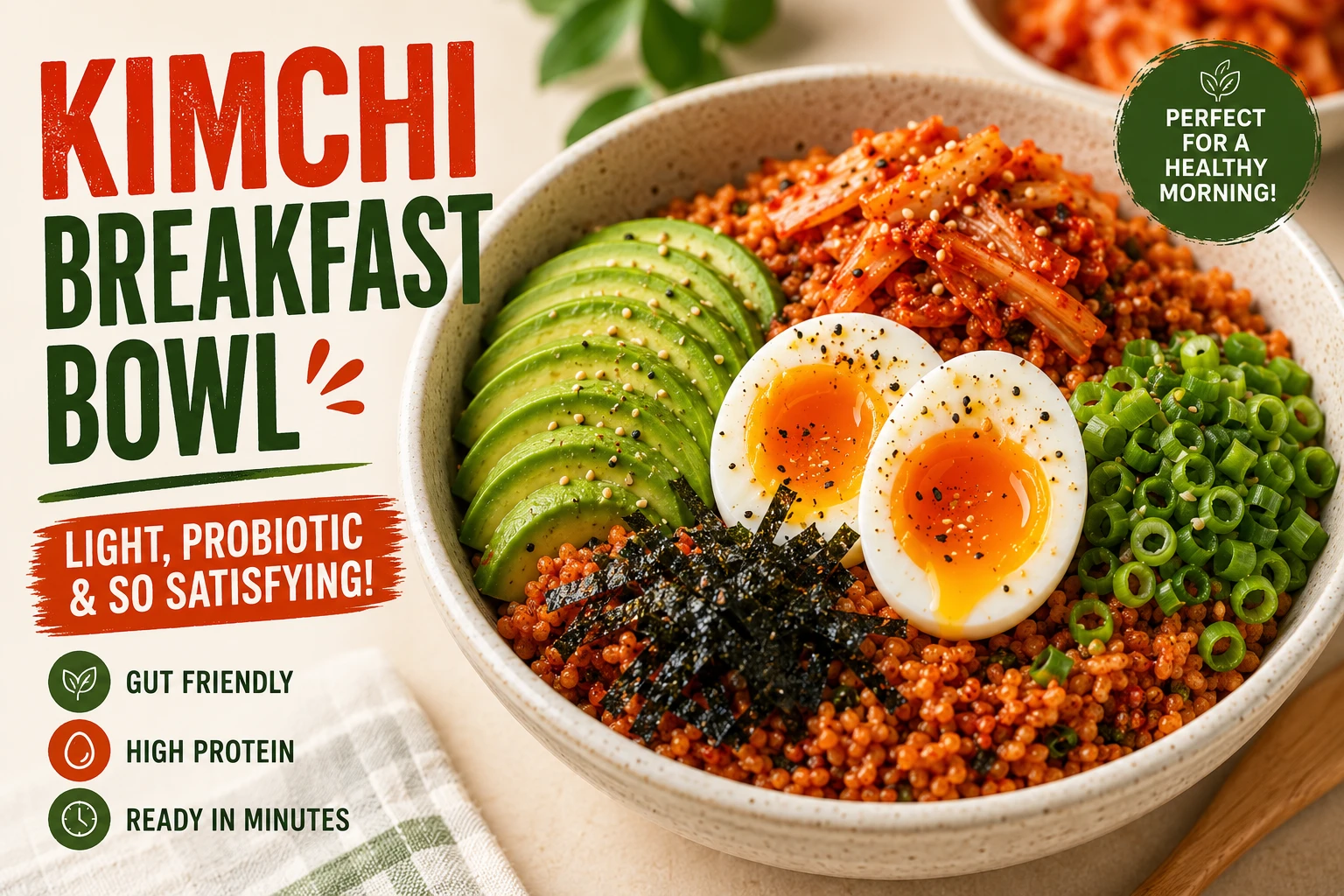
Kimchi Breakfast Bowl (아침 김치볶음밥 스타일 — Soft-Boiled Egg & Avocado Version)
A lighter, single-serve kimchi and egg breakfast bowl built for the morning — not a full dinner-style fried rice. The technique hinges on two things: a jammy 6.5-minute soft-boiled egg instead of a fried one, and a smaller, briefly warmed rice-and-kimchi base so the gut-friendly Lactobacillus isn’t cooked away. Approximately 380 calories with 15g of protein per bowl.
What Is a Kimchi Breakfast Bowl?
A kimchi breakfast bowl — 아침 김치볶음밥 스타일 — is a lighter, Western-format take on kimchi and egg, built for the morning rather than a full dinner-style fried rice. The two variables that make this work: a jammy soft-boiled egg (6.5 minutes, ice-shocked) instead of a fried one, and a smaller, briefly warmed rice-and-kimchi base so the meal stays light and the kimchi’s live cultures aren’t fully cooked away. Get both right and it reads as an intentional Korean breakfast bowl, not a leftover fried rice reheated smaller. Serves 1 in 18 minutes at approximately 380 calories and 15g protein.
Why This Version Works as an Actual Breakfast
Shrinking a dinner-style kimchi fried rice down for the morning sounds like it should just mean “less of everything” — in practice, three deliberate changes are what make it read as a genuine breakfast bowl instead of reheated leftovers.
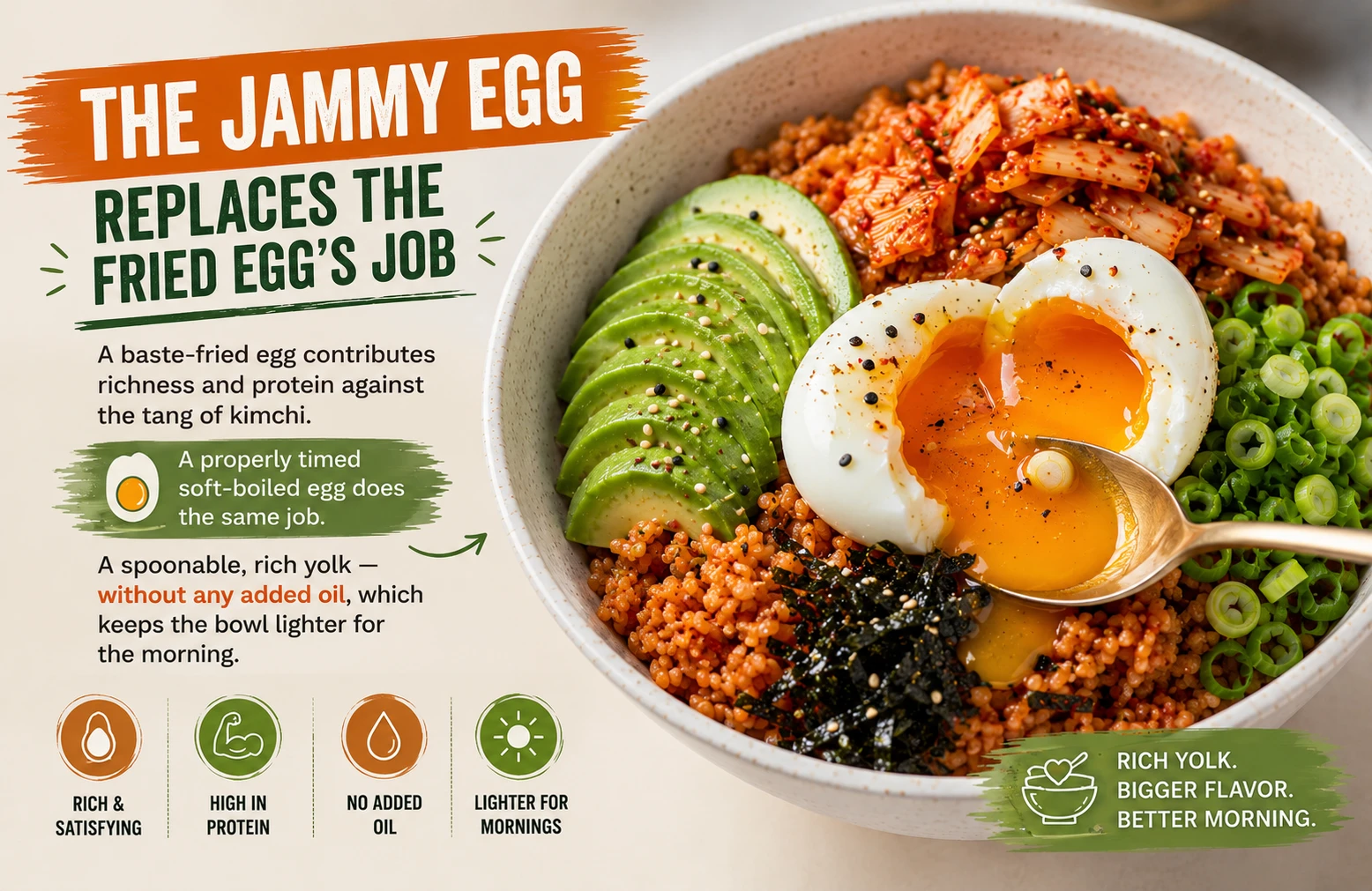
A baste-fried egg contributes richness and protein against the tang of kimchi. A properly timed soft-boiled egg does the same job — a spoonable, rich yolk — without any added oil, which keeps the bowl lighter for the morning.
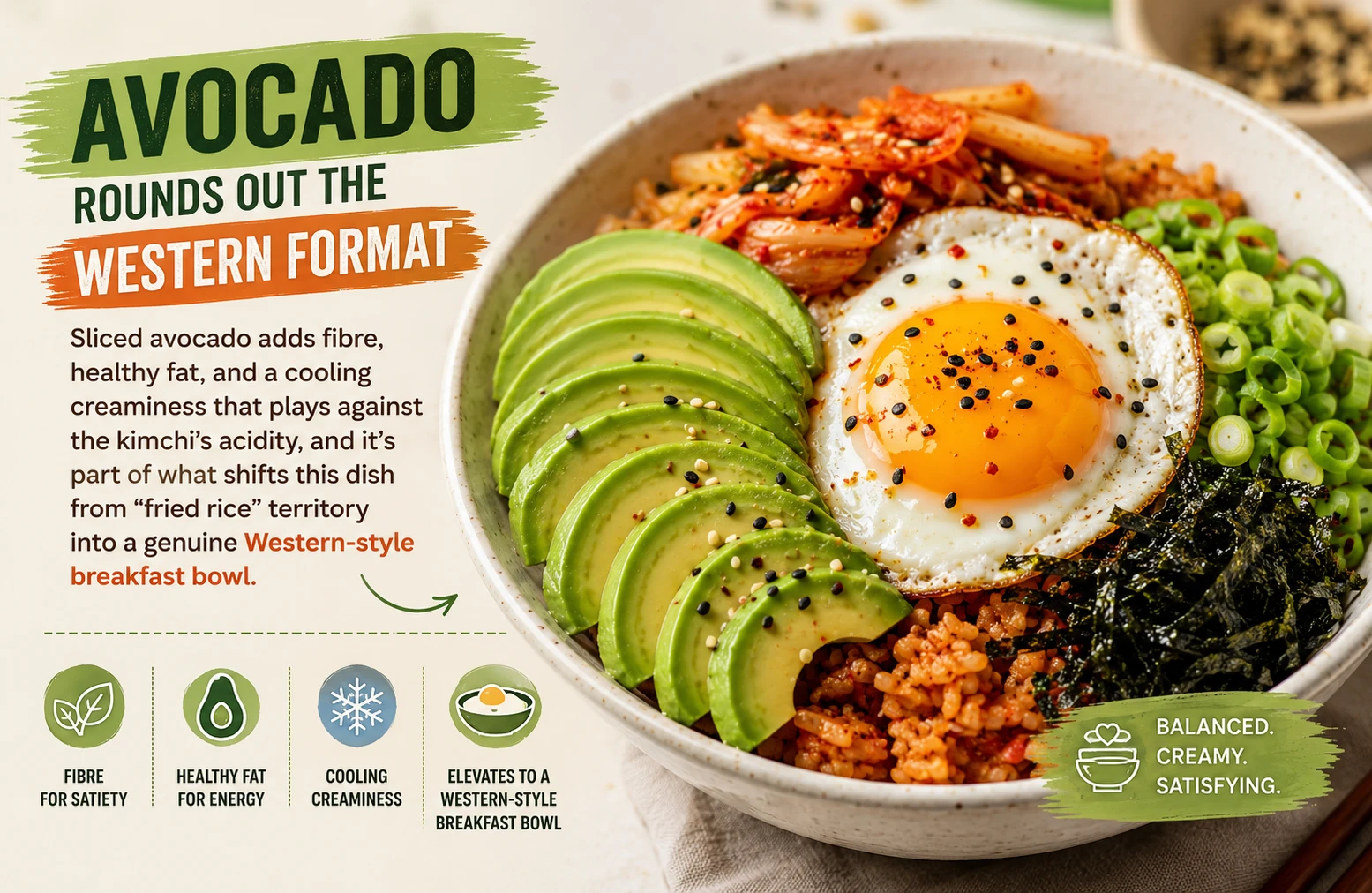
Sliced avocado adds fibre, healthy fat, and a cooling creaminess that plays against the kimchi’s acidity, and it’s part of what shifts this dish from “fried rice” territory into a genuine Western-style breakfast bowl.
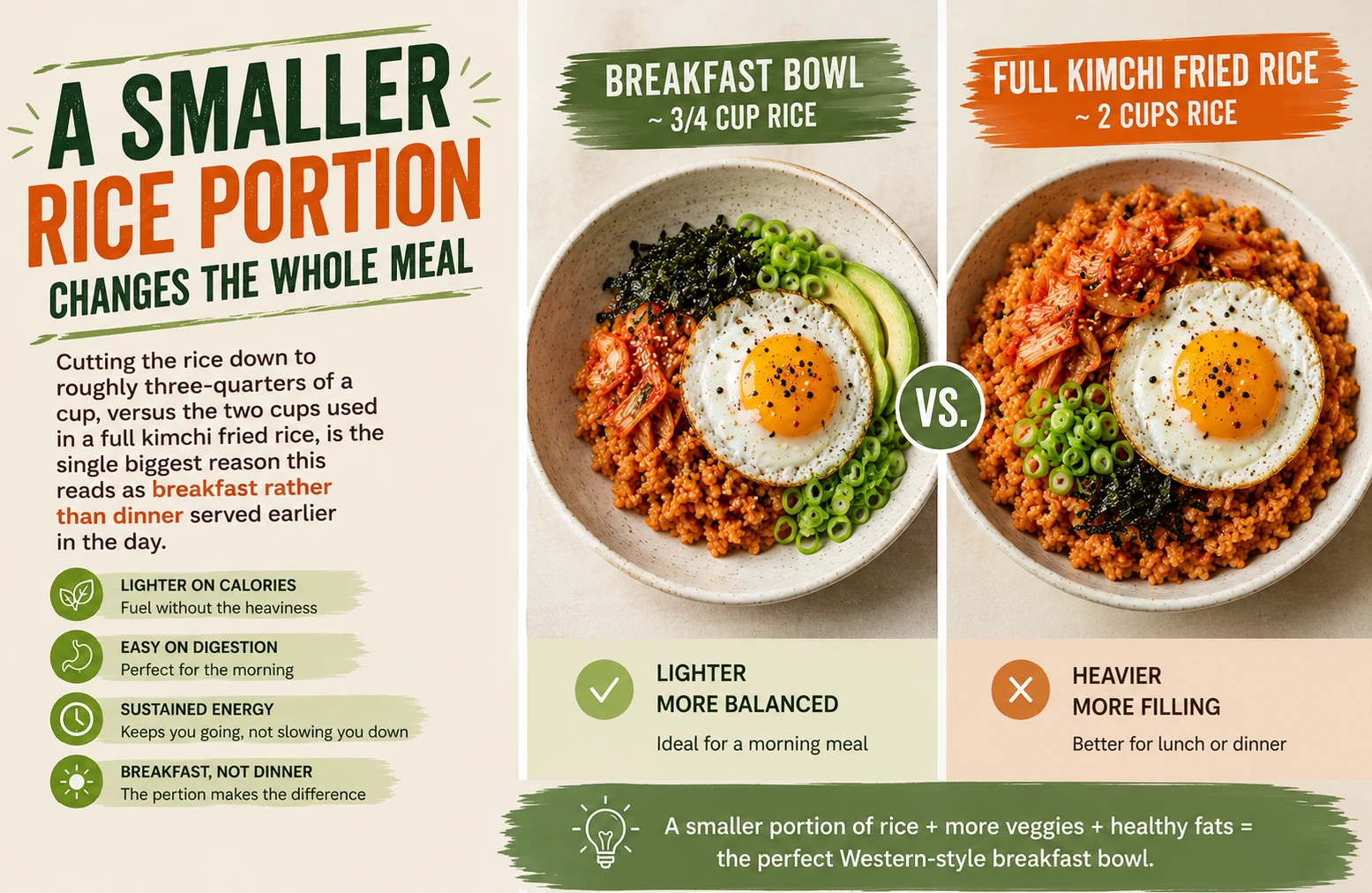
Cutting the rice down to roughly three-quarters of a cup, versus the two cups used in a full kimchi fried rice, is the single biggest reason this reads as breakfast rather than dinner served earlier in the day.
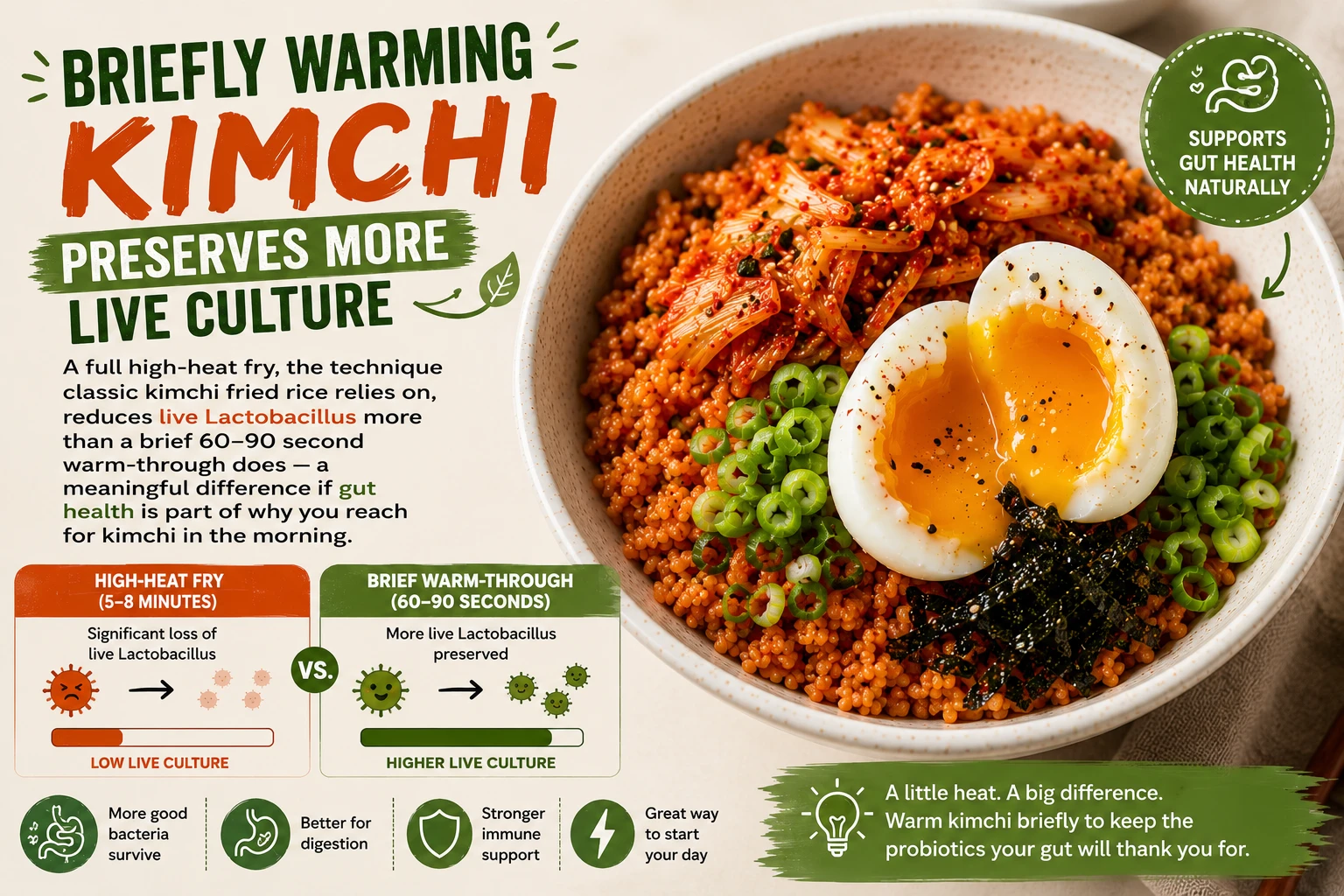
A full high-heat fry, the technique classic kimchi fried rice relies on, reduces live Lactobacillus more than a brief 60-90 second warm-through does — a meaningful difference if gut health is part of why you reach for kimchi in the morning.
Soft-Boiled Egg Is the Key Step — Two Timings Compared
Most kimchi breakfast bowl recipes online just say “add a soft-boiled egg” without specifying timing. We tested both approaches across 6 batches. The difference decides whether the yolk is spoonable and rich or chalky and dry.
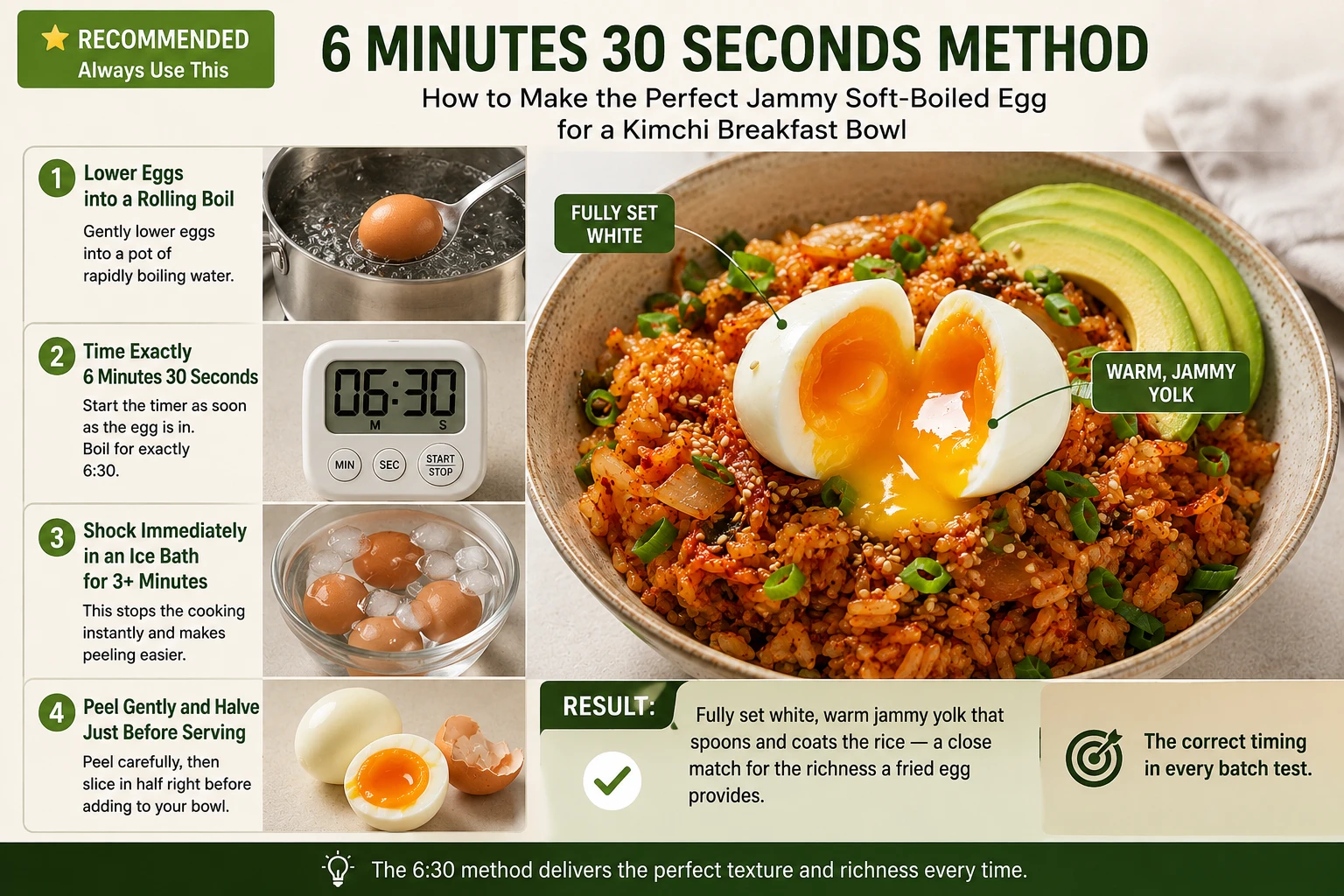
- Lower eggs into a rolling boil
- Time exactly 6 minutes 30 seconds
- Shock immediately in an ice bath for 3+ minutes
- Peel gently and halve just before serving
Result: Fully set white, warm jammy yolk that spoons and coats the rice — a close match for the richness a fried egg provides. The correct timing in every batch test.
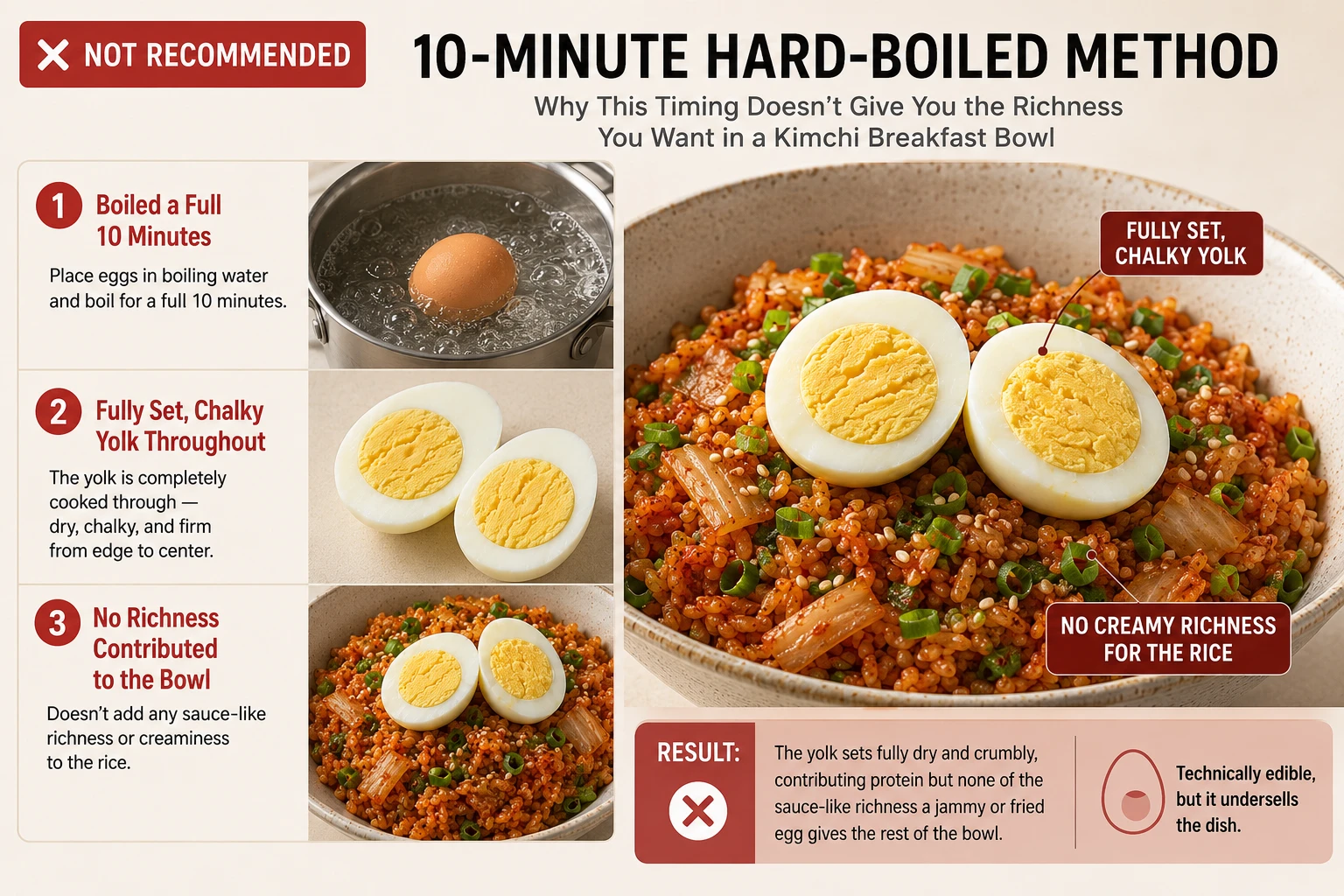
- Boiled a full 10 minutes
- Fully set, chalky yolk throughout
- No richness contributed to the bowl
Result: The yolk sets fully dry and crumbly, contributing protein but none of the sauce-like richness a jammy or fried egg gives the rest of the bowl. Technically edible, but it undersells the dish.
Timing Comparison at a Glance
| Boil Time | Yolk Texture | Richness | Best For | Verdict |
|---|---|---|---|---|
| 6:00 | Very runny, barely set white | High but messy | Ramen-style eggs | Slightly too loose for a bowl |
| 6:30 ⭐ | Jammy, spoonable | High, controlled | Kimchi breakfast bowl | Always use this |
| 8:00 | Firm but still creamy centre | Medium | Meal prep, holds shape | Acceptable if not eating fresh |
| 10:00+ | Fully set, chalky | None | Egg salad, snacking | Avoid — loses the point |
Key Terms — Language & Food Science Entities
These terms define exactly what separates a proper kimchi breakfast bowl from kimchi fried rice served smaller, and the science behind why the timing and portion choices matter.
Egg Style Ranked — Six Options for a Breakfast Bowl
Soft-boiled is the tested default, but here is exactly how the other common egg styles compare if you want to switch it up.
Spoonable yolk, no added oil, holds together well when halved on top of the bowl. The tested default for this recipe.
⭐ Best ChoiceClosest to the classic kimchi fried rice topping and just as rich, though it adds extra oil and a few more calories than the soft-boiled version.
✅ Highly RecommendedA runnier, oil-free alternative to soft-boiled with a similar richness, though it takes more practice to get a clean, compact poach.
Good OptionContributes protein without any of the sauce-like richness a jammy yolk gives the rest of the bowl. Fine in a pinch, not the intended texture.
AcceptableSkipping enough boil time for food-safety reasons is not the same as a properly timed jammy yolk — always hit at least 6 minutes from a rolling boil.
❌ Food Safety RiskScrambling the egg directly into the warm rice loses the distinct yolk-topping contrast that makes this bowl feel intentional rather than a plain rice-and-kimchi mix.
❌ Loses the ContrastWhich Kimchi Stage to Use — Breakfast Bowl Guide
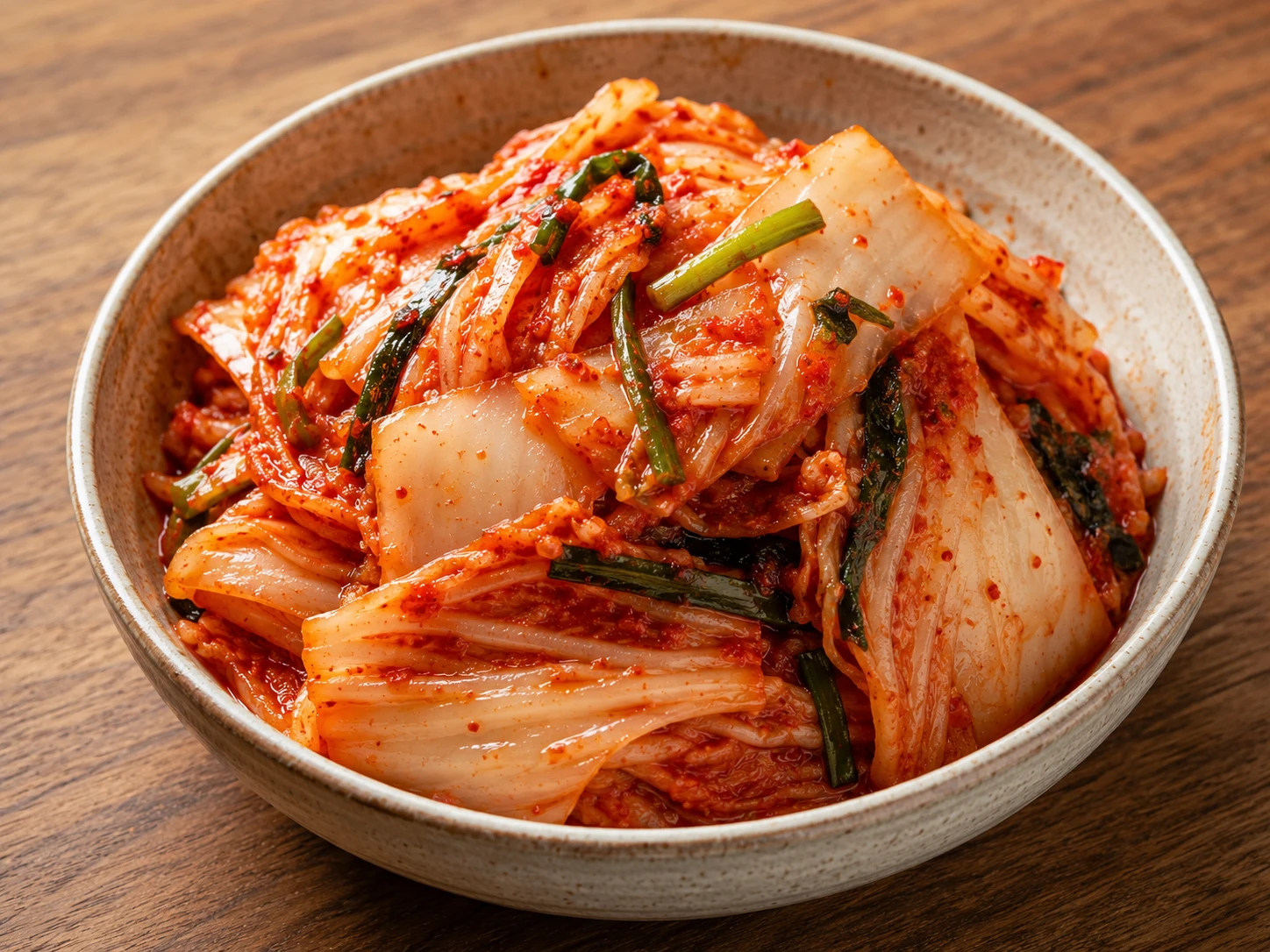
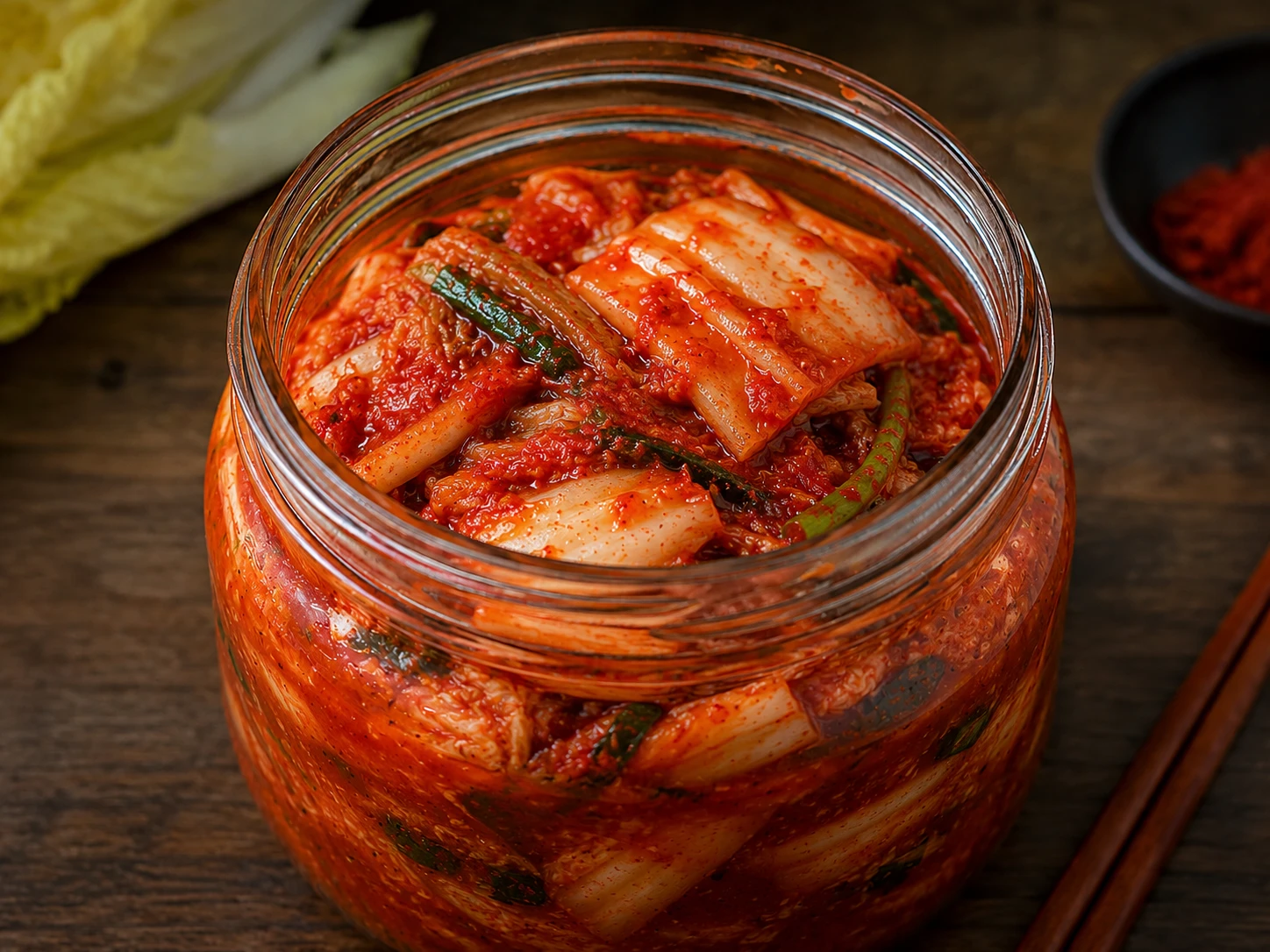
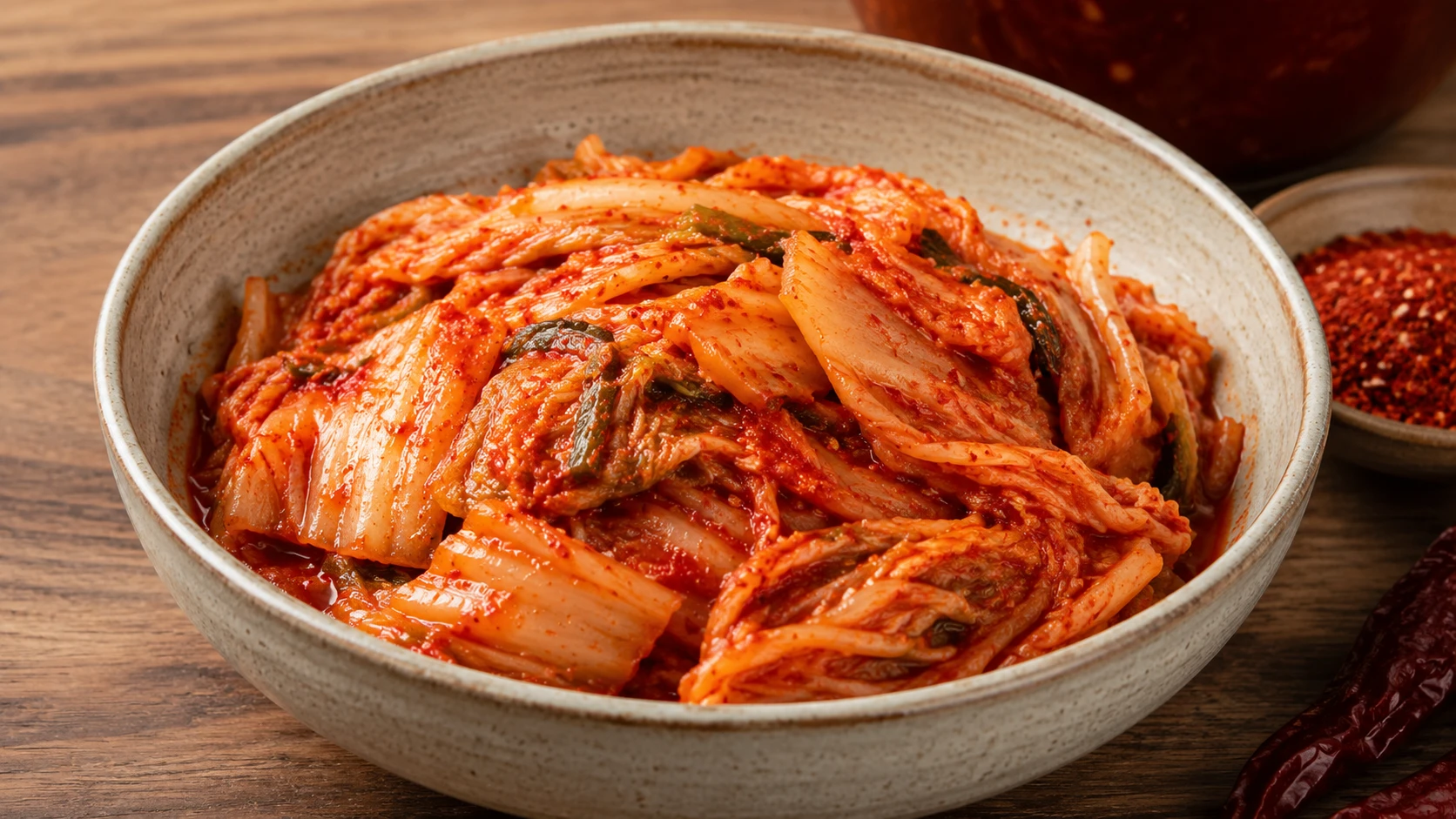
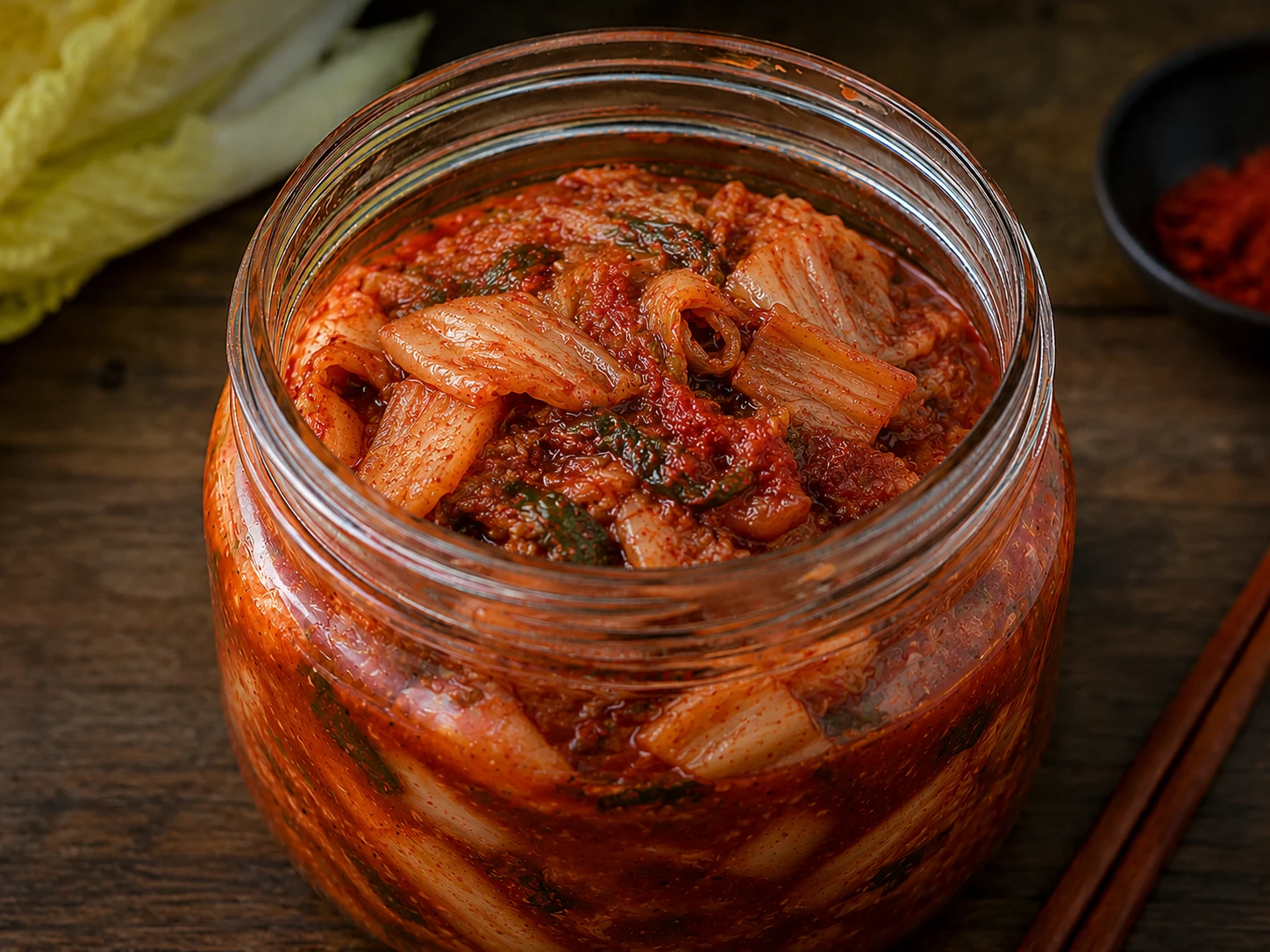
Unlike a dinner-style fried rice that wants deep, funky Stage 3 kimchi, a breakfast bowl is better served by something brighter and milder. For the full walkthrough of every stage with pH and timing, see the Kimchi Fermentation Stages Guide.
How Difficult Is the Breakfast Bowl?
This is the simplest of the 11 KFR variations — the only technique that needs real attention is timing the egg.
Ingredients + Scaler
Egg timing and rice portion are the two non-negotiable variables. Everything else is flexible to taste. Using short-grain rice specifically matters here — see the best rice for fried rice guide if you’re not sure which bag to buy.
Substitution & Adjustment Notes
| Ingredient | What to Check / Swap | Why It Matters |
|---|---|---|
| Eggs | Swap for pan-seared cubed tofu for a vegan bowl | Confirm your kimchi is also vegan-labeled if doing this |
| Soy sauce | Use tamari or coconut aminos for gluten-free | Same swap as the classic recipe |
| Rice | Brown rice works, adjust carb count slightly upward | Adds fibre, changes total calories a little |
| Kimchi | Stage 2 preferred, Stage 3 acceptable if that’s what’s on hand | Stage changes intensity, not whether the recipe works |
How to Make a Kimchi Breakfast Bowl — 4 Steps
Four steps, no frying required. The key difference from a dinner-style fried rice: the egg is boiled and shocked separately while the rice and kimchi are only briefly warmed, not fried.
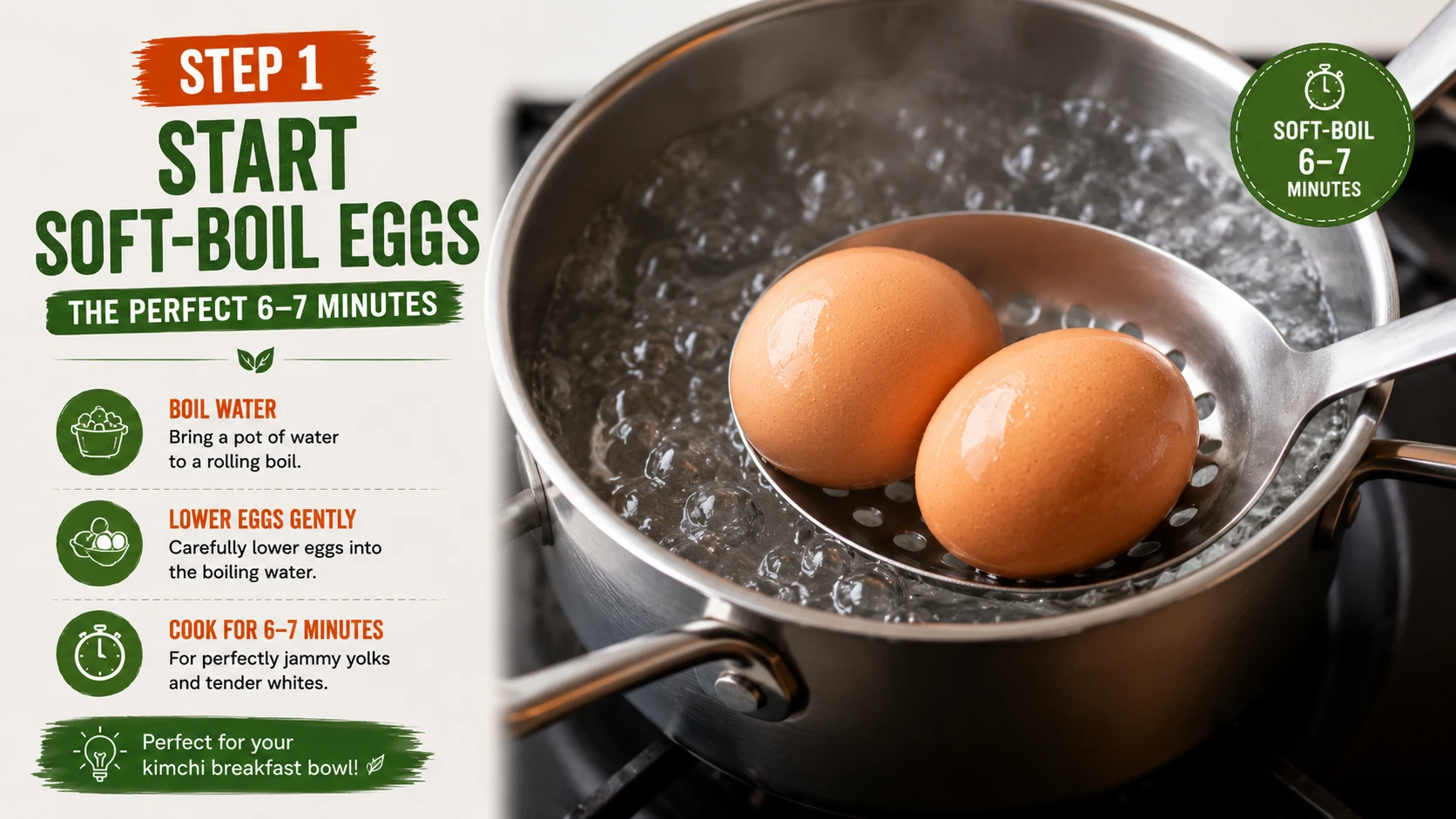
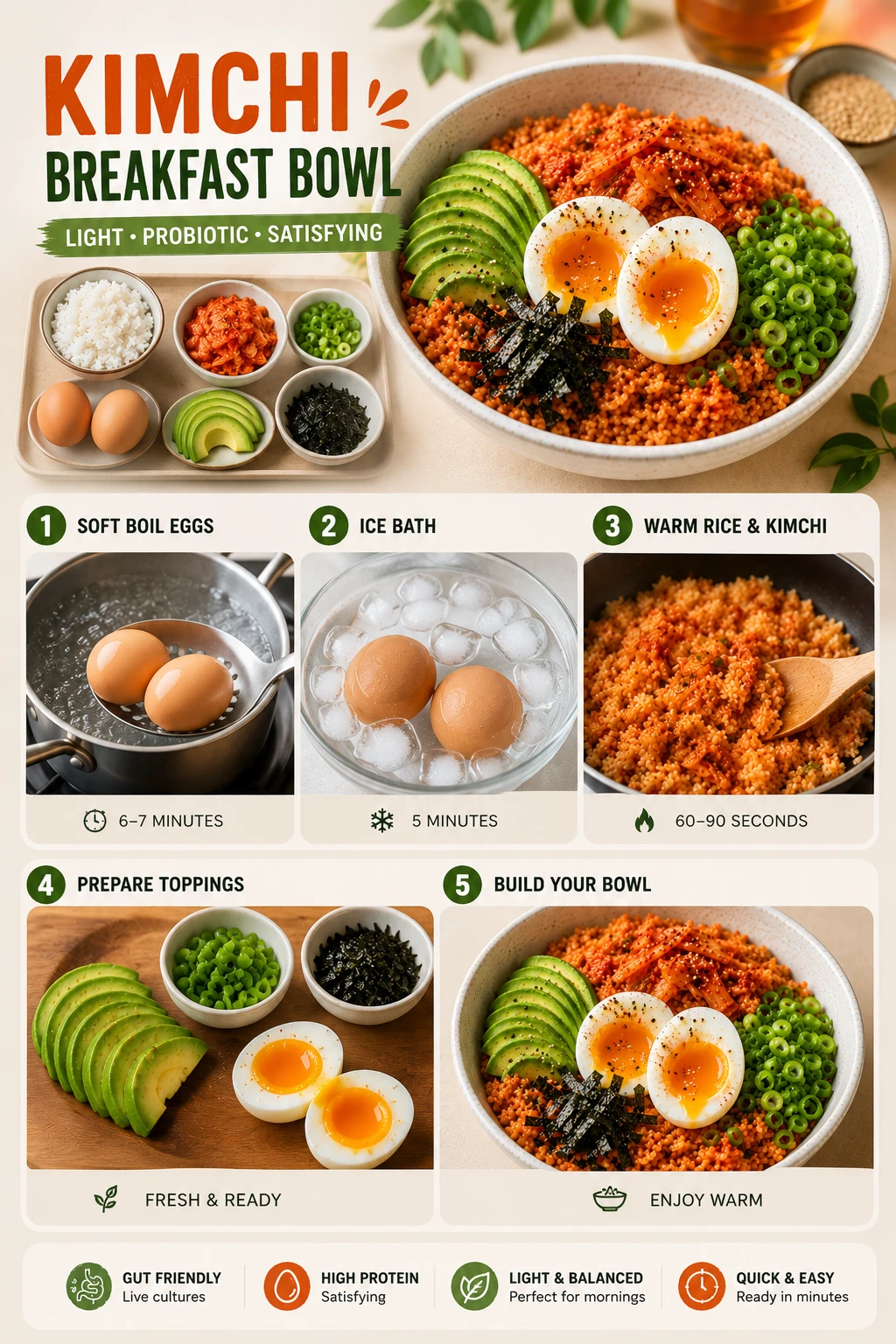
Bring a small pot of water to a rolling boil. Lower the eggs in gently with a spoon and set a timer for exactly 6 minutes 30 seconds. Have an ice bath ready before you start.
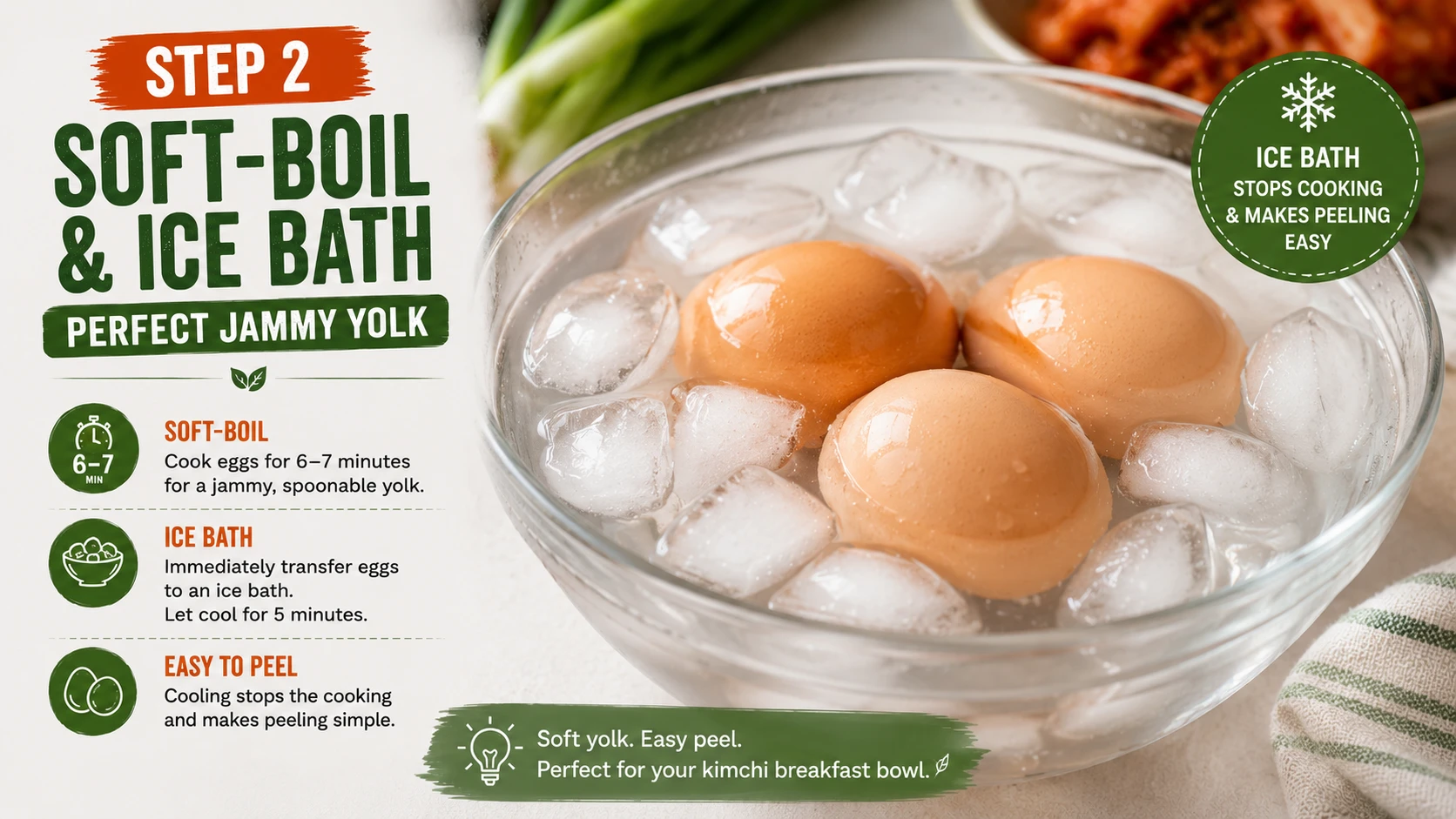
The moment the timer ends, transfer the eggs straight into the ice bath for at least 3 minutes. This stops the yolk from continuing to set from residual heat, and makes peeling far easier. Peel gently once cooled.
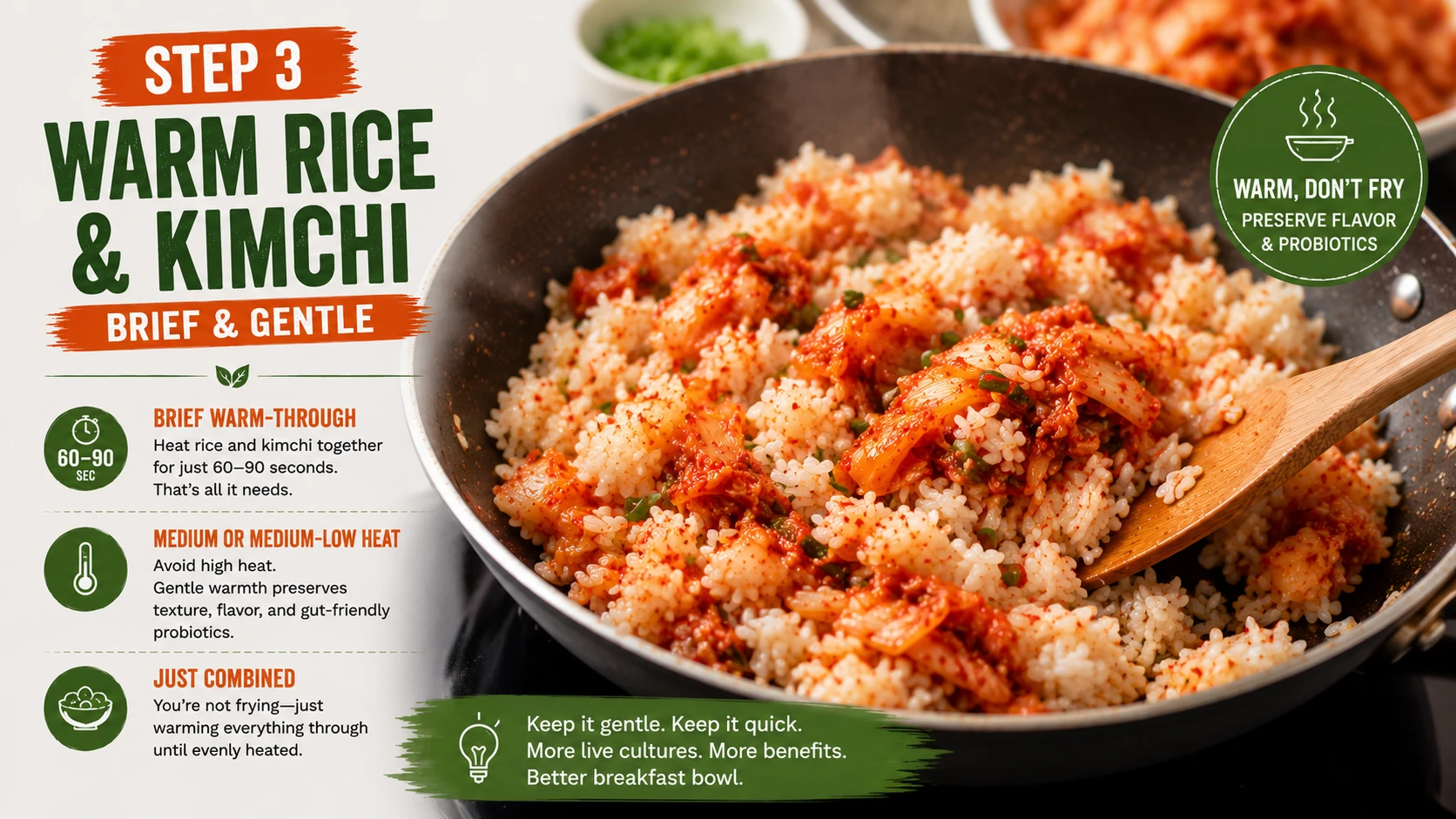
While the eggs cook, warm the rice through in a small pan or microwave. In a separate small pan over medium heat, warm the chopped kimchi and brine for 60-90 seconds only — just enough to round off the sourness, not to caramelise it the way a fried-rice version would.
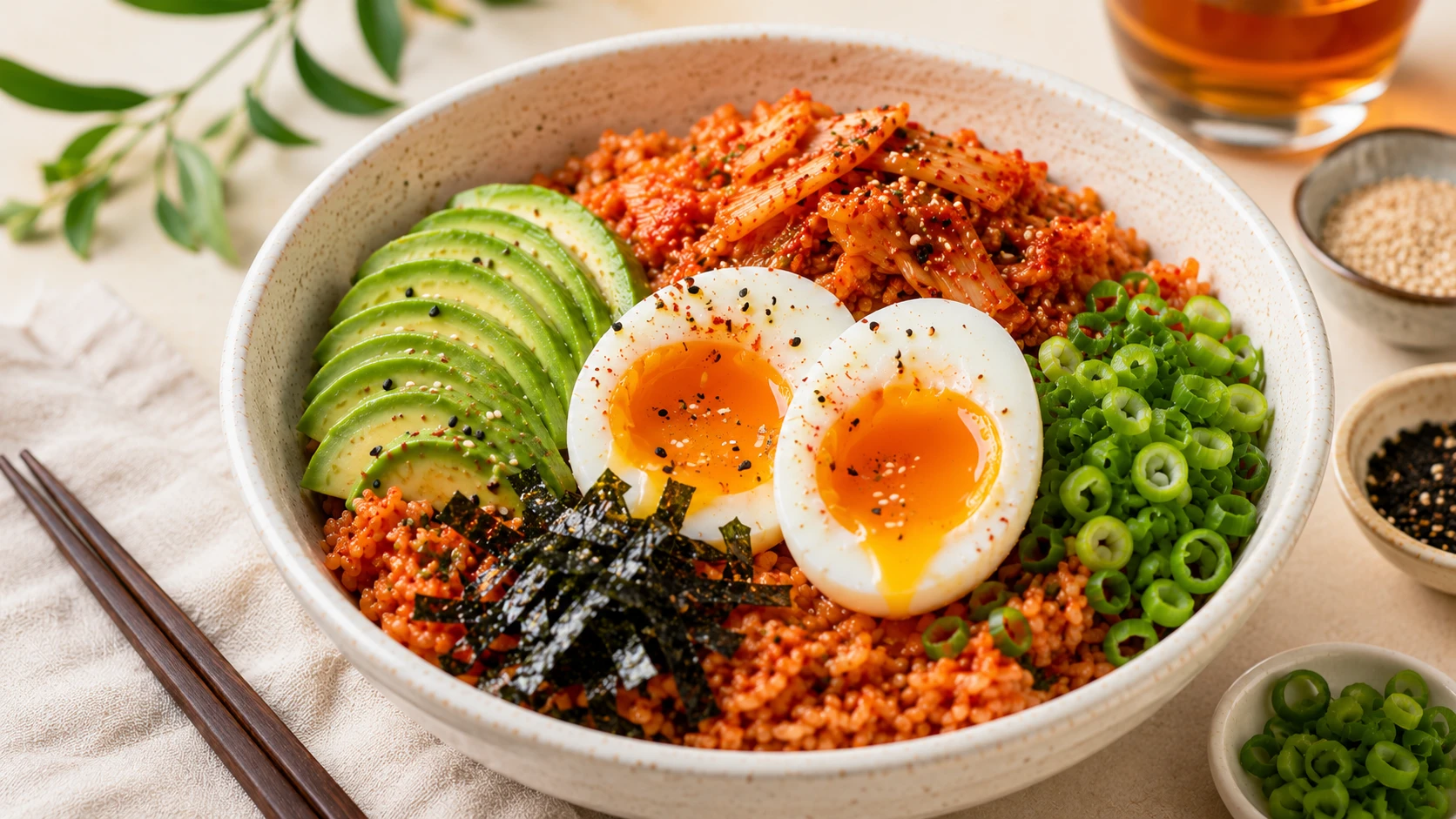
Spoon the warm rice into a bowl, top with the warmed kimchi, sliced avocado fanned to one side, and the halved soft-boiled eggs. Drizzle sesame oil and soy sauce, add a light dusting of gochugaru if using, and finish with spring onion and sesame seeds. Serve immediately while the egg is still warm.
Customize It — Swaps & Add-Ins
The tested 6:30-egg, 3/4-cup-rice formula above is the version to follow the first time. Once you’ve made it once, these are the swaps readers most often ask about — borrowed from how other kitchens build a kimchi-and-egg bowl.
What We Tested for the Breakfast Bowl
The egg has more failure points than any other part of this recipe. Here is what we discovered across 6 dedicated batches.
Every batch confirmed the same underlying principle: this bowl succeeds or fails almost entirely based on how precisely the egg is timed and shocked. Get that right and the yolk genuinely competes with a fried egg for richness. Rush it or skip the ice bath and no amount of seasoning fixes a chalky result.
Kimchi Breakfast Bowl (아침 김치볶음밥)
Soft-boiled egg method · Stage 2 kimchi · 18 min · ~380 calories
- 2 large eggs, soft-boiled 6:30
- 1/2 ripe avocado, sliced
- 1 tsp sesame oil
- 1 tsp soy sauce
- 3/4 cup cooked rice, warm
- 1/3 cup aged kimchi (Stage 2)
- 1 tbsp kimchi brine
- 1/2 tsp gochugaru, optional
- 1 spring onion, sliced
- 1/2 tsp toasted sesame seeds
- Boil eggs 6 min 30 sec from a rolling boil. Have an ice bath ready.
- Shock eggs in ice bath 3+ minutes, then peel gently.
- Warm rice through. Separately, warm kimchi and brine 60-90 sec only.
- Assemble: rice, kimchi, sliced avocado, halved eggs. Drizzle sesame oil, soy sauce, optional gochugaru. Top with spring onion and sesame seeds.
Ingredients & Tools Used in This Recipe
Everything below is exactly what’s used in the recipe above, linked to Amazon for anyone who can’t find it locally or just wants it delivered.
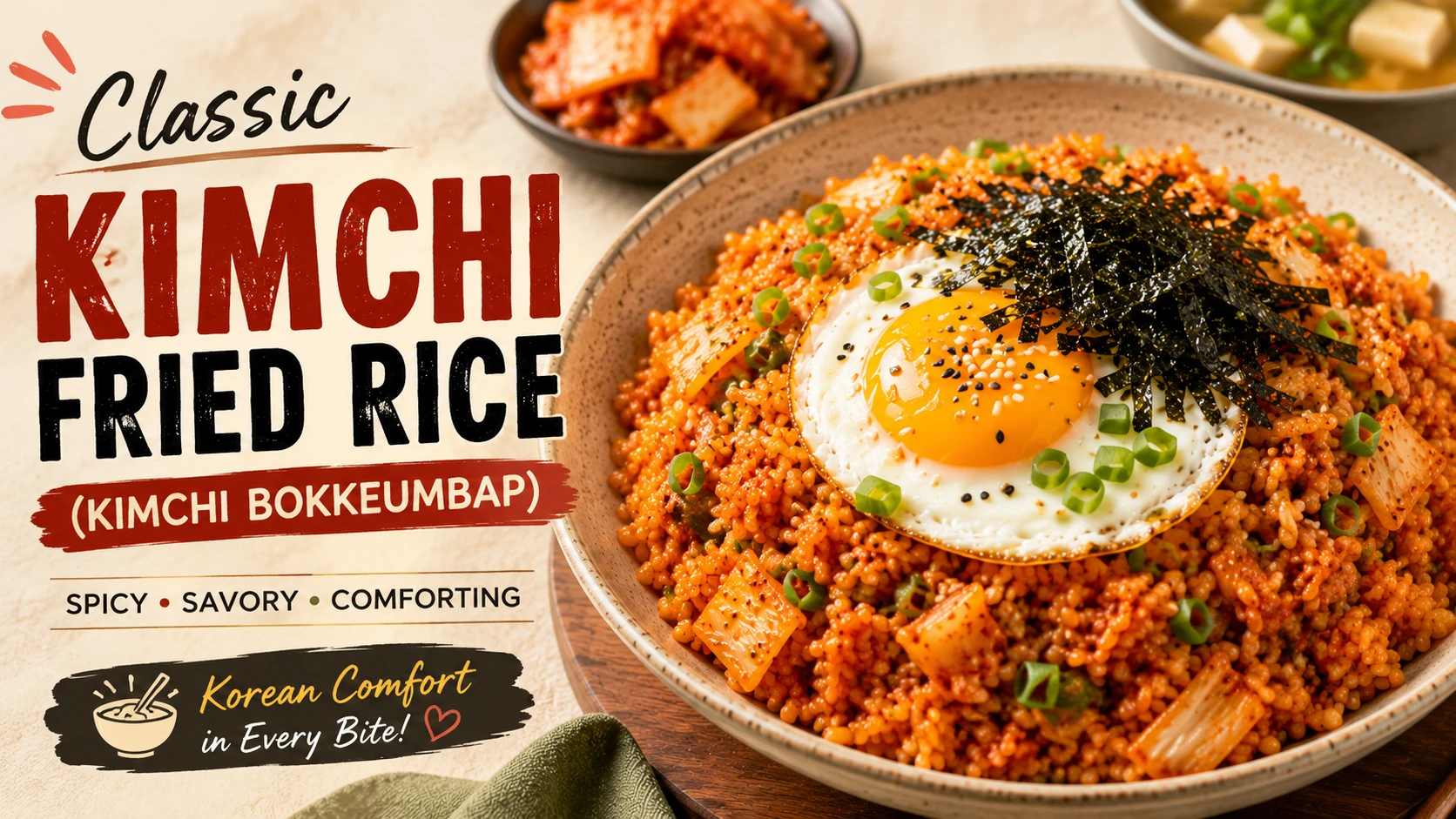
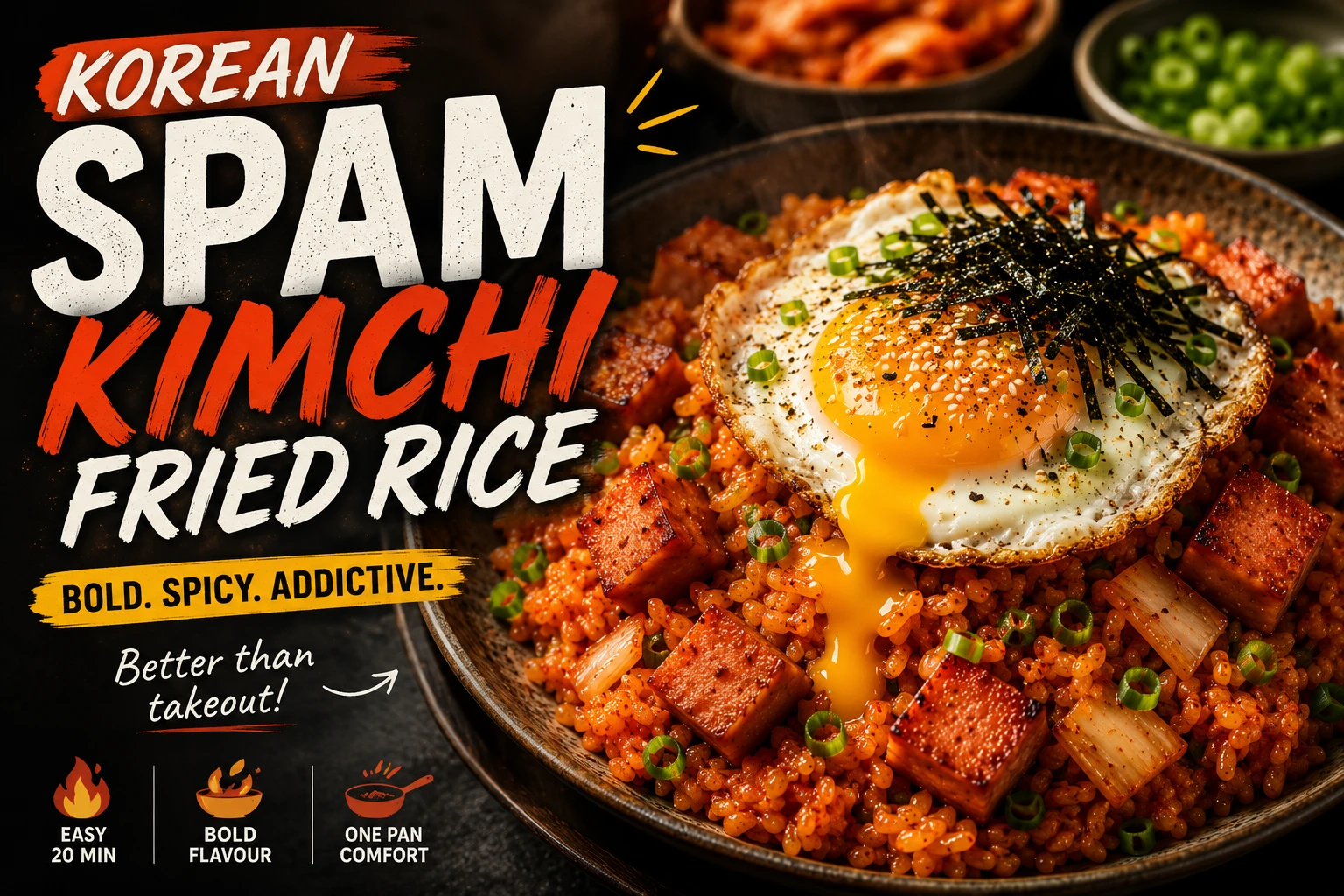
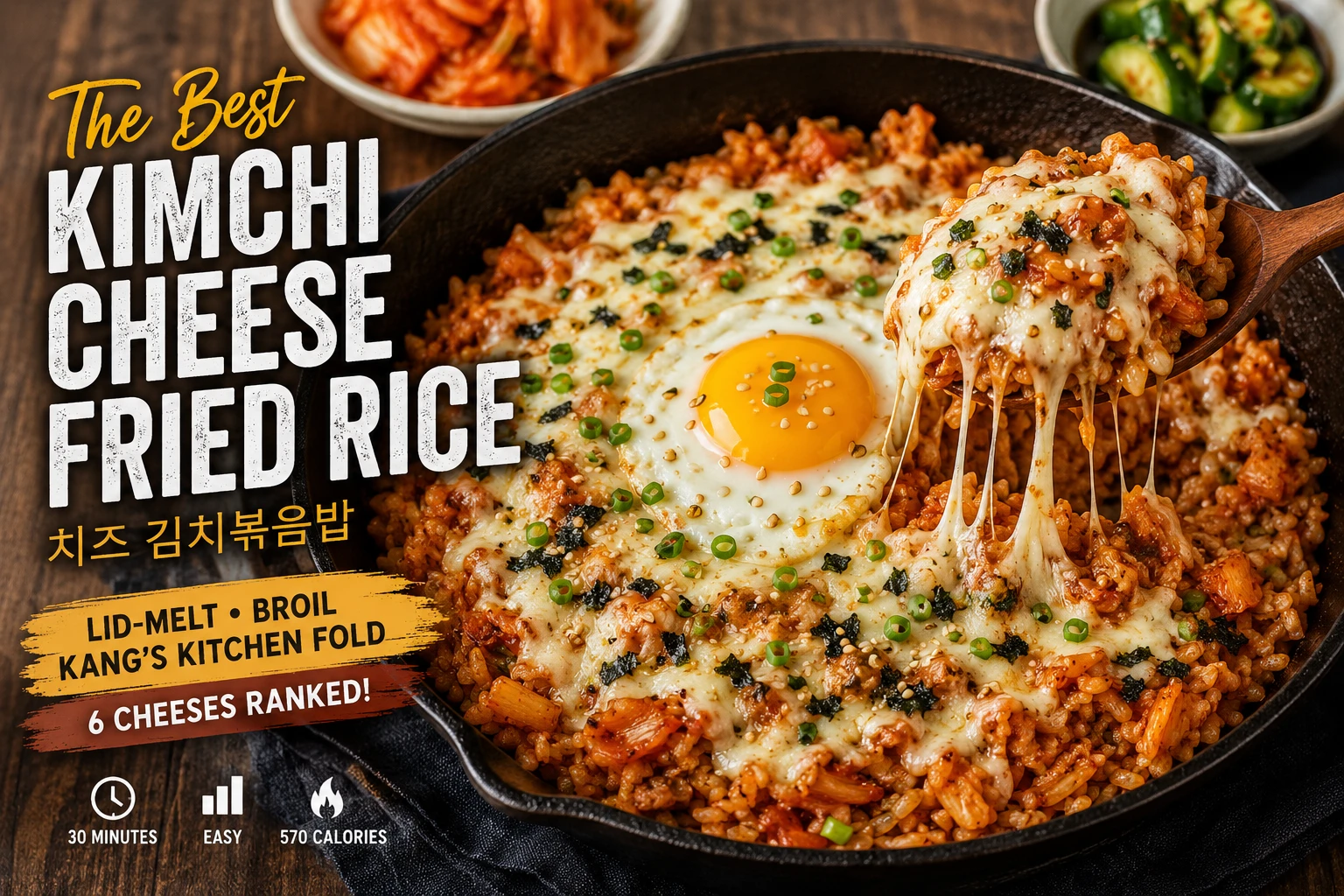
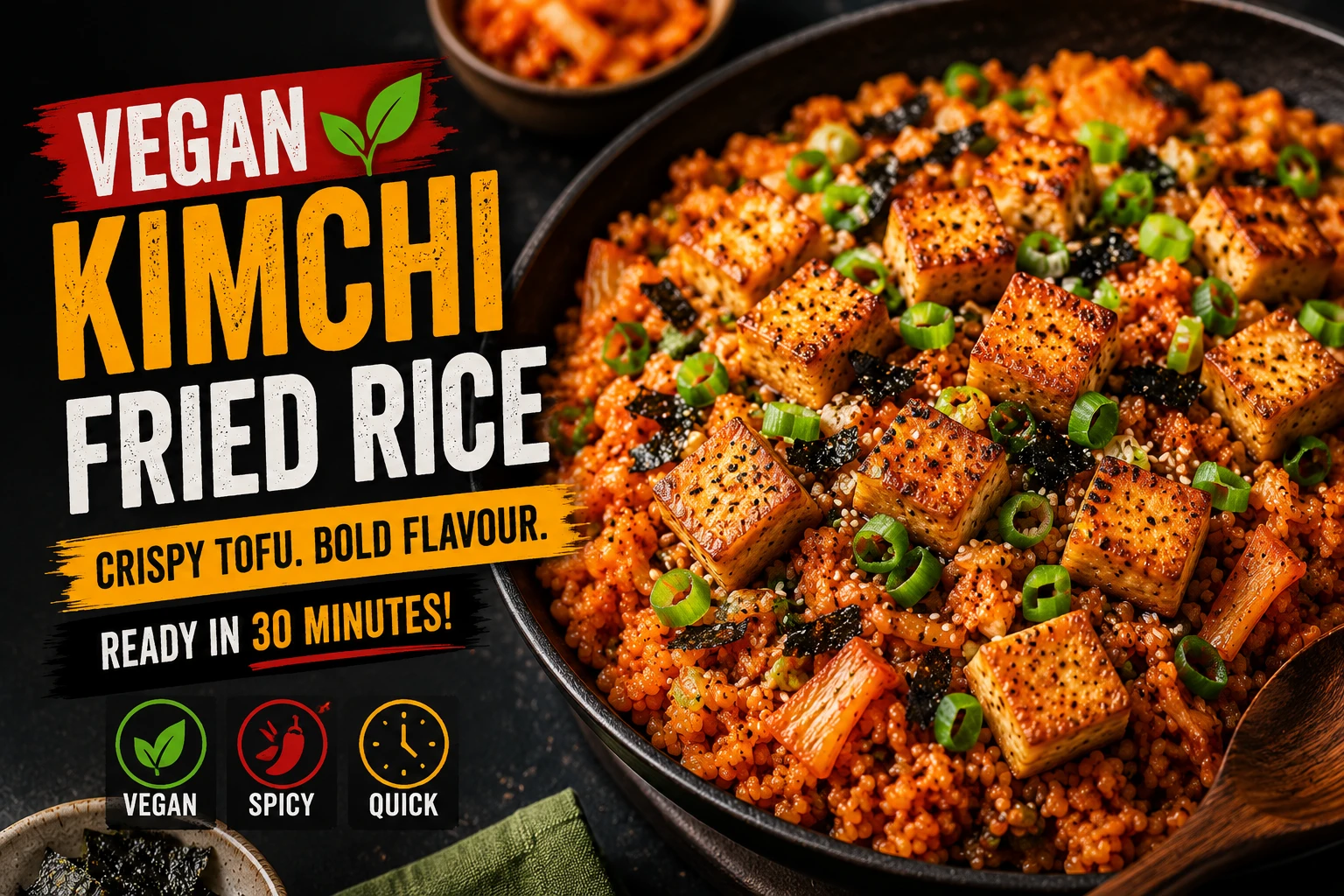
All 11 Kimchi Fried Rice Variations
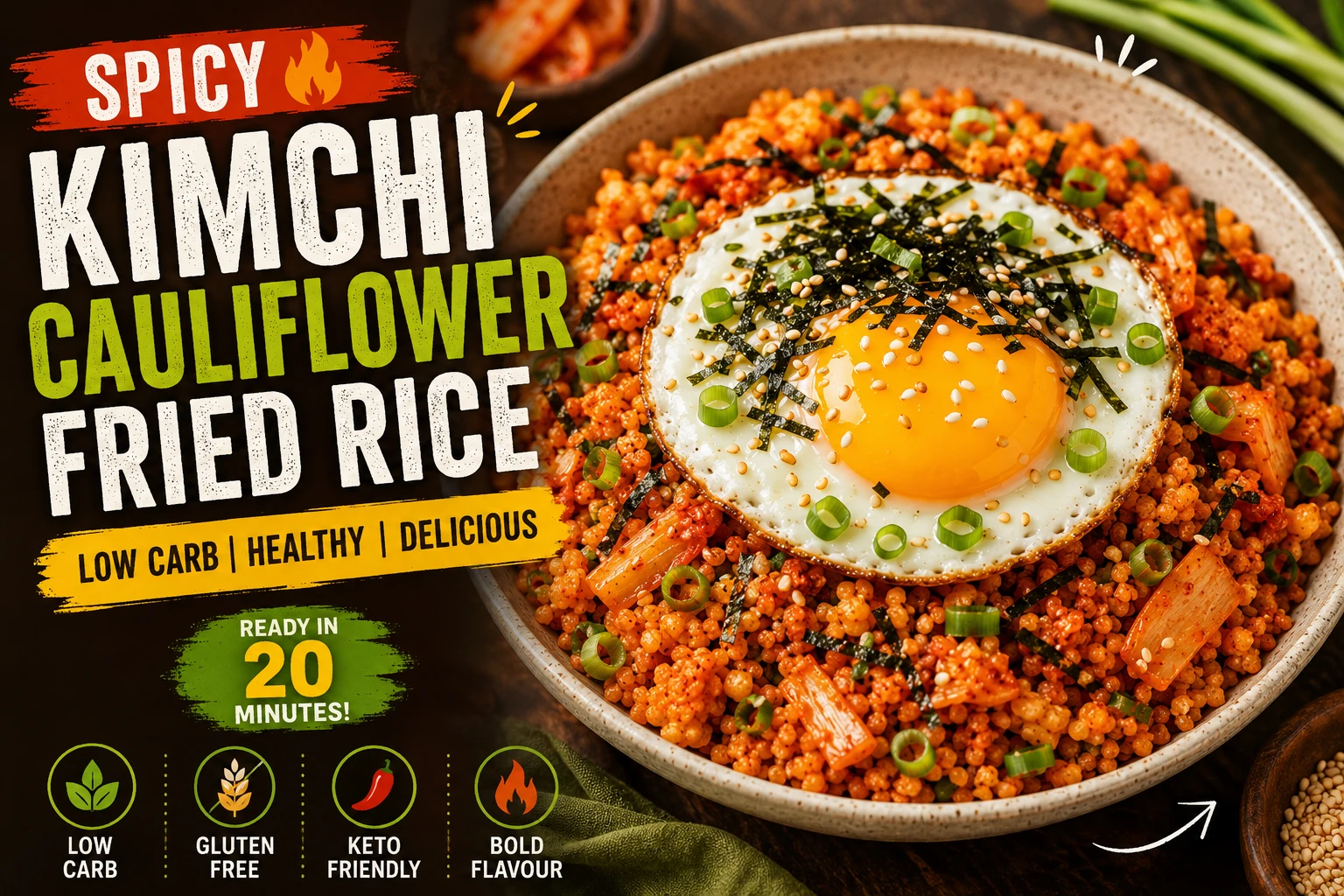
The KFR Ultimate Guide → covers all 11 in one place with the full comparison table.




Pairing Guide — Breakfast Bowl Version
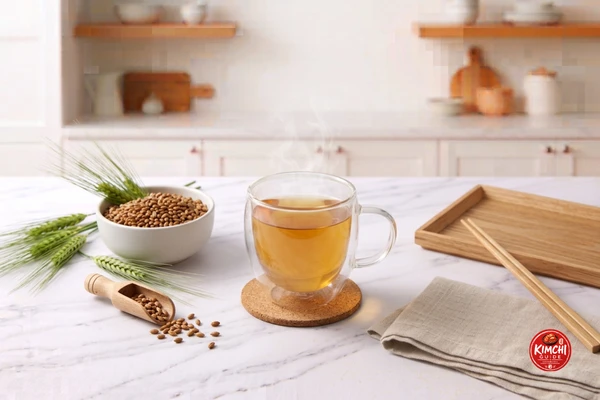
These pairings are chosen specifically for morning — a lighter, breakfast-appropriate lineup rather than dinner banchan.
Storage & Reheating — Breakfast Bowl Version
Soft-boiled eggs are the one component that doesn’t reheat well — plan around making those fresh each morning. If you’re reheating rice from the fridge, also see our fried rice syndrome guide on safe rice storage and reheating.
Nutrition Comparison — All KFR Variations
| Variation | Calories | Protein | Vegan? | Best For |
|---|---|---|---|---|
| Cauliflower Version | 180 | 10g | No (egg) | Low-carb, keto, lightest option |
| Without Egg | 360 | 7g | No (may use dairy) | Calorie control, meal prep |
| Vegan (tofu) | 380 | 14g | ✅ Fully vegan | Plant-based, egg-free protein |
| Breakfast Bowl ← This page | 380 | 15g | No (egg, avocado) | Mornings, lighter single-serve portion |
| Tuna Version | 410 | 22g | No | Highest protein, lean |
| Classic (with egg) | 420 | 14g | No | All occasions |
| Cheese Version | 570 | 19g | No | Entertaining, most indulgent |
| Spam Version | 580 | 24g | No | Comfort food, budae flavour |
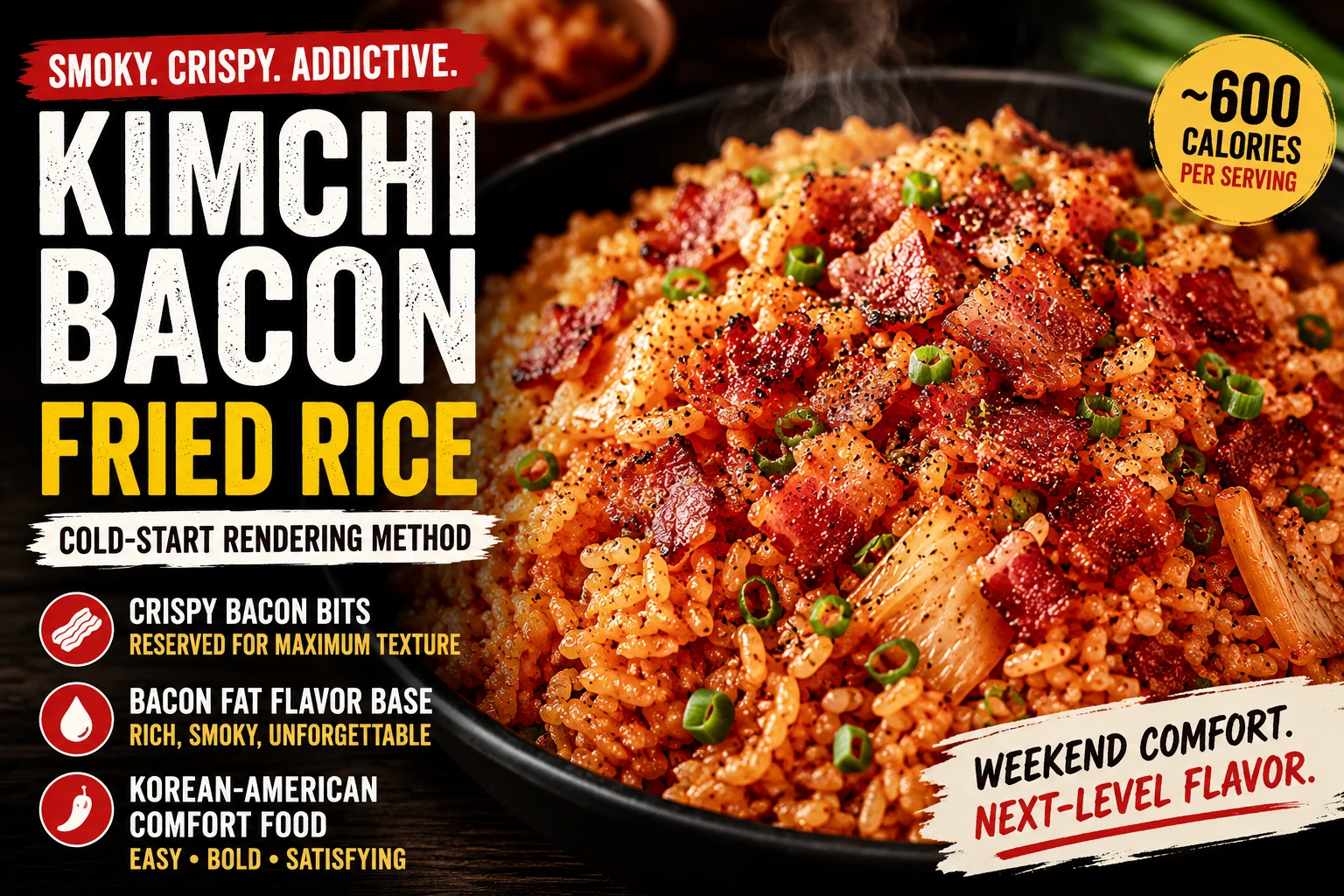
| Bacon Version | 600 | 21g | No | Weekend indulgence |
| Broccoli Version | See recipe | See recipe | No (egg) | Extra vegetables, lighter and fibre-forward |
| Pork Belly Version | See recipe | See recipe | No | Richest, most restaurant-style KFR |
Following a Kimchi Diet Plan?
This bowl is a single recipe. If you’re building kimchi and egg into a structured daily routine instead — for gut health, weight management, or just consistency — these guides pick up where this page leaves off.
Kimchi Breakfast Bowl FAQ — 19 Questions
Yes — kimchi is a fermented food, so eating it in the morning, ideally without cooking it for long, is actually one of the better times to get the live Lactobacillus cultures while your gut is settling into the day.
6 minutes 30 seconds from a rolling boil gives a jammy, spoonable centre that mimics the richness of a fried egg without needing any oil. Shock it in ice water immediately to stop the yolk from setting further.
This version is built as a Western-format breakfast bowl rather than a full fried-rice meal, so the rice is scaled down to about three-quarters of a cup to keep it lighter and quicker for the morning.
Only briefly — 60 to 90 seconds of gentle warming rounds off the sharp sourness without fully caramelising it the way a fried-rice technique would, and without killing off all of the beneficial bacteria.
A brief 60-90 second warm-through reduces live Lactobacillus somewhat but does not eliminate it entirely, unlike a full high-heat fry. For maximum probiotic content, add the kimchi cold instead.
Stage 2, young kimchi at one to two weeks, is generally preferred for breakfast — it’s brighter and milder than the deeply funky Stage 3 kimchi used in a classic dinner-style fried rice.
Yes — a sunny-side-up or baste-fried egg works well and is closer to the classic fried rice topping, though it adds extra oil and calories compared with the soft-boiled version.
Reasonably — approximately 15g of protein per serving from the two eggs, slightly more than the egg-topped classic fried rice recipe despite the smaller overall portion.
Approximately 380 calories per bowl, with the avocado contributing most of the fat and fibre and the smaller rice portion keeping the carbohydrate count below the classic fried rice version.
Yes — swap the soft-boiled eggs for pan-seared cubed tofu and confirm your kimchi is explicitly labeled vegan, since traditional kimchi typically contains fish sauce or shrimp paste.
It can be, with one swap — use tamari or coconut aminos instead of regular soy sauce, and confirm your kimchi brand is labelled gluten-free.
Partially — soft-boiled eggs are best made fresh since they lose their jammy texture on reheating, but the rice and kimchi base can be prepped up to 3 days ahead and assembled quickly each morning.
Shocking the egg in ice water immediately stops the residual heat from continuing to cook the yolk past the jammy stage, and it also makes the shell noticeably easier to peel.
This usually means the boil time ran slightly long or the ice bath was skipped. Reduce the time to 6 minutes on the next attempt and shock the egg immediately once the timer ends.
Yes — a light drizzle of gochugaru for heat, crumbled seaweed snack, toasted nuts, or a spoonful of plain yogurt on the side all work well without overwhelming the bowl’s lighter format.
Not by default — the kimchi itself carries mild heat, and the gochugaru drizzle is optional, so the bowl can be made completely mild or adjusted hotter using the spice level tool above.
The main differences are portion size, cooking technique for the kimchi, and the egg style — this bowl uses less rice, briefly warms rather than fries the kimchi, and swaps the classic fried egg for a soft-boiled one.
Yes — brown rice works well here and adds extra fibre, though it will shift the total calorie and carbohydrate count slightly higher than the white short-grain rice used in this recipe.
Related but not identical. The viral kimchi and boiled egg diet is a minimal 2-egg, no-rice pairing eaten as a fast, low-calorie meal — see our full breakdown. This breakfast bowl uses the same core probiotic-and-protein logic but adds a smaller rice portion and avocado for a more complete, sit-down breakfast.