
Kimchi and Boiled Egg Diet The 15-Minute Recipe, Exact Calories & Real Benefits
A fast, high-protein pairing that’s become a popular everyday habit — 2 boiled eggs, 100g of kimchi, and almost no cooking. Here’s the exact recipe, the real calorie count, and what the benefits actually are.


What Is the Kimchi and Boiled Egg Diet?
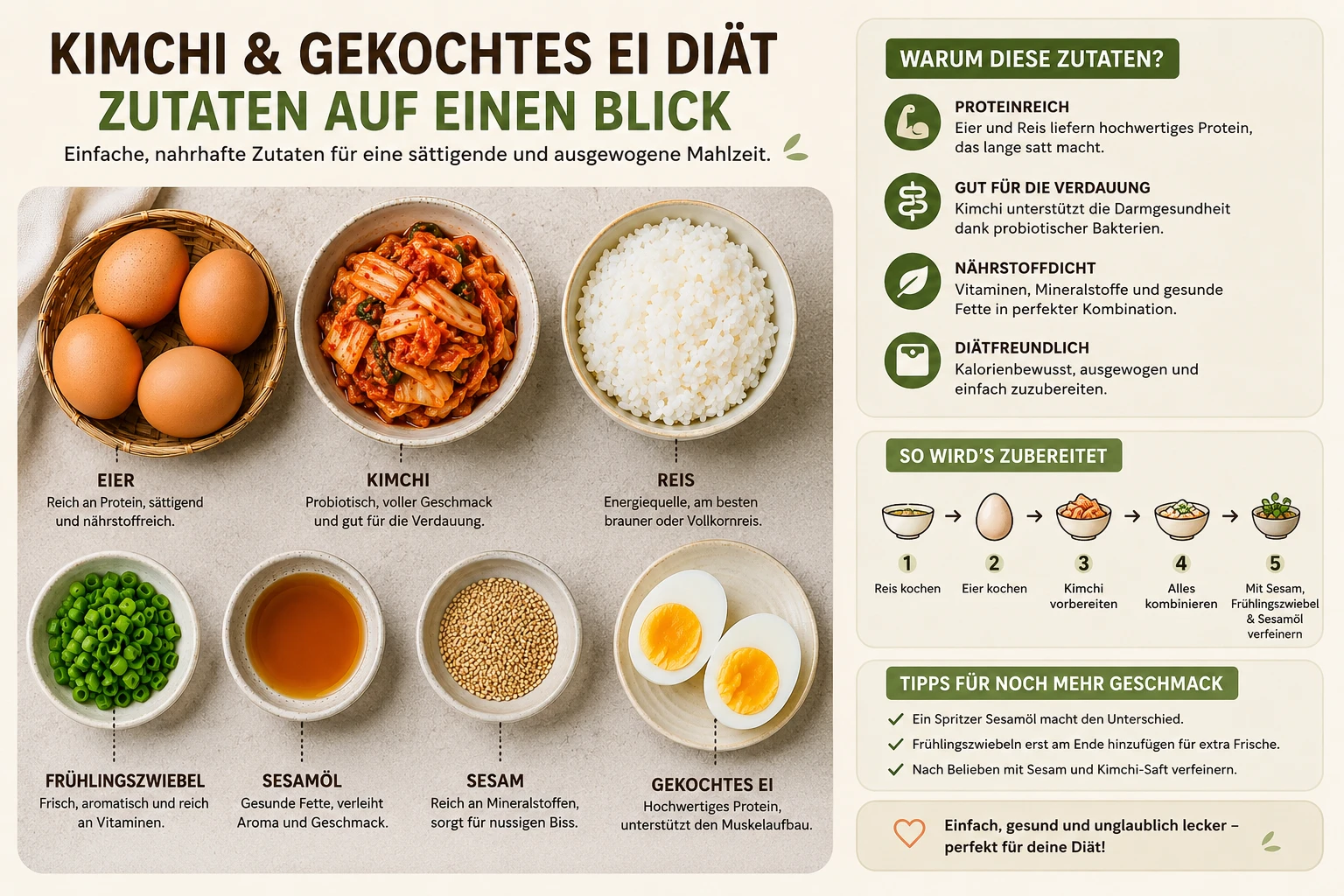
A simple, popular combination — 2 boiled eggs paired with about 100g of kimchi — eaten as a fast, high-protein meal or snack. It’s less a formal “diet” and more a low-effort habit: roughly 175 calories, 13.5g of protein, and almost no active cooking time. It works as a fast breakfast or as one option within a broader kimchi-forward eating plan.
How to Make the Kimchi and Boiled Egg Bowl
Boil eggs → arrange kimchi → top with egg → drizzle and serve.
- Boil: 2 eggs, 7 minutes for jammy or 9-10 minutes for firm.
- Arrange: Kimchi (and rice if using) in a bowl.
- Top: Halved eggs on top.
- Finish: Sesame oil, sesame seeds, scallion. Serve immediately.
Why Is Everyone Suddenly Eating This?
The kimchi and boiled egg pairing isn’t a new invention — Koreans have eaten eggs alongside kimchi for generations — but it’s had a recent surge online as a specific, named “diet” or trend, especially on TikTok and Instagram.
Most of that popularity comes down to practicality rather than any special discovery: it’s two ingredients many people already keep in the fridge, it takes about two minutes of active effort if the eggs are pre-boiled, and it reads as both high-protein and gut-friendly at a glance. Registered dietitians quoted in recent coverage of the trend have generally agreed it’s a reasonable, satiating meal choice — while also cautioning that no single food pairing is a shortcut for weight loss on its own.
Calorie Breakdown — Exactly What’s in the Bowl
Here’s precisely where the 175 calories come from, so you can adjust based on what you add.
| Ingredient | Amount | Calories |
|---|---|---|
| Boiled eggs | 2 large | ~140-150 kcal |
| Kimchi | 100g (~3/4 cup) | ~15-20 kcal |
| Sesame oil | 1/2 tsp | ~20 kcal |
| Base recipe total | — | ~175-190 kcal |
| + Cooked rice (optional) | 1/2 cup | +~100 kcal |
| + Sesame seeds | 1/2 tsp | +~15 kcal |
Figures are estimates based on standard ingredient values — actual numbers vary slightly by egg size and kimchi brand.

Substitution Guide
| Ingredient | Substitute | Impact |
|---|---|---|
| Boiled eggs | Fried or soft-scrambled eggs | Same calories, slightly different texture — works just as well. |
| Sesame oil | A drizzle of soy sauce | Loses the nutty aroma but still adds savory depth. |
| Rice | Half an avocado | Swaps carbs for healthy fats — good for lower-carb eating. |
| Kimchi | Vegan kimchi (no fish sauce) | Makes the full recipe vegetarian; still not vegan due to the eggs. |
How to Make the Kimchi and Boiled Egg Bowl
Four steps, mostly hands-off. The eggs do the work while you get everything else ready.
Bring a small pot of water to a boil, then gently lower in 2 eggs. Cook for 7 minutes for a jammy, soft-set yolk, or 9-10 minutes for a fully firm yolk. Immediately transfer to an ice bath for at least 2 minutes to stop the cooking and make peeling easier.
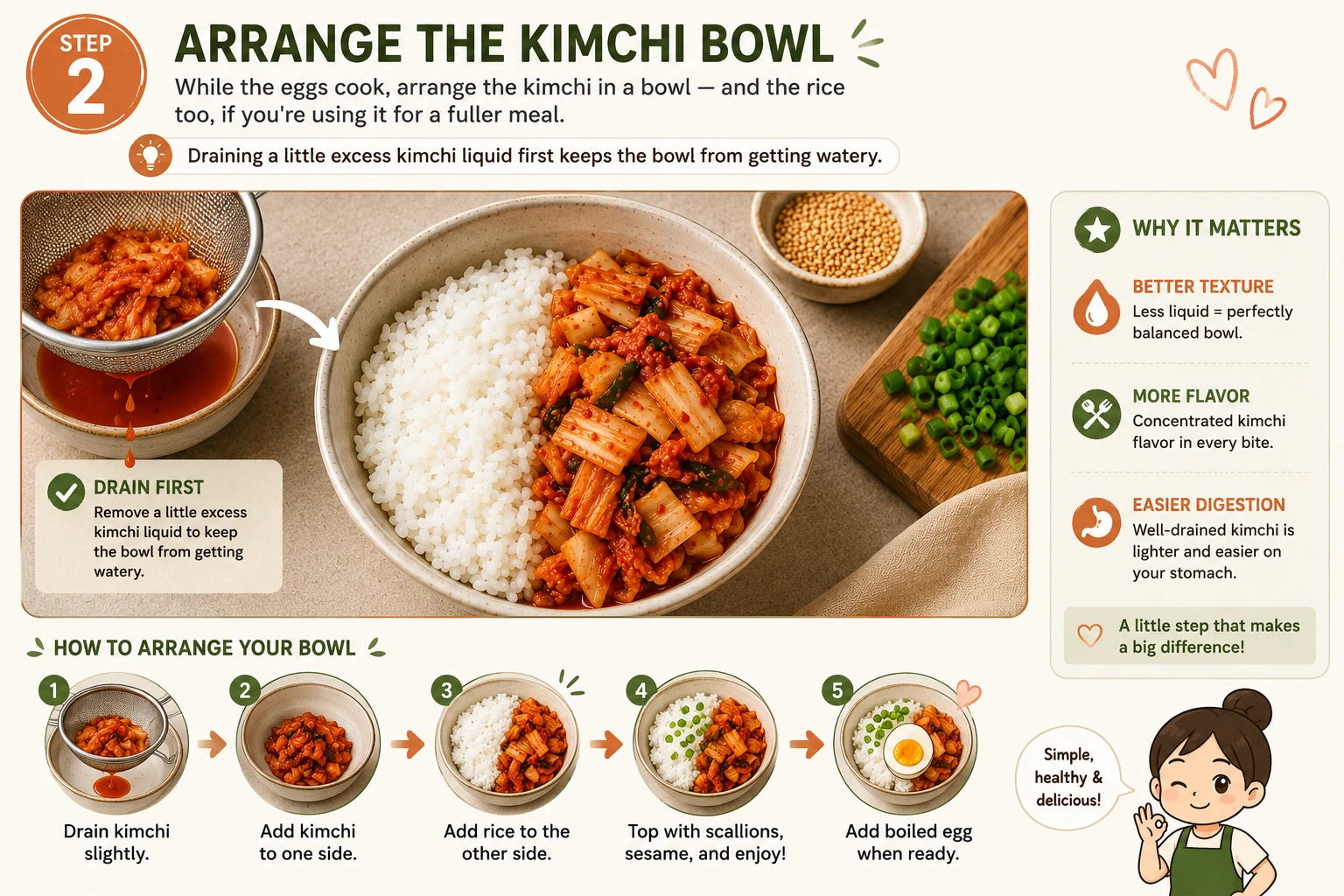
While the eggs cook, arrange the kimchi in a bowl — and the rice too, if you’re using it for a fuller meal. Draining a little excess kimchi liquid first keeps the bowl from getting watery.
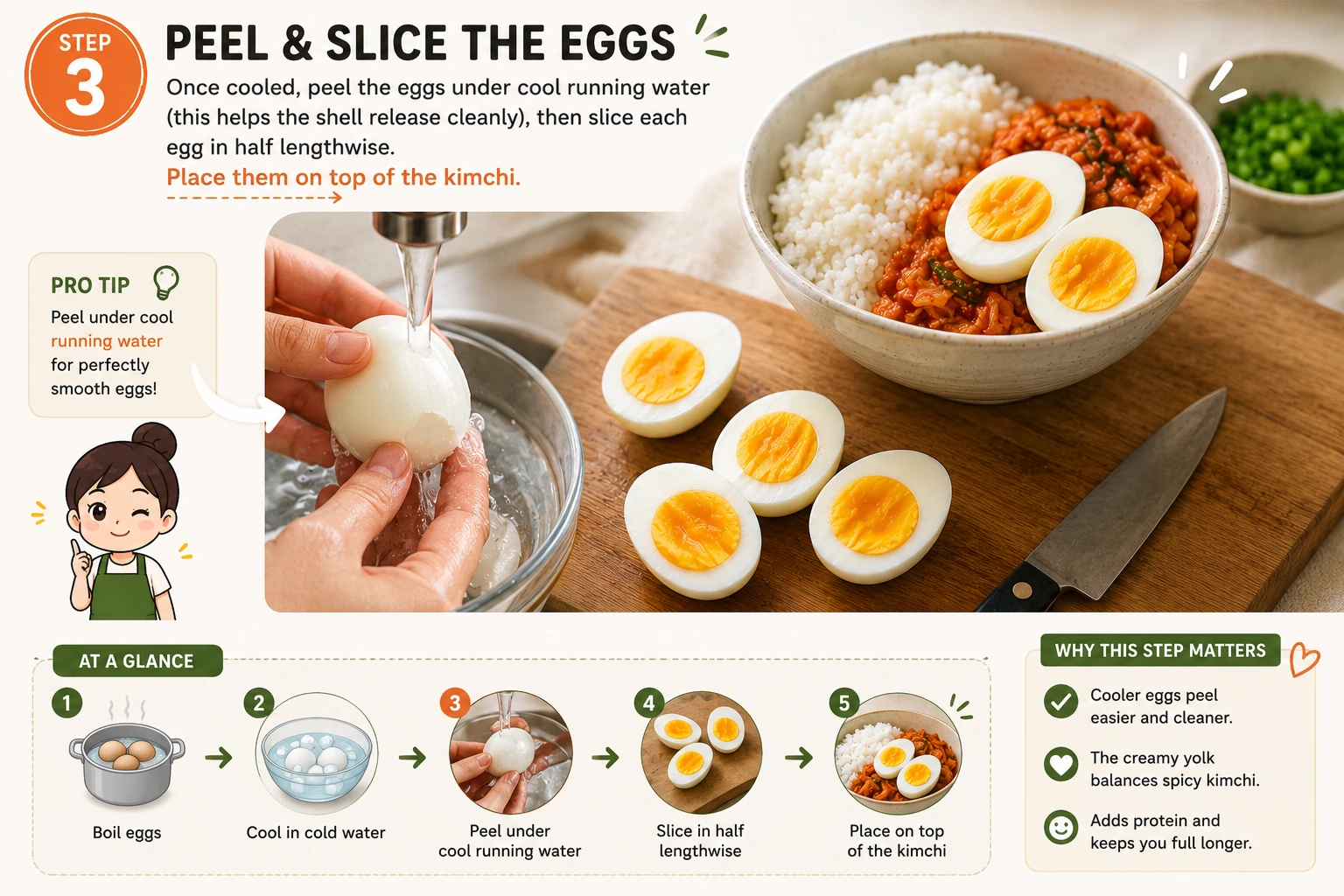
Once cooled, peel the eggs under cool running water (this helps the shell release cleanly), then slice each egg in half lengthwise. Place them on top of the kimchi.
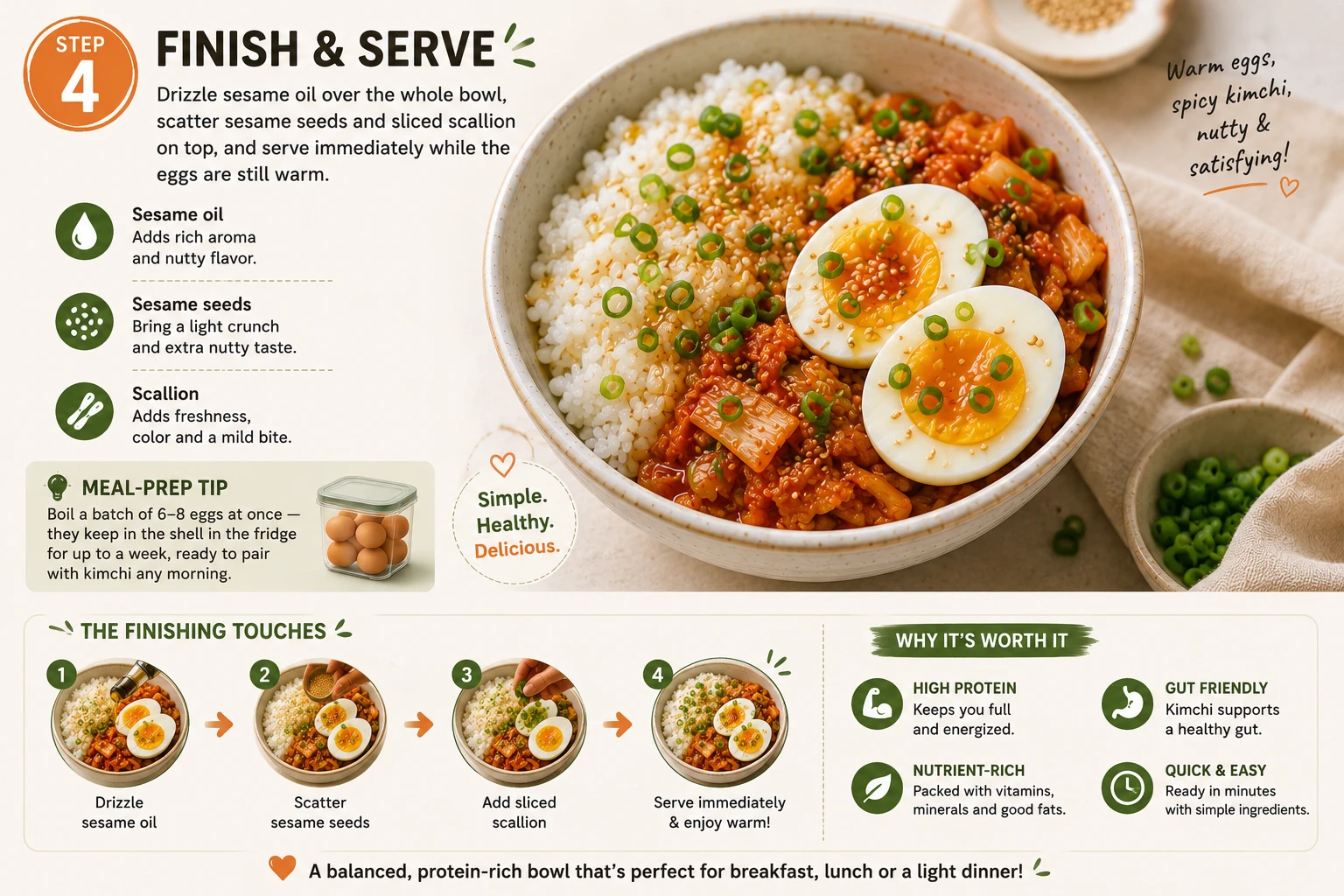
Drizzle sesame oil over the whole bowl, scatter sesame seeds and sliced scallion on top, and serve immediately while the eggs are still warm.
Health Benefits of Kimchi and Boiled Egg
Eggs and kimchi bring genuinely complementary nutrition to the table — here’s what each contributes.
Eggs provide complete protein — all nine essential amino acids in one food — along with choline and vitamin D. Kimchi contributes fiber, vitamin C, and, if unpasteurized, live lactic acid bacteria from fermentation. Together, this pairing offers a low-calorie, high-protein meal that’s more nutritionally rounded than either ingredient eaten alone.
What Each Ingredient Actually Contributes
| Nutrient | From the 2 eggs | From 100g kimchi |
|---|---|---|
| Protein | ~12-13g (complete protein) | ~1.5g |
| Vitamin B12 | ~20% DV | ~0% |
| Choline | ~50% of an adequate intake | Minimal |
| Vitamin D | ~10% DV | 0% |
| Vitamin C | 0% | ~20-25% DV |
| Vitamin K | ~5% DV | ~50% DV |
| Fiber | 0g | ~1.5-2g |
| Iron | ~10% DV | ~15-20% DV |
Approximate % Daily Value figures for a standard adult diet — exact values vary by egg size and kimchi recipe/brand.
Egg vs. Kimchi: How Different Are They, Nutritionally?
Eggs and kimchi aren’t really competing for the same nutritional job — they’re closer to opposites that happen to complement each other well. Here’s the direct comparison per typical serving.
| Per typical serving | 1 large egg | 100g kimchi |
|---|---|---|
| Calories | ~70-75 kcal | ~15-20 kcal |
| Protein | ~6g | ~1.5g |
| Fat | ~5g | <0.5g |
| Carbohydrates | ~0.5g | ~2.5-3g |
| Fiber | 0g | ~1.5-2g |
| Sodium | ~70mg | ~400-600mg |
| Best for | Protein & satiety | Fiber, gut health & micronutrients |
In short: eggs are the protein anchor, kimchi is the low-calorie, high-fiber, probiotic-rich side. Neither one is a complete meal by itself, which is exactly why pairing them is more useful than eating either one alone.
Is It Safe to Eat Kimchi and Boiled Eggs Every Day?
For most healthy adults, yes — but a few specific things are worth knowing before turning this into a daily routine.
What About Egg Cholesterol?
A large egg contains dietary cholesterol, which used to come with a strict daily cap. That guidance has changed: the American Heart Association’s 2026 dietary guidance no longer treats dietary cholesterol as a primary target for heart-disease risk, and states that moderate egg consumption fits within a heart-healthy eating pattern for most people. The reasoning is that saturated fat — not the cholesterol in egg yolks specifically — is the bigger driver of blood LDL (“bad”) cholesterol for most healthy adults. Two eggs a day, as in this recipe, comfortably fits current guidance for people without an existing heart condition or diabetes.
Other Things to Watch
100g of kimchi daily adds roughly 400-600mg of sodium — worth tracking if you have hypertension, kidney disease, or already eat a salty diet. Rinsing kimchi briefly under cold water cuts surface sodium if needed.
Kimchi’s garlic and fermentation can cause noticeable breath and occasional bloating, especially when first eating it daily. Both are harmless and usually ease as your gut adjusts over the first week.
This is an obvious one, but worth stating plainly — this recipe isn’t suitable for anyone with an egg allergy. There’s no direct substitute that keeps the same protein profile.
Both kimchi’s sodium and, less commonly discussed, its potassium content are worth reviewing with a doctor if you have kidney disease, since both minerals often need monitoring in that situation.
Is This Good for Weight Loss?
This combination can support weight loss as part of a calorie-appropriate diet — mainly because it’s low-calorie and high-protein, which helps with satiety and makes it easier to stay within a calorie deficit.
Storage & Meal Prep
Refrigerate unpeeled — the shell protects the egg and keeps texture best. Peel just before eating.
Keep submerged in its own brine with a clean utensil each time — it keeps fermenting and getting tangier.
Best assembled fresh — the egg is warm and the kimchi crisp. Store components separately if prepping ahead.
Store in an airtight container once cooled, reheat with a splash of water before serving.

Kimchi and Boiled Egg Bowl
15 minutes · High protein · Perfect for meal prep
- 2 large eggs
- 3/4 cup (100g) kimchi, chopped
- 1/2 cup cooked rice (optional)
- 1/2 tsp sesame oil
- 1/2 tsp toasted sesame seeds
- 1 scallion, sliced
- 1Boil eggs 7 min (jammy) or 9-10 min (firm), then ice-bath and peel.
- 2Arrange kimchi (and rice, if using) in a bowl.
- 3Halve the eggs and place on top.
- 4Drizzle with sesame oil, top with sesame seeds and scallion, serve.
Per serving, base recipe without optional rice. Approximate values — may vary by brand and egg size.
Variations
The base bowl is deliberately simple — here’s how to adapt it.
Brings the total to ~280-300 calories with more sustained energy — turns it from a snack into a full meal.
Stir 1/2 tsp gochujang into the sesame oil before drizzling for extra heat and depth.
Swap boiled for fried or soft-scrambled eggs — same calorie range, different texture.
Half an avocado adds healthy fats and about 120 calories — a more substantial brunch bowl.
Want more breakfast-specific formats beyond this one? See our full kimchi breakfast bowl guide.
Kimchi and Boiled Egg Diet — FAQ
It’s a simple, popular pairing of boiled eggs and kimchi eaten as a low-effort, high-protein meal or snack — usually 2 eggs with 75-100g of kimchi. It’s less a formal “diet” and more a fast, filling combination people use for breakfast or as part of a broader kimchi-forward eating plan.
Roughly 175 calories for 2 boiled eggs (about 140-150 kcal) plus 100g of kimchi (about 15-20 kcal), before any added oil or rice. Adding 1/2 tsp sesame oil brings it to about 195 calories; adding 1/2 cup rice brings the full bowl to roughly 280-300 calories.
It can support weight loss as part of a calorie-appropriate diet, mainly because it’s low-calorie and high-protein, which helps with fullness. There’s no research showing this specific combination causes weight loss on its own.
2 eggs is a common serving for a meal (about 12-13g of protein), while 1 egg works fine for a smaller snack. Adjust based on your protein needs.
Yes — it’s a fast, high-protein breakfast that needs almost no active cooking time, since eggs can be boiled the night before. If you want more breakfast-specific variations, see our kimchi breakfast bowl guide.
The combination pairs complete protein from eggs with fiber, vitamins, and — if the kimchi is unpasteurized — live probiotic bacteria from fermentation.
Yes — boiled eggs keep in the shell in the fridge for up to a week, and kimchi keeps for weeks once opened. Boil a batch of 6-8 eggs on a Sunday for grab-and-go protein all week.
Yes — “kimchi and egg diet” and “kimchi and boiled egg diet” refer to the same basic pairing. Boiled is the most common and lowest-effort format.
Yes, very well — kimchi’s tang and heat balance the mild richness of eggs, which is why the pairing appears across Korean cooking, from kimchi fried rice to kimchi omelette (gyeran mari) to this simple bowl.
About 480mg for the base recipe, most of it from the kimchi — roughly 21% of the commonly recommended 2,300mg daily sodium limit.
Yes — fried or soft-scrambled eggs work fine with kimchi. Boiled eggs are simply the fastest, most meal-prep-friendly option.
It contains eggs, so it isn’t vegan, but it is vegetarian as long as you use a vegan or vegetarian kimchi without fish sauce or shrimp paste.
For most healthy adults, no meaningful amount. The American Heart Association’s 2026 dietary guidance removed its long-standing cap on dietary cholesterol and states moderate egg consumption fits a heart-healthy pattern, since saturated fat — not the cholesterol in egg yolks — is the main driver of blood LDL. People with existing high cholesterol, diabetes, or heart disease should still confirm their personal egg intake with a doctor.
For most healthy adults, yes. Two eggs a day fits comfortably within current guidance, and 100g of kimchi daily is a moderate, commonly eaten amount in Korea. The main things to watch are sodium if you have hypertension or kidney disease, and mild garlic breath or gas some people notice when eating kimchi daily. See the safety section above for details.
It’s spread widely on social media as a simple, low-effort, high-protein breakfast that needs almost no cooking and uses two ingredients many people already keep on hand. Its appeal is practicality rather than a proven special weight-loss effect — nutritionists generally frame it as one good option within a balanced diet, not a standalone diet plan.
Eggs bring complete, high-quality protein, choline, vitamin B12, and vitamin D but almost no fiber or vitamin C. Kimchi is nearly the opposite — very low protein, but a good source of fiber, vitamin C, vitamin K, and, if unpasteurized, live probiotic bacteria. See the comparison table above for the full breakdown.
Was this recipe helpful?
Your feedback helps us improve KimchiGuide for everyone.
Who Makes This Bowl
“This is my go-to breakfast now. I boil a batch of eggs Sunday night and it’s ready in under 2 minutes every morning.”
“Simple but genuinely filling. Didn’t expect 175 calories to keep me full until lunch, but it does.”