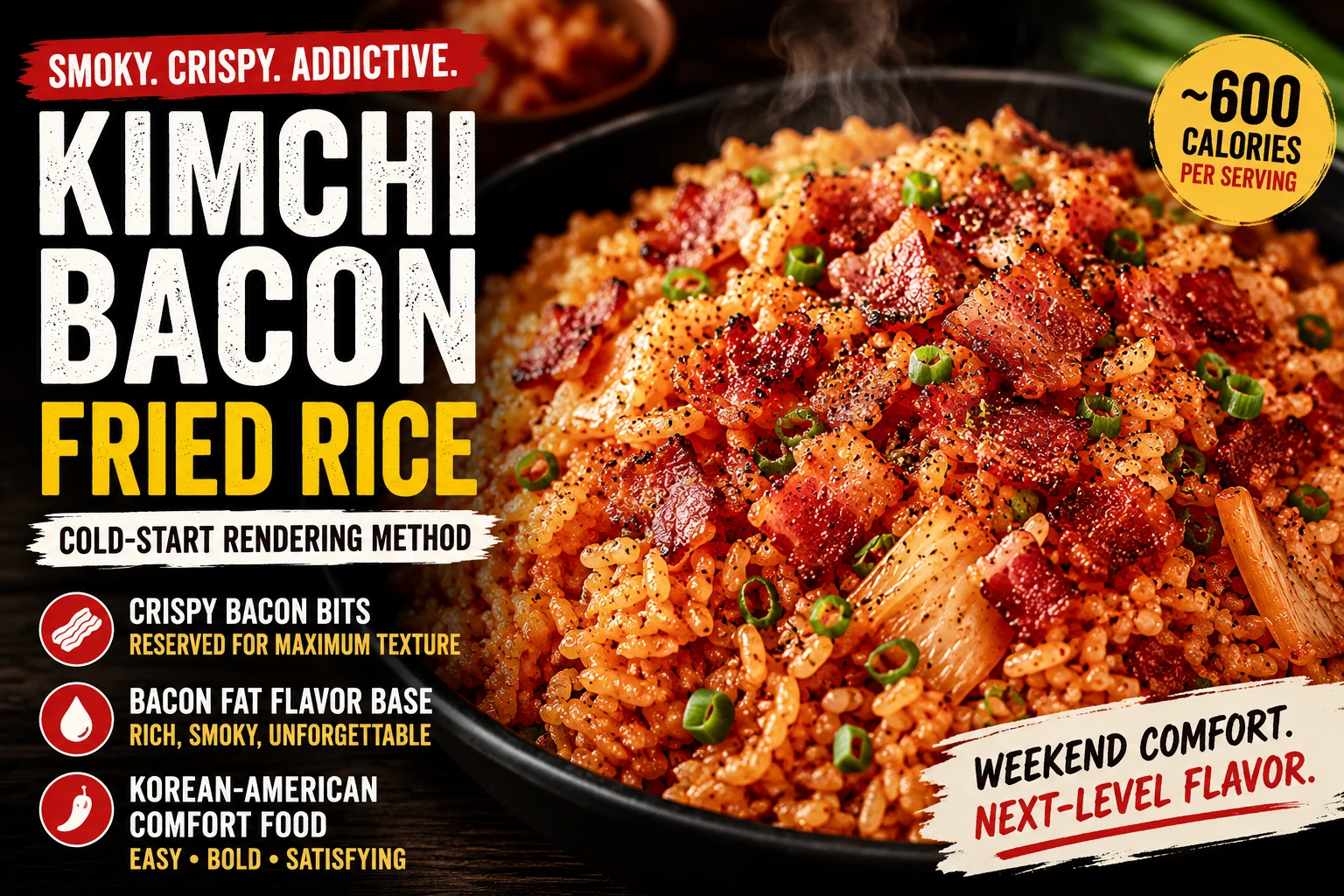
Kimchi Bacon Fried Rice (베이컨 김치볶음밥 — Cold-Start Rendering Method)
A Korean-American comfort classic built on rendered bacon fat, not neutral oil. The technique hinges on two things: cold-starting the bacon so the fat renders slowly and evenly, and reserving the crispy bits to add back at the very end so they stay crunchy against the smoky-sour rice. Approximately 600 calories with 21g of protein per serving.
What Is Kimchi Bacon Fried Rice?
Kimchi bacon fried rice — 베이컨 김치볶음밥 — is a Korean-American comfort classic that swaps the neutral cooking oil in classic kimchi fried rice for rendered bacon fat. The two variables that make this work: cold-starting the bacon so the fat renders slowly and evenly rather than scorching, and reserving the crispy bits to add back only at the very end so they stay crunchy on top instead of softening in the rice. Get both right and the smoky depth runs through the entire dish, not just the topping. Serves 2 in 25 minutes at approximately 600 calories and 21g protein per serving.
How to Make Kimchi Bacon Fried Rice
Kimchi bacon fried rice takes 25 minutes: cold-start diced bacon so the fat renders slowly, reserve the crispy bits, caramelise Stage 3 kimchi directly in the rendered fat, fry in cold rice, then top with the reserved crispy bacon.
- Cold-start: place diced bacon in a cold, dry pan, then turn heat to medium-low.
- Crisp and reserve: cook 8-10 minutes until deeply golden, remove bacon, leave the fat behind.
- Caramelise kimchi: add kimchi and garlic directly to the rendered fat, char 3-4 minutes.
- Fry the rice: add gochujang, brine, cold rice; press-and-char 4-5 minutes.
- Finish: season, remove from heat, top with the reserved crispy bacon, sesame seeds, and spring onion.
Why This Version Works as a Genuine Comfort Upgrade
Swapping bacon in for the usual protein sounds like a simple substitution — in practice, three deliberate choices are what separate a proper kimchi bacon fried rice from just sprinkling bacon bits on top of the classic recipe.
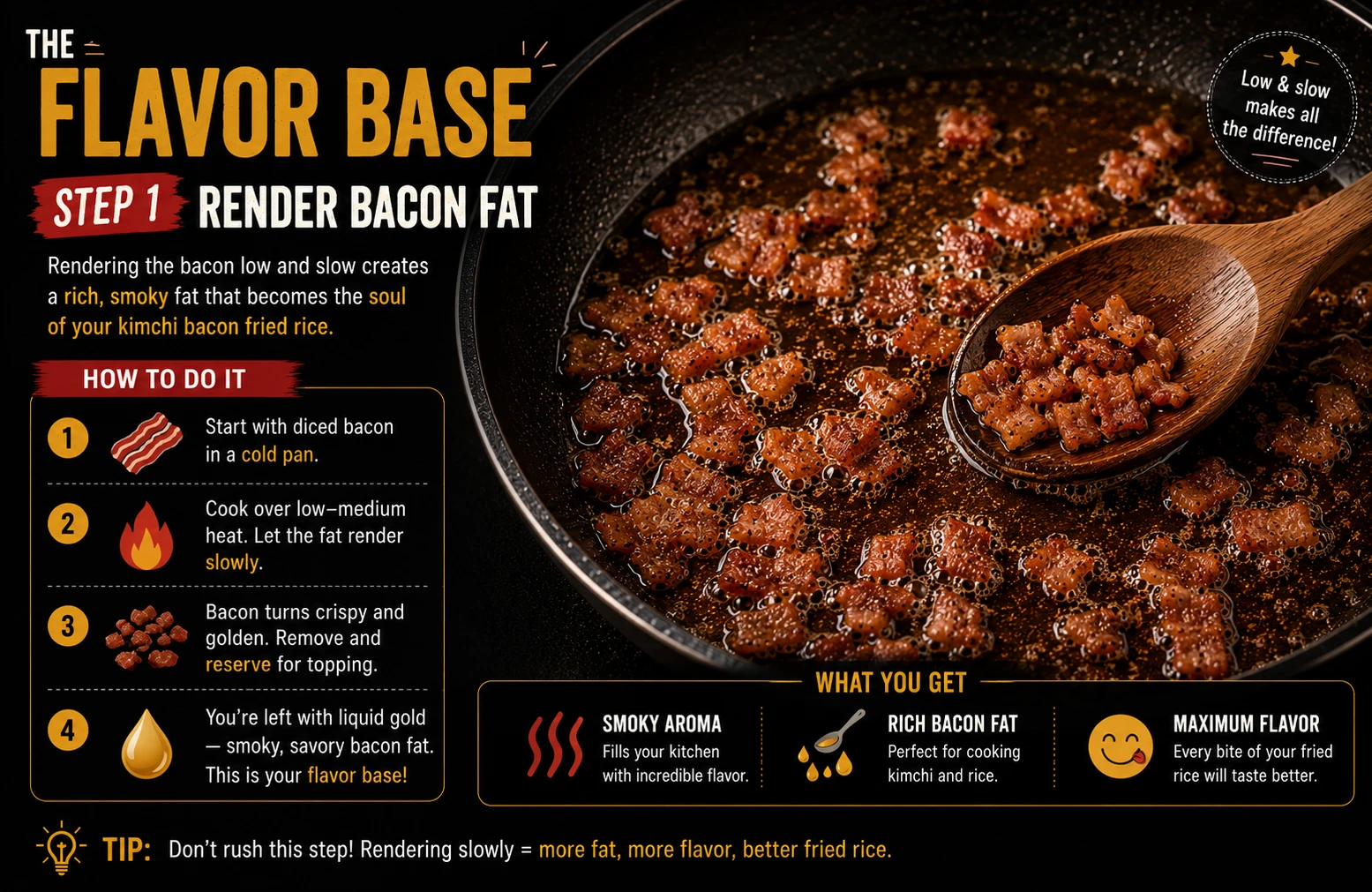
Cooking the kimchi directly in rendered bacon fat, rather than plain oil, means every bite of rice carries some of that smokiness — not just the pieces that happen to touch a crispy bit of bacon.
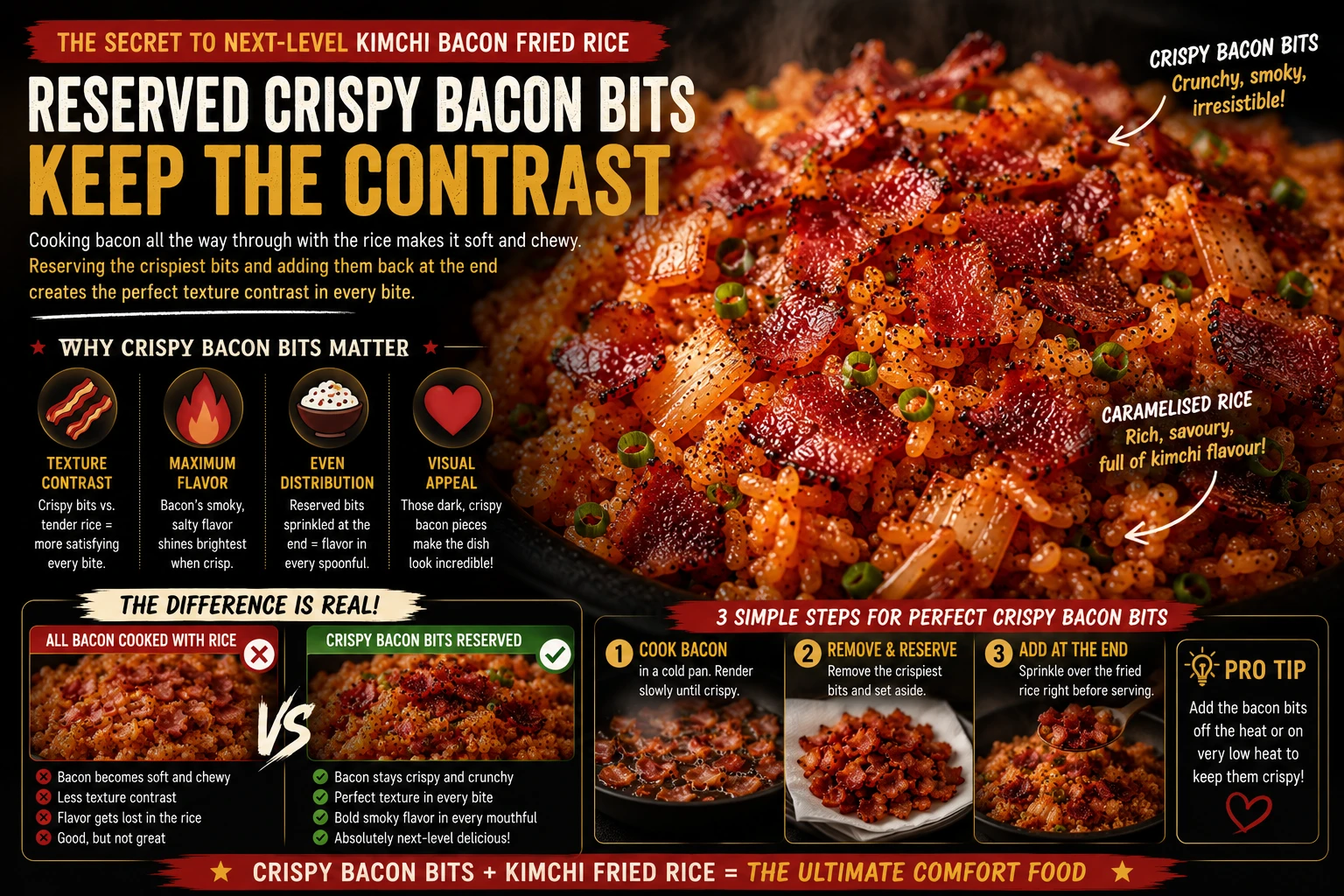
Bacon cooked all the way through with the rice loses its crunch entirely. Setting the crispiest pieces aside and adding them back at the end preserves a genuine textural contrast against the soft, caramelised rice.
Bacon’s smoky compounds sit in the same savoury register as the glutamates kimchi already produces through fermentation, so the two reinforce rather than compete with each other during the caramelising step.
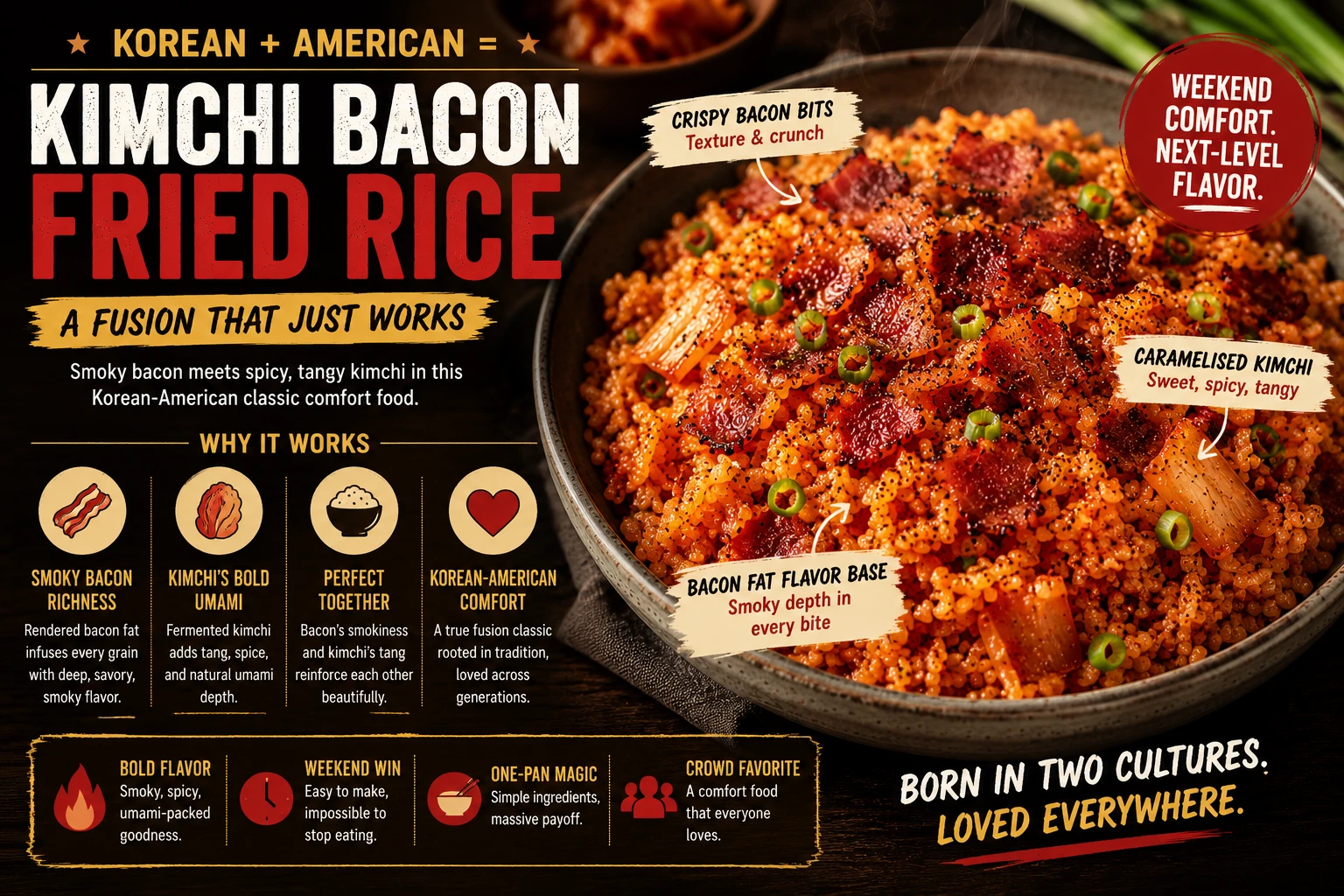
Pairing bacon’s smokiness with kimchi’s fermented tang sits squarely in the Korean-American fusion tradition — closer in spirit to budae jjigae’s American-ingredient roots than a novelty mash-up.
Cold-Start Rendering — Two Methods Compared
Most kimchi bacon fried rice recipes online just say “cook the bacon” without specifying how. We tested both approaches across 6 batches. The difference decides how much usable fat you get and how evenly the bacon crisps.
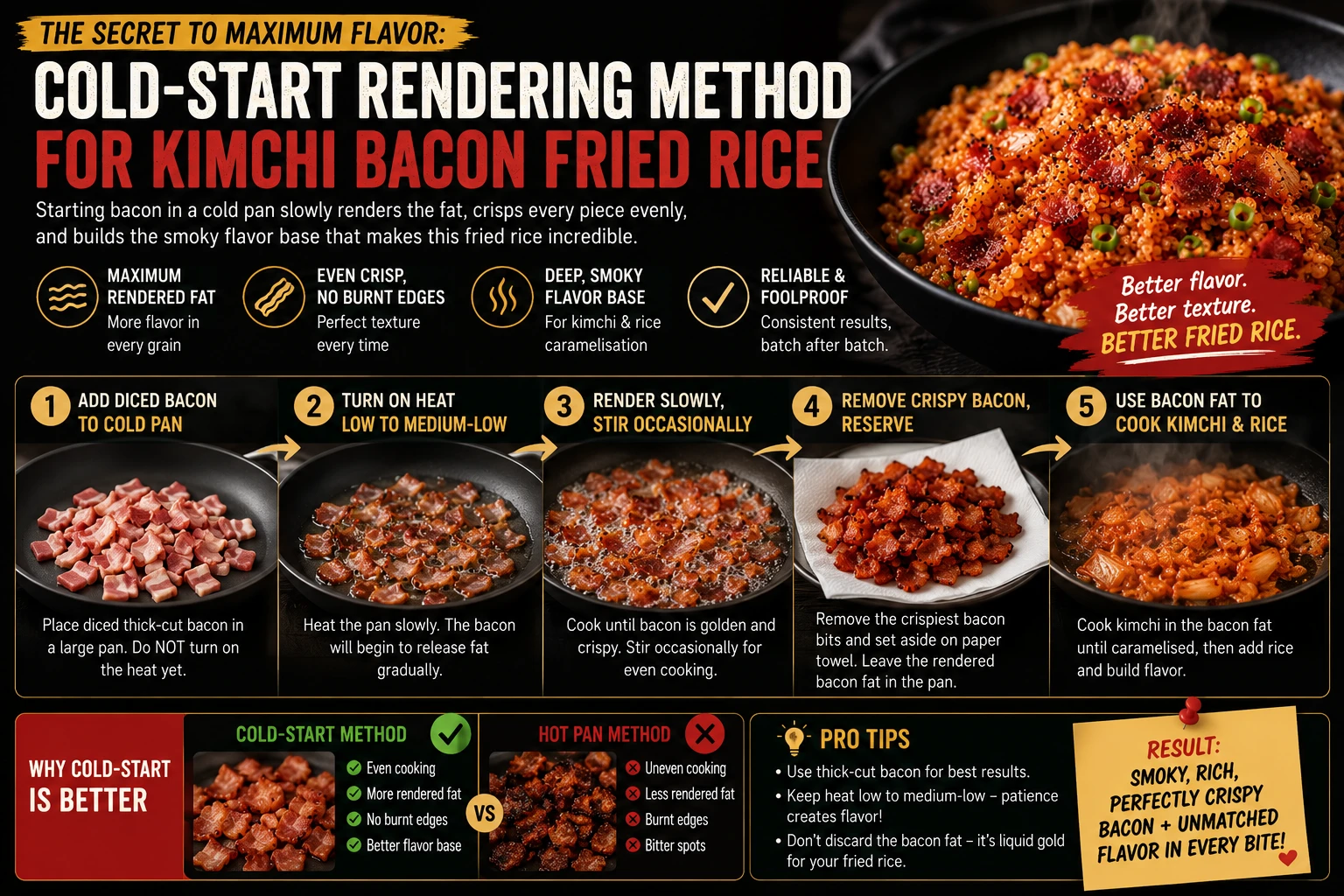
- Diced bacon goes into a cold, dry pan
- Heat set to medium-low from the start
- Fat renders gradually as pan heats up
- Bacon crisps evenly over 8-10 minutes total
Result: Maximum rendered fat, evenly golden and crisp bacon pieces with no scorched or undercooked spots. The correct technique in every batch test.
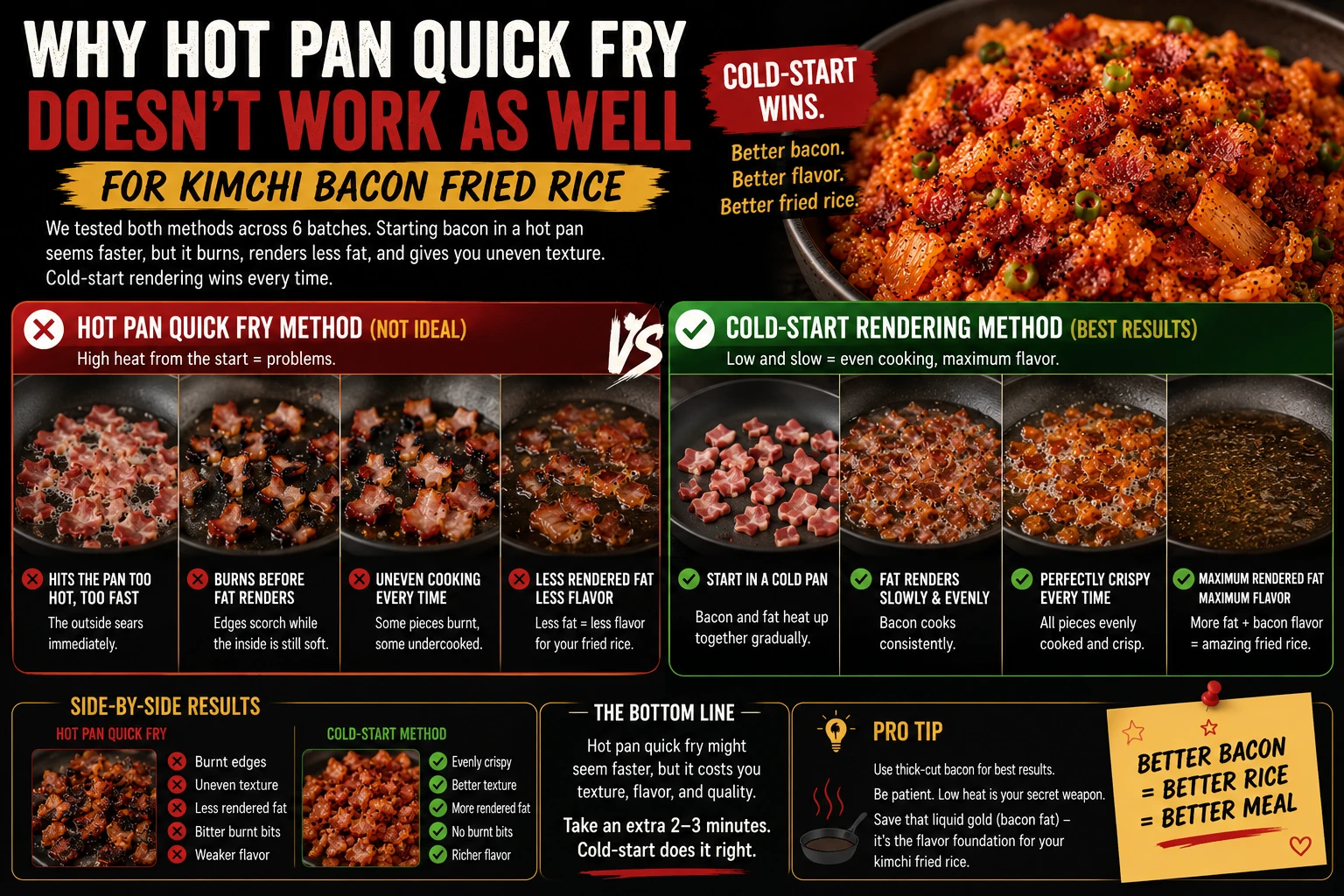
- Bacon dropped straight into an already-hot pan
- Outside browns fast, before fat fully renders
- Less usable fat left in the pan
Result: Bacon browns unevenly — some edges scorch while thicker parts stay underdone — and noticeably less fat renders out. Faster, but it undercuts the whole point of the technique.
Method Comparison at a Glance
| Method | Rendered Fat Yield | Time | Even Crisping | Verdict |
|---|---|---|---|---|
| Cold-Start ⭐ | High | 8-10 min | Yes | Always use this |
| Hot-Pan Quick-Fry | Low-medium | 5-6 min | No | Avoid — uneven, less usable fat |
Key Terms — Language & Food Science Entities
These terms explain exactly why rendered bacon fat behaves differently from plain oil, and the science behind the crisping technique used here.
Which Bacon Cut to Use — Six Options Ranked
Not every bacon cut renders enough fat to matter for this recipe — here is exactly what to look for at the store.
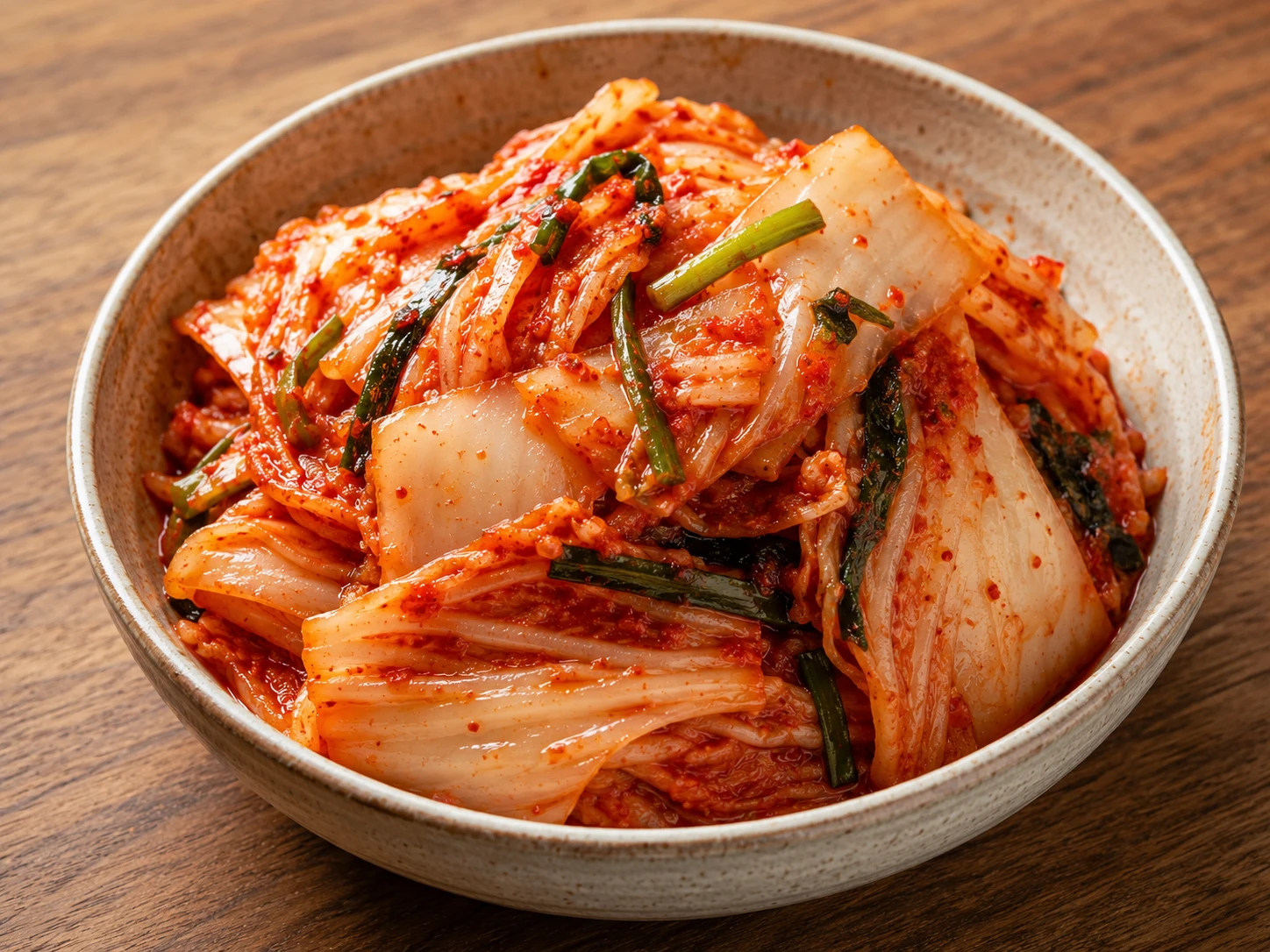
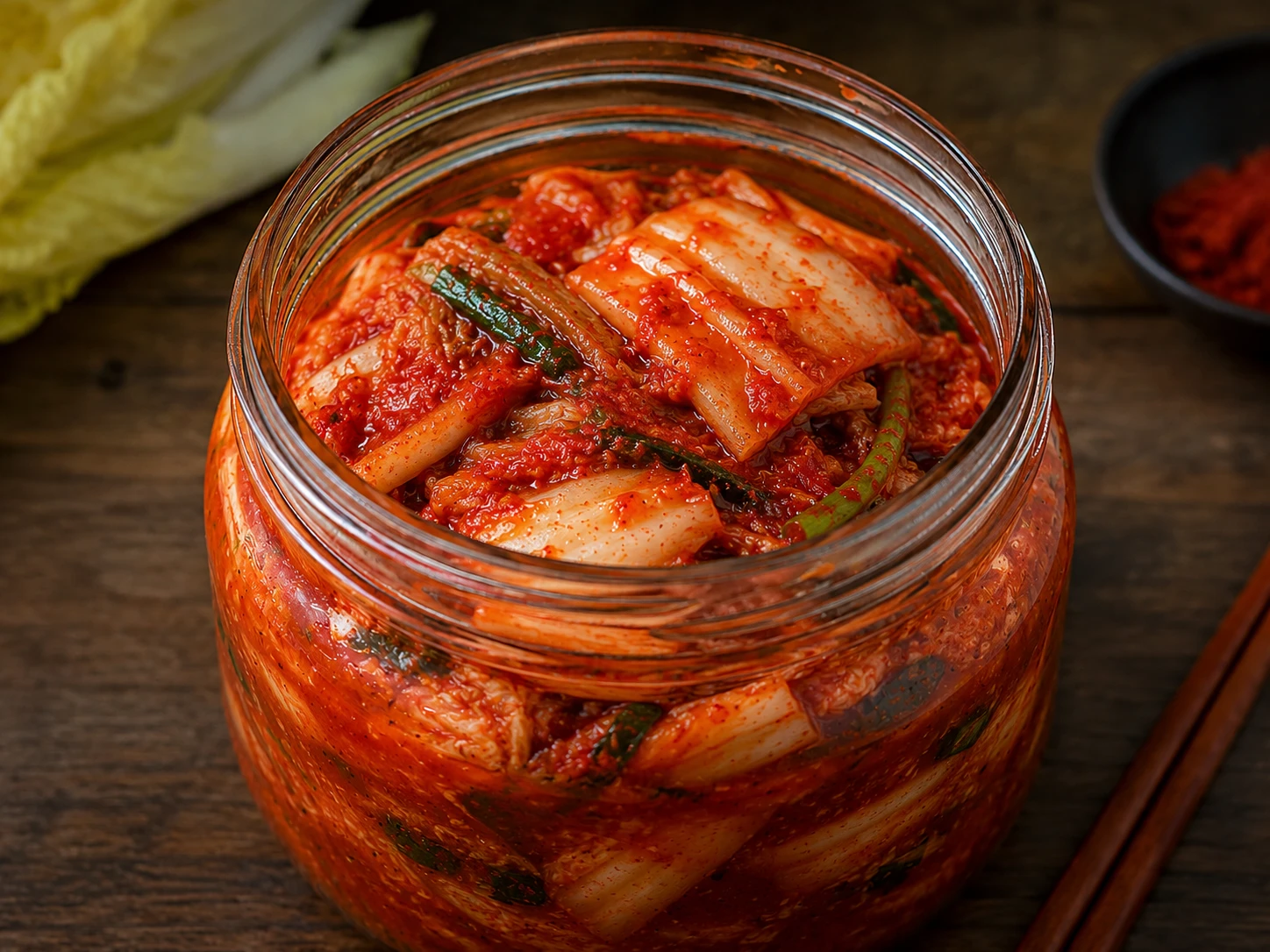
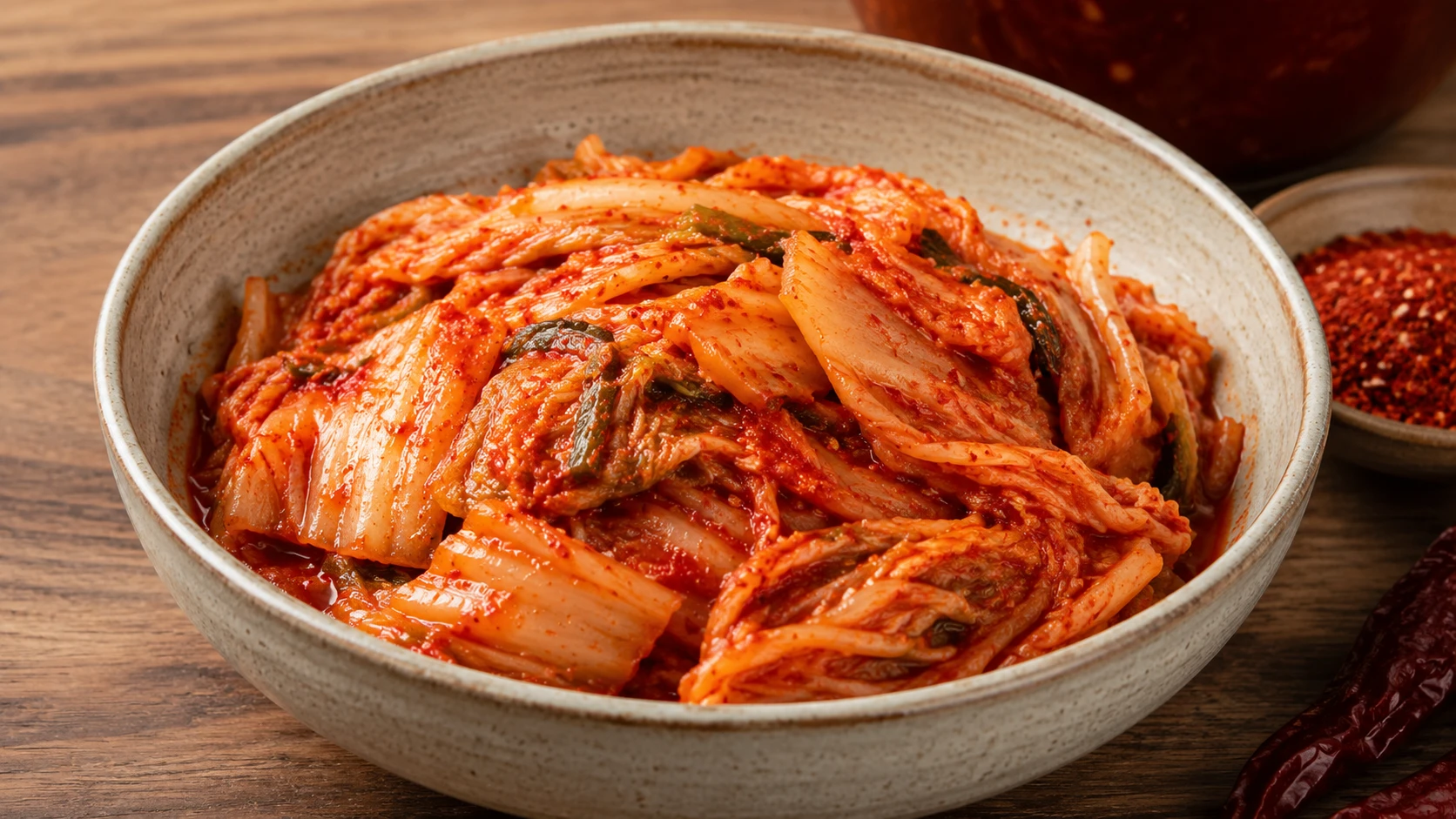
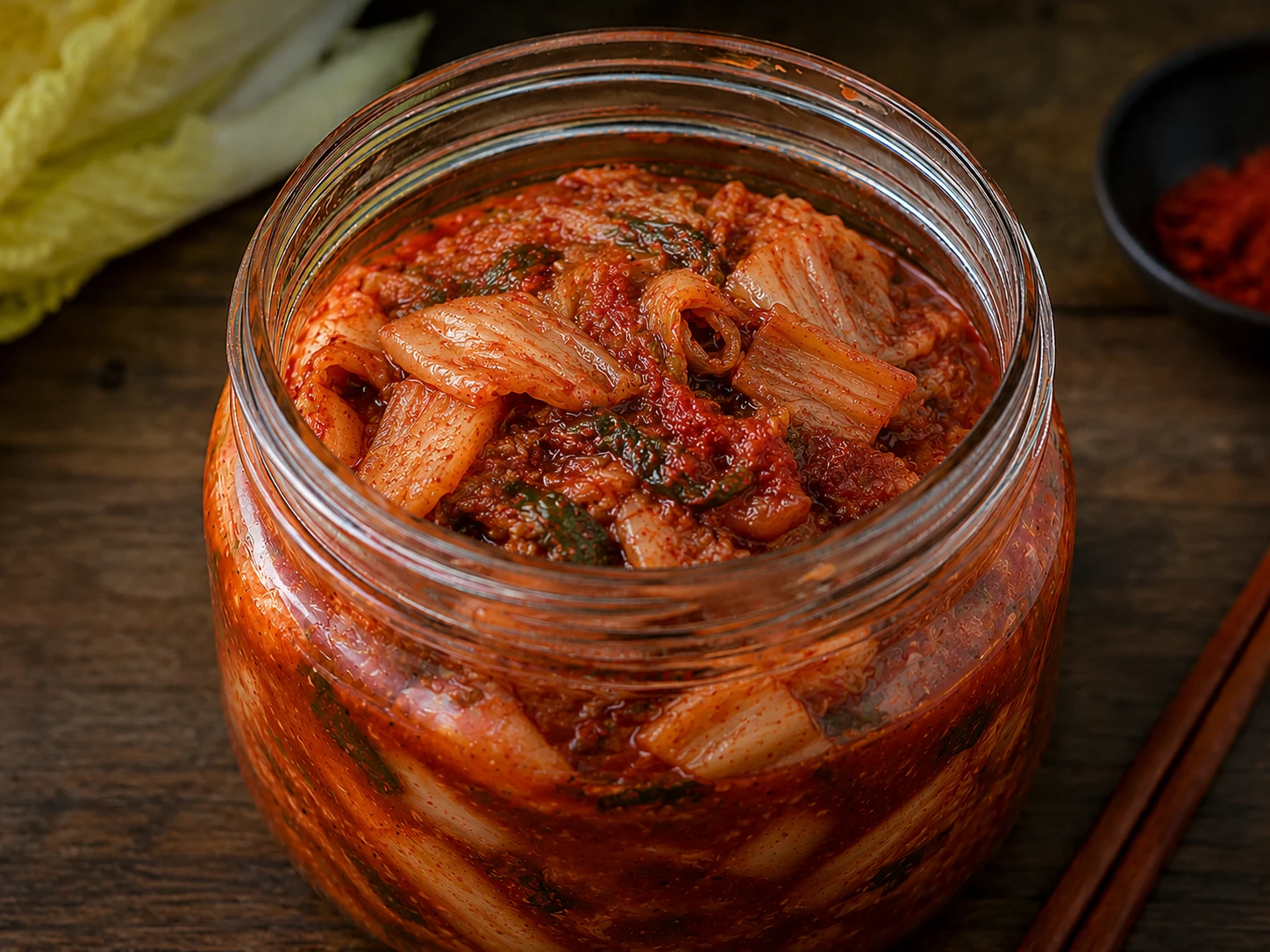
Which Kimchi Stage to Use — Bacon Version Guide
The rendered bacon fat is rich, so the kimchi needs to bring real acidity to balance it — this is one variation where the fully aged stage matters most.
How Difficult Is the Bacon Version?
Still beginner-friendly — the only extra step versus the classic recipe is rendering and reserving the bacon, which needs patience more than skill.
Ingredients + Scaler
Bacon quality and cold-start technique are the two non-negotiable variables. Everything else follows the classic recipe closely.
Substitution & Adjustment Notes
| Ingredient | What to Check / Swap | Why It Matters |
|---|---|---|
| Bacon | Thick-cut smoked preferred; turkey bacon needs added oil | Determines how much fat renders for cooking |
| Soy sauce | Use tamari or coconut aminos for gluten-free | Same swap as the classic recipe |
| Kimchi | Stage 3 preferred, Stage 2 acceptable with a splash of vinegar | Acidity needs to balance the rendered fat’s richness |
| Optional add-on | Fried egg on top, or shredded mozzarella melted under a lid | Combines well with the Classic or Cheese variation techniques |
How to Make Kimchi Bacon Fried Rice — 5 Steps
Five steps. The key difference from the classic recipe: bacon starts cold and its rendered fat becomes the cooking base for everything that follows.
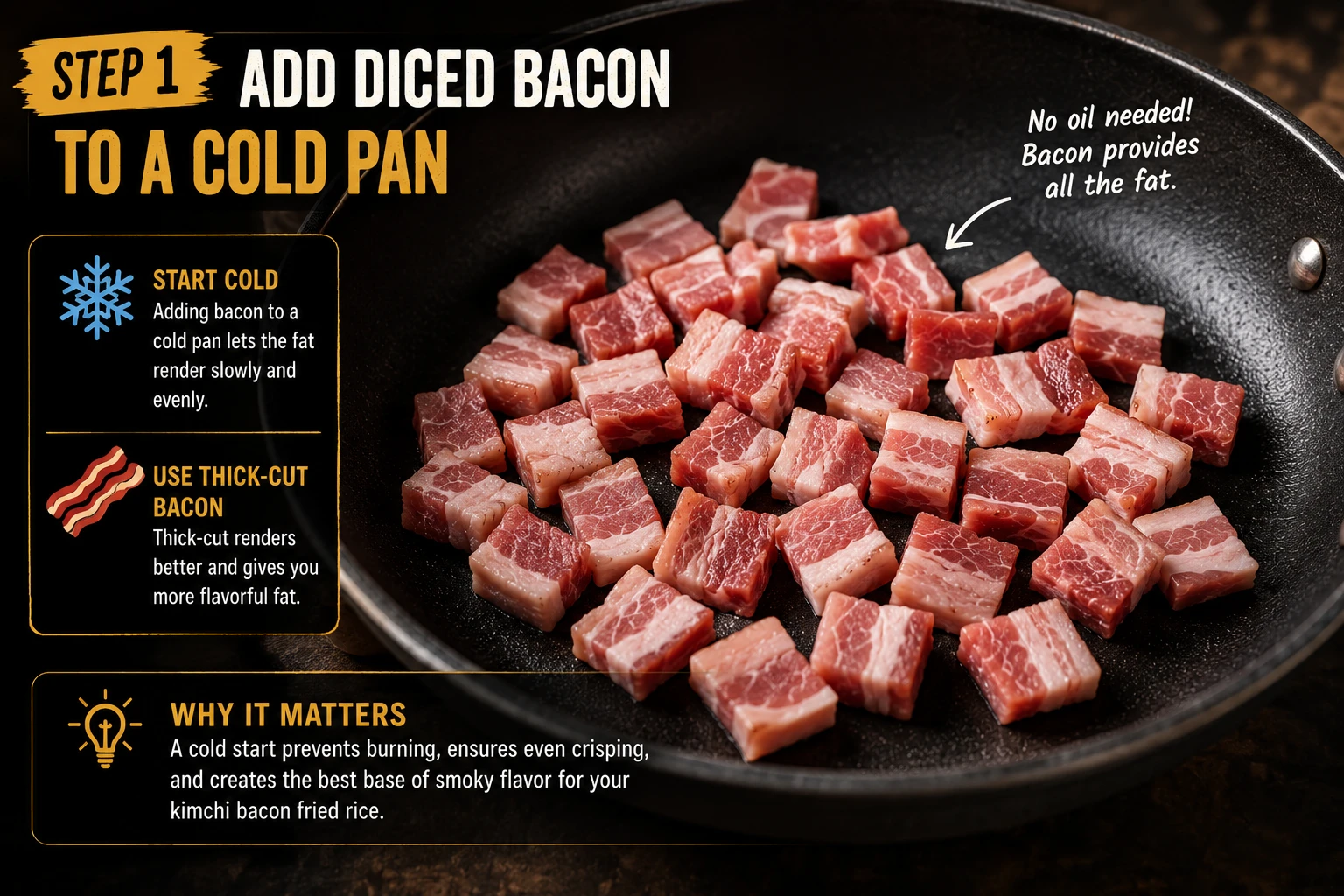
Place diced bacon in a cold, dry cast iron pan or wok before turning on any heat. Set the burner to medium-low and let the fat render slowly as the pan comes up to temperature, stirring occasionally.
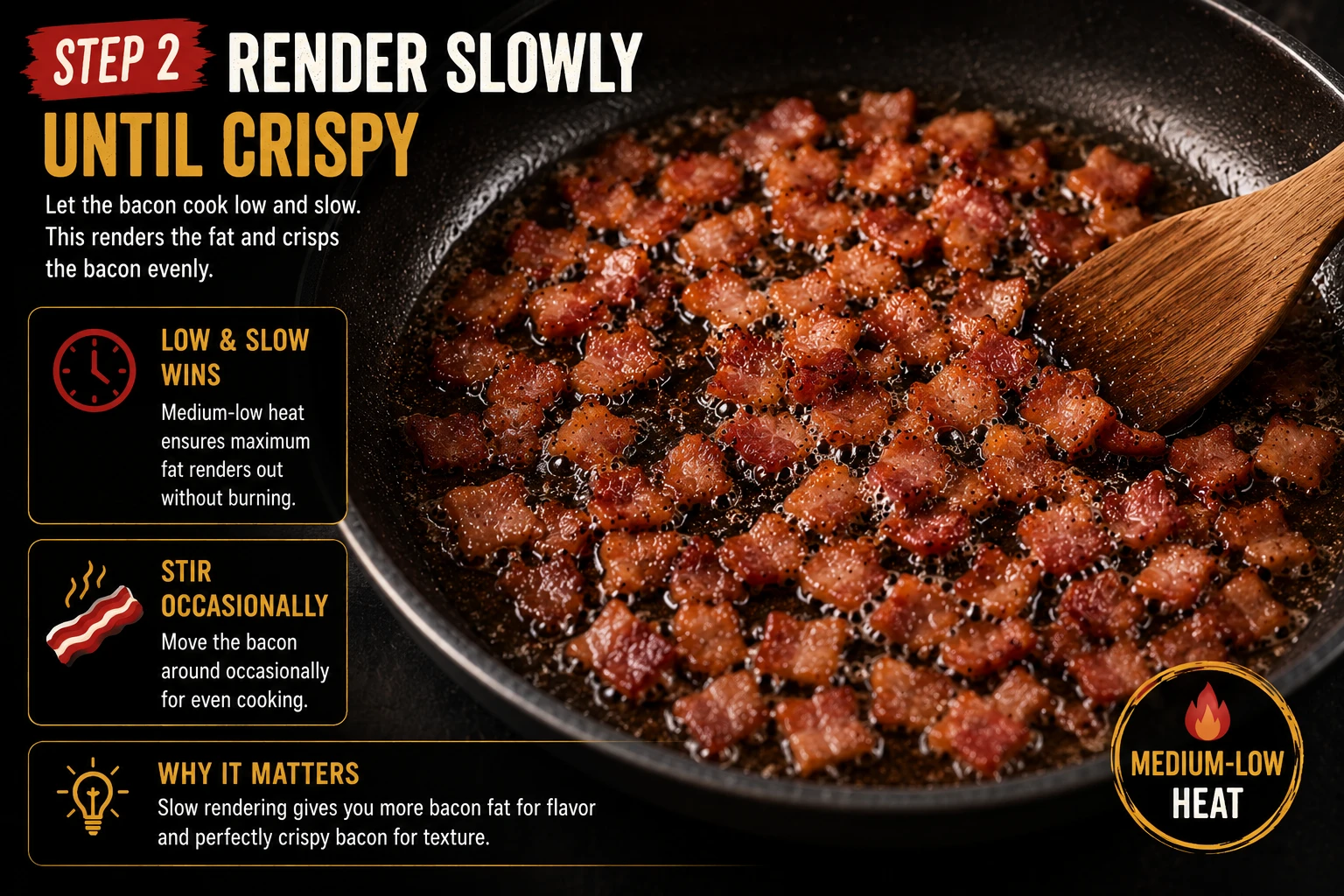
Continue cooking until the bacon is deeply golden and crisp, 8-10 minutes total. Remove the crispy bits to a paper-towel-lined plate, leaving the rendered fat behind in the pan.
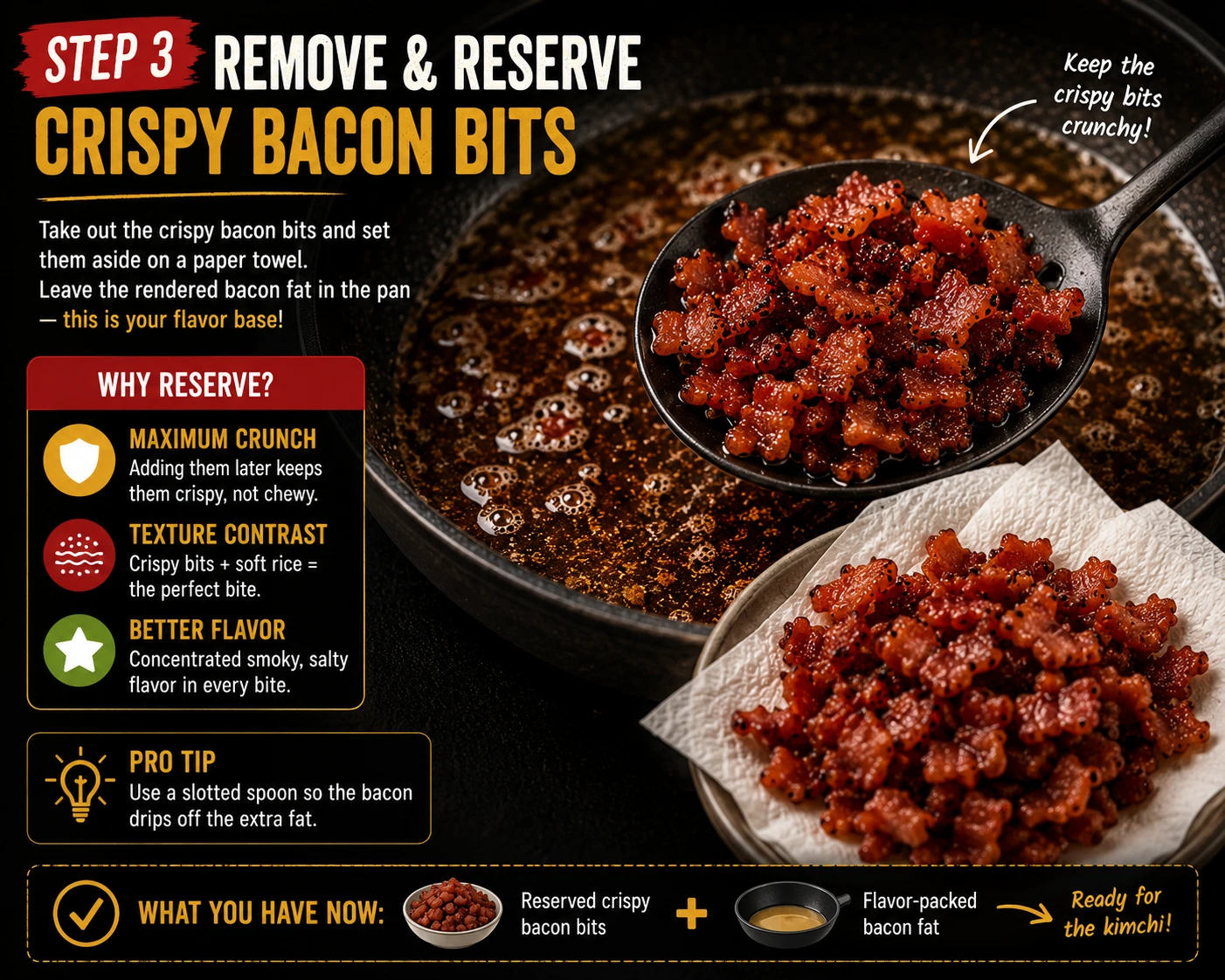
Raise heat to medium-high. Add chopped kimchi and minced garlic directly to the rendered bacon fat. Press flat and let char 30-45 seconds before stirring, repeating for 3-4 minutes until the kimchi darkens and smells deeply smoky-sour.
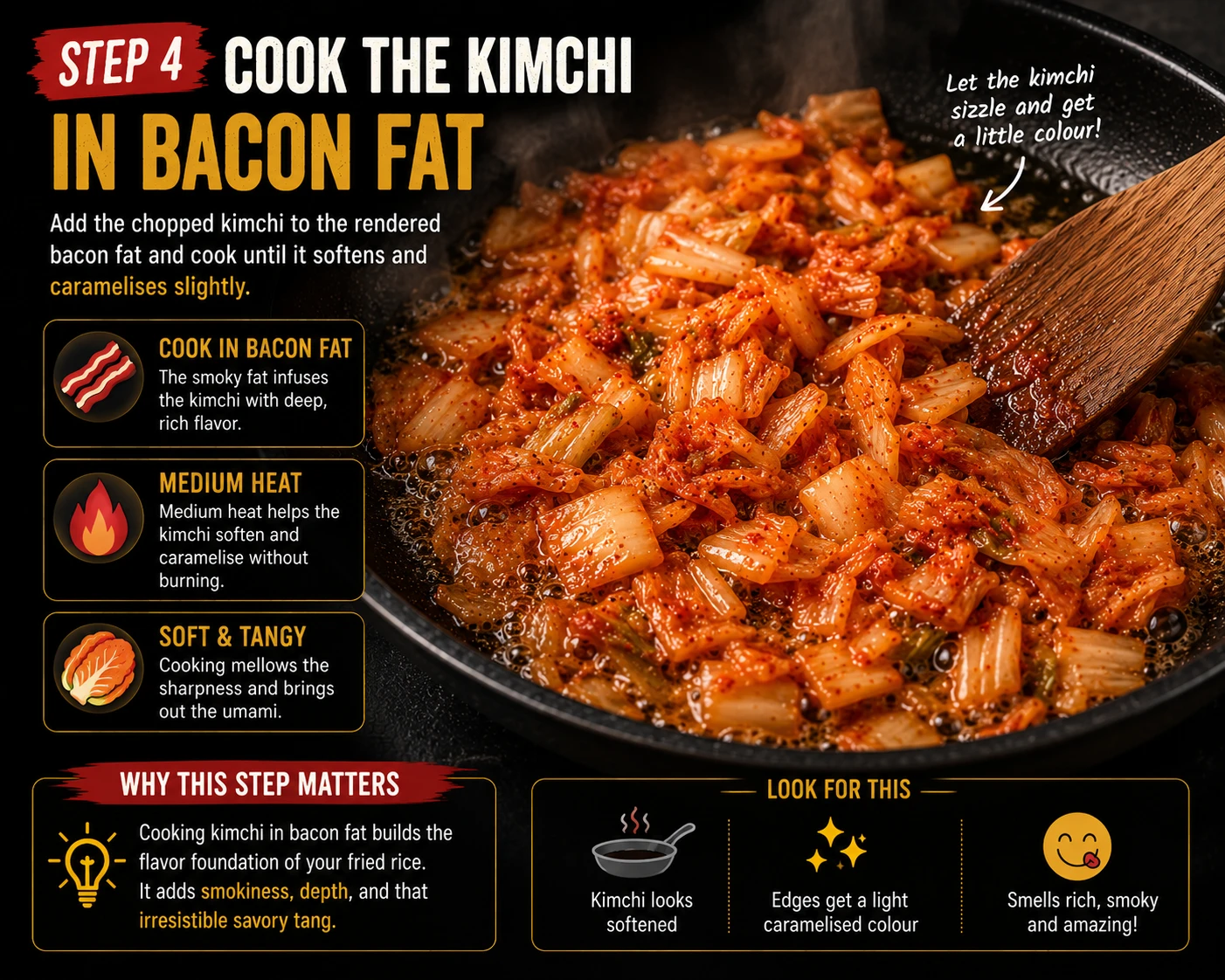
Add gochujang and kimchi brine, stir-fry 1 minute until glossy. Add cold day-old rice, breaking up clumps quickly with the edge of your spatula. Use the press-and-char technique — press flat 45-60 seconds, stir, repeat — for 4-5 minutes until grains separate and pick up light crisping in the bacon fat.
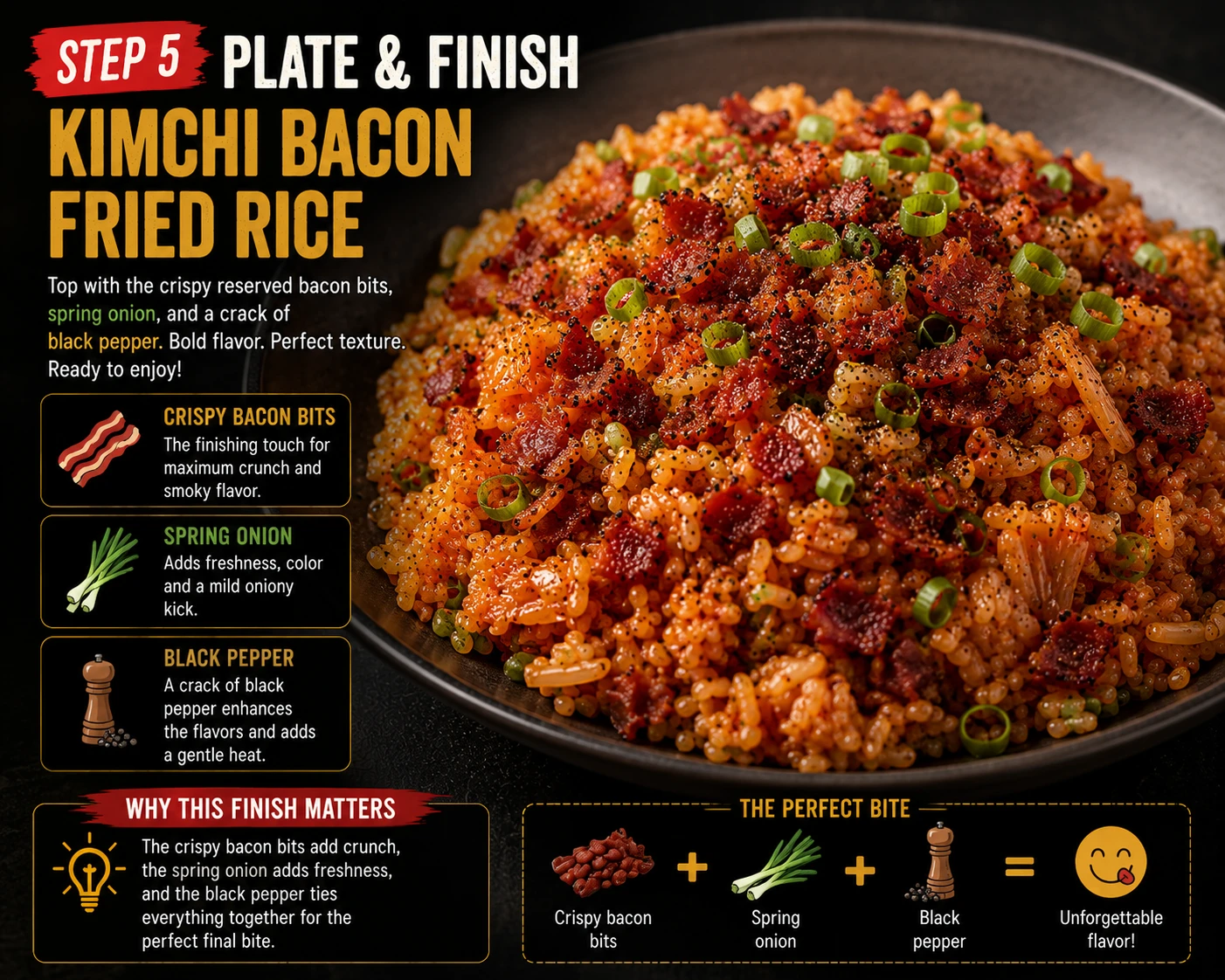
Add soy sauce and the white parts of the spring onions, taste and adjust. Remove from heat and drizzle sesame oil. Plate the rice and top generously with the reserved crispy bacon bits, sesame seeds, cracked black pepper, and spring onion greens. Serve immediately while the bacon is still crisp.
What We Tested for the Bacon Version
The bacon rendering step has more failure points than any other part of this recipe. Here is what we discovered across 6 dedicated batches.
Every batch confirmed the same underlying principle: this dish succeeds or fails based on how the bacon fat is rendered and used, not just on adding bacon as a topping. Cold-start it, cook the kimchi directly in the fat, and reserve the crispy bits — get all three right and the smokiness genuinely runs through the whole dish.
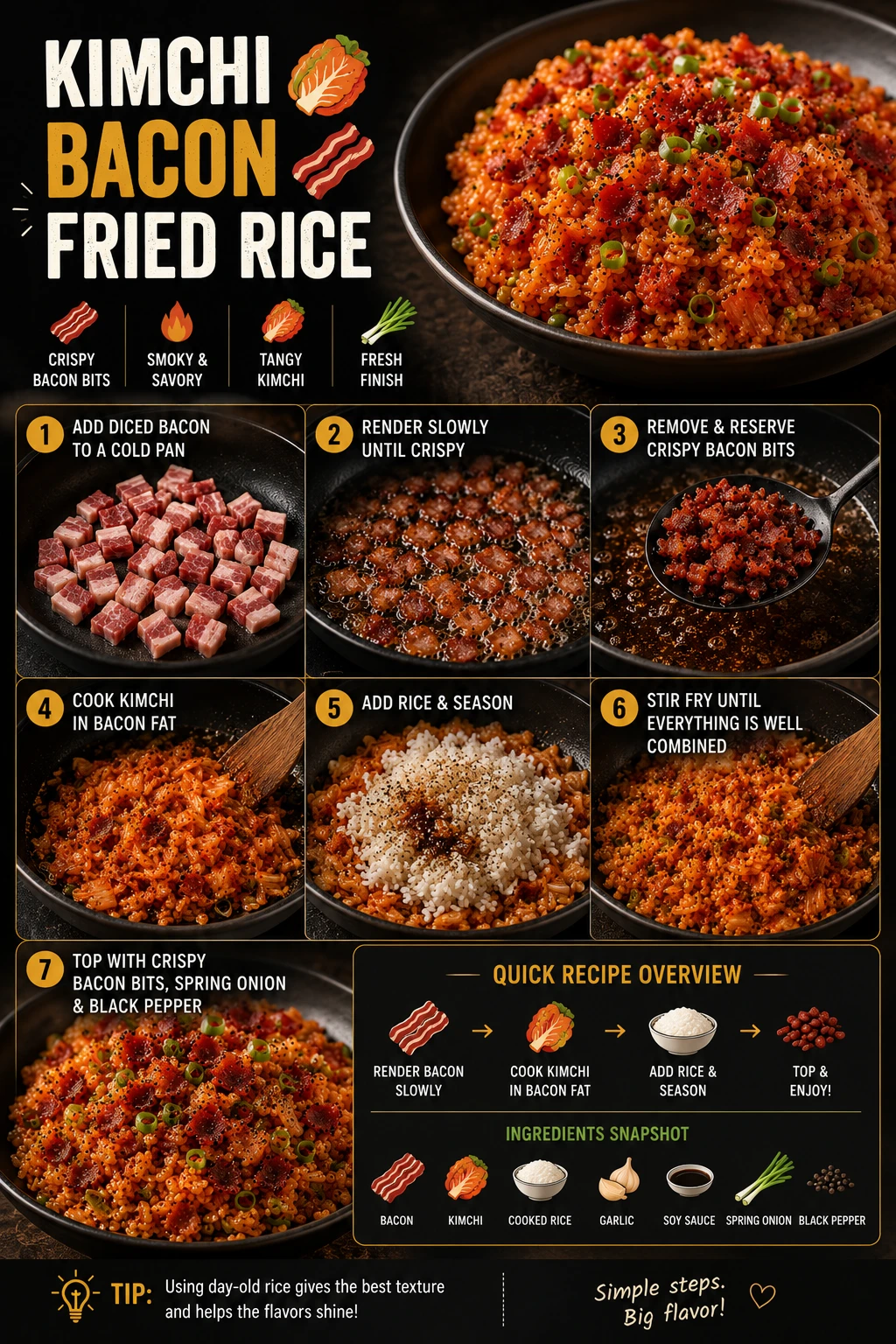
Kimchi Bacon Fried Rice (베이컨 김치볶음밥)
Cold-start rendering method · Stage 3 kimchi · 25 min · ~600 calories
- 150g thick-cut smoked bacon, diced raw
- 2 cups day-old rice, cold
- 1 cup aged kimchi (Stage 3), chopped
- 3 tbsp kimchi brine
- 1 tbsp gochujang
- 2 cloves garlic, minced
- 1 tsp soy sauce
- 1 tsp sesame oil, off-heat
- 2 spring onions, sliced
- 1 tsp sesame seeds, cracked pepper
- Cold-start diced bacon in a dry pan, medium-low heat. Render 8-10 min until crisp.
- Remove crispy bacon to paper towel, leave rendered fat in the pan.
- Add kimchi and garlic to the fat. Press flat, char 30-45 sec, stir. Repeat 3-4 min.
- Add gochujang, brine. Stir-fry 1 min. Add cold rice, break clumps. Press-and-char 4-5 min.
- Add soy sauce, spring onion whites. Remove from heat, drizzle sesame oil. Top with crispy bacon, sesame seeds, pepper, spring onion greens.
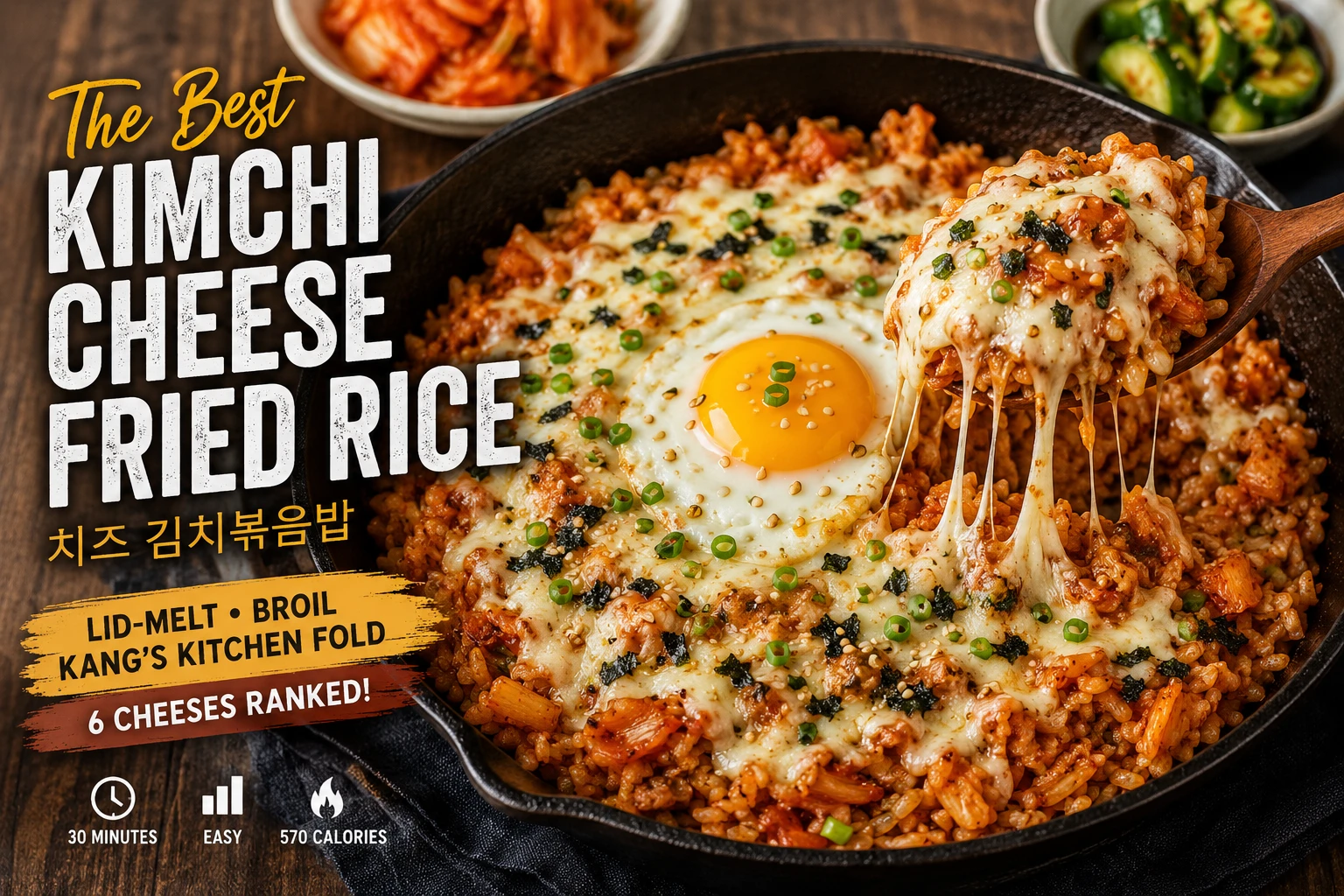
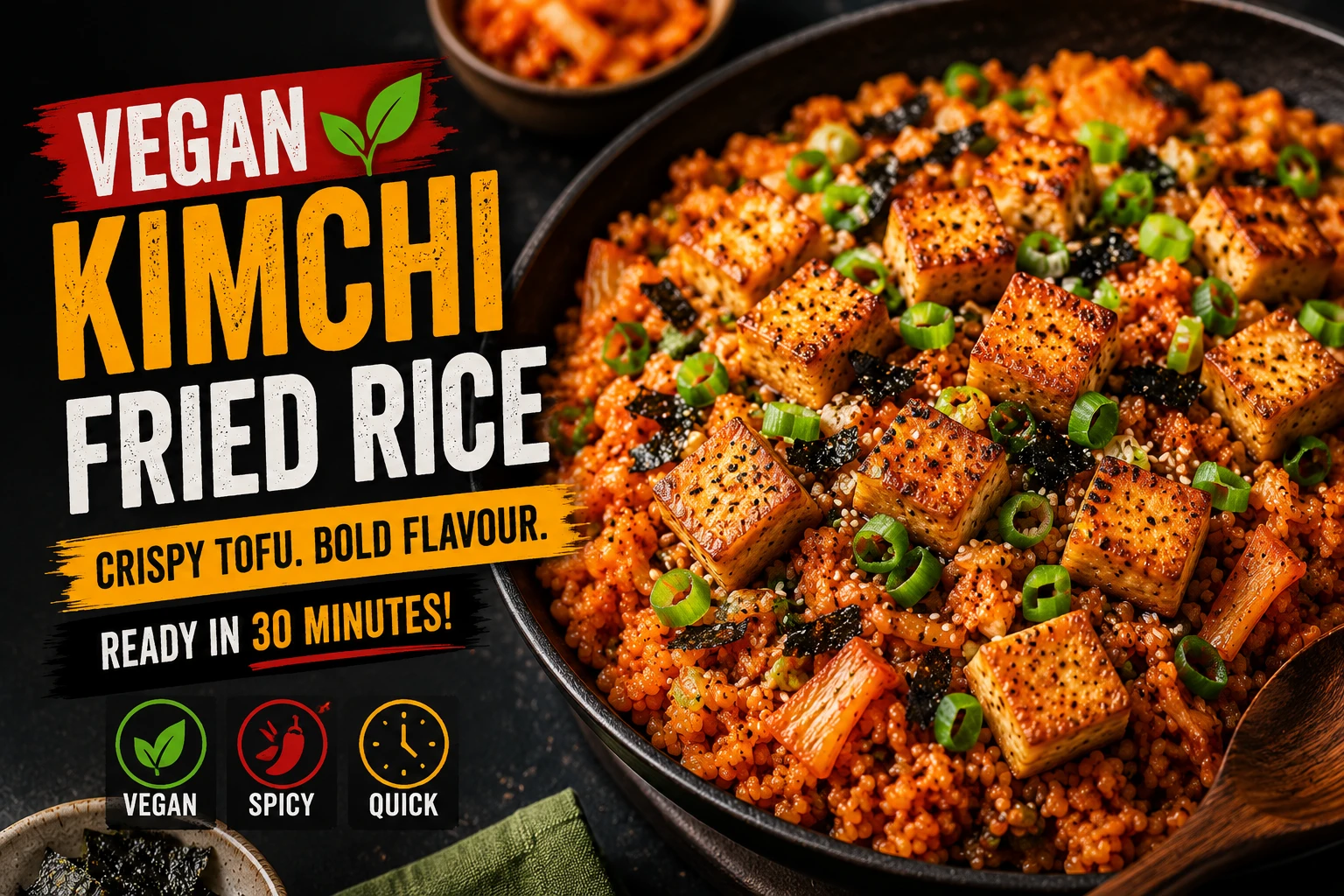
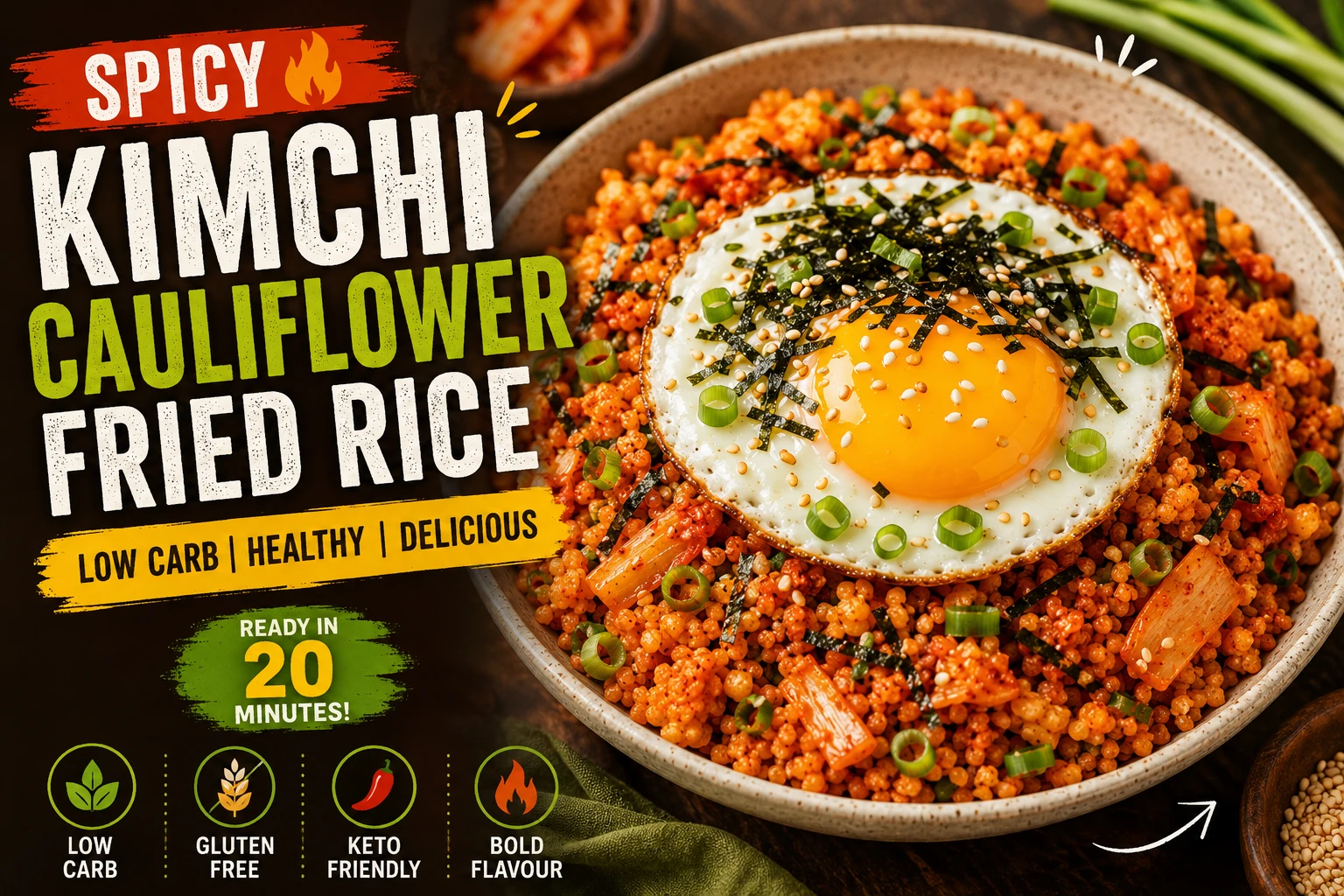
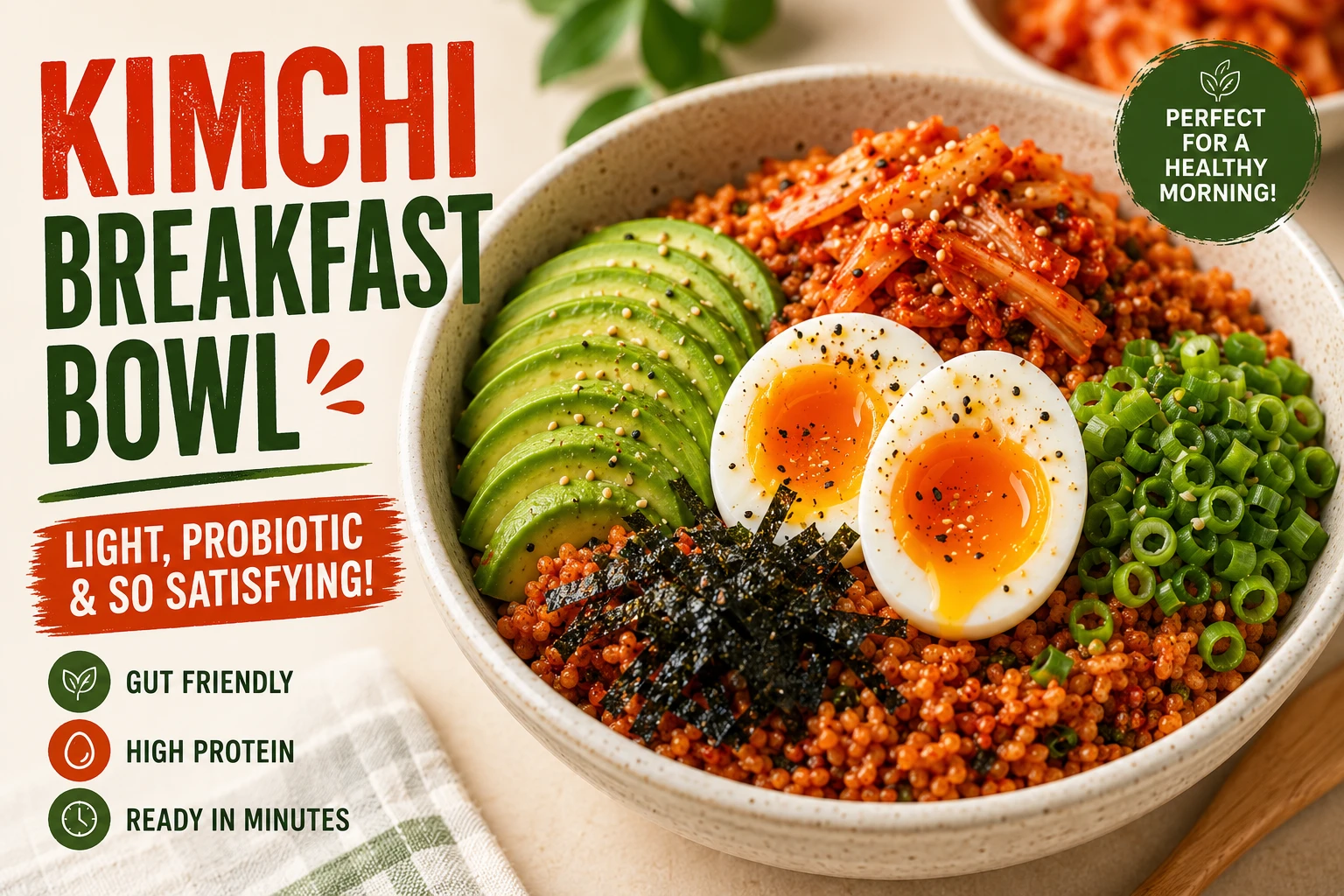
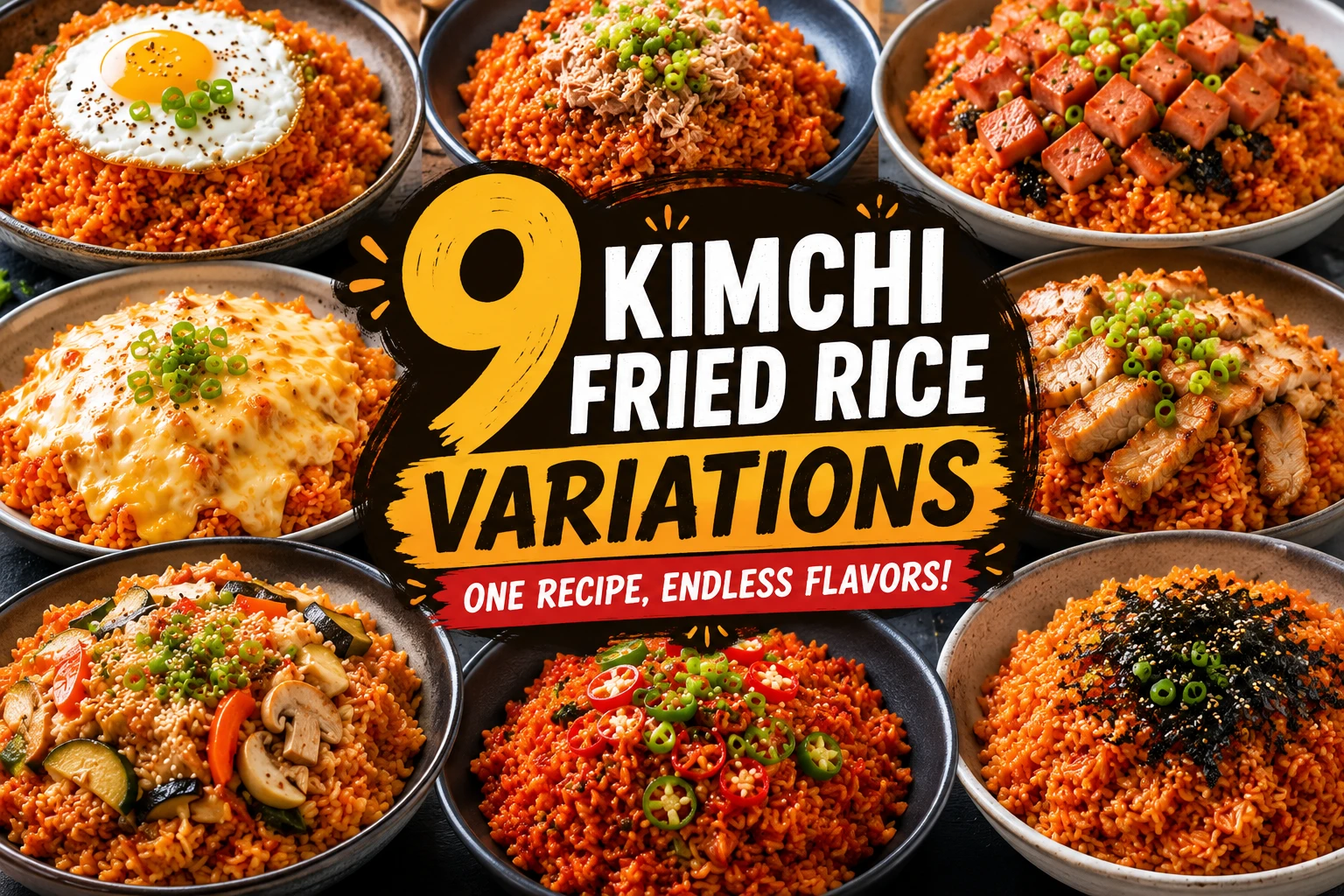
All 9 Kimchi Fried Rice Variations
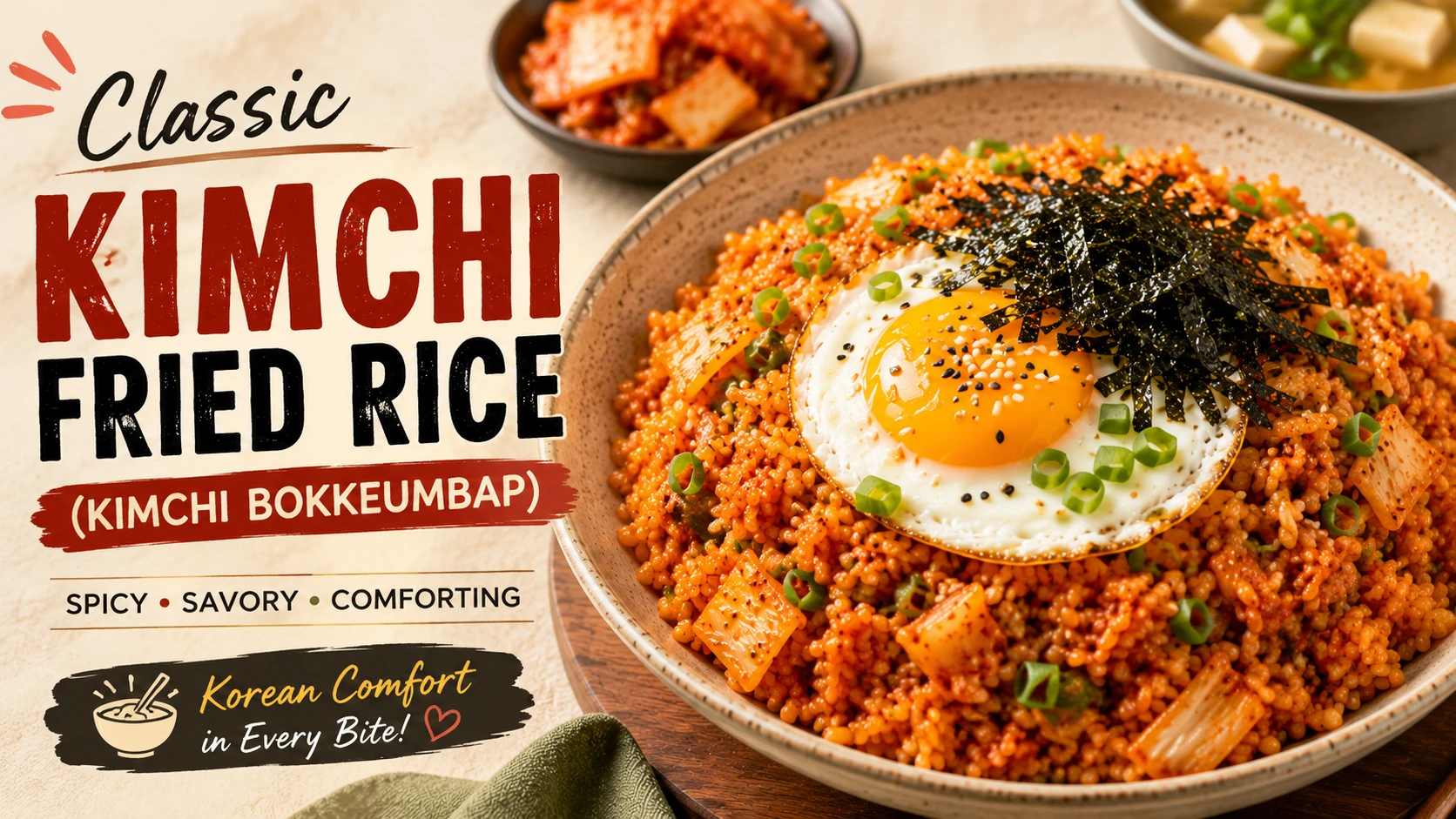
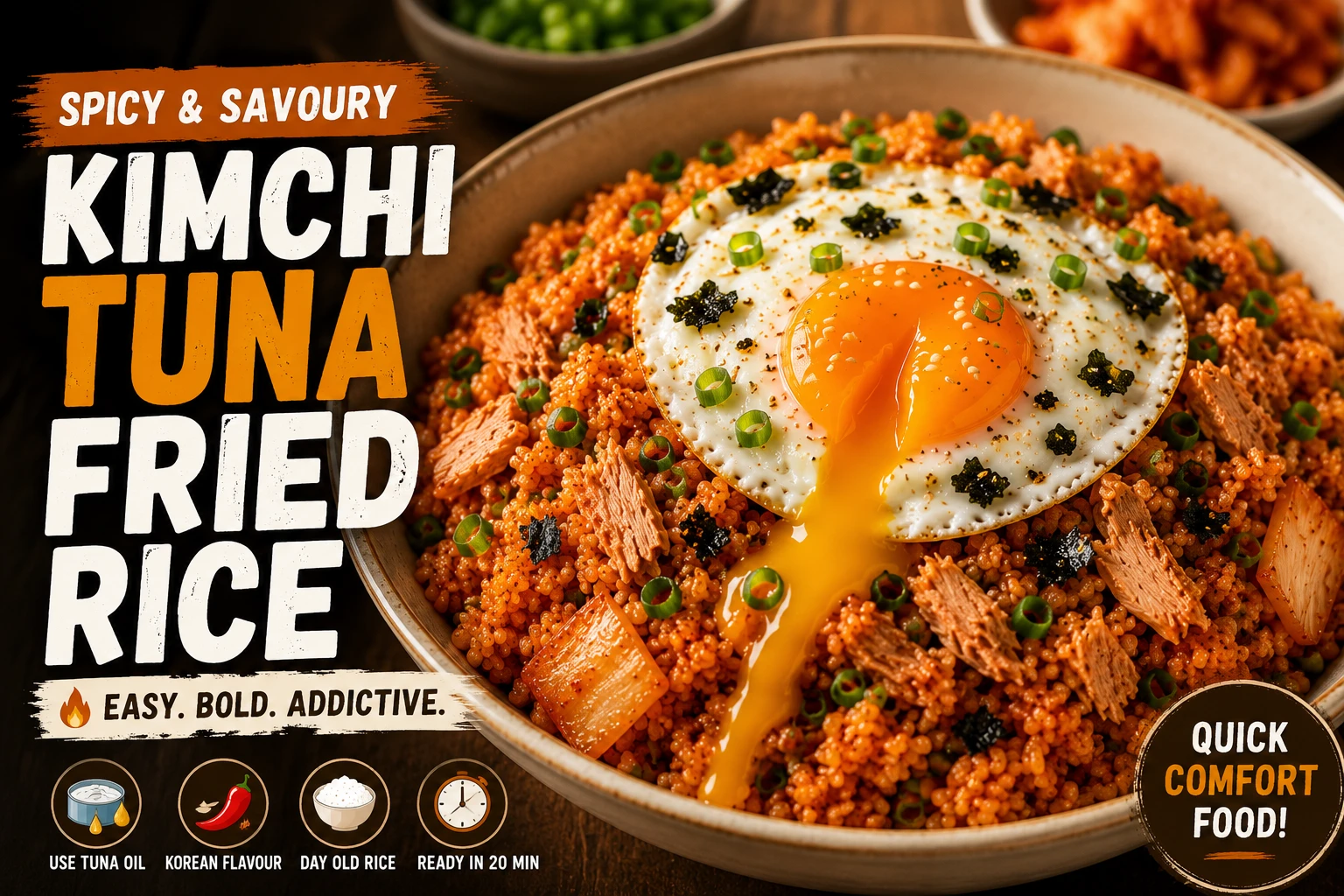
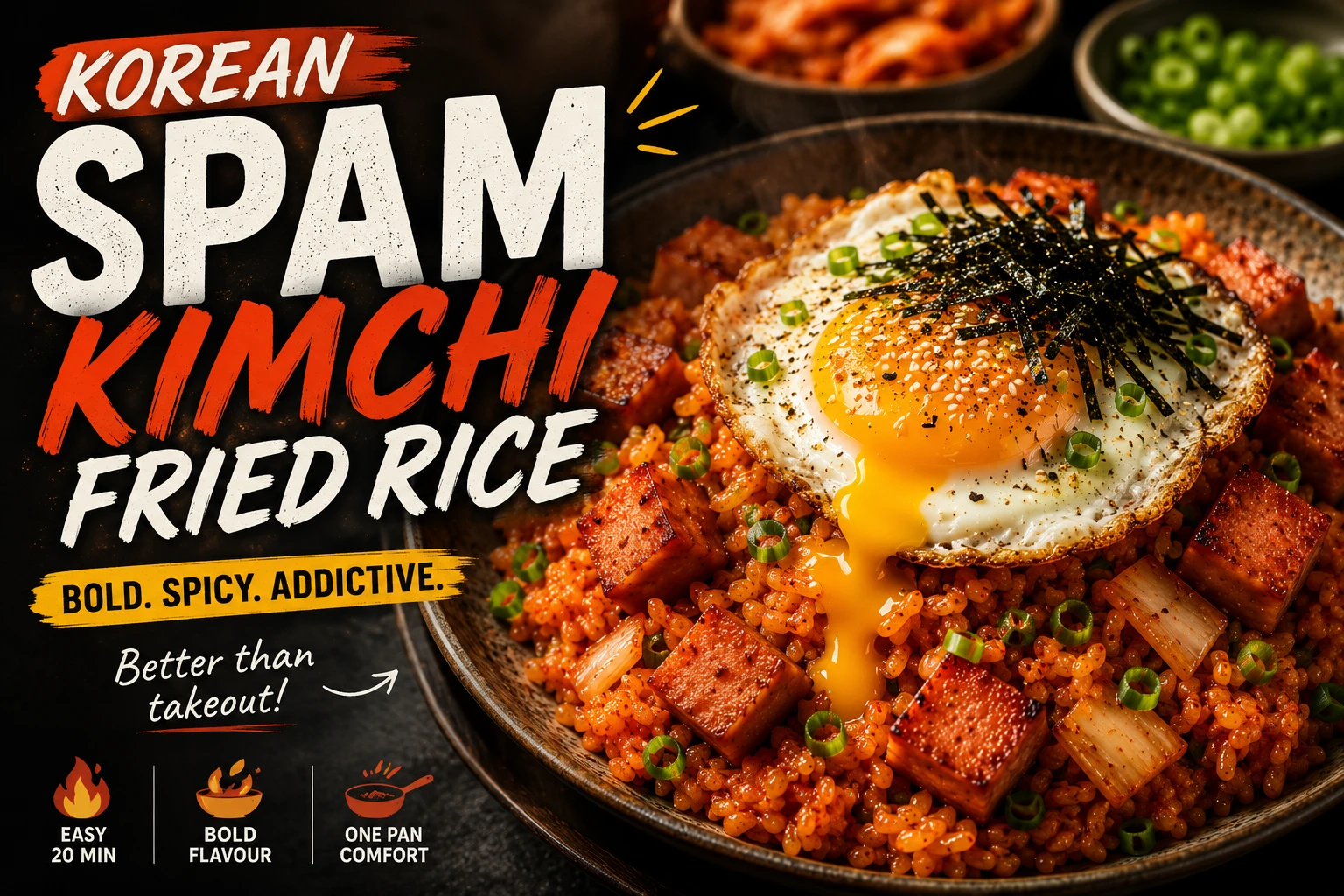
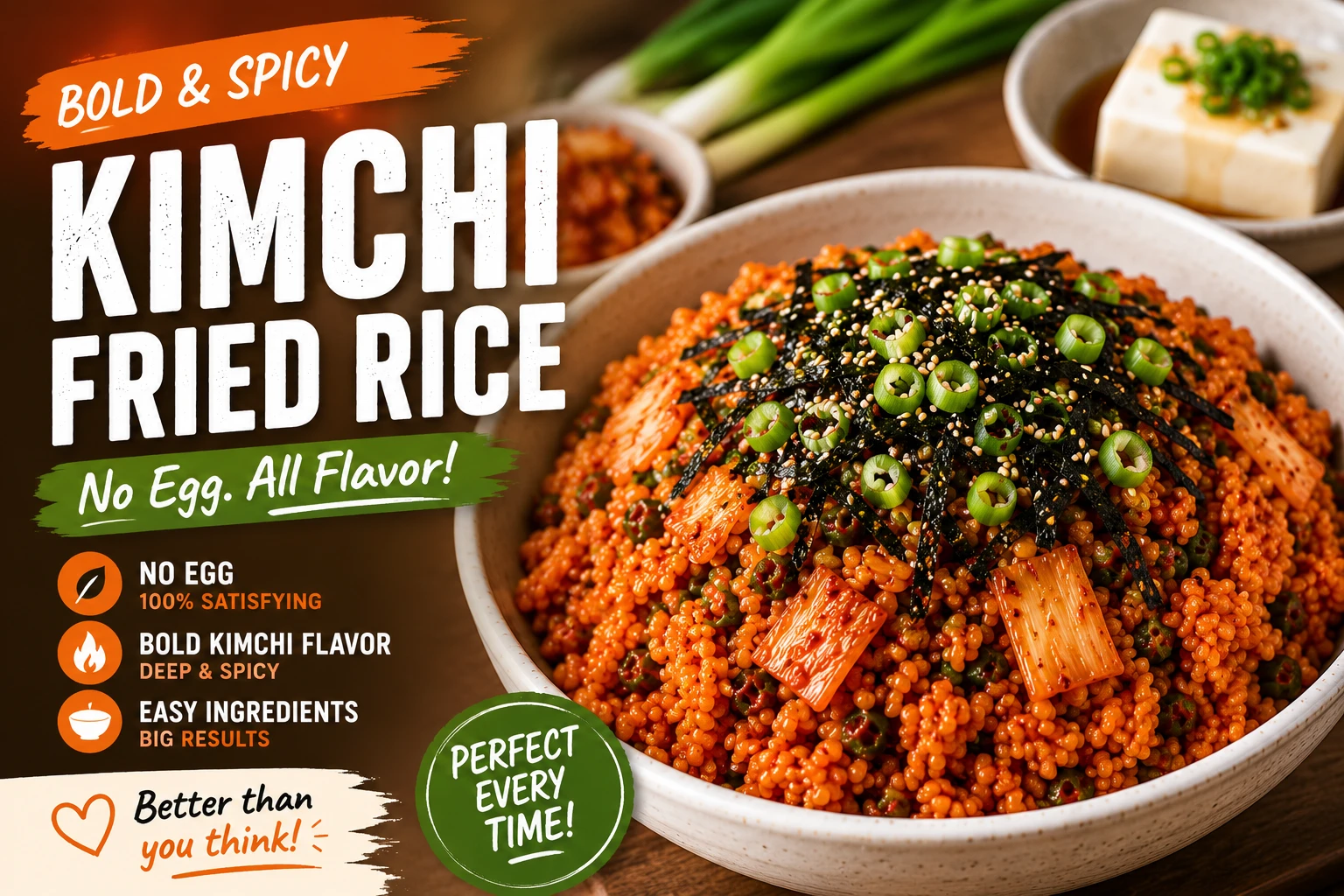
The KFR Ultimate Guide → covers all 9 in one place with the full comparison table.
Pairing Guide — Bacon Version
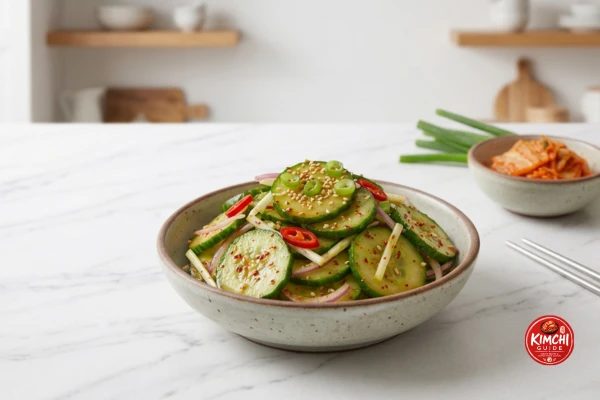
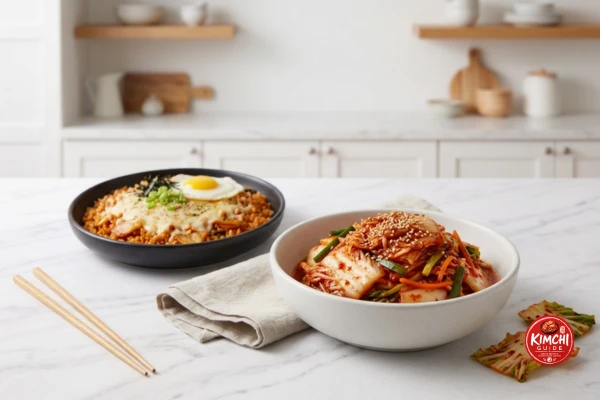
This is a rich, indulgent dish — the pairings below are chosen specifically to cut through that richness or lean into the Korean-American comfort-food theme.


Storage & Reheating — Bacon Version
Store the crispy bacon separately from the rice whenever possible — it’s the only component that loses quality on standard reheating.
Nutrition Comparison — All KFR Variations
| Variation | Calories | Protein | Vegan? | Best For |
|---|---|---|---|---|
| Cauliflower Version | 180 | 10g | No (egg) | Low-carb, keto, lightest option |
| Without Egg | 360 | 7g | No (may use dairy) | Calorie control, meal prep |
| Vegan (tofu) | 380 | 14g | ✅ Fully vegan | Plant-based, egg-free protein |
| Breakfast Bowl | 380 | 15g | No (egg, avocado) | Mornings, lighter portion |
| Tuna Version | 410 | 22g | No | Highest protein, lean |
| Classic (with egg) | 420 | 14g | No | All occasions |
| Cheese Version | 570 | 19g | No | Entertaining, most indulgent |
| Spam Version | 580 | 24g | No | Comfort food, budae flavour |
| Bacon Version ← This page | 600 | 21g | No | Weekend indulgence |
Kimchi Bacon Fried Rice FAQ — 18 Questions
The cooking fat itself — rendered bacon fat replaces the neutral oil used in classic kimchi fried rice, and the kimchi caramelises directly in that smoky fat rather than plain oil, giving the whole dish a deeper, meatier depth.
Starting bacon in a cold pan lets the fat render slowly and evenly as the pan heats up, extracting more usable fat and producing more consistently crisp bacon than dropping it into an already-hot pan, which tends to scorch the outside before the fat fully renders.
Thick-cut smoked bacon works best — it renders a generous amount of fat while still leaving substantial, chewy-crisp pieces. Thin-sliced bacon renders fast but leaves little to crisp up as a topping.
No — the rendered bacon fat left in the pan is exactly what gives this version its depth. Cooking the kimchi directly in it, rather than pouring it off and starting with fresh oil, is the whole point of the technique.
Not for the best result — pre-cooked bacon bits have no fat left to render, so you’d need to add oil separately and you’d lose both the smoky cooking fat and the fresh-crisp texture that makes this version distinct.
It works in a pinch, but turkey bacon renders far less fat, so you’ll likely need to add a tablespoon of neutral oil to compensate, and the smoky depth will be noticeably lighter than with pork bacon.
Bacon left in with the rice through the full frying process softens from the moisture in the kimchi and rice. Reserving it and adding it back at the very end keeps the crunch as a distinct textural contrast.
Stage 3, aged kimchi at 3-6 weeks, is optimal — the same stage used in the classic recipe. Its fully developed sourness stands up well against the richness of the rendered bacon fat rather than being overwhelmed by it.
Yes — approximately 21g of protein per serving from the bacon alone, notably more than the egg-topped classic recipe, without needing to add an egg.
Approximately 600 calories per serving, the second-richest of the 9 KFR variations, with most of the extra calories coming from the rendered bacon fat used as the cooking base.
Yes — a fried egg on top turns this into a fully loaded Korean-American brunch version, though it will add further calories and richness on top of an already indulgent dish.
It can be, with one swap — use tamari or coconut aminos instead of regular soy sauce, and confirm your kimchi and gochujang brands are labelled gluten-free.
Yes, with one adjustment — store the crispy bacon bits separately from the rice and kimchi base, then reheat the bacon in a dry pan briefly before serving to restore crispness rather than microwaving it together with the rice.
This is usually a heat or timing issue — either the pan was too hot too fast, which browns the outside before the fat fully renders, or the bacon wasn’t cooked long enough for the fat to fully render out.
Dice it raw, before cooking. Diced raw bacon renders more evenly and crisps more consistently than cooking whole strips and chopping them afterward, which tends to give uneven pieces.
Not by default — the gochujang and kimchi provide moderate heat, and the recipe can be adjusted milder or hotter using the spice level tool above without changing the bacon technique at all.
Yes — a handful of shredded mozzarella melted under a lid at the end works well here, combining the bacon and cheese variations into an even richer Korean-American comfort dish.
Both use a rendered meat fat as the cooking base, but Spam contributes a saltier, more uniformly processed flavour, while bacon brings a smokier, more variable texture with distinct crispy bits reserved as a topping.


💬 Leave a Comment
Made this recipe? Tell us how the cold-start method worked for you.