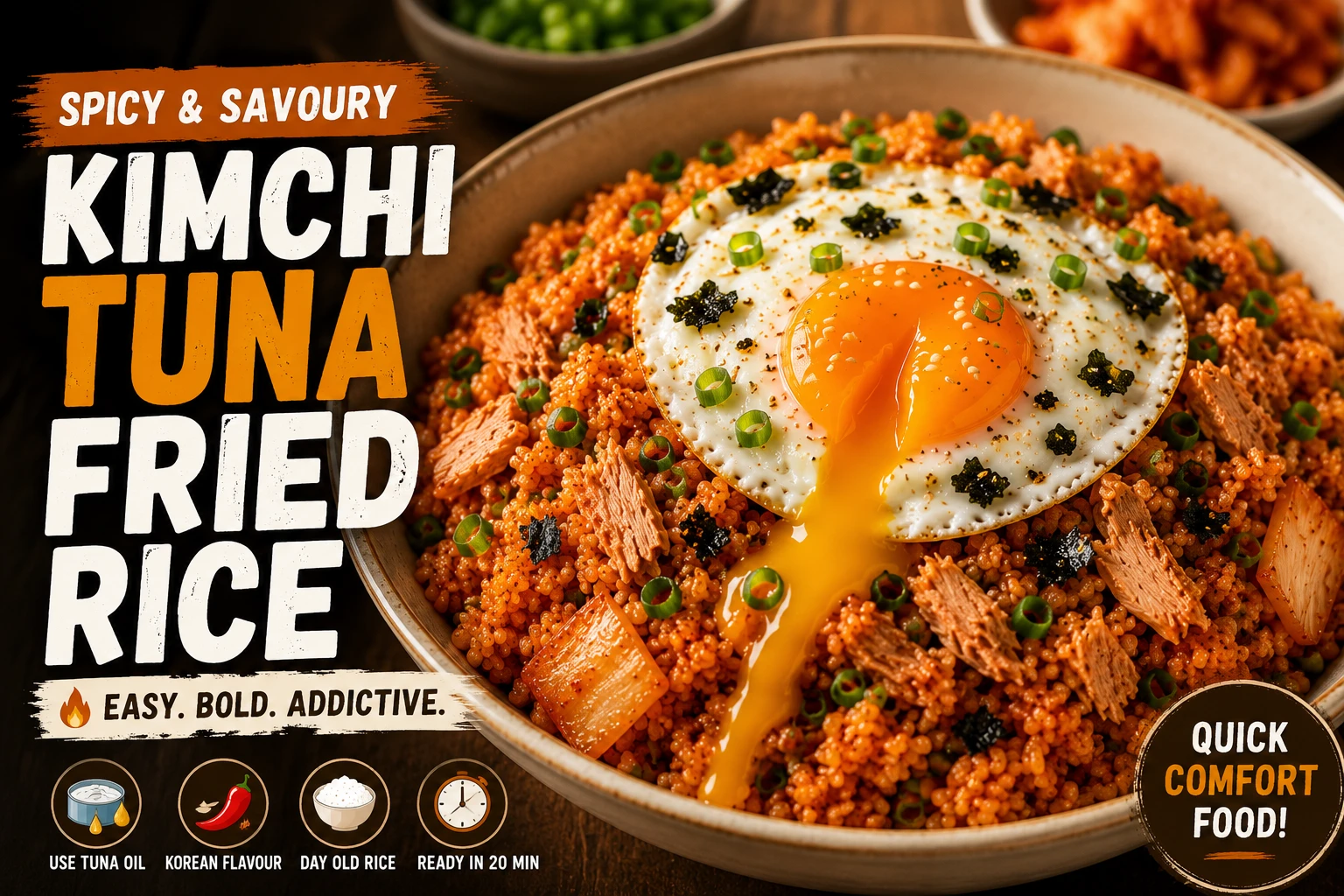
Kimchi Tuna Fried Rice (Chamchi Kimchi Bokkeumbap — 참치 김치볶음밥)
The pantry version of kimchi fried rice done right. Drain the tuna, use that olive oil as your cooking fat, caramelise aged kimchi in it, then fold the tuna back in last — off heat, 3 folds only. 22g protein. 25 minutes.
What Is Kimchi Tuna Fried Rice?
Kimchi tuna fried rice — chamchi kimchi bokkeumbap (참치 김치볶음밥) — is one of South Korea’s most popular pantry weeknight meals. The defining technique: drain canned tuna in olive oil and use that reserved oil as your cooking fat. Stage 3 aged kimchi (2–4 weeks) provides the lactic acid that caramelises at high heat. The drained tuna is folded in last, off heat, in 3–4 gentle folds to keep flakes visible and intact. Total time: 25 minutes. At 22g protein per serving, it is the highest-protein kimchi fried rice variation.
How to Make Kimchi Tuna Fried Rice
Kimchi tuna fried rice takes 25 minutes: drain canned tuna and reserve the oil as cooking fat, caramelise Stage 3 kimchi in that oil, toast gochujang, fry in cold rice to build a nurungji crust, then fold the tuna in gently off-heat so the flakes stay intact.
- Drain: drain the tuna, reserving all the oil as your cooking fat. Flake into large 2–3cm pieces.
- Caramelise: fry squeezed Stage 3 kimchi in the reserved tuna oil, 3–4 minutes.
- Toast & fry rice: toast gochujang alone, add cold rice, kimchi juice, soy sauce, sugar; press-and-char 2 minutes.
- Fold tuna in last: off heat, 3–4 gentle folds only — keep the flakes visible.
- Finish: drizzle sesame oil, top with a baste-fried egg, spring onions, and nori.
Why Tuna + Kimchi Is a Perfect Pantry Pairing
Chamchi kimchi bokkeumbap has been eaten in Korean households for decades. Here is the food science behind why this combination works so well.
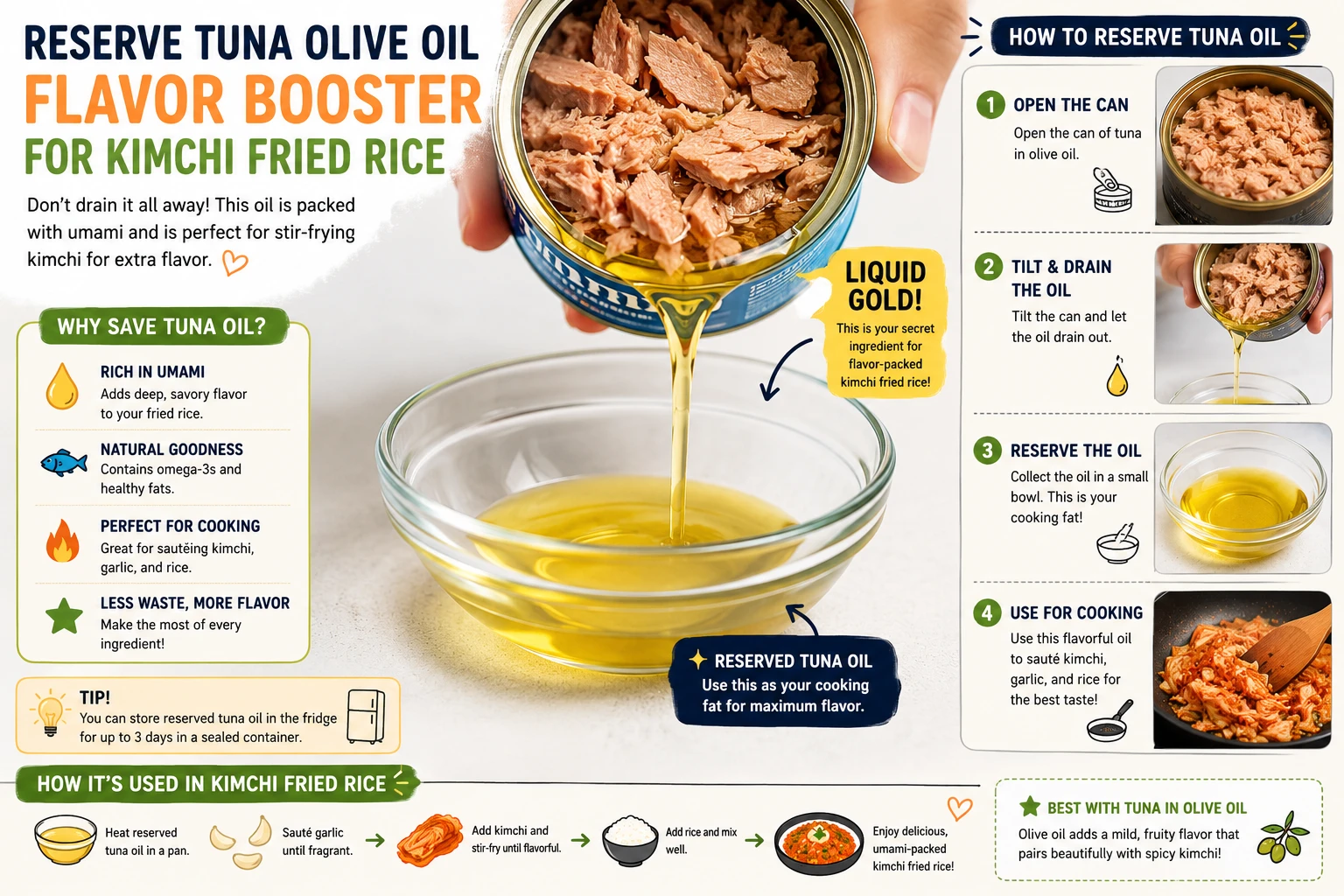
The olive oil inside a tuna can is infused with the tuna’s natural amino acids. Using this as your cooking fat carries a subtle seafood-olive note into the caramelised kimchi and every grain of rice.
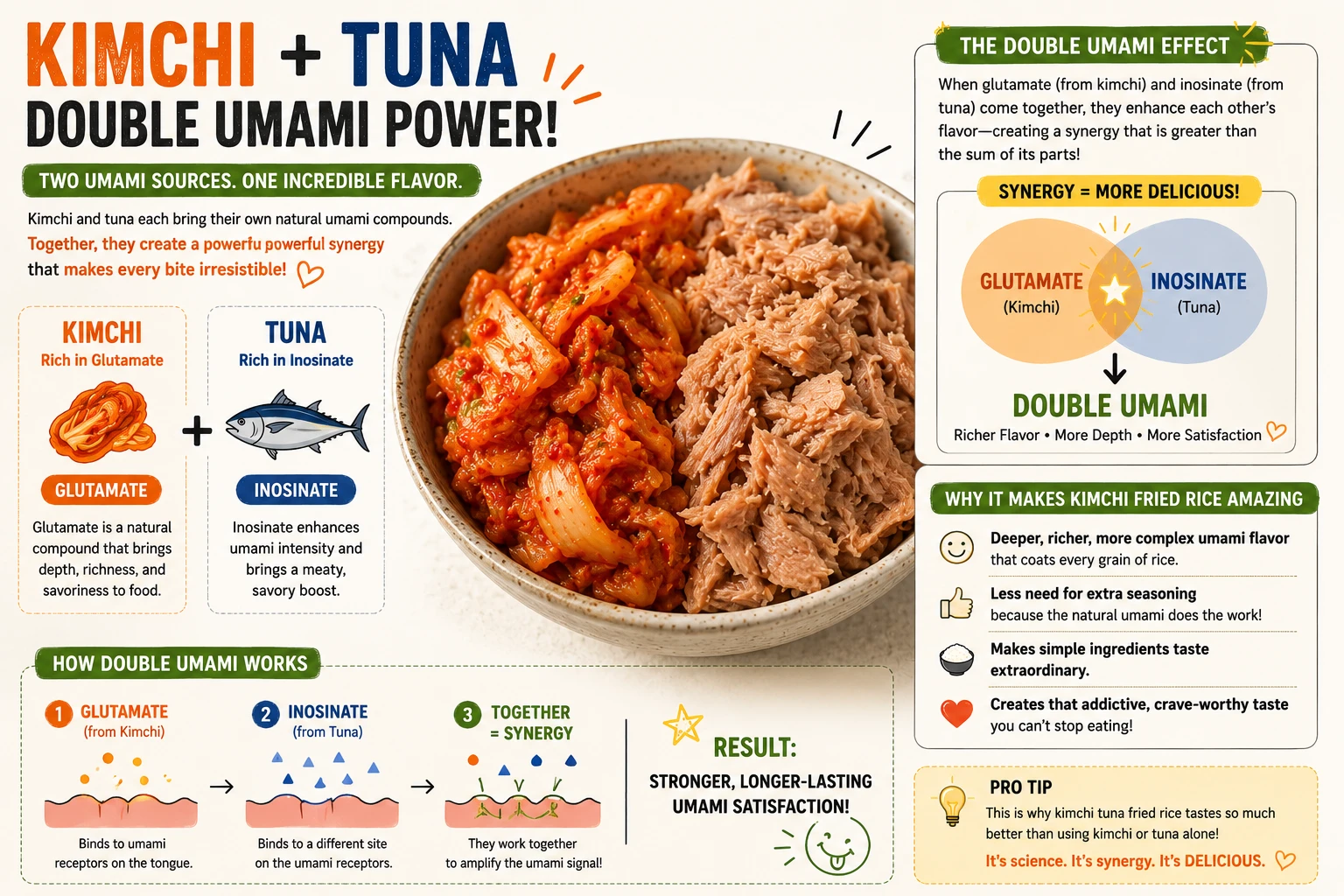
Kimchi contains glutamates from fermentation. Canned tuna contains inosinate from fish muscle tissue. Combined, perceived intensity increases approximately 8-fold — the same synergy behind Japanese dashi.
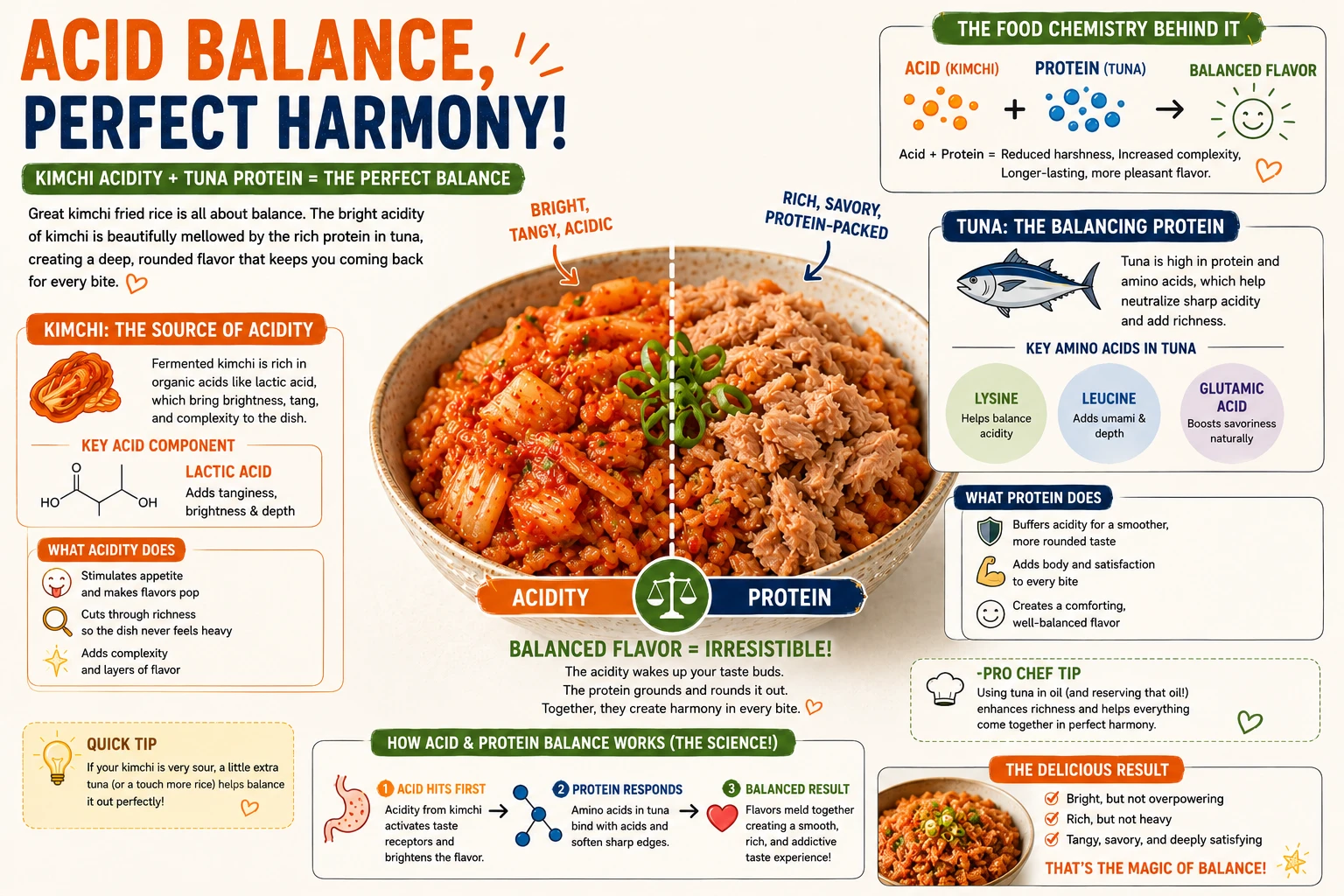
Tuna’s mild protein naturally tempers kimchi’s lactic acidity. Gochujang bridges the fermented tang of kimchi with the clean savouriness of tuna.
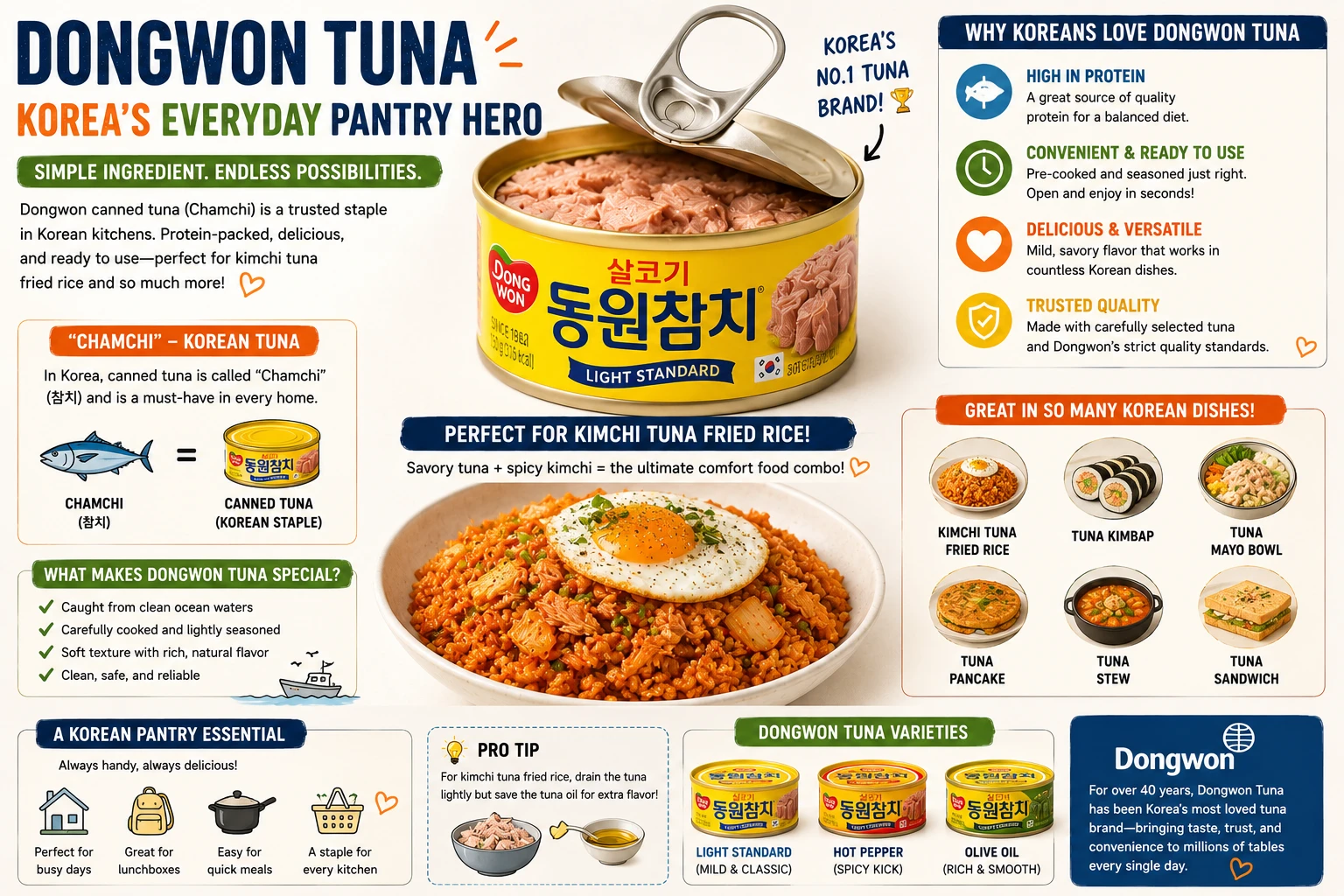
Canned tuna (chamchi) is one of the most consumed pantry ingredients in South Korea, specifically formulated for cooking — firmer texture, milder aroma, less residual oil than Western brands.
Key Terms — Korean Language & Food Entities
Understanding these terms clarifies what this dish is and why specific ingredients matter.
Which Tuna to Use — Ranked by Result Quality
The type of canned tuna changes the result significantly. The oil type is the most important variable.
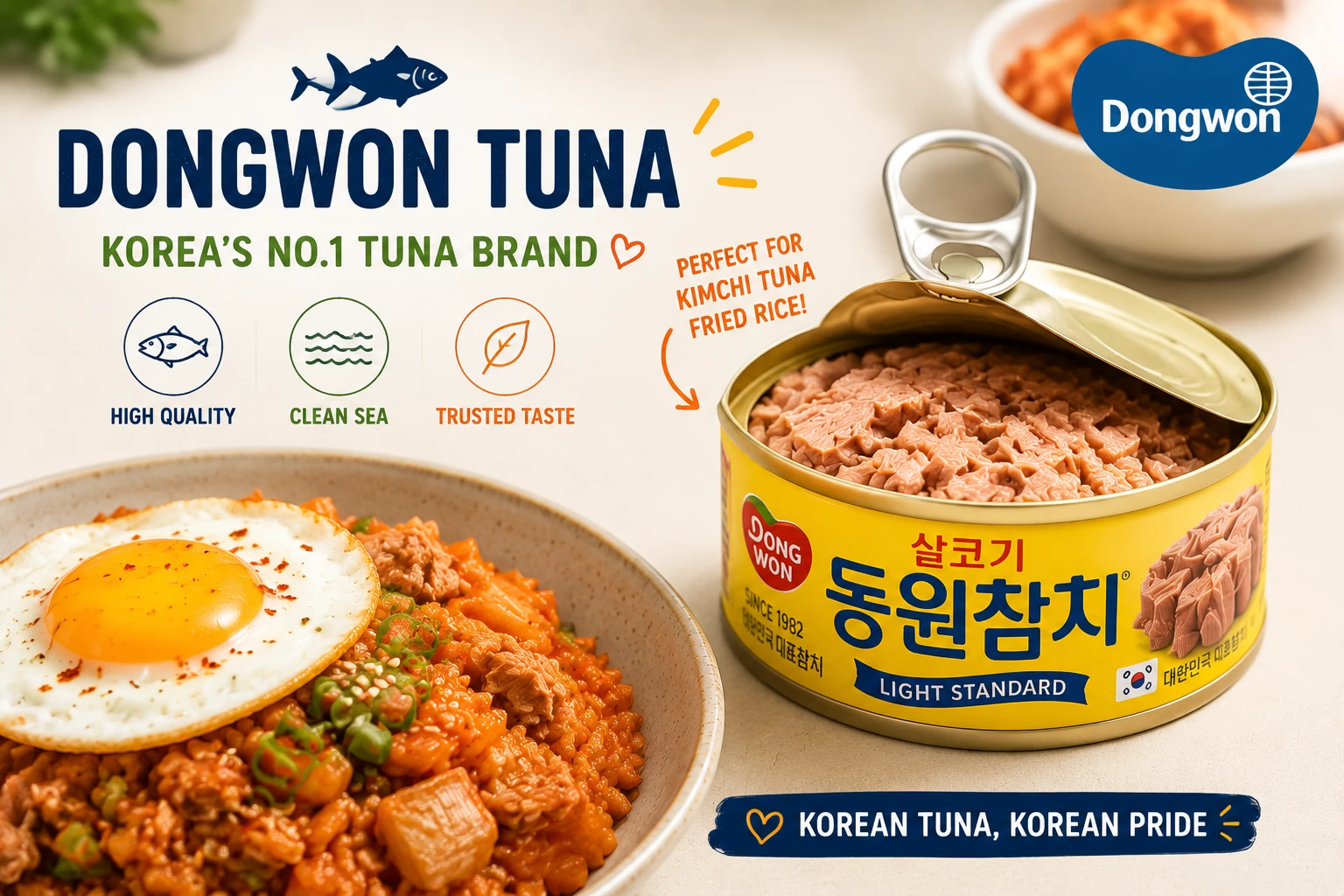
Gold standard. Firm texture, very mild aroma, oil perfectly balanced. Holds shape after folding.
⭐ Best Choice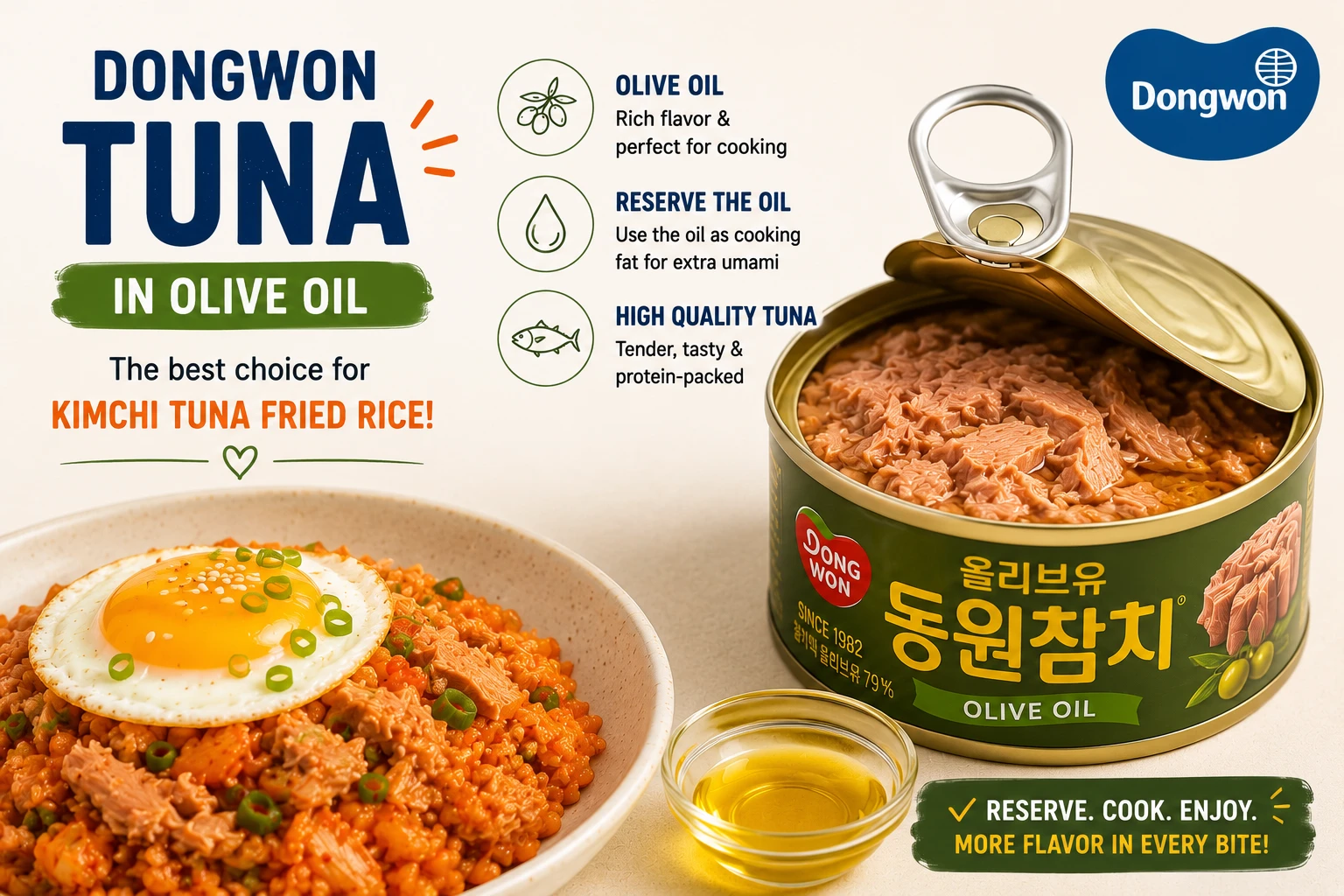
Drain and reserve the oil — use it as your cooking fat. Look for “in olive oil” not “with olive oil.”
✅ Excellent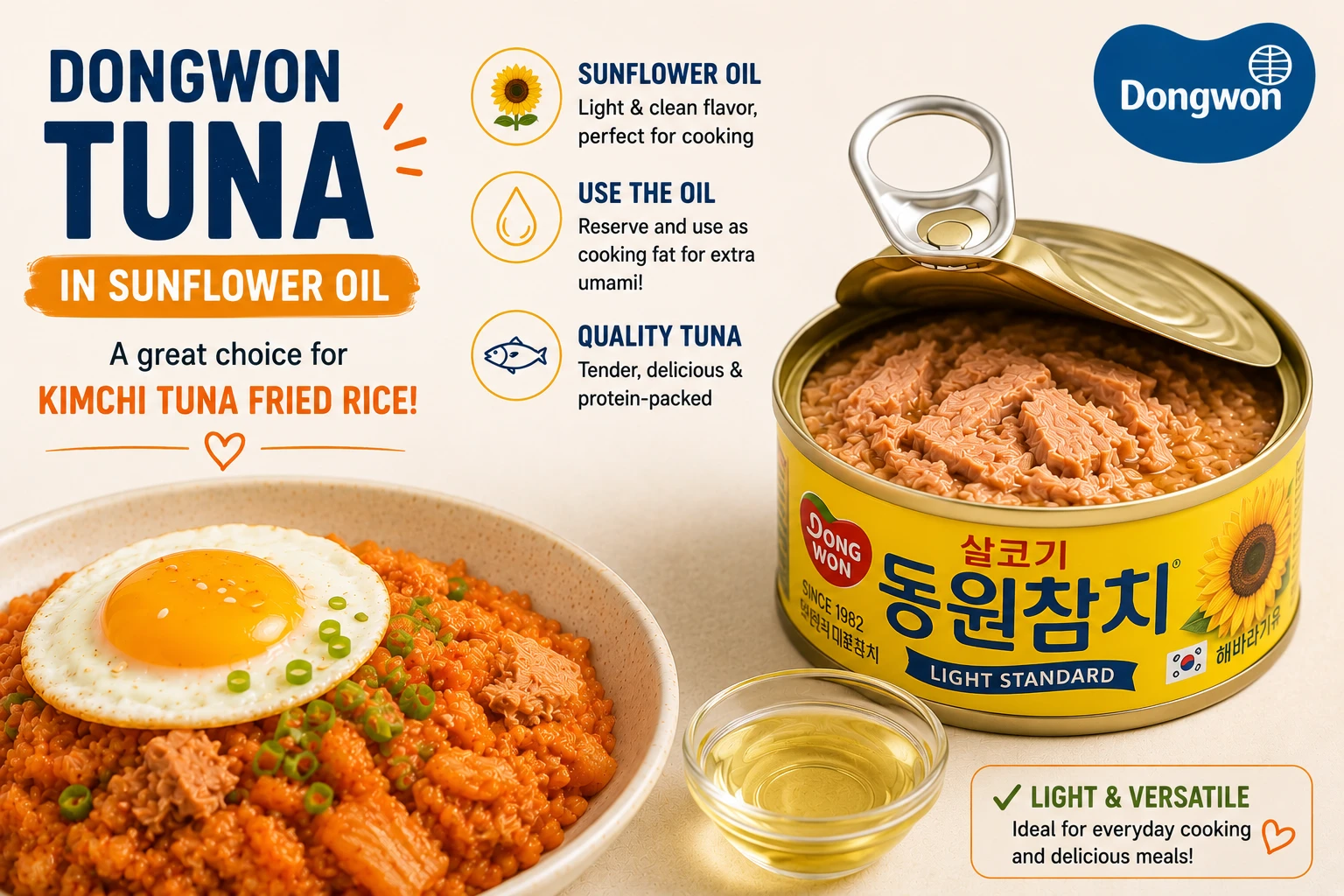
Neutral oil — less flavour contribution than olive oil. Still reserve and use the oil.
Good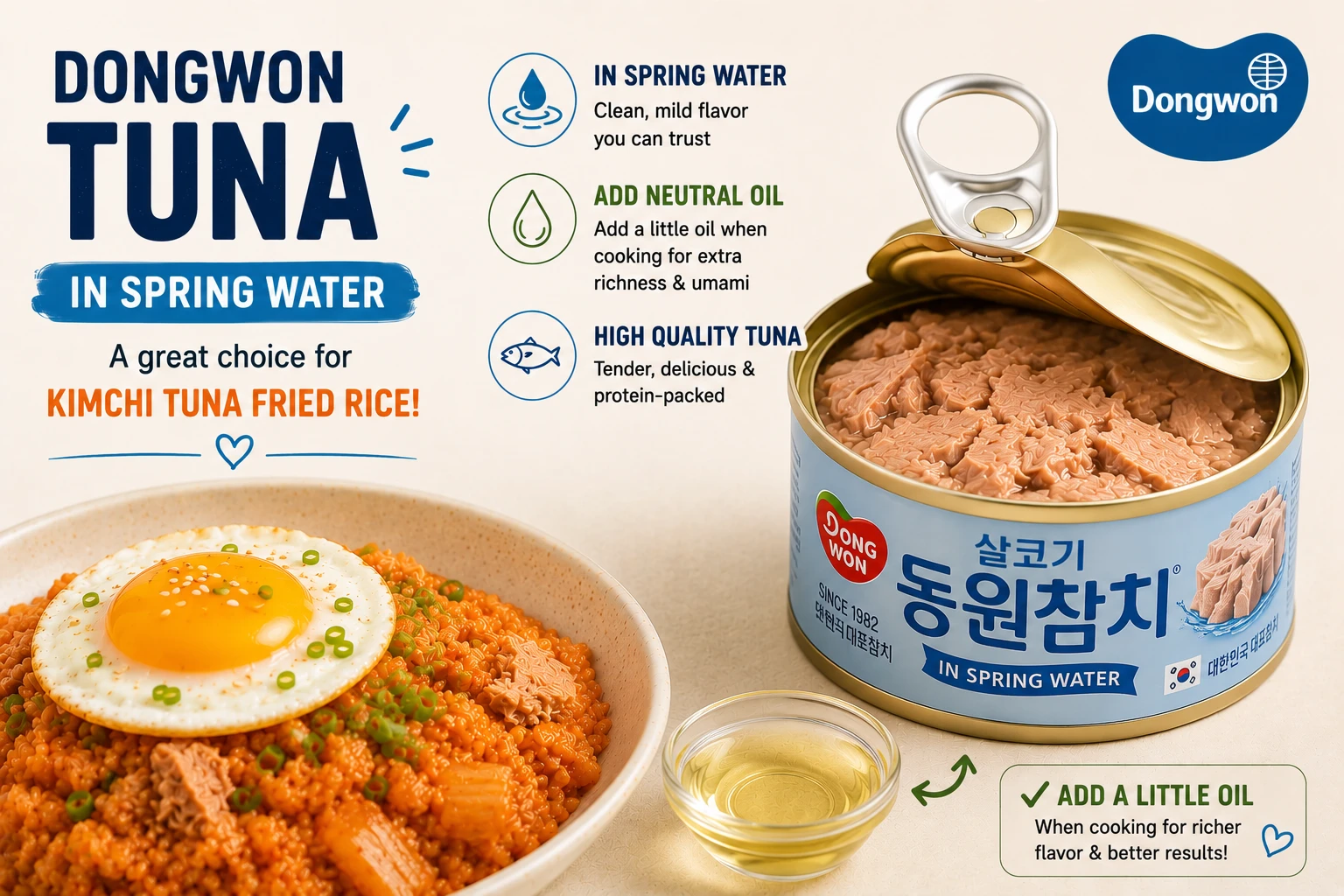
Add 1 tbsp neutral oil to compensate. Rinse briefly and pat dry to reduce fishy aroma.
Acceptable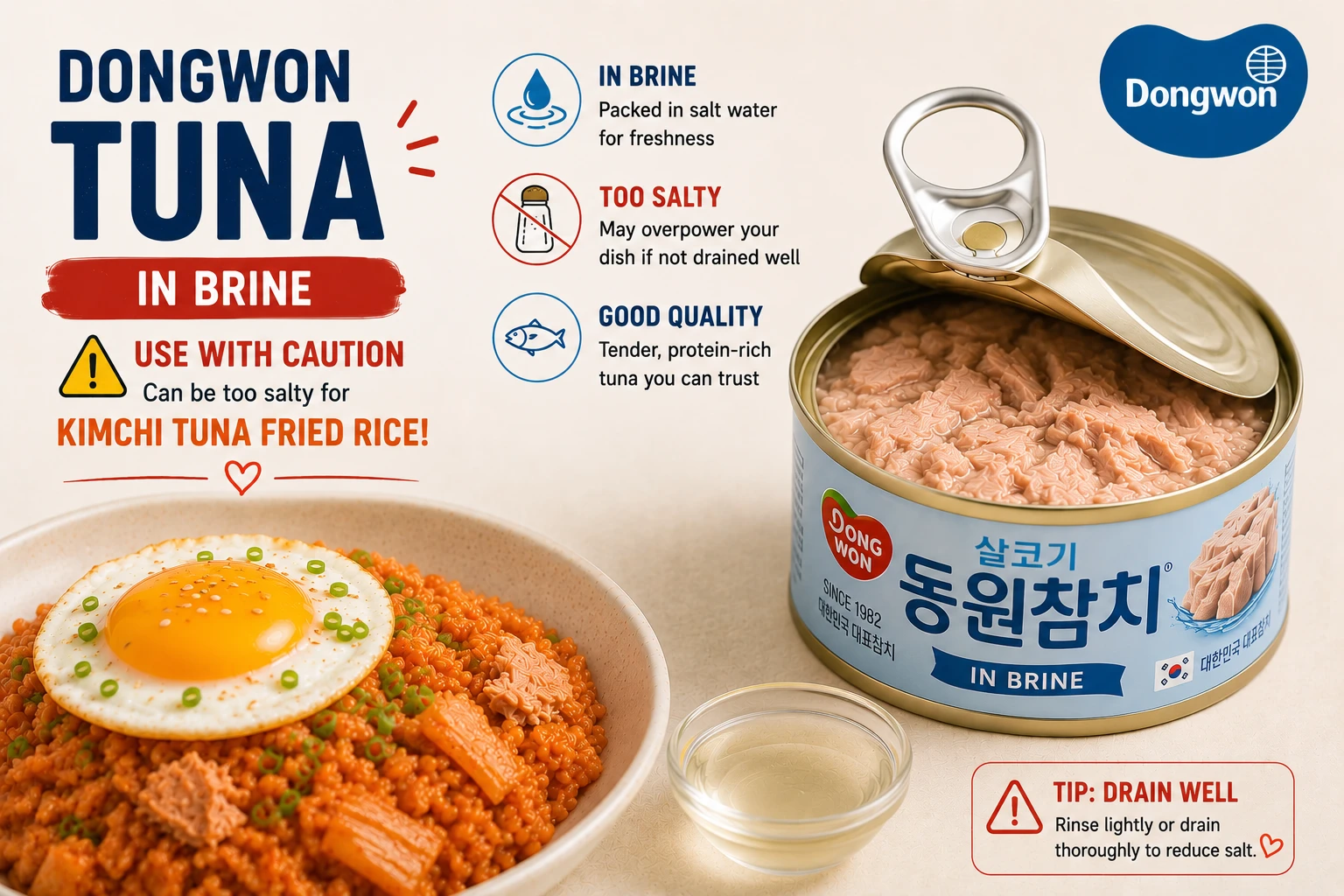
Too salty combined with kimchi juice and soy sauce. If using: rinse thoroughly, omit soy sauce.
⚠️ Caution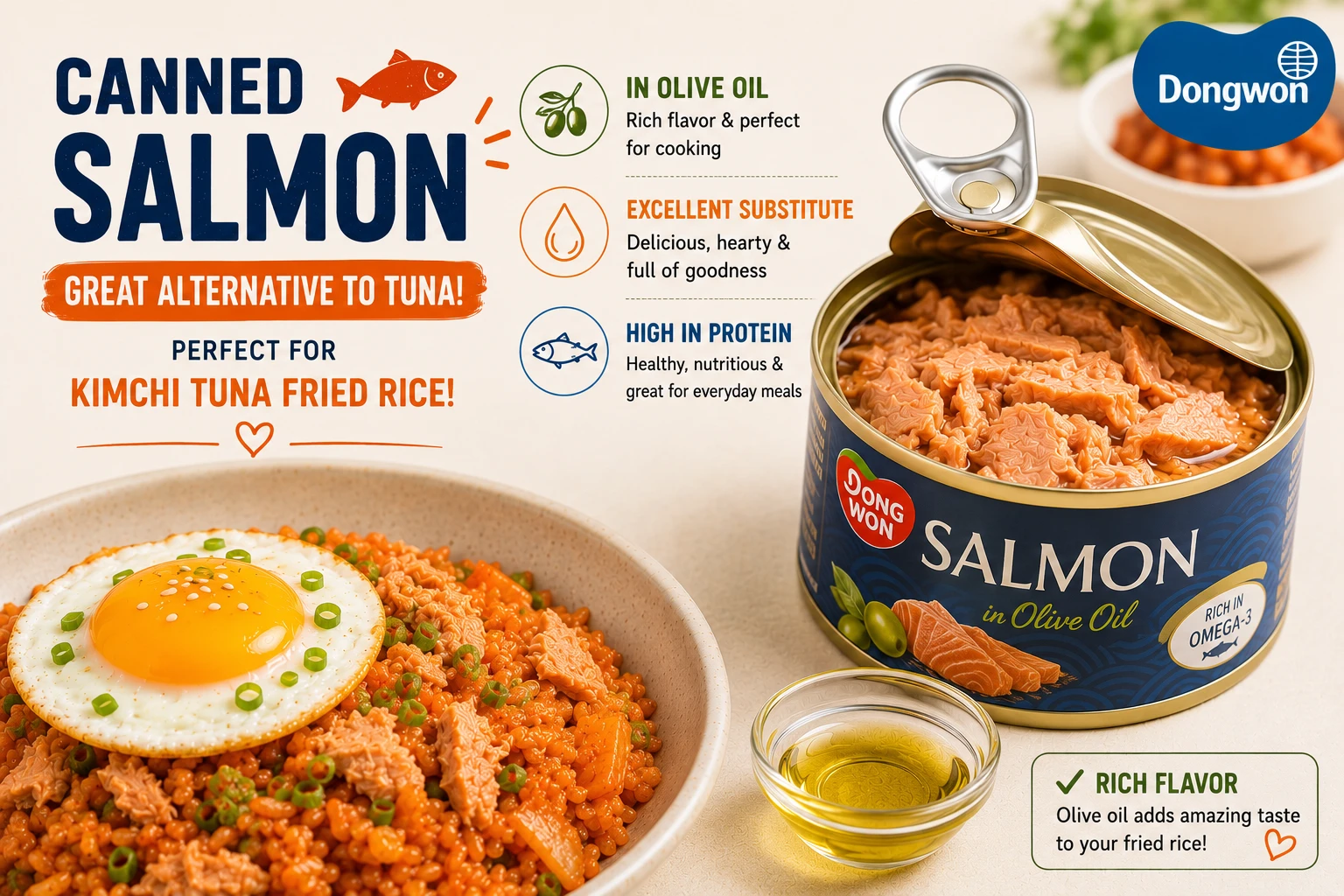
Excellent alternative — same method. Use 100g instead of 145g per 2 servings since it’s more assertive.
Great AlternativeTuna Type Comparison — All 5 Options
| Tuna Type | Oil for Cooking | Aroma | Saltiness | Result Quality |
|---|---|---|---|---|
| Dongwon (Korean) | Tuna oil ✓ | Very mild | Low-medium | ⭐⭐⭐⭐⭐ Best |
| Any tuna in olive oil | Tuna oil ✓ | Mild-medium | Low-medium | ⭐⭐⭐⭐⭐ Excellent |
| Tuna in sunflower oil | Neutral oil | Medium | Low-medium | ⭐⭐⭐⭐ Good |
| Tuna in spring water | Add 1 tbsp oil | Medium-high | Low | ⭐⭐⭐ Acceptable |
| Tuna in brine | No usable oil | High | Very high | ⭐⭐ Caution |
| Canned salmon in oil | Salmon oil ✓ | Stronger | Low-medium | ⭐⭐⭐⭐⭐ Alternative |
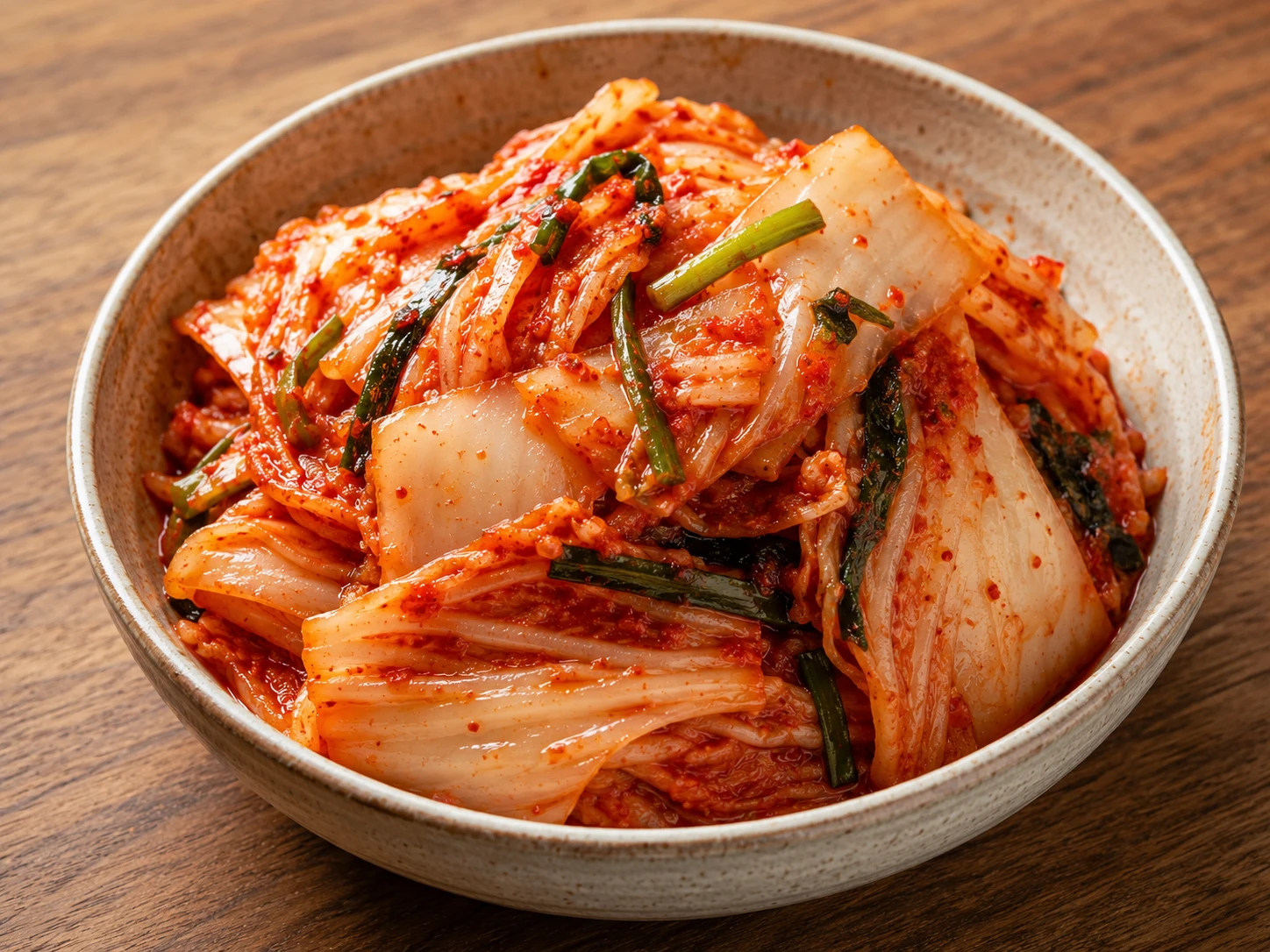
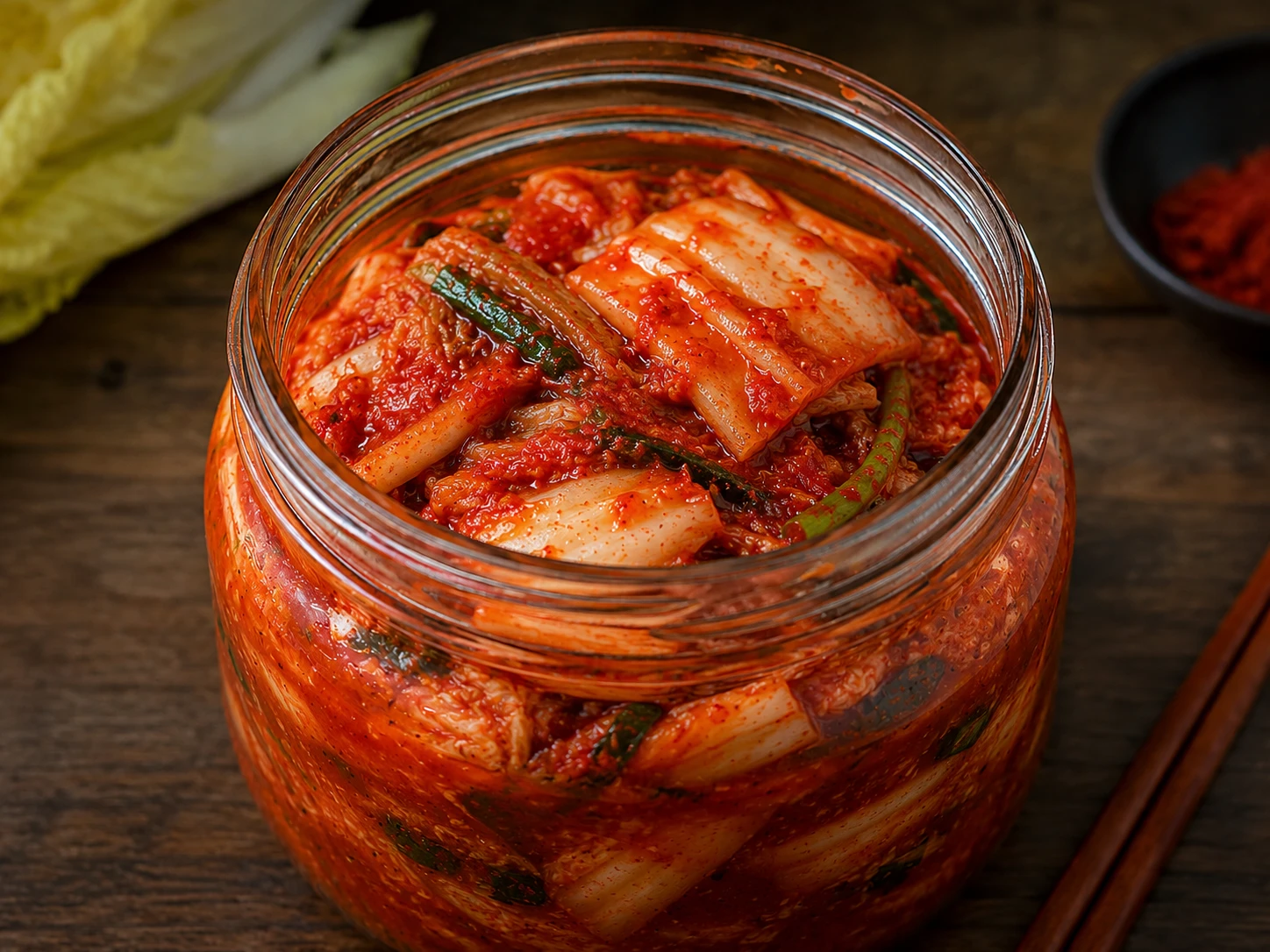
Kimchi Fermentation Stage — Tuna Version Specific Guide
Tuna’s mild protein tempers kimchi’s acidity — which means you can use slightly younger kimchi for this dish than for classic fried rice.
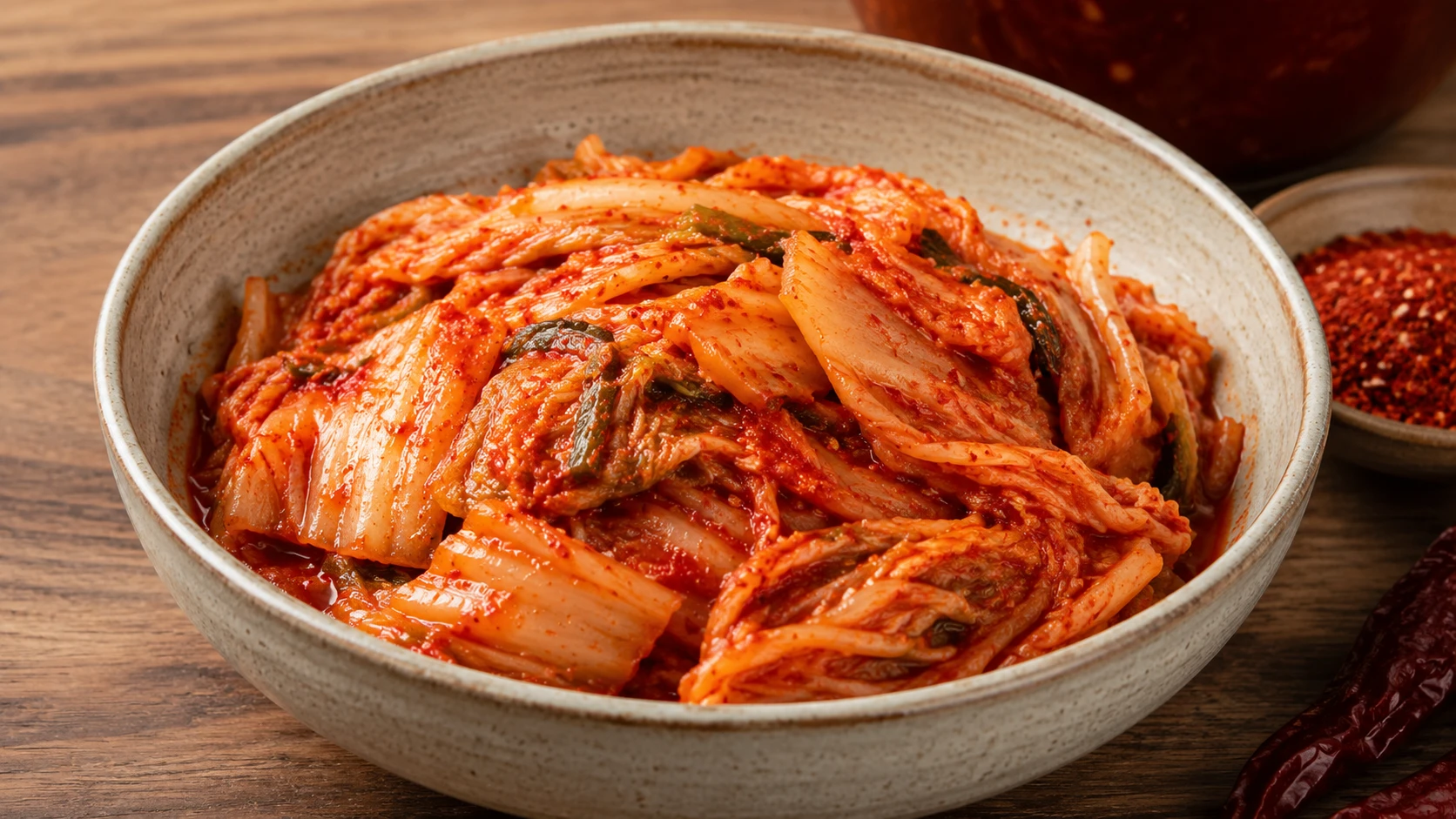
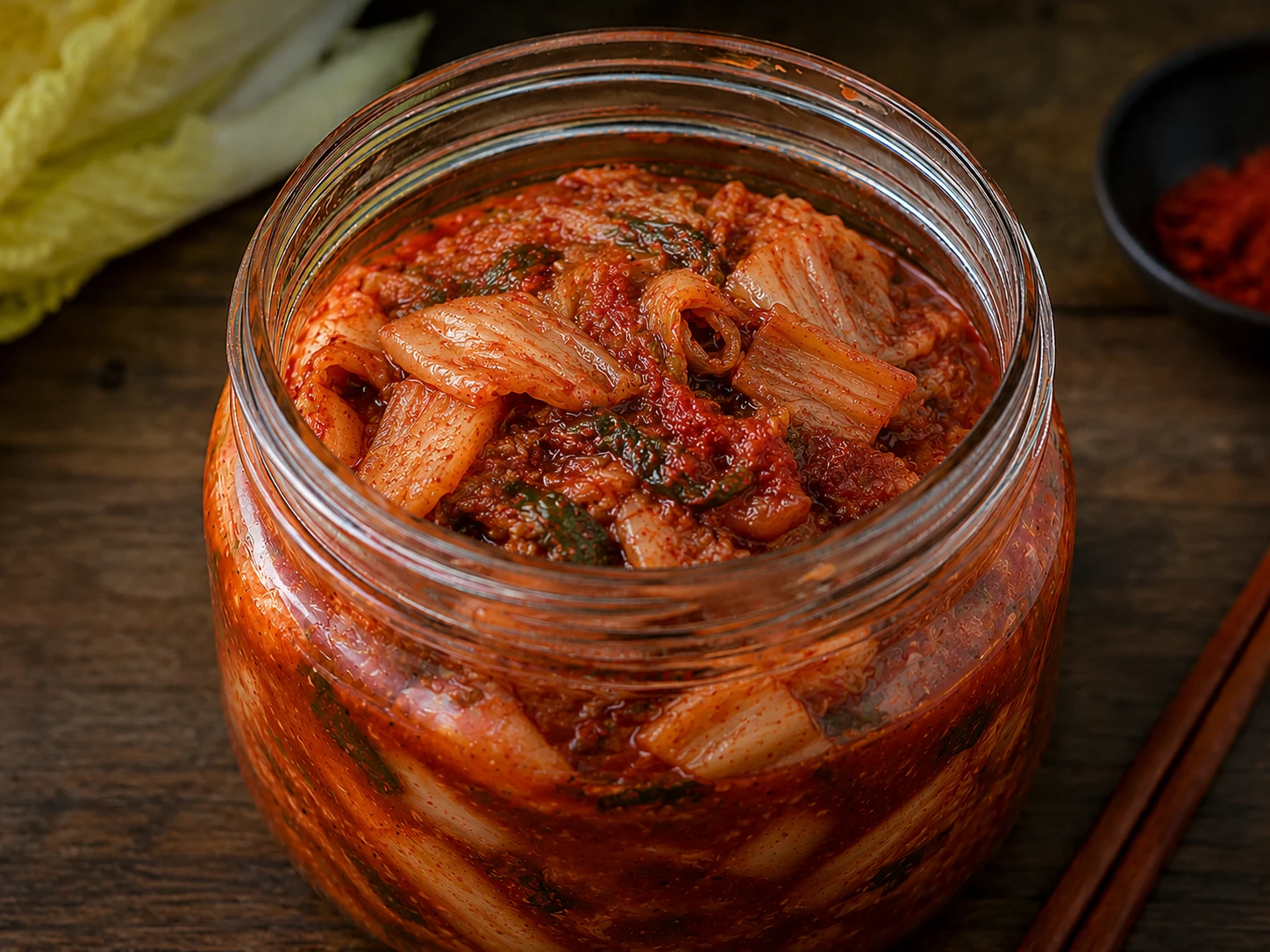
How Difficult Is the Tuna Version?
Genuinely beginner-friendly — no fresh ingredients needed beyond the egg. The only skill is timing the fold-in of the tuna correctly.
Ingredients + Scaler
One rule matters most: reserve every drop of tuna oil — it’s your cooking fat, not a byproduct to discard.
How to Make Kimchi Tuna Fried Rice — 5 Steps
The key difference from other KFR variations: the tuna’s own oil is the cooking fat, and the tuna itself goes in dead last, off heat.
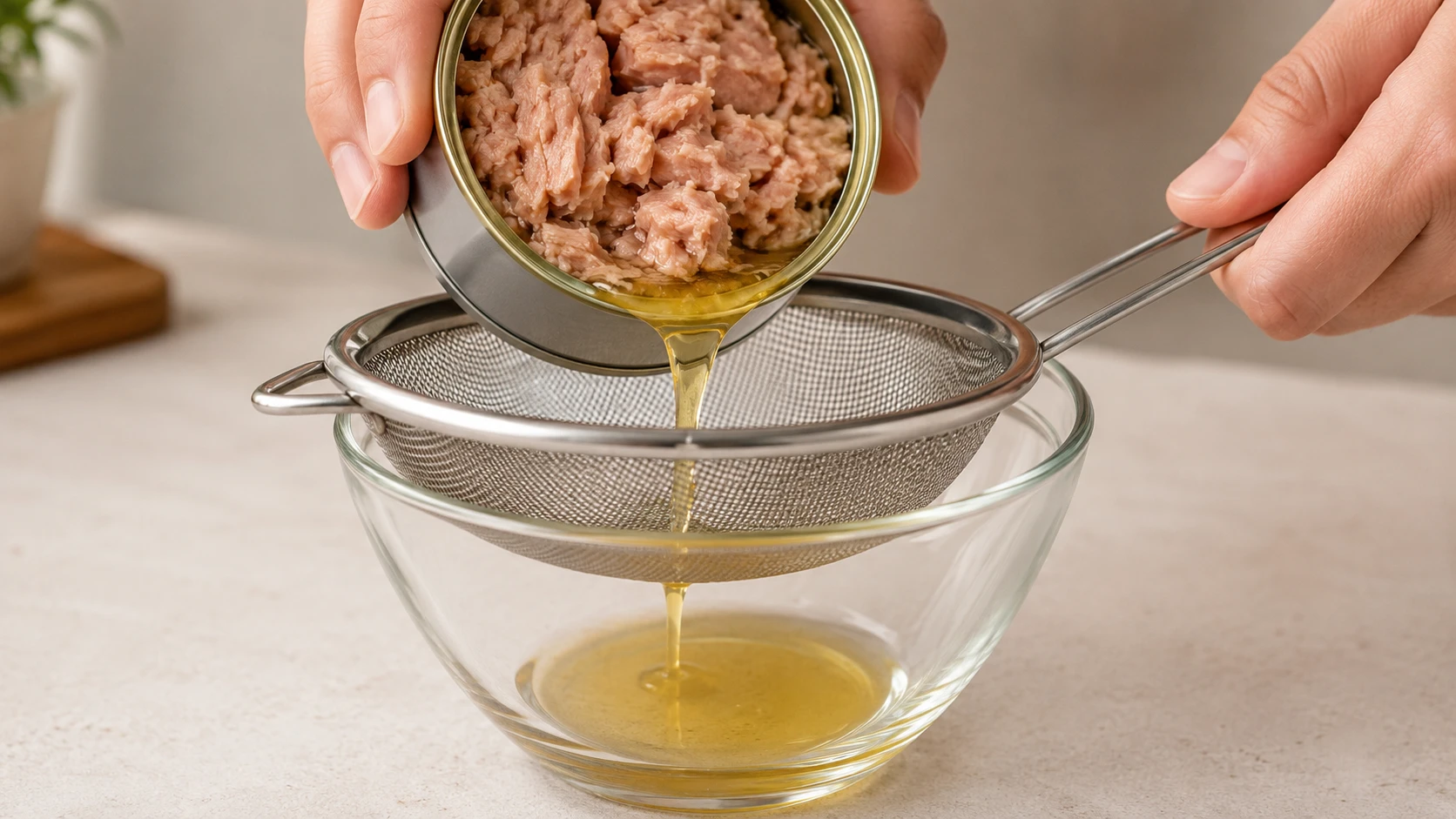
Drain the tuna oil completely into a bowl, pressing firmly to extract every drop — reserve approximately 1.5–2 tbsp as your cooking fat. Flake tuna into large 2–3cm pieces. Chop kimchi, squeeze firmly, reserve 3 tbsp kimchi juice.
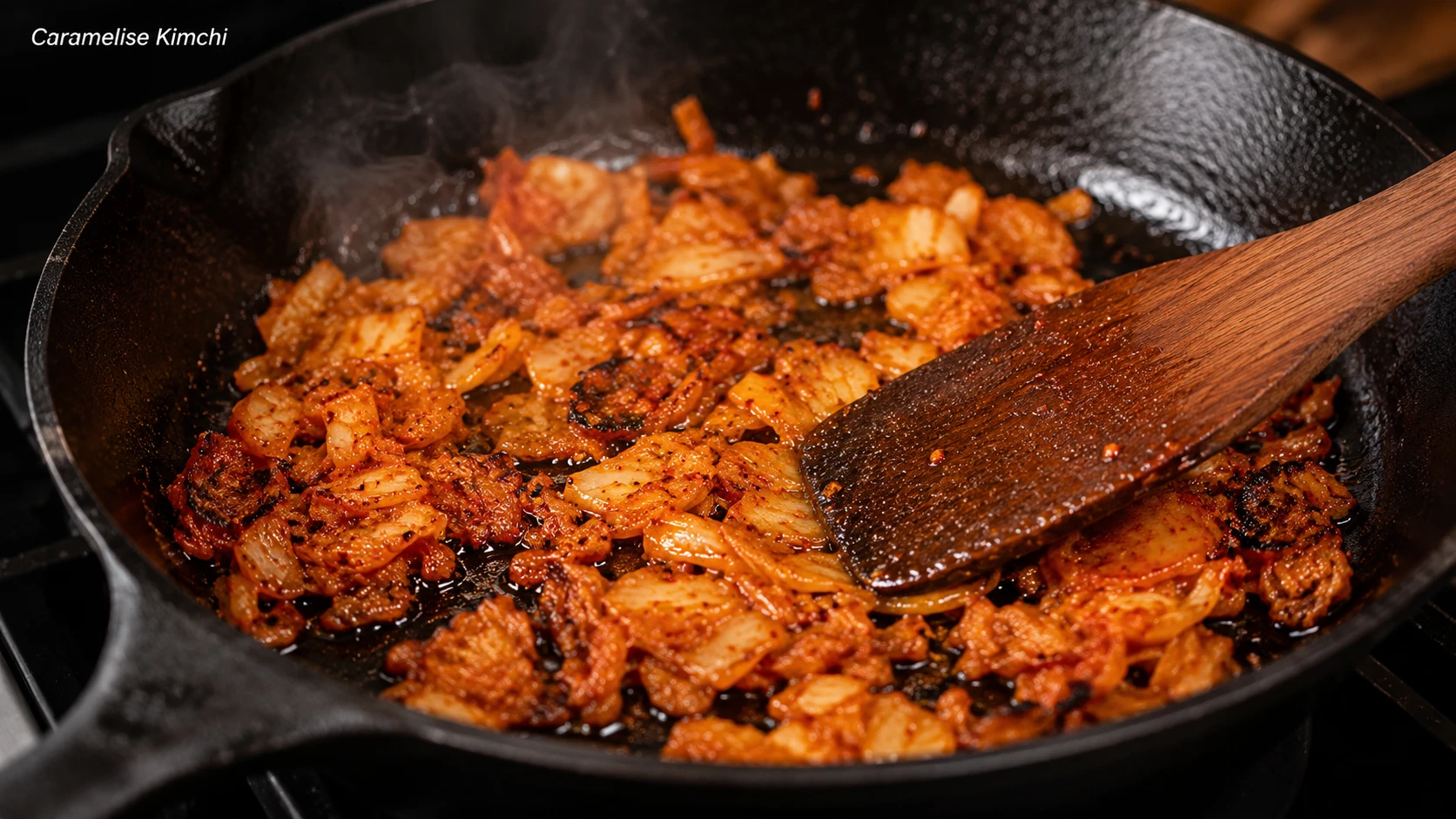
Heat cast iron pan on maximum until smoking. Add all the reserved tuna oil, then chopped squeezed kimchi immediately. Press-and-char 3–4 minutes until kimchi darkens and smells sour-sweet and nutty.
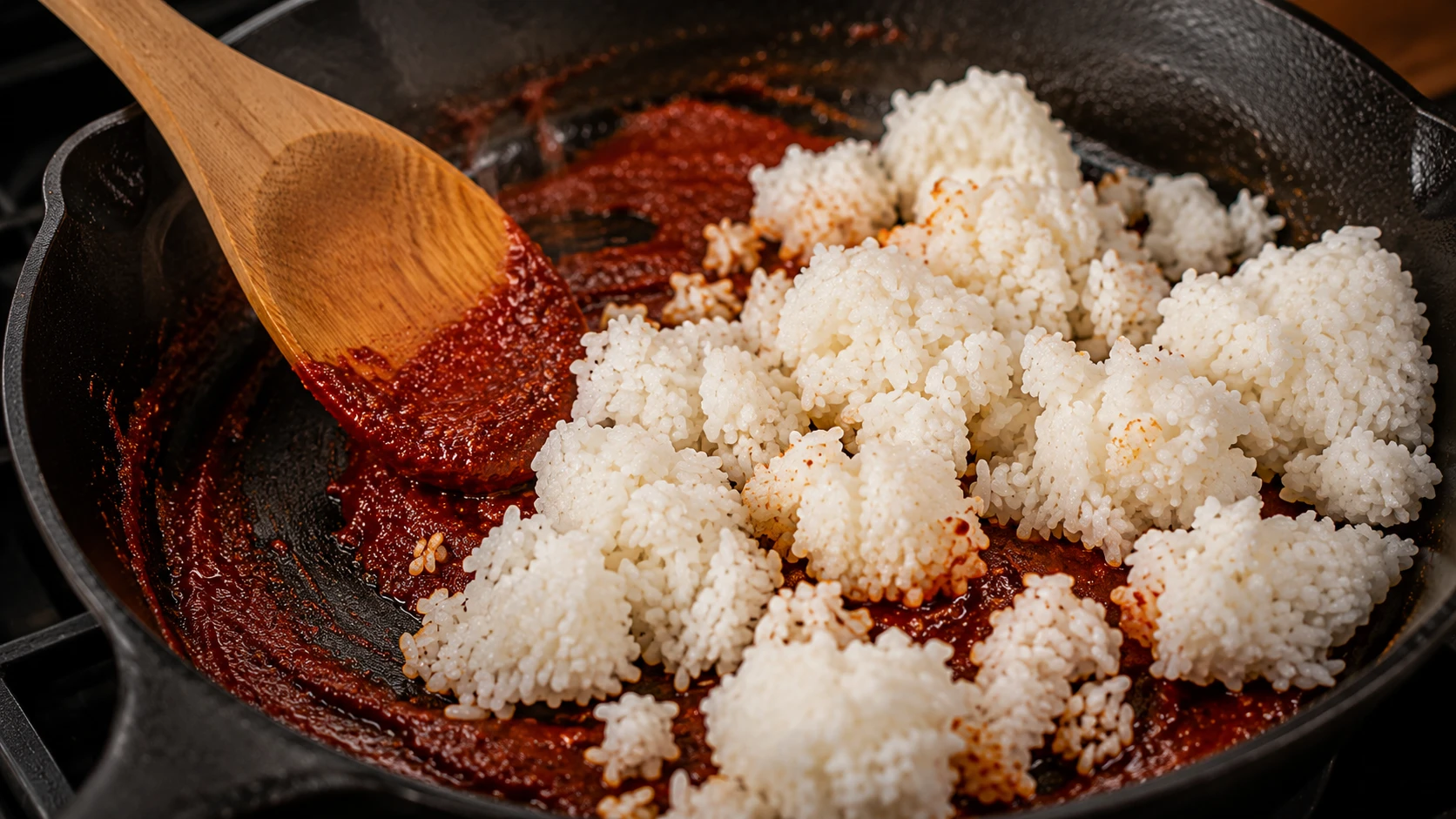
Push kimchi aside, toast gochujang alone 30 seconds. Add cold rice, break clumps. Add kimchi juice, soy sauce, sugar. Toss on high heat 2 minutes, pressing rice flat every 30 seconds to build nurungji crust.
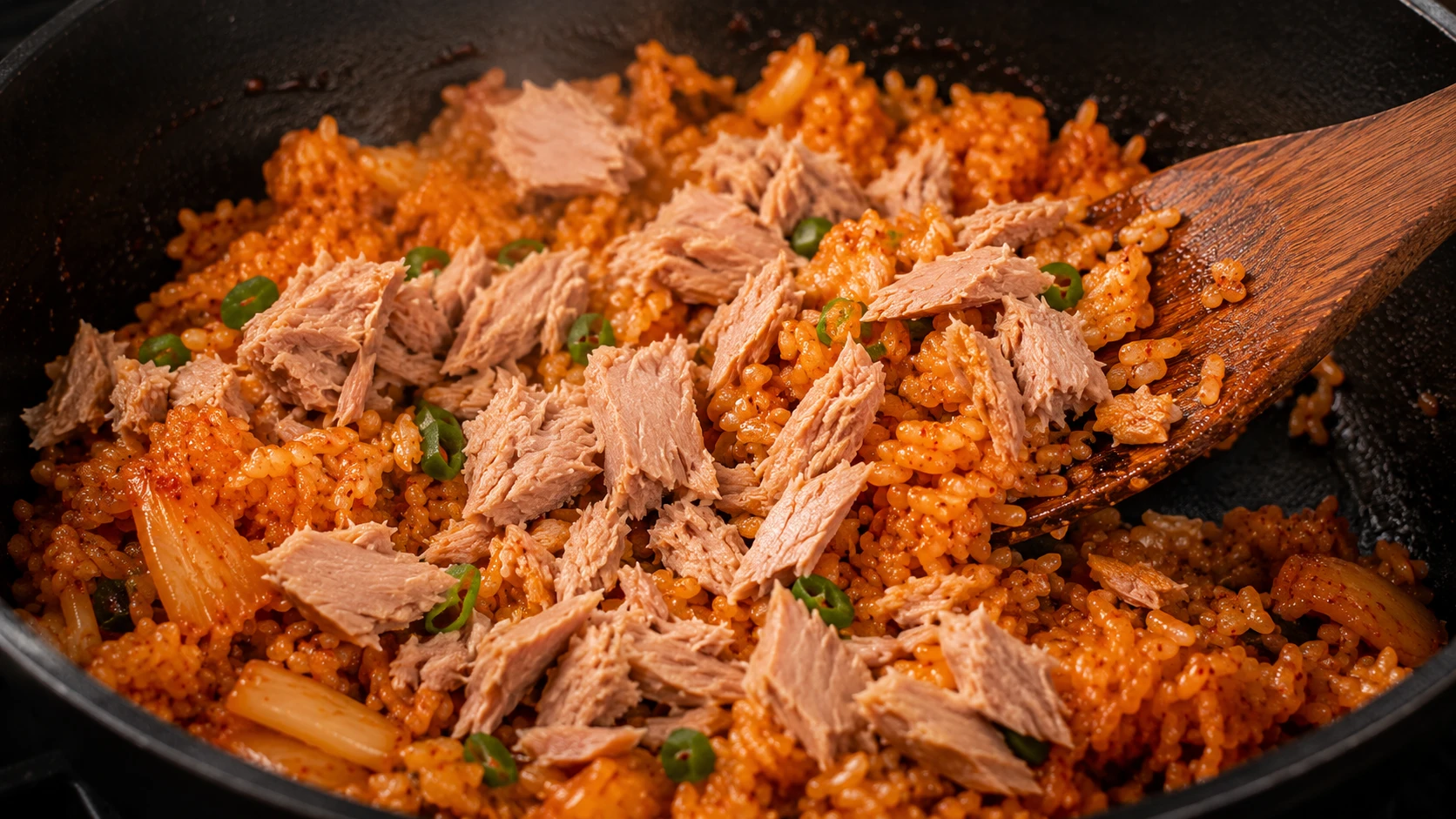
Remove pan from heat completely. Add flaked tuna, fold gently 3–4 times only — do not toss vigorously. Distinct tuna pieces must remain visible. Drizzle sesame oil over the surface while still off-heat.
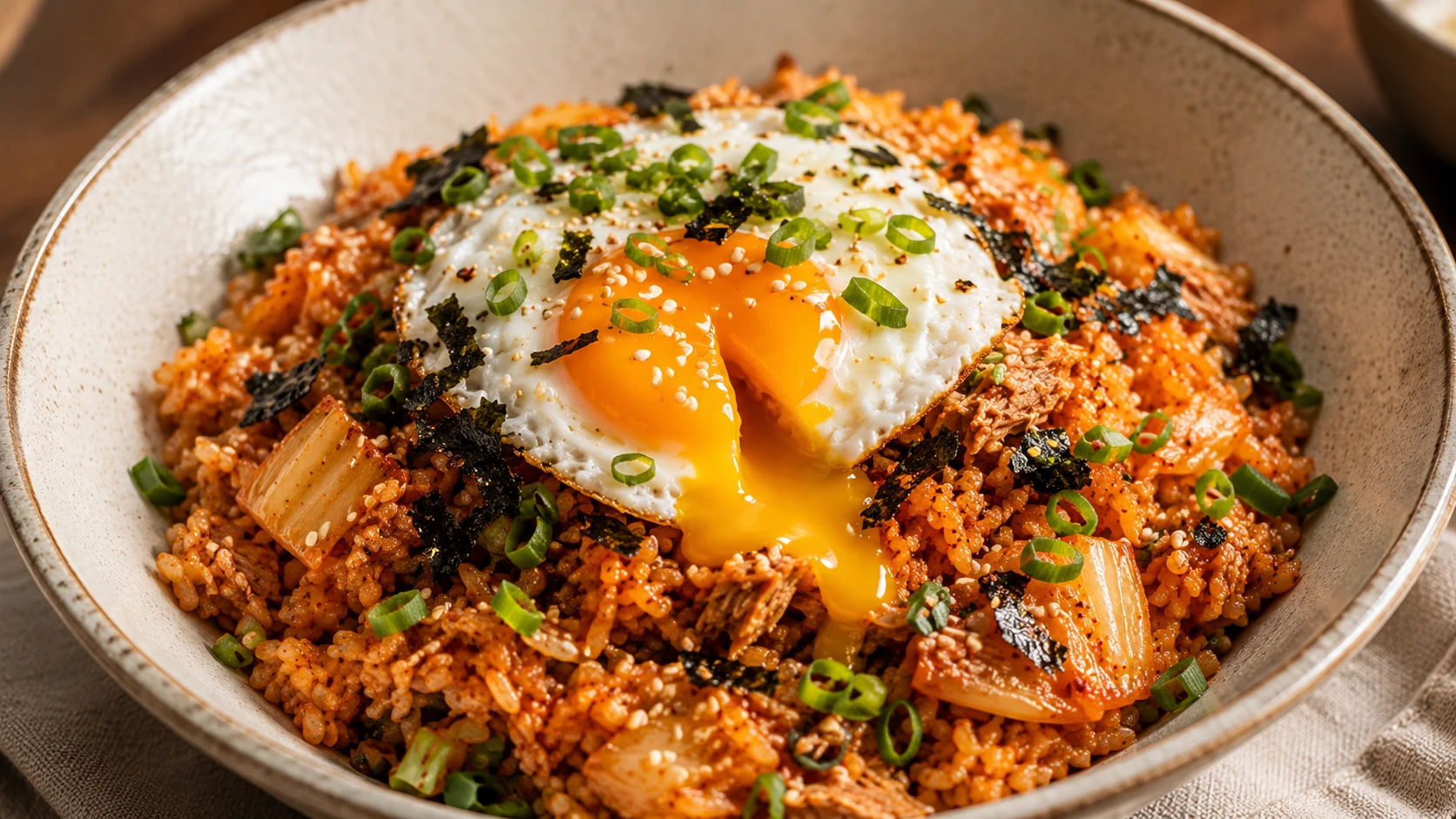
Baste-fry an egg in sesame oil until the white sets and the yolk stays fully runny. Serve immediately topped with the egg, spring onions, sesame seeds, and torn nori — within 5 minutes of plating, as tuna releases moisture quickly.
Umami Comparison — Why Tuna + Kimchi Works
Relative perceived umami intensity of common umami sources, illustrating the double-umami synergy of tuna and kimchi combined.
What We Tested for the Tuna Version
Every batch confirmed the same two variables decide success: using the tuna’s own oil as cooking fat, and folding the tuna in gently at the very end, off heat.
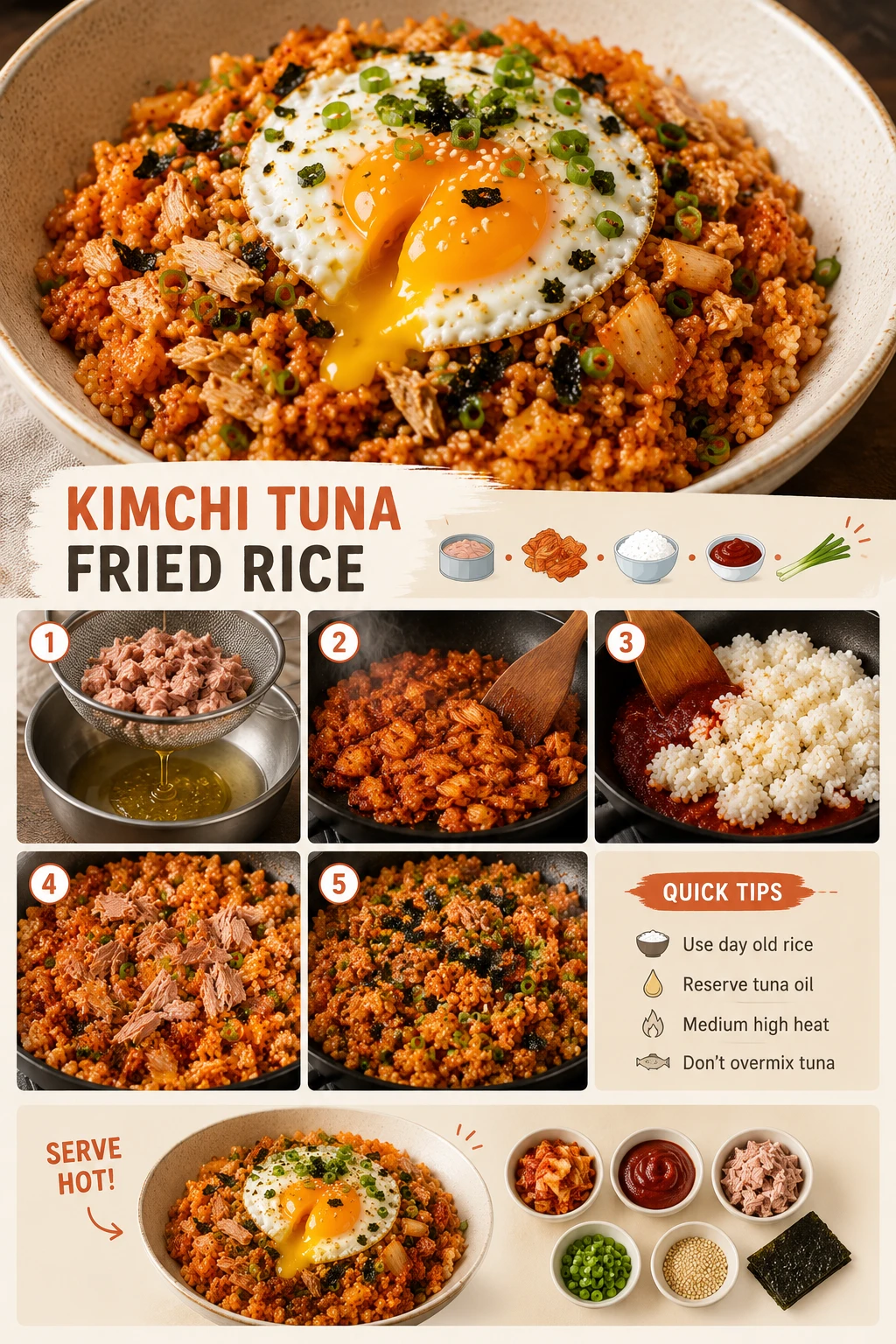
Kimchi Tuna Fried Rice (참치 김치볶음밥)
Tuna-oil cooking fat · Fold-last technique · 25 min · Highest-protein KFR
- 145g canned tuna in olive oil (oil reserved)
- 2 cups day-old short-grain rice
- 1 cup aged kimchi (Stage 3), chopped
- 3 tbsp kimchi brine
- 1 tbsp gochujang
- 1 tsp sesame oil (off-heat)
- 2 tsp soy sauce
- 1 tsp sugar
- 2 large eggs, baste-fried
- 2 spring onions, sesame seeds, nori
- Drain tuna, reserve all oil. Flake into 2-3cm pieces. Chop and squeeze kimchi, reserve 3 tbsp juice.
- Heat pan until smoking. Add tuna oil, then kimchi. Press-and-char 3-4 min.
- Push kimchi aside, toast gochujang 30 sec. Add rice, juice, soy, sugar. Toss 2 min for nurungji.
- Off heat, fold in tuna gently 3-4 times. Drizzle sesame oil.
- Baste-fry egg. Serve immediately with spring onions, sesame seeds, nori.
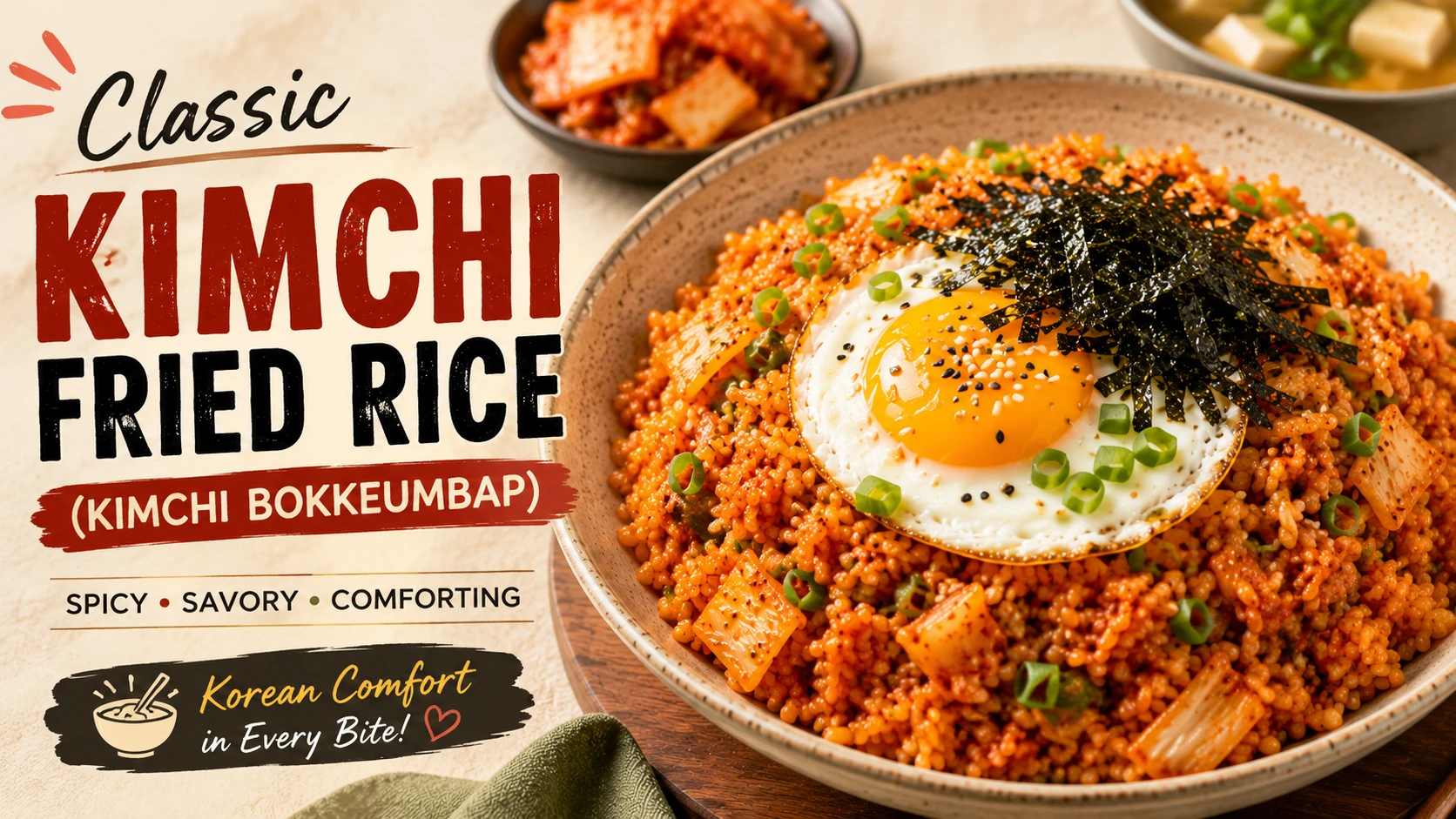
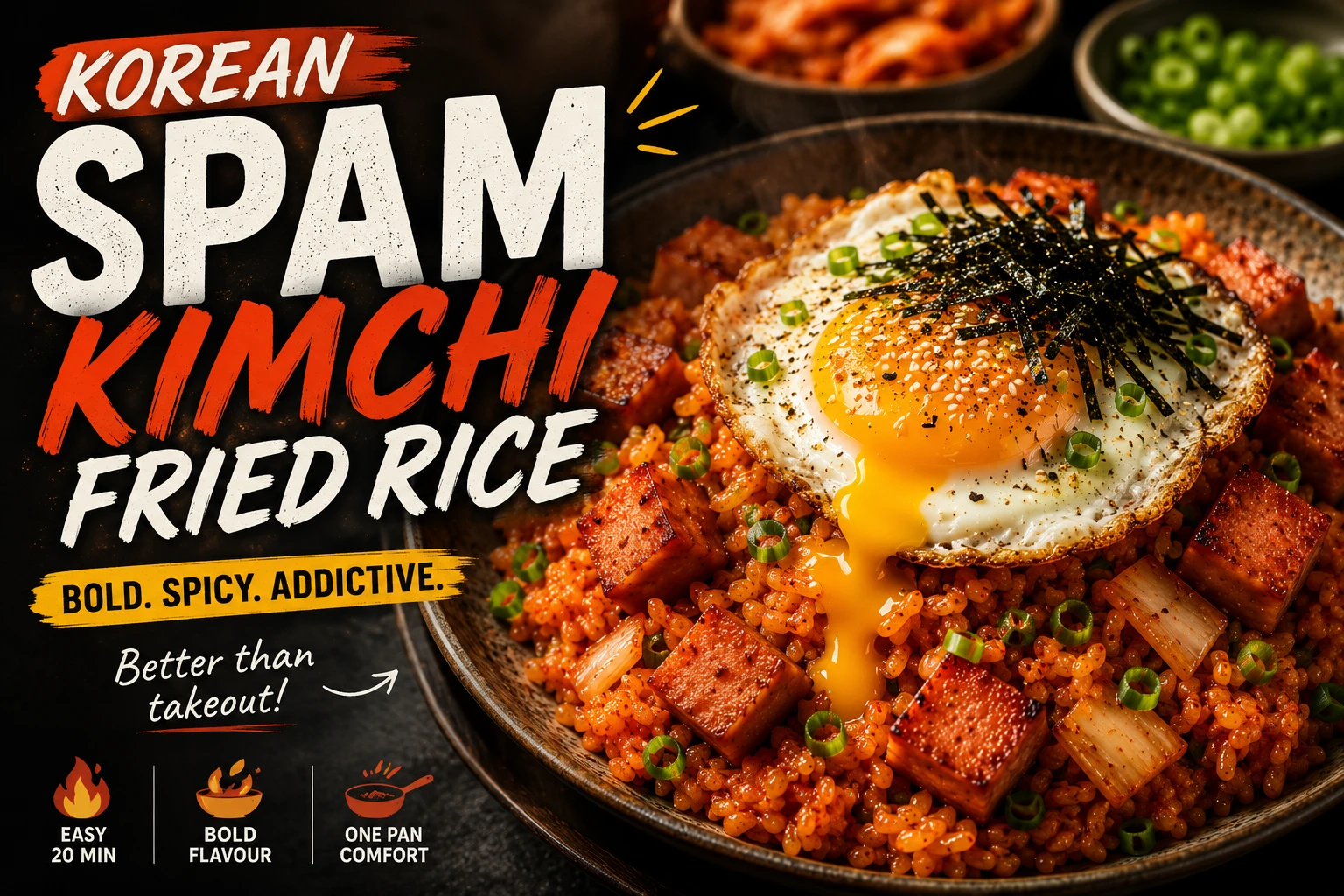
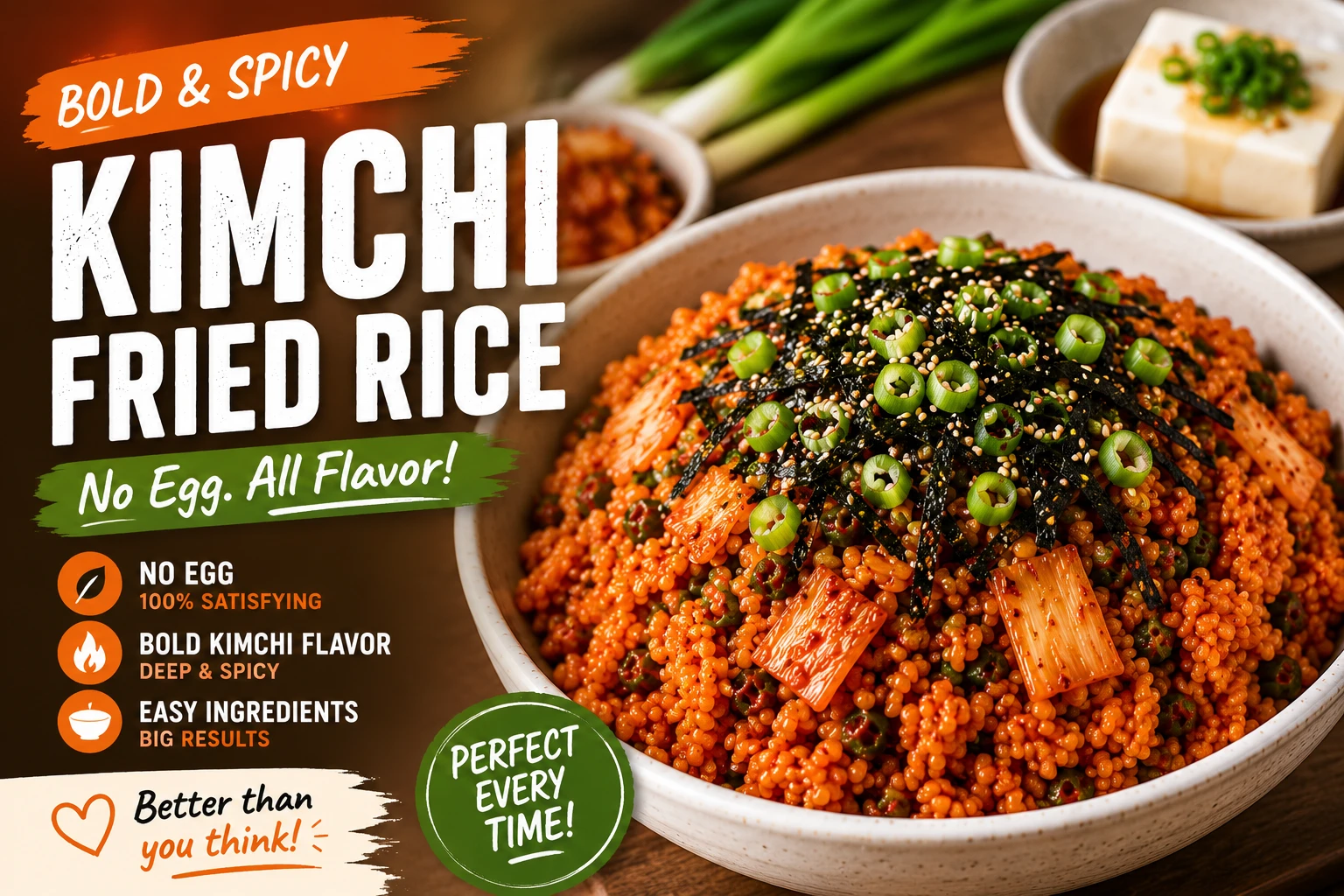
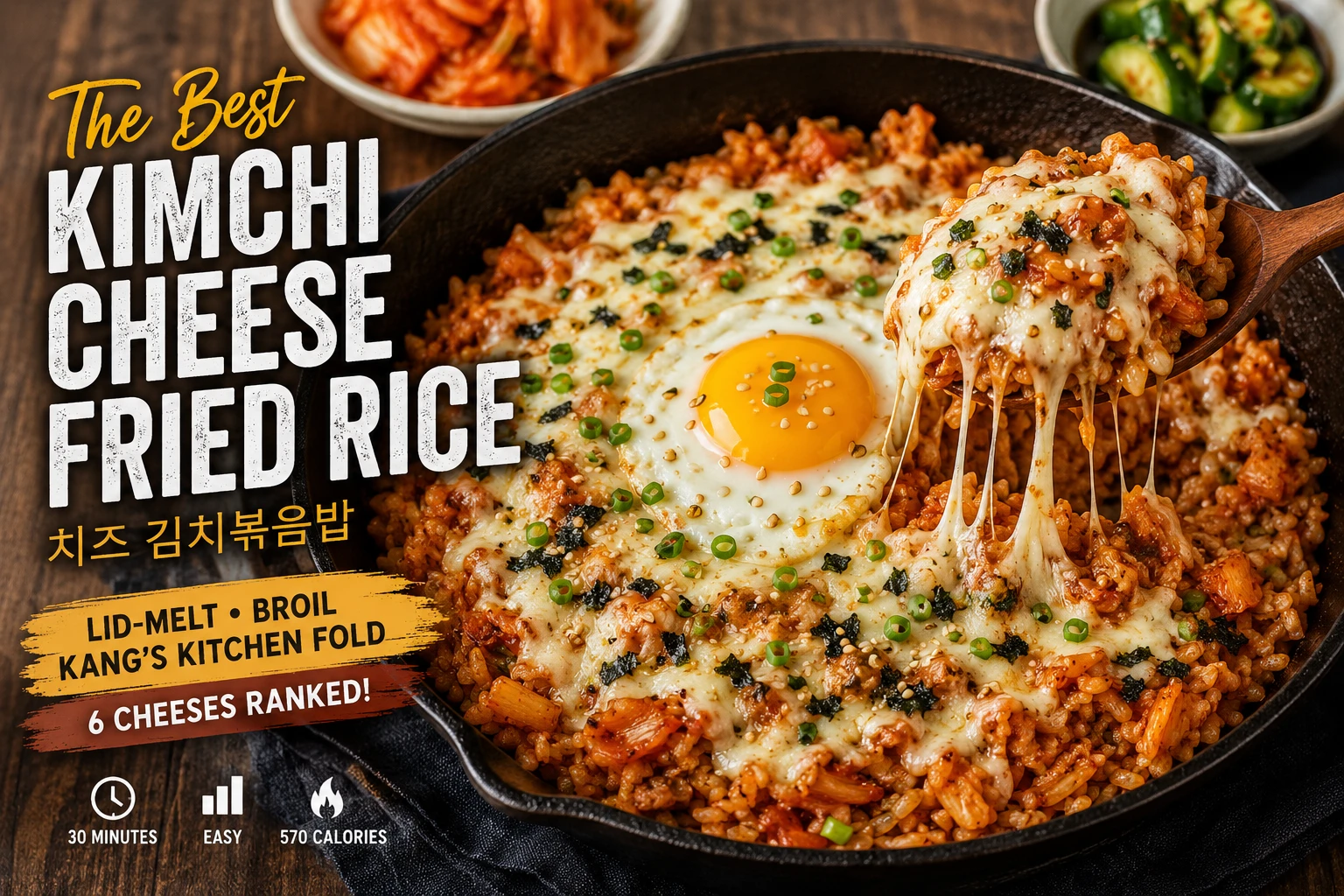
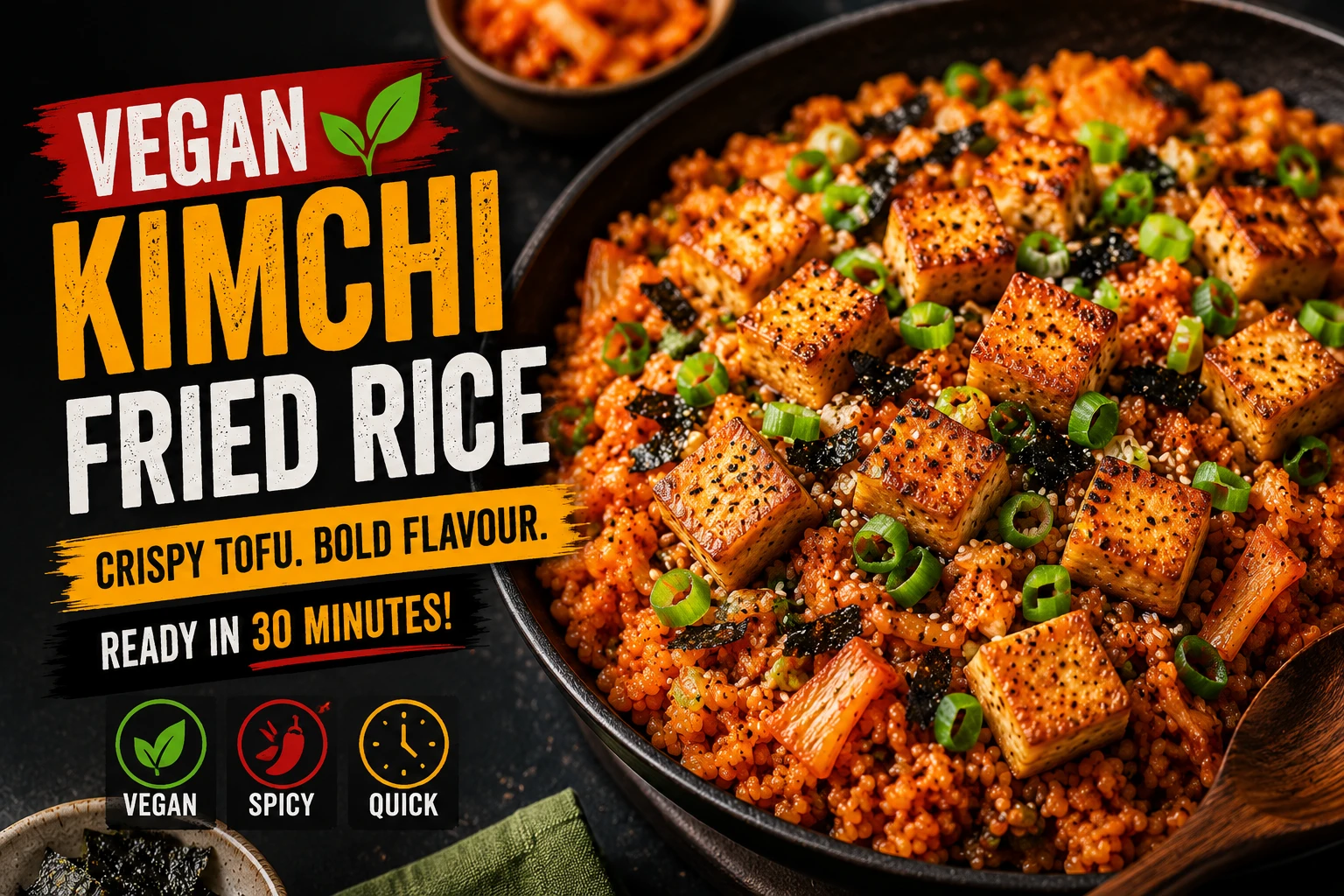
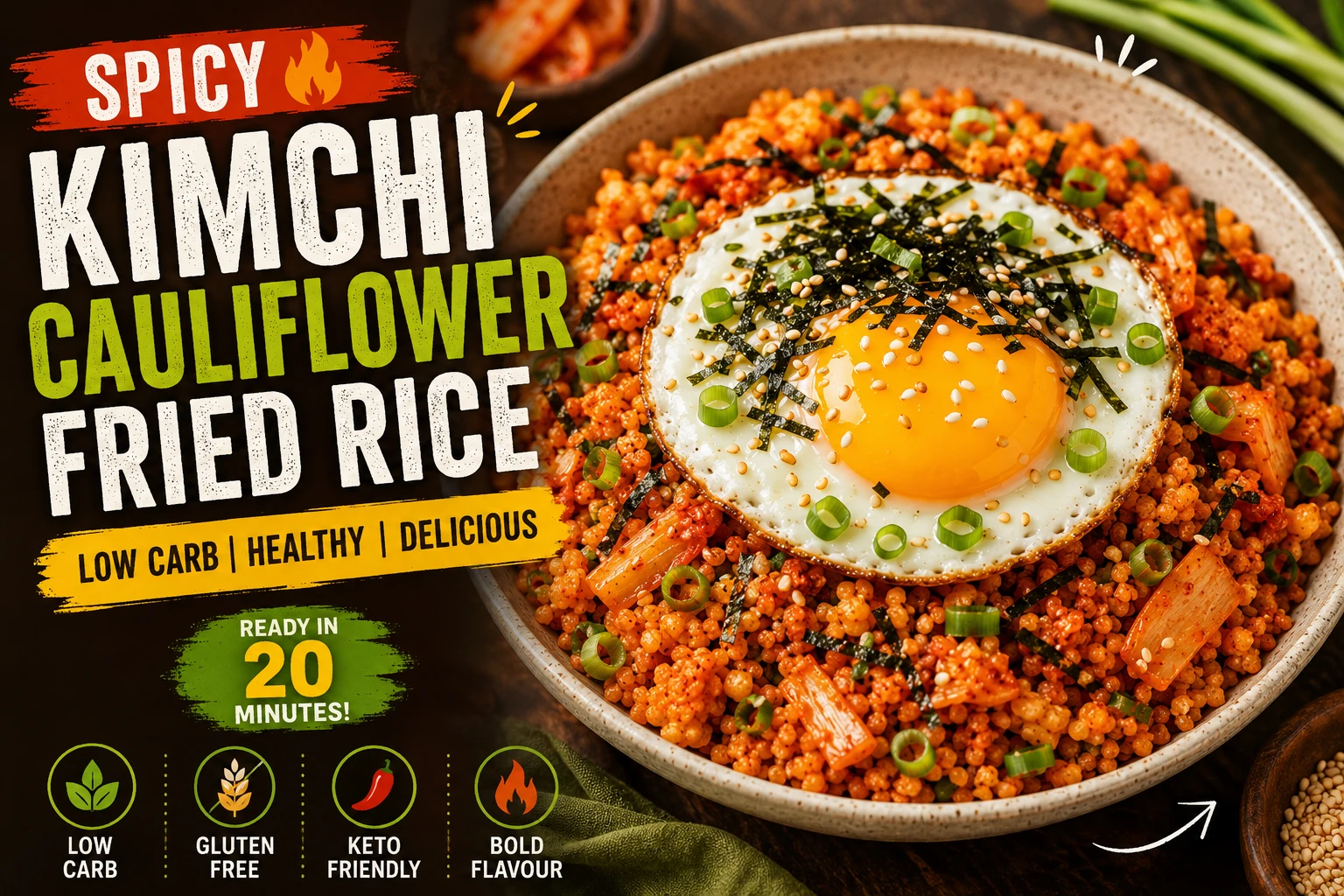
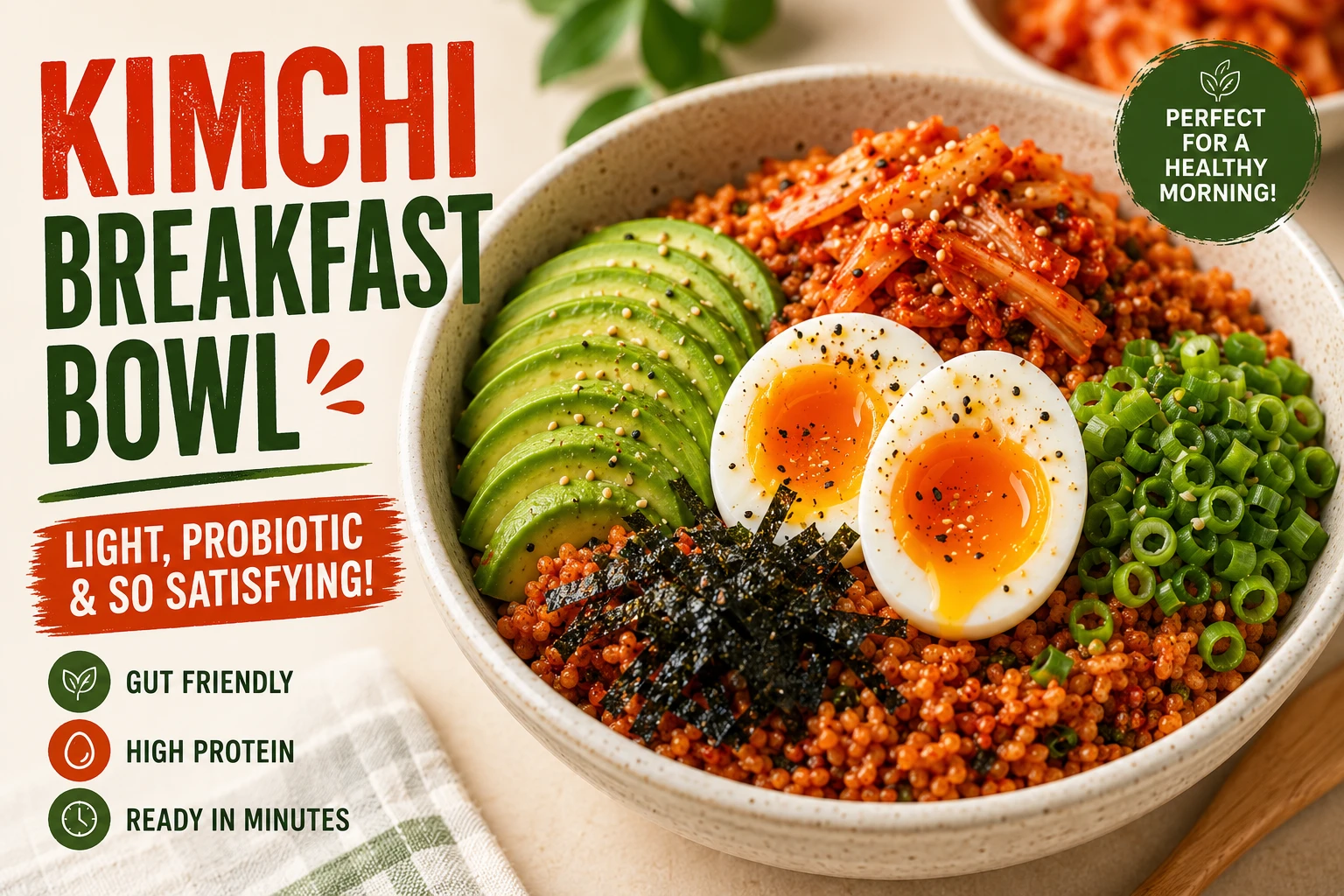
All 9 Kimchi Fried Rice Variations
The KFR Ultimate Guide → covers all 9 in one place with the full comparison table.
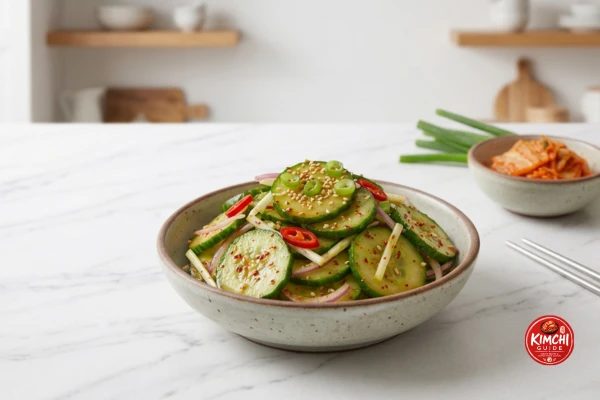
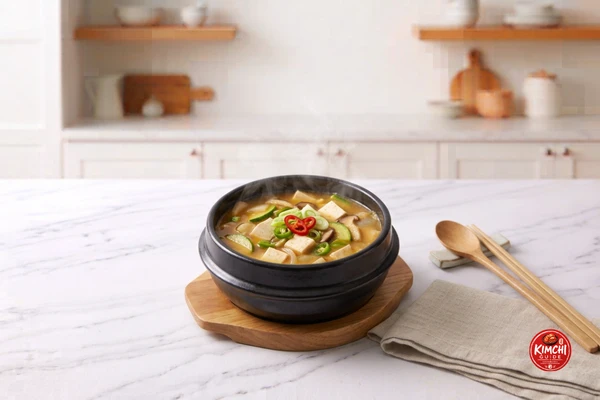
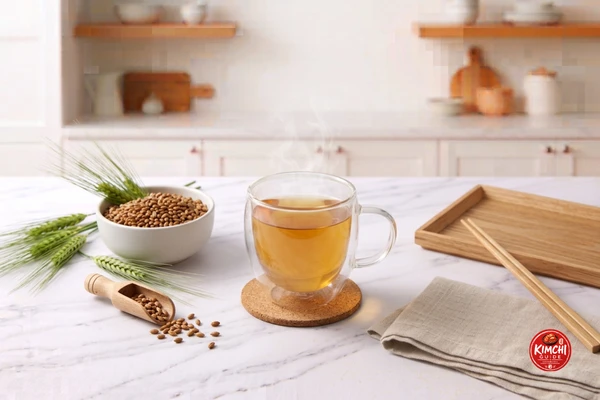
Pairing Guide — Tuna Version
Storage & Reheating — Tuna Version
Nutrition Comparison — All 9 KFR Variations
| Variation | Calories | Protein | Vegan? | Best For |
|---|---|---|---|---|
| Cauliflower Version | 180 | 10g | No (egg) | Low-carb, keto, lightest option |
| Without Egg | 360 | 7g | No (may use dairy) | Calorie control, meal prep |
| Vegan (tofu) | 380 | 14g | ✅ Fully vegan | Plant-based, egg-free protein |
| Breakfast Bowl | 380 | 15g | No (egg, avocado) | Mornings, lighter portion |
| Tuna Version ← This page | 410 | 22g | No | Highest lean protein |
| Classic | 420 | 14g | No | All occasions |
| Cheese Version | 570 | 19g | No | Entertaining, most indulgent |
| Spam Version | 580 | 24g | No | Comfort food, budae flavour |
| Bacon Version | 600 | 21g | No | Weekend indulgence |
Kimchi Tuna Fried Rice FAQ — 20 Questions
Tuna in olive oil is best — the oil becomes the cooking fat. Korean Dongwon brand is the gold standard. Tuna in spring water is acceptable but requires adding 1 tbsp of neutral oil. Avoid tuna in brine — too salty combined with kimchi juice and soy sauce.
The olive oil inside a tuna can is infused with the tuna’s natural amino acids during processing. Using it as cooking fat carries a subtle seafood-olive note into the caramelised kimchi and rice — flavour neutral oil cannot provide.
At the very end — fold tuna in gently after the rice is fully seasoned, off heat entirely. Adding it too early breaks it into mush and intensifies fishy aroma.
Chamchi kimchi bokkeumbap (참치 김치볶음밥) is Korean kimchi tuna fried rice — one of the most popular everyday weeknight meals in South Korea.
Yes — add 1 tbsp of neutral oil since you won’t have tuna oil to cook with. Rinse briefly under cold water and pat dry to reduce fishy aroma.
One standard 145g can for 2 servings is the ideal ratio — visible tuna presence in every few bites without overwhelming the kimchi.
No, if done correctly: use tuna in olive oil, add it at the very end off-heat, use Korean Dongwon tuna if available. Kimchi’s lactic acid and gochujang mask any fishy notes.
Dongwon is South Korea’s most popular canned tuna brand, formulated for Korean cooking: firmer texture, milder aroma, lower residual oil content.
Kimchi contains glutamates from fermentation; tuna contains inosinate from fish muscle. Combined, they create synergistic umami — the same principle behind Japanese dashi.
Yes — canned salmon in olive oil works excellently with the same method. Use approximately 100g instead of 145g per 2 servings since salmon is more assertive.
Yes — the most nutritionally balanced KFR variation, at 410 calories with 22g protein (the highest of all versions), 57g carbs, and only 11g fat.
Yes with two swaps: tamari instead of soy sauce, and certified gluten-free gochujang. Tuna, rice, kimchi, sesame oil, and eggs are naturally gluten-free.
No — reduce rather than increase. Canned tuna already adds saltiness alongside kimchi’s fermented salt. Taste before adding more.
Large flakes of approximately 2 to 3cm. You should still see distinct tuna pieces after folding — if not, you’ve over-flaked or over-folded.
Yes — dice 150g fresh tuna steak, sear briefly in neutral plus olive oil, and add at the same point as canned tuna, right at the end off-heat.
Yes — store up to 2 days refrigerated (not 3, as tuna releases moisture faster). Reheat only in a hot oiled pan, never microwave. Freeze without egg up to 1 month.
Spam version is richer and saltier at 580 calories, 24g protein. Tuna version is lighter with the highest lean protein-to-fat ratio at 410 calories, 22g protein, 11g fat.
It breaks down into fine crumbles, intensifies fishy aroma from prolonged heat, and dries out — losing the moist, flaky texture that defines this dish.
Oi muchim is the ideal pairing. Doenjang jjigae pairs especially well since its umami aligns with this dish’s double glutamate-inosinate effect.
Rinse the drained tuna briefly under cold water and pat dry. A few drops of rice vinegar or lemon juice also neutralise fishy notes through acid.


💬 Leave a Comment
Made this recipe? Tell us how the tuna-oil technique turned out for you.